




No CrossRef data available.
Biological sensitivity to context: I. An evolutionary–developmental theory of the origins and functions of stress reactivity
Published online by Cambridge University Press: 12 May 2005
Abstract
Biological reactivity to psychological stressors comprises a complex, integrated, and highly conserved repertoire of central neural and peripheral neuroendocrine responses designed to prepare the organism for challenge or threat. Developmental experience plays a role, along with heritable, polygenic variation, in calibrating the response dynamics of these systems, with early adversity biasing their combined effects toward a profile of heightened or prolonged reactivity. Conventional views of such high reactivity suggest that it is an atavistic and pathogenic legacy of an evolutionary past in which threats to survival were more prevalent and severe. Recent evidence, however, indicates that (a) stress reactivity is not a unitary process, but rather incorporates counterregulatory circuits serving to modify or temper physiological arousal, and (b) the effects of high reactivity phenotypes on psychiatric and biomedical outcomes are bivalent, rather than univalent, in character, exerting both risk-augmenting and risk-protective effects in a context-dependent manner. These observations suggest that heightened stress reactivity may reflect, not simply exaggerated arousal under challenge, but rather an increased biological sensitivity to context, with potential for negative health effects under conditions of adversity and positive effects under conditions of support and protection. From an evolutionary perspective, the developmental plasticity of the stress response systems, along with their structured, context-dependent effects, suggests that these systems may constitute conditional adaptations: evolved psychobiological mechanisms that monitor specific features of childhood environments as a basis for calibrating the development of stress response systems to adaptively match those environments. Taken together, these theoretical perspectives generate a novel hypothesis: that there is a curvilinear, U-shaped relation between early exposures to adversity and the development of stress-reactive profiles, with high reactivity phenotypes disproportionately emerging within both highly stressful and highly protected early social environments.
The research on which this paper was based was supported by grants from the John D. and Catherine T. MacArthur Foundation's Research Network on Psychopathology and Development, the National Institute of Child Health and Human Development (1RO1 HD 24718), and by the Division of Intramural Research of NICHD. The first author is particularly indebted to Dr. Steve Suomi and Dr. Jan Genevro for a series of conversations that directly influenced the ideas upon which this paper is based. We also thank Dr. Jay Belsky and Dr. David Bjorklund for their helpful comments on an earlier draft of this paper.
Information
- Type
- Research Article
- Information
- Copyright
- © 2005 Cambridge University Press
Biological reactivity to environmental stressors is now widely implicated in the processes linking psychological adversity to psychiatric and biomedical disorder. The neuroendocrine changes that reliably accompany stressful events, in humans and other species, are the physiological, homeostatic means by which survival under threat is protected, but are also among the dysregulatory pathways by which psychological trauma is transmuted into pathogenic biological processes. Individual differences in such “stress reactivity” are thought to underlie the broad variability in stress–illness associations and to reflect constitutional variation in susceptibility to stressful challenge. Highly reactive phenotypes, in which affected individuals mount vigorous and/or persistent autonomic, adrenocortical, or other biological responses to stressors, have been viewed as an atavistic health risk factor, a legacy of physiological responses more commensurate with the perils of prehistoric human environments. As such, exaggerated stress reactivity is generally viewed as a maladaptive, monotonically harmful heritage of an ancient preparedness for endangerment. High reactivity, so the argument goes, is a heritable response disposition, often unmasked by traumatic experiences in early life, which places individuals at heightened risk for disorders of mental and physical health. It is the central claim of this two-part series that this view, that high reactivity phenotypes are uniformly harmful psychobiological reversions to primitive and maladaptive modes of response, is mistaken.
Rather, an evolutionary reinterpretation of evidence regarding reactivity and health suggests that highly reactive phenotypes can be more usefully viewed as reflecting heightened biological sensitivity to context (BSC), an attribute that may have conferred selective advantages in certain social and ecological contexts during human evolution. Further, although a substantial literature documents the capacity of early developmental trauma to predispose an individual toward high biological reactivity, an evolutionary formulation of recent findings suggests a different and novel hypothesis: that the association between early adversity and reactivity is curvilinear in character, with both highly stressful and highly protective environments yielding disproportionate numbers of highly reactive children. In this paper, the theoretical and evidential grounds for this new hypothesis are presented, and in the second paper, exploratory data analyses in two studies of early development and psychopathology are used to generate empirical observations commensurate with the same hypothesis. Together, the papers present both theoretical and empirical lines of argument that converge upon a single thesis: that highly reactive phenotypes are forms of enhanced, neurobiologically mediated sensitivity to context, which have been favored by natural selection due to their fitness-enhancing effects in both minimally and maximally stressful environments. This evolutionary paradox, of reactive phenotypes being selected within two oppositional categories of environments, can be resolved, it will be argued, by the supposition that BSC increases adaptive competence in highly stressful environments by augmenting vigilance to threats and dangers and in highly protective environments by increasing susceptibility to social resources and ambient support. In the sections that follow, we (a) describe the structure and phylogeny of the neural circuits implicated in stress reactivity, (b) delineate genetic and environmental contributions to the calibration of such reactivity, (c) review past and recent findings linking stress reactivity and health, and (d) conclude that phenotypic expressions of unusually heightened reactivity reflect an underlying biological sensitivity to contextual signals. Finally, exploring this reconceptualization of exaggerated reactivity as context sensitivity, we construct an evolutionary–developmental theory of the origins and functions of the human stress response and formulate new hypotheses characterizing the relation between early adversity and the magnitude of biological responses to stress. This theory and derivative hypotheses are founded on the concept of conditional adaptation, in which a single genotype supports a range of environmentally contingent phenotypic expressions, enabling an adaptive correspondence between the developing organism and its environment.
The Structure and Phylogeny of the Human Stress Response
Environmental events signaling threats to survival or well being produce a set of complex, highly orchestrated responses within the neural circuitry of the brain and peripheral neuroendocrine pathways regulating metabolic, immunologic, and other physiological functions. As first described in the work of Claude Bernard on homeostasis (Bernard, 1878) and the subsequent research of 20th century stress physiologists Walter Cannon (1929) and Hans Selye (1950), this elaborate and tightly integrated repertoire of responses results in an immediate, relatively automatic shift to a state of biological and behavioral preparedness, involving increases in heart rate and blood pressure, metabolic mobilization of cellular nutrients, preferential redirection of energy resources and perfusion to the brain, and the induction of behavioral vigilance and fear. Comprehensively detailed in the writings of neuroscientists such as Chrousos (1998), Meaney (2001), and McEwen (1998), the neural substrate for the organism's stress response comprises two anatomically distinct but functionally integrated circuits, the corticotropin-releasing hormone (CRH) system and the locus coeruleus–norepinephrine (LC-NE) system. The coactivation of the these two systems, along with their linkages to limbic structures, such as the amygdala and anterior cingulate, as well as the mesolimbic dopaminergic system and the medial prefrontal cortex, produce the coordinated biobehavioral changes associated with the stress response in mammalian species.
The CRH system actually comprises two distinguishable subsystems, one centered in the paraventricular nucleus (PVN) of the hypothalamus and involved in the homeostatic regulation of the hypothalamic–pituitary–adrenocortical (HPA) axis, and the other involved in the corticolimbic circuitry of the amygdala and its connections. Within the former subsystem, CRH is released into the portal blood supply of the pituitary in a pulsatile (and, under normative conditions, circadian) fashion by neurons in the PVN and serves, along with synergistic effects of arginine vasopressin (AVP), as the primary secretagogue for expression of pro-opiomelanocortin (POMC) polypeptide by the anterior pituitary. In the second subsystem, CRH cell bodies are more widely represented in loosely related, extrahypothalamic locations, including the amygdala, the substantia innominata, the bed nucleus of the stria terminalis, and in the prefrontal, insular, and cingulate regions of the cortex (Gold & Chrousos, 2002; Owens & Nemeroff, 1991). Two or more types of CRH receptors have been elucidated, with species variation in the expression of specific receptor types. CRH1 receptors are found in the anterior pituitary and other brain regions and are involved in generating fear-related behavior, and CRH2 receptors, found mostly in the periphery, may play a counter-regulatory role in anxiogenesis. POMC is cleaved into its component proteins, corticotropin (ACTH) and β-endorphin (Smith et al., 1998), and ACTH is transported in plasma to the zona fasciculata of the adrenal cortex, triggering secretion of cortisol, the principal human glucocorticoid regulating blood pressure, glucose metabolism, and immune competence. Glucocorticoids also inhibit those neuroendocrine axes promoting growth and reproduction (Gold, Goodwin, & Chrousos, 1988).
The intracellular actions of cortisol are mediated through binding to a widely distributed cytoplasmic receptor, translocation to the nucleus of the target cell, and subsequent direct effects on gene transcription and inhibition of other, proregulatory transcription factors such as c-jun/c-fos, and NF-kB (van der Saag, Caldenhoven, & van de Stolpe, 1996). Although such actions acutely facilitate essential biological responses to stress and threat, chronic glucocorticoid secretion is associated with a variety of pathogenic processes and disease states, including major depression, insulin resistance and diabetes, hypertension and atherosclerosis, bone loss, and disorders related to diminished immune functions (Gold & Chrousos, 1999; McEwen, 1998). The hippocampus, a brain region closely involved in memory and learning, is particularly susceptible to the effects of glucocorticoids, showing decreased dendritic branching and neuronal loss in the CA3 area, as well as changes in synaptic terminal structure and inhibition of neuron regeneration (Bremner & Vermetten, 2001; Sapolsky, 1996). Under more normative circumstances, circulating cortisol therefore adaptively regulates the activation level of the HPA axis through a process of feedback inhibition at the hypothalamus, the pituitary, and extrahypothalamic centers such as the hippocampus and frontal cortex (Dallman, Akana, Cascio, Darlington, Jacobson, & Levin, 1987).
The LC-NE system comprises the noradrenergic cells of the medulla and dorsal pons and their projections to the amygdala, hippocampus, mesolimbic dopamine system, and the medial prefrontal cortex (Aston–Jones, Rajkowski, Kubiak, Valentino, & Shipley, 1996). LC activation of hypothalamic centers also contributes to activation and regulation of the autonomic nervous system (ANS), initiating the so-called fight or flight responses to challenge. The ANS, comprising sympathetic, parasympathetic, and enteric branches, modulates physiologic arousal and recovery in the periphery and produces the familiar biological concomitants of severely stressful encounters, including heart rate and respiratory rate acceleration, sweat production, dry mouth, and, if sufficiently severe, loss of urinary or fecal continence. These biological responses are mediated both by direct autonomic innervation of target organs by postganglionic neurons and by secretion of epinephrine and norepinephrine by the adrenal medulla. Immune regulatory effects of the catecholamines, as well as those of CRH and the glucocorticoids, appear due to differential effects on T-helper-1/T-helper-2 cells and type 1/type 2 cytokine production (Habib, Gold, & Chrousos, 2001). Through such direct effects on immune cells, experiences of severe or prolonged stress may influence susceptibility to a variety of infectious, autoimmune/inflammatory, or neoplastic diseases (Elenkov & Chrousos, 1999). NE from the LC may also contribute to vulnerability to stress-related symptoms by facilitating emotional memory retention in the hippocampus and striatum (Introini–Collison, Dalmaz, & McGaugh, 1996).
Although anatomically distinct, the neural functioning of the CRH and LC-NE systems is highly integrated and cross-regulatory. CRH-expressing neurons in the central nucleus of the amygdala, for example, project directly to the LC, escalating the firing rate of LC neurons, enhancing NE release within the ascending noradrenergic system, and producing many of the fear-related behaviors associated with stressful experience (Meaney, 2001; Valentino, Curtis, Page, Pavcovich, & Florin–Lechner, 1998). These CRH-mediated pathways from the amygdala to the LC may also serve as the neural substrate for many of the symptoms of anxiety disorders, such as increased acoustic startle responses, vigilance, symptoms of avoidance, and recurrent emotional memories. Reciprocally, activation of NE secreting neurons in the LC has been shown to increase CRH production in the PVN (Habib et al., 2001). This cross-regulatory process is only one of several ways in which the LC-NE and CRH are functionally interactive (Gold & Chrousos, 2002; Viau, 2002), and together constitute a primary integrative pathway by which psychologically and emotionally relevant environmental signals are transmuted into the behavioral, autonomic, and immunologic manifestations of human pathology (Cacioppo, Berntson, Malarkey, Kiecolt–Glaser, Sheridan, Poehlmann, Burleson, Ernst, Hawkley, & Glaser, 1998; Heilig, Koob, Ekman, & Britton, 1994; McEwen & Stellar, 1993). Dysregulated activation has been implicated, as well, in the genesis and presentation of the major neuropsychiatric disorders (Bloom & Kupfer, 1995), and the experimental administration of neurohormonal products from the CRH and LC-NE systems produces many of the physiological and behavioral symptoms that characterize affective and anxiety disorders (Dunn & Berridge, 1990; Heilig et al., 1994).
Both stress response systems, as well as their central and peripheral components, appear early in phylogeny and have been extensively conserved in the evolutionary history of vertebrate and mammalian species. Steroid hormones are derived from cholesterol and occur widely in both animal and plant species, exhibiting chemical activities reminiscent even of the mammalian glucocorticoids (Bentley, 1998). Different forms of C18, C19, and C21 adrenal corticosteroids appear in all the major vertebrate groups, with both cortisol and corticosterone found in primitive, cartilaginous fish and aldosterone and corticosterone identified in the higher fish, amphibians, and reptiles. The glucocorticoid receptors of mammalian species are thought to have evolved from a 500 million year old ancestral gene, such as that coding for the single steroid receptor expressed in teleost fish. Such fish corticosteroid receptors exhibit a 97% homology in their DNA binding region to the amino acid sequence of the human glucocorticoid receptor. Even pituitary hormones similar to those found in the vertebrate HPA axis are present in some invertebrates, including mollusks and insects.
Catecholamine hormones of the LC-NE and ANS have a similarly long phylogeny. They are present in many invertebrates, such as the chordate Amphioxus arrow worm, and even in some ciliated protozoans, where they function metabolically in a manner remarkably similar to their roles in higher animal species. Like steroid receptors, catecholamine receptors are also represented in primitive species and have transmembrane domains that have been highly conserved. The complexity of the ANS appears to have increased phylogenetically with that of the CNS, attaining approximately similar levels of organization and complexity within the amniote classes of reptiles, birds, and mammals.
Taken together, these observations from the human and infrahuman neurosciences suggest the following interim observations. First, homeostatic systems protecting survival and stability under conditions of stress are phylogenetically ancient, showing both genetic expression and comparable biological functions in animal species from invertebrates to primates. Second, the CRH and LC-NE systems subserve a complex, highly interactive repertoire of central and peripheral stress responses, which mobilize neurobiological and behavioral resources in defense of the organism's integrity and well being. Third, although these neurobiological responses are protective and essential in acutely stressful conditions, they can become themselves pathogenic when persistently activated under circumstances of chronic or overwhelming stress and adversity.
Genes, Environments, and Reactive Phenotypes
Reactivity has been defined (Matthews, 1986) as “the deviation of a physiological response parameter from a comparison or control value that results from an individual's response to a discrete, environmental stimulus.” Broad individual variation in reactivity to psychological stressors has been documented in human adults (Cacioppo et al., 1998), human children (Alkon, Goldstein, Smider, Essex, Kupfer, & Boyce, 2003; Allen & Matthews, 1997), and both young and mature laboratory animals (Meaney, 2001; Suomi, 1987a). Although the origins of such individual differences in reactivity, which is the central focus of the present papers, remain incompletely understood, there is wide acknowledgement that both the genome and early experience account for some share of the variance in phenotypic stress responses.
Within rodent and other subprimate mammalian models of reactivity developed by Meaney and colleagues (Liu & Meaney, 1997; Meaney, 2001) and others (Reis & Golanov, 1997), there is evidence that individual differences are determined by strain-related genetic variations, by aspects of early maternal–infant experience, and by interactions among gene expression and experiential factors. On the one hand, clear biobehavioral differences exist between strains of mice and rats on dimensions such as behavioral and adrenocortical reactivity to stressors. BALBc mice, for example, are inherently more fearful and show more vigorous glucocorticoid responses to stressors than do C57 mice (Zaharia, Kulczycki, Shanks, Meaney, & Anisman, 1996), and comparable differences exist between Fisher 344 and Long–Evans rats (Dhabhar, McEwen, & Spencer, 1993). Such biobehavioral differences in strains are likely due, at least in part, to heritable variation in the alleles that regulate stress responsive biological systems in these animals.
On the other hand, Meaney and others have shown that perturbations in early experience resulting in changed maternal–infant behavior can also have profound regulatory effects on the calibration of biological systems, including the CRH system and HPA axis (Hofer, 1994; Meaney, 2001; Plotsky & Meaney, 1993). An experimental procedure known as “handling,” in which rodent pups are separated from their mothers for 3–15 min each day over the first several weeks of life, results in permanent downregulatory changes in the CRH system at the level of the PVN and central nucleus of the amygdala and, as a consequence, produces a decreased exposure to the adrenocortical and autonomic effects of stressful events. Such downregulatory effects have been shown to result from increased glucocorticoid receptor expression following changes in mothering behavior, that is, the intensity of licking and grooming and other characteristic maternal behaviors, upon the pups' return to the nest. Further, handling can override the genetic propensities shared with a fearful, highly reactive mother by inducing maternal behaviors that produce long term underarousal in the infants' adrenocortical and autonomic response systems (Champagne & Meaney, 2001). It remains unclear at present whether the regulatory effects of these maternal behaviors are constrained to a “critical,” early period of development or are capable of recalibrating response systems later in infancy or beyond.
When early maternal–infant separations are more prolonged, however, in a regimen involving true deprivation of maternal care for as long as 180 min, the effect on biological stress response systems is exactly opposite that of handling (Meaney, 2001). Separated rodent pups develop chronically upregulated CRH activity in the HPA axis, the amygdala, bed nucleus of the stria terminalis, and the LC, as well as behavioral changes consistent with fearfulness and inhibition under conditions of novelty (Sanchez, Ladd, & Plotsky, 2001). There is also evidence for effects of prenatal stress-induced maternal glucocorticoids on fetal, and later infant, physiology and development. Maternal glucocorticoid exposures are associated, for example, with elevations of CRH (Cratty, Ward, Johnson, Azzaro, & Birkle, 1995) and CRH receptors (Ward, Johnson, Salm, & Birkle, 2000) in the amygdala of offspring, and with downregulation of 11β-hydroxysteroid dehydrogenase, the placental enzyme that inactivates fetal steroidal effects (Benediktsson, Lindsay, Noble, Seckl, & Edwards, 1993). Both down- and upregulatory alterations in CRH system regulation (those produced by handling and by maternal separation, respectively) can have detrimental effects on disease and survival, depending upon the kinds of exposures that the animals later sustain. Handled animals have been shown to be more susceptible, for example, to immune-mediated disorders, such as experimental allergic encephalomyelitis (Laban, Dimitrijevic, von Hoersten, Markovic, & Jankovic, 1995), while those experiencing extended maternal separations have shown increased vulnerability to stress-related hippocampal damage and deficits in learning or memory (Issa, Rowe, Gauthier, & Meaney, 1990; Sapolsky, 1996). These studies suggest both heritable and experiential influences on the expression of stress reactivity in rodent models and reveal influences that are bivalently regulatory in their effects on psychobiological response parameters.
Studies of nonhuman primates have similarly contributed important evidence to an understanding of constitutional and contextual determinants of stress reactivity. Suomi and colleagues (Byrne & Suomi, 2002; Champoux & Suomi, 1994; Suomi, 1987b), for example, have increasingly documented the influence of heritable genetic factors on the neurobiological systems that underpin temperamental differences in behavior. One study comparing neurobiological differences between Indian origin and Chinese hybrid rhesus monkeys found significantly lower cerebrospinal fluid (CSF) 5-hydroxyindoleacetic acid levels (a metabolite of serotonin) in Chinese hybrid monkeys beginning at 6 months of age, suggesting “strain” differences in the magnitude of central serotonergic activity (Champoux et al., 1997). Serotonergic neurons are implicated in the neural circuitry of the stress response and in brain structures involved in the processing of emotional information (Rolls, 1999). Another study by Lyons, Yang, Sawyer–Glover, Moseley, and Schatzberg (2001) showed that stress-related hippocampal atrophy is partially heritable, raising questions regarding an attribution of hippocampal volume variation to purely experiential factors. Further, primate studies by Higley and others have demonstrated heritable variation in central serotonergic drive, which is in turn related to aspects of behavioral reactivity (Higley & Linnoila, 1997), and have identified both genetic and environmental contributions to differences in serotonin and dopamine metabolites in the cerebrospinal fluid of young macaques (Higley, Thompson, Champoux, Goldman, Hasert, Kraemer, Scanlan, Suomi, & Linnoila, 1993).
Although the above research suggests at least partial genetic regulation of stress response systems, studies of nonhuman primates have also revealed a capacity for early, stress-engendering disruptions of social experience to produce long-term changes in neurobiological reactivity (Sanchez et al., 2001). Research on early deprivation, beginning with the seminal work of Harlow and colleagues at the University of Wisconsin Primate Laboratory (Harlow, Harlow, & Suomi, 1971), has demonstrated the centrality of maternal–infant relationships in the emergence of species normative behavior, and the capacity for isolate- or peer-rearing conditions to disrupt behavioral and psychobiological regulatory functions in several Old and New World primate species. Accompanied by behavioral changes such as protest vocalizations, autistic-like stereotypies, nonnutritive sucking, and self-mutilation, maternal separations produce predictable changes in peripheral and central neural circuitry. Among these are alterations in functional immune competence (Lubach, Coe, & Ershler, 1995), upregulation of autonomic responses to physical stressors (Martin, Sackett, Gunderson, & Goodlin–Jones, 1988), increased CRH expression in CSF (Coplan, Andrews, Rosenblum, Owens, Friedman, Gorman, & Nemeroff, 1996), and dysregulatory changes in HPA axis reactivity (Shannon, Champoux, & Suomi, 1998). As comprehensively reviewed by Sanchez et al. (2001), dysregulatory changes in the CRH system have reliably been found following exposures of infant monkeys to isolated or deprived early rearing conditions, but the character and direction of such changes remain indeterminate in the existing literature. Although some groups have shown consistent elevations in cortisol expression under conditions designed to undermine maternal attentiveness (Champoux, Hwang, Lang, & Levine, 2001; Lyons, Wang, Lindley, Levine, Kalin, & Schatzberg, 1999), others have detected no differences in HPA responses to stressors among isolation reared rhesus infants (Meyer & Bowman, 1972). In one study by Boyce, Champoux, Suomi, and Gunnar (1995), peer rearing of infant macaques appeared associated with blunted, downregulatory changes in the circadian periodicity of cortisol secretion. Further, the work of Sapolsky (1990; Sapolsky & Share, 1994) among wild olive baboons has revealed associations between dominance status and adrenocortical activation, suggesting either that experiences related to social adeptness and dominant hierarchical status tended to lower cortisol levels or that constitutionally less reactive individuals occupied higher status positions. Comparable to observations within rodent models of stress reactivity, studies of nonhuman primates offer further evidence for both genetic and contextual influences on the calibration of stress response systems.
Finally, a growing number of studies in human children and adults have similarly revealed both genomic and environmental origins for the individual differences observed in biological reactivity (Heim & Nemeroff, 1999). In parallel to genetic evidence from nonhuman primates, studies of children and their parents (Matthews, Manuck, Stoney, Rakaczky, McCann, Saab, Woodall, Block, Visintainer, & Engebretson, 1988), adults in preidentified genetic pedigrees (Cheng, Carmelli, Hunt, & Williams, 1997), as well as mono- and dizygotic twins (Bartels, de Geus, Kirschbaum, Sluyter, & Boomsma, 2003; Busjahn, Faulhaber, Viken, Rose, & Luft, 1996; Turner & Hewitt, 1992) have all affirmed a moderate heritability of reactivity phenotypes. A parental history of hypertension has frequently been shown to be predictive of autonomically mediated blood pressure reactivity in both children (e.g., Lemne, 1998) and young adults (e.g., Adler & Ditto, 1998). Elevated cortisol levels have also been identified in the nondepressed, first-degree relatives of patients with major depression, suggesting that hypercortisolism might be appropriately viewed as a trait measure of a heritable diathesis to affective disorders (Holsboer, Lauer, Schreiber, & Krieg, 1995).
In addition, the research programs of a number of investigators have produced findings supporting experiential, contextual contributions to the emergence of high reactivity. A number of studies in human children suggest, for example, that disruptions in early attachment relationships are associated with regulatory influences on and disturbances in stress–responsive biological systems (Hertsgaard, Gunnar, Erickson, & Nachmias, 1995; Meyer, Chrousos, & Gold, 2001; Nachmias, Gunnar, Mangelsdorf, Parritz, & Buss, 1996; Willemsen–Swinkels, Bakermans–Kranenburg, Buitelaar, van, & van Engeland, 2000). Further, a prospective, longitudinal study by Essex, Klein, Cho, and Kalin (2002) demonstrated that, parallel to the findings of animal research, early exposures to stressors such as maternal depression can sensitize children's CRH systems to subsequent adversities, resulting in the development of mental health symptoms. In a singular study of healthy women by Heim, Newport, Heit, Graham, Wilcox, Bonsall, Miller, and Nemeroff (2000), participants with a history of abusive experiences in childhood had dramatically increased levels of pituitary (ACTH) and autonomic reactivity to a standardized laboratory stress protocol. Abused women with current major depression exhibited sixfold greater ACTH responses than age-matched controls and were the only group to show significantly elevated cortisol responses, as well. De Bellis, Baum, Birmaher, Keshavan, Eccard, Boring, Jenkins, and Ryan (1999) similarly found increased 24-hr urinary excretion of cortisol and norepinephrine among children with abuse-related posttraumatic stress disorder (PTSD) symptoms, in comparison to healthy controls, and Perry (1994) reported diminished adrenergic receptors on platelets and increased heart rates in a group of severely abused children. A series of studies by Yehuda and coworkers (Yehuda, 2002; Yehuda, Halligan, & Bierer, 2001; Yehuda, Halligan, & Grossman, 2001) has further documented the psychobiological sequelae of early abusive experiences. Sexual abuse was associated with elevated 24-hr urinary cortisol excretion (Yehuda et al., 2001), increased density of lymphocyte glucocorticoid receptors, and enhanced suppression of plasma cortisol responses to dexamethasone (Stein, Yehuda, Koverola, & Hanna, 1997), each reflecting disturbances in the regulation of the HPA axis. In an interesting parallel to the observations in nonhuman primates mentioned above, Yehuda et al. (2001) also reported that emotional abuse and PTSD were associated with diminished, rather than elevated, 24-hr urinary cortisol levels. In studies of broader societal influences on the development of stress responses, Lupien, King, Meaney, and McEwen (2000) found that lower socioeconomic status was associated with higher salivary cortisol levels in children as young as 6 years of age, and Fernald and Grantham–McGregor (1998) observed higher salivary cortisol levels and greater cardiovascular reactivity among growth-stunted children growing up in impoverished neighborhoods in Jamaica.
Taken together, rodent, nonhuman primate, and human research all point to a common conclusion: that both genetic and environmental factors contribute to the calibration of biological stress response systems over the course of early development. These studies further suggest that, while stable individual differences in stress reactivity emerge with maturation, there is pronounced early plasticity in the neurobiological systems that subserve such reactivity (Davidson, Jackson, & Kalin, 2000). Stress reactivity, like many developmentally acquired phenotypic features, appears to become “canalized” over time, revealing progressively greater resistance to change and diminishing plasticity (Turkheimer & Gottesman, 1991; Waddington, 1966). Within the setting of human development, however, little is understood of the developmental time course over which such canalization occurs. Some of the papers reviewed provide evidence for a central developmental role of primary attachment relationships and maternal behavior in shaping, constraining, and regulating psychobiological responses to experiences of future challenge and adversity. Such findings suggest, although with considerable imprecision, that social contextual effects over the first 3–5 years of life may have particular potency in the calibration of stress responsive biological systems.
Stress Reactivity and Health
The CRH and LC-NE systems together constitute a primary integrative pathway by which psychologically and emotionally relevant environmental signals are transmuted into the behavioral, autonomic, and immunologic manifestations of human pathology (Cacioppo et al., 1998; Heilig et al., 1994; McEwen & Stellar, 1993). Dysregulated activation has been implicated, as well, in the genesis and presentation of the major neuropsychiatric disorders (Bloom & Kupfer, 1995), and the experimental administration of neurohormonal products from the CRH and LC-NE systems produces many of the physiological and behavioral symptoms that characterize affective and anxiety disorders (Dunn & Berridge, 1990; Heilig et al., 1994). In epidemiologic and observational studies of humans, individual differences in adrenocortical and autonomic reactivity have been associated with a variety of mental and physical disorders, including internalizing and externalizing psychopathology (Boyce, Quas, Alkon, Smider, Essex, & Kupfer, 2001; Kagan, 1994; Raine, Venables, & Mednick, 1997), psychological and physical symptoms (Boyce, Chesney, Alkon–Leonard, Tschann, Adams, Chesterman, Cohen, Kaiser, Folkman, & Wara, 1995; Gannon, Banks, Shelton, & Luchetta, 1989), risk for atherosclerotic heart disease (Lynch, Everson, Kaplan, Salonen, & Salonen, 1998), injuries (Boyce, 1996), and risk-taking behavior (Liang, Jemerin, Tschann, Irwin, Wara, & Boyce, 1995). As reviewed by Cacioppo, Berntson, Sheridan, and McClintock (2000), assessments of stress reactivity to challenge, in a variety of physiological modalities, enhances significantly the clinical predictions of health outcomes that are possible on the basis of resting or static measures alone.
The conventional understanding of stress reactivity is that it represents a pathogenic biobehavioral atavism: a vestige of physiological responsivity to prehistoric environments that is no longer adaptive within the intensity and challenges of modern life and, consequently, increases risk for the development of various morbidities. This view has been convincingly articulated by a generation of investigators, including René Dubos, the pioneering 20th century human biologist, and Randolph Nesse, an eminent evolutionary psychiatrist at the University of Michigan's Institute for Social Research:
Another illustration of the fact that modern man retains essential traits of his evolutionary past is the persistence in him of hormonal and metabolic responses which were developed to meet threatening situations during his animal ancestry, but which no longer fit the needs of life in civilized societies … what was once an advantage is increasingly becoming a handicap under the conditions of modern human life. (Dubos, 1965, p. 29)
Despite the amount of stress we experience, however, our ancestors almost certainly experienced more. With no police, no food reserves, no medicine, no laws, rampant infections, and prevalent predators, danger could come at any time … Perhaps in that environment, where stressors were more often physical, the stress response was more useful than it is now. Today, we mainly face social and mental threats, so the actions of the HPA system may yield net costs. This is plausible and supports the many efforts to reduce stress and to find drugs that block the stress response. (Nesse & Young, 2000, p. 83)
A full rendition of this widely endorsed account comprises the following twin premises: (a) because stress responses evolved in ancestral environments characterized by frequent, severe threats to survival, a unitary system of physiological arousal emerged, which readies the organism for confrontation or retreat, often in a manner disproportionate to the actual hazards encountered; and (b) prolonged activation or acute overactivation of such pathways ultimately undermines the health of organisms by impairing, rather than activating, the function of target organs. Although the essential, protective aspects of these neurobiological responses to adversity are broadly acknowledged, it has become an article of faith that overreactivity promotes the genesis of disease. Compelling and intuitive as the two premises have appeared, both are now challenged by evidence suggesting that stress reactivity is not a unitary physiological process, because adversity often results in down- rather than upregulatory changes in component neural circuits, and that high reactivity exerts bidirectional, rather than univalent, influences on health. It is to this evidence and these findings that the discussion now turns.
Anomalous findings on stress reactivity and health
The first premise, that stress reactivity constitutes a unitary, unidirectional set of biological responses to threat, has been contested by a collection of observations and new hypotheses suggesting that the components of the stress response system often act in opposition to, rather than in alliance with, each other. More than 40 years ago, Lacey (1959) criticized the concept of uniform arousal, arguing that, even within the ANS, different neural components pursue different profiles of response. His observations were followed by those of other investigators such as Ekman, Levenson, and Friesen (1983), who maintained that no general state of “arousal” exists, and that specific emotional experiences are linked to specific constellations of ANS and central neural activity. In 1984, Munck, Guyre, and Holbrook advanced a new and then counterintuitive proposal. They hypothesized that glucocorticoids and the HPA axis, rather than constituting the hormonal sine qua non of stress-induced arousal, as had been widely believed since the inception of stress research, function instead as a buffering or counterregulatory influence, essentially “braking” the duration or intensity of an otherwise overly exuberant physiological response. It may thus be the more slowly activated HPA axis that is responsible for the termination or tempering of the immediate, autonomically mediated fight or flight state, by the glucocorticoids' physiological opposition to the effects of adrenergic arousal. Such a view would resolve, they argued, the paradoxical observation that diseases with known associations to psychological stressors, such as rheumatoid arthritis or inflammatory bowel disease, can actually be treated with glucocorticoids. Such sequences of paired, counterregulatory processes are common in biological systems, such as the neuronal action potential and the clotting cascade, in which the same stimuli that activate initial responses (e.g., the opening of sodium channel gates or the cleaving of fibrinogen into fibrin) also activate a delayed suppressor (e.g., the closing of sodium channels or the activation of plasminogen to plasmin to lyse clots), which is required to restore a homeostatic state.
Munck's proposal is, in fact, consistent with a number of empirical observations that have been reported since. Most recently, for example, Bauer (2002) found, in a cross-sectional study, that the absolute levels of activation in either the sympathetic or adrenocortical system were less predictive of serious behavior problems in 4- to 8-year-old children than was the lack of concordance between the systems. Children with symmetrical activation or no activation at all had the fewest behavior problems, whereas children with activation asymmetries had the most, suggesting that dissociations between the sympathetic and adrenocortical arousal under conditions of challenge put children at risk for early psychopathology, a conclusion commensurate with Munck's hypothesis. Similarly, a review paper by Yehuda, McFarlane, and Shalev (1998) concluded that, among adult patients following an acutely stressful event, the combination of low cortisol levels and high heart rates, indicating a disjunction between adrenocortical and sympathetic responses, was most predictive of later PTSD symptoms. The findings of both groups are also consistent with more recent observations that catecholamines and glucocorticoids interact in a variety of complex ways, involving conjoint (but sometimes counterregulatory) effects on such functions as lymphoproliferative responses, appetite, and memory (e.g., Sapolsky, Romero, & Munck, 2000).
Another collection of findings, recently summarized by Gunnar and Vazquez (2001) and Heim, Ehlert, and Hellhammer (2000), also challenges the first premise with evidence of paradoxical suppression of HPA activation under conditions of stress. Such “hypocortisolism,” that is, lower basal cortisol levels, less HPA reactivity, or a flattening of the circadian cortisol cycle among higher risk samples, has been noted in both animal and human research, by multiple investigators, and in a variety of research settings. In the previously noted study by Boyce, Champoux, et al. (1995), for example, peer rearing of infant macaques was associated with blunted, downregulatory changes in the circadian periodicity of cortisol secretion. Similarly, although Gunnar, Morison, Chisholm, and Schuder (2001) found persistent elevations in salivary cortisol levels among children adopted out of Romanian orphanages, Carlson and Earls (1997) found low morning cortisol levels and an absence of the normal circadian decline in cortisol among children continuing to live inside of Romanian institutions. Infants with colic (White, Gunnar, Larson, Donzella, & Barr, 2000), children with psychosocial dwarfism (Vazquez, Watson, & Lopez, 2000), and children living near the epicenter of a major earthquake (Goenjian, Yehuda, Pynoos, Steinberg, Tashjian, Yang, Najarian, & Fairbanks, 1996) have all shown lower morning cortisol levels and a flattening of the normal circadian cycle, relative to control children without such conditions or experiences. Children characterized as shy or introverted similarly showed diminished cortisol reactivity to normative stressors such as the beginning of a new school year (Davis, Donzella, Krueger, & Gunnar, 1999; de Haan, Gunnar, Tout, Hart, & Stansbury, 1998). These findings with regard to the HPA system are notably similar to those of two other studies in which stressful life events were found inversely related to cardiovascular (rather than adrenocortical) reactivity in children or youth (Chesterman, Boyce, & Winkleby, 1989; Musante, Treiber, Kapuku, Moore, Davis, & Strong, 2000). In an interesting parallel to such observations in children, Heim, Ehlert, et al. (2000) reviewed evidence for associations between hypocortisolism and stress-related disorders in adults and similarly concluded that low cortisol patterns are sometimes associated with experiences of stress or adversity or with stress-related disorders. Yehuda et al. (2001) reported, for example, that among adult children of Holocaust survivors those with a self-reported history of childhood trauma showed diminished, rather than elevated, 24-hr urinary cortisol levels, relative to a comparison group with no history of trauma.
In summary, the often tacit, but largely conventional, impression that stress reactivity represents a singular, unitary biological response to adversity is weakened by two categories of new evidence. First, recent findings suggest that components of the stress response system may act in a coordinated but counterregulatory manner, as proposed by Munck and colleagues (1984), some operating to dampen, rather than magnify, the physiological effects of others. Second, traumatic events and severe stressors may be associated, in both children and adults, with a downregulated HPA axis, a diminution in circadian cortisol secretion, and a reduction in cardiovascular reactivity.
The second premise, that exaggerated or persistent reactivity is univalently associated with stress-related morbidities, has also been questioned in a growing number of studies revealing that high reactivity phenotypes under specific environmental conditions may be associated with protective, rather than harmful, effects and generate normative or improved health outcomes. Such bivalent effects of stress reactivity on human and primate morbidities have thematically characterized a series of studies reported by Boyce and colleagues over the past decade. Examining cardiovascular and immunologic reactivity in two cohorts of 3- to 5-year-old children, for example, significant interactions (see, e.g., Figure 1A) were detected with environmental stressors in the prediction of respiratory illness incidence over the ensuing several month periods (Boyce, Chesney, et al., 1995). Specifically, the noted interactions suggested bidirectional effects of reactivity on illness incidence: highly reactive children in high-stress families or childcare centers sustained significantly higher rates of respiratory illness than their low reactive peers, but equally reactive children in low-stress settings were the healthiest of all children in the samples. By contrast, the respiratory illness incidence of low reactivity children was unresponsive to environmental stress levels, showing approximately the same, midlevel illness rates in both low- and high-stress conditions. Similarly significant interactions were found for injury incidence (Boyce, 1996).

The interactions among laboratory-based stress reactivity and environmental stressors in predicting health outcomes. (A) Immune reactivity (changes in pokeweed nitrogen response) × family stressful events and respiratory illness incidence in kindergartners (N = 99; adapted from Boyce, Chesney, et al., 1995). (B) Biobehavioral reactivity × confinement stress and injury incidence in a troop of semi-free-ranging rhesus monkeys (N = 36; adapted from Boyce et al., 1998).
Although prospective in design, both of these studies were observational in nature and lacked experimental data on the incidence of illnesses or injuries among the same group of highly reactive children in both low- and high-stress conditions. In a subsequent study of semifree-ranging rhesus macaques, however, such quasiexperimental conditions were satisfied (Boyce, O'Neill–Wagner, Price, Haines, & Suomi, 1998). The troop of macaques, which had been previously assessed for their degree of biobehavioral reactivity to novel or challenging stimuli, lived in a 5-acre wooded habitat in rural Maryland, on the grounds of the National Institutes of Health Primate Center. In 1993, the troop encountered a 6-month period of protective confinement to a small, 1000-square foot building, during a construction project on the habitat grounds. The confinement proved highly stressful, however, and the incidence of violent injuries increased fivefold during the 6-month period. Blinded ascertainment of medically attended injury rates from veterinary records produced evidence for a significant interaction between reactivity status and confinement stress, which is plotted in Figure 1B. As with the prior studies of children, low reactivity individuals showed little effect of the confinement, while those with high reactivity showed dramatically higher rates of violent injuries in the high-stress situation but lower rates in the preceding, low-stress condition.
These findings documenting Reactivity × Context interactions in the prediction of biomedical outcomes have been supplemented by recent observations from the same group of investigators and several others on associations among stressors, reactivity and psychological symptoms in children and young adults. There is reason to believe that the influence of biological reactivity on mental health outcomes may be even more profound than those observed for biomedical disorders. Worthman, Angold, and Costello (1998), utilizing data from the Great Smoky Mountains Study, found associations in Appalachian children between high adrenocortical reactivity and future diagnoses of anxiety disorders and between low reactivity and diagnoses of conduct disorder. In other work examining cross-sectional data from the Wisconsin Study of Families and Work, main effects of autonomic reactivity on risk for both internalizing and externalizing spectrum psychopathology in middle childhood have been reported (Boyce et al., 2001). Children with high levels of parasympathetic reactivity to laboratory stressors were significantly more likely to fall into the top 20% on mother and teacher reports of internalizing symptoms, while those with low reactivity in both sympathetic and parasympathetic branches of the ANS were significantly more likely to display high rates of externalizing behavior problems (see also Scarpa & Raine, 1997). A third paper by Gannon et al. (1989), reporting on a cross-sectional study of college students, found that participants with laboratory evidence of exaggerated autonomic reactivity showed higher rates of physical symptoms and depression under stressful circumstances, but lower than average rates under low or minimally stressful conditions. Finally, a recent randomized experimental study by Quas, Bauer, and Boyce (2004) again showed an interaction effect between autonomic reactivity and social context, with highly reactive children showing significantly better memory for a previous, standardized stressful event in a supportive social environment and poorer memory under conditions of low support, relative to a low reactivity comparison group. Although not all research examining Reactivity × Context interactions have replicated these findings (see, e.g., Musante et al., 2000), a sufficiently substantial number of studies have produced homologous results to suggest a robust phenomenon worthy of further and more explicit analysis.
Recent findings from a variety of investigators and settings thus call into question the second of the premises that circumscribe the prevailing conceptualization of stress reactivity. Rather than acting as a unidirectional risk factor for poor health outcomes, as the second premise would assert, high-stress reactivity has been shown repeatedly to operate in a bivalent manner, most often escalating the risk of maladaptive outcomes in high-stress contexts, but diminishing such risk and acting protectively under supportive, low-stress conditions. Such evidence signifies the need for a reconceptualization of high reactivity phenotypes and suggests that highly reactive individuals may be more accurately described as biologically sensitive to the health-eroding or health-sustaining effects of particular social and physical contexts. BSC is therefore advanced here as a means of denoting and characterizing this bidirectional influence of high-stress reactivity on psychiatric and biomedical health endpoints. As argued above, stress reactivity is a nonunitary, multifaceted complex of central and peripheral neural responses. The present thesis, however, is that heightened reactivity in each stress response system is reflective of a more elemental biological predisposition to context responsiveness. In the remainder of this paper, we therefore refer to BSC as a phenotypic property of individuals, which has both constitutional and experiential origins, and is indexed by heightened reactivity in one or more of the stress response systems.
BSC: The Dandelion and the Orchid
Such evidence for bivalent, context-dependent health effects of highly reactive phenotypes suggests that reactivity may reflect not simply overarousal of neurobiological pathways, but rather sensitivity to both harmful and protective contextual effects. Highly reactive children appear to experience either the best or the worst of psychiatric and biomedical outcomes, within the populations from which they are drawn. Under conditions of adversity, such children sustain higher rates of disease, disorder, and injuries than their more normatively reactive peers from the same environments. On the other hand, equally reactive children in low-stress, protective social environments experience substantially lower rates of health problems than their low reactive peers. These results suggest that the highly reactive biological profiles found in this subset of children reveal a unique sensitivity or “permeability” to the influence of environmental conditions (Boyce, Chesney, et al., 1995).
A Swedish idiomatic expression, maskrosbarn (dandelion child), refers to the capacity of some children, not unlike those with low reactive phenotypes, to survive and even thrive in whatever circumstances they encounter, in much the same way that dandelions seem to prosper irrespective of soil, sun, drought, or rain. Observations of such children have generated, for example, an extensive developmental literature on the phenomenon of resilience, the capacity for positive adaptation despite experiences of significant adversity (Luthar, Doernberger, & Zigler, 1993; Masten, 2001). A contrasting Swedish neologism, orkidebarn (orchid child), might better describe the context-sensitive individual, whose survival and flourishing is intimately tied, like that of the orchid, to the nurturant or neglectful character of the ambient environment. In conditions of neglect, the orchid promptly declines, while in conditions of support and nurture, it is a flower of unusual delicacy and beauty.
This metaphorical invocation of children with contrasting environmental sensitivities is reminiscent of Belsky's (1997, 2000) theory of individual differences in susceptibility to rearing influence. Belsky has proposed that some individuals have traits and developmental trajectories that are more fixed by their genetic endowment, while others are more plastic and susceptible to rearing influence. Employing an evolutionary framework, he suggests that parents have been selected to “hedge their bets” against an uncertain future by producing both types of offspring: more fixed types capable of achieving higher reproductive success in the particular ecological niche that matches their genotype, and more plastic types capable of fitting and thriving in a wider range of niches, depending upon rearing conditions encountered during ontogeny. The latter, more malleable individuals are hypothesized to monitor features of early childhood environments and to adjust biobehavioral development accordingly. As summarized by Belsky (2000, 2005), it is infants who are high in negative emotional reactivity who appear most susceptible to early rearing influences.
Although Belsky and the theoretical framework presented here both equate heightened reactivity with susceptibility to environmental influence, and both theories posit that reactivity moderates relations between the quality of early family environments and salient developmental outcomes, the theories differ in their definitions of reactivity and their conceptualizations of its origins and consequences. First, the current theory defines BSC as heightened reactivity in one or more of the neurobiological stress response systems, whereas Belsky operationalizes reactivity at the behavioral level. Comparisons between biological and behavioral reactivity have yielded inconsistent results (Kagan, 1994; Quas, Hong, Alkon, & Boyce, 2000), and are in need of further clarification and study. Second, the current theory specifies a conditional adaptation model of the developmental origins of BSC, emphasizing gene–environment interactions. Belsky, by contrast, focuses on heritable variation in susceptibility to rearing influence and does not specify environmental antecedents of this variation. Third, the current theory conceptualizes highly reactive phenotypes as orchidebarnen, which are pointedly not adaptable to a broad range of rearing milieus, but tend to do especially well in conditions of high social resources and support. Belsky, by contrast, conceptualizes emotionally reactive infants as more developmentally malleable and capable of entraining biobehavioral development to fit a relatively wide range of niches.
A substantial body of other work provides a broad but reasonably consistent picture of behavioral predispositions found among context-sensitive, biologically reactive orchidebarnen. The research of Kagan and colleagues, for example, has documented the tendency for behaviorally inhibited, shy children to share particular psychobiological features reflecting exaggerated activation of both peripheral and central stress response circuitries (Kagan, 1994, 1997; Snidman, Kagan, Riordan, & Shannon, 1995). In cohorts of infants and children followed by Kagan and others, those displaying shy or fearful behaviors in social or novel situations were significantly more likely to have low heart periods (and thus high heart rates), diminished heart period variability, and greater pupillary dilatation, reflecting sympathetic activation and parasympathetic withdrawal, as well as higher baseline and reactive salivary cortisol levels, indicating heightened adrenocortical activation (Kagan, Reznick, & Snidman, 1987, 1988; Reznick, Kagan, Snidman, Gersten, Baak, & Rosenberg, 1986). Other studies (Calkins, Fox, & Marshall, 1996; Fox, Rubin, Calkins, Marshall, Coplan, Porges, Long, & Stewart, 1995; Schmidt, Fox, Schulkin, & Gold, 1999) have similarly revealed associations between behavioral inhibition and high, stable heart rates, elevated measures of cortisol secretion, and increased acoustic startle responses. In addition, in a series of studies by Fox and colleagues (Fox, 1991; Fox et al., 1995; Fox, Henderson, Rubin, Calkins, & Schmidt, 2001), a pattern of asymmetrical, right frontal EEG activation was described among shy children, possibly signaling individual differences in prefrontal regulation of amygdalar and limbic fear circuitry (Davidson & Irwin, 1999).
Further, associations noted between behavioral inhibition and biological reactivity have not been limited to human children; the research of Suomi and colleagues at the NIH Laboratory of Comparative Ethology has produced systematic evidence of upregulated adrenocortical and autonomic responses to challenge among the fearful, inhibited subsets of several primate species (Byrne & Suomi, 2002; Suomi, 1997). Although associations between temperamental differences in inhibition and aspects of central and peripheral stress reactivity have been frequently documented, negative results have also been reported (Asendorpf & Meier, 1993; Calkins & Fox, 1992), and there have been suggestions that other developmental factors, such as mother–child attachment, could play moderating roles in such relations. Stevenson–Hinde and Marshall (1999), for example, found the predicted association between low inhibition and high vagal (or parasympathetic) tone only among securely attached children, and Nachmias et al. (1996) reported adrenocortical reactivity in novel coping conditions only for toddlers with both behavioral inhibition and insecure attachment. As reviewed by Fox and Card (1999) and Carter (1998), studies examining attachment, mother–child behavior, and psychophysiological processes have met with varying and sometimes contradictory results. Given the known neuroendocrine correlates of social bonding behavior in lower mammals, however, such relations remain a promising and understudied area of investigation. More generally, the findings noted above indicate associations of moderate magnitude between BSC and behavioral inhibition and suggest the possibility that the character of parent–child relationships could constrain or modify the emergence of high reactivity–high inhibition phenotypes.
Another literature closely related to the construct of context sensitivity, whether by analogy or, more directly, by its status as a potential neurobiological substrate, is a body of work addressing neurosensory “gating.” Operationalized as attenuations in either the component amplitudes within auditory event-related potentials or in the capacity for prepulse inhibition,1
Prepulse inhibition is the inhibition of an acoustic startle response by a weaker stimulus presented just before the auditory probe.
Personality and BSC
Individual differences relevant to BSC have also received considerable attention from personality researchers interested in the neurobiological bases of personality. Of particular relevance is the personality construct of reactivity (Strelau, 1983), which indexes relatively stable individual differences in the intensity (or magnitude) of response to stimulation. Higher reactivity indicates less gating of internal information stemming from external events, and more reactive individuals are therefore susceptible to relatively weak environmental signals, have comparatively low optimal levels of arousal, and are less able than others to endure strong stimulation for prolonged periods of time (Kohn, 1991; Strelau, 1983). Variation in reactivity is, moreover, a common, underlying element of many biologically oriented personality traits. Specifically, high “reactivity” individuals, “introverts,” “augmenters,” and “sensation avoiders” all tend to avoid situations and activities that involve strong stimulation and arousal, whereas low “reactivity” individuals, “extraverts,” “reducers,” and “sensation seekers” are all predisposed to pursue such situations and activities (Strelau & Eysenck, 1987). For example, individuals on the reactive end of these personality traits tend to seek out quieter study rooms in libraries (Campbell & Hawley, 1982) and reside in less stimulating suburban neighborhoods (Strelau, 1983); set volume levels lower when listening to music (Davis, Cowles, & Kohn, 1984; Kohn, Hunt, Cowles, & Davis, 1986) or performing a learning task (Geen, 1984); choose hobbies and professions that involve relatively low levels of stimulation (Strelau, 1983; Zuckerman, 1984); and display lower tolerance for pain and discomfort (Kohn, 1991).
Paralleling BSC, a central feature of Strelau's concept of reactivity is susceptibility to environmental influence. Compared with lower reactivity individuals, those with higher reactivity profiles are more adversely affected by environmental stressors and distractions when performing learning and decision-making tasks (Eliasz, 1987; Klonowicz, 1987; Strelau, 1983) and appear more susceptible to social pressure in conformity experiments (Eliasz, 1987). Moreover, unless intense or prolonged stimuli are used, highly reactive people tend to develop conditioned responses more easily and quickly than do their peers with less reactive profiles (Strelau, 1983).
Aron and Aron (1997, p. 362) provide an important further elucidation of the reactivity construct in their discussion of sensory-processing sensitivity and suggest that “there is an underlying differentiating characteristic regarding how some individuals process stimuli, involving a greater sensory-processing sensitivity, reflectivity, and arousability.” Anticipated by early investigators noting exceptional sensitivities in young children (Bergman & Escalona, 1949), Aron and Aron posit that individuals high in sensory-processing sensitivity tend to be more attentive, discriminating, and reflective, especially as the complexity of incoming stimuli increases. Linked to both conscientiousness and low impulsivity, sensory-processing sensitivity may function as a “pause and check” system that results in temporary inhibition of activity (Aron & Aron, 1997) and increases susceptibility to environmental influence. This increased susceptibility has been suggested by a series of retrospective studies showing that, for at least men, sensory-processing sensitivity moderates the relation between the quality of early family environments and childhood adjustment (Aron & Aron, 1997).
Complementing these retrospective studies, a number of prospective studies have now documented a similar moderating role for context sensitivity (as indexed by negative emotional reactivity in infants) in associations between family environment and child behavioral outcomes (reviewed in Belsky, 2000, 2005). Specifically, links between quality of parenting and indices of child adjustment have been found to be reliably stronger among emotionally reactive infants. For example, Kochanska (1993, 1997) has found much larger effects of maternal discipline (e.g., reliance on gentle guidance vs. forceful control) on development of self-control among infants and toddlers who are high in fearfulness and negative emotionality than among those who are low on these traits (see also Feldman, Greenbaum, & Yirmiya, 1999). Similar moderating effects of infant negative emotionality have also been documented in the relations between quality of parenting and the development of both externalizing and internalizing behavior problems (Belsky, Hsieh, & Crnic, 1998; Blair, 2002; Deater–Deckard & Dodge, 1997). Belsky (1997, 2005) has argued convincingly that these interactions provide evidence of greater susceptibility to rearing influence among temperamentally reactive children.
High susceptibility to environmental influence implies that the personality development of reactive children will be especially context dependent, and the multidimensional systems of personality advanced by Eysenck (e.g., 1967; Eysenck & Eysenck, 1985) and Gray (e.g., 1982, 1990) provide a framework for conceptualizing this context dependency (see Figure 2). Eysenck specifies introversion versus extraversion and neuroticism versus emotional stability as major dimensions of personality and locates them at right angles to each other in two-dimensional space. Gray, by contrast, specifies anxiety and impulsivity as major dimensions of personality. Although Gray also locates these dimensions at right angles from each other, he rotates them approximately 30 (conceptual) degrees away from Eysenck's introversion and neuroticism dimensions (see Figure 2). Thus, in Gray's system, individuals who are both neurotic and somewhat introverted are regarded as most anxious, whereas individuals who are both introverted and fairly emotionally stable are viewed as least impulsive. Given that introversion is associated with greater biological reactivity to moderate levels of stimulation (Bullock & Gilliland, 1993; Taub, 1998), and should thus reflect sensitivity to context, the process through which temperamental differences in introversion in children (often labeled shyness or inhibition) develop into stable individual differences in personality should be especially sensitive to the quality of family environments. Under conditions of family stress, characterized by harsh, insensitive, and/or inconsistent parenting, the position of relatively shy, inhibited children (high introversion in Figure 2) may be developmentally rotated to the right toward high anxiety; conversely, under conditions of family support characterized by sensitive and responsive parenting, the position of such children may be developmentally rotated to the left toward low impulsivity (see Figure 2).

The relation between Eysenck's dimensions of extraversion and neuroticism and Gray's dimensions of impulsivity and anxiety.
This theoretical position is supported by cluster analyses conducted by Aron and Aron (1997) on individuals high in sensory-processing sensitivity. In analysis of three diverse samples, two distinct clusters of highly sensitive people consistently emerged. One group had more troubled childhoods and scored relatively high on measures of social introversion and fearfulness/anxiety. The other group was more similar in childhood adjustment and personality to those who were not highly sensitive. Aron and Aron, who conceptualize sensory-processing sensitivity as a basic dimension of temperament, suggest that the developmental implications of this dimension depend on environmental factors. Based on their interviews with prototypically high sensitivity people, Aron and Aron (1997, p. 363) conclude: “Sensitive individuals from home environments that support their temperament seem quite successful in their lives and adept at making their sensitivity an asset while avoiding shyness or over-self-consciousness.”
An Evolutionary–Developmental Theory of BSC
The framework constructed above provides the theoretical groundwork for an alternative explanatory account of the ontogeny and functions of BSC, within an evolutionary model. As reviewed above, there are enduring individual differences in BSC; such differences emerge from the coaction of genetic and environmental influences; different BSC phenotypes yield different costs and benefits in different childhood environments; and individual differences in BSC are hypothesized to constitute variations in susceptibility to environmental influence.
What are the evolutionary origins of such individual differences in BSC? One possibility is that this variation is simply random (i.e., evolutionary noise), much as differences between people in the length of their toes is random, owing to selection-irrelevant genetic variation, the random effects of sexual recombination, and nonadaptive phenotypic plasticity in response to experience. Such variation could still be heritable, and somewhat predictable in response to environmental factors, but would not be the product of natural selection and would have had little bearing on fitness in ancestral environments.
Another possibility is that variation in BSC is adaptively patterned. If this were the case, then different levels of BSC should produce mean differences in survival and reproductive outcomes when all individuals are constrained to a single environment, but similar survival and reproductive outcomes when different BSC phenotypes are allowed to covary with salient features of the environment (i.e., when individuals with different reactivity profiles can employ strategies and inhabit niches that are matched to those profiles; see Mealey, 2001). As cited above, a quasiexperimental study of the effects of stress reactivity under varying environmental conditions in rhesus monkeys suggested that individual differences in stress reactivity may meet these criteria. Specifically, during a 6-month confinement period, when behavioral strategies available to troop members were severely curtailed, highly reactive monkeys suffered dramatically higher rates of violent injuries than did their less reactive peers (Figure 1B). In the free-ranging wooded habitat, however, where a wide range of behavioral strategies could be employed, including escape from conflict, highly reactive monkeys suffered comparatively low rates of violent injury.
The claim advanced here is that variation in stress reactivity has been produced and maintained by natural selection, because differences in BSC reliably produced different fitness outcomes in different childhood environments encountered over evolutionary history. This functional model, which conceptualizes individual differences in BSC as underlying variation in susceptibility to features of the social environment, both positive and negative, can be described by the following three interrelated propositions:
- As suggested by both the human and animal literature, individuals who experience traumatic, high-stress environments in early childhood tend to develop exaggerated stress reactivity profiles. High-stress reactivity in this context may function to increase the overall capacity and readiness of individuals to deal with the very real dangers in their environment, even when such a strategy results in chronic overarousal and associated sequelae. Gunnar (1994) has suggested, for example, that higher levels of both sympathetic and parasympathetic reactivity in inhibited children cause lower thresholds for anticipating threat in new, unfamiliar situations and support greater vigilance and wariness.
- In addition to increasing awareness of and sensitivity to threat, the stress response systems may also enable children to experience and absorb more fully the beneficial, protective features of supportive, predictable environments. Reactive, sensitive children have been found, for example, to be more reflective and perhaps more conscious of self and environment (Aron & Aron, 1997; Kagan, Snidman, Zentner, & Peterson, 1999; Lewis & Ramsay, 1997; Patterson & Newman, 1993). Biologically reactive phenotypes should thus also enable children to flourish under stable and nurturant low-stress environments and ecological conditions, where they may particularly benefit from high levels of parental investment.
- The third, complementary assertion is that low reactive phenotypes may have also been favored by natural selection, because they enabled children to cope more effectively within the highly prevalent, moderate stress environments encompassing the broad, normative range of familial and ecological stressors. Low biological stress reactivity may have served a protective function for children in these environments, by way of increased gating of the emotional signals from chronic stressors, which allowed greater resilience under difficult conditions. These benefits of low reactivity, however, should be specific to conditions of chronic, moderate level stress and threat, and could pose liabilities under developmental conditions characterized by either very high or very low stress (where heavy gating could interfere with responsiveness to the environment).
Thus, phenotypic variation in biological stress reactivity may be adaptively patterned; that is, it may increase the capacity and tendency of different individuals to respond adaptively to specific types of early childhood environments.
This post hoc explanation of observed phenotypic variation in stress reactivity, however, does not meet minimum standards of evolutionary epistemology (Ketelaar & Ellis, 2000). As Lakatos (1970, 1978) has shown, it is relatively easy to construct new explanations or to tinker with old ones to accommodate what is already known. Indeed, there are few empirical findings in psychology and medicine that, after the fact, could not be claimed by multiple theories as falling within their explanatory purview. A good evolutionary explanation must therefore not only account for known facts, but also “stick its neck out” by predicting experimental results that are not known in advance (Ellis & Ketelaar, 2000; Ketelaar & Ellis, 2000). In the final sections of this paper, we present an evolutionary theory of the developmental origins of BSC in children, which is based on the concept of “conditional adaptation,” and which generates a novel hypothesis about environmental sources of variation in stress reactivity. This hypothesis is then explored empirically in the second paper of this sequence.
The concept of conditional adaptation
Over the last 2 decades, theory and research in evolutionary biology has begun to acknowledge that, in most species, single “best” strategies for survival and reproduction are unlikely to evolve (Gangestad & Simpson, 2000; Gross, 1996). This is because the best strategy varies as a function of the physical, economic, and social parameters of one's environment (Crawford & Anderson, 1989), and thus a strategy that promotes success in some environmental contexts may lead to failure in others. Selection pressures therefore tend to favor adaptive phenotypic plasticity, the capacity of a single genotype to produce a range of phenotypes (manifested in morphology, physiology, and/or behavior) in response to particular ecological conditions that recurrently influenced fitness during a species' evolutionary history (Belsky, Steinberg, & Draper, 1991; Chisholm, 1999; Hrdy, 1999). Importantly, the development of alternative phenotypes is a nonrandom process; that is, it is the outcome of a structured transaction between genes and environment that was shaped by natural selection to increase the capacity and tendency of individuals to track their developmental environments and adjust their phenotypes accordingly.
Phenotypic plasticity is necessarily a constrained process. Although it would seem advantageous for individuals to respond to environmental changes quickly, appropriately, and flexibly throughout their lives, high levels of responsiveness are not always either possible or desirable. Instead, for many phenotypic characteristics, individuals have been selected to register particular features of their childhood environments as a basis for entraining relevant developmental pathways early in life. There are several reasons to expect early entrainment. First, many complex adaptations are “built” during development and cannot be easily rebuilt when environments fluctuate. For example, the neural and hormonal pathways underlying the stress response systems are set down and calibrated during the early years of development, when the plasticity of neural circuits and structures is at its zenith (Davidson et al., 2000). Second, prolonged practice and attention is required for the successful execution of many behavioral strategies (Draper & Harpending, 1982). For example, individuals who pursue an early and stable life strategy of predatory social interactions (i.e., primary sociopathy) are generally better at executing social deception than individuals who contingently adopt this life strategy at a later age (i.e., secondary sociopathy; see Mealey, 1995). Third, extreme malleability of personality in response to environmental circumstances is not plausible, because different personality systems compete and interfere with each other. For example, high levels of the Big Five Factor Agreeableness, which underlies variation in the extent to which individuals seek out and enjoy intimate, committed relationships (MacDonald, 1995), would surely interfere with sociopathy. Indeed, the social emotions characteristic of individuals high in Agreeableness (e.g., love, compassion, empathy) are essentially absent in sociopaths (Mealey, 1995).
Although the developmental pathways underlying many phenotypic characteristics are likely to be entrained early in life, a capacity for responding to immediate contingencies is also important. As Richard Alexander notes: “It would be the worst of all strategies to enter the competition and cooperativeness of social life, in which others are prepared to alter their responses, with only pre-programmed behaviors” (cited in Mealey, 2000, p. 59). Selection should therefore favor a hierarchy of mechanisms for tracking and responding to environmental information (Slobodkin & Rapoport, 1974; but see also Chisholm, 1999). At the top of this hierarchy are psychological mechanisms underlying general and social intelligence. These mechanisms enable quick and flexible responses to changing opportunities and threats in the immediate environment. Lower in the hierarchy are anatomical, physiological, endocrine, and developmental mechanisms, which track slower and more pervasive changes in the environment. These mechanisms often take the form of conditional adaptations: that is, evolved mechanisms that detect and respond to specific features of childhood environments, features that have proven reliable over evolutionary time in predicting the nature of the social and physical world into which children will mature, and entrain developmental pathways that reliably matched those features during a species' natural selective history. Conditional adaptations, which reflect systematic gene–environment interactions, underpin development of contingent survival and reproductive strategies and thus enable individuals to function competently in a variety of different environments.
Illustrations of conditional adaptation
There are myriad examples of conditional adaptation found in the natural world. Although the best examples are found in plants, insects, and fish, there are good mammalian examples, as well, and emerging evidence in humans.
Environmentally triggered polymorphism in caterpillars
The caterpillar Nemoria arizonaria develops almost completely different morphologies depending upon its diet in the first 3 days of life (Greene, 1989, 1996). These caterpillars inhabit oak woodlands in the American Southwest and produce both spring and summer broods. Although the two broods have the same appearance when they first hatch, the spring brood feeds on oak catkins and develops the appearance of the oak's drooping flowers, whereas the summer brood feeds on oak leaves and develops the appearance of twigs. The flower morphology enables the spring brood to blend into the environment while feeding on the ubiquitous spring catkins. Likewise, the twig morph provides camouflage for the leaf-eating summer brood. If either the spring or summer broods are experimentally fed out-of-season food, they develop the corresponding out-of-season morphology and become highly vulnerable to predation. These caterpillars have therefore evolved physiological mechanisms that register features of diet in the first 3 days of life and activate alternative developmental pathways, which function to match the organism's morphology to its feeding ecology (see Greene, 1989, 1996).
Weaning effects on play behavior in kittens
Nursing cats on restricted diets wean their offspring early. Kittens respond to early weaning by engaging in significantly more object play, but not more social play, compared to normal controls (Bateson, Mendl, & Feaver, 1990). Although early weaning does not affect overall levels of play, it does change the quality of play toward a more object-oriented form. During the cat's natural selective history, early weaning would have been reliably associated with environments where food was scarce, maternal nurturance was limited, and young cats were required to hunt for themselves at a relatively early age. Object play is especially important in the development of hunting skills in cats, and high rates of object play prepare kittens to hunt at an earlier age. Bateson et al. (1990, p. 524) conclude “It seems likely that, by responding to cues from the mother, the individual animal is able to move along a developmental route that is appropriate to the conditions it will encounter in later life.” Thus, kittens appear to have evolved mechanisms for registering information about maternal feeding as a basis for upregulating the development of motivational systems involved in object play.
Paternal investment and development of female reproductive strategies
Draper and Harpending (1982, 1988) together with Belsky et al. (1991) have proposed a conditional adaptation theory of adolescent sexual development. Drawing on the concept of sensitive-period learning, the theory posits that the physiological and motivational systems underlying variation in timing of girls' sexual development are especially sensitive to the father's role in the family in approximately the first 5 years of life. Specifically, experiences associated with early father absence and father–daughter distance are hypothesized to entrain the development of reproductive strategies that are matched to the social niche into which the daughter was born, a niche in which male parental investment is relatively unreliable and unimportant. Girls in this context are predicted to develop in a manner that speeds rates of pubertal maturation, accelerates onset of sexual activity, and orients the individual toward relatively unstable pair bonds. Conversely, experiences associated with early father presence and father–daughter closeness are hypothesized to entrain the opposite pattern of sexual development. Either way, the girl “chooses” a developmental trajectory that, in the adult social environment into which she was born, was likely to have promoted reproductive success during human evolutionary history.
There is now a substantial body of empirical data that are consistent with this theory. Specifically, studies in the United States (Doughty & Rodgers, 2000; Ellis & Garber, 2000; Ellis, McFadyen–Ketchum, Dodge, Pettit, & Bates, 1999), Canada (Surbey), New Zealand (Moffitt, Caspi, Belsky, & Silva, 1992), and Australia (Jones, Leeton, McLeod, & Wood, 1972) have all found that girls from homes where the fathers are absent tend to experience earlier pubertal development than girls from homes where the fathers are present. In addition, Ellis et al. (1999) presented longitudinal data showing that girls who had more distant relationships with their fathers during the first 5 years of life experienced earlier pubertal development, and in studies in the United States and New Zealand, early onset of father absence has been found to have a dramatic effect on rates of early sexual activity and teenage pregnancy (Ellis, Bates, Dodge, Fergusson, Horwood, Pettit, & Woodward, 2003). It is important to acknowledge that the apparent effects of father absence and other experiences within families on developmental endpoints, such as pubertal timing, could also be a consequence of genetic influences on both. Comings, Muhleman, Johnson, and MacMurray (2002), for example, have shown that a variant of the X-linked androgen receptor gene is associated both with paternal divorce and father absence in males and with early menarche and early sexual activity in females. Taken together, the cited findings support the plausibility of both experiential and genetic accounts for associations between father absence and the development of precocious reproductive strategies (reviewed in Ellis, 2004).
A conditional adaptation theory of BSC development
The present theory posits that natural selection has favored developmental mechanisms (conditional adaptations) that function to adjust levels of BSC to match familial and ecological conditions encountered early in life. Just as the timing of girls' sexual development may be sensitive to paternal investment, individual differences in BSC may track specific features of childhood environments. Specifically, humans may have evolved developmental mechanisms that detect and internally encode information about levels of supportiveness versus stressfulness in early childhood environments, as a basis for calibrating the activation thresholds and response magnitudes within stress response systems to match those environments.
Based on the claim that individual differences in stress reactivity constitute variation in susceptibility to features of the social environment, both positive and negative, the current theory postulates a U-shaped, curvilinear relationship between levels of supportiveness versus stressfulness in early childhood environments and the development of BSC (see Figure 3). The right side of Figure 3 depicts expected reactivity levels for individuals who experience very high levels of stress in early childhood. Consistent with the experimental animal and epidemiologic human research summarized above, these individuals are hypothesized to develop heightened reactivity profiles. We do not, however, expect reactivity to decline monotonically with decreasing childhood stress. The left side of Figure 3 shows predicted reactivity levels for individuals whose early childhoods are characterized by intensive, stable caregiving and family support. These individuals are also hypothesized to develop exaggerated reactivity profiles, which function in this context to garner the health and survival benefits of highly supportive rearing environments. Finally, the middle of Figure 3 reflects the anticipated, relatively muted reactivity profiles of individuals whose early childhood experiences are characterized by moderate levels of ongoing stress and threat. These individuals, occupying the broad, normative range of species-typical contextual stressors, are hypothesized to develop comparatively low reactivity profiles as a way of gating or filtering highly prevalent, moderate level stressors.2
Note that we are not claiming that moderate level stressors result in extremely low reactivity or biological insensitivity to context. Rather, “low reactivity” here refers to low to moderate levels of biological response, relative to the high reactivity individuals we predict would be disproportionately represented in very low and very high stress environments. Our evolutionary–developmental theory of BSC is thus agnostic with regard to the contextual origins of the extremely low reactivity individuals examined, for example, in the work of Raine et al. (1997).
Of possible but uncertain interest is the commonality between the hypothesized quadratic association between early adversities and BSC and the historical observations of an inverted U-shaped relation between arousal and performance (Yerkes & Dodson, 1908). Although the former hypothesis addresses the experiential origins of biological reactivity, the latter observation describes its consequences within cognitive functioning. The Yerkes–Dodson association has been contested in recent years (Neiss, 1988), and the construct of “arousal” may be only distantly allied to reactivity or BSC. Nonetheless, future theoretical and/or empirical work might benefit from a deeper examination of how the two phenomena may be linked or related.

The hyopthesized curvilinear relation of biologic reactivity to early stress and adversity. Comparisons of subjects at points A and B would result in a conclusion that early adversity is associated with greater stress reactivity. Conversely, comparisons at points C and D would generate the inference that early adversity produces diminished reactivity.
Although the U-shaped curve depicted in Figure 3 specifies environmental sources of variation in BSC, genetic sources of variation and gene–environment interactions are also important and need to be addressed in a comprehensive theory of BSC. Children who are genetically disposed toward high reactivity, for example, may alter levels of stress and support in their home environments in ways that further increase BSC. Children may also differ in the location of reaction norms underlying the spectrum of variation in BSC. A reaction norm is a genetically inherited constraint that specifies the range of phenotypes that will be produced by a genotype in different environmental contexts (Schlichting & Pigliucci, 1998). Given equivalent life experiences, children with reaction norms that are located on the upper end of the BSC spectrum should be more likely to develop highly reactive phenotypes than children with reaction norms on the lower end of the spectrum, and vice versa. In addition, children may differ in the breadth of reaction norms. That is, genotypes can be expected to differ in the extent to which they are capable of producing a range of different BSC phenotypes (cf. Belsky, 2005), even given comparable ontogenetic histories. The current evolutionary–development model should be more successful in accounting for the development of individual differences in BSC among children with wider reaction norms. Finally, consistent with the principle of “equifinality” (von Bertalanffy, 1968), we expect that the effects of different BSC phenotypes on child health and adjustment will be equivalent, regardless of whether a child develops a given phenotype primarily as a result of a narrow reaction norm or as a result of particular childhood experiences operating within a relatively broad reaction norm.
Developmental mechanisms for adjusting BSC in response to early childhood experiences may have resulted from a long and recurrent evolutionary history in which (a) different children confronted substantially different rearing environments; (b) highly reactive children experienced better survival and reproductive outcomes, on average, in both intensely stressful and highly supportive rearing environments; and (c) less reactive children experienced generally better survival and reproductive outcomes in developmental settings characterized by moderate levels of stress and threat. Such an account would reconcile important contradictions, reviewed above, in the existing literature on the origins and consequences of stress reactivity in children. Investigators comparing individuals from points A and B in Figure 3, for example, would conclude, as have Yehuda (2002), De Bellis et al. (1999), and many others, that experiences of family and environmental stress are associated with upregulatory calibrations in biological reactivity systems. On the other hand, studies comparing individuals from points C and D would find, as have those reviewed by Gunnar and Vazquez (2001) and Heim, Ehlert, et al. (2000), that early stressors are rather associated with downregulatory changes in salient biological responses. The current theory, which posits two oppositionally distinctive ontogenies for BSC, explains both of these up- and downregulatory effects.
Conclusion
Our principal aim in the present paper has been to articulate the precepts and rationale for a new claim about the nature of relations between early life experience and stress reactivity, a claim that we further explore empirically in the companion paper, which follows. The logic of the argument we have sought to present can be summarized in the following way. Biological reactivity to psychological stressors consists of an elaborated, highly coordinated, but phylogenetically primitive set of neural and peripheral neuroendocrine responses, designed to ready the organism for external challenges and threats to survival. Standard explanations of such responses' role in the pathogenesis of human disorders suggest that prolonged or exaggerated reactivity, such as that seen in highly reactive biobehavioral phenotypes, exerts deleterious and impairing effects on a broad range of target organs, including structures within the brain, leading to decrements in health, cognition, and functional capacities. Often overlooked in such accounts is a body of anomalous observations, revealing oppositional, counterregulatory processes within the stress response circuitry itself and, even more compellingly, bivalent effects of reactivity on biomedical and psychiatric outcomes. Highly reactive children sustain disproportionate rates of morbidity when raised in adverse environments but unusually low rates when raised in low-stress, highly supportive settings.
Such bidirectional, environment-dependent health effects suggest that BSC is the core, defining feature of highly reactive phenotypes. These observations call into question the presumably unitary pathogenic effects of high reactivity and suggest that its protective effects within specific developmental ecologies might explain the conservation of such phenotypic variation within evolutionary history. Furthermore, conditional adaptations, in which a single genotype supports a range of environmentally contingent phenotypic expressions, enable entrainment of biological and behavioral development to adaptively match early (and predicted future) social environments. Given past evidence that early trauma can evoke upregulatory changes in stress reactivity and new evidence that high reactivity can be protective in highly supportive settings, we postulate a curvilinear, U-shaped relation, shown in Figure 3, between levels of early adversity and the magnitude of biological response dispositions. Specifically, we hypothesize that (a) exposure to acutely stressful childhood environments upregulates BSC, increasing the capacity and tendency of individuals to detect and respond to environmental dangers and threats; (b) exposure to exceptionally supportive childhood environments also upregulates BSC, increasing susceptibility to the social and developmental benefits of such environments; and (c) typical of the large majority of children, exposure to childhood environments that are extreme in neither direction downregulates BSC, buffering individuals against the chronic stressors encountered in a world that is neither highly threatening nor universally safe.
Because evolutionary “stories” of the kind advanced here are especially vulnerable to the perils of post hoc explanation, it is essential that the current evolutionary–developmental theory of the origins and functions of stress reactivity be put eventually to rigorous tests of its predictive strength. In the paper that follows, we offer a provisional, “promissory note” on such a requirement, by presenting exploratory analyses from two studies, in geographically and culturally distinctive settings, that produce empirical derivations of the same hypothesis first advanced here on conceptual grounds. Such convergence of theoretical and empirical reasoning, we would argue, portends well for the validity of the evolutionary–developmental hypothesis. In the presentation of its conceptual and analytical origins, it is our hope that new knowledge concerning the causes and consequences of children's responsivity to stress will be uncovered, and that richer, more protective environments will be fostered in which highly sensitive children can develop and thrive.
References
REFERENCES
Adler, L. E.,
Pang, K.,
Gerhardt, G., &
Rose, G. M.
(1988).
Modulation of the gating of auditory evoked potentials by
norepinephrine: Pharmacological evidence obtained using a selective
neurotoxin.
Biological Psychiatry
24,
179–190.Google Scholar
Adler, P. S., &
Ditto, B.
(1998).
Psychophysiological effects of interviews about emotional events on
offspring of hypertensives and normotensives.
International Journal of Psychophysiology
28,
263–271.Google Scholar
Alkon, A.,
Goldstein, L. H.,
Smider, N.,
Essex, M.,
Kupfer, D., &
Boyce, W. T.
(2003).
Developmental and contextual influences on autonomic reactivity in
young children.
Developmental Psychobiology
42,
64–78.Google Scholar
Allen, M. T., &
Matthews, K. A.
(1997).
Hemodynamic responses to laboratory stressors in children and
adolescents: The influences of age, race, and gender.
Psychophysiology
34,
329–339.
[erratum p. 730]Google Scholar
Aron, E. N., &
Aron, A.
(1997).
Sensory-processing sensitivity and its relation to introversion and
emotionality.
Journal of Personality and Social Psychology
73,
345–368.Google Scholar
Asendorpf, J. B., &
Meier, G. H.
(1993).
Personality effects on children's speech in everyday life:
Sociability-mediated exposure and shyness-mediated reactivity to social
situations.
Journal of Personality and Social Psychology
64,
1072–1083.Google Scholar
Aston–Jones, G.,
Rajkowski, J.,
Kubiak, P.,
Valentino, R. J., &
Shipley, M. T.
(1996).
Role of the locus coeruleus in emotional activation.
Progress in Brain Research
107,
379–402.Google Scholar
Bartels, M.,
de Geus, E. J.,
Kirschbaum, C.,
Sluyter, F., &
Boomsma, D. I.
(2003).
Heritability of daytime cortisol levels in children.
Behavior Genetics
33,
421–433.Google Scholar
Bateson, P. P. G.,
Mendl, M., &
Feaver, J.
(1990).
Play in the domestic cat is enhanced by rationing of the mother
during lactation.
Animal Behaviour
40,
514–525.Google Scholar
Bauer, A. S.
(2002).
Concurrent sympathetic and adrenocortical activity as correlates of
behavior in middle childhood.
Unpublished master's thesis,
University of California, Berkeley.
Belsky, J.
(1997).
Variation in susceptibility to environmental influence: An
evolutionary argument.
Psychological Inquiry
8,
182–186.Google Scholar
Belsky, J.
(2000).
Conditional and alternative reproductive strategies: Individual
differences in susceptiblity to rearing experiences.
In
J. L. Rodgers,
D. C. Rowe, &
W. B. Miller (Eds.),
Genetic influences on human fertility and sexuality: Theoretical and
empirical contributions from the biological and behavioral sciences
(pp. 127–145).
Boston:
Kluwer Academic.
Belsky, J.
(2005).
Differential susceptibility to rearing influence: An evolutionary
hypothesis and some evidence.
In
B. J. Ellis &
D. F. Bjorklund (Eds.),
Origins of the social mind: Evolutionary psychology and child
development
(pp. 139–163).
New York:
Guilford Press.
Belsky, J.,
Hsieh, K., &
Crnic, K.
(1998).
Mothering, fathering, and infant negativity as antecedents of
boys' externalizing problems and inhibition at age 3: Differential
susceptibility to rearing influence?
Development and Psychopathology
10,
301–319.Google Scholar
Belsky, J.,
Steinberg, L., &
Draper, P.
(1991).
Childhood experience, interpersonal development, and reproductive
strategy: An evolutionary theory of socialization.
Child Development
62,
647–670.Google Scholar
Benediktsson, R.,
Lindsay, R. S.,
Noble, J.,
Seckl, J. R., &
Edwards, C. R.
(1993).
Glucocorticoid exposure in utero: New model for adult
hypertension.
Lancet
341(8841),
339–341.Google Scholar
Bentley, P. J.
(1998).
Comparative vertebrate endocrinology.
Cambridge:
Cambridge University Press.
Bergman, P., &
Escalona, S. K.
(1949).
Unusual sensitivities in very young children.
Pschoanalytic Studies of the Child
4,
333–352.Google Scholar
Bernard, C.
(1878).
Les phenomenes de la vie.
Paris:
Baillière.
Blair, C.
(2002).
Early intervention for low birth weight preterm infants: The role of
negative emotionality in the specification of effects.
Development and Psychopathology
14,
311–332.Google Scholar
Bloom, F. E., &
Kupfer, D. J.
(1995).
Psychopharmacology
(4th ed.).
New York:
Raven Press.
Boutros, N. N.,
Torello, M. W.,
Barker, B. A.,
Tueting, P. A.,
Wu, S. C., &
Nasrallah, H. A.
(1995).
The P50 evoked potential component and mismatch detection in normal
volunteers: Implications for the study of sensory gating.
Psychiatry Research
57,
83–88.Google Scholar
Boyce, W. T.
(1996).
Biobehavioral reactivity and injuries in children and
adolescents.
In
M. H. Bornstein &
J. Genevro (Eds.),
Child development and behavioral pediatrics: Toward understanding
children and health.
Mahwah, NJ:
Erlbaum.
Boyce, W. T.,
Champoux, M.,
Suomi, S. J., &
Gunnar, M. R.
(1995).
Salivary cortisol in nursery-reared rhesus monkeys: Reactivity to
peer interactions and altered circadian activity.
Developmental Psychobiology
28,
257–267.Google Scholar
Boyce, W. T.,
Chesney, M.,
Alkon–Leonard, A.,
Tschann, J.,
Adams, S.,
Chesterman, B.,
Cohen, F.,
Kaiser, P.,
Folkman, S., &
Wara, D.
(1995).
Psychobiologic reactivity to stress and childhood respiratory
illnesses: Results of two prospective studies.
Psychosomatic Medicine
57,
411–422.Google Scholar
Boyce, W. T.,
O'Neill–Wagner, P.,
Price, C. S.,
Haines, M., &
Suomi, S. J.
(1998).
Crowding stress and violent injuries among behaviorally inhibited
rhesus macaques.
Health Psychology
17,
285–289.Google Scholar
Boyce, W. T.,
Quas, J.,
Alkon, A.,
Smider, N.,
Essex, M., &
Kupfer, D. J.
(2001).
Autonomic reactivity and psychopathology in middle childhood.
British Journal of Psychiatry
179,
144–150.Google Scholar
Braff, D. L., &
Geyer, M. A.
(1990).
Sensorimotor gating and schizophrenia. Human and animal model
studies.
Archives of General Psychiatry
47,
181–188.Google Scholar
Bremner, J. D., &
Vermetten, E.
(2001).
Stress and development: Behavioral and biological
consequences.
Development and Psychopathology
13,
473–489.Google Scholar
Bullock, W. A., &
Gilliland, K.
(1993).
Eysenck's arousal theory of introversion–extraversion: A
converging measures investigation.
Journal of Personality and Social Psychology
64,
113–123.Google Scholar
Busjahn, A.,
Faulhaber, H. D.,
Viken, R. J.,
Rose, R. J., &
Luft, F. C.
(1996).
Genetic influences on blood pressure with the cold-pressor test: A
twin study.
Journal of Hypertension
14(10),
1195–1199.Google Scholar
Byrne, G., &
Suomi, S. J.
(2002).
Cortisol reactivity and its relation to homecage behavior and
personality ratings in tufted capuchin (Cebus apella) juveniles
from birth to six years of age.
Psychoneuroendocrinology,
27(1–2),
139–154.Google Scholar
Cacioppo, J. T.,
Berntson, G. G.,
Malarkey, W. B.,
Kiecolt–Glaser, J. K.,
Sheridan, J. F.,
Poehlmann, K. M.,
Burleson, M. H.,
Ernst, J. M.,
Hawkley, L. C., &
Glaser, R.
(1998).
Autonomic, neuroendocrine, and immune responses to psychological
stress: The reactivity hypothesis.
Annals of the New York Academy of Sciences
840,
664–673.Google Scholar
Cacioppo, J. T.,
Berntson, G. G.,
Sheridan, J. F., &
McClintock, M. K.
(2000).
Multilevel integrative analyses of human behavior: Social
neuroscience and the complementing nature of social and biological
approaches.
Psychological Bulletin
126,
829–843.Google Scholar
Calkins, S. D., &
Fox, N. A.
(1992).
The relations among infant temperament, security of attachment, and
behavioral inhibition at twenty-four months.
Child Development
63,
1456–1472.Google Scholar
Calkins, S. D.,
Fox, N. A., &
Marshall, T. R.
(1996).
Behavioral and physiological antecedents of inhibited and
uninhibited behavior.
Child Development
67,
523–540.Google Scholar
Campbell, J. B., &
Hawley, C. W.
(1982).
Study habits and Eysenck's theory of
extraversion–introversion.
Journal of Research in Personality
16,
139–146.Google Scholar
Cannon, W. B.
(1929).
Bodily changes in pain, hunger, fear and rage.
New York:
Appleton.
Carlson, M., &
Earls, F.
(1997).
Psychological and neuroendocrinological sequelae of early social
deprivation in institutionalized children in Romania.
Annals of the New York Academy of Sciences
807,
419–428.Google Scholar
Carter, C. S.
(1998).
Neuroendocrine perspectives on social attachment and love.
Psychoneuroendocrinology
23,
779–818.Google Scholar
Castellanos, F. X.,
Fine, E. J.,
Kaysen, D.,
Marsh, W. L.,
Rapoport, J. L., &
Hallett, M.
(1996).
Sensorimotor gating in boys with Tourette's syndrome and ADHD:
Preliminary results.
Biological Psychiatry
39,
33–41.Google Scholar
Champagne, F., &
Meaney, M. J.
(2001).
Like mother, like daughter: Evidence for non-genomic transmission of
parental behavior and stress responsivity.
Progress in Brain Research
133,
287–302.Google Scholar
Champoux, M.,
Higley, J. D., &
Suomi, S. J.
(1997).
Behavioral and physiological characteristics of Indian and
Chinese–Indian hybrid rhesus macaque infants.
Developmental Psychobiology
31,
49–63.Google Scholar
Champoux, M.,
Hwang, L.,
Lang, O., &
Levine, S.
(2001).
Feeding demand conditions and plasma cortisol in socially-housed
squirrel monkey mother–infant dyads.
Psychoneuroendocrinology
26,
461–477.Google Scholar
Champoux, M., &
Suomi, S. J.
(1994).
Behavioral and adrenocortical responses of rhesus macaque mothers to
infant separation in an unfamiliar environment.
Primates
35,
191–202.Google Scholar
Cheng, L. S.,
Carmelli, D.,
Hunt, S. C., &
Williams, R. R.
(1997).
Segregation analysis of cardiovascular reactivity to laboratory
stressors.
Genetic Epidemiology
14,
35–49.Google Scholar
Chesterman, E.,
Boyce, W. T., &
Winkleby, M. A.
(1989).
Psychosocial predictors of maternal and infant health: A
“sense of permanence” as a mediating variable
(Abstract).
Paper presented at the Society of Behavioral Medicine Annual
Meeting, San Francisco.
Chisholm, J. S.
(1999).
Death, hope and sex: Steps to an evolutionary ecology of mind and
morality.
New York:
Cambridge University Press.
Chrousos, G. P.
(1998).
Stressors, stress, and neuroendocrine integration of the adaptive
response. The 1997 Hans Selye Memorial Lecture.
Annals of the New York Academy of Sciences
851,
311–335.Google Scholar
Comings, D. E.,
Muhleman, D.,
Johnson, J. P., &
MacMurray, J. P.
(2002).
Parent–daughter transmission of the androgen receptor gene as
an explanation of the effect of father absence on age of menarche.
Child Development
73,
1046–1051.Google Scholar
Coplan, J. D.,
Andrews, M. W.,
Rosenblum, L. A.,
Owens, M. J.,
Friedman, S.,
Gorman, J. M., &
Nemeroff, C. B.
(1996).
Persistent elevations of cerebrospinal fluid concentrations of
corticotropin-releasing factor in adult nonhuman primates exposed to
early-life stressors: Implications for the pathophysiology of mood and
anxiety disorders.
Proceedings of the National Academy of Sciences of the United States
of America
93,
1619–1623.Google Scholar
Cratty, M. S.,
Ward, H. E.,
Johnson, E. A.,
Azzaro, A. J., &
Birkle, D. L.
(1995).
Prenatal stress increases corticotropin-releasing factor (CRF)
content and release in rat amygdala minces.
Brain Research
675,
297–302.Google Scholar
Crawford, C. B., &
Anderson, J. L.
(1989).
Sociobiology: An environmentalist discipline?
American Psychologist
44,
1449–1459.Google Scholar
Dallman, M. F.,
Akana, S. F.,
Cascio, C. S.,
Darlington, D. N.,
Jacobson, L., &
Levin, N.
(1987).
Regulation of ACTH secretion: Variations on a theme of B.
Recent Progress in Hormone Research
43,
113–173.Google Scholar
Davidson, R. J., &
Irwin, W.
(1999).
The functional neuroanatomy of emotion and affective style.
Trends in Cognitive Sciences
3,
11–21.Google Scholar
Davidson, R. J.,
Jackson, D. C., &
Kalin, N. H.
(2000).
Emotion, plasticity, context, and regulation: Perspectives from
affective neuroscience.
Psychological Bulletin
126,
890–909.Google Scholar
Davis, C.,
Cowles, M., &
Kohn, P.
(1984).
Behavioural and physiological aspects of the augmenting-reducing
dimension.
Personality and Individual Differences
5,
683–691.Google Scholar
Davis, E.,
Donzella, B.,
Krueger, W. K., &
Gunnar, M. R.
(1999).
The start of a new school year: Individual differences in salivary
cortisol response in relation to child temperament.
Developmental Psychobiology
35,
188–196.Google Scholar
Deater–Deckard, K., &
Dodge, K.
(1997).
Spare the rod, spoil the authors: Emerging themes in research on
parenting.
Psychological Inquiry
8,
230–235.Google Scholar
De Bellis, M. D.,
Baum, A. S.,
Birmaher, B.,
Keshavan, M. S.,
Eccard, C. H.,
Boring, A. M.,
Jenkins, F. J., &
Ryan, N. D.
(1999).
A.E. Bennett Research Award. Developmental traumatology. Part I:
Biological stress systems.
Biological Psychiatry
45,
1259–1270.Google Scholar
de Haan, M.,
Gunnar, M. R.,
Tout, K.,
Hart, J., &
Stansbury, K.
(1998).
Familiar and novel contexts yield different associations between
cortisol and behavior among 2-year-olds.
Developmental Psychobiology
31,
93–101.Google Scholar
Dhabhar, F. S.,
McEwen, B. S., &
Spencer, R. L.
(1993).
Stress response, adrenal steroid receptor levels and
corticosteroid-binding globulin levels—A comparison between
Sprague–Dawley, Fischer 344 and Lewis rats.
Brain Research, 616(1–2),
89–98.Google Scholar
Doughty, D., &
Rodgers, J. L.
(2000).
Behavior genetic modeling of menarche in U.S. females. In
J. L. Rodgers,
D. C. Rowe, &
W. B. Miller (Eds.),
Genetic influences on human fertility and sexuality: Theoretical and
empirical contributions from the biological and behavioral
sciences.
Boston:
Kluwer Academic.
Draper, P., &
Harpending, H.
(1982).
Father absence and reproductive strategy: An evolutionary
perspective.
Journal of Anthropological Research
38,
255–273.Google Scholar
Draper, P., &
Harpending, H.
(1988).
A sociobiological perspective on the development of human
reproductive strategies.
In
K. B. MacDonald (Ed.),
Sociobiological perspectives on human development
(pp. 340–372).
New York:
Springer–Verlag.
Dubos, R. J.
(1965).
Man adapting.
New Haven, CT:
Yale University Press.
Dunn, A. J., &
Berridge, C. W.
(1990).
Physiological and behavioral responses to corticotropin-releasing
factor administration: Is CRF a mediator of anxiety or stress
responses?
Brain Research Reviews
15,
71–100.Google Scholar
Ekman, P.,
Levenson, R. W., &
Friesen, W. V.
(1983).
Autonomic nervous system activity distinguishes among
emotions.
Science
221(4616),
1208–1210.Google Scholar
Elenkov, I. J., &
Chrousos, G. P.
(1999).
Stress hormones, Th1/Th2 patterns, pro/anti-inflammatory
cytokines and susceptibility to disease.
Trends in Endocrinology and Metabolism
10,
359–368.Google Scholar
Eliasz, A.
(1987).
Temperament-contingent cognitive orientation toward various aspects
of reality.
In
J. Strelau &
J. H. Eysenck (Eds.),
Personality dimensions and arousal. Perspectives on individual
differences
(pp. 197–212).
New York:
Plenum Press.
Ellis, B. J.
(2004).
Timing of pubertal maturation in girls: An integrated life history
approach.
Psychological Bulletin
130,
920–958.Google Scholar
Ellis, B. J.,
Bates, J. E.,
Dodge, K. A.,
Fergusson, D.,
Horwood, J.,
Pettit, G. S., &
Woodward, L.
(2003).
Does early father absence place daughters at special risk for early
sexual activity and teenage pregnancy?
Child Development
74,
801–821.Google Scholar
Ellis, B. J., &
Garber, J.
(2000).
Psychosocial antecedents of variation in girls' pubertal
timing: Maternal depression, stepfather presence, and marital and family
stress.
Child Development
71,
485–501.Google Scholar
Ellis, B. J., &
Ketelaar, T.
(2000).
On the natural selection of alternative models: Evaluation of
explanations in evolutionary psychology.
Psychological Inquiry
11,
56–68.Google Scholar
Ellis, B. J.,
McFadyen–Ketchum, S.,
Dodge, K. A.,
Pettit, G. S., &
Bates, J. E.
(1999).
Quality of early family relationships and individual differences in
the timing of pubertal maturation in girls: A longitudinal test of an
evolutionary model.
Journal of Personality & Social Psychology
77,
387–401.Google Scholar
Essex, M. J.,
Klein, M. H.,
Cho, E., &
Kalin, N. H.
(2002).
Maternal stress beginning in infancy may sensitize children to later
stress exposure: Effects on cortisol and behavior.
Biological Psychiatry
52,
776–784.Google Scholar
Eysenck, H. J.
(1967).
The biological basis of personality.
Springfield, IL:
Charles C. Thomas.
Eysenck, H. J., &
Eysenck, M. W.
(1985).
Personality and individual differences: A natural science
approach.
New York:
Plenum Press.
Feldman, R.,
Greenbaum, C., &
Yirmiya, N.
(1999).
Mother–infant affect synchrony as an antecedent of the
emergence of self-control.
Developmental Psychology
35,
223–231.Google Scholar
Fernald, L. C., &
Grantham–McGregor, S. M.
(1998).
Stress response in school-age children who have been growth retarded
since early childhood.
American Journal of Clinical Nutrition
68,
691–698.Google Scholar
Fox, N. A.
(1991).
If it's not left, it's right: Electroencephalograph
asymmetry and the development of emotion.
American Psychologist
46,
863–872.Google Scholar
Fox, N. A., &
Card, J. A.
(1999).
Psychophysiological measures in the study of attachment. In
J. Cassidy &
P. R. Shaver (Eds.),
Handbook of attachment: Theory, research, and clinical
applications
(pp. 226–245).
New York:
Guilford Press.
Fox, N. A.,
Henderson, H. A.,
Rubin, K. H.,
Calkins, S. D., &
Schmidt, L. A.
(2001).
Continuity and discontinuity of behavioral inhibition and
exuberance: Psychophysiological and behavioral influences across the first
four years of life.
Child Development
72,
1–21.Google Scholar
Fox, N. A.,
Rubin, K. H.,
Calkins, S. D.,
Marshall, T. R.,
Coplan, R. J.,
Porges, S. W.,
Long, J. M., &
Stewart, S.
(1995).
Frontal activation asymmetry and social competence at four years of
age.
Child Development
66,
1770–1784.CrossRefGoogle Scholar
Gangestad, S. W., &
Simpson, J. A.
(2000).
The evolution of human mating: Trade-offs and strategic
pluralism.
Behavioral and Brain Sciences
23,
573–644.CrossRefGoogle Scholar
Gannon, L.,
Banks, J.,
Shelton, D., &
Luchetta, T.
(1989).
The mediating effects of psychophysiological reactivity and recovery
on the relationship between environmental stress and illness.
Journal of Psychosomatic Medicine
33,
167–175.CrossRefGoogle Scholar
Geen, R.
(1984).
Preferred stimulation levels in introverts and extraverts: Effects
on arousal and performance.
Journal of Personality and Social Psychology
46,
1303–1312.CrossRefGoogle Scholar
Goenjian, A. K.,
Yehuda, R.,
Pynoos, R. S.,
Steinberg, A. M.,
Tashjian, M.,
Yang, R. K.,
Najarian, L. M., &
Fairbanks, L. A.
(1996).
Basal cortisol, dexamethasone suppression of cortisol, and MHPG in
adolescents after the 1988 earthquake in Armenia.
American Journal of Psychiatry
153,
929–934.Google Scholar
Gold, P. W., &
Chrousos, G. P.
(1999).
The endocrinology of melancholic and atypical depression: Relation
to neurocircuitry and somatic consequences.
Proceedings of the Association of American Physicians
111,
22–34.CrossRefGoogle Scholar
Gold, P. W., &
Chrousos, G. P.
(2002).
Organization of the stress system and its dysregulation in
melancholic and atypical depression: High vs low CRH/NE states.
Molecular Psychiatry
7,
254–275.CrossRefGoogle Scholar
Gold, P. W.,
Goodwin, F. K., &
Chrousos, G. P.
(1988).
Clinical and biochemical manifestations of depression. Relation to
the neurobiology of stress (1).
New England Journal of Medicine
319,
348–353.Google Scholar
Gray, J. A.
(1982).
The neuropsychology of anxiety: An enquiry into the functions of the
septo-hippocampal system.
New York:
Clarendon/Oxford University Press.
Gray, J. A.
(1990).
Brain systems that mediate both emotion and cognition.
Cognition and Emotion
4,
269–288.CrossRefGoogle Scholar
Greene, E.
(1989).
A diet-induced developmental polymorphism in a caterpillar.
Science
243,
643–646.CrossRefGoogle Scholar
Greene, E.
(1996).
Effect of light quality and larval diet on morph induction in the
polymorphic caterpillar Nemoria arizonaria (Lepidoptera:
Geometridae).
Biological Journal of the Linnean Society
58,
277–285.Google Scholar
Gross, M. R.
(1996).
Alternative reproductive strategies and tactics: Diversity within
sexes.
Trends in Ecology & Evolution
11,
92–98.CrossRefGoogle Scholar
Gunnar, M. R.
(1994).
Psychoendocrine studies of temperament and stress in early
childhood: Expanding current models.
In
J. E. Bates &
T. D. Wachs (Eds.),
Temperament: Individual differences at the interface of biology and
behavior
(pp. 175–198).
Washington, DC:
American Psychological Association.
Gunnar, M. R.,
Morison, S. J.,
Chisholm, K., &
Schuder, M.
(2001).
Salivary cortisol levels in children adopted from Romanian
orphanages.
Development and Psychopathology
13,
611–628.CrossRefGoogle Scholar
Gunnar, M. R., &
Vazquez, D. M.
(2001).
Low cortisol and a flattening of expected daytime rhythm: Potential
indices of risk in human development.
Development and Psychopathology
13,
515–538.CrossRefGoogle Scholar
Habib, K. E.,
Gold, P. W., &
Chrousos, G. P.
(2001).
Neuroendocrinology of stress.
Neuroendocrinology
30,
695–728.CrossRefGoogle Scholar
Harlow, H. F.,
Harlow, M. K., &
Suomi, S. J.
(1971).
From thought to therapy: Lessons from a primate laboratory.
American Scientist
59,
538–549.Google Scholar
Heilig, M.,
Koob, G. F.,
Ekman, R., &
Britton, K. T.
(1994).
Corticotropin-releasing factor and neuropeptide Y: Role in emotional
integration.
Trends in Neurosciences
17,
80–85.CrossRefGoogle Scholar
Heim, C.,
Ehlert, U., &
Hellhammer, D. H.
(2000).
The potential role of hypocortisolism in the pathophysiology of
stress-related bodily disorders.
Psychoneuroendocrinology
25,
1–35.Google Scholar
Heim, C., &
Nemeroff, C. B.
(1999).
The impact of early adverse experiences on brain systems involved in
the pathophysiology of anxiety and affective disorders.
Biological Psychiatry
46,
1509–1522.CrossRefGoogle Scholar
Heim, C.,
Newport, D. J.,
Heit, S.,
Graham, Y. P.,
Wilcox, M.,
Bonsall, R.,
Miller, A. H., &
Nemeroff, C. B.
(2000).
Pituitary–adrenal and autonomic responses to stress in women
after sexual and physical abuse in childhood.
Journal of the American Medical Association
284,
592–597.CrossRefGoogle Scholar
Hertsgaard, L.,
Gunnar, M. R.,
Erickson, M. F., &
Nachmias, M.
(1995).
Adrenocortical responses to the strange situation in infants with
disorganized/disoriented attachment relationships.
Child Development
66,
1100–1106.CrossRefGoogle Scholar
Higley, J. D., &
Linnoila, M.
(1997).
Low central nervous system serotonergic activity is traitlike and
correlates with impulsive behavior. A nonhuman primate model investigating
genetic and environmental influences on neurotransmission.
Annals of the New York Academy of Sciences
836,
39–56.Google Scholar
Higley, J. D.,
Thompson, W. W.,
Champoux, M.,
Goldman, D.,
Hasert, M. F.,
Kraemer, G. W.,
Scanlan, J. M.,
Suomi, S. J., &
Linnoila, M.
(1993).
Paternal and maternal genetic and environmental contributions to
cerebrospinal fluid monoamine metabolites in rhesus monkeys (Macaca
mulatta).
Archives of General Psychiatry
50,
615–623.CrossRefGoogle Scholar
Hofer, M. A.
(1994).
Early relationships as regulators of infant physiology and
behavior.
Acta Paediatrica Supplement
397,
9–18.CrossRefGoogle Scholar
Holsboer, F.,
Lauer, C. J.,
Schreiber, W., &
Krieg, J. C.
(1995).
Altered hypothalamic–pituitary–adrenocortical regulation
in healthy subjects at high familial risk for affective disorders.
Neuroendocrinology
62,
340–347.Google Scholar
Hrdy, S. B.
(1999).
Mother nature: Maternal instincts and how they shape the human
species.
New York:
Ballantine Books.
Introini–Collison, I. B.,
Dalmaz, C., &
McGaugh, J. L.
(1996).
Amygdala beta-noradrenergic influences on memory storage involve
cholinergic activation.
Neurobiology, Learning and Memory
65,
57–64.CrossRefGoogle Scholar
Issa, A. M.,
Rowe, W.,
Gauthier, S., &
Meaney, M. J.
(1990).
Hypothalamic–pituitary–adrenal activity in aged,
cognitively impaired and cognitively unimpaired rats.
Journal of Neuroscience
10,
3247–3254.Google Scholar
Johnson, M. R., &
Adler, L. E.
(1993).
Transient impairment in P50 auditory sensory gating induced by a
cold-pressor test.
Biological Psychiatry
33,
380–387.CrossRefGoogle Scholar
Jones, B.,
Leeton, J.,
McLeod, I., &
Wood, C.
(1972).
Factors influencing the age of menarche in a lower socioeconomic
group in Melbourne.
Medical Journal of Australia
2,
533–535.Google Scholar
Kagan, J.
(1994).
Galen's prophecy.
New York:
Basic Books.
Kagan, J.
(1997).
Conceptualizing psychopathology: The importance of developmental
profiles.
Development and Psychopathology
9,
1–14.CrossRefGoogle Scholar
Kagan, J.,
Reznick, J. S., &
Snidman, N.
(1987).
The physiology and psychology of behavioral inhibition in young
children.
Child Development
58,
1459–1473.CrossRefGoogle Scholar
Kagan, J.,
Reznick, J. S., &
Snidman, N.
(1988).
Biological bases of childhood shyness.
Science
240,
167–171.CrossRefGoogle Scholar
Kagan, J.,
Snidman, N.,
Zentner, M., &
Peterson, E.
(1999).
Infant temperament and anxious symptoms in school age
children.
Development and Psychopathology
11,
209–224.CrossRefGoogle Scholar
Ketelaar, T., &
Ellis, B. J.
(2000).
Are evolutionary explainations unfalsifiable? Evolutionary
psychology and the Lakatosian philosophy of science.
Psychological Inquiry
11,
1–21.Google Scholar
Klonowicz, T.
(1987).
Reactivity and the control of arousal. In
J. Strelau &
J. H. Eysenck (Eds.),
Personality dimensions and arousal. Perspectives on individual
differences
(pp. 183–196).
New York:
Plenum Press.
Kochanska, G.
(1993).
Toward a synthesis of parental socialization and child temperament
in early development of conscience.
Child Development
64,
325–347.CrossRefGoogle Scholar
Kochanska, G.
(1997).
Multiple pathways to conscience for children with different
temperaments: From toddlerhood to age 5.
Developmental Psychology
33,
228–240.CrossRefGoogle Scholar
Kohn, P. M.
(1991).
Reactivity and anxiety in the laboratory and beyond. In
J. Strelau &
A. Angleitner (Eds.),
Explorations in temperament: International perspectives on theory
and measurement.
London:
Plenum Press.
Kohn, P. M.,
Hunt, R. W.,
Cowles, M. P., &
Davis, C. A.
(1986).
Factor structure and construct validity of the Vando
Reducer–Augmenter Scale.
Personality and Individual Differences
7,
57–64.CrossRefGoogle Scholar
Laban, O.,
Dimitrijevic, M.,
von Hoersten, S.,
Markovic, B. M., &
Jankovic, B. D.
(1995).
Experimental allergic encephalomyelitis in adult DA rats subjected
to neonatal handling or gentling.
Brain Research
676,
133–140.CrossRefGoogle Scholar
Lacey, J. I.
(1959).
Psychophysiological approaches to the evaluation of
psychotherapeutic process and outcome.
In
E. A. Rubinstein &
M. B. Parloff (Eds.),
Research in psychotherapy
(pp. 161–196).
Washington, DC:
American Psychological Association.
Lakatos, I.
(1970).
Falsificationism and the methodology of scientific research
programmes.
In
I. Lakatos &
A. Musgrave (Eds.),
Criticism and the growth of knowledge
(pp. 91–196).
Cambridge:
Cambridge University Press.
Lakatos, I.
(1978).
The Methodology of scientific research programmes: Philosophical
papers
(Vol. 1).
Cambridge:
Cambridge University Press.CrossRef
Lemne, C. E.
(1998).
Increased blood pressure reactivity in children of borderline
hypertensive fathers.
Journal of Hypertension
16,
1243–1248.CrossRefGoogle Scholar
Lewis, M., &
Ramsay, D. S.
(1997).
Stress reactivity and self-recognition.
Child Development
68,
621–629.CrossRefGoogle Scholar
Liang, S. W.,
Jemerin, J. J.,
Tschann, J. M.,
Irwin, C. E.,
Wara, D. W., &
Boyce, W. T.
(1995).
Life events, cardiovascular reactivity, and risk behavior in
adolescent boys.
Pediatrics
96,
1101–1105.Google Scholar
Linnoila, M.,
Virkkunen, M.,
George, T.,
Eckardt, M.,
Higley, J. D.,
Nielsen, D.,
Goldman, D.
(1994).
Serotonin, violent behavior and alcohol.
Experientia Supplement
71,
155–163.CrossRefGoogle Scholar
Liu, D., &
Meaney, M. J.
(1997).
Maternal care, hippocampal glucocorticoid receptors, and
hypothalamic–pituitary–adrenal responses to stress.
Science
277,
1659–1662.CrossRefGoogle Scholar
Lubach, G. R.,
Coe, C. L., &
Ershler, W. B.
(1995).
Effects of early rearing environment on immune responses of infant
rhesus monkeys.
Brain Behavior and Immunity
9,
31–46.CrossRefGoogle Scholar
Lupien, S. J.,
King, S.,
Meaney, M. J., &
McEwen, B. S.
(2000).
Child's stress hormone levels correlate with mother's
socioeconomic status and depressive state.
Biological Psychiatry
48,
976–980.CrossRefGoogle Scholar
Luthar, S. S.,
Doernberger, C. H., &
Zigler, E.
(1993).
Resilience is not a unidimensional construct: Insights from a
prospective study of inner-city adolescents.
Development and Psychopathology
5,
703–717.CrossRefGoogle Scholar
Lynch, J. W.,
Everson, S. A.,
Kaplan, G. A.,
Salonen, R., &
Salonen, J. T.
(1998).
Does low socioeconomic status potentiate the effects of heightened
cardiovascular responses to stress on the progression of carotid
atherosclerosis?
American Journal of Public Health
88,
389–394.Google Scholar
Lyons, D. M.,
Wang, O. J.,
Lindley, S. E.,
Levine, S.,
Kalin, N. H., &
Schatzberg, A. F.
(1999).
Separation induced changes in squirrel monkey
hypothalamic–pituitary–adrenal physiology resemble aspects of
hypercortisolism in humans.
Psychoneuroendocrinology
24,
131–142.CrossRefGoogle Scholar
Lyons, D. M.,
Yang, C.,
Sawyer–Glover, A. M.,
Moseley, M. E., &
Schatzberg, A. F.
(2001).
Early life stress and inherited variation in monkey hippocampal
volumes.
Archives of General Psychiatry
58,
1145–1151.CrossRefGoogle Scholar
MacDonald, K.
(1995).
Evolution, the five-factor model, and levels of personality.
Journal of Personality
63,
525–567.CrossRefGoogle Scholar
Martin, R. E.,
Sackett, G. P.,
Gunderson, V. M., &
Goodlin–Jones, B. L.
(1988).
Auditory evoked heart rate responses in pigtailed macaques
(Macaca nemestrina) raised in isolation.
Developmental Psychobiology
21,
251–260.CrossRefGoogle Scholar
Masten, A. S.
(2001).
Ordinary magic: Resilience processes in development.
American Psychologist
56,
227–238.CrossRefGoogle Scholar
Matthews, K. A.
(1986).
Summary, conclusions and implications. In
K. A. Matthews,
S. M. Weiss, &
T. Detre (Eds.),
Handbood of stress, reactivity and cardiovascular disease.
New York:
Wiley–Interscience.
Matthews, K. A.,
Manuck, S. B.,
Stoney, C. M.,
Rakaczky, C. J.,
McCann, B. S.,
Saab, P. G.,
Woodall, K. L.,
Block, D. R.,
Visintainer, P. F., &
Engebretson, T. O.
(1988).
Familial aggregation of blood pressure and heart rate responses
during behavioral stress.
Psychosomatic Medicine
50,
341–352.CrossRefGoogle Scholar
McCormick, D. A., &
Bal, T.
(1994).
Sensory gating mechanisms of the thalamus.
Current Opinion in Neurobiology
4,
550–556.CrossRefGoogle Scholar
McEwen, B. S.
(1998).
Protective and damaging effects of stress mediators.
New England Journal of Medicine
338,
171–179.CrossRefGoogle Scholar
McEwen, B. S., &
Stellar, E.
(1993).
Stress and the individual. Mechanisms leading to disease.
Archives of Internal Medicine
153,
2093–2101.CrossRefGoogle Scholar
Mealey, L.
(1995).
The sociobiology of sociopathy: An integrated evolutionary
model.
Behavioral and Brain Sciences
18,
523–599.CrossRefGoogle Scholar
Mealey, L.
(2000).
Sex differences: Development and evolutionary strategies.
San Diego, CA:
Academic Press.
Mealey, L.
(2001).
Kinship: The tie that binds (disciplines). In
H. Holcomb (Ed.),
Conceptual challenges in evolutionary psychology.
New York:
Kluwer Academic.
Meaney, M. J.
(2001).
Maternal care, gene expression, and the transmission of individual
differences in stress reactivity across generations.
Annual Review of Neuroscience
24,
1161–1192.CrossRefGoogle Scholar
Meyer, J. S., &
Bowman, R. E.
(1972).
Rearing experience, stress and adrenocorticosteroids in the rhesus
monkey.
Physiology & Behavior
8,
339–343.CrossRefGoogle Scholar
Meyer, S. E.,
Chrousos, G. P., &
Gold, P. W.
(2001).
Major depression and the stress system: A life span
perspective.
Development and Psychopathology
13,
565–580.CrossRefGoogle Scholar
Moffitt, T. E.,
Caspi, A.,
Belsky, J., &
Silva, P. A.
(1992).
Childhood experience and the onset of menarche: A test of a
sociobiological model.
Child Development
63,
47–58.CrossRefGoogle Scholar
Munck, A.,
Guyre, P. M., &
Holbrook, N. J.
(1984).
Physiological functions of glucocorticoids in stress and their
relation to pharmacological actions.
Endocrine Reviews
5,
25–43.CrossRefGoogle Scholar
Musante, L.,
Treiber, F. A.,
Kapuku, G.,
Moore, D.,
Davis, H., &
Strong, W. B.
(2000).
The effects of life events on cardiovascular reactivity to
behavioral stressors as a function of socioeconomic status, ethnicity, and
sex.
Psychosomatic Medicine
62,
760–767.CrossRefGoogle Scholar
Nachmias, M.,
Gunnar, M. R.,
Mangelsdorf, S.,
Parritz, R. H., &
Buss, K.
(1996).
Behavioral inhibition and stress reactivity: The moderating role of
attachment security.
Child Development
67,
508–522.CrossRefGoogle Scholar
Neiss, R.
(1988).
Reconceptualizing arousal: Psychobiological states in motor
performance.
Psychological Bulletin
103,
345–366.CrossRefGoogle Scholar
Nesse, R. M., &
Young, E. A.
(2000).
Evolutionary origins and functions of the stress response.
In
G. Fink (Ed.),
Encyclopedia of stress
(Vol. 2,
pp. 79–84).
New York:
Academic Press.
Neylan, T. C.,
Fletcher, D. J.,
Lenoci, M.,
McCallin, K.,
Weiss, D. S.,
Schoenfeld, F. B.,
Marmar, C. R., &
Fein, G.
(1999).
Sensory gating in chronic posttraumatic stress disorder: Reduced
auditory P50 suppression in combat veterans.
Biological Psychiatry
46,
1656–1664.CrossRefGoogle Scholar
Owens, M. J., &
Nemeroff, C. B.
(1991).
Physiology and pharmacology of corticotropin-releasing
factor.
Pharmacological Reviews
43,
425–473.Google Scholar
Patterson, C. M., &
Newman, J. P.
(1993).
Reflectivity and learning from aversive events: Toward a
psychological mechanism for the syndromes of disinhibition.
Psychological Review
100,
716–736.CrossRefGoogle Scholar
Perry, B.
(1994).
Neurobiological sequelae of childhood trauma: PTSD in
children. In
M. Murburg (Ed.),
Catecholamine function in post-traumatic stresss disorder: Emerging
concepts
(pp. 233–255).
Washington, DC:
American Psychiatric Press.
Plotsky, P. M., &
Meaney, M. J.
(1993).
Early, postnatal experience alters hypothalamic
corticotropin-releasing factor (CRF) mRNA, median eminence CRF content and
stress-induced release in adult rats.
Molecular Brain Research
18,
195–200.CrossRefGoogle Scholar
Quas, J. A.,
Bauer, A. M., &
Boyce, W. T.
(2004).
Physiological reactivity, social support, and memory in early
childhood.
Child Development.
75(3)
797–814CrossRefGoogle Scholar
Quas, J. A.,
Hong, M.,
Alkon, A., &
Boyce, W. T.
(2000).
Dissociations between psychobiologic reactivity and emotional
expression in children.
Developmental Psychobiology
37,
153–175.3.0.CO;2-Y>CrossRefGoogle Scholar
Raine, A.,
Venables, P. H., &
Mednick, S. A.
(1997).
Low resting heart rate at age 3 years predisposes to aggression at
age 11 years: Evidence from the Mauritius Child Health Project.
Journal of the American Academy of Child and Adolescent
Psychiatry
36,
1457–1464.CrossRefGoogle Scholar
Reis, D. J., &
Golanov, E. V.
(1997).
Autonomic and vasomotor regulation.
International Review of Neurobiology
41,
121–149.CrossRefGoogle Scholar
Reznick, J. S.,
Kagan, J.,
Snidman, N.,
Gersten, M.,
Baak, K., &
Rosenberg, A.
(1986).
Inhibited and uninhibited children: A follow-up study.
Child Development
57,
660–680.CrossRefGoogle Scholar
Rolls, E. T.
(1999).
The brain and emotion.
Oxford:
Oxford University Press.
Sanchez, M. M.,
Ladd, C. O., &
Plotsky, P. M.
(2001).
Early adverse experience as a developmental risk factor for later
psychopathology: Evidence from rodent and primate models.
Development and Psychopathology
13,
419–449.CrossRefGoogle Scholar
Sapolsky, R. M.
(1990).
Adrenocortical function, social rank, and personality among wild
baboons.
Biological Psychiatry
28,
862–885.CrossRefGoogle Scholar
Sapolsky, R. M.
(1996).
Why stress is bad for your brain.
Science
273,
749–750.CrossRefGoogle Scholar
Sapolsky, R. M.,
Romero, L. M., &
Munck, A. U.
(2000).
How do glucocorticoids influence stress responses? Integrating
permissive, suppressive, stimulatory, and preparative actions.
Endocrine Reviews
21,
55–89.Google Scholar
Sapolsky, R. M., &
Share, L. J.
(1994).
Rank-related differences in cardiovascular function among wild
baboons: Role of sensitivity to glucocorticoids.
American Journal of Primatology
32,
261–275.CrossRefGoogle Scholar
Scarpa, A., &
Raine, A.
(1997).
Psychophysiology of anger and violent behavior.
Psychiatric Clinics of North America
20,
375–394.CrossRefGoogle Scholar
Schlichting, C. D., &
Pigliucci, M.
(1998).
Phenotypic evolution: A reaction norm perspective.
Sunderland, MA:
Sinauer Associates.
Schmidt, L. A.,
Fox, N. A.,
Schulkin, J., &
Gold, P. W.
(1999).
Behavioral and psychophysiological correlates of self-presentation
in temperamentally shy children.
Developmental Psychobiology
35,
119–135.3.0.CO;2-G>CrossRefGoogle Scholar
Selye, H.
(1950).
Stress: The physiology and pathology of exposure to stress.
Montreal:
Acta Medical Publishers.
Shannon, C.,
Champoux, M., &
Suomi, S. J.
(1998).
Rearing condition and plasma cortisol in rhesus monkey
infants.
American Journal of Primatology
46,
311–321.3.0.CO;2-L>CrossRefGoogle Scholar
Shimamura, A. P.
(2000).
The role of the prefrontal cortex in dynamic filtering.
Psychobiology
28,
207–218.Google Scholar
Slobodkin, L., &
Rapoport, A.
(1974).
An optimal strategy of evolution.
Quarterly Review of Biology
49,
181–200.CrossRefGoogle Scholar
Smith, G. W.,
Aubry, J. M.,
Dellu, F.,
Contarino, A.,
Bilezikjian, L. M.,
Gold, L. H.,
Chen, R.,
Marchuk, Y.,
Hauser, C.,
Bentley, C. A.,
Sawchenko, P. E.,
Koob, G. F.,
Vale, W., &
Lee K. F.
(1998).
Corticotropin releasing factor receptor 1-deficient mice display
decreased anxiety, impaired stress response, and aberrant neuroendocrine
development.
Neuron
20,
1093–1102.CrossRefGoogle Scholar
Snidman, N.,
Kagan, J.,
Riordan, L., &
Shannon, D. C.
(1995).
Cardiac function and behavioral reactivity during infancy.
Psychophysiology
32,
199–207.CrossRefGoogle Scholar
Stein, M. B.,
Yehuda, R.,
Koverola, C., &
Hanna, C.
(1997).
Enhanced dexamethasone suppression of plasma cortisol in adult women
traumatized by childhood sexual abuse.
Biological Psychiatry
42,
680–686.CrossRefGoogle Scholar
Stevens, K. E.,
Bullock, A. E., &
Collins, A. C.
(2001).
Chronic corticosterone treatment alters sensory gating in C3H
mice.
Pharmacology Biochemistry and Behavior
69,
359–366.CrossRefGoogle Scholar
Stevenson–Hinde, J., &
Marshall, P. J.
(1999).
Behavioral inhibition, heart period, and respiratory sinus
arrhythmia: An attachment perspective.
Child Development
70,
805–816.CrossRefGoogle Scholar
Strelau, J.
(1983).
Temperament personality activity.
New York:
Academic Press.
Strelau, J., &
Eysenck, H. J.
(1987).
Personality dimensions and arousal.
New York:
Plenum Press.CrossRef
Suomi, S. J.
(1987a).
Individual differences in rhesus monkey behavioral and
adrenocortical responses to social challenge: Correlations with measures
of heart rate variability.
Paper presented at the Heart Rate Variability and Social
Behavior:
Behavioral and Biological Correlates Conference, Baltimore,
MD.
Suomi, S. J.
(1987b).
Genetic and maternal contributions to individual differences in
Rhesus monkey biobehavioral development.
In
N. Krasnagor (Ed.),
Psychobiological aspects of behavioral development
(pp. 397–419).
New York:
Academic Press.
Suomi, S. J.
(1997).
Early determinants of behaviour: Evidence from primate
studies.
British Medical Bulletin
53,
170–184.CrossRefGoogle Scholar
Surbey, M. K.
(1990).
Family composition, stress, and the timing of human
menarche. In
T. E. Ziegler (Ed.),
Socioendocrinology of primate reproduction. Monographs in
primatology
(pp. 11–32).
New York:
Wiley–Liss.
Taub, J. M.
(1998).
Eysenck's descriptive and biological theory of personality: A
review of construct validity.
International Journal of Neuroscience
94,
145–197.CrossRefGoogle Scholar
Turkheimer, E., &
Gottesman, I. I.
(1991).
Individual differences and the canalization of human
behavior.
Developmental Psychology
27,
18–22.CrossRefGoogle Scholar
Turner, J. R., &
Hewitt, J. K.
(1992).
Twin studies of cardiovascular response to psychological challenge:
A review and suggested future directions.
Annals of Behavioral Medicine
14,
12–20.Google Scholar
Valentino, R. J.,
Curtis, A. L.,
Page, M. E.,
Pavcovich, L. A., &
Florin–Lechner, S. M.
(1998).
Activation of the locus ceruleus brain noradrenergic system during
stress: Circuitry, consequences, and regulation.
Advances in Pharmacology
42,
781–784.Google Scholar
van der Saag, P. T.,
Caldenhoven, E., &
van de Stolpe, A.
(1996).
Molecular mechanisms of steroid action: A novel type of cross-talk
between glucocorticoids and NF-kappa B transcription factors. European
Respiratory Journal,
Supplement
22,
146s–153s.Google Scholar
Vazquez, D. M.,
Watson, S. J., &
Lopez, J. F.
(2000, July).
Failure to terminate stress responses in children with psychosocial
dwarfism: A mechanism for growth failure.
Paper presented at the International Conference of Infant
Studies, Brighton, UK.
Viau, V.
(2002).
Functional cross-talk between the
hypothalamic–pituitary–gonadal and –adrenal axes.
Journal of Neuroendocrinology
14,
506–513.CrossRefGoogle Scholar
von Bertalanffy, L.
(1968).
General system theory: Foundations, development,
applications.
New York:
George Braziller.
Waddington, C. H.
(1966).
Principles of development and differentiation.
New York:
MacMillan.
Waldo, M.,
Myles–Worsley, M.,
Madison, A.,
Byerley, W., &
Freedman, R.
(1995).
Sensory gating deficits in parents of schizophrenics.
American Journal of Medical Genetics
60,
506–511.CrossRefGoogle Scholar
Ward, H. E.,
Johnson, E. A.,
Salm, A. K., &
Birkle, D. L.
(2000).
Effects of prenatal stress on defensive withdrawal behavior and
corticotropin releasing factor systems in rat brain.
Physiology & Behavior
70,
359–366.CrossRefGoogle Scholar
White, B. P.,
Gunnar, M. R.,
Larson, M. C.,
Donzella, B., &
Barr, R. G.
(2000).
Behavioral and physiological responsivity and patterns of sleep and
daily salivary cortisol in infants with and without colic.
Child Development
71,
862–877.CrossRefGoogle Scholar
Willemsen–Swinkels, S. H.,
Bakermans–Kranenburg, M. J.,
Buitelaar, J. K.,
van, I. M. H., &
van Engeland, H.
(2000).
Insecure and disorganised attachment in children with a pervasive
developmental disorder: Relationship with social interaction and heart
rate.
Journal of Child Psychology and Psychiatry and Allied
Disciplines
41,
759–767.CrossRefGoogle Scholar
Worthman, C. M.,
Angold, A., &
Costello, E. J.
(1998).
Stress, reactivity and psychiatric risk in adolescents.
Paper presented at the Biennial Meeting of the Society for
Research on Adolescence, San Diego, CA, February 26–28.
Yehuda, R.
(2002).
Post-traumatic stress disorder.
New England Journal of Medicine
346,
108–114.CrossRefGoogle Scholar
Yehuda, R.,
Halligan, S. L., &
Bierer, L. M.
(2001).
Relationship of parental trauma exposure and PTSD to PTSD,
depressive and anxiety disorders in offspring.
Journal of Psychiatric Research
35,
261–270.CrossRefGoogle Scholar
Yehuda, R.,
Halligan, S. L., &
Grossman, R.
(2001).
Childhood trauma and risk for PTSD: Relationship to
intergenerational effects of trauma, parental PTSD, and cortisol
excretion.
Development and Psychopathology
13,
733–753.CrossRefGoogle Scholar
Yehuda, R.,
McFarlane, A. C., &
Shalev, A. Y.
(1998).
Predicting the development of posttraumatic stress disorder from the
acute response to a traumatic event.
Biological Psychiatry
44,
1305–1313.CrossRefGoogle Scholar
Yerkes, R. M., &
Dodson, J. D.
(1908).
The relation of strength of stimulus to rapidity of habit
formation.
Journal of Comparative Neurology and Psychology
18,
459–482.CrossRefGoogle Scholar
Zaharia, M. D.,
Kulczycki, J.,
Shanks, N.,
Meaney, M. J., &
Anisman, H.
(1996).
The effects of early postnatal stimulation on Morris water-maze
acquisition in adult mice: Genetic and maternal factors.
Psychopharmacology (Berlin)
128,
227–239.CrossRefGoogle Scholar
Zuckerman, M.
(1984).
Sensation seeking: A comparative approach to a human trait.
Behavioral and Brain Sciences
7,
413–471.CrossRefGoogle Scholar
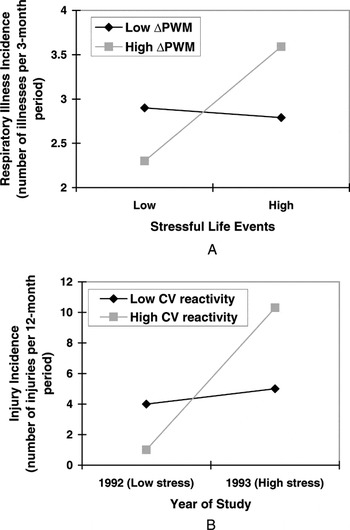
The interactions among laboratory-based stress reactivity and environmental stressors in predicting health outcomes. (A) Immune reactivity (changes in pokeweed nitrogen response) × family stressful events and respiratory illness incidence in kindergartners (N = 99; adapted from Boyce, Chesney, et al., 1995). (B) Biobehavioral reactivity × confinement stress and injury incidence in a troop of semi-free-ranging rhesus monkeys (N = 36; adapted from Boyce et al., 1998).
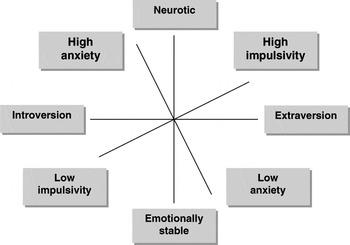
The relation between Eysenck's dimensions of extraversion and neuroticism and Gray's dimensions of impulsivity and anxiety.
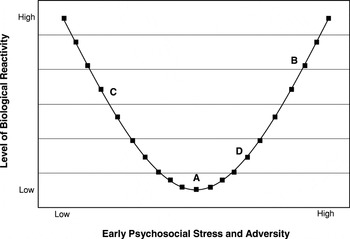
The hyopthesized curvilinear relation of biologic reactivity to early stress and adversity. Comparisons of subjects at points A and B would result in a conclusion that early adversity is associated with greater stress reactivity. Conversely, comparisons at points C and D would generate the inference that early adversity produces diminished reactivity.
 You have
Access
- 1658
- Cited by