Introduction
Prehospital providers are frequently confronted with ethical dilemmas. Making ethical decisions regarding patient care in the prehospital environment can be challenging for both Emergency Medical Service (EMS) providers and their online medical control physicians. While evaluating and treating life-threatening emergencies, prehospital providers are often working with limited patient information and must make important decisions rapidly.Reference Lu and Adams 1 Discussing some of these ethical challenges and providing a framework for adequate resolution is the purpose of this report.
Numerous articles have been written discussing ethical dilemmas in the prehospital environment. Most of these, however, have been limited in scope, focusing on one specific ethical issue. One of the first studies attempting to quantify the incidences and types of ethical conflicts more broadly was performed by Adams, et al.Reference Adams, Arnold, Siminoff and Wolfson 2 In their study, ethical dilemmas were identified in 14.4% of paramedic responses. They went on to describe the breadth of different ethical challenges encountered and concluded that more extensive training in biomedical ethics for both prehospital providers and medical command physicians was necessary to help them resolve these challenges appropriately. Another study by Heilicser, Stocking, and Siegler queried a broader range of prehospital providers, including emergency medical technicians (EMTs) and EMT- Intermediates in addition to paramedics, and found a similar frequency of ethical dilemmas. Respondents expressed a desire for more EMS continuing education with a focus on out-of-hospital ethical questions.Reference Heilicser, Stocking and Siegler 3
Some articles have discussed a range of ethical dilemmas and have given some guidance for resolution. The Ethics Committee of the National Association of EMS Physicians (Overland Park, Kansas USA) developed a paper outlining the ethical obligations of prehospital personnel and online medical direction. 4 They recommend utilization of the bioethical principles of patient autonomy, beneficence, and justice to guide decisions regarding some of the more common prehospital ethical challenges. Larkin and Fowler outline how the ethics of teamwork and virtue are intimately linked in EMS.Reference Larkin and Fowler 5 After discussing numerous ethical scenarios, they conclude that future training should include opportunities for character and team building before optimal performance and accountability can be assured. More recently, Becker, et al proposed a series of pertinent ethical questions and offered recommendations for management.Reference Becker, Gausche-Hill and Aswegan 6 They stressed the importance of establishing protocols and policies, when possible, to address some of the more complex and high-risk ethical dilemmas.
Other articles have examined different viewpoints in review of ethical dilemmas in the prehospital environment. Klugman points out in his article that although the principles of medical ethics may be similar across different disciplines, how the issues are deliberated and resolved differs greatly depending on location and circumstances.Reference Klugman 7 He describes in different scenarios how an ethically sound decision made in the hospital or a doctor’s office may not be ideal for EMS providers in the prehospital environment. In regards to prehospital care in India, Rao and Jena discuss multiple ethical challenges faced by dispatchers, first responders, EMTs, and physicians providing online medical direction.Reference Rao and Jena 8 Despite functioning in a much different environment, prehospital providers in India face many of the same ethical conundrums seen in the United States. An article by Erbay takes a more global view.Reference Erbay 9 Written in Turkey, he describes a number of ethical issues faced by “prehospital emergency caregivers,” since in some countries, prehospital care is delivered by physicians or nurses instead of EMTs. Despite variability of caregivers, there are universal ethical conflicts that appear globally in the prehospital arena. He echoes what many other authors have noted: medical care in the prehospital setting is much more challenging than in the controlled environment of the emergency department (ED). Likewise, the ethical dilemmas of prehospital care are compounded by a lack of comprehensive patient information, provision of care in sometimes austere environments, and critical time constraints.
This article will add to the current body of knowledge by first describing the principles and theories that guide actions in ethical dilemmas. Common prehospital ethical conflicts will then be outlined, including a provider’s duty to treat, matching resources with needs, confidentiality in the age of handheld devices, refusal of treatment, withholding of treatment, and termination of resuscitation (TOR). Finally, recommendations for prehospital providers and online medical control physicians will be discussed.
This report provides the educational content for a bioethics curriculum targeted at educators and practitioners involved in “real-time” EMS direction. “Real-time” describes online medical control through telecommunication (ie, radios, cell/sat phones, and messaging/emails) and on-site direction. These practitioners include all those that may face sudden ethical dilemmas while directing EMS activities. They include physicians, nurses, and physician assistants that provide online direction to EMS providers and those who provide these controllers with formal and informal guidance. Although the focus is on practitioners and their teachers, these curricular elements will also be useful to those designing EMS protocols and doing program quality assurance. The goal is for the controllers to have a sufficient ethics background to recognize ethical dilemmas in directing EMS personnel and be able to guide prehospital providers through common ethical dilemmas.
By only providing the content, this report falls short of being a full curriculum in that it lacks educational strategies, subject matter sequencing, learning outcomes, and an assessment tool.Reference Steiner, Sonntag and Bokonjić 10 However, educators and practitioners can use this content for self-assessment, as an educational framework, and introduce components into existing courses. The emergency medicine (EM) bioethics literature contains complete descriptions of all the topics discussed, albeit not always considering the EMS controller’s urgent time constraints, need to work through paramedical personnel, and communication difficulties.Reference Iserson, Sanders and Mathieu 11 - Reference Iserson 14
Report
Principles and Theories
Those directing EMS personnel in the field need to understand three key ethical elements: (1) fundamental principles that guide actions; (2) how to recognize and help on-scene personnel that an ethical dilemma exists; and (3) how to rapidly guide them toward an ethically appropriate course of action.
Bioethics, a subset of ethics, is the application of values and moral rules to find reasoned and defensible solutions to actual or anticipated moral dilemmas facing clinicians. The moral precepts that underpin ethical decisions are derived from a variety of sources, including individual, cultural, and community value systems.Reference Beauchamp and Childress 15 Bioethics differs from the law, having greater decision-making flexibility. These are quite different from bioethics’ concerns of basic moral values and patient-centered issues. It often requires that clinicians identify a patient’s personal, cultural, religious, or community values and to balance these values with their own personal and professional ethos.Reference Iserson and Heine 13 In EM, the focus is inevitably on the inherent “medical” nature of each case; therefore, it should come as no surprise that ethical dilemmas often go unrecognized.
What is an Ethical Dilemma? When Does it Exist?
Ethical dilemmas exist between multiple good or multiple bad options. They are often described as a tension between ethical principles. Four principles are commonly referred to: (1) autonomy (respecting persons and their decisions); (2) beneficence (doing good); (3) non-maleficence (not doing harm); and (4) distributive justice (fairly allocating resources).Reference Schmidt, Olszewski, Zive, Fromme and Tolle 16 Under normal circumstances, autonomy is prioritized, meaning that when principles conflict, it often governs decisions and actions. In EMS, however, safety must also be added (ensuring physical well-being) since it often plays a major role in prehospital ethical dilemmas.Reference Iserson 17 It often will be prioritized over all other principles, particularly when providing EMS online direction.
The following list is very brief descriptions of bioethical dilemmas that might face a clinician providing EMS online control. They are divided into two actions (permit and instruct) based on ethical decisions and reasoning. Subsequent sections of this report will describe additional ethical dilemmas and discuss some of these in more detail.
Will you permit EMS personnel to:
-
∙ Give colleague (health care worker/fire personnel/police) treatment or transport priority?
-
∙ Practice beyond established rules or training? Or use outside knowledge and experience (eg, combat medic)?
-
∙ Consider their personal religious or moral rules in determining an action?
-
∙ Withhold cardiopulmonary resuscitation (CPR) from an elderly demented nursing home patient that codes en route to hospital (no dx known)?
-
∙ Delay treatment for a patient who just shot a police officer?
Will you instruct EMS personnel to:
-
∙ Act (or will you give advice) beyond knowledge or training?
-
∙ Put themselves or others at-risk?
-
∙ Prioritize the treatment or transport of a well-known government official over two other patients when all three are equally critical (one provider in rural setting)?
-
∙ Use improvised equipment or techniques when limited resources exist (such as in a disaster situation)?
Once EM clinicians recognize an ethical dilemma, their concern must be how to act in the most ethical fashion. Emergency Medical Service control demands a rapid decision. Field personnel will view a controller not providing guidance in these situations as weak, if not incompetent.
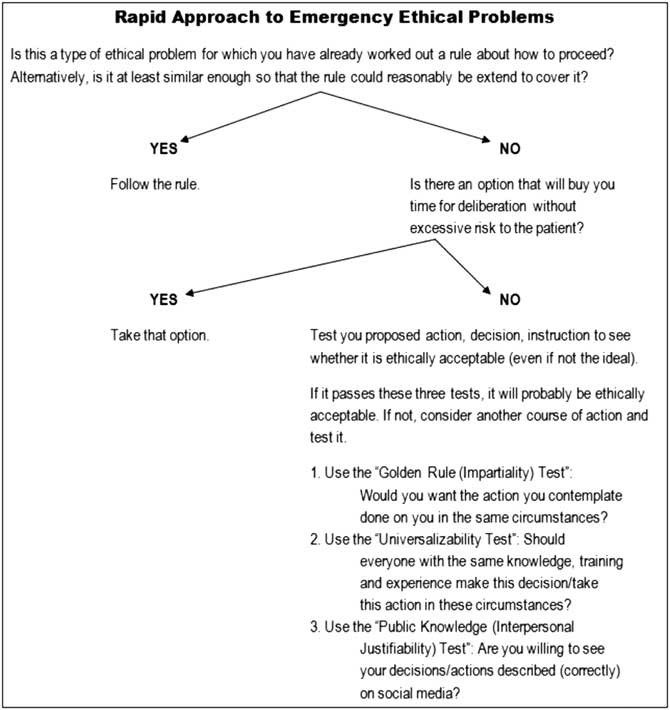
The question then is how to make these decisions. One tool that EM clinicians have successfully used when faced with a bioethical dilemma is the Rapid Decision-Making Model (Figure 1). The Model asks if the clinician already has an ethically appropriate action or instruction for the situation (or an ethically equivalent situation). This could be gained from reading, courses, or experience. If not, it provides three tests for any proposed action. If the proposed action passes all three tests, the proposed action is most probably within a “cone” of ethical acceptability, even if it’s not the action that might be selected after in-depth reading or an intensive discussion with a bioethics committee. Its value lies in rapidly providing an ethically acceptable course of action in a novel situation.
Rapid Approach to Emergency Ethical Problems. From: The Rapid Decision-Making Model. Modified from Iserson, et al. Ethics in Emergency Medicine, second edition. Tucson, Arizona USA: Galen Press, LTD; 1995. Used with permission.

Duty to Treat: Access to Care, Matching Resources with Needs
Those in need have a right to expect an appropriate response when they access 911 or a similar system; EMS personnel have a corresponding duty to provide this response. This system is based on beneficence (doing good), which is a hallmark of all health care professions and activities. That response and all behavior involved also should be equitable. That is, based on distributive justice; it should be fair to everyone involved. Those providing online EMS control have a moral responsibility to assure that:
-
1. The on-scene clinicians have sufficient personnel and equipment to treat the patient(s) about whom they are contacting you. Ask them directly. In a multi-casualty situation, try to talk to the on-scene commander. If they need additional assistance, suggest to them how they can immediately recruit more help (ie, police, fire department, or bystanders) or have them or you call for additional EMS or ancillary units.
-
2. On-scene personnel provide care to patients in a non-discriminatory manner, without regard to their social or economic status, race, religion, gender or sexual orientation, living situation, age, or national origin. People in every community and social stratum generally recognize EMS as being non-discriminatory. Appropriately, EMS personnel normally provide prehospital emergency care and, when necessary, transport, to everyone in need. Unfortunate exceptions have occurred, including misguided and uninformed refusals to transport patients with stigmatizing diseases (eg, HIV), sporadic refusals based on race or social status (ie, homeless), and situational, jurisdictional, and payment issues. Emergency Medical Service controllers should be involved in any refusal to provide treatment and should question the reasoning behind such a decision. This may include vetted protocols, which are reviewed and updated regularly.
-
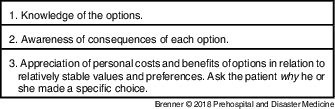
3. Valid refusals of treatment or transport are honored. In some situations, especially with chronically or terminally ill patients, they or their surrogate may refuse treatment or transport. Based on the principle of patient autonomy prevailing, state laws or EMS administrative rules usually guide this. Often, these are a modification of physician orders of life-sustaining treatment (POLST),Reference Iserson, Sanders and Mathieu 11 but more liberal, patient-oriented prehospital advanced directives (ADs) also exist.Reference Iserson and Heine 12 Physician orders of life-sustaining treatment are discussed in more detail below. In other settings, patients may refuse transport or treatment if they have sufficient decision-making capacity;Reference Iserson 18 , Reference Moskop, Marco, Larkin, Geiderman and Derse 19 EMS controllers should be prepared to walk on-scene personnel through the questions needed to make that determination (Table 1).
-
4. Medical criteria determine the priority of patient transport.
-
5. On-scene personnel have support if they must use alternative techniques or equipment in a resource-poor situation. Prehospital care is a relatively resource-poor environment. Emergency Medical Service vehicles (eg, ambulances, helicopters, automobiles, scooters, and boats) can carry only a limited amount of equipment. Search and rescue teams and field medics carry even less in their medical bags. Coupled with a stressful and possibly dangerous environment, prehospital teams may have less manpower, medical knowledge, and experience than is available in EDs. This may result in using improvised or alternative equipment and techniques when faced with unusual circumstances (eg, many simultaneous patients, lack of the proper size or type of equipment, or environmental difficulties). 20 Online supervisors must be prepared to recognize when these situations exist and must be willing to support their field personnel in making decisions that fall outside normal protocols.
-
6. Personnel safety takes priority over access to care. Emergency Medical Service control must explicitly emphasize to on-scene providers that their personal safety is paramount. Normally, police and equipped firefighters will prevent them from endangering their lives. However, that is not always the case and EMS control may have to remind them that the safety principle normally outweighs other ethical considerations.
Components of Decision-Making Capacity

Modified from Buchanan AE. The question of competence. In: Iserson KV, Sanders AB, Mathieu D (eds). Ethics in Emergency Medicine, 2nd ed. Tucson, Arizona USA: Galen Press, 1995.
Patient Privacy and Confidentiality
Ethical and Legal Elements of Privacy
Respect for patient privacy and confidentiality is an ethical principle that applies to all health care professionals, but it may be more challenging in the prehospital setting. Prehospital providers should understand the definitions of privacy and confidentiality. Privacy can be thought of as having three subsets: (1) physical privacy; (2) decisional privacy; and (3) informational privacy.Reference Moskop, Marco, Larkin, Geiderman and Derse 19 Physical privacy refers to privacy related to the physical body. In the health care setting, patients allow providers access to their physical body but expect protection from the presence of or exposure to unauthorized persons. Decisional privacy is the right to make autonomous decisions without the interference of the state or other parties. Informational privacy refers to the duty to protect health care information from disclosure to unauthorized persons. The US Supreme Court has recognized the physical and decisional privacy as pertinent to the individual’s right to privacy from the state.
Respect for patient privacy has deontological and utilitarian justifications;Reference Iserson, Sanders and Mathieu 11 prehospital providers have a professional duty to respect patient privacy. Respect for a patient’s privacy is respect for the patient’s dignity and values as a human – all persons wish to have control of their physical selves and information about themselves. In addition to the value of privacy in itself, the expectation of privacy fosters the provider-patient relationship. 20
Prehospital care poses a challenge to physical privacy as such encounters may occur in public settings. Prehospital providers should move the patient from public view to a private location, such as the transport vehicle, as soon as it is safe to do so and after immediately required stabilizing therapies. It is appropriate for EMS personnel to ask bystanders to respect the patient’s privacy, but their focus should remain on the medical care of the patient.
Prehospital providers are a covered entity under The Health Insurance Portability and Accountability Act (HIPAA) and must be in compliance with the Privacy Rule. The Privacy Rule establishes standards to protect “individually identifiable personal health information,” also known as protected health information (PHI). 21 The rule applies to any PHI that is held or transmitted by a covered entity in any form, including electronic, paper, or oral. Identifiable information includes, but is not limited to, demographic data, information about the individual’s physical or mental health (past, present, or future), and information regarding the health care that has been provided to that individual.
There are specific HIPAA provisions of which EMS personnel should be aware. Section 164.506 states that providers may disclose PHI without consent for the purposes of medical treatment. In this context, “Treatment means the provision, coordination, or management of health care and related services by one or more health care providers, including the coordination or management of health care by a health care provider with a third party; consultation between health care providers relating to a patient; or the referral of a patient for health care from one health care provider to another.”Reference Jensen 22 Therefore, consent does not need to be obtained in order to obtain, disclose, or communicate PHI to providers at treating facilities.
There are exceptions provided under HIPAA which a covered entity can disclose PHI without the consent, authorization, or opportunity to agree/object from the individual. While there is an extensive list of exceptions, the EMS provider should be aware that disclosure of PHI to law enforcement personnel is permitted in the following scenarios:Reference Conroy, Tominaga and Erwin 23
-
1. As required by laws that require reporting of certain types of wounds or injuries, or in compliance with court orders, warrants, or subpoenas;
-
2. For the purposes of identifying or locating a suspect, fugitive, material witness, or missing person (elements that may be disclosed are limited);
-
3. When the individual is suspected to be a victim of a crime, if the individual is unable to provide consent due to incapacity or other emergency condition under the following conditions:
-
a. The information is needed to determine whether a violation of law by a person other than the victim has occurred, and such information is not intended to be used against the victim;
-
b. Immediate law enforcement activity that depends upon the disclosure would be materially and adversely affected by waiting until the individual is able to agree to the disclosure; and
-
c. The EMS provider, in the professional judgment, believes the disclosure is in the best interests of the individual;
-
-
4. When the individual has died and there is suspicion that the death was a result of criminal conduct;
-
5. If the individual is suspected to have committed a crime on the premises of the covered entity; and
-
6. For the purposes of reporting a crime in emergencies, if such disclosure appears necessary to alert law enforcement to:
-
a. The commission and nature of a crime;
-
b. The location or victim(s) of such crime; and
-
c. The identity, description, and location of the perpetrator.
-
Of particular note for EMS providers who are often on-scene for motor vehicle crashes is that motor vehicle identifiers are considered PHI. In § 164.514, “vehicle identifiers and serial numbers, including license plate numbers” are listed as elements that must be removed to appropriately de-identify materials.Reference Cleveland, Colwell, Douglass, Hopkins and Haukoos 24 Photography is discussed below, but EMS providers should be aware that vehicle identifiers are considered patient identifiers under HIPAA if photographs of motor vehicles crashes are obtained.
Ethics of Photography by EMS Personnel
A modern element of patient privacy relates to the use of handheld electronic devices such as cellular phones. As the majority of providers carry personal devices that are equipped with photography and videography capabilities, it is important to educate EMS personnel on the ethics of photography. A core responsibility of EMS providers is the transfer of care of the patient to the hospital team. Prehospital providers may choose to take photographs of emergency scenes, such as motor vehicle crashes, to facilitate communication to receiving medical providers.
Photographs of motor vehicle crashes may be helpful to communicate the extent, location, and pattern of vehicle damage, which may be important predictors of passenger injury and severity.Reference Jensen 22 , Reference Conroy, Tominaga and Erwin 23 Studies have reported EMS descriptions of vehicle damage do not accurately correlate with crash photographs. Physicians who view photographs of crashes have been reported to be more likely to rate the crash as more severe as compared to when given a verbal report of the crash.Reference Cleveland, Colwell, Douglass, Hopkins and Haukoos 24 While further research is needed to delineate the exact role of motor vehicle crash photography as a risk stratification tool, it is reasonable for EMS personnel to use such photographs in communication with hospital providers. However, after communication with the receiving providers, photographs should be deleted.
All photographs of patients by EMS personnel require consent. Unless there are procedures and policies in place for obtaining and documenting this consent, photographs of patients should not be obtained. When appropriate consent is obtained, photographs may be obtained for research or educational purposes. Personal use of photographs is never appropriate.
Prehospital care often occurs in public, potentially in view of bystanders. This may result in conflict between First Amendment rights and the right to privacy. The First Amendment typically guarantees the right to photography and video recording on public property. Prehospital providers may arrive at a scene that is being photographed or videotaped by bystanders or members of the press. If EMS providers are concerned about bystander use of photography, the patient should be moved to a private location as soon as it is safe to do so.
Recommendations for photography and videography by EMS personnel:
-
∙ Photographs and/or videos should never be obtained for personal use or entertainment purposes.
-
∙ It is appropriate to obtain images of the surrounding scene, such as damage to a vehicle, to assist with transfer of care to the hospital provider. Reasonable efforts should be made to exclude PHI, such as license plate numbers, from the photograph.
-
∙ Consent must be obtained for photographs/videos obtained for education or research purposes.
-
∙ Prehospital providers cannot prevent bystander photography, but they should move to a private location to facilitate patient privacy as soon as it is safe to do so.
Decisional Capacity and Refusal of Transport
Definition
Medical competence is different than decision-making capacity. Competence is a legal definition; all adults are considered to be competent to make their own medical decisions unless deemed otherwise by a court and appointed a power-of-attorney for medical decisions. Decisional capacity is a dynamic entity that is dependent on two main variables: the patient and the situation. A normally competent adult may have impaired capacity due to a number of variables, including but not limited to illness, injury, intoxication, emotional upset, and psychiatric disease. Decisional capacity is also dependent on the complexity and gravity of the situation. For example, it requires a higher level of decisional capacity to understand the implications of refusing transport for chest pain than it does for refusing transport for a simple laceration. The former requires abstract thinking and the potential consequences are more severe.
There are three main elements involved in decisional capacity: (1) the possession of a set of values; (2) the ability to understand and communicate information; and (3) the ability to reason and consider the consequences of decisions. 25 First, the individual must have a framework of values and goals in life in order to make decisions that are in accordance with those values and goals. This set of values should be something that is relatively stable, but may change over time. In the absence of terminal illness, most persons hold health and the prolongation of life as values. Decisions that are contrary to these values should rise concern about decisional capacity, but do not necessarily indicate impaired decisional capacity. A person engaged in an activity for pleasure, financial gain, or another personal reason may choose to accept a potential risk of an adverse health event in order to avoid the inconvenience of seeking medical care at an inopportune time.
The second element of capacity is the ability to understand and communicate information. The ability to understand and communicate information involves much more than a shared language. The patient must also possess the cognitive capacity to comprehend and process information that is received from the EMS provider. This cognitive ability may be limited by life experience. A person who has had little or no interaction with the health care profession or experience with illness of oneself or others may have difficulty with the concept of life with long-term disability.
The third element of capacity is the ability to reason and consider the consequences of decisions. The patient must be able to consider the impact of various outcomes on his or her life. This type of consideration requires the ability to compare multiple hypothetical outcomes and the ability to put greater priority on future, as opposed to present, events.
Assessment
Assessing decisional capacity can be a complex task, especially for EMS providers who typically have no previous knowledge of a patient. One paradigm for assessing capacity in the peer-reviewed literature that can be employed by EMS providers is a four-step model proposed by Conover.Reference Conover 26 This paradigm can be thought of as the four P’s of capacity: paraphrase, process, plan, and put together:
-
1. Is the patient able to paraphrase the information that was presented? Ask the patient to paraphrase the information that was presented to them. It is not sufficient to simply state that they understand what they were told or to repeat words back to the provider. The patient must be able to summarize the information given to them.
-
2. Is the patient able to process information? The patient should be able to place the consequences of decisions within their personal set of values. If this is questionable, Conover suggests asking the patient about what a rational person would do in a hypothetical situation. Even in the case of differing values, a person with decisional capacity should be able to demonstrate understanding.
-
3. Is the patient able to plan for the future? Planning for the future requires making a choice of how to proceed. Differing responses over a short period of time as to the course of action suggests impairment in the ability to plan for the future.
-
4. Can the patient put together all of the information to appreciate the consequences of their decision? The patient should be able to appreciate that their decisions have implications for the future and be able to consider the possible outcomes of their plan.
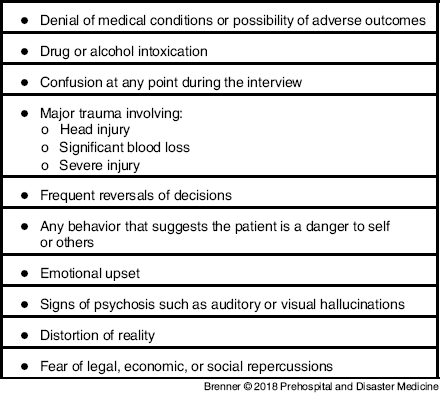
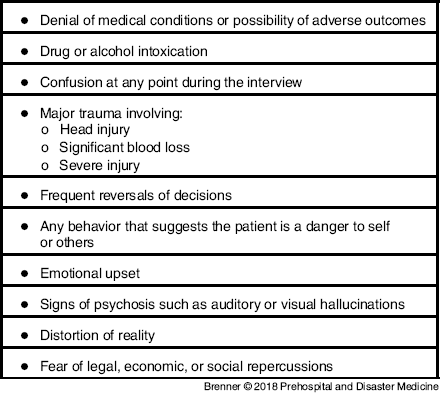
In applying this paradigm, the EMS provider can see how decisional capacity is dependent on the situation. A higher level of mental faculties is needed to have intact decisional capacity for more complex medical problems with a greater range of potential adverse outcomes. Due to the complexity of assessing capacity, if there is any question about a patient’s decisional capacity, EMS providers should assume the patient’s capacity is impaired by an emergent condition and transport the patient for further medical evaluation by a physician. Table 2 contains some red flags that should alert EMS providers that a patient’s decisional capacity might be impaired. Prehospital providers should be aware that assertions that “nothing bad could ever happen to me” or excessive denial of possible adverse outcomes are common causes of decisional impairment.Reference Appelbaum 27
Red Flags that Decisional Capacity May be Impaired
Refusal of Transport
A dilemma for EMS providers arises when a patient who has impaired decisional capacity refuses treatment and/or transport to the hospital. This type of refusal creates a conflict between the principles of respect for patient autonomy and beneficence. Prehospital providers must be educated on the policies and procedures for handling and documenting refusal of care. If state laws exist pertaining to implied consent, EMS personnel should be educated on these laws.
In the case that a patient refuses prehospital interventions but consents to transport to a medical facility, the EMS providers should focus on expediting transport. Once transport is underway, the EMS providers may reconsider medical interventions that are clinically indicated. Transport should never be delayed due to a refusal of a medical intervention, unless that intervention is required for the safety of the EMS personnel.
When a patient refuses transport to a hospital, EMS providers should encourage the patient to consent to transport, even if the need for medical care is questionable. All reasonable efforts should be made to have that patient evaluated by a physician. The patient should be reassured that upon arrival, or soon after, they will be assessed for the capacity to refuse care.
The following strategies may be employed in the case of patient refusal of transport:
-
∙ Prevent refusal. The best way to deal with refusal of transport is to prevent it; EMS personnel can attempt to prevent refusal by establishing rapport with the patient and creating a trusting, safe environment. They should be sensitive to a patient’s fears or sense of vulnerability. Patients who feel safe and cared for are more likely to consent to transport.
-
∙ Talk with the patient. When a patient is refusing treatment, it is the responsibility of the EMS provider to always advocate for the patient’s safety, which often will involve transporting for additional evaluation. This discussion may involve the following:
-
o Find out why the patient is refusing. Is there something that can be easily addressed (eg, locking the house or putting food out for a pet)?
-
o Explain the process to the patient. Patients may be unclear as to the process once they are transported to the hospital. Explain that a medical evaluation will occur at the hospital and they will have the opportunity to consent/refuse at that time.
-
o Discuss risks and benefits. One benefit of transport to a hospital is that a physician would evaluate the patient and emergent medical conditions can be stabilized and treated. The specific conversation about risks and benefits will depend on the patient’s complaint. Prehospital providers must inform patients about the worst possible scenarios, including permanent disability and loss of life, limb, sexual function, or quality of life. They should include the possibility of an adverse outcome due to the uncertainty inherent in prehospital evaluations.
-
o Solicit the help of friends/family. A patient may be more willing to listen to the advice of a concerned friend or family member. Ask them to speak with the patient regarding consent to transport.
-
o Talk to the patient alone. The patient may have a real or perceived concern that they do not wish to discuss in the presence of others or family/friends. Or the patient may believe that others are discouraging them from obtaining a medical evaluation. Talk to the patient alone in order to minimize these influences.
-
o Validate reasonable fears. Patients may be reluctant to disclose fears of illness or hospitals. Express empathy to the patient regarding their fears.
-
-
∙ Present the patient with alternatives. If a patient is deemed to have appropriate decisional capacity and still refuses treatment and/or transport, that patient should be counseled on alternative courses of action. The patient must be aware that EMS can be called again at any time, not just for a change in clinical condition but also for a change of mind regarding the decision for treatment/transport. The patient should be counseled on appropriate outpatient follow-up and reasons to seek emergency medical care.
-
∙ Contact medical command. Some medical treatment protocols may require EMS personnel to contact medical command in the case of refusal of treatment and/or transport. Even if not required, EMS personnel should be encouraged to contact medical command in cases of refusal of transport. Contacting medical command serves a number of purposes. First, it decreases the risk that a patient who has impaired decisional capacity is inadvertently allowed to refuse care. The command physician may have greater insight into the medical condition and the potential adverse outcomes if the patient refuses treatment, allowing for improved information for the patient to assess risks and benefits. In addition to providing the medical command physician with a brief assessment of the patient, including vital signs, reason that EMS was called, and physical examination findings, EMS should put the patient on the phone to talk with the physician directly whenever possible.
-
∙ Use of physical restraints. If a patient lacks decisional capacity and is combative and/or a danger to self or others, EMS personnel may use physical restraint. Protocols should be in place in order to guide the use and documentation of physical restraints. Due to the risk of assault and injury of prehospital providers,Reference Schmidt, Neely and Adams 28 it is reasonable for EMS providers to place restraints if there is a concern that a patient may become a danger to self or others. The decision to place restraints should ideally be made prior to initiating transport. The reason for placing restraints should be explained to the patient. The least restrictive manner of restraint should be utilized. Restraints should never be used for the purposes of convenience or punishment. If more than minimal force is required to place restraints, EMS providers should seek the assistance of law enforcement. They should have a low threshold for recruiting the assistance of other EMS providers and law enforcement personnel.
-
∙ Use of sedating medications. For EMS personnel who are authorized to use sedating medications, the use of sedation may be used in addition or as an alternative to physical restraint. The use of sedating medications must be in accordance with the medication administration protocols; EMS personnel must be adequately educated on the appropriate indications, administration, dosing, monitoring, and potential adverse events associated with the use of sedating medications prior to being authorized to use these medications.
Ethics of Delaying or Withholding Medical Care or Transport
Calls for Non-Emergent Conditions or Secondary Reasons
Prehospital providers care for and transport patients with non-emergent conditions and patients who use the ambulance system for secondary, non-medical reasons on a routine basis.Reference Becker, Gausche-Hill and Aswegan 6 , Reference Corbett, Grange and Thomas 29 While these non-emergent and secondary motive calls have implications for social justice due to strain on resources, the duty of EMS providers is to the individual patient. Becker, et al describe this approach as applying the principles of beneficence and justice in a patient-centered paradigm without regard to system resources concerns.Reference Becker, Gausche-Hill and Aswegan 6
Prehospital providers routinely provide care and transport for patients with non-emergent medical conditions. A layperson definition of a medical emergency may differ from that of a medical provider. Patients perceive conditions as emergent more commonly than EMS providers.Reference Becker, Gausche-Hill and Aswegan 6 However, studies have also reported that EMS personnel cannot safely or reliably determine who needs ambulance transport or ED care for an emergent condition.Reference Richards and Ferrall 30 - Reference Rinke, Dietrich, Kodeck and Westcoat 33 The difficulty in triaging prehospital patients may stem from the nature of prehospital care that occurs in rushed settings with limited information and resources and/or the limited medical training of EMS providers. Due to the differing perceptions between patients and EMS providers of what constitutes a medical emergency, and the inability of EMS to determine what is truly a medical emergency in the prehospital setting, for the purposes of prehospital care, the patient determines what emergencies that requires care and transport.Reference Becker, Gausche-Hill and Aswegan 6 Prehospital providers responding to a 911 dispatch should not refuse or delay care if they consider a condition to be non-emergent.
Patients may also use EMS services for secondary reasons, including lack of alternative means of transportation, belief that their care will be expedited if they arrive via ambulance, or desire for removal from unpleasant physical conditions or social situations.Reference Becker, Gausche-Hill and Aswegan 6 It is not the role of the EMS provider to parse out or address these issues. Secondary reasons may be due to complex psychological, social, or economic issues that cannot be appropriately managed by prehospital providers with limited resources. Prehospital providers should not refuse or delay care/transport to patients perceived to be using the ambulance system for secondary reasons. Other means may be used to address inappropriate use of EMS services. For example, case management interventions that provided education and access to other means of transport and access to primary care have decreased ambulance calls by frequent utilizers of EMS services.Reference Becker, Gausche-Hill and Aswegan 6 , Reference Gershon, Vlahov, Kelen, Conrad and Murphy 34 There is a need for further research on strategies to lessen strains caused by inappropriate EMS utilization.
Recommendations:
-
∙ For EMS providers, care for the individual patient is paramount.
-
∙ Resource utilization and social justice concerns should be managed on the systems level and are not the concern of the individual EMS provider.
-
∙ Prehospital providers should not refuse or delay care or transport to patients that they perceive to have a non-emergent condition.
-
∙ Prehospital providers should not delay or refuse care or transport to patients perceived to be using ambulance services for secondary reasons.
Threat of Physical Harm
Due to the nature of prehospital medical care that is provided in uncontrolled environments in streets, businesses, and homes, EMS providers are at-risk for encountering situations in which their physical safety is at risk. Factors pertaining to the situation or the patient may compromise safety. Situational factors include elements such as walkway impediments (eg, uneven pavement or icy conditions),Reference Suruda, Pettit, Noonan and Ronk 35 confined spaces with risks of asphyxiation,Reference Coats and Davies 36 and on-road or roadside motor vehicle crashes.Reference Pozzi 37 Environmental dangers that EMS providers are exposed to may vary by geographical location. Prehospital providers are also at-risk for interpersonal violence, from the patient or other persons at the scene.
The majority of prehospital providers surveyed in the US and elsewhere have been victims of interpersonal violence.Reference Bigham, Jensen and Tavares 38 - Reference Grange and Corbett 41 The forms of violence reported include physical assault, verbal assault, intimidation, sexual harassment, and sexual assault.Reference Rahmani, Hassankhani, Mills and Dadashzadeh 39 Common forms of physical assault include pushes, punches, kicks, scratches, and bites.Reference Petzäll, Tällberg, Lundin and Suserud 40 In the majority of reported cases, the perpetrator was the patient and the incident occurred in the patient’s residence. A history of psychiatric illness and drug or alcohol intoxication are predictors of violence.Reference Grange and Corbett 41 , Reference Pourshaikhian, Gorji, Aryankhesal, Khorasani-Zavareh and Barati 42 Reported violent threats were made with firearms, knives, sticks, bottles, and even with the use of dogs and motorized vehicles.Reference Grange and Corbett 41 The consequences of violence for EMS providers include physical and psychological injuries. Those injuries negatively influence job satisfaction, mental health, and job performance.Reference Bernaldo-De-Quirós, Piccini, Gómez and Cerdeira 43 , Reference Auerbach, Cushing and Harris 44
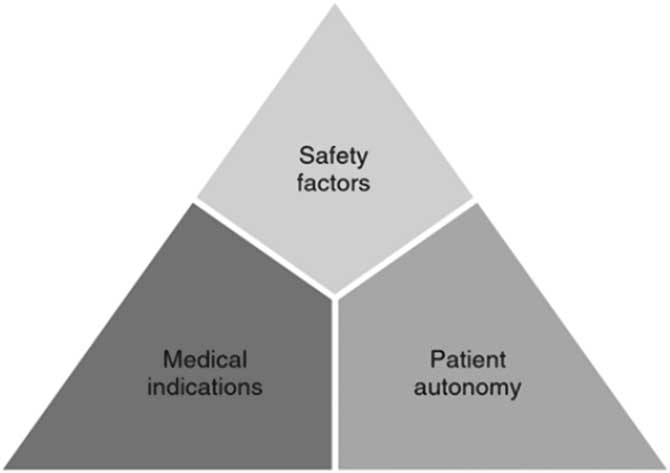
While there is widespread recognition of the problem of workplace violence for EMS providers, there is a lack of guidance and education on how EMS providers should manage violent or threatening situations.Reference Bernaldo-De-Quirós, Piccini, Gómez and Cerdeira 43 One ethical model that can be used to guide EMS providers in dangerous situations is the Wilderness Medicine Ethical Triangle (Figure 2).Reference Tintinalli 45 In this model, personal safety and safety of the group are paramount. As described by Iserson, et al,Reference Iserson, Sanders and Mathieu 11 “security, or safety, means first protecting oneself, then the health care team and support teams, and finally the patient.”
Wilderness Medicine Ethical Triangle. From: Iserson KV, Heine C. Ethics in Wilderness Medicine. In: Auerbach P. Wilderness Medicine, 7th ed. Amsterdam, Netherlands: Elsevier; 2017:2262-2271. Used with permission.

Prehospital providers have a duty to treat, but this duty does not transcend personal and team safety. Perceived danger may differ among individuals, and it is the responsibility of each individual provider to assess a scene for safety and communicate any potential threats to the team. After entering a scene, if a safety threat develops that the providers are unable to manage, all members of the team should move to a safe location immediately. The Wilderness Medicine Ethical Triangle is applicable to safety threats that are due to the situation or the patient.
While safety threats may render EMS providers unable to provide treatment at times, providers should make all attempts to first delay, as opposed to abort, efforts until appropriate additional resources or personnel are available to allow the safe provision of medical care. Additional resources may include more EMS personnel, police, or equipment. Emergency systems should have protocols for the management of violent patients and the use of physical restraints.Reference Gallagher and Kupas 46
It is important that EMS providers report all events or situations involving a perceived threat to safety. Monitoring of the events has implications for system and policy changes to improve safety for providers and prevent delays in medical care for patients.Reference Sterud, Ekeberg and Hem 47 Under-reporting of violent events has been due to fear of negative judgment by management, perception that the reporting was inconsequential, fear of revenge, and lack of reporting mechanisms.Reference Bernaldo-De-Quirós, Piccini, Gómez and Cerdeira 43 Prehospital providers should be encouraged to report all threats to safety and be provided with a mechanism to report the events.
Prehospital providers should be trained in assessing and managing violent patients in order to minimize delays in medical care and ensure personal safety. Training should include assessing for medical conditions that may cause violent behavior. For example, in one study, hypoglycemia was reported in nine percent of prehospital violent encounters.Reference Gallagher and Kupas 46 Training may also include de-escalation techniques and self-defense. Prehospital providers have reported successful use of crowd control, calming techniques with patients or families, and self-defense to prevent violence or protect themselves from injury.Reference Bernaldo-De-Quirós, Piccini, Gómez and Cerdeira 43 As EMS providers may experience posttraumatic stress disorder, anxiety, depression, and burnout as a result of violence,Reference Mozaffarian, Benjamin and Go 48 training may also include education on the psychological impact of violence and resources to manage these possible sequelae.
Recommendations:
-
∙ In situations that pose a threat to safety, the physical safety of EMS providers preempts the care of patients.
-
∙ Prehospital providers have a duty to their team. They must communicate any potential safety threats to their team. The safety of the team preempts the care of the patient.
-
∙ Prehospital providers should avoid refusing care to the patient without compromising safety unless absolutely necessary. Delays in care are preferable to refusal of care.
-
∙ If additional resources (more EMS personnel, police, or equipment) would improve the safety of situation, medical care may be delayed while awaiting the arrival of such resources.
-
∙ Prehospital providers should follow protocols on managing violent patients, including protocols on the placement of physical restraints.
-
∙ Prehospital providers should be trained on how to manage violent situations in order to expedite patient care while maintaining safety. Training may include de-escalation techniques, crowd control, and self-defense.
-
∙ All encounters with perceived threats to safety should be reported. Monitoring of these events may be used to design or amend protocols and policies to improve safety and patient care.
-
∙ Prehospital providers who are victims of violence require appropriate medical and psychological follow-up care.
Withholding of CPR and Other Life-Sustaining Treatments
According the American Heart Association (AHA; Dallas, Texas USA), EMS providers assess over 350,000 out-of-hospital cardiac arrests per year.Reference Field, Hazinski, Sayre, Chameides, Schexnayder and Hemphill 49 The AHA supports the Basic Life Support training that urges all potential rescuers to begin CPR immediately, without delay; to obtain consent as delay in the initiation of CPR may adversely impact the chances of survival and neurologic recovery.Reference Courtwright, Brackett, Cadge, Krakauer and Robinson 50
However, the AHA recognizes four scenarios in which delaying or withholding of CPR may be appropriate: (1) unequivocal signs of irreversible death (eg, decapitation, rigor mortis, dependent lividity, or decomposition); (2) scenes that may threaten the safety of the provider; (3) valid ADs or POLST forms that clearly state that CPR should not be performed; or (4) presence of a surrogate decision maker who expresses the patient’s previously expressed wishes that resuscitation not be attempted.
If there is any doubt regarding the reversibility of death or the patient’s wishes, EMS personnel should initiate CPR. When assessing the reversibility of death, brain death and irreversible brain damage should not be considered, as brain death and irreversible brain damage cannot be reliably determined in the prehospital setting.Reference Courtwright, Brackett, Cadge, Krakauer and Robinson 50 There may be other reasons that EMS providers feel that resuscitation efforts would be futile and should not be initiated; however, in the absence of obvious signs of irreversible death, CPR should never be initially withheld due to futility in the prehospital setting. Some hospitals have created protocols in which CPR is not offered to patients in whom CPR is considered more harmful than beneficial.Reference Miceli 51 Not offering CPR is similar to unilateral do-not-resuscitate (DNR) orders that are initiated by a physician without patient or surrogate consent. Protocols and orders that withhold resuscitation are ethically and legally complex and logistically difficult to implement,Reference Vearrier 52 and therefore not currently appropriate for prehospital care.
There may be times when EMS providers encounter ADs or POLST forms that are unclear or confusing. In these scenarios, EMS providers should proceed with resuscitation pending further clarification. Some POLST forms have been reported to sometimes indicate incongruent choices (eg, Full Code/Comfort Measures or DNR/Full Treatment indicated),Reference Mirarchi, Doshi, Zerkle and Cooney 53 which providers may find confusing. Survey studies have reported variability in POLST form interpretation by emergency providers,Reference Mirarchi, Doshi, Zerkle and Cooney 53 suggesting that confusion in interpretation of forms exists. When patient choices are unclear, EMS providers should adhere to the highest level of care indicated on the form.
It is important the EMS providers be educated on the principle that withholding and withdrawing life-sustaining treatments are ethically equivalent. This concept is relevant to the discussion of CPR as well as other life-sustaining treatments, such as advanced airway techniques. Prehospital providers may be concerned that resuscitation efforts will lead to a poor or prolonged clinical outcome; they should be reassured that just because an intervention is initiated in the field does not mandate that it be continued in the hospital. For example, if a patient is endotracheally intubated in the field, and then further medical care is determined to be futile, the patient may be extubated at that time.
Prehospital providers must focus on the delivery of high-quality resuscitation, regardless of the patient’s prognosis. “Slow codes” or pseudo-resuscitation, in which the provider merely gives the appearance of performing resuscitative efforts without delivering effective care, are always unethical.Reference Field, Hazinski, Sayre, Chameides, Schexnayder and Hemphill 49 In addition to having the potential to harm patients, these practices may compromise the moral integrity of the provider and undermine the public’s trust in health care providers. The ethics of prehospital TOR are discussed in the following section, but providing inadequate resuscitation is never appropriate.
Recommendations:
-
∙ Prehospital providers should initiate CPR immediately without waiting to obtain consent.
-
∙ Prehospital providers must know the four scenarios when it is appropriate to delay or withhold CPR: danger to the provider; unequivocal evidence of irreversible death; completed and signed ADs or POLST form; and surrogate decision maker stating DNR wishes of the patient.
-
∙ If confusion exists regarding a patient’s wishes as expressed in ADs or POLST forms, EMS providers should default to the highest level of care indicated on the form.
-
∙ Pseudo-resuscitation is unethical.
Termination of Resuscitation (TOR)
The decision of when to terminate a resuscitative effort can be a very challenging one for any provider to make, and for a prehospital provider, the decision can be more challenging. The high-acuity nature of the patient care situation, relative lack of available clinical information, outside influences such as family at the patient’s side, as well as potentially unsafe surroundings complicate things further. There are both professional and ethical recommendations for prehospital providers to have a specific protocol for TOR in the prehospital setting.Reference Mirarchi, Doshi, Zerkle and Cooney 53 - 58 Well-validated, sensitive, and specific prehospital TOR decision rules can predict in which cases TOR is most appropriate.Reference Morrison, Visentin and Kiss 59 - 62 In order to be applicable, a prehospital protocol must be easy to utilize in complicated scenarios, as any added level of complexity only serves to delay urgent clinical decisions. When these protocols cannot be adequately applied, prehospital providers should be given access to online physicians to provide direction in clinical decision making.
Patient autonomy can be respected by appropriately applying a TOR protocol. Allowing for all appropriate resuscitative efforts to be made while limiting unnecessary or futile procedures reflects respect for a patient as a person. In cases of ADs, DNR orders, or POLST forms, early identification and application of these documents can prevent unwanted, unwarranted, and potentially invasive treatment.Reference Larkin and Fowler 5 , Reference Richardson, Fromme, Zive, Rongwei and Newgard 63 Expressions of the patient’s wishes should be respected by prehospital providers, and providers should be supported to this end by their online physician supervision. The wishes of family or surrogates at the bedside should not override the patient’s expressed wishes.Reference Hopson, Hirsh, Delgado, Domeier, McSwain and Krohmer 56 , Reference Morrison, Visentin and Kiss 59 , 64 Termination of resuscitation can be used in the prehospital setting to avoid inappropriate allocation of costly and time-consuming interventions in patients with a very limited chance of survival.Reference Millin, Khandker and Malki 55 , 64 Prehospital TOR has been shown to decrease the number of unnecessary transports to the hospital for cardiac arrest patients.Reference Morrison, Visentin and Kiss 59 - 62 , Reference Morrison, Bigham, Kiss and Verbeek 65 It is the responsibility of ED physicians and, by extension, online medical control to be good stewards of limited medical resources in all settings, not just in times of crisis, as directed by the principle of justice. 66
Finally, the principle of non-maleficence can be applied in cases of TOR by not performing unnecessary, invasive, and potentially painful and/or harmful procedures such as IV insertion, chest compressions, and endotracheal intubation.
There are, of course, limitations to the utilization of TOR protocols. While recommendations for TOR protocol usage exist,Reference Mirarchi, Doshi, Zerkle and Cooney 53 - 58 there is marked variability in their application.Reference Sasson, Forman, Krass, Macy, Kellermann and McNally 67 - Reference Govindarajan, Lin and Landman 69 For certain cases, resuscitation can be deemed to be futile prior to initiation as supported by the AHA. The AHA has likewise adopted validated tools for termination of futile codes when certain criteria are met. 62 Most EMS systems have the online physician called during resuscitation for direction prior to TOR. To date, there have been no studies evaluating a TOR decision tool without physician input, but future research could be directed to this end, as implementation of EMS-driven prehospital TOR is not implausible based on current literature,Reference Millin, Khandker and Malki 55 , Reference Morrison, Verbeek, Zhan, Kiss and Allan 60 though physician oversight should still be available.
Studies have shown that implementation of TOR protocols is variable across EMS systems, and prehospital providers and their online physician oversight often depart from existing protocols.Reference Sasson, Forman, Krass, Macy, Kellermann and McNally 67 - Reference Govindarajan, Lin and Landman 69 Some EMS systems do not have a TOR protocol.Reference Millin, Khandker and Malki 55 , Reference Govindarajan, Lin and Landman 69 There is no way to create a decision rule that will apply in all scenarios and in all regions. Allowing for regional differences (such as availability of trauma teams and cardiology services), a universal TOR protocol could be modified to allow for prehospital providers and online physicians to deviate from the protocol as dictated by the needs and resources of the community in which they are practicing. Giving prehospital providers access to such a tool could improve application of bioethical principles in a high-acuity and information-poor clinical environment.
The emotional stress of resuscitating cardiac arrest patients should be considered when determining how to prepare EMS providers on how to proceed in these difficult situations,Reference Morrison, Eby and Veigas 61 , 64 but it has been shown that EMS providers and online physicians are comfortable applying a prehospital TOR protocol.Reference Morrison, Eby and Veigas 61
The emotional stress on family members must also be considered. Studies have shown that families generally approve of care received in prehospital provider-driven TOR.Reference Iserson and Heine 12 , Reference Schmidt and Harrahill 70 , Reference Delbridge, Fosnocht, Garrison and Auble 71 However, in line with American College of Emergency Physicians (Irving, Texas USA) and National Association of EMS Providers recommendations, prehospital providers should be able to provide friends and family members at the patient’s bedside with access to appropriate social or pastoral support services after TOR. 54 , Reference Millin, Khandker and Malki 55 , 57
In patients undergoing resuscitation later found to have a valid AD, DNR, or POLST, it is imperative that the wishes within that document be applied to the patient’s care.Reference Larkin and Fowler 5 , Reference Becker, Gausche-Hill and Aswegan 6 , 57 , 58 , 64 , Reference Edwardsen, Chiumento and Davis 72 Should the patient have decision-making capacity prior to initiation of resuscitation, his or her verbal requests pertaining to resuscitation should be followed.
State-to-State Variability
As noted above, there is variability in the application of TOR protocols in different EMS systems.Reference Sasson, Forman, Krass, Macy, Kellermann and McNally 67 - Reference Govindarajan, Lin and Landman 69 One small study of EMS systems noted that only 81.0% of participants had an active TOR protocol.Reference Govindarajan, Lin and Landman 69 An additional study has shown marked regional variation in practices of transporting patients undergoing resuscitation prior to achieving return of spontaneous circulation. In the same study, the EMS group reporting the best survival rate of out-of-hospital cardiac arrest had the lowest overall transport rate of the same population.Reference Zive, Koprowicz and Schmidt 68
While more research is needed on the subject, a qualitative evaluation of prehospital provider and EMS director experiences suggest that there are barriers that exist at the government and community level preventing the implementation of TOR in many prehospital settings.Reference Delbridge, Fosnocht, Garrison and Auble 71
Physician Orders for Life-Sustaining Treatment (POLST)
Physician orders for life-sustaining treatment are a unique set of physician orders that move beyond simplistic and often limited or difficult to interpret ADs. The interpretation of ADs can be challenging, as variability in both the form itself as well as its content can make understanding patient wishes difficult for providers. The prehospital provider can be placed in a position that forces him/her to make a decision between doing what seems ethically right and following an AD that may be difficult to interpret. While there are states that have had very mature prehospital AD programs for many years, 73 the POLST paradigm attempts to mitigate the difficulty of interpretation of patient wishes in a rapid manner. The POLST documents, signed by the patient’s physician, also provide a form of physician oversight for the prehospital provider that allows him/her to act rapidly and appropriately in almost all clinical scenarios.
The POLST paradigm is fully mature in three states at present, with most other states actively pursuing legislation to fully enact the POLST paradigm. 74 There have been many cases reported in which prehospital providers were able to avoid unwanted treatment or change the type of care provided mid-resuscitation to better reflect the wishes of the patient or surrogate. Implementation of POLST in the prehospital setting has improved concordance with patient wishes.Reference Larkin and Fowler 5 , Reference Richardson, Fromme, Zive, Rongwei and Newgard 63 , Reference Schmidt, Hickman, Tolle and Brooks 75
Traditionally, POLST documents have been placed in a large red envelope held by a magnet on the patient’s refrigerator and are able to be used in any clinical scenario. However, should a prehospital provider not have access to the documents, he/she is forced to act based on standards of care and the protocolized approach with which prehospital providers are so familiar.
Oregon (USA) now has a central registry to allow prehospital providers in that state access to POLST documentation in cases where paperwork is unavailable. On learning that a patient has completed a POLST form, prehospital providers can call a central registry to gain access to the document’s contents. Implementation of this system has shown promise in improving treatment concordance with patient wishes.Reference Larkin and Fowler 5
In some hospital settings, an electronic POLST (ePOLST) has been implemented in the electronic medical record (EMR). An ePOLST-accessible from outside of an EMR has also been explored. A unique aspect of this electronic registry is the ease of accessing it with an electronic device via QR code that could be printed on items in the patient’s house or patient identification jewelry.Reference Duncan, Taillac and Nangle 76
There are still some concerns with appropriate implementation and interpretation of POLST forms,Reference Schmidt, Zive, Fromme, Cook and Tolle 77 - Reference Clemency, Cordes, Lindstrom, Basior and Waldrop 79 and there is much work to be done before full implementation.Reference Schmidt, Zive, Fromme, Cook and Tolle 77 , Reference Jesus, Geiderman and Venkat 80 A nation-wide or more robust application of a state ePOLST registry could help to ensure more complete access to patient and surrogate wishes and could allow prehospital providers to act in the best way possible in the challenging prehospital environment.
Discussion
Against Medical Advice (AMA)
It is a radio call frequently met with a sigh of relief from the emergency physician (EP) when the paramedic is calling about an Advanced Life Support (ALS) refusal. Common chief complaints include: “Asthma, all better now,” “Diabetic wake-up,” and “Syncope, resolved.” Occasionally, the patient is intoxicated or simply unpleasant. The EP should attempt to assess the patient’s decision-making capacity distantly. The paramedic might give a report of “A + O x 3,” but the EP should insist upon a more thorough assessment, including the patient’s reason for declining transport to the ED, a sense of the patient’s value system, and that the patient understands the benefits and risks of the decision being made. Then and only then should the EP approve the ALS refusal with one caveat that if the patient lacks decision-making capacity, the paramedic may defer to an appropriate surrogate decision maker.
Do Not Resuscitate (DNR)
As opposed to the AMA radio call, the DNR radio call is usually met with a sigh of frustration. The paramedic is either assisting or initiating resuscitation while frantically calling to see if the EP will approve withholding of treatment based upon a sketchy idea of what the patient would have wanted from the surrogate decision maker. Most emergency medical system crews are trained off-line to only honor written documentation of preferences of life-sustaining treatment, known in some states as medical orders of life-sustaining treatment (MOLST) and in other states as POLST. In some circumstances, they are trained to also honor written documentation of surrogate decision makers, such as a Health Care Proxy. Rarely, however, are verbal-only requests to withhold treatment honored in the prehospital setting. The EP should empower the paramedic to honor these wishes if at all possible. It is not infrequent that a less-mobile loved one may miss out on a patient’s last breath when they are brought to the hospital, because their verbal wishes were not honored at home. Of course, in the setting of controversy, EPs should encourage paramedics to avoid irreversible decisions such as withholding chest compressions or mechanical intubation and ventilation. On the most part, the latter actions could be reversed if, in fact, the patient was confirmed to prefer to have a do not intubate (DNI) order. Ideally, more patients would have preferences such as DNR and DNI clearly stated on written documentation that could be easily discovered by prehospital care personnel, such as in an electronic registry, as discussed earlier.
Conclusion
This report is an attempt to concisely review essential ethical dilemmas encountered by EMS providers so that they might feel empowered to resolve them either independently or with the guidance of online medical control. Certainly, this article does not comprehensively cover all possible situations. It does offer, however, a contemporary perspective in that this report includes consideration of technology’s influence on privacy and end-of-life decision making. Ultimately, it would be useful to identify the level of confidence by which EMS providers regard their comfort negotiating common ethical dilemmas. This sort of empirical bioethical study would definitely merit further inquiry.