Introduction
Tonsillectomy remains one of the most common surgical procedures performed.1 In recent years, the efficacy of tonsillectomy in treating several ENT-related conditions has been in question, particularly with the changing dynamics of commissioning in the National Health Service.Reference Mahase2 Yet, despite the long history of tonsillectomy, the evidence on various aspects of the procedure is still undetermined.
The goal of tonsillectomy, as with any medical intervention, is to maximise benefit while minimising potential associated morbidities. ENT surgeons particularly emphasise the impact of post-operative pain and risk of bleeding when consenting patients for tonsillectomy.Reference Kubba and Robb3 Unsurprisingly, the majority of research and publications tend to focus on these aspects. However, evidence on issues such as optimal surgical technique is far from conclusive.
The much-quoted seminal National Prospective Tonsillectomy Audit, conducted in 2005,Reference Lowe, van der Meulen, Cromwell, Lewsey, Copley and Browne4 helped to provide a comparison on bleeding rates, with ‘hot’ tonsillectomy techniques attributed to an increased risk of secondary bleeding. This included the use of coblation technology. The National Audit recommendations emphasised the need for adequate training when utilising new techniques such as coblation, irrespective of surgical seniority. Acceptance of coblation among ENT surgeons has been limited mainly because of the associated bleeding risk as highlighted in the National Audit.
Coblation (meaning controlled ablation) tonsillectomy is a relatively modern technique that utilises plasma, created by passing radiofrequency energy within a conductive medium such as saline.Reference Woloszko, Stalder and Brown5 This plasma is used to ablate tissue, with a theoretical advantage of being less locally destructive given the low thermal energy field created (approximately 40–70°C). This could lead to potentially less post-operative pain and subsequently improved oral intake. A recent Cochrane review,Reference Pynnonen, Brinkmeier, Thorne, Chong and Burton6 comparing coblation tonsillectomy to other techniques, concluded that the coblation method is associated with reduced pain on days 1–3 post-operatively, but no difference was found beyond day 3. However, the quality of evidence was rated as low or very low.
An emerging variation of coblation is an intracapsular method. While extracapsular coblation tonsillectomy is performed in a similar manner to the traditional method, the intracapsular technique reduces the tonsil tissue from the surface down to the capsule. This works on a similar principle to adenoidectomy using coblation or monopolar suction diathermy. The intracapsular technique utilises the advantages of coblation, while minimising the risks. The reported secondary bleeding rate is approximately 1 in 200,Reference Hoey, Foden, Hadjisymeou Andreou, Noonan, Chowdhury and Greig7 which is significantly less than other techniques. However, the main disadvantage is the increased likelihood of remnant tonsil tissue with the future risk of regrowth and recurrent tonsillitis requiring further tonsillectomy.
Our study aimed to analyse the pain scores and recovery rates in a paediatric population following coblation tonsillectomy, comparing the extracapsular and intracapsular coblation techniques.
Materials and methods
This prospective study was conducted at our tertiary otolaryngology paediatric unit between February and July 2017. Our current tonsillectomy practice includes the use of coblation, bipolar diathermy with or without silk ties, or cold steel dissection with or without silk ties. The coblation technique is mainly utilised by four consultants in a cohort of six. However, only the senior author offers intracapsular tonsillectomy in cases scheduled predominately for obstructive sleep apnoea (OSA) or sleep-disordered breathing. In such cases, the parents are informed of the potential reduction of complications (i.e. post-operative bleeding) related to the intracapsular technique, as well as the risk of future recurrent tonsillitis and further surgery if required. Parents then opt for intracapsular or extracapsular coblation tonsillectomy. Unless contraindicated, post-operatively all patients receive a 14-day course of paracetamol (20 mg/kg 4–6 hourly), ibuprofen (5 mg/kg 6–8 hourly) and 7 days of oral morphine (100 mcg/kg 4–6 hourly).
Patients undergoing coblation tonsillectomy with or without adenoidectomy were included in the study. Either consultants or registrars performed these procedures. Verbal consent was obtained from the parent or carer on the day of the procedure, and they were also provided with an information sheet detailing the study and instructions on further data collection. Consent was also taken to contact the parent or carer via telephone.
We constructed a patient questionnaire proforma (Appendix 1). This was designed and approved by the senior authors (SS and SD). The proforma was used to obtain details of: the indication for the procedure, the technique used and the haemostasis method applied. Pain scores were provided using a visual analogue scale (VAS), which combined a numerical pain rating scale and a facial rating scale. These assessment tools are well established and validated.Reference Breivik, Borchgrevink, Allen, Rosseland, Romundstad and Breivik Hals8,Reference Ferreira-Valente, Pais-Ribeiro and Jensen9 Scores ranged from 0 (no pain) to 10 (worst pain), in increments of 2.
On day 0, the parent or carer was asked to assess the pain score post-operatively prior to discharge. They were then asked to record the pain scores on days 2, 4 and 8. They were also asked to record analgesic use, and drinking and eating habits on the same days. The clinician then collected all the information via a telephone call with the parent or carer on day 8. Furthermore, data were collected on the exact days of return to normal drinking and eating. Parents or carers were also asked about any specific concerns regarding the use of oral morphine, and any visits to the general practitioner post-operatively, including any medication prescribed.
All data were first recorded manually onto the proforma questionnaire sheet. These were then transferred into a Microsoft Excel file. Data analysis was performed using GraphPad Prism version 6 software for Mac OS X (GraphPad Software, San Diego, California, USA). Statistical analysis was undertaken using the Mann–Whitney test.
Results
A total of 113 patients were recruited initially. We excluded patients in whom other techniques such as bipolar diathermy or cold steel had been utilised. Therefore, 101 coblation cases were included for the final analysis. Among the coblation cohort, 77 per cent underwent extracapsular tonsillectomy and 23 per cent underwent intracapsular tonsillectomy. We had 91 completed questionnaires, with 10 questionnaires incomplete because of no response from the parent or carer on attempted contact or non-recorded data, and these were included for relevant analysis.
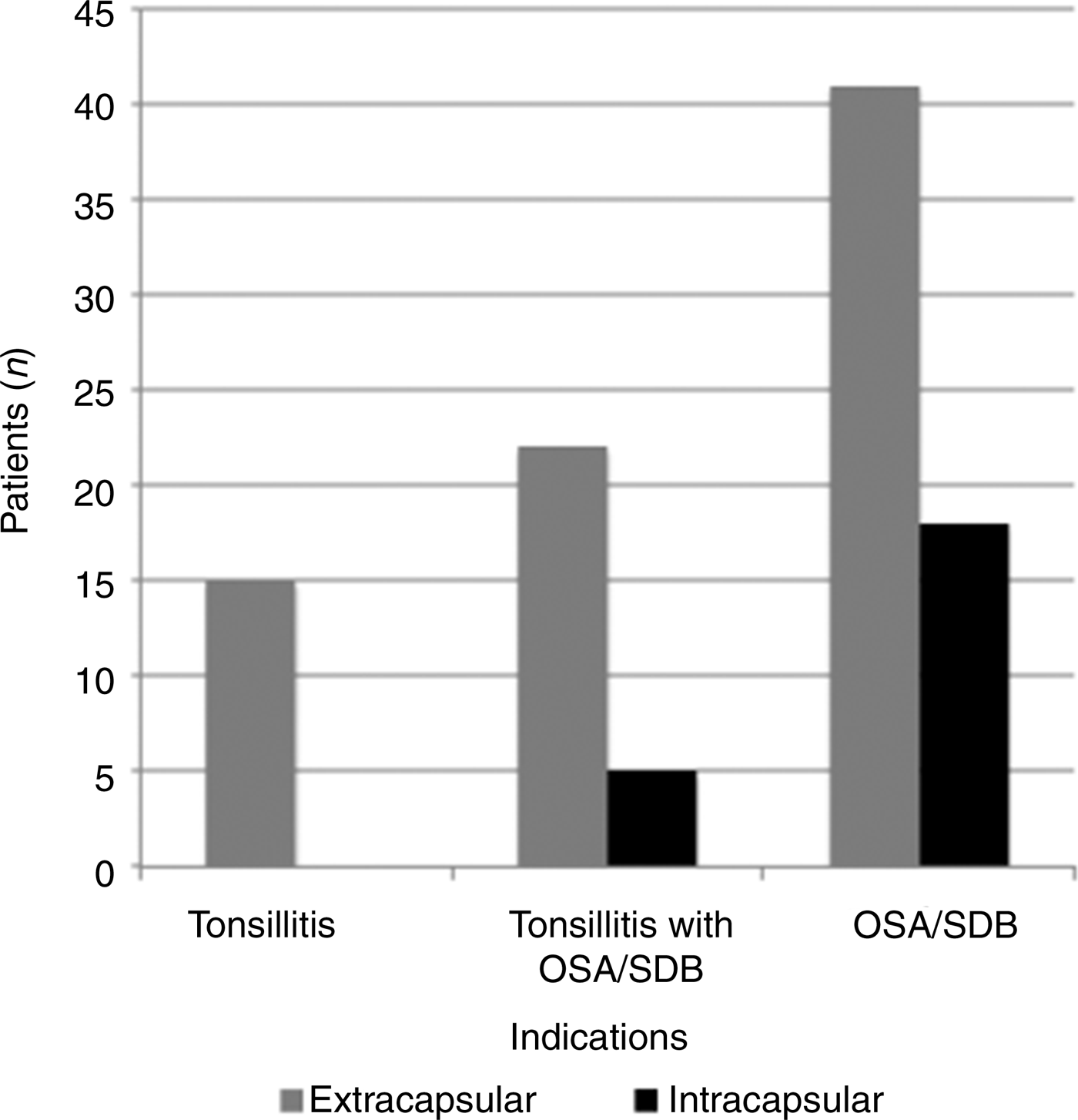
Figure 1 demonstrates the frequency of patients who underwent tonsillectomy according to indication. In both the extracapsular and intracapsular cohorts, the majority of procedures were performed for OSA or sleep-disordered breathing, of which 30.5 per cent involved the intracapsular technique. As expected, all patients with recurrent tonsillitis as the primary indication underwent extracapsular tonsillectomy. However, among the tonsillitis with OSA and sleep-disordered breathing group, five patients (18.5 per cent) underwent intracapsular tonsillectomy.
Indications for tonsillectomy. OSA = obstructive sleep apnoea; SDB = sleep-disordered breathing

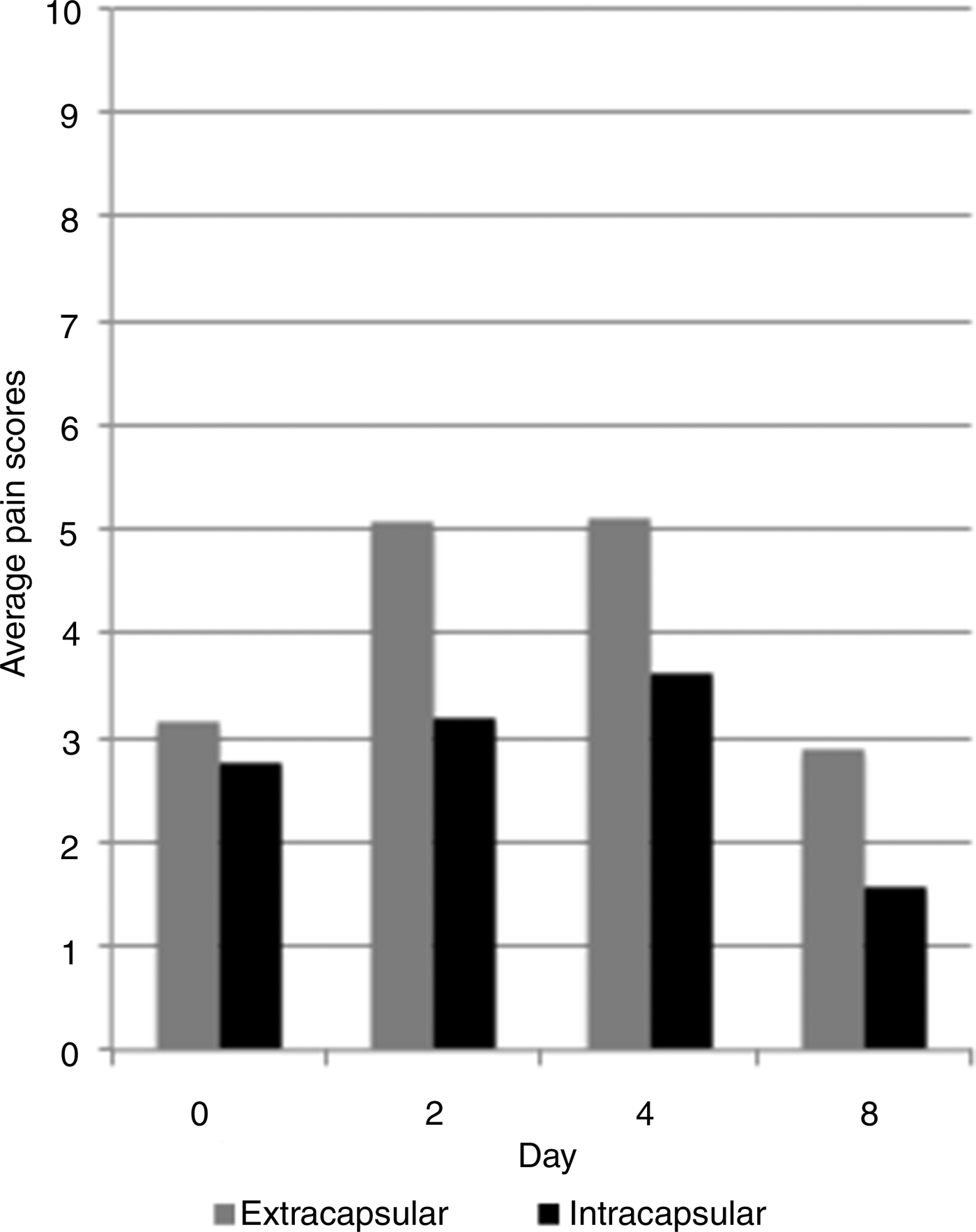
The average pain scores were found to be lower among the intracapsular cohort on all the days surveyed (Figure 2). In both the intracapsular and extracapsular groups, the average pain scores were lower on day 0 compared to days 2 and 4. It appears that pain scores continued to rise between days 2 and 4 among the intracapsular cohort. The scores then decreased in both groups by day 8, and were lower compared to day 0.
Average pain scores on days 0, 2, 4 and 8.

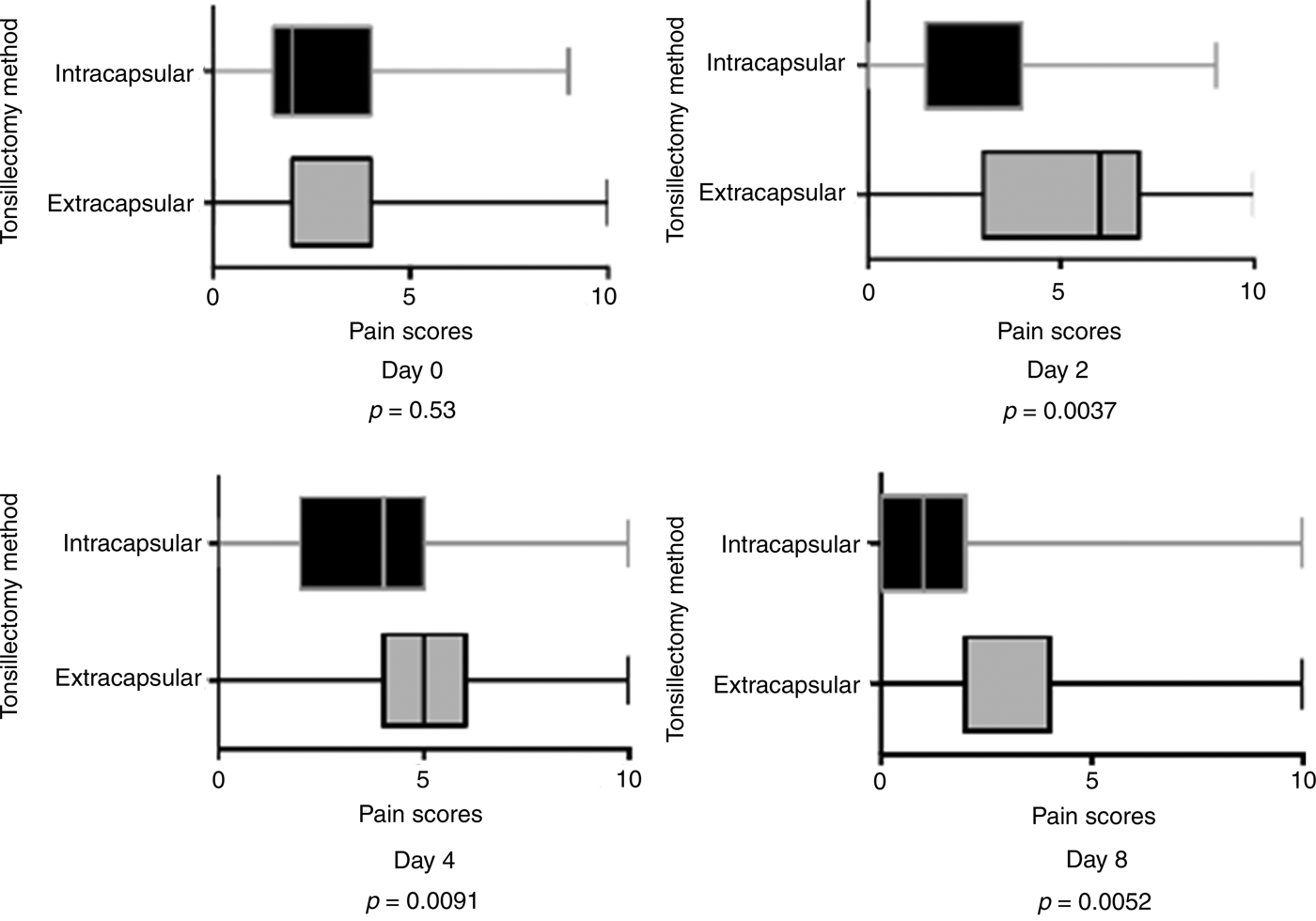
Comparing both cohorts (Figure 3) on day 0, there was a non-significant lower average pain score among the intracapsular group (2.77 vs 3.15, p = 0.53). On day 2, there was a statistically significant lower average pain score for the intracapsular cohort (3.18 vs 5.07, p = 0.0037). This continued to day 4 (3.62 vs 5.1, p = 0.0091) and day 8 (1.57 vs 2.89, p = 0.0052).
Box-and-whisker plots of average pain scores on days 0, 2, 4 and 8.

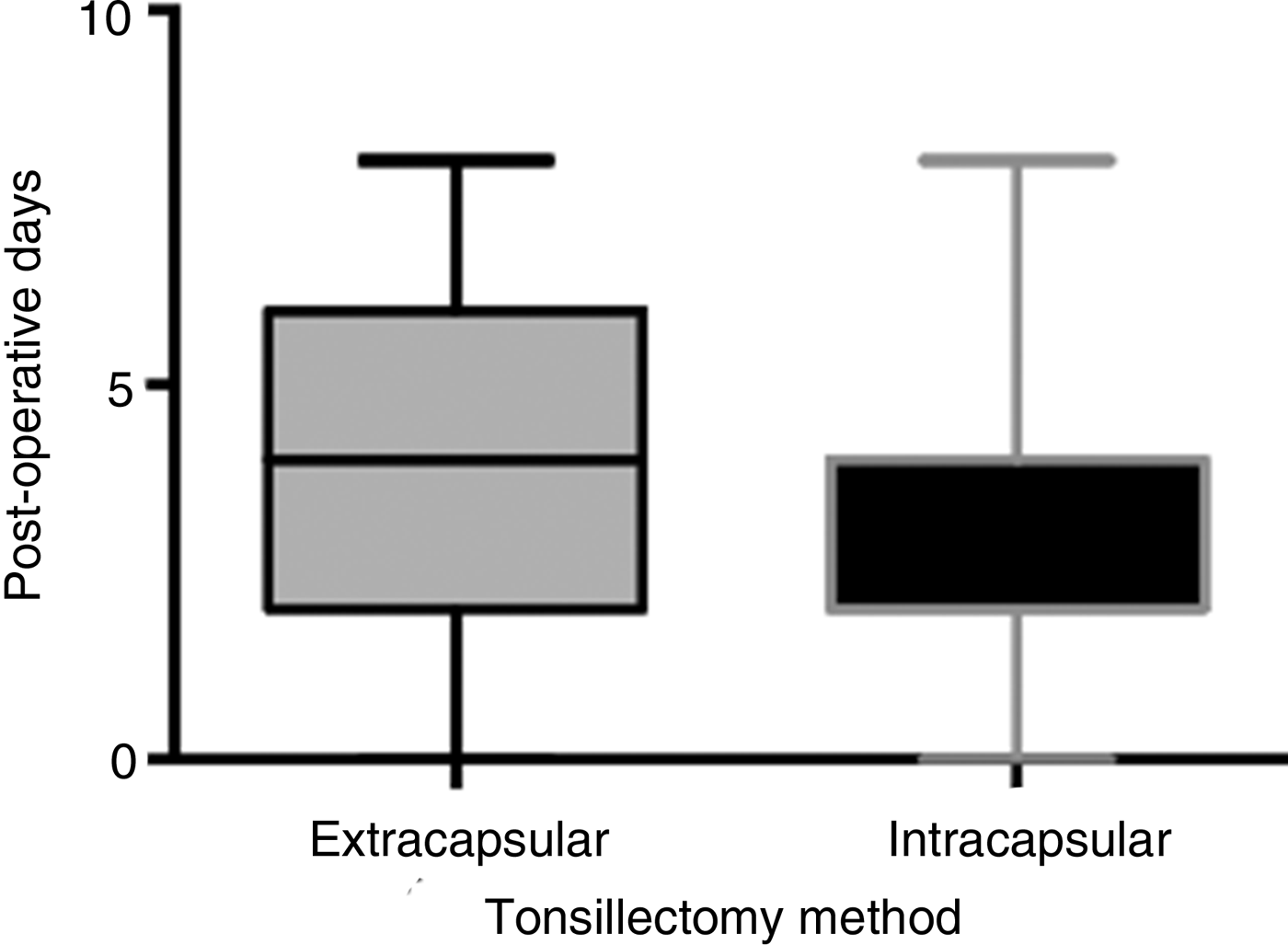
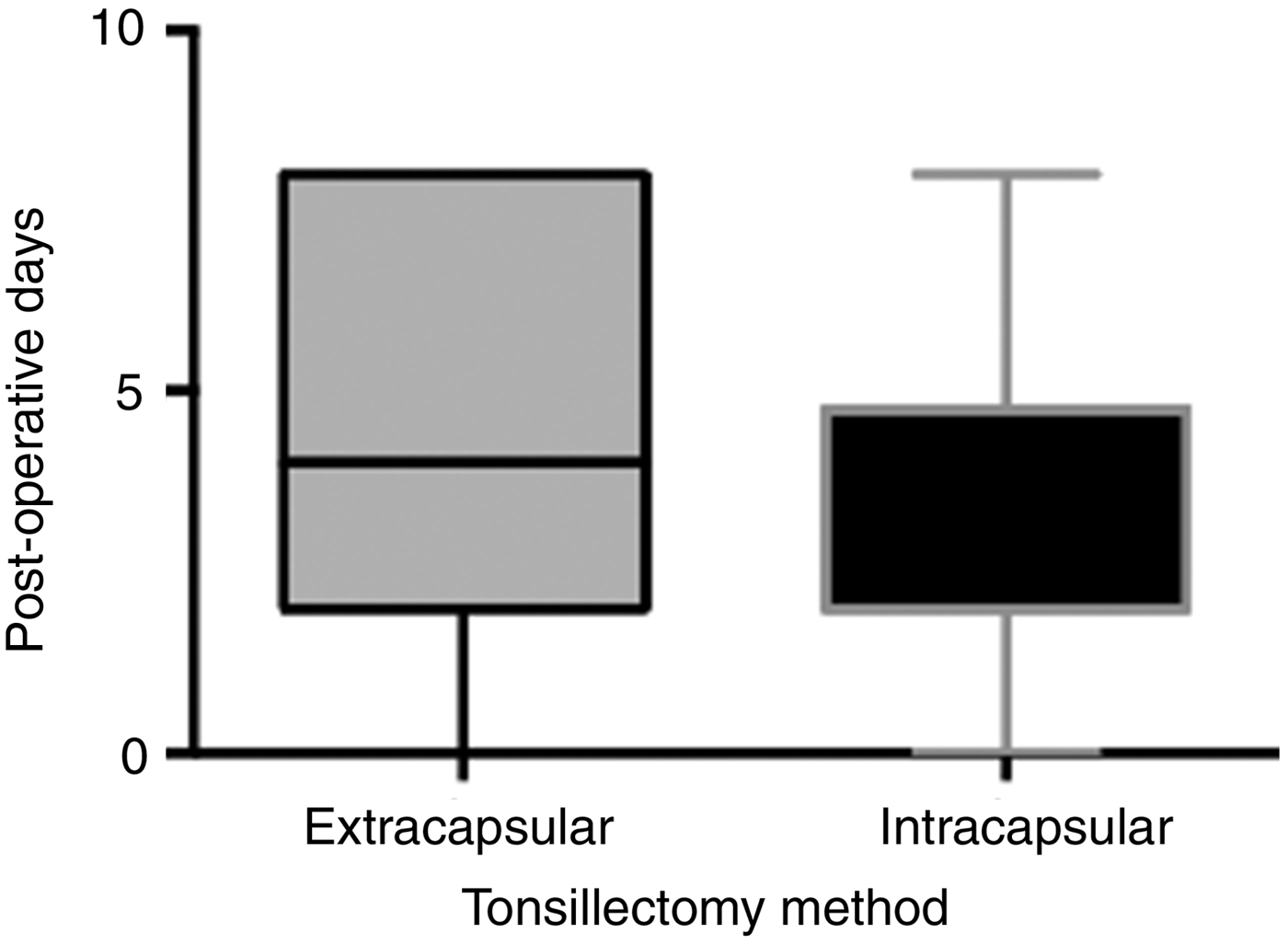
On average, patients who underwent intracapsular tonsillectomy returned sooner to normal drinking (Figure 4) compared to the extracapsular cohort (day 2.81 vs day 4, respectively), although this was not a statistically significant difference. However, there was a statistically significant difference in the return to normal eating (Figure 5), which occurred on average on day 3.3 for the intracapsular cohort, compared to day 4.8 for the extracapsular cohort (p = 0.0264).
Average return to normal drinking habit (p = 0.0702).

Average return to normal eating habit (p = 0.0264).

We found an increased rate of visits to the general practitioner among the extracapsular cohort (24 per cent) compared to the intracapsular cohort (15 per cent). Of those patients reviewed by their general practitioner, the majority in both groups received an antibiotic course (75 per cent and 67 per cent, respectively).
Parents and carers were also asked about analgesic use. We found that overall compliance to prescribed medication was 89 per cent on day 2, and this reduced to 86 per cent on day 4 and 83 per cent on day 8. In cases of non-compliance to the analgesia regime, the majority had omitted morphine. The main reasons parents cited for this included the belief that it was not required or concerns regarding side effects. In total, 30 per cent of parents and carers had concerns regarding the use of morphine.
Discussion
Our study found that paediatric patients undergoing intracapsular tonsillectomy using the coblation technique averaged lower pain scores on days 0, 2, 4 and 8 compared to the extracapsular group. The differences were statistically significant on all the recorded days apart from day 0. In fact, the pain scores in both cohorts were lower on day 0 compared to days 2 and 4. In our practice, patients are given pre-operative analgesia with paracetamol and ibuprofen, as well as intravenous dexamethasone and morphine intra-operatively. This would explain the lower scores post-operatively on day 0 in both cohorts. While consenting patients for tonsillectomy, we do emphasise the likelihood that pain will increase several days after the procedure, and would peak on days 3–5, before improving. This pattern was seen in both cohorts in our study, with pain scores lowest on day 8.
As expected, patients appeared to return to a normal drinking habit sooner than normal eating. Among the extracapsular group, on average, normal drinking resumed on day 4, with normal eating resuming approximately 1 day later. This appeared to coincide with the pain scores, which improved between days 4 to 8. However, among the intracapsular cohort, normal drinking resumed, on average, between days 2 and 3, with normal eating possible approximately half a day later. This is despite an increase (albeit modest) in pain scores between days 2 and 4. The range of average pain scores in both groups, as demonstrated in Figure 3, is noteworthy, with a minority still experiencing severe pain even on day 8. Further studies could focus on the minority of patients who still experience severe pain more than one week following surgery, and investigate what factors may influence this.
Compliance to prescribed analgesics was high on all the days surveyed and, as expected, this reduced slightly on subsequent post-operative days as the pain scores improved. However, almost one-third of parents cited concerns regarding the use of morphine. This does warrant further investigation, as morphine has replaced codeine as the preferred opioid in our paediatric population, but still appears to cause apprehension, even among clinicians. Education of clinicians, and patients and parents, may improve compliance to morphine use.
A study by Lu et al., comprising a total of 90 paediatric patients, compared the outcomes of intracapsular and extracapsular coblation techniques.Reference Lu, Gu, Wang, Zhang, Liu and Liang10 Statistically lower intra-operative bleeding scores and VAS pain scores at one week were observed in the intracapsular group. However, no significant differences in pain scores were observed on days 1 and 14. They also reported no regrowth of palatine tonsil tissue in the cohort at least one year following surgery.
A prospective study by Cohen et al., of 43 paediatric patients, compared intracapsular and extracapsular tonsillectomy, but performed using bipolar scissors and monopolar suction cautery.Reference Cohen, Getz, Isaacson, Gaughan and Szeremeta11 Pain scores were measured up to 10 days post-surgery. The authors reported statistically lower average pain scores among the intracapsular cohort.
Our study did not report the long-term outcomes of the coblation techniques. However, a recently published case series by Hoey et al.Reference Hoey, Foden, Hadjisymeou Andreou, Noonan, Chowdhury and Greig7 reported the longer-term results of intracapsular coblation. They included outcomes for 500 consecutive patients undergoing intracapsular tonsillectomy (with or without adenoidectomy) at a tertiary paediatric centre, with an average follow up of 7.4 months. Overall symptom control in this cohort using the T-14 tonsil symptom control questionnaire was significantly lower post-operatively. Only two patients (0.4 per cent) were readmitted with secondary bleeding, with both treated conservatively. However, 2.4 per cent of patients underwent revision surgery (adenotonsillectomy), with the majority of revision procedures performed because of OSA symptoms rather than recurrent tonsillitis.
In recent months, there has been further debate regarding the value of tonsillectomy, which has been fuelled by epidemiological studies. In a Danish retrospective population-based study, the authors analysed the long-term outcomes of almost 1.2 million children who had undergone adenoidectomy, tonsillectomy or adenotonsillectomy between 1979 and 1999.Reference Byars, Stearns and Boomsma12 This cohort was compared to a control group, and data were collected for 10–30 years of their life using national registers. The operated group were found to have an increased risk of long-term respiratory, infective and allergic diseases.
A 12-year retrospective cohort study of children in the UK undergoing tonsillectomy included over 1.6 million patients, and focused on the indication for the procedure.Reference Sumilo, Nichols, Ryan and Marshall13 This study concluded that the majority of tonsillectomies (seven out of eight) were not evidence-based.
In contrast, other studies have reported a rising incidence of tonsil-related disease, which appears to correlate to a historical decrease in the frequency of the procedure. A UK population study by Lau et al.Reference Lau, Upile, Wilkie, Leong and Swift14 found a significant increase in the rate of hospital admissions for tonsillitis, peri-tonsillar abscess, and retropharyngeal or parapharyngeal abscesses, between 1991 and 2011.
There are obvious discussions regarding these published studies with respect to their merits and validity. In reality, there is a lack of clarity among both clinicians and the wider public concerning the indications, various techniques and efficacy of tonsillectomy, as well as optimal post-operative management.
The main limitation of our study concerned the parent or carer questionnaire. While use of the VAS pain score allows for a degree of objectivity, there is still a large element of subjective bias and inconsistency between observers. However, we felt this was the most effective and practical way of collating pain scores post-operatively. Perhaps the administration of the questionnaire could have included each post-operative day, as well as a longer post-operative period. This might increase the accuracy of the data, but would have been more intensive for the participants and potentially less acceptable. Designing research tools, particularly questionnaires, requires a balance of focused and relevant questions, without being too intrusive or time-intensive.
Another source of bias stemmed from the characteristics of the two cohorts. The intracapsular technique was not offered in cases where recurrent tonsillitis was the main indication. Tonsil tissue subjected to recurrent infections is likely to be more fibrotic and therefore this factor may impact on post-operative pain scores. However, the intracapsular cohort did include a small number of patients with both recurrent tonsillitis and OSA or sleep-disordered breathing as the main indication.
The study size was somewhat limited by time constraints, with an intention to reduce bias by ensuring continuity during junior doctor rotations. There was also a smaller cohort of patients included in the intracapsular group compared to the extracapsular cohort, which reflects the current practice at our institute. Future studies could recruit a larger population, and include long-term outcomes such as rates of revision surgery. Assuming the intracapsular technique gains popularity, a multicentre prospective study can be considered.
• Tonsillectomy is one of the most common procedures performed; complications include post-operative pain and bleeding
• Intracapsular coblation removes most tonsil tissue, but can leave residual tissue; the main advantage is reduction of secondary bleeding risk
• This study found reduced pain scores and a quicker return to normal diet in the intracapsular cohort compared to the conventional extracapsular cohort
• The intracapsular method is recommended in selected patients, particularly those with predominant obstructive sleep apnoea or sleep-disordered breathing symptoms
In conclusion, our prospective study found that intracapsular coblation tonsillectomy was associated with significantly lower post-operative pain scores and a quicker return to normal eating habits. We recommend the intracapsular coblation method in selected patients, particularly those with predominant OSA or sleep-disordered symptoms. Parents should be informed specifically regarding the reported risk of tonsil regrowth, recurrent tonsillitis and the prospect of future revision surgery.
Competing interests
None declared
Appendix 1. Patient questionnaire proforma