

Introduction
The concept of forensic science is not new, nor is the connection between crime scenes and criminals through forensic science; however, the use of forensic science in crime has experienced a radical surge in momentum since the early 2000s. Forensic science, to define, is the use of science to solve crimes, by comparison of physical evidence from the crime scene to that evidence which is obtained from the suspect(s) (Eckert Reference Eckert1996; Saferstein Reference Saferstein2015). In scientific calculations, accuracy and precision are crucial, and this principle extends to the realm of scientific evidence in crime investigations. Under the Evidence Law in India (Bhartiya Sakshya Adhiniyam, 2023 (BSA), Act No. 47 of 2023), courts are also required to consider all relevant evidence, including scientific evidence (Section 39 of the BSA), to make accurate determinations in legal proceedings. With the ever-increasing technology, crime rates have also increased substantially, and this fact cannot be denied. The concept of scientific aid in legal contexts involves applying scientific principles to enhance the investigation process (Kirk Reference Kirk1960). This integration of scientific methods in law can be traced back to early efforts that established key concepts and methodologies for analysing physical evidence. Notably, a renowned literary figure has made a significant contribution to the popularization of scientific crime detection as an investigative tool (Baker Reference Baker2009).
The reliance on forensic science in crime, within both scientific and law-enforcement communities, is widely accepted; there is a deeply rooted fundamental principle that every criminal leaves behind tangible evidence at the scene of the crime (Mistek et al. Reference Mistek, Fikiet, Khandasammy and Lednev2019). As technology has advanced, it can detect and analyse even the minutest details of evidence. This principle was later further expanded upon, providing the concept that “any action taken, object touched, or trace left behind, even if unintentional, can serve as incriminating evidence” (Kirk Reference Kirk1963).
This concept of forensic availability in a crime scene (Kirk Reference Kirk1953), given by Kirk, includes physical evidence such as: “fingerprints, footprints, hairs, fibers, broken glass, tool marks, scratched paint, and biological samples like blood or semen”. These forms of evidence provide enduring, objective proof of a perpetrator’s presence, irrespective of their state of mind during the crime (Maryville University 2019). Unlike human witnesses, physical evidence cannot provide false testimony or disappear entirely; its reliability lies in its inherent objectivity. The challenge arises not from the evidence itself but from our ability to locate, examine and interpret it accurately.
Locard’s Principle of Exchange,Footnote 1 which Kirk referenced, underscores a fundamental concept in forensic science – that perpetrators always leave traces behind and, thus, every crime scene contains evidence of the perpetrator’s presence (Saferstein Reference Saferstein2015). As forensic science continues to evolve and its impact on science, law and medicine becomes increasingly apparent, there is growing scrutiny regarding its role in determining guilt or innocence within the legal system. Given that science is a tool for seeking truth, a deep understanding of scientific thinking and methods is essential for anyone engaged in the pursuit of knowledge.
This principle establishes the concept of individuality, classifies these individualities and facilitates identification (Saferstein Reference Saferstein2015). Paramjeet Singh J., in one of his cases, explains the role of DNA and the undeniable use of Locard’s principle (Harjinder Kaur v. State of Punjab and Ors., 2011). At a crime scene, a hair, for example, can be first identified by its genetic traits and microscopic characteristics, determining whether the hair belongs to a human being or another living creature. Now, once it has been identified as human hair, it is further used to identify individuality, which is dependent on the acquisition of traits that are extremely rare and cannot be duplicated reasonably (Montague Reference Montague2011). The identification of corpus delicti Footnote 2 is of prime importance in crime.
Scientific evidence is not just used in criminal cases, but also in civil cases concerning paternity. The analysis of available biological traits provides substantial evidence. Although corroborative, DNA evidence does much more than “just support the case”. It has not only helped in finding the culprits but also in exonerating the innocent (Jayewardene Reference Jayewardene1988).
However, what India presently lacks is a policymaking process in this regard. To be specific, the policies that would help to prevent the misuse of technology used for DNA-related matters are of paramount importance. Not only that, but even the misuse by the investigation team or police personnel poses a significant threat due to the lack of procedures and protocols required for DNA-related investigations. It may include tampering with DNA evidence, planting evidence and other similar actions (Bieber et al. Reference Bieber, Buckleton, Budowle, Butler and Coble2016; Butler Reference Butler2015). DNA theft, although not yet a concern in India, has already emerged as a fully fledged crime in technologically advanced countries, such as the United Kingdom (UK) (Laurie Reference Laurie2003). The UK declared DNA theft a crime as early as 2003.
In this era of scientific evidence and evolving laws, it is crucial to assess the efficacy of forensic evidence in criminal investigations, particularly regarding DNA evidence, given the inherent connection between police investigations and forensic evidence. Thus, the present work aims to explore the transformative role of DNA analysis in modern criminal investigation, highlighting how advancements in DNA technology have enhanced and revolutionized the identification system by offering greater accuracy and precision. Despite significant development and unparalleled accuracy, the use of DNA faces significant challenges for the investigating officers (IOs), forensic experts, as well as legal practitioners, including issues like DNA contamination, lack of documentation, and new and emerging challenges of DNA theft. This study aims to shed light on the possibilities and opportunities for strengthening procedural frameworks, infrastructure and coordination among various stakeholders.
The paper adopts a qualitative, case-study approach to examine the efficacy and challenges of DNA analysis in the criminal justice system, which is designed to achieve the research objective by combining primary and secondary data. It focuses on two notable cases to analyse the systematic challenges and shortcomings faced by IOs. Primary data were collected through semi-structured interviews with 80 selected participants, comprising forensic experts, IOs and legal professionals, to gather information from them regarding the technical challenges they face, difficulties in collecting evidence and procedural issues they encounter in court. Secondary data, including court documents, forensic reports and media coverage, are analysed to identify lapses in procedure.
In this paper, two domains of crime wherein DNA investigation is possibly used are rape and murder cases. Modern sleuths are relying increasingly on forensic technology to solve gruesome crimes. Advanced tools, such as DNA phenotyping, digital forensics and artificial intelligence, are continually improving and revolutionizing the investigation process, enabling law enforcement agencies to reconstruct crime scenes and identify suspects with unprecedented accuracy (The Indian Express 2022).
DNA: A “New Gold Standard”
DNA technology, to say, has revolutionized the criminal justice system by enabling forensic experts to identify criminals with an accuracy that proves to be incredible. The same is also considered as evidence of a “new gold standard” (Lynch Reference Lynch2003).
DNA, as a transformative tool, has not only enhanced the ability of criminal investigators to identify perpetrators but has also played a crucial role in exonerating the innocent who are wrongly accused of crimes (McCartney and Amankwaa Reference McCartney and Amankwaa2017). DNA profiling provides unparalleled accuracy due to its unique nature of distinctness, similar to a genetic fingerprint. This uniqueness has enabled law enforcement agencies to solve cold cases and connect prima facie unrelated crimes, while providing conclusive evidence in courtrooms. Furthermore, advancements in DNA techniques have also expanded the scope of forensic science, enabling the extraction of valuable information even from the smallest traces of biological material.
Technological Advancements
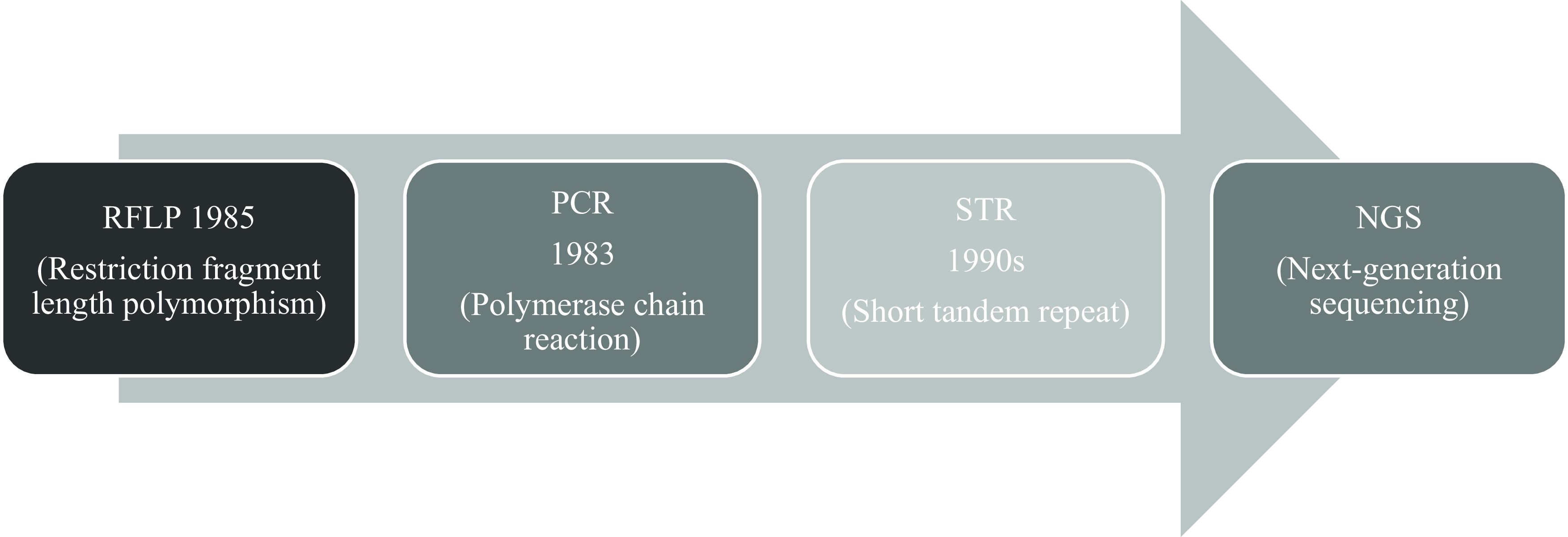
The development of DNA analysis, as used in the criminal investigation system, has undergone technological evolution in several stages, as shown in Figure 1.
Development of DNA analysis.

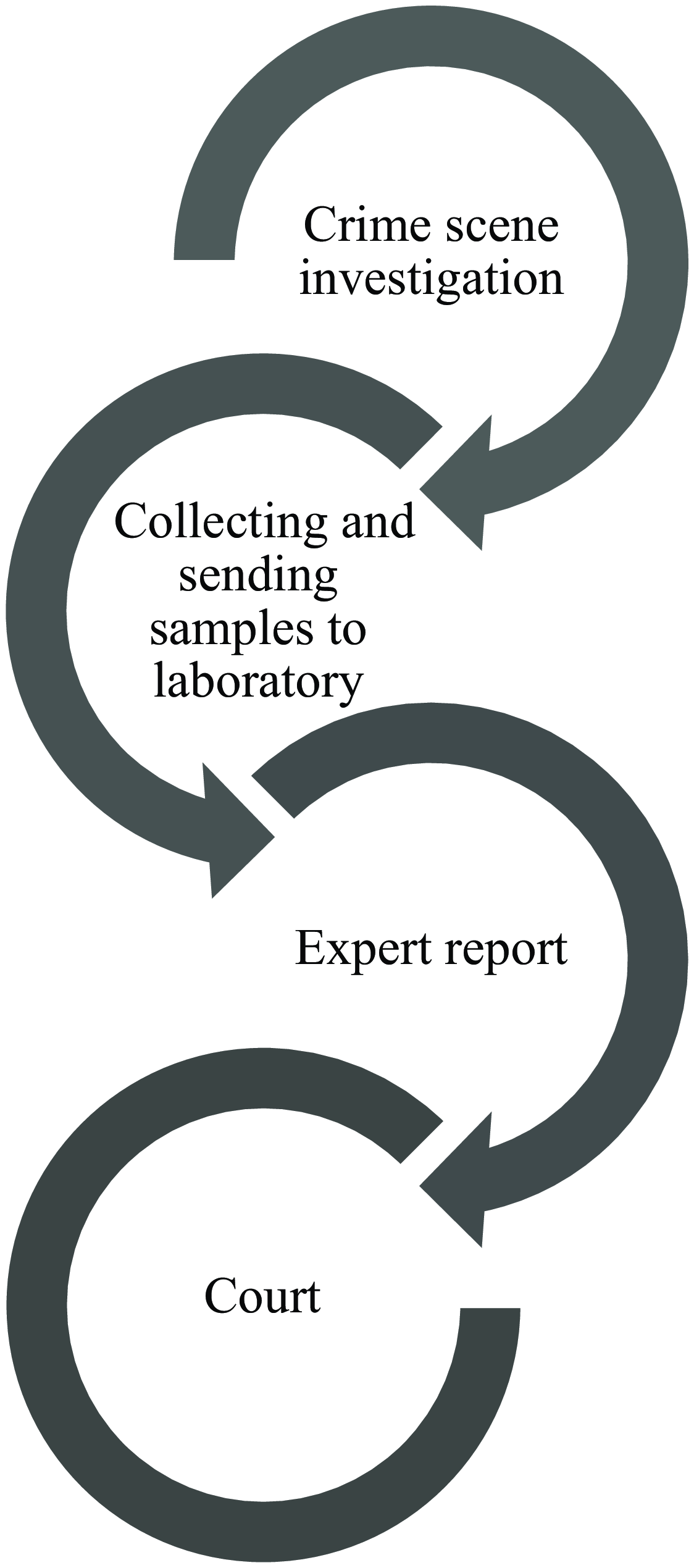
Figure 1 illustrates the evolution of DNA technology in criminal investigations over time. DNA helps in removing even the faintest doubt and any lingering uncertainty that may remain. The advancement of DNA profiling technology and the development of highly accurate testing and analysis procedures have been a long journey that has evolved through decades of fine-tuning and diligent work by the forensic division. It has enhanced the entire investigation system by incorporating forensic experts, from the crime scene to the courtroom, in the form of expert opinion, which the Indian legal system considers admissible (Section 39, Bhartiya Sakshya Adhiniyam, 2023) (see Figure 2).
The investigation of crimes.

DNA profiling, although it has been used and relied upon by Indian courts in criminal cases, has also been applied in civil cases, including through DNA tests by the courts. An instance of the same can be seen in the case of Nandlal Wasudeo Badwaik v. Lata Nandlal Badwaik & Anr., 2014, where the conclusivity of Section 112 of the Indian Evidence Act, 1872 (IEA) (now Section 116 of the BSA), wherein the well-known principle of law that “any child being born within 280 from the day of dissolution of marriage, be it by death or divorce, will be unambiguously considered as the legitimate son of that man and that will serve as a conclusive proof” was set aside. The Hon’ble Supreme Court reaffirmed the principle (though not the provision) and stated that the legal system must also adopt advancements in science. The Hon’ble court mentioned that when the original provision was enacted, the scientific advancements were not that remarkable to consider any other possibility of proving that the child inherits the traits of any other man. The DNA test, or any test like it, was not even in the farthest contemplation of the legislature, but the Indian judiciary considered the advancements made in science and technology to be scientifically accurate.
Coming to the very latest of technologies, next-generation sequencing (NGS), deriving itself from massively parallel sequencing (MPS) technologies, has brought about further revolution in the field of forensic science by the advancement that it can generate millions of sequencing reads in one single run (Haddrill Reference Haddrill2021). The development that took place in the mid-2000s, with the subsequent launch of the 454 Life Sciences Pyrosequencing platform, developed by Jonathan Rothberg, marked the beginning of this era. The platform, the first commercially available NGS technology, was introduced in 2005. This is based on sequencing technology developed by Sanger in 1977 (Børsting and Morling Reference Børsting and Morling2015). This system resolves complex mixtures of DNA, identifying multiple contributors to the cases of sexual crimes (Elkins and Zeller 2022).
Regarding this, in the United States, it is written, “If you are white, live in the United States, and a distant relative has uploaded their DNA to a public ancestry database, there is a good chance an internet sleuth can identify you from a DNA sample you left somewhere” (Kaiser Reference Kaiser2018). NGS generates phenotypic profiling, predicting physical traits (Kayser Reference Kayser2015), which can be referenced in the famous American case, the “Golden State Killer” (Kolata and Murphy Reference Kolata and Murphy2018). As of now, in India, no widely reported case has used NGS; however, the Centre for DNA Fingerprinting and Diagnostics and Forensic Science Laboratories are actively working on research regarding the same, and this marks one of the backwardness of India in technological advancement in criminal investigation.
Criminal Justice Reform and Role of DNA as an Investigation Tool in India
The discovery and recognition of DNA as a genetic material unique to every individual opened up various research opportunities (National Library of Medicine n.d.). Scrutiny of DNA has not just been used to discover the criminals but also to acquit the arrested accused who are not the real culprits, which originated in 1985 by Sir Alec John Jeffery, a Professor in the UK, the one who got the accused person released by way of DNA for the first time, as the DNA samples collected from the crime scene and the accused did not match (University of Leicester 2009).
The first case involving DNA to come before the Indian Courts was in Kerala in 1989, in a paternity dispute, which involved the use of DNA fingerprinting by the Kerala Police. Since then, there have been numerous cases where police officers have relied on forensic science experts to identify, through biological samples, the actual perpetrators of the crime.
Reviewing the legal status of DNA in India, before Smt. Selvi and Ors v. State of Karnataka, 2010, the authority to compel the production of DNA samples was approved by the Hon’ble High Court of Orissa (Thogorani v. State of Orissa, 2004). Furthermore, in 2005, Sections 53, 53A and 54 of the Code of Criminal Procedure, 1973 were amended to incorporate the scope of medical examination, with a special focus on extractions from the body. Additionally, the Prevention of Corruption Act (Section 27(1), 2002) clearly states that the court will act lawfully when it orders the accused to provide samples to police officers. Later, in the Smt. Selvi and Ors v. State of Karnataka case (2010), it was again reiterated that there is nothing wrong with ordering DNA profiling, especially in cases of a sexual nature and that related to offences against the body.
DNA has fundamentally transformed forensic science by offering a highly reliable method for identifying individuals involved in criminal activities and for exonerating the innocent. DNA profiling, a key technique, involves analysing specific regions of an individual’s DNA that are unique to them, enabling precise identification. This technique is used to match biological samples found at crime scenes – such as blood, hair or semen – with potential suspects.
The process of DNA analysis starts with the careful collection and preservation of evidence. Proper handling is crucial to avoid contamination, and samples must be stored under conditions that prevent degradation. Analysis techniques such as polymerase chain reaction (PCR) amplify small amounts of DNA, while short tandem repeat (STR) analysis examines specific regions that vary among individuals to create a unique DNA profile. Mitochondrial DNA analysis is used in cases where nuclear DNA is unavailable, providing additional identification information.
In forensic science, DNA technology is applied in various ways. It helps in identifying criminals by matching DNA from crime scenes to suspects or databases, exonerates wrongfully convicted individuals by providing contradictory evidence, and aids in solving cold cases by applying advanced DNA techniques to previously unsolved crimes. However, challenges such as contamination, complex DNA mixtures, and ethical considerations regarding privacy and misuse must be carefully managed.
Legal protocols require strict adherence to the chain of custody to ensure that DNA evidence is admissible in court. Forensic experts must provide clear and accurate testimony regarding the evidence. Overall, DNA technology has significantly enhanced forensic science, offering a powerful tool for justice and accuracy in criminal investigations.
DNA profiling technology, based on scientific principles, has over time been proven to be correct.Footnote 3 Moreover, it has also proven beneficial and effective for social welfare, particularly in terms of the improvements in the criminal justice system in India, serving as corroborative evidence (Simpson v. Collinson, 1964). It has often been observed that DNA testing has been extremely beneficial for innocent people who, unfortunately, became prime suspects. This is particularly evident in cases where innocents were falsely convicted, but DNA tests ultimately proved their innocence.
Furthermore, when talking about civil cases, specially referring to cases of disputed paternity, where the courts have accepted DNA as valid proof of paternity, the provision of the IEA about the conclusiveness of legitimacy remains intact and has not been amended as per the changes made in the scientific field.
From analysing minute genetic traces to scanning digital footprints, these innovations are turning cold cases into solvable mysteries. As criminals adopt more sophisticated methods, forensic experts are leveraging technology to stay ahead, ensuring that justice is served faster and more efficiently (Shastri Reference Shastri2022).
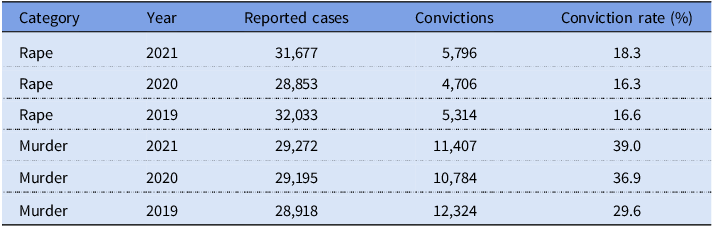
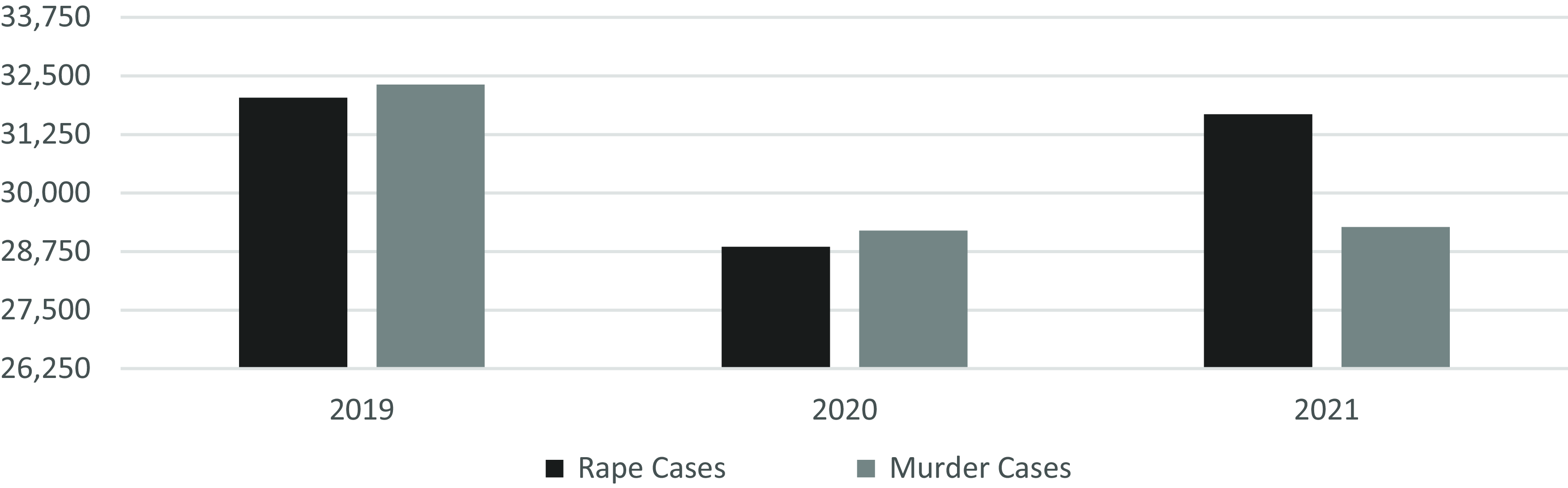
According to the latest National Crime Records Bureau (NCRB) data available on their website (National Crime Records Bureau 2021; see Table 1 and Figure 3), it can be seen that the conviction rate remained quite low until 2022. The data for 2022–2025 have not been published as of now, and neither does the NCRB provide specific data as to how many cases have been resolved using forensic science or DNA analysis. Moreover, the National Forensic Sciences University and other forensic laboratories also do not provide exact figures or numbers of cases resolved, but, according to one-to-one conversations with the forensic laboratories, the rate of resolution of cases by using forensic science or DNA analysis is not more than 1.5–3.5% of the total reported cases with specific reference to rape and murder.
Reported cases, convictions and conviction rates for 2019–2021


Evidentiary Value of DNA: Accuracy, Admissibility and Reliability
Although DNA tests have an accuracy level of 99.99%, we still cannot say that they are infallible. The absence of DNA may not lead to any adverse inference against someone, especially when other evidence that can be relied upon, and is also approved by the law of evidence, is available. In the case of a sample matching the DNA of the accused, it does not establish the accused’s identity beyond a reasonable doubt and is not conclusive proof. It may also be because of the “random occurrence ratio”. This matter was raised by the Law Commission of India, wherein they explained that DNA is relevant for criminal investigation, but it may not raise any presumption of identity inside the court (Law Commission of India 2003).
Dealing with the context of the evidentiary value of DNA, the Madras High Court, as late as in its 2024 decision (Indiran v. State, 2024), explained outcomes of profile comparison, which are generally the following three:
-
1. Match: this occurs when DNA samples obtained from two different samples are not distinguishable.
-
2. Exclusion: this occurs when DNA samples show differences when compared, which can be explained by the fact that two samples originate from different sources.
-
3. Inconclusive: when data do not support the possible three outcomes, and the match between samples only needs to be supported by statistical calculations, which is done as per random match probability.
Case Analysis
The Nithari Kand Case
The case of Surendra Koli v. State through CBI (2017), one of the most gruesome murder cases that India has ever witnessed, shows how DNA can play a pivotal role in identifying victims. This case involved multiple murders and rapes in the Nithari village of Noida and came to light when various human remains, such as bones, skulls and parts of the body, were found near the residence of Surender Koli and his employer, Moninder Singh Pandher. In this case, DNA was used to identify the victims from the remains and samples that were found, most of them being from marginalized communities. DNA collected from the crime scene was also tested to determine the matching ratio of the suspect.
The case, however, suffered from numerous procedural lapses. The defence argued that the samples were contaminated, as they were not collected and stored according to protocol, and the forensic team’s delayed analysis compromised the integrity of the DNA evidence. The defence also argued that the DNA evidence was insufficient to prove guilt beyond a reasonable doubt and emphasized the need for corroborating evidence, as DNA is highly accurate but requires corroboration, as per Section 43 of the BSA. However, DNA on one side helped identify the victims, and subsequently, based on other facts, Surendra Koli was convicted to a death sentence, which falls under the category of the rarest of rarest cases, while Moninder Singh was acquitted due to lack of evidence.
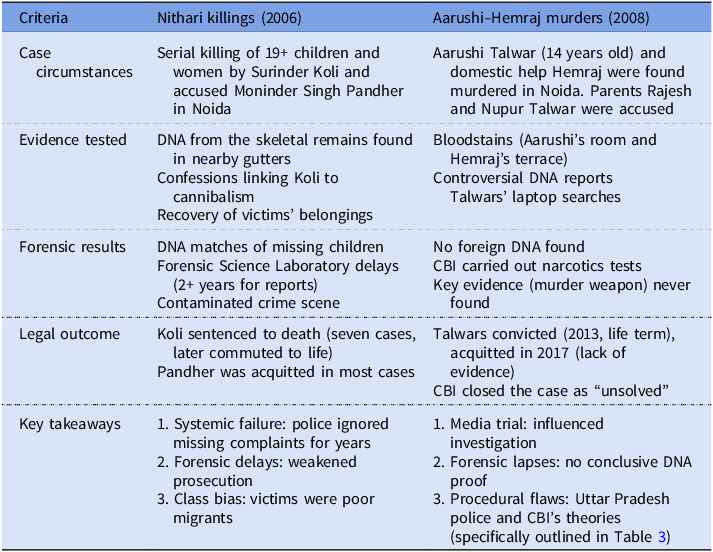
The highlights of the case, concerning procedural lapses and shortcomings (see Table 2), will be addressed in the next section of the paper.
Summary of the Nithari Kand and Aarushi–Hemraj cases

CBI, Central Bureau of Investigation.
Aarushi Talwar Murder Case
One of India’s most high-profile cases, the Aarushi Talwar murder case, involved the death of a 13-year-old girl, Aarushi, and the domestic helper of the house, Hemraj. The case is also known as the Noida Double Murder Case, which took place in Noida in 2008. The case primarily underwent a media trial and garnered considerable nationwide attention, as it raised significant questions related to the mishandling of forensic evidence and investigation procedures, as well as the role of DNA analysis in criminal investigations. The prime suspects of the case were the parents of Aarushi, Nupur Talwar and Rajesh Talwar (see Table 2).
Primarily, the crime scene was reconstructed based on DNA evidence, which was used to identify potential suspects. Bloodstains and other biological traits and evidence were collected from Aarushi’s bed and, in fact, her entire room and other areas of the house. The DNA samples, to create a link between the crime scene and the suspect, were collected from the parents of Aarushi and other connected individuals.
The case presented numerous evidentiary challenges, particularly regarding the admissibility of evidence during the trial. The defence argued that the crime scene was not properly sealed promptly, leading to contamination of the DNA samples. Moreover, DNA evidence was neither properly collected nor documented, and the integrity of the evidence was significantly compromised. Apart from that, whatever DNA evidence was collected from the crime scene was not able to conclusively establish the identity of the real accused or any link between the crime and the suspect. Circumstantial evidence was heavily relied upon to corroborate the DNA results, but it did not establish guilt beyond a reasonable doubt, as argued by the defence.
The Trial Court primarily relied heavily on the DNA analysis, forensic findings and other circumstantial evidence, and convicted the prime suspects, Nupur and Rajesh Talwar, who were subsequently acquitted by the High Court of Allahabad, by ruling out that the DNA evidence was not strong enough to establish guilt beyond reasonable doubt, and also highlighted the mishandling of the case by investigative teams.
Forensic and Legal Analysis
Uttar Pradesh Police Central Bureau of Investigation’s Theories
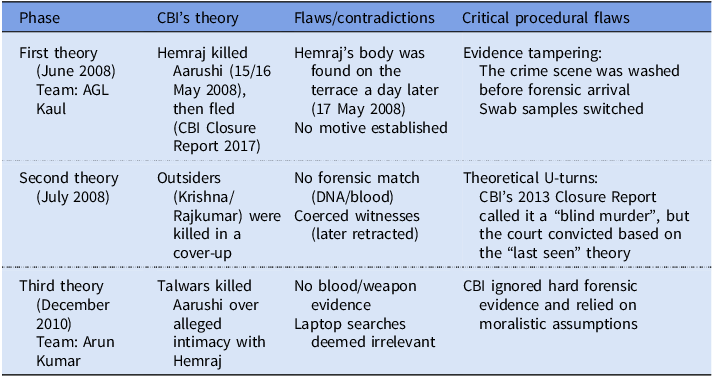
It is furthermore pertinent to specifically outline the flaws and chaos that the theories of investigative agencies have created, as they have led to delays, which in turn have contributed to, and are the ipso facto reasons for, the contamination and tampering of forensic evidence at the crime scene (see Table 3).
The Aarushi Talwar case: the three theories

CBI, Central Bureau of Investigation.
Ethical and Legal Issues in the Use of DNA
It is time and again reiterated by the Law Commission of India, recently in 2017 in its 271st report, that whenever there is conflict between the privacy of a person and duty of the court, apparent on the face of the court, then the court must be very cautious and not submit the person forcibly to any such medical examination, and should exercise its discretion with extreme balance between both the parties and then evaluate whether a DNA analysis is eminently and unavoidably needed in the case(DNA Draft Bill; Law Commission of India 2017).
Moreover, it is also pertinent for law enforcement to maintain the trust of citizens and, therefore, any DNA evaluation technology used in the field of criminal investigation must be a settled procedure of law, which is presently absent in India. There are very few sections in the Bhartiya Nagrik Suraksha Sanhita, 2023 that deal with DNA-related sample collection and medical examination, and they lack protocols on handling those samples after collection.
Subsequently, when DNA is involved in a paternity case, Section 116 lays down a rule of conclusiveness regarding paternity: any child born during the continuation of a marriage or within 280 days from the dissolution of that marriage will be considered the legitimate child of that man. The provision does provide for certain exceptions, that is, a lack of access to each other, which also includes impotence, but prevails over any DNA test. However, as mentioned earlier, the Nandlal Badwaik case (2014) brought a change, probably a change that can be stated as a balanced change which does not favour any gender, and pointed out that the developments in science and advancements in technologies have made significant changes in how things can be evaluated and, hence accordingly, the law also needs to be upgraded, as it was a law made in the times when science was not as it is today.
The case held that DNA tests in cases of paternity will prevail over Section 116 of the BSA, then Section 112 of the IEA. This case overruled the 2006 decision (Shaik Fakruddin v. Shaik Mohammed Hasan, 2006) that had held that DNA evidence cannot prevail over, or even rebut, the conclusiveness of Section 112 of the IEA, and that the only thing that can rebut the provision is the lack of access between parties.
Challenges in the Application of DNA Evidence
The major issues that arise in the case of DNA evidence are when it is neither collected properly, nor documented, nor packed and preserved for subsequent submission to forensic laboratories. Due to the failure of all these protocols, the DNA evidence does not meet the legal and scientific requirements (Gill et al. Reference Gill, Brenner, Buckleton, Carracedo, Krawczak, Mayr, Morling, Prinz, Schneider and Weir2006). Moreover, the case studies that were done for this research show that major issues arise when DNA is contaminated by mixing with other articles, or contamination due to someone sneezing or coughing in the crime scene near the sample, and by tampering with the DNA by touching the samples with bare hands and without any safety gear.
The findings of the survey conducted with forensic and legal experts and the IOs reveal a few shortcomings that are generally not discussed or addressed. Some of the major ones are reiterated below.
Findings (Insights from the Field)
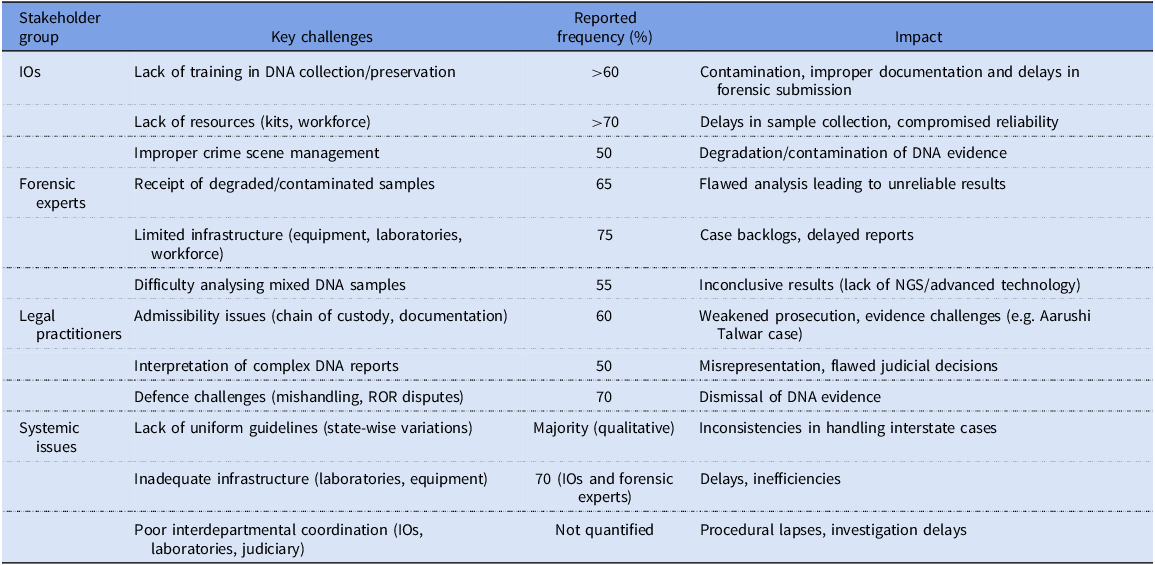
After extensively dealing with the research design and obtaining insights from 80 samples collected from IOs of the Uttar Pradesh police, forensic experts from Noida Forensic Laboratory (Uttar Pradesh) and legal experts from Delhi Courts (Assistant Public Prosecutors), key challenges have been identified, which, although not exhaustive, sum up the entire practical shortcomings (see Table 4).
Findings from the field: key challenges

IO, investigating officer; NGS, next-generation sequencing; ROR, right of refusal.
Concluding Remarks
Following the analysis of the Nithari Kand and Aarushi Talwar cases, as well as the qualitative analysis of the samples collected from relevant domains and stakeholders involved in criminal investigation based on DNA evidence, it can be concluded that standardization of protocols is the need of the hour, to develop uniform guidelines and protocols regarding the collection, preservation and analysis of DNA, so that there is uniformity and consistency across forensic laboratories and investigation agencies.
A uniform procedure should provide a more holistic framework for the timeline and procedure to be followed for the examination of the accused, ensuring that it is done on time. This includes sealing the crime scene, collecting DNA samples, and outlining the timeframe within which these samples should be collected and sent to the forensic laboratories. It is imperative to provide frequent training and awareness programmes to IOs on forensic evidence collection and DNA sampling, in collaboration with forensic experts, so that they not only become well-versed in the intricacies of the case but also facilitate interdepartmental collaboration.
The collection, preservation and examination of forensic data, being precise work, requires utmost care. Therefore, state-of-the-art equipment and technological advancements are a necessity of the hour, which will subsequently enhance the accuracy of DNA tests, ultimately aiding in their admissibility in court. As mentioned, the NGS technique of DNA analysis is an area where Indian forensic laboratories are currently lagging, and this needs to be addressed to enhance the overall criminal justice system.
Regional forensic hubs could also be established to create decentralization and reduce the burden on forensic laboratories at the central and state levels. The modernization of forensic laboratories will ultimately help increase accuracy and clear backlogs.
Moreover, due to the absence of comprehensive legislation governing forensic evidence in India, the entire process of collecting, preserving, transporting and storing forensic evidence is in jeopardy. Legislation that addresses privacy and ethical issues and establishes standardized protocols for submitting samples to laboratories and handling reports back to the court within the specified timeframe is of paramount importance.
Safeguards must be considered to protect against any privacy breach or misuse of samples or evidence by the IOs, as the lack thereof may provide ample opportunities for the police to frame the innocent or misuse evidence. This legislation should include the anonymization of data, strict access controls and penalties for misuse.
The effective use of DNA evidence in criminal justice requires a “multi-pronged” approach that will address the technical, procedural and ethical challenges (Williams and Johnson Reference Williams and Johnson2005). By standardizing protocols, modernizing infrastructure, enhancing training for IOs and forensic experts, and enacting required legislation, the criminal justice system can leverage the full potential of DNA technology to a significant extent, while safeguarding individual rights and ensuring fairness. These recommendations, if implemented, will not only improve the reliability of forensic evidence but will also strengthen public trust in the criminal justice system.
Competing interests
There are no competing interests to declare.
Twinkle Hussain is a research scholar at Bennett University, Uttar Pradesh, India. Holding a postgraduate qualification in law, she has contributed to scholarly discussion on both personal laws and criminal laws. Her areas of interest are criminal laws, with a major focus on the evidentiary values of forensic/scientific evidence and its admissibility in law, while also exploring the ethical and practical challenges, especially in the context of the Indian criminal justice system.
Bhabani Sonowal is currently working as an Assistant Professor at Bennett University’s School of Law in India. He has nine years of experience in teaching and research, spanning the areas of criminology, victimology, criminal justice, human rights and criminal law. Moreover, he has contributed various scholarly articles to the field of criminal justice.