Introduction
With the ageing of the world's population, the number of older adults suffering mental health problems is set to increase. Anxiety and depression in older adulthood are two of the more common mental disorders and are associated with severe consequences including: life dissatisfaction, illness, and mortality (Henderson et al., Reference Henderson1997; Wetherell et al., Reference Wetherell, Lenze and Stanley2005), use of medication and health care services (Katon et al., Reference Katon, Lin, Russo and Unutzer2003; Wetherell et al., Reference Wetherell, Lenze and Stanley2005), and disability (Wetherell et al., Reference Wetherell, Lenze and Stanley2005). However, national surveys from around the world consistently demonstrate that few older adults seek help for their psychological problems.
The 2007 Australian National Survey of Mental Health and Wellbeing found that for those people who identified as having anxiety or depressive disorders, service use was lowest among young people (23%) and older adults aged 75–85 years (23%). Similar data from the American National Comorbidity Survey replication study demonstrated that older adults (over age 75 years) were the least likely group to seek help (Mackenzie et al., Reference Mackenzie, Scott, Mather and Sareen2008). Data from the Canadian Community Health Survey (Cycle 1.1 conducted in 2000–2001) demonstrated similar findings with help seeking decreasing as age increased: 8.5% of individuals aged 45–64 years reported consulting a professional about mental health, compared to 3.9% of individuals aged 65–74 years, and 2.8% of individuals aged over 75 years (Crabb and Hunsley, Reference Crabb and Hunsley2006). Finally, in the recent National Audit of Psychological Therapies conducted on all psychological services in England and Wales it was found that older adults were underrepresented in both the numbers of referrals and treatment sessions, with less than half of the expected number of older adults participating (Chaplin et al., Reference Chaplin, Farquharson, Clapp and Crawford2015). Therefore there is clear evidence from Western countries that older adults are less likely to seek help, be referred, and receive psychological treatment for mental health concerns. However, it is not clear what prevents older adults from seeking and getting help. Potential barriers that have been found in general adult populations include stigma, practical barriers such as cost, transportation difficulties, access to mental health services, as well as barriers related to identifying the need for help, desire to help them self and beliefs about the benefits of treatment (Issakidis and Andrews, 2002; Thompson et al., 2004). However, it is not clear whether these or other barriers account for the greater underutilization of psychological services amongst the elderly compared to other age groups.
Stigma is unlikely to account for the greater underutilization of psychological services in older adults. Research has indicated that older adults do not report concerns about stigma as any more of a barrier to help seeking than any other age group (Currin et al., Reference Currin, Hayslip, Schneider and Kooken1998; Pepin et al., Reference Pepin, Segal and Coolidge2009). Further, Currin et al. (Reference Currin, Hayslip, Schneider and Kooken1998) reported that later cohorts of older adults are less concerned about stigma than previous cohorts. Interestingly, Mackenzie et al. (Reference Mackenzie, Scott, Mather and Sareen2008) recently found using the National Comorbidity Replication Survey that 84% of older adults actually reported positive attitudes towards help seeking for mental health problems, and 72% reported positive beliefs about the benefits of mental health professionals. So the reason for the continuing disproportionate underutilization of mental health services among older adults is unlikely to be a result of negative attitudes or stigma amongst consumers.
Common practical barriers to help seeking in older adults that have been demonstrated in the literature include the cost of treatment, lack of access to mental health services (Robb et al., Reference Robb, Haley, Becker, Polivka and Chwa2003), and difficulties with transportation (Pepin et al., Reference Pepin, Segal and Coolidge2009). However, in one study, the barriers of cost and lack of access were found to be less of a barrier for older adults than younger adults (Robb et al., Reference Robb, Haley, Becker, Polivka and Chwa2003), and in a similar study, these same two barriers (cost, lack of access to mental health professionals), as well as knowledge and fear of therapy, and hesitancy to follow through on a referral by a physician, were found to be more of a barrier in younger adults than in older adults (Pepin et al., Reference Pepin, Segal and Coolidge2009). Further, Pepin et al. (Reference Pepin, Segal and Coolidge2009) found that adults aged 75–90 years reported that transportation issues were greater barriers than reported by adults aged 60–74 years of age. Therefore practical barriers are common issues that prevent people of all ages to access help, but specific barriers such as transportation difficulties might be more of a barrier in older adults, particularly for the oldest adults.
Another potential barrier to help seeking is the belief that depression and anxiety are normal aspects of ageing. Research has demonstrated the presence of a general public attitude that it is more normal to be anxious and depressed when people get older (Sarkisian et al., Reference Sarkisian, Liu, Ensrud, Stone and Mangione2001). Further, research has demonstrated that older adults, particularly, those over 75 years are more likely to believe that depression is a normal part of ageing (Pepin et al., Reference Pepin, Segal and Coolidge2009). Other research found that although 53% of a large older adult sample believed it was important to seek help for depression (Sarkisian et al., Reference Sarkisian, Lee-Henderson and Mangione2003), interestingly in a subsample of depressed older adults, those who reported that it was “normal” to become depressed with age were 4.3 times less likely to believe that it is important to discuss symptoms of depression with their doctor (Sarkisian et al., Reference Sarkisian, Lee-Henderson and Mangione2003). Therefore there is some indication that symptoms of depression may be seen as normal in ageing and this may be linked with a lack of willingness to seek help in older adults themselves. On the other hand, professionals appear to be less likely to see symptoms of depression and anxiety as a normal part of ageing, and have been shown in several studies to be able to accurately identify mental health problems in both younger and older adults (Uncapher and Arean, Reference Uncapher and Arean2000; Helmes and Gee, Reference Helmes and Gee2003; Cameron et al., Reference Cameron, Lawton and Reid2011). However, there is also some research to the contrary which shows lower identification of mental health issues in older adults by general practitioners (Shah et al., Reference Shah, McNiece and Majeed2001; Watts et al., Reference Watts2002). Therefore there may be barriers associated with the identification of mental health problems in older adults both by individuals and professionals.
Another potential barrier might relate to beliefs that psychological therapy is not effective in older adult samples despite ample evidence of its effectiveness (Cuijpers et al., Reference Cuijpers, van Straten and Smit2006; Gould et al., Reference Gould, Coulson and Howard2012; Chaplin et al., Reference Chaplin, Farquharson, Clapp and Crawford2015) and evidence that retirees are actually more likely to complete therapy than working adults (Chaplin et al., Reference Chaplin, Farquharson, Clapp and Crawford2015). Interestingly research has found that older adults are likely to believe that psychological therapy is helpful for older adults with mental health problems (Mackenzie et al., Reference Mackenzie, Scott, Mather and Sareen2008), including amongst individuals that have received psychological assistance previously (Mackenzie et al., Reference Mackenzie, Scott, Mather and Sareen2008). However, there is also some evidence that in currently distressed older adults there are more negative beliefs about help seeking (Mackenzie et al., Reference Mackenzie, Scott, Mather and Sareen2008), and so this might be an important barrier to treatment in this specific group. However, despite evidence demonstrating the effectiveness of psychological therapy in older adults, alarmingly, research indicates that general practitioners, psychologists, and counselors, although able to recognize symptoms of depression in older adults were less likely to believe that psychological treatment will be effective in older adults (Uncapher and Arean, Reference Uncapher and Arean2000; Helmes and Gee, Reference Helmes and Gee2003). This is particularly problematic given that Robb et al. (Reference Robb, Haley, Becker, Polivka and Chwa2003) found that older adults were more likely to consult their GP for mental health problems as the first step rather than a mental health professional. Therefore if GPs are less likely to refer older adults for psychological treatment, and mental health professionals are less likely to take on these referrals, this combination may contribute to the particular underutilization of mental health services in this population.
Recent evidence for the low referral rates of older patients for mental health services has been reported for the improving access to psychological services scheme in the East of England. Prina et al. (2014) examined differences in the rates of referrals of adults across the lifespan to this scheme between 2008 and 2010. They found that only 4% of the referrals made under this scheme were for adults aged over 65 years, with 95% being for adults aged 18–65 years. Based on the expected prevalence of mental health issues in older adults in that region, the rate of access to the scheme in older people should have been closer to 12.7% rather than the 4% found. Despite this, they found that significantly more of the older adults aged 65–85 years (54%) completed treatment compared to younger adults aged 18–64 years (37%). A similar result was found in the National Audit of Psychological Therapies in England and Wales which found only 2% of older adults aged over 75 years received treatment while 6% would have been expected given the prevalence of anxiety and depression in this age group (Chaplin et al., Reference Chaplin, Farquharson, Clapp and Crawford2015). These results suggest that part of the reason for older adults not seeking help is due to low referral rates (by either general practitioners, other professionals or self-referral) to psychological services.
Therefore, research to date indicates that practical barriers such as difficulties with access, transportation or cost are likely to contribute to the low rates of psychological therapy use by older adults over the age of 64 years. Further, an attitude that anxiety and depression is normal in older adulthood by both depressed individuals and professionals are likely to be important barriers, as are beliefs amongst professionals in particular that psychological therapy is less effective with older adults. However, there are some other potential barriers that have not been well examined in this age group that may also be important. These include barriers related to the ability to identify the need for help. This is a difficult barrier to measure especially if individuals have not acknowledged the need for help. However, one method to investigate these barriers might be to ask treatment seeking older adults what had prevented them identifying the need for, and seeking help earlier. Anecdotally, older adults often report concerns about burdening others or taking the place of a needier patient, and a fear of being given medication. Therefore, more examination of these potential barriers is also needed. In addition, most of the previous research has been conducted in community samples, in which older adults may or may not actually have a mental health issue themselves, therefore more research is needed in older clinical samples to determine what barriers have stopped them from seeking help earlier, complying with treatment in the past, and what barriers exist when participating in current treatment.
This study extends previous research by examining barriers in a clinical sample seeking help for anxiety and depression to include more examination around barriers related to (1) the identification of the need for help, (2) barriers related to seeking help once the need for help had been identified, (3) barriers to continuing treatment both in previous therapy, and (4) barriers related to participating in a current treatment trial. We sought to examine previously identified barriers as well as additional barriers related to wanting to help themselves, fear of being a burden, fear of being prescribed medication and concerns about using resources when others are in more need.
Methods
Participants
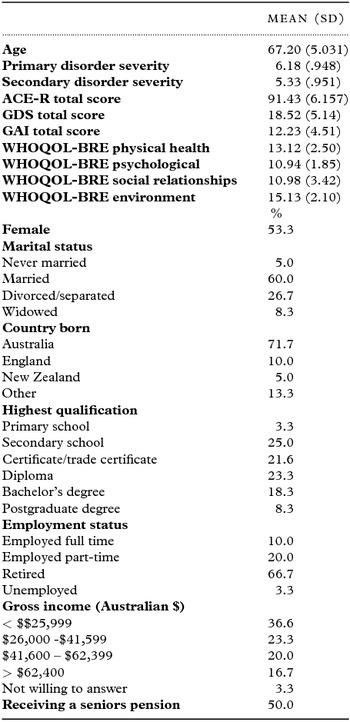
Sixty clinical participants aged 60–79 years (Mean age = 67.20, SD = 5.031, 32 = female, 28 = male) were recruited consecutively from a randomized controlled trial comparing two group psychological treatments for anxiety and depression; a cognitive behavioral therapy group (CBT) and a discussion group. All participants met diagnostic and statistical manual for mental disorders-IV (DSM-IV: American Psychiatric Association, 1995) criteria for both an anxiety and a unipolar mood disorder, with either anxiety or mood disorder being the primary (most interfering) problem. The most frequent primary disorder was generalized anxiety disorder (33%) followed by major depressive disorder (28%), major depression not otherwise specified (10%), anxiety disorder not otherwise specified (8%), social phobia (7%), dysthymia (5%), specific phobia (5%), with less than 5% frequency for the remaining disorders: panic disorder with/without agoraphobia, post-traumatic stress disorder. Exclusion criteria were: aged under 60 years, unable to read an English newspaper, current self-harm, active suicidal intent, psychosis, or bipolar disorder. Demographic information is shown in Table 1.
Demographic characteristics

Note. There was no significant difference between groups on any demographic variables, p > 0.05. ACE-R = addenbrooke cognitive examination-revised, GDS = geriatric depression scale, GAI = geriatric anxiety inventory, WHOQOL-BRE = world health organisation quality of life scale (Brief).
Measures
Diagnostic clinical interview
Participants completed the Anxiety Disorders Interview Schedule for DSM-IV (ADIS: Di Nardo et al., Reference Di Nardo, Brown and Barlow1994), a semi-structured interview for diagnosing anxiety and related disorders including mood disorders according to DSM-IV criteria on a zero to eight severity rating scale, where ratings of four and above are considered of clinical severity and meet diagnostic status. This interview was administered by graduate students in clinical psychology formally trained on the ADIS and given regular supervision to discuss diagnostic decisions. The primary disorder was defined as the one that most interfered with the person's life. The interviews for all participants in the treatment trial were videotaped for reliability purposes and 25% were recoded after the study's completion for the purpose of reliability coding. Inter-rater reliability (k) for agreement on the primary disorder was k = 0.78 for primary mood disorder, and k = 0.80 for a primary anxiety disorder.
Cognitive assessment
The Addenbrooke cognitive examination-revised (ACE-R: Mioshi et al., Reference Mioshi, Dawson, Mitchell, Arnold and Hodges2006) was administered. It is a brief rating scale for dementia that assesses five cognitive domains, namely attention/orientation, memory, verbal fluency, language, and visuospatial abilities. Research indicates good sensitivity and specificity for cut off scores of 82 (sensitivity = 0.84, specificity = 1.0) (Mioshi et al., Reference Mioshi, Dawson, Mitchell, Arnold and Hodges2006).
Self-report measures
Geriatric depression scale (GDS: Yesavage et al., Reference Yesavage1983), a 30 item self-report measure of depression symptoms developed for older adults, was administered to measure depressive symptoms. It has high internal consistency, reliability, sensitivity, and specificity in inpatient, outpatient, and nursing home residents with zero to moderate cognitive impairment (Yesavage et al., Reference Yesavage1983; Keiffer and Reeses, Reference Keiffer and Reeses2002; Jongenelis et al., Reference Jongenelis2005). Internal consistency in this sample was α = 0.78.
The geriatric anxiety inventory (GAI: Pachana et al., Reference Pachana, Byrne, Siddle, Koloski, Harley and Arnold2007), a 20 item measure of anxiety symptoms developed for older adults was administered. It has been shown to have adequate internal consistency, test-retest reliability and concurrent validity (Johnco et al., Reference Johnco, Knight, Tadic and Wuthrich2014 (in press, accepted 2nd July, Reference Johnco, Knight, Tadic and Wuthrich2014); Pachana et al., Reference Pachana, Byrne, Siddle, Koloski, Harley and Arnold2007). Internal consistency in this sample was α = 0.84.
The World Health Organisation quality of life measure brief (WHOQOL-BRE: The WHOQOL Group, 1995) was used to measure quality of life in four domains: physical health, psychological, social relationships, and environmental. The WHOQOL-BRE has been demonstrated to be reliable (The WHOQOL Group, 1995). Internal consistency in this sample for the four domains was: physical health (α = 0.73), psychological (α = 0.62), social relationships (α = 0.59), and environmental (α = 0.73).
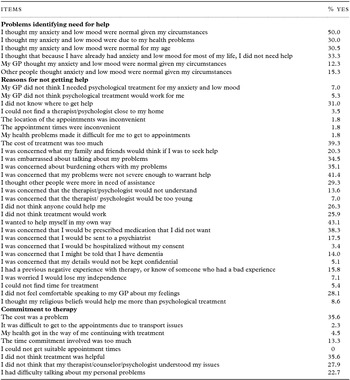
Barriers to treatment checklist, a brief checklist devised by the authors. The checklist was modified from previous checklists such as Pepin et al. (Reference Pepin, Segal and Coolidge2009) to: include items previously identified in the literature to be general barriers to treatment such as cost and transport difficulties, as well as additional barriers that have not been addressed in the literature before that are likely to be particularly relevant for older adults such as: barriers to identifying the need to seek help, concerns about burdening others, and not being understood by professionals. Participants were asked to indicate, using a Yes or No response, (1) whether each of six listed issues had been a barrier to identifying their need for help, (2) whether each of 28 listed issues had stopped them from getting help for their anxiety and low mood, and (3) for those participants that indicated that they had previously sought help from a psychologist or mental health professional (approximately 76% had sought previous help in this sample), they were asked to rate whether each of eight listed issues had been a barrier to them completing or continuing treatment. In addition, participants were given the opportunity to list any other barriers that they thought had prevented them from seeking help that they felt had been missing from the questionnaire. The individual items from the checklist are listed in Table 2.
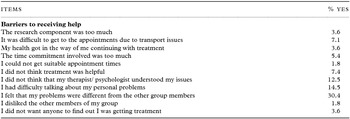
Study specific post-treatment barriers to treatment checklist, a brief 11 item checklist was also developed by the authors to examine potential barriers that had arisen during the course of the current group psychological therapy research trial. The checklist included items related to participation in: group treatment, a university research trial and general barriers such as time commitment required, transport difficulties, and not feeling connected to the group or the therapist. The individual items from the checklist are listed in Table 3.
CBT group
The Ageing Wisely group program consisted of 11 × 2 h sessions (including 10 minute tea break) conducted by intern clinical psychologists receiving regular supervision, with 6–8 group members. The program was manual based and included a detailed structured participant and therapist workbook that included all material presented during the sessions, and all homework exercises. The program included cognitive behavioral therapy (CBT) skills such as psycho-education, activity scheduling, problem-solving, cognitive restructuring, sleep hygiene, assertiveness training, and graded exposure. The program has been demonstrated to be effective (Wuthrich and Rapee, Reference Wuthrich and Rapee2013; Wuthrich et al., Reference Wuthrich, Kangas, Perini and Rapee2014).
Discussion group
The discussion group program consisted of 11 × 2 h sessions (including 10 minute tea break) conducted by intern clinical psychologists receiving regular supervision, with 6–8 group members. The program was manualized, focused on discussion, and increasing social and mental stimulation, and was led by therapists using non-specific therapy skills. The first hour of the program focused on participants reviewing their week and how their anxiety and depression had been. The second hour, after the tea break, was spent discussing various topics selected to engage the participants in a stimulating discussion.
Procedure
Ethical approval was obtained through the relevant University Human Research Ethics Committee. After participants completed consent forms, they provided demographic and medical information, and then the self-report questionnaires and the barriers to treatment checklist. Then they completed the ACE-R cognitive examination and ADIS diagnostic interview. Suitable participants were randomly assigned, following simple randomization procedures (computerized random numbers), to one of the two treatment groups (CBT or discussion group) in blocks of six–eight participants. At the end of treatment, participants completed post-treatment assessments including diagnostic interviews (rated by clinicians unaware of condition allocation), cognitive assessments, and symptom questionnaires (the findings from these measures are not reported here). They also completed the study specific post-treatment barriers to treatment checklist.
Data analysis
To check that the participants allocated to the two treatment groups did not differ at pre-treatment, demographics were compared between groups using descriptive statistics and analysis of variance procedures. Chi-squared analyses were also used to examine differences in the frequency of the barriers between the two treatment groups reported at pre and post treatment, and a Bonferroni correction was applied to control for the multiple analyses (p < 0.005).
Results
Demographics
Using Chi-squared analyses, there were no significant differences (p < 0.05) between the treatment groups on any of the demographic measures (gender, income, medication use, education, employment status). In addition, there were no significant differences (p < 0.05) using ANOVAs on any of the pre-assessment measures (ACE-R, diagnostic severity, GAI, GDS, WHOQOL-BRE).
Barriers to treatment
There were no significant differences between the groups on any of the barriers to treatment (Chi-squared analyses, all p > 0.005) and therefore the data from all participants were pooled to examine the frequencies of each barrier at pre and post treatment. The frequencies with which participants endorsed each of the barriers to treatment at the pre-treatment assessment are listed in Table 2. Overall, the greatest barriers were related to difficulties in identifying the need for help. In particular, 50% of the sample reported that they thought their anxiety and depression were normal for their circumstances and that this was a barrier to seeking help. Other barriers endorsed by 30% or more of the sample were: because they had suffered from anxiety and depression all their lives so that they did not need help (33.3%), thinking that anxiety and depression were normal for their age (30.5%) or due to their health problems (30%). Interestingly only 15.5% reported that a barrier was that other people thought their symptoms were normal given their circumstances and only 12.3% reported that a barrier had been that their GP thought their symptoms were normal given their circumstances.
Frequency of responses to pre-treatment barriers

Note: All comparisons between treatment groups were non-significant (p's > 0.0005) and therefore data for the two treatment groups has been collapsed here.
Frequency of study specific post-treatment barriers to treatment checklist

Note: All comparisons between treatment groups were non-significant (p's > 0.0005) and therefore data for the two treatment groups has been collapsed here.
In terms of other barriers to seeking help, the greatest barriers identified, in order, were: wanting to help themselves (43.1%), not being severe enough to need treatment (41.4%), cost of treatment (39.3%), fear of being prescribed medication (38.3%), concern about burdening others (35.1%), embarrassment (34.5%), not knowing where to get help (31%), thinking other people were more in need of assistance (29.3%), discomfort talking to their GP about the problem (28.1%). Participants’ free responses were varied and included themes such as: GP prescribed medication instead of psychological treatment, GP unable to refer to suitable psychologist, and stigma that men should not have psychological difficulties. However, these themes were only reported by a minority of the sample.
For the 72% of individuals in the sample who reported that they had previously sought assistance from a psychologist or mental health professional, they reported their biggest barriers to maintaining treatment were: not finding treatment helpful (35.6%), cost of treatment (35.6%), and thinking that the therapist did not understand their issues (27.9%).
Study specific barriers to treatment
Over the course of treatment, ten participants dropped out (six from CBT and four from the discussion group). However, post-treatment data were still collected from seven of these participants (70%). One participant, who completed treatment, did not complete the barriers measure. Therefore data were missing for four participants. Overall, participants in both treatment groups reported few barriers to treatment, and there were no differences in the barriers reported between the treatment groups so the data was pooled. The greatest barrier identified was feeling that their problems were different to other group members (30.4%). All the other barriers were reported as being a problem by less than 15% of the sample. For the subset who dropped out of treatment and returned barriers data (n = 7), three indicated that treatment was not helpful, and two reported that they did not think therapist understood their issues, had difficulty talking about personal problems, and felt their problems were different to other group members.
Discussion
This study sought to examine barriers to help seeking in a clinical population of treatment seeking older adults. We extended previous research by trying to identify possible barriers to identifying the need for help, preventing seeking treatment once the need for help had been identified and barriers to continuing treatment both in previous therapy and in the current treatment trial. Overall the results indicated that the greatest barriers related to difficulties in recognizing that their problems were sufficient to warrant help seeking. Half of the sample (50%) reported that the reason that they had not sought help for their symptoms earlier is because they thought their symptoms were normal given their circumstances, and approximately 30% of the sample reported that they had not sought help earlier because they thought that their symptoms were normal given their age or health conditions, or because it was something they had suffered with all their life. In addition, 41% of the sample thought their symptoms were not severe enough to warrant help. Interestingly, only a small subset reported that a barrier to identifying the need for help was because their GP thought their symptoms were normal given their circumstances (12.3%), or that their GP thought they did not need psychological treatment (7%). This supports previous research that generally GPs are able to identify the need for help (Helmes and Gee, Reference Helmes and Gee2003). However, given that 28% of the sample also reported a reluctance to talk about their symptoms with their GPs it is likely that many GPs were unaware of the problem. These findings suggest that greater interventions are needed to reduce barriers associated with the identification of anxiety and depression in older adults. This needs to be aimed at both increasing older adults’ ability to recognize symptoms of anxiety and depression themselves, and to encourage them to talk to their GPs about their symptoms. In fact given some research which suggests that anxiety and depression may present somewhat differently in older adults (Christensen et al., Reference Christensen1999) perhaps more public health literacy interventions are needed to demonstrate the value of help seeking even when symptoms might seem mild.
In regard to barriers associated with accessing help once the need for help had been established, the greatest barriers reported were a desire to help themselves (endorsed by 43% of the sample) and not thinking that they were severe enough to need treatment (endorsed by 41% of the sample) which both replicate common barriers found in general adult populations (Issakidis and Andrews, 2002; Thompson et al., 2004), and a fear of being prescribed medication (38% of the sample). Also it was interesting that in this sample only 5% reported that a barrier had been that their GP thought that psychological therapy would not work for them and is in contrast to previous research findings which suggests that one barrier to help seeking is that GPs do not think that psychological therapy would be beneficial to older adults (Uncapher and Arean, Reference Uncapher and Arean2000; Helmes and Gee, Reference Helmes and Gee2003). Barriers related to cost and not knowing where to get help were endorsed by 39% and 31% respectively, replicating previous research that these are common barriers to help seeking across the lifespan (Robb et al., Reference Robb, Haley, Becker, Polivka and Chwa2003). Interestingly other practical barriers such as the location of treatment, appointment times, age of the psychologist, fear of hospitalization or losing independence, confidentiality issues, and lack of time were endorsed by less than 10% of the sample and are therefore unlikely to be major barriers to help seeking in this population.
Finally we examined barriers to continuing with treatment, once treatment had been commenced. For those that had previously sought treatment, barriers that prevented them from continuing related to cost or not thinking therapy was helpful (both endorsed by 35% of the sample) or that the therapist did not understand their issues (endorsed by over 25% of the sample). Therefore concerns about cost are significant barriers to older adults seeking help and continuing to receive help. Also, further training might be needed in therapists working with older adults to ensure adequate rapport is built, thorough assessments are conducted and that evidence-based treatments are used. This finding echoes recommendations made in the literature regarding the training of therapists working with older adults (Mellor et al., Reference Mellor, Kiehne, McCabe, Davison, Karantzas and George2010). Barriers related to transportation, health issues, time commitment, and appointment times were reported as very minimal barriers. This suggests that perhaps once individuals decide to start treatment they have already considered and overcome these practical barriers.
Few barriers were reported for continuation with the current treatments that the participants received. Fortunately, as these participants were engaged in a research trial, there was no cost for treatment and free parking was available. Therefore two of the common barriers to treatment were absent in this study. The largest barrier reported (by 30% of the sample) was that they felt that their problems were different to the other group members. This is a barrier that is unique to group treatment. However, given that the recent National Audit of Psychological Therapies found that older adults were more likely to be offered group therapy than individual therapy (Cameron et al., Reference Cameron, Lawton and Reid2011), this barrier needs to be further examined and taken into consideration in treatment planning along with steps to help participants feel more understood and accepted in a group situation. Interestingly for the 17% of participants who dropped out of treatment, the main barriers they reported related to feeling therapy was not helpful or not feeling connected to the therapist or the other group members. Although only a small number of participants dropped out, these barriers echo the needs for evidence based therapies to be used (although interestingly 6/10 dropped out of CBT), and care needs to be taken to build rapport with participants in therapy. Participants reported very minimal concerns (less than 15%) for all other barriers listed including: the availability of appointment times, the time commitment involved, being involved in a research trial, the effectiveness of treatment, the ability of the therapist to understand their issues, difficulties talking about their issues, and not liking other group members.
There are several limitations of this study that need to be considered. Firstly, the study was conducted only in an older treatment seeking sample and therefore conclusions about whether the barriers identified are more or less of a barrier than for younger treatment seeking adults cannot be made. Further research should compare younger and older treatment seeking samples. Secondly, whilst this study found that there are likely to be significant barriers related to the identification of symptoms and the need for help, this sample had all presented for treatment, and so more research might be needed with distressed populations which have not sought help at all. However, having said that some of the sample reported that they had presented for the treatment study because they were unsure whether they had anxiety and depression symptoms that were significant enough to warrant treatment, or whether what they were experiencing was just normal. Finally, all participants had anxiety and depressive disorders, and so replication of the barriers is needed in other mental health populations, although it is important to note that anxiety and depression are the most common mental health disorders in this age group.
Overall, this study extends our current understanding about the barriers to treatment in older adults with anxiety and depression. In this study, we identified significant barriers related to the identification of symptoms and in identifying the need for help in older adults. Therefore more interventions are needed to boost mental health literacy in older adults about how to recognize anxiety and depression in later life and the importance of seeking help for these symptoms despite concerns that symptoms might not be severe enough or due to a desire to help themselves. This is particularly true given that clinical as well as sub-clinical levels of anxiety and depression have negative consequences and can be managed with CBT (Wuthrich and Rapee, Reference Wuthrich and Rapee2013). This study also extended previous work replicating barriers such as cost, and not knowing how to access help as being important barriers to overcome, but also demonstrated that practical barriers related to transportation, time commitment and appointment times are not major barriers. Finally, given other research indicating that a large barrier to treatment is related to low referral rates of older adults for psychological treatment, more interventions are needed to increase knowledge of the success of psychological therapies in older adults to encourage increased referrals by professionals and individuals themselves.
Conflict of interest
None.
Description of authors’ roles
Wuthrich formulated the research question, designed the study and measures, conducted the data analyses and wrote the manuscript.
Frei assisted to develop the measures, collect the data, entered the data, and assisted to write the manuscript.
Acknowledgments
None.