Introduction
Eating disorder (ED) services in Ireland are recognised to be ‘very poorly developed’ (Department of Health & Children, 2006: 76). This is despite the fact that eating problems are prevalent among Irish adolescents (McNicholas et al. Reference McNicholas, Keogh, Dooley, Lennon, Ahern, Lydon, Coyle and Whelan2010), accounting for 12% of all juvenile admissions to Irish psychiatric units (Health Research Board, 2013). As with many other disorders, the longer an ED goes untreated, the poorer the prognosis. Unfortunately, as ED symptoms tend to be ego-syntonic, those affected are often unlikely to self-present for treatment. This means that primary-care practitioners have a crucial role in detecting cases of EDs and initiating appropriate care pathways. However, the most recent review of the national mental health policy – A Vision for Change – suggested that there was ‘strong evidence’ that GPs and other healthcare professionals are insufficiently equipped to do so effectively (Department of Health & Children, 2006: 151).
At present, there are no available data indicating the levels of knowledge that Irish healthcare professionals have regarding the assessment and management of EDs. Also absent is any evidence about healthcare professionals’ attitudes towards people with EDs, which may influence their clinical and interpersonal interactions, and therefore young people’s engagement with healthcare services. Acquiring this information is critical for evaluating the quality of ED support services in Ireland and developing targeted educational initiatives for healthcare professionals. This article presents the first evidence of this kind, acquired through a nationwide survey of healthcare professionals.
Healthcare professionals’ ED knowledge
International studies suggest high levels of variability in professional knowledge about EDs. A study of medical providers in the United States (including general practitioners, nurse practitioners and paediatricians) found that 59% felt that they were not adequately skilled to treat EDs (Linville et al. Reference Linville, Brown and O’Neil2012). A large survey of British GPs (n=3783) found that the majority did not use the recommended body mass index (BMI) criterion to guide referral decisions, whereas only one-quarter ensured psycho-education was provided (Currin et al. Reference Currin, Schmidt and Treasure2006). Gaps in clinical knowledge have also been identified, with one study finding that fewer than half of the psychiatrists surveyed recognised amenorrhoea as a diagnostic criterion for anorexia nervosa (AN), whereas 35% falsely believed that NICE guidelines recommended SSRIs for the treatment of AN (Jones et al. Reference Jones, Saeidi and Morgan2012). Only a quarter of British psychiatrists perceived their ED training to be adequate (Jones et al. Reference Jones, Saeidi and Morgan2012). These shortcomings in clinical knowledge may have undesirable effects on clinicians’ likelihood of detecting cases of ED or selecting appropriate treatment paths. For instance, Currin et al. (Reference Currin, Waller and Schmidt2009) found that clinicians with lower ED knowledge were less likely to offer patients with ED symptoms follow-up appointments. Ascertaining the quality of Irish health professionals’ knowledge about EDs is, therefore, critical for developing strategies for improving service provision and outcomes.
Healthcare professionals’ attitudes towards EDs
Clinical knowledge is not the only important variable in determining the quality of ED service provision; also significant are healthcare professionals’ attitudes and beliefs regarding individuals with EDs. Research shows that the social stigma surrounding ED is a major barrier to seeking help (Booth et al. Reference Booth, Bernard, Quine, Kang, Usherwood, Alperstein and Bennett2004; Hackler et al. Reference Hackler, Vogel and Wade2010; Griffiths et al. Reference Griffiths, Mond, Murray and Touyzin press). Studies conducted in the United States and the United Kingdom suggest that people with EDs are viewed negatively by the public (Crisp, Reference Crisp2005; Stewart et al. Reference Stewart, Schiavo, Herzog and Franko2008). Specifically, compared with other mental and physical illnesses, EDs are more often seen as self-inflicted or reflecting attention-seeking (Crisp, Reference Crisp2005; Stewart et al. Reference Stewart, Keel and Schiavo2006; Crisafulli et al. Reference Crisafulli, Van Holle and Bulik2008; Roehrig & McLean, Reference Roehrig and McLean2010; Ebneter & Latner, Reference Ebneter and Latner2013; McLean et al. Reference McLean, Paxton, Massey, Hay, Mond and Rodgers2014). These negative projections may result in dissociation from individuals with EDs (Crisp, Reference Crisp2005; Stewart et al. Reference Stewart, Schiavo, Herzog and Franko2008; Zwickert & Rieger, Reference Zwickert and Rieger2013), which can foster a sense of isolation among those affected and a reluctance to disclose their illness.
Although most stigma studies have focussed on attitudes held by community samples, healthcare professionals are not immune to these negative cultural representations. Indeed, some data suggest that medical professionals may hold more negative views about mental illnesses than the general population: a study by Jorm et al. (Reference Jorm, Korten, Jacomb, Christensen and Henderson1999) found that Australian clinicians were more pessimistic about the prospects of recovery from mental illness than the lay public. The small amount of research that has focussed specifically on medical professionals’ attitudes towards ED patients has shown that the prejudice evident among the general public also occurs within professional groups (Thompson-Brenner et al. Reference Thompson-Brenner, Satir, Franko and Herzog2012). For instance, Byrne (Reference Byrne2000) found that healthcare professionals viewed people with AN as less likeable than other patient groups. A perception that ED patients have personal control over their disorder, which is linked to a sense of blame, is also evident within clinician populations (Currin et al. Reference Currin, Waller and Schmidt2009). Moreover, some medical experts may attribute EDs to defects of personality or character, such as vanity (Crisafulli et al. Reference Crisafulli, Van Holle and Bulik2008).
Such beliefs can have tangible consequences for treatment decisions – for example, Currin et al.’s (Reference Currin, Waller and Schmidt2009) research linked a pessimistic prognosis with an increased rate of onward referral. In addition, studies with patient groups indicate that individuals with EDs are acutely sensitive to disparaging attitudes, which can either be internalised or construed as a deterrent to service engagement (Easter, Reference Easter2012; Maier et al. Reference Maier, Ernst, Müller, Gross, Zepf, Herpertz-Dahlmann and Hagenah2014). Stigmatising attitudes held by healthcare providers may, therefore, impair the experience, extent and quality of the care available to young people with EDs.
Cross-discipline differences
Different professional categories undergo different training programmes and operate under different conditions and objectives, which may cultivate discipline-specific beliefs about the nature and causes of EDs. Such discrepancies between clinical professions might pose difficulties for effective multi-disciplinary initiatives (Dryer et al. Reference Dryer, Tyson and Kiernan2013). Some evidence suggests that psychiatrists hold less stigmatising attitudes than other professionals and that their beliefs become less stigmatising with greater clinical experience (Jones et al. Reference Jones, Saeidi and Morgan2012). However, Dryer et al.’s (Reference Dryer, Tyson and Kiernan2013) survey of a range of professional groups in Australia (GPs, psychiatrists, social workers, psychologists, mental healthcare nurses, dieticians, etc.) found few differences in beliefs about the causality of bulimia nervosa (BN). Given these conflicting findings from other jurisdictions, and the lack of evidence from within Ireland, it remains unclear whether Irish healthcare professionals hold systematically different representations of EDs, or the potential implications of this for clinical practice.
With these issues in mind, we undertook a national survey of healthcare professionals in Ireland to illuminate their levels of ED knowledge and their attitudes towards individuals with EDs. The study sought to identify elements of healthcare professionals’ attitudes and beliefs that might serve as barriers to the effective detection, treatment or management of EDs in Ireland.
Method
Design
Ethical approval for this web-based survey was granted by the St John of God Research Ethics Committee. The study adopted a between-subjects design, where participants were randomly assigned to view one of five gender-neutral vignettes, and were subsequently asked questions relating to the character described in their vignette. The survey also included questions assessing their knowledge and attitudes regarding EDs and their professional experience of treating young people with EDs. Data were collected between October 2013 and February 2014.
Participants
The contact details of a purposive sample of 1,916 healthcare professionals were obtained through national representative bodies (Irish Medical Directory; consultant lists for CAMHS and AMHS; Heads of Psychology Services Ireland; Irish Association for Counselling and Psychotherapy; and the Irish Nutrition & Dietetic Institute). Professionals were e-mailed the study information and a link to the online questionnaire. Follow-up e-mails were sent to those who did not respond to the initial invitation. In total, 171 healthcare professionals accessed the online version of the survey, representing a response rate of 9%. All the participants gave their informed consent before completing the survey.
Materials and procedures
After providing basic demographic and professional information, participants were instructed to read the vignette they had been assigned and answer the questions that followed. The vignettes (available in Supplementary Materials) depicted a fictional young person (‘Morgan’, aged 15) who had presented to his/her GP with classical symptoms of either AN, BN, binge-eating disorder (BED), depression or type 1 diabetes. The vignettes did not include reference to any diagnostic label. The vignettes were reviewed by a multi-disciplinary expert panel to ensure that they accurately reflected the symptomatology of each disorder.
The subsequent questions assessed participants’ responses to the target character on a number of measures.
Diagnosis
-
(1) Diagnosis: open-ended items were adapted from Mond & Hay (Reference Mond and Hay2008). After reading the vignettes, respondents were asked to indicate what they believed Morgan’s ‘main problem’ was and the steps they would typically take in order to diagnose Morgan’s problem.
Attitudes
-
(1) Illness perceptions: an adapted 12-item version of the Illness Perceptions Questionnaire (Moss-Morris et al. Reference Moss-Morris, Weinman, Petrie, Horne, Cameron and Buick2002) assessed beliefs about the duration, control and treatment efficacy of Morgan’s problem. These variables were scored on a range of 1–5, with higher scores indicating (i) greater belief that the problem will last for a long time, (ii) greater belief that the individual can control the problem and (iii) greater belief that treatment can improve the problem. One ‘timeline’ and one ‘treatment’ item were removed because they undermined the internal reliability of the scales. The final Cronbach’s α scores were 0.58 for the timeline scale, 0.62 for personal control and 0.61 for treatment.
-
(2) Long-term outcome: participants were asked to provide a projection of Morgan’s long-term life outcomes on eight dimensions (e.g. mental health, relationships, employment). On each dimension, they indicated whether, if Morgan received appropriate help, he/she would fare equivalent to, better than or worse than other people in the community. The eight items showed a Cronbach’s α of 0.89 and were combined to create a composite scale.
-
(3) Feelings about interaction: respondents were asked to provide their views on healthcare professionals’ typical reactions to interacting with a patient like Morgan (e.g. ‘I think health professionals generally find patients like Morgan difficult to deal with’). Responses were rated on a 5-point scale ranging from ‘strongly disagree’ to ‘strongly agree’. The three items showed a Cronbach’s α of 0.76 and were combined to create a composite scale.
-
(4) Target character gender: respondents were asked to indicate whether Morgan was male or female and to provide a reason for their response.
Professional experience and knowledge
After indicating their responses to the vignette, all the participants completed questions on their professional experience with EDs, their knowledge of ED diagnosis and treatment guidelines, as well as their confidence regarding their diagnostic and treatment competence.
Analysis
The data were imported into SPSS for statistical analysis. On continuous variables, analyses of variance (ANOVAs) with post-hoc pairwise comparisons were used to identify differences related to vignettes and professional categories. Normality was assessed with normal Q–Q plots, and homogeneity of variance was evaluated using Levene’s tests. When these assumptions were violated, Kruskal–Wallis H tests were used instead of ANOVAs. On categorical variables, χ 2 tests were used. Open-ended responses were analysed using content analysis. In the statistical analyses reported below, all missing cases were excluded pairwise, and all proportion figures were derived from the subset of the sample who responded to that item. Due to the multiple comparisons involved in the analysis, the analysis adopted a Bonferroni-corrected significance criterion of 0.003.
Results
Demographic and professional characteristics
A total of 171 healthcare professionals participated in the study; 60% (n=74) were based in Leinster, 24% (n=29) in Munster, 11% (n=13) in Connacht and 1% (n=2) in Ulster. Of those who stated their gender, 72% (n=109) were female. Counsellors/therapists were the professional group most prominently represented in the sample (40%, n=60), followed by psychiatrists (20%, n=30), GPs (15%, n=23) and psychologists (14%, n=21). Sixteen respondents did not fall into any of these categories (e.g. dieticians, social workers) and were classified as ‘other’. Participants had an average of 15.8 years of clinical experience (s.d.=9.2); 37% (n=56) worked in the public sector, 29% (n=43) in the private sector and 34% (n=51) in both.
The survey programme randomly assigned participants to view one of five vignettes, corresponding to the following: AN (25%, n=39), BN (15%, n=24), BED (21%, n=33), depression (19%, n=29) and type 1 diabetes (20%, n=32).
Clinical experience with EDs
The vast majority (94%, n=85) of respondents reported that they had previously treated an individual with an ED. Overall, in the previous year, participants had assessed or treated an average of 3.65 adolescents (15- to 18-year-olds) presenting with an ED. Individuals within the professional category of ‘other’ had encountered most cases of ED (M=7.11, s.d.=10.35), followed by psychiatrists (M=5.25, s.d.=6.17) and GPs (M=3.46, s.d.=3.01), with psychologists (M=1.57, s.d.=2.15) and counsellors (M=1.55, s.d.=1.87) having the least engagement with ED patients. Respondents reported that they had an average of 2.36 (s.d.=4.1) 15- to 18-year-olds with EDs in active treatment at present, of whom 86% were female.
Knowledge and treatment
Diagnosis of the problem in the vignette
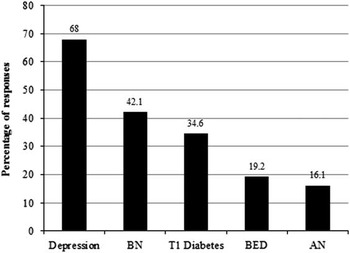
Figure 1 displays the percentage of responses that correctly categorised the problems described in the relevant vignette. The different vignettes produced significantly different rates of correct classifications [χ 2 (4, n=127)=20.17, p<0.001, V=0.4]. Using the conventional standardised residual of >2 as the criterion of significance, depression was significantly more likely to be correctly diagnosed, relative to the other conditions. AN and BED vignettes showed significantly lower rates of accurate diagnosis. There were no significant differences between the various professional disciplines’ likelihood of offering a correct classification of the three ED vignettes [χ 2 (4, n=72)=8.59, p=0.07, V=0.35].
Percentage of respondents who correctly diagnosed each vignette.

Steps to diagnose the problem in the vignette
Free responses outlining the steps clinicians would take to diagnose Morgan’s main problem were coded in terms of four categories. Table 1 presents the proportion of responses that suggested (i) a mental health assessment, (ii) a medical assessment, (iii) onward referral and (iv) consideration of collateral reports.
Percentage of valid responses that proposed various steps to diagnose the problem

AN, anorexia nervosa; BN, bulimia nervosa; BED, binge-eating disorder.
Looking solely at the data from the three ED vignettes, statistical analysis showed that GPs and ‘other’ healthcare professionals were more likely to refer the patient onward than the other professional groups [χ 2 (4, n=72)=18.75, p=0.001, V=0.51]. Counsellors were less likely than psychiatrists to mention medical assessments [χ 2 (4, n=72)=32.17, p<0.001, V=0.67]. Psychiatrists were the most likely to recommend collateral reports [χ 2 (4, n=72)=21.67, p<0.001, V=0.55]. There were no significant differences in the professional groups’ tendency to recommend a mental health assessment [χ 2 (4, n=72)=10.05, p=0.004, V=0.37].
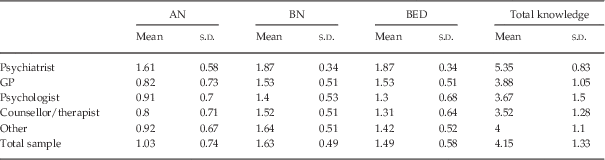
ED knowledge
Respondents were administered six multiple-choice questions assessing their knowledge about the detection and treatment of EDs (two questions each corresponding to AN, BN and BED). Table 2 displays the mean number of correct responses offered by participants from the various professional categories. A one-way ANOVA showed that total levels of knowledge varied significantly across professional groups [F (4,82)=9.18, p<0.001, η 2=0.31]. Post-hoc pairwise comparisons revealed that psychiatrists recorded significantly higher levels of knowledge compared with all the other professional groups. The knowledge scores of the other professional groups did not significantly differ from each other.
Levels of professional knowledge about detection and treatment of EDs

AN, anorexia nervosa; BN, bulimia nervosa; BED, binge-eating disorder.
Confidence in ED diagnosis and treatment
Consistent with psychiatrists’ greater knowledge scores, psychiatrists also reported the greatest confidence in diagnosing and treating EDs [F (4,85)=8.99, p<0.001, η 2=0.3]. Post-hoc pairwise comparisons showed that psychiatrists’ mean confidence levels (M=4.02, s.d.=0.7) were significantly greater than those of GPs (M=3.03, s.d.=0.8), counsellors (M=3.33, s.d.=0.88) and ‘other’ professionals (M=2.46, s.d.=0.81), but were not significantly different from those of psychologists (M=3.6, s.d.=0.74).
Attitudes
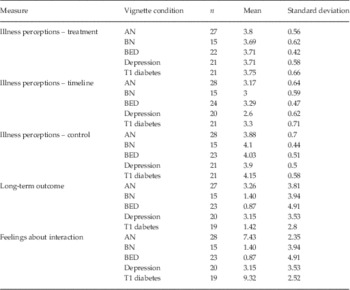
Table 3 displays the means and standard deviations recorded on all attitude measures for each of the vignette conditions.
Descriptive statistics for attitude scales

AN, anorexia nervosa; BN, bulimia nervosa; BED, binge-eating disorder; T1 diabetes, type 1 diabetes.
Illness perceptions
One-way ANOVAs revealed no significant differences between the five vignettes on perceptions of personal control [F (4,103)=1.01, p=0.4, η 2=0.04] or treatment efficacy [F (4,101)=0.14, p=0.97, η 2=0.01]. A statistically significant difference was detected in the timelines ascribed to the various conditions [F (4,103)=4.68, p=0.002, η 2=0.15]. Post-hoc pairwise comparisons indicated that clinicians believed that the depressive symptoms would last a significantly shorter duration (M=2.6, s.d.=0.62) than the symptoms described in the AN (M=3.17, s.d.=0.64), BED (M=3.29, s.d.=0.47) or type 1 diabetes (M=3.3, s.d.=0.71) vignettes. The timelines ascribed to the BN (M=3, s.d.=0.59), AN and BED vignettes did not significantly differ from each other.
One-way ANOVAs were conducted to determine whether there was an effect of professional category on illness perceptions. For these analyses, as the three cases of ED did not significantly differ on any of the three sub-scales, their data were merged into one over-arching ED category in order to ensure adequate sample sizes. The different professional categories did not significantly differ in their perceptions of the treatment [F (4,59)=0.96, p=0.44, η 2=0.06] or timeline [F (4,62)=1.85, p=0.13, η 2=0.11] of EDs. On personal control, psychiatrists scored the highest (M=4.31, s.d.=0.36) and GPs scored the lowest (M=3.67, s.d.=0.63), but these differences did not meet the Bonferroni-corrected significance criterion of .003 [F (4,61)=2.78, p=0.035, η 2=0.15].
Long-term outcome
A significant Levene’s test indicated that the assumption of homogeneity of variance was violated for the measure of long-term outcome. A Kruskal–Wallis H test was, therefore, performed to assess whether the target characters in the various vignettes were judged to have different prospects. This test was not statistically significant [χ 2 (4, n=104)=5.77, p=0.217, η 2=0.06].
A Kruskal–Wallis H test on the collapsed ED data revealed a significant difference between the professional groups’ outcome assessments for the ED vignettes [χ 2 (4, n=65)=15.84, p=0.003, η 2=0.25]. Psychiatrists were the most pessimistic about ED patients’ outcomes, and post-hoc pairwise comparisons showed that psychiatrists projected significantly poorer outcomes than counsellors/therapists. There were no other significant differences between the professional groups.
Feelings about interaction
The various vignettes produced significantly different responses to this variable [F (4,101)=5.11, p=0.001, η 2=0.17]. Post-hoc pairwise comparisons showed that respondents believed that healthcare professionals liked working with individuals with depression or type 1 diabetes significantly more than with AN patients. There were no other significant differences between the vignettes. Furthermore, there was no main effect of professional category on feelings about interacting with the ED targets [F (4,62)=0.54, p=0.7, η 2=0.03].
Perceived gender of vignette character
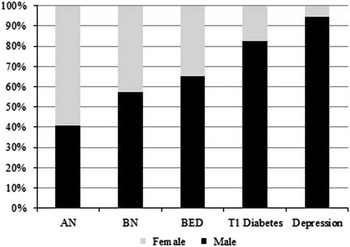
Respondents were asked to indicate their assumptions about the gender of the character they had encountered in the vignette (‘Morgan’). Figure 2 demonstrates the proportion of respondents for each vignette who imagined Morgan to be male or female. The vignettes differed significantly in their tendency to be interpreted as describing a male or female [χ 2 (4, n=96)=16.6, p=0.002, V=0.42]. Inspection of the standardised residuals (using >2 as the significance criterion) showed that participants were significantly more likely to assume that the target character in the depression vignette was male and in the AN vignette female.
Inferred gender of vignette target.

Discussion
The knowledge and attitudes of service providers are key variables influencing the quality and receptiveness of the care available to young people with EDs. This research provides the first empirical evidence of Irish healthcare professionals’ knowledge about EDs and attitudes towards adolescents presenting with these disorders.
How knowledgeable are Irish healthcare professionals about EDs?
Levels of ED knowledge were moderately good, with respondents correctly answering an average of 4.2 of the six questions about ED diagnosis and treatment. However, respondents fared poorly on a question regarding the BMI parameters that would indicate the presence of AN, which was correctly answered by fewer than half of the participants. A very similar finding previously emerged in a study of British clinicians (Currin et al. Reference Currin, Schmidt and Treasure2006), suggesting that this gap in knowledge may have international relevance. However, this pattern should be understood in light of recent debates about BMI thresholds for AN: clinical guidelines place increasing emphasis on proportional weight loss rather than absolute BMI figures, and the recently revised DSM-V criteria recommend BMI as a guide for determining the severity of an ED rather than its presence per se. In addition, in children and adolescents, BMI centiles charts are more meaningful than absolute BMI values. Given the reduced centrality of BMI in ED diagnosis for young people, the poor response to this question may not have particularly critical clinical repercussions.
Although participants performed relatively well overall on the factual questions about EDs, the present study raises doubt about whether this knowledge is implemented into clinical practice. When confronted with a hypothetical clinical case, participants struggled to distinguish the various categories of EDs, and were much more likely to recognise symptoms of depression. Fewer than half of the respondents who saw the BN vignette and less than one-fifth of those exposed to the BED and AN vignettes correctly classified these disorders. It should be noted that additional participants did recognise the problems presented as indicating some type of ‘eating disorder’ but did not specify which type. If these responses are included, the rates of identifying the presence of an ED rise to 58% for BN, 55% for AN and 38% for BED. Nevertheless, this still indicates a substantial rate of non-recognition of the presence of an ED. Although these data may partly reflect clinically prudent misgivings about making a diagnosis on the basis of limited information, such reluctance did not deter people from assigning a diagnosis to the depression vignette. This suggests some lack of certainty surrounding typical clinical presentations of EDs.
What characterises healthcare professionals’ attitudes towards EDs?
Our data revealed some indications that healthcare professionals hold more negative attitudes towards EDs relative to other mental or physical illnesses. Specifically, and consistent with previous research (Byrne, Reference Byrne2000; Thompson-Brenner et al. Reference Thompson-Brenner, Satir, Franko and Herzog2012), participants believe that clinicians prefer working with patients with depression and diabetes than with patients with AN. This suggests that clinicians might feel a level of discomfort working with ED patients. Further research is required to determine whether the negative experience of clinical interactions stems from difficulties posed by limited ED resources and knowledge, or a more subjective aversion to individuals with these disorders.
Professionals generally viewed EDs as chronic disorders while simultaneously holding optimistic beliefs regarding the controllability and treatment efficacy of EDs. This belief pattern is discrepant with Weinman et al.’s (Reference Weinman, Petrie, Moss-Morris and Horne1996) proposition that belief in the controllability and curability of an illness is associated with shorter perceived illness duration. In addition, the beliefs expressed by this professional sample are at odds with the illness models held by ED-affected individuals themselves, who tend to view their disorder as characterised by low controllability and curability (Holliday et al. Reference Holliday, Wall, Treasure and Weinman2005). Discrepancies in the illness beliefs held by those affected and the people around them, including healthcare providers, are associated with psychological distress on the part of the patient (Quiles et al. Reference Quiles Marcos, Weinman, Terol Cantero and Belendez Vazquez2009). These client–clinician discrepancies could foster difficult clinical interactions, particularly if the client perceives a stigmatising attitude on the part of the healthcare professional (Easter, Reference Easter2012; Stevenson et al. Reference Stevenson, McNamara and Muldoon2014). Such tensions could perhaps underlie respondents’ sense that healthcare professionals like working with patients with EDs less than with other patient groups.
Further illuminating professionals’ potentially biased pre-conceptions of individuals with EDs, the data indicated the gendered nature of clinical representations of EDs. On encountering the depression and type 1 diabetes vignettes, the vast majority of participants assumed that the patient was male. In explaining their answer, many commented that in their experience ‘Morgan’ is more typically a male name. Participants’ elaborations suggested that these associations with the name ‘Morgan’ continued to influence interpretations of the ED vignettes, which considerable numbers of people continued to judge as male. However, the masculine connotations of this particular name became significantly less important when the vignette described disordered eating patterns, which swayed more participants towards a female judgement. This likely reflects an implicit association between females and eating problems, particularly in the case of the dietary restriction typical of AN. The association between EDs and women does have a basis in epidemiological reality. However, the widespread feminisation of representations of EDs compounds the difficulties experienced by men with EDs, who feel that their masculinity is brought into question (Griffiths et al. 2014, in press). Further studies should investigate whether the gendered interpretation of ED symptoms has implications for clinicians’ diagnosis of or attitudes towards male patients who present with EDs (Strother et al. Reference Strother, Lemberg, Stanford and Turberville2012). Future research on the gender judgements that vignettes elicit may also benefit from including a response category of ‘other’, ‘unknown’ or ‘could be either’: the dichotomous male/female options used in the present study may have unduly restricted responses.
Do different professional groups hold different beliefs about EDs?
The survey also revealed a number of inter-disciplinary differences in healthcare professionals’ orientations towards EDs. Apart from the small number of participants categorised as ‘other’, psychiatrists had the highest levels of professional contact with ED patients. Consistent with this, psychiatrists had the greatest levels of knowledge about and confidence in the diagnosis and treatment of EDs. These differences in psychiatrists’ clinical competence were paralleled by certain differences in their attitudes and beliefs about EDs. Of all the professional groups, psychiatrists expressed the most pessimistic views regarding ED patients’ long-term life prospects. The finding that those with the most expertise in EDs are the most negative about ED patients’ outcomes is concerning, given the centrality of these professionals in the clinical care available to people with EDs. Outcome perceptions were not statistically related to participants’ level of experience with ED patients, which suggests that psychiatrists’ pessimism about ED patients’ prospects is due to factors other than greater exposure to the progression of ED pathology. It is possible that psychiatrists see a disproportionate amount of people with severe and enduring EDs, with milder cases presenting in primary care. However, even if psychiatrists’ pessimism is grounded in a greater awareness of the high mortality and morbidity associated with EDs, it could, nevertheless, have a detrimental effect on clinical outcomes if their pessimistic outlook is unconsciously transmitted to patients.
This study also has implications for the recommendation made in A Vision for Change that EDs be initially treated at the primary-care level (Department of Health & Children, 2006). Our data vindicate A Vision for Change’s contention that GPs are ill-equipped to treat EDs. The GPs in this sample had a relatively limited level of ED knowledge and reported a lack of confidence in diagnosing and treating EDs. This re-iterates the issue of inadequate mental health training for GPs (Copty & Whitford, Reference Copty and Whitford2005). However, it is worth noting that GPs ascribed patients the least personal control over their illness, which is consistent with the illness belief model held by those with AN themselves (Holliday et al. Reference Holliday, Wall, Treasure and Weinman2005). This could promote a successful initial clinical consultation.
Study strengths and limitations
This study represents the first attempt to assess both professional knowledge of EDs and professional attitudes towards individuals with EDs in Ireland. A Vision for Change noted that healthcare professionals were insufficiently equipped to deal with EDs, but offered no insight into the precise nature of the posited deficiencies. This study has identified specific gaps in knowledge and illness belief models that conflict with those held by ED-affected individuals themselves, which may have negative implications for professional–client interactions.
However, it is important to acknowledge the study’s limitations – most notably the relatively low response rate. Despite extensive efforts to disseminate the survey, and numerous communications from clinicians acknowledging the need for this research, only 9% of the 1,916 healthcare professionals contacted participated. This type of response rate is not unusual in surveys of healthcare professionals (e.g. Kim et al. Reference Kim, Hollowell, Patel, Bales, Clayman and Gerber2000; Aitken et al. Reference Aitken, Power and Dwyer2008), which typically deliver lower response rates than general household surveys (Asch et al. Reference Asch, Jedrziewski and Christakis1997). It likely reflects the pressurised workloads of healthcare professionals in Ireland: numerous practitioners responded that they would like to contribute to the research but simply did not have the time. Although the response rate was lower than desired, in absolute terms, the sample size was considerably higher than the only previous Irish study on this topic (Flahavan, 2006). Nevertheless, the limited sample size, in the context of the five-way comparison involved in the vignette design, compromised the statistical power of the analysis. Future research with a larger sample size may identify more subtle effects that this analysis was unable to detect.
The low response rate may also have introduced a source of bias into the research, which should be borne in mind when interpreting its results. However, it is difficult to assess the full implications of the high non-response rate for multiple reasons. First, as all survey invitations were sent via e-mail, it is impossible to tell how many invitations were delivered to active e-mail accounts or read by the intended recipient. The ‘true’ rate of response (i.e. the number of participants relative to the number who actually read the e-mail) is, therefore, unclear, but is likely higher than 9%. Second, as there is no available information about the characteristics of non-responders, it is not possible to determine whether those who did respond were demographically or professionally distinctive in some way. However, other studies have found that low response rates in surveys of healthcare professionals only minimally increase the risk of response bias (Cull et al. Reference Cull, O’Connor, Sharp and Tang2005). In addition, our results correspond with findings from other jurisdictions relating to both knowledge (e.g. Currin et al. Reference Currin, Schmidt and Treasure2006) and attitudes (e.g. Byrne, Reference Byrne2000; Thompson-Brenner et al. Reference Thompson-Brenner, Satir, Franko and Herzog2012) among healthcare professionals.
A further limitation relates to the vignette-based design. Although vignettes are recognised as powerful means of accessing valid, naturalistic responses (Chambers et al. Reference Chambers, Murphy and Keeley2015), it is sometimes difficult to determine the extent to which data reflect the specific features of the vignettes provided, rather than more generalisable illness representations. For instance, although the name ‘Morgan’ was selected to represent a gender-neutral character, participants’ responses indicated that it was more strongly associated with males, which influenced their inferences about the vignette target. This illustrates how the rather superficial details of the vignette content can shape the data collected. These issues do not negate the value of vignette designs, but rather highlight the need for external validation of results through different vignette texts and through alternate, non-vignette-based methodologies. This should be a priority for future research.
Conclusion
The results of this study indicate the need for a concerted effort in training Irish healthcare professionals in the diagnosis and management of EDs. Given the important role primary-care practitioners play in the detection and management of EDs in Ireland, it is critical that ED expertise does not lie solely with mental healthcare specialists. Specific training in EDs should be integrated into the medical education of GPs and allied healthcare professionals. In addition, this research indicates that training programmes should incorporate a focus on attitudes as well as knowledge. Our data suggest that specific misconceptions that need to be addressed include the notions that EDs are self-inflicted and that the individual has a high level of control over his/her behaviour and that full recovery is unlikely. Healthcare services should cultivate an awareness of how professionals’ attitudes can impact on service quality and of the detrimental effect stigma-consciousness can have on people’s decision to initiate and maintain treatment.
Acknowledgements
This research was made possible through a generous grant from the Saint John of God Research Department (grant ref. 512). The authors acknowledge the support of the expert committee who advised the project: Professor Walter Cullen, Dr Barbara Dooley, Ms Jacinta Hastings and Dr Dasha Nichols. The authors also thank Laura Currin and William Rhys Jones, who kindly shared their research materials with us.
Financial Support
This research was made possible through a grant from the Saint John of God Research Department (grant ref. 512).
Conflicts of Interest
None.
Ethical Standards
The research received ethical approval from the Saint John of God Research Ethics Committee and complied with all relevant ethical standards. Participants gave their informed consent to participate and were fully debriefed about the purpose of the research.
Supplementary material
To view supplementary material for this article, please visit http://dx.doi.org/10.1017/ipm.2015.24