Introduction
Schizophrenia spectrum disorders (psychosis) are severe mental health conditions characterized by positive and negative symptoms, social and occupational dysfunction and cognitive deficits. Research has shown that 70–80% of individuals with psychosis experience substantial cognitive impairment (Reichenberg & Harvey, Reference Reichenberg and Harvey2007) affecting most facets of cognition including memory, processing speed, attention and executive function (Bora, Binnur Akdede, & Alptekin, Reference Bora, Binnur Akdede and Alptekin2017).
Cognitive impairment in schizophrenia can influence everyday life performance and studies have identified cognitive difficulties to be a strong predictor of poor functioning (Allott, Liu, Proffitt, & Killackey, Reference Allott, Liu, Proffitt and Killackey2011; Bowie & Harvey, Reference Bowie and Harvey2006). Working memory and verbal learning performance, but also global cognition, were found to be associated with functional capacity (Nuechterlein, Subotnik, Ventura, Casaus, & Luo, Reference Nuechterlein, Subotnik, Ventura, Casaus and Luo2015; Vesterager et al., Reference Vesterager, Christensen, Olsen, Krarup, Melau, Forchhammer and Nordentoft2012). Cognitive impairment in people with schizophrenia was associated with unemployment (McGurk & Meltzer, Reference McGurk and Meltzer2000), while increased cognitive abilities were found to be associated with improvement in work quality and social skills (Bell & Bryson, Reference Bell and Bryson2001). Cognitive functioning also impacts the subjective quality of life (Matsui, Arai, Higuchi, & Kurachi, Reference Matsui, Arai, Higuchi and Kurachi2008). Wood, Cupitt, and Lavender (Reference Wood, Cupitt and Lavender2015) reported that people with psychosis considered their subjective experience of cognitive impairment impacting their everyday difficulties; suggesting that cognitive difficulties are perceived as a significant barrier to functioning by people with psychosis.
While cognitive difficulties in people with psychosis are common across the full range of care settings, those presenting with the highest level of cognitive difficulties are often found in inpatient settings (McCarthy, Weiss, Segovich, & Barbot, Reference McCarthy, Weiss, Segovich and Barbot2016). Higher levels of cognitive problems amongst inpatients are linked to poorer outcomes including higher levels of violence and increased length of admission (O'Reilly et al., Reference O'Reilly, Donohoe, Coyle, O'Sullivan, Rowe, Losty and Kennedy2015; Ong et al., Reference Ong, Subramaniam, Abdin, Wang, Vaingankar, Lee and Chong2016). Poor cognition is associated with low mood and higher levels of negative emotions (Ahmed et al., Reference Ahmed, Richardson, Buckner, Romanoff, Feder, Oragunye and Lindenmayer2018). There is evidence that poor cognition contributes to poorer physical health outcomes (e.g. higher BMI), reduced sleep quality and lower levels of physical activity (Kurebayashi & Otaki, Reference Kurebayashi and Otaki2017; Rashid et al., Reference Rashid, Lim, Lam, Chong, Keefe and Lee2013).
There are currently no proven pharmacological treatments for cognitive problems in people with psychosis. Cognitive remediation (CR) is a therapy designed to tackle the cognitive difficulties associated with mental health problems using learning principles (Best & Bowie, Reference Best and Bowie2017). CR approaches involve completing cognitive tasks on repeated occasions with gradually increasing complexity managed with scaffolding technique and feedback provided according to the principles of errorless learning (Medalia & Choi, Reference Medalia and Choi2009; Wykes & Reeder, Reference Wykes and Reeder2005). Alongside these techniques, some CR programmes teach strategy use and compensatory techniques which are generally supported by a therapist (Cella & Wykes, Reference Cella and Wykes2019).
CR has been shown to be an effective intervention for people with schizophrenia with moderate effect sizes on cognition, negative symptoms and functioning (Cella, Preti, Edwards, Dow, & Wykes, Reference Cella, Preti, Edwards, Dow and Wykes2017; Wykes, Cellard, McGurk, & Czobor, Reference Wykes, Cellard, McGurk and Czobor2011). It is acceptable and often described as enjoyable and useful by service users with perceived benefit on self-esteem (Rose, Farrier, Doran, Sporle, & Bogner, Reference Rose, Farrier, Doran, Sporle and Bogner2008). While this evidence is encouraging and has supported, in some countries, the recommendation of CR as part of the best practice guidance (Castle et al., Reference Castle, Galletly, Dark, Humberstone, Morgan, Killackey and Jablensky2017; Network, 2013), most of the systematic evidence in this field is derived from patients receiving CR in community settings. This is partly because the majority of people with psychosis will have relatively brief periods of inpatient stay, but partly because inpatients may be considered too symptomatic to be able to take advantage of, and benefit from, CR. However, a sizable minority of people with complex and treatment-resistant psychosis have longer periods of hospital admission. In this context, CR may be particularly indicated for people with higher levels of cognitive difficulties and functional impairment.
Studies have investigated the prospect for CR to be delivered in inpatients settings. The aim of these studies was largely to evaluate how this intervention could boost or maximize the recovery potential, sometimes in combination with other rehabilitative approaches. However, the types of CR, setting and implementation methods differed substantially raising the potential issue of whether these settings have more differences than commonalities. Studies using CR in inpatient settings include individuals with a chronic long-term condition and a forensic background (e.g. Ahmed et al., Reference Ahmed, Hunter, Goodrum, Batten, Birgenheir, Hardison and Buckley2013), patients with prolonged acute stay (e.g. Sartory, Zorn, Groetzinger, & Windgassen, Reference Sartory, Zorn, Groetzinger and Windgassen2005) and patients in long stay rehabilitation facilities (e.g. Rodewald et al., Reference Rodewald, Rentrop, Holt, Roesch-Ely, Backenstrass, Funke and Kaiser2011). While there are differences, it is plausible to assume that inpatient settings would share more similarities than differences in their CR implementation if compared to outpatient services.
To date, there is no systematic investigation of the acceptability and efficacy of CR for inpatients with psychosis. The aim of this study is to fill this gap and provide up-to-date evidence to inform the potential value of using this intervention in this client group in inpatient settings.
Methods
This review was conducted according to the Preferred Reporting Items for Systematic reviews and Meta-Analyses (PRISMA) consensus statement methods (Moher, Liberati, Tetzlaff, & Altman, Reference Moher, Liberati, Tetzlaff and Altman2009).
Studies considered
Study eligibility was evaluated according to the Population, Interventions, Comparators and Outcomes (PICOS) framework (Higgins, Reference Higgins2020).
Participants
Inpatients of an adult mental health unit with a schizophrenia spectrum diagnosis according to the current Diagnostic and Statistical Manual of Mental Disorders (American Psychiatric Association) or the International Classification of Diseases (World Health Organization). This study uses the UK Royal College of Psychiatrists definition of ‘inpatient’, which considers a person under residential care of a hospital (Royal College of Psychiatrists, 2012). This will include those admitted for their first episode of psychosis and those with recurrent episodes and treatment-resistant psychosis. In the case of mixed diagnostic samples, studies were included only if over 75% of participants had a schizophrenia spectrum diagnosis. In case of mixed setting studies (i.e. some inpatient and some outpatients) were included only if and over 75% of the sample were inpatients. Studies considering participants with schizophrenia with co-occurring conditions affecting cognition (e.g. learning disability; traumatic brain injury) were excluded.
Interventions
CR according to its basic principles, including scaffolding, errorless learning and self-monitoring. If delivered in combination with another intervention, CR must be more than 75% of the intervention as determined by the study's methods description. The intervention should target at least one cognitive domain and/or functioning.
Comparisons
Eligible comparators were: treatment-as-usual (TAU), wait list groups or any other active intervention with a primary target outcome other than cognitive problems (e.g. cognitive-behavioural therapy or computer skills).
Outcomes
Studies were required to measure the outcomes pre- and post-intervention. The primary intervention outcome was cognition using standardized measurement tools. Studies were not included if outcomes were only biological (e.g. neuroimaging marker). The secondary outcome was functioning including global, vocational or social functioning.
Study design
Randomized control trials.
Study language
Only studies reported in English.
Search strategy
References were retrieved through searches of electronic databases OVID (PsychInfo, Medline and Embase), PubMed, Science Direct, Cochrane Collaboration Controlled Trials Register and Web of Science. An additional grey literature search was conducted on WorldCat. The following unrestricted search terms were used: ‘Schizophrenia’ OR ‘schizo’ OR ‘psychosis’ AND ‘cognit’ OR ‘CRT’ OR ‘CR’ AND ‘Remediation’ OR ‘enhancement’ OR ‘rehabilitation’ OR ‘training’ OR ‘Cognitive Remediation Therapy’ OR ‘Cognitive Remediation’. Searches were also conducted using index terms and text words indicative of schizophrenia and CR intermorphs, with filters for randomized controlled trials. Manual searches were conducted of reference lists of previously selected reviews (Cella et al., Reference Cella, Preti, Edwards, Dow and Wykes2017; Grynszpan et al., Reference Grynszpan, Perbal, Pelissolo, Fossati, Jouvent, Dubal and Perez-Diaz2011; McGurk, Twamley, Stitzer, McHugo, & Mueser, Reference McGurk, Twamley, Stitzer, McHugo and Mueser2007; Wykes et al., Reference Wykes, Cellard, McGurk and Czobor2011) and key researchers in the field were contacted to source other relevant studies. The last search took place in January 2019.
Study selection
The titles and abstracts of all identified studies were screened independently against the eligibility criteria by two researchers (TP and HC). If the inclusion of a paper remained uncertain, the full text was reviewed, and disagreements discussed with a third author (MC). If necessary, authors were contacted to clarify information.
Data extraction
Two authors independently extracted the data from the list of included papers. From each included study, the following data were extracted: publication year, setting, participant information (e.g. mean age, gender and diagnoses), intervention and control group details (e.g. CR programme used), sample size, primary and secondary outcomes (i.e. mean and standard deviation at pre- and post-therapy), results and limitations, based on the criteria suggested by the Consolidated Standards of Reporting Trials (CONSORT) statement (Schulz, Altman, & Moher, Reference Schulz, Altman and Moher2010).
Data synthesis
Cognition data were categorized according to the following cognitive domains: global cognition, processing speed, attention/vigilance, working memory (including verbal and non-verbal working memory), learning and memory (including verbal and visual learning) and executive function (including reasoning, problem solving and planning) (see online Supplementary Appendix C for domain groupings). This categorization was based on the MATRICS Consensus Cognitive Battery (MCCB) domains (Nuechterlein et al., Reference Nuechterlein, Green, Kern, Baade, Barch, Cohen and Marder2008). Functioning scores were divided into global functioning, work and social functioning.
Risk of bias assessment
The quality and validity of the included studies were assessed using Cochrane Collaboration's tool for assessing the risk of bias (Higgins et al., Reference Higgins, Altman, Gotzsche, Juni, Moher and Oxman2011). This tool assesses possible sources of bias in randomized trials, including the adequate generation of allocation sequence; the concealment of allocation to conditions; the prevention of knowledge of the allocated intervention (e.g. masking of assessors); and dealing with incomplete outcome data (this was assessed as positive when the intention-to-treat analysis was conducted). Reporting and other sources of bias during this process were also considered. Assessment of the validity of the included studies was conducted by two independent researchers (TP, HC), and disagreements were resolved via discussion with a third author (MC).
Measures of treatment effect
Only studies that included participants’ number and outcome mean and standard deviation were included in the meta-analysis. Effect of treatment was considered at the end of treatment by comparing CR with the comparison condition. For continuous measures, effect sizes were calculated as bias-corrected standardized mean [i.e. Hedges's g and 95% confidence interval (95% CI)] and computed so that a positive value indicates a favourable outcome (e.g. improvement in cognition) (Hedges & Olkin, Reference Hedges and Olkin1985). When a study included more than one measure for the same outcome [e.g. social competence and vocational outcome as measures of functioning (Sanchez et al., Reference Sanchez, Pena, Bengoetxea, Ojeda, Elizagarate, Ezcurra and Gutierrez2014)], all relevant measures' effect sizes were aggregated in a single score considering the measures correlations. If this information was not reported, a default correlation between measures was set at 0.5 and dependent effect sizes were aggregated (Cooper, Hedges, & Valentine, Reference Cooper, Hedges and Valentine2009).
Assessment of heterogeneity
Within-study variance was estimated with the empirical Bayes estimator (Veroniki et al., Reference Veroniki, Jackson, Viechtbauer, Bender, Bowden, Knapp and Salanti2016) and its 95% CI was calculated by using the Q-Profile method (Viechtbauer, Reference Viechtbauer2010a) with Hartung and Knapp correction for random-effects models (Knapp & Hartung, Reference Knapp and Hartung2003). The empirical Bayes estimator is known to be less biased than other methods for estimating residual heterogeneity (Veroniki et al., Reference Veroniki, Jackson, Viechtbauer, Bender, Bowden, Knapp and Salanti2016).
The τ 2 statistics was reported as an estimate of between-studies variance and variance of the effect size parameters across the population.
Heterogeneity was assessed with Cochran's Q and I 2 statistics (Huedo-Medina, Sanchez-Meca, Marin-Martinez, & Botella, Reference Huedo-Medina, Sanchez-Meca, Marin-Martinez and Botella2006). Significant Q statistics (i.e. p < 0.05) was interpreted as suggestive of heterogeneity. I 2 values between 40% and 60% were considered suggestive of moderate heterogeneity, while values above 75% were considered indicative of substantial heterogeneity (Higgins & Cochrane Collaboration, Reference Higgins2020). Radial plots were used to assess model adequacy (Galbraith, Reference Galbraith1988) and effect size sampling variance. Standardized residuals were evaluated and studies above 2 were assumed to have a poor fit with the model (i.e. potential outlier). Publication bias was investigated using the funnel plot and related statistics (Egger, Davey Smith, Schneider, & Minder, Reference Egger, Davey Smith, Schneider and Minder1997).
Sensitivity analysis was carried out by applying two methods for assessing the impact of publication bias: the trim-and-fill method (Duval & Tweedie, Reference Duval and Tweedie2000) and the fail-safe N (Rosenberg, Reference Rosenberg2005). The trim-and-fill method assumes that the most extreme results are not published and recalculates the effect size by the imputation of the missing studies to produce a symmetrical funnel plot. The fail-safe N is the minimum number of additional null studies necessary to make the result of the meta-analysis no longer statistically significant (Rosenthal, Reference Rosenthal1979). According to Rosenthal (Rosenthal, Reference Rosenthal1991), effect size can be regarded as robust if the fail-safe number exceeds 5K + 10, where K is the number of studies included. Sensitivity analyses of the random-effects model can provide an indication of the generalizability of the findings. However, with a small number of studies, the results of these procedures should be regarded with caution (Higgins et al., Reference Higgins, Altman, Gotzsche, Juni, Moher and Oxman2011).
Data synthesis
Random-effects summary estimates were reported, along with a corresponding 95% CI for each outcome in forest plots (Viechtbauer, Reference Viechtbauer2010b). Subgroup analysis was used to compare studies that used TAU as a comparator to studies that used TAU plus other additional interventions. As the included studies varied considerably in terms of interventions, populations and outcome measures, random-effects models were deemed more appropriate. These provide inference about the average, rather than a common, effect in the population considered. Between-studies variance and variance of the effect size parameters across the population were estimated with the τ 2 statistics using Empirical Bayes estimator. Meta-analysis was carried out with R (version 3.5.1) (R_Core_Team, 2017) using the following packages: ‘metafor’ (version 2.0-0), ‘meta’ (version 4.9-5) and ‘MAd’ (version 0.8-2.1).
Missing data
For studies with relevant missing data, the study team was contacted. If the missing information was not provided, the study was not included in the analysis.
Results
Study selection
The electronic database searches initially yielded 14 487 results. The citation search provided 11 additional titles. Exclusion of duplicates, screening of titles and abstracts eliminated 2657 studies. Eighty-three full-text papers were screened, and of these, 63 did not meet the inclusion criteria, thus 20 papers were eligible for inclusion. See online Supplementary Appendix A for study selection flowchart.
Study characteristics
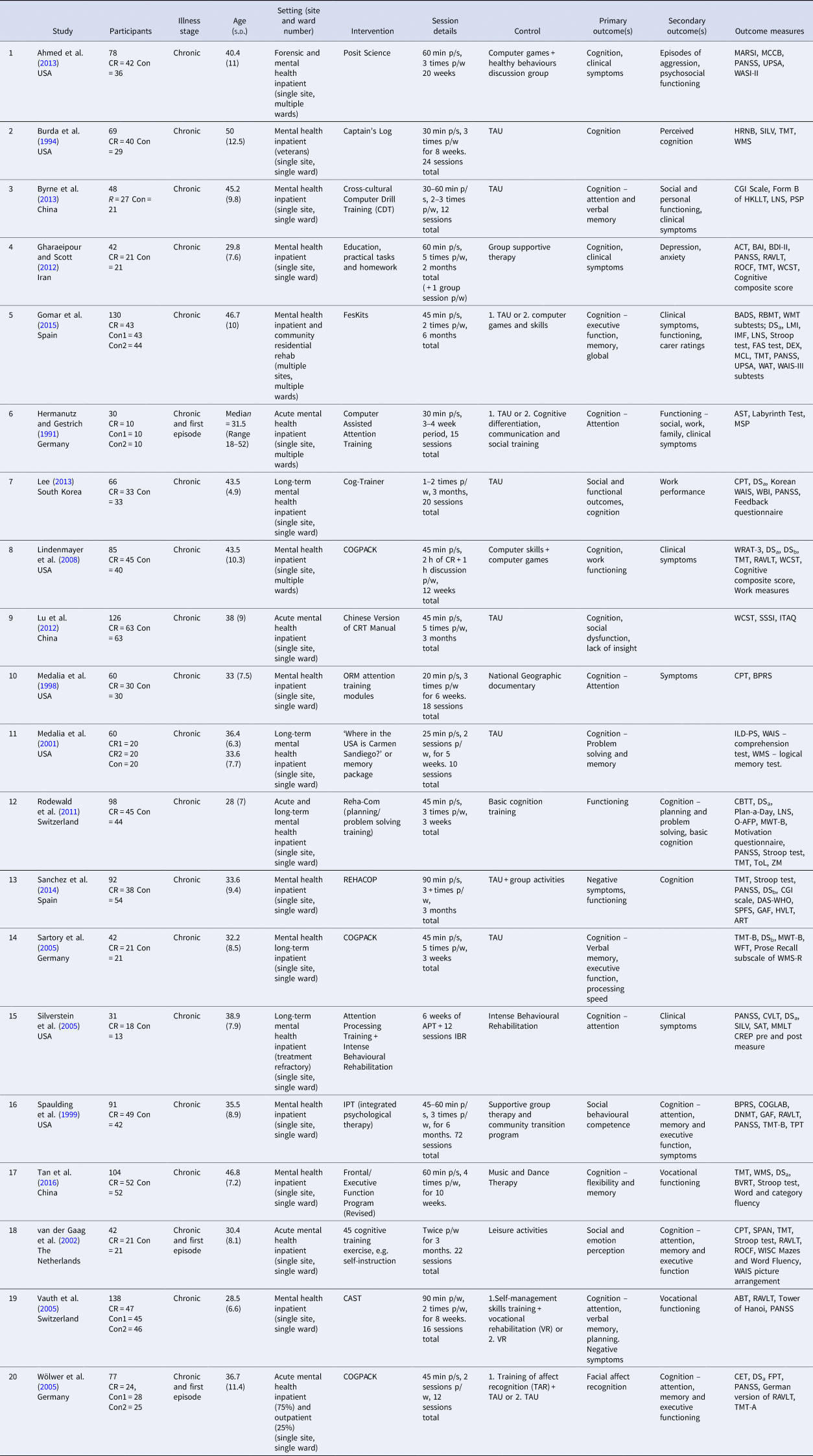
A description of the 20 studies included is shown in Table 1. In total, 1509 participants were represented in the studies (50.6% in CR and 49.4% in the control groups). Of these, 71% were male, two studies did not report participants gender ratio. The mean age of participants in intervention groups was 36.9 years (s.d. = 7.7) and 36.8 years (s.d. = 7.6) in the control groups. Participants in one study had first-episode psychosis (FEP), three further studies included both FEP and people with long-term psychosis (i.e. more than 3 years from onset), while the remaining 16 included only people with long-term psychosis. The mean length of illness was 14.6 years. Studies originated from seven countries including the USA, the UK and China. Only one study (Wölwer et al., Reference Wölwer, Frommann, Halfmann, Piaszek, Streit and Gaebel2005) considered a mixed sample of community and inpatient participants (i.e. 19 outpatients and 58 inpatients). See Table 1 for additional information.
Shows the characteristics of the included studies

ABT, Aufmerksamkeits-Belastungstest Test; ACT, Auditory Consonant Trigrams; ART, The Accentuation Reading Test; AST, Attention Stress Test; BADS, Behavioral Assessment of the Dysexecutive Syndrome; BVRT, Benton Visual Retention Test; BAI, Beck Anxiety Inventory; BDI, Beck Depression Inventory-II; CBTT, Corsi Block-Tapping Task; CGI Scale, Clinical Global Impression Scale; CET, Concentration-Endurance Test d2; CPT, Continuous Performance Test; CREP, Community Re-Integration Program; CVLT, California Verbal Learning Test; DAS-WHO, Disability Assessment Schedule scale from World Health Organization; DEX, Dysexecutive Questionnaire; DNMT, Denman Neuropsychological Memory Test; DSa, Digit Span subtest of WAIS; DSb, Digit Symbol subtest of WAIS; FPT, Five Point Test; GAF, Global Assessment of Functioning; HRNB, Halstead-Reitan Neuropsychological Battery; HKLLT, Hong Kong List Learning Test; HVLT, Hopkins Verbal Learning Test; ILS-PS, Independent Living Scale – problem solving subscale; IMF, Immediate memory for faces; ITAQ, Insight and Treatment Attitude Questionnaire; LMI, Logical memory immediate subtest of WAIS; LNS, Letter-number sequencing subtest of WAIS; MARSMI, Maryland Assessment of Recovery in Severe Mental Illness; MCCB, MATRICS Consensus Cognitive Battery; MCL, Memory Checklist; MMLT, The Micro-Module Learning Test; MSP, Modality Shift Paradigm; MWT-B, Multiple Word Recognition Test/Mehrfachwahl-Wortschatz-Intelligenztest; O-AFP, Osnabruck Work Capabilities Profile; PANSS, Positive and Negative Syndrome Scale; PSP, Personal and Social Performance Scale; RAVLT, Rey Auditory Verbal Learning Test; RBMT, Rivermead Behavioral Memory Test; ROCF, Rey-Osterrieth Complex Figure Test; SILV, Shipley Institute of Living Vocabulary subscale; SAT, Sustained Attention Test; SPAN, Span of Apprehension Task; SPFS, Semantic and Phonological Fluency Subtests from the Barcelona Test; SSSI, Scale of Social Skills of chronic schizophrenia Inpatients; TMT, Trail Making Test; TPT, Tactile Performance Test; ToL, Tower of London analog (Planungstest); UPSA, University of California San Diego Performance-Based Skills Assessment; WAIS, Wechsler Adult Intelligence Scale; WASI, Wechsler Abbreviated Scale of Intelligence; WAT, Word Accentuation test; WBI, Work Behaviour Inventory; WCST, Wisconsin Card Sorting Test; WFT, Word Fluency Test; WMS-R, Wechsler Memory Scale-Revised; WMT, Wechsler Memory Test; WRAT, Wide Range Achievement Test; ZM, Zoo-Map subtest of BAD.
Intervention: cognitive remediation
Table 1 shows the different types of CR used by the studies included. Three used the same CR type (i.e. COGPACK). Sixteen were computerized programmes while five used pencil and paper. Sessions were facilitated by a range of professionals including clinical psychologists, neuropsychologists and psychiatric nurses. The mean number of CR sessions received was 28.6 (range = 9–72).
Comparison groups
In 10 studies, the control group was TAU. In five of these studies, this consisted of pharmacological monitoring. In one study, TAU was supplemented with group activities, while four studies had two control groups (e.g. TAU or attention tasks). In another two studies, TAU included group-supportive therapies offered by the service. Other control groups included activities such as computer skills or games, behavioural rehabilitation or watching documentaries.
Outcome measures
Nine studies used a measure of global cognition, while 14 also reported scores of individual domains (e.g. working memory or attention). Sixteen studies measured functioning levels including global, work or psychosocial functioning. The most common cognitive outcome measures were: the Trail Making Test (used in 10 studies), the Rey Auditory Verbal Learning Test (used in six studies), the Digit Span subtest of the Wechsler Adult Intelligence Scale (used in six studies) and the Stroop test (used in four studies).
Risk of bias
All studies but two (90%) reported adequate information documenting random allocation (e.g. the use of a Random Number Generator). Only two studies (10%) reported sufficient information to judge allocation concealment after randomization. Only one (5%) reported blinding of study researchers and participants. Ten studies (50%) reported blinding outcome assessors appropriately, while seven did not report sufficient information. Seventeen studies (85%) reported sufficient information describing the handling of incomplete outcome data; this was carried out predominately using an intent-to-treat analysis. Eleven studies (55%) were found to be free of selective outcome reporting while the rest offered insufficient information to make a judgement. Ten studies (10%) appeared to be free of ‘other’ sources of bias, e.g. author bias (see online Supplementary Appendix D for risk of bias results).
Acceptability
One-hundred and four participants (7.1%) dropped-out from the CR, while 126 (8.7%) dropped-out from the control groups. Reasons for withdrawal were largely due to discharge from the inpatient unit or symptom exacerbation that precluded participation. One study (Burda, Starkey, Dominguez, & Vera, Reference Burda, Starkey, Dominguez and Vera1994) reported more participants withdrawing from the control group than the intervention group (i.e. 11 compared to 0). This was attributed to the CR being delivered via a computer and being perceived as beneficial, exciting or important leading to more people in the control group dropping-out.
Meta-analysis
Global cognition
Following CR, global cognition was found to improve significantly in all the studies that measured this outcome (Ahmed et al., Reference Ahmed, Hunter, Goodrum, Batten, Birgenheir, Hardison and Buckley2013; Gharaeipour & Scott, Reference Gharaeipour and Scott2012; Lindenmayer et al., Reference Lindenmayer, McGurk, Mueser, Khan, Wance, Hoffman and Xie2008). Meta-analysis was not performed on this outcome due to the small number of studies.
Processing speed
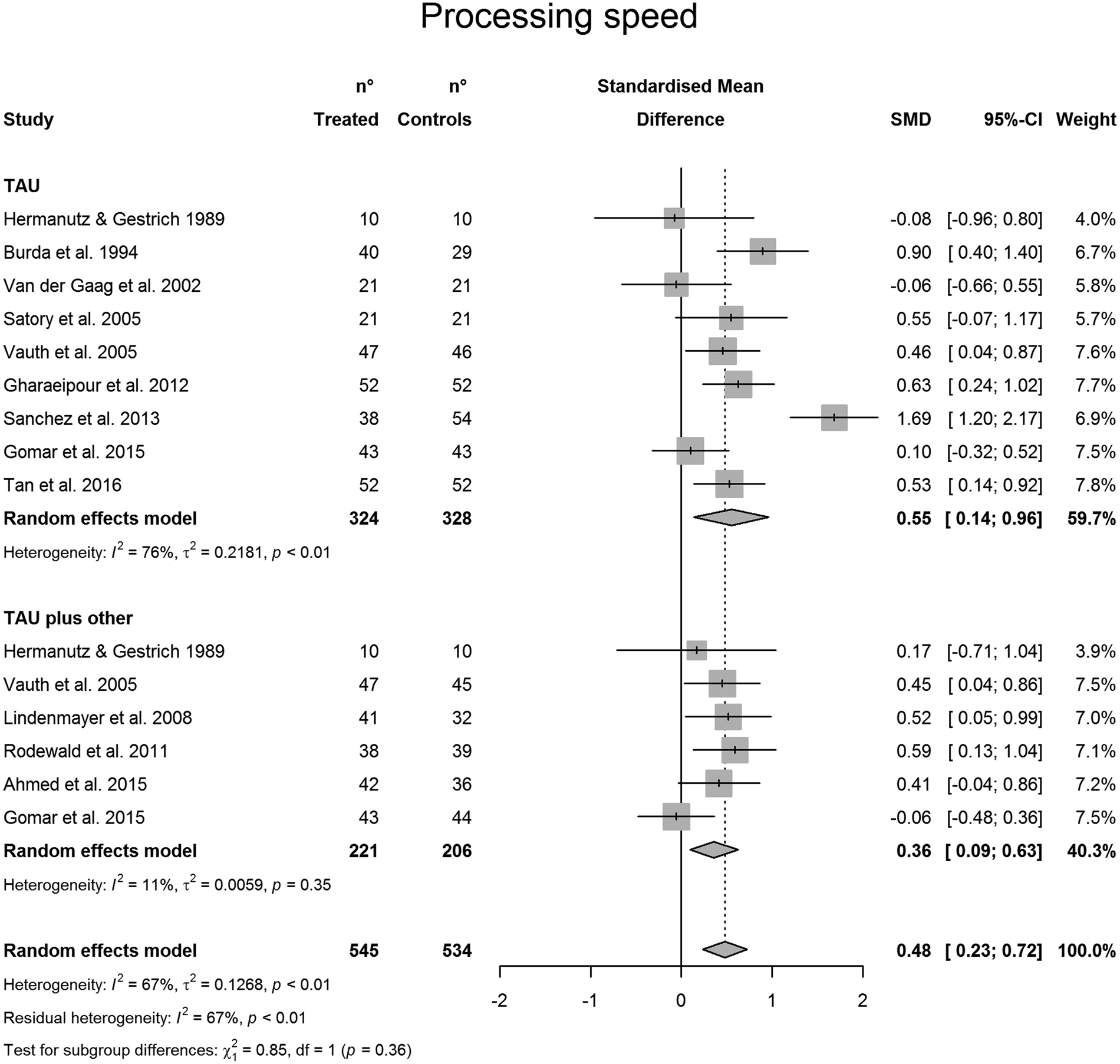
Twelve studies examined the change in processing speed following CR (Ahmed et al., Reference Ahmed, Hunter, Goodrum, Batten, Birgenheir, Hardison and Buckley2013; Burda et al., Reference Burda, Starkey, Dominguez and Vera1994; Gharaeipour & Scott, Reference Gharaeipour and Scott2012; Gomar et al., Reference Gomar, Valls, Radua, Mareca, Tristany and del Olmo2015; Hermanutz & Gestrich, Reference Hermanutz and Gestrich1991; Lindenmayer et al., Reference Lindenmayer, McGurk, Mueser, Khan, Wance, Hoffman and Xie2008; Rodewald et al., Reference Rodewald, Rentrop, Holt, Roesch-Ely, Backenstrass, Funke and Kaiser2011; Sanchez et al., Reference Sanchez, Pena, Bengoetxea, Ojeda, Elizagarate, Ezcurra and Gutierrez2014; Sartory et al., Reference Sartory, Zorn, Groetzinger and Windgassen2005; Tan et al., Reference Tan, Zou, Wykes, Reeder, Zhu, Yang and Zhou2016; van der Gaag, Kern, van den Bosch, & Liberman, Reference van der Gaag, Kern, van den Bosch and Liberman2002; Vauth et al., Reference Vauth, Corrigan, Clauss, Dietl, Dreher-Rudolph, Stieglitz and Vater2005). Meta-analysis showed that compared to the control condition, CR was beneficial in improving processing speed (Fig. 1). This effect was evident in the random-effects models and not influenced by control condition type (random-effect model p = 0.36). Model heterogeneity was moderate (I 2 = 67%; 95% CI 43–81%) and the Egger test did not find a violation of asymmetry in the funnel plot; however, the radial plot suggested that one study may be an outlier (online Fig. B1 in the Supplementary Appendix). Publication bias, as assessed by the trim-and-fill method, was moderate but likely to underestimate rather than overestimate the effect of CR on this outcome.
Processing speed forest plot. Results are summarized for all studies and for the comparison between CR and TAU and between CR and TAU plus additional/other intervention.

Attention and vigilance
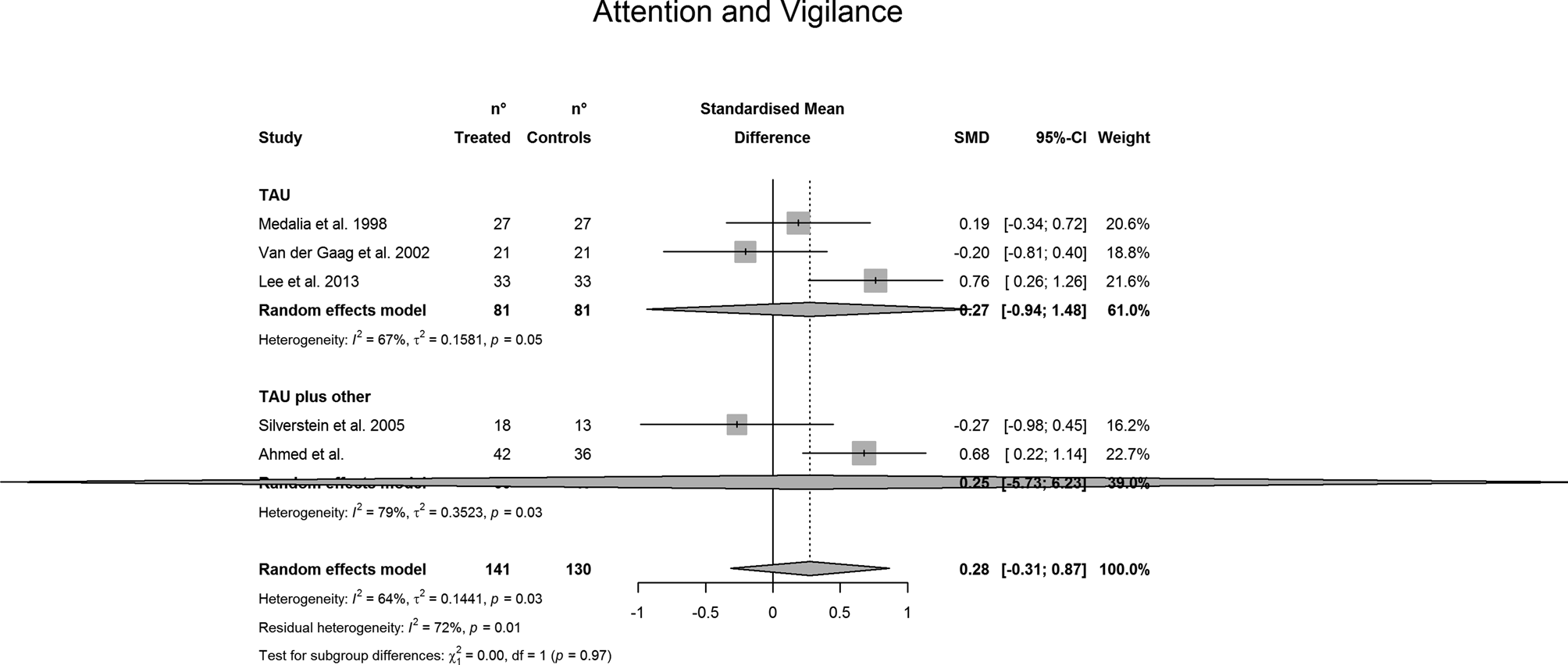
Nine studies investigated the effect of CR on attention and vigilance (Ahmed et al., Reference Ahmed, Hunter, Goodrum, Batten, Birgenheir, Hardison and Buckley2013; Gomar et al., Reference Gomar, Valls, Radua, Mareca, Tristany and del Olmo2015; Hermanutz & Gestrich, Reference Hermanutz and Gestrich1991; Lee, Reference Lee2013; Lindenmayer et al., Reference Lindenmayer, McGurk, Mueser, Khan, Wance, Hoffman and Xie2008; Medalia, Aluma, Tryon, & Merriam, Reference Medalia, Aluma, Tryon and Merriam1998; Silverstein et al., Reference Silverstein, Hatashita-Wong, Solak, Uhlhaas, Landa, Wilkniss and Smith2005; Spaulding, Reed, Sullivan, Richardson, & Weiler, Reference Spaulding, Reed, Sullivan, Richardson and Weiler1999; Vauth et al., Reference Vauth, Corrigan, Clauss, Dietl, Dreher-Rudolph, Stieglitz and Vater2005) with three using a CR approach specifically targeting attention (Hermanutz & Gestrich, Reference Hermanutz and Gestrich1991; Medalia et al., Reference Medalia, Aluma, Tryon and Merriam1998; Spaulding et al., Reference Spaulding, Reed, Sullivan, Richardson and Weiler1999). However, we could extract data for the meta-analytic computation form five (see Fig. 2). There was no evidence that CR improves attention and vigilance compared to the control conditions (Fig. 2), with no difference according to control condition type (random-effects model p = 0.97). Model heterogeneity was moderate (I 2 = 63%; 95% CI 4–86%) with modest asymmetry violations identified by the Egger's test with no outliers (online Fig. B2 in the Supplementary Appendix). Publication bias was high.
Attention and vigilance forest plot. Results are summarized for all studies and for the comparison between CR and TAU and between CR and TAU plus additional/other intervention.

Working memory
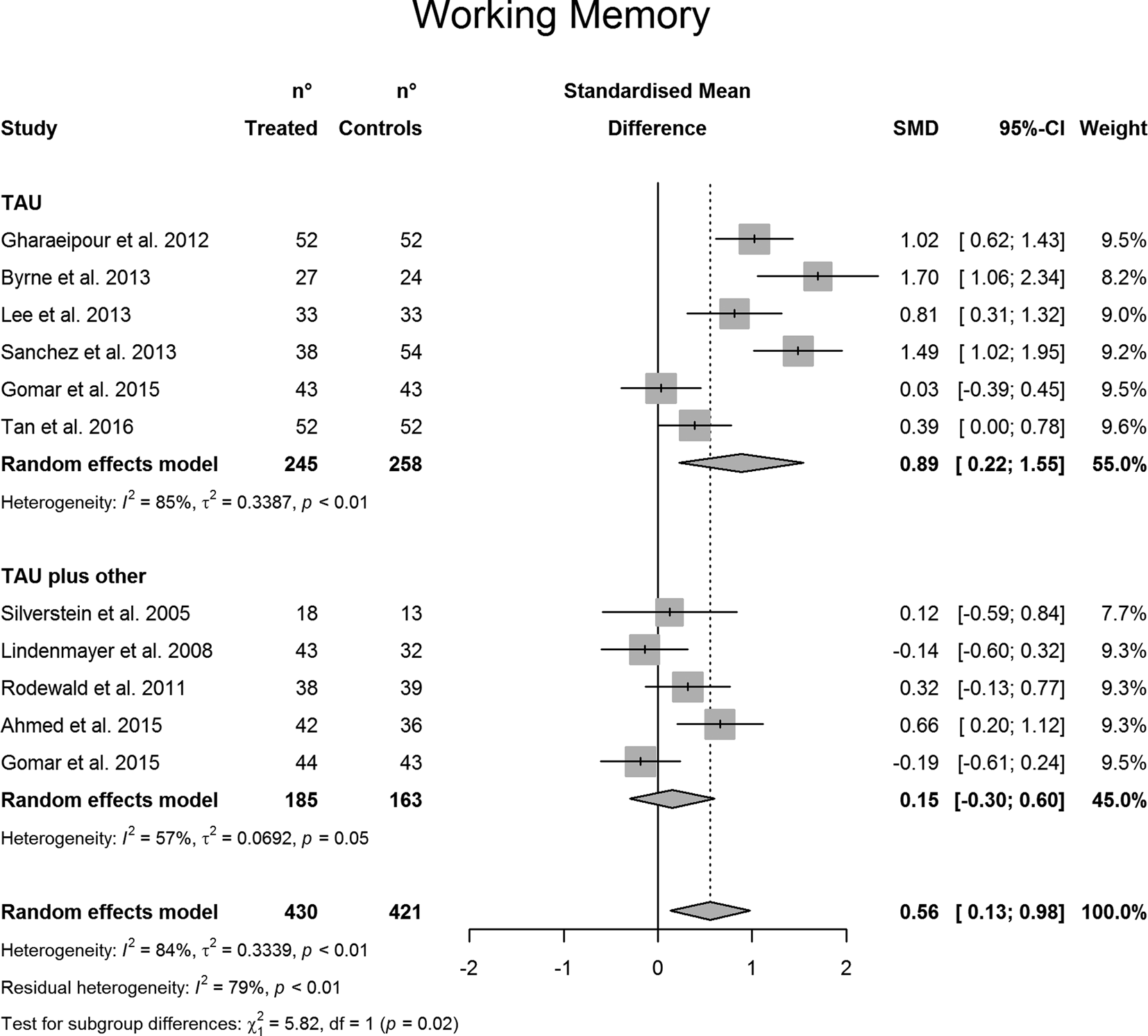
Twelve studies examined the change in working memory following CR (Ahmed et al., Reference Ahmed, Hunter, Goodrum, Batten, Birgenheir, Hardison and Buckley2013; Burda et al., Reference Burda, Starkey, Dominguez and Vera1994; Byrne et al., Reference Byrne, Peng, McCabe, Mellor, Zhang, Zhang and Xu2013; Dang et al., Reference Dang, Zhang, Guo, Lu, Cai, Shi and Zhang2014; Gharaeipour & Scott, Reference Gharaeipour and Scott2012; Gomar et al., Reference Gomar, Valls, Radua, Mareca, Tristany and del Olmo2015; Lindenmayer et al., Reference Lindenmayer, McGurk, Mueser, Khan, Wance, Hoffman and Xie2008; Rodewald et al., Reference Rodewald, Rentrop, Holt, Roesch-Ely, Backenstrass, Funke and Kaiser2011; Sanchez et al., Reference Sanchez, Pena, Bengoetxea, Ojeda, Elizagarate, Ezcurra and Gutierrez2014; Tan et al., Reference Tan, Zou, Wykes, Reeder, Zhu, Yang and Zhou2016; Vauth et al., Reference Vauth, Corrigan, Clauss, Dietl, Dreher-Rudolph, Stieglitz and Vater2005; Wölwer et al., Reference Wölwer, Frommann, Halfmann, Piaszek, Streit and Gaebel2005) with 10 reporting enough data to be included in the meta-analysis. Results from the meta-analysis showed that there was a robust effect in favour of CR compared to TAU. This effect, however, was not evident when CR was compared to TAU plus other interventions (Fig. 3). Heterogeneity was evident (I 2 = 84%; 95% CI 73–90%) with the indication of asymmetry; however, the radial plot did not reveal outliers (online Fig. B3 in the Supplementary Appendix). Publication bias according to the trim-and-fill method was low (i.e. no estimated missing studies).
Working memory forest plot. Results are summarized for all studies and for the comparison between CR and TAU and between CR and TAU plus additional/other intervention.

Learning and memory
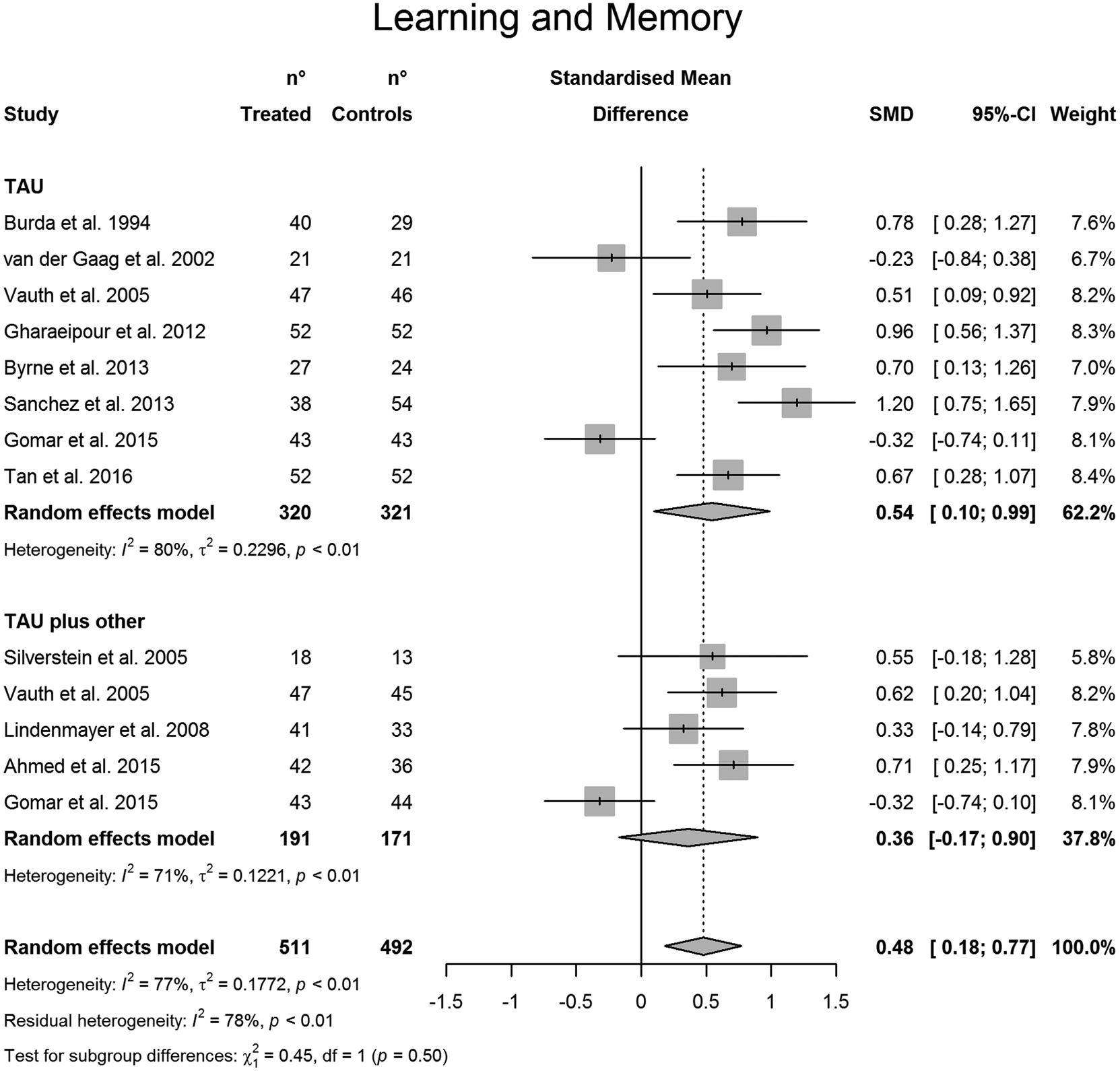
Eleven studies investigated learning and memory outcomes following CR (Ahmed et al., Reference Ahmed, Hunter, Goodrum, Batten, Birgenheir, Hardison and Buckley2013; Burda et al., Reference Burda, Starkey, Dominguez and Vera1994; Byrne et al., Reference Byrne, Peng, McCabe, Mellor, Zhang, Zhang and Xu2013; Gharaeipour & Scott, Reference Gharaeipour and Scott2012; Gomar et al., Reference Gomar, Valls, Radua, Mareca, Tristany and del Olmo2015; Lindenmayer et al., Reference Lindenmayer, McGurk, Mueser, Khan, Wance, Hoffman and Xie2008; Sanchez et al., Reference Sanchez, Pena, Bengoetxea, Ojeda, Elizagarate, Ezcurra and Gutierrez2014; Sartory et al., Reference Sartory, Zorn, Groetzinger and Windgassen2005; Silverstein et al., Reference Silverstein, Hatashita-Wong, Solak, Uhlhaas, Landa, Wilkniss and Smith2005; Tan et al., Reference Tan, Zou, Wykes, Reeder, Zhu, Yang and Zhou2016; van der Gaag et al., Reference van der Gaag, Kern, van den Bosch and Liberman2002; Vauth et al., Reference Vauth, Corrigan, Clauss, Dietl, Dreher-Rudolph, Stieglitz and Vater2005). Results from the meta-analysis showed that there was a robust effect in favour of CR compared to TAU (Fig. 4). These effects were also present when CR was compared to TAU plus other interventions with no statistically significant differences detected by control type (test of subgroup differences for the random-effects models p = 0.50). Heterogeneity was evident (I 2 = 77%; 95% CI 61–86%) with the indication of asymmetry in the funnel plot but no outliers (online Fig. B4 in the Supplementary Appendix). Publication bias according to the trim-and-fill method was low (i.e. no estimated missing studies).
Learning memory forest plot. Results are summarized for all studies and for the comparison between CR and TAU and between CR and TAU plus additional/other intervention.

Executive function
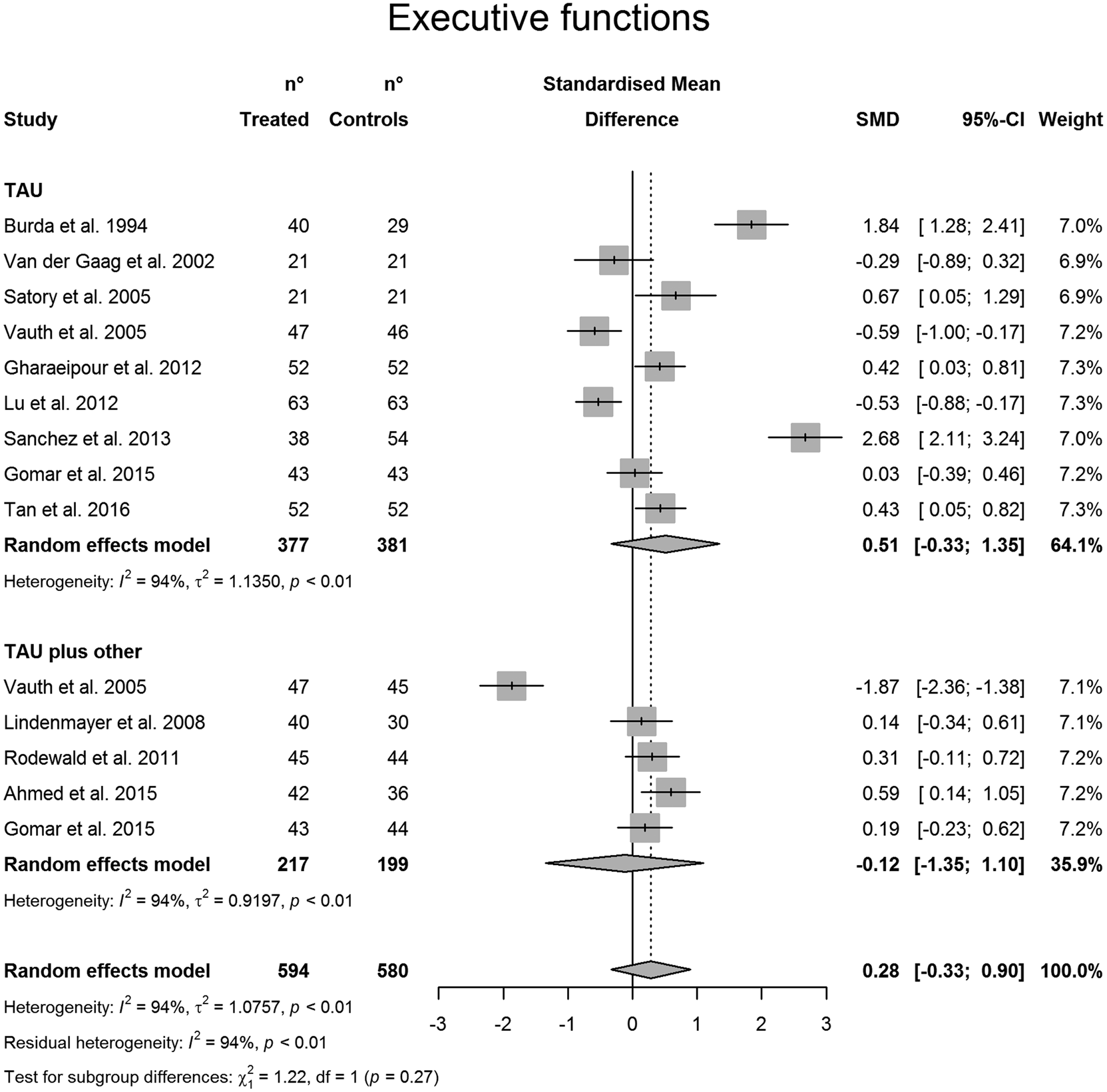
Twelve studies reported on the impact of CR on executive function (Ahmed et al., Reference Ahmed, Hunter, Goodrum, Batten, Birgenheir, Hardison and Buckley2013; Burda et al., Reference Burda, Starkey, Dominguez and Vera1994; Gharaeipour & Scott, Reference Gharaeipour and Scott2012; Gomar et al., Reference Gomar, Valls, Radua, Mareca, Tristany and del Olmo2015; Lindenmayer et al., Reference Lindenmayer, McGurk, Mueser, Khan, Wance, Hoffman and Xie2008; Lu et al., Reference Lu, Li, Li, Jiao, Shi, Guo and Liu2012; Rodewald et al., Reference Rodewald, Rentrop, Holt, Roesch-Ely, Backenstrass, Funke and Kaiser2011; Sanchez et al., Reference Sanchez, Pena, Bengoetxea, Ojeda, Elizagarate, Ezcurra and Gutierrez2014; Sartory et al., Reference Sartory, Zorn, Groetzinger and Windgassen2005; Tan et al., Reference Tan, Zou, Wykes, Reeder, Zhu, Yang and Zhou2016; van der Gaag et al., Reference van der Gaag, Kern, van den Bosch and Liberman2002; Vauth et al., Reference Vauth, Corrigan, Clauss, Dietl, Dreher-Rudolph, Stieglitz and Vater2005). Results from the meta-analysis showed that there was no effect in favour of CR compared to TAU and TAU plus other interventions (Fig. 5). Heterogeneity was considerable (I 2 = 94%; 95% CI 91–96%), with two potential outliers identified but no indication of asymmetry (online Fig. B5 in the Supplementary Appendix). Risk of publication bias, according to the trim-and-fill method, was moderate (i.e. three missing studies on the side of negative impact).
Executive functions forest plot. Results are summarized for all studies and for the comparison between CR and TAU and between CR and TAU plus additional/other intervention.

Functioning
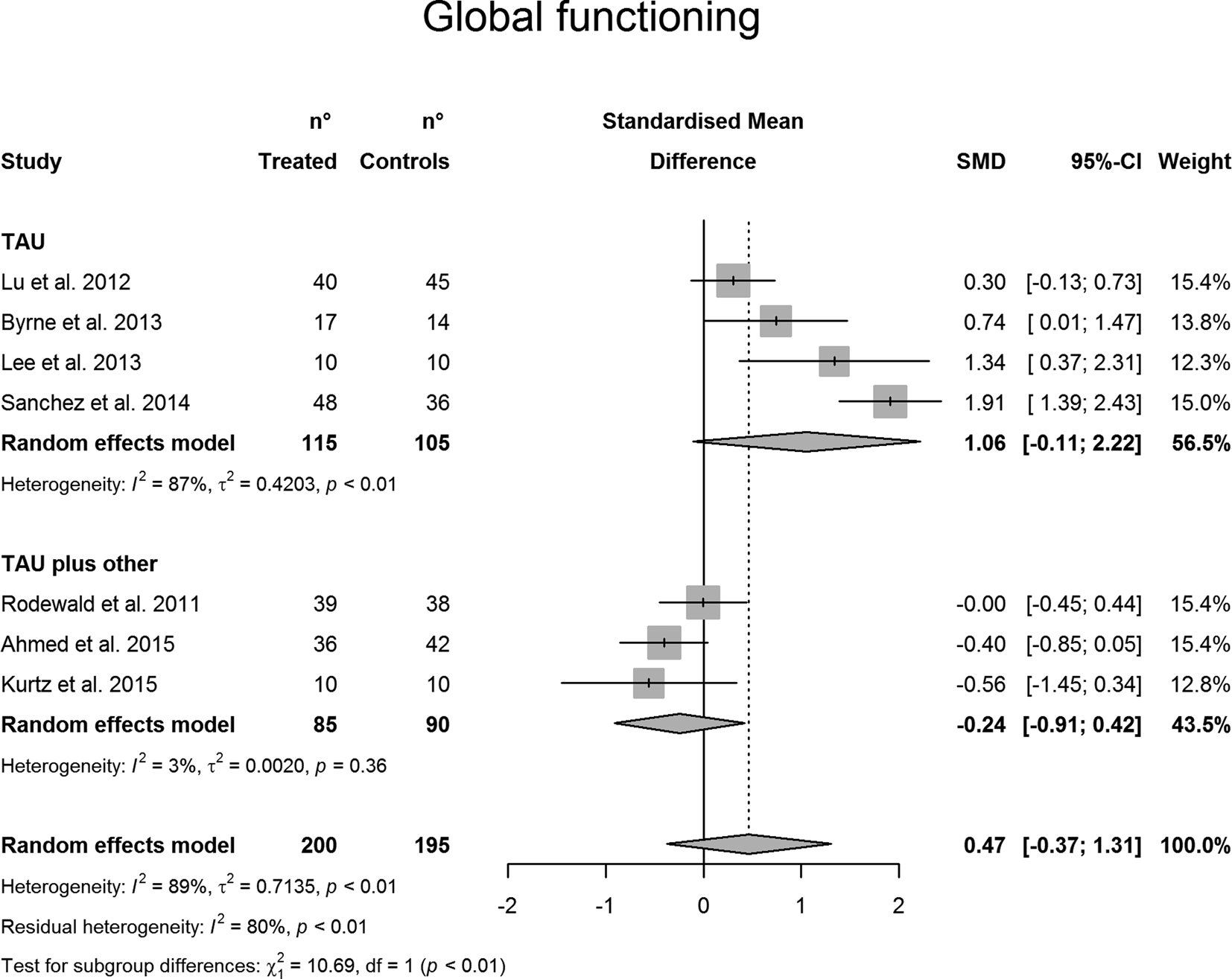
Eight studies report a positive effect of CR on function outcomes (Ahmed et al., Reference Ahmed, Hunter, Goodrum, Batten, Birgenheir, Hardison and Buckley2013; Byrne et al., Reference Byrne, Peng, McCabe, Mellor, Zhang, Zhang and Xu2013; Hermanutz & Gestrich, Reference Hermanutz and Gestrich1991; Lee, Reference Lee2013; Lu et al., Reference Lu, Li, Li, Jiao, Shi, Guo and Liu2012; Rodewald et al., Reference Rodewald, Rentrop, Holt, Roesch-Ely, Backenstrass, Funke and Kaiser2011; Sanchez et al., Reference Sanchez, Pena, Bengoetxea, Ojeda, Elizagarate, Ezcurra and Gutierrez2014; Vauth et al., Reference Vauth, Corrigan, Clauss, Dietl, Dreher-Rudolph, Stieglitz and Vater2005). Results of the meta-analysis showed that there was no statistically significant effect in favour of CR compared to TAU or TAU plus additional intervention (Fig. 6). Heterogeneity was substantial (I 2 = 90%; 95% CI 81–94%) with the indication of asymmetry (online Fig. B6 in the Supplementary Appendix). Risk of publication bias, according to the trim-and-fill method, was small.
Global functioning forest plot. Results are summarized for all studies and for the comparison between CR and TAU and between CR and TAU plus additional/other intervention.

Discussion
The aim of this study was to evaluate the evidence for CR interventions for people with psychosis in inpatient psychiatric settings. The results indicated that CR improves cognition across several domains including processing speed, working memory and learning. CR was also found to be acceptable and well-received with low drop-out rates.
The current findings are broadly consistent with previous meta-analyses of CR efficacy considering mostly studies conducted in community samples (McGurk et al., Reference McGurk, Twamley, Stitzer, McHugo and Mueser2007; Wykes et al., Reference Wykes, Cellard, McGurk and Czobor2011). Our results suggest that the benefit of CR on cognition in inpatient settings may be higher compared to community-delivered CR, with an effect size of 0.56 on working memory for inpatient compared to an effect size of 0.34 (95% CI 0.18–0.51) in community samples (Wykes et al., Reference Wykes, Cellard, McGurk and Czobor2011). This may be because people in inpatient settings have, on average, higher cognitive difficulties compared to those in the community (McCarthy et al., Reference McCarthy, Weiss, Segovich and Barbot2016; Ong et al., Reference Ong, Subramaniam, Abdin, Wang, Vaingankar, Lee and Chong2016) or because accessing this therapy regularly may be easier if provided in a residential setting. While many of the studies considered explored the effects of CR on functioning and our meta-analysis indicated some positive results, this finding needs to be considered with caution. Aside from the meta-analysis parameters, including high heterogeneity and asymmetry indicating a possible risk of bias, there are other factors that might have influenced the reliability of this result. The studies considered used different functioning outcomes spanning from social to occupational functioning. Assessing social and vocational outcomes in inpatient settings may be difficult as patients may have limited opportunities to practice and take part in activities and behaviours assessed as part of functional assessment measures. The extent to which functioning outcomes assessed in the inpatient setting extend to the community setting is also unclear.
Implications
Research evidence indicates a better prognosis in individuals with psychosis, in terms of functioning and symptom remission, for those with better cognitive performance (Robinson, Woerner, McMeniman, Mendelowitz, & Bilder, Reference Robinson, Woerner, McMeniman, Mendelowitz and Bilder2004). Greater cognitive functioning is also associated with improved quality of life (Matsui et al., Reference Matsui, Arai, Higuchi and Kurachi2008). The present study offers evidence that supporting inpatients with psychosis to access CR can be beneficial for their cognitive difficulties and this may have implications for wider rehabilitation outcomes. It is also possible that CR could be used to introduce other forms of therapy and foster engagement as suggested by Drake et al. (Reference Drake, Day, Picucci, Warburton, Larkin, Husain and Marshall2014).
Including CR more routinely in inpatient settings may be an important addition to support clients' recovery. CR formats should consider the setting and the likely length of stay of patients taking part. Shorter and more acute admissions may benefit from shorter forms of CR more focussed on compensatory methods and metacognition (Reeder et al., Reference Reeder, Huddy, Cella, Taylor, Greenwood, Landau and Wykes2017; Tsapekos, Taylor, & Cella, Reference Tsapekos, Taylor and Cella2019).
Greater consideration should also be given to the workforce planning and how best to implement this approach in terms of provision of training and supervision, but also its cost-effectiveness. Evidence suggests that CR can reduce costly inpatient admission in community clients (Garrido et al., Reference Garrido, Penades, Barrios, Aragay, Ramos, Valles and Vendrell2017; Reeder et al., Reference Reeder, Harris, Pickles, Patel, Cella and Wykes2014); but there is no evidence to date that this approach can be cost-effective for inpatients with psychosis.
A number of the studies considered in this review aimed to facilitate the transfer of cognitive skills by combining CR with vocational rehabilitation (e.g.Vauth et al., Reference Vauth, Corrigan, Clauss, Dietl, Dreher-Rudolph, Stieglitz and Vater2005). There is evidence that the combination of CR with rehabilitation approaches tend to achieve larger and longer lasting functional outcomes (Bowie, McGurk, Mausbach, Patterson, & Harvey, Reference Bowie, McGurk, Mausbach, Patterson and Harvey2012). Given that CR is most successful in improving functioning when the individual can practice their learned skills in a ‘real-world’ setting (Medalia & Saperstein, Reference Medalia and Saperstein2013), CR delivery should be combined, as much as possible, with other rehabilitative programmes.
Limitations
The treatment period varied considerably across studies with one intervention having as many as 72 sessions (Spaulding et al., Reference Spaulding, Reed, Sullivan, Richardson and Weiler1999) while another only nine (Rodewald et al., Reference Rodewald, Rentrop, Holt, Roesch-Ely, Backenstrass, Funke and Kaiser2011). CR was also delivered according to different modalities and it was not always clear what was the role of the therapists in these approaches. Research conducted on the role of the therapist in CR suggests that this figure contributes to therapy outcomes and engagement (Cella & Wykes, Reference Cella and Wykes2019; Huddy, Reeder, Kontis, Wykes, & Stahl, Reference Huddy, Reeder, Kontis, Wykes and Stahl2012). While all studies delivered CR in inpatient settings, there was considerable variability in the services where the study took place. These included forensic mental health services and acute and long-term mental health facilitates.
Furthermore, while outcome assessors were largely blinded, the majority of studies did not conceal allocation to the research team. Some studies did not use an intention-to-treat analysis and this might have influenced the reliability of the results by reducing groups’ comparability. Only 11 studies reported using this method explicitly. Most studies used a variety of outcome measures but did not correct for multiple testing. The lack of follow-up assessments in many studies means that the durability of these effects is uncertain. Finally, medication regime was variable across studies with limited information on whether the dose or medication type was changed during the course of the study.
Conclusions
Individuals with psychosis experience significant cognitive impairment, with most cognitive domains being affected. Despite care for people living with psychosis is mainly delivered in the community, inpatient admissions will continue to feature as an important care option. With cognition being a significant predictor of community functioning, it seems important that treatments targeting this outcome are offered. This may be particularly relevant in minimising functional problems associated with psychosis. CR is an effective intervention for improving cognition in inpatients with psychosis and improvements in this area may lead to functioning benefits.
Supplementary material
The supplementary material for this article can be found at https://doi.org/10.1017/S0033291720000872
Acknowledgements
For MC, JO and SS, this article represents independent research supported by the National Institute for Health Research (NIHR) Biomedical Research Centre at South London and the Maudsley NHS Foundation Trust and King's College London. The views expressed are those of the authors and not necessarily those of the NHS, the NIHR or the Department of Health.
Financial support
This research did not receive any specific grant from funding agencies in the public, commercial or not-for-profit sectors.
Conflict of interest
All authors declare no financial interest in relation to this article.