





Impact statement
This communication piece aims to advance the global conversation on productive-use energy access by demonstrating that beyond providing electricity to households, decentralised renewable energy (DRE) systems can reshape rural livelihoods, local governance and pathways to equitable development. Drawing on 21 community-level solar interventions across nine Indian states, the study offers grounded evidence on how different delivery and ownership models influence who benefits, who participates, and who remains excluded. At a time when countries are investing heavily in clean energy transitions, our findings caution against technology-centric top-down approaches that overlook social and institutional realities. We show that while DRE applications such as solar-powered irrigation, cold storage and agro-processing can enhance productivity, reduce diesel dependence and support income diversification, their long-term impact depends on inclusive financing, collective participation, value-chain integration, and sustained institutional support. Without deliberate design, such interventions risk reinforcing existing inequities, particularly for smallholders and women farmers. By foregrounding community-led and hybrid governance models, this research provides actionable insights for policymakers, practitioners, financial institutions, and development agencies seeking to align renewable energy deployment with poverty reduction, gender equity, and climate resilience goals. It highlights the importance of embedding DRE systems within local water-energy-food systems and strengthening mechanisms for accountability, benefit-sharing and post-installation support. Although based in India, the lessons are globally relevant for regions pursuing decentralised clean energy solutions in agriculture and other livelihood sectors and addressing energy poverty. The study reframes energy access not merely as infrastructure provision, but as a question of power, participation, and institutional transformation. In doing so, it contributes to more fair and equitable, and sustainable energy transitions that place communities and not technologies at the centre of development.
Introduction and background
Energy is increasingly recognised as critical to advancing human well-being, as reflected in several United Nations Sustainable Development Goals (De Neve and Sachs, Reference De Neve and Sachs2020). While it is central to SDG 7 (Affordable and Clean Energy), energy access also contributes to achieving SDG 1 (No Poverty), SDG 2 (Zero Hunger), SDG 8 (Decent Work and Economic Growth), SDG 10 (Reduced Inequalities) and SDG 13 (Climate Action), among others. Universal access to modern energy services thus constitutes both a development objective in its own right and a cross-cutting enabler of broader sustainable development (UN-Energy, 2022). In this broader framing, energy poverty is not merely a narrow technical problem but a multidimensional issue with far-reaching societal implications, requiring integrated responses across research, policy, and multisectoral cooperation (Jones and Reyes, Reference Jones and Reyes2023).
In India, agriculture accounts for 18.3 per cent of gross value added and employs approximately 46 per cent of the population (PIB, 2019), yet it remains a persistently low-income sector. The average monthly income of an agricultural household from all sources was INR 10,218 (approximately USD 120) in 2018–2019 (National Sample Survey Office, 2024). Around 86 per cent of Indian farmers are small and marginal, with landholdings of less than two hectares, and they face compounding vulnerabilities, including fragmented landholdings, erratic rainfall, limited access to finance and infrastructure, and low agricultural productivity (DoAC&FW, 2016; NITI Aayog, 2018). These vulnerabilities are further exacerbated by gender, caste, and socioeconomic status, with women farmers disproportionately excluded from productive assets, decision-making and livelihood opportunities (Rao et al., Reference Rao, Singh, Solomon, Camfield, Sidiki, Angula, Poonacha, Sidibé and Lawson2020; Singh, Reference Singh, Ao and Yadav2023).
The agricultural sector is heavily dependent on energy for productive activities; yet, only 47 per cent of India’s agricultural operations are mechanised, compared to 60 per cent in China and 75 per cent in Brazil (Pakeerathan, Reference Pakeerathan2023). Although India has made significant progress in rural electrification, insufficient and unreliable electricity supply continues to constrain the productive use of energy, limiting mechanisation, post-harvest management, and income generation (Ray and Pullabhotla, Reference Ray and Pullabhotla2023). Fossil fuel-powered technologies, often the default in the absence of reliable grid power, raise operational costs, increase environmental impacts and deepen rural livelihood vulnerability (Kumar and Majid, Reference Kumar and Majid2020).
Decentralised renewable energy as a transformative pathway
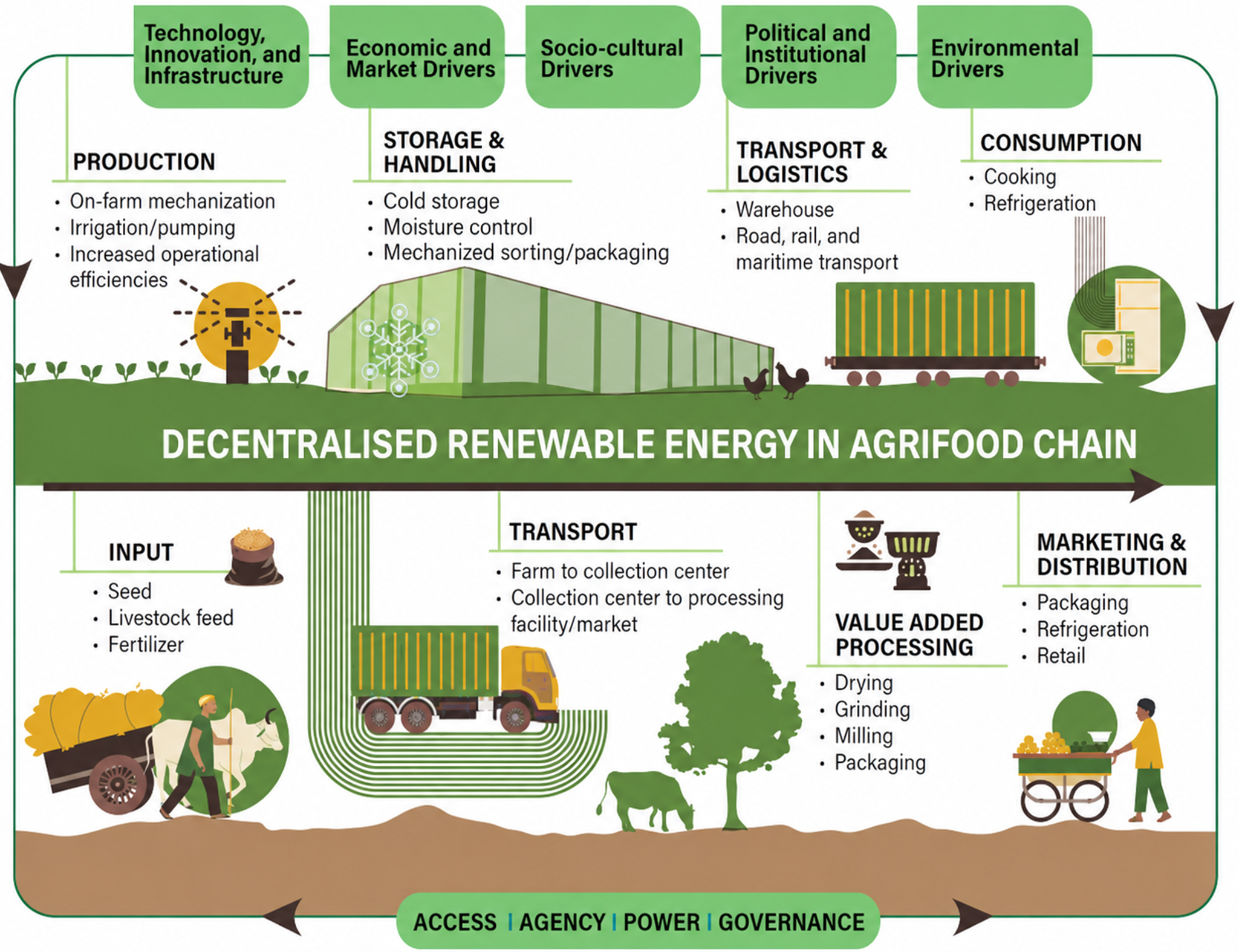
Decentralised renewable energy (DRE) systems, which generate, store, and distribute renewable energy locally, have emerged as a promising solution for powering productive appliances across the agrifood value chain, particularly for last-mile areas. As illustrated in Figure 1, energy requirements span the entire agrifood system from production and storage to processing, transport, marketing, distribution and consumption, creating multiple entry points for DRE interventions. DRE sources have historically provided a faster and more cost-effective means of expanding electricity access in rural and remote regions (Streimikiene et al., Reference Streimikiene, Baležentis, Volkov, Morkūnas, Žičkienė and Streimikis2021). Globally, over 176 million people gained electricity access through DRE solutions in 2019 alone, representing an eightfold increase since 2011 (IRENA and SELCO Foundation, 2022). In India, the DRE sector directly employed approximately 309,000 people in 2017 (Power for All, 2019), and solar power is the predominant DRE source, with around 20 productive-use appliances commercially deployed across farm and non-farm sectors (Waray et al., Reference Waray, Patnaik and Jain2018).
Illustration of the role of DRE across the agrifood value chain. Source: Bhanjdeo et al. (Reference Bhanjdeo, Kumari, Kumar, Concessao and Meenawat2026); adapted from HLPE (2020).
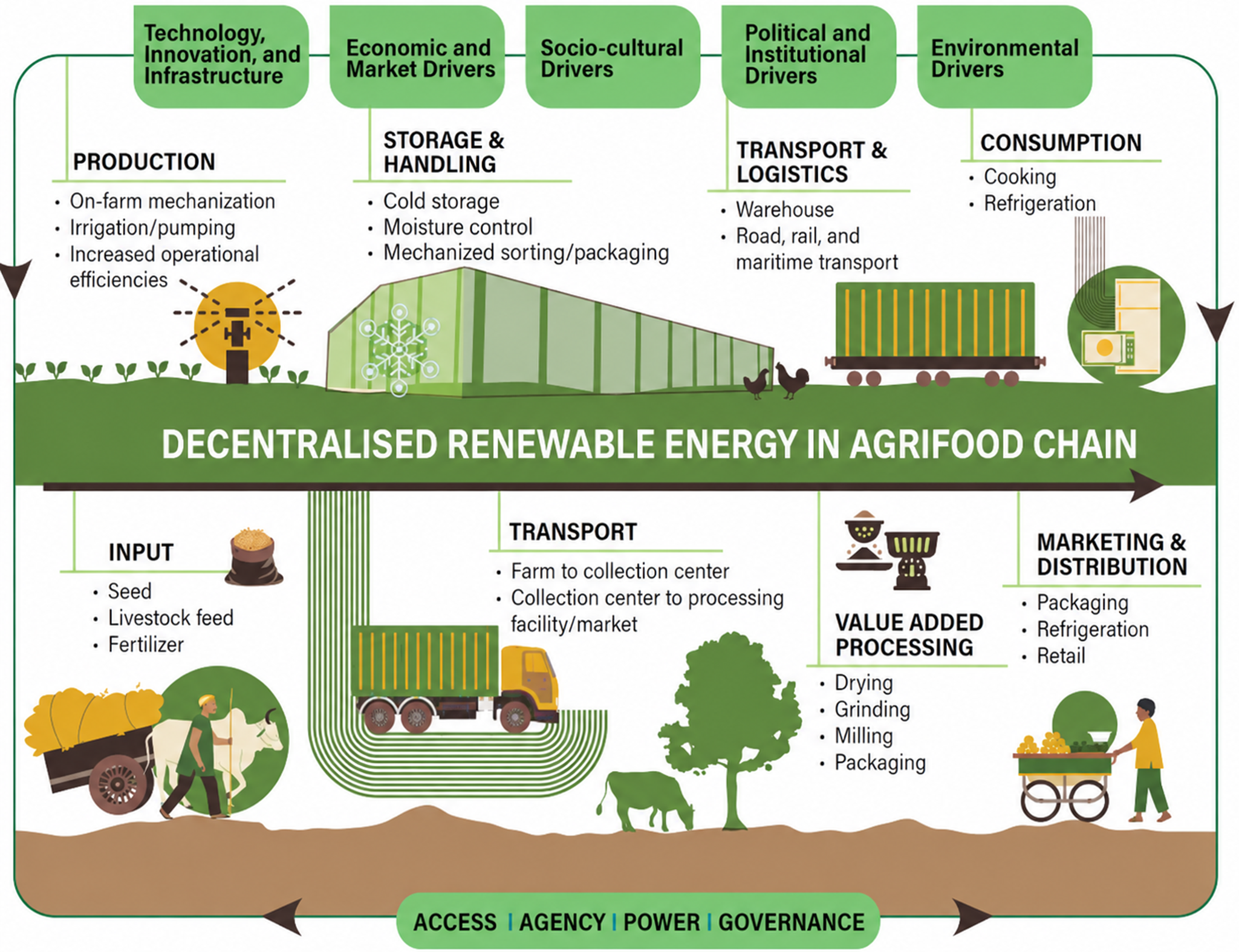
Figure 1. Long description
Conceptual illustration of decentralised renewable energy (DRE) applications across the agrifood value chain, highlighting energy-use opportunities at each stage and the enabling technological, economic, socio-cultural, political, institutional, and environmental drivers.
Given India’s clean energy commitments and high solar irradiance, solar energy presents a significant opportunity to reduce the fossil fuel dependence of the agricultural sector (Chel and Kaushik, Reference Chel and Kaushik2011). However, as Figure 1 illustrates, besides the technology, the effectiveness of DRE interventions depends on the economic, sociocultural, political, institutional and environmental drivers (or barriers) that shape adoption and long-term outcomes across the agrifood value chain. Government programmes have actively promoted DRE adoption, supported by NGOs, enterprises and philanthropic institutions, yet large-scale deployment remains fragmented (Ajwang et al., Reference Ajwang, Concessao, Kumari, Ginoya and Sahay2025). Existing institutional incentives and financial subsidies have disproportionately benefitted resource-rich farmers who are better positioned to absorb high upfront costs, while smallholder and women farmers with limited access to land, credit, and social networks often remain excluded from such opportunities, reinforcing existing inequities (Bhushan et al., Reference Bhushan, Bhati, Singh and Jhawar2019; Khalid, Reference Khalid2022).
Research gap and motivation
This rapid communication draws on the research conducted by Bhanjdeo et al. (Reference Bhanjdeo, Kumari, Kumar, Concessao and Meenawat2026), which was motivated by the need to better understand how DRE can enhance incomes, agency, and well-being among small and marginal farmers. Building on the systems perspective illustrated in Figure 1, the study addresses three inter-related gaps in the existing literature.
First, while previous literature acknowledges barriers during initial deployment of DRE (Jain et al., Reference Jain, Ghosh and Chhabra2021), a nuanced understanding of challenges across different stages of the DRE intervention life cycle (from installation to long-term livelihood outcomes) and across different agrifood value chain stages remains limited. This study addresses this gap by examining various implementation, business, and financial models.
Second, existing research is often region-specific and tends to draw on perspectives from a narrow set of stakeholders (Bhushan et al., Reference Bhushan, Bhati, Singh and Jhawar2019; Gaur et al., Reference Gaur, Salla, Yasaswi, Saini, Chhachhi and Misra2023). This study generates insights from multiple implementing actors including NGOs, enterprises, government bodies, and farmer collectives, across nine states, offering a more comprehensive picture of how DRE interventions operate under diverse institutional and socioeconomic contexts.
Third, research on DRE in agriculture largely prioritises technical performance and economic viability (CLEAN, 2020), often overlooking the social dimensions of adoption, including differential access, participation, benefit-sharing and power relations. This study explicitly examines these dimensions to understand how they shape livelihood outcomes contributing, in turn, to a more equity-sensitive evidence base.
Study design and scope
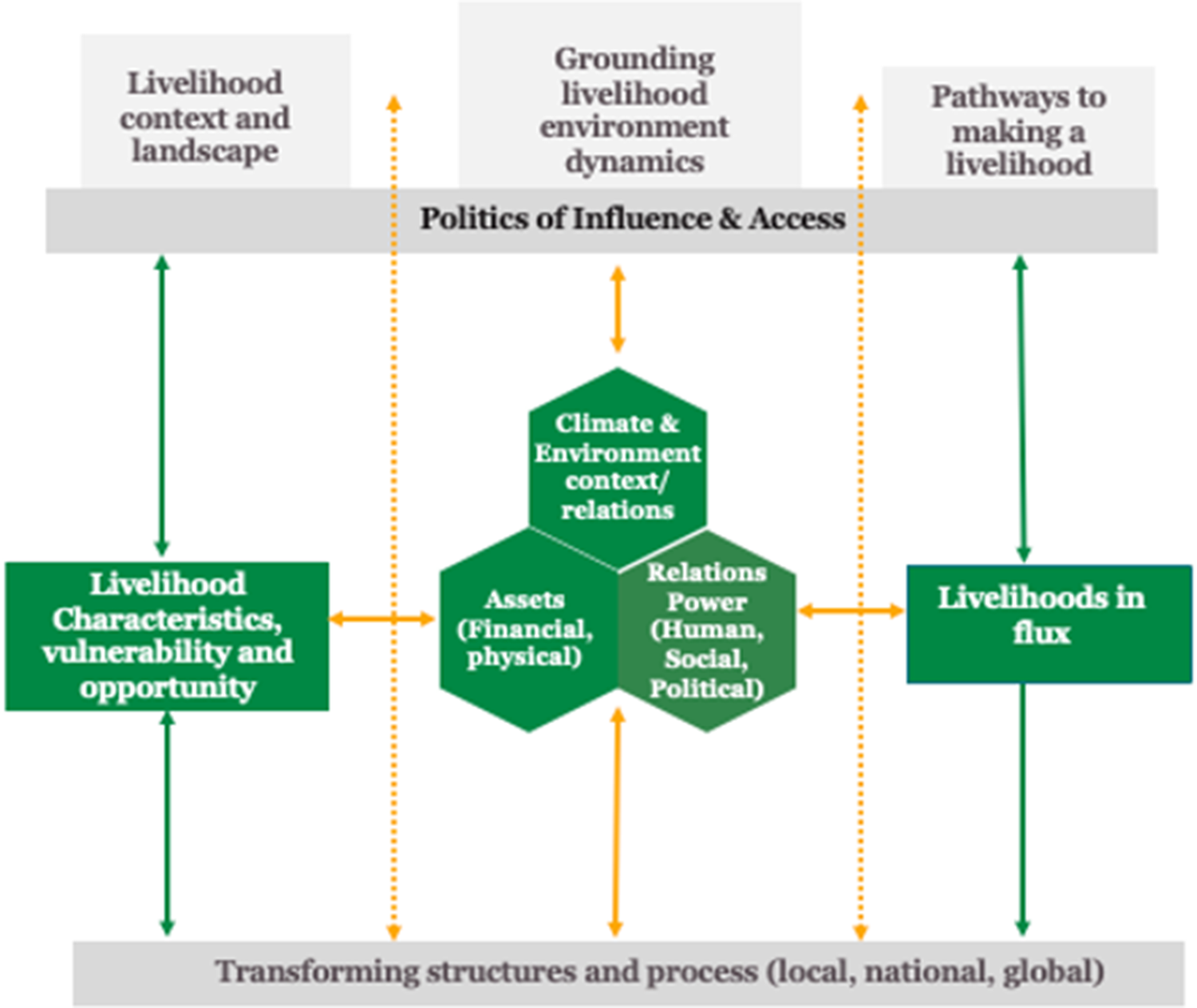
To address these gaps, the study examines 21 decentralised solar energy interventions – nine irrigation pumps, eight agro-processing units, and four cold storage units – across rural areas in nine Indian states. The primary data collection was conducted between November 2022 and April 2024. Drawing on primary and secondary research, the study applies the sustainable livelihoods framework (SLF) (Figure 2) to analyse how access to livelihood assets shapes livelihood strategies and outcomes (Scoones, Reference Scoones1998; Natarajan, Reference Natarajan, Newsham, Rigg and Suhardiman2022). The interventions are categorised according to their implementation approach and degree of community participation: (a) top-down delivery models, in which DRE interventions are transferred to individual farmers directly or through extension agents; (b) hybrid models, which combine top-down delivery with elements of community participation; and (c) bottom-up models, which integrate community needs and participation in decision-making. These models span a spectrum from individual farmer or entrepreneur-led to farmer collective-led arrangements, each exhibiting distinct benefits and challenges.
Sustainable Livelihoods Framework: Interactions between livelihood, institutions and power. Source: Natarajan et al., Reference Natarajan, Newsham, Rigg and Suhardiman2022; adapted by Bhanjdeo et al., Reference Bhanjdeo, Kumari, Kumar, Concessao and Meenawat2026.
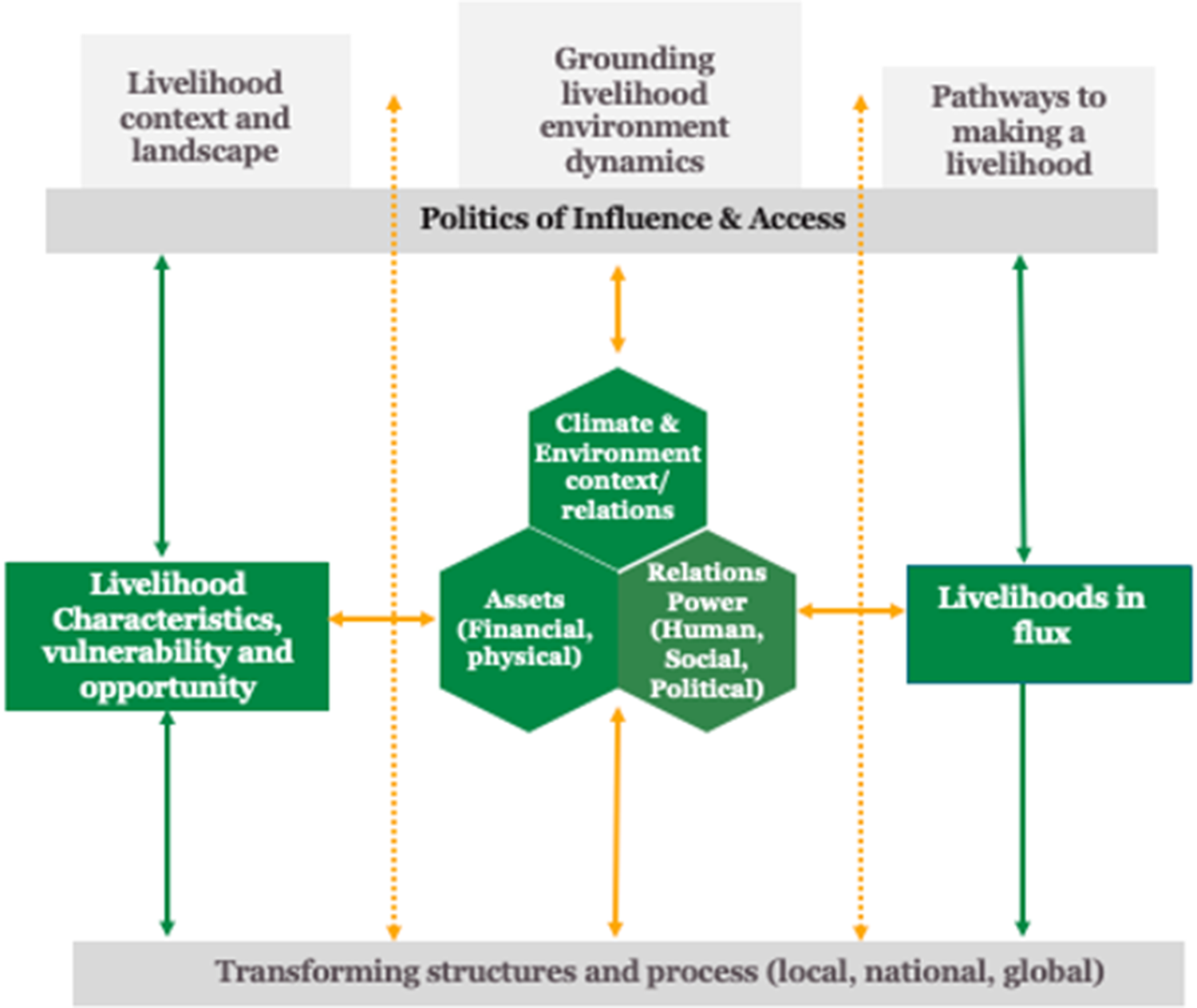
Figure 2. Long description
Figure 2 presents the Sustainable Livelihoods Framework, illustrating how livelihood outcomes are shaped by interactions between livelihood characteristics, assets, power relations and the climate and environmental context. These are mediated by institutions, politics of influence and access and broader transforming structures and processes operating across scales. The framework provides a systems perspective for understanding how interventions such as DRE influence livelihoods, while recognising that outcomes are contingent on existing vulnerabilities, opportunities and governance arrangements.
Theoretical framework
The Sustainable Livelihoods Framework (SLF), developed by Chambers and Conway (Reference Chambers and Conway1992), and later formalised by Scoones (Reference Scoones1998), provides the analytical foundation for this study. Widely applied in rural development research, SLF remains a robust tool for analysing complex livelihood systems (Barford et al., Reference Barford, Magimbi, Mugeere, Nyiraneza, Isiko and Mankhwazi2023).
This study applies a reformulated version of the SLF developed by Natarajan et al. (Reference Natarajan, Newsham, Rigg and Suhardiman2022), tailored to the Indian agri-energy context (Figure 1). It makes three key extensions. First, vulnerability is seen as dynamic and structurally embedded, shaped by local shocks, as well as broader socioeconomic conditions, policy environments and historical inequities. Second, relational power (gender, caste and class) is explicitly incorporated to assess inequalities in access, participation, and decision-making. Third, climate and environmental context are treated as an active, interacting components of the livelihood system rather than external influences. Livelihood assets are analysed across human, physical (including DRE infrastructure), financial, and social dimensions, with attention to differential access across individuals and collectives and farm sizes. Policies, norms and institutions are considered as cross-cutting influences shaping how interventions are implemented and experienced.
Findings
Access, equity, and participation across DRE models
Across the studied interventions, access to and control over DRE applications are strongly mediated by pre-existing asset ownership, social relations, and governance arrangements. In solar irrigation interventions, inclusion typically favours farmers or small groups of farmers who are able to invest in individual systems or have contiguous landholdings. Even with subsidies, farmers in one Indian state contributed 40 per cent of system costs (around INR 1,100,000 or USD 12,500), which is often unaffordable for smallholders, given agricultural and climatic uncertainties. Ownership structures also shape distribution of benefits. Individually owned systems provide greater control to farmers, whereas self-help groups (SHGs) or water user group-owned models promote more equitable access, but often face operational challenges such as breakdown of pipes and overall maintenance. Pay-per-litre water-use models encourage equitable and efficient water use but limit ownership, assetisation, skill development and participation. Collective-owned models, when adapted to local conditions, can enhance farmer participation, trust and solidarity, thereby increasing the likelihood of sustained livelihoods outcomes.
Post-harvest DRE applications, including solar-powered cold storage and agro-processing units, exhibit distinct dynamics. Effective utilisation of cold storage depends on a consistent, year-round supply of crops. However, faced with immediate cash needs and agricultural uncertainty, many smallholders sell their produce soon after harvest rather than store it. As storage does not always translateto higher realised prices, uptake remains limited. Cooperative models can reduce crop losses and offer remunerative prices, but they often struggle with low utilisation and high maintenance, resulting in continued dependence on implementing organisations.
Agro-processing interventions are generally better embedded in local contexts, providing women farmers with meaningful opportunities to participate in operations and capacity building, as well as local value addition through mechanisation of existing processing practices. However, engaging farmers in packaging, marketing and branding remains limited, and the absence of systematic exit strategies constrains autonomy and scalability. Across all application types, interventions that adopt a value chain approach, combining technology with input support, extension services, and market linkages, demonstrate stronger potential for long-term sustainability.
Livelihood outcomes and farmer perspectives
Across the studied interventions, DRE applications enhanced farmers’ access to technology, improved farm productivity and crop diversification, and reduced reliance on expensive diesel and unreliable grid electricity, thereby supporting income generation. A key finding is that farmers’ do not evaluate DRE through technical measures of energy consumption (such as kilowatts or joules), or whether an energy source is formally classified as “modern.” Instead, farmers assess these technologies in ter,s of their practical contribution to livelihoods. Farmers value DRE systems that align with local agrifood systems, social values, and governance contexts; reduce time burdens and drudgery; generate tangible benefits; and are supported by adequate services such as training, ongoing support, financing and institutional handholding, that would enable them to improve their incomes and ultimately, well-being. Farmers’ perspectives on benefits show both commonalities and differences, shaped by varied access to livelihood assets and the degree of collective participation afforded by the intervention model.
Barriers to adoption, sustainability, and equitable outcomes
The cases reveal both common and context-specific barriers to adoption, sustainability, and scaling of DRE applications. High upfront costs and limited access to finance remain major barriers to adoption, especially for smallholder farmers. Medium landholdersFootnote 1 were better positioned to invest, especially in relatively affordable irrigation systems, compared to more capital-intensive cold storage and agro-processing units. Across the cases, financial models combine resource mobilisation and risk-sharing, often tailored to local contexts. Government subsidies and grants reduce the initial capital burdens, while community contributions through low-interest loans availed by SHGs, Farmer Producer Companies (FPCs), and other collectives complement these subsidies, allowing communities to have “skin in the game” without overburdening them with debt. These inclusive financing models enabled in decentralising risk, building local capacity, and strengthenng community ownership and accountability.
Beyond financing, technical and operational challenges such as issues of reliability, efficiency and standardisation, remote monitoring systems, post-installation operations and maintenance (O&M) requirements, including regular after-sales service and insurance, were common across interventions. Robust, locally adapted O&M mechanisms, aligned with community needs and governance arrangements, are therefore critical. In some cases, community organisations have taken ownership of the O&M and risk- and benefit-sharing, supported by systematic handholding from implementing organisations. However, evidence of sustained self-reliance and inclusive local governance remains limited.
The findings also underscore the need for a long-term systemic perspective that situates DRE applications with broader social, institutional, and ecological contexts. Such applications should be designed to integrate within local water-energy-food systems ensuring that they strengthen long-term livelihood security instead of undermining it. Evidence from India and globally suggests that while technologies such as solar irrigation can significantly improve energy access and reduce operational costs for farmers, they may also contribute to increased groundwater extraction in water-stressed areas if not accompanied by appropriate water management measures (Srinivasan and Neelakantan, Reference Srinivasan and Neelakantan2023). Realising the transformative potential of DRE therefore requires more than technological deployment; it depends on complementary institutions, governance arrangements, and coordinated interventions that enable systemic rather than isolated change.
Community-led DRE applications: Potential and considerations
Local ownership and control of the DRE applications are central to their adoption and long-term acceptability. Collective-led DRE models demonstrate distinct value when interventions are carefully designed and grounded in local contexts. Their strength lies in inclusive financing mechanisms, such as joint liability and shared credit behaviour, which enhance lender confidence and create a strong case for DRE adoption. These models also enable farmers and user groups to participate in decision-making and strengthen local accountability. Implementing organisations, especially grassroots NGOs, play a vital role in building trust, strengthening local capacities, and reducing transaction costs compared individual user-based approaches.
However, collective models are not inherently equitable. Existing social and power hierarchies can influence the distribution of benefits and risks, and deliberate mechanisms must be embedded to ensure equitable participation and benefit sharing. Their effectiveness also depends on contextual factors, including social cohesion, economic capacity, availability of natural resources, exposure to market volatilities. and the nature of the technology itself. For example, solar irrigation systems generally require lower levels of collective coordination than cold storage or agro-processing facilities. From a governance perspective, legal recognition (such as Farmer Producer Company status) provides an important foundation, but remains insufficient without institutional safeguards and an enabling ecosystem that connects FPCs with remunerative markets. When designed thoughtfully, collective models can move beyond mere technology transfer towards more systemic and context- or place-responsive rural transformation.
Conclusion
This study demonstrates that the transformative potential of DRE in Indian agrifood systems is contingent on whose needs shape system design, who controls assets and decision-making, and whether institutional arrangements sustain change beyond initial deployment. Across irrigation, cold storage and agro-processing interventions, the evidence points to a consistent pattern: technology alone is insufficient. Equity of access, participatory governance, and integration within broader livelihood systems determine whether DRE interventions create durable outcomes or reinforce existing inequities. By providing a multi-stage, cross-stakeholder, and equity-centred analysis to this field, the study addresses dimensions that technical and economic assessments of DRE have largely left unexamined.
Three limitations should be noted: purposive site selection may have introduced bias towards more accessible or well-documented cases; findings, while drawn from diverse Indian contexts, may not be directly transferable to other settings; and the cross-sectional design, in the absence of baseline data, limits the ability to draw causal inferences.
The findings have several policy implications. Subsidy schemes require explicit equity considerations to redirect benefits towards smallholders and women farmers. Financial instruments must be structured around collective ownership rather than individual capacity to absorb risk. Programmes should be designed with clear institutional exit strategies that strengthen local governance rather than create long-term dependence on implementing organisations. Future research should prioritise longitudinal assessments of livelihood impacts and gender-disaggregated outcomes. More broadly, realising the transformative potential of DRE, particularly for marginalised farmers will require structural reforms in land access, rural finance, and agricultural markets, that energy intervention alone cannot overcome.
Open peer review
To view the open peer review materials for this article, please visit https://doi.org/10.1017/etr.2026.10018.
Data availability statement
The data that forms the basis for this rapid communication are available on request from the corresponding author.
Acknowledgements
The authors would like to thank the many individuals who contributed insights, feedback and discussions that shaped this report. The authors would like to especially acknowledge Preeti Kumari, Amit Kumar and Lanvin Concessao, co-authors of the underlying report on which this rapid communication is based, as well as Bharath Jairaj and Shivani Shah for their valuable feedback. We are also deeply grateful to the representatives of anchor institutions, including renewable energy enterprises, non-governmental organisations, government agencies and farmer producer collectives, who implemented decentralised renewable energy applications across diverse rural and remote regions of India and generously shared their time and experiences for this study.
Author contribution
Conceptualisation: A.B. and H.M. Supervision: H.M. Writing – original draft: A.B.
Declaration of interest
The authors declare that they have no known competing financial interests or personal relationships that could have appeared to influence the work reported in this paper.
Arundhita Bhanjdeo is a Senior Research Specialist in the Energy Program at WRI India (https://wri-india.org/).
Harsha Meenawat is the Global Lead, Energy Access and Equitable Development, at the World Resources Institute (https://www.wri.org/).

 Open access


Comments
Dear Editor,
Please find attached our manuscript, which is a rapid communication of our report examines the role of decentralised renewable energy (DRE) systems in advancing equitable and sustainable rural livelihoods in India. Drawing on empirical evidence from 21 solar-based interventions across nine states, the paper analyses how different implementation and governance models shape access, participation, benefit-sharing, and long-term livelihood outcomes for small and marginal farmers.
By moving beyond predominantly technical and economic assessments of DRE, the manuscript foregrounds questions of equity, relational power, and institutional embeddedness. Using the sustainable livelihoods framework, it offers grounded insights into how financing structures, collective action, and value-chain integration influence the sustainability and distributive impacts of DRE applications in agriculture. The findings contribute to ongoing debates on energy access, climate-resilient development, and inclusive agrifood transitions in the Global South.
This rapid communication is original and is based on a report that was launched and published on 19 February, and has not been published elsewhere, and is not under consideration by any other journal. All authors have approved the submission. We believe the paper will be of strong interest to the journal’s readership, given its interdisciplinary engagement with energy, development, and governance scholarship.
Thank you for considering our submission. We look forward to your response.
Sincerely,
Arundhita Bhanjdeo