What Is Already Known
-
Vaccination is shown as one of the most important achievements for community health.
-
The vaccine acceptance/rejection may vary according to geographical areas, culture, and sociodemographic characteristics.
-
It is known that vaccine acceptance is a complex process that is affected by many factors.
What This Article Adds
-
The authors believe that the trust of Turkish society in vaccines is above the moderate level.
-
High risk levels regarding the fears of being infected with COVID-19 could be identified as a positive factor for accepting the vaccine.
-
The mass media and social media can be used to inform and raise awareness in the public on the results of scientific studies on vaccines and their effects.
The coronavirus disease 2019 (COVID-19) pandemic, which has affected the entire world, has become one of the most important agenda items for all humanity. Reference Colak1,Reference James2 The behaviors of people, when faced with a pandemic threat, are important for minimizing the prevalence and spread of it and, therefore, for decreasing possible deaths. Reference Joos3 It was reported that protective behaviors, such as wearing a mask, obeying hygiene rules, and social distancing are effective in preventing the spread of the COVID-19 virus. 4 However, the long-term control of the COVID-19 pandemic is possible with the development of a vaccine, and its application to individuals in society. Reference Al-Mohaithef and Padhi5
Vaccination is shown as one of the most important achievements for public health. However, there have been individuals and groups questioning, and sometimes rejecting, this success for various reasons. Reference Larson, Jarrett and Eckersberger6 In previous studies conducted during the COVID-19 vaccine preparation phase, it was reported that the disease is new, the development of vaccines unusually fast, different explanations of some groups and scientists, Reference Funk, Kennedy and Johnson7,Reference Tyson, Johnson and Funk8 intense anxiety and insecurity Reference Tyson, Johnson and Funk8 are factors affecting the intentions of society to accept/reject vaccines, and their reliance on vaccines. It was also reported that losses and psychological fatigue affect the health behaviors and vaccination intentions of individuals. Reference Jungmann and Witthöft9
The emergence of feelings, which will create unease, such as anxiety about being infected with an infectious disease, affects the decision-making processes of individuals. Reference Ağan10 It is reported in the literature that, when individuals are under anxiety, they move away from real causes and increase their sensitivity to what is happening around them. 11 Determining the effects of anxiety on individual decision-making in pandemics such as coronavirus plays an important role in pandemic management. Reference Ağan10 It is considered that, as long as it does not become pathological, mild anxiety and fear can increase the awareness levels of individuals, and that with the awareness to be created in individuals, there may be a decrease in the course of transmission of the pandemic, and individuals will be positively affected in psychological terms.
There are a limited number of studies conducted to investigate the acceptance/rejection of society regarding the COVID-19 vaccine. Reference Al-Mohaithef and Padhi5,Reference Fu, Wei and Zhu12,Reference Thunstrom, Ashworth and Finnoff13 Vaccine acceptance by health-care employees was found to be high compared with the general population in a study conducted in China. Reference Fu, Wei and Zhu12 In a study conducted in the United States, only 20% of the population was reported to reject the vaccine. Reference Thunstrom, Ashworth and Finnoff13 In a study conducted with 992 participants in Saudi Arabia, the vaccine acceptance rate was reported to be 64.7%, and a correlation was found between increased age, marriage, and vaccine acceptance. Reference Al-Mohaithef and Padhi5 Because vaccine acceptance/rejection varies according to the geographical areas, cultures, and sociodemographic characteristics, this study is important in that it determined the COVID-19 vaccine acceptance, trust in the vaccine, anxiety levels, and associated factors of Turkish society. It is considered that the results obtained in this study are important in determining the factors affecting vaccine acceptance, trust in vaccines, and anxiety levels of individuals during the pandemic process, and the results of the study will contribute to the literature in this regard.
Methods
Study Design
The data of this cross-sectional and descriptive-correlational study were collected by using an online questionnaire throughout Turkey between March 15 and April 3, 2021. Informed consent was provided by the participants before the study was initiated. Then, the researchers distributed self-report questionnaires to the participants with Google Forms. The STROBE checklist was used during the writing stage of the study. Reference Von Elm, Altman and Egger14
Sampling
The snowball sampling method was used in the study. Participants from 7 regions and 81 cities in Turkey were contacted in the scope of the study. The questionnaires were anonymous to ensure the confidentiality and reliability of the data. The questionnaires were first sent to the individuals the researchers knew, then sent to others with the help of people who were contacted, and then to other people in the same way. As a result of the study, 3148 participants who met the inclusion criteria and who filled out the questionnaires in full were included in the analyses (94% response rate). The inclusion criteria of the study were being 18 y old and older, participating in the study voluntarily, living in Turkey, and not being an active COVID-19 patient.
Measurements
The data of the study were collected with the Descriptive Characteristics Form and Coronavirus Anxiety Scale (CAS).
The Descriptive Characteristics Form
The questionnaire consisted of 2 parts and 21 questions. In the first part, there were 8 questions to determine the sociodemographic characteristics of the participants; in the second part, there were 13 questions about the experiences of the participants with the COVID-19 vaccine
CAS
The scale that was developed by Lee is used to identify possible dysfunctional anxiety cases associated with the COVID-19 crisis. Reference Lee15 CAS is in the form of a 5-Point Likert scale. The scale consisted of 5 questions and 1 dimension. The scoring of the scale was done as “0 = never”, “1 = rarely, less than 1 d or 2”, “2 = a few days”, “3 = more than 7 days”, and “4 = almost every day in the last 2 wk”. The Turkish validity and reliability study of this scale was conducted. The Cronbach Alpha value of the scale was found to be 0.887 for this study.
Ethical Considerations
Ethical approval was obtained from the Human Research Ethics Committee of Gümüşhane University (Date:2021/2 No: E-95674917-108.99-13243). Electronic informed consent was obtained from each participant before starting the investigation. Participants could withdraw from the questionnaire at any moment without providing any justification. The study was performed in accordance with the Declaration of Helsinki.
Data Analysis
All analyses were conducted using SPSS Version 22 (SPSS Inc., Chicago, IL). In the analysis of the data, Cronbach’s alpha was used for the internal consistency analysis of the scales. Descriptive statistics, t-tests, Pearson Correlation, and Logistic Regression Analyses were used in the evaluation of the study data. In the study, all findings were tested at the level of P < 0.05 significance.
Results
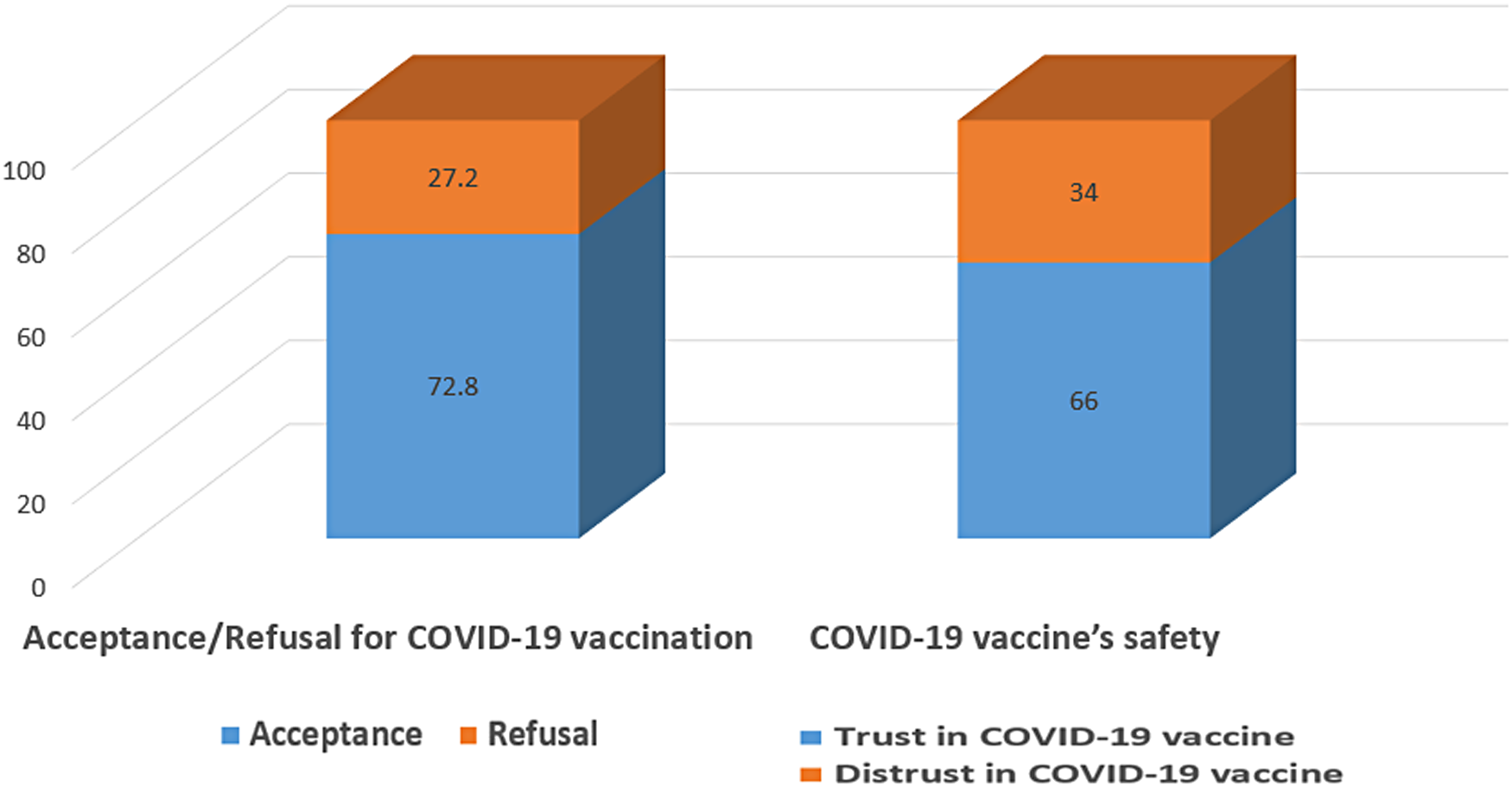
The mean age of the participants was 46.92 ± 11.80 (minimum, 18; maximum, 66). It was found that the vaccine acceptance rate of the participants, who were included in the study, was 72.8%, and the trust in the vaccine was 66.0% (Figure 1).
Acceptance and trust of participants regarding COVID-19 vaccine.

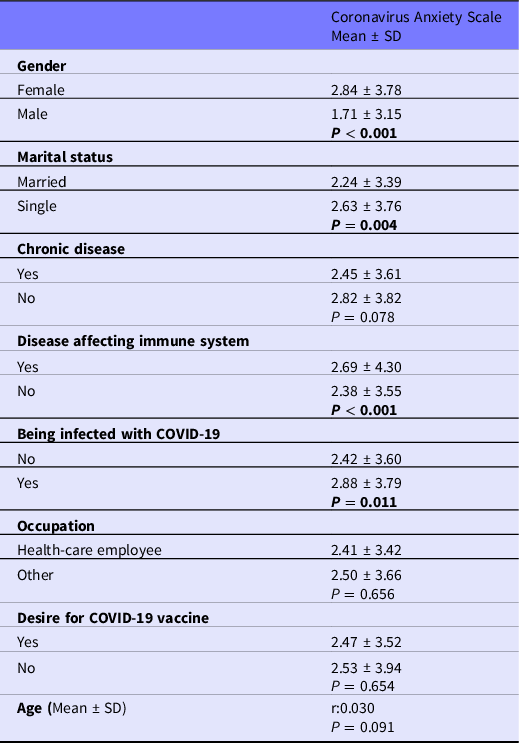
It was found that women, single participants, those who had immune system diseases, and participants who had COVID-19 had higher CAS scores at significant levels (P < 0.05) (Table 1). Although not mentioned in the table, it was also determined that the CAS score (2.49 ± 3.63) of the participants was above the moderate level.
Distribution of Coronavirus Anxiety Scale scores of participants according to sociodemographic characteristics of participants

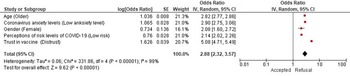
When the logistic regression model that was made to determine the acceptance/rejection intention of the coronavirus vaccine was evaluated, it was found that gender, age, trust in the vaccine, perception of risk levels of COVID-19, and coronavirus anxiety levels of individuals were found to be the factors affecting their intentions to accept/reject the coronavirus vaccine. It was also found that male participants had higher intentions to accept the coronavirus vaccine (P = 0.023), and increased intentions to refuse the coronavirus vaccine as they became older (P < 0.001). Participants were more likely to accept the vaccine even if they did not trust it (P < 0.001), and a high risk of developing COVID-19 was identified as a positive factor for accepting the vaccine (P = 0.001). The increase in the CAS of the participants also increased their intentions to accept the vaccine (P < 0.001). The model described 63% of the intentions to accept/reject the coronavirus vaccine (Figure 2).
Acceptance and refusal predictors for COVID-19 vaccine.

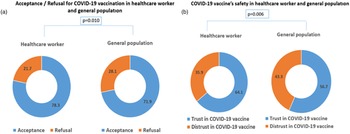
It was found that the acceptance rate of the coronavirus vaccine among health-care employees was higher than among the general population at significant levels (P = 0.010) (Figure 3a). It was also found that the trust in coronavirus vaccine in health-care employees was higher than in the general population at significant levels (P = 0.006) (Figure 3b).
a. Acceptance/refusal status of health-care employees and general population. b. Trust in vaccine status of health-care employees and general population.

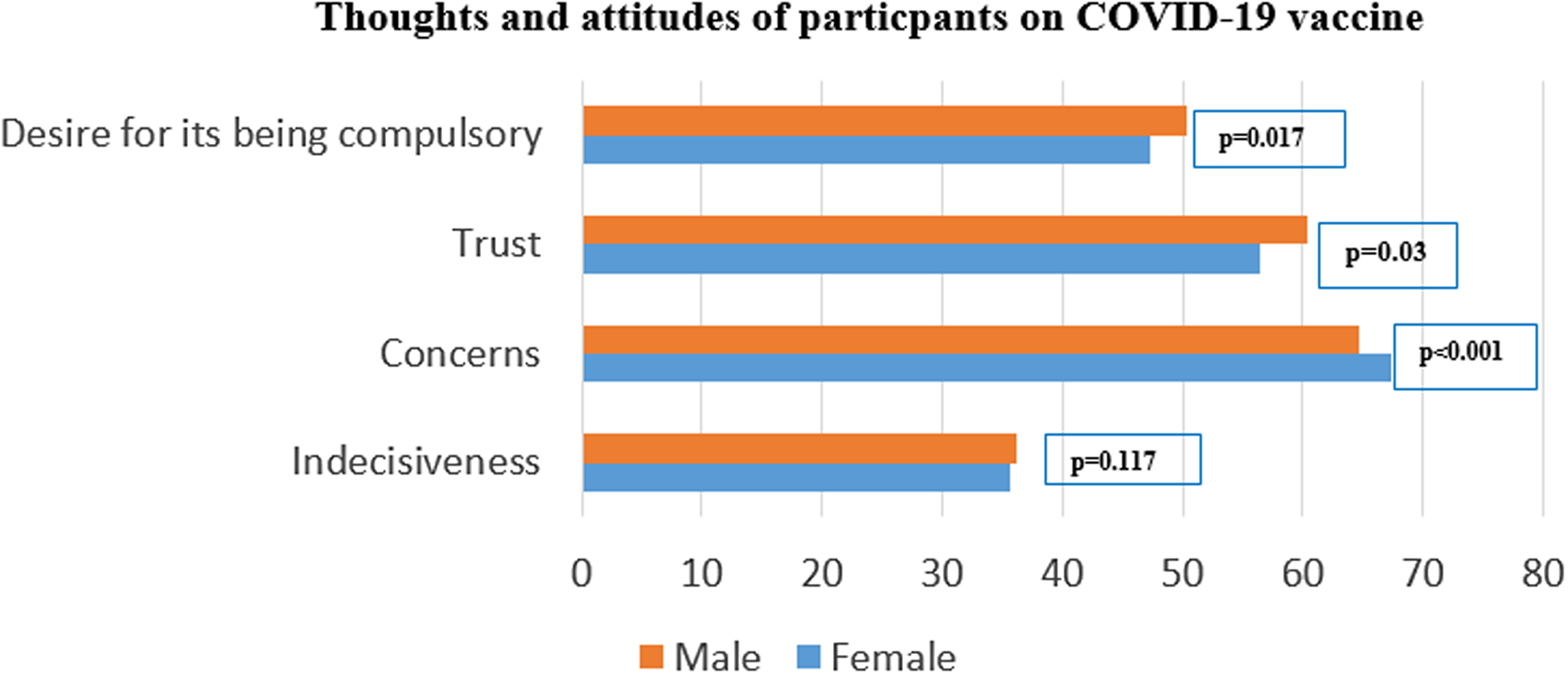
When the thoughts and attitudes of the participants on the coronavirus vaccine were examined according to gender, it was found that men wanted vaccination to be mandatory and had more trust in the vaccine than women (P < 0.05). It was found that women were more concerned about the coronavirus vaccine than men (P < 0.001). It was also determined that the indecisiveness levels of participants according to gender did not affect attitudes regarding the vaccine (P = 0.117) (Figure 4).
Comparison of participants’ attitudes toward vaccine according to gender.

Discussion
This study is important in that it is a pioneering study in Turkish society identifying the factors associated with COVID-19 vaccine acceptance, trust in vaccines, and anxiety levels.
In the present study, the vaccine acceptance rate in Turkish society was found to be 72.8%. There are a limited number of studies conducted in the literature investigating the intention to accept/reject the COVID-19 vaccine. Reference Al-Mohaithef and Padhi5,Reference Fu, Wei and Zhu12,Reference Thunstrom, Ashworth and Finnoff13 In a study conducted in the United States, 80.0% of the population reported that they would agree to have vaccines. Reference Thunstrom, Ashworth and Finnoff13 In a study conducted with 992 participants in Saudi Arabia, the vaccine acceptance rate was reported to be 64.7%, and a positive relation was detected between increased age, marriage, and vaccine acceptance. Reference Al-Mohaithef and Padhi5 In a study conducted by Lazarus et al. (2020) with 13,426 participants in 19 countries in June 2020, the intention to have COVID-19 vaccine was 88.6% in China, 85.3% in Brazil, 75.4% in the United States, 71.4% in the United Kingdom, 68.4% in Germany, and 54.8% in Russia. As a result of these findings, it can be speculated that there is an increasing intention to have a vaccine against COVID-19 worldwide. Reference Lazarus, Ratzan and Palayew16
Another factor that affects the intention of Turkish society to accept vaccines is the condition of finding the vaccine reliable/unreliable. There are many studies conducted while COVID-19 vaccine development was underway reporting that the vaccine will be trusted and vaccination will be accepted with the start of vaccination programs. Reference Detoc, Bruel and Frappe17–Reference Freeman, Loe and Chadwick20 Contrary to the literature data, our study found that those who did not find the COVID-19 vaccine reliable had higher rates of vaccine acceptance, which can be explained by the increasing number of COVID-19 cases, although vaccination continues, causing anxiety in the society, and even if they found the vaccine not reliable, they consider that vaccination is the only remedy to protect against the disease. In our study, the rate of trust in vaccines in Turkish society was found to be 66.0%. In line with this rate, the researchers believe that the trust of Turkish society in vaccines is above the moderate level, and this will have positive effects in terms of adapting to vaccination programs.
According to the findings obtained in our study, it was found that the anxiety scores of female participants during the COVID-19 pandemic were higher than those of male participants. Similar to our study, there are studies in the literature reporting that anxiety levels are higher in women than in men during the COVID-19 pandemic. 11,Reference Wang, Hu and Hu21 There are studies in the literature reporting that women faced this process more negatively in previous pandemic periods. Reference Wang, Hu and Hu21,Reference Lim, Tam and Lu22 In our study, the higher anxiety levels of female participants can be explained by the presence of the gender perception in which domestic tasks and responsibilities are largely expected from women in Turkey.
In our study, the anxiety scores of single individuals were higher than those of married individuals. A study conducted on COVID-19 in the United States reported that younger individuals had higher coronavirus anxiety levels. Reference Lee, Mathis and Jobe23 Similarly, a study conducted in the initial period of the COVID-19 pandemic in China reported that being a student was associated with high stress, anxiety, and depression levels. Reference Wang, Hu and Hu21 In a systematic review of studies conducted during the COVID-19 pandemic, it was reported that being young was a risk factor for showing psychological symptoms. Reference Xiong, Lipsitz and Nasri24 In our study, the fact that the group that represented single individuals consisted mostly of young people and students, young people continuing their university education in the pandemic period struggled with difficulties such as future anxiety, the uncertainty of the future, face-to-face education was replaced by distance education, and young individuals had to fight the anxiety and difficulties caused by distance education might have increased their anxiety levels.
According to the Centers for Disease Control and Prevention, individuals who receive cancer treatment, long-term corticosteroid treatment, and who have immune system diseases constitute the risk group. 25 According to the findings of the present study, it was determined that the anxiety scores of participants who have immune system diseases were higher when compared with those without immune system diseases. As the immune system is suppressed, increased susceptibility to infections and autoimmune disorders appear. Reference Altın26 Having a disease affecting the immune system is considered to cause an increase in anxiety levels in individuals. During the pandemic, all sources of information emphasized that COVID-19 affects the immune system or people who have chronic health problems more. For this reason, it was expected that the anxiety levels of participants who had diseases affecting their immune systems would be high.
It was also found in the study that the anxiety levels of individuals with COVID-19 were higher compared with those who did not have it. In a study conducted with individuals who survived severe acute respiratory syndrome (SARS), first reported in 2003, and recorded as a coronavirus-like epidemic, the causes of the anxiety faced by the surviving individuals included health problems, concerns regarding transmitting the disease to others, and being stigmatized by their circle of friends, family, etc. Reference Ho, Kwong-Lo and Mak27 It is considered that anxiety levels may be higher in individuals affected by COVID-19 compared with other populations in the COVID-19 treatment process, its deadly effects, the inability to reach a clear conclusion regarding the effective vaccine, and ways of transmission of the virus, information on the Internet released by unofficial sources, fear of being infected with the disease again.
In our study, the vaccine acceptance rate of male participants was higher than female participants. In a study conducted with 2.512 participants in France, Detoc et al. (2020) reported that the participation of males in the COVID-19 vaccine clinical trial and vaccine acceptance was higher than female participants at significant levels. Reference Detoc, Bruel and Frappe17 Ruiz and Bell (2021) reported in a study conducted in the United States that the acceptance of vaccines by men and older individuals was higher than by female participants at significant levels. Also, social and traditional media reports that the male gender is vulnerable to COVID-19 infection. Reference Ruiz and Bell28 We think that the presence of data showing that males are affected more negatively by the COVID-19 infection and the media posting news supporting these data increase the acceptance of vaccines by the male population in Turkish society.
In the present study, it was found that the COVID-19 vaccine rejection rate increased as the participants became older. Contrary to our results, there are studies in the literature reporting that vaccine acceptance increases with increasing age. Reference Lee15,Reference Lazarus, Ratzan and Palayew16 Infections are the primary cause of mortality in 1/3 of individuals who are aged 65 and older. Although the COVID-19 virus affects individuals of all ages, the most commonly affected are individuals in middle age and above. Reference Altın26 In several studies conducted with hospitalized COVID-19-confirmed patients, the average age varies between 49 and 56. Reference Chen, Zhou and Dong29,Reference Huang, Wang and Li30 Similarly, in a study conducted in China, it was reported that hospitalization rates due to COVID-19 diagnosis increased with age, 1% for 20-29 y, 4% for 50-59 y, and 18% for over-80 y of age. Reference Verity, Okell and Dorigatti31 It is already known that the effects of the COVID-19 virus become more with increasing age. The average age of the individuals who participated in our study was 46.92 ± 11.80, and the maximum age was 66, which is considered to affect the results of the study. Also, it is considered that provocative reports in the media that there are people who die after vaccination after the onset of vaccination practices can cause adult people to refuse the vaccine, and it is important that governments take necessary measures and send clear messages informing the society.
In our study, high risk levels regarding the fears of being infected with COVID-19 were identified as a positive factor for accepting the vaccine. Detoc et al. (2020) reported in their study that individuals who fear being infected with COVID-19 would agree to be vaccinated. Our study also found that the increase in CAS scores increased the probability of accepting the COVID-19 vaccine. It is already known that perceived individual risk increases vaccine acceptance. Reference Detoc, Bruel and Frappe17 Previous studies show that individuals, who perceive that the risk of developing a vaccine-preventable disease is low, who consider the symptoms of the disease mild, and who have little concern about the disease, have lower intentions to have the vaccine, and are not vaccinated more often. Reference Schmid, Rauber and Betsch32 In the present study, it was found that the vaccine acceptance rate of individuals who were afraid of being infected with COVID-19 was higher. We think that the negative effects of being infected with COVID-19 and the statements that it can result in death, and the reflection of these in society increased the rate of vaccine acceptance, especially in individuals who perceived the risk of being infected with the disease as high.
In a previous study, it was reported that health-care employees would agree to have the COVID-19 vaccine and participate in a vaccine trial compared with the general population. Reference Detoc, Bruel and Frappe17 Similar to our study results, it was found in a study conducted in China that the acceptance of vaccines by health-care employees was higher compared with the general population. Reference Fu, Wei and Zhu12 We believe that the acceptance rates are higher because of the fact that health-care employees face a serious infectious disease, there is a high risk of transmission, and the desire to protect themselves from the disease is also higher in this regard.
In our study, the male participants wanted vaccination to be mandatory at higher rates compared with the female participants. Similar to our study findings, previous studies also reported that men had higher desires to have a COVID-19 vaccine than women. Reference Detoc, Bruel and Frappe17 We think that males want the vaccine acceptance to increase and parallel to this, want vaccination to be compulsory because of the high risk of being infected with COVID-19 and death. In our study, it was found that women are more concerned about the COVID-19 vaccine than men. When the studies in the literature were reviewed, it was found that women are more worried about different vaccines and COVID-19 vaccines than men, and vaccine rejection rates are more, similar to our study. Reference Flanagan, Fink and Plebanski33 It was reported in another study that women were worried about the side effects of the vaccine and, therefore, refused it. Reference Neumann-Böhme, Varghese and Sabat34 We believe that sociodemographic characteristics are effective on anxiety and vaccine acceptance, and this is similar to the literature data.
Conclusion and Recommendations
In the present study, the vaccine acceptance rate of Turkish society was found to be 72.8%, and the trust in the vaccine rate was 66.0%. In our study, the factors affecting the intention of participants to accept/reject the coronavirus vaccine significantly were found to be male gender, advanced age, finding the vaccine safe, high risk of being infected with COVID-19, and increases coronavirus anxiety levels. The coronavirus anxiety level of Turkish society was found to be above the moderate level. The anxiety levels of Turkish society regarding the COVID-19 pandemic were found to be related to gender, marital status, immune system diseases, and coronavirus disease. It was also found that the rate of trust and acceptance of the coronavirus vaccine in health-care employees was higher than in the general population.
Considering that individuals will need psychological support as well as medical support during the COVID-19 pandemic, which is observed to be characterized by anxiety, it will be beneficial to facilitate individuals’ access to mental health support. Governments put measures to reduce the spread of the virus at the center of their management strategies, and individuals must adopt practices that support their physical and psychological health. Enabling individuals to survive this process with less physical and psychological damage will bring countries to overcome it with less economic and social damage in the long run.
As a result of the study, it is recommended to share the results of scientific studies on COVID-19 vaccines with the community. Written, visual, and social media can be used to inform society about vaccines. Psychosocial strategies and interventions can be planned to reduce anxiety levels by determining the anxiety levels of populations about vaccines. It is also recommended that health-care staff establish therapeutic communication with individuals to be vaccinated and be role models.
Strengths and Limitations
The present study has several strengths. First, it is a pioneering study on a large sample conducted to determine the confidence and intentions of the Turkish population about being vaccinated during the COVID-19 pandemic. The volume of the study group, which consisted of 3148 participants, is in the “high” category according to the sampling volume classification applicable to relational studies. Reference Tabachnick and Fidell35 This shows that the present study group has a high representation level. Also, the relations between COVID-19 vaccine acceptance/rejection, trust in the vaccine, and anxiety levels were examined previously in a limited number of studies. It is considered that the present study examining these factors will contribute to the literature.
Our study had several limitations. The first of these limitations is related to the way the data were collected. The questionnaire of the study was prepared online because of social distancing, and all responses were obtained also online. For this reason, the data obtained in the study were limited to individuals who had Internet access, and who knew how to use a smartphone or computer.
Author contribution
The authors share the responsibility for the manuscript. Conception and design: M.A., C.U.S., N.K.; data collection: M.A., C.U.S., N.K.; analysis and interpretation: N.K., and manuscript writing: M.A., C.U.S., N.K.
Funding
None.
Competing interests
None declared.