Introduction
A complex humanitarian emergency involves a breakdown of authority that goes beyond the mandate or response capacity of any single country or United Nations (UN) agency, leading to the creation of refugees (those who leave their country of origin) and internally displaced persons (IDPs; those who are displaced but remain in their country). By the end of 2012, some 45.2 million people worldwide were displaced forcibly due to persecution, conflict, general violence, and human rights violations, including 15.4 million refugees and 28.8 million IDPs, among others. 1 On average, 13% of all persons of concern (refugees, IDPs, stateless persons, and those recently returned home) were children under the age of five years. 1 Although refugees are under the protection of the UN High Commissioner for Refugees (UNHCR; Geneva, Switzerland) and benefit from UNHCR-funded health services, IDPs and other conflict-affected populations often are dependent on weakened governments (or antigovernment forces), UN agencies such as the World Health Organization (WHO; Geneva, Switzerland) and the UN Children’s Fund (UNICEF; New York USA), and nongovernmental organizations for delivery of health services. In most humanitarian emergencies, communicable diseases alone, or more commonly in combination with malnutrition, are the major cause of illness and death.Reference Connolly, Gayer, Ryan, Salama, Spiegel and Heymann 2
The main causes of morbidity and mortality during humanitarian emergencies are diarrheal disease and acute respiratory infection (ARI).Reference Connolly and Heymann 3 Children are at particular risk; of the ten countries with the worst mortality rates for children aged under five years in 2000, seven were affected by humanitarian emergencies.Reference Black, Morris and Bryce 4 Conditions such as overcrowding, indoor cooking fires, and cold living situations resulting from inadequate shelter and blankets, provide favorable conditions for increased risk of respiratory droplet transmission.Reference Connolly, Gayer, Ryan, Salama, Spiegel and Heymann 2
The overwhelming majority of ARI-associated deaths and severe illness episodes are due to acute lower respiratory infections, consisting mainly of pneumonia.Reference Rudan, Boschi-Pinto, Biloglav, Mulholland and Campbell 5 Haemophilus influenzae type b (Hib) and Streptococcus pneumoniae are the leading causes of bacterial pneumonia among children worldwide. Globally, Hib pneumonia causes an estimated 292,000 deaths and pneumococcal pneumonia an estimated 741,000 deaths among children aged 1-59 months old.Reference O’Brien, Wolfson and Watt 6 , Reference Watt, Wolfson and O’Brien 7 Highly effective and safe vaccines are available for both Hib and Streptococcus pneumoniae. By July 2014, all Global Alliance for Vaccines and Immunization-(GAVI; Geneva, Switzerland) eligible countries have introduced Hib vaccines with GAVI support, immunizing more than 124 million children and preventing more than 697,000 future deaths. 8 Since 2010, with support from GAVI, more than 25 of the 50 eligible countries have introduced pneumococcal conjugate vaccine 10 (PCV10) into their national immunization programs. 9
A 1991 military coup in Somalia, followed by years of civil war, devastated much of the country’s infrastructure, including its health care system.Reference Menkhaus 10 In 2012, Somalia was the second largest country of origin for refugees, with more than 1.1 million people fleeing from conflict, violence, drought, and famine. 1 Somalia’s routine immunization services are supported heavily by UNICEF and partner agencies. However, security problems and inadequate resources hamper coverage of these services. 11 As a result, much vaccination is accomplished through supplemental immunization activities (SIAs), each occurring over a few-day period at the regional level or above. 12
Although studies exist demonstrating the cost-effectiveness of both Hib conjugated vaccine and PCV10,Reference Broughton 13 - Reference Tate, Kisakye, Mugyenyi, Kizza, Odiit and Braka 19 there have been no formal assessments done during a humanitarian emergency. The objective of this study was to determine the potential impact and cost-effectiveness of Hib vaccine and PCV10, individually or in combination, given during SIAs in Somalia, a country that has experienced a protracted humanitarian emergency. This analysis was conducted to aid governments and donor organizations in decisions about whether to introduce Hib and PCV10 vaccination during a humanitarian emergency.
Methods
Overview of Model
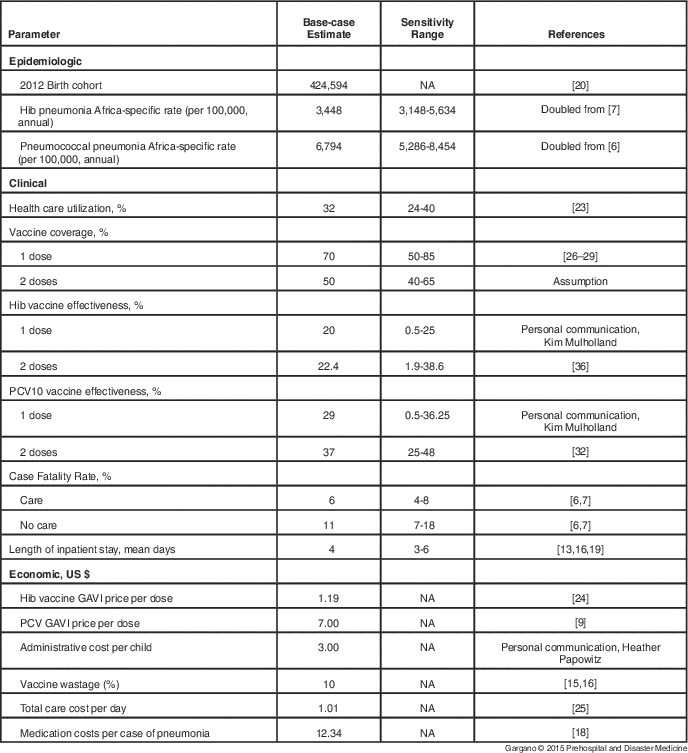
Disease-specific, decision-tree static models were developed to estimate the impact and cost-effectiveness of Hib and PCV10 vaccination, individually and together, in national SIAs for children aged less than two years by comparing the cost and burden of disease with and without such efforts. This analysis was conducted from the publicly funded health care system perspective during a protracted humanitarian emergency. The model was created for use in Somalia, and estimated health outcomes and direct medical costs associated with pneumonia disease for the 2012 Somalia annual birth cohort of 424,594 followed from birth to the age of two years, since over 99% of the children infected with Hib would be in their first two years of life. 20 , 21 Variables considered in the analysis are listed in Table 1. The model inputs include: Hib and pneumococcal pneumonia incidence; vaccine coverage, effectiveness, and cost (administrative and price of vaccine); medical care service costs and proportion utilizing services; and case fatality rate (CFR). Other forms of invasive disease, such as meningitis or sepsis, were not considered given the difficulty in making these diagnoses in Somalia. Non-medical costs such as transportation costs, or indirect costs such as time lost to parents, were not considered. These models estimated the incremental cost-effectiveness ratio (cost per disability-adjusted life-year [DALY] averted) expressed in 2013 US dollars.
Principle Base-case Values, Sensitivity Ranges, and References for Model Inputs; Somalia Case Study, 2012

Abbreviations: Hib, Haemophilus influenzae type b; GAVI, Global Alliance for Vaccines and Immunizations; PCV, pneumococcal conjugate vaccine.
Model Inputs
Disease-related Probabilities
Africa-specific estimates of incidence and CFRs for pneumonia among children aged less than five years were from the recently completed WHO Hib and Streptococcus pneumoniae Global Disease Burden Studies,Reference O’Brien, Wolfson and Watt 6 , Reference Watt, Wolfson and O’Brien 7 which provide a comprehensive and systematic appraisal of pneumonia disease incidence and mortality. Case fatality rates for Hib and Streptococcus pneumoniae were similar, therefore one CFR was used. The annual Africa-specific disease incidences were doubled because of the high degree of malnutrition and overcrowding, inadequate shelter and blankets, and doubling of mortality rates among children aged less than five years, as defined by a humanitarian emergency (Table 1).Reference Checchi and Roberts 22
Health Care Utilization
Somalia’s 2002 Multiple Indicator Cluster Survey 3 reported that 32% of children less than five years of age received antibiotics for pneumonia-like symptoms, 23 so this was assumed to be the base-case of care utilization. A previous Uganda study reported that the average length of stay for pneumonia was four days (Table 1).Reference Tate, Kisakye, Mugyenyi, Kizza, Odiit and Braka 19
Costs
Cost estimates were obtained from several sources. Global Alliance for Vaccines and Immunization Alliance prices for the Hib vaccine of US $1.19 per dose and for PCV10 of US $7.00 per dose were used. 9 , 24 The operational costs were estimated by UNICEF at US $3.00 per child per immunization campaign, which was equal to the cost of measles vaccination per child in Somalia (Heather Papowitz, personal communication, August 14, 2013). The Standardized WHO CHOosing Interventions that are Cost Effective tool to estimate the per diem costs of medical visits was used. 25 Somalia estimates were not available, so the average of Ethiopia and Kenya, two neighboring countries where the majority of Somali refugees seek asylum, was used. The cost of a medical visit was US $1.01 per day. The per diem cost was multiplied by the average length of stay (four days) for an inpatient child with pneumonia to calculate the total cost of a medical stay.Reference Tate, Kisakye, Mugyenyi, Kizza, Odiit and Braka 19 Medication costs per case of pneumonia were estimated from previous reports (US $12.34) and added to the cost of a medical visit (Table 1).Reference Tasslimi, Nakamura, Levine, Knoll, Russell and Sinha 18
Vaccine-related Probabilities
Vaccinated children were vaccinated during their first year of life with none before six weeks. For SIA base-case estimates and lower and upper limit of vaccination coverage, several data sources for vaccination coverage following measles SIAs from Darfur (77% of total target population), Afghanistan (82% of national target population), and refugee camps in Kenya (73%-89% of target population) were used. 26 - 29 Since measles vaccine is one dose, these estimates were used for one dose of vaccine. A lower coverage for two doses was assumed. In a humanitarian emergency, vaccines are delivered by SIAs, and this delivery system makes it difficult to administer multi-dose vaccines; because of this, the analysis only assessed delivery of one or two doses of Hib and PCV10 vaccine. When determining the number of doses needed, a wastage rate of 10% was used for both Hib vaccine and PCV10 (Table 1).Reference Tate, Kisakye, Mugyenyi, Kizza, Odiit and Braka 19
Data on vaccine effectiveness and circulating serotypes in Somalia were unavailable, so estimates were taken from other publications. Vaccine efficacy was determined from a recent meta-analysis of controlled clinical Hib conjugate vaccine trials. In this analysis, efficacy against Hib pneumonia disease was 22.4% (95% CI, 1.9%-38.6%) after two doses.Reference Griffiths, Clark and Hajjeh 14 No published data were available for vaccine effectiveness against Hib pneumonia for one dose, so it was assumed to be 20% (95% CI, 0.5%-25%; Kim Mulholland, personal communication, July 28, 2014). Pneumococcal conjugate vaccine 10 was selected because neighboring countries, such as Kenya, currently use PCV10 with great success and there are some supply restrictions with PCV13 (author Rana Hajjeh, personal communication, August 1, 2014).Reference Scott 30 Serotypes covered in PCV10 are 1, 4, 5, 6B, 7F, 9V, 14, 18C, 19F, and 23F. Using Malawi data, it was estimated that 66% of Somali circulating serotypes were included in PCV10.Reference Cornick, Everett and Broughton 31 Two-dose PCV10 vaccine effectiveness against pneumonia was assumed to be 37% base on Gambia trial (95% CI, 25%-48%).Reference Cutts, Zaman and Enwere 32 Effectiveness of one dose of PCV10 was estimated to be 29% (95% CI, 0.5%-36.25%; Kim Mulholland, personal communication, July 28, 2014).
Data Analysis
Decision Analysis Model
The costs and benefits of implementing a Hib and PCV10 immunization campaign during a humanitarian emergency were compared using Microsoft Excel 2010 (Redmond, Washington USA). The model was analyzed under base-case scenario to determine the costs of different options: no vaccination, one dose of Hib vaccine only, two doses of Hib vaccine only, one dose of PCV10 only, two doses of PCV10 only, one dose each of Hib and PCV10 administered together, and two doses each of Hib and PCV10 vaccine administered together. A one-way sensitivity analysis was conducted to evaluate the impact that changes in values of several parameters would have on the main model outcome, incremental cost-effectiveness ratio (ICER). All future costs and DALY estimates were discounted at an annual rate of three percent.Reference Griffiths, Clark and Hajjeh 14 , Reference Tate, Kisakye, Mugyenyi, Kizza, Odiit and Braka 19
Cost-effectiveness
The main summary measure for the ICER was cost per DALYs averted, expressed in 2013 US dollars. Disability-adjusted life-years were estimated using the WHO life expectancy data with age weighting. The disability weight for pneumonia children less than five years of age from “The 2010 Global Burden of Disease” was used to calculate years lost due to disability,Reference Salomon, Vos and Hogan 33 with the mean duration of four days of hospitalization for pneumonia and no long-term sequel assumed among those who survived.Reference Tate, Kisakye, Mugyenyi, Kizza, Odiit and Braka 19
Sensitivity Analysis
Starting from the base-case scenario, univariate sensitivity analyses were carried out to examine the extent to which the uncertainty in the variables affected the estimates. Sensitivity analyses were conducted for vaccination coverage, vaccine effectiveness, disease burden, CFR, and use and length of care using the confidence intervals from the source publications. Since no published reports are available for the vaccine effectiveness of one dose of Hib or PCV10 against pneumonia, a lower limit of 0.5% and an upper limit of 25% higher than the base-case were used. Health care utilization varies depending on presence of facilities and mobility of the target population, in part influenced by insurgent groups limiting mobility and access to facilities. Since access to these services is uncertain during a humanitarian emergency, health care utilization was varied by a standard deviation of 25% of the base-case estimate (Table 1).
Additional Assumptions
Several additional assumptions were made. First, baseline Hib and PCV10 vaccine coverage was assumed to be zero. Second, it was assumed that vaccines were administered at the correct time interval between doses and, if both vaccines were administered, they were given simultaneously.
Results
Burden of Disease in the Absence of a Vaccination Program
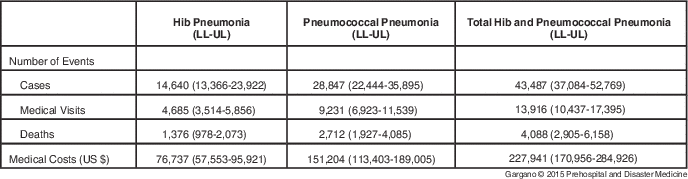
Out of a birth cohort of 424,594, the estimated total number of pneumonia cases was 14,640 Hib pneumonia cases and 28,847 Streptococcus pneumoniae pneumonia cases annually. Hib accounted for 4,685 of the medical visits and 9,231 were due to pneumococcal pneumonia. A total of 1,376 deaths were due to Hib pneumonia and 2,712 due to Streptococcus pneumoniae pneumonia (Table 2). Hib pneumonia would be responsible for US $76,737 of the total annual cost of the burden of pneumonia disease, and Streptococcus pneumoniae pneumonia would be responsible for US $151,204 (Table 2).
Hib and Pnumococcal Events and Associated Medical Costs among Children < Two Years of Age without Vaccination Programs; Somalia, 2012

Abbreviations: Hib, Haemophilus influenzae type b; LL, lower limit; UL, upper limit.
Impact of Hib Only and PCV10 Only Vaccination
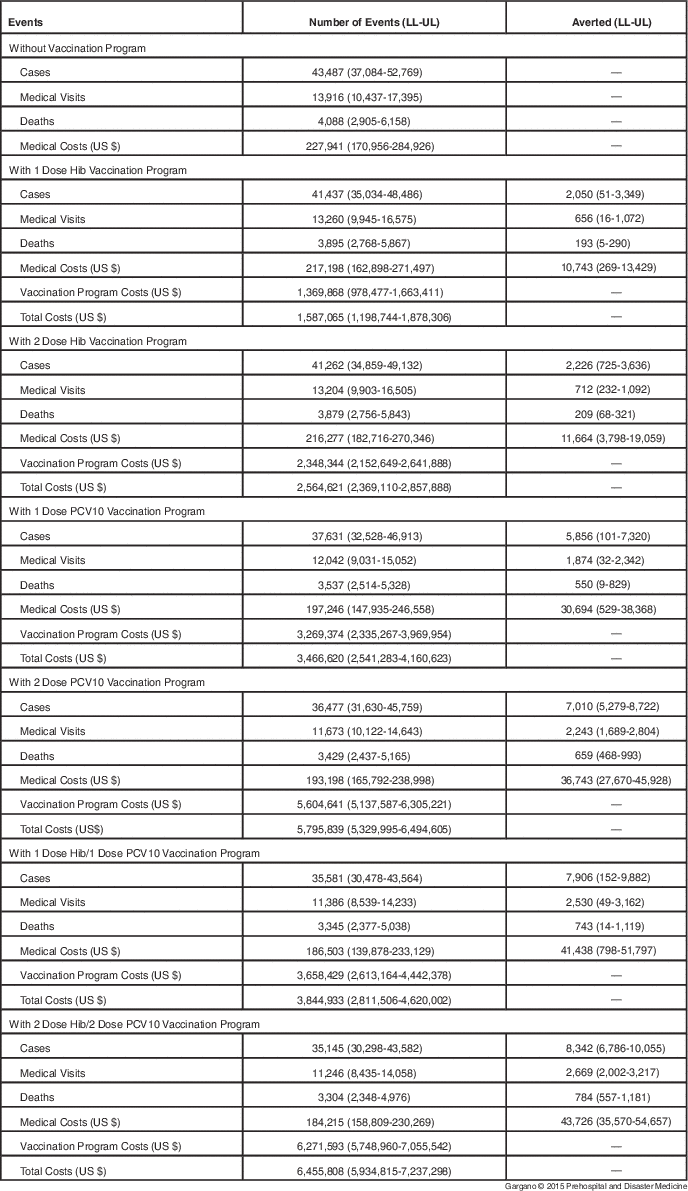
The introduction of a one-dose Hib vaccine would prevent 2,050 cases of pneumonia reducing the number of Hib and Streptococcus pneumoniae pneumonia cases from 43,487 to 41,437 (4.7%). The number of medical visits for pneumonia would decrease from 13,916 to 13,260 (4.7%; Table 3). Deaths would be reduced from 4,088 to 3,895, saving 193 lives per year (4.7%). Administration of two Hib vaccine doses would prevent 2,226 (5.1%) total cases of pneumonia, decreasing the number of cases to 41,262. The number of medical visits would decrease by 712, to 13,204 (5.1%). Deaths would be reduced to 3,879 cases, saving 209 lives per year (5.1%; Table 3).
Impact of Hib and PCV10 Vaccination Program on Total Pneumonia Events; Somalia, 2012

Abbreviations: Hib, Haemophilus influenzae type b; LL, lower limit; PCV, pneumococcal conjugate vaccine; UL, upper limit.
The reduction of medical costs associated with one Hib vaccination dose would be US $10,743, from US $227,941 to US $217,198 (5%; Table 3), and the vaccine program would cost US $1,369,868 (Table 3). A two-dose Hib vaccine administration would decrease medical costs by US $11,664, to US $216,277 (5.1%), and the vaccine program would cost US $2,348,344.
The administration of one dose of PCV10 would prevent 5,856 pneumonia cases (13.5%), decreasing the number of Hib and Streptococcus pneumoniae pneumonia cases to 37,631. The number of medical visits would decrease from 13,916 to 12,042 (13.5%). Deaths would be reduced to 3,537 cases, saving 550 lives per year (13.5%; Table 3). Administration of two PCV10 doses would prevent 7,010 pneumonia cases (16.1%), decreasing the number of cases to 36,477. The number of medical visits would decrease to 11,673 (16.1%). Deaths would be reduced from 4,088 to 3,429 cases, saving 659 lives per year (16.1%; Table 3).
The reduction of medical costs associated with one PCV10 dose would be US $30,694 (13.5%), to US $197,246, and the cost of the vaccine program would be approximately US $3,269,374 (Table 3). Two doses of PCV10 would decrease medical costs to US $193,198 (16.1%), saving US $36,743, and the cost of the vaccination program would be approximately US $5,604,641 (Table 3).
Impact of Vaccination with Both Hib and PCV10
The administration of one dose each of Hib vaccine and PCV10 would prevent 7,906 (18.2%) cases of pneumonia, decreasing the number of Hib and Streptococcus pneumoniae pneumonia cases from 43,487 to 35,581. The number of medical visits would decrease to 11,386 (18.2%). Deaths would be reduced from 4,088 to 3,345 cases, saving 743 (18.2%) lives per year (Table 3). Administration of two doses each of Hib vaccine and PCV10 would prevent 8,342 (19.2%) cases of pneumonia and decrease the number of cases to 35,145. The number of medical visits would decrease by 19.2%, from 13,916 to 11,246. Deaths would be reduced to 3,304 cases from the number of expected deaths without vaccination, saving 784 (19.2%) lives per year (Table 3).
The reduction of costs associated with one dose each of Hib and PCV10 vaccine administration would be approximately US $41,438 (18.2%), from US $227,941to US $186,503, and the vaccine program would cost approximately US $3,658,429 (Table 3). Two doses each of Hib vaccine and PCV10 would decrease medical costs to US $184,215 (19.2%), saving US $43,726 in medical costs, and the vaccine program would cost approximately US $6,271,593 (Table 3).
Cost-effectiveness of Vaccination Program
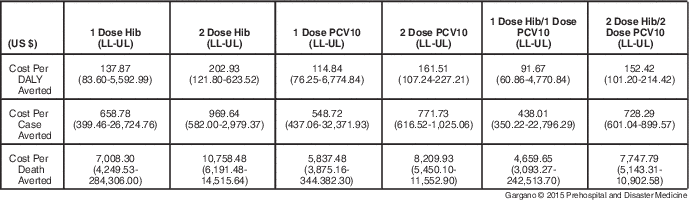
Vaccinating with one dose of Hib vaccine would yield an ICER per DALY averted of US $137.87 while it would cost US $658.78 per case averted and US $7,008.30 per death averted. Using two doses of Hib vaccine would produce an ICER of US $202.93 per DALY averted, US $969.64 per case averted, and US $10,758.48 per averted death (Table 4).
Cost-effectiveness of Hib and PCV10 Compared with No Vaccination; Somalia, 2012

Abbreviations: DALY, disability-adjusted life-year; Hib, Haemophilus influenzae type b; LL, lower limit; PCV, pneumococcal conjugate vaccine; UL, upper limit.
Using one dose of PCV10 would produce an ICER of US $114.84 per DALY averted, while it would cost US $548.72 per case averted and US $5,837.48 per averted death. Vaccinating with two doses of PCV10 would yield an ICER per DALY averted of US $161.51, US $771.73 per case averted, and US $8,209.93 per death averted (Table 4).
Using one dose each of Hib vaccine and PCV10 would produce an ICER of US $91.67 per DALY averted, while it would cost US $438.01 per case averted and US $4,659.65 per averted death. Vaccinating with two doses each of Hib and PCV10 would yield an ICER per DALY averted of US $152.42, US $728.29 per case averted, and US $7,747.79 per death averted (Table 4).
Sensitivity Analysis
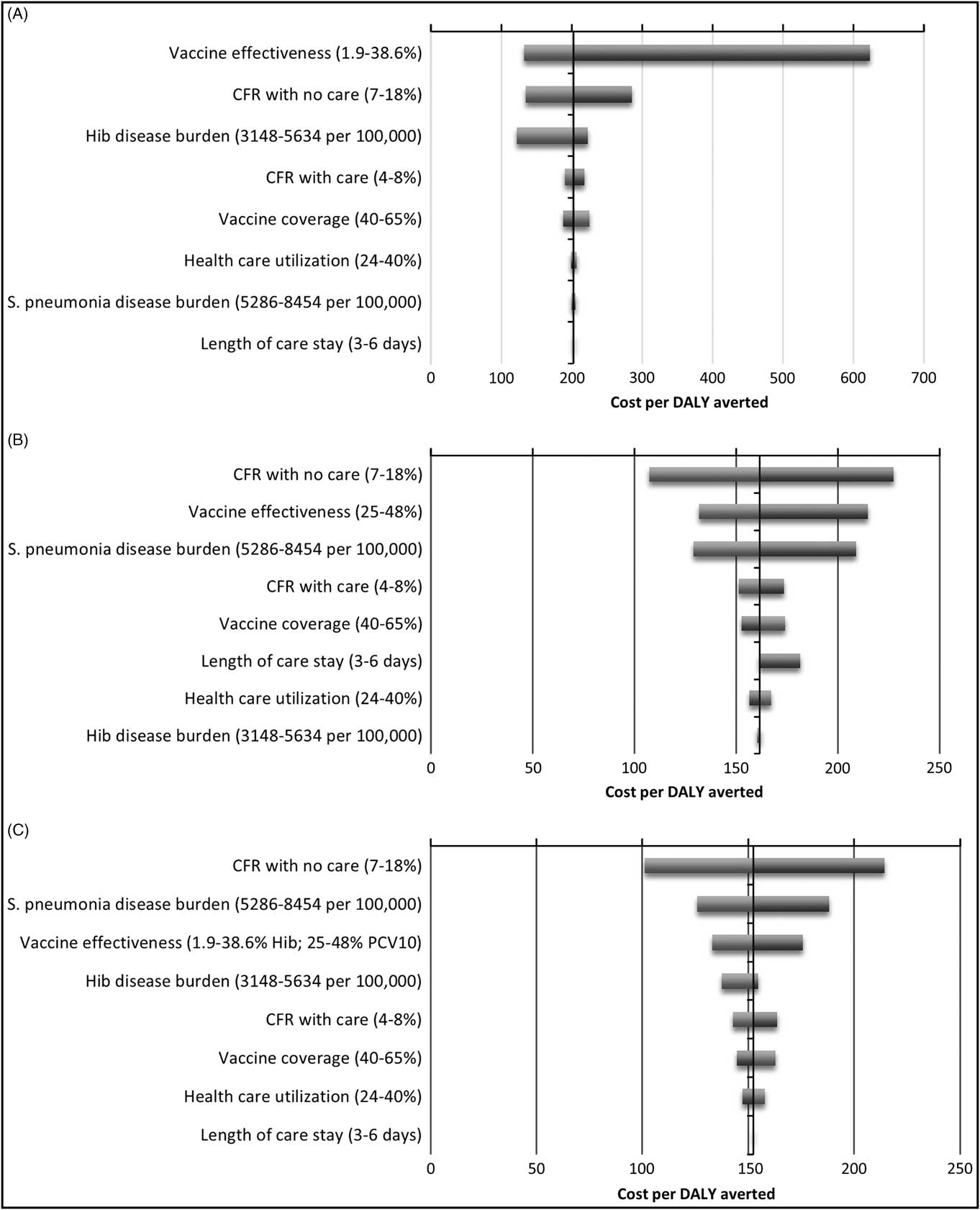
The WHO threshold for a cost-effective intervention is a cost per DALY averted that is one to three times the country’s per capita gross domestic product (GDP). 34 Somalia’s GDP in 2013 was US $112.00. 35 Since administration of two doses is optimal, sensitivity analysis was performed for two doses of Hib vaccine alone, PCV10 vaccine alone, or two doses of Hib and PCV10 vaccines administered together. Two doses of Hib vaccine were cost-effective under most scenarios. The base-case results were most affected by: (1) vaccine effectiveness, (2) CFR with no care, and (3) Hib disease burden. At two-dose vaccine effectiveness range of 1.9%-38.6% for Hib vaccine, the associated cost-effectiveness varied from US $623.52 to US $132.32 per DALY averted. At a CFR with no care range of 7%-18%, the cost per DALY averted varied from US $285.48 to US $134.74. When the Hib disease burden varied from 3,148 to 5,634 per 100,000, the cost per DALY averted varied from US $222.85 to US $121.80 (Figure 1A).
One-way Sensitivity Analysis for: (A) 2-dose Hib Vaccination Program; (B) 2-dose PCV10 Vaccination Program; and (C) 2-dose Hib and 2-dose PCV10 Vaccination Program. Endpoints of Each Bar Represents the Incremental Cost-effectiveness Ratio (Cost per DALY Averted) at the High and Low Ends of the Ranges. Abbreviations: CFR, case fatality rate; DALY, disability-adjusted life-year; Hib, Haemophilus influenzae type b; PCV, pneumococcal conjugate vaccine.

Two doses of PCV10 were cost-effective under all scenarios. The variables most affecting cost-effectiveness were: (1) CFR with no care, (2) vaccine effectiveness, and (3) Streptococcus pneumoniae disease burden. At a CFR with no care range of 7%-18%, the cost per DALY averted varied from US $227.21 to US $107.24. At a two-dose vaccine effectiveness of PCV10 range of 25%-48%, the associated cost-effectiveness was US $214.52 and US $131.67, respectively. When the Streptococcus pneumoniae disease burden varied from 5,286-8,454 per 100,000 annually, the cost per DALY averted was US $208.70 and US $129.02, respectively (Figure 1B).
Similar to Hib only and PCV10 only activities, the variables that influenced the cost-effectiveness of two doses each of Hib vaccine and PCV10 were: (1) CFR with no care, (2) Streptococcus pneumoniae disease burden, (3) vaccine effectiveness, and (4) Hib disease burden. At a CFR with no care of 7%-18%, the cost per DALY averted ranged from US $214.42 to US $101.20, respectively. When the Streptococcus pneumoniae disease burden varied from 5,286-8,454 per 100,000 annually, the cost per DALY averted varied from US $188.26 to US $125.79. At a two-dose vaccine effectiveness of both Hib and PCV10 vaccine of 1.9%-38.6% for Hib vaccine and 25%-48% for PCV10 vaccine, the associated cost-effectiveness varied from US $175.81 to US $133.14 per DALY averted, respectively. When the Hib disease burden varied from 3,148 to 5,634 per 100,000, the cost per DALY averted varied from US $154.71 to US $137.47 (Figure 1C).
Discussion
This study shows that Hib vaccine alone, PCV10 alone, or Hib vaccine and PCV10 given together are cost-effective interventions in Somalia, a country that has experienced prolonged humanitarian emergencies. It is important to remember that because of the lack of infrastructure and trained workforce in Somalia, many vaccines currently are administered by SIA (A. Kebede, WHO-Somalia, personal communication, March 5, 2014). Routine immunization programs do not function well during humanitarian emergencies; SIAs or Child Health Days are conducted to provide vaccination and decrease disease burden and mortality.
Similar to other published studies, this study found that vaccine effectiveness, CFR, and disease burden have the greatest influence on the cost-effectiveness.Reference Gupta, Prinja, Kumar and Kaur 15 - Reference Tasslimi, Nakamura, Levine, Knoll, Russell and Sinha 18 Providing either Hib vaccine or PCV10 is cost-effective, and the combination of both Hib and PCV10 together not only prevents more deaths and cases, but is also more cost-effective than administering either vaccine alone; this is due to savings in administration costs. The added benefit of administering two doses each of Hib vaccine and PCV is small; thus, if there are logistical difficulties to organizing more than one campaign, it is advisable to ensure having at least one SIA where both vaccines are administered. Though it is not discussed in this report, Hib and Streptococcus pneumoniae are important causes of bacterial meningitis in children, and these vaccines are very effective in preventing meningitis and its complications,Reference Cutts, Zaman and Enwere 32 , Reference Griffiths, Clark and Gessner 36 which likely would make the vaccines even more cost-effective.
In addition to risk factors for pneumonia magnified during a humanitarian emergency, there is decreased vaccination coverage and lack of, or delay in, diagnosis and treatment.Reference Connolly, Gayer, Ryan, Salama, Spiegel and Heymann 2 Most data on acute respiratory infections in humanitarian emergencies are limited to mortality; few studies have been done on morbidity rates and even fewer on the specific pathogens causing these infections.Reference Connolly, Gayer, Ryan, Salama, Spiegel and Heymann 2 Worldwide, Hib and Streptococcus pneumoniae are the most frequent bacterial causes of clinical pneumonia in developing countries. According to assumptions underlying the WHO/UNICEF case management approach, 37 a high percent of fatal pneumonia is bacterial. Therefore, despite a lack of surveillance data from Somalia, the main risk factors for pneumonia are present, and there is strong rationale for utilization of vaccines against pathogens that cause pneumonia in addition to strengthening pneumonia case management.
Much of the excess morbidity and mortality attributed to communicable diseases, including pneumonia, that occur among populations suffering humanitarian emergencies is avoidable. Effective vaccine interventions are available, but not implemented, during acute phases when they may be most beneficial. Hib and pneumococcal vaccines should be part of an overall intervention program to prevent pneumonia. For Hib and pneumococcal vaccines, the WHO/Strategic Advisory Group of Experts decision-making factors for vaccine deployment appear to have all been met: the disease burden is great, the vaccine-related risk is low, prevention in this setting is more feasible than treatment, the vaccine duration probably is sufficient for the vulnerable period of the child’s life, cost is reasonable, and herd immunity is possible.Reference Moodley, Hardie and Selgelid 38 , 39 Recently, in South Sudan, Doctors Without Borders/Médecins Sans Frontières (MSF; Geneva, Switzerland) conducted a vaccination campaign that included one of the first uses of pneumococcal conjugate and Hib vaccines in a humanitarian emergency. This campaign had one-dose coverage levels of 89.2% for PCV10 and 93% for Hib with 44.2% of children completing the PCV10 series and 55.2% completing the Hib series. 40
Limitations
Several assumptions were required to generate plausible estimates for model inputs. However, where significant uncertainties existed, sensitivity analysis was used. Although the model was built using the best available data, there remains a scarcity of Somalia-specific data for several model inputs. In particular, information is lacking for Hib and Streptococcus pneumoniae disease burden in Somalia. No available data on vaccine effectiveness were available for Somalia, so estimates from similar countries had to be used. This study used vaccine effectiveness against pneumonia only and did not take into consideration non-pneumonia invasive disease such as meningitis and sepsis. While it was assumed that existing coverage of PCV10 and Hib vaccine in Somalia was zero, Somalia has recently introduced DTP-Hep B- Hib vaccine, although coverage remains low. This analysis did not take herd immunity into account. In the United States, routine vaccination of infants with pneumococcal conjugate vaccine has led to large decreases in invasive pneumococcal disease among unvaccinated children and adults.Reference Sinha, Levine, Knoll, Muhib and Lieu 17 However, whether developing countries, in which patterns of interaction and exposures differ, would show herd immunity effects of a similar magnitude is unclear.Reference Sinha, Levine, Knoll, Muhib and Lieu 17 Potential increases in disease caused by Streptococcus pneumoniae serotypes not covered by PCV10, or changes in the most common serotypes to those not covered by PCV10, which could potentially degrade PCV10 effectiveness over time, were not considered.Reference Sinha, Levine, Knoll, Muhib and Lieu 17
Conclusion
Based on the presented model, Hib vaccine alone, PCV10 alone, or Hib vaccine and PCV10 given together in SIAs decrease mortality and medical costs associated with pneumonia and are cost-effective interventions in Somalia. Estimates from this economic analysis provide a foundation from which policy decision makers can make informed choices about which intervention programs to implement. Further research is needed to understand the feasibility of Hib and pneumococcal vaccine administration during the acute phase of an emergency, but this real-world experience shows the potential and these analyses show the financial benefit.