Introduction
The genus Cuscuta, known by its common name “dodder,” includes more than 170 different species of obligate holoparasitic plants distributed throughout all agricultural regions of the world (Dawson et al. Reference Dawson, Musselman, Wolswinkel and Dorr1994; Holm et al. Reference Holm, Doll, Holm, Panch and Herberger1997). Field dodder is the most destructive dodder species. It has a wide distribution area, in which it parasitizes the shoots and leaves of broadleaf plants, including field crops, vegetables, ornamentals, and weeds. Field dodder is a rootless and leafless plant that lacks functional chlorophyll. To survive, it coils around the host plant, produces haustoria that penetrate stems and leaves, fuses to the host’s xylem and phloem systems, and acts as a super-sink, diverting water, amino acids, and nutrients from the host plant (Tsivion Reference Tsivion1978; Wolswinkel Reference Wolswinkel1984). Field dodder parasitism of host plants results in serious damage to those plants, including reduced plant vigor, impaired development, and yield losses of up to 100% (Dorr Reference Dorr1987; Mishra Reference Mishra2009).
Field dodder control is exceptionally difficult due to this species’ hard seed coat and longevity in the soil, which enable continuous germination and emergence at a wide range of temperatures (Benvenuti et al. Reference Benvenuti, Dinelli, Bonetti and Catizone2005; Goldwasser et al. Reference Goldwasser, Miryamchik, Sibony and Rubin2012, Reference Goldwasser, Miryamchik, Rubin and Eizenberg2016; Nir et al. Reference Nir, Rubin, Zharasov, Moreno, Cubero, Berner, Joel, Musselman and Parker1996). Post-attachment control is extremely difficult due to the physical association between the parasite and host organs; it requires a highly selective herbicide that can injure the parasite without damaging the host plant. Many methods for field dodder control in crops have been suggested (Cudney et al. Reference Cudney, Orloff and Reints1992; Dawson et al. Reference Dawson, Musselman, Wolswinkel and Dorr1994; Nir Reference Nir1996; Parker and Riches Reference Parker and Riches1993; Choudhary and Prakash Reference Choudhary and Prakash2018), but for the most part, selective control is very limited or nonexistent.
Chickpea is a member of the Cicer genus of the Fabaceae family within the tribe Cicerae. The primary center of diversity and domestication of the chickpea crop was the Fertile Crescent. From there, it spread to secondary centers of diversity in Mediterranean Europe, the Indian subcontinent, northeast Africa, and more recently, Mexico and Chile (Muelbauer and Sarker Reference Muelbauer, Sarker, Varshney, Thudi and Muehlbauer2017). Chickpea is a valued crop that provides nutritious food for an expanding world population. To date, the largest area of chickpea adaptation is the Indian subcontinent. In 2017, the global chickpea production area was 13.5 million hectares and worldwide production was more than 10 billion kg (Muelbauer and Sarker Reference Muelbauer, Sarker, Varshney, Thudi and Muehlbauer2017). Among pulse crops, chickpea ranks second in cultivated area and third in crop production.
Chickpea is highly susceptible to field dodder, which easily and rapidly coils around the host plant and penetrates its xylem and phloem, physically choking the plant while extracting assimilates and water (Figure 1; Supplementary Movie 1). Quality and yield losses of up to 87% were recorded in a heavily field dodder–infested chickpea field (Mishra Reference Mishra2009). Unfortunately, there are almost no efficient chemical, biological, or mechanical methods that can be used to selectively control this parasitic weed in this crop (Yenish Reference Yenish, Shyam, Yadav and Chen2007; Mishra Reference Mishra2009). Dinitroaniline herbicides were reported to control dodder in alfalfa (Medicago sativa L.) (Dawson Reference Dawson1990) and pendimethalin is registered in the United States for dodder control in several crops, including chickpea (EPA Reg. No. 34704-868). However, under Mediterranean climatic conditions, PRE-applied pendimethalin is less effective due to enhanced volatilization and photodegradation (Zait et al. Reference Zait, Segev, Schweitzer, Goldwasser, Rubin and Mishael2015), and this chemical is not registered for weed control in chickpea.
Field dodder in a chickpea field in Saar, Western Galilee, Israel.

In order to combat this vicious parasitic weed, we searched for a window of opportunity in which the parasite would be most vulnerable to control measures and identified that window as the stage between dodder germination and its attachment to the host plant. Under Mediterranean climatic conditions, field dodder germinates in late winter or early spring, when average top soil temperatures rise to ~15 C (Choudhary and Prakash Reference Choudhary and Prakash2018; Goldwasser et al. Reference Goldwasser, Miryamchik, Rubin and Eizenberg2016; Keith and Tingey Reference Keith and Tingey1968) and the soil is moist due to rainfall or irrigation. Our control strategy is to apply a slow-release, long-lasting, cell division–inhibiting granular herbicide to the soil surface when the crop is well established (>6 leaves), but before dodder emergence. The granulated herbicide will be activated by rainfall or irrigation and will control the parasite by disrupting cell division during germination and emergence. Crop selectivity will be achieved by preventing granules from coming into direct contact with crop shoots and through the use of a slow-release herbicide with limited movement in the soil profile.
Materials and Methods
Field Dodder Seeds
The field dodder seeds used in the laboratory and greenhouse experiments were collected from heavily infested chickpea plants (‘Yarden’) in June 2002 in Saar, Western Galilee, Israel. Field dodder capsules were removed from mature dry dodder plants, air-dried, threshed, cleaned, and kept at 4 C until use. In order to ensure maximum field dodder germination in the laboratory and greenhouse experiments, seeds were scarified before use by soaking them for 40 min in concentrated sulfuric acid (96%) and then washing them thoroughly with ionized water followed by air-drying. Once the field dodder seeds are scarified, there is no effect of seed dormancy.
Herbicides
Descriptions of the herbicides employed in this study are presented in Table 1. All herbicides employed in this study inhibit cell division, thereby inhibiting root and shoot elongation. Pendimethalin and trifluralin (group 3) disrupt microtubule assembly, pronamid (group 3) inhibits mitosis, isoxaben (group 21) inhibits cellulose biosynthesis, and pyroxasulfone (group 15) inhibits the biosynthesis of very-long-chain fatty acids. The dinitroalanine herbicides pendimethalin and trifluralin as well as pronamide are registered in certain crops for field dodder control.
Chemical and trade names, active ingredients, application rates, formulations, and manufacturers for herbicides used in this study.

a Everris NA Inc., PO Box 3310, Dublin, OH, USA 43016.
b Dow AgroSciences, 9330 Zionsville Rd., Indianapolis, IN, USA 46268.
c Adama-Agan Ltd., PO Box 262, Ashdod, Israel 77102.
d Tapazol Chemical Works Ltd., Hasolela 1, Beit Shemesh, Israel 99052.
e Bayer CropScience Ltd., 875 Pacific Highway, Pymble, NSW, Australia 2073.
The granulated formulation of pendimethalin, Corral® (GPM), is a slow-release, long-lasting herbicide that controls a broad spectrum of troublesome broadleaf and grass weeds in turfgrass and landscape ornamentals. Dinitroaniline herbicides, including GPM, bind to tubulin, the major microtubule protein, and cause microtubule loss and absence of the spindle apparatus, preventing the alignment and separation of chromosomes during mitosis (Shaner Reference Shaner2014).
Pendimethalin formulations are registered for a wide range of PRE, early POST, and PPI applications in field crops, vegetables, ornamentals, and turfgrass (Shaner Reference Shaner2014).
Laboratory Experiments
Two petri dish experiments (in 2014 and in 2018) were conducted under sterilized conditions to test the effect of GPM on the germination and seedling development of field dodder. The experiments were conducted in a complete randomized design, five replications per treatment (5 petri dishes). The experiment was conducted twice, once with three replications (2014) and once with five replications (2018).
First, scarified seeds were sterilized by soaking them for 1 min in 1% ethanol, followed by 10 min in 1% sodium hypochlorite, and finally washing them five times in sterile water. Scarification of seeds is a common procedure in field dodder germination experiments, as nonscarified seeds germinate very poorly (Goldwasser et al. Reference Goldwasser, Miryamchik, Rubin and Eizenberg2016). Next, for each replication, 10 seeds were evenly placed in 90-mm petri dishes lined with No. 1 Whatman filter paper that was moistened with 1.3 ml of deionized sterile water. Treatments included the placement of GPM granules at 2.62 kg ha−1 (the recommended rate), one-half the recommended rate, and twice the recommended rate, as well as a nontreated control (NTC). Following herbicide application, 600 µl of sterilized water was added to each petri dish, and the dishes were then sealed with Parafilm® (Sigma-Aldrich, 3050 Spruce St., Saint Louis, Missouri, USA 63103), wrapped with aluminum foil to ensure darkness, and placed in a constant 24 C growth chamber. The petri dishes were opened 10 d (2014 experiment) and 6 d (2018 experiment) later, and the germinating seeds in each dish were counted, and the coleoptile lengths were recorded.
Greenhouse Experiments
Container experiments were conducted under greenhouse conditions to test the efficacy of GPM for field dodder control and its selectivity to chickpea. Greenhouse container experiments were conducted in a complete randomized design, five replications (5 pots per treatment). Two identical experiments were run: one with chickpea as a host and one with watermelon [Citrullus lanatus (Thunb.) Matsum. & Nakai] as a host.
Square nursery plastic pots (860 ml) were filled with potting soil into which three chickpea (‘Zehavit’) seeds were planted. Pots were placed in the greenhouse (in which the temperature varied between 25 and 35 C) and watered by minisprinklers as needed. Following chickpea emergence at 12 d after planting (DAP), plants were thinned to 1 seedling per pot, and 10 scarified field dodder seeds were buried 0.5-cm-deep in the soil, 1 cm away from the crop stem. Seeding of field dodder was delayed relative to chickpea seeding to ensure the presence of a host plant at the time of field dodder emergence.
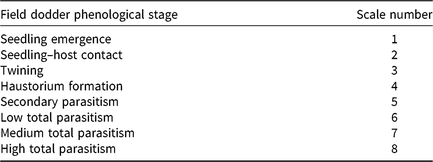
On the same day, GPM was evenly hand sprinkled on the entire pot surface at 0, 1/2X, X, and 2X. The experiment included six replications per treatment accompanied by two controls: GPM-treated pots that each contained a chickpea plant without any dodder and GPM-treated pots without a chickpea plant, but with field dodder. Field dodder seedling emergence and developmental stage, as well as chickpea development, were recorded weekly according to a scale described in Table 2 (Goldwasser et al. Reference Goldwasser, Miryamchik, Sibony and Rubin2012). The experiment was terminated at 13 d after herbicide treatment (DAT). In a parallel experiment with an identical setup and treatments, we used watermelon as a host plant.
Scale of 1 to 8 used to describe the stages of field dodder parasitism in the greenhouse experiments.

Field Experiments
To evaluate the efficacy of GPM for field dodder control and chickpea selectivity under field conditions, trials were conducted in three consecutive years, 2015, 2016, and 2017, in commercial chickpea fields of Kibbutz Revadim in the Judean Plain of Israel (31.777778°N, 34.836111°E). Field experiments were conducted in a randomized block design, with five (in 2015 and 2016) or six (in 2017) replications per treatment. The main treatment of the recommended rate of GPM was replicated in each of the 3 yr; half of the recommended rate was replicated in 2 yr.
Revadim 2015
The first field experiment was conducted in a randomized block design with five replications, each replication consisting of one 10-m-long, 1.93-m-wide bed in which two chickpea (Yarden) rows at 90-cm spacing were seeded on January 10, 2015. At 55 DAP, plots were treated with the following granular herbicides: pendimethalin (3.22 kg ha−1) or trifluralin (3.00 kg ha−1), or a trifluralin and isoxaben mixture (2.40 + 0.6 kg ha−1). There was also an NTC (Table 1). Granules were evenly hand sprinkled on the chickpea beds before dodder emergence. The 40-mm rain events immediately following the herbicide applications induced field dodder germination and emergence and activated the granular herbicides. The field was harvested on July 6, 2017.
Revadim 2016
The second field experiment was conducted in a randomized block design, five replications per treatment as described earlier, in a chickpea field (Zehavit) planted on December 21, 2015. Treatments were applied POST at 62 DAP of chickpea but before dodder emergence. The different rates of pendimethalin (3.22 kg ha−1 and 1.61 kg ha−1), applied as GPM, were evenly hand sprinkled on the soil surface. Pronamide (1.5 kg ha−1, Maglan®) was applied by a motorized backpack sprayer at a volume of 200 L ha−1, and there was also an NTC.
Forty-four millimeters of rain fell immediately following herbicide application, simultaneously activating field dodder germination and the herbicides. The field was harvested on July 10, 2016. A 1-kg chickpea seed sample from each plot was taken for laboratory quality analyses that included evaluations of grain damage, size distribution, and 1,000-grain weight.
Revadim 2017
The year 3 field experiment employed a randomized block design that included six treatments with six replications, with the same plot sizes. Chickpea (Zehavit) seeds were planted on January 11, 2017. Herbicide treatments were applied after crop emergence at 52 DAP but before dodder emergence: pendimethalin treatments (3.22 kg ha−1 and 1.61 kg ha−1) were applied as GPM evenly hand sprinkled on the soil surface. Pronamide (2.5 kg ha−1) and pyroxasulfone (0.17 kg ha−1 and 0.21 g ha−1) were applied with a motorized backpack sprayer at a volume of 200 L ha−1, and there was also an NTC.
Due to a lack of rainfall after herbicide application, herbicide activation and field dodder germination were delayed and occurred only after drip irrigation started (33 DAT), so herbicide granule activation and field dodder seed germination were synchronized. The field was mechanically harvested on July 8 and a sample of 1 kg of seed was taken from each plot for laboratory quality analyses as done in 2016.
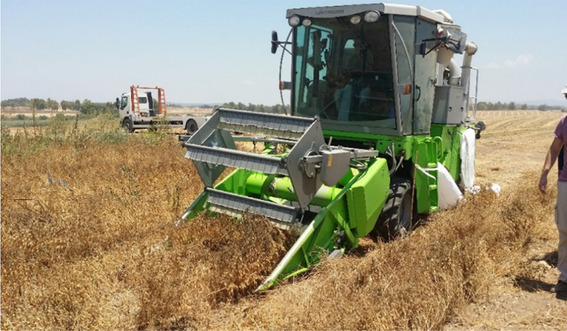
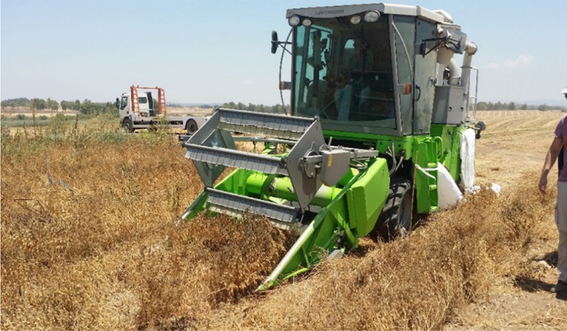
In all three experiments, weed counts and identification, field dodder counts, and chickpea development were recorded periodically. Chickpea grains were mechanically harvested with a Wintersteiger Plot Combine (Ried im Innkreis, Austria) that weighed the yield of each plot separately (Figure 2).
Revadim 2016 field trial. Mechanical plot harvesting with the Wintersteiger experimental combine on July 10, 2017.
Statistical Analysis
Data from laboratory, greenhouse, and field experiments were subjected to a general linear ANOVA procedure using JMP 14 Pro (SAS Institute, Cary, NC, USA). This procedure was used to test the assumption that the different treatments were significantly different from the control. In the laboratory and greenhouse experiments, the fixed effects were the herbicide and its concentrations. In the field experiments, the fixed effects were the different herbicides and their concentrations, and the blocks were set as random effects. In all experiments, the main effects for dependent variables were assessed. Means were separated using Tukey-Kramer HSD test, α = 0.05.
Results and Discussion
Petri Dish Experiments
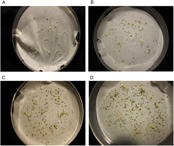
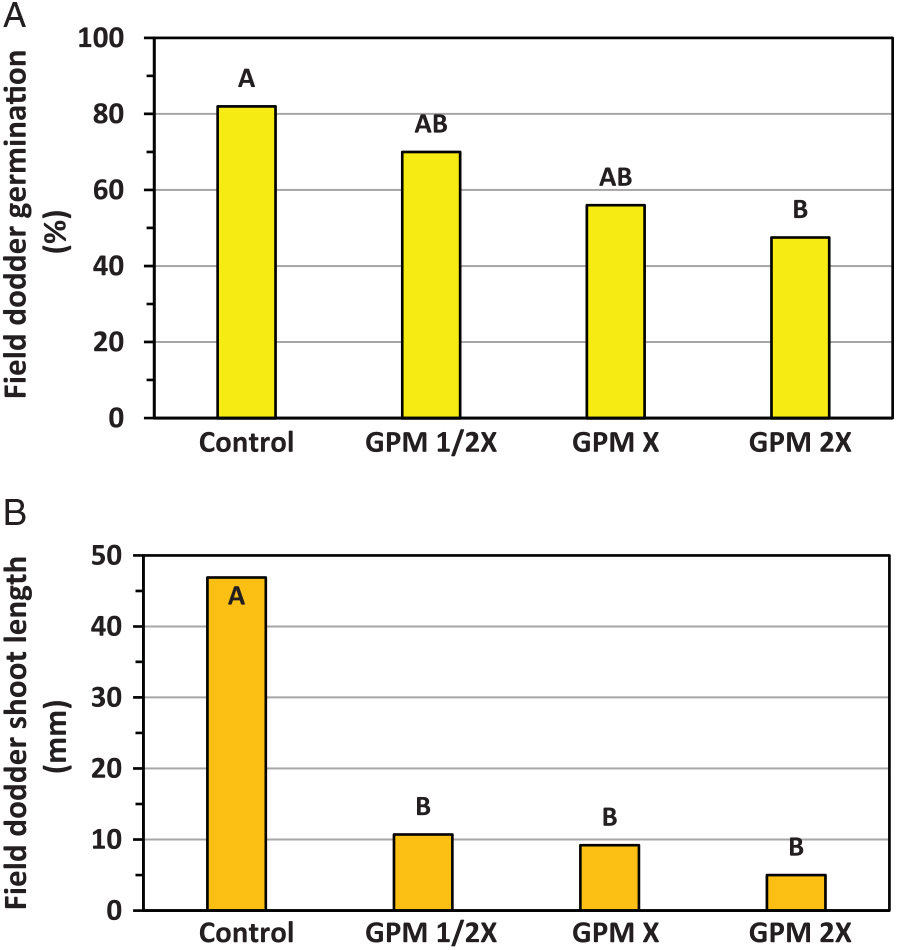
The petri dish germination assay showed that pendimethalin applied as GPM at all tested rates significantly reduced field dodder germination by inhibiting germination from 83% in the NTC to 37%, 50%, and 43% in the 1/2X, 1X, and 2X herbicide treatments, respectively, in the first experiment, and from 82% in the NTC to 70%, 56%, and 47% in the 1/2X, 1X, and 2X herbicide treatments, respectively, in the second experiment (Figure 3). There were no statistical differences in germination between the different applied herbicide application rates (Figure 4A). However, the major effect of the herbicide was the reduction in field dodder shoot elongation. In the first experiment, the herbicide reduced shoot length 10 DAT from 72.8 mm in the NTC to 15.3, 16.3, and 13.9 mm in the 1/2X, 1X and 2X herbicide applications respectively. In the second experiment, the herbicide treatments reduced shoot elongation 6 DAT from 46.9 mm in the NTC to 10.7, 9.2, and 5.0 mm in the 1/2X, 1X and 2X herbicide applications respectively (Figure 4B). Shoot lengths for all of the tested GPM rates were statistically shorter than those observed for the NTC, with no significant differences between the different herbicide application rates.
Field dodder seedling development in the petri dish experiment at 7 DAT. (A) Untreated control; (B) one-half the recommended rate; (C) recommended rate of 3.22 kg ha−1; (D) twice the recommended rate.

Field dodder (A) germination rate (%) and (B) shoot length (mm) following exposure to pendimethalin (formulated as granular pendimethalin [GPM]) in a petri dish at 7 DAT in the second Petri dish experiment. X = the recommended rate of 3.22 kg ha−1. Bars labeled with the same letter are not significantly different according to Tukey-Kramer HSD, P = 0.05.

Greenhouse Experiments
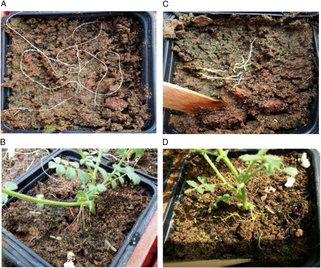
The greenhouse experiments further confirmed the observations from the petri dish experiments. Field dodder seedlings emerged at 3 DAP and were exposed to the herbicide released from the granular formulation. From the initiation of germination, the rootless seedlings were in poor shape; they were shorter, thicker, and yellower than the NTC plants. The abnormal seedlings failed to direct themselves and attach to the chickpea host stem. After 3 wk, they had exhausted all of their seed-stored resources, lost the ability to obtain nutrients and water from a host plant, dried up, and died (Figure 5). Pendimethalin treatments did not affect chickpea host plants, and their development was equal to that of the nontreated no field dodder control plants.
The response of field dodder associated with chickpea plants to pendimethalin (3.22 kg ha−1) formulated as granular pendimethalin (GPM) in the greenhouse experiment at 13 DAT. (A) No chickpea + field dodder, no herbicide; (B) chickpea + field dodder, no herbicide; (C) no chickpea + field dodder, treated with GPM 3.22 kg ha−1; and (D) chickpea + field dodder, treated with GPM 3.22 kg ha−1.
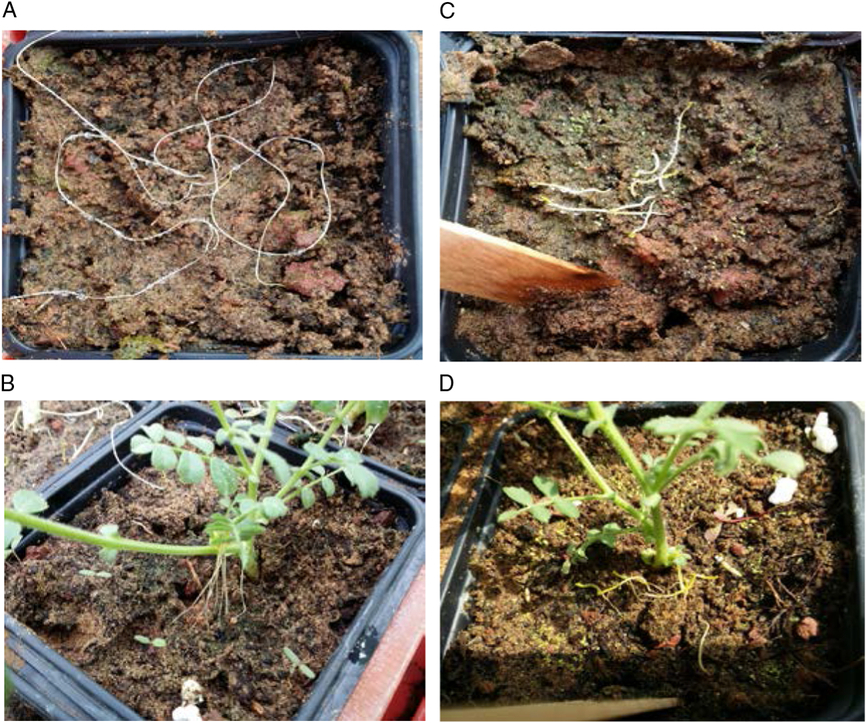
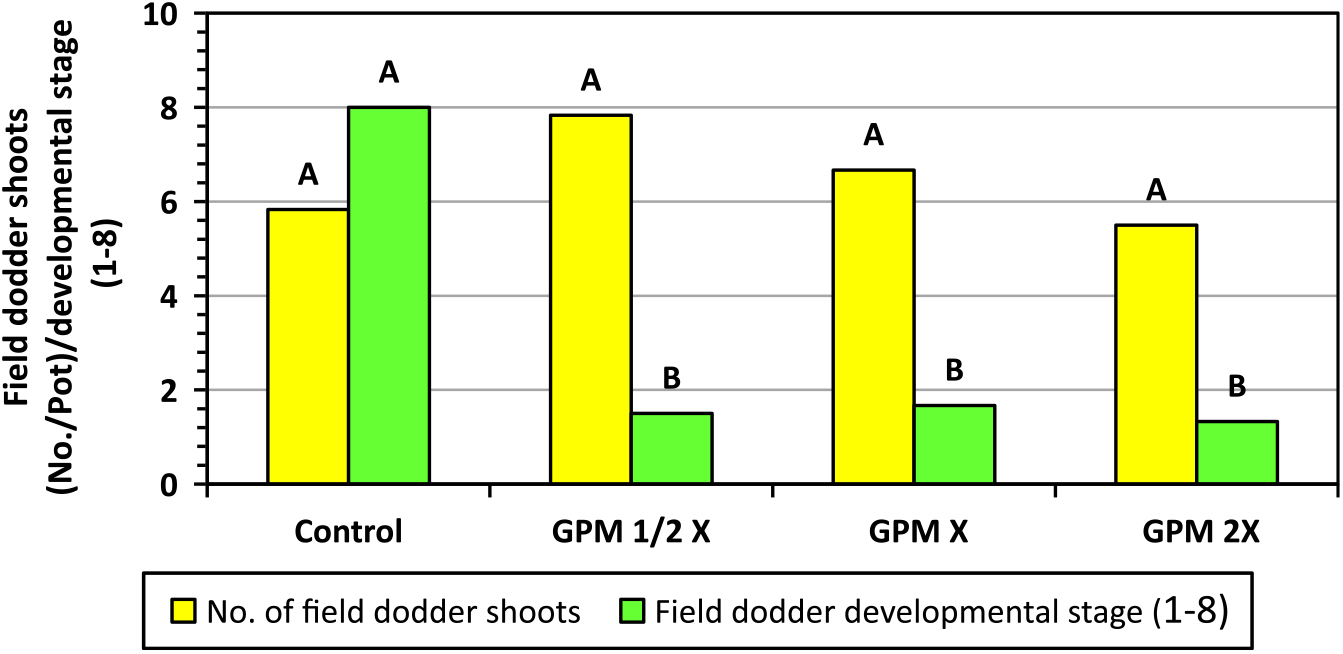
GPM did not reduce the dodder emergence rate, which did not differ significantly between the treatments and the control. The main observed effects of the herbicide were the reductions in field dodder seedling development, orientation, and elongation (Figure 6). Very similar results were obtained with watermelon as a host (unpublished data).
The number of germinating field dodder seedlings and their developmental stages at 13 DAT with pendimethalin formulated as granular pendimethalin (GPM) in the greenhouse container experiment. Field dodder development was scored on a scale of 1 to 8 (see Table 2 for details). “X” denotes the recommended GPM rate of 3.22 kg ha−1. Bars of the same color that are labeled with the same letter are not significantly different according to Tukey-Kramer HSD, P = 0.05.

Field Trials
Revadim 2015
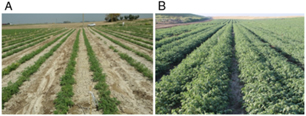
Following herbicide application, there were a few rainy days, which activated the granular herbicide treatments. Chickpea plant development was good (Figure 7A and B), and weed counts of weeds other than field dodder throughout the experiment revealed no statistical differences between the treatments and the NTC. The field was not heavily infested with field dodder. All of the herbicide treatments completely controlled field dodder. In contrast, in the NTC plots, there were 1.8 dodder plants 20 m−2 plot, on average. The yields of the different treatments were in the range of 4,570 to 5,090 kg ha−1, with no significant differences between the treatments according to Tukey-Kramer HSD (α = 0.05) (Table 3).
The 2015 Revadim field on (A) the date of herbicide application (55 d after planting) and (B) at 76 d after herbicide application.

Overall weed and field dodder infestation, chickpea plant development evaluation, and chickpea yields for the different treatments in the 2015 Revadim field trial.a

a Abbreviations: DAP, d after planting; GPM, granulated pendimethalin.
b Different letters indicate statistically significant differences, as determined using Tukey-Kramer HSD, α = 0.05.
Revadim 2016
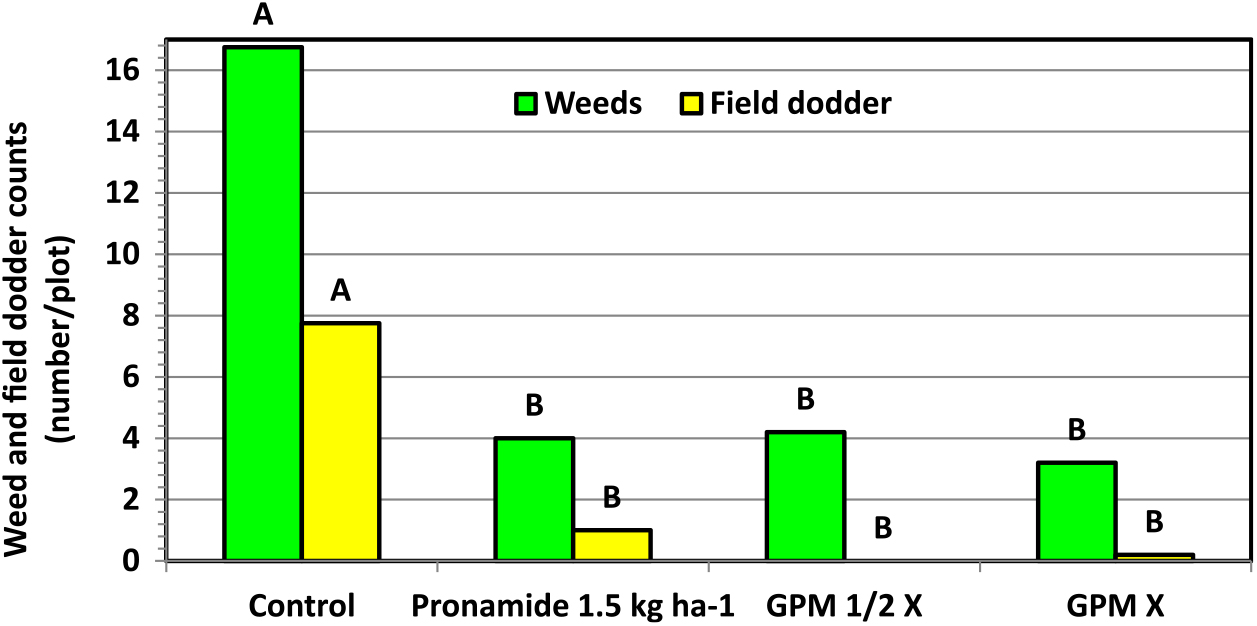
The treatments in 2016 included Maglan®, a common commercial formulation of pronamide that is registered and used in chickpea to reduce field dodder damage, as well as the application of half of the recommended GPM rate, to reduce the phytotoxicity of the herbicide to chickpea plants and cut herbicide costs. Immediately after the herbicide applications, there were several rainfall events that led to the germination of the field dodder seeds and activated the herbicides. The final weed counts made at 106 DAP revealed that all of the treatments had significantly reduced weed infestations (3- to 4-fold; Figure 8). All treatments also significantly reduced field dodder infestation relative to the NTC plots that were infested with an average of 6.2 dodder seedlings each. The pronamide treatment reduced the parasite 6-fold, while the GPM 1.61 kg ha−1 treatment completely controlled the parasite (Figure 8).
Field dodder seedlings and weed counts in a 20 m−2 plot in the 2016 field experiment. X = the recommended rate of pendimethalin (3.22 kg ha−1). Bars of each color that are labeled with the same letter are not significantly different according to Tukey-Kramer HSD, α = 0.05.

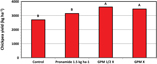
Field dodder parasitism of chickpea plants impeded chickpea development and caused a significant reduction in chickpea yields, so that the average yield of the untreated plots was 2,400 kg ha−1; whereas the GPM-treated plots (1.61 and 3.22 kg ha−1) had average yields of 3,600 and 3,400 kg ha−1, respectively, representing 1.48- and 1.42-fold increases in yield (Figure 9). The pronamide-treated plots, which had a somewhat reduced field dodder infestation, yielded 3,100 kg ha−1, but this figure was not significantly different from the 2,650 kg ha−1 yield of the NTC plots. Quality analyses of chickpea grains revealed no significant differences among the examined treatments.
Chickpea grain yield in the 2016 Revadim field trial. X = the recommended rate of pendimethalin (3.22 kg ha−1). Bars labeled with the same letter are not significantly different according to Tukey-Kramer HSD, P = 0.05.

Revadim 2017
The 2017 field trial included a new herbicide, pyroxasulfone (Sakura®), which was tested at two application rates. In 2017, the seasonal rains ceased early, in late February, so there was inadequate water to activate the granular herbicide. But the lack of significant rainfall also reduced the germination of field dodder. The dodder and the herbicide were simultaneously activated by a few raindrops, humidity, and finally by drip irrigation.
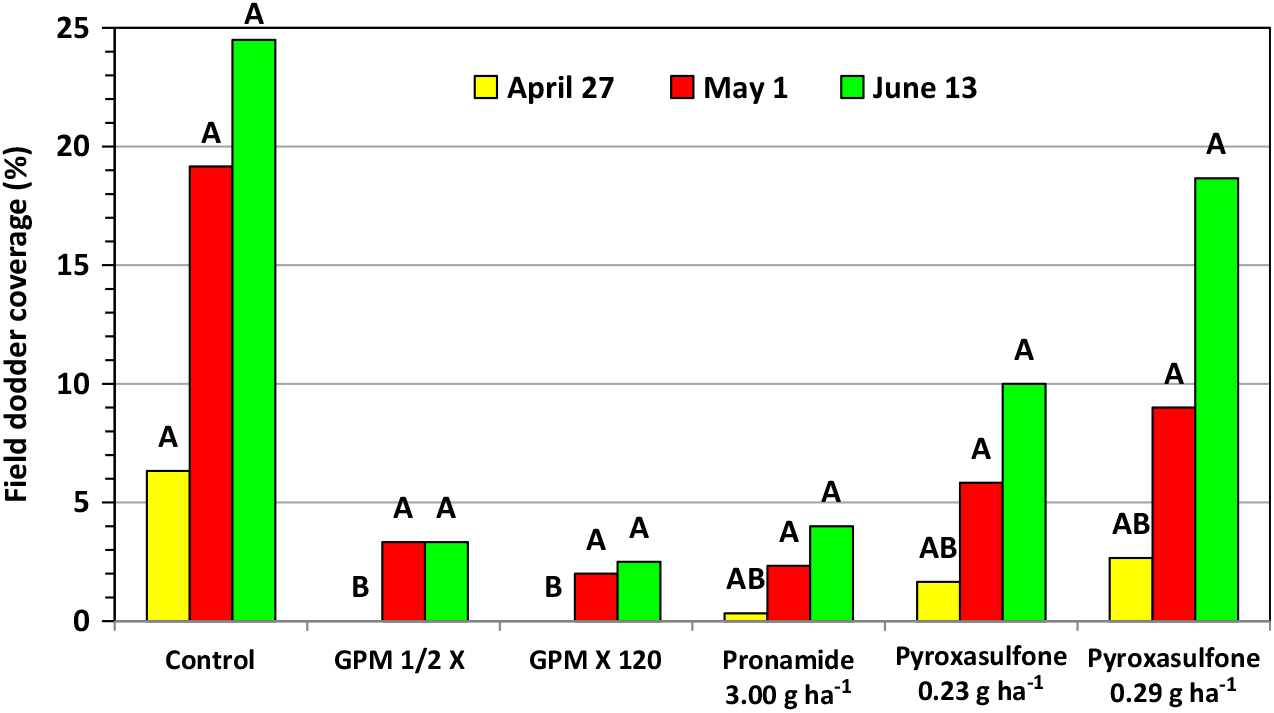
Chickpea plant development throughout the growing season was good in all treatments (Figure 10A and B), excluding the two pyroxasulfone treatments, in which we observed significant phytotoxicity in the canopy of the plants. All of the applied herbicides reduced weed infestation throughout the growing season. The main weeds in the experimental plots were wild carrot (Daucus carota L.), johnsongrass [Sorghum halepense (L.) Pers.], and hairy fleabane (Erigeron bonariensis L.). Field dodder infestation (coverage) in the NTC plots was 6% at 45 DAT and increased throughout the season, reaching 25% before natural plant drying. All herbicide treatments reduced field dodder infestation levels throughout the season, but the GPM treatments resulted in the best control. We saw an 8.6-fold reduction in the 1.61 kg ha−1 treatment and a 9.8-fold reduction in the 3.22 kg ha−1 treatment (Figure 11). Chickpea grain yields for those treatments were 3,400 and 3,600 kg ha−1, while the yield in the NTC was the lowest at 3,300 kg ha−1, but there were no statistical differences between the treatments. Laboratory tests of chickpea grain quality in each replication in each treatment revealed no differences between treatments.
The 2017 Revadim field on the day of herbicide application, February 27, 2017 (A), and on April 26, 2017, 58 d after herbicide application (B).

Field dodder coverage throughout the 2017 Revadim field experiment. X = the recommended rate of pendimethalin (3.22 kg ha−1). Bars of the same color labeled with the same letter are not significantly different according to Tukey-Kramer HSD, P = 0.05.

The efficacy of GPM in controlling field dodder was studied in laboratory, greenhouse, and commercial field experiments conducted in 2014 through 2018. In earlier studies, we developed a field dodder thermal-time germination model to predict the timing of field dodder germination and proposed that the short period between parasite germination and host attachment is the critical period for field dodder control (Goldwasser et al. Reference Goldwasser, Miryamchik, Rubin and Eizenberg2016). Employing modular and empirical long-term studies for the prediction of weed germination and emergence is crucial for the development of efficient weed control decision support systems (Grundy Reference Grundy2003). The critical period for weed control (CPWC) is a well-known concept that has been studied for many weeds and crops (Knezevic et al. Reference Knezevic, Evans, Blankenship, Van Acker and Lindquist2002). CPWC knowledge can be used to make decisions regarding herbicide application under optimal conditions and timing, leading to efficient control at precise herbicide rates (Lati et al. Reference Lati, Filin and Eizenberg2012; Knezevic and Datta Reference Knezevic and Datta2015). The CPWCs of parasitic weeds (and field dodder, in particular) are unique and different from those of nonparasitic weeds, requiring extensive knowledge of crop and weed physiology and their dynamic interaction, as well as herbicide traits, modes of action, and behavior in soil.
Reported practical, crop-selective field dodder control measures are limited. Dawson (Reference Dawson1990) showed that 3.4 kg ha−1 pendimethalin or prodiamine applied in alfalfa in March provided 96% to 100% control of field dodder through June in only 1 yr of a 3-yr study, while Cudney et al. (Reference Cudney, Orloff and Reints1992) reported that the application of trifluralin early in the season controls field dodder in alfalfa, but as the season progresses, control declines, necessitating the use of further measures, such as mowing and burning. Rubiales and Fernández-Aparicio (Reference Rubiales and FernÆndez-Aparicio2012) concluded that the currently available methods for controlling parasitic plants (including field dodder) in legumes are not effective, economical, or sufficiently applicable; thus they recommended an integrated control approach. Perhaps several new biotechnological approaches for the control of parasitic weeds, including natural and genetically induced dodder-resistant host lines, can be weapons for field dodder control as suggested by Ali (Reference Ali2012), but those strategies are not yet applicable.
Our current research indicates that granular slow-release formulations of the cell division–inhibiting herbicide GPM provide effective and selective dodder control in chickpea. We have shown that when GPM is applied at even half of the recommended rate (1.61 kg ha−1), control is sufficient. The strategy we propose is based on the application of granular herbicide during the period after crop establishment and before field dodder germination. This way, we can ensure more selective and efficient field dodder control throughout its germination and emergence period by disrupting parasite elongation and thereby impeding the attachment of the parasite to the host plant (Supplemental Movie 2). Reducing dodder parasitism is important to eliminate future dodder seedbank buildup, and in seed production crops there is zero tolerance of dodder seed infestation. This herbicide and its application strategy are effective for general weed control and thus can a serve as an efficient amendment tool in weed control programs.
There are few reports of successful control of field dodder under field conditions, and to the best of our knowledge, this is the first report of effective and selective herbicidal control of field dodder in chickpea. The GPM pendimethalin formulation should be endorsed by farmers, extension agents, and researchers for certification in chickpea, and the herbicide and control strategy can and should be tested in other crops, such as tomato (Solanum lycopersicum L.), watermelon, and additional legume crops, and included in integrated management programs.
Author ORCID
Yaakov Goldwasser 0000-0002-6741-1379
Supplementary Material
Time-lapse videos were filmed and posted on YouTube. Supplementary Movie S1: Time-lapse video of Cuscuta campestris (field dodder) germination, emergence and parasitism; https://www.youtube.com/watch?v=ulFuIwqC9qo&feature=youtu.be. Supplementary Movie S2: Field dodder control in chickpea with granular trifluralin (Corral®); https://www.youtube.com/watch?v=Enc5FQgb9K0.
Acknowledgments
We would like to acknowledge the following organizations and individuals for their most valuable help with this research: The Rubin Weed Lab at the Faculty of Agriculture, the Gadot-Agro chemical company, Yagev Kilman, and Tzabar Kama. In addition, we would also like to thank Menachem Asraf from ICL for supplying the Corral herbicide and the Israel Dryland Farming Organization for partially funding this research. No conflicts of interest have been declared by the authors.