INTRODUCTION
Assumptions are often made about the levels and directions of cultural connectivity across regions in western Anatolia and the eastern Aegean in the Early Bronze Age (EBA). However, a lack of primary fieldwork data still inhibits clear conclusions and an understanding of the subtleties and variations in such patterns. In particular, primary data is still lacking from the critical coastal ‘touch-point’ of these two regions, where material evidence is usually obscured by significant geomorphological change.
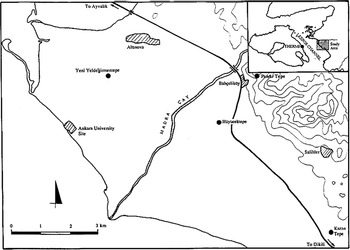
The purpose of the present article is to look at this complex issue of variations in regional connectivity in the EBA through a case study of unpublished primary fieldwork material from the Madra River Delta (MRD), a coastal region of north-west Anatolia (Fig. 1). Material from the excavation and surface survey of two EBA ‘tell’ sites in the MRD, carried out as part of an interdisciplinary research project, gives a rare opportunity to explore connectivity on this coastal ‘touch-point’ of the two regions, through elements of its EBA material culture, ranging from ceramic and textile production to figurines. This article highlights not only the complex, and unexpected, nature of the inter-regional cultural pathways visible in the MRD itself, but also the implications – and further questions – which this raises for the cultural connections with the neighbouring region of the north-east Aegean.
The Madra River Delta with the two main sites under examination (Yeldeğirmentepe and Hüyücektepe), and the delta's location on the coastal region of north-west Anatolia and the eastern Aegean (inset). Source: The Madra Çay Delta Archaeological Project.

This article comprises two main sections. In Part A (by Lambrianides and Spencer), a brief introduction to the fieldwork carried out in the MRD is provided, to give context to the subsequent analysis of the material remains (with more detail on the fieldwork methodology provided in Appendix 1). Part B (written by Röcklinger and Horejs) then moves on to consider in detail the patterns from the region's material culture and the issue of ‘connectivity’ in the third millennium.
PART A: FIELDWORK METHODOLOGY FOR THE MADRA RIVER DELTA'S ARCHAEOLOGICAL FIELDWORK
As noted above, one of the main reasons for beginning the MRD project was to examine a previously unexplored touch-point between the cultures of the Anatolian mainland and the Aegean. However, we were aware that conducting fieldwork (especially archaeological surface survey) in a coastal region subject to significant alluviation and sea-level change during the Holocene would be challenging and require us not only to be creative in the techniques employed but also to combine interdisciplinary research methodologies, especially for examination of the cultural remains.
Given the significant amounts of landform change in the MRD, it was critical to understand the delta's geomorphology in detail before deciding upon a methodology for archaeological survey and excavation. For this reason, we carried out a thorough programme of geomorphological and geological research with the team of İlhan Kayan (Ege University) from the early 1990s (Lambrianides Reference Lambrianides1992a; Lambrianides et al. Reference Lambrianides, Spencer, Vardar and Gümüş1996; Kayan and Vardar Reference Kayan and Vardar2007a; Reference Kayan and Vardar2007b; Kayan and Öner Reference Kayan and Öner2007). The results of this work allowed us to determine a strategy for the subsequent collection of cultural material, adapting current best-practice survey methods employed elsewhere in the Aegean and Anatolia to the needs of an alluvial coastal delta, and enabling us to focus attention and resources on those areas of the MRD where ancient land surfaces were preserved.Footnote 1
For example, one important choice in our surface survey methodology was the area of the overall delta (shown on Fig. 1) we chose to sample. We were fully aware that other field survey projects in the Aegean and Anatolia began with more extensive surveying of large tracts of the landscape, mapping cultural artefacts before defining concentrations of materials which were then examined through more detailed and intensive collection strategies.Footnote 2 However, our coastal river delta required us to evolve this methodology to fit with the environment within which we were operating because it soon became clear to us that in the delta plain, apart from the surfaces on or very close to a few ‘tell’ sites, ancient land surfaces were not preserved (and often were deeply buried). In the survey of the sites reported here, we therefore decided to carry out intensive collections on the two ‘tell’ sites using the best-practice survey methodologies utilised in other projects but not to survey broad tracts of the delta plain around the tells. This survey methodology entailed the establishing of a ‘grid’ over each mound for the collection of cultural artefacts, and adapting the nature of the grid depending on a number of factors present at each site, in particular the disturbance to the present-day surface at the Yeldeğirmentepe mound (Lambrianides and Spencer Reference Lambrianides and Spencer1998; Reference Lambrianides, Spencer, Erkanal, Hauptmann, Şahoğlu and Tuncel2008).
The intensive surface survey and trial excavation at Yeldeğirmentepe mound
The Yeldeğirmentepe mound had been a main focus of attention from the very beginning of our research in the MRD, with one main aim being to learn more about this prehistoric tell site and its palaeo-environmental history in the context of the geomorphological evolution of the wider delta region (Lambrianides Reference Lambrianides1992a, 75). To achieve these aims, as mentioned above, inter-disciplinary methods of research were employed. Preliminary geomorphological drilling work was carried out in 1991 (Lambrianides Reference Lambrianides1992a, 77–8) and formed the basis for further detailed augur drilling on and around the mound in 1995 and 1997 by the team of Kayan (Lambrianides et al. Reference Lambrianides, Spencer, Vardar and Gümüş1996; Kayan and Öner Reference Kayan and Öner2007).
Archaeologically, our early interest in the mound had been due in part to the possibility that it was the mound near Altınova excavated by Kiliç Kökten in 1949 which he had known by the name of ‘Kaymaktepe’. This mound cannot be located today, but Kökten had discovered there typical western Anatolian Late Chalcolithic and EBA pottery (Kökten Reference Kökten1949; Lambrianides Reference Lambrianides1992a, 76). Despite the fact that the Yeldeğirmentepe mound was now significantly disturbed by the building on it of, first, a windmill and then a municipal water pumping station about 25 years before our fieldwork in the 1990s (see Lambrianides et al. Reference Lambrianides, Spencer, Vardar and Gümüş1996, pl. XXII[b]–[c]), the ceramic material initially seen there of similar date to that reported by Kökten emphasised the potential importance of the site in terms of the prehistoric habitation of the delta and the need for further investigation.Footnote 3 This work was carried out in the form of a more detailed, intensive surface survey in 1996, and trial excavation trenches in 1997, reports of which have been published already (Lambrianides and Spencer Reference Lambrianides and Spencer1998; Reference Lambrianides, Spencer, Erkanal, Hauptmann, Şahoğlu and Tuncel2008). Remote sensing work (using magnetometry and resistivity methods) was also conducted at the site in 1997 and related to the geomorphological and archaeological research (Drahor, Göktürkler and Sengül Reference Drahor, Göktürkler and Sengül2007).
The archaeological survey of the Hüyücektepe mound
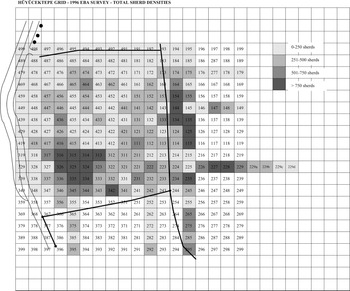
The extensive low mound known as Hüyücektepe lies on the east side of the Madra River, approximately 1.5 km south-south-west from the modern village of Bahçeliköy, west of the modern highway which runs south from Ayvalık to Dikili, continuing to Izmir (Fig. 1). It was first located and visited during the 1989–91 investigations in the delta as part of the preliminary research aimed at inter-relating the geomorphological history and early prehistoric cultural remains in the delta (Lambrianides Reference Lambrianides1990; Reference Lambrianides1992a; Reference Lambrianides1992b; Reference Lambrianides and Spencer1995; Lambrianides et al. Reference Lambrianides, Spencer, Vardar and Gümüş1996, 178–80). This first inspection had detected ceramic material similar to that known from Thermi in Lesbos (Lamb Reference Lamb1936) and also apparent on the surface of the nearby mound of Yeldeğirmentepe (see above), suggesting human activity during the Late Chalcolithic/EBA periods. At this time the approximate size of the cultural scatter at the Hüyücektepe mound was gauged, and it was also noted that there were two small, but pronounced, knolls which seemed to represent refuse middens, each containing large numbers of Cardium sp. shells and more ceramic fragments. Following this preliminary examination of what appeared a promising surface scatter (previously unknown), a number of other features of the Hüyücektepe mound prompted us to return to the mound and subject it to an intensive surface survey in 1996.
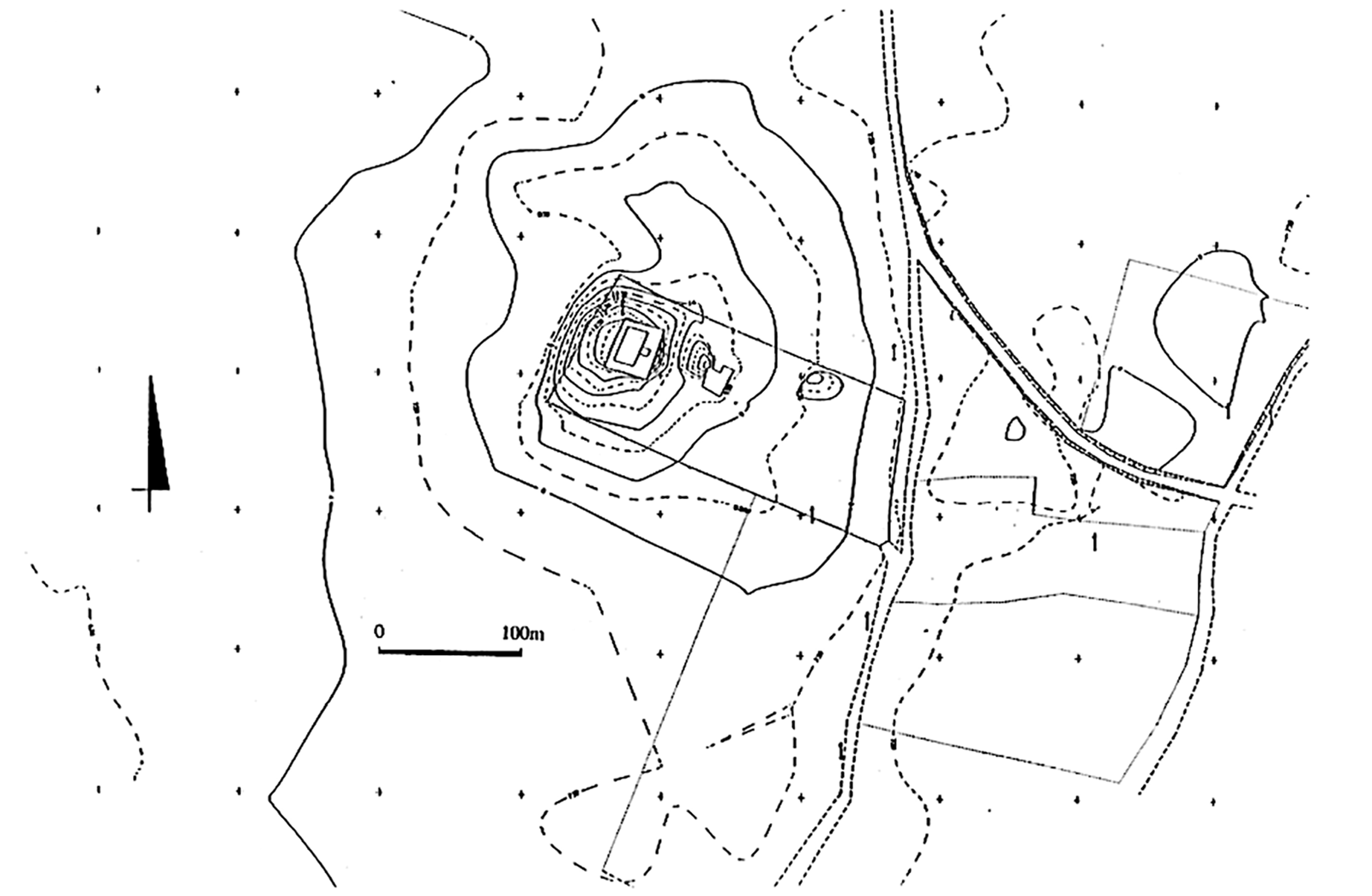
The first of these aspects was that the mound offered a site on the opposite side of the Madra River to the Yeldeğirmentepe mound and, as discerned in the 1995 geological and geomorphological work, one situated in part of the delta with a distinct geological constitution. Another important feature, particularly from the point of view of surface collection, was that the Hüyücektepe mound appeared largely undisturbed, thus offering a potentially more meaningful scatter of surface artefacts than that available at the Yeldeğirmentepe mound, where there had been great disturbance/destruction of the mound (see above); in particular, no building work had taken place on the Hüyücektepe mound itself. The mound was also much larger in area than the Yeldeğirmentepe mound, measuring approximately 220 m x 150 m. And finally, its location also offered a topographical contrast in our consideration of past environmental change in the delta (Kayan and Vardar Reference Kayan and Vardar2007a; Reference Kayan and Vardar2007b; Kayan and Öner Reference Kayan and Öner2007) as it lies some 4 km from the present-day coastline, much further away than the Yeldeğirmentepe mound on the north side of the Madra River, which was only 2.5 km distant, and which we knew had been close to the EBA shoreline. Our 1995 geomorphological research had clarified that this was not the case with the Hüyücektepe mound (Kayan and Vardar Reference Kayan and Vardar2007b), and thus we had the opportunity to explore a habitation site in a contrasting micro-environment.
Detailed reports of the intensive surface survey have been published already (Lambrianides and Spencer Reference Lambrianides and Spencer1998; Reference Lambrianides, Spencer, Erkanal, Hauptmann, Şahoğlu and Tuncel2008), and so we turn now to the analysis of the EBA material found in the fieldwork and the issue of the region's ‘connectivity’ in the third millennium.
PART B: THE EBA POTTERY OF THE MADRA RIVER DELTA
Introduction
The analysis in this part of the article considers the entire EBA pottery assemblage from the fieldwork conducted during the Madra River Delta Project described above. As noted in the description of the fieldwork in Part A of this article, in addition to already published ‘Middle Bronze Age’ and ‘Iron Age’ pottery of the MRD (Bayne and Spencer Reference Bayne and Spencer2007), significant amounts of EBA finds were discovered during the intensive surface surveys at the sites of Yeldeğirmentepe and Hüyücektepe, as well as during excavations at Yeldeğirmentepe (Lambrianides and Spencer Reference Lambrianides and Spencer1998; Reference Lambrianides and Spencer2007; Reference Lambrianides, Spencer, Erkanal, Hauptmann, Şahoğlu and Tuncel2008).
Given the MRD's location in the immediate vicinity of the area of Pergamon, where the prehistoric period has been under examination by B. Horejs and her team since 2008 (Horejs Reference Horejs and Pirson2009; Reference Horejs and Pirson2010a; Reference Horejs and Pirson2011a; Reference Horejs, Blakolmer, Reinholdt, Weilhartner and Nightingale2011b; Reference Horejs and Pirson2012a; Reference Horejs, Önen, Mutluer and Çetin2012b; Reference Horejs and Pirson2013; Reference Horejs, Pirson and Scholl2014a; Reference Horejs, Çınardalı-Karaaslan, Aykurt, Kolankaya-Bostancı and Erbil2014b; Reference Horejs and Pirson2014c; Horejs, Milić and Pavúk Reference Horejs, Milić, Pavúk and Pirson2015; Horejs and Schwall Reference Horejs, Schwall and Pirson2016), the present authors teamed up with the aim of setting the MRD's EBA culture in a wider regional context. Specifically, this Part B of the present study aims to trace patterns of cross-regional connectivity, making direct comparisons between the material culture and micro-regional patterns seen in the MRD and those found in the work in the nearby area of Pergamon. In this section, we also aim to draw parallels with the wider EBA cultural sphere across western Anatolia and the Aegean, understanding the role of the MRD in this broader cultural context. The present study is based on the survey and excavation data from the MRD, comprising find drawings and find catalogues, as well as photographs, the pottery typology, and the relative chronology visible from the excavation strata at Yeldeğirmentepe.Footnote 4
In the last century, this particular region between Izmir and the Troad, and the micro regions of the Kaikos valley and the MRD, received little attention from archaeologists studying the prehistoric periods. Only a limited number of scientific undertakings had been conducted before the MRD project of Lambrianides and Spencer: by K. Kökten (Reference Kökten1949), K. Bittel (Reference Bittel1950), W. Dörpfeld and H. Hepding (Reference Dörpfeld and Hepding1910), as well as J. Driehaus (Reference Driehaus1957). The present study therefore extends significantly the base of our current knowledge of prehistoric settlement activity within this region.
Since 2008, intensive and extensive surveys in the Kaikos valley have been conducted in order to gain more information about the prehistoric settlement pattern within the region and to fill the gap between the two already well-investigated regions of Izmir and the Troad (cf. Parzinger Reference Parzinger1993, 208; Horejs et al. Reference Horejs, Japp, Meyer, Mommsen, Pavúk, Schneider, Schöffel, Schwall, Weninger and Wolfin preparation). To date, continued settlement activity for this region is only verifiable from the ‘Late Chalcolithic/Early Bronze Age’, meaning mainly the fourth/third millennium bc (Horejs Reference Horejs, Horejs and Kienlin2010b; Reference Horejs and Pirson2013, 114) onwards. Earlier dates for the ‘Late Neolithic/Early Chalcolithic’ as well as the Middle Chalcolithic period dating to the seventh to the fifth millennium bc are attested by already published pottery fragments (cf. Horejs Reference Horejs and Pirson2013, 113, fig. 5) from Bağlı Tepe in the Gümüş valley, indicating some earlier occupation in the region.
Chronological classification of the MRD material
According to the catalogues provided from the MRD project,Footnote 5 398 possible EBA (third millennium bc; cf. Efe Reference Efe1988, 117, fig. 98) pottery fragments had been chronologically classified by the surveyors/excavators during the fieldwork seasons. The chronological determinations used for initial identification purposes in the field were ‘EBA’, ‘EBA (= Thermi?)’ to ‘post EBA’ and the ‘historical period’. To verify the dating of the individual sherds, and to reach more precise chronological definition, their descriptions and drawings, and also the photographs of the finds, were used.Footnote 6
The first stage of analysing the chronological depth of both sites was the typological assignment, based on the available profile drawings and the descriptions provided by the project leaders. After this stage, 42 individual sherds were excluded from the analyses due to their obvious typological assignment to later/historical periods. As a next stage, the drawings of the remaining 356 sherds were compared to their photos in order to reveal their chronological affiliation. Since photos of the Yeldeğirmentepe ceramics were only available in very small numbers, this step mainly focussed on the material from Hüyücektepe and, in turn, on the comparison between the available data from both sites. The material record of Hüyücektepe consists of 155 prehistoric sherds, of which 152 sherds were photographed. After the correlation of the photos, the drawings and the descriptions, it became clear that this site was mainly occupied during the early third millennium bc (EBA 1 and 2), but there is also evidence of activity in later periods. One particular sherd (35HT/96/Film 30/Drawing [Çizim]Footnote 7 112; MRD cat. figs. 63, 83) indicates an occupation or at least an on-site visit during the Early Iron Age (Troy VIIb). Other sherds (35HT/96/Y272 and 35HT/96/Y242 and Y249; Drawings [Çizim] 18, 19; MRD cat. figs. 73, 78; Lambrianides and Spencer Reference Lambrianides and Spencer1998, 410, fig. 8) cannot be affiliated with certainty to a particular period but probably date to the Middle Bronze Age (Peter Pavúk, pers. comm. June 2017). Another particular shape within the material, the fenestrated pedestal (B6 A), may be an indicator for occupation preceding the third millennium bc. Starting in the fifth millennium bc, this pedestal shape appears in a short and compact variant (Schwall Reference Schwall2018, 254), but is also present during the EBA (cf. type A13: Blegen, Caskey and Rawson Reference Blegen, Caskey and Rawson1950, fig. 129).
Typological classification
In western Anatolia, the pottery of the EBA 1 is exclusively handmade and characterised by shallow bowls with inverted rims (Knickrandschalen), jugs with high, beak-like spouts, and tripod cooking pots exhibiting different shapes. The MRD pottery is mainly handmade as well and fits to the typical assemblage known from published EBA occupation sites. Only a few pieces are described as ‘possibly wheel made’ or ‘wheel made’, indicating an occupation of the area not only during the earliest phase of EBA 1, but also in the more developed phase (EBA 2)Footnote 8 where, for example, the so-called depata amphikypella became a characteristic vessel shape (Efe Reference Efe1988, 97). Of the last-mentioned shape, one possible fragment was found which could be an example of either a depas amphikypellon or a so-called ‘hourglass shaped beaker’ (Podzuweit Reference Podzuweit1979, pl. 6.1) only known once from Troy V (Blegen, Caskey and Rawson Reference Blegen, Caskey and Rawson1951, 242, A41).
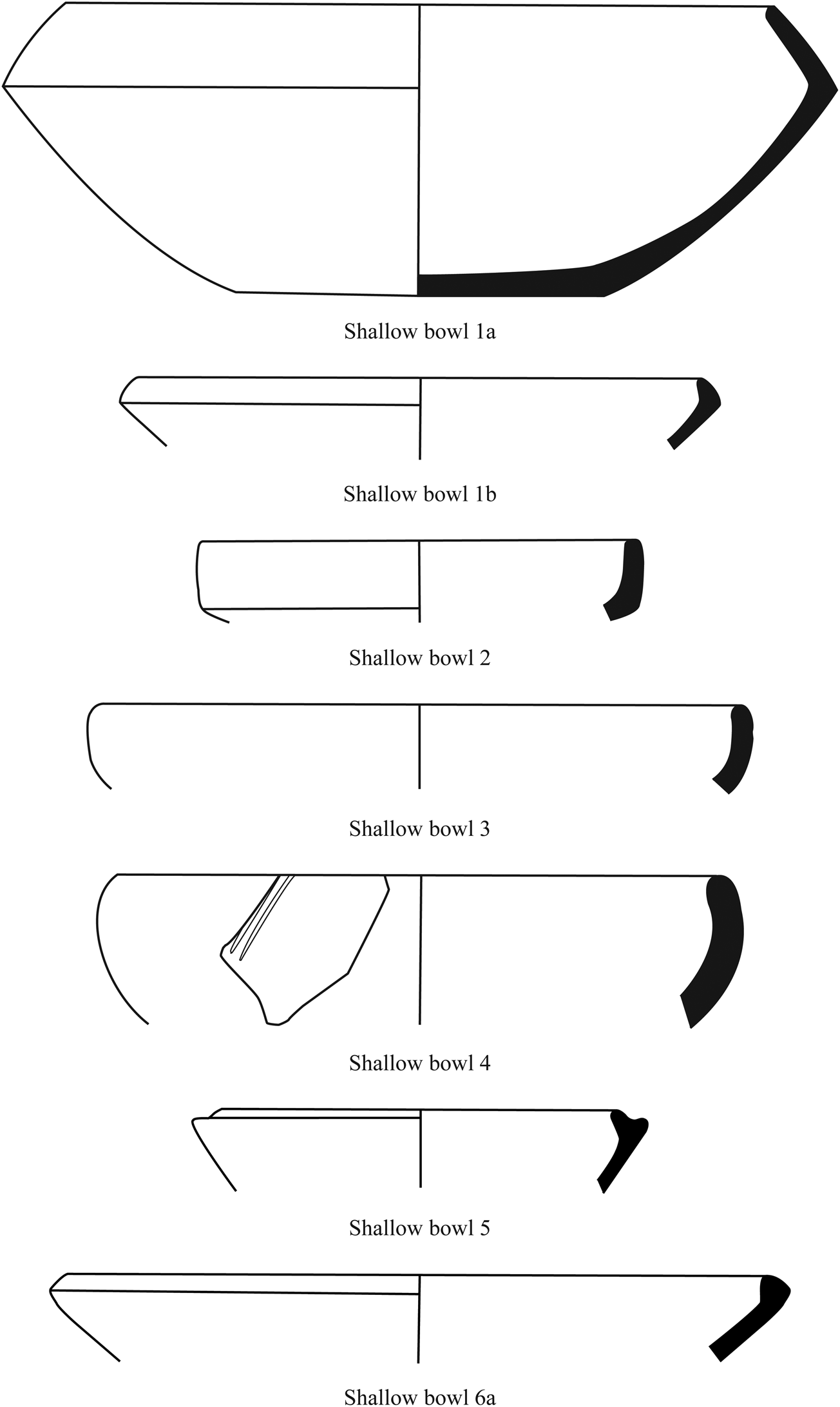
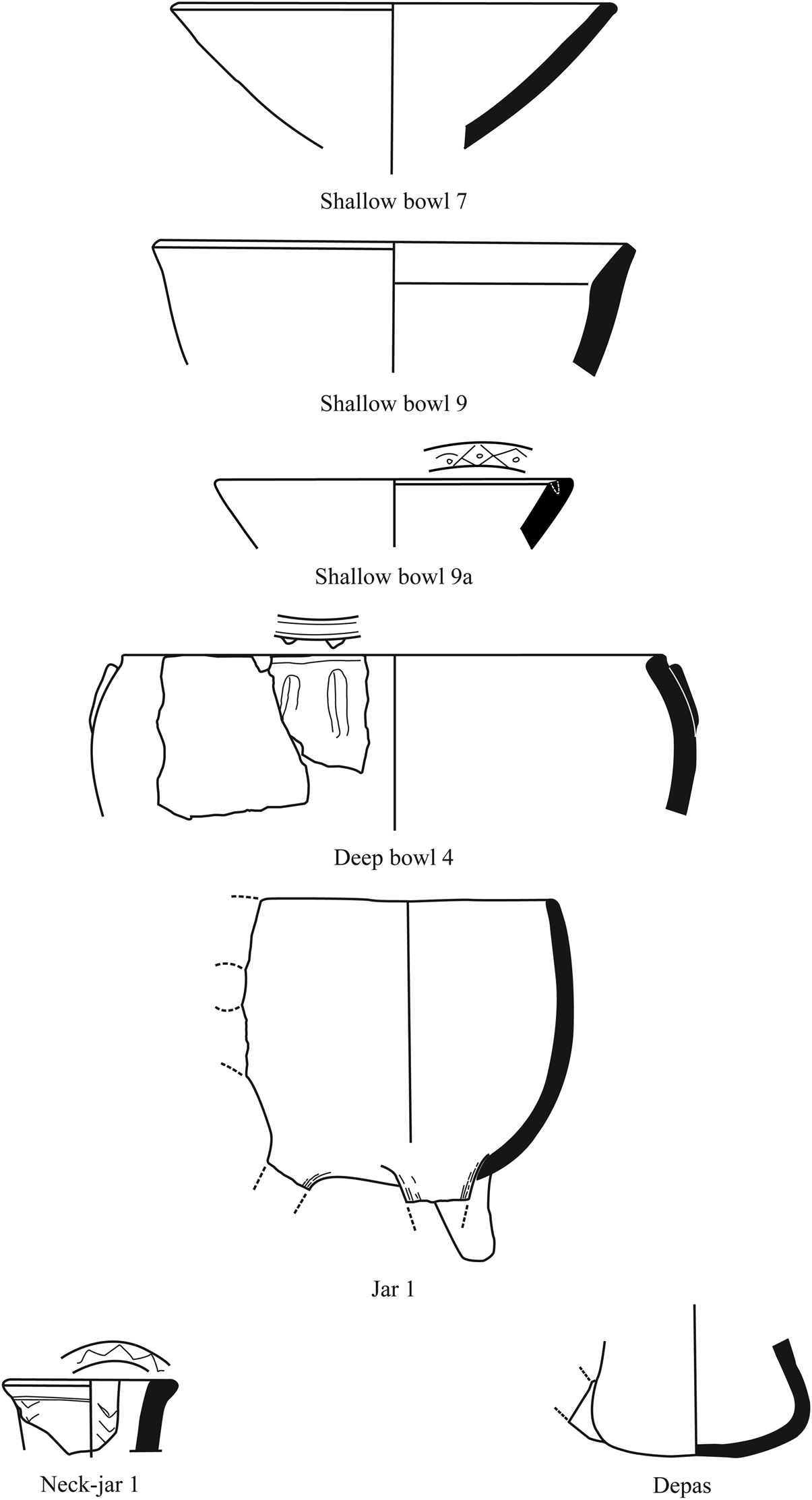
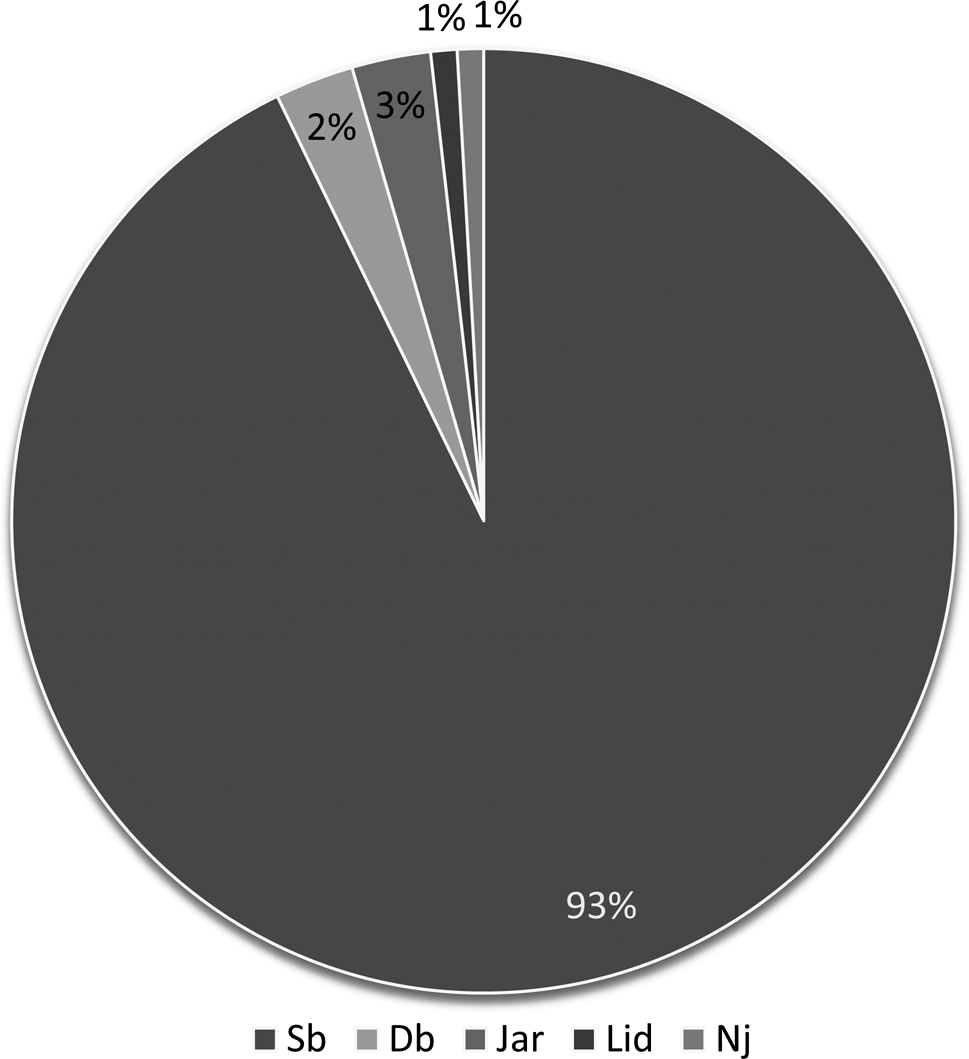
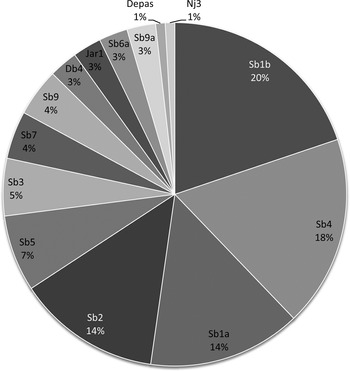
In general, the EBA MRD pottery assemblage includes 10 vessel shapes, based on 174 rim fragments. The most frequently represented shape is the shallow bowl, which comprises 63 per cent of all shapes found, followed by jars and deep bowls. Narrow-mouthed vessels, jugs, amphorae, depas vessels, flasks and pithoi each represent proportionately less than 5 per cent of the overall assemblage. Furthermore, according to their profile, these basic shapes can be subdivided into 35 different vessel types. Due to rather undiagnostic profiles, many fragments and vessel types cannot be assigned to one particular period, but could date to different prehistoric phases. Therefore, the most characteristic and explicit types, typical for the EBA, were selected for more detailed study (see Figs 2–3). This selection is based on the description of fabrics and shapes and the correlation to the photos of Hüyücektepe. After this evaluation, five shapes, including 111 individual pieces, formed the basis of further analyses (Figs. 4–5).
Selected EBA vessel shapes of Madra River Delta (not to scale).

Selected EBA vessel shapes of Madra River Delta (not to scale).

Distribution of selected pottery shapes [n = 111]; Sb: shallow bowl, Db: deep bowl, Nj: neck-jar (M. Röcklinger/OeAI).

Distribution of selected pottery types [n = 111]; Sb: shallow bowl, Db: deep bowl, Nj: neck-jar (M. Röcklinger/OeAI).

This corpus of 111 sherds comprises shallow bowls (93%), deep bowls (2%), jars (3%), a depas vessel (1%) and a neck-jar (1%). The predominant group within the EBA pottery, the shallow bowl, consists of eight different types, and its relative dominance within the assemblage overall can be explained, inter alia, by the distinct profiles which help with the assignment of pieces to this group.
As is to be expected for EBA settlements in western Anatolia, the shallow bowl with inverted rim (Sb1a and b) is the most common type within this group, and can be differentiated in two sub-types. The first sub-type (Sb1a) shows a comparatively long rim, the second one (Sb1b) a generally more common shorter rim. With 22 fragments, the shorter version comprises 20 per cent of the complete assemblage, whilst the long version, with 16 fragments, comprises 14 per cent. The second leading type is the narrow-mouthed shallow bowl (Sb4) which consists of 20 fragments and comprises 18 per cent of the defined assemblage. Other types of shallow bowls include those with a vertical upper body (Sb2), bowls with a flanged rim (Sb5), dome-shaped shallow bowls (Sb3), conical or ‘funnel-shaped’ bowls (Sb7), open-mouthed shallow bowls with inside bevelled rim (Sb9), and its decorated sub-variant (Sb9a), as well as the open-mouthed shallow bowls with an inner, thickened rim (Sb6a).
Jars are represented in two different types: narrow-mouthed tripod cooking pots (Jar 1) and jars with slightly curved walls (Jar 2), with three and four fragments of each, respectively. Although Jar 2 can clearly be assigned to the EBA, this type was excluded from further studies as its profile and shape are not particularly diagnostic and comparative studies would be inconclusive.
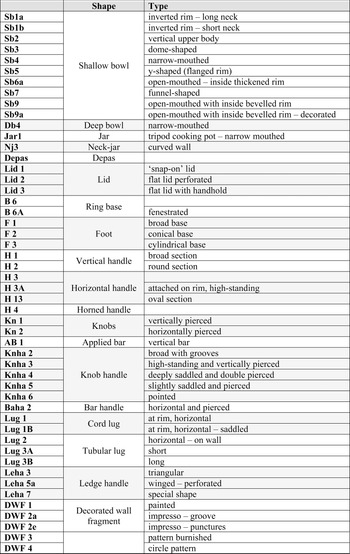
The next shapes are deep bowls, represented in one type (narrow-mouthed deep bowls; Db4), of which there are only three fragments. Two single shapes are the already-mentioned possible depas amphikypellon and the neck-jar. The latter shape could be associated with the so-called Yortan pottery. For the description of the different types, see Fig. 6.
Description of EBA vessel types from the Madra River Delta (M. Röcklinger/OeAI).

Shallow bowls
In this sub-section, all EBA shallow bowl types will be described and discussed, in the sequence of those most prevalent in the MRD pottery assemblage.
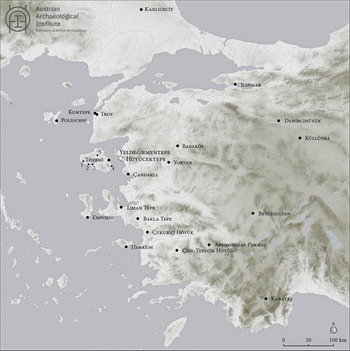
The most frequent shallow bowl type shows a slightly curved wall, an angular shoulder and an inverted rim (Sb1). This type can be differentiated into two sub-types according to the length of their rims. With 22 individual pieces, the version with the short rim (Sb1b) is the most common shape within the MRD assemblage. Type Sb1a is represented by 16 rim fragments. In terms of the distribution of these shallow bowls at the two sites under study (Yeldeğirmentepe and Hüyücektepe), the number of the long version at the Yeldeğirmentepe marginally exceeds the short-rimmed variant (13:9). Within the Hüyücektepe assemblage, the difference is more obvious with a ratio of 3:13 (long:short). With the exception of Çukuriçi Höyük, Çine-Tepecik Höyük, Demircihüyük, Ilıpınar and Karataş, in all compared sites (Fig. 7) both variants are present. For the sites on Lesbos (Fig. 7:1–5) we can conclude that Sb1b is dominant. A possible example of a Sb1a appears at Profitis Ilias (Lambrianides and Spencer Reference Lambrianides, Spencer, Erkanal, Hauptmann, Şahoğlu and Tuncel2008, 348, figs 5:10 and 7). Additional examples for Sb1b are known from Profitis Ilias (Lambrianides and Spencer Reference Lambrianides, Spencer, Erkanal, Hauptmann, Şahoğlu and Tuncel2008, 348, figs 5:12,18 and 6), Chalakies (Lambrianides and Spencer Reference Lambrianides and Spencer1997, 91, fig. 7:1–3) and Makara (Lambrianides and Spencer Reference Lambrianides, Spencer, Erkanal, Hauptmann, Şahoğlu and Tuncel2008, 348, fig. 8a, 8b). Interestingly, no clear chronological difference in the presence of these two sub-types can be attested. Both start during the later part of the Late Chalcolithic (the late fourth millennium bc) and continue uninterrupted into the EBA.
Map showing the main compared sites as well as additional sites on Lesbos (1: Eresos, 2: Makara, 3: Chalakies, 4: Agios Bartholomaios, 5: Profitis Ilias) (M. Röcklinger/OeAI).

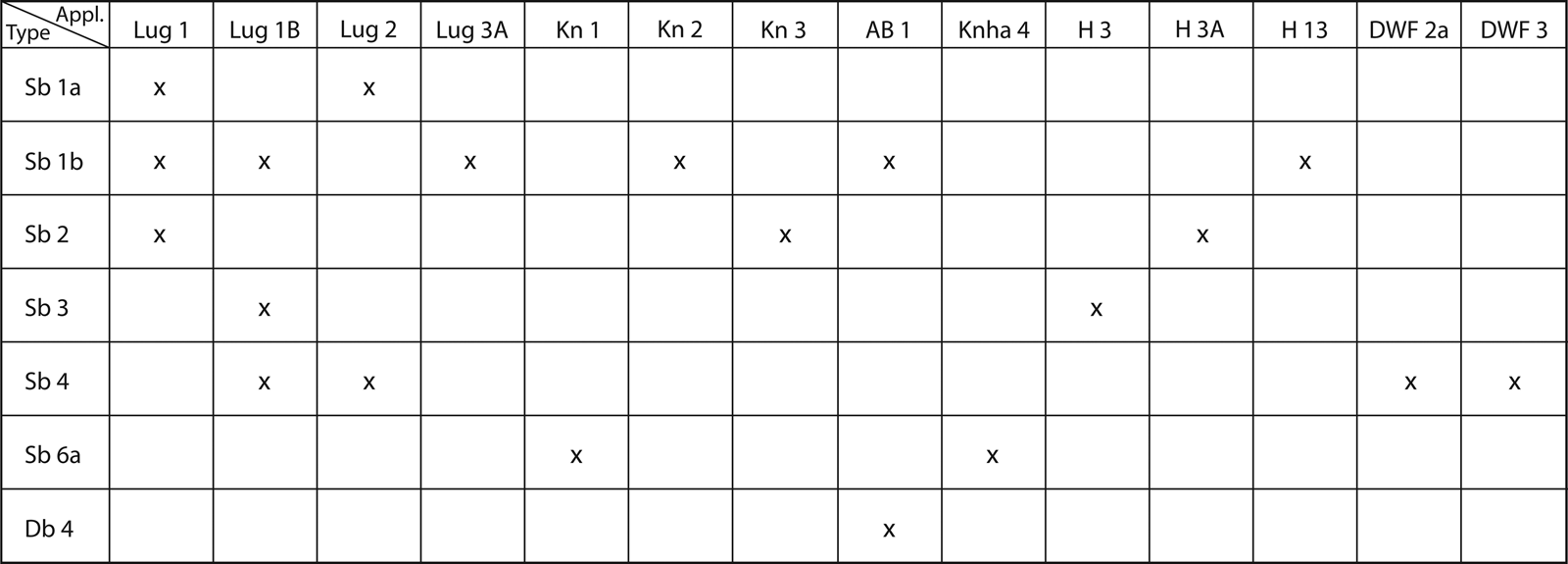
As summarised in Fig. 8, the shallow bowls with the inverted rim from the MRD occur with:
• horizontal lugs on the rim (Lug 1) as well as on the body (Lug 2);
• saddled lugs on the rim (Lug 1B);
• short horizontal lugs on the body (Lug 3A);
• horizontally pierced knobs (Kn 2);
• vertically applied bars (Applied bar 1); and
• horizontal loop handles with an oval cross-section, attached to the rim (H 13).
Comparative material from other sites indicates that the combination of Sb1a with a Lug 1 only appears in the MRD and on Lesbos, where it has been found at Thermi and at Profitis Ilias (Lambrianides and Spencer Reference Lambrianides, Spencer, Erkanal, Hauptmann, Şahoğlu and Tuncel2008, 348, figs 5:8 and 6); and the combination of this shape with a Lug 2 occurs only at Yeldeğirmentepe. Other tubular lugs on Sb1 rims have also been found in the Eresos valley on Lesbos (Schaus Reference Schaus1996, 63, pl. 8). Sb1b shows combinations with five kinds of handles/applications. The most common is the Lug 1B, which is present at Yeldeğirmentepe and Hüyücektepe as well as at Emporio on Chios, the Heraion on Samos, Kanlıgeçit, Kumtepe, Liman Tepe, Poliochni on Lemnos, Thermi on Lesbos and Troy. In turn, the combination with a Lug 3A is only known from Hüyücektepe, Emporio and Troy. The vertically pierced knob (Kn 2) is present at Hüyücektepe, Çukuriçi Höyük, Emporio, Liman Tepe, Thermi, Profitis Ilias (Schaus Reference Schaus1996, 60, pl. 6 bottom) and Makara (Lambrianides and Spencer Reference Lambrianides, Spencer, Erkanal, Hauptmann, Şahoğlu and Tuncel2008, 348, fig. 8a, 8b). The horizontal handle (with oval cross-section; H 13) appears only at Yeldeğirmentepe, Aphrodisias (acropolis trenches 1–2), Emporio and at Thermi (I–II). The uncommon combination with a vertically applied bar (AB 1) is unique and was only found during excavations at Yeldeğirmentepe. On the basis of this vessel shape, and the combination with the different handles, one can see that most comparisons can be found at Emporio (VII–I) followed by Liman Tepe (VI–V), Thermi (I–V) and Troy (I). Other comparisons were found at Çukuriçi Höyük (IV–III), Heraion, Kanlıgeçit (KG 2a–c), Kumtepe (IB4, IC), Poliochni (azzurro evoluto) and Aphrodisias-Pekmez (LC2–BA1/2). We set out detailed literature references for all these comparisons from published studies in our online archive.Footnote 9
Correlation between vessel types and applied handles/applications present at the Madra River Delta (M. Röcklinger/OeAI).

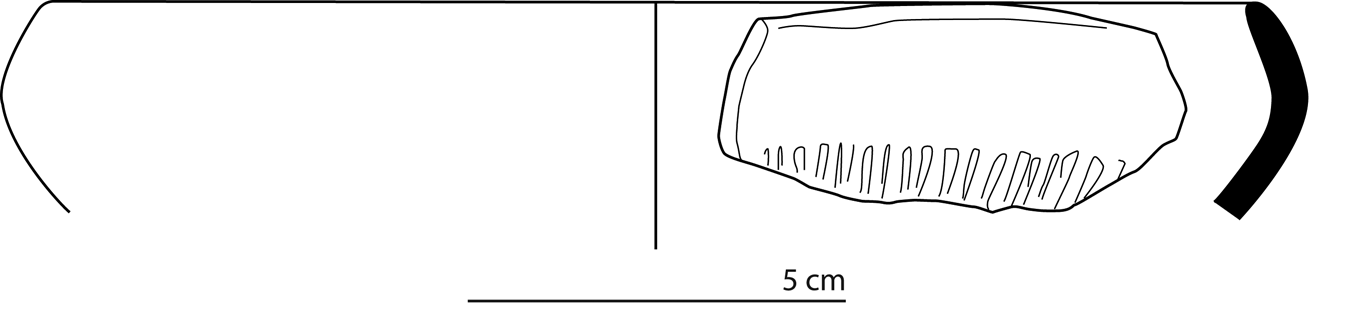
Shallow bowl 4 (Sb4) is narrow-mouthed and has a smooth inverted rim, forming a round convex shoulder (Fig. 2). At Yeldeğirmentepe, 14 fragments were found during excavations and one piece during the intensive surface survey. In the course of the intensive surface survey at Hüyücektepe, five fragments of this type were found. With 20 fragments in total, this type forms the second largest group within the MRD pottery assemblage. Shallow bowls of this type occur in combination with Lug 1B and Lug 2 as well as grooves (type DWF 2a). A particularly interesting piece from Yeldeğirmentepe shows a (possible) very simple pattern-burnished decoration, consisting of parallel lines, on the outside of the bowl (Fig. 9). Usually the tradition of pattern-burnished decoration is characteristic for the Middle Chalcolithic period, dating mainly to the fifth millennium bc, but later finds attest a longer duration at distinct sites in western Anatolia until the fourth millennium bc (Schwall Reference Schwall2018, 251). As the authors did not have the opportunity to examine this sherd in person, it remains unclear whether the example from the MRD exhibits ‘real’ pattern burnishing, common burnishing traces, or even the remains of white paint, and it is hard to support a conclusion of ‘Middle Chalcolithic’ occupation in the MRD on the basis of this single piece. Overall, this shallow bowl shape finds its comparison in many of the compared sites dating to the EBA (see table 2 in our online archive) and therefore is a further indicator of a dating for the two settlements under study to the EBA 1 and 2.
Shallow bowl with possible pattern burnished decoration from the Yeldeğirmentepe excavation (YYT-3-1-003 (#2)) (digital drawing: M. Röcklinger/OeAI).

The shallow bowl with straight sides (Sb2) is present with 15 fragments, nine from Yeldeğirmentepe (six from the excavation, and three from the surface survey) and six from Hüyücektepe. Handles are attested on three individual pieces. One shows a high-standing and vertically pierced knob handle (Knha 3), another exhibits a horizontal cord lug on the rim (Lug 1) and the third one a horizontal, high-standing handle which is attached at the rim (H 3A). If we compare these findings with those from other sites, only one site (Emporio) shows a similar combination of shape and handle. At Emporio (VII–VI) there is an example of a shallow bowl with straight sides, combined with a knob handle 3. Other sites with similar vessel shapes are Aphrodisias-Pekmez (BA 1–2), Beycesultan (BA 1, 3), Chalakies on Lesbos (Lambrianides and Spencer Reference Lambrianides and Spencer1997, 91–2, figs 7, 9) Heraion (EBA 1), Kanlıgeçit (KG2a/b), Karataş, Küllüoba (EBA 1) and Troy II. At Demircihüyük a comparable vessel shape was found in a disturbed layer (Q). As is the case for shallow bowl 4 (Sb4), this Sb2 bowl type is mainly found during EBA phases at the comparative sites.
Shallow bowl 5 (Sb5), which exhibits a flanged rim, is a particularly interesting shape (see Fig. 2). During the excavations and surveys at Yeldeğirmentepe, two fragments of such bowls were found, whilst at Hüyücektepe six more fragments were found during the site's intensive surface survey. In the MRD no handles or applications were found in combination with this shape. Across sites in the broader region, examples of this particular shape are only known from Emporio (V–IV) and Troy I. It is worth noting also that at Emporio only three individual pieces of this type were found in total (Hood Reference Hood1981, 185, type 18), and therefore it is not a shape which can be called ‘typical’ for that site. The lack of occurrences of this shape at other sites like Thermi on Lesbos, directly opposite the MRD, is also noteworthy. Only one possible example of such a shallow bowl was found on the island of Lesbos at Profitis Ilias (Lambrianides and Spencer Reference Lambrianides, Spencer, Erkanal, Hauptmann, Şahoğlu and Tuncel2008, 348, fig. 5:17), although it is not clear whether or not this item is a shallow bowl or a lid. During surveys in the Kaikos valley, type 5 shallow bowls came to light at several sites, as mentioned by J. Driehaus (Reference Driehaus1957, 84, fig. 4:4,8). Their dating to EBA 1 and the restricted geographical distribution lead to the interpretation of a very ‘regionally specific’ vessel type with limited distribution, mainly occurring in the MRD and the Kaikos valley, as well as at Troy.
In contrast to this particular shape, the dome-shaped shallow bowl (Sb3) is more prevalent in different regions and in different periods. The generally undiagnostic and simple nature of its shape makes it impossible to use as a chronological marker, and therefore the technology, ware and surface treatment play a major role in assigning these pieces to the EBA. In the MRD, only six pieces, two from Yeldeğirmentepe and four from Hüyücektepe, were found. One of the fragments from Yeldeğirmentepe was described as wheel made, and at Hüyücektepe two individual pieces exhibit a Lug 1B and one shows a type 3 handle. Examples with similar handles exist at Aphrodisias-Pekmez (BA 2), Emporio (II, V–IV) and Yortan, and, in general, comparable Sb3 bowl types are known at Çukuriçi Höyük (IV–III), Demircihüyük, Emporio (VII–I), Ilıpınar (EBA), Karataş (I–VI), Küllüoba (EBA 1), Liman Tepe (VI), Poliochni (azzurro evoluto), Thermi (I and II) and Troy.
The group of shallow bowl 7 (Sb7), which are conical or ‘funnel-shaped’ bowls, comprises five examples from the MRD (see Fig. 3). Three were found during excavations at Yeldeğirmentepe and one during the survey of the same site, with the last piece deriving from the survey at Hüyücektepe. From the sites under study no applications or handles are attested. Across the broader geographical region, the best comparisons are found at Çukuriçi Höyük (IV), Candarlı (EBA 1), Demircihüyük, Emporio (VII–I), Karataş (I–VI), Küllüoba, Liman Tepe (VI–V), Poliochni (azzurro evoluto), Troy (I and II) and at the Agios Bartholomaios cave on Lesbos (Lambrianides and Spencer Reference Lambrianides, Spencer, Erkanal, Hauptmann, Şahoğlu and Tuncel2008, 347, fig. 4). At this last-mentioned site, the shape was described as a simple shallow bowl which can be dated to the Late Chalcolithic as well as the EBA (Lambrianides and Spencer Reference Lambrianides, Spencer, Erkanal, Hauptmann, Şahoğlu and Tuncel2008, 335, 338).
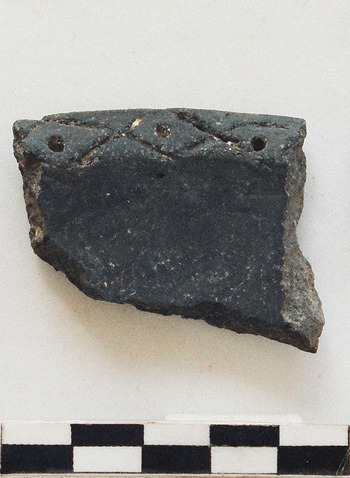
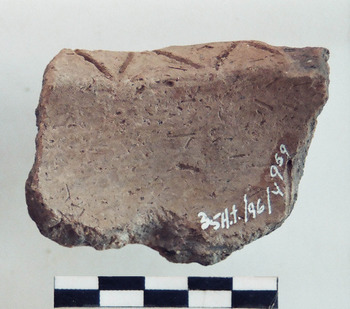
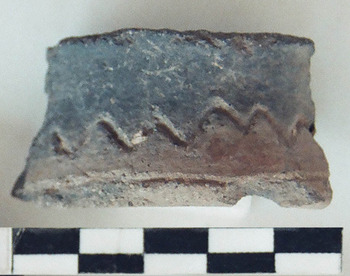
The next common shallow bowl type (Sb9) is an open-mouthed shallow bowl with a bevelled rim inside, and can be differentiated into two sub-types: one undecorated, and a decorated variant. The undecorated group (Sb9) is represented in five pieces, all coming from the Yeldeğirmentepe excavations. The decorated version (Sb9a) consists of three fragments, all deriving from the Hüyücektepe surface survey. Piece 35HT-96-Y416 (Fig. 10) shows rhombic incisions with single deep, round impressions. Traces of white paste indicate some initial incrustation. Object 35HT-96-Y959 (Fig. 11) has simple zig-zag lines and shows no traces of any incrustation. Unfortunately, the third fragment was not drawn or photographed. Therefore, no assessment regarding the decoration can be made. No hand-holds, like the typical vertically pierced knobs, were found, which might be the result of the generally rather small size of the single fragments. Comparative examples for the undecorated variant are known at Çukuriçi Höyük (IV–III), Emporio (II–V), Kanlıgeçit (KG 2a/b), Kumtepe IC 2, Liman Tepe (VI), Poliochni (azzurro archaico), Thermi (III–IV) and Troy (I).
Sb9a from Hüyücektepe (35HT-96-Y416) (photo: The Madra Çay Delta Archaeological Project).

Sb9a from Hüyücektepe (35HT-96-Y959) (photo: The Madra Çay Delta Archaeological Project).

Decorated individual pieces were again found at Çukuriçi Höyük (IV–III), Emporio (V–IV, II), Kumtepe (IC 2, C 1c–d, C1a/B4), Poliochni (azzurro evoluto) Thermi (III) and Troy. Further examples derive from EBA Bakla Tepe and Çukuriçi Höyük Va (Schwall Reference Schwall2018, pls 49:1 and 41:1215), where the decoration is painted and not incised, and Beycesultan (EBA 1). If we take a closer look at the individual patterns, only the zig-zag line finds identical examples elsewhere: in Troy I (Blegen, Caskey and Rawson Reference Blegen, Caskey and Rawson1950, fig. 256:26), Emporio II (and probably Emporio IV) (Hood Reference Hood1982, 443, fig. 199 [no. 1538], 444, fig. 200 [no. 1547], 533, fig. 234 [no. 2354]) and Kumtepe C1a/B4 (Korfmann et al. Reference Korfmann, Girgin, Morçöl and Kiliç1995, 268, fig. 26:5). The rhombic pattern with punctures finds no exact matches within the sites under comparison, although the rhombic pattern is quite common to the EBA stylistic tradition. In general, one can say that this shape becomes a ‘characteristic’ one for the EBA 1 in the east Aegean and western Anatolia (Blegen type A6; Blegen, Caskey and Rawson Reference Blegen, Caskey and Rawson1950, 58; cf. Schwall Reference Schwall2018, 198, 234). Nevertheless, its development can be traced back to the second half of the fourth millennium bc.
The least common shallow bowl is Sb6a, an open-mouthed vessel with a thickened inner rim. At the sites under study only three individual pieces were found, all deriving from the survey at Hüyücektepe. One example shows a vertically pierced knob underneath the rim. Another piece features a deeply saddled and double-pierced knob handle, sitting on the wall. Comparisons for this type are known from Aphrodisias-Pekmez (LC 3), Beycesultan (EBA 1), Emporio (VII–VI and I), Kanlıgeçit (KG 2a/b), Kumtepe (IB 4), Liman Tepe (VI) and Troy (I). According to the chronological assignment of the comparative examples, this shape dates to the transition of the ‘Late Chalcolithic’ to the EBA 1 period, fitting well the proposed dating of the two sites in the MRD.
Overall, the shallow bowls in the MRD assemblage exhibit the typical pattern for sites with an EBA occupation in western Anatolia. So-called Knickrandschalen (Sb1) are common in western Anatolia and are mostly made of dark brown, grey or even black fabrics, as one would expect for EBA settlements. Since these shapes are relatively long-lived, starting already in the late fourth millennium (the ‘Late Chalcolithic’ period), a chronological assignment of the sites cannot be based solely on this vessel shape (cf. Schwall Reference Schwall2018, 234; Weninger Reference Weninger, Rüstem, Blum, Kastl, Schweizer and Thumm2002, 1050, fig. 5). Other important indicators for the dating of the settlements are the Sb5 and Sb9 shapes, which appear predominantly during EBA 1 elsewhere. Another important hint for the dating of the MRD ceramics is their technological method of production. Almost all of the presented shapes (except Sb6a and Sb9a) include some wheel-made, or at least slow wheel-made, sherds within the material under study, strongly indicating an occupation of the sites until EBA 2.
In terms of the regional connections visible, the shallow bowls with flanged rims indicate a strong ‘local’ horizon for the MRD's sites, since these shapes do not occur outside the MRD and the Kaikos valley (with the exceptions of a limited number of examples at Emporio and Troy). The absence of this remarkable and easily recognisable vessel type at Thermi is particularly noteworthy, and could possibly indicate a more remote connection between the island of Lesbos and the MRD than had been previously assumed (Lambrianides and Spencer Reference Lambrianides, Spencer, Erkanal, Hauptmann, Şahoğlu and Tuncel2008, 342).
Deep bowls
Deep bowls are, like shallow bowls, open-mouthed vessels with their greatest expansion at the rim. In contrast to shallow bowls, deep bowls are generally higher and can show a more strongly structured profile. Within the material under study in the MRD, several deep bowl types were differentiated, but only one could be assigned to third-millennium material culture with certainty. Deep bowl 4 shows, like shallow bowl 4, a narrow mouth with a rounded shoulder. A few examples of this shape were described as ‘large diameter bowls’ in the catalogue, already indicating a difference to the comparable small, shallow bowls also attested. It is important to mention that, since only short parts of the profiles are preserved, and the overall shape of the walls has to be reconstructed, the classification as a ‘deep bowl’ has to remain open to interpretation for some of the pieces found.
Within the MRD pottery assemblage, only three deep bowl fragments were found, coming from the excavation material at Yeldeğirmentepe. One example of this shape is YYT-3-2-008 (#1) (MRD cat. fig. 34) and exhibits two vertical bars attached slightly underneath the rim. Another catalogued example was described as showing a buff-grey surface and a brick-red ceramic core, which might indicate a later dating for this example (10YT/96/38; MRD cat. fig. 54). However, since no photo is available for this latter example, a more precise dating is not possible.
It is noteworthy also that, outside the MRD, no directly comparative examples were found for this particular shape across other sites in western Anatolia or in the east Aegean, although other bowl-shapes with inward-leaning rims exist. In comparison, shallow bowls of similar shape are more common (Hood Reference Hood1981, 367, fig. 166; Schaus Reference Schaus1996, 62).
Jars
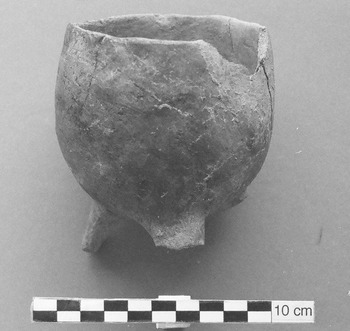
During the field work in the MRD, four different jar types were identified. As noted above for the deep bowls, only one type could clearly be assigned to the EBA. The others exhibit a less definitive profile and cannot be associated to a particular period with certainty. There are three examples of the type Jar 1, a narrow-mouthed tripod cooking pot. One of these is a very well-preserved example (Fig. 12) showing the fully preserved wall and the (broken) legs with an oval to broad cross section. As shown on the original drawing (Lambrianides and Spencer Reference Lambrianides, Spencer, Erkanal, Hauptmann, Şahoğlu and Tuncel2008, 353, fig. 21), a vertical handle, attached to the rim, is assumed for this vessel. Tripod cooking pots in general are very common during the EBA and can appear in different sizes and shapes. This particular type finds its best comparisons at Aphrodisias-Pekmez (BA 1), Demircihüyük (EBA), Thermi and Troy (I). However, since this type is a relatively unusual one, further statements about its chronology or (inter-)regional parallels cannot be made solely from this jar type.
Well preserved tripod cooking pot from the Yeldeğirmentepe excavations (YYT-1-057-1) (photo: The Madra Çay Delta Archaeological Project).

Depas amphikypellon
The already-mentioned fragment of a possible depas vessel consists of a small, slightly convex base and the attachment of a vertical handle with probable round cross section. Unfortunately, no description was available for this piece. The issue of its fabric, style, colour and surface treatment therefore remains open. Since the original drawing depicted only one handle and no photographs are available, it is unclear whether this fragment really shows a depas vessel or is, instead, another kind of cup or tankard. Comparisons with depas vessels have shown that the bottoms are usually flat with a rather angular transition to the body. Only one particular vessel from Troy V (Blegen, Caskey and Rawson Reference Blegen, Caskey and Rawson1951, 242, A41) showed a similar shape to this vessel fragment. This Troy V example is described as a ‘tankard, resembling an hourglass in profile, with broad flat bottom [with] narrow waist […]; single handle curving from rim to lower part of body’ (Blegen, Caskey and Rawson Reference Blegen, Caskey and Rawson1951, 242–3), which summarises well the vessel from Yeldeğirmentepe. Although no further comparative examples are available from other sites, this object suggests an occupation of the site at least during EBA 2 or even later.
Miscellaneous
Aside from the presented vessel types, several other EBA objects, ranging from lids to particular vessel parts (bases, handles and knobs) were found during the investigations in the MRD.
Lids
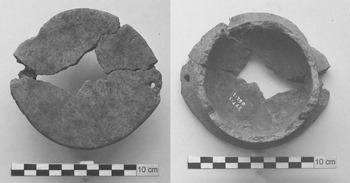
At Yeldeğirmentepe, one well-preserved lid was found during the excavations (Fig. 13). It is an approximately circular lid with a protruding, double pierced cover plate (Lid 1), finding its best comparisons at Babaköy, Emporio (V–IV), Karataş, Thermi (II–IV) and Troy (II). Generally speaking, ‘snap-on’ lids in different variants are very common during the EBA in western Anatolia.
Snap-on lid from the Yeldeğirmentepe excavation (YYT-1-062-1 Ben) (photo: The Madra Çay Delta Archaeological Project).

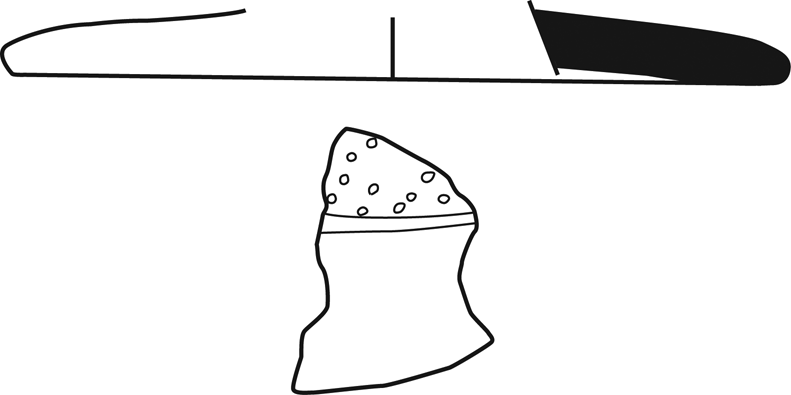
At Hüyücektepe, three flat lids were found. The first is an example of Lid 2, a simple flat lid with a central knob and two drillings facing each other. Comparable types have been found at Beycesultan, Liman Tepe (VI), Thermi and Troy (I, III). The third lid type (Lid 3, generally described as a flat lid with handhold[s]) was found twice at Hüyücektepe. However, since both of these lids are not fully preserved, a more precise assignment to a particular lid type within this broad definition is not possible. The first example of this Lid 3, 35HT/96/Film 31/Drawing [Çizim] 70 (MRD cat. figs 67, 81), shows one fully preserved central knob and four decussated bases (arranged in opposite pairs) for further applications. Similar handle settings on flat lids were found with four-armed crown-handles or lids with four high-pointed lugs (both found at Troy I; Blegen, Caskey and Rawson Reference Blegen, Caskey and Rawson1950, 74, F11 and 75, F18). For the MRD Lid 3, crown-handles with a central knob are most likely. The second Lid 3 example is preserved only as a small fragment and was described as a possible pedestal foot/base (Fig. 14). According to the drawing, this particular piece could either be the base of a so-called ‘fruit stand’, a predominant shape at Poliochni, or a flat, decorated lid. Since the sherd's horizontal curvature is not depicted in the drawing and also is not visible in the photo, no clear statement about the overall shape can be made. Furthermore, unless one has a significant enough state of preservation, lids and bases of ‘fruit stands’ can look very similar. According to the Poliochni vessels, the pedestals are rarely decorated with incised line patterns (Bernabò-Brea Reference Bernabò-Brea1964, pl. XXIa–j). The fragment of Hüyücektepe, in contrast, shows an incised, probably concentric, line and round punctures toward the middle of the object. As already mentioned, the ‘fruit stand’ is typical for Poliochni, but as Podzuweit (Reference Podzuweit1979, 135) already summarised, no fragments of such a shape have been found in Troy or Thermi. Given the fact that the ‘fruit stand’ does not appear in the region and rarely has this style of decoration, it seems very unlikely that this fragment represents the first example of a ‘fruit stand’ for this area. The interpretation as a lid therefore seems most likely.
Lid or ‘fruit stand’ base from Hüyücektepe (35HT-96-X271) (digital drawing: M. Röcklinger/OeAI).

Bases
In general, vessel bases are usually rather undiagnostic and therefore not easy to assign to any one particular chronological period. In the MRD assemblage, seven different base types were classified. However, only one type and its sub-variant (the pedestal base and its fenestrated variant) represent base types which enable a more specific chronological assignment.
The fenestrated ring base (B6 A) is of particular interest. The shape appears during the ‘Middle Chalcolithic’ period (Schwall Reference Schwall2018, 254), being found from the fifth millennium bc onwards, and during the EBA examples are associated with shallow bowls with an inverted rim (Knickrandschalen), simple dome-shaped bowls or the shallow bowl type Sb9/9a (as at Troy I; Blegen, Caskey and Rawson Reference Blegen, Caskey and Rawson1950, 59, A7 and 61, A13). From the MRD fieldwork, two fragments from the Hüyücektepe surface survey can be categorised as B6 A bases (Fig. 15). The first one, 35HT/96/Y226 (MRD cat. figs 68, 78, Drawing [Çizim] 23), is made of a hard and gritty fabric with small gritty inclusions, and shows a black surface and core. The shape is short and undecorated with round fenestrations. The second example, 35HT/96/Y819a-b (MRD cat. figs 68, 90, Drawing [Çizim] 182), is also made of a hard and gritty fabric with small inclusions, and, as with the first example, its surface and core are black. In contrast to the first mentioned example, this second pedestal example is higher and decorated with incised zig-zag lines at the base and a field filled with herringbone pattern on the shaft, filling the space between the fenestrations. A third fenestrated pedestal is only known from a photo. Unfortunately, there is no object number, and, therefore, no further information is available. Comparisons for fenestrated pedestals are known from Demircihüyük, Emporio, Küllüoba (especially from phase VI; Efe and Ay Reference Efe and Ay2000, 15 and 40, pl. 1), Poliochni and Troy.
Fenestrated pedestals from Hüyücektepe (left: 35HT-96-Y819a-b; middle: unknown; right: 35HT-96-Y226) (photo: The Madra Çay Delta Archaeological Project).

The ‘basic’ version of this base type (ring base type B6) is represented by two examples at Hüyücektepe. The first is a simple and low ring base. The second example shows a pedestal with grooved decoration (35HT/96/Z618) (Fig. 16; MRD cat. figs 68, 89, Drawing [Çizim] 168). At the lower part, a horizontal simple grooved line is visible. A wavy line, worked in the same technique, is located above it. Although no exact comparisons were found for this latter fragment, other decorated pedestals were found at Thermi (III–IV) and Troy (I). At Thermi, the pedestal exhibits an incised lozenge pattern, covering the whole base (Lamb Reference Lamb1936, 117, 306, pl. X:306). At Troy, object 37.1140 is decorated with a zig-zag band, forming dot-filled triangles pointing downwards and a band of chevrons pointing to the right (Blegen, Caskey and Rawson Reference Blegen, Caskey and Rawson1950, 124, fig. 224 [no. 37.1140]). At Yortan, decorated pedestals are often combined with globular jars (Orthmann Reference Orthmann1966, fig. 6:49; Kamil Reference Kamil1982, fig. 33:77–9), although, as already mentioned above, the example from Hüyücektepe supported a pedestal-bowl. Given the size of the Hüyücektepe base 35HT/96/Z618 and other known comparable bases, it is more likely that the MRD example once supported a pedestal-bowl rather than a globular jar, with examples of such pedestals known from Aphrodisias-Pekmez (BA 1–2), Emporio (VII–II), Kanlıgeçit (KG 2a/b), Kumtepe (IC 2), Poliochni (nero, azzurro archaico), Thermi (III–IV), Troy and Yortan.
Decorated pedestal from Hüyücektepe (35HT-96-Z618) (photo: The Madra Çay Delta Archaeological Project).

Small finds
Spindle whorls
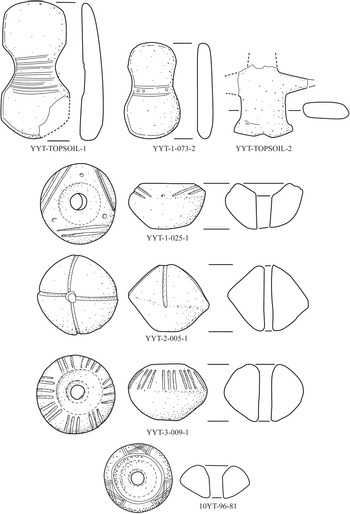
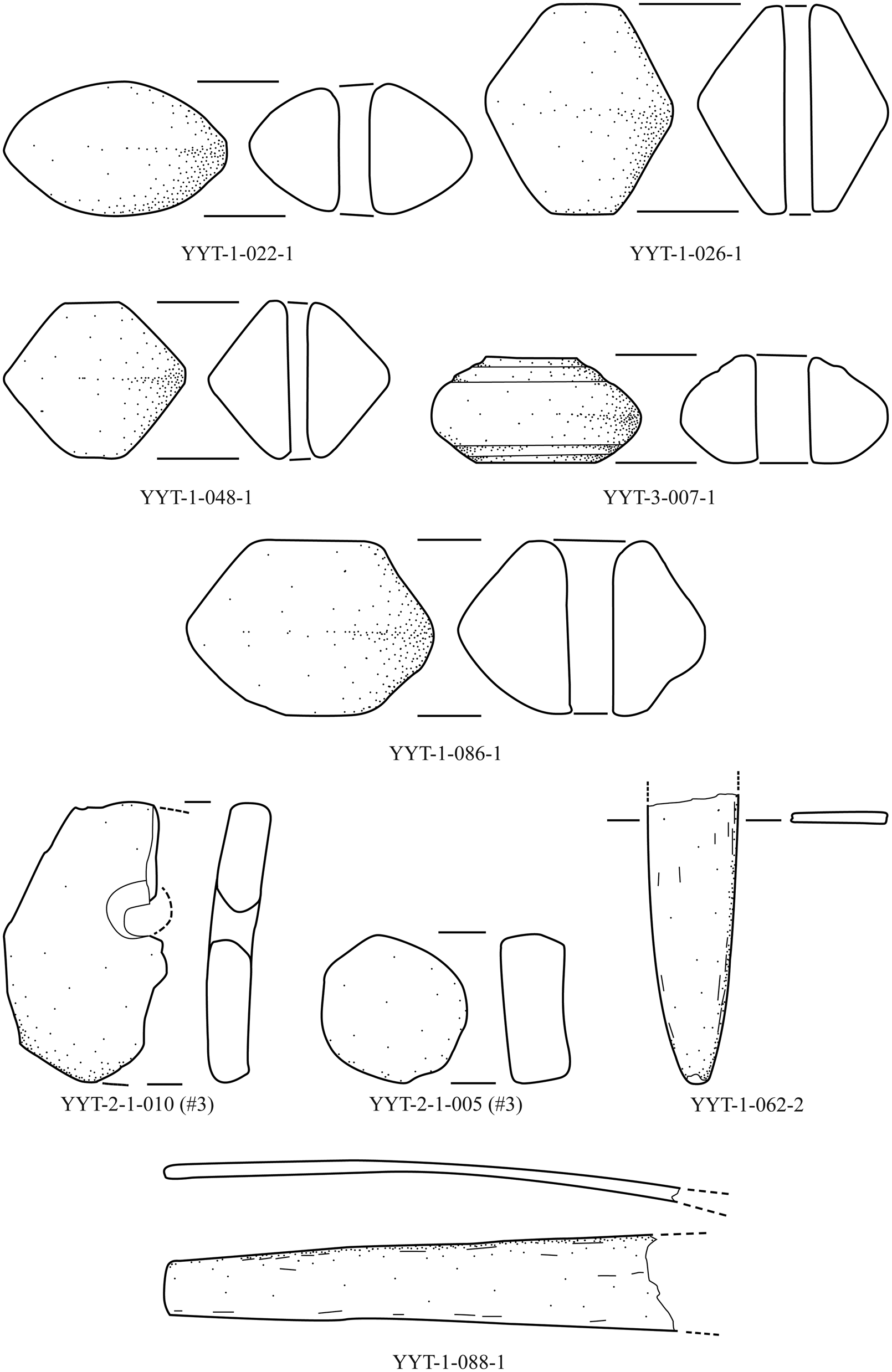
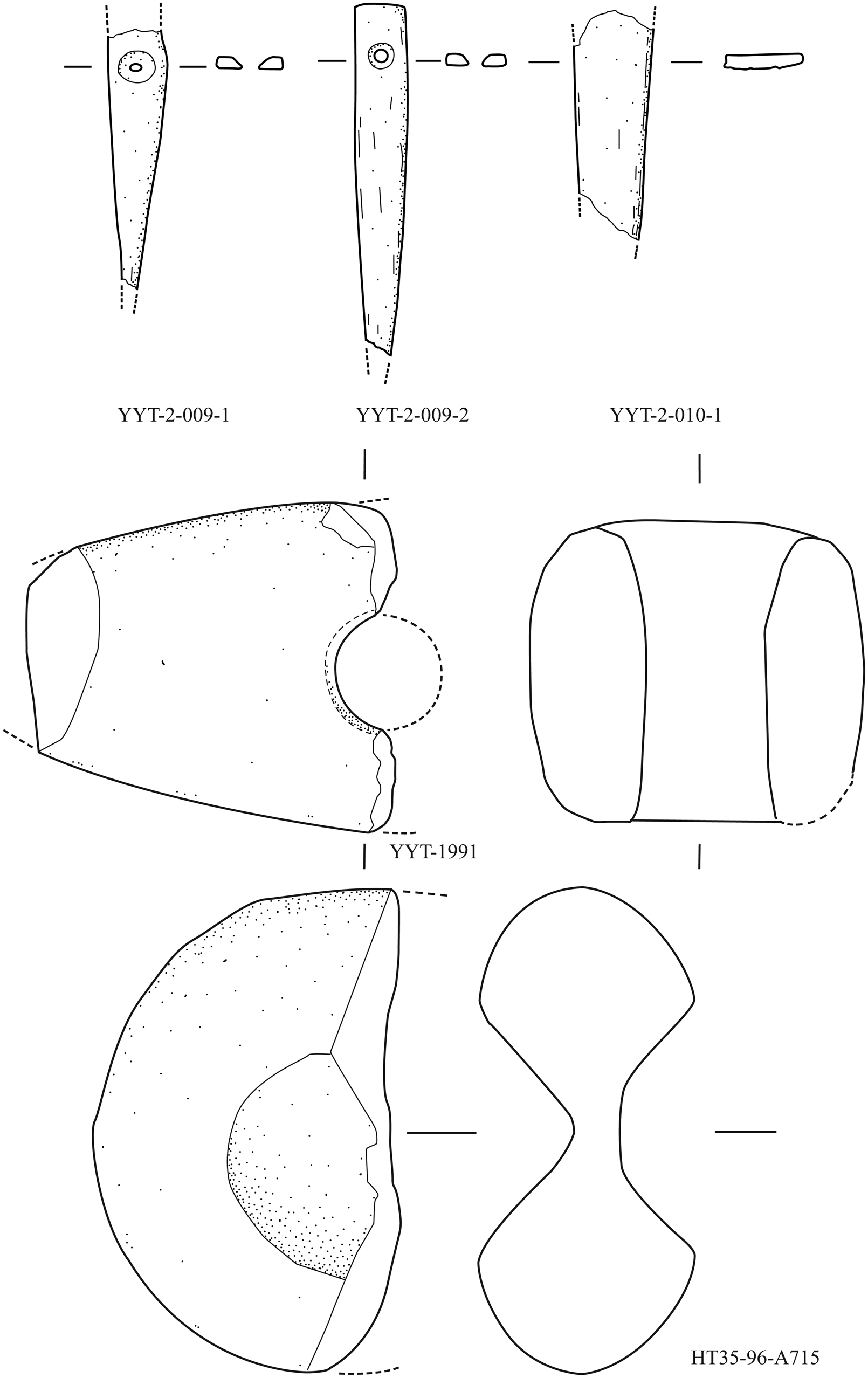
During the excavations at Yeldeğirmentepe, 19 small finds were recorded (see Figs 17–19), the majority of which (nine individual pieces) are spindle whorls of different types. According to their shape, three typological groups can be differentiated.
Madra River Delta small finds (1:1).

Madra River Delta small finds (1:1).

Madra River Delta small finds (1:1).

The most frequently occurring is the biconical whorl (type I), which can be subdivided into three variants:
• Type IA, is of regular biconical shape with a greater height than diameter (YYT-1-026-1).
• Type IB is of regular shape with a more evenly distributed height-diameter ratio (YYT-1-048-1).
• The last type (IC) is of more roundish, or slightly irregular, shape (YYT-2-005-1, YYT-3-009-1, YYT-1-048-1).
The second type (II) shows a flat rounded biconical shape (YYT-1-022-1, YYT-3-007-1) and the last spindle whorl type (III) is of conical shape with a wide opening/depression on the upper side (YYT-1-025-1) forming an almost heart-shaped cross-section. During the intensive surface surveys, one type III spindle whorl was found at Yeldeğirmentepe (10YT-96-81).
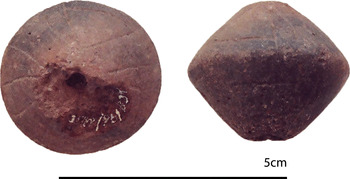
At Hüyücektepe, another example of a biconical spindle whorl was found during the surface survey (Fig. 20) which, on account of its colour, shape and the style of decoration (incised lines and punctures), fits well to the documented types from Yeldeğirmentepe. A second spindle whorl from Hüyücektepe (35HT-96-B70), the precise shape of which is not recorded, was described as being of buff-grey clay with medium and small mica and calcite inclusions, and with a burnished (but not decorated) surface.
Spindle whorl from Hüyücektepe survey (photo: The Madra Çay Delta Archaeological Project).

Four out of the nine spindle whorls from Yeldeğirmentepe are decorated with incised lines on the upper side.
Of type IC whorls, two individual examples are decorated. The example from the Yeldeğirmentepe excavation YYT-2-005-1 shows four cross-positioned lines, starting from the central perforation and going to the width/transition of the whorl. Whether these lines were used as cord grooves, to stabilise the whorl on the spindle, or as simple decoration cannot be determined, as no further information about the surface, abrasion or preservation is available. If these lines are cord grooves, the spindle would have been used ‘upside down’, and the lines would therefore be on the lower part of the object. The interpretation of the lines as decorative can be supported by an example from Emporio II (Hood Reference Hood1982, 639, fig. 288:24) which shows a similar decoration of four lines combined with fields filled with punctures. The other decorated example from the Yeldeğirmentepe excavation (YYT-3-009-1) shows vertical bundles of three to four lines, covering the upper part of the whorl. Comparable decoration styles are known from Beycesultan VI (Lloyd and Mellaart Reference Lloyd and Mellaart1962, 278 and fig. F.6:I) and Aphrodisias BA 4 (Joukowsky Reference Joukowsky1986, 386, fig. 312:11).
The other two decorated spindle whorls from Yeldeğirmentepe belong to type III. The simpler decoration (YYT-1-025-1) shows three round impressions, positioned in a triangular fashion around the central perforation. The fields between these show pairs of lines, parallel to the ‘point-triangle’. A similar decoration was found at Troy (Blegen, Caskey and Rawson Reference Blegen, Caskey and Rawson1950, fig. 367:35–277) dating to Troy IId–g.
The most complex decorated whorl comes from the Yeldeğirmentepe survey (10YT-96-81) and shows two concentric circles with three filled fields attached to them. Those are surrounded by a set of three parallel lines on their sides and are filled with two groups of three lines each, intersecting at the centre of the field.
The fabric of the decorated whorls was described as ‘dark burnished, of typical Thermi/Troy I fabric’ (Lambrianides and Spencer Reference Lambrianides, Spencer, Erkanal, Hauptmann, Şahoğlu and Tuncel2008, 340–1 and fig. 20), giving information about the appearance and the dating of these objects to the EBA. Further information regarding the texture, colour or weight were not recorded in the catalogue, and, therefore, no particular statement about the technological aspects of those objects can be made.
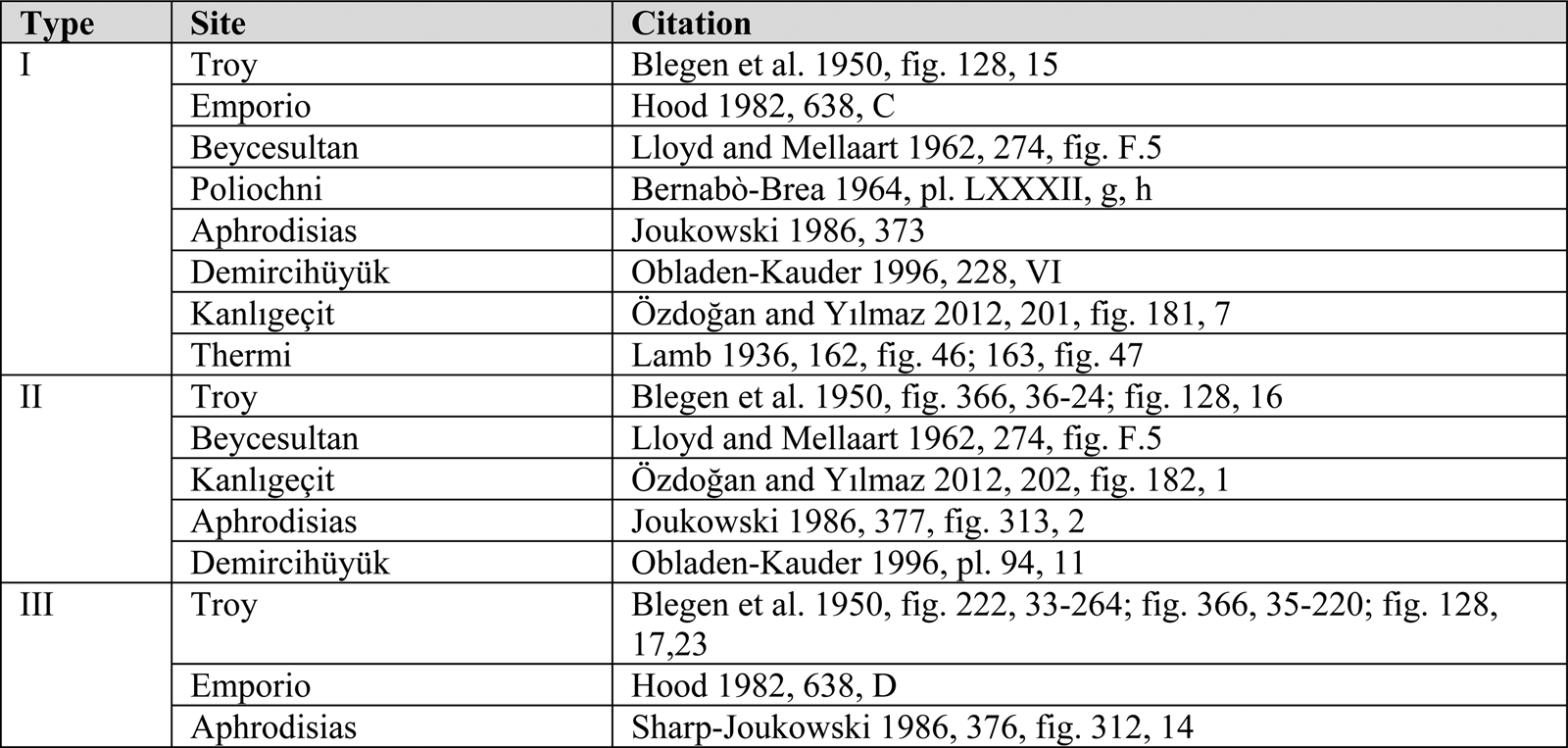
Studies by Ch. Britsch showed that the technical features of EBA spindle whorls from western Anatolia have an overall framework in relation to their weight (Britsch and Horejs Reference Britsch and Horejs2014, 231). Biconical spindle whorls (in all their facets) were the prevailing shape during the EBA in western Anatolia (i.e. Blegen, Caskey and Rawson Reference Blegen, Caskey and Rawson1950; Lloyd and Mellaart Reference Lloyd and Mellaart1962; Völlig Reference Völlig2008; Britsch and Horejs Reference Britsch and Horejs2014, 231), but also the other types present at the two sites under study are also well known in that period (see Fig. 21).
Spindle whorl types from Yeldeğirmentepe and selected comparable finds with references (M. Röcklinger/OeAI).

Figurines
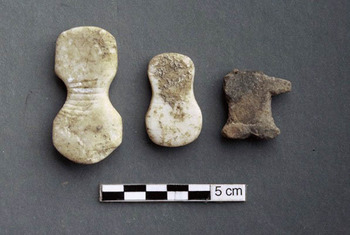
Other notable small finds from Yeldeğirmentepe are three figurines, of which one is made of clay and two of marble (Fig. 17) (Lambrianides and Spencer Reference Lambrianides, Spencer, Erkanal, Hauptmann, Şahoğlu and Tuncel2008, 352 and fig. 18:1–3). Both marble figurines are flat and of rather simple abstract shape, typical for the EBA (Atakuman Reference Atakuman2017, 87). For Troy, Blegen defined them as type 2 (Blegen, Caskey and Rawson Reference Blegen, Caskey and Rawson1950, fig. 127), where they are described as flat figures with ‘head and body […] separated only by lateral notches or indentations’ (Blegen, Caskey and Rawson Reference Blegen, Caskey and Rawson1950, 27). Both examples from Yeldeğirmentepe show incised horizontal lines and, in one case (YYT-1-073-2, Fig. 22 middle), additional round punctures, supporting the optical division of body and head.
Figurines from Yeldeğirmentepe (left and middle: marble; right: clay) (photo: The Madra Çay Delta Archaeological Project).

Blegen noted that at Troy these idols are ‘fairly common [and] usually of marble’ (Blegen, Caskey and Rawson Reference Blegen, Caskey and Rawson1950, 27), and, although these idol types are not of the characteristic violin-shape from the Cyclades, Blegen did see affinities with Aegean types (Blegen, Caskey and Rawson Reference Blegen, Caskey and Rawson1950, 211). Comparable examples derive, for example, from Thermi II (Lamb Reference Lamb1936, pl. XXVI:31.98), Emporio (Hood Reference Hood1982, 630, fig. 285:10,15), Beycesultan ‘X(?)’ (Lloyd and Mellaart Reference Lloyd and Mellaart1962, pl. XXXII:4; 272, fig. F.4:9) as well as Troy I, where it was the most frequent figurine type (Blegen, Caskey and Rawson Reference Blegen, Caskey and Rawson1950, 37).
Both the marble figurines described here from the MRD derive from the excavations at Yeldeğirmentepe. One (Fig. 22 middle; YYT-1-073-2) was found in a secure EBA context. The other one (Fig. 22 left; YYT-TOPSOIL-1) came from the ‘disturbed deposits near the top of the trench’ (Lambrianides and Spencer Reference Lambrianides, Spencer, Erkanal, Hauptmann, Şahoğlu and Tuncel2008, 340). Nevertheless, a dating to the EBA 1/2 for both of the ‘figure-of-eight’ shaped idols can be assumed (Takaoğlu Reference Takaoğlu and Şahoğlu2011, 160). The clay figurine (Fig. 22 right; YYT-TOPSOIL-2) was also found in disturbed upper layers. Due to the particular shape of the legs, which suggests a ‘sitting’ figurine, and the unknown shape and style of the ‘head’ (which is missing), no directly comparable examples were found. In general, schematic figurines are already known from the Early Chalcolithic (Schwall and Horejs Reference Schwall and Horejs2017, 58) and are used until the EBA and even later (Erkanal and Şahoğlu Reference Erkanal, Şahoğlu, Bingöl, Öztan and Taskiran2012). Figurines made in clay, typical for previous periods, reappear in the late EBA 1 and become more common in the EBA 2 (Efe and Turkteki Reference Efe, Turkteki and Şahoğlu2011, 228). Therefore, no clear statement about the dating and the typological assignment can be made for this individual piece, although the clay used indicates a dating to the EBA (Lambrianides and Spencer Reference Lambrianides, Spencer, Erkanal, Hauptmann, Şahoğlu and Tuncel2008, 340).
Other small finds
Other objects made of clay are a pierced (YYT-2-1-010 (#3)) and an unpierced (YYT-2-1-005 [#3]) disk, both found during the Yeldeğirmentepe excavations (Fig. 18; YYT-2-1-010 [#3],YYT-2-1-005 [#3]). The former is broken in approximately its half, and is of oval shape, whilst the latter is of round shape. Both discs were produced from vessel sherds, which can be seen in the curvature of the objects. Discs are widespread and appear in different periods, at Demircihüyük, for example, at least from the Neolithic to the Middle Bronze Age (Kull Reference Kull1988, 208–10). The use and function of these objects is often discussed, and suggestions made include pendants, labels, lids, a stop for a drill, net-sinkers or spindle whorls (Obladen-Kauder Reference Obladen-Kauder, Baykal-Seeher and Obladen-Kauder1996, 224). The last-mentioned use is the most common interpretation, although this view is not undisputed (Britsch and Horejs Reference Britsch and Horejs2014, 234). However, irrespective of the function of these discs, they constitute an integral part of an EBA ‘toolkit’.
In the Yeldeğirmentepe excavations, five bone tools were also found, objects which are often connected to textile production (Figs 18–19). Two of these tools can be described as a spatula (YYT-1-062-2, YYT-1-088-1), another two as pierced needles (YYT-2-009-1, YYT-2-009-2) and the last one (YYT-2-010-1) cannot be assigned to a particular type due to its state of preservation.
The last small find to mention from survey work at Yeldeğirmentepe is the butt end of an axe (Fig. 19; YYT-1991). Unfortunately, except a drawing, no further information was recorded for this find. A literature review of such shapes revealed similar objects in Thermi (Lamb Reference Lamb1936, 183, figs 53:30.9,184 and 54:32.23), Beycesultan (EBA) (Lloyd and Mellaart Reference Lloyd and Mellaart1962, 270, fig. F.3:4) and Poliochni azzurro evoluto (Bernabò-Brea Reference Bernabò-Brea1964, pls C:1,3 and CI:5).
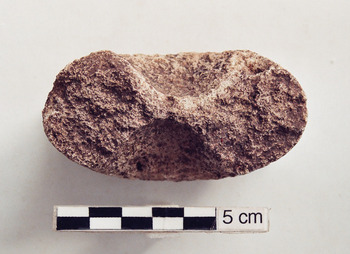
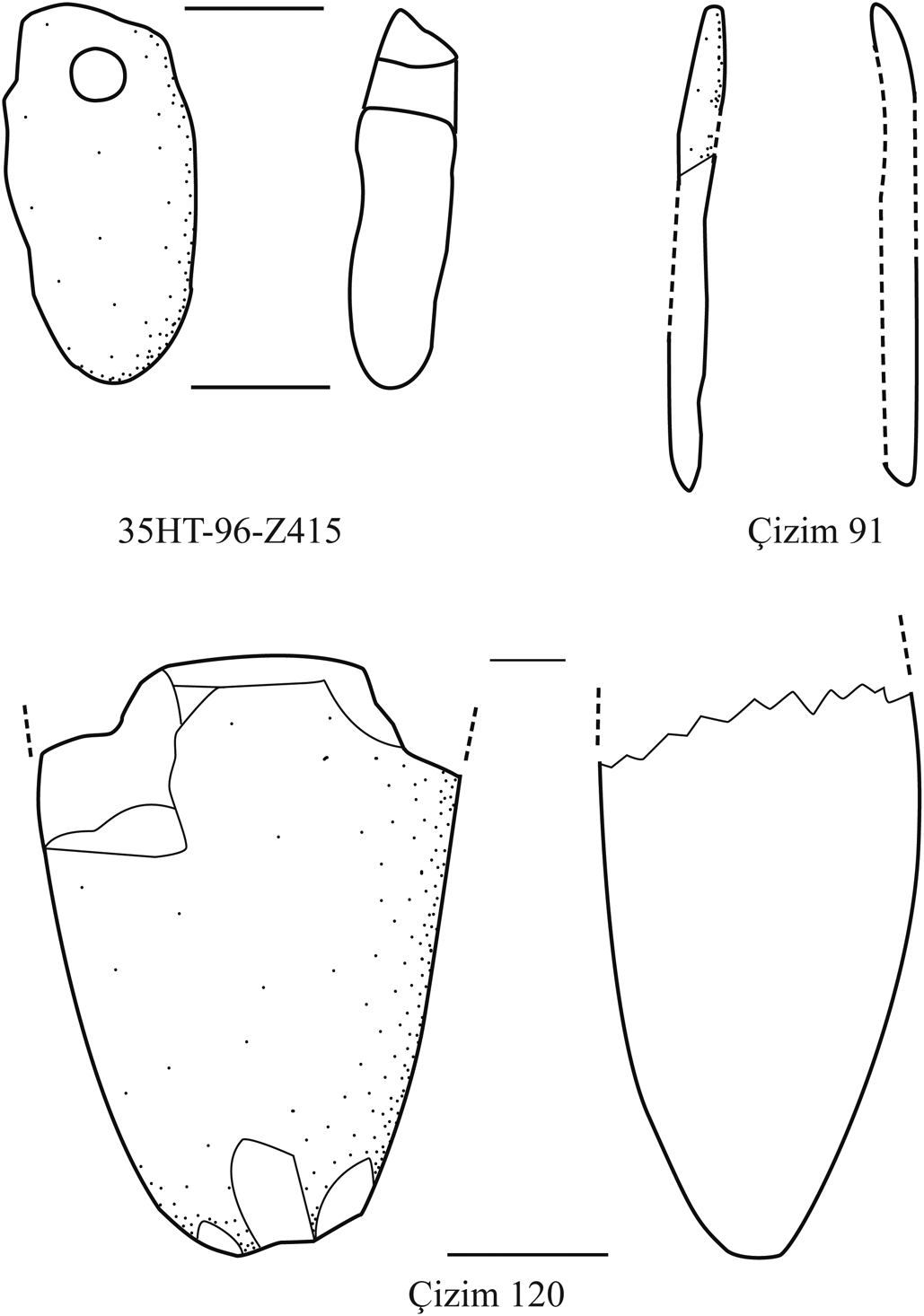
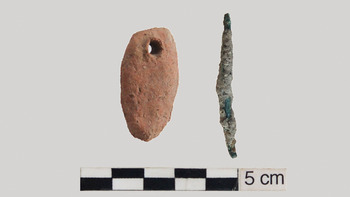
From the Hüyücektepe surface survey, in addition to the above-mentioned spindle whorls, two stone objects, one clay pendant and a metal object were found. Compared to other contemporaneous sites, stone tools were remarkably rare in the overall corpus found at Hüyücektepe, although two were noted. The first stone object, HT35-96-A715 (Fig. 19), is a round stone object with a central depression, worked from both sides (Fig. 23). Similar finds from Thermi were described as a ‘hammer with rudimentary borings on either side’ (Lamb Reference Lamb1936, 19 and fig. 59:8) and as ‘hour-glass perforated mace head’ in Emporio (Hood Reference Hood1982 and fig. 292:23). Baykal-Seeher (Reference Baykal-Seeher, Baykal-Seeher and Obladen-Kauder1996, 179, pl. 85:1–6) described similar objects from Demircihüyük as a possible base for a bow-drill. A second stone tool from the Hüyücektepe survey (Drawing [Çizim] 120; Fig. 24) is also broken but can be interpreted as a pestle. The possible clay pendant (35HT-96-Z415; Fig. 24), possibly of use for weaving, is of irregular-oval shape, with a perforation at its upper end and is made of reddish-brown clay. Finally, the metal object (Drawing [Çizim] 91; Fig. 24), possibly the fragment of a needle or a simple wire, shows a green corrosion and therefore might be made of copper or a copper alloy (Figs 24–5). Due to a lack of further information regarding this material, and the unclear context of the finds (given that they were surface finds during the 1996 survey), no clear statement about the dating of these finds can be made.
Stone tool from Hüyücektepe (HT35-96-A715) (photo: The Madra Çay Delta Archaeological Project).

Madra River Delta small finds (1:1).

Clay pendant (35HT-96-Z415) and metal object (Drawing [Çizim] 91) from Hüyücektepe (photo: The Madra Çay Delta Archaeological Project).

According to their shape, and contemporary finds, a dating of all these additional small finds from the surveys at both the MRD sites and the excavation at Yeldeğirmentepe to the EBA can neither be denied nor confirmed. Nevertheless, the small finds presented here do offer evidence of everyday craft activities typical of an EBA settlement, even if we are unable to draw firm conclusions about the mode of production and the organisation of these crafts.
PART C: CONCLUSIONS – CROSS-REGIONAL CONNECTIVITY IN THE MADRA RIVER DELTA OR ‘A PATH LESS TRAVELLED’?
We began the article with an objective of using the two sites in the MRD not only as a new case study for exploring EBA cultural connectivity at a geographically specific ‘touch-point’ of Anatolia and the Aegean, but also as a means to test previous hypotheses relating to the cultural coherence of the wider region in this period. Following the extensive evaluation of the MRD finds presented above, and their comparison to selected EBA sites in western Anatolia and the eastern Aegean islands, we are able to draw conclusions at both the macro level and also the more local level in respect of this issue of regional connectivity.
Before discussing the issue of ‘connectivity’, we should add a brief concluding comment on the chronology of the MRD material, as this issue inevitably impacts upon our observations on the regional connections. Currently, we are able to draw conclusions related to the dating of the MRD material in two ways: through typological comparisons, and also by looking at nearby sites explored in detail where precise chronologies have been established (e.g. Thermi on Lesbos). The former analysis is presented in detail in this article. The latter chronological guidance, from Thermi specifically, offers characteristic pottery shapes which have a relatively long lifespan, and indicates to us that the MRD material covers broadly the phases Thermi I to V in varying degrees. A more specific correlation to particular periods at Thermi, or even a period-to-period correlation, would only be possible with detailed calibrated radiocarbon dates (currently lacking for the MRD sites). The present position is that evidence for later, advanced EBA material is very limited in the MRD. For example, only a few (slow) wheel-made fragments and a fragment of a possible depas vessel are present. Our current conclusion, therefore, is that the main focus of occupation in the MRD appears to be in the earliest EBA, meaning EBA 1 (albeit with some later activity evident also). However, much more study and more excavation will be needed to confirm this hypothesis.
Turning to the issue of ‘connectivity’, at a macro level, one conclusion is that the material from the MRD published here, together with the already published small finds and figurines (Lambrianides and Spencer Reference Lambrianides, Spencer, Erkanal, Hauptmann, Şahoğlu and Tuncel2008, 352, figs 18, 20), paints a picture of a culture characteristic of EBA occupation in neighbouring regions. In other words, the present study of the pottery from the MRD, allied with our experience of previously conducted studies along the western Anatolian coast and on the eastern Aegean islands, supports the hypothesis of a strong coherence and interrelation across these areas during the EBA, comprising one general cultural horizon. The perspective of the MRD being part of this overall koine (Kouka Reference Kouka2002, 299) is also visible from other finds in the MRD assemblage such as the ‘figure-of-eight’ shaped idols and the biconical spindle whorls.
Nevertheless, when one takes a detailed look at the pottery, one can recognise a difference in the extent of connections between sites across this broader region. In the case of the MRD, statements about connectivity must be made with caution, since no fully or large-size excavated site is available for the necessary detailed analysis, but it appears that what we can see in the material under study is a balance of the ‘regional’ and the ‘local’. Generally speaking, the material culture fits to the overall EBA 1 and 2 cultural spheres (c. 3000–2400 bc; cf. Efe Reference Efe1988, 117, fig. 98) of western Anatolia and the eastern Aegean islands, represented by the numerous comparable vessel types, similar wares and surface colours, as well as the spindle whorls and other small finds from Yeldeğirmentepe and Hüyücektepe. However, balanced against this finding of broader ‘connectivity’, there are regular indications of more limited cultural horizons, or local creations which are rarely found elsewhere. For example, the presence of shallow bowls with flanged rims strongly indicates the embedding of a more local, regional phenomenon. Comparisons for that particular vessel shape can be found in the nearby Kaikos valley, indicating a possible local pottery group, but strong or very strong connections to other regions, either in western Anatolia or in the eastern Aegean, are impossible to detect. In addition, some of the combinations of shallow bowl shapes and handles from the MRD were noted above to be rarely found elsewhere, or were unique to the MRD, indicating some local experimentation and combinations which mark out distinct cultural patterning.
Following our detailed analysis, the primary impression from the MRD material culture is that of a relatively autonomous region with an absence of particularly intensive connections with other landscapes, and of a local cultural horizon, probably extending only as far as the Kaikos valley. Given this finding, it is interesting that the Kaikos valley has already been seen by other scholars as occupying a rather isolated position both during the Late Bronze Age (Mountjoy Reference Mountjoy1998; Niemeier Reference Niemeier and Cobet2007; Pavúk and Horejs Reference Pavúk and Horejs2018) and also in earlier periods (Horejs Reference Horejs and Pirson2013, 114). The nearby MRD seems to present a similar picture, another example of ‘a path less travelled’, as we suggest in the title of the article.
In closing, we note that our findings indicate, we believe, the great value of additional ‘case studies’ being available to give intra-regional nuance to the broader east-Aegean–western-Anatolia cultural koine, in particular studies which can offer a perspective from the coastal ‘touch-point’ between the two areas. In this case, the inhabitants of the MRD in the EBA have left us a fascinating insight into a world where they created a uniquely ‘glocal’ material culture comprising some of their own unmistakable patterns and creations which never reached far beyond the delta, mixed with items which indicate their versatile, multi-layered and broader connections, indicating how they were embedded into a wider regional world. We believe that further exploration here holds great potential for further learning about regional and supra-regional patterns, filling an important gap between Izmir and the Troad.
Acknowledgements
In addition to the anonymous reviewers of the article, to whom we express our thanks for their comments and suggestions, we are grateful to Ch. Schwall (Austrian Archaeological Institute [OeAI], Austrian Academy of Sciences) for fruitful discussions about the possible ‘Middle Chalcolithic’ and ‘Late Chalcolithic’ pottery sherds, and to Peter Pavúk (Institute for Classical Archaeology, Charles University, Prague) for his support regarding the ‘Middle Bronze Age’ pottery.
Funding support for the intensive and extensive surveys in the Kaikos valley since 2008 (headed by B. Horejs, and referenced here) has been generously provided by the FWF START-Project Y 528-G19, the FWF START-Project Y 528 and the ERC Starting Grant 263339.
For their support in facilitating and funding the Madra River Delta Archaeological Project, K. Lambrianides and N. Spencer would like to express thanks to a number of bodies and individuals. The Turkish Ministry of Culture generously gave permission to carry out the work, granting the relevant permits from 1995, and we would also like to acknowledge the assistance of their representatives assigned to the project each year (Mehmet Katkat of Eskişehir Museum in 1995, Neşide Gençer of Izmir Museum in 1996, and Osman Ermişler of Konya Museum in 1997). In particular, it would also not have been possible to carry out the fieldwork without the generous assistance of Bayan Neriman Ozaydın, the Director of Balıkesir Museum, and her staff, and the authors are particularly grateful for the warm welcome afforded to the project team by her. The Belediye at Altınova, Balıkesir Museum and Izmir Archaeological Museum all generously provided facilities for our storage of material from the fieldwork, for which the authors are extremely grateful. Neşide Gençer from Izmir Museum also gave practical assistance during the subsequent study of material in the museum for which we are extremely grateful. More generally, we are also grateful for the support of the Vali and sub-Vali of Balıkesir together with the Kaymakam at Ayvalık and Altınova and the Muktar of Bahçeliköy.
The authors are also extremely grateful to the UK- and Ankara-based staff of the British Institute of Archaeology at Ankara for their great assistance in liaising with the Turkish Ministry of Culture which allowed the team to carry out the project smoothly. In particular we would like to give special mention to Gülgün Girdivan (Kazan), Secretary in Ankara, who tirelessly provided logistical assistance over many years, regularly liaised on our behalf with the Turkish Ministries and also assisted with translation of reports. We would also like to thank the staff of the American Research Institute in Ankara (ARIT) for their liaison and assistance with the relevant permits for our American project team members.
We would also like to acknowledge the assistance of Ben Claasz Coockson (formerly of Bilkent University) and Lucy Blue (Southampton University) during the season of excavation at Yeldeğirmeni mound in 1997, and for the former's assistance in illustrating material. We are also indebted to Ahmet Catalbaşoğlu and his team from Izmir for carrying out surveying work and preparations of scale maps/plans during the project.
Among our collaborative partners in the project, we would like to take this opportunity to acknowledge the contribution of İlhan Kayan and his team from the Geography Department of Ege University Izmir throughout the project, including his general guidance and support from the initial planning stages, throughout all field seasons, and during the phase of writing up the project for publication. We feel honoured to have worked with him and to have experienced his unparalleled technical abilities and knowledge of Anatolian geomorphology at first hand as a part of our project team. Also, we would like to put on record our gratitude for his kind hospitality on our frequent visits to Izmir.
We would also like to acknowledge the generous financial support given to the project by numerous bodies in the UK and USA, without which the project could not have been carried out. Since 1995, this included the Meyerstein Fund (Oxford University), the Craven Committee (Oxford University), the Wainwright Fund (Oxford University), the British Academy (including the Applied Science in Archaeology Committee), the Leverhulme Trust, the Royal Society, the British Institute of Archaeology at Ankara, the Centre for Field Research/Earthwatch (USA), and the Institute for Aegean Prehistory (INSTAP). We are especially indebted to the generous support of INSTAP throughout our fieldwork and study seasons and for publication preparation. From 1993 to 1997, the research of Nigel Spencer was supported by a British Academy Postdoctoral Research Fellowship (sponsored by Swan Hellenic/P&O) (1993–6) and a Wainwright Postdoctoral Research Fellowship (1997).
In addition, N. Spencer would like to thank Jack Davis for helping to guide him on the innovative survey methodologies employed in the Madra River Delta Project, evolved from those used in the Pylos Regional Archaeological Project, on which N. Spencer worked under Davis from 1991 to 1994.
Finally, and above all, we would like to thank most warmly the inhabitants of our study region in and around Altınova and Ayvalık for their generosity in welcoming us and our project teams into their fields and homes, for sharing with us their histories, pasts and present, and for allowing us to carry out our research. This made the fieldwork seasons a fascinating and illuminating time for us and we hope that the light which the project's results shed on various periods of their homeland's history can represent at least a small gift back from us to them. This work is as much for them as for anyone else.
APPENDIX 1: METHODOLOGY EMPLOYED FOR THE MADRA RIVER DELTA'S 1996 SURFACE SURVEY FIELDWORK
The 1996 intensive surface survey at Yeldeğirmentepe mound
Survey methodology
The 1996 intensive surface survey of the Yeldeğirmentepe mound took place on 26–7 September. Following previous inspection in 1989–91 (Lambrianides et al. Reference Lambrianides, Spencer, Vardar and Gümüş1996, 179), the intention of the 1996 work was to adopt a more intensive and systematic approach to recording the surface cultural remains at the mound. The work was made a priority in 1996 as we had learnt that the mound was soon to be further disturbed and at least part of its surface covered with gravel.
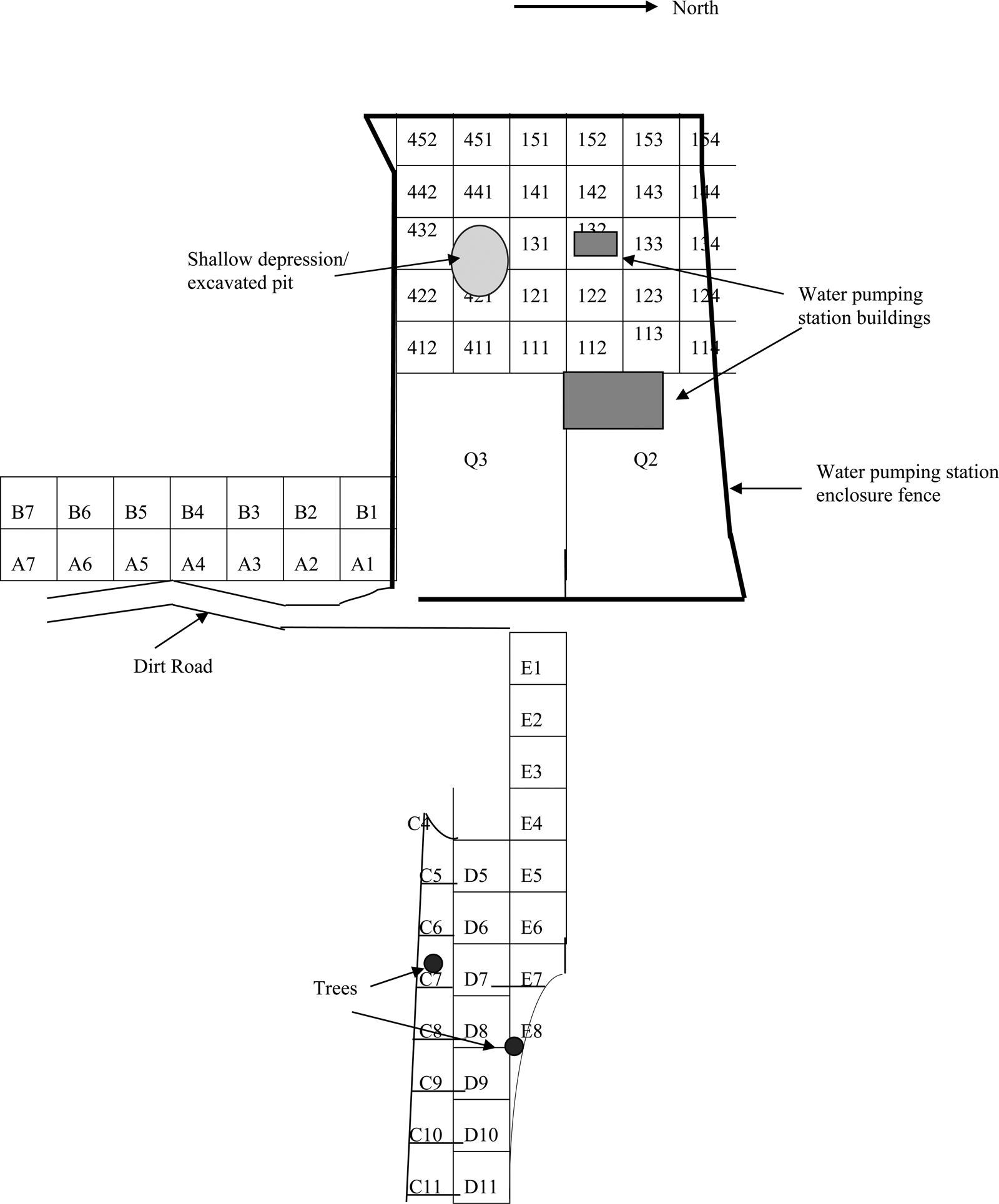
There were a number of factors which had a bearing on the methodology of intensive collection adopted at the Yeldeğirmentepe mound. First, it was not possible to survey the area immediately west of the perimeter fence in 1996 as a valuable cash crop of cotton was spread across a wide area right up to the base of the mound. Our strategy was also guided by the geological and geomorphological surveys carried out up to 1995 (Kayan and Vardar Reference Kayan and Vardar2007a; Reference Kayan and Vardar2007b). One conclusion from surface observations made during these surveys had been that it was only the immediate area of the mound itself (largely that now enclosed by the perimeter fence of the water-pumping station) where the prehistoric land surface was preserved. It appeared that post-EBA alluvial deposition in the delta around the mound (deposition which is extensive throughout the delta) would render wider surface inspection for prehistoric remains fruitless.Footnote 10 This hypothesis was largely confirmed in the 1996 surface survey from the findings in the extensions of the survey to the south and east of the mound (as described below), and also by the results of work in 1997 when survey was possible over a significantly wider area west of the mound. In the latter work, apart from a small concentration of EBA material immediately west and north of the mound (due to the cutting of the mound itself; see below), only Byzantine, Ottoman and modern cultural material was located in the broader area (see Gök-Gürhan Reference Gök-Gürhan2007). It was therefore decided for the intensive survey methodology of 1996 to concentrate on the part of the mound now enclosed by the perimeter fence of the municipal water-pumping station.
There were additional difficulties created in surveying the site from the disturbed nature of the mound. First, even though the area within the fence was likely to retain parts of the ancient land surface, this had been heavily disturbed, initially by the building of the windmill, and subsequently by the water-pumping station which had replaced it. This disturbance became clear during the excavation, but the result of digging deep into the mound to locate the foundations of the modern buildings, together with the installation of the water pipes, also needed to be borne in mind for the surface survey and the interpretation of sherd densities in each area.Footnote 11 The area near the western end of the enclosure (i.e. the higher areas of the mound) was also heavily overgrown in the year when the survey was carried out, which made surface examination more difficult.
A further overall disturbance to the mound, as is clear from even a cursory look at any contour map of the mound (clear on Fig. A1:1), is the significant ‘cut’ running north-east to south-west, immediately to the west of the water-pumping building and enclosure, indicating that the mound has, in effect, been sliced in two. Nearly the whole of the western half of the mound has been destroyed, with a steep drop from what is now the summit of the mound along which the perimeter fence now runs, down to the fields to the west. Local inhabitants confirmed that approximately 50 years before the mound had indeed extended further to the west (perhaps for a further 40–50 m), but that in order to flatten the land for agricultural use this part of the mound was gradually eroded and ploughed into, creating the topography now apparent.Footnote 12 As noted above, when surface inspection was possible in this area immediately to the west in 1997, it was not surprising that artefacts including EBA sherds, shell and bone were visible in the immediate area below the ‘cut’ which would have been within the (now destroyed) western half of the mound.
Topographic plan of the Yeldeğirmentepe mound in the Madra River Delta, indicating the water-pumping station built on the highest point of the mound (the rectangular structure at the centre of the mound's contours). Source: The Madra Çay Delta Archaeological Project.

In order to impose a systematic method of collection for the material, the area within the drilling station's perimeter fence was divided into four quadrants, with the two less disturbed quadrants (1 and 4) divided into 10 m grid squares. Total collections of cultural artefacts were made in the grid squares of quadrants 2 and 3. The surfaces of quadrants 2 and 3 were more disturbed due to the activity around the pumping station, and a collection of material was carried out in these areas without any attempt to sub-divide the areas further (see Fig. A1:2). In each area (grid square or quadrant), a total count of all artefacts was made, with collection of diagnostic pieces.
Collection grid (based on 10 m squares) established over the Yeldeğirmentepe mound for the intensive surface survey. Source: The Madra Çay Delta Archaeological Project.

To fully explore the surface scatters, the ‘drop-off’ in the density of surface material as one moved off the main area of the mound, and the relation to the geomorphological work around the mound, two extensions were made to the grid of the 1996 survey (as indicated on Fig. A1:2). A first of 70 m x 20 m ran from the south-east corner of the fence immediately bordering the west side of the main dirt road running north–south beside the mound, intended to record the surface artefact scatter in the area where boreholes had been drilled in 1991 and 1995, both of which had located sub-surface deposits of cultural material (Lambrianides et al. Reference Lambrianides, Spencer, Vardar and Gümüş1996, 178–88; Kayan and Öner Reference Kayan and Öner2007, pl. 11; Kayan and Vardar Reference Kayan and Vardar2007b, 26–30). A second extension to the grid (again with 10 m squares, except where this was not possible due to bordering roads, at squares C4–11) was laid out and collected on the east side of the road that borders the mound. This latter area was chosen as a result of the conclusions reached in the geological and geomorphological survey, which had hypothesised that this area extending east of the mound may have been a causeway between the mound and the mainland in the EBA (at a time when the mound was a coastal location) (Kayan and Öner Reference Kayan and Öner2007, 36–7, pls 9–12).
As noted above, in 1996 it was not possible to survey intensively the area to the west of the mound where a valuable cash crop of cotton was located, since this would also have been chosen as a third extension to the collection grid. EBA material was observed here in a more casual inspection in 1997 when the area was accessible. This material very close to this side of the mound included typical EBA ceramics similar to those found on the mound itself; Cardium sp. shells and also limpet shells were identified.
The findings from the 1996 intensive surface survey
Despite the heavily overgrown nature of the area within the perimeter fence (which allowed on average approximately 10 per cent visibility within the grid squares), significant amounts of ceramic material were located throughout the grid. It was not possible to detect any meaningful spatial patterns in the densities across the gridded area within the perimeter fence, and the diagnostic material appeared to be nearly exclusively of EBA date. Bone fragments were retrieved, chiefly in the more central areas of the mound, findings which are not surprising given the burials of Early Modern date later detected in the 1997 excavation trenches near the surface of the mound. Shell fragments were also found, but these were in far smaller numbers than the sometimes extremely large numbers found at the Hüyücektepe mound (see below), and again were largely recovered from the central area of the Yeldeğirmentepe mound.
In considering the surface survey collection methodology in relation to the geomorphological work at the site, one significant result was that the extensions to the survey grid to both the south and east of the mound indicated that densities of cultural artefacts did indeed drop immediately outside the central area of the mound within the water station's perimeter fence. Even with much better visibility in the survey grids in these two areas, there was only a very low density distribution of largely undiagnostic pieces. These findings seem to corroborate the geomorphological conclusions that the prehistoric land surfaces only exist today on the central areas of the Yeldeğirmentepe mound, and as one moves away from the mound, they are soon buried far underneath the current land surface of the MRD.
The 1996 intensive surface surveys at Hüyücektepe mound
Survey methodology
In planning which method of surface survey to employ in the more detailed examination of the surface cultural remains at the Hüyücektepe mound in 1996, similar considerations were borne in mind as those referred to above regarding the Yeldeğirmentepe mound. In particular, the findings from the 1991 and 1995 geological and geomorphological surveys that significant alluvial deposition had occurred in the delta since the EBA guided our surface survey to focus on the mound itself rather than across the wider area. This logic was reinforced by the 1995 borehole drilled close to the south-west edge of the mound (Kayan and Vardar Reference Kayan and Vardar2007b, pl. 5, borehole ‘95-01’) which had revealed that within some 90 m of the edge of the west side of the mound – and some 80 m beyond the edge of any significant scatter of cultural material visible on the surface – sub-surface anthropogenic material was already buried by some 4–5 m of terrestrial deposits (Lambrianides et al. Reference Lambrianides, Spencer, Vardar and Gümüş1996, 184 and fig. 6). This evidence, showing clearly that even a short distance from the mound the ancient land surface of the delta was already deeply buried by later alluvial deposits, led us to focus specifically on the mound itself for our analysis of surface cultural remains since it appeared any results from a wider survey in this specific part of the delta would have limit purpose and meaning.Footnote 13
The project's intensive surface survey of the Hüyücektepe mound (Fig. A1:3) was carried out in September 1996, and the method chosen for this study was the method already used elsewhere in the Aegean in intensive survey projects where denser concentrations of surface cultural material were examined following initial, more extensive surface survey.Footnote 14 In this case, it was decided that the most suitable method of collection in order to maintain detailed spatial resolution for the material collected was the establishment of a 10 m grid over the overall area of cultural material, divided into four ‘quadrants’ based upon a notional ‘site centre’ near the highest point of the mound (Figs A1:4–A1:5). Within each square all cultural artefacts were counted and recorded, with diagnostic items being collected for further analysis. The range of artefacts at the site included large numbers of Cardium sp. shells (especially in central areas of the mound; see Fig. A1:4), a broader scatter of ceramics (Fig. A1:5), chipped and ground stone, together with finds of metallurgical and stone artefacts. The finds are discussed above in detail, in Part B of the main article.
Topographic plan of the Hüyücektepe mound in the Madra River Delta. Source: The Madra Çay Delta Archaeological Project.

Density of shell fragments found in the Hüyücektepe intensive surface survey. Source: The Madra Çay Delta Archaeological Project.

Density of ceramic sherds found in the Hüyücektepe intensive surface survey. Source: The Madra Çay Delta Archaeological Project.

At the time when the survey was carried out, much of the central area of the mound was reasonably clear of ground-level vegetation. Hence, the ‘visibility’ readings taken for the grid squares in this main field were consistently high apart from a limited number of squares. A few young olive trees had been planted in the main field which comprised the central area of the mound, and many more were intensively cultivated in the field south-west of this field bordering the dirt road which ran all along the northern edge of the mound.Footnote 15 The field to the south of these two fields possessed much more mature olive trees and was freshly ploughed.Footnote 16
APPENDIX 2: INSTRUCTIONS FOR ACCESSING THE ONLINE ARCHIVE FOR THE PRESENT ARTICLE
(1) Access the archive following this link: http://hdl.handle.net/21.11115/0000-000B-DCC4-0 (if necessary, copy the link to the URL line of your web browser).
(2) To download the collection, click on the ‘Download Collection’ button (circled in red below); the complete metadata attributes can be found in the ‘Expert View’.

(3) Click to ‘expand’ the list of files stored in the archive (circled in red below).

(4) Select the files to download by ‘ticking’ the relevant radio buttons box (see below), a green tick appears in the box(es) selected, and then the page will display as a button above ‘Prepare Collection for Download’.

(5) Click on that button and then another button will appear in the same location offering the option to ‘Download Collection’, after which the files will be downloaded, and available to view.
Note: Parts of this collection are restricted to academic users (marked in red); i.e. the files are not available for everyone to view/download, but to users who have registered through their academic institution (Shibboleth authentication).