Systemic-to-pulmonary shunts are used as a source of pulmonary blood flow during palliation of Congenital Heart Disease in infants and neonates. Shunt thrombosis, a major adverse event, is one of the leading causes of death in infants undergoing systemic-to-pulmonary shunts. Reference Fenton, Siewers, Rebovich and Pigula1 The risk of shunt thrombosis ranges from 8 to 12%. Reference Gorla, Stumpf and Sandhu2
There is a growing body of research on the use of anticoagulant therapy, such as aspirin and clopidogrel, to reduce the risks of shunt thrombosis and of mortality in young infants. Reference Li, Yow and Berezny3,Reference Fenton, Siewers, Rebovich and Pigula4,Reference Wessel, Berger and Li5 However, little is known about the effect of perioperative pro-coagulant product use on shunt thrombosis and in-hospital outcomes.
Our study aims to examine clinical characteristics and in-hospital outcomes for children requiring acute shunt interventions (shunt interventions during the index hospitalisation) after systemic-to-pulmonary shunts, investigate the association between reintervention and shunt thrombosis, and the effect of blood product use on the risk of acute shunt thrombosis. We hypothesised that extensive use of perioperative pro-coagulant products may be associated with shunt thrombosis and that shunt thrombosis would be associated with worse in-hospital outcomes.
Methods
Study data
This is a retrospective descriptive study of shunt thrombosis in patients requiring shunt reinterventions during index hospitalisation following systemic-to-pulmonary shunts at Boston Children’s Hospital between 1 January, 2016 and 31 December, 2020. Institutional Review Board approval with waiver of consent was obtained for this study. Data for the study patients were abstracted from the institutional electronic database. Inclusion criteria were children (≤18 years) undergoing systemic-to-pulmonary shunts as either primary procedure or as a component of multicomponent procedure and who had repeat shunt interventions during their index hospitalisation. Exclusion criteria were those who did not have any repeat interventions on the shunt during their index hospitalisation (Supplemental Fig 1). The primary predictor for our analysis was the presence of acute shunt thrombosis. Outcomes of interest were total hospital and ICU length of stay, ventilation duration, other arterial/venous thrombosis, and cost of care during hospitalisation for systemic-to-pulmonary shunt surgery. The following data were collected:
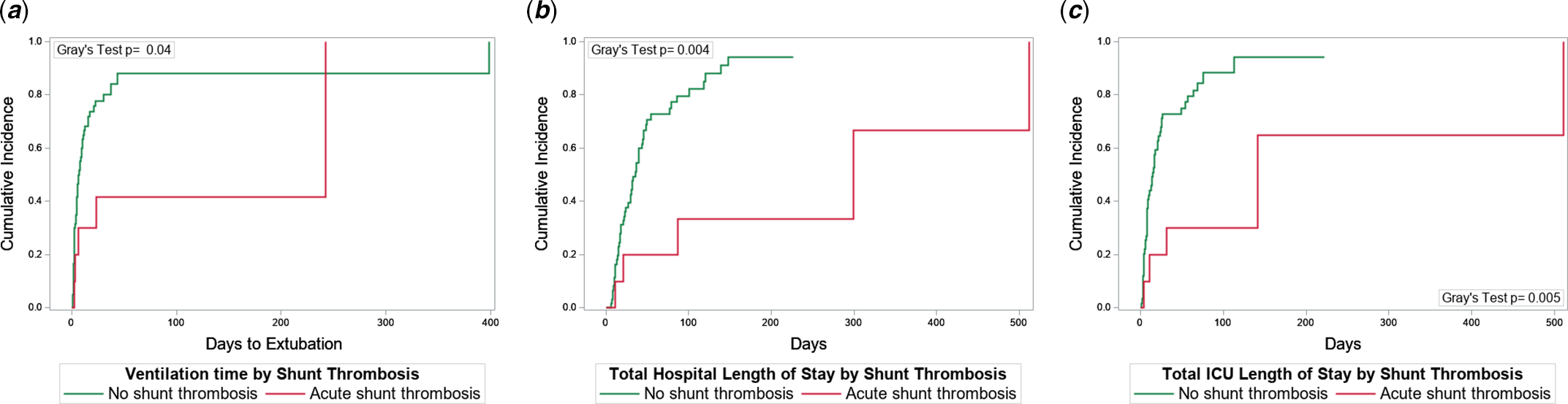
Cumulative incidence curves for Cox proportional hazards models are presented as well as the result of Gray’s test, testing whether associations are homogeneous among strata, with (A) days until initial extubation, (B) total hospital length of stay, and (C) ICU length of stay as events of interest and death as a competing risk.

Preoperative data: included demographic data such as age at surgery and sex. Additional data included preoperative anticoagulant medications, ventricular anatomy, case complexity as determined by the Society of Thoracic Surgeons-European Association of Cardio-Thoracic Surgery Congenital Heart Surgery Mortality Categories, Reference Jacobs, Jacobs and Maruszewski6 preoperative renal and hepatic dysfunction, and preoperative laboratory measurements such as creatinine, prothrombin time, partial thromboplastin time, and international normalised ratio. We also collected prior history of stroke or thrombosis and prior history of cardiac surgery and number of prior sternotomies.
Intraoperative data: included blood product usage (categorised as yes or no and quantified as ml per kg and defined below).
Postoperative data: included postoperative blood product usage, adverse events, total hospital and ICU length of stay, ventilation duration, and hospital costs.
Definitions
Acute shunt thrombosis: was defined as clinically significant systemic-to-pulmonary shunt thrombosis requiring therapy (anticoagulation, surgical re-intervention, catheterisation) and occurring during the index systemic-to-pulmonary shunt surgery hospitalisation.
Shunt re-intervention: was defined as subsequent surgical operation or catheter-based reintervention following the initial shunt procedure during the same hospital admission.
Society of Thoracic Surgeons-European Association for Cardio-Thoracic Surgery Congenital Heart Surgery Mortality Categories: These categories assign the risk of mortality associated with a particular procedure based on cumulative empiric data collected in the Society of Thoracic Surgery Congenital Heart Surgery Database. The risk of mortality increases as procedure complexity increases, with mortality category 1 having the lowest and 5 the highest mortality risk. Reference Jacobs, Jacobs and Maruszewski6
Blood product use: included intraoperative or postoperative use (within 24 hours following surgery) of platelets, cryoprecipitate, factor VIIa, fresh frozen plasma, cell saver, concentrated platelets, or red blood cells.
Postoperative adverse events: included extracorporeal membrane oxygenation, ventricular assist device, cardiac arrest, renal dysfunction requiring dialysis, re-exploration for bleeding, unplanned cardiac catheterisation, unplanned non-cardiac reoperation, unplanned reoperation (other than for shunt revision), stroke, and death.
Statistical Analyses
Categorical variables are summarised as numbers and percentages while continuous variables are summarised as medians and interquartile ranges. Proportions and odds ratios are presented with 95% confidence intervals.
Our primary predictor was occurrence of shunt thrombosis and outcomes included: hospital length of stay, ICU length of stay, ventilation time, other postoperative thrombosis, and hospital cost.
Associations with shunt thrombosis were examined by univariate logistic regression for categorical variables and Wilcoxon rank sum tests for continuous variables. Cox proportional hazards model with death as a competing risk was used for time-to-event analysis of length of stay and postoperative ventilation duration. We used forward selection with p < 0.1 for inclusion in the model and accounted for collinearity and interactions. To analyse hospital costs, we used linear regression with logarithmic transformation and forward selection (parameter estimates were re-transformed to provide clinically meaningful information). Covariates used in the models included the preoperative data as well as intraoperative and postoperative blood product usage as described above.
A p-value of 0.05 or less was considered statistically significant. We analysed all data using SAS version 9.4 (SAS Institute Inc., Cary, NC).
Results
Patient characteristics
A total of 408 systemic-to-pulmonary shunt surgeries were performed in children between 1 January, 2016 and 31 December, 2020; of those, 71 met inclusion criteria for this analysis (Supplemental Fig 1). None of the patients who were excluded had in-hospital shunt thrombosis and those excluded had similar baseline characteristics to those included. Table 1 provides a summary of baseline patient characteristics. The median age at the time of surgery was four (interquartile range: 0–15) months. There were 40 (56%) males, 41 (58%) patients with single ventricle anatomy, and 29 (40%) patients on preoperative anticoagulants. In our entire cohort, five (7%) patients had previous stroke, 10 (14%) had previous thrombosis, and 23 (32%) had prior sternotomies. Of the 71 patients, 10 (14%) developed acute shunt thrombosis, and among them five (50%) died. The median time to shunt thrombosis diagnosis after surgery was one (interquartile range: 0–2) days, and five of these patients received postoperative cryoprecipitate transfusion prior to shunt thrombosis diagnosis. A detailed profile of all shunt thrombosis patients can be found in Supplemental Table 1.
Patient demographics and characteristics (n = 408)

* p values represent values from comparison between those with and with shunt thrombosis in the 71 patients who had shunt interventions
a Statistically significant.
b Trend towards statistical significance.
Super Glenn was defined as a superior cavopulmonary (i.e. Glenn) anastomosis and a systemic to pulmonary shunt (typically a BT shunt) to the contralateral PA, with the connection between the RPA and LPA restricted by a fenestrated patch.
No sano shunt cases had shunt thrombosis; therefore, shunt size is left blank for this row.
Death was defined as surgical death in hospital or within 30 days of index surgery if discharged home prior to 30 days.
BiV: biventricular; BTS: Blalock-Taussig shunt; CICU: cardiac intensive care unit; ECMO: extra-corporeal membrane oxygenation; INR: internal normalised ratio; IV: intravenous; kg: kilogram; ml: millilitres; MSOF: multi-system organ failure; n: number; NA: not available; NOAC: novel oral anticoagulants; OR: operating room; PT: prothrombin time; PTT: partial thromboplastin time; RBCs: red blood cells; SV: single ventricle; STAT: Society of Thoracic Surgeons-European Association of Cardio-Thoracic Surgery Congenital Heart Surgery Mortality Categories; VAD: ventricular assist device.
Of the 71 patients, 30 (42%) experienced major postoperative adverse events. Shunt thrombosis patients experienced more complications, specifically, re-exploration for bleeding, the need for postoperative mechanical circulatory support, and death (Supplemental Table 2).
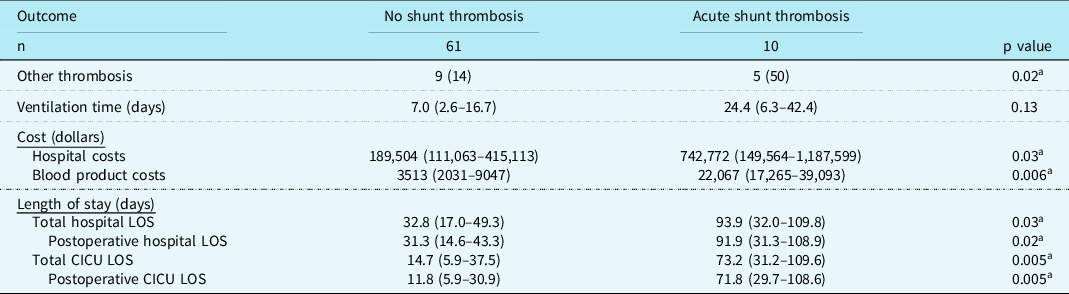
Table 2 summarises the outcomes examined for our cohort. Patients who developed shunt thrombosis were 5.8 times more likely to develop other arterial/venous thrombosis compared to those who did not experience shunt thrombosis (odds ratio: 5.778 95% confidence interval: [1.386, 24.080], p = 0.02). Of the 10 patients who experienced shunt thrombosis, five experienced other postoperative arterial/venous thrombosis in areas including the coronary artery, pulmonary artery, and internal jugular vein.
In-hospital outcomes for patients (n = 71) who had shunt reintervention prior to hospital discharge b

a Statistically significant.
b Trend towards statistical significance.
Other thrombosis = other arterial/venous thrombosis.
Cost data were adjusted for 2020 as a reference year to account for inflation.
Results of Fisher’s exact test (other thrombosis) and Wilcoxon Rank Sum tests (Ventilation time, Cost, LOS) are shown.
CICU: cardiac intensive care unit; LOS: length of stay; n: number.
Hospital length of stay, ICU length of stay, and ventilation time
Figure 1 shows the cumulative incidence functions for hospital length of stay, ICU length of stay, and ventilation time. We used univariate cox regression (Supplemental Tables 3–5), with shunt thrombosis as the primary predictor and death as a competing risk.
We then created multivariable cox regression models including perioperative factors associated with shunt thrombosis for total hospital length of stay, ICU length of stay, and ventilation time (Supplemental Tables 6–8). Important perioperative factors associated with all three outcomes, include shunt thrombosis, receipt of cryoprecipitate in the operating room, receipt of red blood cells postoperatively, and number of prior sternotomies.
Hospital cost
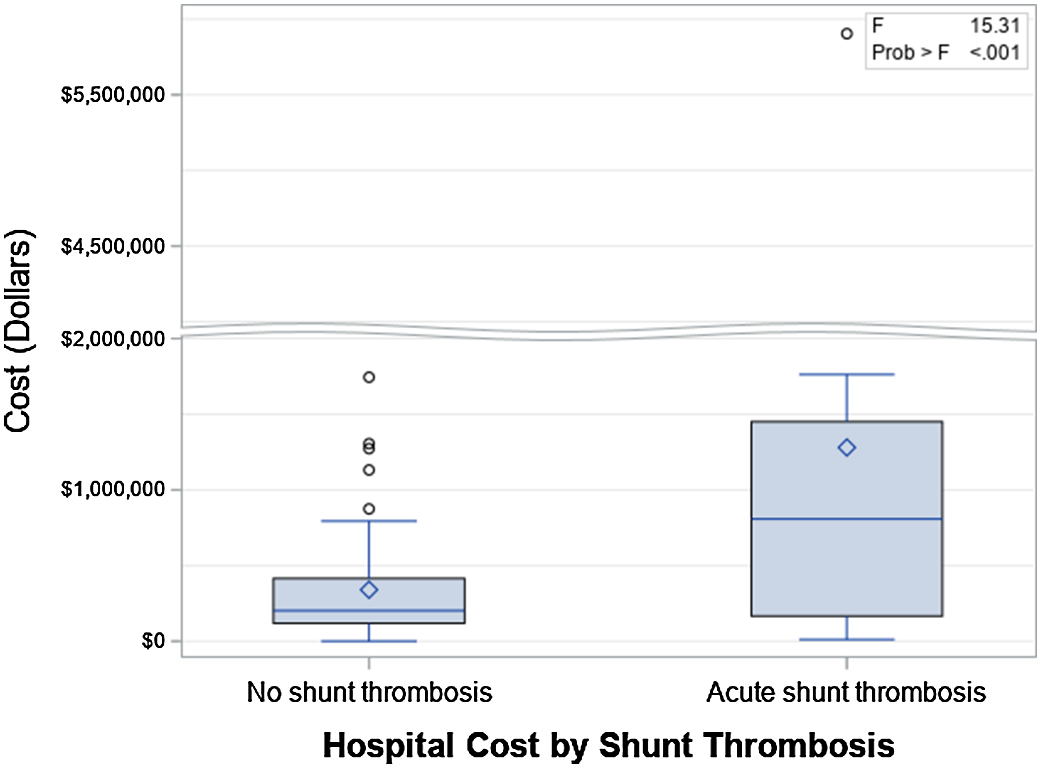
We found shunt thrombosis to be associated with increased hospital costs. Figure 2 displays the differences in hospital costs among patients with and without shunt thrombosis.
Box and whisker plot of hospital cost (dollars) by shunt thrombosis. The F statistic and p value of ANOVA are also displayed.

We created a multivariable linear regression model (log transformed) for hospital cost (Supplemental Table 9). There was a positive trend between the volume of cryoprecipitate given and greater hospital costs.
Risk factors related to acute shunt thrombosis
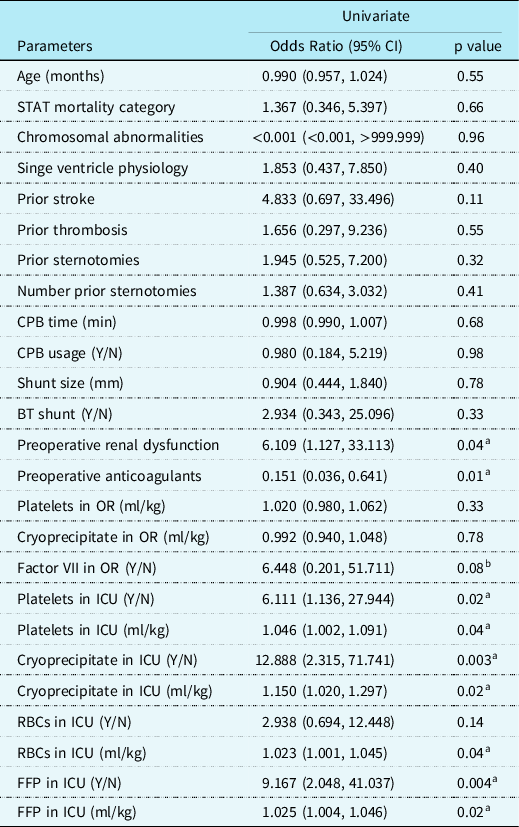
On univariate analysis, patients with acute shunt thrombosis were more likely to receive platelets (odds ratio: 6.11, 95% confidence interval: [1.14, 27.94], p = 0.02), cryoprecipitate (odds ratio: 12.89, (95% confidence interval: [2.31, 71.74], p = 0.003), and plasma (odds ratio: 9.17, 95% confidence interval: [2.04, 41.04], p = 0.004) postoperatively (Table 3). Other notable associations with shunt thrombosis included preoperative anticoagulant use within 24 hours prior to surgery (odds ratio: 0.15, 95% confidence interval: [0.04, 0.64], p = 0.01) and preoperative renal dysfunction (odds ratio: 6.11, 95% confidence interval: [1.13, 33.11], p = 0.04) (Table 3).
Univariate logistic regression analysis for parameters associated with shunt thrombosis (n = 71)

a Statistically significant.
b Trend towards statistical significance.
Preoperative anticoagulants included anticoagulant administration within 24 hours before surgery.
CI: confidence interval; CPB: cardiopulmonary bypass; FFP: fresh frozen plasma; IV: intravenous; kg: kilogram; ml: millilitres; N: no; NOAC: novel oral anticoagulants; OR: operating room; RBC: red blood cells; STAT: Society of Thoracic Surgeons- European Association of Cardio-Thoracic Surgery Congenital Heart Surgery Mortality Categories; Y: yes.
Comment
While several studies have investigated the effects of anticoagulant medications in preventing thrombosis, Reference Li, Yow and Berezny3,Reference Fenton, Siewers, Rebovich and Pigula4,Reference Wessel, Berger and Li5 little has been published on the risks of using pro-coagulable blood products during systemic-to-pulmonary shunt surgery. Our study aims to understand clinical characteristics and in-hospital outcomes for systemic-to-pulmonary shunt patients that developed shunt thrombosis or required in-hospital reintervention on the shunt, to better understand the factors that contribute to shunt intervention and thrombosis.
Numerous factors determine the fate of any shunt and the likelihood of intervention. Certain important risk factors of shunt intervention have been identified. These include prematurity, smaller shunt size, single ventricle physiology, and central shunt type. Reference Dorobantu, Pandey and Sharabiani7–Reference Headrick, Qureshi, Ghanayem, Heinle and Anders10 Predictors of early shunt thrombosis include the transfusion of several blood products, including red blood cells and platelets. Reference Voravit, Pongsanae, Chareonkiat and Napat11 Other studies have found higher platelet count in the ICU to be an independent predictor of shunt thrombosis and perioperative platelet transfusion to be a risk factor for shunt related mortality. Reference Hobbes, d’Udekem, Zannino, Konstantinov, Brizard and Brink12,Reference Vitanova, Leopold and von Ohain13 The possible mechanism maybe that use of such pro-coagulable products contributes to a postoperative hypercoagulable state, which in turn may cause shunt thrombosis. Reference Jacobs, Brink, Douglas, Brizard and Sano14
Most patients in our cohort developed acute shunt thrombosis within two days after surgery, suggesting this early postoperative period to be a critical window that requires extra monitoring and care. Preoperative renal dysfunction and postoperative transfusion of platelets, cryoprecipitate, and plasma were associated with shunt thrombosis. Our multivariable analysis highlighted the effect of prior sternotomies on increasing time on the ventilator and in the intensive care unit and hospital. Further more, intraoperative transfusion of cryoprecipitate was related to longer lengths of stay, longer ventilation time, and greater hospital costs. This suggests a need for alternative perioperative blood product utilisation strategies that can reduce the risk of postoperative hypercoagulable state while minimising blood loss.
Limitations
Our study has the following limitations. We included, in the current analysis, only systemic-to-pulmonary shunt patients who had repeat shunt interventions during the index hospitalisation. Thus, the true incidence of acute shunt thrombosis may be unknown. Risk factor analysis for patients who developed shunt thrombosis post discharge from the index hospitalisation was not performed. A larger sample size may strengthen the significance of some of the notable associations between risk factors and shunt thrombosis. Our study was a retrospective study, and we restricted our study to patients hospitalised at our institution, thus multicentre prospective studies are needed. In the larger data set of 408 patients, detailed data on other postoperative thrombosis were not always available. Therefore, we did not include this larger data set into our analysis. In addition, we had a low number of events (10 shunt thrombosis patients) to analyse. However, one benefit of the limited number of events was our ability to investigate the detailed circumstances surrounding each patient who developed acute shunt thrombosis. Future larger studies should examine risk factors for shunt thrombosis and why and how such factors influence clinical presentation and subsequent outcomes.
Conclusions
Shunt thrombosis is a major adverse event associated with poor outcomes in patients with CHD. Patients with shunt thrombosis experience more complications and worse in-hospital outcomes. The transfusion of cryoprecipitate and greater volume of cryoprecipitate were associated with poorer in-hospital outcomes. Future research on targeted transfusion of or alternatives to cryoprecipitate, as well as techniques for early detection and prevention of shunt thrombosis, is needed to improve outcomes of infants and neonates undergoing systemic-to-pulmonary shunt surgery.
Supplementary material
For supplementary material accompanying this paper visit https://doi.org/10.1017/S1047951122001548
Acknowledgements
The authors would like to thank the Benderson Family Heart Center, Department of Cardiac Surgery, and Department of Cardiac Anesthesia for inspiring this learning opportunity.
Financial support
This study was internally funded by the Department of Cardiac Surgery.
Conflicts of interest
None.
Ethical standards
This work complies with the ethical standards of the relevant national guidelines and with the Helsinki Declaration of 1975, as revised in 2008.