Antibiotic allergy labels (ie, medical record documentation of a drug hypersensitivity or drug intolerance) are common and frequently occur in the absence of a true drug allergy. Estimates for the prevalence of penicillin allergy alone, for example, are 12% or higher.Reference Zhou, Dhopeshwarkar and Blumenthal1,Reference Macy and Contreras2 However, formal allergy assessment studies suggest that <10% of patients with antibiotic allergy labels are truly allergic.Reference Trubiano, Adkinson and Phillips3,Reference Gadde, Spence, Wheeler and Adkinson4 Allergy labels are not without consequence; over the past decade, many studies have highlighted both the personal and public health consequences of allergy labels.Reference Castells, Khan and Phillips5,Reference Blumenthal, Peter, Trubiano and Phillips6 Potential consequences for patients include suboptimal therapy with fewer efficacious antibiotic choices, exposure to broad-spectrum antibiotics, longer courses of treatment, parenteral administration, toxic side effects associated with broad-spectrum therapy, and higher risk of opportunistic infections. Public health concerns include contribution to the emergence of multidrug-resistant organisms, higher costs of alternative therapy, and potentially higher healthcare costs due to longer hospital stays. Given these burdens and the fact that antibiotic overuse is associated with substantial harms, many hospitals have implemented formalized programs to assess and “de-label” antibiotic allergies through antibiotic stewardship programs.Reference Chen and Khan7–Reference Ressner, Gada and Banks10 Strategies may include de-labeling based on history alone or formal testing including skin testing or oral challenge.
In recognition of the evidence regarding the harms associated with antibiotic allergy, a previous systematic review through 2015 identified 8 studies examining clinical outcomes and antibiotic utilization in patients with antibiotic allergy labels.Reference Wu, Langford and Schwartz11 However, research focused on this topic has substantially increased since that time. Therefore, we performed a systematic review to analyze how antibiotic allergy labels influence 3 broad domains: (1) antibiotic exposure and prescribing patterns, (2) healthcare related outcomes, and (3) healthcare costs.
Methods
We followed Preferred Reporting Items for Systematic Reviews and Meta-Analyses (PRISMA) guidance.Reference Higgins, Chandler, Cumpston, Li, Page and Welch12 The study protocol was published in the PROSPERO database prior to conducting the review (registration no. CRD42019127971).Reference Jones and Lake13 A literature search was developed to identify all studies that report outcomes in those with any antibiotic allergy labels compared to nonallergic controls in pediatric (<18) and adult (≥18) cohorts in any healthcare setting. Studies that did not include a control population were excluded. The search was conducted in March and April 2019 without language or publication status restrictions in PubMed, EMBASE, Cochrane CENTRAL, EBSCO (CINAHL; EconLit), Cochrane Database of Abstracts of Reviews of Effects (Cochrane Library, Wiley), Web of Science (Core Collection: Science Citation Index Expanded, Emerging Sources Citation Index; KCI-Korean Journal Database; Russian Science Citation Index; ScIELO Citation Index) and the Infectious Diseases Society of America for conference abstracts (2015 forward). We searched reference lists of related reviews, clinical trial registries (ClinicalTrials.gov), and systematic review registries, and we tried to contact authors of reviews where data were missing or incomplete. Search strategies are included in the Supplementary Material (online). Search strategies consisted of controlled vocabulary, such as medical subject headings (ie, MeSH and EMTREE terms), in combination with text words.
Records were screened in Covidence14 by at least 2 independent reviewers (initial title and/or abstract screening and full text screening) to identify studies that reported outcomes in those with antibiotic (any) allergy labels compared to nonallergic counterparts using the prespecified eligibility criteria and definitions described in the protocol.
To assess the risk of bias, studies were graded using the Newcastle-Ottawa quality assessment scale for cohort and case–control studies.Reference Wells, Shea and O’Connell15 Scores, which can range from 1 star (low quality) to 9 stars (high quality), were recorded by 2 authors independently and differences were resolved by informal consensus. Scores for each domain and an overall summary score (maximum of 9 points) are shown in the Supplementary Material (online).
All data were extracted in duplicate into an iteratively developed data extraction form. Included studies were thoroughly reviewed by 2 authors and verified by a third. Data pertaining to the following study characteristics were extracted: patient population (adult vs pediatrics), healthcare setting, number of patients, country of study, exposure, comparator or control group, study aim, inclusion criteria, and exclusion criteria. Categories for study outcomes were identified prior to data abstraction and included 3 broad domains: (1) antibiotic exposure or use; (2) clinical outcomes (eg, hospital length of stay (LOS), intensive care unit (ICU) admission, mortality, surgical site infection (SSI), or opportunistic/multidrug-resistant (MDR) infection), and (3) economic outcomes including cost of antibiotics or hospitalization. A narrative by text and tables was prepared to summarize all findings.
Results
Article inclusion and trends
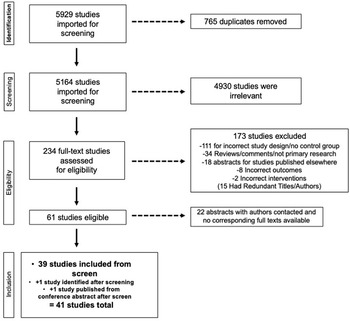
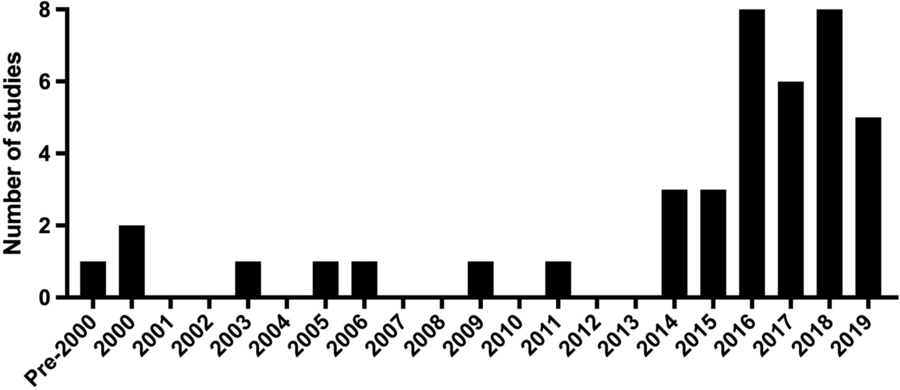
After removing duplicates, 5,164 studies were identified; 234 (4.5%) met our criteria for full-text review, and 4,930 (95.5%) were excluded for reasons summarized in Fig. 1. Overall, 61 studies had pertinent findings and an appropriate control group to allow for data abstraction (Supplementary Material online). Of these 61 studies, 39 were published in peer-reviewed journals, and the remaining 22 were published as conference abstracts (Fig. 1). After contacting abstract authors, 1 abstract had been advanced to peer-reviewed publication and was included in the final analysis.Reference Lam, Staicu, Conn and Ramsey16 There was not sufficient additional information for inclusion of the remaining 21 abstracts. Also, 1 study was published shortly after our search and was included in the final analysis.Reference Imlay, Krantz and Stohs17 Ultimately, 41 articles met eligibility criteria and were included. Only 1 of these studies was published prior to 2000; 6 studies were published between 2000 and 2010; 7 studies were published between 2011 and 2015; and 27 of these studies were published between 2016 and 2019 (Fig. 2).
Flow diagram for study selection on antibiotic allergy. Overall, 5,164 studies were eligible for screening after duplicates were removed. After irrelevant studies were removed, 234 full-text studies were assessed for eligibility; 173 studies were excluded for indicated reasons. Of 61 eligible studies, 39 were published in peer-reviewed journals and ultimately included. Also, 1 study was identified and included after the original screen and another study was advanced from conference abstract to peer-reviewed publication after our screen and was included.

Number of studies per year included in the final analysis.

Population, setting, exposure, and study design
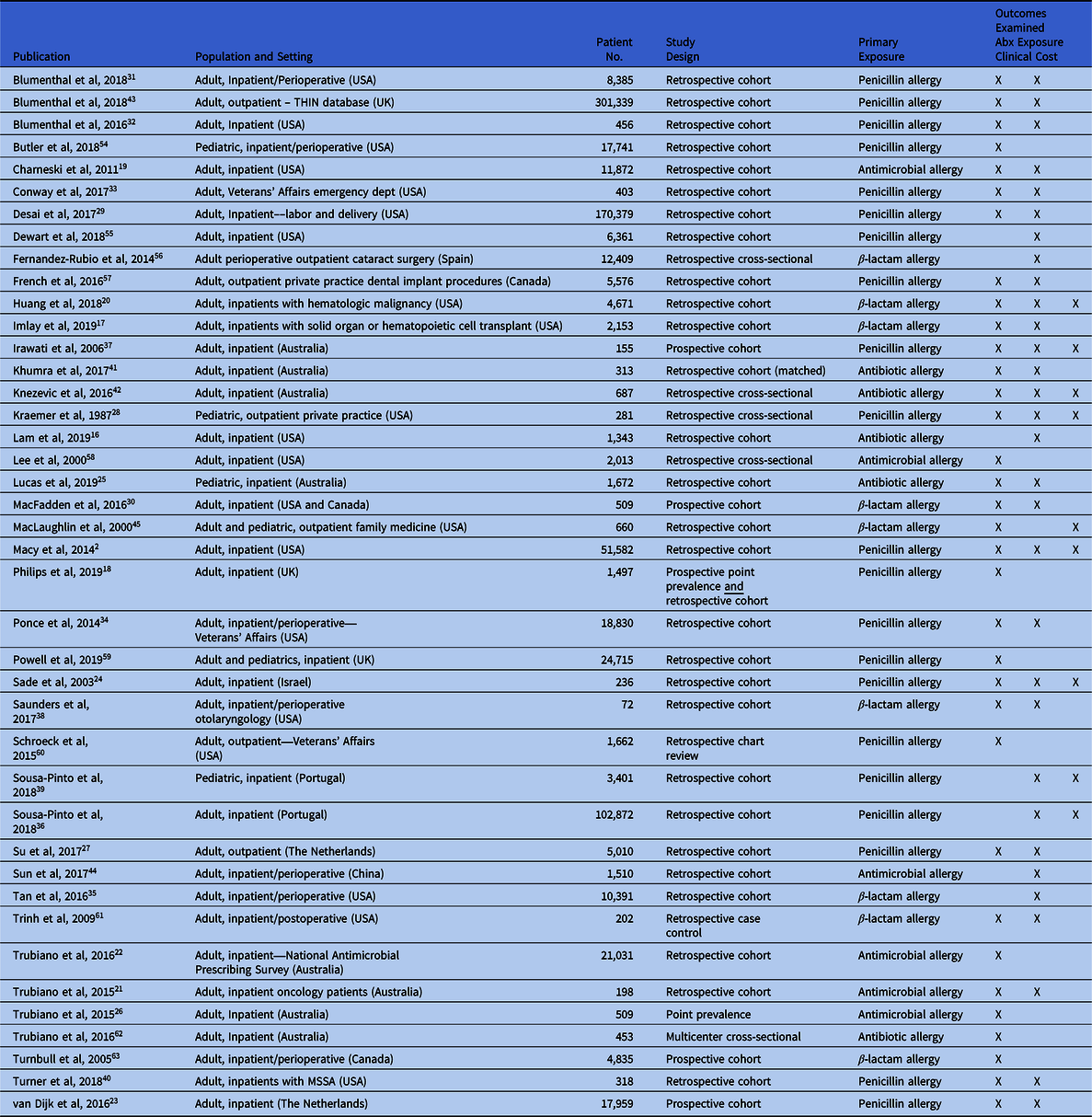
Of the 41 studies included for data abstraction, 35 (85%) focused exclusively on adult patients age >18 years; 4 (9.8%) focused solely on pediatrics; and 2 studies (5%) analyzed data from patients of all ages (Table 1). Most studies (n = 34, 83%) investigated inpatient cases, and 7 (17%) analyzed data from the outpatient setting (Table 1). Of the 41 studies, 20 (49%) were conducted in the United States, 8 (20%) were conducted in Australia, 5 (12%) were conducted in countries within the European Union, 3 (7%) were conducted in the United Kingdom, 2 (5%) were conducted in Canada, and 1 study (2%) was included from each of the following: China, Israel, or multinational. The number of study participants ranged from 72 to 301,339. Only 5 studies (12%) were prospective, and the remaining 36 (88%) were retrospective by design. More than half (n = 21, 51%) of studies focused exclusively on penicillin allergy, while 9 (22%) used β-lactam allergy labels as a primary exposure; the remaining 11 studies included either all “antibiotic” or “antimicrobial” allergy labels (Table 1). Broadly, antibiotic prescribing patterns and exposures were the most common domain reported, with 34 studies (83%) analyzing antibiotic exposure by drug class, number of doses administered, and/or total duration of treatment (Table 1 and Table 2). Clinical outcomes, such as LOS, ICU admission, readmission rates, opportunistic infection or MDR, and mortality were examined in 31 studies (76%) (Tables 1 and 3). Healthcare-related costs were the least examined outcome domain; 9 studies (~22%) reported these data (Tables 1 and 4). Also, 27 studies (66%) reported results from >1 domain (Table 1).
Characteristics of included studies. The study population and setting, number of patients, study design, primary exposure (allergy label type) and domains analyzed are indicated for each included study

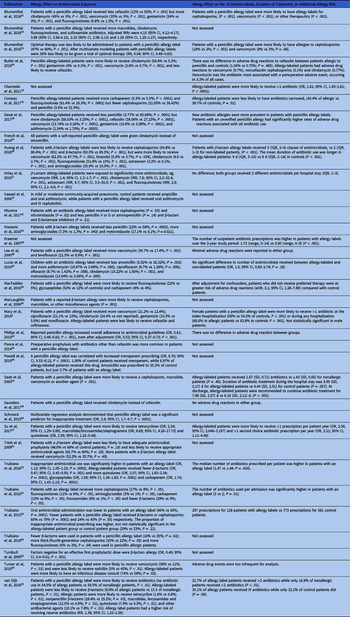
Antibiotic Exposure and Use in Allergy-Labeled and Control Patientsa

Note. CI, confidence interval; IQR, interquartile range; IRR, incidence rate ratio; OR, odd ratio; RR, relative risk; SD, standard deviation.
a For each study analyzing antibiotic exposure, effect of allergy labels on antimicrobial administration (column 2) and effect on number of antimicrobials or duration of treatment (column 3) is indicated.
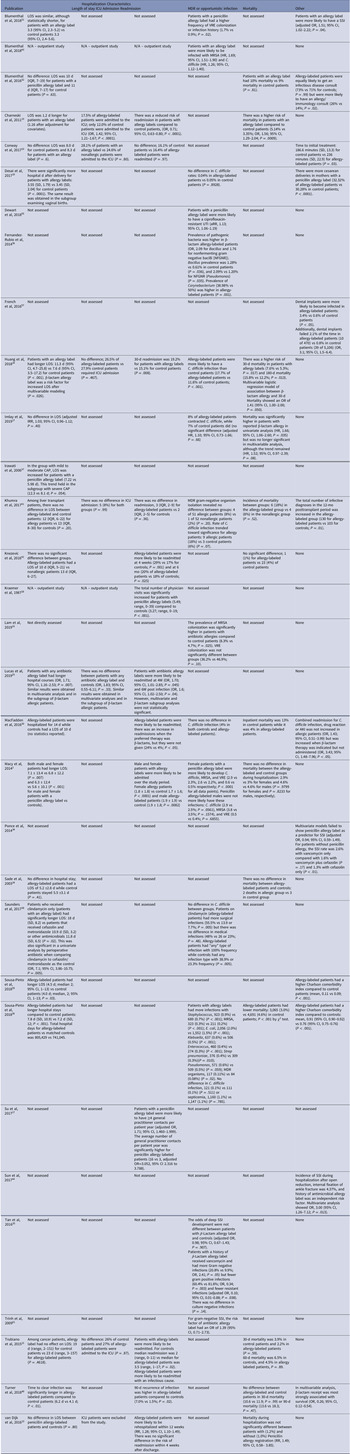
Health Outcomes in Allergy-Labeled and Control Patientsa

Note. CAP, community-acquired pneumonia; ICU, intensive care unit; LOS, length of hospital stay; MDR, multidrug resistant; MRSA, methicillin-resistant Staphylococcus aureus; SSI, surgical site infection; UTI, urinary tract infection; VRE, vancomycin resistant Enterococcus.
a For each study analyzing clinical outcomes, results on hospitalization characteristics including length of stay (LOS), ICU admission, and hospital readmission are indicated in columns 2–4. Multi-drug resistant or opportunistic infection, if analyzed, is indicated in column 5 and patient mortality in column 6. Other less commonly reported outcomes, such as surgical site infections, are reported in column 7.
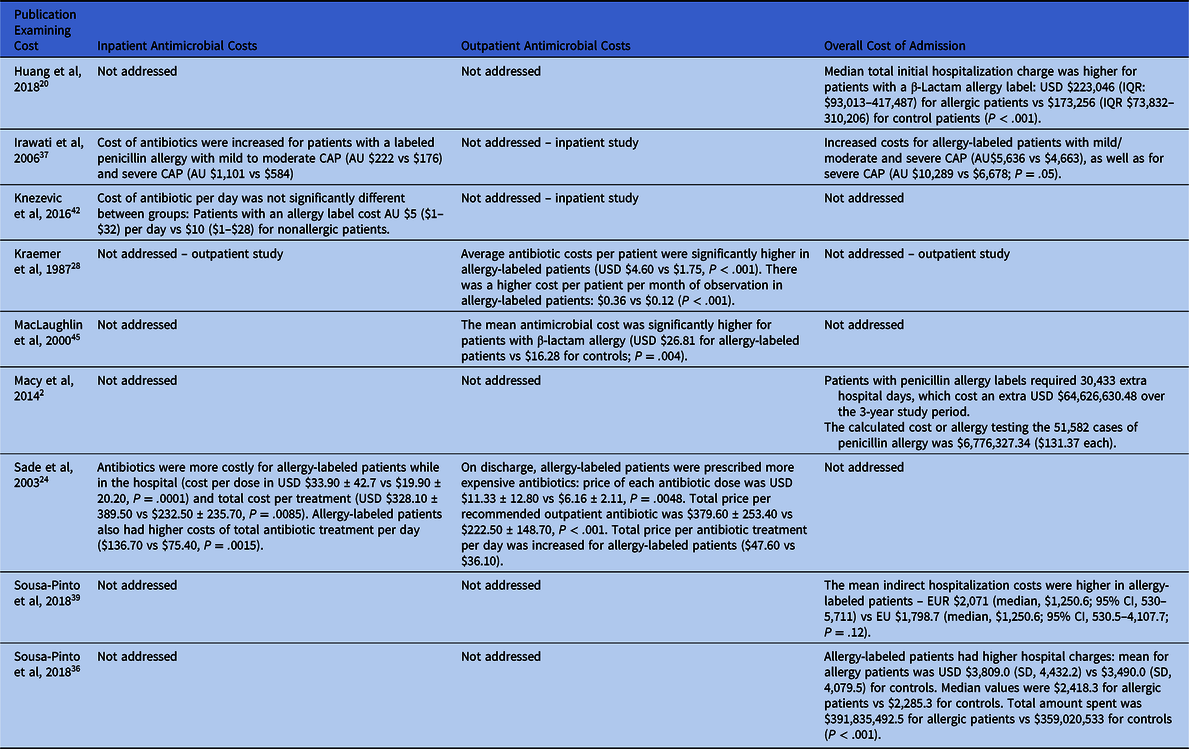
Healthcare-Related Costs in Allergy-Labeled and Control Patientsa

Note. AU, Australian dollars; CAP, community-acquired pneumonia; EUR, Euros; USD, United States dollars.
a Results from studies that reported cost analyses, including inpatient and outpatient antibiotic cost, as well as total cost of hospitalization (cost of admission) are reported in columns 2–4.
Antibiotic allergy labels and antibiotic exposure
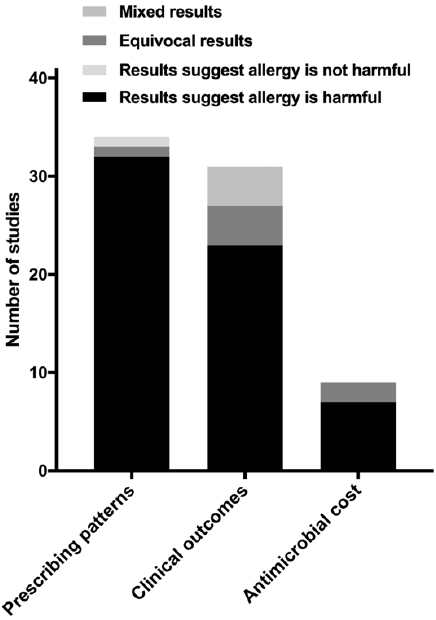
Most studies reported at least 1 result suggesting that antibiotic allergy labels increased exposure to broad-spectrum therapy, the number of antibiotics administered, or duration of treatment (Fig. 3, first column). Of the studies examining antibiotic exposure, 32 of 34 (94%) found that allergy-labeled patients received more broad-spectrum antibiotics (eg, vancomycin, linezolid, clindamycin, metronidazole, macrolides, fluoroquinolones and carbapenems) than non–allergy-labeled control patients (Table 2). Several studies that used penicillin or β-lactam allergy as the primary exposure confirmed that allergy-labeled patients received fewer, if any, drugs in these classes (Table 2). Notably, 1 study, which examined guideline adherence in penicillin allergic patients, found that there was increased adherence to guideline-recommended therapy when an allergy label was present.Reference Phillips, Gilchrist and Cooke18
Studies grouped by broad results in each of 3 domains: antibiotic exposure and prescribing patters (34 studies), clinical outcomes (31 studies) and healthcare related costs (9 studies).

Additionally, 7 of 10 studies examining inpatients (70%) found that antibiotic allergy labels significantly increased the number of antibiotics administered.Reference Macy and Contreras2,Reference Charneski, Deshpande and Smith19–Reference Sade, Holtzer, Levo and Kivity24 The other 3 studies reported equivocal results.Reference Imlay, Krantz and Stohs17,Reference Lucas, Arnold and Sommerfield25,Reference Trubiano, Cairns and Evans26 The only 2 outpatient studies to examine number of antibiotics per patient found that allergy-labeled patients received significantly more antibiotic prescriptions over a defined time period.Reference Su, Broekhuizen, Verheij and Rockmann27,Reference Kraemer, Caprye-Boos and Berman28 Also, 2 studies examined duration of treatment and both found that antibiotic allergy-labeled patients received longer treatment courses in the hospital and after hospital discharge.Reference Huang, Cluzet, Hamilton and Fadugba20,Reference Sade, Holtzer, Levo and Kivity24 Of 3 studies examining adverse drug reactions (and had enough observations to draw meaningful comparisons), 2 found that allergy-labeled patients were more likely to have adverse reactions to alternative therapy.Reference Desai, Kaplan, Chen and Macy29,Reference MacFadden, LaDelfa and Leen30 Furthermore, 2 studies demonstrated that patients with a penicillin allergy label were more likely to have other antibiotic allergies.Reference Blumenthal, Ryan, Li, Lee, Kuhlen and Shenoy31,Reference Blumenthal, Shenoy and Huang32 Additionally, one study found that allergy-labeled patients were less likely to have antibiotics narrowed while in the hospital, and another study found that more allergy-labeled patients received parenteral therapy than controls.Reference van Dijk, Gardarsdottir, Wassenberg, Oosterheert, de Groot and Rockmann23,Reference Conway, Lin and Sellick33
Antibiotic allergy labels and clinical outcomes
Overall, 31 studies examined the effects of antibiotic allergy labels on clinical outcomes (Table 3). Moreover, 23 (74%) of these studies found that allergy labels negatively influenced at least 1 outcome while having no positive effects. Also, 4 studies (13%) reported equivocal results that did not reach statistical significance. Another 4 studies (13%) had at least 1 result suggesting that allergy labels negatively influenced an outcome, but another suggesting it positively influenced another (Fig. 3, column 2).Reference Imlay, Krantz and Stohs17,Reference Charneski, Deshpande and Smith19,Reference Sade, Holtzer, Levo and Kivity24,Reference Blumenthal, Ryan, Li, Lee, Kuhlen and Shenoy31,Reference Blumenthal, Shenoy and Huang32,Reference Ponce, Raines, Reed, Vick, Richman and Hawn34–Reference Sousa-Pinto, Cardoso-Fernandes, Araujo, Fonseca, Freitas and Delgado36
Of the 31 (71%) studies reporting clinical outcomes, 22 examined some aspect of hospitalization: LOS, ICU admission, or hospital readmission. Of the 20 studies examining LOS, 11 (55%) found that allergy-labeled patients had significantly longer LOS.Reference Macy and Contreras2,Reference Charneski, Deshpande and Smith19,Reference Huang, Cluzet, Hamilton and Fadugba20,Reference Lucas, Arnold and Sommerfield25,Reference Desai, Kaplan, Chen and Macy29,Reference MacFadden, LaDelfa and Leen30,Reference Sousa-Pinto, Cardoso-Fernandes, Araujo, Fonseca, Freitas and Delgado36–Reference Turner, Moehring and Sarubbi40 Also, 8 studies found equivocal results and 1 found that allergy-labeled patients were hospitalized for shorter duration.Reference Imlay, Krantz and Stohs17,Reference Trubiano, Leung, Chu, Worth, Slavin and Thursky21,Reference van Dijk, Gardarsdottir, Wassenberg, Oosterheert, de Groot and Rockmann23,Reference Sade, Holtzer, Levo and Kivity24,Reference Blumenthal, Ryan, Li, Lee, Kuhlen and Shenoy31–Reference Conway, Lin and Sellick33,Reference Khumra, Chan and Urbancic41,Reference Knezevic, Sprigg and Seet42 Of 6 studies, 1 (17%) found that allergy-labeled patients were more likely to be admitted to the ICU, but all other studies reported no difference (Table 3).Reference Charneski, Deshpande and Smith19 Furthermore, 13 studies examined healthcare contact, and 10 of these studies (77%) found that allergy-labeled patients were more likely to be readmitted, to have infection recurrence, and to have more primary-care visits (Table 3).Reference Macy and Contreras2,Reference Huang, Cluzet, Hamilton and Fadugba20,Reference Trubiano, Leung, Chu, Worth, Slavin and Thursky21,Reference van Dijk, Gardarsdottir, Wassenberg, Oosterheert, de Groot and Rockmann23,Reference Lucas, Arnold and Sommerfield25,Reference Su, Broekhuizen, Verheij and Rockmann27,Reference Kraemer, Caprye-Boos and Berman28,Reference MacFadden, LaDelfa and Leen30,Reference Turner, Moehring and Sarubbi40,Reference Knezevic, Sprigg and Seet42 Also, 1 study found that allergy-labeled patients were readmitted less than control patients, and the remaining 2 studies had equivocal results (Table 3).Reference Charneski, Deshpande and Smith19,Reference Conway, Lin and Sellick33,Reference Khumra, Chan and Urbancic41
Of the studies examining MDR or opportunistic infections, 10 of 15 (67%) found that allergy-labeled patients were more likely to have an MDR infection or to be colonized with an MDR organism. Of the 9 studies that addressed C. difficile infection specifically, 4 (44%) found that allergy-labeled patients were more likely to experience infection.Reference Macy and Contreras2,Reference Huang, Cluzet, Hamilton and Fadugba20,Reference Khumra, Chan and Urbancic41,Reference Blumenthal, Lu, Zhang, Li, Walensky and Choi43 Most studies that analyzed methicillin-resistant Staphylococcus aureus (MRSA) (4 of 4, 100%) and vancomycin-resistant Enterococcus (VRE) infections (2 of 3, 67%), respectively, found that allergy-labeled patients were more likely to develop infection or to be colonized with a resistant organism than control patients (Table 3).Reference Macy and Contreras2,Reference Lam, Staicu, Conn and Ramsey16,Reference Blumenthal, Ryan, Li, Lee, Kuhlen and Shenoy31,Reference Sousa-Pinto, Cardoso-Fernandes, Araujo, Fonseca, Freitas and Delgado36,Reference Blumenthal, Lu, Zhang, Li, Walensky and Choi43
Overall, 13 studies analyzed hospital mortality. Furthermore, 3 studies (23%) found that allergy-labeled patients were more likely to die in the hospital, and 1 study (8%) found that allergy-labels conferred a mortality benefit.Reference Charneski, Deshpande and Smith19,Reference Huang, Cluzet, Hamilton and Fadugba20,Reference MacFadden, LaDelfa and Leen30,Reference Sousa-Pinto, Cardoso-Fernandes, Araujo, Fonseca, Freitas and Delgado36 All other studies (n = 8, 69%) reported equivocal results that did not reach statistical significance (Table 3).Reference Macy and Contreras2,Reference Trubiano, Leung, Chu, Worth, Slavin and Thursky21,Reference van Dijk, Gardarsdottir, Wassenberg, Oosterheert, de Groot and Rockmann23,Reference Sade, Holtzer, Levo and Kivity24,Reference Blumenthal, Shenoy and Huang32,Reference Turner, Moehring and Sarubbi40–Reference Knezevic, Sprigg and Seet42
Furthermore, 2 studies found that antibiotic allergy labels were associated with an increased risk of surgical site infection.Reference Blumenthal, Ryan, Li, Lee, Kuhlen and Shenoy31,Reference Sun, Wang and Tang44 Also, 1 study that focused on obstetric patients found that there were more cesarean deliveries in a large cohort of mothers with a penicillin allergy label than among control patients (Table 3).Reference Desai, Kaplan, Chen and Macy29 Other less frequently reported outcomes are included in the “other” column of Table 3.
Antibiotic allergy labels and healthcare costs
Only 9 studies examined the impact of antibiotic allergy labels on healthcare-related costs, and 7 (77.7%) found that allergy labels increased at least 1 cost component (Fig. 3, column 3).Reference Macy and Contreras2,Reference Huang, Cluzet, Hamilton and Fadugba20,Reference Sade, Holtzer, Levo and Kivity24,Reference Kraemer, Caprye-Boos and Berman28,Reference Sousa-Pinto, Cardoso-Fernandes, Araujo, Fonseca, Freitas and Delgado36,Reference Irawati37,Reference MacLaughlin, Saseen and Malone45 Cost data included multiple currencies from various countries. No studies found that allergy labels were associated with cost savings (Fig. 3, column 3). For example, 2 of 3 studies examining the cost of inpatient antibiotics found that allergy-labeled patients had a significantly higher cost of treatment than nonallergic control patients (Table 4).Reference Sade, Holtzer, Levo and Kivity24,Reference Irawati37 Similarly, 3 of 3 studies that examined the costs of outpatient antibiotic treatment found that patients with an allergy label were prescribed more expensive drugs (Table 4).Reference Sade, Holtzer, Levo and Kivity24,Reference Kraemer, Caprye-Boos and Berman28,Reference MacLaughlin, Saseen and Malone45 Of 5 studies examining the total cost of hospitalization, 4 found that allergy-labeled patients incurred higher costs than nonallergic control patients, and the fifth study showed a trend toward significance (Table 4).Reference Macy and Contreras2,Reference Huang, Cluzet, Hamilton and Fadugba20,Reference Sousa-Pinto, Cardoso-Fernandes, Araujo, Fonseca, Freitas and Delgado36,Reference Irawati37,Reference Sousa-Pinto, Araujo, Freitas and Delgado39
Evidence grading
The quality of studies ranged from 3 to 9 stars. Only 9 of 41 studies (22%) scored a maximum quality score of 9 stars, but 20 studies (49%) received scores of 7 or 8 stars (Supplementary Material online). Also, 5 studies (12%) had scores of 6, and 7 studies (17%) had scores ≤5. The mean value of stars achieved by all studies was 7.05, and the quality of studies did not differ by domain: 7.24 for antibiotic exposure, 7.28 for clinical outcomes, and 7.55 for healthcare cost. Studies that failed to achieve a high-quality score typically had concerns over comparability of allergy-labeled and control cohorts, as well as poorly defined follow-up for outcomes of interest.
Discussion
We identified 41 studies that directly compared patients with an antibiotic allergy label to non–allergy-labeled patients in at least 1 of 3 domains: antibiotic exposure and prescribing patterns, clinical outcomes, and healthcare-related costs. Most of these studies were published since 2016, underscoring the recent recognition of potential complications associated with antibiotic allergy labels. Indeed, we found that most studies published on this topic concluded that antibiotic allergy labels are detrimental across these domains of analysis. Perhaps most notably, nearly all studies examining antibiotic exposure found that allergy-labeled patients receive more broad-spectrum and inappropriate therapy, indicating that allergy labels do influence treatment decisions. The consequences of these differences in treatment manifest as longer hospital stays, higher rates of readmission, colonization or infection with MDR organisms, and higher costs for allergy-labeled patients. These findings build upon a previous systematic review that included 8 studies published before January 2016; this review concluded that allergy labels are associated with suboptimal drug selection and negative clinical outcomes.Reference Wu, Langford and Schwartz11
A strength of the present review is the breadth of patient populations and settings of the included studies. For example, studies included inpatients, outpatients, patients with immunocompromised states (cancer and transplant patients), patients undergoing general surgery and subspecialty procedures, outpatient dentistry, pediatrics, and family medicine clinics. Notably, the included studies were performed in a variety of healthcare systems, including the United States (both private practice and academic centers), the United Kingdom, Australia, Canada, the European Union, and Israel. Regardless of setting or healthcare system, these studies arrived at similar conclusions.
Despite the breadth of these studies, most studies included in this systematic review examined adult patients in the inpatient setting, which suggests that the strongest conclusions are generalizable to this group of patients, but not necessarily to other demographics. For example, only 6 studies included patients <18 years of age. This factor is important because many antibiotic allergies are acquired during childhood and their impact on pediatric patients remains a relatively understudied area. Similarly, only 7 studies included patients (of any age) in the outpatient setting. The growth of allergy de-labeling programs in hospitals suggests that the problem of allergy overdiagnosis is receiving recognition in this setting.Reference Blumenthal, Peter, Trubiano and Phillips6-Reference Krishna, Huissoon and Li8,Reference Trubiano, Beekmann and Worth46 However, most antibiotic prescriptions originate in the outpatient setting.Reference Frost, Knepper, Shihadeh and Jenkins47,Reference Suda, Hicks, Roberts, Hunkler, Matusiak and Schumock48 Therefore, this is an important population for future investigation and education to ensure that outpatient-based clinicians, especially those practicing in offices, urgent care clinics, and emergency departments, are well informed about the harms associated with antibiotic allergy labels.
The difference in antibiotic exposure between those with and without allergies is not surprising. This is especially true for β-lactam antibiotics because this is the most common antibiotic allergy reported and the most commonly prescribed class of antibiotics in hospitalized patients.Reference Baggs, Fridkin, Pollack, Srinivasan and Jernigan49 However, the antibiotics to which allergic patients are frequently exposed include agents like vancomycin or clindamycin among others with broad-spectrum activity. The differences in antibiotic exposure likely contribute to the differences observed across numerous studies in terms of both clinical and economic outcomes. Exposure to broader-spectrum antibiotics has the potential to increase risk of Clostridium difficile infection or MDR colonization, and in many cases, the alternative agents used for allergic patients may be considered second-line therapies.Reference Macy and Contreras2,Reference Blumenthal, Lu, Zhang, Li, Walensky and Choi43,Reference Tabak, Srinivasan and Yu50–52 The differences in economic costs may be attributable not only to receipt of suboptimal therapy but also to higher costs associated with alternative agents unto themselves.Reference Suda, Hicks, Roberts, Hunkler, Matusiak and Schumock48,Reference Ross, Hersh, Kronman, Newland and Gerber53
We used the Newcastle-Ottawa evidence grading tool for this review. These studies were observational, and most were rated relatively highly, in part because our inclusion criteria required a control group. In general, high-quality and lower-quality studies reached similar outcomes; thus, there does not appear to be evidence that the conclusions of this review were biased by lower-quality studies. Many of these studies used epidemiologic methods to mitigate the consequences of confounding variables, which may differ between those with and without allergies and may affect matching and multivariable modeling. Although most of these studies are retrospective and cannot eliminate the possibility of residual confounding, many of the studies received high quality scores, which adds confidence to the conclusion that the differences observed between groups are due to the allergy label rather than other unmeasured confounding. Importantly, the studies included in each domain had similar NOS scores indicating that our conclusions about each domain are supported by similar-quality evidence.
Certain patient groups, such as immunocompromised patients, may be at higher risk of receiving broad-spectrum antibiotics regardless of allergy status. Moreover, 4 studies specifically examined antibiotic prescribing patterns and clinical outcomes in cancer and transplant patients.Reference Imlay, Krantz and Stohs17,Reference Huang, Cluzet, Hamilton and Fadugba20,Reference Trubiano, Leung, Chu, Worth, Slavin and Thursky21,Reference Khumra, Chan and Urbancic41 All 4 studies showed that allergy-labeled patients received more broad-spectrum therapy (Table 2). All 4 studies also demonstrated at least 1 negative clinical outcome, and 2 studies demonstrated an increased mortality in allergy-labeled patients with bone marrow transplant, solid-organ transplant, or hematological malignancy.Reference Imlay, Krantz and Stohs17,Reference Huang, Cluzet, Hamilton and Fadugba20 These findings suggest that allergy labels further exacerbate the treatment of already-complex medical conditions.
Our study has several limitations. This was a systematic review and not a meta-analysis, which is largely due to the variability with which results were reported between studies. Despite the consistency of findings between studies, study designs did vary, and our ability to control for confounding was limited. Outside broad categories, such as penicillin allergy, most studies did not provide detail about the types of antimicrobial allergies or severity of reactions. Although we used a comprehensive search strategy without language or publication restrictions to minimize the potential for biases, we may have missed some studies, including conference abstracts.
Collectively, our systematic review suggests that antibiotic allergy labels are consequential for patients across multiple domains. Allergy-labeled patients are prescribed broader-spectrum antibiotics and longer durations of therapy, and they may be unnecessarily exposed to multiple drugs for a single infection. Allergy-labeled patients also have worse clinical outcomes and increased healthcare-related costs than comparable control patients. Given that only a small proportion of patients with allergy labels are truly allergic, implementation of safe and efficient interventions, including de-labeling based on history along with skin testing and oral challenge, are needed to de-label allergies. Furthermore, enhanced education about the harms of allergy overdiagnosis may aid in preventing unnecessary allergy labels in the first place.
Supplementary material
To view supplementary material for this article, please visit https://doi.org/10.1017/ice.2020.1229
Acknowledgments
Financial support
This study was supported by the Agency for Healthcare Quality and Research (grant no. K08HS023320).
Conflicts of interest
All authors report no conflicts of interest relevant to this article.