Introduction
According to International Labour Organization (ILO) data published in 2015, paid domestic work in Latin America accounts for about 15 percent of the urban female labor force (OIT, 2015), concentrating 37 percent of the world's domestic workers to this region.Footnote 1 In twentieth century Argentina, this sector represented around 30 percent of the economically active female population, and although its relative importance has declined, it continues to be one of the main sources of employment for lower-income women in the country's urban centers.Footnote 2
Despite the importance that this sector has had, its place in the history of work has been rather marginal.Footnote 3 This situation has not been unique to this country, nor the region. The difficulty of accessing sources that refer to the life and work of servants; the lack of official data or the deficiencies of available statistics; the indifference of the labor and feminist movements—at least in their beginnings—are some of the reasons that have been put forward to understand the lack of attention to the sector in other contexts.Footnote 4 Moreover, interest in industrialization as a form of production organization, in the factory worker and his political activity, in free and salaried work—defined as a predominant modality in modern societies—also explains why other activity areas and forms of work were not considered attractive for a long time.Footnote 5 These restrictive views of the world of labor and the ambiguous nature of domestic service compared to more traditional conceptualizations of work, added to the feminization of the sector and the underestimation of the domestic sphere as a social and work-related space, also make it possible to understand its irrelevance.
This situation began to shift with the development of historical demography, the history of the family, and history “from the bottom up.” Above all, from the 1970s onward, gender studies and women's history also made a distinctive contribution to the subject. Several analyses sought to account for the subordination of women in contemporary societies and their contribution to the processes of production and social reproduction. They pointed to the invisibility of domestic work and the need to recognize its importance, problematizing the significance of the domestic in so-called “women's studies.”Footnote 6 Both in the United States and Europe, domestic and care work has long attracted historians' attention, while in Latin America, it became mostly an object of interest for the social sciences.Footnote 7
In Latin America, studies have analyzed domestic service in relation to internal migration, the development of the informal labor market, and the characteristics of underdeveloped economies.Footnote 8 They were interested in the experiences of organization and the unionization of domestic workers, among other forms of resistance.Footnote 9 They investigated the characteristics and transformations of the sector, the regulatory frameworks, and the restricted access to labor rights and social protection.Footnote 10 They also looked at the complex relations between employers and domestic service, the reproduction of social inequalities that underlie these labor connections—based on class, gender, ethnicity or race, migration status—the dilemmas raised by women workers’ maternity, the emotional dimension of these jobs, and their global reach.Footnote 11 Some research has examined the participation of children in the sector and the role of the state's welfare policies in this phenomenon, opening up new analytical perspectives by linking it to the working class's social reproduction processes.Footnote 12 The representation of servants, among other topics, in Latin American cinema, art, and literature has also been explored.Footnote 13
Based on a dense and heterogeneous body of sources, this article contributes to historical studies on domestic service by analyzing its characteristics in the city of Buenos Aires at the end of the nineteenth and the beginning of the twentieth century. It analyzes the importance that the sector had in porteño society at the height of the modernization era. It reconstructs the changes in the socio-demographic profile of the servants and investigates their living and working conditions. It describes how this specific labor market was structured and how it functioned. It demonstrates that the complexity of the sector responded to the coexistence of different occupational categories, functions, and hiring conditions; of different forms of work and experiences of domesticity; of diverse remunerative practices and “arrangements” in which work and family were interwoven particular ways. Since studies of domestic service in Latin America have focused largely on the status of women and the gender of work, this article seeks to contribute especially to the study of child domestic labor and the analysis of its relationship to the broader phenomenon of child circulation and the process of social reproduction in urban contexts.
During those years, the city of Buenos Aires experienced the most spectacular transformations in its history as a result of the agro-export boom and the arrival of millions of immigrants from Europe. In 1890, it was the most populated city in Latin America, and by 1914, it had become the largest city in the southern hemisphere and the second-most populous on the Atlantic coast, after New York.Footnote 14 Important transformations took place in the labor world as processes of social change shook its traditional hierarchies to their core, as well as ideas and practices around family, work, children, education, the state, and the law. Within this framework, the study of the transformations of domestic service is central to learning about life and work experiences in the city, since in those years the sector became a gateway to the urban labor market and one of the most frequent occupations for thousands of newly arrived immigrants, women, and poor children.
This article stems from a broader research project that, in its various dimensions, engages with the history of work, women's history and gender studies, and the history of the family and childhood.Footnote 15 The issues raised here take on special relevance in the light of their contributions, insofar as they enable new approaches and questions about an already classic subject and allow it to be integrated into broader discussions of social and cultural history. In conceptual terms, it draws on the debates inspired by English social history, which has had substantial influence on local and regional historiography.Footnote 16 It also returns to the dialogues that were established in this tradition by a group of feminist historians and their critical considerations on the way the world of work has been approached, including Carolyn Steedman, who has drawn particular attention to the silenced world of domestic services in the historical process of the creation of the English working class.Footnote 17
This research draws on a combination of documentary sources of different types and levels. Domestic service is difficult to grasp in its complexity, and several elements have undermined its visibility. It was only possible to advance in its reconstruction through a joint analysis of national and municipal population censuses; census returns (which are the records that census-takers compile during the surveys); publications of the National Labor Department; texts and legislative debates at the municipal and national levels; and job advertisements in the newspaper La Prensa and illustrated magazines such as Caras y Caretas, which were prominent periodicals of the time because of their popularity and modernity. Furthermore, research was carried out in the Fondo Instituciones de la Sociedad de Beneficencia y Asistencia Social (Social Welfare and Benefit Society Institutions Fund), located in the National General Archive (Archivo General de la Nación or AGN), a collection that has been used in the field of the history of women, family, and childhood, and which preserves precious documents that have not yet been sufficiently explored by the social history of work.
Domestic Service in the Urban Scene at the Turn of the Century
Starting in the last third of the nineteenth century, the city of Buenos Aires underwent profound transformations associated with the country's consolidation in the world market (agro-export boom) and immigration, among other processes. This urban center became an essential transit point for the movement of goods and millions of immigrants from Europe.Footnote 18 Integrated in the international trade circuit, the city suddenly burst onto the global urban scene, standing out among the region's metropolises.Footnote 19
The population boom, along with the growth of economic activities and the expansion of consumption, generated important transformations in the world of labor. The employed population in the city grew over ten times in size between 1869 and 1914, going from ninety thousand to more than one million people. Immigrants, who represented between 60 and 70 percent of the working population, and of whom European men and women were the most numerous, were the ones who largely met the workforce needs.Footnote 20 Much less significant for that period was the immigration from bordering countries (Paraguay, Uruguay, Chile, and Bolivia). Moreover, the native population came largely from the city or the countryside surrounding Buenos Aires, as well as from other provinces and national territories. Under the homogenizing force of the expression “Argentines,” and beyond the important presence of populations of European origin or descent (even before the massive migration, especially in the east of the country), indigenous people, afro-descendants, mulattos, and mestizos completed the physiognomy of the local groups.
The city offered a considerable diversity of jobs. However, men and women did not have the same opportunities since women were marginalized from a large number of work activities.Footnote 21 Despite the expansion and diversification of the occupational structure, women worked mostly as seamstresses, dressmakers, domestic servants, cooks, laundresses, and ironers.Footnote 22 To a lesser extent, they were incorporated into food, cigarette, match, or textile factories and workshops, in the meat processing industry, and also did home-based work.Footnote 23 Those with some qualifications or higher levels of education worked in commercial establishments as saleswomen, or were called upon to perform “desk work” as a bureaucratic-administrative apparatus developed in private activity and in the numerous public areas.Footnote 24 Others joined the services as telephone operators, teachers, and nurses and, at this stage, a few ventured into “professions.”Footnote 25
What was the place of domestic service in this urban scene? In the city of Buenos Aires in the late nineteenth and early twentieth centuries, domestic service was a complex area of jobs and relations. It involved the performance of countless tasks and activities: cleaning, washing, ironing, cooking, waiting on the table, taking care of children, running errands, delivering messages, etc. These and many other chores contributed to the daily reproduction of family members. Since the limits between domestic space and business were often diffuse, the work of serving was not exclusive to the home. Indeed, the expression “servants” designated individuals who carried out a wide range of activities within and outside the domestic sphere.Footnote 26
“Servant” and “domestic servant” were the two most common terms for workers in this sector. The most requested figure, and possibly the one that was subjected to the most intense work day, was the “servant” (simply) or the one hired “for-all-service” or “for-all-work.”Footnote 27 On these women (and we say women because they were generally the ones placed under such conditions) rested much of the housework and the service needs of the families with whom they were placed. Other times, domestic tasks and functions gave way to other figures that could create hierarchies and differences within the sector: housekeepers, wet nurses, butlers and maids, nannies, cooks, gardeners, coachmen, and footmen, among others.Footnote 28
The majority were hired as “live-in” help (“con cama”), although there were also those who worked “sin cama” for the same family, or else “by the hour” for different employers. The servants were part of the families’ lives and the everyday aspects of their homes, and it was in this space of intimacy and proximity that their relationships were defined. Especially for those who lived in the same place as they worked, availability for service was permanent, and workdays were long and could be exhausting. Their lack of autonomy was more palpable, and extremely dependent relationships arose, since it was through the employer that their needs for housing, food, and clothing were met. In addition, their livelihoods conditioned the most diverse aspects of their lives.
The living and working conditions were linked to the living standards of the employers and the place they gave them within the home and family life, depending on their habits and customs.Footnote 29 It was not the same to work as part of the large service staff of a highborn family as to be the servant “for all work” of a numerous family with limited resources. In turn, experiences of domesticity were conditioned by the gender, national origin, ethnicity, race, and age of the domestic servant. In this sense, being a Japanese butler was not the same as being an indigenous girl placed by public charity in a family home “to serve.” Eligibility for either position depended on different attributes that led to distinctions within domestic service, which entails an exploration of the demographic and social landscape of domestic work.
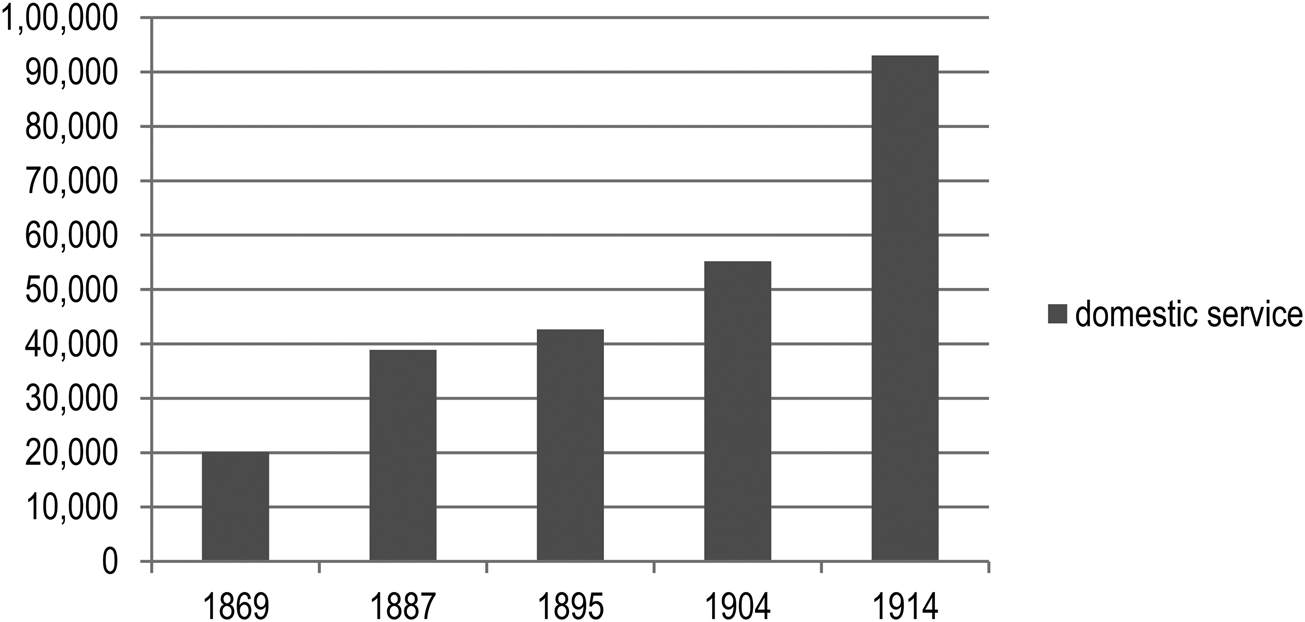
Population employed in domestics service in the city of Buenos Aires, 1869–1914
Source: Compilation based on National Population Censuses of 1869, 1895, and 1914 and General Population, Building, Commerce, and Industry Censuses of the City of Buenos Aires of 1887, 1904, and 1909.

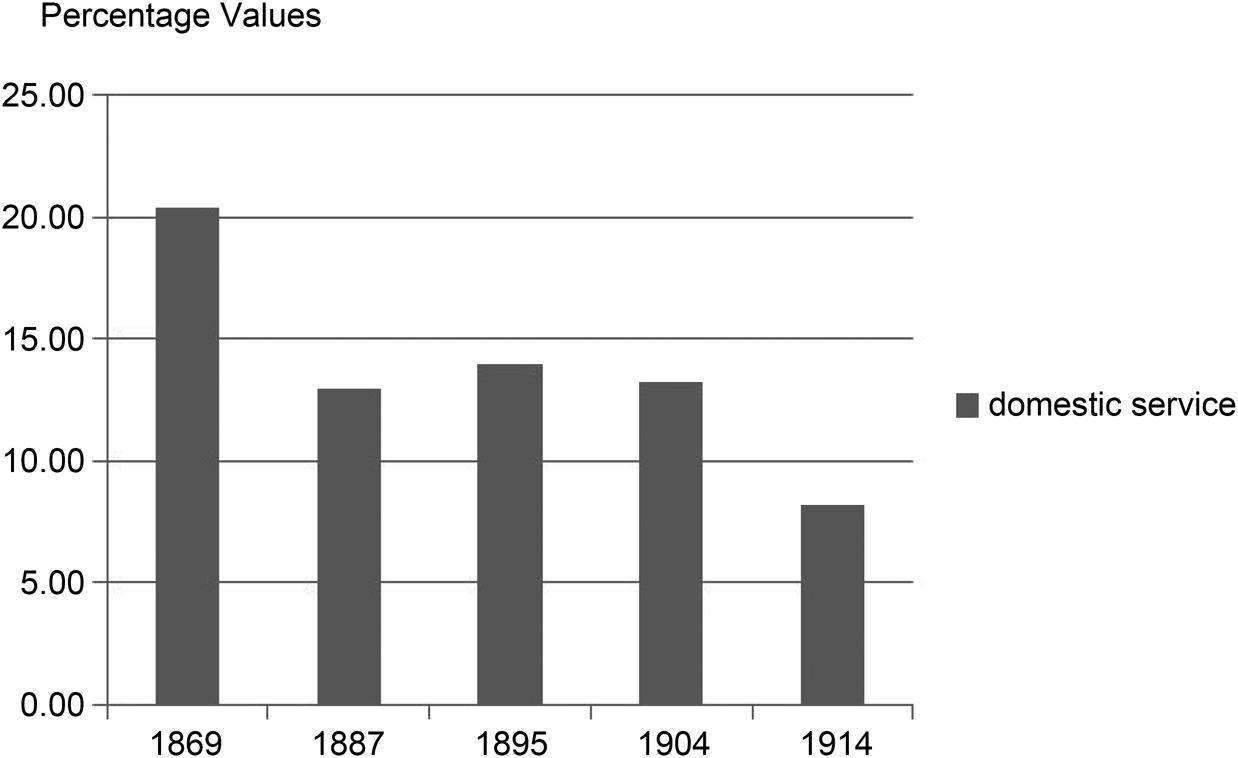
The importance of domestic service was substantial because it was among the most numerous sectors of the urban workforce, and was comprised of a large mass of women and men who performed personal service work in the city.Footnote 30 With far from negligible levels of representation, by 1869, the sector had absorbed around 20 percent of the total working population, totaling some twenty thousand people. Its relative importance decreased gradually until it represented around 8 percent of the workforce by 1914. However, in absolute terms, this labor segment continued to grow its ranks and quadrupled in number, surpassing ninety thousand people.Footnote 31
Population employed in demestics service over total population “with occpation”. City of Buenos Aires, 1869–1914
Source: Compilation based on National Population Censuses of 1869, 1895, and 1914 and General Population, Building, Commerce, and Industry Censuses of the City of Buenos Aires of 1887, 1904, and 1909.

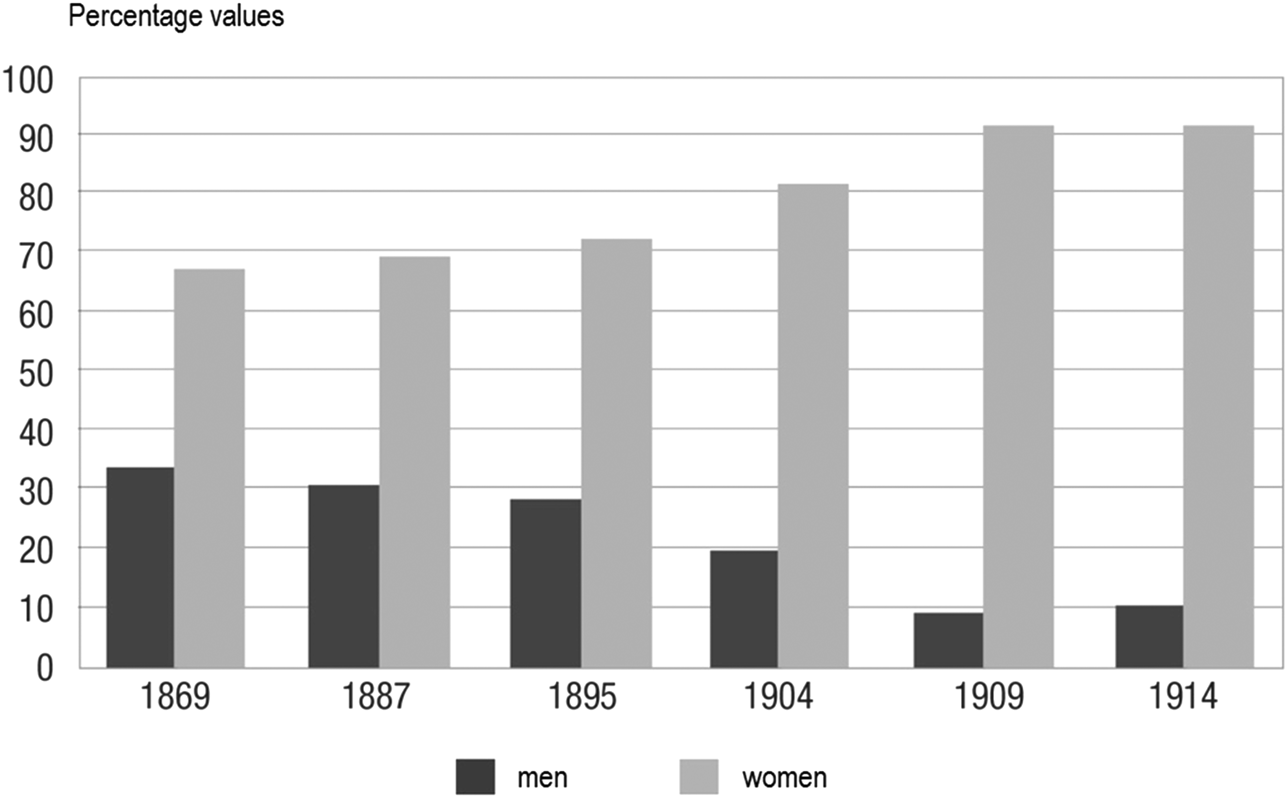
During those years, domestic service accounted for at least a quarter of the total number of working women in the city of Buenos Aires. In turn, the composition of the sector changed between 1869 and 1914, since the proportion of women increased significantly and went from representing 70 to 90 percent of its population, which amounted to about seventy-eight thousand women. For a later period, national censuses recorded that women's participation in the sector had reached 94 percent by 1947 and 97 percent by 1960.
Despite the decrease in male participation, men's presence in the sector was common even in those years, and they could occupy different positions within the sector.Footnote 32 Although men and women shared positions such as cooks, maids, and servants, it is also possible to identify a certain sexual division of labor. Women were employed as wet nurses, housekeepers, seamstresses, laundresses, nannies, ironers. Men were valets, chefs, scullions, coachmen, doormen, gardeners.Footnote 33 These differences in their positions in personal service work undoubtedly could allow for different experiences, trajectories, and work networks.
Men and women in domestic service, city of Buenos Aires, 1869–1914
Source: Compilation based on census returns of the National Population Census Booklets of 1869; National Population Censuses of 1895 and 1914; and General Population, Building, Commerce, and Industry Censuses of the City of Buenos Aires of 1887, 1904, and 1909.

Moreover, beyond the greater proportion of women, the feminization of domestic service implied its gendering and its growing identification as a feminine job.Footnote 34 Moya has pointed out that, regardless of the chronological differences observed in various parts of the world, this trend toward the feminization of the sector is a process that has been observed at a global level over the last two centuries.Footnote 35
Initially it was mostly the adult men who changed occupation. In fact, by the middle of the twentieth century, while some of the masculinized service jobs started to disappear, others were separated from domestic service as the conditions in which they were exercised were transformed, depending on the case (drivers, chefs, scullions, valets, and footmen, among others).Footnote 36 The decline in male domestic service then was largely due to another condition: age.
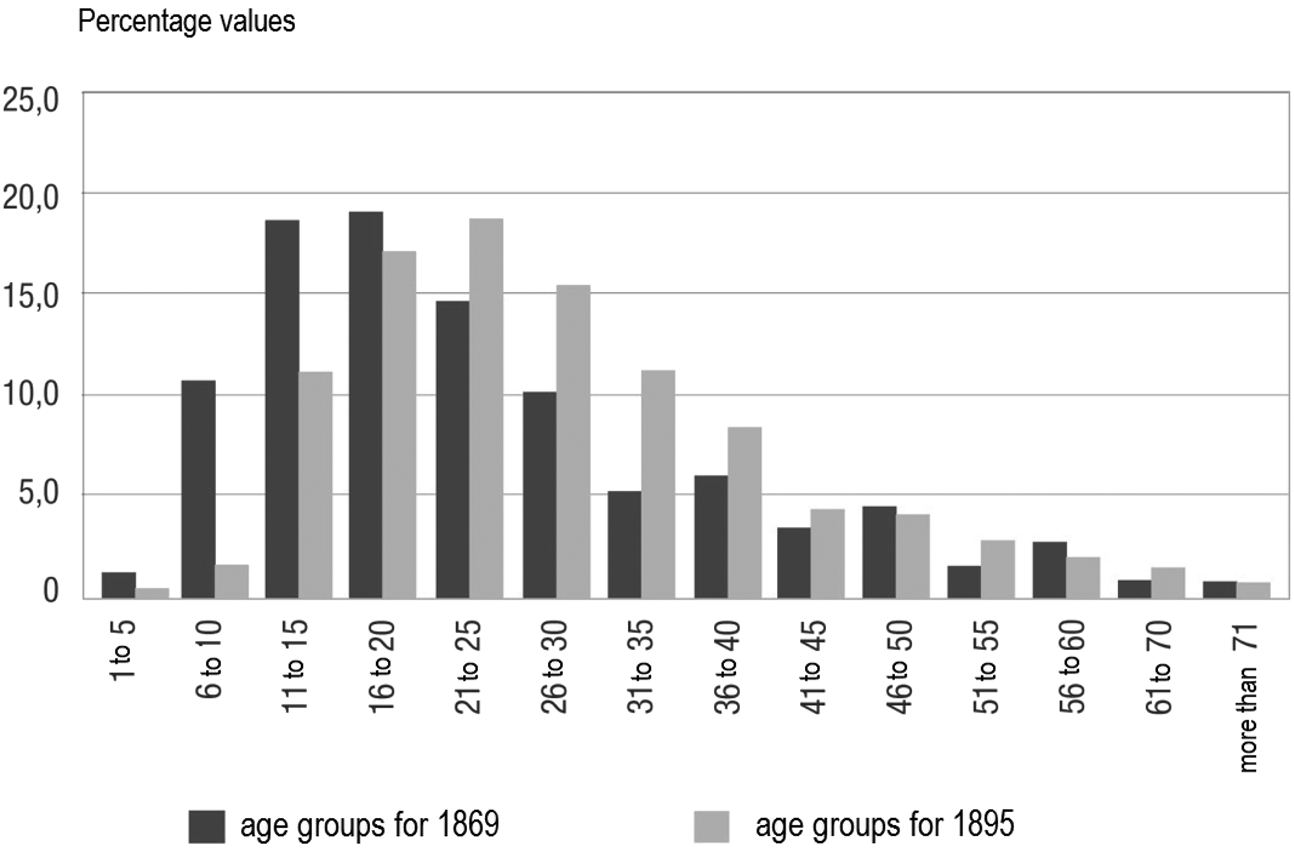
Census returns provide insight into the ages of these populations and make it possible to complement the information provided by the census, which had problems registering the work of children in general.Footnote 37 Despite these limitations, it can be estimated that about half of the population engaged in domestic services was under twenty years of age by 1869, and children under fourteen represented more than a quarter of the total. Two and a half decades later, at least 30 percent of registered servants were under twenty years of age.
Population employed in domestic service by age group, city of Buenos Aires, 1869 and 1895
Source: Compilation based on census returns of the National Population Census Booklets of 1869 and 1895.

The analysis of advertisements published in the newspaper La Prensa indicates that the demand for minors was still very high in 1910 and, even more interestingly, that the market organized around job advertisements showed a chronic deficit that resulted in a permanent gap between the large number of minors in demand and the few who were offered. Moreover, Pagani and Alcaraz, who analyzed the evolution of the child labor market in the newspaper La Nación, noted that the number of advertisements offering and requesting domestic services was much higher than in other sectors, such as manufacturing or commerce.Footnote 38
From the age of six, children began to work in this area to earn a living, although in the final quarter of the century there was a significant decrease in the six to ten year age group and a sustained increase in the ten to fourteen year age group. In subsequent years, job announcements confirm that it continued to be common to seek children aged ten and over to perform domestic tasks, while the participation of younger children seems to have decreased. The boys (muchachos) were called upon as servants or maids to perform domestic work in general (“handy in all service,” “for household service”) or for more specific tasks (“for cleaning yards and windows,” “for errands,” “for dining and cleaning service,” “for kitchen help”). On the other hand, the girls (muchachas) were hired as servants (“for little service” or “for all work,” depending on the case) and also as nannies (“to look after a child,” “to carry a girl”).Footnote 39
Many families requested boys and girls for domestic service because they were cheaper. While young adult or adult servants were offered and requested for no less than 20 pesos a month at the beginning of the century, boys’ and girls’ salaries were generally between 10 and 20 pesos a month. Other forms of payment were also very common, with or without an additional wage, which involved the exchange of services for the fulfillment of a series of basic needs (housing, food, and clothing) or else, the promise of instruction or learning of a trade.Footnote 40
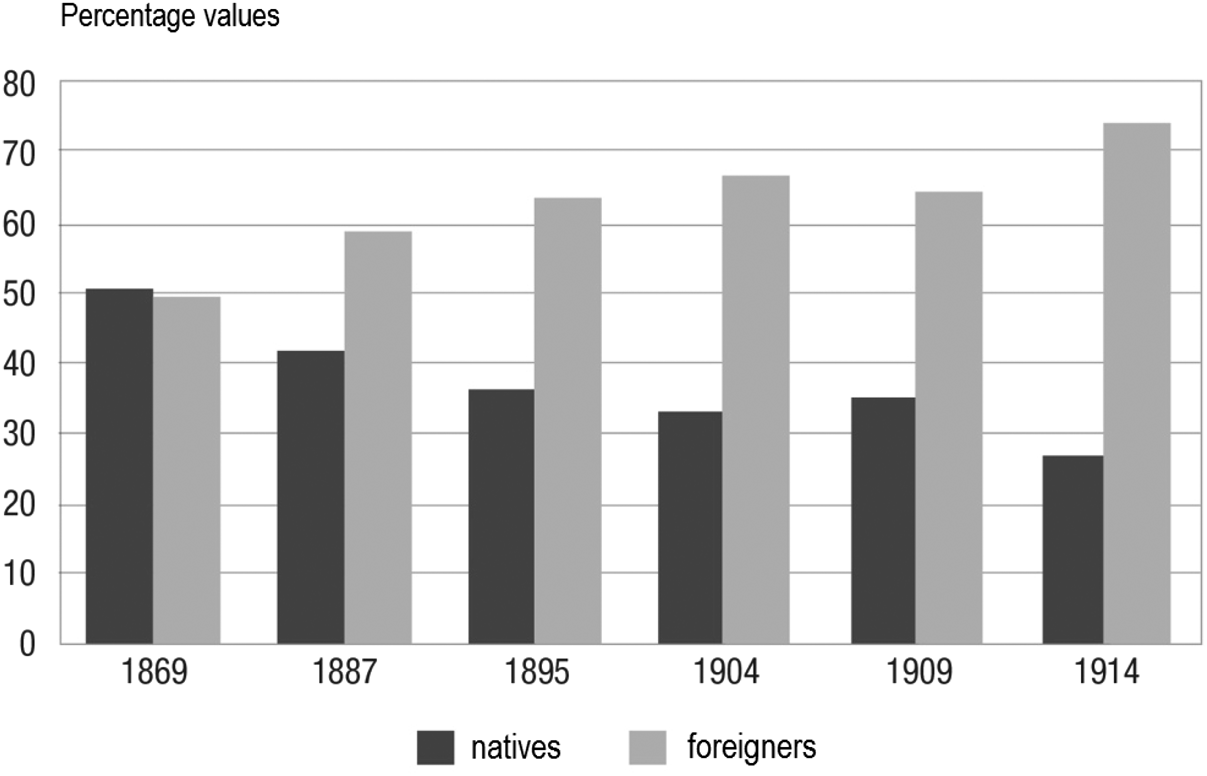
With the great immigration of the last quarter of the nineteenth and beginning of the twentieth century, a substantial change occurred in the sociodemographic profile of domestic service. While until then the sector was comprised of criollo, indigenous, mestizo, mulatto, and Afro-descendant groups, this ratio of “natives” to “foreigners” began to reverse in favor of the latter who, by the end of 1880, outnumbered the former. By 1914, foreigners represented more than 70 percent of the sector of domestic service.
Natives and foreigners in domestics service, city of Buenos Aires, 1869–1914
Source: Compilation based on census returns of the National Population Census Booklets of 1869; National Population Censuses of 1895 and 1914; and General Population, Building, Commerce, and Industry Censuses of the City of Buenos Aires of 1887, 1904, and 1909.

Although the presence of “foreign” groups in this period was significant in most occupations, in the case of domestic service not only did they not lose relative importance, but their number doubled in absolute terms. By contrast, the number of “native” populations grew very slowly in domestic service because these jobs tended to be marginal compared to other occupational alternatives, especially for men.Footnote 41 This over-representation of European immigrants in domestic service at this stage of major international population movements has also been observed in other immigration countries such as the United States, Canada, and Australia.Footnote 42
Many immigrants would try to place themselves in a family home upon arrival in the city since domestic service functioned as a gateway to the labor market. The words of a councilman during the presentation of a project aimed at regulating domestic service at the municipal level in 1912 reinforce this idea by pointing out that, in Buenos Aires, the sector had been dominated by immigrants who arrived in the country “without any knowledge whatsoever” and who began their life in America working in domestic service.Footnote 43 The employment ads confirm the growing presence of immigrants in the labor market organized around domestic service. Many pointed to their recent arrival in the country when seeking employment.Footnote 44 In the ads, the mention of being “recently arrived” could have been a strategy to stress their vulnerability and therefore pursue a quicker hiring. Besides economic necessity, the ads also show specific requirements and preferences from the immigrants regarding the conditions of life and work, such as the size of the family, idiomatic and other cultural preferences.Footnote 45
On the other hand, on the side of the employers, surely that condition of “newcomers” could be translated into smaller salary expectations, fewer demands, and the absence of vicelike habits that those who already knew the characteristics of the market and the local idiosyncrasy could have. This was the evaluation of a reporter from Caras y Caretas when he published an article in which he described the details that employers faced when dealing with domestic service.Footnote 46 With an ironic tone, the author mentioned that one of the recommendations he had been given was to take “always newly arrived girls” because they were not “corrupted,” because they had no salary expectations, and because since they supposedly “arrived ignorant of everything” it was possible to “educate them” in the tastes and habits of the employer.Footnote 47
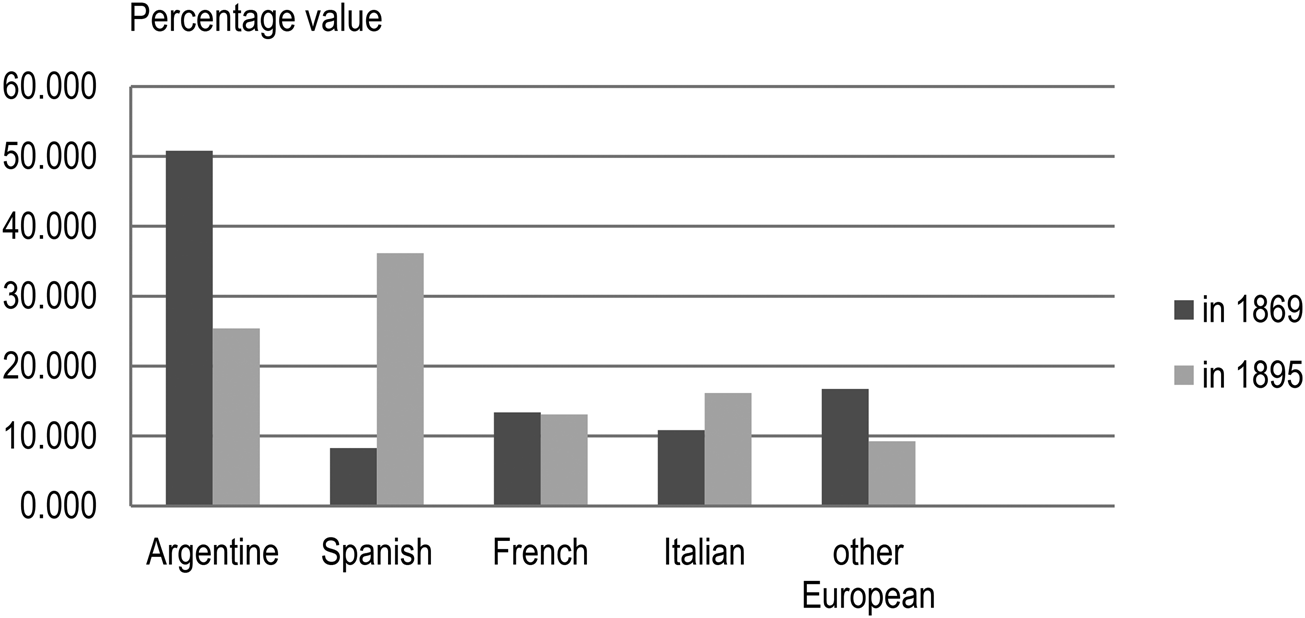
Regarding ethno-national origins, at first, the most numerous groups in the sector were the Italians, the French, and the Spanish, and, to a lesser extent, the English, the Irish, the Germans, and the Swiss. Migrants from neighboring countries were in the minority, and among them the presence of orientales (Uruguayans) and Paraguayans stood out. The relative importance of these two groups changed over the years, with those of Spanish origin having the greatest weight in the field, so much so that by 1895, they had already outnumbered the native populations. The Italians and French followed, and although almost all nationalities were represented in the area, the truth is that the association between Spanish nationality and domestic service was increasingly strong, to the point that it is possible to think of the formation of an ethnic niche.Footnote 48
Population employed in domestic service by nationality, city of Buenos Aires, 1869 and 1914
Source: Compilation based on census returns of the National Population Census Booklets of 1869 and 1895.

The joint analysis of age and ethno-national origin confirms this trend. Among children under fifteen years of age who performed service work, there was a notable increase in the presence of “foreigners” (who went from representing 27 percent to 44 percent of the sector in that age group between 1869 and 1895). If we also consider that among the “natives” were the children of immigrants born in the country, there is no doubt about the significant influence that immigration had on the sector during the period of study.Footnote 49
The employment advertisements also show the growing presence of immigrants—especially of European origin—in the labor market created around domestic service. The usual reference to nationality suggests that, like gender and age, the ethnicity of the servants operated as a differentiation mechanism within the sector, which, in the case of the servants, was translated into greater or fewer possibilities of obtaining a placement.Footnote 50 On the side of the employers, there were clearly different evaluations of the servants regarding ethno-national origins since the preferences (and prejudices) of the employers, the cultural and linguistic similarities (or difference), and the migratory and social networks also carried weight when demanding service.Footnote 51
Domestic service was a gateway to the world of urban work and functioned as a kind of “refuge-job.” The family situation of the servants was diverse and complex: While some had no family commitments, others were married or widowed and many had children or dependents. Census returns indicate that married and widowed servants accounted for almost 40 percent of the sector at the end of the century. “Service marriages” of European immigrants that held “live-in” domestic occupations, and who sometimes had children who could also serve, were very common. Even more numerous were single women with children who participated in the sector.Footnote 52 Often their commitments and family dynamics were disrupted by job requirements. Hence, given the conditions imposed by their new fate and the urgencies posed by their very subsistence, it was common to find women who separated from their husbands, men who separated from their wives and children, and children who could not stay with their mothers.
The Domestic Service Labor Market and its Components
In 1912, on the occasion of the presentation of an ordinance project to regulate domestic service on the municipal level, “the means and ways to make the supply and demand of domestic service meet” were very clearly presented to the City Council.Footnote 53 Councilman Aguilar explained that when cities had low population density and a limited geographical extension, exchanges were generally carried out through direct encounters between servants and employers, a practice that allowed people to develop bonds of mutual acquaintance, facilitating contact between them but also access to information. However, as cities grew in size, with “native or foreign elements,” disagreements began to arise. It was at this precise moment when a series of “intermediaries” appeared to facilitate contacts and work arrangements. Hence, placement agencies, newspaper advertisements, job banks at trade unions, but also public charity played a positive role in large cities and, as it was neither possible nor desirable to eradicate them, it was necessary to control them.
The formation and expansion of a domestic service work market in Buenos Aires at the turn of the twentieth century rested on different circuits of access and placement that facilitated contacts and work arrangements. An overall glance shows that each circuit was subject to specific logics. On the one hand, innumerable personal contact networks operated through “recommendations.” There is no doubt that “direct hiring” took place in countless cases. Employers and servants could gather information and exchange tips to link up directly, or they could strike up a friendship with a particular intermediary, who might be a storekeeper, innkeeper, or doorman in the neighborhood.Footnote 54
The supply and demand of servants in local newspapers also became a dynamic medium that contributed to the structuring of that particular work market. Job advertisements were one of the oldest methods, after direct employment. They offered unique information dissemination, accessibility, and practicality. The newspaper La Prensa first came out at the end of 1869, and ten years later it was already among the most important publications in Buenos Aires.Footnote 55 The advertisements multiplied rapidly and were soon differentiated and published in two separate blocks: “offered” and “needed.” In particular, the surge in domestic service advertisements was so dramatic in the 1880s, that, from then on, the supply and demand for service jobs were presented separately (in different sections) from the rest of the job applications. To illustrate, a casual count of advertisements shows that by 1910, the sections devoted to domestic service published between five hundred and one thousand advertisements a day.
Placement, or conchabo, agencies also facilitated contact between employers and servants. In exchange for the search and placement of servants, agents charged a commission that in fact was the main basis of their trade and the source of their profitability. In 1906, the National Labor Department recorded the existence of fourteen agencies that had provided employment to some twenty-five thousand people, 40 percent of whom were placed in domestic service. By 1912, the number of private agencies had almost quadrupled, with over 171,000 placements. Of the fifty registered establishments, half specialized in domestic service. They reportedly secured employment for over forty-one thousand servants in that year, handling more than one hundred placements a day.Footnote 56 During these years there were official efforts to monitor and control the activity of placement agencies in order to mitigate their excesses. They were the object of early attempts at regulation by the municipal government because they were suspected of promoting the clandestine practice of prostitution on their premises. Moreover, the trade unions fought for their prohibition because they competed for the control of labor recruitment. Even so, despite these efforts, in the case of domestic service, the agencies continued to dominate the market.
The Civil Code of 1869 provided tools to regulate the sector through municipal ordinances or police edicts (it is worthwhile to point out that that in Argentina, before the development of labor law in the late nineteenth and early twentieth centuries, the legal codes—civil and commercial—referred to labor relations). In accordance with these institutions, there were several attempts to regulate domestic service in the city of Buenos Aires. Between the 1870s and 1910s, some projects were sanctioned, while others, once presented, were not considered again. The municipality set out to advance in the regulation of the relations between employers and servants, especially to submit the latter to a permanent registry and control.Footnote 57
The Regulations for Domestic Service, which passed in 1875, addressed a wide range of aspects that made up the regulation of the sector: the (broad) definition of the occupations that would be covered by domestic service, the forms of registration and identification of servants, the relations with their employers, the medical control of wet nurses, the service of minors, and the employment agencies.Footnote 58 Although their content resembles the old employment contracts and conchabo book—legal tools that were implemented to discipline workers both socially and in the workplace in previous periods—the text also reflects the problems of anonymity and simulation that arose with the population boom of those years. The idea that the city had become more complex and insecure because there had been an increase in crime, especially in crimes against property, had become established in public opinion.Footnote 59
The fact that the regulations were published in the digests under the rubric “Security” indicates the place that the public authorities assigned to the regulation of the sector within the universe of urban problems on which they sought to intervene. The effort to oversee the activities of employment agencies and to identify and control the movement of servants was primarily a response to the need to protect employers. The massive influx of immigrants had qualitatively transformed the urban experience and the face-to-face relationships of years past had given way to increasing anonymity. The frequent foreignness of the workers and the impossibility of knowing their personal histories generated concern since it was thought that Buenos Aires families were exposed to the intrusion of dishonest actors in this guild, and that the employers were the only ones who could be harmed by these ties.
However, beyond the advertisements, the agencies, and the anxieties that arose, it was possible to resort to other circuits of recruitment and placement of servants. Those who wanted to hire a boy or girl for domestic service could resort to the minors’ ombudsman offices or to the shelters run by the Sociedad de Beneficencia, where minors were handed over under guardianship (which was exercised by the ombudsmen).Footnote 60 In the period between 1883 and 1907, the city's ombudsman offices registered more than 14,400 placements with private individuals, an average of 570 per year (ranging from 200 to 1,000 minors of both sexes, depending on the year). Although the figures vary greatly and girls were demographically predominant, boys accounted for between 20 and 45 percent of the minors handed over as criados, servants and (to a lesser extent) apprentices.Footnote 61
Placements of children and young people—of both sexes—had to be formalized through a record (which was not always done) in which the powers and obligations of the parties were made explicit.Footnote 62 On many occasions, despite the attempts of the defenders to establish a peculium based on age groups, the work carried out by minors within the framework of these placements did not involve any monetary compensation.Footnote 63 In the late nineteenth century, for example, the Casa de Huérfanas (Orphaned Girls’ Home) used a “commitment model” that established that the president of the society “gave” a minor girl to the custodian “to serve him” under the condition of “taking care of her and educating her morally and religiously” and “providing for her food and clothing.”Footnote 64 A salary obligation was not established until the minor reached the age of eighteen, at which time a salary was to be fixed and agreed upon with the child's ombudsman. The girl placed in the home could be removed in the event of the death of the custodian or if the obligations were not fulfilled. Moreover, she could comply (or not) with the commitment once she reached fifteen years of age. The agreement had to be ratified by the child's ombudsman, who in turn had to monitor compliance, which did not always happen, resulting at times in mistreatment, abuse, and fleeing, which were recorded in the documents of the fund but also in court files and in the papers at the time.
As a whole, these institutional placements and the arrangements between individuals generally made by relatives of poor, orphaned, and abandoned children gave domestic service a great deal of its constitutive complexity by linking it to the phenomenon of the circulation of children and the state's welfare policies.Footnote 65 This phenomenon has been analyzed in other Latin American contexts. For example, when investigating the clientele of hospices and orphanages in Mexico City, Blum has pointed out the strong presence of poor women—among them many single mothers—who, in order to maintain their employment in domestic service (which in 1910 represented 43 percent of women's work in the city), brought their children to these establishments. Since the main fate of the residents was to be criados or servants, the author points out that public child protection institutions contributed to a significant portion of urban domestic work as well as to the reproduction processes of social classes.Footnote 66
In the case of Santiago de Chile, Milanich has analyzed the practices of informal and institutional placement of illegitimate, orphaned, and abandoned children, but also of poor children, associating the phenomenon of child circulation with the limited opportunities for women in the urban labor market. She argues that poverty and the characteristics of domestic service contributed to the custom of handing children over to other families (who took care of their upbringing in exchange for their services) or leaving them in an orphanage, which in turn placed them as “daughters,” “sons,” or “apprentices” (ambiguous terms that often implied their position as servants). Thus, family dynamics and the rhetoric of kinship naturalized dependency relationships and the work of children growing up outside their homes and birth families.Footnote 67
In the city of Buenos Aires at the end of the nineteenth century, the indigenous population was also brought into the tutelary dynamic and the protection of the state.Footnote 68 The condition of legal and social minority to which these populations were reduced (because they were considered “minors and incapable”) justified the need for guardianship. Although, since colonial times, welfare, charitable, and punitive institutions were especially devoted to housing indigenous women and children, in the context of the “wars against the Indian” (1878–1885), the phenomenon assumed unprecedented dimensions and specific meanings.Footnote 69 Thousands of indigenous women and children were placed with porteño families, forced to work for their “civilization” and “redemption.” These mass placements of indigenous people were subject to the vicissitudes of military campaigns, administrative routines, and the relocation needs of these captive populations.
At the end of 1878, as part of the “conquest of the desert,” the Sociedad de Beneficencia put together a list of 285 placed Indians from the center and south of the country. In 1884, another list of 325 Indians given to individuals was compiled, but this time it appears that they were survivors from the communities of the Chaco who came from the northern border of the country.Footnote 70 On this last case we have additional information because 85 (of the 325) deliveries were formalized through contracts between the Sociedad de Beneficencia and individuals. The indigenous women and children were placed under the agreement that they would be educated in a Christian manner, fed, and clothed. While these documents do not indicate that they were placed “to serve,” the similarity to the aforementioned contracts for the delivery of minors is telling. Furthermore, there are accounts from the time that suggest that domestic service was the social fate of indigenous women and children in their process of integration into this porteño society. Undoubtedly, these were experiences of dependence and subordination since they had no salary compensation, at least not during the first year. Moreover, these women and children may have been exposed to situations of physical and financial coercion, and it should not be forgotten that they were captive populations who, under conditions of guardianship, were subjected to forced labor.
The Moral Limits of Domestic Service
On occasion of the First Census of Argentina in the year 1869, Diego de la Fuente, its director, warned about the vulnerability of the orphan, illegitimate, and abandoned children that were living in the country. Of the seven hundred thousand children between one and fourteen years of age counted in the survey, at least one third were either orphans or illegitimate.Footnote 71 The city of Buenos Aires was the jurisdiction that recorded the highest growth in these numbers, which is not surprising considering that it had the highest concentration of population. There were over 10,000 children in that condition in the city of Buenos Aires; that is, more than 17 percent of the total in that age range (with more than 4,000 paternal orphans, 2,700 maternal orphans, and 3,400 illegitimate children). The director of the census also pointed out that other sectors needed to be added that the census did not reveal (“falsely classified”), which were the children who had been morally and materially abandoned by their parents.Footnote 72
Given these numbers, he wondered what the public authorities were doing with all those “disinherited” elements: where did they live, how were they distributed, what was their fate, and what was their weight in social movement, customs, and morals? What could be seen, even in the most “advanced” regions, was an “immoral” distribution of all orphaned and abandoned children for domestic service. This practice was formally established and had disastrous consequences, since a large number of children were thrown “into all kinds of services, with all kinds of masters, without appropriate regulation, without meaningful responsibilities, without rewards, [and] with illusory obligations on the part of their employers.” Brought up “without love,” most times with cruelty—he added—such beings only managed to emancipate themselves from their “slavery guaranteed by trade” when age allowed them to “take off to the streets on their own and entrust themselves to their destiny, without instruction, without ties, without affections.”Footnote 73
As noted above, however, the placement of boys and girls as servants and criados was not exclusive to either public welfare or the children's ombudsmen. These were customary practices that exceeded institutional mechanisms, since child raising arrangements and the work placement of children were very common among private individuals. They were temporary resources, concrete alternatives for families belonging to the working classes having to face family conflicts, economic hardships, and the life and work conditions of the city.Footnote 74
The boys and girls who performed domestic services came from the poorer segments of the city. They were orphaned or abandoned, homeless, children of single mothers, widowed fathers, from families living in poverty or destitution, and from immigrant families. Many were placed by their parents or relatives once the terms of the child's delivery and the forms of remuneration had been agreed upon. Others, previously institutionalized, were placed by the child's ombudsman or by the managers of the homes where they had been admitted. The ombudsmen themselves questioned the conditions under which the minors were handed over, especially when the unpaid work extended beyond the legally established age limit.Footnote 75 However, despite their efforts, they had many limitations in implementing the peculium because they could not always monitor compliance with the commitments or guarantee the regularity of payments and deposits.
Although children working in the serving trade were counted in the thousands, their presence in domestic service was not perceived as a social problem and was not part of the public agenda in the early twentieth century, as was the case with the involvement of children in factories and workshops or street labor.Footnote 76 In fact, the working conditions of women and children in these specific areas began to be questioned by different sectors that agreed in denouncing that this type of work affected them physically, mentally, and morally. Thus, the labor movement, the social hygiene movement, and liberal reformism began to demand the intervention of the state through the adoption of social legislation.Footnote 77
In 1906, the socialist congressman Alfredo Palacios presented a project to restrict and protect the work of women and children in factories and workshops.Footnote 78 Despite the strong opposition of the conservative and industrial sectors, a year later Law 5,291 for the Regulation of the Work of Women and Children was sanctioned.Footnote 79 Much more limited in scope than its first version, this law dealt exclusively with regulating the work of children in factories and workshops—leaving aside all other work performed by minors in other spaces and sectors. In the context of this debate, many legislators defended and supported the work carried out in factories and workshops. The same did not happen with street labor, which was constantly disapproved of. And although a first project to regulate child street labor had been presented (without success) in 1893, the prohibition of street-based occupations was only established in 1919 with the sanctioning of Law 10,903, the Minors’ Welfare Act (Ley de Patronato de Menores).Footnote 80
Given the importance that child labor had in domestic service, and considering that the parliamentary debates were about child protection and child labor, it is paradoxical that there was no mention of the sector. Not one reference. Nor was there any comment on the work of minors under guardianship in the framework of placements made by the ombudsman's offices and the Sociedad de la Beneficencia (even though the Minors’ Welfare Act of 1919 had strengthened their powers). This situation reveals that, in the late nineteenth and early twentieth centuries, domestic service was more associated with the world of the family than with the world of work. That it was a social space of work that gave rise to hybrid relations that contained an important emotional dimension. That the sector was complexly intertwined with family dynamics and child-rearing practices, and also with the State's welfare policies. An analysis of parliamentary debates on the enactment of new laws to protect the work of women and children confirms this hypothesis, since child servants and criados will be at the center of the most heated debates.
In 1922, the Labor Commission submitted for the second time a project to regulate the work of women and children in order to replace Law 5,291 of 1907.Footnote 81 It was intended to be more far-reaching and established a prohibition on the employment of children under twelve years of age in “any kind of work for others, including rural work and domestic service.” Like the previous law, it prohibited the employment of minors under fourteen years old who had not completed their compulsory education (except for those authorized by the Ministry of Minors (Ministerio de Menores) when they considered it indispensable for their subsistence or that of their family, on condition that they continued to attend school). It also reinforced the provisions of the 1919 Minors’ Welfare Act, prohibiting boys under fourteen years old and girls under eighteen years old from exercising any profession in the streets, squares, or public places, whether on their own account or on behalf of others.Footnote 82
Unlike what happened previously, in this instance, the presence of children in the sector was one of the most controversial topics the legislators’ discussions addressed. Some rehashed old arguments, contending that instead of protecting minors, the laws were detrimental to them, because forbidding them to work put their livelihood at risk. Others, instead of reclaiming the idea of the educational function of work and its compatibility with schooling, denied any possibility of complementing both activities, prioritizing the need for work.
The answers to these questions ranged from indignation to sarcasm that discredited their realism. In any case, the position was clear: If there were families that lived on the salary of a child under twelve years of age, henceforth, they would have to seek other means of subsistence, as the law was intended to discourage child labor, not to promote it. Such was the tone of this debate that some tried to extend the scope of the law even further by absolutely prohibiting the work of children under fourteen in industry, commerce, and domestic service. The presence of children in the sector was exposed from the beginning and acquired a new relevance when it was made visible, problematized, and questioned. For the first time, domestic service found concrete moral limits when it came to children. Its existence began to cause discomfort, generated rejection, and gave rise to sharp discussions within the premises.Footnote 83 Without a doubt, the changes in the meanings attributed to this phenomenon were associated with changes in social sensitivity regarding child labor, the family (parent-child relationships and the duties and obligations of parents), and policies to assist and protect poor and underprivileged children.
In the votes, the positions that promoted greater restrictions on child labor in all its forms prevailed.Footnote 84 Law 11,317 of 1924 established the countrywide ban on the employment of children under twelve years old in any kind of paid work, including rural work.Footnote 85 It also established that under no circumstances could a child under fourteen be hired in domestic service, in industrial exploitations or companies, or in commercial companies (be they private or public, for profit or charity), except for those in which only members of their own family worked. Finally, it established the prohibition of work in public areas (streets, squares, or public places) of children under fourteen and of single girls under eighteen.
Despite legally imposed limits, the presence of children in domestic service persisted as “work,” as “upbringing,” as “welfare policy.” In the following decades, new legislative projects tried to combat it. An important milestone in this process was reached in 1948, with the enactment of the Adoption Law (Law 13,252), which created a “legal family” and helped to more clearly separate family and work ties.
Final Reflections
This article offers insight into domestic service, one of the most important sectors of the labor market in the city of Buenos Aires in the late nineteenth and early twentieth centuries. As has been shown, its study is key for understanding the structuring of the urban labor market in a country of immigration, at a time when this port city was among the most important urban scenes in Latin America and the world.
Domestic service was widespread because it was accessible from an economic point of view. The massive arrival of immigrants considerably increased the number of workers available for the sector, but also the demand for services. We must not lose sight of the fact that during this period there were important processes of social mobility (of which immigrant groups were integral) that led to the emergence of upwardly mobile middle sectors that grew in the heat of the development and increased complexity of economic activities, against the backdrop of the agro-export boom.Footnote 86
Despite the significance of the sector, until a few years ago its importance to Argentinian historiography was rather marginal. This study seeks to demonstrate that thinking from that marginality is productive because it contributes to overcoming restrictive views of the world of work and to reviewing historiographical consensuses. In short, the expansion of wage labor and the consolidation of a free labor market did not in any way imply the disappearance of various legal forms and practices that restricted the freedom of workers in that republican and liberal society.
The evidence offered by this study allows us to qualify the diverse nature of those labor relations. The complexity of domestic service not only translated into the existence of different occupational categories, tasks and functions, hiring conditions, and working spaces, but also into varied forms of remuneration that were far from being reduced to a salary. The work of serving was also carried out in exchange for shelter, food, clothing, moral and religious education, instruction in a trade. The various modes of placement could give rise to forms of paid and unpaid labor, often blurring the distinctions between marketed and non-marketed work. Domestic service linked work relationships with child-rearing practices and family dynamics that contributed to the phenomenon of the circulation of children. It generated spaces of coexistence and cohabitation that gave rise to complex socio-affective relations that referred to the world of work but also to the world of the family, two spaces that were inevitably confused in those years.
All these elements make it necessary to rethink the process of formation and the characteristics of the urban labor market, especially if we take into account that domestic service was one of the most extended and populous sectors. This was not an exceptional case, nor was it a marginal field. Furthermore, when investigating the living and working conditions of thousands of boys and girls—from different backgrounds—who from a very early age were integrated into the world of urban work through domestic service, we can reflect on the inequalities that structured that porteño society on the basis of gender, ethnicity, and social class.
In Latin America, domestic service has been largely examined and (re)visited to study the experiences and the status of women in modern societies. Meanwhile, the participation of younger groups in the sector has not yet been sufficiently considered. In this context, this article makes a contribution by highlighting the historical significance of child labor in domestic service and its relationship with the wider phenomenon of child circulation, showing its importance for the understanding of social reproduction processes in the region's urban settings.