For two years before I married Quong Tart, I kept many of the newspaper cuttings referring to him, and after marriage continued to do so. Sometime in the year 1900 I showed him a bundle of clippings. He said: “Very good; keep them safely; some day I shall have them put into book form to hand down to the children and let them see, although their father was a Chinese, he could be creditably compared with thousands of European fathers.”
———Margaret Tart, The Life of Quong Tart, or, how a Foreigner Succeeded in a British Community (1911)With his now famous statement, “Race is the modality in which class is lived. It is also the medium in which class relations are experienced,” Stuart Hall neatly articulated one of the most vexing problems confronting historical analysis of these two categories: how can one distinguish the effects of each when they seem so deeply intertwined?Footnote 1 As is true with the relationship between class and gender, most historians working in the British context have been frustrated in their attempts to cut the Gordian knot and have settled for concluding that the two were mutually constituted.Footnote 2 Imperialism, which shaped this relationship in myriad ways, has added a further layer of complexity.Footnote 3 Immigration and emigration in Britain and the empire, and the resulting conundrums of social tension, assimilation, and economic mobility have made the relationship between race and class a central issue of politics and policy as well.Footnote 4
What little study has been done of Chinese immigration's significance in Britain and the British Empire has been on the social history of Chinese laborers (commonly known as “coolies”), the specter of the Yellow Peril, cultural depictions of opium smoking, and portrayals of the Chinese in literature, academic discourse, and popular fiction and journalism.Footnote 5 The idea of class as anything but a bald economic distinction between laborers and shop-owners has received minimal regard. In this article, I argue that the experiences, portrayals, and public roles of commercial Chinese immigrants in Britain and the empire from the later nineteenth century through the interwar period offer unique insights into historical constructions of class, race, and gender. I focus on three different perspectives: that of Victorian metropolitan journalists, that of an Australian woman and the commercial Chinese immigrant with whom she forged a bond of intimacy, and that of an educated Chinese immigrant who wrote on the dynamics of race, class, gender, and nationalism from the heart of the empire. The historical import of these three perspectives stems from their popularity among a British readership (as with the Victorian journalists), from the centrality of their individual subjects to both British colonial and Chinese immigrant communities (Margaret Scarlett and Quong Tart of Australia) or, as in the case of the Chinese expatriate and writer Lao She, from the author's unique perspective at a vital historical and geographic nexus in the evolution of Sino-British relations. Australia is the obvious case to use as a comparison and contrast with metropolitan views because, prior to the controversy over Chinese indentured labor in South Africa following the Second Anglo-Boer War, Australia was the locale of Chinese immigration that received the most coverage in the British press and the most direct commentary by British Parliamentarians, and from whence much of domestic anti-Chinese sentiment, and labor agitation in particular, took its cues.Footnote 6
Although the authors I focus on spoke to different audiences in different periods, they all agreed on two major issues. First, they thought that commercial Chinese immigrants occupied a disproportionately prominent space as objects of critical investigation, as subjects of more positive portrayals, or as producers of them. This cohort was described, and described themselves, as being quite distinct from the laborers that made up the majority of Chinese immigrants in Britain and the empire. This feature of Chinese immigration, more than any other, distinguishes it in both the metropolitan and imperial contexts from the experiences and descriptions of other non-European immigrants.Footnote 7 Second, all of those who described the relationship between race and class invariably focused on the issue of interracial unions between Chinese men and white women, and emphasized that gender norms and gender relations were central to determining whether or not Chinese men could ever claim membership in the ranks of the respectable British middle class.Footnote 8
Despite these important similarities, there was a fundamental difference between the way the British metropolitan and Chinese commentators I will discuss approached the relationship between race, class, and capital. Ultimately, British observers, even those who took a relatively favorable view of commercial Chinese immigrants, followed the pattern that Stuart Hall described by prioritizing race over class. In contrast, Lao She's Mr. Ma and Son, the only detailed commentary penned by a Chinese immigrant, held that China's inability to overcome internal class tensions precluded it from becoming a modern, capitalist nation that could operate on equal terms with Britain. It also prevented white British women from ever joining middle-class Chinese men in intimate unions that would be accepted as moral and appropriate by wider society. Between these two perspectives on race and class lay the prominent Chinese-Australian merchant Mei Quong Tart and his wife and biographer, Margaret Tart (neé Scarlett). Both of them recognized that Quong Tart's racial and cultural origins were inescapable in the eyes of middle-class Australian society. But in their determined efforts to present an idealized image of Victorian, middle-class respectability, their primary avenue was the language and concrete accoutrements of class. Race, in their articulations, was a secondary, albeit unavoidable category of identity, but class was more significant. As much effort as the couple put into effacing Quong Tart's Chinese origins and adhering to a very visible display of middle-class respectability, they put even more into creating an unbridgeable distance between Tart and the Chinese laborers that made up the majority of Australia's Chinese immigrant population. Thus, for both Lao She and the Tarts, capital and class, in their material and ideological aspects, superceded race in the construction of identity and as a determining factor in shaping Sino-British relations at the national and personal levels.
* * *
A small Chinese community had existed in London's East End since the late eighteenth century, but not until the middle of the nineteenth century did it attract significant public notice. This interest followed on the heels of two other developments, the first being the rising concern among politicians and reformers over the moral implications of the Anglo-Chinese opium trade, and the second a more general interest—among philanthropists, social investigators, and popular journalists—in the social and moral problems of the East End. In both instances, the tiny “Chinese colony” attracted attention out of all proportion to its size, and commercial Chinese immigrants, meaning those who controlled property and businesses, were often the focus of metropolitan writings about this community.Footnote 9
In 1866, Joseph Charles Parkinson, one of the most prominent of London's East End chroniclers, described his visit to the Chinese neighborhood for Charles Dickens's edited journal, All the Year Round. In the “little colony of Orientals” that resided in Bluegate Fields (just north of the London Docks), “Yahee,” an elderly Chinese man, controlled the neighborhood's most sought-after commodity, opium.Footnote 10 According to Parkinson, Yahee, who had reportedly lived in the same house from more than twenty years, enjoyed many of the privileges typical of a propertied colonizer. He had cornered the local market in opium, and through it he exercised control over the other “Asiatic” immigrants. This monopoly had made the latter “slaves” in a community where Yahee served as “the high priest.” The anonymous author of “East London Opium Smokers,” an article that appeared in an 1868 issue of the magazine London Society, similarly asserted that control of opium granted one Chinese man, Chi Ki, power, respect, and allure among Britons from the highest to the lowest. “He is regarded as a person worth visiting by lords and dukes, and even princes and kings,” the author wrote, and the local barmaid spoke of him “in a very respectful manner, calling him Mr. Chi Ki.”Footnote 11 Chi Ki even claimed that the Prince of Wales himself had once visited him to smoke opium.Footnote 12 Yahee and Chi Ki's control of opium had also brought them another alleged privilege usually reserved for propertied white colonizers: social and sexual access to white women.Footnote 13 In these earlier accounts, such women were not passive targets of Chinese cultural and commercial influence, but instead acted as vital liaisons between their Chinese partners and the wider community. In The Mystery of Edwin Drood (1870), Charles Dickens, the most famous chronicler of poor life in the metropolis, immortalized one Chinese opium dealer, “Jack Chinaman,” who was one of only two people in London who knew the “true secret” of mixing opium.Footnote 14 His knowledge and control of this commodity had granted him notoriety and a level of respect that far exceeded that of the typical East End immigrant.Footnote 15
Even though the Chinese population of London remained tiny throughout the last quarter of the century, journalistic interest in them and anxiety about their influence on East End society continued to grow. By the 1880s, the social, economic, and cultural distinctiveness of propertied Chinese immigrants had become a staple in metropolitan accounts of the East End. A story written for the East London Observer by “Wanderer” in 1883 sharply delineated “Ho Shin,” a Chinese boarding-house keeper and opium purveyor, from the other Asians who formed his clientele. Such was the power of Ho Shin's boarding-house, which he had named “China's Home,” and the opium he sold, that his patrons were moved into a netherworld where they became “ghost-like … more like moving waxworks than rational men.”Footnote 16 The “Lascars” that frequented China's Home and smoked opium there also sacrificed their individuality: “One sees only the whites of their eyes and a mass of straggling, ill-defined limbs.” The merchant Ho Shin, in contrast, did not, and this preservation of his individuality was what separated him from other Asian immigrants.
James Greenwood, one of the most prolific writers about of East End life, authored two accounts of his experiences with Chinese opium merchants. The first, “An Opium Smoke in Tiger Bay,” appeared in In Strange Company: Being the Experiences of a Roving Correspondent (1873), and the second in Odd People in Odd Places (1883). Although Greenwood never named his host, the location of his house, its interior, and its reputation for being patronized by royalty strongly suggest that it was either the house of “Johnstone” that Dickens had visited or that of Chi Ki described by the anonymous author for London Society. Greenwood's account emphasized how preparing opium and interracial contact were slowly imprinting Chinese physical features on the opium-master's English wife.Footnote 17 In his second account, written in 1883, he claimed that, in a process similar to imperial commercialization, the advance of British capital and technology in the form of the East London Railway had overwhelmed the moral degradation brought to Tiger Bay by Asian immigration and its attendant vices.Footnote 18 But Greenwood's memory of the opium-master and his wife remained firmly etched in his mind as two of the principle elements that had once characterized “the modern ‘dragon’ of Ratcliffe-Highway.”Footnote 19
In the later decades of the nineteenth century the growing public concern over the declining masculinity and domestic authority of working-class and lower-middle-class men in urban England made the opium-master's domination over domestic space, through his control of the opium commodity, even more alarming to Victorian observers.Footnote 20 Most disconcertingly to metropolitan viewers, at a time when British racial discourse was categorizing and solidifying the racial other, the opium-master blended elements of both “East” and “West.” Descriptions of him highlighted the instability of the boundary between metropole and empire and between the orderly commercialism of the first and the disorder and exoticism of the second.Footnote 21
But what of the opium-master's wife? The portrayals of the English women associated with the opium-master were ultimately as revealing about British views of race, gender, class, and imperialism as were the depictions of the Chinese opium-purveyors. She was neither English nor Chinese, but somewhere in between. Chinese men could at least gain an English appellation, becoming “Johnstone,” “Jack Chinaman,” or “Johnny the Chinaman,” but the women who associated with them usually lost their own English names in the process, if they were ever named at all.Footnote 22 Such depictions reflected the preoccupation of Victorian reformers and social investigators with gender, interracial contact, and the demoralization of London's working-class women, rather than with race or opium per se.Footnote 23 Appropriately enough, after decades of judicial ambivalence toward metropolitan opium use, a decisive interwar legal campaign against narcotics in the East End was catalyzed by a series of sensational court trials in which women were portrayed as both demonic architects of vice and its sanctified victims.Footnote 24 Such women, according to journalists, police, and popular authors, had become vectors through which the nefarious commerce of Chinese narcotics dealers was transmitted from East to West, figuratively, and from the East End to the West End, literally.Footnote 25
In the final years of the nineteenth century and the first decade of the twentieth, East End opium dens faded as a subject of public scandal, at least for a time, and a mundane picture of property-owning Chinese immigrants began to emerge in metropolitan writing. In 1901, George A. Wade wrote “The Cockney John Chinaman” for the London Illustrated Magazine. It was the longest and most detailed account of Chinese immigrants that had appeared in the London press. By that time a new Chinese community had been established in Limehouse Causeway and the adjacent street, Pennyfields, well to the east of Bluegate Fields and just north of the West India Docks. The most prominent members of this community, according to the Wade, were neither prostitutes nor opium-masters, but rather Chinese shopkeepers and businessmen who had married English women. Wade was dismissive of previous accounts that had portrayed Chinese opium purveyors and users as morally degenerate and asserted that the frequent sight of “English men and women lying dead drunk out of doors” throughout the East End was much more visible and offensive to the eye.Footnote 26 Count E. Armfelt, in his contribution to George R. Sims's Living London (1902), wrote an equally prosaic account of the new Chinese community, and interracial marriages in particular.Footnote 27 But while Wade and Armfelt downplayed the presence of vice and opium, they, like those who had described the “opium-master,” continued to emphasize Chinese commercialism and the Chinese predilection for attracting white English women through it.
In sum, by the end of the nineteenth century the commercial Chinese population of London's East End had become relatively innocuous to metropolitan chroniclers. The keys to this were the apparent shift from the purveyance of opium and the attendant demoralization of white, female associates to reputable shop keeping and the formation of salubrious domestic unions. This shift coincided with an increasing focus by municipal authorities, police, magistrates, social investigators, and moral reformers on the damage done to the social fabric by drunkenness, venereal disease, and prostitution among the white population.Footnote 28 Compared to the public spectacle of such debauches, the orderly commerce and private vices of commercial Chinese immigrants seemed tame to most people. The lowering of commercial Chinese immigrants' public profile, however, left a vital question unanswered: could this cohort, through orderly behavior and seemingly innocuous intermarriage, ever be recognized by British commentators as truly moral and respectable? And, in so doing, could they be identified through the publicly defined lens of class first and race second? Of all the non-European cohorts present in Britain at the century's turn, Chinese immigrants seemed among the most likely to overcome the stigma of racial prejudice—they were few in number, were a tertiary group in the discourses and practices of British imperialism, and the most successful (by British standards) element in their community—shop-keepers and small businessmen—was ever more prominent in the descriptions written by metropolitan commentators.
The perspectives on these issues held by Chinese immigrants themselves, commercial or otherwise, remain stubbornly inaccessible. With the exception of a handful of published letters to the editors of various newspapers, it seems that no account authored by a Chinese member of the local community in Britain has survived, if indeed any was ever recorded. Even the exact numbers of Chinese residents and Chinese-owned businesses remain a matter of debate.Footnote 29 The one comprehensive biographical account of a Chinese commercial immigrant in the Victorian era comes not from Britain, but from Australia, and it was authored by his widow. Half a world away from London, on the empire's periphery, the potential for Chinese immigrants to be recognized as respectably middle class first and Chinese second was being tested on a very public stage by a Chinese merchant who became deeply involved in the social, political, economic, and cultural evolution of Australia from being a collection of colonies into a nation. As we shall see, the Australian context offers an illuminating contrast with the situation in Britain during the same period. There, the greater prominence of race in the equation of national unity and class identity created a much more intractable environment for Chinese commercial immigrants wishing to assimilate into middle-class Australian society. At the same time, the economic, social, and political achievements of Australia's most prominent Chinese immigrant allowed him and his wife to offer at least an image of idealized Chinese integration that would have been inconceivable in London's much more modest and less conspicuous Chinese commercial community.
According to his widow, Margaret Tart (née Scarlett), Mei Quong Tart, born in Canton in 1850, arrived in New South Wales during the height of its mid-century gold rush.Footnote 30 The climate in Australia was far from friendly to Chinese immigrants. Although some mine owners valued them as a source of cheap, dependable labor, the miners and their political allies portrayed them as a threat to prosperity, morality, health, and public order.Footnote 31 The 1850s witnessed several serious instances of anti-Chinese violence and the passage by various provincial legislatures of a constellation of laws restricting Chinese immigration. As had been the case in California, which supplied precedent for the Australian anti-immigration laws, the articulation of a “white” imperial identity accompanied the passage of these acts. The protection of white labor privileges against alien encroachment provided a common cause to the diverse European settlers of the antipodes, as did the alleged threat that Chinese immigrants posed to white women's virtue.Footnote 32
It was in this hostile atmosphere that Mei Quong Tart, a young Chinese immigrant, sought recognition as a respectable member of middle-class Australian society. A proper marital union, commerce, and masculine pursuits were at the center of his assimilation project, and its success or failure was publicly assessed by journalists, politicians, and prominent businessmen. Tart was a regular public speaker and the subject of much journalistic commentary, but the longest sustained description of his trials and travails was authored by Margaret Tart. Through the various accounts we can trace not only Tart's construction of his own class and race identity, but also how those around him articulated race, class, gender, and nationalism at a crucial moment in the histories of both Australia and China.
Quong Tart's paradoxical recognition by the Brisbane Courier as “more an Englishman than a Chinaman” came on the eve of both Australia's constitutional birth as a “white” nation and China's Boxer Rebellion. The latter event confirmed the suspicions of many Australians and Englishmen that the Chinese were inherently incompatible with Western civilization.Footnote 33 Tart's own perceptions of class identity were essential to his public political activity and also to his wife's posthumous chronicling of his life. He distanced himself from Australia's working-class Chinese residents even as the Chinese government recognized him as a key liaison between the two regions. He also befriended the same Australian officials who were working so diligently to exclude working-class Chinese immigrants from their territory, and his trajectory toward official acclaim was compared favorably in the Australian press with that of Sir Henry Parkes, one of the strongest advocates of the anti-Chinese “white Australia” immigration policy and an architect of the colonies' path to federated nationhood.Footnote 34
The portrayal of Quong Tart by various authors also paralleled Wade's and Armfelt's sanguine descriptions of respectable Chinese merchants of London's Chinatown in the same period. The shared focus on this cohort and the similarly positive assessments suggest that, despite the vast differences in the size of the laboring populations of Chinese immigrants in Australia and Britain and in their roles in the economic, political, and cultural life of each, Chinese commercial immigrants were a common touchstone for British observers' analysis of Chinese immigration as a whole. Quong Tart and Margaret Tart themselves demonstrated a keen awareness that, for good or ill, many Australians saw Quong as a representative of all Chinese men, and that his conformity with the moral standards of middle-class Australian society was under constant scrutiny.Footnote 35
From a very young age, Tart was molded according to the paradigm of the Victorian, colonial middle class. Shortly after his arrival in Australia with his Chinese uncle, Tart was put under the care of Thomas Forsyth, a Scottish immigrant who ran a small store adjacent the thriving goldfields of Braidwood in New South Wales.Footnote 36 Under Forsyth's tutelage and in the company of the many Scottish immigrants who worked the mines, the young Chinese protégé acquired commercial acumen, a broad command of “Aberdonian English,” and the beginning of what would become a life-long passion for Caledonian culture.Footnote 37 But his true entry into respectable Australian society, and the avenue for his transformation into a Victorian gentleman of business and leisure, came via his adoption by the prominent and illustrious Simpson family. Originally Canadian immigrants, the Simpsons had made their fortunes in Australia through the five great engines of British colonialism there: military service, convict-labor management, civil engineering (bridge, road, and rail), government employment, and land speculation.Footnote 38
Tart's adoption by these scions of imperial commerce was prompted by the concern of Alice Simpson, wife of the noted attorney Robert Percy Simpson, for the development of the youth's character in the dubious moral environs of an immigrant miners' camp. Her first order of business was to insure that Tart had two of the most important qualifications of Victorian respectability: literacy, and membership in the Anglican Church. The concern for Tart's education and upbringing was not mere altruism, but also made good business sense. By his early twenties, Quong Tart's success at managing a mixed labor force of Chinese and Europeans had proved a great boon to the Percy family business, and his astute management of his own mining enterprise had brought him both wealth and local renown.Footnote 39
According to Quong Tart's widow, Margaret, while the budding entrepreneur continued to serve as a patron, conflict mediator, and employment agent for Chinese settlers on his property and in the surrounding areas, his assimilation into his adopted culture grew ever more profound. At the center of Tart's identity were three pillars of Victorian middle-class masculinity: property ownership, sports, and philanthropy. He built himself a villa, erected a school and a church, and “became a patron of cricket, horse-racing, and every manly sport.”Footnote 40 Tart's official recognition as a member of Australian colonial society came when he was granted a certificate of British naturalization in July of 1871.Footnote 41 Shortly afterward he was appointed the government interpreter for his district and, in perhaps the most significant recognition of his status as a respectable gentleman yet, he became the first Chinese man in Australia to be inducted into the major benevolent societies (the Oddfellows, the Foresters, and the Freemasons). Quong Tart subsequently announced his plans to move to Sydney and to there establish himself as a merchant of tea and silk. If there was any doubt about which of his two cultures—native or adopted—he would ultimately commit himself to, it was dispelled by his declaration to his mother that only a European wife would be suitable for him to accomplish his professional and personal goals in Australia.Footnote 42
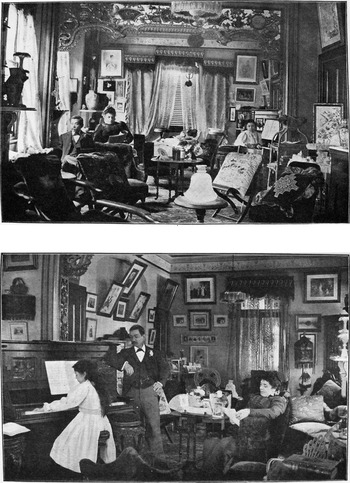
Quong Tart's integration and Westernization seemed, at first glance, to confound the arguments made by ardent Anglo-Saxonists in both Australia and Britain that Chinese racial identity was fixed and that Chinese immigrants would remain forever an immoral, polluting, and degrading presence among white Europeans in Australia.Footnote 43 But we must not forget that the chronicler in this instance was also one of Tart's primary avenues of assimilation, Margaret Scarlett, originally of Liverpool, whom he married in 1886.Footnote 44 Scarlett's tales of her husband's successes certainly suggest that she, at least, felt that his class identity took precedence over his racial origins. She described his comportment as completely in accord with the self-improvement that pervaded much of the Victorian discourse on respectability, a discourse that revolved explicitly around class distinctions and gender norms.Footnote 45 The key to Tart's acceptance into Australian society, according to Margaret, was his adoption of the inward and outward characteristics of Victorian, middle-class masculinity, his overt rejection of Chinese culture, and his maintenance of a social and personal distance between himself and the working-class Chinese immigrants that surrounded him. One needed only to look at the images that the Tarts offered of their household, furnished and organized to epitomize middle-class, Victorian respectability, to see the effort they had expended to maintain this image (see figures 1 and 2).
“Quong Tart at Home,” c. 1890 (Courtesy of the University of Sydney), SETIS, http://purl.library.usyd.edu.au/setis/id/fed0048. Originally published in Margaret Tart, The Life of Quong Tart.

Ultimately, however, Margaret Tart's biography of her husband must be read as an argument for the transformative powers of British culture, and particularly of Victorian middle-class women as the conduits of respectability. With the exception of his accent, which he apparently acquired while working for Thomas Forsyth, everything that made Quong Tart “British” was attributed by Margaret Tart to the philanthropic impulses of the Simpson family. It was Alice and Percy who granted Tart his religion, his status, his introduction to Victorian society, and even his property. Quong Tart's story, in his wife's portrayal, thus reaffirmed both the alleged superiority of British masculinity, morality, and capital enterprise and the innate weakness or even absence of any Chinese equivalents.
Like his choice of a British wife, his immersion in commerce, and his adoption of a lifestyle in accord with Victorian norms of masculinity, Quong Tart's participation in Australian politics signaled his solidarity with the middle class (both Chinese and Australian colonial) and his rejection of affiliation with the majority of Chinese immigrants. In the mid-1880s, he orchestrated a concerted campaign to halt the importation of opium to New South Wales. He attributed to the drug many of the same pernicious effects as had metropolitan journalists. In his Plea for the Abolition of the Importation of Opium, Tart argued that addiction to opium fostered the moral corruption of white women, indolence of Chinese laborers, and impoverishment of Chinese households.Footnote 46 But whereas metropolitan journalists such as Greenwood and Parkinson had blamed commercial Chinese men for the spread of opium use, Quong Tart completely divorced the ranks of “respectable” Chinese from the practice. “Words cannot express how dreadfully hurt the respectable Chinese feel when things are said publicly against them,” he wrote, “for the gentleman who denounce make no allowance but class all alike, although that is anything but fair, for no criminal case against the Chinese has ever come from any of the respectable business houses.”Footnote 47
For Quong Tart, immorality and the spread of corruption was an issue of class, not race, since opium's use was “confined to the very lowest orders of Chinese society.” This focus on class was equally apparent in the views Tart expressed on Chinese immigration to Australia in general. In an 1889 diplomatic mission to the Viceroy of Hong Kong, he insisted that anti-Chinese agitation in Australia was attributable to “the interests of labour” rather than “racial antipathy.”Footnote 48 He also decried the poll taxes advocated by organizations that opposed Chinese immigration to Australia, such as the Anti-Chinese League of New South Wales, insisting in a published letter to the Sydney Morning Herald that “the Chinese are as free to these shores as any other nation in the world.”Footnote 49 Tart went one step further, urging white Australians to hew to their own values of “fair play” rather than advocating racial segregation and biased, bullying policies. Referring to the League and their supporters, he concluded, “They pick on us because we are weakest, having no one to defend us.”Footnote 50 While blaming white, working-class opposition for the furor over Chinese immigration, however, Tart also publicly stated his own concerns that Chinese immigration, if left unchecked, might overwhelm the continent. In many ways, this stance mirrored that of the “white Australia” advocates with whom the Australian press had occasionally associated him. Quong Tart's primary objection to the current policies was merely that they hindered the movement of commercial Chinese immigrants throughout the Australian colonies.
Tart's commitment to the ideals of colonial middle-class society and to the goals that many there shared for the future of Australia hardly went unnoticed in the public eye. His respectability, his successful assimilation, his popular recognition as a loyal British subject, and the public appreciation of his contributions to Australian society were apparent in everything from the praise heaped upon his Sydney tea rooms to the enthusiastic crowds that greeted him and his young bride on their honeymoon. His accomplishments as a philanthropist, businessman, sportsman, and diplomatic intermediary between Australia and the Chinese government received widespread acclaim in the Australian press. The Sydney Mail described him as “the whitest Chinaman we know, the only one who has put on European civilization and prosperity and made them fit without uncomfortable wrinkles.”Footnote 51 Even the most fervent opponents of Chinese immigration found little cause for objection.
Even more significantly, when Tart arrived in Hong Kong in 1889, he carried a letter of introduction from none other than Sir Henry Parkes, the prominent Sydney politician who was one of the principal architects of the “white Australia” policy.Footnote 52 Tart's own opposition to unrestricted Chinese immigration and the influence that he wielded in Australian society and among Australian, Chinese, and British officials clearly mattered more to Parkes than did his ostensible status as a member of an undesirable racial group.Footnote 53 The usefulness of that influence had been more than apparent in the pivotal role that Tart played in the Afghan incident of 1888. In this famous dispute over the landing of a shipload of Chinese immigrants many contemporary immigration historians have located legal progenitors of the laws that would later officially constitute the “white Australia” policy.Footnote 54
The norms of class, masculinity, and respectability that Tart aspired to fulfill were themselves in flux in the late-Victorian period, and this made the task that much more challenging for him. He took every opportunity to display his adherence—through dress, comportment, domestic life, commerce, and political activity—and to declare his commitment in his speeches and letters. But, like metropolitan accounts of commercial Chinese immigrants, Tart's membership in the ranks of the respectable, Australian middle class, even from his own perspective, was shot through with contradictions and ambivalence. As Margaret Scarlett made clear in the subtitle of his biography, although he was confident in his morality, his class status, and his masculinity, Tart nonetheless remained aware that there were limits to his cultural and social integration and that he could never entirely escape his Chinese origins. His public addresses sometimes betrayed his acute self-consciousness that success in Australian middle-class society required his public acknowledgement of British moral superiority and the futility of resistance to British imperialism and military might.Footnote 55 Even as he donned the British uniform, signifying his national allegiance at the outbreak of the Boer War, this awareness was clear in his speech to a group of Australians departing for the Cape in 1900 (as presented by a newspaper in stereotypical “Chinese” pronunciations to emphasize Tart's racial identity):
I travel a good bit; not bin all time in Australia, and people say to me, “Why you like Britis' so much? Why they so pow'ful?” Well, I say, Its like this. They fight among themselves, perhaps; sometimes they call each other dog, blackguard, and all like that, but you hit one—oh my word, you see how they come down on you altogether, like a thousand tons of bricks. Cannons to the right, cannons to the left; ain't that so? An' they shoot straight at front of you; not behind you back—oh no—fair as fair can be.… Yes, gentlemen, I like the Britis': I was born in the East, but my heart is in the West!Footnote 56
British culture was, from his perspective, inherently moral, powerful, advanced, and rational in a way that Chinese culture and society—still shackled by opium addiction, rigidly traditional philosophies, and outdated political and commercial structures—could never be. With such declarations, Tart succinctly articulated the alleged contrast between the “modernity” and “civilization” of the British and the “barbarism” of the Chinese that animated so much of the public discourse on race, colonization, and immigration in Australia.
Tart's experiences, his public statements, and his representations in Scarlett's biography and Australian newspapers all seemed to indicate that, even in the racially charged environment of late-Victorian Australia, a middle-class Chinese immigrant could be publicly accorded the status of a moral, respectable member of colonial society. Aware that he was a product of both the East and the West, and that he would never be wholly accepted by either, Tart made a conscious choice to align himself with the middle-class Australian society that offered recognition of his political and economic efforts to secure a prominent role for commercial Chinese immigrants in the shaping of the new nation.Footnote 57 But such dreams of recognition and assimilation were ultimately to be realized only in the pages of Margaret Tart's posthumous biography, and the story of Quong Tart had a discouraging conclusion. In 1901, the first Australian Parliament adopted a distinctly anti-Chinese immigration policy, making “white Australia” the law of the land. Henceforth, the immigration of Chinese men of all classes would be severely restricted, and the social stigma against their presence in Australian society would remain powerful for generations after. In 1902, while conducting business in his Sydney office, Tart himself was violently assaulted, and he died the following year as a result of complications arising from his injuries. The attack on Quong Tart and the passing of the Australian Chinese exclusion laws coincided with another watershed in Anglo-Chinese relations, the Boxer Uprising and the subsequent increase in Sinophobia across the British Empire.
The triumph of the “White Australia” movement and widespread Sinophobia ultimately presented almost insurmountable obstacles to the integration of commercial Chinese immigrants and urban communities in the antipodes, but what of Britain? As the twentieth century began, Chinese assimilation still seemed a much more feasible prospect there than it had been in Australia. Unlike the latter, Britain had never witnessed widespread Sinophobia. Although the Boxer Rebellion elicited much metropolitan commentary on the savagery and brutality of Chinese society, it was not directly associated with the small Chinese community in London's East End. The derision expressed by mid-Victorian writers about opium dens had largely dissipated, and the Chinese shop and restaurant owners of London's Limehouse district were generally deemed respectable and law-abiding by journalists, policemen, municipal authorities, and local residents alike. Working-class opposition, while it remained strong among maritime union leaders, had likewise not become a popular issue.
In the two decades that followed the general election of 1906, however, anti-Chinese prejudice rose in Britain.Footnote 58 Prior to the outbreak of the First World War, it was stoked largely by the public controversies over Chinese indentured labor in South African mining and by the growing prominence of Chinese villains in popular literature.Footnote 59 During the wartime period and the years immediately after, Sinophobia was exacerbated by an official outcry and subsequent police campaign against Chinese opium smoking and gambling, which took place amidst assertions that such practices were spreading moral corruption among the white population. Anti-Chinese sentiment was also amplified by growing unease in Liverpool and London's East End about Chinese acquisitions of homes and employment, and by widespread anxiety over interracial sexuality and decadence in Chinese-owned cafes.Footnote 60 Politically and socially as well, the relations of Britain and its Dominions to China and Chinese immigrants were reaching a nadir that Quong Tart, with his faith in the promise of Sino-British amity and the potential of sincere assimilation, would not have anticipated. The years before World War I witnessed periodic outbursts of anti-Chinese demonstrations and violence across the British Empire.Footnote 61 The wartime period itself saw the tightening of immigration restrictions, the intensification of virulently anti-Chinese rhetoric by British union leaders, the mass importation and exploitation of Chinese labor in Flanders, and, in a decisive blow to Anglo-Chinese diplomatic relations, British acquiescence to Japan's imperial ambitions regarding Chinese territory.Footnote 62 In Britain, Canada, and South Africa, as had been the case in Australia, hostility and negative racial stereotyping often focused on the alleged sexual immorality of Chinese laborers, their corrupting influence on white women, and the innate moral degradation of mixed-race unions.Footnote 63 Commercial Chinese immigrants were prime targets of calumny in these later developments.
Historical narratives of these events have been told almost exclusively from the British point of view, or by historians who have tried, commendably, to reconstruct the social experience of diasporan Chinese communities in the British Empire.Footnote 64 But with the modernization of Chinese educational institutions and an increasingly cosmopolitan, critical engagement of Chinese intellectuals with the colonial encounter, it was inevitable that Chinese writers would eventually present their own perspectives on how class, race, and gender operated in the daily contacts between commercial Chinese immigrants and British society. Prime Minister Lloyd George's tacit acquiescence to Japan's retention of the Chinese territory (Shandong) it had seized from Germany during World War I was an important moment in the evolution of Chinese intellectuals' attitudes toward Britain, the West, and China itself. It catalyzed the cultural upheaval and project of national self-examination that became known as the May Fourth movement. The discourse of this movement, argues cultural critic Shu-Mei Shih, was especially revealing of the complex dynamics of colonialism in the Chinese context, the ambivalent engagement of Chinese intellectuals with “the West,” and the role played by gender in both.Footnote 65 Although Shih and other scholars of China's “semi-colonial” status have focused on how patterns of identity (especially class and race), nationalism, colonialism, and gender relations played out in metropolitan China (particularly Shanghai) among Chinese writers and the commercial bourgeoisie, scant mention has been made of the one prominent example of a Chinese voice speaking from the heart of the British Empire itself in the wake of the May Fourth movement.Footnote 66 The voice was that of Lao She (the pseudonym of Shu Qingshun), and the work in question was Mr. Ma and Master Ma (Erh Ma), completed in 1929.
Mr. Ma was a novelization of the lives of commercial Chinese immigrants in London. Lao wrote it while he was working as an instructor of Chinese at the recently established School of Oriental Studies (SOS) at the University of London, where the language teaching catered mostly to businessmen and missionaries preparing for overseas work.Footnote 67 Lao's sojourn in London was supported by the London Missionary Society, an organization that he had been involved with for some years prior to his arrival at SOS.Footnote 68 At the time he was writing, the number and visibility of Chinese businesses in London's East End were approaching their pre-war apex.Footnote 69 Like the public representations of Chinese opium dealers in Victorian journalism, and of Mei Quong Tart in the writings of his wife and the Australian press, the novel revealed the complex tangle of class, race, gender, and nationalism that shaped the lives of property-owning Chinese immigrants in the British imperial world. But unlike earlier accounts, Lao She's work offered a direct commentary on these issues from the perspective of a Chinese writer who had spent considerable time living in both China and London. Interwoven throughout the novel was his analysis of the media processes by which racial stereotypes were generated and disseminated, of their impact on class and gender relations, and of the significance of commercial Chinese immigrants in these dynamics. In other words, Mr. Ma, as work of fiction, though highly problematic as a source of historical information, is invaluable as an analytical lens through which to view earlier portrayals of Chinese commercial immigrants and as a cultural barometer of the changing relationships between Britain and China as cultures and nations.
Of all the authors discussed so far, with the exception of Charles Dickens, Lao She was the most significant and influential. He was a central figure in the May Fourth movement, which redefined Chinese intellectuals' engagement with the West, forged the cultural parameters of a resurgent Chinese nationalism, and shaped popular attitudes towards race, class, and gender. Mr. Ma engaged many of the significant themes that would later dominate colonial, postcolonial, and “semi-colonial” literature by other Asian, African, and Caribbean authors. Among these shared themes were identity, racism, language and representation, alienation and displacement, cultural hybridity, modernity, masculinity, and sexuality.Footnote 70 The book had particular relevance for Chinese modernists since it provided a detailed commentary on British imperialism's “partial, multiple, and fragmentary” domination of China's politics, culture, economics, and society.Footnote 71 In short, Mr. Ma belongs with other seminal works that comprised the first literary critiques of imperialism and colonialism. Its nearly total absence from the scholarly record thus far must be attributed to the general suppression of Lao She's works during China's “cultural revolution,” to the late date of its first official translation from Chinese to English (1980), and its exclusion from the more closely studied works of the Chinese literary modernists of the May Fourth movement, the Beijing School, and the Shanghai tradition.Footnote 72
Although Lao She drew on his own experiences in London for the material in Mr. Ma, he was not himself of the Chinese commercial classes. He was the son of a poor member of China's hereditary military caste (“bannermen”). Lao She was also a member of the Manchu minority that had dominated Chinese affairs for centuries, but which, by the 1920s, was facing significant discrimination from Han nationalists. According to Ranbir Vohra, Lao's awareness of the changing ethnic dynamics of China ironically both discouraged him from direct involvement in nationalist politics and strengthened his patriotic commitment to and personal investment in China's cultural modernization and development as a coherent nation.Footnote 73 His experiences of and attitudes toward Western culture and imperialism and their impact on Chinese society likewise followed contrasting currents. Lao had been involved with Christian missionaries and their educational and evangelical activities in China since the war years, and this had provided him the opportunity to work and study in London.Footnote 74 But the author was hardly an uncritical supporter of the West's various Chinese interventions. Lao's father, an impoverished soldier, had been killed while defending Beijing from European forces during the Yihetuan (“Boxer”) Uprising, and Lao in his writing lambasted British treatment of the Chinese in both China and London.
Despite his critical stance toward European racism and intervention in Chinese affairs, however, Lao She integrated Western literary styles, particularly those concerned with the issue of class, into his own writing—the work of Charles Dickens was the primary inspiration for his first novel. The most sympathetic characters in Mr. Ma also expressed sincere admiration for many “British” values, which, like Quong Tart, they equated with national strength, economic progress, international respect, and individual self-reliance. This simultaneous embrace of European cultural forms and rejection of European imperialist enterprise was characteristic of Chinese modernists writing in this period, though most scholars of Chinese literature place Lao She's writing into the more traditional category of Chinese “realists” that preceded the modernists.Footnote 75 It is this highly ambiguous relationship with both Chinese and British culture and society that makes Mr. Ma such a revealing lens through which to view constructions of Chinese and British identity. Through Lao's characters' dialogue and direct exposition to the reader, he espoused a critique of both societies. In the process, he presented a profoundly evocative vision of how the interactions between commercial Chinese immigrants and British men and women in London were shaped by the issues of race, class, and gender.
Lao She's novel revolves around three Chinese protagonists and their attempts to secure their respectability, deal with racial prejudice, and relate to each other and to the British men and women they encounter. Mr. Ma, the eldest of the three, represents the older generation of Chinese men and its adherence to traditional Chinese values. He is proud of his cultural heritage and disdainful of those beneath him in the social hierarchy, and he makes little attempt to adopt British modes of business or social intercourse. In Lao She's depiction, Mr. Ma's dogged refusal to give up Confucian ideals, his complete lack of interest in nationalist politics, and his rejection of capitalism and other elements of Western culture in general represent all that holds China back from economic progress and cultural advancement. Ma Wei, Mr. Ma's son, in contrast, represents modernizing, nationalist China. He rejects his father's traditionalism and instead embraces the self-reliance, individualism, work ethic, discipline, capitalist enterprise, and commitment to science and rationalism that he sees in the British men around him. For all their racism and arrogance, they nonetheless embody modernity to Ma Wei, and he fervently proclaims that their ideals and practices are a blueprint for national power and international prestige. The culprit in China's subservience to the West, in this formulation, is not the West's strength and advancement but rather China's backwardness and weakness, and the only solution is to adopt the methods of the imperial oppressors without succumbing to their moral failings and racism. Class issues are an important aspect of this equation, though they operate very differently in each national context. Lao She describes both societies as riven by class conflict, the difference being that the British, unlike the Chinese, are able to resolve such tensions without resorting to violence, and this unity is crucial to their national strength.
Ma Wei, who, like the author, demonstrates a thorough familiarity with British literature, comprehends both anti-Chinese stereotypes and their origins, but he feels powerless to change them.Footnote 76 At the center of this conundrum is control of property in the form of cultural media. Lao She presents this control as the key to the replication and dissemination of the British concepts of race and masculinity and to the concurrent suppression of any competing concepts. The production of film and literature is completely controlled by the British, and therefore both reflect the prejudices of those who create them and cater to the tastes of viewers' and readers' expectations. In a vicious cycle, film and literature also shape viewers' expectations, reinforcing the negative Chinese images they encounter in subsequent contexts.Footnote 77 The Chinese (in London and elsewhere), hampered by their limited capital and technology, can produce no response.
In Lao She's narrative, class oppression works hand in hand with racial oppression to keep Chinese immigrants in a hopelessly passive position in their own media portrayals. The dire economic circumstances and lack of nationalistic pride among the working-class Chinese immigrants of London's East End, who are themselves victims of imperial labor patterns that relegate them to exploitation and penury, foster their complicity in their own public degradation. Lacking marketable skills or other means of finding jobs, they work as “flat-nosed, slanty-eyed” extras in film scenes depicting the alleged violence, immorality, and chaos of metropolitan China.Footnote 78 All of Lao She's Chinese characters realize, much like Quong Tart had, that maintaining a strict social distance between themselves and the working-class Chinese that are so negatively portrayed in public dialogue is essential to their recognition by the British as respectable.Footnote 79 These characters lack the cultural capital necessary to counter negative racial stereotypes, and so maintaining a class position aloof from other Chinese men is essential to their sense of self-worth and to their relations with their adopted community, particularly with white British women.
In Mr. Ma, the dynamics of class position in relation to industrialization and capitalism also constitute the primary lens through which those who visit China itself view its culture and people. To illustrate this process, Lao She employs the character of a capitalist entrepreneur named Alexander, who has been hired by a British film company producing a movie set in Shanghai. He has traveled and lived in China, and draws on this experience as he advises the director's filming of “fighting and rioting … to make it look like China.”Footnote 80 But China's lack of modern capitalist and industrial enterprise, not its violence, is what truly condemns it in Alexander's eyes. “There is not even one big shop, not even one factory,” he declares contemptuously. “Some people told me that Peking is beautiful, but I didn't discover any beauty there.”Footnote 81 In a similar vein, Li Zirong, the third major Chinese character, observes that the Japanese adoption of industrialization and capitalization distinguishes them dramatically from the Chinese in Western eyes. Whereas the latter have only “restaurants and laundries,” the Japanese have “steamship companies, banks and other big businesses,” and as a result, “there is an element of fear and respect towards the Japanese. Toward the Chinese, though, they have nothing but pure, unadulterated contempt.”Footnote 82
But according to Lao She's analysis, the British domination of China is neither purely the consequence of crude economic power, nor of class- and race-based political and cultural oppression. As with his exploration of race and media, the author posits a far more complex dynamic in which the true potency and longevity of imperialism lie in its operation as a regime of knowledge that appropriates other cultures for collection and analysis. “Imperialism isn't any idle boast,” Ma Wei observes as he stands in a British reconstruction of an Oriental garden, complete with bamboo and a “Chinese pagoda”: “Not only did they take over other people's territory, destroy other countries, but they even took home other people's things to study them. Animals, plants, geography, language, customs—they brought it all home for research—and that was the truly devastating side of Imperialism! They weren't just tyrants in the military sense, but intellectually they were awfully fierce. Knowledge and weapons—their military superiority might eventually degenerate, but knowledge was something vital and eternal.”Footnote 83
In Lao She's assessment, the control of media (cultural capital) and even of supposedly objective “knowledge” itself is at the heart of British imperial hegemony and the relation of Britain to China at the political, cultural, and personal levels. Together, they structure the interactions of Britons and Chinese so powerfully that they cannot be countered by either contrary personal experiences or sustained exposure to modern, commercial, rational Chinese men like Ma Wei and Li Zirong.Footnote 84 In this regard, Mr. Ma was itself an attempt to counter anti-Chinese stereotypes through the same mechanism, literature, that helped produce them. But the author himself, much like the characters in his novel, did not possess the means of cultural production to insure that his voice was heard outside his own society. Lao She's writing was not translated into English until 1945, and only became available then in an unauthorized, sanitized form. Mr. Ma was not published in English until 1980.Footnote 85
Whereas Quong Tart and Margaret Scarlett attempted to shape their own public images in hopes of being accepted as respectably middle-class by Australian society, Lao She presented a much less sanguine picture. In Mr. Ma, the mechanisms of imperial knowledge accretion and cultural production are inseparable from the messages of British superiority and Chinese inferiority that they reinforce and disseminate. At the center of these messages are the figures of the masculine, modern, imperial Englishman of means and the debauched, violent, backwards, and thoroughly-dominated Chinese laborer.Footnote 86 The very idea of a Chinese man who belongs to the respectable middle class, as a British observer would define it, is simply inconceivable in these formulations. Mr. Ma's pretensions to respectability and the vast social gulf that exists in his mind between himself and the Chinatown laborers only emphasize the lack of such recognition he receives in British society. In his own mind, he is man of property, status, and aspirations, and therefore deserving of respect. But in the streets of London, dogs bark at him and even children mock him with impunity.
In Mr. Ma, as in Victorian journalism and in the representations of Mei Quong Tart and Margaret Tart, the dynamics of race and class were expressed most visibly in social contact between Chinese men and British women. The ultimate manifestation of British imperial hegemony, of China's lack of national coherence, modern industry, and capitalist enterprise, and of the intellectual and cultural “expertise” that Western society both monopolized and elevated to objectivity, was to be found neither in politics nor culture, but rather in gender relations, masculinity, and domesticity. The plot of the novel revolves around the frustrated romantic yearnings of Mr. Ma for his landlady, Mrs. Wendell, and of Ma Wei for her daughter, Miss Wendell (Mary). The latter's yearnings are doomed from the beginning. Ma Wei is infatuated by Mary, mesmerized by her Western features and by her conduct as a liberated “new woman.”Footnote 87 But his attraction to her is not reciprocated. Mary, shaped by her exposure to anti-Chinese stereotypes in the British media, feels nothing but contempt for Ma Wei. Lao She does not even recognize his masculinity, having been conditioned by film to associate male strength and beauty indelibly with British men's violent imperial suppression of the Chinese. In conversation with Ma Wei, the image that springs to her mind is a cinematic one of “an English swashbuckler who put on a beautiful show of whipping over a dozen stub-nosed yellow-faced Chinese,” which she projects onto a real-life figure, her friend John, who “was quite the man in Shanghai, and had thrashed a few dozen slimey [sic] Chinks to death.”Footnote 88
Mrs. Wendell, unlike her daughter, is neither shallow nor as easily swayed by media stereotypes and popular prejudice. Her rejection of Mr. Ma's romantic advances is more nuanced, but no less decisive. Lao She is an ardent nationalist, and a supporter of British imperial enterprise, but that has not blinded her from recognizing that both Mr. Ma and his son should be counted among the respectable middle class that, were all else equal, would make a good marriage match. But, she argues, women's sexuality is the crux of British national pride, and racial disdain for the Chinese is most ferocious against those who dare transgress the invisible line dividing British women from Chinese men: “As for you and me, there isn't the problem of class difference, but the difference in race is troublesome enough! Race is even fiercer than class difference … societal prejudice could kill us both in a matter of days!… Mr. Ma, the English are an extremely proud race; they may feel disdain towards English women who marry foreigners, but they harbor nothing but utter outrage for foreigners who marry their women!”Footnote 89
Although Mrs. Wendell's statement bluntly elevated race above class in her relationship with Mr. Ma, in the broader arc of Lao She's novel, the construction of race as a category in the minds of the British was the result of Britain's economic superiority, of the control of cultural capital that it grants, and of the internecine class conflict that prevented China from ever uniting as a modern nation. Positive personal experience was countered by internalized stereotypes from British-controlled mass media technologies, as epitomized by Mary Wendell. Supposedly objective “knowledge” reflected the dynamics of capitalism and imperialism in Alexander's disdain for all things Chinese. And the association of commercial Chinese men, in the eyes of the British commentators, with the “coolies” of London's East End was only degrading because the latter had been made virtual slaves to the power of industrialized capital. Chinese men of the older generation, such as Mr. Ma, were complicit in this dynamic, since they too spurned national unity in favor of more traditional social and economic divisions. Racial prejudice was, in Lao She's portrayal, the most visible form of oppression, but it was in great part a product of internal class conflict and external economic domination rather than their cause.
Unlike the Victorian journalists who offered the same basic conclusion about Chinese weakness and inferiority through much more blunt declarations, Lao She insisted that these dynamics were historically contingent rather than immutable. If the Chinese could put aside their internecine class conflicts and form a strong, modern nation, he declared at the end of Mr. Ma, then “the historical custom” of “Chinese parodies” in the West would cease.Footnote 90 Considering the persistence of anti-Chinese stereotypes in Britain despite China's constitution as a powerful, coherent country, perhaps Lao She was being overly optimistic. In the early twentieth century, throughout Britain and the empire, the antipathy towards interracial couples and the refusal to acknowledge even the most Westernized and respectable Chinese commercial immigrants as being any less Chinese for their efforts persisted.Footnote 91 But the sensationalized images of racial villainy were only possible because commercial Chinese men had no control over the media mechanisms that propagated them (popular newspapers, serialized fiction, cinema, and so forth). And, according to Quong Tart's public declarations and Lao She's portrayals, the members of this cohort were committed to disassociating themselves from “the coolie,” but not to offering any substantive criticism of the stereotype itself.
By the interwar period, there had been a reversal in the orientation of popular stereotypes concerning the relative threat of the “coolie” and the commercial Chinese immigrant to British society, and the sinister figure of the Chinese “opium-master” was reborn in a new and powerful guise. In London and Liverpool, police and judicial authorities launched a determined assault on Chinese-owned businesses, which judges and journalists alike insisted were pathways by which conniving Chinese criminal masterminds engineered the moral corruption of innocent young white women through gambling and narcotics. In the eyes of police, popular journalists, and Home Office officials, their race made them suspicious, but their economic resources made them truly dangerous. The Chinese commercial villain again became a staple in popular literature and theatre, the most prominent example being Sax Rohmer's cunning arch-villain, Dr. Fu Manchu.Footnote 92 In contrast, after a brief period of antipathy towards laboring Chinese immigrants during the race riots of 1919, the Chinese “coolie” faded into the background of metropolitan culture and political discourse.
These shifting dynamics of class identity, capital, and respectability that were so vital to shaping portrayals and experiences of commercial Chinese immigrants suggests a historical understanding of race quite different from that which has emerged so far from studies of Indian, African, or Afro-Caribbean immigrants in metropolitan British and imperial society. In London, commercial Chinese immigrants were often the only cohort granted individuality in late-Victorian journalistic commentary, albeit most often in the sinister figure of the opium-master. By 1900, this image had been replaced with that of the respectable Chinese businessmen. But then in the interwar metropole, the insidious figure was resurrected in the shape of the Chinese criminal kingpin whose economic power made him a threat to the white community. For those who articulated the public discourse on Chinese immigrants, racial identity and all the attendant baggage was most significant when applied to immigrants who controlled property and with it power and influence to shape their local communities.
In other words, race became important in the context of class status and the dynamics of capital and commerce, rather than vice-versa. In Australia, Quong Tart cemented his social status and garnered the support of the political elite by aligning his own interests against that of working-class Chinese immigrants. But despite his ardent attempts to be recognized as a member of middle-class, colonial society, he remained, in the eyes of journalists and political leaders, only the “whitest Chinaman.” In Tart's view, however, class and nationalism were the factors that should have superseded his race, especially since the latter had been attenuated by time, distance, and his long history of upbringing in and integration into white Australian society. Finally, in Lao She's novelistic portrayal of Chinese commercial immigrant life in London, racial oppression found its origins in Britain's control of capital and British hegemony over media and cultural capital in particular. For Lao's Chinese characters themselves, class status was central to their identity, and in the author's analysis, this prioritization of class differentiation over racial or national coherence was the root cause of China's weakness and vulnerability to imperial domination.
In contrast to Stuart Hall's assertion that “race is the modality through which class is lived,” for Chinese commercial immigrants in all three contexts class and capital were the mediums through which the experience and discourse of race were shaped. When race did supersede class as a category of identity it was due not to the latter's intrinsic cultural power but to the very mechanisms of capitalism, media, and imperialism that underpinned the colonial encounter between Britons and Chinese. Lao She offered perhaps the most nuanced picture of what it meant to be Chinese in British society. To be “modern,” and therefore to be recognized as worthy of respect, was to have embraced capitalism and to have prioritized national unity over class divisions. The Chinese, as a race and a nation, were defined in British eyes as having achieved neither.
But it was ultimately in the realm of gender that race was most visible and most acutely experienced. The ability of Chinese commercial men to be recognized as masculine, and their relations with white women, were usually the keys to their acceptance or rejection by respectable society. This dynamic, like anti-Chinese racial stereotypes, was visible in both Australia, which had a sizable and diverse Chinese immigrant population, and in London, which had a much smaller and more homogenous one. The persistence of this concern over time among self-identified “British,” “Australian,” and “Chinese” authors and across diverse geographic and political contexts attests to how central it was to the public discourse on race. A better understanding of how race, class, and gender operated with regard to Chinese individuals and their communities in the British Empire will require further exploration of the mechanisms by which these discourses, and that of nationalism, were shaped and transmitted, and of how both those mechanisms and their messages varied (or were sustained) across time and locales. Historians should pay special attention to how Chinese immigrants themselves interpreted and deployed the ideas of capital and class status, as well as ideas of respectability and domestic relations.Footnote 93 The imposition of capitalism in Asia and its tension with preexisting patterns of economic thought and activity have been the subject of considerable historical study.Footnote 94 The dispersal and growth of Chinese commercial nodes has likewise been an important concern of historians studying the Chinese Diaspora. An equally nuanced understanding of how class operated within Chinese communities abroad and between Chinese residents and the British and Australians they interacted with would illuminate this vital dimension of transnational identity.