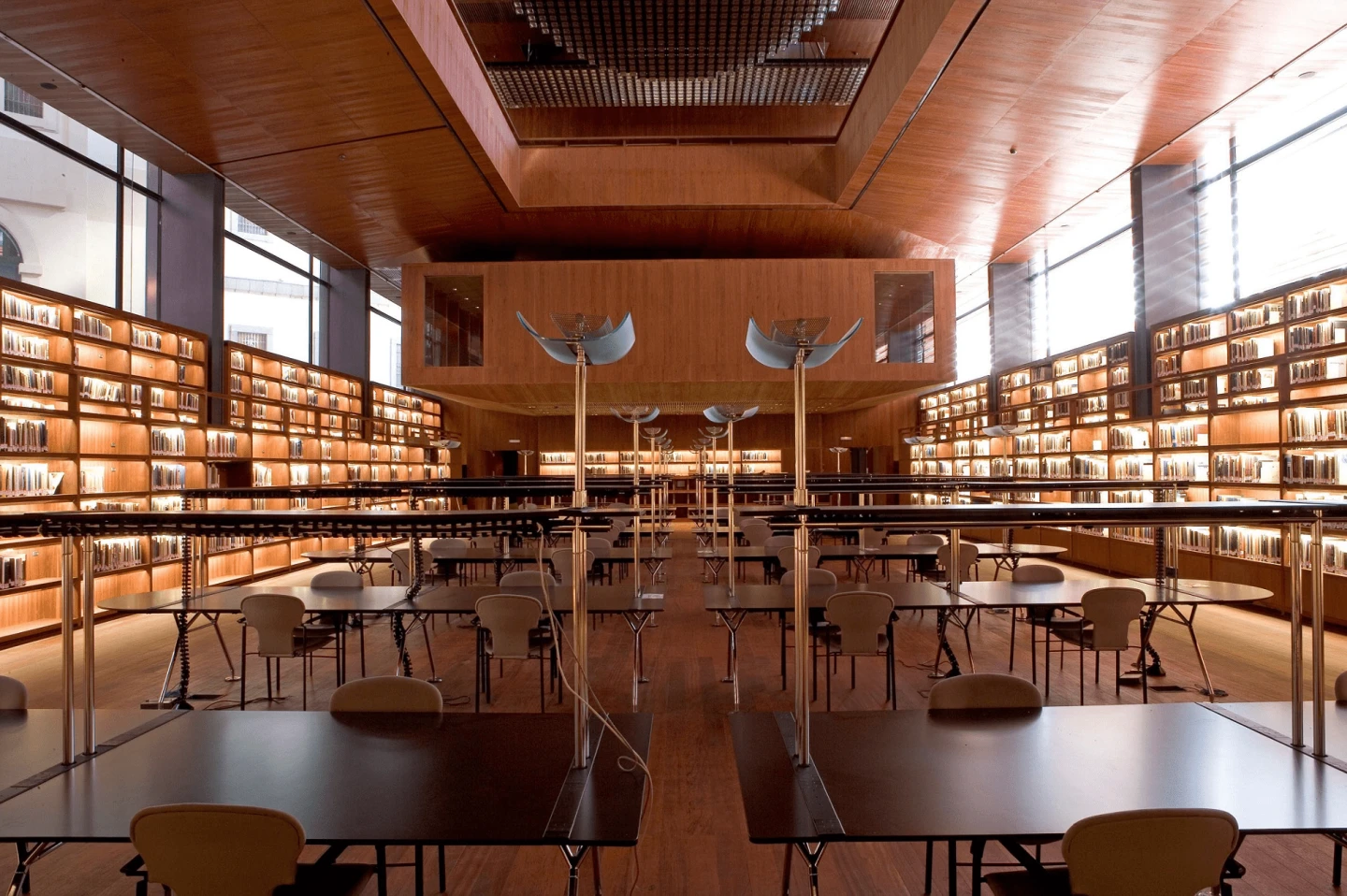
Casi libros (Almost Books) is the public programme of the Library and Documentation Centre of the Museo Nacional Centro de Arte Reina Sofia (MNCARS). This project proposes an approach to the spaces, collections and services of the institution, taking into account not only its nature as a centre for research on contemporary art, but also its enormous potential as a place where visitors can interact, explore, learn and connect with other members of the community. As Eric Klinenberg states, ‘social infrastructures set the framework and context for social participation and the library is one of the most important social infrastructures we have’Footnote 1.
View of the Library and Documentation Centre at the Reina Sofía Museum. Credit: MNCARS Library.

Fig. 1 Long description
The image showcases the interior of the Library and Documentation Centre at the Reina Sofa Museum. The space features high wooden ceilings and walls, creating a warm and inviting atmosphere. Tall bookshelves filled with books line both sides of the room, leading to a central area with multiple study tables and chairs. The tables are equipped with unique, modern light fixtures that hang from the ceiling. Large windows allow natural light to flood the space, enhancing the overall ambiance.
Starting point
The idea of launching this project arose in 2020 as part of a search for solutions to different needs felt at the Library that could be solved by cultural mediation. According to AMECUM (Association of Cultural Mediators of Madrid) ‘to mediate is to bring people into contact, to establish links so that dialogue can take place’Footnote 2. This is only possible through the exchange between professionals from different fields and the opening of listening processes at different levels.
The needs identified were three:
The development of a solid and innovative programme of activities oriented around a common focus, with a multifaceted and transformative approach. Before the implementation of Almost Books, some public activities were already being organized in the Library; however, all of them were of a one-off nature, not connected to each other in any way. The introduction of this programme aimed to give coherence to all the activities launched by the department.
Increasing access and openness to new users, already being promoted in recent years by the Museum’s Library and Documentation Centre. Although it is a research library specialized in contemporary art, most of its users do not have a research profile but are general users. For this reason, it was considered important that this type of public should be able to take greater advantage of the Library, getting to know its collections and services in depth, and that they should not limit themselves to using the reading room only as a place to study. At the same time, some of the programme’s activities have also encouraged new audiences to enter the Library, such as, for example, families or teenagers, who are not traditional users of the centre, but are essential if we understand the library as a place for meeting and creating community.
Strengthening strategies for collaboration and cross-institutional work with other departments and areas of the Museum, in order to ensure more fluid communication and to remove existing barriers within such a large institution. According to Howard Stewart, essential elements of new collaborative practices could include ‘interdependence and a give-and-take attitude; solutions that emerge as a result of mutual building work that takes advantage of differences; partners who question stereotypes to seek new meanings with others; co-ownership of decisions; collective responsibility for the results of the work; emerging process through negotiation and interactions, with the rules of future interactions being constantly updated’.Footnote 3 This desire for interdepartmental work was present in the foundations of the programme, since it was set up with the guidance of and in collaboration with the Museum’s Education Department. In addition, the spirit to go beyond the walls of the Library in search of a more collaborative approach has not been limited to seeking allies and collaborators within the Museum, but has also involved external agents, including artists, mediators and different collectives, thus allowing their proposals to find a place within the institution. Among these external collaborators we can highlight the HUL (Hostia un libro!) Collective, AMECUM, and the hablarenarte platform.
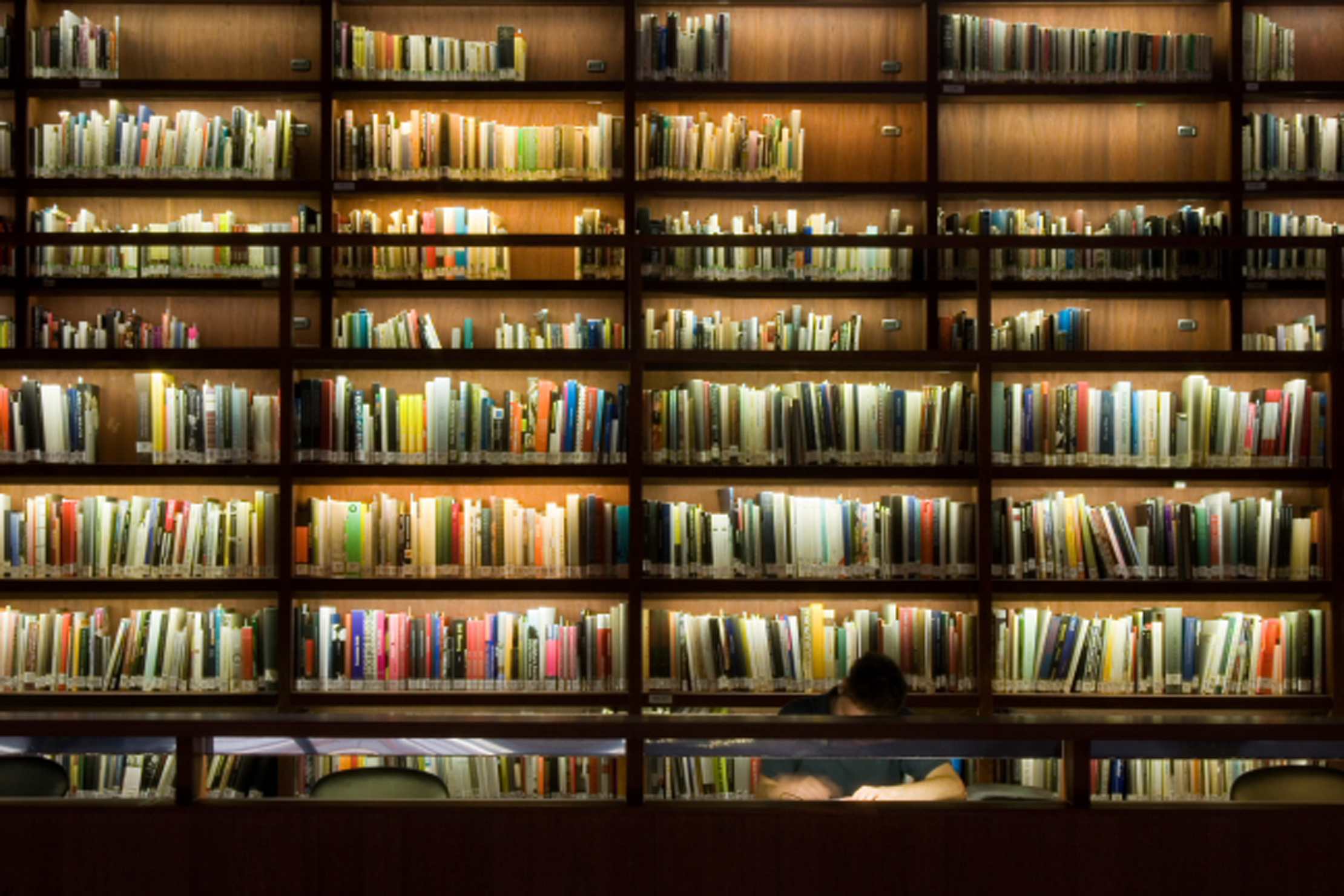
View of the Library and Documentation Centre at the Reina Sofía Museum. Credit: MNCARS Library.

Fig. 2 Long description
A person is seated at a table in front of a tall, multi-tiered bookshelf filled with numerous books of various sizes and colors. The books are neatly arranged on wooden shelves, creating a sense of organized knowledge. The person appears to be engrossed in reading or studying, with their head resting on their hand. The scene is well-lit, highlighting the books and the person, and conveys a serene and scholarly atmosphere.
The programme
The title Almost Books (Casi Libros) refers to the artist Ulises Carrión’s work, a pioneer in the use of the book format for the creation of works of art. He founded a bookstore in Amsterdam, Other Books and So, where he sold and exhibited, among other typologies, other books, non-books, anti-books, pseudo-books and almost books. From the point of view of content, Almost Books is a programme that is composed of four elements: Mirar de cerca (Look Closely), Salirse del Margen (Leave the Margin), Otros libros, y eso (Other Books, and So), and Aguja imantada (Magnetic Needle).Footnote 4
Look Closely
Look Closely is focused on user training, understood, in a broad sense, as ‘any type of effort aimed at guiding the reader, individually or collectively, in the effective use of the resources and services offered by the library’.Footnote 5 The aim is to promote the knowledge and accessibility of the artistic and documentary collections of the Museum’s Library and Documentation Centre, as well as to disseminate the various specialized tools that we provide in the institution for research in art and contemporary creation. Different members of the department have been involved in its implementation, encouraging collaborative work and cross-cutting dynamics internally.
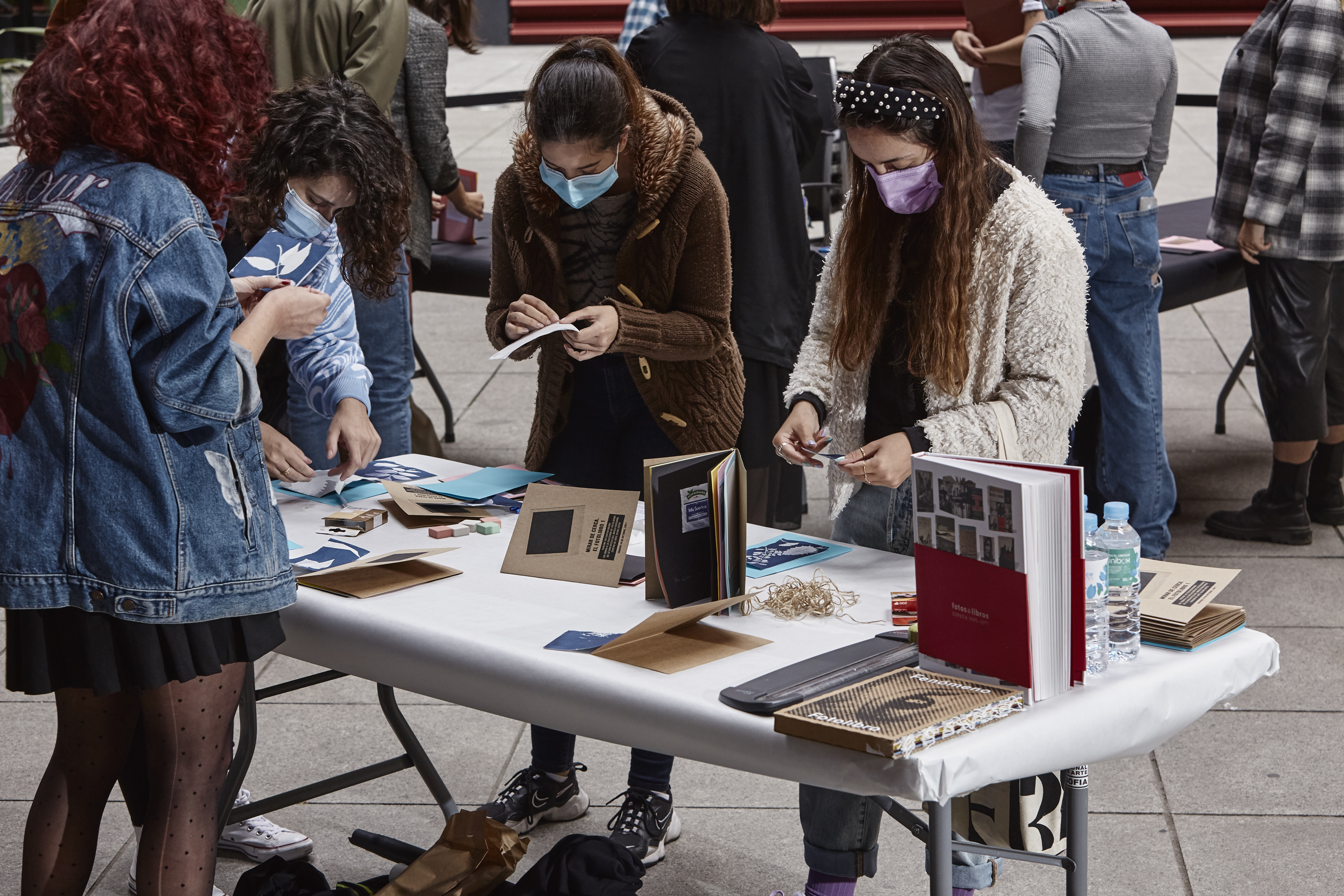
Visitors during the workshop Look Closely: The Photobook. Credit: Bego Solís, 2021.

Fig. 3 Long description
Four women are gathered around a table at an outdoor event, closely examining various books and materials. The table is covered with a white tablecloth and displays several open books, some with visible photographs and text. The women are wearing masks and appear to be engaged in a discussion or review of the items on the table. In the background, other people are present, suggesting a public or communal setting.
This axis has a multiformat nature, since we work on the training of users through experiential workshops, courses, video tutorials and thematic guides. To date, two major projects have been launched: the first on the photobook collection and the second on the artists’ books collection. In both projects, in addition to a series of workshops with the HUL collective, which were adapted for the general public, teenagers, families and teachers, we have produced videos in which different agents linked to these artistic genres (artists, publishers, collectors, etc.) provide their own definition of photobook and artist’s book, at the same time as they highlight a work from our collection.Footnote 6
Together with the HUL collective, a workshop has also been organized with the suggestive title of Look Closely Cataloguebusting, an immersive experience where the Library’s information tools are presented in a mixture of theater and escape room. Within Look Closely, other proposals launched included:
The realization of two edit-a-thons on women artists together with the feminist collective Cuarto Propio en Wikipedia (A Room of One’s Own on Wikipedia), on the occasion of the presentation of Hablando en data (Data Speak), a data visualization project, developed in collaboration with the Faculty of Social Sciences of the University of Salamanca, whose objective is to analyze the presence of artists, art critics, curators, writers and authors that make up the bibliographic catalogue of the Library.
-
Workshops on LaDigitaldelReina, a digital platform for access to artistic, documentary and audiovisual heritage related to contemporary artistic practices.
-
Píldoras formativas (Training Pills), short face-to-face sessions (40 minutes) on the resources and services offered by the Library (catalogue, databases, periodicals, archives).
-
De visu (With One’s Own Eyes), a series of public encounters set up to present some of the Library’s most recent acquisitions, additions which enrich its collections. These sessions foster a more profound understanding of the works presented and their relevance within the current artistic and cultural context, as well as serving as a place of encounter for people interested in publishing as an artistic practice.
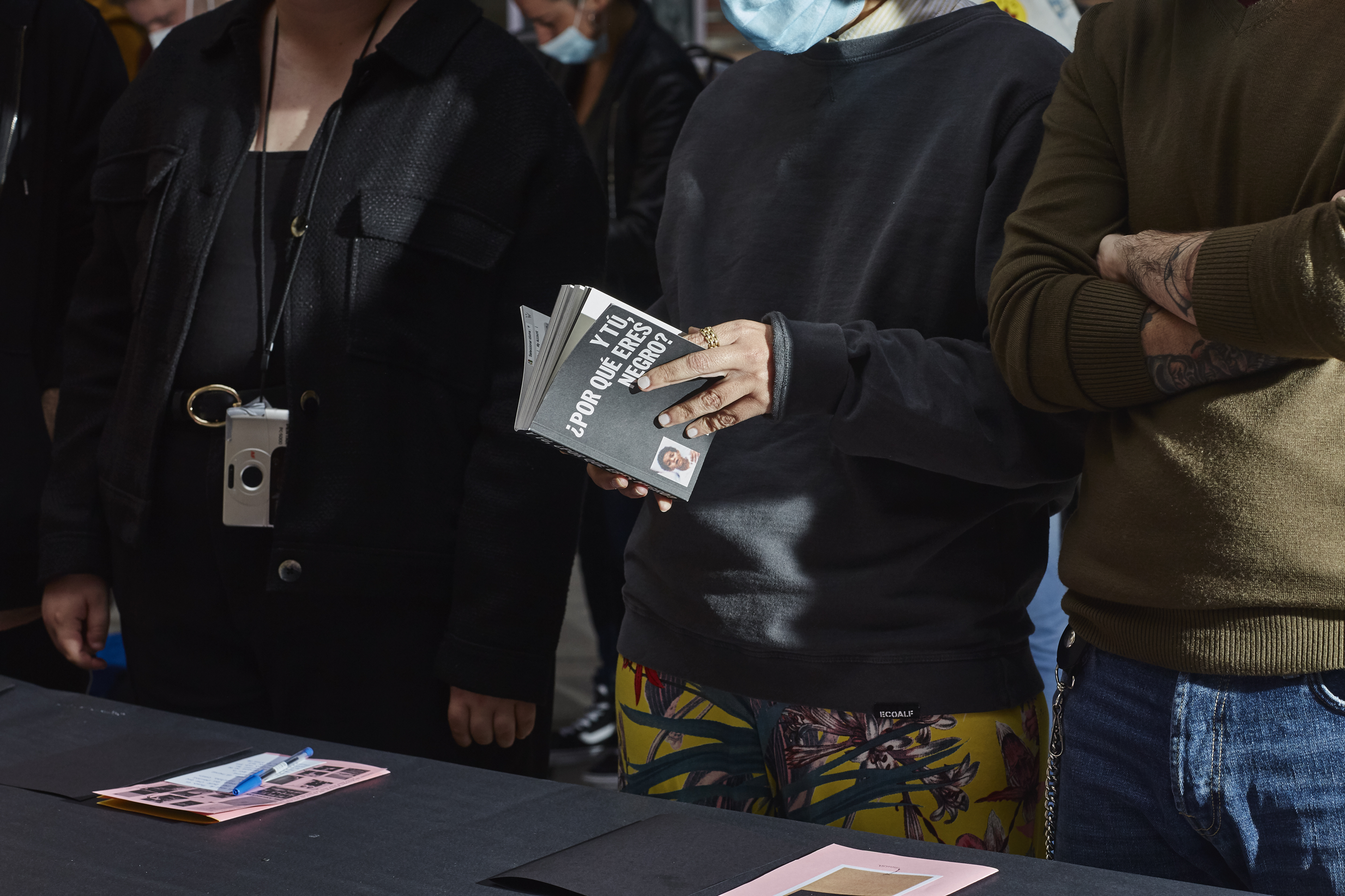
Workshop Look Closely: The Photobook. Credit: Bego Solís, 2021.

Fig. 4 Long description
A person wearing a black sweatshirt and colorful pants holds a book titled 'Por Que Eres Negro?' in their hands. The workshop table in front of them displays various materials, including a camera hanging from the neck of another individual. The scene suggests an interactive or educational setting focused on photobooks.
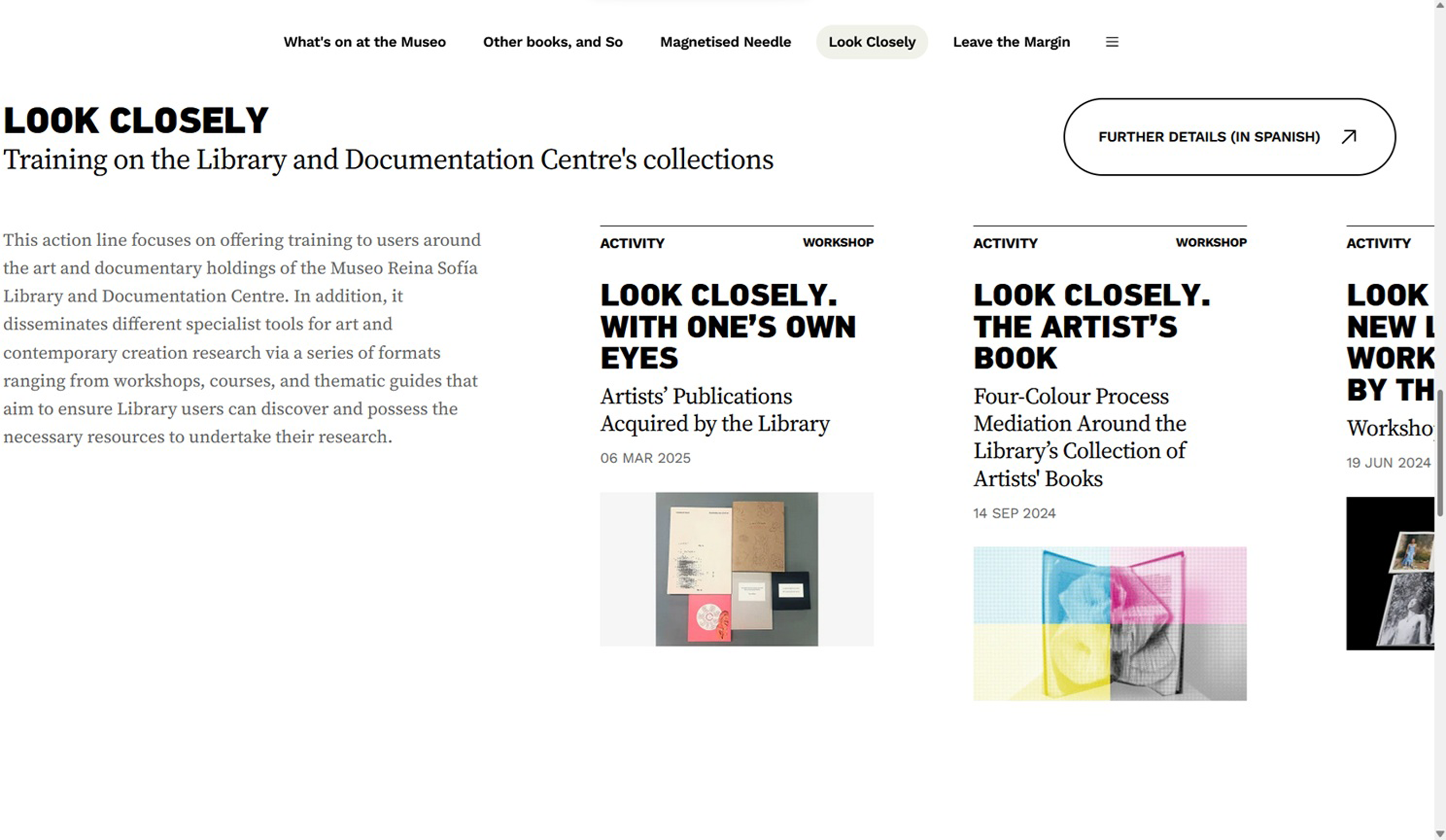
The last milestone worth mentioning is that a specific section has been created on the Library’s website, under the name of Look Closely, where the video tutorials and guides that have been produced to date are gathered together.
Leave the Margin
Leave the Margin consists of various tours of the Museum’s Permanent Collection through a series of readings of the artistic and documentary collections held in the Library and Documentation Centre. The aim of these tours is that the document not only plays an important role in the understanding of the historical-artistic context but also acquires its own value through dialogue and confrontation with other artifacts in the Museum.
Artworks have an intra-history that is often not known simply by looking at them. The way to get to know this hidden narrative that is an inherent part of the object is through the documentation generated by the artists, the essays written by the critics or other literary pieces that have served as inspiration. However, as Julio Cerdá points out, ‘it cannot [be] taken for granted that documents speak for themselves. The fostering of emotions and responses needs imagination to articulate discourses and meanings.’Footnote 7. In this way, the insertion of the reading of the documentation within a guided tour and the establishment of a series of activations and triggers throughout the visit allows us to understand and feel in its entirety what these materials want to convey.
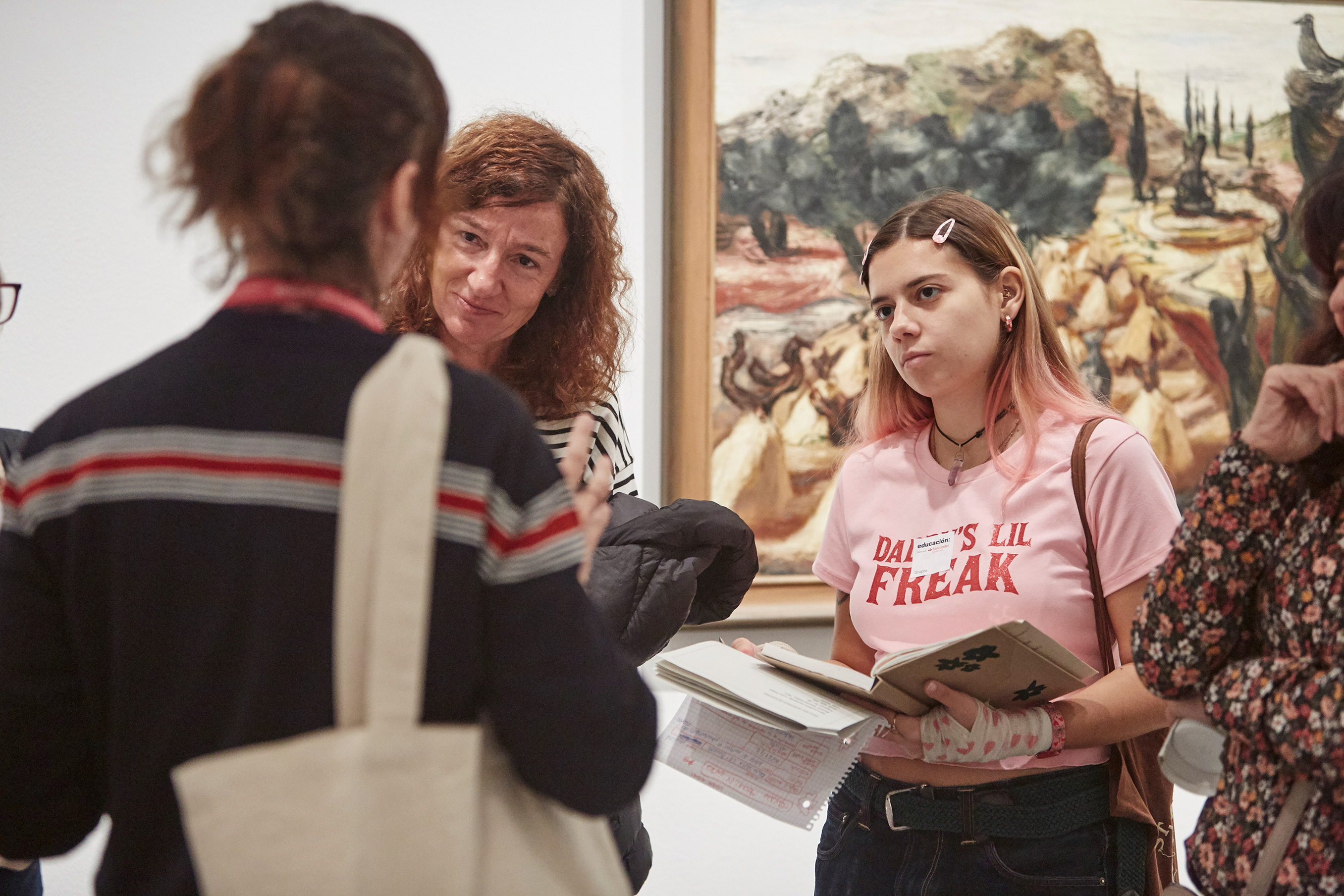
Visitors during the visit Leave the Margin. The Estrangement of the Wanderer. Credit: Bego Solís, 2022.

Fig. 5 Long description
A group of people, including a woman in a striped jacket and a young woman in a pink t-shirt with the text 'DAI'S LIL FREAK', are gathered in front of a large, detailed painting. The painting depicts a dramatic landscape with rocky terrain and figures in the background. The young woman holds a notebook and appears to be discussing the artwork with the others.
Two series of tours have been launched, to date: El extrañamiento del errante (The Estrangement of the Wanderer), which, based on the experience of the Republican exile that began after the Spanish Civil War, tries to establish links between the feelings and experiences of those people with the memory of other wandering lives within the global migratory context, and El Museo como texto (The Museum as Text), a tour that invites to reflect on the museum as an instrument of political, social and identity construction through the document and the written text. Both tours were implemented by the Museum’s guides, a fact that led to a long period of collaborative development work with them, initiating a listening process in which their great experience in carrying out guided tours with the public in the Museum was of great benefit.
Other Books, and So
The reading club Other books, and So is based on the possibility of creating a long-term community linked to the Library, through which they can get to know the Museum more intimately. This is a format that has already been used in the Education Department, where they propose communities of young people and senior citizens, in which important links are formed among the participants, allowing them to go from being “visitors” to “inhabitants” of the institution. In the case of the reading club, the aim is to form a heterogeneous group that includes readers of different ages and backgrounds, with different approaches to literature and contemporary art. In short, it is a matter of establishing dialogic reading processes, “a new way of understanding reading [that] does not focus solely on the cognitive process of literacy but encompasses it within a broader process of socialization in reading and the creation of meaning about culture with the adults in the environment.”Footnote 8.
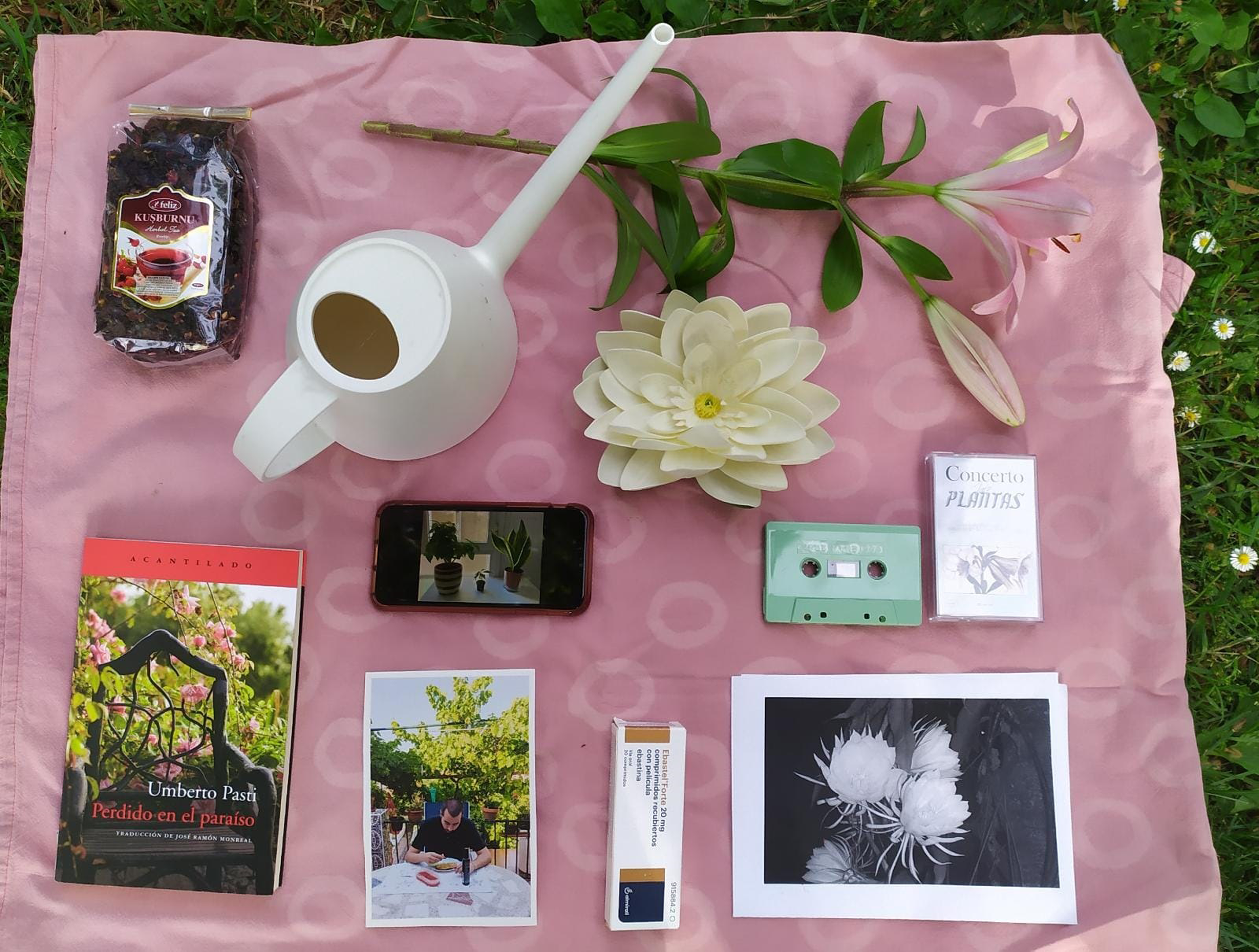
Umberto Pasti‘s book Lost in Paradise, within reading club Other Books, and So. Credit: Susana Galarreta, 2022.

Fig. 6 Long description
The image features a pink cloth laid out on the grass, displaying various objects. On the left side, there is a book titled 'Perdido en el paraiso' by Umberto Past, with a cover showing a garden trellis. Next to the book, there is a smartphone displaying a photo of a person sitting at a table with a pink cloth. Below the smartphone, there is a small photo of the same person sitting at the table. To the right of the smartphone, there is a cassette tape labeled 'Concerto Plantas' and a packet of tea labeled 'Tee Nusburm.' In the center, there is a white watering can with a cup placed inside it. On the right side, there is a large white flower with green leaves.
However, the club not only aims to create this community of readers, but also to serve as a vehicle to get to know the Museum and its programme, so the readings are chosen according to their possible relationship with the Permanent Collection, the temporary exhibitions, or the various areas of research or reflection that are being addressed in the institution. In addition, in keeping with the Museum’s principles and as a means of commitment and visibility, parity is maintained in the choice of authors, and the reading of racialized writers, those of LGTBIQA+ identity, or those from peripheral contexts is encouraged. As for the formats of the proposed readings, we have also opted for diversity: novels, short stories, comics, poetry and essays.
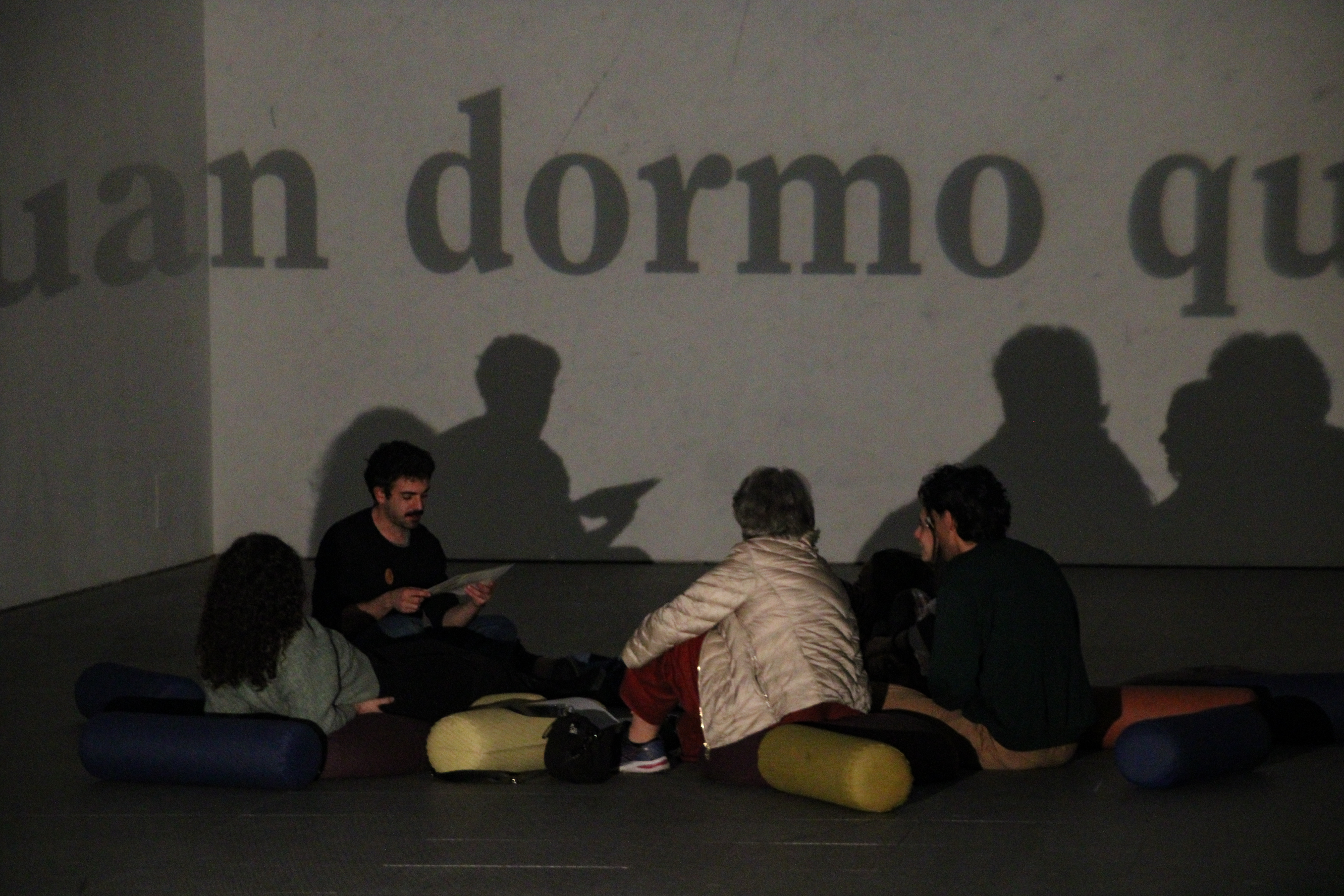
Activation session implemented by Sergi Casero, surrounding the book My year of rest and relaxation by Ottessa Moshfegh, within reading club Other Books, and So. Credit: Emma Pérez Carrión, 2025.

Fig. 7 Long description
In a dimly lit room, several people sit on cushions arranged on the floor. They are engaged in a discussion, with one person holding a book titled 'My year of rest and relaxation' by Ottessa Moshfegh. The group appears to be part of a reading club, with shadows of participants projected onto a wall behind them. The atmosphere suggests an intimate and focused gathering centered around literary discussion.
In terms of structure, the reading club is divided into discussion sessions and activation sessions. In the discussion sessions, the experiences and feelings arising from the reading of the proposed work are shared. In these sessions, we invite the participants to bring an object with which they can relate the book to themselves. In the activation sessions, a workshop takes various forms, such as tours, visits, reading or writing, handling exercises, or other formats in which the Museum is explored through the book. Artists, mediators, researchers and other art professionals are invited to participate in these workshops, which greatly enriches these proposals. To date, the following agents and/or groups have participated in the workshops: Herstóricas, Una fiesta salvaje, Menhir, Frau Diamanda, AMECUM, ES(TU)YO, Plataforma BajoTeja, Julia Cabrera, Mabel Gisela Olarte Castañada, Iki Yos Piña, Yeison F. García López, Fran Quiroga, Jaume Vallaure, Sudakasa, María Jerez, Andrea García-Santesmases, Elena Prous, Paisanaje, La Liminal, Gad Yola, Clara López, Torta Colectivo, Desmusea, Erik Harley, Mahmoud Alhaj, Mireia Serrano, María Llopis, Todo por la Praxis and Sergi Casero.
Magnetized Needle
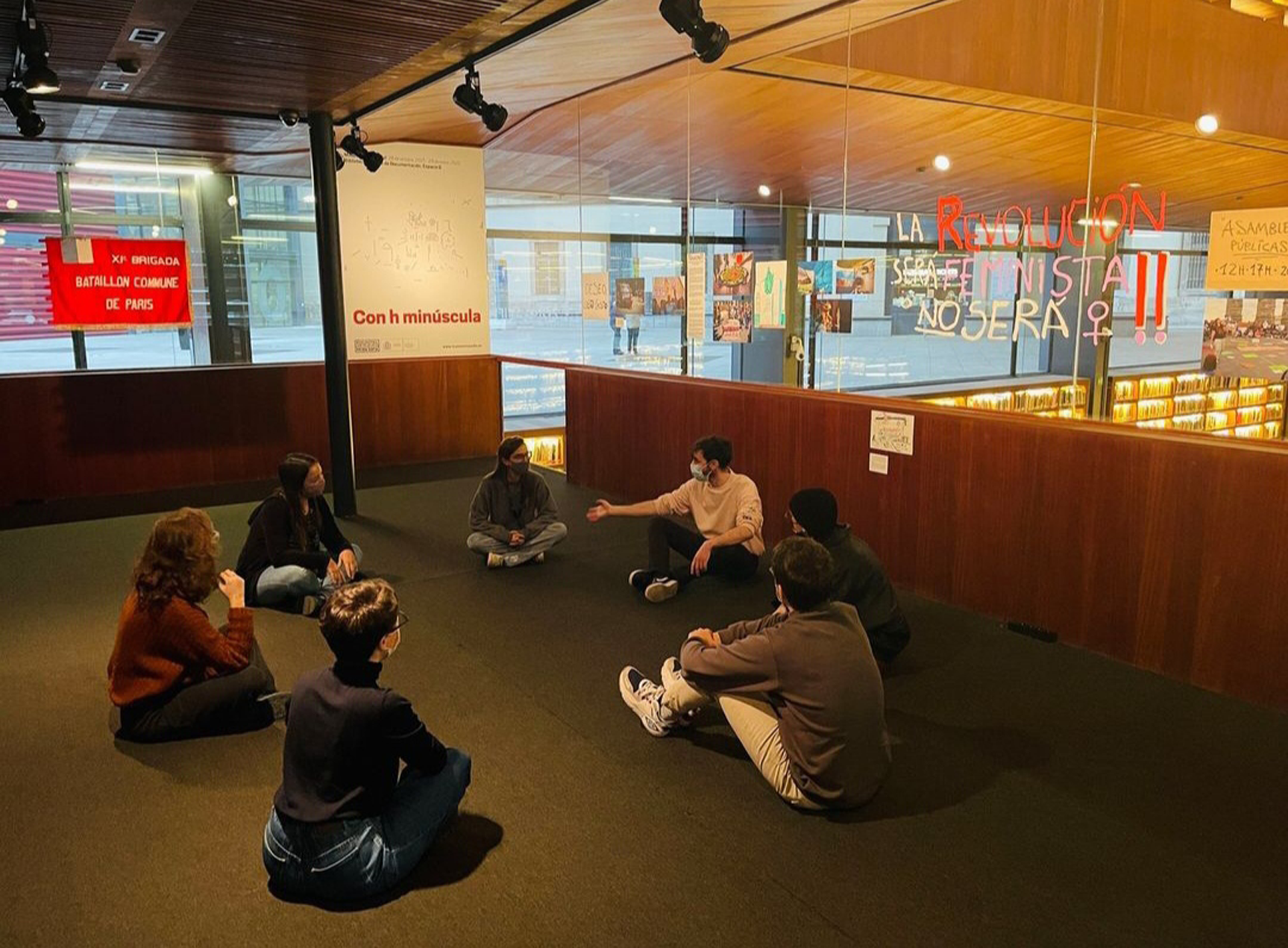
The last element of the public programme is Magnetized Needle, a series of visits to the Library’s facilities and its exhibition space. The main objective of these visits is to increase accessibility by inviting visitors to learn more about the value and variety of the collections held in the centre.
Visits to the Library include a historical and architectural overview of the building and, at the same time, a selection of some particularly interesting or significant documentary collections. Visits are also made to the temporary exhibitions in Space D, the Library’s gallery space, where the main aspects of the current exhibition are presented, as well as the most relevant documents on display.Footnote 9
Visit to Space D during the tour Magnetised Needle. Assembly Visit. Credit: Alex Moltó, 2021.

Fig. 8 Long description
A group of people sitting in a circle on the floor in a museum space. The individuals are engaged in a discussion. The background features various exhibits, including a display with bottles and signs with text in Spanish. One prominent sign reads 'LA REVOLUCION SIEMPRE NOSERA 2' in red letters. Another sign says 'Con h minúscula'. The room has a modern design with wooden panels and large windows.
In addition, although it can be challenging, in the development of these tours the people in charge of carrying them out seek to move away from the role of guide to approach the figure of the mediator, understanding that ‘the role of mediation will be to break the ice; to generate trust and a feeling of freedom; to make it possible to create diverse experiences’.Footnote 10.
Achievements and challenges
After the implementation and development of Almost Books over five years, a series of achievements have been identified, as well as several challenges that still need to be addressed to ensure that the program is fully consolidated. In terms of achievements, it is worth mentioning that this programme was initiated in a sustainable manner, making use of the material and human resources available at the time. However, having the budget to work with external agents (initially, thanks to the European Funds for Recovery, Transformation and Resilience, and later with the Museum’s own budget) has made it possible to make the proposals more ambitious and to enrich them enormously, particularly user training projects and the reading club. Their success is evidenced, for example, by the fact that the last call for applications for the reading club received almost 200 applications for 12 places. In addition, in 2022 the program was awarded the Finalist Award of the Seal of Distinction of the Council for Library Cooperation, highlighting how important it is to allocate resources and budget to this kind of work.
Another significant factor is that it is a programme born from an interdisciplinary approach, from the meeting of professionals from different backgrounds. On the one hand, people with a very deep knowledge of the Library and its possibilities and, on the other, professionals in the field of cultural mediation with experience in different types of public programmes. In addition, other researchers, artists, mediators and/or cultural managers have been involved in the programme and have enriched it with their own practices. Sometimes it is difficult to articulate this kind of hybridizations, and they can be ephemeral, but integrating extra-institutional collaborators is very stimulating and gives added value to the proposals.
A final outstanding achievement has been the creation of a stable community of people linked to the Library, to whom we have access through different channels in order to invite them to participate in the new events carried out within the programme. This means that they feel a strong bond with the institution, that they can provide their view on the programming of future activities and that they have an interest in our collections and our proposals.
Look Closely web page.

Fig. 9 Long description
The Look Closely web page highlights training programs offered by the Museo Reina Sofia Library and Documentation Centre. It includes various activities and workshops aimed at helping users discover and utilize the library's art and documentary holdings. The page features three main workshops: Look Closely with One's Own Eyes, Look Closely the Artist's Book, and Look New Work by The. Each workshop has a specific focus and date, with images representing the themes of the workshops.
As for the possible challenges, the main one is the sustainability of this programme over time, not only maintaining the work done so far, but reinforcing, expanding and updating its offer in view of upcoming temporary exhibitions, changes in the Collection, research and other projects that will be developed within the Museum. This requires the provision of sufficient human, material and economic resources to ensure the solidity and strength of the programme in the medium and long term. Another challenge to be faced is to improve the dissemination of the Almost Books proposals. Since its inception, the programme has been relatively poorly publicized by the Museum’s communication channels, which has meant that it has often been understood as a series of one-off activities, without connection between them (a fact that was precisely what the creation of the program was intended to correct). This lack of communication was primarily due to the lack of spaces in which to publicize the entire programme (press releases, space on the web, etc.). However, the renewal of the design of the Library and Documentation Centre’s website has made possible to present the programme as a whole and to provide the necessary information and support so that this experimental project, a pioneer in the insertion of books and documents in different areas of a museum (beyond its display cases), can be adequately communicated to the public.