Introduction
Birth weight variation is caused by changes in physiological, nutritional and socio-cultural variables involved in the reproductive pattern of women (Wells, Reference Wells2002; Kirchengast & Hartmann, Reference Kirchengast and Hartmann2003a, Reference Kirchengast and Hartmannb). For each parity, the influence of maternal age on birth weight depends on the proportion of preterm or at-term low birth weight (LBW) deliveries (Ferraz et al., Reference Ferraz, Gray and Cunha1990; Kramer, Reference Kramer2003). Heterogeneity among some of these variables and in the proportion of multiple births, causing low weights at birth (Joseph et al., Reference Joseph, Kramer, Marcoux, Ohlsson, Wen, Allen and Platt1998; Moshin et al., Reference Moshin, Wong, Bauman and Bai2003), is expected to be found regarding mother's origin (Bernis, Reference Bernis2006; Lim, Reference Lim2011; Tsimbos & Verropoulou, Reference Tsimbos and Verropoulou2011). Diverse associations of maternal origin with birth weight have been reported (Urquia et al., Reference Urquia, Glazier, Blondel, Zeitlin, Gissler and Macfarlane2010). In some cases, the association was favourable (Kramer et al., Reference Kramer, Séguin, Lydon and Goulet2000; Acevedo-García et al., Reference Acevedo-García, Soobader and Berkman2007; Gagnon et al., Reference Gagnon, Zimbeck and Zeitlin2009; Verropoulou & Tsimbos, Reference Verropoulou and Tsimbos2013). In other studies, mothers with origins such as Africa and south Asia showed low birth weights (Wen et al., Reference Wen, Kramer and Usher1995; Bernis, Reference Bernis2006). In the USA it has been reported that mothers of foreign origin and recently immigrated tend to be more vulnerable to disease than native mothers (Reeske et al., Reference Reeske, Kutschmann, Razum and Spallek2011) of younger age at delivery, and are more often multiparous. They usually consist of mothers with low social status (Reeske et al., Reference Reeske, Kutschmann, Razum and Spallek2011), with varying levels of early schooling and engaged in manual jobs (García-Subirats et al., Reference García-Subirats, Pérez, Rodríguez-Sanz, Ruiz Muñoz and Salvador2012).
Not all maternal characteristics influence LBW in the same way across ethnic groups. Access to maternal health care, health status and health behaviours have direct associations with LBW regardless of a family's financial status (Sparks, Reference Sparks2009). Equal access to adequate prenatal care – thus eliminating the disparities among these groups – may further reduce low birth weight variability (Sparks, Reference Sparks2009). Neighbourhoods with higher percentages of migrants from developing countries are also poorer, whereas neighbourhoods with less poverty are chosen by immigrants from developed countries. With regard to maternal origin, a migrant background might be determined by other underlying variables such as cultural factors, social deprivation and access barriers (Reeske et al., Reference Reeske, Kutschmann, Razum and Spallek2011). However, these variables could not be controlled in the present study. Some revealing evidence on the role of acculturation comes from studies conducted on Mexican-Americans in the USA. Inhabitants of localities grouping immigrants from the same origin are more likely to maintain cultural features that may protect against adverse birth outcomes than their counterparts from foreign localities (El-Sayed & Galea, Reference El-Sayed and Galea2010). According to English et al. (Reference English, Kharrazi, Davies, Scalf, Waller and Neutra2003), communities that experience rapid change – including high population growth, population mobility, social discord and economic pressures – may have poorer reproductive results than stable neighbourhoods, due to an increase in stress and the collapse of personal support networks.
Significant changes in women's patterns of reproduction have been recently reported in Spain, influencing the number of births, birth weight and premature deliveries (Luque et al., Reference Luque, Bueno and de Mateo2011). Fuster et al. (Reference Fuster, Zuluaga, Colantonio and Román-Busto2013) analysed the change of low birth weight (LWB) over time (1980–2010) considering the mother's age at reproduction, the predominance of primiparous maternities and the role played by non-Spanish women in the LWB variations. In that analysis a temporal variation in LWB was reported as a function of a varying reproductive pattern determined by women's geographical origin.
The results obtained by Fuster et al. (Reference Fuster, Zuluaga, Colantonio and Román-Busto2010) on the temporal and territorial analysis of multiple deliveries in Spain indicated that geography was a valuable factor deserving specific consideration in the study of birth weight. Spain is a country of sufficiently large territorial and demographic size to permit important socioeconomic heterogeneity which could, for example, condition access to reproductive treatment and therefore have an influence on multiple delivery rates, which in turn could affect the birth weight in each province in different ways.
The present study, in contrast to that of Fuster et al. (Reference Fuster, Zuluaga, Colantonio and Román-Busto2013), analyses the influence of biological and socio-demographic variables on birth weight, considering both single and multiple deliveries, not for Spain as a whole, but separately for the existing 52 administrative units, each of them showing presumable socio-economic diversity and differential immigration rates.
In Spain control of the National Health Service corresponds to government of the seventeen autonomous communities or regions. These regions are composed of a variable number of provinces ranging from only 1, such as Madrid (code 28 in Fig. 2), to as many as 9 provinces in the Castile-León region (codes 5, 9, 24, 34, 37, 40, 42, 47 and 49). Although the Public Health Service provides universal coverage for pregnancy care, Cano-Serral et al. (Reference Cano-Serral, Rodríguez-Sanz, Borell, Pérez and Salvador2006) reported that women belonging to the manual labour class were less likely to attend obstetric clinics during pregnancy and more likely to ignore medical recommendations regarding the avoidance of social practices detrimental to health than were professional women. Mothers with low educational level, belonging to a low income class, were at a high risk of having low birth weight babies, premature or small in size for their gestational age (García-Subirats et al., Reference García-Subirats, Pérez, Rodríguez-Sanz, Ruiz Muñoz and Salvador2012).
The factors mentioned above may have varying influence on birth weight when small-scale geography is considered. For this reason, the present study focuses on the comparison of the proportion of LBW deliveries (<2500 g) among the Spanish provinces. Although the definition of LBW (<2500 g) has been described by Wilcox (Reference Wilcox2001) as arbitrary and the use of population-specific birth weight standards is recommended, LBW was preferred for this consideration of geographical influence because the proportion of LBW deliveries shows more geographic variation than the average birth weight. For the latter, geographic differences are balanced by the opposite change in the frequencies of newborns of low weight and overweight. Some researchers have recently treated separately the extreme categories of birth weight, distinguishing between very low birth weight (VLBW <1500 g) and LBW (1550–2500 g) (Chiavarini et al., Reference Chiavarini, Bartolucci, Gili, Pieroni and Minelli2012; Verropulou & Basten, Reference Verropoulou and Basten2013). However, LBW is still considered the most prevalent and dominant risk factor for infant mortality and childhood development disorders, making it a serious problem worthy of efforts to solve it (Thompson et al., Reference Thompson, Goodman, Chang and Stukel2005). Moreover, although costs per infant hospitalization are highest for extremely preterm infants, the larger number of moderately preterm and LBW infants is responsible for most these expenses (Russell et al., Reference Russell, Green, Steiner, Meikle, Howse and Poschman2007).
The geographic and demographic dimension of Spain in terms of surface and number of inhabitants and the existing provincial heterogeneity with regard to economic activity (some regions surpassing the European Union average and others falling far below it), as well as the diversity in international immigration and socio-cultural patterns, provide sufficient opportunity for studying the regional variations in the relative frequency of LBW. The objective of the present study was to determine the geographic extent of variation in low birth weight rates in the Spanish provinces from 1996 to 2010, and identify those regions with significantly high frequencies. In order to achieve this, the interactions of individual maternal variables, as well as some socioeconomic factors, were studied. The research is not limited to single-year deliveries but groups them by periods, thus avoiding random deviation in the annual number of provincial deliveries. Since the aim was to determine whether some of the factors influencing birth weight modified with time (for instance as a consequence of fluctuating number of immigrants arriving), the analysis distinguished two periods of time (1996–2000 and 2006–2010). The average birth weight was discarded as the variable of interest; instead the study focused on the incidence of low weight births because LBW was considered a good indicator of inter-province diversity attributable to the possible diversity of the variables included in the study; moreover, LBW newborns are systematically receptors of specific postnatal hospital attention as imposed by the paediatric protocols.
Methods
Data source
Data were obtained from the Spanish National Institute for Statistics (INE) and consisted of records of live births in annual text format from 1996 to 2010. From this, a SPSS file was constructed containing 6,446,015 individual records of deliveries. The present analysis was carried out for 52 geographic units comprising the 50 provinces and the autonomous cities of Ceuta and Melilla (north Africa).
Case selection
Only live births were included, and still-births and birth weights below 400 g were discarded. The same selectivity has been applied by other authors (Moshin et al., Reference Moshin, Wong, Bauman and Bai2003). The shortest gestation age found in the database was 21 weeks; however, in Spain gestations shorter than 26 weeks are not necessarily registered by the INE. What may be considered an underestimation because of this difference in gestational ages is unimportant because of the selection criteria applied here. The result was a final sample of 5,331,855 valid birth records after the application of the following criteria for case selection:
a) Duration of gestation ≥21 weeks.
b) Birth weight ≥400 g.
c) Live birth.
d) Maternal residence in any of the 50 Spanish provinces plus Ceuta and Melilla.
e) Parity (number of live births, including the present delivery): 1–17.
f) Mother's age at delivery <55 years.
Variables
In the following analysis of possible regional patterns affecting the incidence of low birth weight in Spain, variables were defined as follows:
a) Sex of the newborn: males; females.
b) Multiparity: single; double, triple or quadruple.
c) Parity or birth order, grouped as: first delivery; second or subsequent children.
d) Four groups were established for duration of gestation: extreme premature≤31 weeks; premature 32–36 weeks; normal 37–41 weeks; post-term≥42 weeks.
e) Low birth weight: <2500 g.
f) Maternal age: ≥35 years.
g) Maternal origin was reduced to two categories: Spanish and foreign. Because the present study separates information into 52 geographic units, the total number of LBW deliveries from immigrants in each unit, with the exception of the most populated, was insufficient to permit an analysis based on particular maternal origins.
h) For the mother's type of employment, the thirteen original categories established by the INE were reduced to four groups: unremunerated, benefit recipients, etc.; low qualification; intermediate qualification; high qualification.
The mother's marital status was not included in the analysis because at present in Spain a large number of deliveries are to unmarried couples.
Statistical procedure
The percentages of LBW were obtained and compared based on maternal origin by means of a χ 2 test of homogeneity for each year. To reduce unwanted bias due to a limited yearly number of deliveries in certain smaller provinces, data were then merged into three consecutive periods (1996–2000, 2001–2005 and 2006–2010), taking into account the national temporal tendencies shown in Fig. 1. Variables included in the analysis were based on their percentages in each province. Differences between the periods 1996–2000 and 2006–2010 for the variables listed above were reduced by principal component (PC) analyses. The new variables created from PC analysis were related to differences in the percentage of LBW between periods in each province. Inter-period provincial variation in the incidence of LBW was correlated (Spearman's ρ) with provincial indicators representative of each of the two periods considered: yearly income, percentage of women engaged in paid activity, percentage of individuals out of work and health variables such as total number of hospital beds and beds according to medical speciality.
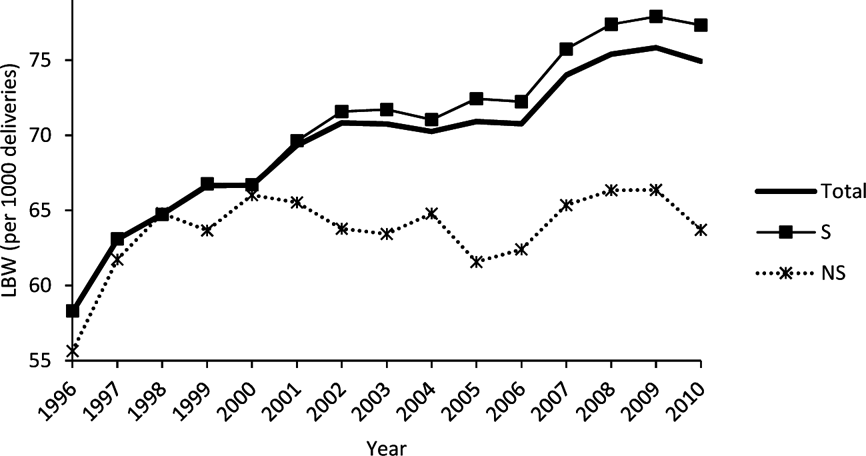
Yearly relative frequency in Spain of low birth weight per 1000 deliveries. All deliveries (total), and according to mother's origin: Spanish (S) and non-Spanish (NS).

Results and Discussion
The relative frequency of LBW increased in Spain from 1996 to 2010 (Fig. 1). Comparing the percentage of Spanish to non-Spanish LBW, significant differences can be observed since 2001, with higher values in the Spanish group (all p-values <0.006). From 2006 onwards, the two groups follow different patterns in their values, but with a roughly similar annual trend (Fig. 1). This trend differs from that reported by Martin et al. (Reference Martin, Osterman and Sutton2010) showing for the USA a reversal in 2006 of the earlier tendency of the increase in the relative frequency of premature births. This rise was caused by demographic changes and other factors such as more frequent multiple births, induced labour and Caesarean delivery. Simo & Méndez (Reference Simo and Méndez2013) indicated that the factors associated with fertility structure must be controlled when trying to relate birth weight differences between ethnic groups to socioeconomic factors.
To highlight more clearly the temporal evolution of LBW in each Spanish province with regard to the variables that may be significant, the following analysis compares only two periods separated over time: Period 1 (1996–2000) and Period 2 (2006–2010). Between one period and the other, the overall percentage of LBW increased from 6.4 to 7.4%. Minor differences in percentages can be observed between native and non-native mothers in the first period, becoming greater in the second. A similar tendency was reported in a study on Hong Kong births (Verropoulou & Basten, Reference Verropoulou and Basten2013), in which the chances for LBW showed a yearly increase of about 2%.
The variables that might influence LBW (Mariotoni & Barros Filho, Reference Mariotoni and Barros Filho2000; Kramer et al., Reference Kramer, Morin, Yang, Platt, Usher and McNamara2002; Kirchengast & Hartmann, Reference Kirchengast and Hartmann2003a; Moshin et al., Reference Moshin, Wong, Bauman and Bai2003; Wardlaw et al., Reference Wardlaw, Blanc, Zupan and Ahman2004; Acevedo-Garcia et al., Reference Acevedo-García, Soobader and Berkman2007; Tsimbos & Verropoulu, Reference Tsimbos and Verropoulou2011) have evolved from the first to the second period as follows:
• Multiple deliveries increased from 1.4 to 2.1%.
• The percentage of first deliveries rose from 52.0 to 53.5%.
• Premature newborns increased from 6.8 to 7.1%.
• The initial percentage of mothers aged 35 and older (20.3%) climbed to 29.4%.
• Percentages of mothers with low professional and job qualifications were elevated from 14.1 to 23.4%.
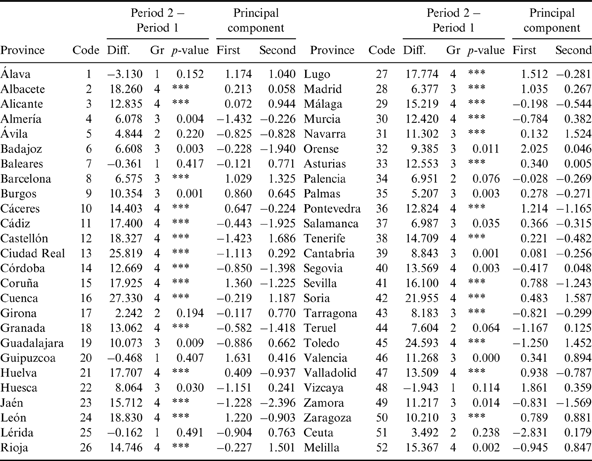
The variation of the above factors can be considered unfavourable regarding LBW. Table 1 shows the inter-period differences for each province (2006–2010 minus 1996–2000) in the percentage of LBW and their corresponding statistical significance according to the χ 2 test. Only five provinces (Alava, Balearic Islands, Guipúzcoa, Lérida and Vizcaya) had no increase in the percentage of LBW, but a decrease that did not attain a level of significance (see the p-value column in Table 1). The same table shows the inter-period differences (see the Gr column in Table 1) in the following categories: 1: negative but not significant; and 2: positive but not significant. Groups 3 and 4 are defined based on their median value from the significant inter-period differences (median=11.8611): 3≤median; 4>median (see footnote to Table 1).
Inter-period provincial differences in low birth weight percentages and principal components, Spain 1996–2000 and 2006–2010
Period 1: 1996–2000; Period 2: 2006–2010; Diff.: provincial differences between periods (Period 2−Period 1) for low birth weight percentages. Gr: categorical group of inter-period differences in percentages according to the magnitude of the difference (1: negative and non-significant; 2: positive and non-significant; 3: ≤median; 4: >median), the median value being=11.8611.
*** p<0.001.
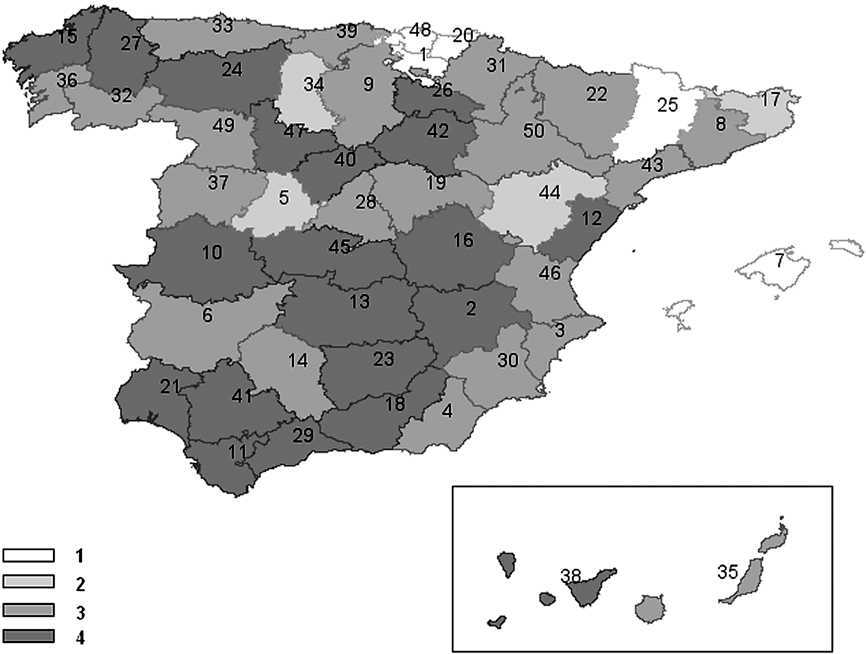
Figure 2 shows the geographic distribution of differences in the incidence of LBW corresponding to the values reported in Table 1, column Gr. A degree of geographic heterogeneity can be deduced from this map, with more frequent LBW in recent years affecting mainly the western provinces, and extending to central and southern Spain.
Inter-period differences (2006–2010 minus 1996–2000) in percentage of LBW for the 50 Spanish provinces (Ceuta and Melilla are not represented). 1: negative and non-significant; 2: positive and non-significant; 3: ≤median; 4: >median. Provincial codes are indicated in Table 1.
By means of multidimensional logistic regressions and considering only single births, Verropoulou & Basten (Reference Verropoulou and Basten2013) reported that the relative risks for low birth weight were significant for both LBW and VLBW. By contrast, female newborns or those corresponding to parity 1 showed a significantly higher chance of LBW while not for VLBW. Although in this analysis the consideration of more than one category of birth weight would have been an alternative analysis, the reduced total number of deliveries in several provinces of small census size and demographically aged would have complicated the statistical analysis.
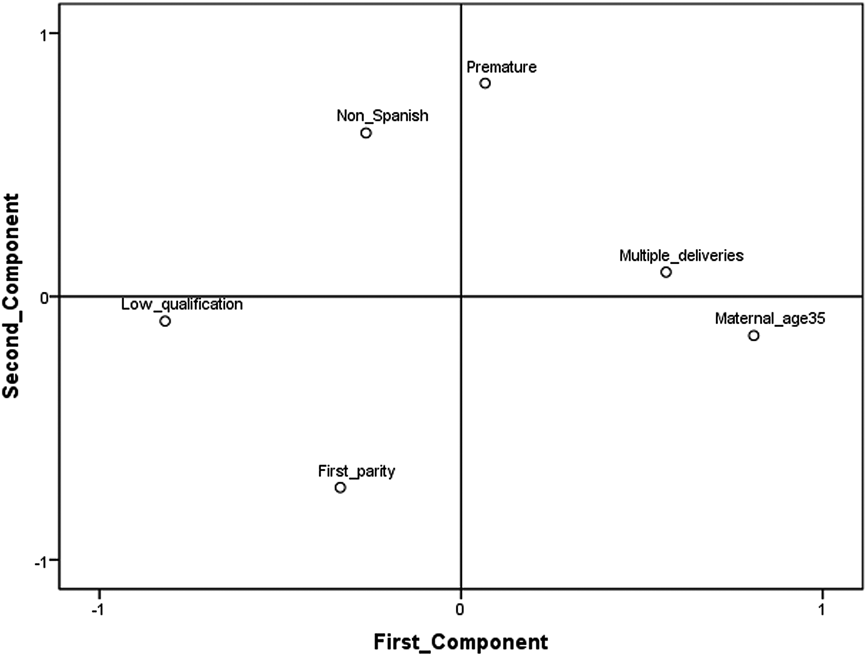
Based on the differences in the relative frequency of LBW in each province (values for period 2006–2010 minus 1996–2000) shown in Table 1, the principal components (PC) analysis was applied to the following variables: mothers aged 35 and older; multiple, first and premature deliveries; percentage of non-Spanish mothers; and low professional and job qualification (Fig. 3). The two principal components explain 57.323% of the total variability in LBW (31.676 PC1 and 25.647 PC2).
Principal components bi-plot representing the difference in percentages between the periods 2006–2010 and 1996–2000 for: mother's low qualification; multiple deliveries; first deliveries; maternal age≥35; premature deliveries and non-Spanish mothers.
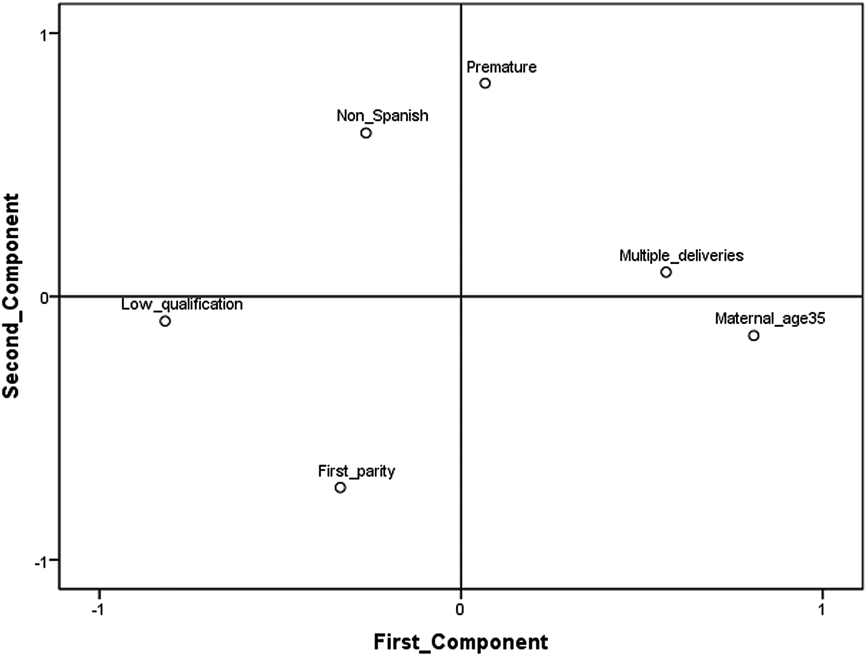
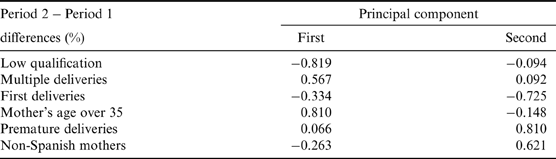
The correlation between the original variables and the PC is shown in Table 2. The first component is positively correlated with the difference in multiple deliveries (R=0.567) and mothers aged 35 or older (R=0.810). Conversely, the correlation is negative with regard to the difference in percentage of mothers with low levels of professional or job qualification (R=−0.819). The interaction between older mothers and the incidence of multiple deliveries may be due to both delayed maternity and assisted reproduction treatments. The association between delayed maternity and access to these treatments has the secondary effect of larger numbers of multiple deliveries, a situation that is more applicable to Spanish than to non-Spanish mothers (Fuster et al., Reference Fuster, Zuluaga, Colantonio and de Blas2008). Machado (Reference Machado2005) and Torres-Arreola et al. (Reference Torres-Arreola, Constantino-Casas, Flores-Hernández, Villa-Barragán and Rendón-Macías2005) also evidenced the negative relationship between maternal age over 35 and LBW.
Two-dimensional principal components analysis
Correlation among the variables (left column) and the first and second components. Period 1: 1996–2000, Period 2: 2006–2010.
The second component is correlated negatively with the inter-period difference in the relative frequency of first deliveries (R=−0.725), and positively with the variation in premature births (R=0.810) and non-Spanish mothers (R=0.621). Thus in the second period, parities of two or more predominate among non-Spanish mothers (NS). This result is not unexpected as many of the NS mothers – despite having resided a considerable time in Spain – may have retained the traditional reproductive pattern of greater fertility prevalent in their countries of origin, and give birth more frequently to premature children, perhaps also due to late maternity. According to Castro-Martín & Rosero-Bixby (Reference Castro-Martín and Rosero-Bixby2011), 41% of non-Spanish women had initiated their reproductive activity prior to immigration, which could also have contributed to differences in parity.
It is worth noting the determination of the values for each province according to the two principal components (PC1, PC2) shown in Fig. 3. The two new variables have a mean equal to 0 and a standard deviation equal to 1; therefore, they can be interpreted as representing typified values. The scores of each province corresponding to the two PCs are shown in Table 1 under the column ‘Principal component’. A zero value indicates that the score for that component is equal to the mean for that component; a positive value indicates that it is above the mean; and negative, below.
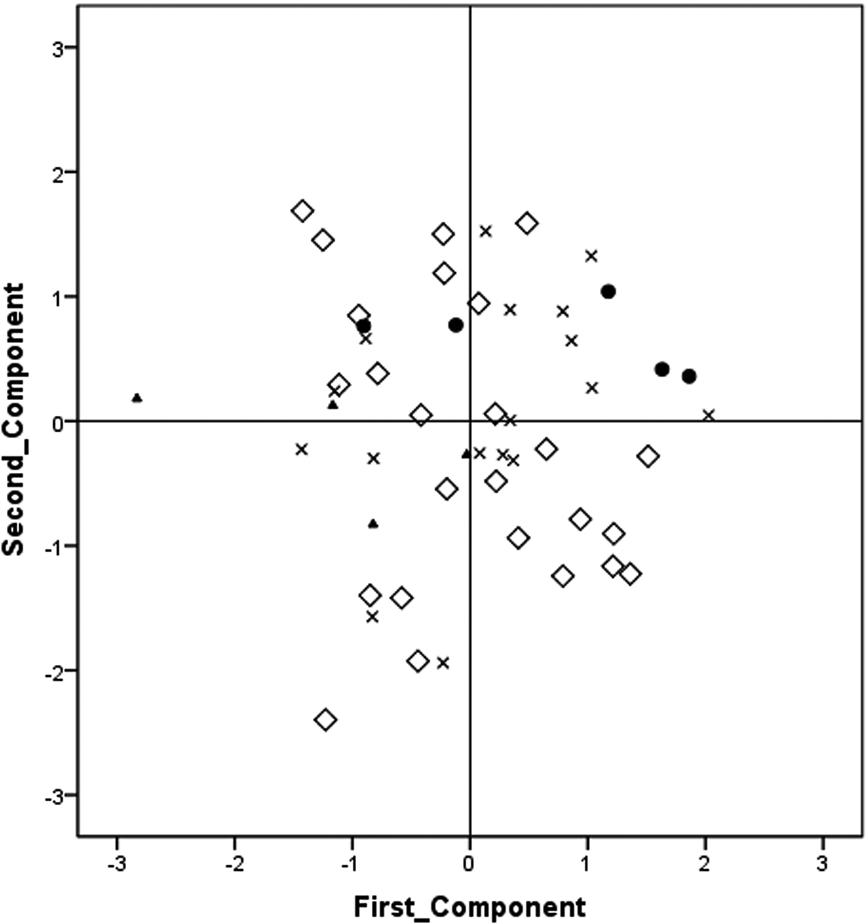
In Fig. 4, provinces are represented according to their principal component values (first and second component columns in Table 1) among their inter-period LBW difference (column Gr in Table 1). The provinces appearing in the first quadrant (top right) have high values for both components (older mothers, more premature and more multiple deliveries). In the second quadrant (top left) the value for the first component is low (more mothers with low qualifications) and high for the second (more non-Spanish mothers and premature deliveries). In the third quadrant (bottom left), values are low for both the first and second components (more mothers with low qualifications and more first deliveries). In the fourth, values are high for the first component and low for the second (older mothers, more multiple deliveries and first deliveries). It can be seen that the majority of provinces in which differences in the relative frequency of LBW were not significant (circles and triangles) have positive values for the second component.
Principal components bi-plot representing the difference in percentages between the periods 2006–2010 minus 1996–2000 by province according to values in Table 1 (first/second component column). Circles: negative and non-significant differences; triangles: positive and non-significant differences; crosses: ≤median; diamonds: >median.
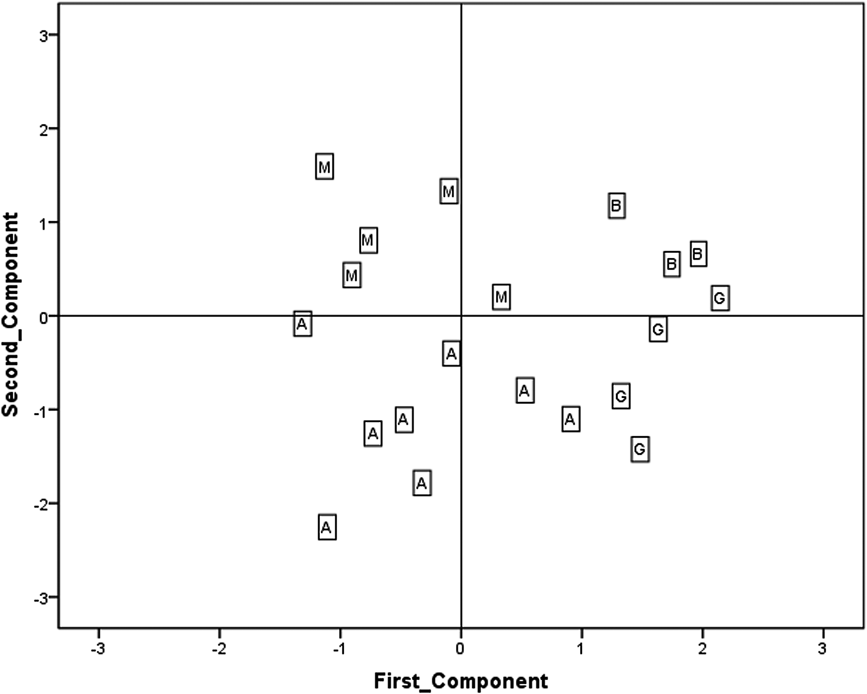
Figure 5 shows provinces belonging to a selection of autonomous regions (the Basque Country, Castile-La Mancha, Galicia and Andalusia), based on the variation in the percentage of LBW reported in column Gr in Table 1. In general the results obtained for provinces tend to group them by autonomous regions (see caption to Fig. 5). Those in the Basque Country (B) are closely grouped in the first quadrant. Andalusian provinces (A) are low with regard to the second component thus grouping in the third quadrant. On the other hand, values for this component are high for Castile-La Mancha (M) provinces, which appear in the second quadrant, while Galician provinces (G) are represented in the fourth quadrant.
Principal components bi-plot representing the difference in percentages between the periods 2006–2010 minus 1996–2000. Provinces in some of the autonomous regions are shown: Basque Country (B: Álava, Guipúzcoa, Vizcaya); Castile-La Mancha (M: Albacete, Ciudad Real, Cuenca, Guadalajara, Toledo); Galicia (G: Coruña, Lugo, Orense, Pontevedra); Andalusia (A: Almería, Malaga, Huelva, Granada, Seville, Cordoba, Cadiz, Jaén).
A comparison of Figs 3 and 5 indicates that the Basque provinces reveal a high proportion of older maternities and multiple deliveries (PC1), Andalusia has more first deliveries (PC2), and Galicia has higher maternity ages of primiparous mothers. Most of the provinces for which the variation in the relative frequency of LBW was not significant appear in the scatter plot in the area defined by more immigration and prematurity, reflecting a particular predominance of industrial economic activity – as in the Basque Country – which may have promoted rapid demographic changes. In other regions such as Andalusia and Castile-La Mancha, there is a greater prevalence of agriculture, causing a slower demographic evolution.
The above results may be compared with those of Thompson et al. (Reference Thompson, Goodman, Chang and Stukel2005), who reported that in 1998 LBW rates varied threefold across regions in the USA. These regional differences are not easily explained but are linked to place of maternal residence as well as to perinatal health care. A possible explanation of these differences in LBW is that a region's social and medical systems respond differently to the biological and social status of its population. It is worth noting that there are many regions in close proximity – even within states – that have low frequencies of LBW and yet are adjacent to regions with high LBW rates. The fluctuations in these areas may be particularly useful for studies to evaluate the health care facilities provided to women of childbearing age. Goodman et al. (Reference Goodman, Fisher, Little, Stukel and Chang2001) reported a slight association between US regional variation in the availability of neonatologists and low birth rates. Thus the two most significant preventable birth outcomes – that is, LBW and prematurity – are not affected by neonatal intensive care.
The negative relationship found in the present analysis between provincial income per individual (differences between periods) and low inter-period variation in the relative frequency of LBW can be seen as a consequence of better investment in prenatal care. However, this result considers the relative income variation from one period to the other rather than its absolute value. For this reason, some high-income provinces such as Madrid and Barcelona may show a significant increase in LBW, while others (Alava, Guipúzcoa and Vizcaya) do not. García-Subirats et al. (Reference García-Subirats, Pérez, Rodríguez-Sanz, Ruiz Muñoz and Salvador2012) found in an urban Spanish neighbourhood that the prevalence of LBW was lower in births to women residing in areas with the highest socioeconomic level. This result is consistent with the findings of Thompson et al. (Reference Thompson, Goodman, Chang and Stukel2005): mothers who reside in US counties with a household income below the median are more likely to deliver a LBW infant. With regard to other European countries, Astolfi & Zonta (Reference Astolfi and Zonta1999), Kirchengast & Hartmann (Reference Kirchengast and Hartmann2003b) and Tsimbos & Verropoulou (Reference Tsimbos and Verropoulou2011) indicated an association between birth order and LBW. Chiavarini et al. (Reference Chiavarini, Bartolucci, Gili, Pieroni and Minelli2012) reported for an Italian region that mothers aged 30–39, with lower education, not married, and those of non-European origin were more likely to have single births of VLBW (<1500 g). Assisted reproduction also had a significant effect on this category of weight; and Fujii et al. (Reference Fujii, Matsuoka, Bergel, van der Poel and Okai2010) found in Japan a relationship between VLBW and preterm delivery.
A tentative analysis was performed based on a set of provincial indicators representing each of the two periods considered. These indicators include the following: yearly income (Euros/inhabitant), percentage of women engaged in paid activity, percentage of individuals out of work and health variables such as total number of hospital beds and beds by medical speciality. Only income correlated negatively with the inter-period provincial variation in the incidence of LBW (Spearman's ρ=−0.510, p<0.001). Income also correlated positively with the rate of obstetric beds (ρ=0.452, p=0.001).
A certain similarity can be established between Korea and Spain for maternal reproductive patterns. According to Lim (Reference Lim2011), in Korea the average maternal age at first delivery rose from 27.6 years in 1993 to 31.3 in 2010. As the number of births has decreased (total fertility rate equal to 1.15 children per woman in 2009), so has the average birth weight, and the percentage of LWB increased from 2.63% in 1993 to 5.02% in 2010. The rate of preterm births underwent a similar variation. Moreover, multiple birth rates (per 1000 deliveries) rose steadily from 1.13 to 2.76. Lim (Reference Lim2011) found that birth weights under 1500 g had increased at twofold the rate of those under 2500 g. This suggests that advances in neonatal care, as would occur in cases of very small weights or extremely low gestational age, may have caused the reporting of live births to increase.
Conclusions
The results of this paper point to the conclusion that from 1996 to 2010 there was a decrease in the average weight of newborns, in parallel with an increase in the relative frequency of LBW affecting the majority of Spanish provinces. This variation was accompanied by a progressive delay in mother's age at delivery and more frequent multiple births in primiparous women. The geographic pattern expressed as a provincial variation is explained by differences in the relative frequency of the variables considered in the principal components analysis: provinces in areas where first deliveries predominate and the increase of LBW was notable tend to group together (i.e. region of Andalusia), but so do other provinces with a predominantly higher proportion of immigrant mothers and lower professional qualification (i.e. Galicia). In contrast, provinces with minor (non-significant) variations are distributed mostly in the north-west regions of Spain (i.e. the Basque Country), where premature multiple deliveries by older mothers are more frequent. The heterogeneity of the variables characterizing reproducing females residing in each province suggests that the global temporal change occurring in Spain with regard to birth weight is the accumulative result of biological, demographic and socioeconomic variables, which may provide an interpretation for this diversity.
Acknowledgments
This work was supported by the Spanish Ministry of Science and Innovation (project reference CGL2008-03737). Thanks are given to Erik Lundin for revising the manuscript.