A disaster is defined as more than 10 deaths or 100 affected people according to the Centre for Research on the Epidemiology of Disasters (CRED). 1 Disasters can be classified into 2 types: natural or man-made. Natural disasters are further categorized as geophysical, hydrological, climatological, meteorological, or biological disaster. 2
Between 1994 and 2013, a total of more than 6000 of natural disasters and an average of 218 million affected people per annum worldwide were recorded by the Emergency Events Database (EM-DAT). 1 The EM-DAT is the international disaster database operated by CRED and contains essential core data on the occurrence and consequences of over 21,000 disasters throughout the world from 1900. 3 The database receives data feeds from various sources including United Nations agencies, nongovernmental organizations, insurance companies, research institutes, and media. 3 One study documented the quality and accuracy of EM-DAT by comparing 2 other international databases currently available and the EM-DAT data showed high quality in the purpose of scientific research. Reference Guha-Sapir and Below4
According to the United Nations Economic and Social Commission for Asia and the Pacific (ESCAP), one of the most disaster-prone areas in the world is the Asia-Pacific region. 5 In fact, the Asia-Pacific region, especially Indonesia and the Philippines, has experienced many extreme disasters that induced a high number of deaths and affected-population. 5 According to the International Federation of Red Cross and Red Crescent Societies, at least 2 billion people were affected by Asian disasters only from 2000 to 2009. 6
Natural disasters, including earthquakes, tsunamis, typhoons, and floods, do not only cause high mortality but also induce massive population displacement. Worldwide, approximately 17.2 million people were newly displaced due to natural disasters in 2018, within their own countries. 7 In East Asia and the Pacific region and South Asia alone, more than 12 million were internally displaced in 2018, as reported by the Displacement Tracking Matrix (DTM) system. 7
According to the Internal Displacement Monitoring Centre (IDMC) report, Global Estimates 2015: People Displaced by Disasters, Southeast Asian countries that are highly affected by disasters include the Philippines, Indonesia, Vietnam, Thailand, Myanmar, Malaysia, Cambodia, Laos, and Timor-Leste. Reference Yonetani, Albuja and Bilak8 Of these countries, the Philippines, Indonesia, and Vietnam are the most vulnerable regions due to their geographic location being under the path of typhoons. Reference Yonetani, Albuja and Bilak8
The Philippines’ frequent and prolonged disaster-induced displacement is mostly caused by typhoons, floods, and earthquakes. Reference Yonetani, Albuja and Bilak8,9 The main risk factors of disaster-induced displacement in the Philippines are poverty, rapid urbanization, unplanned informal settlements growth, and ineffective/unenforced building codes and land zoning regulations. 9 The Philippines encounters approximately 20 tropical storms annually, mostly between June to September. 9 From 2008 to 2017, an average of 3.7 million displacements (84% due to typhoons, the storm surges, and flood) associated with disaster was noted annually. 9 Typhoon Haiyan was one of the largely affecting disasters in the Philippines, resulting in approximately 200,000 displaced individuals. 9
Indonesia also is prone to frequent disasters including earthquakes, tsunamis, floods, and volcanoes. From 2006 to 2015, a total of 130 natural disasters (including 68 floods and 25 earthquakes) occurred which affected more than 10 million people and caused more than 11,000 deaths. 10 The major risk factors for high disaster vulnerability in Indonesia include a weak infrastructure, including poor building design and codes. 10 The largest disaster that affected Indonesia was the earthquake and tsunami in 2004 which affected a total of more than 530,000 people. 10
Vietnam is another country which is highly affected by typhoons and floods. This country experiences an average of approximately 6 to 7 typhoons annually. 11 The risk of high vulnerability of these population is due to coastal and low-lying delta resident area. 11 In between 2012 to 2014, nearly 240 deaths and $1.4 billion in economic loss were caused by natural disasters in Vietnam. 11
Unplanned residential displacement due to natural disasters is associated with both infectious diseases and chronic diseases, including malaria, measles, diarrhea, and diabetes, which contributes to high mortality among the displaced population. Reference Anderson12,Reference Paquet and Hanquet13 According to the World Health Organization (WHO), internally displaced population is at risk because they may lack immunity toward new infectious agents or vectors present in the new environments. 14 Also, new temporary settlements may offer poor water sanitation and overcrowding which encourages infectious diseases to spread. 14 In addition, displacement increases the risk of mental health disorders including posttraumatic stress disorder, depression, anxiety, and perceived stress. Reference Schwartz, Liu and Lieberman-Cribbin15,Reference Munro, Kovats and Rubin16 Previous studies have described the association between mental health outcomes and 4 factors of displacement, which are geographic distance from the predisaster community, type of postdisaster housing, number of moves postdisaster, and time spent in temporary housing. Reference Hori and Schafer17–Reference DeSalvo, Hyre and Ompad20 WHO stated that internally displaced population’s psychological balance is generally disrupted because they have no meaningful employment and lack security. 14
A large population in Southeast Asia is displaced due to the numerous natural disasters. Recognizing health outcomes among the displaced population is critical in order for the government of disaster-prone countries to mobilize resources for the prevention of such outcomes. In this study, our goal is to understand the magnitude of disasters in Southeast Asia by analyzing data of natural disasters, mortality, and affected-population using the EM-DAT data in 9 Southeast Asian countries. In addition, by conducting a systematic review of published literature, we aim to summarize the published scientific findings on natural disaster-induced displacement and its association with both physical and mental health outcomes, focusing on Southeast Asia. This systematic review will identify gaps in current published research and suggest future research priorities to enhance disaster intervention and preparedness programs in the region.
METHODS
Analysis of Natural Disasters in Southeast Asia
Data on natural disasters reported in Southeast Asia in the period of 2004 to 2017 were extracted from EM-DAT with following key information: Disaster name, disaster start date, disaster type, sub-type, country name, total death, total affected, and total damage. Included 9 countries, with a minimum number of natural disasters recorded in the region, were Cambodia, Indonesia, The Lao People’s Democratic Republic (PDR), Malaysia, Myanmar, the Philippines, Thailand, Timor-Leste, and Viet Nam. Study period 2004 to 2017 was determined to include the 2004 Indian Ocean Tsunami, which was the deadliest natural disaster in recorded history. Descriptive analysis was conducted to understand the characteristics, pattern, and magnitude of natural disasters. In addition, top 20 disasters by the number of death and affected population were presented.
Systematic Review of Published Article
Data Sources
English-language literature from 1975 to 2017 was identified using the Ovid, PubMed, PsychINFO, and Web of Science database. The following search term categories and possible variations were used in published literature search: Disaster exposure, Displaced population, Health outcome, Measure of Association, and Southeast Asian countries. Detailed search terms are presented in the Supplementary Appendix (Table A1).
Study Eligibility
The following inclusion criteria were applied to each study: (1) English-language articles; (2) original research studies; (3) focused on disaster-induced displaced population; (4) reported health outcomes; (5) epidemiological study reported a measure of association; and (6) reported in Southeast Asian countries. Studies of population displaced due to conflicts, including war, were excluded because conflict-induced displacement has unique stressors that affect population health. Reference Kirgis21 In addition, studies focused on mortality or nonhuman population were excluded.
Study Selection
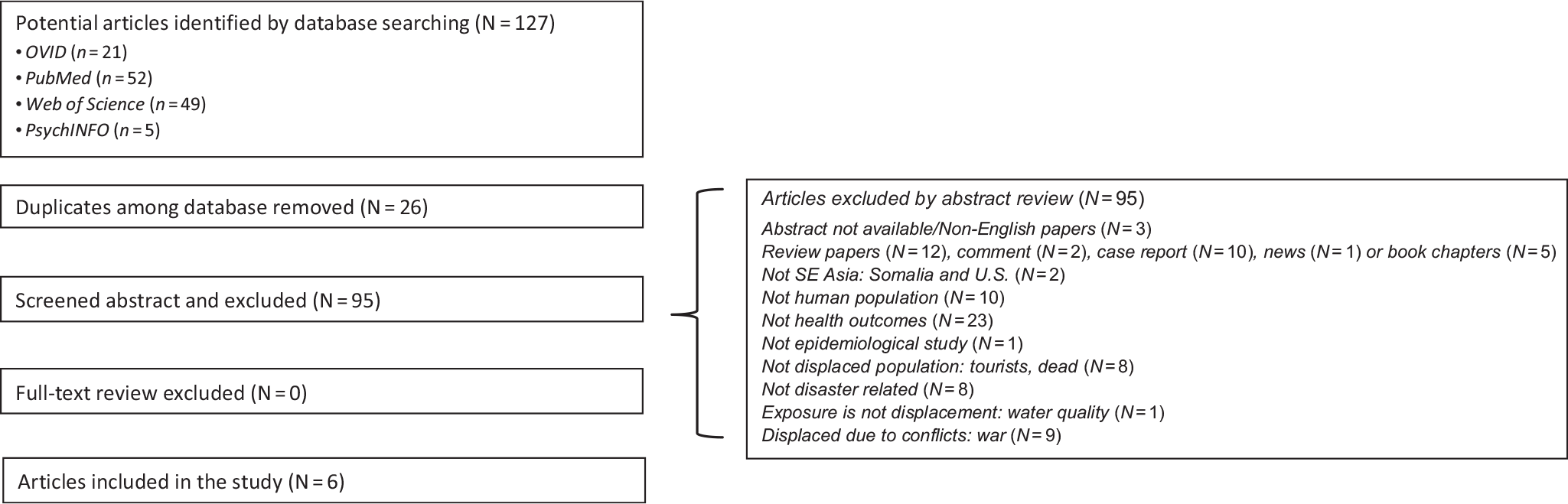
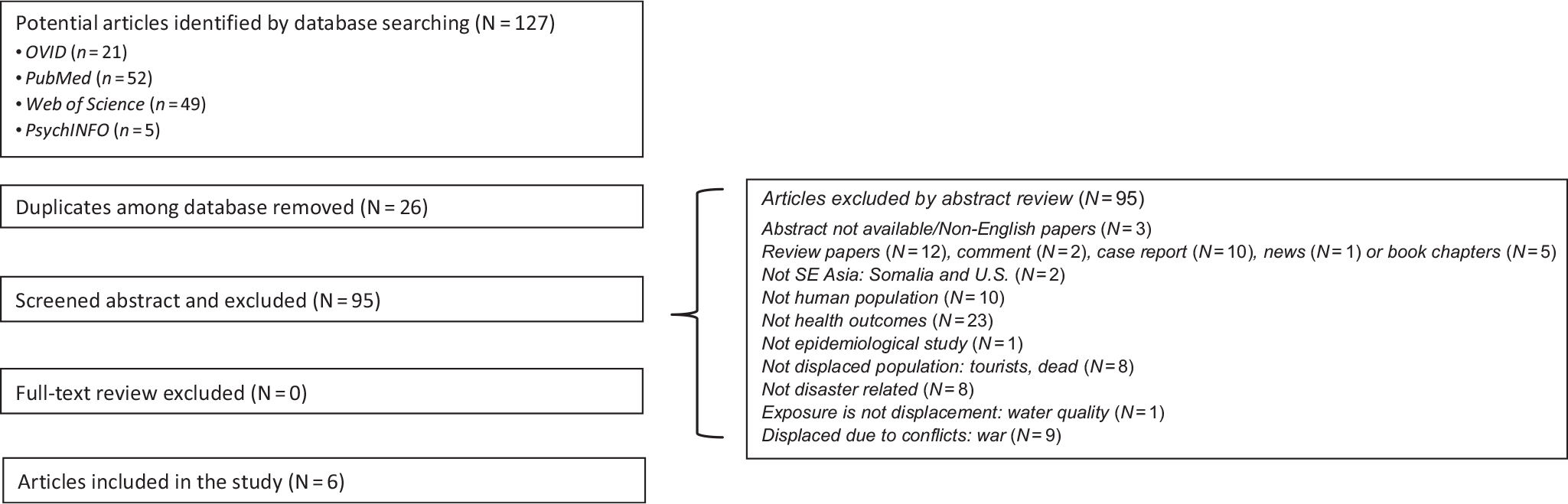
The initial literature search was done on March 26, 2018 using specific search terms which yielded >120 records from 4 databases including Ovid, PubMed, PsychINFO, and Web of Science. After removing duplicates among 4 databases, >100 records were captured. Two investigators scanned through all the titles and abstracts of captured articles and filtered using study eligibility criteria mentioned above. Then, 1 other investigator rescanned through all the titles and abstracts once more to validate the study selection decision. After title and abstract screening from a total of 3 investigators, only 6 articles remained for a full-text review. Review papers, comments, case reports, news articles, and book chapters were excluded. Exclusion criteria are described in detail in Figure 1.
Flow Chart of the Study Selection
Data Extraction
Data from the final 6 articles that were eligible for full-text review were extracted. All 3 investigators independently reviewed 6 articles and extracted data including country, study year, disaster type, study population, number of sample size, cohort age range, study design, exposure, outcome, outcome measurement, outcome prevalence, and a measure of association. All 3 investigators reviewed each other’s work and confirmed the final extracted data.
RESULTS
Natural Disasters in Southeast Asia
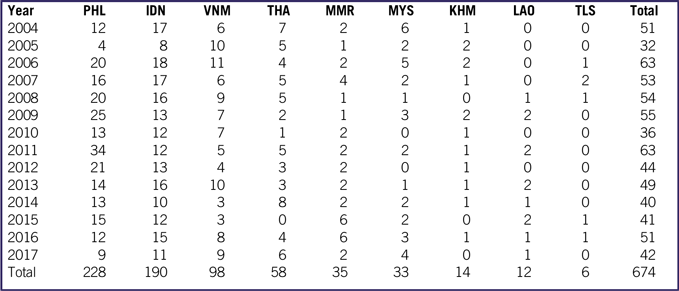
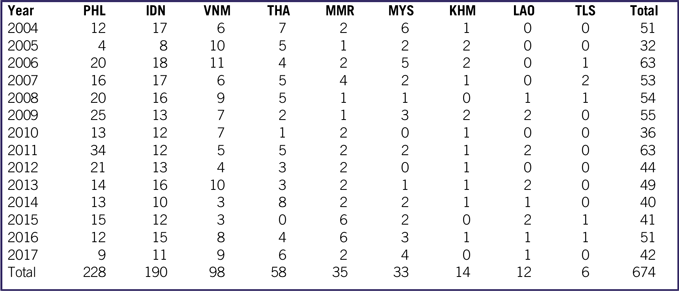
Total of 674 disasters occurred in Southeast Asia between 2004 and 2017. In general, the average number of disasters were consistent (mean = 48 and range = 32–63) throughout the time period. The most disasters occurred in the Philippines (n = 228), Indonesia (n = 190), and Vietnam (n = 98). Thailand (n = 58), Myanmar (n = 35), and Malaysia (n = 33) had a moderate number of disasters. Relatively, a small number of disasters occurred in Cambodia (n = 14), Laos (n = 12), and Timor-Leste (n = 6) (Table 1).
Number of Natural Disasters by Country in Southeast Asia in 2004–2017
Abbreviations: PHL, Philippines; IDN, Indonesia; VNM, Vietnam; THA, Thailand; MMR, Myanmar; MYS, Malaysia; KHM, Cambodia; LAO, Laos; TLS, Timor-Leste.
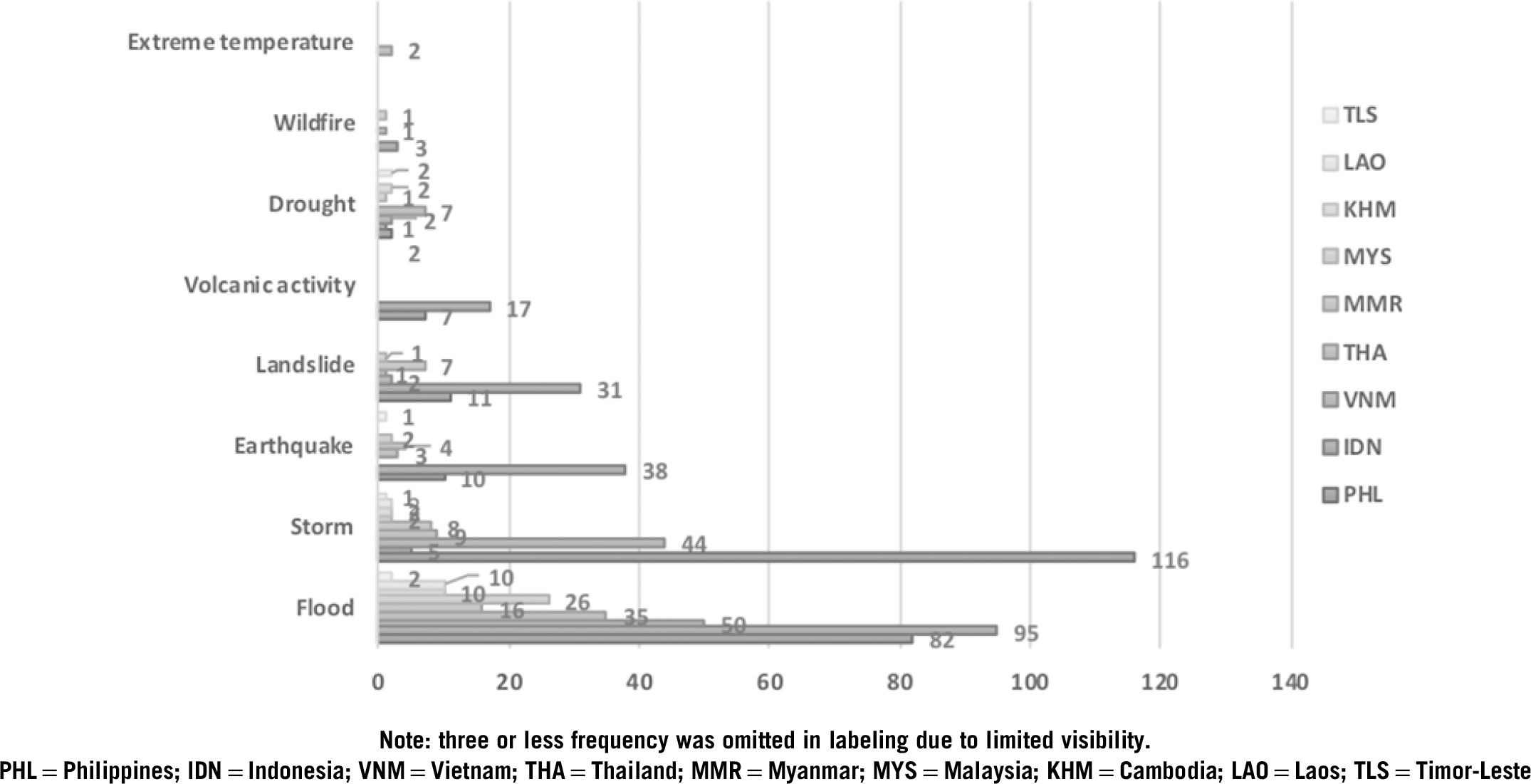
The most common disaster type was flood followed by storm, earthquake, landslide, volcanic activity, drought, wildfire, and extreme temperature. Remarkably, flood, storm, and earthquake are the top 3 disasters that have affected most of the Southeast Asian countries (Figure 2).
Number of Natural Disasters by its Type and by Country in Southeast Asia in 2004–2017
Mortality
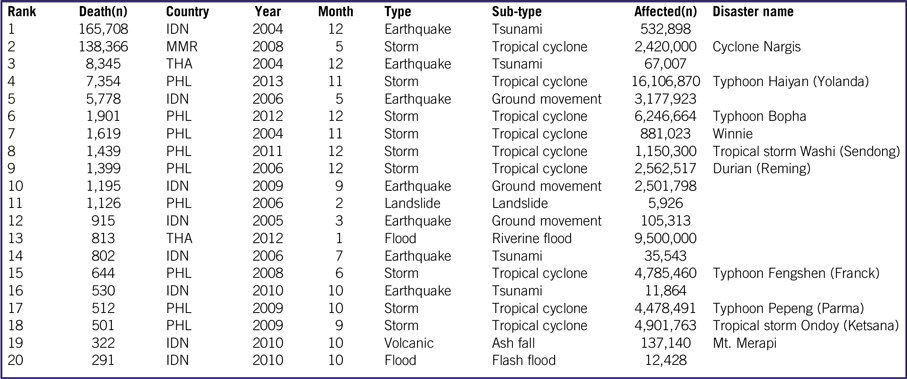
Table 2 shows 20 highest disaster-induced mortality characteristics. Highest mortality induced by a disaster occurred in Indonesia in 2004 due to an earthquake and tsunami; 165,708 people died and 532,898 people were affected. The second highest mortality occurred in Myanmar in 2008. A total of 138,366 people died and 2,420,000 people were affected by a storm and tropical cyclone called Cyclone Nargis. Storms and earthquakes were the most common disaster types that induced high mortality with sub-types of tropical cyclone or tsunami. Indonesia and the Philippines listed the most in top twenty disasters by total deaths in Southeast Asia in 2004–2007 (Table 2).
Top Twenty Disasters by Total Deaths in Southeast Asia in 2004–2017

Abbreviations: PHL, Philippines; IDN, Indonesia; VNM, Vietnam; THA, Thailand; MMR, Myanmar; MYS, Malaysia; KHM, Cambodia; LAO, Laos; TLS, Timor-Leste.
Note: A blank cell indicates no name of disaster was assigned.
Affected Population
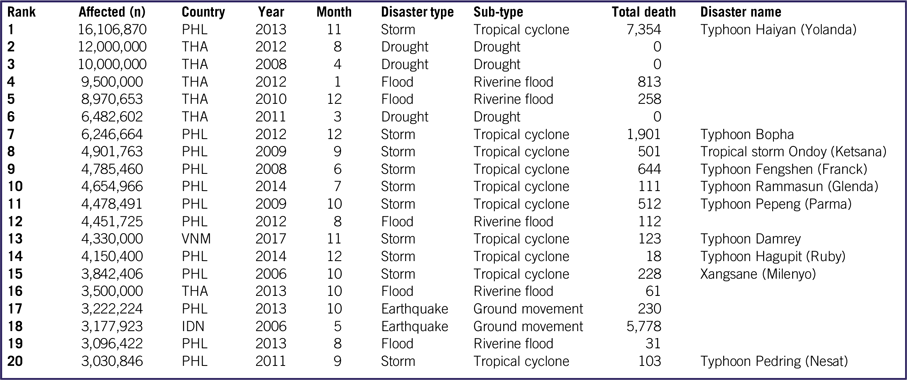
Following natural disasters, people may require urgent assistance with basic survival needs such as housing, food, water, and medical assistance. Table 3 lists top 20 disasters by the number of total affected people in Southeast Asia from 2004 to 2017. The highest number of disaster-affected population (n = 16,106,870) were in the Philippines in 2013, due to a storm with sub-type of tropical cyclone named Typhoon Haiyan (also referred as Yolanda). In 2008 and 2012, Thailand also had a high number of affected population (n = 12,000,000 and 10,000,000, respectively) due to droughts. The main types of disaster that affected population were a storm (with the subtype of tropical cyclone), flood, drought, and an earthquake. The Philippines and Thailand were the most affected countries in the list (Table 3).
Top Twenty Disasters by Total Affected People in Southeast Asia in 2004–2017
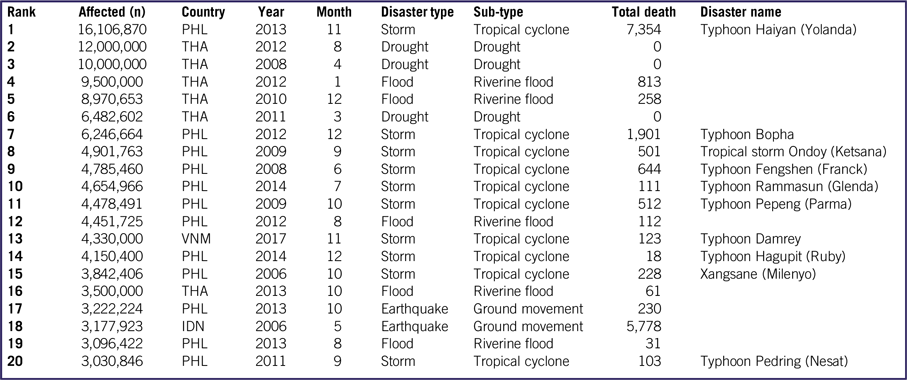
Abbreviations: PHL, Philippines; IDN, Indonesia; VNM, Vietnam; THA, Thailand; MMR, Myanmar; MYS, Malaysia; KHM, Cambodia; LAO, Laos; TLS, Timor-Leste.
Note: Blank indicates no name of disaster was assigned.
Systematic Search Results and Selected Studies Characteristics
A total of 127 articles were identified from the 4 databases. Detailed exclusion procedure is described in Figure 1. A total of 6 articles were retrieved for the systematic review.
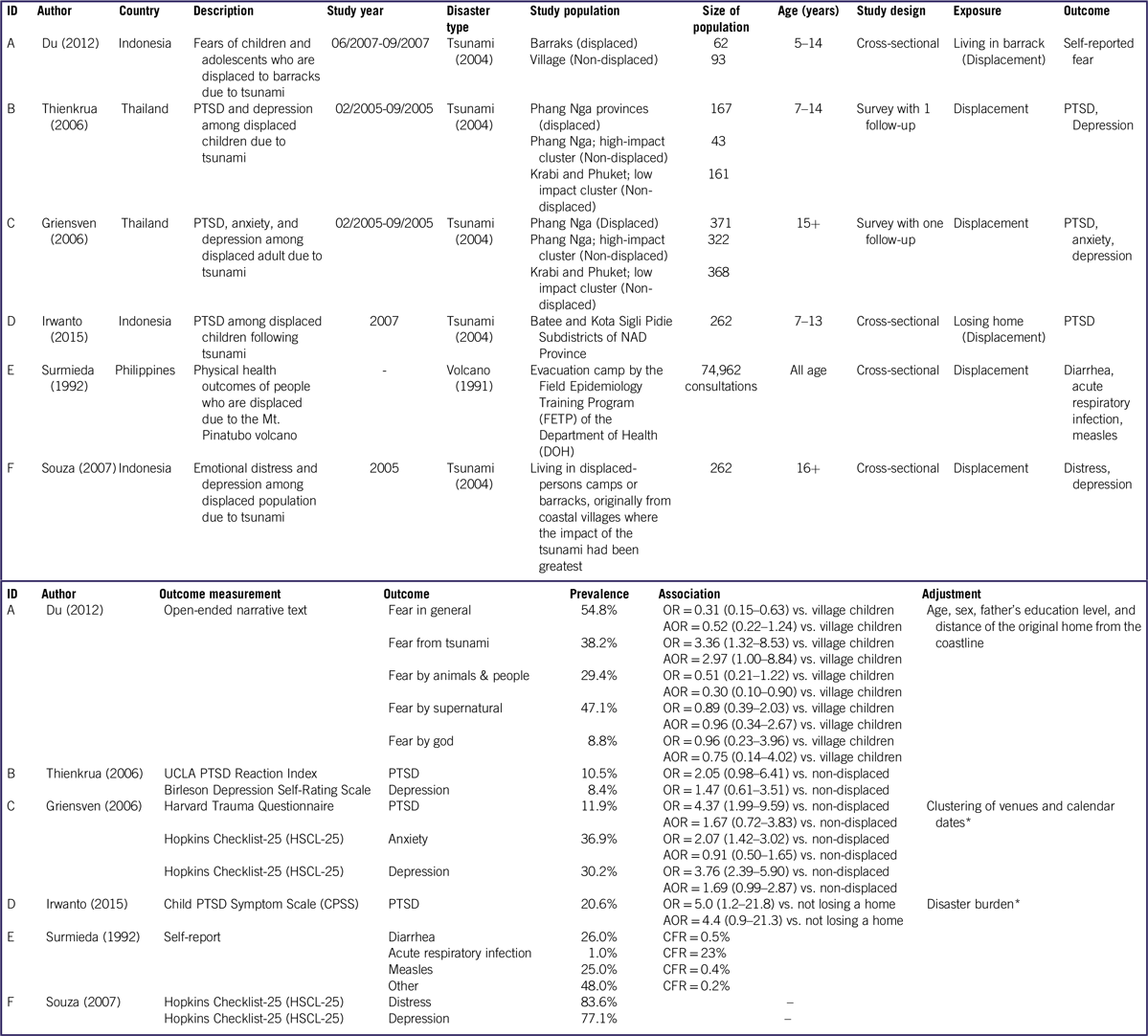
Table 4 summarizes the characteristics of each article and its reported health outcomes. Article A described displaced children’s fears due to the tsunami by comparing them with children who were not displaced. Reference Du, Lee and Christina22 Article B and C reported the prevalence of posttraumatic stress disorder (PTSD) and depression due to tsunami induced displacement in children and adults in the same region, respectively. Reference Thienkrua, Cardozo and Chakkraband23,Reference van Griensven, Chakkraband and Thienkrua24 Article D also reported PTSD among displaced children following the same tsunami as other articles. Reference Irwanto and Zulfa25 Article E described physical health outcomes of people who are displaced from their home due to the Mt. Pinatubo volcano. Reference Surmieda, Abad-Viola and Abellanosa26 Article F also described emotional distress and depression among displaced population due to the tsunami. Reference Souza, Bernatsky and Reyes27
Summary of Studies Characteristics and Assessing Health (Mental or Physical) Outcomes
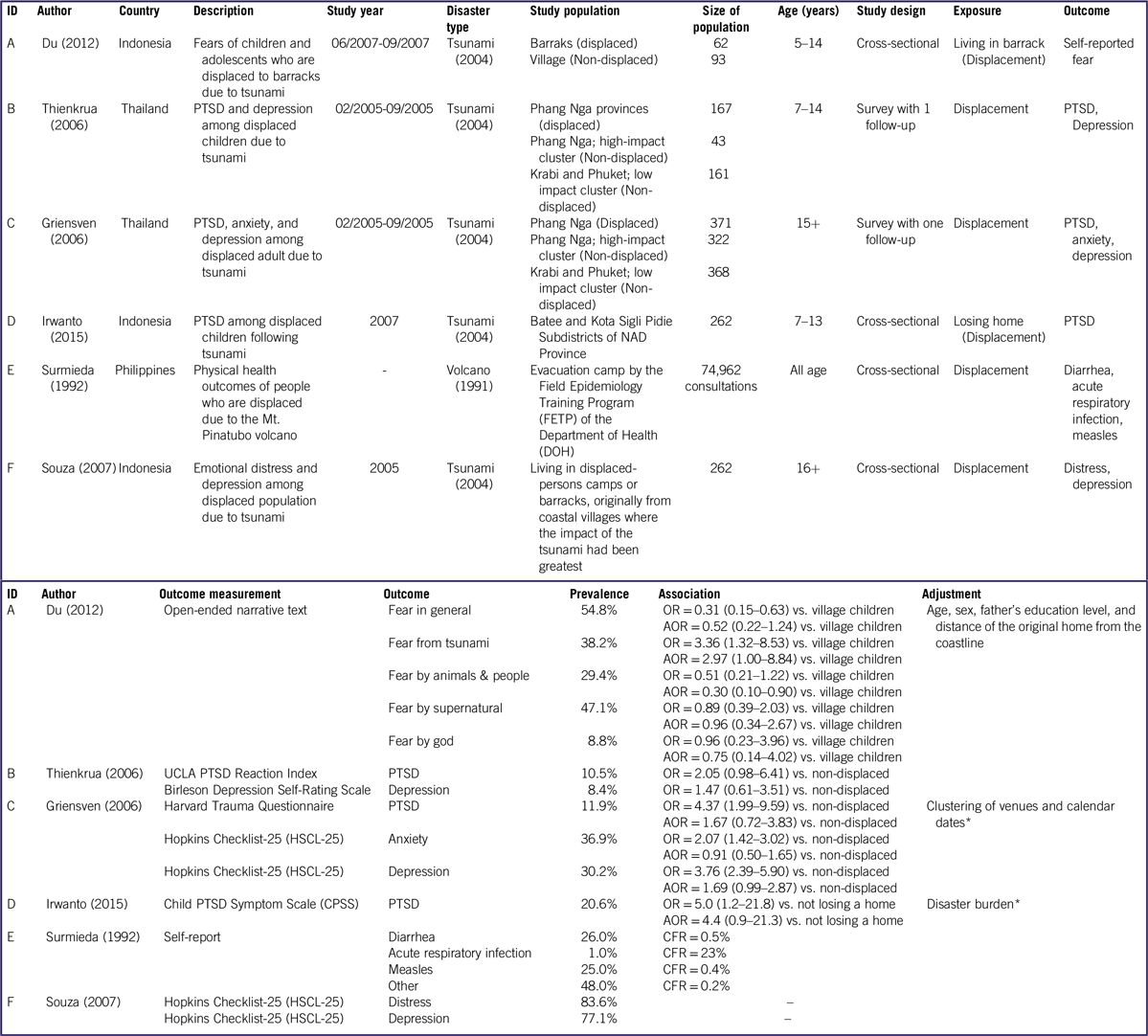
Abbreviations: OR, odds ratio; AOR, adjusted odds ratio; CFR, cases-fatality ratio = (no. of deaths/ no. of consultations) × 100; PTSD, posttraumatic stress disorder.
- Unknown.
* No other information was provided.
Among the 6 articles, 3 articles (A, D, F) were conducted from Indonesia, 2 studies (B, C) from Thailand, and 1 study from the Philippines (E). Articles A, B, C, D, and F were published between 2006 and 2015 and all studies’ population was affected by the 2004 Indian Ocean earthquake and tsunami, whereas the article E was published in 1992 after the volcano eruption in 1991. Study population size ranged from n = 155 to n = 74,962. Among them, 3 studies (A, B, D) included only children, 2 studies (C, F) included only adults, and 1 study (E) included all age groups. Most of the articles (A, B, C, D, F) focused on mental health, and only 1 article (E) focused on physical health. Mental health outcome categories include fear, PTSD, depression, anxiety, and distress.
Mental Health Outcomes
On December 26, 2004 in Southeast Asia, there was a tsunami which affected more than 500,000 people in Aceh, Indonesia. Article A reported children’s (aged 5- to 14-year-old) fears due to this Indonesian tsunami; children who were displaced were 3 times more likely to report fears compared with their peers who lived in their own village (odds ratio [OR] = 3.36). Article D reported PTSD among children aged 7–13 years using the Child PTSD Symptom Scale (CPSS); 20.6% of enrolled children presented PTSD symptoms and children who lost a home was more likely to have PTSD symptom compared with those who did not lose a home (OR = 5.0). In addition, Article F reported tsunami affected adult (aged 16-year-old or older) depressive (77.1%) and distress (83.6%) symptoms using Hopkins Symptoms Checklist-25 (HSCL-25). The Indonesian tsunami also severely impacted Thailand and many individuals, including 20,000 children, were affected.
As a public health emergency response and rapid assessment, the population-based mental health survey was conducted among children (aged 7 to 14 years old) and adults in Southern Thailand. Article B reported PTSD and depression prevalence among children using UCLA PTSD Reaction Index and Birleson Depression Self-Rating Scale, respectively. Displaced children reported OR = 2.05 to present with PTSD symptom and OR = 1.47 to present with depressive symptoms compared with nondisplaced children. Article C reported mental health (PTSD, anxiety, and depression) among adults; the displaced population is more likely to report PTSD (OR = 4.37), more likely to report anxiety (OR = 2.07), and more likely to report depression (OR = 3.76) (Table 4).
Physical Health Outcomes
One article among the 6 final review articles reported regarding physical health outcomes, including diarrhea, acute respiratory infection, and measles. On June 15, 1991, Mt. Pinatubo in the Philippines erupted and 113,921 residents were evacuated and displaced. Article E reported disease surveillance data among evacuation camp population; 26% diarrhea, 1% acute respiratory infection, and 25% measles were detected with case fatality ratio of 0.5%, 23%, and 0.4%, respectively (Table 4).
DISCUSSION
Over the past few decades, increasing temperature in the atmosphere has been a critical global health issue. This climate change is associated with an increase in natural disasters, such as storms, floods, and droughts. Reference Ghazali, Guericolas and Thys28,29 In addition, increased numbers of natural disasters due to climate change can directly affect population health: increase in vulnerability, poor food security and water sustainability, pathogen and vector distribution for infectious diseases. Reference Vázquez-Rowe, Kahhat and Lorenzo-Toja30,Reference Masson-Delmotte, Zhai and Pörtner31
Analyzing disaster and the consequences data in Southeast Asian countries gives a background understanding of the magnitude of disasters and their impact on the people in the region. From the disaster data analysis, it turned out that the Southeast Asian countries have faced numerous natural disasters, which killed or affected a large population. Storms with the subtype of tropical cyclone and earthquakes with the subtype of tsunami or ground movement were the major disasters that caused high volume of deaths. The most highly affected countries were the Philippines, Indonesia, and Vietnam, and the top natural disasters that affected these countries were floods, storms, and earthquakes.
The systematic review of the literature regarding disaster-induced displacement and health outcomes in Southeast Asia suggested that being displaced from home after a natural disaster is highly associated with poor health outcomes, especially the mental health, including fear, PTSD, depression, anxiety, and distress. In addition, people who are displaced due to natural disasters are exposed to physical health risks, including diarrhea, acute respiratory infection, and other infectious diseases. This may be due to poor sanitation. However, this systematic review process has some limitations: lack of publications that met eligibility criteria despite the high number of major disasters, and lack of attention in physical health outcomes.
We were only able to include 6 studies for systematic review, and of these, 5 studies described the same disaster, the tsunami in Indonesia that killed nearly 200,000 people in 2004. Among all 6 studies, 2 studies were from Thailand, 3 studies were from Indonesia, and 1 was from the Philippines. While only 6 studies met our inclusion criteria in Southeast Asia, 44 studies met the same inclusion criteria in Far East Asia: 33 studies from Japan, 3 studies from Taiwan, and 8 studies from China were published after major disasters. Of these published studies, 13 studies focused on physical health, including infectious diseases; 19 studies focused on mental health; and 2 studies focused on both physical and mental health. According to disaster statistics from EM-DAT, the Philippines, Indonesia, and Vietnam faced the highest number of natural disasters in the world; therefore, we should expect more studies from these countries.
In addition, we might have introduced publication bias because there are only a few studies. Five of 6 articles we reviewed were regarding the same natural disaster out of 674 disasters in Southeast Asia. Different types of natural disasters have different rates of population displacement and health outcomes, which makes these reviews not generalizable.
Finally, due to lack of publication counts, we were not able to conduct meta-analysis using advanced statistics and compare each article directly. Meta-analysis summarizes many relevant study results using statistical methods by synthesizing numbers that are needed to be compared among multiple studies; it computes overall quantitative results. Reference Finfgeld-Connett32 We have missed quantifying the qualitative results of disparate study findings, which is helpful in practice and policy formation. Reference Finfgeld-Connett32
Because Southeast Asian countries face so many natural disasters and a high number of the population are getting displaced every year which affects their health outcomes, further research is required to address the problem and design the best interventions. The Philippines and Vietnam are affected by storms and floods that are predictable at some degree and preparation can prevent population displacement and their health consequences. Yet, Indonesia is mainly affected by earthquakes, which makes it difficult to prevent population displacement because earthquakes happen suddenly without warning.
Health research capacity is very limited in developing countries. These countries face frequent changes in economic development plans, limited opportunity to connect with international policy-makers, scarce research funding, and limited number of researchers compared with developed countries. Reference Sitthi-Amorn and Somrongthong33 We will have to consider the research capacity of these countries while establishing the intervention. It is recommended to implement a disaster and health surveillance system for at least initial and baseline effort to understand the health impact from disasters and to identify intervention opportunities. Reference Thacker and Berkelman34,Reference Nsubuga, White and Thacker35
CONCLUSIONS
Southeast Asia has been suffering from natural disasters and the impact is becoming increasingly severe due to climate change. More investigations are required to identify vulnerable population to protect from natural disaster-induced displacement and to strengthen the capacity of countries for disaster preparedness and responses.
Supplementary material
To view supplementary material for this article, please visit https://doi.org/10.1017/dmp.2019.125