Introduction
Campylobacteriosis continues to be the most commonly reported food-borne disease in Europe. In 2008, 190,566 people suffered from campylobacter infections, which corresponds to an incidence of 40.7 cases per 100,000 population (EFSA, 2010a). The majority of campylobacteriosis results in mild or acute but self limiting gastrointestinal disease. Infrequently complications, such as reactive arthritis and neurological disorders, may occur. Moreover, 0.1% of cases develop into Guillain-Barré Syndrome (Allos, 1997), and autoimmune disorder affecting the peripheral nervous system that can result in respiratory and severe neurological dysfunction and even death. As little as 53 - 750 CFU/cm2 in fresh chicken meat could cause human infections (Rosenfield et al., Reference ROSENFIELD, ARNOLD, DAVEY, ARCHER and WOODS1985) mainly due to C. jejuni, C. coli and C. lari representing the three most commonly isolated species also in broiler meat (EFSA, 2010a). Human campylobacteriosis is frequently represented by sporadic cases related to consumption of contaminated broiler meat. Campylobacter spp. may contaminate many stages of food production, but the primary production of food of animal origin remains the most important reservoir of Campylobacter spp. in the human food chain. According to the baseline survey undertaken in 2008, a EU prevalence of 71% of campylobacter-colonised broiler batches at slaughterhouse was identified ranging from 2% to 100%. (EFSA, 2010b). In general, high to very high prevalence of Campylobacter spp. was observed with the exception of Finland and Norway.
Regarding broiler meat, in 2008 a mean of 30% of campylobacter positive samples in fresh broiler meat was recorded in Europe, with six out of ten Member States reporting high levels (>20%). Although with a high variation among countries, high proportions of positive samples were registered at all levels of production including slaughtering, processing and retail) (EFSA, 2010a).
The serious threat to human health, due to the high number of campylobacteriosis cases in Europe, prompted several researchers in identifying campylobacter control strategies in poultry. In some countries of Northern Europe (i.e. Denmark, Norway, Sweden and Iceland), these strategies are part of official control or monitoring programmes implemented at national level (Rosenquist et al., Reference ROSENQUIST, BOYSEN, GALLIANO, NORDENTOFT, ETHELBERG and BORCK2009; Hofshagen and Kruse, Reference HOFSHAGEN and KRUSE2005; Hansson et al., Reference HANSSON, FORSHELL, GUSTAFSSON, BOQVIST, LINDBLAD, ENGVALL, ANDERSSON and VÅGSHOLM2007; Stern et al., Reference STERN, HIETT, ALFREDSSON, KRISTINSSON, REIERSEN, HARDARDOTTIR, BRIEM, GUNNARSSON, GEORGSSON, LOWMAN, BERNDTSON, LAMMERDING, PAOLI and MUSGROVE2003). On the contrary, at European level, only recently efforts are being made to implement official European regulations specifically directed to monitor and control campylobacter along the food chain.
Theoretically, strategies to prevent transmission of campylobacter to humans should refer to the whole broiler meat production chain from farm to fork. For this purpose three main risk factors may be identified: flock prevalence, carcass contamination and kitchen hygiene (Rosenquist et al., Reference ROSENQUIST, NIELSEN, SOMMER, NORRUNG and CHRISTENSEN2003). Among these, different researchers agree in considering the level of campylobacter prevalence and counts in the birds as key elements to reduce the risk for human health. Callicott et al. (Reference CALLICOTT, HARÐARDÓTTIR, GEORGSSON, REIERSEN, FRIÐRIKSDÓTTIR, GUNNARSSON, MICHEL, BISAILLON, KRISTINSSON, BRIEM, HIETT, NEEDLEMAN and STERN2008) found contamination on many fresh broiler carcasses that could be implicated in human disease, significantly higher than non-implicated samples, suggesting mean contamination as a good target for campylobacter control strategies in food regulations. The relevance of these findings is supported by quantitative microbial risk assessment (QMRA) studies which predicted the effective reduction of human health risk linked with the reduction of campylobacter contamination. According to Rosenquist et al. (Reference ROSENQUIST, NIELSEN, SOMMER, NORRUNG and CHRISTENSEN2003), a two log reduction of the campylobacter in broiler carcasses would reduce the incidence of campylobacteriosis associated to the consumption of chicken meals by a factor of 30 times. Effective human risk reduction was predicted by the QMRA study within the Campylobacter Risk Management and Assessment (CARMA) project. A two log reduction of campylobacter concentration in the faeces of broilers at the moment of processing was estimated to reduce the illness risk in consumers of broiler meat of 75% (Wagenaar et al., Reference WAGENAAR, VAN BERGEN, MUELLER, WASSENAAR and CARLTON2005; Havelaar et al., Reference HAVELAAR, MANGEN, DE KOEIJER, BOGAARDT, EVERS, JACOBS-REITSMA, VAN PELT, WAGENAAR, DE WIT, VAN DER ZEE and NAUTA2007).
In this paper, an overview is given on current and developing strategies for reducing Campylobacter contamination in primary poultry production.
European legislation and key documents on monitoring and control of Campylobacter
In the White Paper on Food Safety (COM/ 99/0719), the EC defined food safety as a policy priority. In this document the Commission sets out the general principles on a comprehensive, integrated approach in order to improve quality standards and reinforce systems of checks throughout the food chain, from farm to table. The final goal was to complement and modernise existing EU food legislation in a co-ordinated approach across EU Member States for a better protection of consumer health. Following this strategy, different EU regulations have been approved in the last decade. Regulation (EC) No 178/2002 provides a framework for food and feed law and imposes obligations both on Member States as well as on food and feed business operators. Moreover it establishes the European Food Safety Authority (EFSA), which shall provide impartial scientific advice and forward on emerging food issues to the EC. In compliance with Directive 2003/99/EC, since 2004, all member states shall collect monitoring data on zoonoses, zoonotic agents and their antimicrobial resistance in humans, animals and foodstuffs. These data are then sent to the EFSA, which publishes every year a Community Summary Report.
Regarding campylobacter, only recently efforts have been spent in defining official monitoring and control programmes to be applied specifically for campylobacter at all stages of the food chain. Commission Decision 2007/516/EC established a baseline survey carried out in 2008 on the prevalence, concentration and antimicrobial resistance of Campylobacter spp. in broiler flocks and broiler carcasses. At Community level the prevalence of campylobacter-colonised broiler batches was 71% and that of campylobacter -contaminated broiler carcasses was 76%. About two-thirds of the campylobacter isolates from the broiler batches as well as those from the broiler carcasses were identified as Campylobacter jejuni, while one-third was Campylobacter coli (EFSA, 2010b). Moreover the results of a risk assessment study on campylobacter in animals and foodstuffs along the broiler meat production chain of Gallus Gallus concluded that handling, preparation and consumption of broiler meat may account for 20-30% of human cases of campylobacteriosis, while 50-80% can be attributed to the chicken reservoir as a whole (EFSA, 2010d). These data will provide a good baseline for future EU regulations specifically targeting reduction in primary production as well as microbial criteria defining maximum campylobacter contamination acceptable in foodstuffs.
Rearing systems and campylobacter colonisation in poultry
The rearing system and management has been claimed to affect the prevalence of campylobacter contamination in broilers and broiler meat. In particular, organic systems were associated to a higher prevalence of campylobacter than conventional systems (Näther et al., Reference NÄTHER, ALTER, MARTIN and ELLERBROEK2009; Van Der Zee et al., Reference VAN DER ZEE, WIT and VOLLEMA2005; Heuer et al., Reference HEUER, PEDERSEN, ANDERSEN and MADSEN2001). This observation might be due to several factors which together characterise the organic rearing system. Among them the most important seems a higher risk of environmental contamination. If this is confirmed for laying hens, this trend might be of particular concern in view of 2012, as, by this year, Council Directive 1999/74/EC, defining minimum standards for the welfare of laying hens, will abolish conventional cage systems in favour of enriched cages or alternative systems. Alternative systems could represent a higher risk of campylobacter prevalence and contamination both for laying hens and eggs. For eggs, although campylobacter seems unable to survive in dry conditions as shell surfaces and has limited ability to penetrate eggshells (Sahin et al., Reference SAHIN, KOBALKA and ZHANG2003; Neill et al., Reference NEILL, CAMPBELL and O'BRIEN1985), further studies will be required if a higher campylobacter contamination of table eggs is confirmed.
Current Campylobacter control strategies
biosecurity measures
Biosecurity is designed to protect the health of livestock by preventing the transmission of disease through physical barriers and hygiene practices. Such measures are normally applied in primary breeding and grandparent flocks, since the exclusion of enteropathogens at an early stage in the pyramid of stock production prevents widespread dissemination. As physical barriers, biosecurity includes for example the use of fly screens at broiler houses which prevent the introduction of flies as vectors transmitting Campylobacter spp. from outside farm livestock to inside broiler houses by ventilation air (Hald et al., Reference HALD, SOMMER and SKOVGÅRD2007). Regarding hygienic measures, biosecurity includes the use of dedicated boots and protecting clothing for each house, facilities and protocols for handling hygiene, step-over barriers between a ‘clean’ and ‘dirty’ part of the house service area. In broiler production, the all-in/all-out approach on a whole farm basis is one of the basic principles of effective biosecurity. In contrast, thinning, which is a partial depopulation, is identified as significant risk factor for campylobacter contamination of residual birds because the maintenance of reasonable levels of biosecurity by thinning crews and their equipment is impractical (EFSA, 2010c; Hue et al., Reference HUE, LE BOUQUIN, LAISNEY, ALLAIN, LALANDE, PETETIN, ROUXEL, QUESNE, GLOAGUEN, PICHEROT, SANTOLINI, SALVAT, BOUGEARD and CHEMALY2010; Allen et al., Reference ALLEN, WEAVER, RIDLEY, HARRIS, SHARMA, EMERY, SPARKS, LEWIS and EDGE2008; Hald et al., Reference HALD, RATTENBORG and MADSEN2001). In Iceland, where an effective campylobacter control plan is in place, thinning is not applied as part of biosecurity measures (Stern et al., Reference STERN, HIETT, ALFREDSSON, KRISTINSSON, REIERSEN, HARDARDOTTIR, BRIEM, GUNNARSSON, GEORGSSON, LOWMAN, BERNDTSON, LAMMERDING, PAOLI and MUSGROVE2003).
The efficacy of biosecurity for the control of campylobacter in broiler production is controversial. Different intervention trials as well as other studies supported its efficacy (Gibbens et al., Reference GIBBENS, PASCOE, EVANS, DAVIES and SAYERS2001; Evans and Sayers, 2000; Hald et al., Reference HALD, WEDDERKOPP and MADSEN2000; Humphrey et al., Reference HUMPHREY, HENLEY and LANNING1993; Van de Giessen et al., Reference VAN DE GIESSEN, TILBURG, RITMEESTER and VAN DER PLAS.1998; Cardinale et al., Reference CARDINALE, TALL, GUÈYE, CISSE and SALVAT2004). In addition it has been included as a key component of all existing national Campylobacter control programmes already applied in Sweden, Denmark, Norway and Iceland (Rosenquist et al., Reference ROSENQUIST, BOYSEN, GALLIANO, NORDENTOFT, ETHELBERG and BORCK2009; Hofshagen and Kruse, Reference HOFSHAGEN and KRUSE2005; Hansson et al., Reference HANSSON, FORSHELL, GUSTAFSSON, BOQVIST, LINDBLAD, ENGVALL, ANDERSSON and VÅGSHOLM2007; Stern et al., Reference STERN, HIETT, ALFREDSSON, KRISTINSSON, REIERSEN, HARDARDOTTIR, BRIEM, GUNNARSSON, GEORGSSON, LOWMAN, BERNDTSON, LAMMERDING, PAOLI and MUSGROVE2003). However in other studies hygienic measures did not have a significant influence on the campylobacter status (Refrégier-Petton et al., Reference REFRÉGIER-PETTON, ROSE, DENIS and SALVAT2001; Bouwknegt et al., Reference BOUWKNEGT, VAN DE GIESSEN, DAM-DEISZ, HAVELAAR, NAGELKERKE and HENKEN2003). The different results obtained might be caused by different levels of hygienic measures or difficulties in maintaining hygienic standards throughout the whole rearing period. Moreover comprehensive biosecurity measures are laborious, costly in terms of capital equipment, use of disinfectants and other antimicrobials. As a consequence poultry farmers might discourage on-farm biosecurity-enhancement policies based on voluntary adoption (Fraser et al., Reference FRASER, WILLIAMS, POWELL and COOK2010).
Litter management
The litter is an absorbent material used on the floor of the poultry house. It may consist of non-sterile wood shavings, peanut, rice hulls or other similar materials. It may introduce pathogens into the primary production environment although treatment and testing prior to use can greatly reduce or eliminate pathogen carriage (Ivanov, Reference IVANOV2001; Line, Reference LINE2002; Garrido et al., Reference GARRIDO, SKJERVHEIM, OPPEGAARD and SORUM2004; Rothrock et al., Reference ROTHROCK, COOK, WARREN and SISTANI2008). Since litter can harbour pathogens, its prolonged use with multiple batches of birds is considered a far greater problem. (Vicente et al., Reference VICENTE, HIGGINS, HARGIS and TELLEZ2007). Regarding campylobacter, a reduction of three log on the litter contamination was registered after the addition of alum to poultry litter (Rothrock et al., Reference ROTHROCK, COOK, WARREN and SISTANI2008).
Feed
Feed is not reported as possible route of transmission of campylobacter. In fact, contamination of feed and feed ingredients is a very rare event. Moreover it was demonstrated that after experimental contamination of feed, campylobacter is not able to survive for more than 24 hours (Humphrey et al., Reference HUMPHREY, HENLEY and LANNING1993). At present time different decontamination technologies are routinely used on feed such as heat treatment and pelleting (EFSA, 2004). Thormar et al. (Reference THORMAR, HILMARSSON and BERGSSON2006) reported that monocaprin, the monoglyceride of caprilic acid, was effective in killing significant populations of C. jejuni in chicken feed. Moreover, Solis de los Santos et al. (Reference SOLIS DE LOS SANTOS, DONOGHUE, VENKITANARAYANAN, REYES-HERRERA, METCALF, DIRAIN, AGUIAR, BLORE and DONOGHUE2008) demonstrated that the supplementation of 0.7% caprylic acid to the feed three days prior to slaughter with 12-h feed withdrawal period, significantly decreased campylobacter colonisation. The same authors (2009) showed also that therapeutic supplementation of caprylic acid for three days reduces campylobacter populations in the caecal content of chicks by three to four log.
Drinking water
Water has been described as a potential reservoir of campylobacter both for chicken and human infection (Pearson et al., Reference PEARSON, GREENWOOD, HEALING, ROLLINS, SHAHAMAT, DONALDSON and COLWELL1993; Morris and Levin Reference MORRIS and LEVIN1995; Gregory et al., Reference GREGORY, BARNHART, DREESEN, STERN and CORN1997; Brennhovd et al., Reference BRENNHOVD, KAPPERUD and LANGELAND1992). Recent studies stressed their attention on water as a significant risk factor for human health (Ten Veldhuis et al., Reference TEN VELDHUIS, CLEMENS, STERK and BERENDS2010; Van Lieverloo et al., Reference VAN LIEVERLOO, BLOKKER and MEDEMA2007). Based on these observations the decontamination of drinking water in poultry farm is desirable (Kapperud et al., Reference KAPPERUD, SKJERVE, VIK, HAUGE, LYSAKER, AALMEN, OSTROFF and POTTER1993). However the efficacy of different decontamination procedures is controversial. Chaveerach et al. (Reference CHAVEERACH, KEUZENKAMP, LIPMAN and VAN KNAPEN2004) identified campylobacter-free chickens after 19 days of an experimental inoculation of 105 CFU/ml in birds given acidified drinking water in comparison to approx 102 CFU/ml contamination in chickens fed with untreated water. Other researchers have also reported that lactic acids in drinking water administered during feed withdrawal reduced campylobacter contamination in crops and carcasses. (Byrd et al., Reference BYRD, HARGIS, CALDWELL, BAILEY, HERRON, MCREYNOLDS, BREWER, ANDERSON, BISCHOFF, CALLAWAY T.R. and KUBENA2001).
Conversely Refrégier-Petton et al. (Reference REFRÉGIER-PETTON, ROSE, DENIS and SALVAT2001) identified acidification of drinking water as an increased risk of campylobacter contamination. These opposite results might be due to experimental bias based on the impossibility to identify a single risk factor which is strictly associated with different other aspects. In this case, as suggested in the paper, acidification was probably an indicator of poor hygienic conditions of the commercial broiler farm under study. Disinfection of water has shown low efficacy in reducing the load of C. jejuni. This is probably due to the internalization of campylobacter by protozoa naturally found in drinking water at farm. In an in vitro study C. jejuni showed resistance to disinfection when internalized by Tetrahymena pyriformis and Acanthamoeba castellanii, two protozoa frequently found in poultry drinking water (Snelling et al., Reference SNELLING, MCKENNA, LECKY and DOOLEY2005).
Emerging strategies for campylobacter control
competitive exclusion
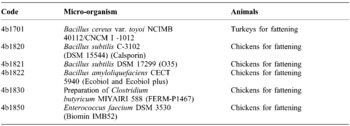
Competitive exclusion (CE) is a form of treatment with probiotics, one or more beneficial micro-organisms derived typically from the gastrointestinal flora of an adult of the species to be treated. CE microbial cultures include a large number and diversity of genera and species ranging from lactic acid bacteria to strict anaerobes and might be applied to one old day chicks to establish a protective enteric microbiota that excludes intestinal colonization by enteropathogens (Nurmi and Rantala, Reference NURMI and RANTALA1973; Pivnick and Nurmi Reference PIVNICK and NURMI1982; Schneitz and Mead Reference SCHNEITZ and MEAD2002). According to the 62nd edition of the community register feed additives for animal nutrition following regulation EC No 1831/2003, some Gram positive bacteria and yeasts have been approved as single beneficial microorganism used as gut flora stabilizers (Table 1) in chicken and turkeys for fattening.
Approved probiotic micro-organisms as gut flora stabilizers (EC No 1831/2003).

To be maximally effective CE should be administered shortly before a potential exposure to the pathogen, so administration by spray at the hatchery is generally superior to water administration on farm (Mead, Reference MEAD2000; Patterson and Burkholder, Reference PATTERSON and BURKHOLDER2003).
It has hypothesised that in chickens fed with CE products might prevent also C. jejuni colonization. The use of the avian-specific probiotic containing L. acidophilus and S. faecium can reduce the colonisation and frequency of faecal shedding of C. jejuni in market-aged broilers (Morishita et al., Reference MORISHITA, AYE, HARR, COBB and CLIFFORD1997). However, so far inconsistent data have been collected (Wagenaar et al., Reference WAGENAAR, MEVIUS and HAVELAAR2006) and more data are required in order to confirm their efficacy.
Vaccination
Vaccination, as potential intervention strategy for campylobacter control, needs careful consideration based on the evidence that acquired immune responses during colonisation can limit or even eliminate campylobacter infections from the avian gut. Currently three strategies are promising for the production of a campylobacter vaccine. The first strategy involves the expression of campylobacter antigens in live salmonella vaccine vectors (Newell, 2009). This vaccine can be effective in protecting broilers against experimental challenge with campylobacter (Buckley et al., Reference BUCKLEY, WANG, HUDSON, GRANT, JONES, MASKELL and STEVENS2010; Wyszynska et al., Reference WYSZYNSKA, RACZKO, LIS and JAGUSZTYN-KRYNICKA2004). However, the use of genetically-engineered live vaccines from potentially pathogenic organisms is a major barrier to this approach.
A second strategy involves the use of sub-unit vaccines of campylobacter. The major problem of this approach is that the antigens tested so far, delivered orally, failed to induce an immune response in the chicken gut. Adjuvants effective in presenting the antigen and generating an immune response at the chicken gut surface are required (Newell, Reference NEWELL2009). Moreover, the vaccine needs to work in an immunologically immature host, against maternal antibodies and within a very short window from the 2nd to the 3rd week of life.
A third strategy regards a novel vaccination approach in ovo. Injection of recombinant avian adenovirus Celo cosmids (DNA) in ovo is an ideal way to confer protection to one day old broiler chicks that are destined for the market between 35 and 42 days of age. Preliminary results have shown that it is possible to inject either virus or cosmid DNA with reconstitution of the virus in ovo in order to stimulate an immune response in the developing embryo (François et al., Reference FRANÇOIS, ETERADOSSI, DELMAS, PAYET and LANGLOIS2001; Rauw et al., Reference RAUW, LAMBRECHT, FRANÇOIS, LANGLOIS and VAN DEN BERG2007). This new way of vaccination would aim to use the recombinant cosmid in ovo, allowing the reconstruction of the recombinant virus, without deleterious effect on the chicks
Antimicrobials and their alternatives
On the utilisation of antibiotics, researchers are focusing more and more their attention to draw specific strategies meant to face the problem of antibiotic resistance. For this purpose, different strategies are suitable:
1) reducing antibiotic prescription and consumption,
2) using combinations of antibiotics each belonging to a different antimicrobial class,
3) finding antimicrobials alternatives able to bypass the bacteria antibiotic resistance mechanisms
4) evaluating new antibiotic dosing strategies based on a higher antibiotic concentration able to prevent the selection of resistant mutant,
5) using molecules able to enhance the antimicrobial effect of the antibiotic (i.e. efflux pumps inhibitors).
An overview of the last three options is reported below.
mutant prevention concentration (MPC) concept
Currently, dosing regimens are based on the minimum inhibitory concentration (MIC) value which is the lowest concentration of a specific antibiotic able to inhibit the growth of a particular microbial pathogen. At this concentration a sub-population of the micro-organism may acquire specific mutations leading to antibiotic resistance. The mutant prevention concentration (MPC) is a novel approach for comparing in vitro antibiotic potency needed to prevent the selection of resistant mutants. Within a bacterial population, in the presence of an antibiotic, some bacterial cells might acquire resistance toward this specific antibiotic. The minimum inhibitory concentration of these resistant bacterial cells is defined as the MPC value (Blondeau et al., Reference BLONDEAU, HANSEN, METZLER and HEDLING2004). In other words, MPC is an antibiotic concentration higher than MIC and effective against both the susceptible wild-type population and the resistant subpopulation. Theoretically, in order to prevent resistant mutants to occur, the antibiotic serum level should exceed the MPC value for the maximum time possible. The critical point is that this approach cannot be applied to all antibiotic-pathogen combinations. For antibiotics inducing mechanisms of resistances one step (i.e. penicillin and tetracycline resistance based on acquisition of plasmid located gene), the MPC is often higher than the maximum serum drug concentration, rendering it not applicable in dosing regimens. Conversely, this approach seems promising for those antibiotics corresponding to a multi-step mechanism of acquired resistance in the microbial pathogen. In this mechanism, the susceptible population need to go through different generations of daughter cells with reduced susceptibility, before the acquisition of a fully resistant phenotype.
Regarding campylobacter, few in vitro preliminary MPC studies have been done (Pasquali et al., Reference PASQUALI, LUCCHI and MANFREDA2008; Wang et al., Reference WANG, ZHANG, ZHANG, YAOJIE and LI2010). Pasquali et al. (Reference PASQUALI, LUCCHI and MANFREDA2008) registered MPC values for enrofloxacin against C. jejuni of 2 and 4 mg/l, whereas Wang and colleagues registered MPC values ranging from 0,063 to 2 mg/l. These values are generally higher than those detected for other enteropathogens. These results, together with the identification in both studies of single step mutants resistant to the antibiotic, suggest that the acquisition of resistance of campylobacter towards fluoroquinolones is a one step mechanism rather than a multistep one. This consideration creates some doubt on the applicability of the MPC concept on campylobacter. Certainly further studies are required to investigate MPC in a broader number of strains and to verify its applicability in vivo.
Antimicrobials combined with efflux pump inhibitors
The function of efflux pumps is to transport drugs throughout the bacterial envelope and limit the intracellular accumulation of toxic compounds (for example, antibiotics, antimicrobial peptides, metals and detergents). Consequently, bacteria become insensitive to antibiotherapy and the colonisation of pathogens is made easier. Multidrug resistance efflux pumps have now been described in both Gram-positive and Gram-negative bacterial pathogens.
In this regard, molecules able to restore susceptibility by blocking the efflux pump activity might represent a valuable strategy to face the emerging of antibiotic resistance. Among efflux pump inhibitors (EPI), recently the attention has been focused on molecules able to act as competitors of the antibiotic by recognising and binding with the same affinity the antibiotic recognition site located on the efflux pump. As far as campylobacter is concerned, phe-β-naphtylamide (PAβN), a peptidomimetic compound, was found effective in reducing the MIC of erythromycin, chlortetracycline and bile salts but not of streptomycinin (Cagliero et al., Reference CAGLIERO, MOULINE, PAYOT and CLOECKAERT2005; Martinez and Lin, Reference MARTINEZ and LIN2006; Piddock et al., Reference PIDDOCK, GRIGGS, JOHNSON, RICCI, ELVISS, WILLIAMS, JØRGENSEN, CHISHOLM, LAWSON, SWIFT, HUMPHREY and OWEN2008; Lin and Martinez, Reference LIN and MARTINEZ2006; Olkkola et al., Reference OLKKOLA, JUNTUNEN, HEISKA, HYYTIÄINEN and HÄNNINEN2010).
Bacteriophages
Campylobacter -specific bacteriophages offer the prospect of a sustainable measure to reduce the numbers of C. jejuni and C. coli colonizing poultry and contaminating poultry meat products. Bacteriophages are viral parasites highly specific for bacterial species. Being specific, bacteriophages have a minimal impact on the microbial populations different from the host one. Those specific to Campylobacter spp. are frequently found in the intestinal contents of poultry, along with their hosts, where they are particularly prevalent in free-range and organic birds exposed to the environment. From the intestinal content of birds, purified bacteriophages may be transferred to the surface of poultry meat, at slaughter. Here they are able to survive for more than 10 days and are therefore naturally present on foods for human consumption.
Phage intervention, carried out just prior to slaughter, could reduce the numbers of campylobacter entering the human food chain, where reductions ranging between two and five log10 (per g of caecal content) of chickens harbouring C. jejuni have been reported (Carrillo et al., Reference CARRILLO, ATTERBURY, EL-SHIBINY, CONNERTON, DILLON, SCOTT and CONNERTON2005; Scott et al., Reference SCOTT, TIMMS, CONNERTON, CARRILLO, RADZUM and CONNERTON2007a; Scott et al., Reference SCOTT, TIMMS, CONNERTON, EL-SHIBINY and CONNERTON2007b; Wagenaar et al., Reference WAGENAAR, VAN BERGEN, MUELLER, WASSENAAR and CARLTON2005). More recently studies have focussed their attention on isolation methods enhancing the recovery of bacteriophages active against C. jejuni and coli (Hwang et al., Reference HWANG, YUN, KIM, HEU, LEE and RYU2009; Carvalho et al., Reference CARVALHO, SUSANO, FERNANDES, SANTOS, GANNON, NICOLAU, GIBBS, TEIXEIRA and AZEREDO2010). In particular the use of the target pathogen in the isolation step seems to enhance the recovery of phages specifically active against the target (Carvalho et al., Reference CARVALHO, SUSANO, FERNANDES, SANTOS, GANNON, NICOLAU, GIBBS, TEIXEIRA and AZEREDO2010).
Bacteriocins
Bacteriocins are peptides with antimicrobial activity against a broad range of bacteria. Especially in the gut, bacteriocin-producing bacteria have a selective advantage against their bacterial competitors (Riley and Wertz, Reference RILEY and WERTZ2002). Bacteriocins act as a knife disrupting the membrane integrity of the antagonist cell. In contrast to antibiotics, which show high affinity for a single target, these peptides acts with a low affinity to different membrane targets. This mode of action does not facilitate the acquisition of resistance by the host and it seems responsible for the low prevalence of bacteriocin resistant mutants. Antimicrobial peptides of next generation are of particular interest because they can specifically inhibit a target strain within a bacterial community (Franzman et al., Reference FRANZMAN, BURNELL, DEHKORDI-VAKIL, GUTHMILLER, DAWSON and BROGDEN2009; Eckert et al., Reference ECKERT, HE, YARBROUGH, QI, ANDERSON and SHI2006; Qiu et al., Reference QIU, WANG, LU, ZHANG, LI, CHENG, WAN, YANG, ZUO, ZHOU, WANG, CHENG, ZHANG, OU, ZHONG, CHENG, LI and WU2003; Qiu et al., Reference QIU, ZHANG, WANG and WU2005). In the last years, anti- campylobacter bacteriocins have been isolated by chicken commensal bacteria. These peptides are stable at high temperatures and wide pH range and display a high efficacy in reducing campylobacter colonisation in the gut. Enterocin E-760 isolated from Enterococcus durans, for example, was able to significantly reduce colonization of naturally acquired Campylobacter spp. in market age broiler chickens when administered in treated feed 4 days prior to slaughter (P < 0.05) (Line et al., Reference LINE, SVETOCH, ERUSLANOV, PERELYGIN, MITSEVICH, MITSEVICH, LEVCHUK, SVETOCH, SEAL, SIRAGUSA and STERN2008).
Bacteriocin OR-7 purified from L. salivarius significantly reduced the campylobacter load (from 7.2 log10 to 0) in faecal samples of each of the 8 trials (P≤0.05) in which 10 treated and 10 untreated chickens were tested. This bacteriocin appears potentially useful to reduce C. jejuni in poultry prior to processing (Stern et al., Reference STERN, SVETOCH, ERUSLANOV, PERELYGIN, MITSEVICH, MITSEVICH, POKHILENKO, LEVCHUK, SVETOCH and SEAL2006). Nevertheless more studies are required to investigate the potential toxicity along with the mechanisms of action and of selection of bacteriocin resistant mutants. As a recent comprehensive review refer to Lin (Reference LIN2009).
Conclusions
For campylobacter control, the application of stringent biosecurity measures at the farm level is not sufficient to reduce the contamination in primary poultry production. Although still under investigation, developing options such as competitive exclusion, vaccination, bacteriophages or bacteriocins as well as decontamination of slaughtered carcasses, although not currently allowed in Europe, might represent promising strategies to be applied along with biosecurity for an effective reduction of the campylobacter risk for humans. Among these developing options the use of probiotics including bacteriocin-producing bacteria might be at the present time, one of the most promising. Nevertheless the applicability of all these measures needs to be confirmed both from a scientific and economic point of view. More scientific studies need to investigate on a large scale application the real effectiveness of those measures on reduction of human risk. Comprehensive economic studies need to address the suitability of those measures in terms of cost-benefits. Since these measures are quite expensive, their contextual application might be observed only in those countries where the sanitary controls are more tightening. The ultimate goal is an EU regulation including a harmonised campylobacter control program to be applied in all Member States.