Throughout the African continent, school-educated, radical youth played an important role in twentieth-century independence movements. In South Africa's long struggle, youth pushed liberation forward at critical moments – radicalizing the African National Congress (ANC) in the 1940s, forming the Pan Africanist Congress in the late 1950s, energizing resistance and swelling the ranks of armed opposition groups in the 1970s and 1980s. In the 1970s, the Black Consciousness movement became the leading liberation movement. Formed by young university students, it broke the silence of fear and defeat following the banning of anti-apartheid organizations in the early 1960s. These young activists became known for their defiant attitudes as they confronted apartheid with their bold calls for black psychological liberation and self-reliance. Yet, when new evidence from the movement's community work is taken into account, we also see these youths upholding certain customs and deferring to elders.
In African history, the literature on youth and generation has generally focused on male youth – in particular their use of violence – and female sexuality. Scholars have also debated youth agency and how much youth break with or reinforce the past when confronted with political, social, and economic change.Footnote 1 This article explores the role of youth in Black Consciousness community development by examining Black Community Programs' (BCP) publications, health, and economic projects in the Eastern Cape. In doing so, it provides a complex picture of a particular group of youth's engagement with customs seen as passed down from previous generations, and considers young professional women, a category largely overlooked in the history of African youth.
Youth are often characterized by a willingness to reject accepted conventions. Like youth elsewhere in the late 1960s and early 1970s, Black Consciousness activists rebelled against societal norms by advocating a liberation philosophy that emphasized a new positive and cosmopolitan black identity. Paradoxically, when working on health and economic projects in Eastern Cape villages, they also promoted certain accepted cultural practices such as respectful communication with one's elders. Rather than a conservative act, however, this adherence to Xhosa social mores was, in fact, an important part of their radicalism. Combined with their status as university students and graduates, it facilitated their work in Xhosa communities. Furthermore, valuing local African culture cut at the core of apartheid ideology that taught that all things African were inferior. Thus, by promoting Xhosa social conventions, activists challenged the status quo of apartheid. But they were selective in the beliefs, practices, and customs they chose to both promote and challenge. Gender often determined their selection.Footnote 2
Many of the activists involved in BCP were university-educated women. Their skills and freedom from other commitments allowed them to significantly contribute to these community projects. In turn, they gained experience and expertise that accelerated their path to professional maturity. As a result, while Black Consciousness activists challenged apartheid by promoting various dimensions of black political cultures, their projects also inadvertently changed those cultures by altering perceptions of the abilities and roles of women – increasing respect for women in some social relations and in professional positions usually performed by men. These shifts did not come without difficulty. At times, these young women met resistance to their work and efforts to challenge prevailing customs. Still, the experiences of BCP women show that the history of young women starting or aspiring to professional careers is important to understanding how factors such as gender and schooling affect the position of youth and their ability to shape societies – a power not afforded to young women in histories where they appear only as victims or unwitting contributors to the construction of masculinities.Footnote 3
The definition of youth in any society and time is dependent upon many factors. In this article, I define youth simply as a state between childhood and adulthood. I agree with other scholars who have argued that youth is a ‘phase of socialization’ and a group defined by its ‘status and behavior’ more than biological age.Footnote 4 I add that moving into adulthood often occurs in stages. In this article, I am particularly interested in how Black Consciousness activists moved along the path to professional adulthood through their BCP work. In the Eastern Cape communities where these activists worked, full adulthood was generally obtained years after a person reached physical maturity – for example, when a man became economically independent and had established a family. In the 1970s, South African youth entered politics at a younger and younger age, a trend that climaxed when middle and high school students orchestrated the mass Soweto student uprisings in 1976.Footnote 5 Black Consciousness activists were an important part of this trend as they boldly asserted their social and political adulthood. Yet, in some settings, they had not reached full adult status. Most were students or recent graduates in their mid-to-late twenties, and just beginning to build economic independence. Few were married with children. Activists recognized their subordinate position in their interactions with Eastern Cape villagers. They thus followed rules of appropriate behavior for youth of their status to advance their more radical project, while at the same time pushing the boundaries of accepted behavior, particularly for young women.
The article draws upon latter-day interviews with villagers and former activists. Such sources pose challenges in assessing the nature of activist-community relationships during the 1970s. Nostalgia and the present political context, at times, seemed to obscure the more negative dimensions of those relationships. Still, critical comments made by interviewees indicate that nostalgia did not entirely obscure them. Furthermore, as we shall see, how and what people remembered (or did not remember) is also telling of both the past and present. Thus, despite their limitations, oral histories provide valuable insights into the impact of Black Consciousness community work in the Eastern Cape.Footnote 6
RADICAL BLACK CONSCIOUSNESS YOUTH
Reverend David Russell described Steve Biko and the Black Consciousness movement as an ‘incredible … bucket of cold water in the face of the white student world of thinking’ in the late 1960s.Footnote 7 The movement started when black students in segregated universities broke away from white-led, though multi-racial, student organizations. With the ANC and other opposition organizations in exile or underground, university groups offered black students a political outlet. However, many black students felt that the white leadership of both the National Union of South African Students and the University Christian Movement stifled black self-confidence and leadership. Led by young men like Biko, students formed the exclusively black South African Student's Organization (SASO) in 1969, to foster a positive black identity and achieve what activists envisioned as a psychological liberation. Biko defined the problem of apartheid in South Africa as twofold: white racism and black acquiescence to it. SASO's answer to this problem became known as Black Consciousness – an ‘attitude of mind’ or ‘way of life’ based upon the belief in the value of black and African culture, black self-worth, and the necessity of black self-reliance.Footnote 8 Although the apartheid state initially welcomed SASO as a segregated student organization, it soon recognized how Black Consciousness threatened the very basis of white supremacy.
An emphasis on the need for a black psychological liberation and self-reliance was not new in South Africa. The Africanist tradition and black self-reliance projects had a long history.Footnote 9 It was the Black Consciousness movement's bold call at a time when other groups had been virtually silenced that made it radical. This call appeared all the more militant as SASO increasingly lambasted well-meaning so-called white liberals (although activists continued to work with white activists, scholars, and priests). The movement's redefinition of ‘black’ was also one of its more radical elements. As activists sought to forge a positive black identity, they made it more inclusive, incorporating all those ‘politically, economically and socially discriminated against’ and ‘identifying themselves as a unit in the struggle’.Footnote 10 This grouped Africans together with those of Indian and mixed-race ancestry (classified as Coloured under apartheid) more closely than they had been before. This challenged the apartheid state that sought to maintain racial separation. It also contributed to activists' already murky notions of African or black culture – a conglomeration of practices and beliefs of particular ethnic groups and a broadly defined culture based on their political definition of black.Footnote 11
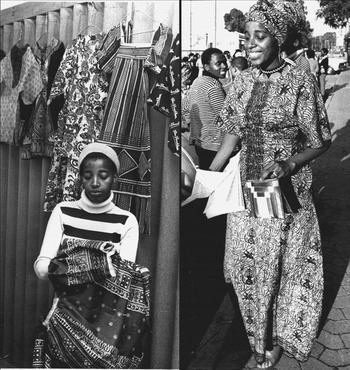
The way that Black Consciousness adherents dressed and interacted with white people was a clear manifestation of their defiance of apartheid. As in East Africa, these youth used their appearances to assert identity and send political messages.Footnote 12 Black Consciousness adherents emphasized a proud Africanness with clothing and hair styles from independent Africa and ‘black-is-beautiful’ movements in the United States. They donned dashiki shirts from West Africa and wore their hair in afros. SASO leaders stopped using their English names and insisted on using their African names: for example, James Mafuna replaced James with Bokwe, and Harry Nengwekhulu used Randwezi.Footnote 13 SASO members also enjoyed openly defying white privilege and authority. Deborah Matshoba remembered Nengwekhulu intimidating white people on the street by yelling at them from his car. She also recalled Mafuna coaching others to hold their position when facing a white person walking down the sidewalk: ‘He'd say, “See this mlungu [white person] that's coming? We don't move! We walk straight into him!” … And oh he [the white person] would be intimidated.’Footnote 14 As Daniel Magaziner has argued, these actions and the movement's important political writings helped adherents assert a social and political adulthood in 1960s–70s South Africa.Footnote 15
Mantuka Maisela, a Fort Hare SASO student displaying ‘African’ clothing she produced in sewing projects (left) and proudly wearing her own handicraft (right). (Photos provided by Maisela).

Black Consciousness women similarly displayed their bold blackness by wearing afros instead of straightening their hair and adopting behaviors not generally acceptable for women, such as smoking cigarettes in public. They also condemned the use of skin lightening creams and wore revealing clothing such as hot pants.Footnote 16 While this style of black femininity was liberating for individual black women, those who rose to distinction in SASO like Matshoba and Mamphela Ramphele had to adopt aggressive debating styles or ‘be outrageous to be heard’.Footnote 17 Indeed, some former activists and scholars have described the movement as sexist and male dominated. They have demonstrated how the movement prized manhood, not just adulthood, and encouraged women to contribute through their roles as mothers, wives, or girlfriends.Footnote 18 In Ramphele's estimation, she and Matshboa gained influence in SASO only as honorary males.Footnote 19 On the other hand, being involved in different, often less overtly political, aspects of the movement offered women different experiences. Community projects, for example, offered more opportunities for female leadership. Female activists' involvement in these projects would ultimately challenge widely held beliefs about young black women.
The position of Black Consciousness activists as youth was crucial to the way the movement developed and dealt with state repression. Like youth in many societies, these young male and female activists were daring, rebellious, and confident in their ability to affect change. They did not carry the memory of state repression inflicted on previous generations of anti-apartheid activists. Instead, they watched in frustration as their parents deferred to white people and asked why they tolerated condescending or harsh treatment.Footnote 20 Moreover, unlike their parents, SASO students generally did not yet need to worry about caring for dependents. They were thus available and willing to get involved, convinced of their ability to change the lives of all black South Africans.
Soon after its establishment, SASO students instigated health, educational, and building projects in squatter camps and townships near their various campuses to address black poverty and build self-reliance. Their youthful enthusiasm both hindered and helped their work. They often jumped into projects ill prepared and soon learned the need to plan projects better and build trust within communities. Participating in community work also revealed to the students their false assumptions about the natural harmony of black communities. They had believed, ‘our community is essentially a black one and there is no real geographical separation’; but they learned that linguistic differences, for example, could cause real problems – as when Fort Hare students from the north could not speak Xhosa and had difficulty connecting with local communities.Footnote 21
While their eagerness and over-confidence initially led to frustrating results, Black Consciousness activists’ youthful energy and self-assurance were important assets in a politically hostile environment. They often risked arrest and refused to be cowed by police. For example, Malusi Mpumlwana, a SASO and BCP project organizer, recalled how he evaded the police in the Eastern Cape region southeast of the University of Fort Hare. The law restricted a black person from remaining in one magisterial district longer than 32 hours without a permit. This meant that when he moved to King William's Town without a permit, he broke the law. He told the police: ‘Well, you'll have to prove it in court that I have been here more than 32 hours.’ He laughingly remembered how he ‘frustrated them to no end’ by driving in and out of neighboring districts every 32 hours.Footnote 22 Other activists thwarted the police with strict demands that police follow legal protocol or respect the BCP's organizational hierarchy.Footnote 23 Some activists physically confronted police. Biko reportedly hit the officer in charge during one interrogation session.Footnote 24 Although interviewees laughed as they remembered the way they fooled the police, as mature adults they also marveled at the danger they faced. Looking back thirty years later, Thoko Mpumlwana, a former Fort Hare student and editor of the BCP's publication Black Review, felt her age was an important factor in what she was willing to do:
Really I must say that some of the risks we took there – of course I do believe that I can still take some of those risks, if a situation is unjust – but one wonders if one would have behaved the same way we did those days if we were to be presented with a similar situation now.Footnote 25
In the midst of their serious and dangerous work, young activists were known to revive themselves by holding parties. These were part of SASO leaders' ‘social habits’ that some older activists disliked.Footnote 26 These SASO students (often mostly male) partied into the night with music, alcohol, and women. This behavior hindered the movement by damaging its reputation among an older generation of activists and community members. But the temporary respite that parties offered also helped sustain activists. Novayi Jekwa, a former student at the University of Natal-Black Section (or UNB – its apartheid name), explained that even though her student days could be called ‘dark days’, when they ‘had to celebrate and be happy, we did that – big time’.Footnote 27
Historians have highlighted the significant role university students have played in African politics and social movements.Footnote 28 The particular position of Black Consciousness youth as university students was likewise a key factor in shaping the movement and its impact.Footnote 29 As university students in the late 1960s and 1970s, Black Consciousness activists had access to different ideas and viewpoints that influenced their own philosophies and methods.Footnote 30 As Vanessa Noble has argued, the more permissive and racially diverse UNB provided space for the best African, Colored, and Indian students to interact intimately, reflecting the inclusive Black Consciousness definition of ‘black’.Footnote 31 Connections to local and global student networks linked SASO to new ideas and resources. Across South Africa, students engaged in discussions based on their reading of any relevant literature they could obtain.Footnote 32 One of the most influential writers for SASO community work was Brazil's educationalist, Paulo Freire. SASO students obtained copies of Freire's papers through the University Christian Movement (connected to the American student movement of the same name formed in 1966–7). They received training from Anne Hope, a white woman connected to the Christian student network that drew upon liberation theology.Footnote 33 These global student connections also linked SASO, and later the BCP, to international funding sources, including the International University Exchange Fund, based in Geneva, and the Dutch Interchurch Organization for Development Cooperation.Footnote 34
University education also gave activists skills to ‘plow back’ into their communities. SASO leaders expected members to use their education to uplift black people living near the university. In general, Malusi Mpumlwana explained, ‘it didn't matter if you are a legal professional, that's where you contribute, if you are a health professional … if you are a social worker, if you're a psychologist, you give what you have.’Footnote 35 A university education could have potentially created a barrier between these activists and people of a lower socioeconomic class. SASO leaders saw outreach work as a way to bridge the divide. Although they had access to greater educational opportunities, many students identified closely with poor township and village life. While many had parents with higher education or skilled jobs, all black students were part of the lower class during apartheid. Even students whose parents had above average education and employment struggled financially.Footnote 36 An identification with the economic plight of most black South Africans, combined with their philosophy, motivated Black Consciousness activists to use their skills to uplift their people. Volunteering on weekends at the Happy Valley clinic in Wentworth, the nearby Colored community, became a part of student culture at UNB. Medical students also volunteered at a clinic in Inanda, an African township, and New Farm, near the Indian settlement of Phoenix, where they helped to secure a clean water supply. A similar project involving a literacy campaign was run in Winterveld, a settlement twenty miles outside of Pretoria.
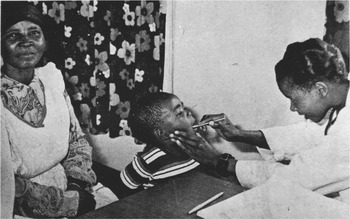
Much of the literature on Black Consciousness focuses on the movement's intellectual, philosophical, and political development. Because of this emphasis, most people do not think of hardworking Black Consciousness activists serving in clinics, building houses, or tutoring others. A more common image is that of debating students or activists confronting police. These aspects of the movement were very important. Yet, community work was significant as well. Analyzing this aspect of the movement with previously underutilized evidence takes us deeper. It helps us understand how activists engaged accepted social customs to challenge the status quo. It also highlights the involvement of young women. In addition to the social and psychological adulthood the movement asserted, the BCP empowered young female and male activists through their professional work for the organization. As opposed to the image of Ramphele holding a cigarette while aggressively pointing her finger at a meeting, this approach examines the impact Doctor Ramphele had while wearing her white coat and kindly attending to patients in a rural village.
Dr Ramphele examining a child at Zanempilo. (Unisa Archives Documentation Centre for African Studies, Pretoria, ACC20, Black Community Programmes, BCP Pamphlet ‘Projects and People’, 1977.)

THE BCP AND BLACK CONSCIOUSNESS YOUTH IN THE RURAL EASTERN CAPE
The formation of the BCP development organization in 1971 gave Black Consciousness activists a relatively well-resourced professional organization to carry out their development goals. The BCP began as part of a project sponsored by the South African Council of Churches and Christian Institute. Under the directorship of a young social worker, Bennie Khoapa, the BCP adopted Black Consciousness goals. In 1973, it became an autonomous organization independent of any white oversight (though it still relied on funding from its initial sponsors, international church organizations, and white South African philanthropists).Footnote 37 Khoapa enlisted SASO students in the BCP's field work and in producing its yearbook, Black Review. When the apartheid government restricted Black Consciousness leaders to their home districts in 1973, Biko established the Eastern Cape branch office in King William's Town (next to his home township of Ginsberg). With the help of Malusi Mpumlwana, Biko initiated health, educational, and economic projects. Activists, as budding professionals, involved themselves in the local communities that hosted the BCP's highly successful Zanempilo clinic and Njwaxa leatherwork factory. Work on the BCP's publication Black Review also carried on in King William's Town.
The Zanempilo clinic and Njwaxa leatherwork factory were both based in rural villages in the Ciskei region. Zanempilo was built in Zinyoka, just under six miles from King William's Town, and the leatherwork factory operated in Njwaxa, thirty miles away. Along with nine other primarily rural regions, the Ciskei acted as a colonial ‘Native Reserve’, then as an apartheid homeland or ‘Bantustan’ for the Xhosa who lived between the Kei and Fish Rivers along the Indian Ocean coast. The white government maintained a layer of economic and political control while creating a semblance of African autonomy by appointing local authorities to serve under white officials. Homelands remained mainly rural in character and included many remote villages where people attempted to sustain themselves through agriculture. Government policies during apartheid perpetuated the role of homelands as reserves for Africans not actively serving the white economy. Young and middle-aged men (anywhere from the ages of 16 to 45) continued to leave these regions for much of the year in the 1960s and 1970s to earn wages in the mines or other white-owned enterprises. This left women, children, and the elderly to suffer in rural poverty.
Cultural proscriptions regarding age and respect had a strong influence on social relationships in the rural Ciskei villages where the BCP worked. Although people regarded these customs as passed down from time immemorial, they had, in fact, changed over time and been influenced by Christianity and European cultural and linguistic practices.Footnote 38 In Zinyoka and Njwaxa, people were expected to address each other by clan names and act towards a person according to his or her age status. For example, a boy or girl would be required to address older people by terms for mother and father related to European languages – mama and tata. They would address anyone their grandparent's age as makhulu and tatomkhulu. A young woman or man would expect to be addressed as sisi and bhuti (sister and brother) when they reached young adulthood. The diverse group of people in the Eastern Cape grouped under the ethnonym Xhosa practiced different rites of reaching adulthood that also had changed over time. In Zinyoka and Njwaxa, people generally continued to divide youth and adults into senior and junior groups. Duties and responsibilities changed as people reached different life stages. By the 1970s, female initiation ceremonies had ceased in the Ciskei, but women still moved through different stages of womanhood, depending on their reproductive capacity and status as wives within their husband's family.Footnote 39 The dividing lines between youth and adult were sharper for boys, whose manhood was often marked by an initiation that included circumcision and instruction in appropriate masculine behavior. Once boys became men, society expected them to put away putatively childish behaviors, speak soberly, and take on leadership responsibilities.Footnote 40 To fully establish oneself as a man required marriage, children, and economic self-reliance: in other words, setting up a homestead. This process often took a number of years. Urbanization and wage labor had shortened this process for many in the first half of the twentieth century; still, a man might reach an influential status only in his late thirties.
Most BCP employees and Black Consciousness activists belong to the category of ‘young adults’ who were in their mid-to-late twenties or early thirties and had only begun to establish their careers or families; few were married with children. Many who went to work in the Eastern Cape were Xhosa and, if not, still knew the importance of respect for elders. They had been reminded of this as over-enthusiastic SASO students in New Farm where they attempted to obtain a water tap. It was not until they worked with an intermediary (referred to only as an Induna or chief) that suspicions of SASO's motives lessened, allowing students to hold meetings.Footnote 41 SASO students-turned-BCP employees continued to work with key elders in the Eastern Cape, some of whom were part of the mission-educated elite. In Njwaxa, Malusi Mpumlwana worked with a prominent woman, Nothemba Sinxo, to organize villagers to work in the small leatherwork factory. Sinxo's husband, Guybon, was a Xhosa novelist who had spent time in jail as a political prisoner. When Anglican priest Timothy Stanton started a women's sewing group in the village, he coordinated with Nothemba Sinxo. Malusi Mpumlwana continued to liaise with her when Stanton asked the BCP to take over his project.
The BCP gained inroads into Zinyoka through prominent village elder Benjamin Tyamzashe, a teacher and composer.Footnote 42 He supported the BCP by permitting the clinic to drill a well on his land and writing an article in the local newspaper highlighting the clinic's good work. His support was crucial because he commanded respect in a village divided between freehold landowners and those who lived on state-administered Trust land. Those on Trust land resented the way landowners retained exclusive grazing rights. This led to the emergence of Sidoko Sijama as village leader in 1974, when Trust land residents demanded that the village headman be elected from their midst. Such black homeland leaders frequently opposed the BCP's projects because of the Black Consciousness movement's increasingly vocal denunciations of them as apartheid puppets. In response, Sijama, along with the chief minister of the Ciskei, L. L. Sebe, discouraged people from attending the clinic and often sent police to Zinyoka. Working with elders such as Tyamzashe, as well as the local Anglican Church (which provided the BCP with land), helped the BCP bypass these oppositional political leaders.Footnote 43
In contrast to Sebe and his loyal headmen, BCP employees showed a genuine interest in village welfare. In Njwaxa, managers Voti Samela and Vuyo Mpumlwana attempted to give factory employees a sense of self-reliance and collective ownership by drawing upon local skills. The BCP reportedly promoted Nolize Papu, a local woman, to production and clerical assistant, in recognition of her abilities and potential.Footnote 44 Papu recruited women such as Nontozande Nofence James and Nontombomhlaba Mamase to use their beadworking skills to decorate the purses and coasters the initial ten employees had begun making. Although some found the transition to a factory schedule difficult, the labor of these women helped the factory grow. With capital from its local and international donors, the BCP expanded to include shoemaking and eventually employed fifty villagers. The BCP marketed its goods to neighboring villages and in tourist areas. Employees took great pride in their products. Those who had previously lived on handouts earned enough money to support their families and send their children to school. The BCP's goals of uplifting the community were clear enough to villagers that when the police directed the headman of Njwaxa to expel the factory, he told the BCP it could stay.Footnote 45 Employment and training opportunities combined with opposition to the apartheid state to cultivate solidarity between the BCP and Njwaxa villagers. Consequently, thirty years later, few interviewees acknowledged any disputes between employees or resentment by unemployed villagers.
Former clinic employees and Zinyoka residents remembered a similar sense of unity. Interviewees stressed the importance of staff respect towards patients in nurturing a sense of human dignity and camaraderie among patients and clinic staff. Former nurse, Beauty Nongauza, highlighted how the staff recognized the humanity of their patients by acknowledging their socioeconomic circumstances and beliefs about healing. She remembered nurses and doctors counseling patients about their personal circumstances, explaining the causes of their ill health from a Western biomedicine perspective while also engaging Xhosa healing beliefs. In fact, recognizing that a person's health was linked to their social context mirrored Xhosa notions of health and healing. Alongside biomedical practitioners, people still consulted Xhosa healers who as diviners (amagqira) and herbalists (ixwele) treated both the natural and social or supernatural causes of ill health. People who consulted them acted from the belief that illness was frequently linked to interactions with other people or ancestors. Direct communication also strengthened bonds between Black Consciousness activists and their patients. In contrast to hospitals where white doctors often spoke to black patients through interpreters, Nongauza emphasized that at Zanempilo, ‘… each one would say all the things, “I have this and that …” talking directly to a doctor and the doctor explaining directly to her …’Footnote 46 Ramphele, a Sotho-speaker, reflected later that her efforts to communicate in Xhosa helped her draw closer to the women of Zinyoka. She became their student, which broke down barriers as they realized, ‘doctors do not know everything’.Footnote 47
Zinyoka residents had fond memories of the clinic, not only because the services provided by the BCP surpassed the clinic's 2008 offerings, but because of the way Ramphele and her staff interacted with them. Many illiterate villagers commented on the lack of discrimination based on one's education at Zanempilo. The kind of separation between the schooled versus ‘red’ or ‘traditional’ Xhosa that Philip and Iona Mayer made much of in their anthropological writings was mirrored in the way people saw school-educated youth in the 1970s.Footnote 48 At the time, gaining a university education was not common and earned much respect. Although university enrollments for black students rose in the 1960s, the top black students who reached the status of doctor, nurse, or lawyer were still considered an elite minority.Footnote 49 Many of the villagers would have viewed doctors as people who rose above the rest to gain a position of prestige. Instead of becoming an aloof elite, however, school-educated young Black Consciousness activists committed themselves to improving the village's health. For Zinyoka resident Dina Mjondo, this meant that, ‘At the clinic, you didn't have fools and intellectuals. We were just people.’Footnote 50 The way activists, nurses, and doctors respected people served to elevate the status of these youth among older villagers and lessen generational and social tensions that may have otherwise arisen.
Furthermore, activists' work also departed from the trend of young men and women migrating to urban centers or mines for work. Transformations brought about by urbanization, labor migration, and homeland poverty had turned some youth to violence, vandalism, and open defiance of their elders. Nosingile Sijama remembered her husband (the Zinyoka headman) disciplining gangsters and other young boys for beating their own mothers.Footnote 51 This may have been Nosingile's way of justifying her husband's ruthless tactics. But in her study of gender, youth, and Ciskei politics, Anne Mager also describes youth during this period as becoming less beholden to adults and more contemptuous toward rules of appropriate behavior.Footnote 52 By contrast, young BCP employees who worked at Zanempilo not only brought high quality health care to Zinyoka, they also took pains to address adults by their clan names and titles, and treat them with respect as patients.
While many activists and Zinyoka residents fondly reminisced about the solidarity at Zanempilo, relations in and around the clinic were not always smooth. For example, Ramphele wrote of her frustrations working with other activists who did not keep a rigid schedule and the strain of feeding surprise guests. One former nurse alluded to personal differences when she said, ‘Mamphela had her faults.’ Yet, most former employees interviewed had overwhelmingly positive memories of their relations with BCP staff, undoubtedly influenced by the fact that many were of a similar age and political viewpoint. These memories, whether real or exaggerated, influenced how villagers and staff felt about themselves and the clinic long after 1977. Villagers claimed the clinic staff instilled a sense of self-worth and human dignity within them. The cook and cleaner at the clinic, Thenjiwe Evelyn Nondalana, said Biko used to say to her, ‘Black people and white people have the same blood.’Footnote 53 They also received the same message at community braais or parties held at Zanempilo where everyone was accepted regardless of their socioeconomic or schooling status. These gatherings served to nurture local black culture in the form of dance, music, and clothing. A village woman, Nonzwakazi Dleb'usuku, remembered going to these parties wearing Xhosa clothes and performing Xhosa dances. It was important to her that no one was asked to sit outside.Footnote 54 Villagers came to revere these university-educated young people, later praising Biko and Ramphele as father and mother.Footnote 55 Those involved in the Njwaxa factory expressed similar feelings. Some of these responses may have been clouded by nostalgia generated by declining clinic services in the area and the closure of the factory in 1977. Nonetheless, they still suggest how respectful communication and the valuing of local aesthetics helped BCP youth promote their radical goal of changing the ‘black mind set’.
PROFESSIONAL YOUNG BLACK WOMEN
Through BCP work, many Black Consciousness activists gained valuable hands-on experience and opportunities that accelerated their transition into adulthood and professional careers. BCP employees – young professionals and student activists – found themselves thrust into positions that individuals with greater experience and training would have normally filled. Notably, young women became particularly important to the BCP's production of Black Review and in its Eastern Cape projects. These young women had time and skills to contribute and could connect with village women. The BCP, in turn, provided them with professional experience. Although they met some resistance, oral histories indicate that their work increased their male colleagues' respect for them. Such respect spilled over into the communities – at least, interviewees remembered it that way in 2008. These young women demonstrated they could gain respect regardless of their marital status or reproductive accomplishments.
The Black Review – an annual yearbook published by the BCP in the mid-1970s to chronicle events in the black community – was one of the first projects to be initiated by the BCP. From what it deemed an authoritative black perspective, the BCP sought to instill a sense of positive identity in black South Africans, facilitate the exchange of ideas, and help devise solutions to socioeconomic and political problems. The research, writing, and compilation of the Black Review took place at the BCP's offices in Durban and King William's Town. The production process involved a number of young activists. The BCP utilized SASO students and other youth hanging around the offices. Through their involvement, these young men and women gained an informal education and the skills needed for research and writing. Two women played central roles as Black Review editors.
The BCP recruited SASO member Thoko (née Mbanjwa) Mpumlwana in King William's Town, after her expulsion from Fort Hare, following SASO student strikes in 1972. As she had time available, the BCP put her to work doing research. Thoko Mpumlwana credited her involvement with the project for heightening her political awareness and ability to interpret current affairs critically. She also gained an education in writing and analysis. She ‘always tell[s] people about Steve [Biko's] intervention’:
Here I was coming from university, thinking that I know it all and I was asked to write an article to review something. So I sat and I wrote. I gave it to Steve … He looked at it and said, ‘This is absolute nonsense!’ [laughs] … And I was so fed up … but he made me realize that I had a lot to learn … I improved in my writing, in my analysis, and in my ability. I really got it there. I didn't get it at Fort Hare.Footnote 56
She quickly improved her skills and became more involved in Black Review. The detention of BCP staff sped up this process. The BCP trained people to always be ready to take over ‘any aspect of work’ because they expected the state to ‘try to destroy our work by imprisoning or banning people’.Footnote 57 Thus, while young women may not have lead projects initially, their skills, energy, and enthusiasm for the work enabled them to prove their worth and rise to leadership positions.
Black Review had a different editor every year because of state action against BCP employees. When Thoko Mpumlwana was banned, the BCP recruited another young woman as editor. Asha (née Rambally) Moodley became involved with SASO through her theater group based at the Durban-Westville campus, the college reserved for Indian students. In 1973, when, for political reasons, she lost her job as an English teacher, Moodley started working on Black Review in Durban. Later in 1976, Biko and Ramphele asked her to move to King William's Town to take over the editorship because of her background in English education, previous work on the Black Review, and her approach to reading and writing about the black experience. Even though she already had writing and organizational skills, like others who worked on the review, ‘that instinct for doing research was nurtured’ through her work on the publication.Footnote 58
As women, Thoko Mpumlwana and Moodley were not editors in name only. Although the BCP appointed them to fill positions made vacant by state repression and they improved their skills on the job, their expertise qualified them for the job and they performed all editorial duties. Many interviewees deferred to Thoko Mpumlwana on questions about Black Review because of her legitimate position as editor. Moodley's education and previous work qualified her for the editorship and put her in regular meetings with Biko and other staff who sought her advice. Moreover, both did not remember feeling hindered by the fact that they were women. They admitted that perhaps they and other women ‘were just not aware [of discrimination] because we focused on what we were seeking to achieve’,Footnote 59 but still shared very different memories from Ramphele who wrote of SASO women's struggles to gain a voice. Many women worked for the BCP as secretaries, more widely accepted roles for females at the time. Yet, like the involvement of women in other BCP leadership positions, Thoko Mpumlwana's and Moodley's positions show that BCP men came to trust in their intellectual abilities.Footnote 60 Both continued to use their skills throughout their varied careers. Thoko Mpumlwana eventually earned a master's degree in education and became involved in numerous community development groups, including many projects focused on gender equality. Moodley also went on to work in different development initiatives and served as editor of the feminist journal, Agenda, in the 1990s.Footnote 61
While Thoko Mpumlwana and Moodley researched, analyzed, and wrote in BCP offices, Biko and the BCP drew upon their network of activists, neighbors, and friends to run the clinic and factory in the villages. Many of these employees were in their mid-to-late twenties and early thirties and at the start of their careers. Among these, young women filled significant managerial positions. Vuyo Mpumlwana directed the Njwaxa leatherwork project as its first real manager. Her older brother, Malusi, recruited her to take over the project when she finished nursing school in Durban at the end of 1973. She had never worked with leather before, but like others working in the area who ‘[had] their hands on the plow’, she jumped in and took over the production work.Footnote 62 Having a young woman manage the Njwaxa project had its benefits. Not only was she willing and available to take the assignment, she worked mainly with women because they constituted the majority of the population in the Njwaxa homeland village.
Like Thoko Mpumlwana and Moodley, Vuyo Mpumlwana did not remember feeling inhibited by the fact that she was a young woman managing a factory and teaching older men and women to work with leather (in the past, a Xhosa man's craft). She believed that her youth and gender actually worked to her advantage. She felt that the villagers saw her as a daughter. She lived and ate with them like a family member. They also protected her when security police harassed her with their frequent visits. Villagers could easily spot security police as they came into the village and would help her jump out the back window and hide in a nearby house.Footnote 63 The way village men and women helped her evade the security police was evidence to her of how they valued her work. Vuyo Mpumlwana remembered the difficulties as well – living in a remote village without electricity, far from other activists. Like others, however, she also expressed nostalgia for an exciting time when she was working with other young activists on projects they viewed as important. In remembering their mutual affection and respect, both the villagers and Vuyo Mpumlwana demonstrated a faith in the ability of young black women to run industrial projects.
Despite the community's help, police harassment became ‘so uncomfortable’ and such a distraction that Vuyo Mpumlwana left the Eastern Cape at the end of 1975.Footnote 64 The BCP then recruited another young woman, Mantuka Maisela, a SASO member from nearby Fort Hare who had contributed her sewing skills to many church-run home industry projects in the region. When Maisela left in 1975 for Soweto, the BCP found a new manager named Voti Samela. A skilled craftsman in leatherwork from a neighboring district, Samela was at the beginning of his career. He contributed to the BCP with his training and the BCP provided him with professional experience.
Similarly, Ramphele brought much-needed skills and gained valuable practical professional knowledge at Zanempilo. Ramphele was central to the establishment and operation of the clinic. She qualified as a medical doctor the year before it was built.Footnote 65 It made sense to appoint her as the head medical officer, though she had to learn much about how to run a health center. (She ‘did not have the slightest idea where one ordered medical supplies, or what quantities would be required, or what the costs would be’.Footnote 66) Ramphele relied on fellow female health care practitioners to help her establish Zanempilo: Nontobeko Moletsane and Beauty Nongauza. Taking on such leadership roles and running a clinic at the beginning of their careers was at times overwhelming. The BCP enlisted the help of other young nurses and doctors as the clinic was flooded with patients and state repression left positions vacant. For example, Ramphele took over Biko's BCP administrative duties when the government placed further restrictions on him in 1976. At the same time, Siyolo Solembela, a former UNB classmate, was hired to serve as the clinic's second doctor.Footnote 67
Zanempilo was a predominantly female space. Aside from one full-time male doctor and two ambulance drivers, the employees were women. This included, at the clinic's height, the head medical officer and seven female nurses. Because of the demographics of Zinyoka and its health needs, the clinic's patients were mostly women who sought the clinic's maternal and child birth services. As in Njwaxa, urbanization and labor migration patterns meant that the majority of middle-aged men were absent from Zinyoka and sent insufficient or infrequent cash remittances. To address the root causes of health care in the village, the clinic initiated a women's craft cooperative. Ten women gathered at the clinic each day during the week, where they could earn R20-30 per month to help buy food and pay school fees. Pumla Sangotsha, a female social worker, managed the group's finances and taught budgeting and nutritional classes. This predominantly female staff helped the BCP connect with village women. And, in the words of BCP office manager, Nohle Mohapi, it mobilized women ‘to come together and do something for themselves, instead of depending on their men’.Footnote 68
Amidst the overwhelmingly positive memories of staff camaraderie and community relations at Zanempilo, there is evidence that tensions surfaced around gender roles, particularly Ramphele's position as doctor and medical superintendent. Perceived as nurturers, women filled professional nursing and teaching roles without as much resistance as did women serving in leadership roles. Ramphele wrote about the strain between herself and Solombela regarding her position as his boss.Footnote 69 While all clinic staff adhered to standards of respectful communication, Ramphele and other activists challenged cultural practices that excluded women. For example, Ramphele and Matshoba both remembered disagreements with male activists about their participation in eating sheep heads after braais, a practice usually reserved for Xhosa men.Footnote 70 Ramphele also had some difficulties being taken seriously as a young, black, female doctor. Nontobeko Moletsane remembered that they had to ‘talk sense’ to men at times who did not want to be seen by a physically small (thin), young female doctor.Footnote 71 Malusi Mpumlwana recalled how ‘there were always jokes about whether she was up to it’ which also had to do with her age since ‘old folks [may have seen her as] a child’.Footnote 72
Despite these tensions and resistance to female leadership, BCP employees later claimed that what mattered was not a person's gender but what he or she contributed.Footnote 73 In interviews, some male activists stated that all contributions were valued and that Black Consciousness activists would work with anyone, regardless of age or gender.Footnote 74 These comments were partly made in response to ongoing public debates in South Africa over a range of women's issues, including their recognition as participants in the anti-apartheid movements. Biko's multiple sexual relations outside of his marriage call into question whether his respect for women as colleagues extended to respecting women as sexual partners. Still, there are strong indications that professional interactions at the clinic between the staff, patients, and other villagers helped inspire greater respect for women from men working there – both at work and at home. Comments by the two male clerical assistants and ambulance drivers serve as examples. Sido Hlaula found it significant that Biko called female visitors to the clinic ‘mama’ despite their age. This taught him to display respect to all individuals.Footnote 75 When asked how his work at Zanempilo influenced his life, Mziwoxolo Ndzengu said that the culture at Zanempilo taught him ‘that you must treat a lady with respect’. This later carried over into how he ran his family.Footnote 76
It is more difficult to gauge the change in gender expectations among villagers, but evidence suggests that perceptions of the role and abilities of young black women also changed in Zinyoka. While almost certainly the idea of a young, black, female doctor heading the clinic took some getting used to, no male and female Zinyoka residents interviewed in 2008 acknowledged that it had been a problem. Upon further probing, some admitted that not everyone initially welcomed Ramphele. Yet, they explained, once men realized they had no other choice, they accepted her. Khoapa also felt that men complied when they saw her skill and the deference other staff (including male doctors) paid her.Footnote 77 Others remarked that Ramphele's respectful and kind nature put patients at ease.Footnote 78 Hlaula commented that Ramphele was a mother more than a doctor, indicating that, for some, the gendered role of women as nurturers may have influenced their acceptance of Ramphele as a doctor.Footnote 79 In contrast to those who remembered the challenges that she faced, in her own writings, Ramphele has asserted that her novelty combined with her professional status to give her power and respect.Footnote 80 Malusi Mpumlwana similarly speculated that having a black female doctor in the village could have been exciting to villagers because no one had any experience of a woman doctor in King William's Town, let alone a black woman doctor.Footnote 81 The fact that few villagers acknowledged a problem in interviews in 2008 shows that Ramphele's work and subsequent elevation in the eyes of the community meant they accepted that at least some young black women could reach professional adulthood. Her work would also have deepened the impact of the words of activist Thenjiwe Mthintso when, in 1993, she spoke at a Zinyoka funeral (a role usually reserved for males), urging the youth to finish their education and to consider that females could join an army.Footnote 82 Thus, while Ramphele and others faced difficulties in obtaining a voice in Black Consciousness politics and did not pursue a feminist political agenda, they gained valuable professional experience in the BCP and proved that young black women could be ‘the thinkers, the doctors, the activists’.Footnote 83
CONCLUSION
Historians have shown that African youth have both balked at social customs as stifling social and economic development, and have aspired to gain adulthood through conventional avenues, though in new colonial contexts.Footnote 84 Black Consciousness activists too asserted their adulthood by defying the apartheid status quo with their new broadly defined black identity while at the same time adhering to local customs. Like nationalists elsewhere, they elevated black customs, beliefs, and styles as a way to challenge white supremacy. They observed rules regarding respectful communication, built alliances with influential local elders, and demonstrated a clear commitment to promoting black values and self-reliance. This led to the success of BCP, particularly in breaking down ideas of black inferiority by villagers who had been neglected and economically disadvantaged by the state.
The position of Black Consciousness activists as youth at times hindered their work. Their youthful enthusiasm and confidence motivated them to jump into projects at times ill-prepared, without adequate community connections. Yet, their status as youth was also important to the development of the movement and the success of the BCP. Universities provided places where black students could exchange ideas and interact with each other. As university students and professionals, activists provided much needed services to poor black communities in a way that generally fostered unity and trust between villagers and activists. Activists also had the gumption to work in a politically hostile environment.
Young women in particular made important contributions in the BCP. Their community work provided them with opportunities to improve their skills and changed perceptions of young black women. This was not always easy. Black Consciousness women struggled to gain a voice within a movement that did not politically support women's issues. They also met resistance when they challenged typical male roles in the movement and in Xhosa villages. Still, BCP men relied on women to fill key positions such as editor, head medical officer, and leatherwork manager. The BCP did this both out of necessity and because of the skills these women already possessed. Relying on women in projects in rural areas facilitated the BCP's work in the predominantly female rural Ciskei and unintentionally changed some perceptions of gender. Men in the movement and Ciskei villagers developed greater respect for, and acceptance of, young black female professionals. These women also showed there was another path to female adulthood that did not necessarily involve marriage and motherhood. More particularly for these maturing professional women then, BCP work was a combination of conforming to certain practices and conventions, and challenging others within the movement, the villages in which they worked, and apartheid society. The history of Black Consciousness community development work thus not only demonstrates the way radical black youth in 1970s South Africa simultaneously broke with the apartheid status quo by promoting certain social conventions; it also proves the value of analyzing young professional women in the history of African youth. Like BCP women, whether intentionally or unintentionally, young female professionals in other settings have influenced constructions of gender and shaped society as they create new social practices and beliefs while navigating older ones.