Nowadays, the number of disasters and emergencies, and the potential risk of both, is increasing globally. Accordingly, the consequences of disasters are growing recently in terms of human morbidity and mortality, as well as economic cost. Reference Khanke1 - Reference Seyedin, Dolatabadi and Rajabifard3 Hazardous material (HAZMAT) incidents are defined as the accidents involving contamination of person(s) by the toxic chemical, biological, or radiological agents. 4 , Reference Bennett5 Acute exposure to chemical substances may occur in a wide range of events such as accidental release (eg, industrial sites or during the transportation of chemicals by road, rail, sea, or air) or terrorist acts. Reference Tan and Fitzgerald6 - Reference DeBacker8 Although these events are infrequent, they have the potential to significantly impact the physical and psychological well-being of community members. Reference Schulatz and Koenig9 , Reference Barelli, Biondi and Soave10 Since September 11, 2001, terrorism has often been prioritized. However, more recent research has also described numerous industrial chemical incidents in addition to terrorism involving chemical agents. Reference De Marchi, Funtowicz, Ravetz and Mitchell11 - 13 Therefore, highlighting current hospital preparedness plans for the management of victims involved in chemical incidents is imperative to further bolster response. Reference Taebi, Sourosh and Modirian14 - Reference Okumura, Takasu and Ishimatsu16
In disasters and emergencies, hospitals should manage the victims of the events, as well as continuing routine medical care. Reference Wetter, Daniell and Treser17 In the case of HAZMAT and/or CBRNE disasters and emergencies, special hospital preparedness and essential resources are needed for appropriate health-care measures of contaminated victims and health-care providers face new challenges in disaster planning. Reference Yarmohammadian, Nasr-Isfahani and Anbari2 , Reference Barelli, Gargano and Proietti18 - Reference Khan, Hashemi and Paltrinieri20 A disaster management plan is essential to ensuring hospital preparedness. Reference Nilsson21 , Reference Olivieri, Ingrassia and Della Corte22 , Reference Watson, Dolislager and Hall23 A disaster management plan is considered as a set of procedures, policies, interaction patterns, roles, and contingencies that are developed and established during a preparedness phase and then implemented to serve as the system for managing the response to major incidents. Reference Olivieri, Ingrassia and Della Corte22 , Reference Watson, Dolislager and Hall23
In general, hospitals should be prepared to take basic measures to improve their preparedness to cope with the challenges posed by disasters, especially chemical incidents and disasters. To the best of our knowledge, no systematic review has been made yet to examine hospital preparedness plans against chemical incidents and disasters. Reference Mortelmans, Van Boxstael and De Cauwer24 - Reference Burgess, Kirk and Borron26 Some review studies focused on the importance of preparedness against a chemical incident, Reference DeBacker8 , Reference White25 but according to that research, it was not found that a comprehensive study was performed of hospital-preparedness programs and components. A systematic review should be conducted to summarize and evaluate the existing evidence on hospital preparedness plan or protocol against chemical incidents and threats.
METHODS
This systematic review was performed in accordance with the Preferred Reporting Items for Systematic reviews and Meta-Analysis protocol (PRISMA) Reference Moher, Shamseer and Clarke27 (www.prisma-statement.org). A written systematic review protocol includes background information, review question, inclusion and exclusion criteria, literature search strategy, study selection and assessment criteria, as well as retrieving the relevant studies, extracting the relevant data, apprising the retrieved studies, synthesizing the data, and their reporting.
To this aim, a comprehensive literature search of relevant databases was performed. Five main electronic databases including PubMed, Scopus, Web of Science, Cochrane Library, and Google Scholar were searched. In addition, experts were asked to identify verifiable gray literatures. Then, special databases and gray literatures also was searched. The searching strategy of PubMed was used as a model for searching other databases while others were modified according to the requirement (Box 1). After conducting a comprehensive search for the relevant articles, the reference lists of the retrieved articles were searched to pinpoint the relevant documents. Finally, EndNote software version X8 was used to manage the search library, screen for duplications, and extract irrelevant articles.
PubMed search strategy

Inclusion and Exclusion Criteria
To evaluate the studies related to a hospital preparedness plan for a chemical incident, 3 main keywords (hospital, preparedness, and chemical incidents) were included in 15 May 2018 to consider the methodology, date, and language limitations. The studies written in English with all types of methodologies were included in the current systematic review, most of which had good quality. Researches in the field of pre-hospital, protocols plans, out of the scope set by the map of the field (eg, protocol, planning requirement, plan requisitions), and that did not pass the quality assessment were excluded. If the integrality of the article was incomplete, communication resorted to the corresponding author or the first author.
Study Selection and Data Abstraction
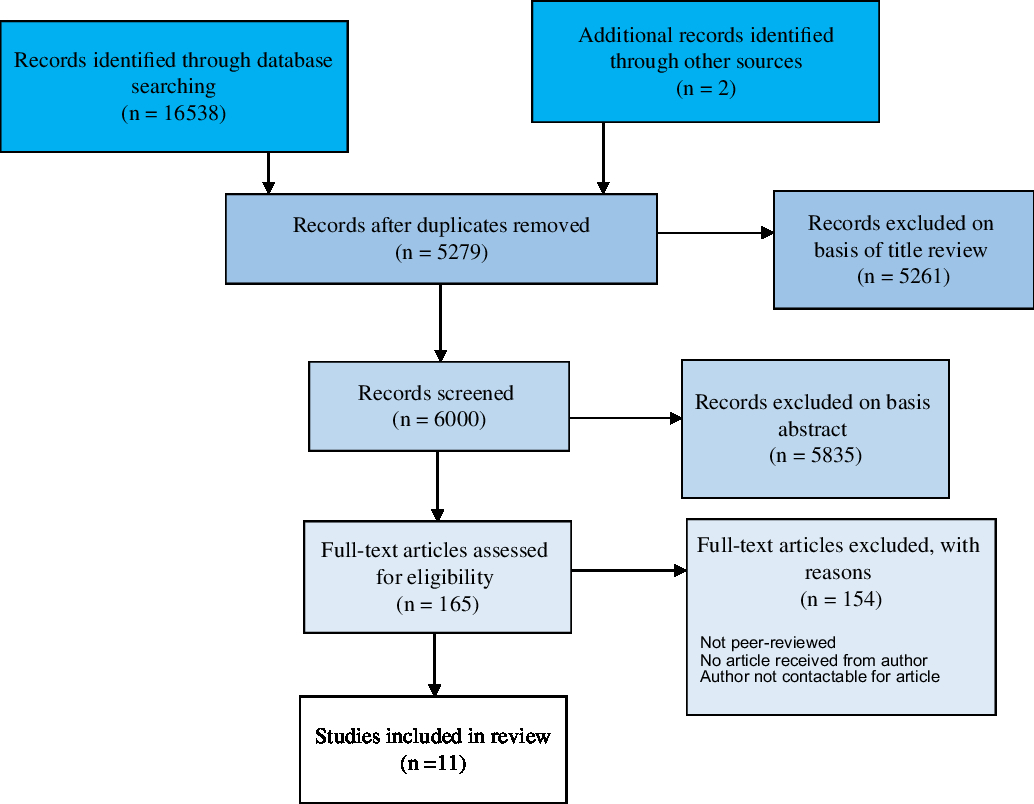
The preliminary literature search created nearly 16,540 references. First, 5279 duplications were discarded by the first author by means of EndNote software version X8. Then, by assessing the titles of the articles, 6,000 articles including at least 1 of the inclusion criteria were selected, and accordingly the articles with at least 1 of the exclusion criteria were deleted. In the next stage, 140 articles were retained after reviewing their abstracts. The full texts of the remained articles were searched and screened with the inclusion and exclusion criteria; finally, the standard quality assessment was conducted. The quality of the articles was assessed with the CASP and STORBE checklists.
The eligibility of the articles was individually evaluated by 2 reviewers. Two authors evaluated these articles independently. If both authors agreed that the article had inclusion criteria, it was included in the systematic review. Otherwise, the articles were adjudicated by critical discussion of the research team. Finally, 11 studies were included in this review. Figure 1 displays a flowchart for the study selection process.
Flow Chart of Manuscript Selection Process PRISMA 2009.

Data Extraction and Analysis
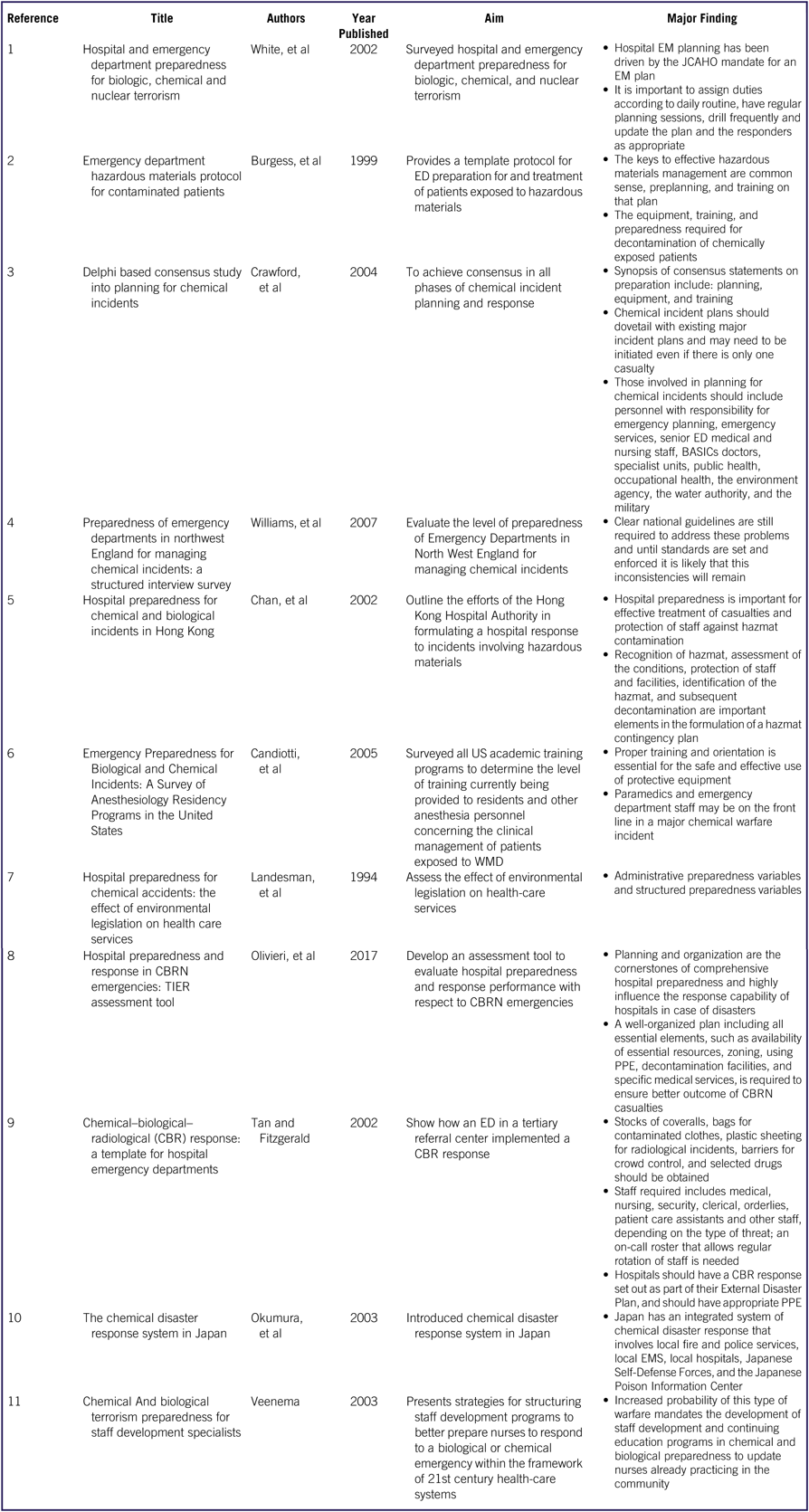
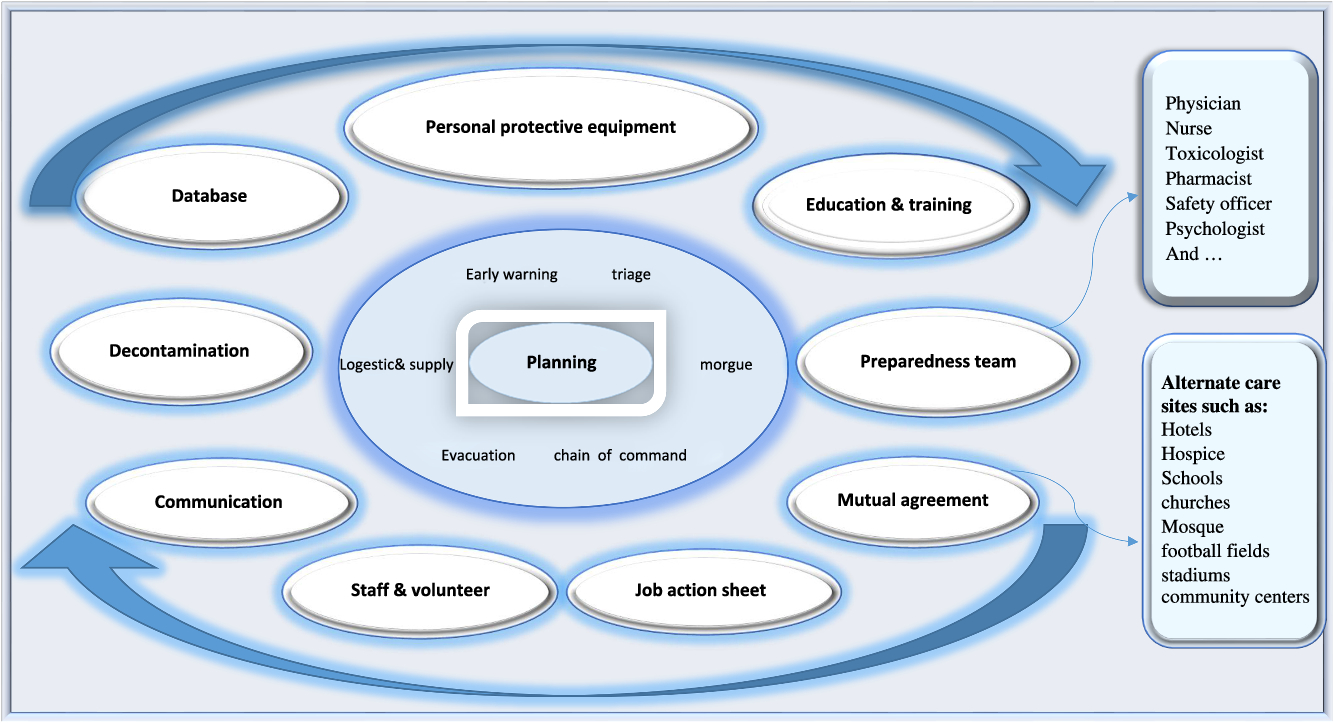
To analyze the data, the use of statistical methods, such as quantitative meta-analysis, was not possible due to the heterogeneity of the results and the number of repeated or nonindependent samples. Thus, a descriptive and content analysis was used for analyzing the data. Given the variability in the hospital plans for the chemical incidents and the elements of evaluated hospital preparedness, the primary synthesis of the studies was conducted separately for each of the included article formats. Descriptive and thematic analysis was performed for the included articles and literature reviews. One author extracted the data from the included studies into an extraction datasheet (Table 1). Then, the accuracy and completeness of the extracted data were checked by 2 other authors. Finally, 10 themes were extracted from the studies (Figure 2).
Characteristics of Included Articles

Abbreviations: BASICs, British Association for Immediate Care; CBR, chemical-biological-radiological; CBRN, chemical-biological-radiation-nuclear; ED, emergency department; EM, emergency management; EMS, emergency medical services; JCAHO, Joint Commission for Accreditation of Healthcare Organizations; PPE, personal protective equipment; WMD, weapons of mass destruction.
Hospital Preparedness Plan for Chemical Incident.

GENERAL PREPAREDNESS
Hospital Preparedness Plan Requirements
Hospitals should plan to be self-sufficient for at least 24-48 h when faced with chemical incidents and disasters. Reference White25 - Reference Okumura, Ninomiya and Ohta29 Eventually, extensive governmental disaster resources are used in disasters, but not immediately; therefore, the role of local hospitals in incidents and disasters (especially chemical disasters) is crucial. Reference White25 For this reason, hospitals should be prepared to respond to chemical incidents and perform medical management of contaminated victims. Reference Nitrite28 , Reference Okumura, Ninomiya and Ohta29
Hospital preparedness may include administrative and structured preparedness. Administrative preparedness variables include training; use of information resources, such as CHEMTREC, hotlines, chemical companies, governmental agencies, and industry contacts; and the existence and practice of internal and external disaster plans for chemical incidents and disasters. Structured preparedness variables include modifications or sketching space to widen the physical plant of the hospital, such as designating a decontamination area, separate entry or special entrances; isolated air circulation and air conditioner system; receptacles and disposal for waste-water and contaminated materials; and available medicine and clinical equipment, such as protective gear, detectors, antidotes, and clinical laboratory. Reference Candiotti, Kamat and Barach30 One important issues that usually is neglected is water supply for washing and drinking in this situation. Reference Candiotti, Kamat and Barach30 , Reference Williams, Nocera and Casteel31
Prerequisites for chemical plan development include assessment of risk and vulnerability, resources and capabilities and staff competency; the definitions of chemical disasters, events, catastrophes; features of a hospital emergency management plan, Reference White25 , Reference Williams, Nocera and Casteel31 , Reference Landesman, Markowitz and Rosenberg32 plan activation notification (early warning system) communication, personal identification, chain of command, hospital command center, support staff, reporting center, traffic flow, triage, decontamination, treatment areas, patient care-transportation-tracking, logistics and supplies; specialized areas for family, volunteer, media, morgue, evacuation; establishment of alternate care sites; education and training; testing and evaluating plans, including ambulatory sites; and recovery. Reference White25
Preparedness Team Member (Multidisciplinary Team)
In different countries, the members of the hospital team are different in chemical incidents and disasters. In general, a multidisciplinary team includes emergency physicians, emergency nurses, toxicologists, infectious disease physicians, epidemiologists, infection-control practitioners, security, safety officers, pharmacists, hospital administrators, public relations officials, facility engineers, mental health practitioners, volunteer services coordinators, and health educators. Reference White25
In addition, there should be a specialist team for hospital planning in chemical incidents including personnel with responsibility for emergency planning, emergency services, senior emergency department medical and nursing staff, British Association for Immediate Care (BASICs) doctors, specialist units, public health, occupational health, environment agency, water authority, and military. Reference Taebi, Sourosh and Modirian14 , Reference Chan, Yeung and Tang33 , Reference Veenema35
Psychologists are considered as highly important members in chemical team, based on past chemical events in the world because many victims need counseling after chemical disasters. The victims of hazardous materials or terrorist incidents, including chemical events, may experience posttraumatic stress disorders, which were estimated to occur in 25% of victims. In this regard, early psychological debriefing and interviews with patients and personnel should be prioritized among the psychologists. Reference White25
SPECIFIC CHEMICAL PREPAREDNESS
Decontamination
Equipment, training, and preparedness are required for decontamination of chemically contaminated victims. Reference Burgess, Kirk and Borron26 Based on past chemical events, most victims of disasters arrive at hospitals on their own. Reference Burgess, Kirk and Borron26 - Reference Okumura, Ninomiya and Ohta29 For example, after releasing a nerve agent into the subway system in Tokyo, Japan in 1995, 640 patients who were chemically contaminated arrived by private conveyance at a single health-care facility within the first few hours. Accordingly, 23% of emergency department staff became secondarily contaminated. Reference White25
Planning for the chemical decontamination of victims in hospitals include management of hospitalized patients, triage and decontamination of victims, medical treatment, and protection of the community from secondary contamination. Reference White25 , Reference Burgess, Kirk and Borron26 Accordingly, planning for outdoor decontamination of patients, designation of personnel responsibilities, the types and location of personal protective equipment (PPE) and decontamination equipment, medical treatment guidelines, and reference lists of information resources are essential for decontamination in the hospital. Reference Okumura, Ninomiya and Ohta29 - Reference Williams, Nocera and Casteel31
PPE
The personal protection levels are labeled A-D. Level A provides the highest, while level D has the lowest protection. PPE is needed for all staff in emergency departments. Reference Tan and Fitzgerald6 , Reference Burgess, Kirk and Borron26 Paramedics and emergency department staff may be on the front line in a major chemical warfare incident. Reference Okumura, Ninomiya and Ohta29 According to reports, most hospitals in the world only have level C PPE for employees. Reference White25 Ideally, those persons who are responsible for selecting PPE and the decontamination process should be trained for the first-responder operation level. Reference Tan and Fitzgerald6 The most important issue about PPE is that almost all of the emergency departments have suitable PPE but not enough knowledge is available for using this equipment. Furthermore, improper use of PPE may injure personnel. Therefore, learning to use PPE should be considered for the training program. Reference White25 , Reference Nitrite28 , Reference Okumura, Ninomiya and Ohta29
Education and Training
It is claimed that that education, training, and practice before a disaster are considered the key elements for an effective response. Reference White25 Although based on a systematic review, the available evidence is insufficient to determine whether training interventions for health-care providers are effective in improving knowledge and skills in disaster response. Reference Candiotti, Kamat and Barach30 Some of the prioritized educational topics for chemical disasters include nuclear/biological/chemical (NBC) agent and terrorism awareness, early recognition of chemical emergencies, incident command system, triage of massive numbers of victims, proper use of PPE, decontamination procedures for chemically exposed patients, use of backup communication systems, and methods for preparing backup supplies. Reference Williams, Nocera and Casteel31 , Reference Landesman, Markowitz and Rosenberg32 Training programs and levels are different for the staff in emergency departments. Reference White25 Training and education should be based on the duties of staff and their roles. Reference Candiotti, Kamat and Barach30 , Reference Williams, Nocera and Casteel31
Based on the evidence from many training programs, it is necessary to repeat technical training periodically, usually within 6-9 months to maintain competency. Reference Okumura, Ninomiya and Ohta29 Regarding hospital preparedness, proper training and orientation are essential for the safe and effective use of protective equipment, decontamination, and triage. Reference Candiotti, Kamat and Barach30 Drills are regarded as the best method for assessing preparedness and response in chemical incidents. Reference Tan and Fitzgerald6 , Reference Burgess, Kirk and Borron26 In addition, drills should involve participants from diverse areas, including public health, fire department, emergency management team, law enforcement, disaster medical assistance teams (DMATs), corporations, and media and public information. Reference Chan, Yeung and Tang33 - Reference Veenema35 Hospital disaster drills are mandated twice a year by the Joint Commission on Accreditation of Healthcare Organizations (JCAHO) for the organizations related to chemical disasters. 36
Job Descriptions and Roles
After identifying the team, it is important to determine the responsibilities of each member that should be considered in planning the hospital preparation. In addition, role cards may be useful. Reference White25 Based on the lessons learned from past events, many people fail to do their role properly during the incident. Reference White25 - Reference Nitrite28 Furthermore, many roles are mixed, and some of team members may perform the duty of other staff, leading to agitation and anarchy, and slower service to the victims. Reference Candiotti, Kamat and Barach30 , Reference Landesman, Markowitz and Rosenberg32 The use of a hanging necklace that includes information about each person’s job description, can solve this problem. Reference White25 , Reference Williams, Nocera and Casteel31 , Reference Chan, Yeung and Tang33
Communication
Effective communication is the biggest challenge for hospitals during chemical incidents and disasters. Reference Nitrite28 , Reference Candiotti, Kamat and Barach30 In addition, hospital communication may collapse both internally and externally. Reference White25 Based on the studies conducted in most countries, there is a lack of reliable networks for disaster communication between hospitals and other key external agencies, especially in chemical disasters. Reference White25 , Reference Nitrite28 , Reference Candiotti, Kamat and Barach30 Furthermore, meaningful information may not be received from the scene before the arrival of the first victims. Reference Tan and Fitzgerald6 , Reference Burgess, Kirk and Borron26 A disconnected Internet network causes staff to become unaware of important issues regarding facilities and resources. Thus, the information about resource availability and victim status is not shared successfully, which results in weakening of the overall response against chemical disasters. Reference White25 , Reference Williams, Walter and Challen37
The creation of additional and off-line applications in internal and external communication systems for sharing critical information is considered as one of the important solutions for solving this problem. 36 , Reference Williams, Walter and Challen37
Database for the Chemical Events
Specific chemicals, along with the form of the material and the route and duration of the exposure should be identified to evaluate the chemical toxicity and determine appropriate treatment in chemical incidents. Reference White25 , Reference Veenema35 , Reference Williams, Walter and Challen37 A chemical database is a database that is specifically designed for storing information about chemicals’ chemical and crystal structures, spectra, reactions and syntheses, and thermo physical data. 13 , Reference Nilsson21
The database includes some features such as having a simple, easy-to-use, and accessible system; using everyday language that is easy to understand and act upon; providing accurate and reliable information with high quality; and providing integrated multi-device platforms available for PC, laptop, mobile data terminals (MDTs), command and control systems, tablets, and mobile phones. 38
Based on the results, the medical management guidelines for acute chemical exposures from the Agency for Toxic Substances and Disease Registry (ATSDR) (http://www.atsdr.cdc.gov/mhmi.html) is regarded as an excellent resource for designing such procedures. Reference White25 Furthermore, the European Chemicals Agency (ECHA) website is a unique source of information for the chemicals manufactured and imported in Europe, which provides their hazardous properties, classification and labeling, and information on the way for using them safely. 38 , Reference Molander and Rudén39 Material Safety Data Sheets (MSDS) can play a role in identifying the chemicals, although they may not have correct treatment information. Reference White25 Also, Chemical Hazardous Emergency Medical Management (CHEMM) Produced by the US Department of Health and Human Services is good source of information about procedures in chemical incidents. Reference Nitrite28
RESPONSE TO CHEMICAL INCIDENTS
Mutual Aid Agreement
Mutual aid agreements may contribute to the sharing of personnel and equipment among hospitals and the evacuation of advanced patients during chemical incidents. Reference Veenema35 - 38 Additionally, using mutual aid agreements can provide alternate care sites such as hotels, long-term care facilities, hospice, surgical and procedure centers, psychiatric hospitals, schools, churches, mosques, football fields, stadiums, and community centers. Reference White25 , Reference Nitrite28
Staff and Volunteers
Hospitals may not have the additional staff that is necessary to cope with the significant surge in influx of patients during a chemical disaster. Reference White25 Although government disaster teams are responsible for helping hospitals, they usually arrive later. Access to a cadre of supplemental reserve staff or volunteers is necessary, especially during the early phases of a disaster. Reference Chan, Yeung and Tang33 - 38 To provide the expert staff for such situations, designing a plan involving the effective use and training of local volunteers is a high priority. Reference White25 , Reference Okumura, Ninomiya and Ohta29 Volunteers should be oriented to the emergency management plan of the hospital and the command structure of the incident. Reference Landesman, Markowitz and Rosenberg32 , Reference Chan, Yeung and Tang33 Potential sources of reserve staff include outpatient clinic personnel, retirees, trainees, and former health-care professionals. Call-up (also termed recall) and back-fill mechanisms for each department are regarded as critical features of the emergency management plan in chemical disasters. Reference Burgess, Kirk and Borron26 , Reference Nitrite28
DISCUSSION
Preparedness means building capacity including surveillance; inventory of resources; acquisition and placement of backup supplies, such as basic materials, communication devices, and medical pharmaceutical medical supplies; pre-established agreements, such as instructing mutual aid and vendor agreements; training; drills; and exercises. Reference Okumura, Ninomiya and Ohta15 , Reference White25 Planning and organization are the cornerstones of comprehensive hospital preparedness, which highly influence the response capability of hospitals in the case of natural and manmade disasters.
Based on the findings of the study use of lessons learned from previous chemical disasters can help hospital managers for planning and preparedness. Because chemical incidents and disasters are less likely to happen, compared with natural disasters, planning for these incidents has been neglected during recent years. The plan for hospital preparedness for chemical incidents should be consistent with other hospital plans for incidents and disasters. Reference Crawford, Mackway-Jones and Russell34 Although there are several scenarios for chemical incidents, hospitals can have a well-practiced proper and perfect plan for chemical incidents. By implementing such a plan, hospitals can protect their personnel and victims and take the right measures at the right time.
A well-organized plan for chemical incidents and disasters includes all essential elements, such as the assessment of the conditions and recognition of HAZMAT, availability of essential resources and drugs, zoning, the use of PPE, triage decontamination facilities, and specific medical services and treatments. Such a contingent plan is required to ensure the better outcome of chemical incidents. Reference Olivieri, Ingrassia and Della Corte22 , Reference Watson, Dolislager and Hall23 , Reference Landesman, Markowitz and Rosenberg32 However, a major inconsistency in preparedness for chemical incidents among emergency departments in North West England and some other countries is deficiencies in planning, facilities, equipment, and training. Thus, clear and comprehensive national guidelines are still required to address these problems, and this inconsistency will remain until setting and enforcing the standards. Reference Williams, Walter and Challen37 Preplanning, scheduling, and training, and their regular review, have been less considered, although the keys for effectively managing hazardous materials are commonsense. Hospitals should have a chemical incidents response setting out as a part of their external disaster plan, which involves appropriate PPE, decontamination facilities, and expert staff. However, failure to provide these services by the hospitals may threaten the health of the staff and patients, leading to legal challenges for not providing a safe workplace if one of the staff member becomes secondarily contaminated.
CONCLUSIONS
In this regard, most countries have launched hospital preparedness planning against chemical incidents and threat activities, although these plans are not satisfactory. In many countries, the readiness program has been designed while it is not operational, and the readiness of hospitals is often unsatisfactory. Items such as databases, hospital preparation team members, communications, etc., are considered a challenge still. According to the results of studies, inadequate risk perception of chemical incidents and the cost of equipping hospitals are major factors in neglecting adequate hospital preparedness to these incidents. Therefore, many hospitals do not have a hospital preparedness plan or it is not properly implemented.
Limitation
The researcher did not have access to all sources due to the sensitivity of the subject and security issues. Finally, hospital preparedness plans for chemical incidents and threats may not be available and unpublished.
Acknowledgments
This article is part of a study which is conducting in Iran University of Medical Sciences (IUMS/SHMIS-97-3-15-13415), Iran. The researchers hereby thank the School of Management & medical informatics, Department of Health in Disasters and Emergencies which are supporting the study.
Funding Statement
Iran University of Medical Sciences.
Conflict of Interest
The authors declared no conflicts of interests.