I. INTRODUCTION
This paper attempts to clarify a relatively unknown connection between two mathematical Marxian economists in Japan. The postwar Japanese contribution to mathematical economics is notable, and is perhaps greatest in the field of Marxian economics. Michio Morishima (1923-2004) introduced these contributions, including his own ideas, to the English-speaking world. However, as Morishima himself noted in his seminal work (Morishima Reference Morishima1973, p. viii), much of his analysis had already been anticipated by Nobuo Okishio (1927-2003).
Most Marxian economists, especially those in Western literature, have ignored the subtle differences between Okishio and Morishima. For example, they noted that Okishio claimed that his theorem on the falling rate of profit demonstrated Marx's inconsistency (Fine and Saad-Filho Reference Fine and Saad-Filho2004). This led some Marxian economists to attempt to refute the theory rather than develop it as a potential contribution.
Aside from mathematical formalism, however, Okishio and Morishima also had different attitudes towards the implications of Marxian value theory. Morishima regarded his work on Marxian economics as a part of his trilogy on economic growth (Morishima Reference Morishima1973, p. vii). Despite a sophisticated analysis very similar to Okishio's, Morishima ultimately suggested that “Marxian economists … ought to change their attitude towards the labor theory of value” (ibid., p. 193). In other words, Morishima advocated the abandonment of the labor theory of value. Okishio, however, argued for the theoretical validity of Marxian value theory until the end of his life, and pursued a “new society” that would supplant capitalism, in which all members of the society would participate equally in making decisions about production.Footnote 1
In order to elucidate the differences between Okishio and Morishima, this paper focuses primarily on a Kyoto University economist, Kei Shibata (1902-1986), who was a precursor of future Japanese contributions to analytical Marxian economics and general equilibrium theory. In particular, the Shibata–Okishio connection is important in the history of Marxian economics because almost all of the controversial issues in the 1970s and 1980s had already been raised by Shibata in the 1930s. This point has been previously noted in related literature (Groll and Orzech Reference Groll and Orzech1989; Howard and King Reference Howard and King1992). Shibata's work, however, was considered only as an attack on Marxian value theory, similar to the treatment of Okishio's work. Shibata's particular position in the reconstruction of Marxian economics using the Walrasian method has not been thoroughly examined, particularly in Western literature. Although both Morishima and Okishio followed in Shibata's footsteps, their directions were quite divergent. This paper will argue that the seeds of both of these directions were already germinating in Shibata's theoretical works. In particular, this paper will pursue the theoretical connection between Shibata and Okishio, especially regarding the labor theory of value and rate of profit.
These connections are laid out in the following structure. Section II provides biographical notes on Shibata and Okishio. Section III examines a prototype of the Okishio theorem presented by Shibata. In particular, the focus will be on the Okishio theorem's character as a counterfactual explanation. It will be argued that Okishio faithfully extended Shibata's insight and generalized it. Section IV discusses Shibata's solution to the so-called transformation problem, which precedes the “iterative solution” provided by Okishio and Anwar Shaikh in the 1970s. Okishio further developed Shibata's intuition by providing a general proof. However, in trying to maintain the function of value for explaining equilibrium prices, he abandoned an aggregate equality between total profit and total surplus value. The fundamental Marxian theorem was thus required to fill the gap. In Section V, Shibata's view on the role of value theory will be examined. This was the position of Shibata against which Okishio was most strongly opposed. It will be noted that Okishio provided the fundamental Marxian theorem in order to criticize Shibata's ambivalent attitude towards the labor theory of value. Section VI concludes.
II. BIOGRAPHICAL NOTES
Beginning in 1926, Shibata studied Marx's Capital as a student of a famous Japanese Marxist, Hajime Kawakami (1879-1946) at Kyoto Imperial University (now Kyoto University).Footnote 2 Although Kawakami resigned for political reasons in 1928, Shibata became a lecturer in 1929, the same year that Yasuma Takada (1883-1972) was appointed as a professor. After studying modern economics under the influence of Takada, Shibata thought that Karl Marx's theory of capital accumulation could be integrated into the economics of Léon Walras.
Shibata's article entitled “Marx's analysis of capitalism and the general equilibrium theory of the Lausanne school” was published in the Kyoto University Economic Review (1933), the first Western-language journal published by a Japanese university.Footnote 3 In this article, he was essentially supportive of Marxian economics:
What is it, then, that makes Marxian economics so powerful and the general equilibrium theory of the mathematical school so inert? It is simply this, that whereas in the Marxian economics the organization of capitalistic production and the laws of its development are analyzed in a direct way, in the general equilibrium theory the main attention is directed to the analysis of the mental structure of the individuals who take part in the organization of capitalistic production
(Shibata Reference Shibata1933a, p. 108).However, Shibata argues that “by settling [some] points can the general equilibrium theory be made to attain great potency in analyzing both the organization of capitalistic production and the laws of its development” (ibid., p. 109).Footnote 4
Although Shibata published several important papers on Marxian value theory in the Kyoto University Economic Review, he was never a Marxist. His political positions nonetheless seemed to be influenced by Marxism. After studying in the United States from 1936 to 1938, Shibata returned to Japan and proposed a “new order economic mode” in order to introduce a controlled economy, rather than allowing free capitalism. For example, he proposed that capitalists should be deprived of the power to appoint (and dismiss) “firm leaders,” and that profits must remain under state control.Footnote 5 He organized a Study Group on the New Order (Shin Taisei Kenkyukai) in 1940 and argued for “communal totality,” implying “the maximization of the produced real income of the society as a whole,” which authorities suspected was a disguised communist movement (Yagi Reference Yagi1999, p. 188). Ironically, after the Second World War, he was banished from the university by Allied Forces General Headquarters on suspicion that he was “a supporter of militarism and ultra-nationalism.”
Shibata returned to the academic world as a professor at Yamguchi University in 1952, and continued research to argue for “the theory of human emancipation.” In another largely unnoticed book (Shibata Reference Shibata1959) published in English by a Japanese publisher, Shibata tried to synthesize all major economic theories, including Marx, Keynes, and the general equilibrium theory. However, his evaluation of Marxian value theory, at least from a purely analytical perspective, did not change in this book.
That Shibata became a “forgotten economist” (Tsuru Reference Tsuru1985 [2006], p. 237) is partly due to his expulsion from Kyoto University. As a result, he did not have enough students to form a “school” in the manner of other economists (e.g., Uno School at Tokyo University). Furthermore, strong antipathy still existed towards the mathematical methods of Marxian economists (Akama Reference Akama and Ikeo2000, p. 130).
On the other hand, Okishio studied Marxian economics from 1945, initially as a student at Kobe University of Commerce (now Kobe University). Although he studied mathematical economics starting with John R. Hicks and John Maynard Keynes, he was soon attracted to Marxian economics. This was mainly due to his experiences during the occupation after the Second World War, including food shortage, unemployment, severe inflation, and repression of the labor movement.Footnote 6 According to his interview with a Korean journal (Okishio Reference Okishio1995, p. 228), Okishio was impressed by Marx's conception of class struggle at the time.
It is worth noting that Okishio tried to bridge Marxian economics and mainstream economics in Japan (Akama Reference Akama and Ikeo2000, p. 131). For example, he was the president of Riron Keizai Gakkai (Theoretical Economic Association) of the mainstream economists from 1979 to 1980 and an active member of Keizai Riron Gakkai (Economic Theoretical Association), an association of Marxian economists. This was very exceptional considering that most Japanese economists belong to only one of the two associations.Footnote 7
Interestingly, Shibata, Okishio, and Morishima were all from Kansai (Kyoto-Osaka-Kobe), an area characterized by cultural homogeneity.Footnote 8 As economists in the Kyoto-Osaka-Kobe area organized study groups and seminars very frequently, it is obvious that Okishio and Morishima had interacted with each other from earlier days (Nakatani Reference Nakatani1990, pp.130–1). Morishima explicitly admitted to Okishio's influence in his book:
I must acknowledge here that Dr. Seton's contribution to the 1961 paper was particularly significant, because I was not very familiar with Marxian economics when we wrote it in 1957. With much help from Professor Okishio's books (unfortunately, all in Japanese), I had gathered almost all the material for this book by September 1968
(Morishima Reference Morishima1973, pp. vii–viii).As an undergraduate student at Kyoto University, Morishima took an economic philosophy course from Yasuma Takada, a colleague of Shibata (Morishima Reference Morishima1994). Although Morishima did not note this explicitly, his work on Walras’ economics emphasizing that “Walras’ theory of exchange and production is … but an overture to his general equilibrium theory of capital formation and circulation.” (Morishima Reference Morishima1977, pp. vii–viii) was very similar to Shibata's project:
What is it, then, which the structure of the general equilibrium theory contains and which makes the analysis of the organization of capitalistic production and consequently the grasp of the laws of its development logically possible? And how can it be eliminated? The object of the present article is to study these points
(Shibata Reference Shibata1933a, p. 108).In contrast, Okishio explicitly noted his indebtedness to Shibata in the acknowledgements of his seminal paper proving the so-called Okishio theorem (Okishio Reference Okishio, Krüger and Flaschel1961). This is why Negishi (Reference Negishi1989) coined the term the “Shibata-Okishio theorem.” In particular, with respect to the three topics discussed in the following sections of this paper, Okishio always regarded Shibata as both a precursor to his work and his main antagonist. Unlike Morishima, Okishio wrote his articles primarily in Japanese and published several books as collections of these articles. Specifically, his two-volume work, Marukusu Keizaigaku (Marxian Economics), published in 1977, clearly shows his theoretical relationship to Shibata's works.
III. THE TENDENCY OF THE RATE OF PROFIT TO FALL
The Okishio theorem shows that, if the real wage rate in terms of consumption goods is constant, any cost-reducing technique in terms of the present price-wage configuration will increase (or maintain), but not decrease, the equilibrium rate of profit. Here the equilibrium is static in the sense that “profit rates are equalized in every sector” (Okishio Reference Okishio2000, p. 493).
Two points are worth noting here: First (Point A), this theorem raises the issue of the criterion for technical choice on the side of capitalists. Capitalists, if rational, will not introduce any new technology that is expected to increase the unit cost of production. In particular, the expected cost must be calculated in price terms, not in value terms. What the theorem tells us is that it is misleading to assume a specific form of technical progress without considering capitalists’ micro-foundation. Second (Point B), this theorem refers to a counterfactual case in which the real wage is kept constant. The real wage will undoubtedly and necessarily change as a result of introducing new technology. Okishio compared the typical state of a capitalist economy, in which there is a change in the real wage due to labor market dynamics, to a hypothetical state in which the real wage does not change.Footnote 9 The implication of the Okishio theorem is that a falling rate of profit may occur, simply due to an increase in the real wage.
Shibata's contribution is important because it shows the two lines of thinking discussed above explicitly, even though he does not extrapolate to more general scenarios.
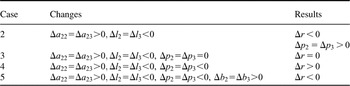
A good place to begin is the summary of Shibata's model (1934). Using a three-sector model composed of money (gold, sector 1), means of production (sector 2), and means of consumption (sector 3), Shibata compared the initial situation (“Instance 1”) with four “Instances” introducing technology that raised the organic composition of capital. Numerical examples are set so that the capital-labor ratios in sectors 2 and 3 are equal, but not equal to sector 1.
His examples can be easily represented using general notations such as the notion used in Table 1, where  and
 denote, respectively, the amount of commodity i needed to produce one unit of commodity j, the amount of direct labor needed to produce one unit of commodity j, the price of commodity j, the real wage in the jth sector, and the equalized rate of profit. Cases 2, 3, and 4, respectively, correspond to the situation in which prices of commodities are increasing, constant, and decreasing. While case 4 refers to the Okishio theorem, case 5 involves the contra-positive to the theorem in the sense that if the equilibrium rate of profit is known to have fallen (
 ), the real wage must have increased (
 ).
Shibata's “Instances” (1934)

Of interest here are some peculiar points in Shibata's illustration (1934), which have also been noted previously by Howard and King (Reference Howard and King1992). First, as commodity 1 represents both money and luxury goods, it does not enter into the production of any other commodity. This means that  is zero for all j. Second, under the new technology, the physical ratios of the commodity and labor inputs change with the same magnitude in all the sectors.
The physical capital-labor ratios are the same in both sectors, which was interpreted as an indication that Shibata's analysis did not go beyond previous discussions on the same issue by Natalie Moszkowska. In this sense, “Shibata's argument … could be reduced to a single sector” (Howard and King Reference Howard and King1992, p. 137).
It is true that Shibata's three-sector example does not differ from the one-sector model with respect to the determination of the equilibrium rate of profit.Footnote 10 In Shibata's examples, however, the coefficients of sector 1 (gold) are assumed to be constant. Therefore, the value of the ith commodity relative to the value of money commodity ( ) becomes different from the price of the ith commodity (
 ).Footnote 11 This implies that value-price deviations are permitted. In this sense, Shibata's exposition allows for the explanation of the criterion for technical choice in terms of price, rather than in terms of value.
Related to this point is the following comment:
For Shibata, on the other hand, the introduction of a new technique raises both q [organic composition of capital] and the level of productivity. The rise in productivity becomes an essential feature of the increase in the organic composition of capital
(Groll and Orzech Reference Groll and Orzech1989, p. 257).While it is true that Shibata's new technique accompanies an increase in the level of labor productivity, it is easily confirmed that his examples also consider the cost criterion for technical choice in price terms. Using general notation, it is known that all four of his instances satisfy the following condition:Footnote 12

On the other hand, Shibata explicitly noted the Point (B) discussed above:
… I hope, have made it clear that the elevation of the organic composition of capital in a capitalistic society does not, of itself, cause a reduction of the average rate of profit, but that rather it tends to bring about a rise of the average rate of profit. However, this by no means proves that the fall of the organic composition of capital brings about a fall in the rate of profit. Nor does it imply that a fall of the average rate of profit may not be simultaneous with the elevation of the organic composition of capital. It simply shows that if the elevation of the organic composition of capital and the fall of the average rate of profit really happen at the same time, this phenomenon requires to be explained in a different way from the one which Marx adopted
(Shibata Reference Shibata1934, p. 71, emphasis added).According to Shibata, the falling rate of profit can result either from “the increase of real wages or the shortening of the working day” (ibid., p. 71). Case 5 in Table 1 indicates the increase in the real wage. A shortening of the working day, ceteris paribus, may be interpreted as a decrease in the rate of exploitation. Namely, it is admitted that some change in value production can cause a falling rate of profit.
However, Shibata was more interested in the trend of “the rate of income” than the rate of profit. Using Marx's notations, the rate of income is denoted as  , where
 ,
 and
 denote constant capital, variable capital, and surplus value. According to Shibata (Reference Shibata1934, p. 34), technical progress is compatible with a decreasing rate of income, which means conflict between the economic welfare of the entire society and the objective of capitalists. Table 2 shows the situation Shibata had in mind.
Falling rate of income with increasing rate of profit

In Situation 2, despite the rising rate of profit, the rate of income decreases. For Shibata, this implies that capitalism cannot achieve “communal totality,” defined as the maximization of the rate of income. The “rate of income” (Syotokuritsu) was one of the specific concepts that Okishio used to measure the degree of unequal exchange. Okishio, however, defined it as income per unit of direct labor input (Okishio Reference Okishio1956, p. 54). This is but one example of the Shibata–Okishio connection, which has terminological continuity with modifications in substance.
What, then, is Okishio's contribution?
Okishio (Reference Okishio, Krüger and Flaschel1961) proved the theorem in a general multi-sector context. Furthermore, while Shibata's examples did not clearly distinguish technology that improved labor productivity from technology that reduced costs as an unintended by-product, Okishio explicitly formulated his model in a general context. Okishio (Reference Okishio, Krüger and Flaschel1961) distinguished “cost criterion” represented by (1) from “productivity criterion” as

As  is equal to the money wage (
 ), two criteria are equal only if
 . However, this is inconsistent with the condition that “there must be positive profit in every industry,” namely
 (Okishio Reference Okishio, Krüger and Flaschel1961 [1993], p. 86).
Of course, there is no reason to believe that every industry must have positive profit in a real capitalist economy. Okishio, however, thought that this was necessary for a normal reproduction of a capitalist society, and used it as one pillar of his fundamental Marxian theorem. According to the interview noted above (Okishio Reference Okishio1995), Okishio said that he had trouble understanding why Marx's Capital starts with the assumption of equal exchange, which was inconsistent with Japanese reality in the late 1940s. One of the main goals of his fundamental Marxian theorem was to “prove the theory of surplus value without assuming equal exchange” (Okishio Reference Okishio1995, p. 232). In this sense, the distinction between “productivity criterion” and “cost criterion” is more closely related to the whole reformulation of Marxian value theory, rather than to the clarification of the technical choice criterion.Footnote 13 This is a critical difference between Okishio and Shibata.
Furthermore, Okishio (Reference Okishio1977, p. 251) specifically criticized Shibata for assuming the direction of price change at the start. However, if, one considers that Shibata's exposition is based upon tedious numerical calculations and not upon a generalized model, these cases can be interpreted as representing all of the possible comparative static cases. As Shibata's emphasis is on the last two cases in Table 1, this criticism is not so decisive.
In a nutshell, with regard to the falling rate of profit, Okishio's theories are in the same vein as Shibata's insight. Between Okishio and Shibata, there is not much dispute.
IV. A SOLUTION TO THE TRANSFORMATION PROBLEM: THE MARKOV PROCESS
Shibata (Reference Shibata1933b) provided a Markov process solution to the so-called problem of transforming Marxian values into prices of production. He started with the recognition of the problem raised by Ladislaus von Bortkiewicz:
The failure of Marx to make clear these circumstances was due solely to the fact that he did not consider thoroughly the result of the average rate of profit (the fact that the cost value itself is caused to deviate from value by the average of the rates of profit)
(Shibata Reference Shibata1933b, p. 65).Footnote 14As is well known in Marxian literature, prices of production deviate from values unless very restrictive assumptions are made. In Shibata's presentation, this is represented by the fact that deviation ratios between value and price of production in two departments are not equalized to 1. Therefore, the cost price of each department must be recalculated based on prices of production, and not values. However, as just one more calculation will not solve the problem completely, it is necessary to iterate “the process of averaging the rates of profit a second and a third time” (Shibata Reference Shibata1933b, p. 61). In Japan, Yasuma Takada had already examined this procedure in his book in 1931 (Takada Reference Takada1931), concluding that the deviation ratio diverges to infinity assuming that the average rate of profit remains constant in every step of the iteration procedure (Okishio Reference Okishio1977, p. 207). Shibata, on the other hand, argued that the transformation problem could be solved if Marx's method were pursued thoroughly (Shibata Reference Shibata1933b, p. 66). Using Marx's framework of the simple reproduction scheme in Capital volume 2, Shibata illustrated how this is possible.
Georg von Charasoff, Natalie Moszkowska, and others had already tried to provide this Markov process solution (Howard and King Reference Howard and King1992, pp. 230–1). Shibata knew about these predecessors, so he could not take full credit for the original theorization. Furthermore, he did not give a general proof, but only gave a numerical example. His equilibrium condition for the simple reproduction was unnecessary for the procedure.
Okishio (Reference Okishio1972) was the first to give a general proof of this iterative procedure.Footnote 15 Okishio's algorithm for the iterative procedure may be represented as (Nakatani and Rieu Reference Nakatani and Rieu2003, pp. 53–4):


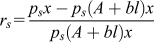
Here  , and
 denote, respectively, the value vector, price of production vector, input coefficient matrix, and labor input vector, while
 and
 are real wage basket and gross product, respectively, defined as column vectors. The subscript indicates the stage in the procedure.
However, as Morishima and Catephores (Reference Morishima and Catephores1978, pp. 167–8) proved, this transformation procedure converges to another system of prices of production if one changes equation (5) to the following equation, where  denotes total surplus value:
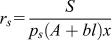
While the algorithm with (6) instead of (5) can guarantee equality between total profit and total surplus value, which was not the case in Okishio's procedure, it can not guarantee equality between total price and total value, which was originally an aim of Okishio's procedure. In these two algorithms, prices of production as final solutions diverge, implying that this is simply a matter of choosing the constraint, or, in other words, a matter of choosing a numéraire.Footnote 16
Again, Okishio's contribution was to provide a general proof for the Markov process. However, he gave privileged status to the iterative procedure (3), (4), and (5), implying an abandonment of the equality between total profit and total surplus value. For him, this would not create any problems because his fundamental Marxian theorem could validate the causal connection between total profit and total surplus value, even though equality was not guaranteed. Therefore, Okishio's theory eventually comes down to the establishment of the fundamental Marxian theorem. Okishio's proof of the fundamental Marxian theorem precedes the proof of the Markov process (see note 13). Thus, it must be that the logical reasoning in his mind ran from the fundamental Marxian theorem to the transformation problem, as was the case in the Okishio theorem.
V. THE ROLE OF VALUE THEORY
Although Shibata (Reference Shibata1933b) proved that it is possible to consistently formulate Marx's transformation procedure, this does not necessarily indicate that he agreed with the role of value theory as conceived by traditional Marxian economists. Instead, he presented an argument very similar to the so-called redundancy thesis that the Marxian value concept is simply a “complicating detour” (Samuelson Reference Samuelson1971).
Shibata emphasized at the outset that “the aim … is to make clear whether or no [sic] it is impossible to explain productive prices and the average rate of profit, unless we first know values … ” (Shibata Reference Shibata1933b, p. 51). He asked “if price cannot be explained by any other means, cognition of value will remain an indispensable premise for cognition of price. Is it, however, impossible to explain price except from the premise of value?” (ibid., p. 66). He then concluded the paper by stating
Thus, we shall be able to conclude that the determination of the ratios of exchange of various commodities and the various phenomena based on it can be adequately explained theoretically without the knowledge of value and also that the cognition of value is a matter of coloring them from a specific point of view of the world (ibid., p. 68).
The problem is more fundamental in his 1939 paper:
… it is questionable 1) whether we are not allowed with equal justification to assert that in so far as different products are socially treated as equal the individual concrete utilities of different goods must be considered as being reduced to some common entity, viz. a social abstract utility and 2) whether it is necessary to refer to the social abstract entity or value, at all, whether considered as a social abstract labor or as a social abstract utility. … It is the second problem, viz. the problem concerning the controversy between the value theory of exchange value, that demands our attention
(Shibata Reference Shibata1939, pp. 41–2).In other words, he was no longer interested in the choice of value entity, but in the necessity of the value concept itself. This is precisely the problematic of general equilibrium theory.
Unlike his 1933 paper, Shibata (Reference Shibata1939) provided a general argument. Although he uses a five-sector model with a specific input-output structure, this can be easily generalized.
Using general notations, we can represent Shibata's “system A” (prices of production) and “system B” (value-priceFootnote 17) as follows, where  denotes the rate of exploitation:


According to Shibata (Reference Shibata1939), (7) and (8) can be connected using the price-value ratios ( ). If we denote
 is a matrix whose ith main diagonal elements are
 ’s, and all the other elements are zero, the following can be obtained:

This can be reduced to system (7) using the definition of  ’s, which implies that it is possible to obtain an identical result even if starting from system (7) instead of system (8). As Shibata noted:
This by itself proves that the results concerning prices and the general profit rate which are obtained by the equation system B are precisely the same as those arrived at by means of the equation system A. And this means again that reference to value does not affect the results concerning prices and general profit rate
(Shibata Reference Shibata1939, p. 47).This conclusion suggests that the value system and the prices of production system are mutually independent. In particular, both systems are determined by physical and technical conditions of production. As Howard and King (Reference Howard and King1992, p. 138) noted, this proposition was a milestone in the debate on value theory because it anticipated what is known as the redundancy thesis of value theory.
However, there is still room for the role of value theory in Shibata's thinking. This was explicitly stated in Shibata's Riron Keizaigaku:
Marx's theory … may be criticized for using value concept itself (setting aside the problem of whether regarding value as labor or not, and how to consider the structure of value determination) because one can explain exchange value without referring to value concept. This, however, does not imply that value concept is generally redundant, but that value concept is redundant from the viewpoint of specifying exchange value determination
(Shibata Reference Shibata1935, p. 35).In his postwar work, Shibata became clearer about the necessity of value theory in economics:
This, however, is meant for asserting neither that the discussion on social value is generally unnecessary nor that it is generally erring. It is really necessary in economics, because economics is not a mere purpose-less positive science but is one of those sciences which are dedicated to the cause of some purpose or other just as the medical science is, which is dedicated to the cause of maintaining and improving human physiological health. … Economics is dedicated to the cause of emancipation of the laboring masses. … The impropriety of the Ricardian theory of value—as developed further by Marx—consists in the fact that it overlooks the role played by the entrepreneurs
(Shibata Reference Shibata1959, p. 28).However, Shibata's theory does not precisely clarify the usefulness of value theory. Two theoretical tendencies coexist in Shibata's economics. One is that the value concept is redundant in the general equilibrium framework, and the other is that value may be necessary from the viewpoint of “social economics,” which emphasizes historical and structural changes in the social system.Footnote 18
Not surprisingly, this position was what Okishio most strongly opposed in Shibata's work. Criticizing Shibata's “redundancy thesis,” Okishio believed that the fundamental Marxian theorem could bridge the value system and price system:
… it is difficult to agree with Shibata's argument that it is sufficient to start with price equations with an abrupt assumption of equal-rate-of-profit, without a labor theory of value, because the concept of embodied labor is indispensable in order to elucidate why equal-rate-of-profit is a positive constant
(Okishio Reference Okishio1977, p. 207). In this paper's notations, Okishio's task was to show that  in (7) and (9) necessarily requires
 in (8). This is the necessity aspect of the fundamental Marxian theorem. It is related to the reason why Okishio (Reference Okishio, Krüger and Flaschel1961) focused on proving the theorem's necessity, instead of its sufficiency (Morishima Reference Morishima1973, p. 53).
Morishima's attitude towards the fundamental Marxian theorem should be noted here. Although Morishima gave the theorem its name (“fundamental”), he abandoned the labor theory of value or at least tried to recast it in the context of “the von Neumann revolution” (Morishima Reference Morishima1973, p. 196). Okishio notes this point:
I can never agree with [Morishima's] conclusion that labor theory of value should be abandoned. Does he abdicate or support what he calls “Fundamental Marxian theorem”? If he wants to support it, value concept is indispensable
(Okishio Reference Okishio1977, pp. 274–5)Footnote 19Interestingly, Morishima, in his reply to Paul Samuelson, indirectly answers Okishio's question by saying
Anyway, we may conceive of Marx without the labor theory of value, as long as we agree that the Fundamental Marxian Theorem is the core of his economic theory
(Morishima Reference Morishima1974, p. 73).Conclusively, while Morishima thought that the fundamental Marxian theorem could be maintained without value theory, for Okishio, it forms a basis for all the related issues in value theory.
VI. CONCLUDING REMARKS
Shibata's contribution to value theory issues has been evaluated by focusing on the Shibata–Okishio connection. Shibata's economic work contained two lines of reasoning running from general equilibrium theory to labor theory of value, combining the redundancy thesis with the viewpoint of social economics. Okishio tried to revive the analytical aspect of labor theory of value, no less than to generalize Shibata's analysis. The fundamental Marxian theorem has a central place in Okishio's theory in that it complements his Markov process solution to the transformation problem and the presentation of the Okishio theorem. In Okishio's view, the fundamental Marxian theorem is a logical refutation of the redundancy critique.
 (for all j) implies that the first row of the matrix does not have any nonzero element, and therefore, the maximum eigenvalue can be obtained from a
 matrix in which the column and the row relating to the first sector are removed.
 ) is equal to 1.