
I. INTRODUCTION
The increasing demand for various electric vehicles and modern electronics in energy storage accelerates the development of lithium ion batteries (LIBs), featuring high power densities, low cost, and long lifetimes.Reference Wang, Chen, Schmidt and Yan1–Reference Xu, Qian, Liu, Liu, Chen and Yan4 Nano-sized metal oxides have been considered as a significant family of high-power anode materials for LIBs owing to their high theoretical specific capacity (e.g., 890 mA/g of cobalt oxide), as well as their diverse chemical and physical properties.Reference Wang, Leng, Han, Shao, Wei, Liu, Lian and Jiang5–Reference Liu, Fang, Jiang, Chen, Wang, Wang, Dong and Xiong7 However, the practical utilization of metal oxides as anode is still hindered because of the low intrinsic electric conductivity and severe volume change and complex phase transformations during Li+ insertion/extraction process, which lead to poor cycling performance. Intense efforts need to be devoted to exploring alternative carbon materials with enhanced Li+ storage capacity as the substrate for loading metal oxides.
As the substrate materials, porous carbon materials have received considerable attention due to their outstanding features, including superior electric conductivity, low density, and high mechanical and chemical stability.Reference Śliwak, Díez, Miniach and Gryglewicz8–Reference Wagle, Zhao and Baker11 In particular, it is expected to exhibit small polarization during lithium intercalation process and shortened transportation pathway for Li+ and electrons with the characterization of high specific surface area and numerous nanoscale pore channels.Reference Lee, Lytle, Ergang, Oh and Stein12 Some efforts have been diverted by synthesis of porous carbon materials from rice straw,Reference Zhang, Wang, Li and Chen13 pig bone,Reference Wei, Zhang, Huang, Wang, Xia and Yu14 human hairsReference Chaudhari, Song and Yu15 and chitosan.Reference Hao, Zhao, Leng, Tian, Sang, Boughton, Wong, Liu and Yang16 The interconnected networks of the porous carbon are very suitable for loading metal oxides, as they possess amounts of pores with good mechanical stability which can provide enough space to buffer the volume change during charge–discharge process. In addition, new research is constantly being carried out to improve the electrochemical performance of porous carbon materials. Both experimental and theoretical investigation demonstrated that the presence of various heteroatoms such as nitrogen (N) and boron (B) can enhance the reactivity and electric conductivity.Reference Bulusheva, Okotrub, Kurenya, Zhang, Zhang, Chen and Song17–Reference Pappas, Ferrari, Huang, Bhagat, Haddleton and Wan21 Wu et al. have presented that N-containing carbon exhibited higher specific and reversible capacities than those of the N-free ones, mainly owing to the obtained pyridine-like N atoms.Reference Wu, Jiang, Wan, Fang and Jiang22 According to previous reports, the N atom possesses a comparable atomic size and five valence electrons to bond with carbon atoms, but the traditional N sources are either expensive or harmful to environment.Reference Li, Zhu, Zhu, Yuan, Si and Qian23 Thus, the long-term developments of N-doped carbon-based anodes with low-cost N sources are desirable for Li+ storage. Biomass material is a promising material for preparing porous carbon, which is natural and widely available with abundant heteroatoms (C, H, O, N, etc.). It can take place in conventional methods such as thermal annealing with NH3,Reference Han, Yue, Zhang, Xu, Liu, Zhang, Zhang, Dong, Ma and Cui24,Reference Wang, Zhang, Liu, Wang, Han, Xu, Zhang, Dong, Yao and Cui25 N plasma treatment,Reference Shin, Jeong, Kim, Kang and Choi26,Reference Lin, Lin and Chiu27 and the arc-discharge methodReference Panchakarla, Subrahmanyam, Saha, Govindaraj, Krishnamurthy, Waghmare and Rao28 to develop novel N-doped carbon-based anode materials.
In this regard, the combination of nano-sized metal oxides and N-doped porous carbon can lead to the improved cycling performance compared with that of the neat metal oxide particles. This work develops a facile and effective synthesis method for making porous carbon as the suitable substrate material for cobalt oxides in LIB. We used N-rich biomass as precursor, and KOH served as an activating agent to form N-self-doped porous structure during the carbonization process. The effects of different graphitization temperatures were investigated. Furthermore, benefiting from the unique nanoporous structure and a certain amount of N doping, the initial capacity and cycle stability of the Co3O4/porous carbon composite were largely improved.
II. EXPERIMENTAL SECTION
A. Preparation of N-self-doped porous carbon (NPC)
The biomass materials (pig hairs were used in this research) were purchased from local food market. They were washed with warm deionized water and ethanol, and then dried in an oven at 80 °C. 20 g of thoroughly dried sample was heated at 350 °C for 0.5 h in an N2 atmosphere to generate a partially carbonized material. The partially carbonized material was impregnated in analytical grade KOH by physical mixing with mortar and pestle with a weight ratio of 1:2. Activation was performed in a crucible within an alundum tube under flowing N2 with a heating rate of 5 °C/min to 600 °C for 2 h. After cooling down to room temperature, the carbon material was further treated with 0.5 M H2SO4, followed by washing with distilled water until the system pH value reached 7.0, and then drying at 100 °C overnight. Finally, the graphitization temperature of carbons varied from 800 to 1100 °C. The obtained product was denoted as NPC-T, where T was T/°C.
B. Preparation of the Co3O4/NPC composite
The Co3O4/NPC composite was prepared by solvothermal method as follows. First, an appropriate amount of inorganic salt, i.e., Co(NO3)2·6H2O, was dissolved in ammonia solution (NH3·H2O, 25 wt%) and then the as-prepared NPC was added. The weight ratio of Co(NO3)2·6H2O to the prepared NPC was varied as 1:2, 2:3, 1:1, 3:2, and 2:1 to optimize the blending ratio. The mixture was sonicated until the substrate NPC was homogenously dispersed in the solution. The precipitate was then filtered and washed with deionized water several times to remove the salts and impurities and dried under vacuum at 80 °C for 24 h. Finally, the as-synthesized Co(OH)2/NPC composite was thermally treated at 450 °C in air for 2 h to prepare the Co3O4/NPC composite. This heat treatment makes Co3O4 nanoparticles load into the pores of the carbon matrix.
C. Coin battery fabrication
A coin-type cell (CR 2032) was assembled in an argon-filled glove box with the moisture and oxygen concentrations below 0.1 ppm. The working electrodes were fabricated by mixing the active material (porous carbon or NPC/Co3O4 composite), electrically conductive agent (acetylene black), and binder (polyvinylidene difluoride, PVDF) in N-methylpyrrolidone (NMP) solvent at a weight ratio of 80:10:10 to form a homogenous slurry. The slurry was then spread onto a pure copper foil and dried at 120 °C for 24 h in a vacuum oven. The mass loading density of these integrated electrodes is about 4 mg/cm3. Celgard 2300 microporous polypropylene was used as the separator. The electrolyte was composed of 1 M LiPF6 dissolved in ethylene carbonate (EC)/dimethyl carbonate (DMC)/ethyl methyl carbonate (EMC) (1:1:1 by volume). Pure lithium foil was used as the counter and reference electrodes. The assembled cells were aged overnight before test.
D. Materials characterizations and electrochemical measurements
The crystal structure of the samples was characterized on a Rigaku D/Max-IIIA X-ray generator (XRD; Rigaku, Tokyo, Japan) with Cu Kα radiation source (λ = 1.5418 Å). Raman spectra were performed at room temperature on an InVia Renishaw (Renishaw, plc, Wotton-under-Edge, United Kingdom) using the Ar ion laser, with an excitation laser wave length of 514.5 nm. The surface morphology of the as-prepared specimens was investigated by scanning electron microscope (SEM; JEOL JSM-6360LV, JEOL Ltd., Tokyo, Japan). The crystal structure details were observed by transmission electron microscopy (TEM) (JEOL JEM-2001F, JEOL Ltd., Tokyo, Japan). TEM samples were deposited on Cu grids coated with carbon support film. X-ray photoelectron spectroscopy (XPS) patterns were examined by an X-ray photoelectron spectrometer (Thermo Scientific ESCALAB 250Xi, Thermo Fisher Scientific, Waltham, Massachusetts), using Mg-Kα radiation as excitation source. The surface area was measured at 78 K by the Brunauer–Emmett–Teller (BET) method using Micromeritics ASAP 2020 equipment with N2 as the adsorbate (Micromeritics, Norcross, Georgia).
Electrochemical measurements, including galvanostatic cycling tests at different current densities and cyclic voltammetry (CV) at the scan rate of 0.1 mV/s, were performed on a BTS8 Neware battery cycler (Neware, Shenzhen, China) and a CHI660E electrochemical workstation (CH Instruments, Austin, Texas), respectively. Electrochemical impedance spectra (EIS) were obtained using the workstation with a sine wave of 5 mV amplitude over a frequency range of 100 kHz to 0.01 Hz.
All of these measurements were carried out at room temperature.
III. RESULTS AND DISCUSSION
A. Structural characterizations and phase analysis
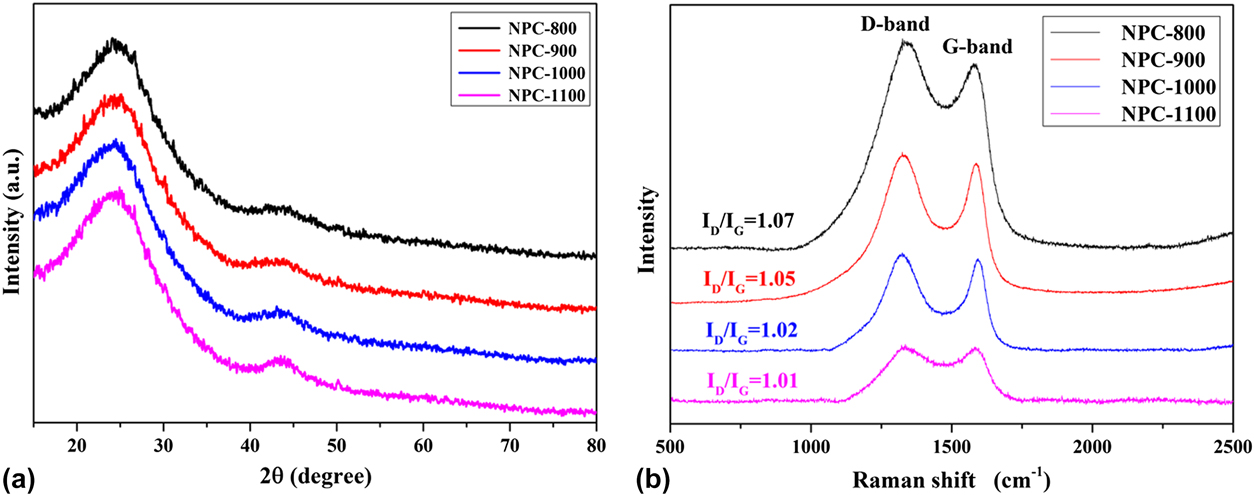
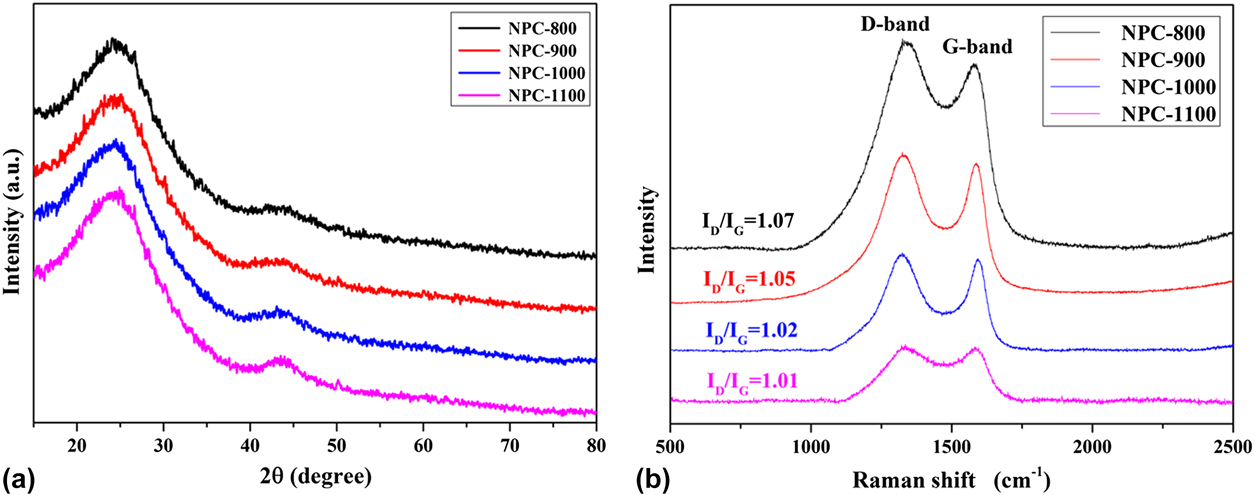
Figure 1(a) shows X-ray diffraction (XRD) patterns of the final obtained NPCs (800–1000 °C). The samples display peaks at the 2θ of 24 and 43°, corresponding to the (002) and (100) diffraction peaks of graphite, respectively, indicating some degree of graphitized structure in these materials.Reference Zheng, Li, Xu, Wang, Liu, Duan, Ma, Zhou and Pei6,Reference Wei, Zhang, Huang, Wang, Xia and Yu14,Reference Panchakarla, Subrahmanyam, Saha, Govindaraj, Krishnamurthy, Waghmare and Rao28,Reference Yang, Zhou, Li, Zou and Tang29 The effect of temperature on carbonization degree was also confirmed by Raman test of the porous carbon. Figure 1(b) exhibits two main characteristic peaks located at approximately 1350 cm−1 (D-band) and 1590 cm−1 (G-band), owing to the defects and disorder-induced structures in the graphite layers of carbon materials and the vibrations of carbon atoms with sp 2 electronic configuration in graphite sheet structure, respectively.Reference Yi, Li, Hu, Li, Zhou, Xu, Lei and Hao30 Generally, amorphous carbon contains lots of defects and vacancies, which would not only promote the diffusion of lithium ions but also provide more reversible sites for Li+ storage, contributing to the whole capacity.Reference Skowronski, Knofczynski and Inagaki31,Reference Yang, Zhou, Zou and Tang32 The results show that the intensity ratio of the two bands (I D/I G) successively decreased from NPC-800 to NPC-1000, indicating the graphitization degree sequentially increases.
XRD patterns (a) and Raman spectrum (b) of the prepared NPCs with different graphitization temperatures.
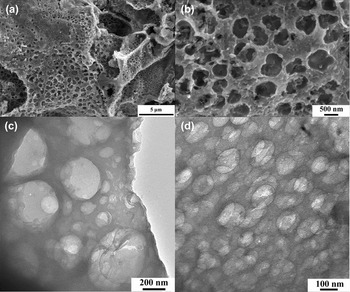
Morphologies of the NPCs were observed by SEM and TEM measurements. As shown in Figs. 2(a) and 2(b), the SEM images revealed that NPC-1000 possessed a porous structure with a large number of small and regular nanopores. The TEM images in Figs. 2(c) and 2(d) show the different brightness of circles and their overlapped shapes, which indicated that the pores in the sample were in different layers and the pores were interconnected with the neighboring pores. The nanostructure possesses a high interfacial area, which is essential to obtain high specific capacity.Reference Yang, Zhou, Li, Zou and Tang29,Reference Yi, Li, Hu, Li, Zhou, Xu, Lei and Hao30 The pores also possessed different diameter sizes from 100 to 500 nm, confirming that the porous structure in the sample was successfully formed. In contrast, other carbonized samples displayed more irregular shapes and sizes (Fig. S1, in Supplementary Material). The surfaces of NPC-800 and NPC-900 exhibited no obvious holes on them, whereas NPC-1100 exhibited continuously inter-connected porous framework. Therefore, we could conclude that the porous structure was gradually formed as the temperature increased, until the carbonization–activation process destroyed the morphology.
SEM (a, b) and TEM (c, d) images of the prepared NPC-1000.

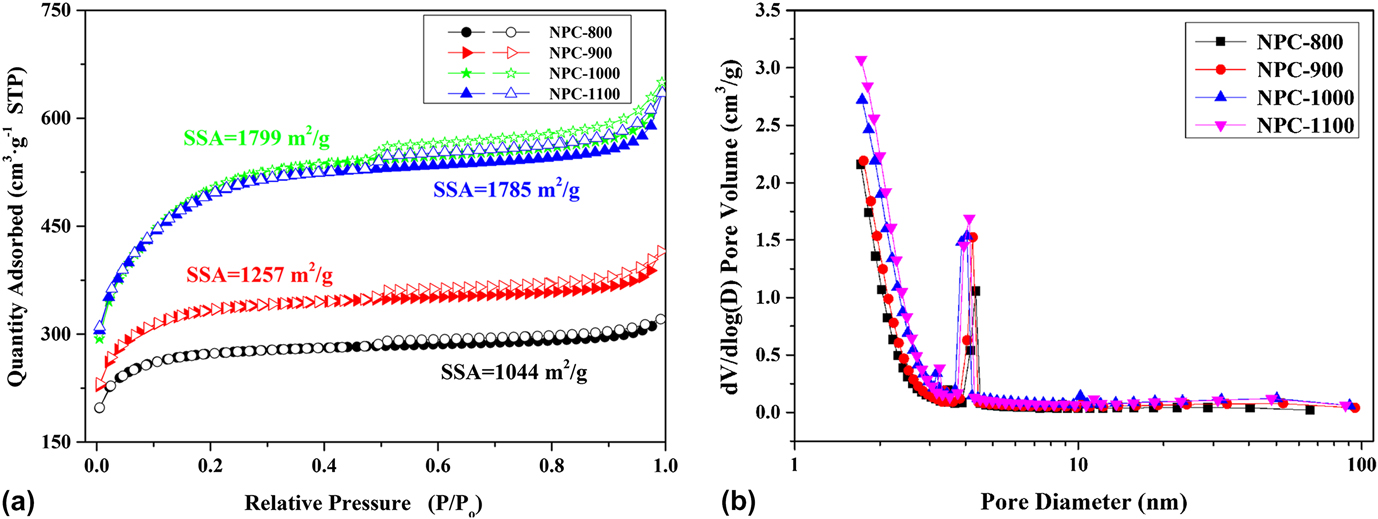
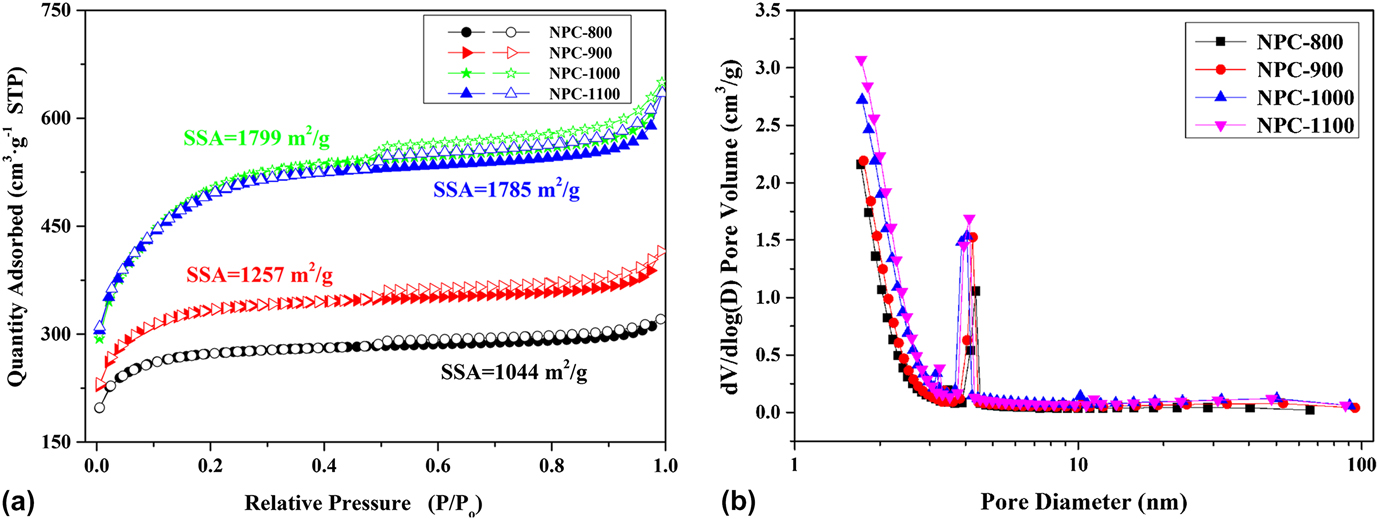
To further investigate the porous structure of NPCs, N physisorption isotherms were measured. Figures 3(a) and 3(b) show the N sorption isotherms and the pore size distributions of the prepared NPCs. In Fig. 3(a), every isotherm exhibits a type IV isotherm according to International Union of Pure and Applied Chemistry at the relative pressure range from 0.4 to 1.0, which indicates the presence of a pore size range from micropores to macropores in the composites. This was confirmed by the pore size distribution curves in Fig. 3(b), indicating a larger number of mesopores present in NPCs. The pore sizes from N adsorption analysis were in good agreement with those determined from SEM measurements. As expected, there is an increase in BET-specific surface area and pore volume of the prepared NPCs with increasing graphitization temperature, which resulted from the production of abundant gas that could contribute to further porosity development through carbon gasification (Table S1, in Supplementary Material).Reference Wei, Zhang, Huang, Wang, Xia and Yu14 The specific surface area (SSA) and total pore volume of the as-prepared NPCs increased from 1044 to 1799 m2/g and from 0.4 to 1.01 cm3/g, respectively, with the increase in graphitization temperature from 800 to 1000 °C. Further increase of the temperature from 1000 to 1100 °C led to slight decrease of the surface area and pore volume of the NPCs, resulting from the disintegration of the porous structure. The high specific surface area could lead to the high density of active sites present in the porous carbon and benefit to the diffusion of lithium ion.Reference Skowronski, Knofczynski and Inagaki31,Reference Yang, Zhou, Zou and Tang32
N2 sorption isotherms (a) and the corresponding pore size distribution curves (b) of the prepared NPCs with different graphitization temperatures.
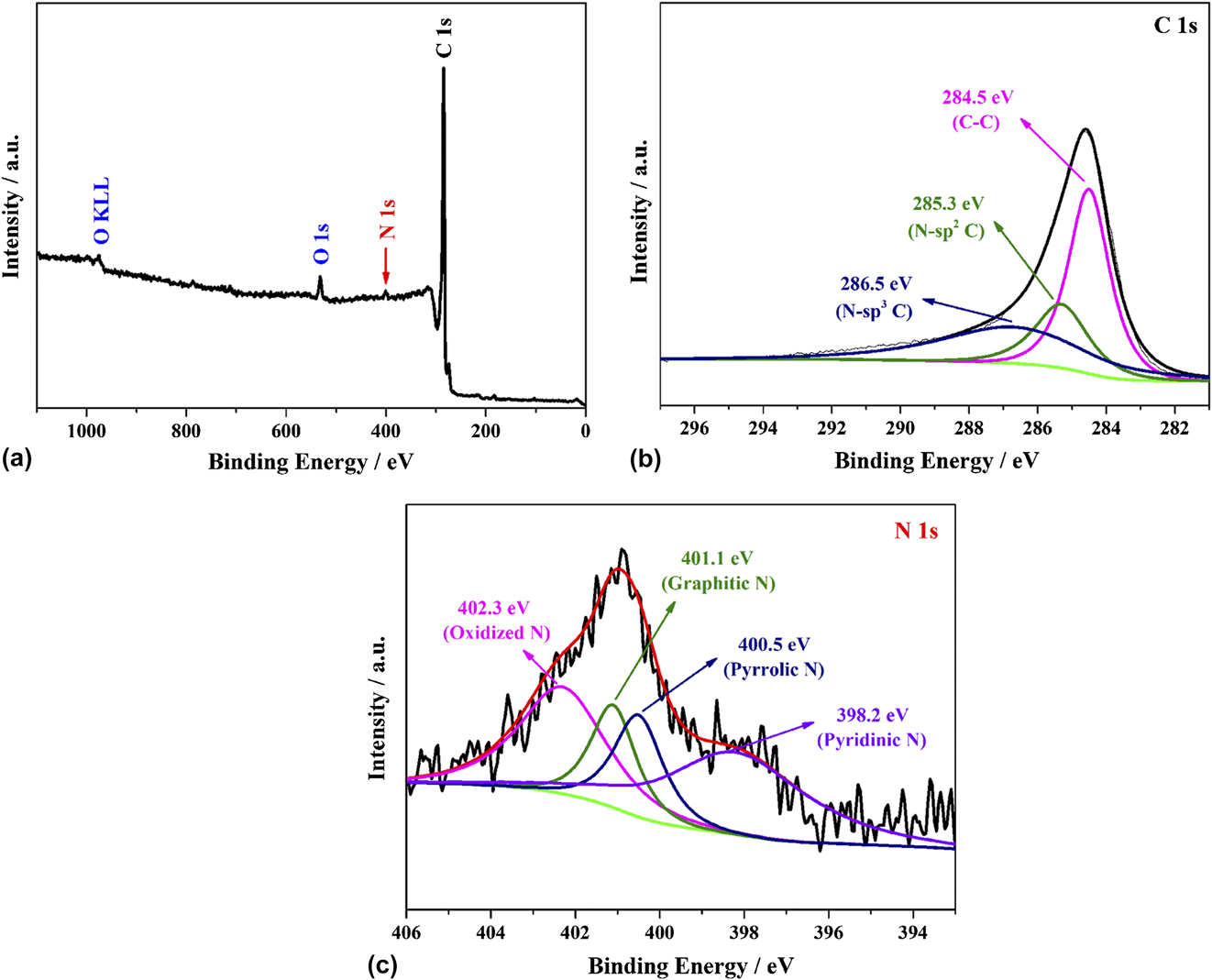
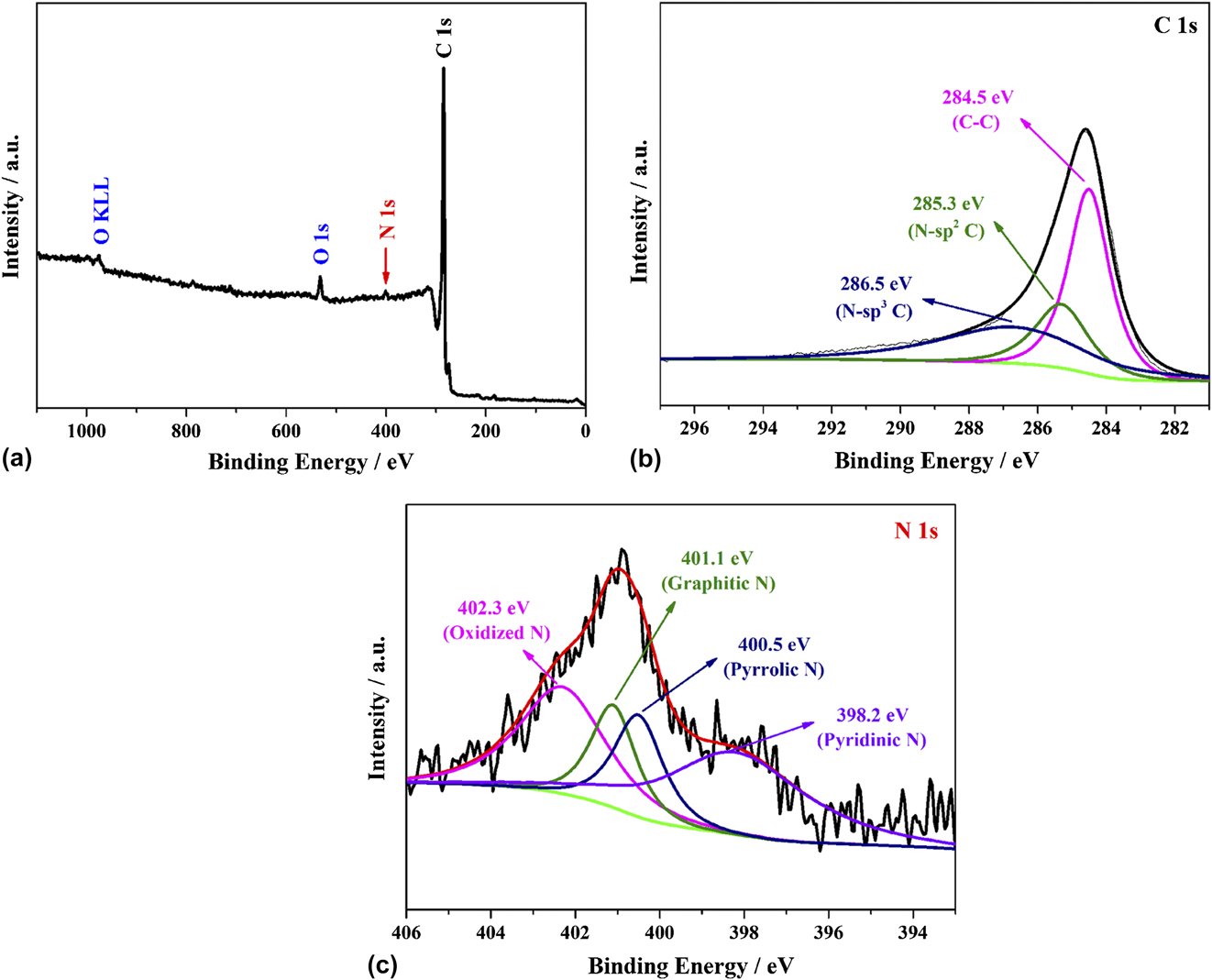
The nature of the chemical bonds close to the surface of NPC-1000 (<5 nm) was analyzed by XPS. As shown in Fig. 4(a), the XPS spectra exhibited the presence of the C 1s peak at 284 eV, O 1s peak at 532 eV, and N 1s peak at 400 eV without any other impurities. Furthermore, the C 1s spectrum ranging from 280 to 295 eV is shown in Fig. 4(b). After careful deconvolution and fitting of C 1s, the spectrum suggested three individual peaks centering at approximately 284.5 eV (sp 2 C–sp 2 C), 285.3 eV (N-sp 2 C), and 286.5 eV (N-sp 3 C).Reference Hu, Xiao, Zhao, Chen, Zhang, Cao and Qu33–Reference Reddy, Srivastava, Gowda, Gullapalli, Dubey and Ajayan35 Furthermore, a small peak located at around 400 eV corresponding to N 1s was found in the full XPS spectrum of NPC-1000, indicating the formation of N-doped carbon matrix. During the carbonization process, different bonds were formed between carbon and N atoms with various binding energies [402.3 eV of oxidized N, 401.1 eV of graphitic N, 400.5 eV of pyrrolic N, and 398.2 eV of pyridinic N, as Fig. 4(c) shown], which played pivotal roles in improving the lithium storage performance.Reference Wang, Wang, Li, Wan and Duan36–Reference Zhou, Wang, Zeng, Li, Shen, Chang and Duan38 The result of the elemental analysis also indicated that the prepared NPC-T samples consisted mainly of carbon with small amount of oxygen and N. XPS results showed that the at.% of N in the prepared NPCs can be reached 4.21%. It is well known that N doping could improve the electric conductivity of carbon-based material and thus enhance the electrochemical performance.Reference Wu, Ren, Xu, Li and Cheng19,Reference Zhu, Wang, Du, Jin, Zhang, Cheng and Chen39
XPS spectra of the survey scan (a), C 1s (b), and N 1s (c) region of the NPC-1000.
B. Electrochemical properties of NPCs as anode material in LIBs
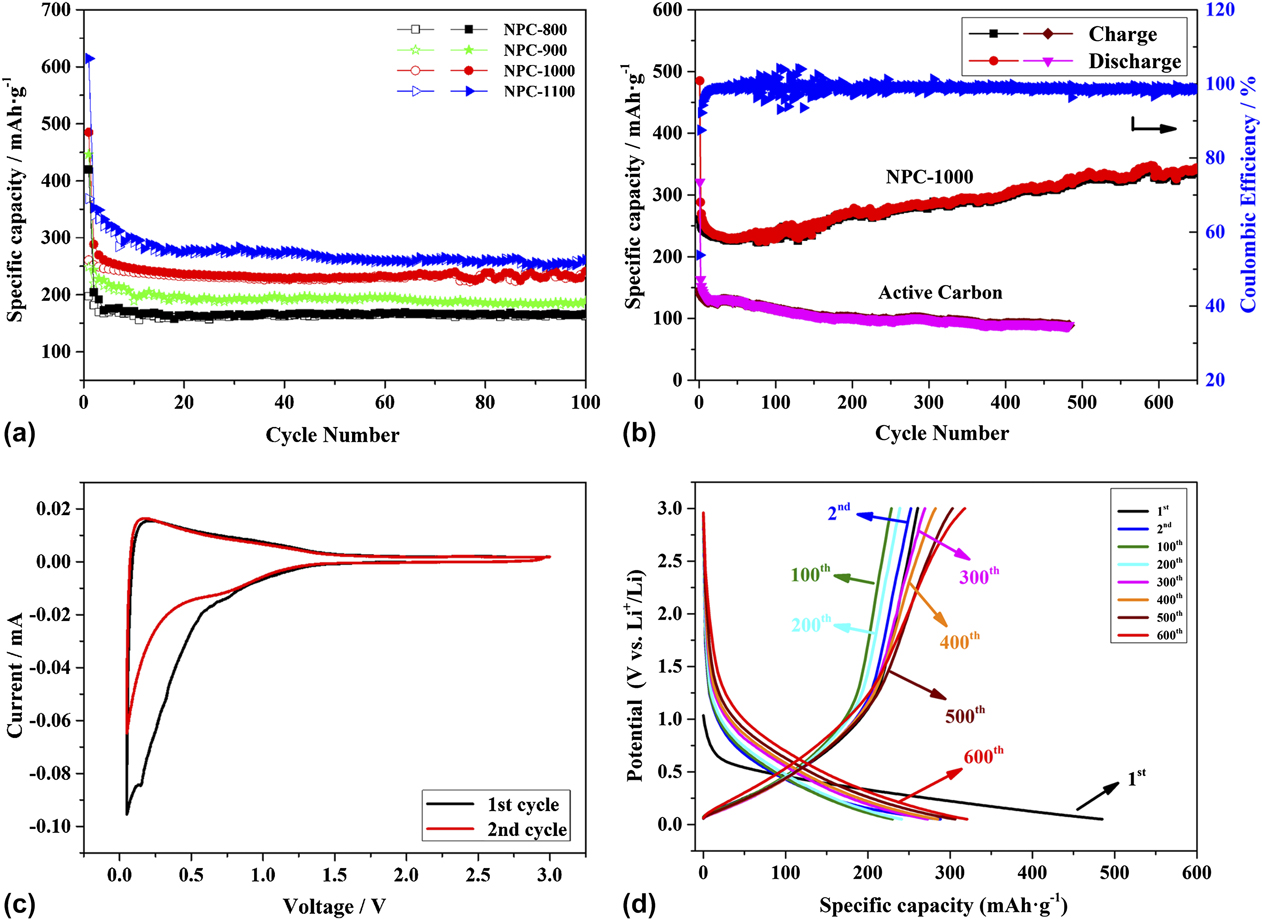
To elucidate the electrochemical performance of N-doped porous carbon, NPCs were studied as anode materials for LIBs. As shown in Figs. 5(a) and 5(a) stable reversible capacity of NPCs can be retained and close to their theoretical capacity at a constant current density of 100 mA/g after 100 cycles, and the specific capacity of the NPC-1000 also shows an increasing tendency compared with other samples. The higher charge capacities and cycle lifetimes of the NPC-1000 indicate that the perfect porous structure could act as good electrical conductors with excellent stress-buffer nature for Li+ transportation.
Electrochemical cycling performances of samples were measured over the potential window of 0.05–3.0 V versus Li+/Li (a, b). CV curves (c) and galvanostatic charge–discharge profiles (d) of the NPC-1000.
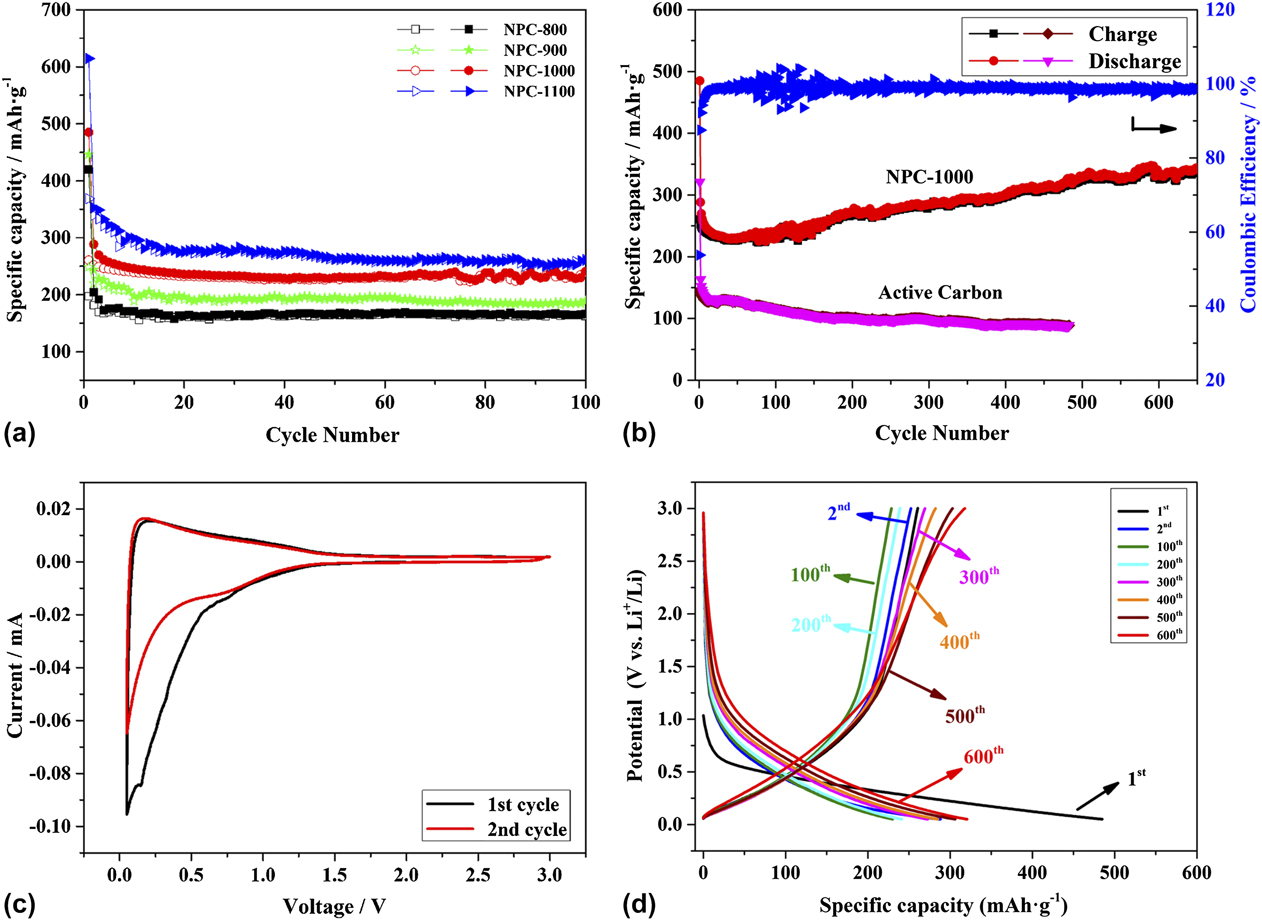
Figure 5(b) shows the cycle performance of the NPC-1000. The first discharge and charge capacities of the NPC-1000 were 484 and 260 mA h/g, respectively, with an initial coulombic efficiency (CE) of 54%. During the first discharge process, the formation of the solid electrolyte interphase (SEI) films consumed some lithium ions. The irreversible capacity loss is mainly resulting from the partial decomposition of SEI films and the electrolyte, which is common for the most anode materials.Reference Hu, Adelhelm, Smarsly, Hore, Antonietti and Maier40,Reference Qie, Chen, Wang, Shao, Li, Yuan, Hu, Zhang and Huang41 Specifically, the average CE quickly increased to 87% at the second cycle and remained above 98% in the following cycles, which was mainly due to the formation of stable SEI films on the composite electrode. Moreover, the NPC-1000 still maintained a specific reversible capacity of 340 mA h/g after long-term cycling over 650 cycles, suggesting that N doping could adapt the Li+ intercalation by introducing active binding sitesReference Wu, Jiang, Wan, Fang and Jiang22,Reference Li, Zhou and Wang42 and enhance the capacity.Reference Bruce, Scrosati and Tarascon43 In Fig. 5(c), it shows the CV curves of the NPC-1000 at a scan rate of 0.1 mV/s. The broad cathodic peak at about 0.75 V also indicated the formation of SEI films and the preliminary decomposition of electrolytes, matching well with the charge/discharge profiles [Fig. 5(d)].Reference Kim, van Duin and Shenoy44 A typical peak close to 0 V was observed resulting from Li+ intercalation into the carbonaceous anode material.Reference Bulusheva, Okotrub, Kurenya, Zhang, Zhang, Chen and Song17,Reference Su, Zhou and Shen34,Reference Qie, Chen, Wang, Shao, Li, Yuan, Hu, Zhang and Huang41,Reference Li, Geng, Zhang, Meng, Li and Sun45
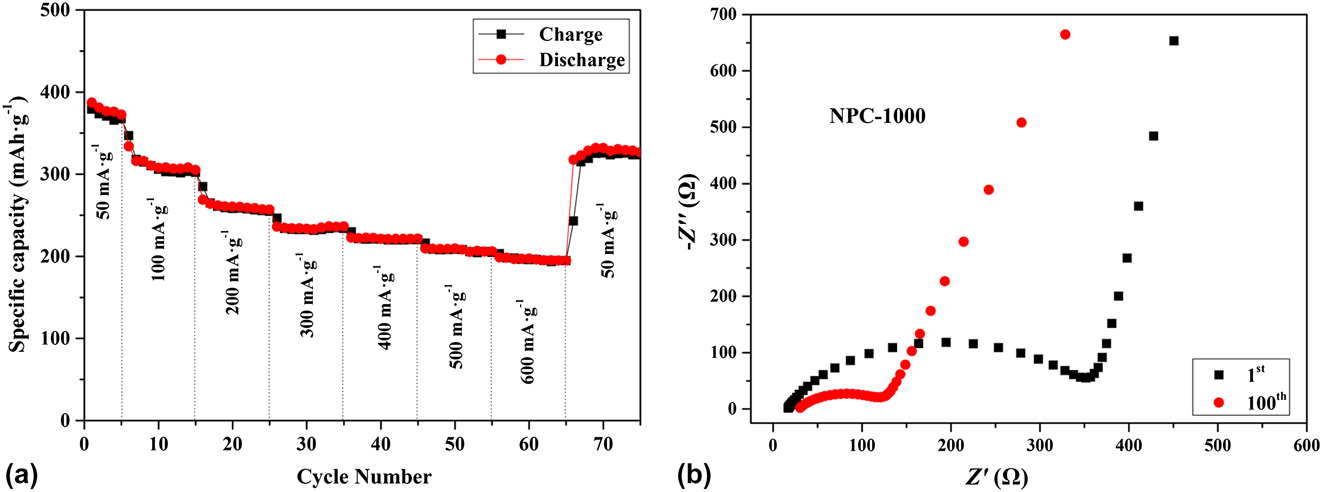
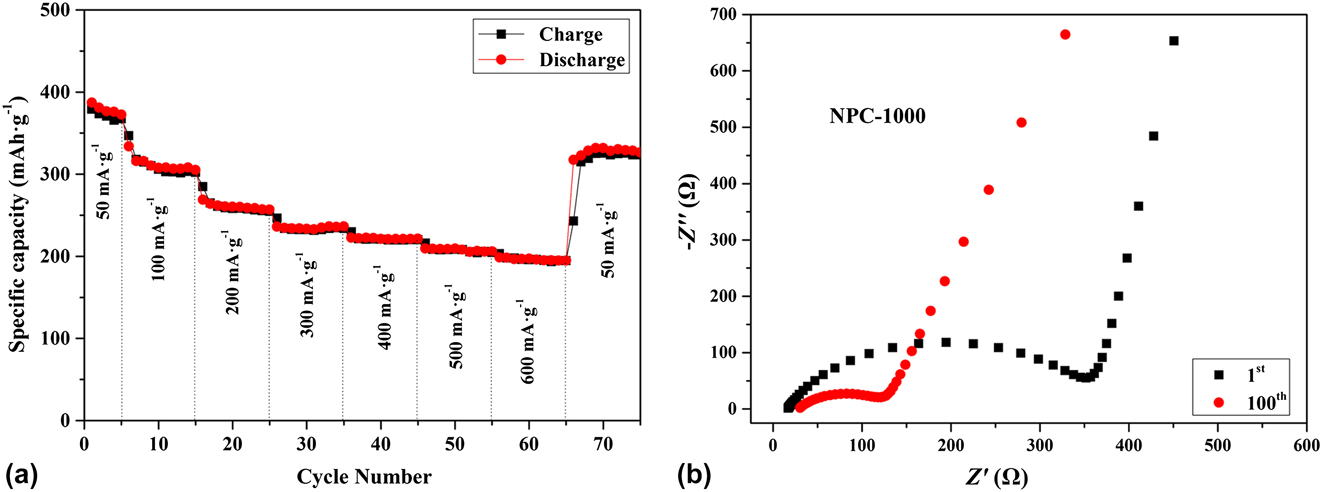
Figure 6(a) depicts the rate performance of the NPC-1000. The reversible capacity at a low rate of 50 mA/g was about 370 mA h/g and then decreased moderately with increasing current density. Even at a high current density of 600 mA/g, this cell shows a reversible capacity of 200 mA h/g after being continuously cycled dozens of times at various rates. Besides, the capacity recovered close to the original values when the current density was brought back to 50 mA/g, indicating that the unique structure could maintain the integrity of the electrode and thus withstand to various charge and discharge currents. The superior rate capability of the NPC-1000 should be owing to the combination of the high electric conductivity provided by N-doped carbon matrix and the short diffusion path for both electrons and ions offered by porous carbon network structure. The interconnected pores of the porous carbon supply a fast path for lithium ion transportation in electrodes and large surface for the charge transfer of lithium insertion/extraction reaction, which are the important factors for rate performance.Reference Ji and Zhang46 The fast kinetics of lithium ion insertion/extraction can be confirmed by the results obtained from EIS measurement [Fig. 6(b)]. The wetting of the electrode could be improved with an increase of the cycle due to aging and continuous electrochemical interaction, leading to diminished charge transfer resistance. Apparently, the semicircle diameter of NPC-1000 electrode after 100 discharge/charge cycles was smaller than that of the first cycle, implying that the NPC-1000 electrode exhibits faster charge transfer during the electrochemical lithium insertion/extraction reaction and thus result in significant improvement of the rate performance.
Rate capacity (a) and Nyquist plots (b) of the NPC-1000 as well as that after 100 charge–discharge cycles.
C. NPCs acted as substrate for loading Co3O4
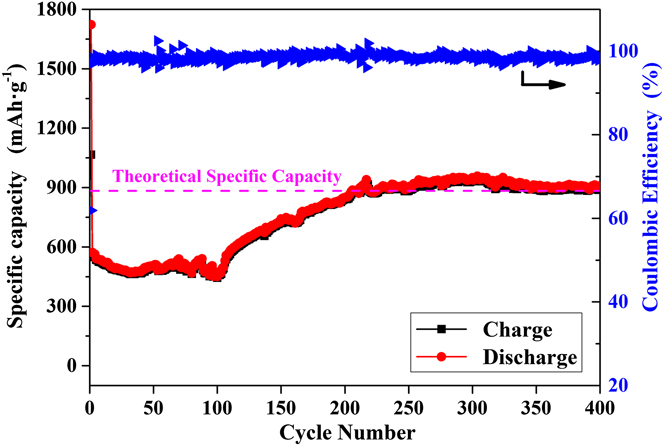
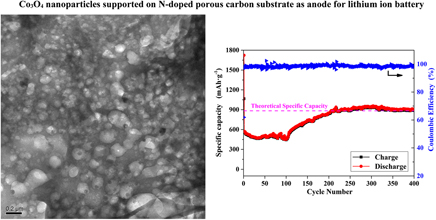
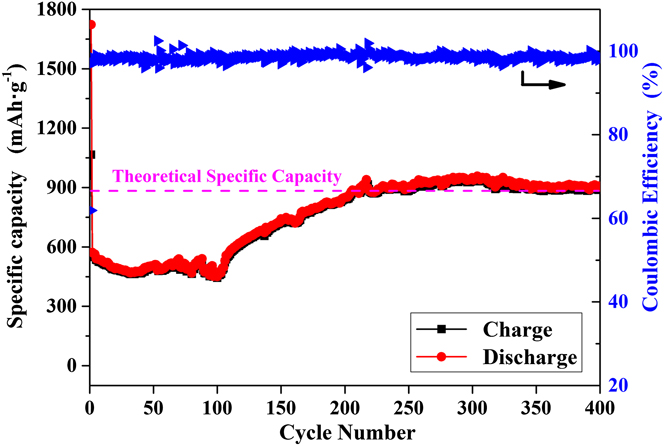
We further examined the cycling property of Co3O4/NPC-1000 composite prepared at different mass ratio calculated based on the total composite weight. The Co3O4/NPC-1000 mass ratio was varied as 1:2, 2:3, 1:1, 3:2, and 2:1 to optimize the lithium storage performance, which were named Sample X (X = 1, 2, 3, 4, and 5), respectively. The results of specific capacities of the lithium storage using Co3O4/NPC-1000 anode materials prepared at different mass ratio calculated based on the total composite weight demonstrated that the optimum blending ratio was 1:1 (w/w) (Fig. S2, in Supplementary Material). As shown in Fig. 7, the initial discharge and charge specific capacities were 1723 and 1066 mA h/g, respectively. The irreversible capacity should be mainly owing to the formation of SEI films. During the first 100 charge–discharge processes, the Co3O4/NPC-1000 composite delivered a stable reversible capacity of 528 mA h/g. And then the specific capacity showed slight increase to 903 mA h/g after 400 cycles. The capacity enhancement observed before 200 cycles is attributed to the appealing structure of porous carbon matrix with high electronic conductivity, ensuring good electrical contact among Co3O4 nanoparticles during Li+ intercalation/deintercalation processes.Reference Li, Zhu, Zhu, Yuan, Si and Qian23
Cycling performance and the CE of the Co3O4/NPC-1000 composite.
In addition, pure Co3O4 nanoparticles without the support of porous carbon were chosen as the reference group and compared their electrochemical performance with that of the Co3O4/NPC-1000 composite (Fig. S3, in Supplementary Material). To explain why the composite behaves with a better cycling stability than that of Co3O4 without porous carbon, we also compared the changes in the morphology of the composite before and after 100 cycles (Fig. S4, in Supplementary Material). These results indicate that the superior cycling performance of the Co3O4/NPC-1000 composite is highly dependent on its morphology and structures. The improved cycle performance of the composite suggested that large surface area could serve as dispersing medium to prevent cobalt oxide nanoparticles from aggregation and the porous structure could even provide strain relaxation for metal oxides during battery operation.
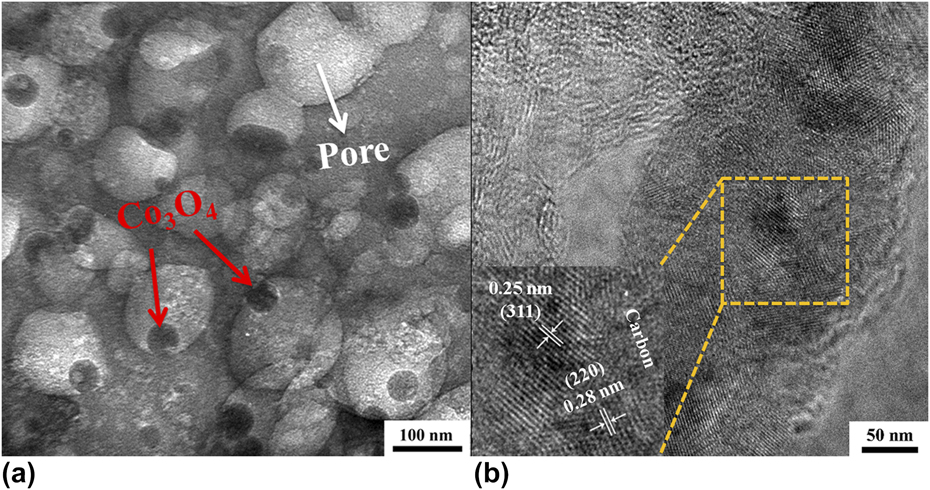
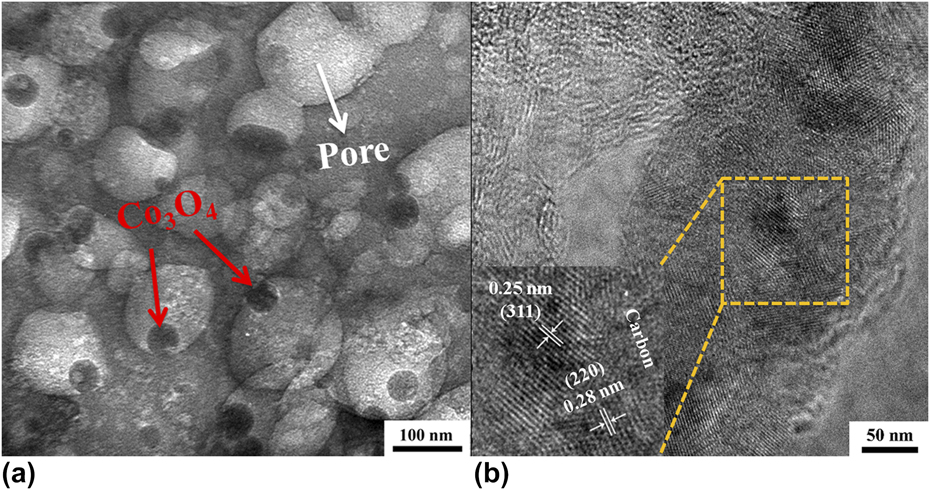
TEM analysis was performed on the as-prepared Co3O4/NPC-1000 to determine their microstructures. Figure 8(a) revealed that the sample was dominated by interconnected nanometer-scale agglomerations. The interplanar distance of Co3O4 nanoparticles was measured as 0.25 and 0.28 nm corresponding to the spacing of the (311) and (220) planes [Fig. 8(b)]. It can be noted that Co3O4 nanoparticles with uniform size were homogenously dispersed in NPC-1000 substrate. This unique structure enables Co3O4 nanoparticles maintain electrically by contacting with carbon components during cycling, keeping the integrity of the whole electrode.
TEM images of the Co3O4/NPC composite (a) and the crystal lattice of the corresponding selected area (b) in the inset.
IV. CONCLUSIONS
In conclusion, NPC with high surface area was successfully synthesized from biomass material via a facile, sustainable, green, and economical method and used as a superior anode material for longer cycle life LIBs. The high activation temperature causes the carbon material own large BET specific surface areas due to the formation of a huge number of nanopores, and the interconnected networks of porous carbon provide a convenient and accessible electron transfer pathway for electrolyte diffusion and lithium ions into the active phases. The largest BET-specific surface area (1799 m2/g) and perfect porous structure of carbonaceous material demonstrated that the optimal activation temperature is 1000 °C. It is confirmed that the NPC-1000 is an excellent anode material for high-performance LIBs because of its enhanced reversible capacity (340 mA h/g at 100 mA/g after 650 cycles), good cyclic performance, high CE (above 99%), and good rate capability. The excellent stable performance is probably owing to the unique porous structure, large specific surface area, and appropriate introduction of N into the carbonaceous material. Additionally, Co3O4/NPC-1000 composite with Co3O4 nanoparticles delicately dispersed in electrically conductive porous carbon was further prepared through a solvothermal method followed by a simple carbonization approach. As the anode material for rechargeable LIBs, Co3O4/NPC-1000 composite shows the specific capacity of 903 mA h/g after 400 cycles. Such a favorable electrochemical stability indicates that this NPC is promising to be used as substrate material for other electrode materials.
Supplementary Material
To view supplementary material for this article, please visit https://doi.org/10.1557/jmr.2017.329.
ACKNOWLEDGMENTS
This work was financially supported by the National Natural Science Foundation of China (Nos. 51503158 and 51503159) and the Fundamental Research Funds for the Central Universities (WUT: 2016IVA002).