


INTRODUCTION
Can grassroots interventions that increase contact between members of antagonistic groups reduce prejudice, discrimination, and conflict? In spite of a vast literature on social contact in psychology and political science, and an explosion of NGO-led contact interventions in conflict settings around the world, basic questions remain about the consequences of intergroup contact in deeply divided societies. Does cooperative contact between individuals from across a deep social cleavage lead to reductions in prejudice and discrimination? How intensive must social contact be to induce positive effects? Does contact affect all groups involved in social interactions equally?
We conducted a field experiment—the Urban Youth Vocational Training (UYVT) project—to test whether sustained contact in an educational setting can improve communal relations in a conflict-prone environment. The UYVT intervention brought together a random sample of Christian and Muslim young men from disadvantaged neighborhoods in Kaduna, Nigeria, a city that has experienced repeated episodes of severe communal violence, for sixteen weeks of computer training. Our experimental design examined whether intergroup social contact can reduce prejudice and discrimination in a context of deep animosity. This study applies field experimental methods to a normatively important goal, the reduction of violent conflict and the promotion of post-conflict stability in deeply divided societies.
To assess the impact of our intervention, we randomized (1) recruitment into the computer training program, (2) assignment to a religiously homogeneous or heterogeneous classroom, and (3) assignment to a coreligious or non-coreligious learning partner within the classroom. We measured prejudice through survey-based assessments of agreement with negative and positive stereotypes, and measured discrimination through two behavioral games embedded in our post-treatment survey: a dictator game and a destruction game. We find that though prejudice is resistant to change, intergroup contact can reduce discriminatory behavior: After the end of the training course, subjects assigned to heterogeneous classes discriminated significantly less against out-group members than subjects assigned to homogeneous classes. This suggests contact can change behavior even without attendant changes in entrenched attitudes.
We also present evidence suggesting a striking explanation for why subjects in mixed classes discriminate less than subjects in homogeneous classes. Mixed-class subjects do not actually discriminate much less after the end of the course than a third group of randomly assigned non-UYVT study participants. However, subjects assigned to homogeneous classes discriminate significantly more than these nonparticipants. This suggests opportunities for in-group bonding can heighten discrimination, and programs for mixed groups may be desirable not simply because they expose participants to out-group individuals, but because they reduce the time spent with in-group members. This insight has eluded much of the literature on social contact interventions, which focuses on comparing individuals in mixed and nonmixed contact environments and commonly neglects comparisons to subjects not exposed to the intervention. Our research design enables comparison of both contact treatments with non-UYVT participants.
Studying intergroup contact between young men in Kaduna, Nigeria advances our broader understanding of ethnic conflict and peacebuilding in several ways. First, Nigeria has been a flash-point for Christian-Muslim conflict since the 1960s. Ethnoreligious pogroms and reprisal attacks in 1966 killed as many as 30,000 civilians and displaced over one million people (McKenna Reference McKenna1969), Christian-Muslim riots have resulted in an estimated 10,000 deaths in riots in 2000, 2002, and 2011, and recent Boko Haram bombings and reprisals in 2012 and 2014 have killed hundreds. This history of violence has resulted in high levels of ongoing tension typical of ethnic conflicts. Second, religious riots since 2000 have led to extreme residential segregation in Kaduna and other Nigerian cities. This pattern of post-conflict spatial segregation can be found in urban conflict zones around the globe, including cities in Bosnia and Herzegovina, India, Iraq, Israel, Lebanon, Northern Ireland, and South Africa. By limiting intergroup contact, segregation may deepen already prejudiced attitudes developed over years of localized conflict (Glaeser Reference Glaeser2005). Understanding whether grassroots social contact interventions can alter prejudices and decrease discriminatory behavior in such contexts is a key piece in the puzzle of how societies can manage diversity and recover from large-scale communal conflict. Estimating the extent to which social contact has an independent effect on intergroup relations can help practitioners design more effective peacebuilding interventions.
This article begins by discussing the potential effects of intergroup social contact on prejudice reduction and peacebuilding, and questions the social psychology literature’s optimistic assessment of the contact hypothesis. It then reviews relevant features of the Nigerian context, our experimental design, and the type of social contact introduced in the UYVT program. We next present analyses of the effects of our intervention on intergroup attitudes (prejudice) and behavior (discrimination). Our data suggest that while out-group social contact does not affect prejudiced attitudes, it can meaningfully affect discriminatory behavior. The robust and significant effects of assignment to the UYVT intervention—a highly valued computer education program—demonstrate that overt peace education components of social contact interventions are not necessary to induce meaningful behavioral change. We conclude with implications for the design of social contact interventions and education-centered development programming in divided societies.
SOCIAL CONTACT, PREJUDICE, AND DISCRIMINATION
Scholarship linking intergroup contact and conflict behavior continues to draw heavily from the contact hypothesis, initially outlined in Gordon Allport’s The Nature of Prejudice (Reference Allport1954). The hypothesis posits that interpersonal contact between individuals from hostile groups, if structured within a cooperative and egalitarian framework, should reduce prejudice, promote friendships across a social divide and, as a result, improve intergroup relations. For Allport, the behavioral stakes of prejudice were high. His work suggested that prejudice could lead to a range of pernicious behaviors, including out-group avoidance, discrimination, and physical attacks across group lines. The contact hypothesis has been viewed as a promising policy tool to curb prejudice and intergroup hostility for decades, beginning with its application to school desegregation in the United States in the 1950s (Paluck, Green, and Green Reference Paluck, Green and Green2018).
In spite of the staggering volume of empirical research Allport’s hypothesis has inspired (e.g., Turner, Hewstone, and Voci Reference Turner, Hewstone and Voci2007; Pettigrew and Tropp Reference Pettigrew and Tropp2006; Gibson Reference Gibson2004; Pettigrew Reference Pettigrew1998; Amir Reference Amir1969), findings are often difficult to interpret. Many studies link levels of self-reported cross-group interaction in daily life with self-reported levels of prejudice (e.g., Dixon et al. Reference Dixon, Durrheim, Tredoux, Tropp, Clack and Eaton2010; Semyonov and Glikman Reference Semyonov and Glikman2009; Cehajic, Brown, and Castano Reference Cehajic, Brown and Castano2008). While suggestive, these studies face a potentially severe selection problem: prejudiced people may deliberately avoid contact with members of other social groups. Furthermore, participant awareness of the purpose of the study can result in inaccurate self-reporting about prejudice.
To minimize reporting bias, researchers often focus on behaviors, such as electoral support for extremist parties (Kopstein and Wittenberg Reference Kopstein and Wittenberg2009), but only experimental methods can fully overcome the selection problem. Studies addressing both selection and reporting bias take place in rarefied contexts—such as higher education (e.g., Carrell, Hoekstra, and West Reference Carrell, Hoekstra and West2015; Shook and Fazio Reference Shook and Fazio2008; Van Laar et al. Reference Van Laar, Levin, Sinclair and Sidanius2005) or outdoor education programs (Green and Wong Reference Green, Wong, Borgida, Federico and Sullivan2008) in wealthy democracies—far removed from the explicit intergroup animosity found in conflict settings. Two experimental studies address social contact in contexts where expressing prejudice is socially acceptable. Burns, Corno, and La Ferrara (Reference Burns, Corno and La Ferrara2015) find reductions in racial bias among South African university students randomly assigned to noncoethnic roommates, while Barnhardt (Reference Barnhardt2009) finds less prejudice among residents of religiously diverse public housing in India. These studies offer important contributions, but differ from ours in the populations they address. South African university students represent an elite group whose members likely differ in important respects from our own sample of disadvantaged youth in conflict-prone Nigerian neighborhoods, while Barnhardt’s (Reference Barnhardt2009) sample focuses on female heads of household, a group unlikely to participate in communal violence. Reacting to these challenges, recent reviews (Paluck, Green, and Green Reference Paluck, Green and Green2018; Paluck and Green Reference Paluck and Green2009b) express concern about the dearth of high-quality field experimental studies on intergroup contact and prejudice.
The question of how social contact across conflict lines works to reduce prejudice and discrimination has received less attention (Green and Seher Reference Green and Seher2003). A recent meta-analysis suggests three channels (Pettigrew and Tropp Reference Pettigrew and Tropp2008). First, as Allport originally suggested, social contact across cleavage lines may reduce prejudice by increasing knowledge about the out-group and revealing negative stereotypes to be false. Second, it may reduce anxiety about encounters with out-group members. Third, contact may result in increased empathy and perspective-taking. Existing literature implies that the “dosage” of contact necessary to reduce prejudice may be relatively high, with more intimate contact leading to larger changes in attitudes (Carrell, Hoekstra, and West Reference Carrell, Hoekstra and West2015; Gibson and Claassen Reference Gibson and Claassen2010; Turner, Hewstone, and Voci Reference Turner, Hewstone and Voci2007; Pettigrew and Tropp Reference Pettigrew and Tropp2006). Our study evaluates these mechanisms and leverages varying dosages of out-group social contact.
In addition to fundamental questions about internal validity, the applicability of existing findings to conflict environments remains an open question. Episodes of intergroup violence may increase the salience of identity cleavages and harden prejudices against the out-group (Fearon and Laitin Reference Fearon and Laitin2000; Kaufmann Reference Kaufmann1996; Posen Reference Posen1993). Ongoing violence produces more rigid boundaries between ethnic groups (De Waal Reference De Waal2005), and can lead individuals to fear the physical proximity of members of the other group (Beber, Roessler, and Scacco Reference Beber, Roessler and Scacco2014; Fearon and Laitin Reference Fearon and Laitin2000). Social psychologists have highlighted processes through which children socialized into a culture of prejudice resist, sometimes unconsciously, challenges to deeply ingrained stereotypes and are unlikely to update negative beliefs without considerable effort and motivation (Devine et al. Reference Devine, Plant, Amodio, Harmon-Jones and Vance2002; Devine Reference Devine1989; Fiske Reference Fiske, Uleman and Bargh1989). Longstanding intergroup conflict further complicates this process, as exposure to violence and socialization by family members and community-level institutions sustain animosity toward the out-group as part of an ever-present socio-psychological “repertoire” of conflict-related fears and grievances (Bar-Tal and Avrahamzon Reference Bar-Tal, Avrahamzon, Sibley and Barlow2016).
Prejudice may not be as responsive to social engineering in the wake of serious conflict, as demonstrated in a carefully designed study involving prolonged exposure to a reconciliation radio program in Rwanda (Paluck and Green Reference Paluck and Green2009a) and a more recent intervention using radio programming in a context of ongoing violence in the Democratic Republic of the Congo (Bilali and Staub Reference Bilali, Staub, Sibley and Barlow2016). Observational evidence from Jerusalem suggests that when tensions are high, increased intergroup interactions can actually increase the probability of violence (Bhavnani et al. Reference Bhavnani, Donnay, Miodownik, Mor and Helbing2014). Similarly, Voigtländer and Voth (Reference Voigtländer and Voth2012) trace the persistence of anti-Semitic prejudice and violence across generations in Europe. It is reasonable to question whether short-term interventions can reduce prejudices developed over years of intergroup conflict and reinforced by ongoing violence.
Social contact may also affect discriminatory behavior, though few studies explicitly make this link. Research on discrimination in OECD labor and housing markets (Kaas and Manger Reference Kaas and Manger2012; Ahmed and Hammarstedt Reference Ahmed and Hammarstedt2008; Bertrand and Mullainathan Reference Bertrand and Mullainathan2004), attitudes about granting citizenship to immigrants in Switzerland (Hainmueller and Hangartner Reference Hainmueller and Hangartner2013), and variation in taxi fare offers in Ghana (Michelitch Reference Michelitch2015) make clear that discrimination against members of minority groups is widespread in public life. Intergroup discrimination may be both pervasive and more damaging in conflict and post-conflict societies. Behavioral games have been used to identify discriminatory behavior in the form of lesser generosity toward ethnic out-group members in the Balkans (Mironova and Whitt Reference Mironova and Whitt2014; Whitt and Wilson Reference Whitt and Wilson2007) and Israel (Fershtman and Gneezy Reference Fershtman and Gneezy2001), among noncopartisans in the United States (Iyengar and Westwood Reference Iyengar and Westwood2015), and to measure pro-social behavior in conflict and post-conflict environments such as Nepal (Gilligan, Pasquale, and Samii Reference Gilligan, Pasquale and Samii2014).
In one of the few studies to directly test the impact of intergroup social contact on discrimination, Carrell, Hoekstra, and West (Reference Carrell, Hoekstra and West2015) leverage random variation in the racial composition of assigned freshmen study groups at the U.S. Air Force Academy and identify a positive effect of intergroup contact on the probability of a white male cadet choosing a black roommate in his second year. Similarly, Malhotra and Liyanage (Reference Malhotra and Liyanage2005) find that (nonrandomly assigned) participants in a short-term Sri Lankan peacebuilding intervention were significantly more generous toward out-group members than nonparticipants.
Members of groups in conflict often live under de jure or de facto residential and social segregation. By limiting intergroup contact, segregation can intensify existing prejudices (Enos and Gidron Reference Enos and Gidron2016; Kunovich and Hodson Reference Kunovich and Hodson2002), limit cross-group trust (Kasara Reference Kasara2013), undermine cross-group cooperation (Alexander and Christia Reference Alexander and Christia2011), increase political participation due to fear of the out-group (Enos Reference Enos2016), and contribute to information failures that perpetuate cycles of conflict (Acemoglu and Wolitzky Reference Acemoglu and Wolitzky2014). Studies of ethnic violence reach similar conclusions. Conversely, military integration in the wake of ethnic warfare can decrease prejudice (Samii Reference Samii2013), and inter-ethnic networks decrease communal violence in India (Varshney Reference Varshney2003). Social contact interventions may contribute to building such networks. This literature suggests that examining social contact in the context of extreme residential and social segregation—as is the case in our study—is a hard test for the reduction of prejudice and discrimination.
Unpacking the relationship between prejudice, contact, and conflict has important implications for policy. Since Allport, practitioners have repeatedly attempted to use forms of positive social contact to improve intergroup relations. The past two decades have witnessed a rapid proliferation of grassroots peacebuilding initiatives in conflict environments around the world. The goal of these interventions is ambitious: societal transformation through microlevel attitudinal change across both sides of the social divide. Whether through mixed Jewish and Arab tango classes in Israel, gardening projects in the Palestinian territories, inter-ethnic soccer groups in the former Yugoslavia, reconciliation committees in Rwanda, or integrated Christian-Muslim basketball leagues in Nigeria, these interventions are driven by the premise that macrolevel peace and stability can be built from the ground up (Cárdenas Reference Cárdenas2013; Kuriansky Reference Kuriansky2007; Gasser and Levinsen Reference Gasser and Levinsen2004; Maoz Reference Maoz2000).
Contact-based peace education programs rarely collect systematic data about participant attitudes and behavior before or after the program, however, making it difficult to assess impact. Most NGO projects rely on convenience sampling and lack a control group. As a result, participants are likely to differ from nonparticipants in important ways. They may be especially open to new experiences, more cooperative, or less prejudiced against members of the out-group. Further, because most NGO-led projects bundle social contact together with peace education or diversity training, it is impossible to establish a causal relationship between social contact and outcomes. In the next section, we discuss how our intervention helps overcome these challenges to inference.
RESEARCH DESIGN
Although the core claim of social contact theory—that positive and equal-status social contact with members of the out-group should decrease prejudice—is widely applied in peacebuilding programs, to our knowledge, the theory has never been directly tested using an empirically rigorous field experiment in an ongoing conflict environment. Our study drew on best-practice sampling techniques to access hard-to-reach populations in conflict-prone areas, a randomized experimental design, and took multiple steps in survey design and implementation to minimize reporting bias. We conducted a baseline survey in August 2014, the UYVT computer course ran for sixteen weeks from September to December 2014, and we conducted an endline survey in January 2015.Footnote 1
Research Setting: Christian-Muslim Relations in Kaduna
Kaduna, a city of more than one million people, is the capital of Kaduna state, and sits at the crossroads of Nigeria’s predominantly Muslim North and predominantly Christian South. Religion is arguably the most salient social cleavage in contemporary Nigeria (Okpanachi Reference Okpanachi2010; Lewis Reference Lewis2007; Lewis and Bratton Reference Lewis and Bratton2000; Falola Reference Falola1998),Footnote 2 and is certainly the most salient social division in Kaduna state and Kaduna city, where it is reinforced by coinciding ethnic cleavages (Wapwera and Gajere Reference Wapwera and Gajere2017; Angerbrandt Reference Angerbrandt2011; Ibrahim Reference Jibrin1991).Footnote 3 Although ethnic and religious demography are controversial in Nigeria and no relevant census data exists, country experts estimate that Muslims comprise a slight majority in both Kaduna state and Kaduna city (Sani Reference Sani2007; Abdu and Umar Reference Abdu and Umar2002). While not as poor as Nigeria’s far North, Kaduna state is considerably less prosperous than southern Nigerian states, with higher levels of unemployment, lower average per capita household income, and worse performance across other socio-economic indicators (Nigeria National Bureau of Statistics 2012).
Survey responses from our study confirm the salience of religion in Kaduna. Among Muslims, 97% reported going to mosque five times daily in both the baseline and endline surveys. Similarly, 97% of Christian respondents in both surveys reported going to church at least weekly and over 93% cited a specific denomination. Furthermore, 98% of Muslims in our sample had received Koranic education and over 80% belonged to a Muslim brotherhood, a further commitment to one’s religious identity. These results reflect widely understood norms of religious participation to which young men in Kaduna overwhelmingly adhere.
Kaduna state is known internationally as a hotbed of violent interreligious conflict. Human Rights Watch estimates that as many as 10,000 people have been killed in such violence in the region since 1999 (Tertsakian Reference Tertsakian2005, Reference Tertsakian2003). In February 2000, deadly Christian-Muslim riots shook Kaduna. The fighting began after public debates about introducing Shari’a law into the Kaduna state criminal code. Although Shari’a provisions had long been incorporated into “personal” or domestic law for Muslims, the debate raised concerns that Shari’a would be imposed on Christian communities. The riots began when anti-Shari’a demonstrators passed through Kaduna’s diverse, crowded central market. Rioting lasted for four days, and was only put to rest through military intervention. A government commission of inquiry reported 1,295 deaths, but other sources suggest the numbers were far higher (Tertsakian Reference Tertsakian2003). In addition to the death toll, dozens of churches, mosques, and entire city blocks were burned to the ground. Conservative estimates suggest 125,000 people were temporarily displaced by the conflict (Angerbrandt Reference Angerbrandt2011).
Kaduna has experienced smaller-scale Christian-Muslim riots, in 2002 and 2011, and repeated Boko Haram attacks, including suicide bombings carried out against churches in Kaduna and the surrounding region in April and June 2012. The bombings killed 57 people, and at least 92 people died in Muslim-Christian clashes that ensued in the aftermath (Gambrell Reference Gambrell2012; Madu and Brock Reference Madu and Brock2012). The fatalities and destruction wrought by these events make them worthy of scholarly focus, and have drawn in dozens of local and international NGOs with an interest in conflict prevention and youth programming. These deadly conflicts have resulted in patterns of residential segregation that have further diminished interreligious social contact. Kaduna city is physically and symbolically divided by a river with few crossing points; Muslims live to its north, Christians to its south (Wapwera and Gajere Reference Wapwera and Gajere2017). Kaduna therefore offers an ideal research setting to study the effects of positively structured contact on intergroup relations.
Important socio-economic and political differences further divide Christians and Muslims in Kaduna. Our baseline survey data echoes existing evidence that Christians are, on average, better educated and wealthier than Muslims living in Kaduna (Angerbrandt Reference Angerbrandt2011). Muslims come from significantly larger households than Christians, with an average household size of 10.7 versus 5.6. Subjective measures of poverty paint a similar picture, with Christian respondents significantly less likely to view their households as “poor.’
In contrast, Muslims have held most senior political posts since the creation of Kaduna state in 1967. State governors in Nigeria control vast resources, making gubernatorial elections highly anticipated and often contentious. Only one of Kaduna’s 20 governors has been a Christian. The composition of the current Kaduna State House of Assembly (elected in April 2015) reveals a similar pattern; Muslims won 24 of the 34 seats and hold all key leadership positions. Descriptive representation has thus been highly uneven across religious groups. These socio-economic and political differences highlight the importance of treating Christians and Muslims as distinct participants in our experiment. Throughout our analysis, in addition to presenting aggregate results, we report separate results for the Christian and Muslim portions of our sample.
Survey and Sampling Design
The goal of our study is to make inferences about the effects of intergroup contact on individuals in conflict zones, not simply people who volunteer for peacebuilding programs. We therefore randomly selected study participants from among the residents of the poorest and most conflict-prone neighborhoods in Kaduna. Since it is typically young men who carry out violence, we restricted our sample to men aged 18 to 25.Footnote 4
Sampling proceeded as follows. First, we sampled neighborhoods. Since there are no official neighborhood-level data or administrative boundaries, we compiled a list of neighborhoods and their approximate boundaries using data from Scacco (Reference Scacco2016) and with the help of local NGO staff from our project implementation partner, Community Action for Popular Participation (CAPP). We included all neighborhoods within the Kaduna metropolitan area located within an hour’s commute of the centrally located UYVT course site. We then assessed neighborhoods on two dimensions: We used expert evaluations described in Scacco (Reference Scacco2016) to identify neighborhoods that had experienced violence in the past, and used enumerator field assessments to construct a poverty index. Finally, we selected the sixteen poorest neighborhoods from those that had experienced violence in the past.Footnote 5 We focused on poor neighborhoods because violence there is overwhelmingly due to clashes between local residents, as opposed to targeting that can occur in wealthier neighborhoods.
Second, we subdivided these neighborhoods into 46 enumeration areas (EAs), excluding any industrial areas, that enumerator teams could easily traverse each day. We set each EA’s sample size proportional to its density-weighted area, which we use as a proxy for population size in the absence of census data. We coded an area’s approximate density based on road penetration and the extent of open space, using aerial images from Google Maps and a 2011 government road map of metropolitan Kaduna.
Third, we randomly sampled study participants within EAs. Enumerators followed random walk instructions to select residential plots and used random number lists to select households within plots and subjects within households.Footnote 6 The surveys were introduced as studies of the impact of vocational training. At the end of the baseline survey, enumerators collected addresses and mobile numbers of friends and family members to help locate respondents for subsequent rounds of the panel, and then immediately separated this contact information from the main body of the survey to maintain respondent privacy.
Enumerators interviewed respondents at their homes for both the baseline and endline surveys. To minimize problems of reporting bias in questions about prejudice and discrimination, respondents filled in answers to these sensitive outcome measures themselves without enumerator observation. Our aim was to make it as difficult as possible for anyone other than the survey respondent to learn or guess answers to sensitive questions. While enumerators read questions aloud, respondents filled in simple answer bubble sheets themselves. When finished, they placed their answer sheets into a manila envelope containing other answer sheets (some of which were decoys). Once answer sheets were separated from the rest of the questionnaire and placed in the envelope, they could only be rematched to the rest of the questionnaire with a code key held by the study authors.Footnote 7 The survey contained no skip patterns that might help enumerators (or others outside of the survey) infer information about respondent answers.
Experimental Design
Our objective was to design an intervention to evaluate the effects of structured contact across the religious divide. With that goal in mind, the UYVT program offered sixteen weeks of computer training in a small-group setting to Christian and Muslim male youth. To assess the impact of our program on prejudice and discrimination, we introduced randomization at three levels: (1) recruitment into the training program, (2) assignment to a religiously homogeneous or heterogeneous classroom, and (3) assignment to a coreligious or non-coreligious learning partner within heterogeneous classrooms, as shown in Figure 1.
UYVT Experimental Treatment Arms

We randomly sampled a total of 849 young men between the ages of 18 and 25. Within this sample, 549 randomly selected subjects were invited to join the UYVT program and 300 served as a control group, participating only in the survey components of the study. Approximately one-third of the UYVT participants were assigned to religiously homogeneous classrooms, and the remaining two-thirds to heterogeneous classrooms. Within classrooms, UYVT participants were randomly assigned to a partner from their own or the other religious group, with whom they worked in close cooperation on course assignments and custom-designed partner activities. We also stratified classroom and partner assignment based on three additional demographic measures from the baseline survey to promote a positive social contact experience: prior computer experience, educational attainment, and prior out-group exposure, as measured by the frequency of out-group invitations to one’s home.
This article makes three primary comparisons, one at each level of treatment assignment outlined in Figure 1. These comparisons include UYVT assignment versus control (Groups A and B), class structure (religiously heterogeneous versus homogeneous class) within course assignment (Groups C and D), and partner type (coreligious or non-coreligious partner) within heterogeneous classrooms (Groups E and F). These three comparisons enable us to make inferences about average program effects, average out-group social contact effects, and high- versus low-dosage out-group social contact effects. In all our analyses, we estimate intent-to-treat (ITT) effects, which are conservative estimates of the magnitude of our treatment effects on those who complied with their treatment assignment.Footnote 8
Since the main goal of our study is to test whether social contact decreases prejudice and discrimination, our main comparison of interest is the heterogeneous versus homogeneous class assignment (Groups C and D). This comparison varies social contact while controlling for non-intergroup-contact-induced program effects. We include the Group A vs. Group B analysis for comparability to policy-oriented and other existing research. We summarize our core hypotheses and predictions below.
Hypothesis 1: UYVT assignment increases generosity (altruism).
There will be a positive program effect on generosity for respondents assigned to any arm of the UYVT program in comparison to the control group (Group A vs. Group B and its component subgroups C, D, E, and F).
Hypothesis 2: Out-group social contact reduces prejudice and discrimination.
Out-group social contact will lead to a decrease in prejudice and discrimination for respondents assigned to (1) any heterogeneous UYVT treatment arm in comparison to the control group (Group A vs. Group B and all component subgroups C, D, E, and F) and (2) any heterogeneous classroom treatment arm in comparison to homogeneous classroom assignment (Group C vs. Group D and its component subgroups E and F).
Hypothesis 3: Higher doses of social contact produce larger reductions in prejudice and discrimination.
There will therefore be an additional decrease in prejudice and discrimination for respondents assigned to heterogeneous pairs vs. homogeneous pairs within heterogeneous classrooms (Group E vs. Group F).
The UYVT Intervention
The UYVT training program structured participant interaction in a basic computer-skills class under the supervision of three experienced teachers, one Muslim and two Christian. Homogeneous classes were taught exclusively by a teacher from the same religion as the students. There were 30 course sections: 20 religiously heterogeneous and 10 homogeneous. Each section met twice weekly for a total of four hours per week over sixteen weeks. Students remained within the same classroom working with the same partner on a shared laptop for the duration of the course. The curriculum focused heavily on cooperative activities performed jointly by learning partners during each of 29 class sessions.Footnote 9 Course topics included basic knowledge of MS Windows, MS Office, and introductions to internet resources such as email, Skype, and free online educational content. Since over 40% of the sample had never previously used a computer, and two-thirds had previously used a computer less than once per week, this content was highly valued.
Class sessions were organized to maximize assigned partner interaction through fun, hands-on learning activities. At the beginning of each session, teachers lectured for approximately 30 minutes. The remainder of class time was devoted to partner work, with guidance from teachers. Partners designed flyers that could be used to advertise computer courses, computed FIFA and UEFA soccer team and country rankings, researched the West African Ebola crisis, and produced presentations on countries they would like to visit. To avoid reporting bias, students and instructors were not informed about the main purpose of our study, but instead experienced UYVT as an educational empowerment program targeting disadvantaged communities in Kaduna. By design, no component of the curriculum involved explicit prejudice-reduction or anti-violence messaging.
Our design incorporated incentives for UYVT participation to allow even the poorest students to attend class regularly. First, students acquired highly desirable computer skills necessary for office employment and higher education in Nigeria free of charge. Second, the course met only four hours each week, facilitating participation among students who were also working or in secondary school. Third, students who attended at least two-thirds of all sessions participated in a randomly drawn raffle to distribute the 25 laptop computers used in the course.Footnote 10 Fourth, the curriculum prioritized hands-on learning to keep students engaged. Fifth, students received a ₦200 (200 Nigerian Naira, equivalent to 1 USD) transport stipend after each class. This was important, as many students would not otherwise have been able to afford to reach the centrally located course site. Sixth, we implemented the course in partnership with microManna, the largest, most reputable computer retailer and training center in Kaduna. In a context where corruption and false advertising are common, this affiliation helped assure sampled participants that enumerators were offering a genuine program.
Given the heavy emphasis placed on learning partnerships in the course, it is important to confirm that this aspect of the UYVT treatment worked as planned. Did students ultimately get to know their partners well enough to constitute a meaningful test of the contact hypothesis? Data from student course evaluations and the endline survey strongly suggest that they did.Footnote 11 When asked about about their learning partners, 69% of UYVT students claimed to have gotten to know them “very well” (with 24% replying they had gotten to know their partners “well,” and only 8% claiming that they had gotten to know their partner “a little,” “not very well,” or “not well at all”). By comparison, 37% said they had gotten to know other students in their class very well. Taken together, these responses suggest that subjects took up treatment dosages in accordance with our study design—getting to know their partners best and other members of their class somewhat less well.
Course evaluations indicate that students had positive experiences with their partners, with 94% responding that they believed working with a partner facilitated learning.Footnote 12 Endline survey responses further suggest that UYVT students enjoyed their experience with their partners, with an impressive 92% responding that they had been in touch at least once since the end of the training course, and 88% reporting that they had saved their partner’s mobile number. In both the course evaluation and endline survey questions, responses were nearly identical from students in heterogeneous and homogeneous classes, suggesting that UYVT students across different experimental treatments experienced the training course as an enjoyable, high-quality educational program. Social contact under UYVT was cooperative, egalitarian and positive, providing opportunities to develop knowledge of the out-group, decrease anxiety around out-group encounters, and increase empathy and perspective-taking.
DATA
Prejudice and Discrimination Measures
Nearly all existing studies of social contact theory limit their hypothesis testing to changes in either attitudes or discriminatory behavior. While the implicit assumption is that prejudice reduction will lead to improved intergroup relations, that hypothesis generally remains untested. To address this knowledge gap, we measured both attitudes and behavior. The baseline survey excluded explicit questions about prejudice to avoid priming survey participants to the main purpose of our study. The post-treatment endline survey included prejudice and discrimination outcomes for all study subjects measured four to six weeks after the conclusion of the UYVT course. Online Appendix Table A.2 presents descriptive statistics for all variables analyzed in this article.
We follow the literature in defining prejudice as a set of negative beliefs about or attitudes toward an individual based solely on membership in a particular social group. To measure prejudice, we modified Likert scale survey questions that ask whether survey respondents agree with stereotypes. The questions were modeled after previous studies in psychology and political science (e.g., Gibson and Claassen Reference Gibson and Claassen2010; Paluck Reference Paluck2010; Hewstone et al. Reference Hewstone, Cairns, Voci, Hamberger and Niens2006), but designed to fit the Nigerian context.Footnote 13 Respondents assessed how well a list of adjectives described non-coreligious individuals in general, using both positive and negative attributes (asked with negative and positive attributes interspersed). We also asked respondents to identify where along a five-point scale they would place members of the out-group, with five being associated with the more positive attribute in each of three adjective pairs. We combined these responses into three indices, as shown in Table 1: a Negative Attributes Index, a Positive Attributes Index and an Out-group Evaluation Index.Footnote 14
Prejudice Indices Components

All three indices measure prejudice, and do not reflect separate underlying conceptual constructs. The negative attribute measures follow the majority of social psychology literature on prejudice. We incorporated positive attributes to ensure that the survey did not prime respondents, create bias, or promote a negative view of the UYVT intervention or the survey more generally by focusing only on negative descriptions of the out-group. Most importantly, we sought to allow respondents multiple opportunities to express prejudices across several widely used survey question types, given that prejudice can be expressed via both disagreement with positive stereotypes and agreement with negative ones (Brown Reference Brown2011). We modeled the out-group evaluation measures on feeling thermometers more commonly used in the political science literature. Distributions of all three indices are included in Online Appendix Figure A.4. To further examine prejudice, the survey also included questions to elicit the extent of knowledge about the out-group, anxiety about contact, empathy toward out-group members, and desire for cross-group friendships.
Discrimination occurs when treatment of others differs based solely on group affiliation. We measured discrimination through two behavioral games embedded in the endline survey: a dictator game and a destruction game. In the former, our measure is based on differential positive behavior (altruism), the latter measures differential negative behavior (destruction). Within behavioral economics, the dictator game has been utilized to measure altruism and norms of fairness (including discrimination), and we suggest that the destruction game is its mirror image.Footnote 15 Both behavioral games were administered privately at respondent households during the endline survey.
In the dictator game, participants chose how to divide ₦100 (about 0.50 USD) from a common pool with another randomly assigned survey participant. We primed respondents with the first name of this individual, taking advantage of a convenient aspect of Nigerian first names in Kaduna: that they clearly and unambiguously signal religious affiliation. Among those assigned to a UYVT class, we also indicated whether the named individual was a UYVT classmate.Footnote 16 This design ensures that respondents do not make assumptions, unbeknown to us, that all primed individuals were UYVT participants, and allows us to examine whether any changes in discrimination generalize beyond known members of the out-group, given that “person positivity bias” suggests that familiar others are treated more favorably than strangers (Sears Reference Sears1983). Each respondent played ten rounds of each game, and the order in which a UYVT-assigned respondent was matched with classmates versus other survey respondents was random. Respondents were informed that game play was non-reciprocal (for example, being asked to divide ₦100 with Abdullahi does not necessarily mean Abdullahi will be asked to divide ₦100 with you). This design mitigated concerns about retribution.Footnote 17
There was substantial variation in this measure, and the distribution was similar across Christian and Muslim respondents.Footnote 18 Respondents gave an average of 28% of their endowments to the recipient in each round of play, in line with the approximately 20% given in Camerer (Reference Camerer2003)’s meta-analysis of dictator game play (56–58), and the 23–29% given by respondents in Whitt and Wilson’s (Reference Whitt and Wilson2007) work in post-conflict Bosnia.
We designed the destruction game to mimic aspects of riot behavior, in which a potential participant obtains a small personal benefit at a larger cost to another person.Footnote 19 As in our prejudice indices, we elected to offer both positive and negative measures to elicit responses about discriminatory behavior. In the destruction game, we again prompted respondents with names of other survey participants. In each of ten rounds of play, the respondent was allocated one or two ₦50 notes, as were his assigned opponents. The subject could receive an additional ₦10 for each ₦50 bill he chose to destroy from the other person’s money. As in the dictator game, there was wide variation in game play with at least some destruction in 66% of rounds of play.Footnote 20 The distribution of responses was again similar across Christian and Muslim respondents.Footnote 21
Demographic Covariate Balance, Attrition and Compliance
In both the baseline and the endline surveys, we collected data on an extensive list of demographic, economic, social and community engagement, and personality-trait covariates. We used these data to perform a randomization check, stratify treatment assignment, and verify that enumerators had located the correct individuals in the endline survey. Our careful randomization process resulted in covariate balance between treatment and control groups, as shown in Online Appendix A.4, including, for example, with respect to the extent to which respondents reported having been affected by the most recent 2011 riots. Across 44 pre-treatment covariates, difference-of-means tests were only significant at the p < 0.1 level in two cases, a theoretical question about risk aversion and one of the sixteen neighborhoods, Narayi, in which a larger share of respondents were in the control group.Footnote 22
Completing the second round of a panel survey of disadvantaged young men in a developing country poses serious challenges. Mobile phone numbers frequently change, and residency may change within a five-month period. During the baseline survey, our enumerators interviewed 849 young men and distributed a small survey stipend to compensate them for their time and limit panel attrition. Our enumerators successfully located 795 of these men for the endline survey, resulting in a very low overall attrition rate of 6%. Because we were able to update contact information for course participants, the attrition rate was 4% among those assigned to the UYVT treatment and 10% within the control group.Footnote 23
At the conclusion of the baseline survey, respondents were assigned to either the UYVT treatment or the control group. If assigned to UYVT, respondents were offered the opportunity to participate in the course. At this time, they had not yet been assigned to any class schedule, class type (heterogeneous versus homogeneous), or partner type (same religion or different religion). Of the 549 participants assigned to treatment, 5 declined participation at the time of their survey interview. An additional 84 respondents never attended a single UYVT class session, resulting in a compliance rate of 84%. These noncompliers never knew if their class assignment would have been religiously mixed or homogeneous, that the course involved assignment to partners, or the religious identity of their partner. In fact, given that respondents were interviewed by members of their own religious group and the UYVT course site was located in the main commercial area in central Kaduna, respondents were not explicitly aware that they were being invited to a religiously mixed computer course. As such, those that did not comply with their treatment assignment did not refuse to avoid social contact with people of the other religion, or because they found the course experience to be unpleasant.Footnote 24
In the endline survey, enumerators were able to interview 71 of the 89 respondents assigned to treatment who never attended the course. 59% of nonattenders interviewed said they were too busy with work, school, travel, or family needs. Others cited the distance to the course site, the timing of UYVT classes, illness, and other logistical issues as reasons for nonattendance. A large majority (71%) of the noncompliers were Christian.Footnote 25
The UYVT course involved 29 class sessions over four months. On average, students who attended at least one class attended 76% (22) of their class sessions, offering ample opportunities to interact with assigned partners and other classmates. Figure 2 makes clear that only a small minority of students (12%) attended fewer than ten sessions. There are no statistically significant differences in attendance rates by teacher or class type. There is, however, a small but statistically significant difference in attendance by religion. On average, Christians attended 21 sessions and Muslims attended 23 sessions. Since students of both religious groups attended, on average, over two-thirds of all class sessions, both groups achieved high levels of contact. Furthermore, as shown in Figure 3, aggregate attendance dropped off very little over time after the first few class sessions.Footnote 26
UYVT Student Attendance

UYVT Attendance Over Time

Evidence from the post-intervention survey strongly suggests that the student absences should not be attributed to the quality of course content, teachers, or social contact. Not a single respondent cited anything negative about other students or teachers as a reason for missing UYVT class sessions. Others cited work, school, or family obligations. Among students who attended any classes, and therefore were aware of the social dynamics of the UYVT course, compliance with assigned treatment was sufficient to ensure that they received the social contact treatment. Further, given our ITT analysis, poor attendance, and thus a “weaker” treatment, biases against finding any effects of our intervention.
ESTIMATION
We estimate ITT effects for each of three levels of treatment in a between-subjects design: program assignment (UYVT versus control), class type assignment (homogeneous vs. heterogeneous) within the UYVT course, and course partner type (non-coreligious vs. coreligious) within religiously heterogeneous classes. All estimates are ordinary least squares (OLS) regression results in which the treatment indicator variables represent assignment to the UYVT course (UYVT), a heterogeneous classroom (Heterog. class), or a non-coreligious course partner (Heterog. pair), respectively. We were ex ante agnostic about the ways in which Christians and Muslims might be affected differently by these treatments, and we report results for the full sample as well as for Christian and Muslim subsamples.Footnote 27 For all analyses, we specify parsimonious empirical models, relying on our random sampling and treatment assignment to control for potential confounders.Footnote 28
We estimate the following specification for each of the three prejudice indices:
 $$\begin{equation}
Prejudice Index_i = \alpha + \beta _1Treatment_i + \varepsilon _i,
\end{equation}$$
where i represents a respondent, the Treatment variable represents UYVT assignment (vs. control), heterogeneous (vs. homogeneous) class assignment, and non-coreligious (vs. coreligious) partner assignment within heterogeneous classrooms.Footnote 29 All prejudice indices have been coded such that a positive estimated β1 indicates a reduction in prejudice.
Subjects played ten rounds each of the dictator and destruction games, so we cluster standard errors by respondent,Footnote 30 and we include round-of-play fixed effects in these analyses.Footnote 31 For each round of play, subjects were randomly assigned to another individual in the study, either an in-group or an out-group member.Footnote 32 Games were administered to each individual subject at the time of his survey interview, so subjects did not meet during game play, but were told others’ first names to prime religious affiliation. To see if the course treatments affect discrimination, we interact the treatment indicators with whether a subject was randomly assigned to play with a member of the in-group or the out-group via the following specifications:
 $$\begin{eqnarray}
Action_{i,r} &= & \alpha + \beta _1 Treatment_i + \beta _2 Treatment_i\nonumber\\
&& \times Play Out Group_{i,r}\nonumber\\
&& +\, \beta _3 Play Out Group_{i,r}\nonumber\\
&& +\, \gamma _r + \varepsilon _{i,r},
\end{eqnarray}$$
where Action represents the number of bills given (dictator game) or destroyed (destruction game), i represents a respondent, and r represents a round of play, the Treatment variable again represents assignment at the program, class, and pairs level, and γr are round-of-play fixed effects.Footnote 33 For the dictator game, a negative coefficient estimate for the Play out-group term β3 indicates discrimination in generosity, that is, fewer bills being given to out-group recipients. For the destruction game, a positive coefficient estimate indicates for β3 indicates discrimination in destructive behavior towards out-group members. In both cases, the interaction term β2 is our coefficient of interest. In the dictator game, positive coefficient estimates for the interaction coefficient β2 indicate a reduction in discrimination due to the treatment. In the destruction game, negative coefficient estimates for the interaction coefficient β2 indicate a reduction in discrimination.
RESULTS
Social Contact and Prejudice
First, we analyze data about respondents’ attitudes toward members of the out-group. While lab and field experimental evidence from the United States predicts that extended social contact with members of an out-group should reduce prejudice, our findings from highly conflict-prone Kaduna, where negative attitudes toward the out-group are entrenched, are less encouraging. Even in a positive educational setting—an environment with high rates of student satisfaction and one in which students overwhelmingly agreed they were being treated fairly and equally—we do not see significant reductions in prejudice due to either the UYVT program or social contact with the out-group. Power analysis examining our primary comparison of interest, homogeneous vs. heterogeneous class assignment, makes clear that these null results are not due to lack of statistical power.Footnote 34
Results are shown in Tables 2, 3, and 4. The Negative Attributes Index, Positive Attributes Index, and Out-group Evaluation Index all range from one to five and are coded such that higher values are desirable from the standpoint of intergroup reconciliation: they indicate agreement with positive attributes, disagreement with negative attributes, and positive evaluations of out-group characteristics. Tables 2 and 3 clearly indicate that none of our experimental treatments reduced prejudice in any meaningful way in either the combined or split samples. At the overall program level, among Christians, we observe two contradictory results: UYVT-assigned Christian respondents were less likely to agree with both negative and positive assessments of Muslims.Footnote 35
Prejudice Index, Negative Attributes (scale ranges from 1 to 5, larger values indicate more positive assessment)

All specifications are OLS regressions in which the treatment indicator variables represent assignment to the UYVT course (UYVT) vs. no course assignment, a heterogeneous classroom (Heterog. class) vs. a homogeneous classroom, or a non-coreligious course partner (Heterog. pair) vs. a coreligious partner within heterogeneous classrooms, respectively. Robust standard errors in parentheses. **p < 0.01, *p < 0.05, +p < 0.10
Prejudice Index, Positive Attributes (scale ranges from 1 to 5, larger values indicate more positive assessment)

All specifications are OLS regressions in which the treatment indicator variables represent assignment to the UYVT course (UYVT) vs. no course assignment, a heterogeneous classroom (Heterog. class) vs. a homogeneous classroom, or a non-coreligious course partner (Heterog. pair) vs. a coreligious partner within heterogeneous classrooms, respectively. Robust standard errors in parentheses. **p < 0.01, *p < 0.05, +p < 0.10
Prejudice Index, Out-group Evaluation (scale ranges from 1 to 5, larger values indicate more positive assessment)

All specifications are OLS regressions in which the treatment indicator variables represent assignment to the UYVT course (UYVT) vs. no course assignment, a heterogeneous classroom (Heterog. class) vs. a homogeneous classroom, or a non-coreligious course partner (Heterog. pair) vs. a coreligious partner within heterogeneous classrooms, respectively. Robust standard errors in parentheses. **p < 0.01, *p < 0.05, +p < 0.10
Analysis of the Out-group Evaluation Index (Table 4) yields similar results. At the overall program level, we observe a substantively small, marginally significant (p < 0.1) negative effect. The magnitude of the coefficient corresponds to less than one-fifth of a standard deviation. This finding is driven by Christian respondents, as can be seen when we split our sample by religious group in columns (2) and (3).
In summary, we find no evidence that the sixteen-week computer training course reduced prejudice among young men in Kaduna’s poorest and most conflict-prone neighborhoods, and we find no significant effects associated with being assigned to an intergroup social contact treatment (heterogeneous class) within this course or to a non-coreligious partner within a heterogeneous class. Prejudices remain entrenched and largely unaffected by any aspect of the UYVT intervention.Footnote 36
Our endline survey contained a suite of questions designed to test prominent prejudice-reduction mechanisms in the social psychology literature on intergroup contact: increased knowledge about the out-group, reduced anxiety about out-group encounters, and increased participant empathy, and perspective-taking. Consistent with the analysis of our main prejudice indices, we find virtually no evidence that any of the UYVT treatments had desirable effects along the lines predicted by prejudice-reduction mechanisms in the social contact literature.Footnote 37
With respect to out-group knowledge, we find no effect of any UYVT treatment on whether subjects feel they understand out-group customs and behaviors. We find some evidence that UYVT program assignment reduced anxiety for Muslims about spending time with Christians, but the training course had no equivalent effect for Christians. Similarly, the UYVT intervention had no positive impact on perceptions of how rewarding it might be to get to know people of different faiths. Finally, we find no evidence across the four empathy measures listed in Table A.19 to suggest that any of the UYVT treatments led to increased empathy or perspective-taking across group lines.Footnote 38 Prejudiced attitudes in our study context appear resistant to change but, as we demonstrate below, this does not preclude changes in actual behavior.
Social Contact and Discrimination
Dictator Game
We now turn to our analysis of the behavioral experiments embedded in the endline survey. We show dictator game results in Table 5. We again provide estimates for the sample as a whole and each religious group separately, and we estimate program effects (UYVT assignment), social contact effects (heterogeneous instead of a homogeneous class assignment), and social contact dosage effects (heterogeneous instead of homogeneous pair assignment within a mixed classroom). We now also interact our treatment indicators with a variable identifying rounds of play in which respondents were randomly assigned a member of the religious out-group. This allows us to estimate treatment effects on generosity toward in-group and out-group members as well as discrimination between members of these groups.
Number of Bills Given in Dictator Game

All specifications are OLS regressions in which the treatment indicator variables represent assignment to the UYVT course (UYVT) vs. no course assignment, a heterogeneous classroom (Heterog. class) vs. a homogeneous classroom, or a non-coreligious course partner (Heterog. pair) vs. a coreligious partner within heterogeneous classrooms, respectively. Round-of-play fixed effects included in all specifications. Play out-group indicates rounds of play in which the survey respondent was from a different religion than the recipient. Robust standard errors (in parentheses) clustered by respondent. **p < 0.01, *p < 0.05, +p < 0.10
Assignment to the UYVT course had a positive and highly significant effect on generosity toward both coreligious and non-coreligious recipients in the dictator game, as shown in columns (1)–(3) of Table 5. Across the full sample, assignment to the training course increased the average transfers by Muslim and Christian respondents to both in-group and out-group members by approximately ₦4.Footnote 39 As we would expect, subjects generally give less to out-group members, and the UYVT treatment does not significantly change that fact.Footnote 40 Thus, assignment to the UYVT program alone does not reduce discrimination, as is clear in the insignificant interaction terms in columns (1)–(3).
Independent of UYVT class religious composition, the vocational training course similarly provided a sense of good fortune in having been selected, a positive and personally beneficial experience, close social contact with others, and perhaps an expectation of higher income in the future. This wealth and good fortune effect manifested in increased generosity to both in-group and out-group dictator game recipients. But did this increased generosity increase or decrease discrimination, that is, the difference in generosity towards members of each group?
Among respondents assigned to the UYVT program, assignment to a heterogeneous class does not lead to an additional significant increase in generosity in the Muslim, Christian, or full samples as shown in columns (4)–(6). But being assigned to a heterogeneous class does have a significant effect on discrimination against the out-group as shown in the Heterog. class × Play out-group coefficient estimates. In fact, we estimate that having been assigned to a heterogeneous class offsets nearly half of the discriminatory play by Muslims (roughly ₦2.5 out of ₦5.8) and offsets discriminatory play by Christians entirely (on the order of about ₦5). This is a striking result: sharing an educational experience with out-group members drastically reduces discriminatory behavior toward the out-group (and eliminates discrimination entirely for a key subgroup), compared to others who enjoyed the same educational experience with members of their own group only. This is particularly remarkable given that subjects do not appear to have (and apparently do not need to have) let go of their prejudices toward the out-group. Subjects’ prejudices towards the out-group may not have changed, but their treatment of its members improves as subjects get to know some of them.
The additional dosage of social contact achieved when in a heterogeneous pair within a heterogeneous class does not reduce discrimination relative to those in coreligious pairs, as shown in the insignificant interaction terms in columns (7)–(9). To some extent, this is to be expected given that assignment to a heterogeneous classroom already substantially reduced discrimination, so much so for Christians that it is not obvious how an additional dosage of social contact could reduce discrimination further. Given small class sizes (sixteen students maximum), the social contact difference between having an out-group or an in-group partner may have been minimal in practice. Instead, our analysis shows that such an assignment is associated with a further increase in generosity of approximately ₦4 (toward both out-group and in-group recipients),Footnote 41 a finding driven by the Christian subsample, for whom the increase amounts to about ₦7.Footnote 42
But our design allows us to delve deeper. First, as discussed in the section Prejudice and Discrimination Measures, UYVT-assigned subjects played the behavioral games with both their UYVT classmates and people they did not know. This allows us to determine the extent to which they exhibit greater generosity and reduced discrimination not only toward their UYVT classmates, but also toward other out-group members. We restrict the dictator game analysis to rounds of play with strangers only in Online Appendix Table A.33 and, as we would expect, we identify smaller effects. The program effect on generosity remains positive and significant, but is about 40% smaller. A heterogeneous class assignment now cuts discrimination in half (compared to a reduction of about 70% in the full sample), an effect that is no longer statistically significant. These findings differ across religious groups, however. Among Christians, assignment to heterogeneous classes still reduces discrimination drastically and significantly, even in play with strangers from the out-group.
Second, our design makes it possible to ask whether the social contact effect is driven by a reduction in discrimination in participants assigned to heterogeneous classrooms relative to the control group, a worsening of discrimination in the homogeneous classrooms or a combination of both. Table 6 presents group-level means and differences in generosity toward members of the in-group and the out-group for those assigned to the control group, homogeneous classrooms, and heterogeneous classrooms. Looking at the full sample, we observe that the difference in the average number of bills given in column (3) is nearly identical in the control group (0.19) and those assigned to heterogeneous classes (0.17), yet this difference—which is discriminatory behavior—is quite substantially larger for those assigned to homogeneous classrooms (0.54). This pattern is replicated within the Muslim and Christian subsamples.Footnote 43
Mean Number of Bills Given in Dictator Game, by Treatment Assignment

(Control) refers to survey-only respondents, (Homog. class) refers to respondents assigned to homogeneous classrooms within the UYVT course, and (Heterog. class) refers to respondents assigned to heterogeneous classrooms within the UYVT course. Columns (3), (6) and (9) present the difference in mean numbers of bills given to in-group vs. out-group recipients for each treatment arm. Standard errors in parentheses.
How should we interpret this finding? First, we observe that UYVT assignment to either class type increased generosity to both in-group and out-group members, as shown in columns (1) and (2), but that among those assigned to homogeneous classrooms, this surplus is given disproportionately to in-group members. Second, we observe that homogeneous classroom treatment was not merely a neutral treatment offering the UYVT program absent social contact. Instead, homogeneous classrooms offered social contact with unfamiliar members of the in-group. If intergroup social contact is challenging for reasons such as communication difficulties, lack of shared norms, anxiety, and lack of empathy, within-group social contact should be considerably less challenging and should facilitate within-group bonding. The result may be greater in-group altruism, without any absolute decline in out-group generosity. Furthermore, homogeneous classrooms may have increased the salience of group identities, again increasing in-group altruism and widening the generosity gap. While we can only speculate, we suggest that intergroup social contact may reduce discrimination through a substitution effect. Social contact with members of the out-group reduces time spent with one’s in-group. We explore this result further in the Discussion.
Destruction Game
The results from the destruction game shown in Table 7 follow a similar pattern. Assignment to the UYVT course leads to less destructive behavior toward both coreligious and non-coreligious recipients, as shown in the first three columns: Across the entire sample, the program effect corresponds to a 10% reduction in destruction from an average of every second bill getting destroyed.Footnote 44 This effect is driven by the Christian subsample; the estimated effect is small and not statistically significant for Muslim respondents, as we can see in column (2). As in the dictator game above, we also do not see any program effect on discrimination in columns (1)–(3).
Number of Bills Destroyed in Destruction Game

All specifications are OLS regressions in which the treatment indicator variables represent assignment to the UYVT course (UYVT) vs. no course assignment, a heterogeneous classroom (Heterog. class) vs. a homogeneous classroom, or a non-coreligious course partner (Heterog. pair) vs. a coreligious partner within heterogeneous classrooms, respectively. Round-of-play fixed effects included in all specifications. Play out-group indicates rounds of play in which the survey respondent was from a different religion than the recipient. Robust standard errors (in parentheses) clustered by respondent. **p < 0.01, *p < 0.05, +p < 0.10
Assignment to a heterogeneous class, that is, the social contact treatment, on the other hand, reduces discriminatory behavior, just as we observed in the dictator game. Again, this treatment offsets discriminatory play almost entirely, an effect driven by the Christian subsample, as shown in columns (4)–(6) in Table 7. The coefficients are relatively small in absolute terms and are therefore only weakly statistically significant (p < 0.1), but the estimated effects are large relative to the small estimated effect of being paired to play with an out-group member. That is, the destruction game elicited only limited discrimination against out-group members in the first place, but this discrimination was then offset by having been assigned to a heterogeneous class.
In this game, assignment to a heterogeneous pair within a heterogeneous classroom further reduces discrimination against out-group members and even induces discriminatory behavior towards the in-group. Columns (7)–(9) show this effect is again driven by the Christian subsample, with subjects assigned to a heterogeneous pair acting less destructively toward Muslims than other Christians (in comparison to subjects assigned to a homogeneous pair).
Finally, we consider game play with strangers only (excluding play with UYVT classmates), with results shown in Online Appendix Table A.42. As we would expect, effects are attenuated in a way similar to what we observed for the dictator game. The negative program effect is of nearly the same size, with an attained p-value of 0.06 in a substantially smaller sample. We do not see a meaningful reduction in discrimination across all play with strangers, but the discrimination effects among Christians assigned to heterogeneous class and learning partner treatments are of comparable magnitude to those we saw in Table 7. As in the dictator game, there is important heterogeneity across groups in the extent to which behavioral change induced by out-group contact extends to unknown out-group members.
DISCUSSION
A striking finding to emerge from our study concerns the effect of social contact in homogeneous settings. What we term the “in-group bonding” effect was detected through the inclusion of a pure control group, that is, survey-only subjects. As shown in Table 6, heterogeneous UYVT class members discriminate at nearly identical levels to pure control subjects. In contrast, homogeneous UYVT class members discriminate considerably more due to increased giving to in-group members, a result consistent with Brewer (Reference Brewer1999)’s widely cited finding that prejudice may be as much a function of “in-group love” as “out-group hate.”
Although UYVT participation led to generosity gains in dictator game play across treatment groups, contact with previously unfamiliar in-group members produces stronger positive effects than contact with strangers from the out-group. In this regard, intergroup social contact within heterogeneous classes might be more accurately viewed as a check against the potentially adverse effects of exclusively homogeneous social contact.
The ease of bonding within socially salient groups, like religious groups in northern Nigeria, should not be surprising. According to the contact hypothesis, intergroup contact works by creating friendships that bond individuals across cleavage lines. Social contact within groups should work in the same way but should be even more effective. In homogeneous settings, in-group members come to the contact intervention with a host of advantages, including shared norms of reciprocity, culture, and language—what Habyarimana et al. (Reference Habyarimana, Humphreys, Posner and Weinstein2007) refer to as the beneficial “technology” of coethnicity.Footnote 45 Our results offer new empirical evidence that this shared background serves as a powerful multiplier for the effect of social contact.
Our findings resonate with the large body of work on systematic school desegregation in the United States in the past 50 years. Decades of work evaluating the effects of integrated schooling on prejudice and interethnic friendships has produced generally discouraging results (Brown Reference Brown2011). Stephan (Reference Stephan1978), for example, evaluated eighteen studies of the effects of school desegregation on prejudice and found that in half of them desegregation increased white students’ prejudice toward black students.Footnote 46
The “multiplier effect” of contact we observe within homogeneous UYVT classes has important implications for social service provision and development projects in conflict-prone environments, where programs are often homogeneous by design (precisely to avoid conflict) or due to residential segregation. Our study suggests that such programs may have the unintended consequence of reinforcing preferential in-group treatment. Rather than viewing the inclusion of a socially heterogeneous treatment arm as a “bonus” feature of development interventions, we suggest integrated programming is essential to curb the potentially negative effects of in-group bonding on intergroup relations.
Another striking finding from our study is that intergroup contact appears to change behavior, but not attitudes toward the out-group. While it is possible that this discrepancy is due to the difficulty of accurately measuring prejudice, we suggest several reasons why we believe our intervention genuinely produced behavioral changes without changes in attitudes.
First, the disconnect between attitudinal and behavioral findings could reflect the fact that key behaviors change primarily among subjects in homogeneous classes, as discussed above. Stability in attitudes toward the out-group is less puzzling to the extent that out-group-directed behavior changes due to in-group bonding.
Second, several foundational studies in social psychology (e.g., Fazio Reference Fazio, Olson, Zanna and Herman1987; Bem Reference Bem1972) suggest attitudes are slow to change and behavioral changes not only precede attitudinal changes but help to produce them. In these accounts, repeated new behaviors can, through a mechanism of “self-perception,” ultimately lead to changed attitudes and beliefs. Following this logic, our findings on attitudes could be intermediate results, that is, prejudiced attitudes may change in the future, but it is neither unreasonable nor extraordinary that behavior changed first. Particularly for sensitive issues, changing one’s behavior may be easier and cognitively less burdensome than articulating a changed belief. Allport (Reference Allport1954, 49) offers another intriguing possibility. He identifies five levels of “rejective behavior,” ranging from antilocution (akin to measures of explicit prejudice) and avoidance to discrimination to forms of outright physical attack. Social contact may induce changes “backwards” along this hierarchy, affecting behavioral manifestations of hostility more easily than deeply rooted prejudices.Footnote 47
Third, behavior is not simply a mapping of attitudes into actions, but reflects a combination of the effect of attitudes, strategic considerations, and responses to perceived norms of appropriate behavior. In this sense, an intervention can affect behavior via more possible channels than changes in attitudes. For example, an integrated education program could alter norms about appropriate behavior with respect to generosity, fairness, and non-discrimination toward out-group members, as students observed teachers and classmates treating out-group members in a fair and respectful manner. While teachers deliberately avoided antiprejudice programming, they ensured fairness and nondiscrimination in classroom interactions.Footnote 48
Fourth, there is empirical precedent for the disjuncture between behavioral and attitudinal effects of an intervention in a conflict-prone African setting. Paluck (Reference Paluck2009) and Paluck and Green (Reference Paluck and Green2009a) find that exposure to a radio program aimed at fostering reconciliation in Rwanda produced positive changes across multiple measures of behavior toward out-group members, but no evidence of changes in attitudes toward or beliefs about out-group members.Footnote 49 In light of this evidence, we agree with Greenwald and Pettigrew (Reference Greenwald and Pettigrew2014) that “the connection of prejudicial attitude to discriminatory behavior is not something to be assumed but, rather, something that requires empirical demonstration.”
From a peacebuilding perspective, practitioners care most about how behaviors can help or hinder post-conflict peacebuilding, even if attitudes are undoubtedly of interest. Allport (Reference Allport1954, 15) himself emphasized that “as a rule discrimination has more immediate and serious social consequences than has prejudice.” Similarly, in a review of the literature on stereotyping and prejudice, Fiske (Reference Fiske2000) notes the paucity of studies of discriminatory behavior in social psychology and urges more research in this area, since “. . . thoughts and feelings do not exclude, oppress, and kill people; behavior does” (312).
CONCLUSION
Does social contact decrease intergroup prejudice and discrimination in urban conflict zones, such as those in Nigeria, Iraq, Israel, and other deeply divided societies? This important question urgently needs a policy response grounded in well-designed research. Our study is motivated by a desire to test the core claims of intergroup contact theory—that positive, egalitarian intergroup contact reduces prejudice and discrimination—in a challenging context, where discrimination, legacies of violent communal conflict, and extreme social segregation are routine parts of daily life.
We find that a grassroots-level intervention which induces contact between members of religious groups in conflict has little effect on intergroup prejudice but leads to increased generosity across treatments and a reduction in discriminatory behavior in heterogeneous classroom settings. These effects are achieved via two channels: a program effect and an intergroup social contact effect. Simply being offered a valuable and appealing program increases generosity to both out-group and in-group recipients. Among those assigned to any UYVT treatment, we observe a statistically significant increase in generosity to others across two types of behavioral games—dictator and destruction games—that subjects played as part of our posttreatment endline survey.
Conditional on assignment to the program, assignment to a heterogeneous class significantly reduces discrimination, that is, generosity that privileges in-group over out-group members. Social contact with out-group members in the context of a positive, future-oriented education experience helps close the gap in subjects’ treatment of in-group and out-group individuals. Importantly, this behavioral change does not appear to require a change in attitudes—subjects soften their treatment of the out-group even as they hold on to their prejudices.
The characteristics of the Kaduna case allow us to generalize to other conflict and post-conflict environments, intergroup contexts in which neither group is clearly socially dominant, settings where residential segregation curtails intergroup contact opportunities, and to interventions targeting disadvantaged youth. Our findings have several key policy implications. First, program effects are a significant driver of increased generosity toward the out-group. Policy-makers seeking to improve intergroup relations should prioritize program content that is valuable and appealing to draw in participants from disadvantaged backgrounds who might not self-select into peace education programs. Combining educational content and economic development programs with intergroup contact allows donors and governments to address multiple, intertwined challenges at once. Simply offering educational and economic empowerment opportunities not otherwise available to disadvantaged youth may induce goodwill toward out-group members and society at large.
Second, setting goals of behavioral change, rather than prejudice reduction, may be both more realistic and more useful in the long-term. While attitude change is most feasible among adolescents and young adults (Krosnick and Alwin Reference Krosnick and Alwin1989), we should perhaps not be surprised that prejudice is resistant to change in an environment that has repeatedly experienced violent conflict. Prejudices are formed and reinforced over a lifetime of experience (e.g., Bigler and Liben Reference Bigler and Liben2007; Bar-Tal Reference Bar-Tal1997). When those experiences include a recent history of violent conflict, prejudice may be particularly difficult to dislodge (Paluck Reference Paluck2009). Individuals may interpret new social contact experiences in light of pre-established views of the out-group rather than using these new interactions to update their beliefs. In addition, after intergroup contact experience, participants often return to highly segregated daily lives, with routine exposure to norms-sanctioned prejudice toward the out-group (McCauley Reference McCauley, Salomon and Nevo2002). Increasing out-group generosity and reducing discriminatory behavior in everyday interactions is crucial in a context of open intergroup hostility and violence, and appears achievable regardless of internal prejudices.
Finally, policy-makers should be cautious about perpetuating the cycle of in-group bonding, particularly in socially segregated contexts. In our experiment, students assigned to homogeneous computer training classrooms exhibited higher levels of discriminatory behavior than members of the control group. Our findings suggest that education and other social services should be provided in integrated and cooperative settings to facilitate contact across cleavage lines.
To advance research on the role of intergroup social contact, we look forward to analyses of the links between prejudice and discriminatory behavior, including the role of changing norms of appropriate behavior in heterogeneous settings. Studies of cooperative intergroup contact in situations characterized by relations of dominance and subordination would also enhance our understanding of the benefits and limits of intergroup contact interventions in conflict mitigation.
SUPPLEMENTARY MATERIAL
To view supplementary material for this article, please visit https://doi.org/10.1017/S0003055418000151.
Replication materials can be found on Dataverse at: https://doi.org/10.7910/DVN/X8ZRVO.

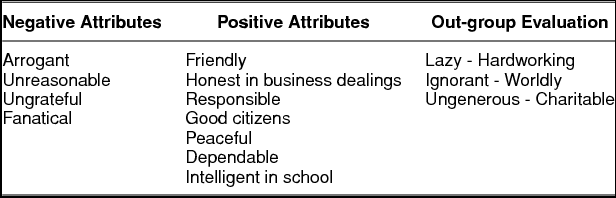
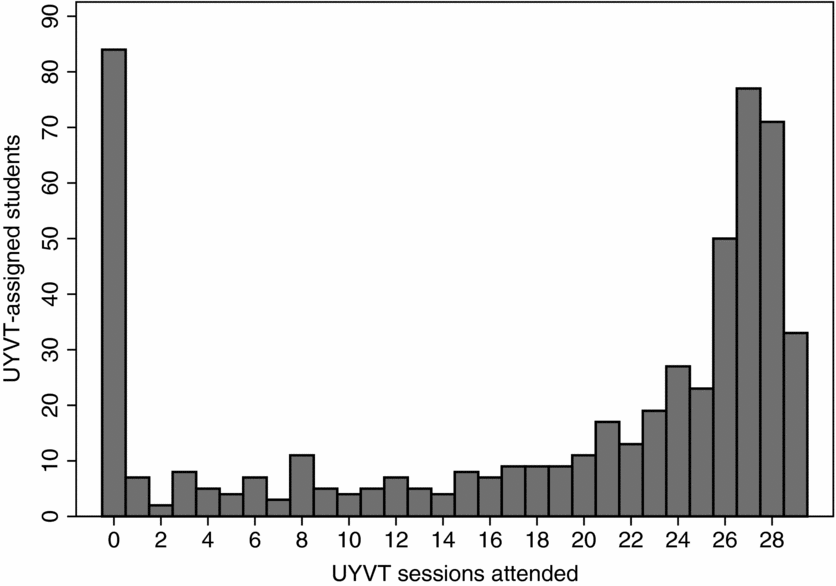
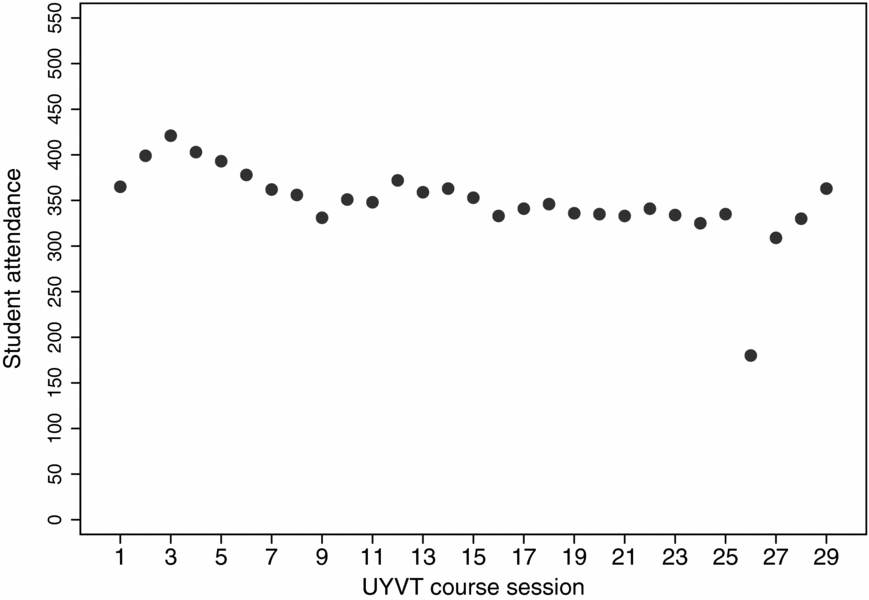
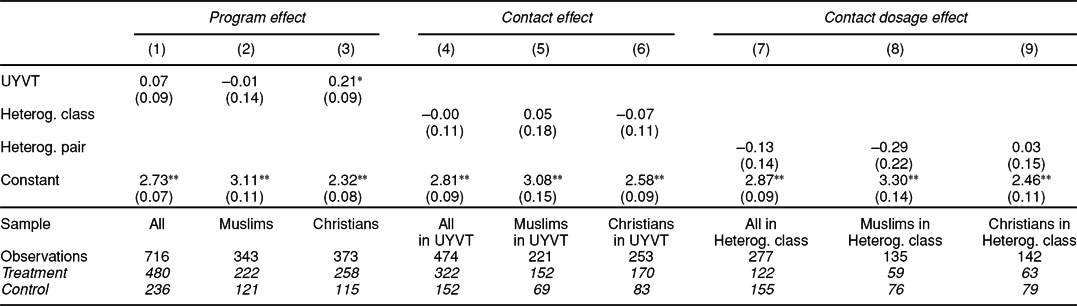
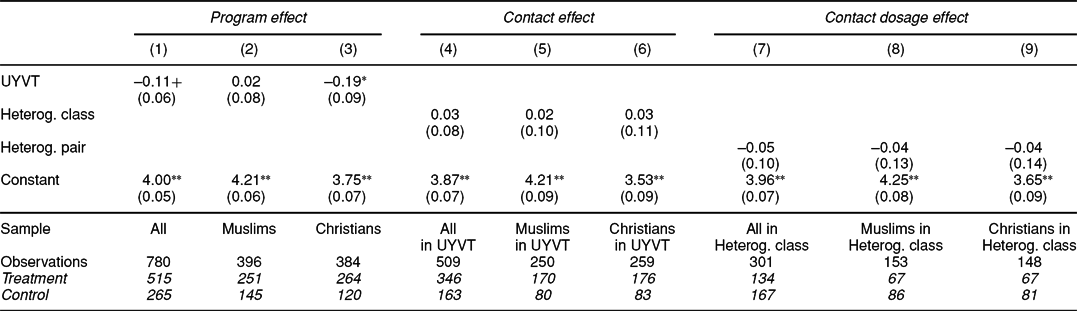
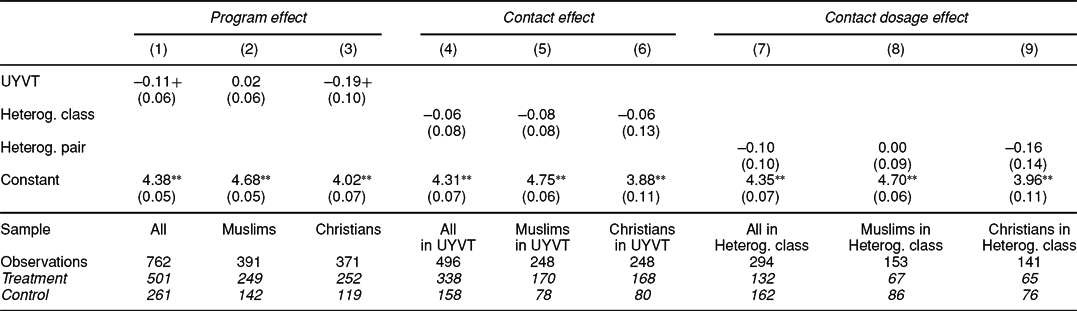
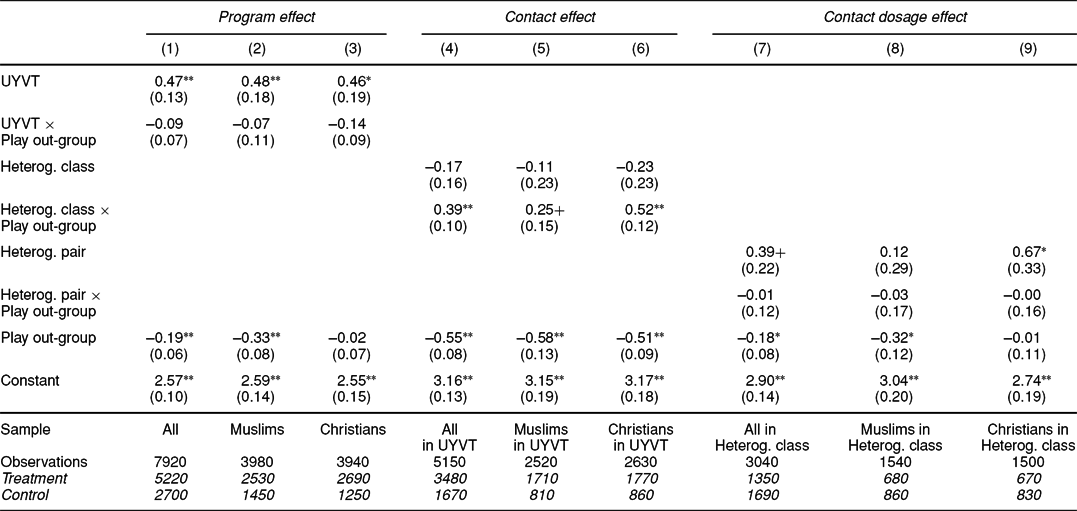
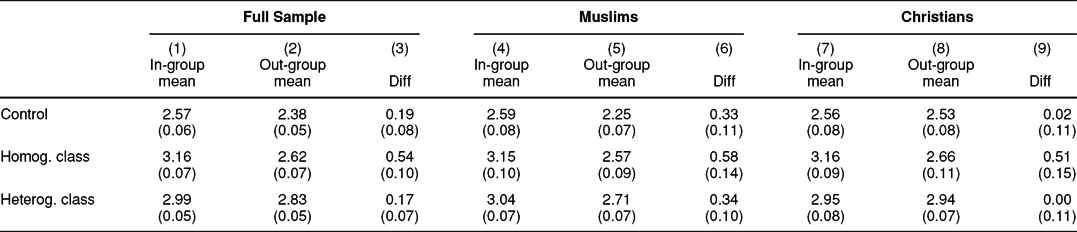
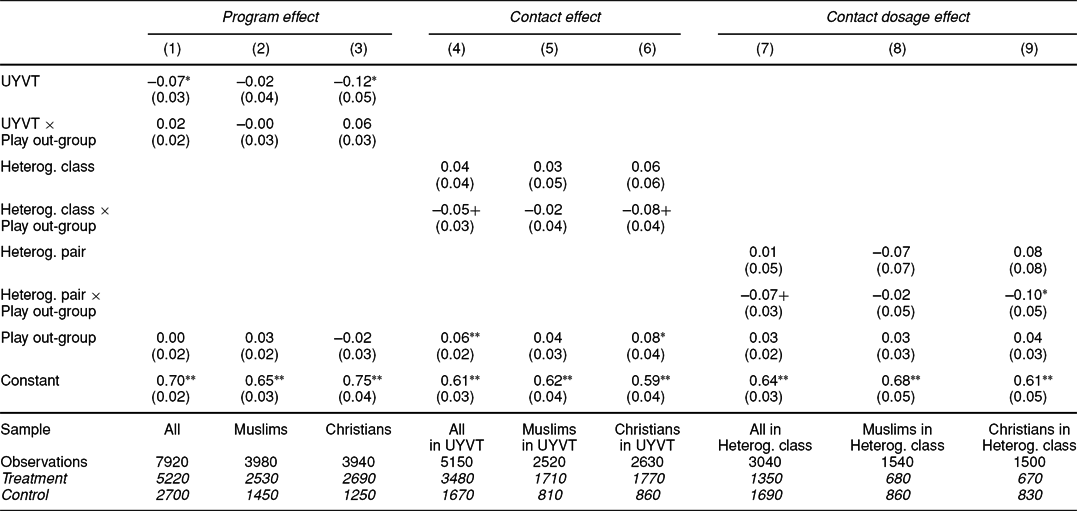




Comments
No Comments have been published for this article.