



1. Introduction
1.1. Background
Consider the kinetic energy dissipation of three-dimensional viscous fluid flow
 \begin{eqnarray*} D[\textbf{u}^{\epsilon}]:=\epsilon\int_{0}^{T}\int |\nabla \textbf{u}^{\epsilon}|^{2},\end{eqnarray*}
where  $\epsilon \gt 0$ is the viscosity parameter,
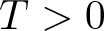 $T \gt 0$ is the existing time, and the velocity
 $\textbf{u}^{\epsilon}=(u^{\epsilon}_{1},u^{\epsilon}_{2},u^{\epsilon}_{3})$ satisfies the Navier–Stokes equations. The turbulence theory asserts that
 $D[\textbf{u}^{\epsilon}]$ should be strictly positive, and that it does not need to tend to zero in the inviscid limit process. This is so-called anomalous dissipation, which was from the field theory in physics, and it refers to the fact that there still is remanent dissipation in the limit of vanishing viscosity. Anomalous dissipation of energy in three-dimensional turbulence is one of the basic statements of physical theory (cf. [Reference Frisch21]), and it is one of the central ansatz of famous Kolmogorov’s 1941 zero-th law theory (cf. [2.25, 2.27, Reference Kolmogorov32]). It has been satisfactorily justified in experiment (cf. [Reference Sreenivasan and Antonia37, Reference Vassilicos39]), but not in mathematics.
We first review some anomalous dissipation results related to the incompressible Navier–Stokes system. In the papers [Reference Buckmaster, Colombo and Vicol6, Reference Buckmaster and Vicol7] by Buckmaster et al. and [Reference Cheskidov and Luo14] by Cheskidov–Luo, the anomalous dissipation is constructed for wild solutions (or very weak solutions) with either an arbitrary smooth energy profile or some regularity in time. However, these wild solutions are beyond of 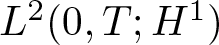 $L^{2}(0,T;H^{1})$ topology. In the context of anomalous dissipation for Leray–Hopf solutions, Drivas–Elgindi–Iyer–Jeong [Reference Drivas, Elgindi, Iyer and Jeong16] provided sufficient conditions in terms of the mixing rates of the advecting flow. Bruè–Lellis [Reference Bruè and Lellis5] studied the forced 3-D Navier–Stokes equations and showed that the classical solutions possess anomalous kinetic energy dissipation. In the light of the Lagrangian deformation strategy developed by Bourgain–Li [Reference Bourgain and Li4] in dimension two, Jeong–Yoneda [Reference Jeong and Yoneda27, Reference Jeong and Yoneda28] considered 3-D torus Navier–Stokes equations under a
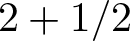 $2+1/2$ dimensional situation and proved enhanced dissipation induced by the vortex-stretching. Li–Yu–Zhu [Reference Li, Yu and Zhu34] considered the Cauchy problem and constructed a family of smooth solutions with anomalous dissipation.
Onsager [Reference Onsager36] conjectured that dissipative weak Euler solutions describe the high Reynolds number limit of turbulent and pointed out that the spatial Hölder exponent  $1/3$ is the threshold of vanishing energy dissipation in the limit of zero viscosity
 \begin{equation} \lim_{\epsilon\rightarrow0} \, D[\textbf{u}^{\epsilon}]=0.\end{equation}
It is a common understanding that a certain amount of regularity plays an important role in the vanishing viscosity limit (1.1), especially due to the nonlinear advection term. There has been a large literature regarding Onsager’s conjecture in both directions: the papers [Reference Bardos and Titi2, Reference Bardos, Titi and Wiedemann3, Reference Chen, Liang and Wang8, Reference Chen, Liang, Wang and Xu9, Reference Cheskidov, Constantin, Friedlander and Shvydkoy12, Reference Cheskidov and Luo13, Reference Constantin and Titi15, Reference Drivas and Nguyen18, Reference Feireisl, Gwiazda, Świerczewska-Gwiazda and Wiedemann20] for energy conservation and the papers [Reference Chen, Vasseur and Yu10, Reference Cheskidov, Constantin, Friedlander and Shvydkoy11, Reference Duchon and Robert19, Reference Isett23–Reference Isett and Vicol26,Reference Vicol40] for anomalous dissipation. A basic energy property of weak solutions for Navier–Stokes equations by Leray [Reference Leray33] states: kinetic energy dissipation cannot exceed the loss of initial energy input. In fact, the kinetic energy consists of viscous dissipation and energy flux  $|D \textbf{u}^{\epsilon} |$, where
 $|D \textbf{u}^{\epsilon} |$ is regarded as a non-negative Radon measure that represents the dissipation caused by Leray-type singularities, see the paper [Reference Duchon and Robert19]. Recently, Drivas–Eyink [Reference Drivas and Eyink17] established an Onsager-type quasi-singularities and obtained an upper bound of power type estimate
 $O(\epsilon^{(3\sigma-1)/(\sigma+1)})$ on vanishing energy dissipation under Besov regularity assumption
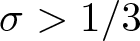 $\sigma \gt 1/3$. Hence, the anomalous dissipation occurs when (1.1) is broken due to the lack of smoothness of the velocity.
1.2. Mathematics setting
We study the energy dissipation phenomena of the following compressible Navier–Stokes equations
 \begin{equation}
\left\{\begin{aligned}
&\partial_{t}\rho^{\epsilon} +{\rm div} (\rho^{\epsilon}\textbf{u}^{\epsilon})=0,\\
& \partial_{t}(\rho^{\epsilon}\textbf{u}^{\epsilon}) +{\rm div}( \rho^{\epsilon}\textbf{u}^{\epsilon} \otimes \textbf{u}^{\epsilon})+\nabla (\rho^{\epsilon})^{\gamma}=\epsilon \, \mathcal{L}[\textbf{u}^{\epsilon}],\end{aligned}
\right.
\end{equation}
where  $t \gt 0,\,x\in \mathbb{R}^{3},$ the functions
 $\rho^{\epsilon}$ and
 $\textbf{u}^{\epsilon}=(u_{1}^{\epsilon},u_{2}^{\epsilon},u_{3}^{\epsilon})$ symbolize the density and the velocity fields, respectively;
 $\gamma \gt 1$ is the adiabatic exponent,
 $\epsilon \gt 0$ is the viscosity scaling factor, and the diffusion term
 \begin{eqnarray*} \mathcal{L}[\textbf{u}^{\epsilon}]= \mu_{1}\triangle\textbf{u}^{\epsilon}+ (\mu_{1}+\mu_{2})\nabla {\rm div} \textbf{u}^{\epsilon},\end{eqnarray*}
where the constant 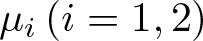 $\mu_{i}\,(i=1,2)$ satisfies the physical restriction
 $\mu_{1} \gt 0,\,2\mu_{1}+3\mu_{2}\ge0$. We are limited to the Cauchy problem of equations (1.2) with the far field states
 \begin{equation}(\rho^{\epsilon},\,\textbf{u}^{\epsilon})\rightarrow (1,0)\qquad {\rm as}\,\,\,|x|\rightarrow \infty,\end{equation}
and the initial functions
 \begin{equation}(\rho^{\epsilon},\,\textbf{u}^{\epsilon})(x,t=0)=(\rho_{0}^{\epsilon},\,\textbf{u}_{0}^{\epsilon})(x),\quad x\in \mathbb{R}^{3}. \end{equation}
Our first theorem shows that there exists a smooth solution to (1.2)–(1.4) which exhibits the anomalous energy dissipation, uniformly in viscosity  $\epsilon$.
Theorem 1.1. Assume that the initial functions in (1.4) satisfy
 \begin{equation} \mathbb{E}(0):= \int_{\mathbb{R}^{3}}\left(\frac{1}{2} \rho_{0}^{\epsilon} |\textbf{u}_{0}^{\epsilon}|^{2}+ G(\rho_{0}^{\epsilon})\right) {\rm d}x\simeq 1,\quad 0 \lt \underline{\rho}\le \rho^{\epsilon}_{0}\le \bar{\rho} \lt \infty,\end{equation}
where  $\underline{\rho}$ and
 $\bar{\rho}$ are constants, and
 \begin{equation}G(\rho_{0}^{\epsilon})=\rho_{0}^{\epsilon}\int_{1}^{\rho_{0}^{\epsilon}}\frac{s^{\gamma}-1}{s^{2}} {\rm d}s.\end{equation}
Then, for every fixed small 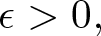 $\epsilon \gt 0,$ the problems (1.2)–(1.4) admit a classical solution
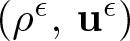 $(\rho^{\epsilon},\,\textbf{u}^{\epsilon})$ over
 $(0,T)$ for any finite
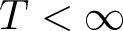 $T \lt \infty$, and moreover,
 \begin{equation} \liminf_{\epsilon\rightarrow0}\,\epsilon\int_{0}^{T}\int_{\mathbb{R}^{3}} \left(\mu_{1}|\nabla \textbf{u}^{\epsilon}|^{2}+(\mu_{1}+\mu_{2})( {\rm div} \textbf{u}^{\epsilon})^{2}\right) {\rm d}x {\rm d}t\ge C_{0} \gt 0,\end{equation}
where the constant  $C_{0}$ depends only on
 $\mathbb{E}(0),$
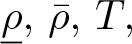 $\underline{\rho},\,\bar{\rho},\,T,$
 $\gamma,\mu_{1},\mu_{2}$, but not on the viscosity
 $\epsilon.$
Remark 1.1. The non-vacuum assumption condition (1.3) is due to the mathematical technique. Roughly, the positivity of initial density guarantees that the initial energy  $\mathbb{E}(0)$ is positively bounded from below.
Inequality (1.7) in Theorem 1.1 tells that the anomalous dissipation happens as  $\epsilon$ tends to zero, although the Navier–Stokes solutions
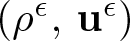 $(\rho^{\epsilon},\,\textbf{u}^{\epsilon})$ are smooth for every
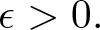 $\epsilon \gt 0.$ This further increases the credibility of anomalous dissipation arising from the influence of smoothness rather than the viscosity effect. In this regard, a diagnosis of singularity (quasi-singularity) is mathematically interesting: what regularity can be taken to weak solutions to prevent singularity from happening?
By weak solutions, we mean
Definition 1.1. Let 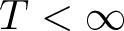 $T \lt \infty$ and
 $G(\cdot)$ be as in (1.6). We say that
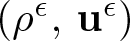 $(\rho^{\epsilon},\,\textbf{u}^{\epsilon})$ is a weak solution to (1.2)–(1.4) over
 $(0,T)$, if
•
 $(\rho^{\epsilon},\,\textbf{u}^{\epsilon})$ satisfies (1.2) and (1.4) in the sense of distribution,
• the inequality holds
(1.8)\begin{equation} \frac{{\rm d}}{{\rm d}t} \mathbb{E} (t)+ \epsilon \int_{\mathbb{R}^{3}}\left(\mu_{1}|\nabla \textbf{u}^{\epsilon}|^{2}+(\mu_{1}+\mu_{2})( {\rm div} \textbf{u}^{\epsilon})^{2}\right) {\rm d}x\le 0\quad {\rm in}\,\,\,\mathcal{D}'((0,T)),\end{equation}where the energy function
(1.9)\begin{equation}\mathbb{E}(t):= \int_{\mathbb{R}^{3}}\left(\frac{1}{2} \rho^{\epsilon} |\textbf{u}^{\epsilon}|^{2}+ G(\rho^{\epsilon})\right)(x,t) {\rm d}x.\end{equation}
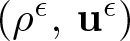


The second theorem below states the vanishing global dissipation of weak solutions to (1.2)–(1.4) under some extra uniform in  $\epsilon$ regularity assumption.
Theorem 1.2. Let  $Q=\mathbb{R}^{3}\times (0,T)$ and the exponent
 \begin{equation} \sigma \in \left(1/3,\,1\right).\end{equation}
Assume that the weak solution 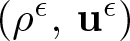 $(\rho^{\epsilon},\,\textbf{u}^{\epsilon})$ of (1.2)–(1.4) satisfies
 \begin{equation} \begin{aligned} & 0 \lt a\le \rho^{\epsilon}(x,t)\le A \lt \infty\quad \,\,\,a.\,e.\,\,\,{\rm in}\,\,\,\,Q,\\
&\rho^{\epsilon},\,\, \textbf{u}^{\epsilon}\,\, \underline{{\rm are\,\, uniformly\,\, in} \,\,\epsilon\,\, }{\rm bounded\,\, in}\,\, B_{2}^{\sigma,\infty}\left(Q\right)\cap B_{3}^{\sigma,\infty}\left(Q\right),\\
&\rho^{\epsilon}\textbf{u}^{\epsilon} \,\,\,\underline{{\rm is\,\, uniformly\,\, in} \,\,\epsilon\,\, }{\rm bounded\,\, in}\,\, B_{3}^{\sigma,\infty}\left(Q\right). \end{aligned}
\end{equation}
Then, for almost every point 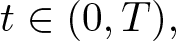 $t\in (0,T),$ there holds
 \begin{align} &\limsup_{\epsilon\rightarrow0}\,\epsilon\int_{0}^{t}\int_{\mathbb{R}^{3}} \left(\mu_{1}|\nabla \textbf{u}^{\epsilon}|^{2}+(\mu_{1}+\mu_{2})( {\rm div} \textbf{u}^{\epsilon})^{2}\right) {\rm d}x {\rm d}s \nonumber\\
&\le C\left\{\begin{aligned}&\epsilon^{\frac{3\sigma-1}{\sigma+1}},&\sigma\in \left(1/3,\,1/2\right],\\
&\epsilon^{\frac{\sigma}{2-\sigma}},&\sigma\in \left[1/2,\,1\right).\end{aligned}
\right.\end{align}
Remark 1.2. From Theorem 1.2, we see that if extra  $\epsilon$-uniform regularity on weak solutions is assumed, the anomalous dissipation (1.7) in Theorem 1.1 does not happen. It confirms that anomalous dissipation is caused by the wildness of the solution itself.
Remark 1.3. In stead of Hölder continuity, the Besov regularity condition seems much more reasonable from a physical point of view, as it can be regarded as scalings of  $L^{p}$ structure of functions
 $\delta f=f(\cdot+\eta)-f(\cdot)$, and additionally, Besov spaces regularity also meet the celebrated Kolmogorov’s turbulence theories; see the papers [Reference Anselmet, Gagne, Hopfinger and Antonia1, Reference Sreenivasan, Vainshtein, Bhiladvala, Gil, Chen and Cao38].
Remark 1.4. The regularity assumption on  $\rho^{\epsilon}\textbf{u}^{\epsilon}$ listed in (1.11) is alternative in the proof; see Corollary 3.1 in Section 3.
Heuristic: We are motivated by the study on incompressible fluids (cf. [Reference Cheskidov and Luo13, Reference Drivas and Eyink17–Reference Feireisl, Gwiazda, Świerczewska-Gwiazda and Wiedemann20, Reference Jeong and Yoneda27, Reference Jeong and Yoneda28, Reference Li, Yu and Zhu34]), as well as our previous papers [Reference Chen, Liang and Wang8, Reference Chen, Liang, Wang and Xu9]. However, the compressibility of (1.2) makes the mathematical structure is of much different from that of incompressible fluids. The involvement of density considerably strengthens the nonlinearity, and therefrom, the singularity becomes complex due to the coupling of velocity and density.
In order to prove Theorem 1.1, we first introduce the time-evolution Lamé system (2.1) and deduce useful decay estimates on the solution  $\textbf{v}^{\epsilon}$ in terms of viscosity. Second, we construct a family of smooth initial functions such that the problem (1.2)–(1.4) admits classical solutions
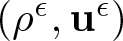 $(\rho^{\epsilon},\textbf{u}^{\epsilon})$. Then we analyse the difference of
 $\textbf{v}^{\epsilon}$ from
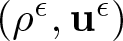 $(\rho^{\epsilon},\textbf{u}^{\epsilon})$ and control the resulting error integrals. In Lemma 2.5, we show that the kinetic energy dissipation can be bounded in terms of the solution
 $\textbf{v}^{\epsilon}$ to the Lamé system (2.1). Next, using Fourier high frequency analysis, we construct the initial support region that is proportional to
 $\epsilon^{-1/2}$ from the origin, and deduce that
 \begin{equation*}\epsilon\int_{0}^{T}\|\nabla \textbf{v}^{\epsilon}(\cdot,t)\|_{L^{2}}^{2}dt\ge C \gt 0.\end{equation*}
By this and the non-vacuum assumption condition (1.3), we finally rule out the appearance of possible vacuum, and conclude that the energy dissipation has a positive bound from below.
Theorem 1.2 is for the convergence rate of vanishing global dissipation of weak solutions. We first present some useful mollification properties and commutator techniques. In Section 3.2, we rewrite the momentum equations and use energy inequality to deduce the difference quantity (3.11). Under additional Besov regularity assumption, we estimate the error integrals in terms of viscosity  $\epsilon$ and Besov regularity exponent
 $\sigma$. Finally, we find an optimal relationship between
 $\epsilon$ and
 $\sigma$ to conclude the required (1.12).
Notion: The capital letter  $C$ is a universal positive constant which may vary from line to line, and
 $C(\alpha)$ is used to emphasize that
 $C$ depends on
 $\alpha.$
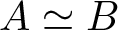 $A\simeq B$ means that the inequalities
 $c_{1}B\le A\le c_{2} B$ are valid for positive constants
 $c_{1}$ and
 $c_{2}.$ Let
 $Q=\mathbb{R}^{3}\times (0,T)$. We write
 $\int f=\int_{Q} f(x,t) {\rm d} x {\rm d}t$. The Sobolev spaces
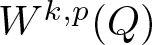 $W^{k,p}(Q)$ are the set of measurable functions with finite norm
 $\sum_{|\alpha|\le k}\left(\int|\partial^{\alpha}f|^{p}\right)^{\frac{1}{p}} \lt \infty\,\,{\rm if}\,\,p\in [1,\infty),$ and
 $
\sum_{|\alpha|\le k} ess \sup_{(x,t)\in Q}|\partial^{\alpha}f| \lt \infty\,\,{\rm if}\,\,p=\infty$. The Besov space
 $B_{r}^{\sigma,\infty}$ is made up of measurable functions finitely defined in the norm
 \begin{equation} \|f\|_{B_{r}^{\sigma,\infty}(Q)}:=\|f\|_{L^{r}(Q)}+\sup_{\zeta\in Q}\frac{\|f(\cdot+\zeta)-f(\cdot)\|_{L^{r}(Q\cap (Q-\{\zeta\}))}}{|\zeta|^{\sigma}},\end{equation}
with exponents  $r\ge 1$ and
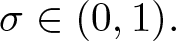 $\sigma\in (0,1).$
The rest of this paper is as follows: Section 2 is for the proof of Theorem 1.1. In Section 2.1, we prove some basic properties of solutions  $\textbf{v}^{\epsilon}$ for the time-evolution Lamé system (2.1). Section 2.2 is devoted to the difference of the solutions
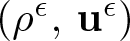 $(\rho^{\epsilon},\,\textbf{u}^{\epsilon})$ from
 $\textbf{v}^{\epsilon}$ and the estimate on relative energy dissipation. We deduce in Section 2.3 the desired anomalous dissipation inequality (1.7). Section 3 is for the proof of Theorem 1.2. We collect in Section 3.1 some inequalities that will be used in the proof. Section 3.2 represents the momentum equations by mollification. We estimate in Section 3.3 the error integrals and obtain the convergence rate (1.12) in the final section (Section 3.4).
In the sequel, we assume that the capital letter  $C$ is independent of the parameter
 $\epsilon.$
2. Proof of Theorem 1.1
2.1. The time-evolution Lamé system
Consider the Cauchy problem of the time-evolutionary Lamé system
 \begin{equation} \left\{\begin{aligned} &\partial_{t}\textbf{v}^{\epsilon}=\epsilon \mathcal{L}[\textbf{v}^{\epsilon}],& t \gt 0,\,\,\,x\in \mathbb{R}^{3},\,\,\\
&\textbf{v}^{\epsilon}(x,t)\rightarrow 0,& t \gt 0,\,|x|\rightarrow \infty,\end{aligned}
\right. \end{equation}
where  $ \mathcal{L}[\textbf{v}^{\epsilon}]= \mu_{1}\triangle\textbf{v}^{\epsilon}+ (\mu_{1}+\mu_{2})\nabla {\rm div} \textbf{v}^{\epsilon}.$
Denote the Fourier transform of  $f$ by
 $\widehat{f}$ and its inverse by
 $f^{\vee}$. Introduce a smooth function
 $\varphi(x)$ of the form
 \begin{equation} \widehat{\varphi}(\xi)=1\,\,\,{\rm if}\,\,\,|\xi|\le 1,\quad \widehat{\varphi}(\xi)=0\,\,\,{\rm if}\,\,\,|\xi|\ge 2.\end{equation}
We impose (2.1) with the initial function
 \begin{equation}\textbf{v}_{0}^{\epsilon}(x)=(v_{1}^{\epsilon},\,v_{2}^{\epsilon},\,v_{3}^{\epsilon})(x,0)\end{equation}
where
 \begin{equation}v^{\epsilon}_{j}(x,0)=\epsilon^{3/2}\,e^{\textbf{i}x_{j}/\sqrt{\epsilon}}\varphi(\epsilon x_{1})\varphi(\epsilon x_{2})\varphi(\epsilon x_{3}),\quad(j=1,2,3).\end{equation}
Remark 2.1. By the Euler formula, we may replace 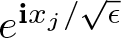 $e^{\textbf{i}x_{j}/\sqrt{\epsilon}}$ in (2.4) with
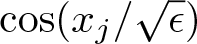 $\cos (x_{j}/\sqrt{\epsilon})$ to avoid the complex index
 $\textbf{i}$.
Take the Fourier transform of 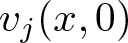 $v_{j}(x,0)$ as
 \begin{equation} \widehat{v^{\epsilon}_{j}}(\xi,0)=\epsilon^{-3/2}\,\widehat{\varphi}
\left(\frac{\xi_{j}-\epsilon^{-1/2}}{\epsilon}\right) \mathop{\Pi}\limits_{1\le i\le 3,i\neq j}
\widehat{\varphi}
\left(\frac{\xi_{i}}{\epsilon}\right).\end{equation}
Thanks to (2.2), we see that the support of 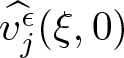 $\widehat{v_{j}^{\epsilon}}(\xi,0)$ lies in a ball of radius
 $\epsilon$ with the center translated
 $\epsilon^{-1/2}$ distance along the
 $x_{j}$-axis, take
 $j=1$ for example, we have
 \begin{equation} {\rm spt}\, \widehat{v_{1}^{\epsilon}}(\cdot,0) \subset \left(\epsilon^{-1/2}-2\epsilon,\,\epsilon^{-1/2}+2\epsilon\right)\times (-2\epsilon,\,2\epsilon)^{2}.\end{equation}
Direct computation shows that
 \begin{align} \left\|\widehat{v^{\epsilon}_{1}}(\cdot,0)\right\|_{L^{2}}^{2}
&=\epsilon^{-3}\int_{\mathbb{R}}\left|\widehat{\varphi}
\left(\frac{\xi_{1}-\epsilon^{-1/2}}{\epsilon}\right)\right|^{2}{\rm d}\xi_{1}
\int_{\mathbb{R}}\left|\widehat{\varphi}
\left(\frac{\xi_{2}}{\epsilon}\right)\right|^{2}{\rm d}\xi_{2} \nonumber\\
&\quad \times \int_{\mathbb{R}}\left|\widehat{\varphi}
\left(\frac{\xi_{3}}{\epsilon}\right)\right|^{2}{\rm d}\xi_{3}\simeq 1.\end{align}
The case of 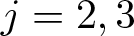 $j=2,3$ runs similarly. By Parseval’s formula, for
 $m=0,1,2,\ldots,$
 \begin{equation}\begin{aligned} \left\| \partial_{x}^{m}\textbf{v}_{0}^{\epsilon}\right\|_{L^{2}}^{2}= \left\| |\xi|^{m}\widehat{\textbf{v}_{0}^{\epsilon}}\right\|_{L^{2}}^{2}
\le \sum_{j=1}^{3}\left\| |\xi|^{m}\widehat{v_{j}^{\epsilon}}(\cdot,0)\right\|_{L^{2}}^{2}\le C\epsilon^{-m} \left\| \widehat{v_{j}^{\epsilon}}(\cdot,0)\right\|_{L^{2}}^{2}\le C\epsilon^{-m}.\end{aligned}
\end{equation}
Lemma 2.1. Let  $\textbf{v}^{\epsilon}$ be the solution of (2.1) and (2.3)–(2.4). Then, for integer
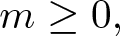 $m\ge0,$
 \begin{equation} \|\partial_{x}^{m} \textbf{v}^{\epsilon}(\cdot,t)\|_{L^{2}}^{2}\le C\epsilon^{-m},\quad t\ge 0.\end{equation}
Proof. Multiply (2.1) by 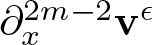 $\partial_{x}^{2m-2} \textbf{v}^{\epsilon}$ and integrate the resulting expression to deduce
 \begin{eqnarray*} \|\partial_{x}^{m} \textbf{v}^{\epsilon}(\cdot,t)\|_{L^{2}}^{2}\le \| \partial_{x}^{m}\textbf{v}_{0}^{\epsilon}\|_{L^{2}}^{2},\quad m=0,1,2,\ldots.\end{eqnarray*}
Lemma 2.2. Let 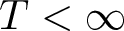 $T \lt \infty$. The solution
 $\textbf{v}^{\epsilon}$ of (2.1) and (2.3)–(2.4) satisfies
 \begin{equation}\begin{aligned} \epsilon \int_{0}^{T}\int_{\mathbb{R}^{3}}\left( \mu_{1}|\nabla \textbf{v}^{\epsilon}|^{2} +(\mu_{1}+\mu_{2})( {\rm div} \textbf{v}^{\epsilon})^{2}\right) {\rm d}x {\rm d}t \ge C \gt 0,\end{aligned}
\end{equation}
where the constant  $C$ depends on
 $\mu_{1}$ and
 $T$, but not on
 $\epsilon.$
Proof. Operating Fourier transform to  $ \partial_{t}\textbf{v}^{\epsilon}=\epsilon \mu_{1} \triangle \textbf{v}^{\epsilon}$ in
 $x$ variable, we obtain the ordinary differential equations
 $ \partial_{t}\widehat{\textbf{v}^{\epsilon}} +\epsilon \mu_{1} |\xi|^{2}\,\widehat{\textbf{v}^{\epsilon}}=0,$ which implies
 \begin{equation} \widehat{\textbf{v}^{\epsilon}}(\xi,t) = e^{-\epsilon\mu_{1}|\xi|^{2} t} \widehat{\textbf{v}_{0}^{\epsilon}} (\xi).\end{equation}
By (2.2) and (2.6), the support of  $\widehat{\textbf{v}_{0}^{\epsilon}}$ implies
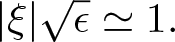 $|\xi| \sqrt{\epsilon}\simeq 1.$ Then, from Parseval’s formula, (2.8), and (2.11), we deduce
 \begin{eqnarray*}\begin{aligned} \int_{0}^{T} \|\nabla \textbf{v}^{\epsilon}(\cdot,t)\|_{L^{2}}^{2} {\rm d}t &=\int_{0}^{T}\left\||\xi|\widehat{\textbf{v}^{\epsilon}}\right\|_{L^{2}}^{2}{\rm d}t=\int_{0}^{T}\left\||\xi|e^{-\epsilon \mu_{1}|\xi|^{2}t}\widehat{\textbf{v}_{0}^{\epsilon}}\right\|_{L^{2}}^{2}{\rm d}t\\
&\ge C(T,\mu_{1})\int_{0}^{T}\left\| |\xi|^{2}\, \widehat{\textbf{v}_{0}^{\epsilon}}\right\|_{L^{2}}^{2}{\rm d}t\ge C(T,\mu_{1})\epsilon^{-1}\left\| \widehat{\textbf{v}_{0}^{\epsilon}}\right\|_{L^{2}}^{2}\\
&\ge C(T,\mu_{1})\epsilon^{-1}\left\| \textbf{v}_{0}^{\epsilon} \right\|_{L^{2}}^{2}\ge C(T,\mu_{1})\epsilon^{-1}.\end{aligned}
\end{eqnarray*}
This along with the fact  $\mu_{1}+\mu_{2} \gt \frac{2}{3}\mu_{1}+\mu_{2}\ge 0$ yields
 \begin{eqnarray*} \epsilon \int_{0}^{T}\int_{\mathbb{R}^{3}}\left( \mu_{1}|\nabla \textbf{v}^{\epsilon}|^{2} +(\mu_{1}+\mu_{2})( {\rm div} \textbf{v}^{\epsilon})^{2}\right) {\rm d}x {\rm d}t\ge \epsilon \int_{0}^{T}\int_{\mathbb{R}^{3}} \mu_{1}|\nabla \textbf{v}^{\epsilon}|^{2} {\rm d}x {\rm d}t\ge C,\end{eqnarray*}
the required. The proof of Lemma 2.2 is finished.
Lemma 2.3. Let  $\textbf{v}^{\epsilon}$ be the solution of (2.1) and (2.3)–(2.4). Then, for
 $m\ge0,$
 \begin{equation}\begin{aligned} \left\| \nabla ^{m} \textbf{v}^{\epsilon} (\cdot,t)
\right\|_{L^{\infty}(\mathbb{R}^{3})} \le C\epsilon^{\frac{3-m}{2}},\quad t\ge 0.\end{aligned}
\end{equation}
Proof. Define the characteristic
 \begin{eqnarray*} \chi^{\epsilon}(\xi) =\left\{\begin{aligned} &1,&\xi\in {\rm spt}\,{\widehat{\textbf{v}_{0}^{\epsilon}}(\xi)},\\
&0,&otherwise. \end{aligned}
\right.\end{eqnarray*}
Taking Fourier transform to  $ \partial_{t}\textbf{v}^{\epsilon}=\epsilon (\mu_{1}+\mu_{2})\nabla {\rm div} \textbf{v}^{\epsilon}$, we have
 \begin{eqnarray*} \partial_{t}\widehat{\textbf{v}^{\epsilon}} +\epsilon (\mu_{1}+\mu_{2}) \widehat{\mathbb{B}}\,\widehat{\textbf{v}^{\epsilon}}=0,\end{eqnarray*}
where the vector  $\widehat{\textbf{v}^{\epsilon}}=\left(\widehat{v^{\epsilon}_{1}},
\widehat{v_{2}^{\epsilon}},\widehat{v^{\epsilon}_{3}}\right)^{\top}$ and the matrix
 \begin{eqnarray*} \widehat{\mathbb{B}}:=\left(\begin{array}{ccc}
\xi_{1}^{2},&\xi_{1}\xi_{2},&\xi_{1}\xi_{3} \\
\xi_{2}\xi_{1},&\xi_{2}^{2} ,&\xi_{2}\xi_{3} \\
\xi_{3}\xi_{1},&\xi_{3}\xi_{2},&\xi_{3}^{2}
\end{array}\right).\end{eqnarray*}
Solving the equation yields
 \begin{eqnarray*} \widehat{\textbf{v}^{\epsilon}}(\xi,t)=
e^{-\epsilon (\mu_{1}+\mu_{2})\widehat{\mathbb{B}}t}\widehat{\textbf{v}^{\epsilon}}(\xi,0),\end{eqnarray*}
Here, the semigroup generated by  $\widehat{\mathbb{B}}$ takes the form
 \begin{eqnarray*} \begin{aligned} e^{-\epsilon (\mu_{1}+\mu_{2})\widehat{\mathbb{B}}t}:
&=\mathbb{T}\left(\begin{array}{ccc}
e^{-\epsilon (\mu_{1}+\mu_{2})\lambda_{1}t},& 0,&0 \\
0,& e^{-\epsilon (\mu_{1}+\mu_{2})\lambda_{2}t},&0 \\
0,&0,& e^{-\epsilon (\mu_{1}+\mu_{2})\lambda_{3}t}
\end{array}\right)\mathbb{T}^{-1},\end{aligned}
\end{eqnarray*}
where the matrix
 \begin{eqnarray*}\mathbb{T}=(t_{ij})_{3\times3}=\left(\begin{array}{ccc}
-2,& \frac{\xi_{2}}{\xi_{1}},&\frac{\xi_{1}}{\xi_{3}} \\
\frac{\xi_{1}}{\xi_{2}},& -2,&\frac{\xi_{2}}{\xi_{3}} \\
\frac{\xi_{1}}{\xi_{3}},&\frac{\xi_{2}}{\xi_{3}},&1
\end{array}\right),\end{eqnarray*}
and the corresponding roots of  $|\lambda\mathbb{T}-\widehat{\mathbb{B}}|=0$ are
 $ \lambda_{1}=\lambda_{2}=0,\, \lambda_{3}=|\xi|^{2}$. Therefore,
 \begin{eqnarray*}\begin{aligned} \widehat{v_{i}^{\epsilon}}(\xi,t)&=
\sum_{k=1}^{3}\sum_{j=1}^{3}t_{ij}t_{jk}^{-1}
e^{-\epsilon(\mu_{1}+\mu_{2})\lambda_{j}t}\,\widehat{v_{k}^{\epsilon}}(\xi,0),\\
&=
\sum_{k=1}^{3}\sum_{j=1}^{3}t_{ij}t_{jk}^{-1}
e^{-\epsilon(\mu_{1}+\mu_{2})\lambda_{j}t}\,\chi_{k}^{\epsilon}(\xi)\widehat{v_{k}^{\epsilon}}(\xi,0)\,,\quad i=1,2,3,\end{aligned}
\end{eqnarray*}
and whence,
 \begin{equation}\begin{aligned} v_{i}^{\epsilon}(x,t)=
\sum_{k=1}^{3}\sum_{j=1}^{3} \left[t_{ij}t_{jk}^{-1}
e^{-\epsilon(\mu_{1}+\mu_{2})\lambda_{j}t}\,\chi_{k}^{\epsilon}\right]^{\vee}*v_{k}^{\epsilon}(x,0). \end{aligned}
\end{equation}
If we apply the Young’s inequality and Parseval’s formula to (2.13), we infer
 \begin{equation} \begin{aligned} \|\partial_{x}^{m} \textbf{v}_{i}^{\epsilon} (\cdot,t)\|_{L^{\infty}}&\le
\sum_{k=1}^{3}\sum_{j=1}^{3}\left\|\left[t_{ij}t_{jk}^{-1}
e^{-\epsilon(\mu_{1}+\mu_{2})\lambda_{j}t}\,\chi_{k}^{\epsilon}\right]^{\vee}*\partial_{x}^{m} v_{k}^{\epsilon}(x,0)\right
\|_{L^{\infty}}\\
&\le C\left\|\partial_{x}^{m} v_{k}^{\epsilon}(x,0)\right
\|_{L^{2}}\left\| \left[t_{ij}t_{jk}^{-1}
e^{-\epsilon(\mu_{1}+\mu_{2})\lambda_{j}t}\,\chi_{k}^{\epsilon}\right]^{\vee}\right
\|_{L^{2}}\\
&\le C\left\|\partial_{x}^{m} v_{k}^{\epsilon}(x,0)\right
\|_{L^{2}}\left\| t_{ij}t_{jk}^{-1}
e^{-\epsilon(\mu_{1}+\mu_{2})\lambda_{j}t}\,\chi_{k}^{\epsilon}(\xi) \right
\|_{L^{2}}.\end{aligned}
\end{equation}
By the definition of  $\chi_{k}$ and the facts
 \begin{eqnarray*} t_{ij}t_{jk}^{-1}\, e^{-\epsilon(\mu_{1}+\mu_{2})\lambda_{j}t}\le 1\,\,\,{\rm in}\,\,\,{\rm spt}\,{\widehat{v_{k}^{\epsilon}}(\xi,0)}\quad\forall\, j,k=1,2,3,\end{eqnarray*}
and whence,
 \begin{eqnarray*} \left\| t_{ij}t_{jk}^{-1}
e^{-\epsilon(\mu_{1}+\mu_{2})\lambda_{j}t}\,\chi_{k}^{\epsilon}(\xi) \right
\|_{L^{2}} \le \left\| \chi_{k}^{\epsilon}(\xi) \right
\|_{L^{2}} \le \epsilon^{\frac{3}{2}}.\end{eqnarray*}
By this and Lemma 2.1, we deduce from (2.14) that
 \begin{equation} \begin{aligned} \|\partial_{x}^{m} v_{i}^{\epsilon} (\cdot,t)\|_{L^{\infty}}
&\le C\left\|\partial_{x}^{m} v_{k}^{\epsilon}(x,0)\right
\|_{L^{2}}\left\| t_{ij}t_{jk}^{-1}
e^{-\epsilon(\mu_{1}+\mu_{2})\lambda_{j}t}\,\chi_{k}^{\epsilon}(\xi) \right
\|_{L^{2}}\\
&\le C\epsilon^{\frac{3}{2}}\left\|\partial_{x}^{m} v_{k}^{\epsilon}(x,0)\right
\|_{L^{2}}\\
&\le C\epsilon^{\frac{3-m}{2}}.\end{aligned}
\end{equation}
Applying the same argument to  $ \partial_{t}\textbf{v}^{\epsilon}=\epsilon \mu_{1} \triangle \textbf{v}^{\epsilon}$, we receive
 \begin{equation}\begin{aligned} \left\| \nabla ^{m} \textbf{v}^{\epsilon} (\cdot,t)
\right\|_{L^{\infty}(\mathbb{R}^{3})} \le C\epsilon^{\frac{3-m}{2}}.\end{aligned}
\end{equation}
In conclusion, inequalities (2.15) and (2.16) yield (2.12). The proof is thus completed.
Remark 2.2. We refer to [Reference Kobayashi and Shibata29, Theorem 3.1] for generalized  $L^{p}$-
 $L^{q}$ estimates, where the authors established the long-time decay rates of solutions of equations for compressible viscous and heat-conductive gas.
2.2. The difference of Navier–Stokes from Lamé system
The lemma below is responsible for the existence of global classical solution to (1.2)–(1.4).
Lemma 2.4. Assume that the smooth functions 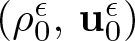 $(\rho_{0}^{\epsilon},\,\textbf{u}_{0}^{\epsilon})$ in (1.4) satisfy (1.5). Then the problem (1.2)–(1.4) admits a solution
 $(\rho^{\epsilon},\,\textbf{u}^{\epsilon})$ which satisfies
 \begin{equation}0\le \rho^{\epsilon}(x,t) \le 2\bar{\rho}\quad a.e.\,\,\,\mathbb{R}^{3}\times (0,T)\end{equation}
and
 \begin{equation} \|(\rho^{\epsilon}-1)(\cdot,t)\|_{L^{2}}\le C(\bar{\rho})\mathbb{E}(0),\quad \forall\,\,t\in (0,T).\end{equation}
Proof. We assume that  $\textbf{u}_{0}^{\epsilon}$ is the same as
 $\textbf{v}^{\epsilon}_{0}$, the function defined as in (2.3)–(2.4), namely,
 \begin{equation} u^{\epsilon}_{j}(x,0)=v^{\epsilon}_{j}(x,0)=\epsilon^{3/2}\,e^{\textbf{i}x_{j}/\sqrt{\epsilon}}\varphi(\epsilon x_{1})\varphi(\epsilon x_{2})\varphi(\epsilon x_{3}), \quad j=1,2,3,\end{equation}
where  $\varphi$ satisfies (2.2). From (2.7), we see that
 \begin{equation} \left\|\textbf{u}^{\epsilon}_{0}\right\|_{L^{2}}^{2} \simeq 1.\end{equation}
Next, assume the function  $\rho_{0}^{\epsilon}$, satisfying
 \begin{equation} |\rho_{0}^{\epsilon}-1| =\epsilon^{3}\,\varphi^{2}(\epsilon x_{1})\varphi^{2}(\epsilon x_{2})\varphi^{2}(\epsilon x_{3}).\end{equation}
Then,
 \begin{equation} \begin{aligned}\left\|\rho^{\epsilon}_{0}-1\right\|_{L^{1}} &=\left\|\sqrt{|\rho_{0}^{\epsilon}-1|}\right\|_{L^{2}}^{2}=\left\|\widehat{\sqrt{|\rho_{0}^{\epsilon}-1|}}\right\|_{L^{2}}^{2} \\ &=\epsilon^{-3}\int_{\mathbb{R}}\left|\widehat{\varphi}
\left(\frac{\xi_{1}}{\epsilon}\right)\right|^{2}{\rm d}\xi_{1}
\int_{\mathbb{R}}\left|\widehat{\varphi}
\left(\frac{\xi_{2}}{\epsilon}\right)\right|^{2}{\rm d}\xi_{2}\int_{\mathbb{R}}\left|\widehat{\varphi}
\left(\frac{\xi_{3}}{\epsilon}\right)\right|^{2}{\rm d}\xi_{3}\le C. \end{aligned}
\end{equation}
Since  $\widehat{\varphi}(\xi_{j}/\epsilon)$ is supported in the ball
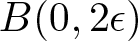 $B(0,2\epsilon)$, it satisfies
 \begin{eqnarray*} \begin{aligned} \left\|\nabla ^{2}\sqrt{|\rho^{\epsilon}_{0}-1|}\right\|_{L^{2}}\le C\left\||\xi|^{2}\widehat{\sqrt{|\rho^{\epsilon}_{0}-1|}}\right\|_{L^{2}}\le C\epsilon^{2} \left\|\rho^{\epsilon}_{0}-1\right\|_{L^{1}}\le C\epsilon^{2}.\end{aligned}
\end{eqnarray*}
With the last two inequalities, we use the embedding theorem and deduce
 \begin{eqnarray*}\begin{aligned} \left\| |\rho^{\epsilon}_{0}-1| \right\|_{C(\overline{\mathbb{R}^{3}})}&\le C \left\|\sqrt{|\rho^{\epsilon}_{0}-1|}\right\|_{L^{2}(\mathbb{R}^{3})}^{\frac{1}{2}} \left\|\nabla ^{2}\sqrt{|\rho^{\epsilon}_{0}-1|}\right\|_{L^{2}(\mathbb{R}^{3})}^{\frac{3}{2}} \le C\epsilon^{3}.\end{aligned}
\end{eqnarray*}
This implies that  $\rho_{0}^{\epsilon}$ is positively bounded when
 $\epsilon$ is taken small. So,
 \begin{equation} G(\rho_{0}^{\epsilon})\simeq
|\rho_{0}^{\epsilon}-1|^{2}.\end{equation}
Now we prove the validity of (1.5), i.e.,
 \begin{eqnarray*}\mathbb{E}(0):= \int_{\mathbb{R}^{3}}\left(\frac{1}{2} \rho_{0}^{\epsilon} |\textbf{u}_{0}^{\epsilon}|^{2}+ G(\rho_{0}^{\epsilon})\right) {\rm d} x\simeq 1.\end{eqnarray*}
In fact, thanks to (2.20), (2.22), (2.23), and the bounds of  $\rho_{0}^{\epsilon},$ we conclude that, for small
 $\epsilon$,
 \begin{eqnarray*}\begin{aligned} \mathbb{E}(0)&=\int_{\mathbb{R}^{3}}\left( \rho_{0}^{\epsilon} |\textbf{u}_{0}^{\epsilon}|^{2}+G(\rho_{0}^{\epsilon})\right)\le
\int_{\mathbb{R}^{3}} \rho_{0}^{\epsilon}|\textbf{u}_{0}^{\epsilon}|^{2}+C
\int_{\mathbb{R}^{3}} |\rho_{0}^{\epsilon}-1|^{2}\\
&\le
C\int_{\mathbb{R}^{3}} |\textbf{u}_{0}^{\epsilon}|^{2}+C\epsilon^{3}
\int_{\mathbb{R}^{3}} |\rho_{0}^{\epsilon}-1| \le C\left(1+\epsilon^{3}\right)\le C \end{aligned}
\end{eqnarray*}
and
 \begin{eqnarray*}\begin{aligned} \mathbb{E}(0)&=\int_{\mathbb{R}^{3}}\left( \rho_{0}^{\epsilon} |\textbf{u}_{0}^{\epsilon}|^{2}+G(\rho_{0}^{\epsilon})\right)\ge
\int_{\mathbb{R}^{3}} \rho_{0}^{\epsilon}|\textbf{u}_{0}^{\epsilon}|^{2}\ge
\frac{1}{2} \int_{\mathbb{R}^{3}} |\textbf{u}_{0}^{\epsilon}|^{2} \gt 0. \end{aligned}
\end{eqnarray*}
In terms of (1.5), we may use scaling and obtain, for small 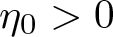 $\eta_{0} \gt 0$,
 \begin{eqnarray*}\mathbb{E}(0):= \int_{\mathbb{R}^{3}}\left(\frac{1}{2} \rho_{0}^{\epsilon} |\textbf{u}_{0}^{\epsilon}|^{2}+ G(\rho_{0}^{\epsilon})\right) {\rm d}x \in (0,\eta_{0}).\end{eqnarray*}
Thus, refer to [Reference Huang, Li and Xin22], there is a unique global classical solution to (1.2)–(1.4) which satisfies (2.17). Consequently, (2.18) follows directly from the energy equality and (2.17).
Lemma 2.5. Let  $\textbf{v}^{\epsilon}$ be the solution of (2.1) and (2.3)–(2.4), and
 $(\rho^{\epsilon},\textbf{u}^{\epsilon})$ be the solution of (1.2)–(1.4). We have
 \begin{equation}\begin{aligned} &\sup_{t\in [0,T]}\int_{\mathbb{R}^{3}}\left( \rho^{\epsilon} |\textbf{u}^{\epsilon}-\textbf{v}^{\epsilon}|^{2}+G(\rho^{\epsilon})\right)(x,t){\rm d}x \\
&\quad +\epsilon \int_{0}^{T} \int_{\mathbb{R}^{3}} \left(\mu_{1}|\nabla (\textbf{u}^{\epsilon}-\textbf{v}^{\epsilon}|)|^{2}+(\mu_{1}+\mu_{2})( {\rm div}(\textbf{u}^{\epsilon}-\textbf{v}^{\epsilon}|))^{2}\right){\rm d}x {\rm d}t \\
&\quad \le C\exp\left\{C\int_{0}^{T}\left( \|\nabla \textbf{v}^{\epsilon}\|_{L^{\infty}} +\epsilon \| \nabla ^{2}\textbf{v}^{\epsilon}\|_{L^{3}}^{2}\right){\rm d}t\right\}\\
&\quad \times\left[ \int_{0}^{T} \left( \|\nabla \textbf{v}^{\epsilon}(\cdot,t)\|_{L^{\infty}} \| \textbf{v}^{\epsilon}(\cdot,t)\|_{L^{2}}^{2}+\epsilon^{-1} \| \nabla \textbf{v}^{\epsilon}\|_{L^{8}}^{2}\right){\rm d}t \right. \\
&\quad \left.+\int_{\mathbb{R}^{3}}\left( \rho^{\epsilon} |\textbf{u}^{\epsilon}-\textbf{v}^{\epsilon}|^{2}+G(\rho^{\epsilon})\right)(x,0){\rm d}x \right].\end{aligned}
\end{equation}
Proof. Set  $
\textbf{w}^{\epsilon}=\textbf{u}^{\epsilon}-\textbf{v}^{\epsilon}.$ It follows from (1.2) and (2.1) that
 \begin{equation}\begin{aligned}&
\rho^{\epsilon} \partial_{t}\textbf{w}^{\epsilon} +\rho^{\epsilon}\textbf{u}^{\epsilon}\cdot \nabla \textbf{w}^{\epsilon}+\nabla \left(\rho^{\epsilon}\right)^{\gamma}-\epsilon \mathcal{L}[ \textbf{w}^{\epsilon}]\\
&\quad=-(\rho^{\epsilon}-1)\partial_{t}\textbf{v}^{\epsilon}-\rho^{\epsilon}\left(\textbf{v}^{\epsilon}\cdot \nabla \textbf{v}^{\epsilon}+\textbf{w}^{\epsilon}\cdot \nabla \textbf{v}^{\epsilon}\right).\end{aligned}
\end{equation}
The definition of  $G$ and the mass equation (1.2)1 tell us
 \begin{eqnarray*}\begin{aligned} &\frac{\left(\rho^{\epsilon}\right)^{\gamma}-1}{\rho^{\epsilon}}\left(\partial_{t}\rho^{\epsilon}+\textbf{u}^{\epsilon}\cdot \nabla \rho^{\epsilon}\right)\\
&=\rho^{\epsilon}\partial_{t}\int_{1}^{\rho^{\epsilon}}\frac{s^{\gamma}-1}{s^{2}}{\rm d}s- {\rm div} (\rho^{\epsilon}\textbf{u}^{\epsilon})\int_{1}^{\rho^{\epsilon}}\frac{s^{\gamma}-1}{s^{2}}{\rm d}s + {\rm div}\left(\textbf{u}^{\epsilon}\rho^{\epsilon}\int_{1}^{\rho^{\epsilon}}\frac{s^{\gamma}-1}{s^{2}}{\rm d}s\right)\\
&=\partial_{t}G(\rho^{\epsilon})+ {\rm div}\left(\textbf{u}^{\epsilon}G(\rho^{\epsilon})\right),\end{aligned}
\end{eqnarray*}
and hence
 \begin{equation}\begin{aligned} \textbf{w}^{\epsilon}\cdot \nabla \left(\rho^{\epsilon}\right)^{\gamma}
&= {\rm div} \left(\textbf{w}^{\epsilon} \left(\left(\rho^{\epsilon}\right)^{\gamma}-1\right)\right)-\frac{\left(\rho^{\epsilon}\right)^{\gamma}-1}{\rho^{\epsilon}}\rho^{\epsilon} {\rm div}\textbf{u}^{\epsilon}+\left(\left(\rho^{\epsilon}\right)^{\gamma}-1\right) {\rm div} \textbf{v}^{\epsilon}\\
&= {\rm div} \left(\textbf{w}^{\epsilon} \left(\left(\rho^{\epsilon}\right)^{\gamma}-1\right)\right) +\frac{\left(\rho^{\epsilon}\right)^{\gamma}-1}{\rho^{\epsilon}}
\left(\partial_{t}\rho^{\epsilon}+\textbf{u}^{\epsilon}\cdot \nabla \rho^{\epsilon}\right)+\left(\left(\rho^{\epsilon}\right)^{\gamma}-1\right) {\rm div} \textbf{v}^{\epsilon}\\
&=\partial_{t}G(\rho^{\epsilon})+ {\rm div} \left(\textbf{w}^{\epsilon} \left(\left(\rho^{\epsilon}\right)^{\gamma}-1\right)+\textbf{u}^{\epsilon}G(\rho^{\epsilon})\right)+\left(\left(\rho^{\epsilon}\right)^{\gamma}-1\right) {\rm div} \textbf{v}^{\epsilon}.\end{aligned}
\end{equation}
Utilizing (2.26), we multiply (2.25) by  $\textbf{w}^{\epsilon}$ and compute
 \begin{eqnarray*}\begin{aligned} &\partial_{t}\left(\frac{1}{2}\rho^{\epsilon} |\textbf{w}^{\epsilon}|^{2}+ G(\rho^{\epsilon})\right) +\epsilon \left(\mu_{1}|\nabla \textbf{w}^{\epsilon}|^{2}+(\mu_{1}+\mu_{2})( {\rm div} \textbf{w}^{\epsilon})^{2}\right)\\
&=-\rho^{\epsilon}\textbf{w}^{\epsilon}\left(\textbf{v}^{\epsilon}\cdot \nabla \textbf{v}^{\epsilon}+\textbf{w}^{\epsilon}\cdot \nabla \textbf{v}^{\epsilon}\right)-(\rho^{\epsilon}-1)\partial_{t}\textbf{v}^{\epsilon}\textbf{w}^{\epsilon}-\left(\left(\rho^{\epsilon}\right)^{\gamma}-1\right) {\rm div} \textbf{v}^{\epsilon}\textbf{w}^{\epsilon}\\
&\quad - {\rm div} \left(\frac{1}{2}\rho^{\epsilon}\textbf{u}^{\epsilon}|\textbf{w}^{\epsilon}|^{2}+\textbf{w}^{\epsilon} \left(\left(\rho^{\epsilon}\right)^{\gamma}-1\right)+\textbf{u}^{\epsilon}G(\rho^{\epsilon}) \right.\\
&\left.\quad +\epsilon\mu_{1} \nabla \textbf{w}^{\epsilon}\textbf{w}^{\epsilon}+\epsilon(\mu_{1}+\mu_{2}) {\rm div} \textbf{w}^{\epsilon}\textbf{w}^{\epsilon}
\right),\end{aligned}
\end{eqnarray*}
which gives after integration
 \begin{equation}\begin{aligned} &\frac{{\rm d}}{{\rm d} t}\int_{\mathbb{R}^{3}}\left(\frac{1}{2}\rho^{\epsilon} |\textbf{w}^{\epsilon}|^{2}+G(\rho^{\epsilon})\right) +\epsilon \int_{\mathbb{R}^{3}} \left(\mu_{1}|\nabla \textbf{w}^{\epsilon}|^{2}+(\mu_{1}+\mu_{2})( {\rm div} \textbf{w}^{\epsilon})^{2}\right) \\
&\le \|\nabla \textbf{v}^{\epsilon}(\cdot,t)\|_{L^{\infty}}\int_{\mathbb{R}^{3}}\left( \rho^{\epsilon} |\textbf{w}^{\epsilon}|^{2}+ \rho^{\epsilon} |\textbf{v}^{\epsilon}|^{2}\right) \\
&+ \int_{\mathbb{R}^{3}}|\rho^{\epsilon}-1||\partial_{t}\textbf{v}^{\epsilon}||\textbf{w}^{\epsilon}|+ \int_{\mathbb{R}^{3}}\left|(\rho^{\epsilon})^{\gamma}-1\right|| {\rm div} \textbf{v}^{\epsilon}||\textbf{w}^{\epsilon}|.\end{aligned}
\end{equation}
The integrals appearing on the right-hand side of (2.27) are treated as below.
First, owing to (2.17), we see that
 \begin{equation}\begin{aligned} & \|\nabla \textbf{v}^{\epsilon}(\cdot,t)\|_{L^{\infty}}\int_{\mathbb{R}^{3}}\left( \rho^{\epsilon} |\textbf{w}^{\epsilon}|^{2}+ \rho^{\epsilon} |\textbf{v}^{\epsilon}|^{2}\right)\\
&\le C(\bar{\rho}) \|\nabla \textbf{v}^{\epsilon}(\cdot,t)\|_{L^{\infty}} \| \textbf{v}^{\epsilon}(\cdot,t)\|_{L^{2}}^{2} + \|\nabla \textbf{v}^{\epsilon}(\cdot,t)\|_{L^{\infty}}
\int_{\mathbb{R}^{3}} \rho^{\epsilon} |\textbf{w}^{\epsilon}|^{2}\end{aligned}
\end{equation}
and
 \begin{equation} C_{1}(\bar{\rho})|\rho^{\epsilon}-1 |^{2} \le G(\rho^{\epsilon})\le C_{2}(\bar{\rho})|\rho^{\epsilon}-1 |^{2}.\end{equation}
Inequality (2.29), (2.1), and the Sobolev inclusion of  $\|\nabla \textbf{w}^{\epsilon}\|_{L^{2}}$ in
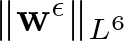 $\|\textbf{w}^{\epsilon}\|_{L^{6}}$ guarantee that
 \begin{equation}\begin{aligned} \int_{\mathbb{R}^{3}} |\rho^{\epsilon}-1||\partial_{t}\textbf{v}^{\epsilon}||\textbf{w}^{\epsilon}|
&\le C \int_{\mathbb{R}^{3}}\sqrt{G(\rho^{\epsilon})} |\partial_{t}\textbf{v}^{\epsilon}||\textbf{w}^{\epsilon}|\\
&\le C\epsilon \| G(\rho^{\epsilon})\|_{L^{1}}^{1/2}\| \nabla ^{2}\textbf{v}^{\epsilon}\|_{L^{3}}\|\textbf{w}^{\epsilon}\|_{L^{6}} \\
&\le \frac{\mu_{1}}{4}\epsilon \|\nabla \textbf{w}^{\epsilon}\|_{L^{2}}^{2}+C(\mu_{1},\gamma) \,\epsilon \| \nabla ^{2}\textbf{v}^{\epsilon}\|_{L^{3}}^{2} \int_{\mathbb{R}^{3}}G(\rho^{\epsilon}). \end{aligned}
\end{equation}
As to the last integral in (2.27), we have
 \begin{equation}\begin{aligned} \int_{\mathbb{R}^{3}} |(\rho^{\epsilon})^{\gamma}-1|| {\rm div}\textbf{v}^{\epsilon}||\textbf{w}^{\epsilon}|\le \left( \int_{\{x:\rho^{\epsilon}\ge 1/2\}} + \int_{\{x:\rho^{\epsilon}\le 1/2\}}\right) |(\rho^{\epsilon})^{\gamma}-1|| {\rm div}\textbf{v}^{\epsilon}||\textbf{w}^{\epsilon}|.
\end{aligned}
\end{equation}
Using (2.29), we compute
 \begin{equation}\begin{aligned} \int_{\{x:\rho^{\epsilon}\ge 1/2\}} |(\rho^{\epsilon})^{\gamma}-1|| {\rm div}\textbf{v}^{\epsilon}||\textbf{w}^{\epsilon}|
& \le C(\gamma,\bar{\rho}) \|\nabla \textbf{v}^{\epsilon}\|_{L^{\infty}} \int_{\{x:\rho^{\epsilon}\ge 1/2\}} \sqrt{|\rho^{\epsilon}-1|} \,\sqrt{\rho^{\epsilon}}|\textbf{w}^{\epsilon}|\\
&\le C(\gamma,\bar{\rho}) \, \| \nabla \textbf{v}^{\epsilon}\|_{L^{\infty}}\int_{\mathbb{R}^{3}}
\left( G(\rho^{\epsilon})+\rho^{\epsilon}|\textbf{w}^{\epsilon}|^{2}\right). \end{aligned}
\end{equation}
It follows from (2.18) that  ${\rm meas} \,|\{x:\rho^{\epsilon}\le 1/2\}|\le 4\int_{\{x:\rho^{\epsilon}\le 1/2\}}|\rho^{\epsilon}-1|^{2}\le C.$ This fact and (2.17) ensure that
 \begin{equation}\begin{aligned} \int_{\{x:\rho^{\epsilon}\le 1/2\}} |(\rho^{\epsilon})^{\gamma}-1|| {\rm div}\textbf{v}^{\epsilon}||\textbf{w}^{\epsilon}|&\le \|\nabla \textbf{v}^{\epsilon}\|_{L^{8}(\mathbb{R}^{3})} \|\textbf{w}^{\epsilon}\|_{L^{6}(\mathbb{R}^{3})}\\ &\quad \times \|(\rho^{\epsilon})^{\gamma}-1\|_{L^{\frac{24}{17}}(\{x:\rho^{\epsilon}\le 1/2\})}\\
&\le C(\gamma,\bar{\rho})\|\nabla \textbf{v}^{\epsilon}\|_{L^{8}(\mathbb{R}^{3})} \|\textbf{w}^{\epsilon}\|_{L^{6}(\mathbb{R}^{3})}\\
&\le \frac{\mu_{1}}{4}\epsilon \|\nabla \textbf{w}^{\epsilon}\|_{L^{2}}^{2}+C(\mu_{1},\gamma) \,\epsilon^{-1} \| \nabla \textbf{v}^{\epsilon}\|_{L^{8}}^{2}.
\end{aligned}
\end{equation}
Insert (2.32) and (2.33) back into (2.31) to deduce
 \begin{equation}\begin{aligned} & \int_{\mathbb{R}^{3}} |(\rho^{\epsilon})^{\gamma}-1|| {\rm div}\textbf{v}^{\epsilon}||\textbf{w}^{\epsilon}|\\
&\le \frac{\mu_{1}}{4}\epsilon \|\nabla \textbf{w}^{\epsilon}\|_{L^{2}}^{2}+C(\gamma,\bar{\rho}) \, \| \nabla \textbf{v}^{\epsilon}\|_{L^{\infty}}\int_{\mathbb{R}^{3}}
\left( G(\rho^{\epsilon})+\rho^{\epsilon}|\textbf{w}^{\epsilon}|^{2}\right)\\
&\quad +C(\mu_{1},\gamma) \,\epsilon^{-1} \| \nabla \textbf{v}^{\epsilon}\|_{L^{8}}^{2}.\end{aligned}
\end{equation}
Therefore, with (2.28), (2.30), and (2.34) in hand, we obtain from (2.27) that
 \begin{eqnarray*}\begin{aligned} &\frac{{\rm d}}{{\rm d} t}\int_{\mathbb{R}^{3}}\left( \rho^{\epsilon} |\textbf{w}^{\epsilon}|^{2}+G(\rho^{\epsilon})\right) +\epsilon \int_{\mathbb{R}^{3}} \left(\mu_{1}|\nabla \textbf{w}^{\epsilon}|^{2}+(\mu_{1}+\mu_{2})( {\rm div} \textbf{w}^{\epsilon})^{2}\right) \\
&\le C \left( \|\nabla \textbf{v}^{\epsilon}(\cdot,t)\|_{L^{\infty}} \| \textbf{v}^{\epsilon}(\cdot,t)\|_{L^{2}}^{2}+\epsilon^{-1} \| \nabla \textbf{v}^{\epsilon}\|_{L^{8}}^{2}\right)\\
&\quad +C\left( \|\nabla \textbf{v}^{\epsilon}\|_{L^{\infty}} +\epsilon \| \nabla ^{2}\textbf{v}^{\epsilon}\|_{L^{3}}^{2}\right)\int_{\mathbb{R}^{3}} \left( \rho^{\epsilon} |\textbf{w}^{\epsilon}|^{2}+ G(\rho^{\epsilon})\right),\end{aligned}
\end{eqnarray*}
which yields the desired (2.24) after integration.
2.3. Proof of inequality (1.7)
By (2.10) and the inequality  $|a+b|^{2} \ge \frac{1}{2}a^{2}-b^{2}$, we compute
 \begin{eqnarray*}\begin{aligned} &\epsilon\int_{0}^{T}\int_{\mathbb{R}^{3}} \left(\mu_{1}|\nabla \textbf{u}^{\epsilon}|^{2}+(\mu_{1}+\mu_{2})| {\rm div} \textbf{u}^{\epsilon}|^{2}\right) \\
&\ge\frac{\epsilon}{2} \int_{0}^{T}\int_{\mathbb{R}^{3}}\left( \mu_{1}|\nabla \textbf{v}^{\epsilon}|^{2} +(\mu_{1}+\mu_{2})| {\rm div} \textbf{v}^{\epsilon}|^{2}\right)\\
&\quad -\epsilon \int_{0}^{T}\int_{\mathbb{R}^{3}} \left(\mu_{1}|\nabla (\textbf{u}^{\epsilon}-\textbf{v}^{\epsilon})|^{2}+(\mu_{1}+\mu_{2})| {\rm div} (\textbf{u}^{\epsilon}-\textbf{v}^{\epsilon})|^{2}\right) \\
&\ge C-\epsilon \int_{0}^{T}\int_{\mathbb{R}^{3}} \left(\mu_{1}|\nabla (\textbf{u}^{\epsilon}-\textbf{v}^{\epsilon})|^{2}+(\mu_{1}+\mu_{2})| {\rm div} (\textbf{u}^{\epsilon}-\textbf{v}^{\epsilon})|^{2}\right). \end{aligned}
\end{eqnarray*}
In terms of (2.24), the above inequality satisfies
 \begin{equation}\begin{aligned} &\epsilon\int_{0}^{T}\int_{\mathbb{R}^{3}} \left(\mu_{1}|\nabla \textbf{u}^{\epsilon}|^{2}+(\mu_{1}+\mu_{2})| {\rm div} \textbf{u}^{\epsilon}|^{2}\right) \\
&\ge C-C\exp\left\{C\int_{0}^{T}\left( \|\nabla \textbf{v}^{\epsilon}\|_{L^{\infty}} +\epsilon \| \nabla ^{2}\textbf{v}^{\epsilon}\|_{L^{3}}^{2}\right)\right\}\\
&\quad \times\left[ \int_{0}^{T} \left( \|\nabla \textbf{v}^{\epsilon}(\cdot,t)\|_{L^{\infty}} \| \textbf{v}^{\epsilon}(\cdot,t)\|_{L^{2}}^{2}+\epsilon^{-1} \| \nabla \textbf{v}^{\epsilon}\|_{L^{8}}^{2}\right)\right.\\
&\quad \left.+\int_{\mathbb{R}^{3}}\left( \rho_{0}^{\epsilon} |\textbf{u}^{\epsilon}_{0}-\textbf{v}^{\epsilon}_{0}|^{2}+G(\rho_{0}^{\epsilon})\right)\right].\end{aligned}
\end{equation}
We deal with the integrals in (2.35) as follows.
Remember the definitions of  $\textbf{u}_{0}^{\epsilon}$ and
 $\rho_{0}^{\epsilon}$ in (2.19) and (2.21), we use (2.22) and (2.23) to deduce
 \begin{eqnarray*}\begin{aligned} \int_{\mathbb{R}^{3}}\left( \rho_{0}^{\epsilon} |\textbf{u}^{\epsilon}_{0}-\textbf{v}^{\epsilon}_{0}|^{2}+G(\rho_{0}^{\epsilon})\right)
&=\!\int_{\mathbb{R}^{3}} G(\rho_{0}^{\epsilon}) \le C
\int_{\mathbb{R}^{3}} |\rho_{0}^{\epsilon}-1|^{2}\le C \epsilon^{3}
\int_{\mathbb{R}^{3}} |\rho_{0}^{\epsilon}-1|\le C\epsilon^{3}. \end{aligned}
\end{eqnarray*}
By virtue of (2.9) and (2.12), we see that for 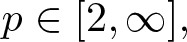 $p\in [2,\infty],$
 \begin{eqnarray*}\|\partial_{x}^{m}\textbf{v}^{\epsilon}\|_{L^{p}}
\le C\|\partial_{x}^{m}\textbf{v}^{\epsilon}\|_{L^{2}}^{2/p}
\|\partial_{x}^{m}\textbf{v}^{\epsilon}\|_{L^{\infty}}^{(p-2)/p}\le C\epsilon^{\frac{(p-2)(3-m)-2m}{2p}}.\end{eqnarray*}
Then, it has  $\|\partial_{x}\textbf{v}^{\epsilon}\|_{L^{8}}^{2}
\le C \epsilon^{\frac{5}{4}}$ and
 $\|\partial_{x}^{2}\textbf{v}^{\epsilon}\|_{L^{3}}^{2}
\le C \epsilon^{-1}.$ Consequently,
 \begin{equation} \int_{0}^{T} \left( \|\nabla \textbf{v}^{\epsilon}(\cdot,t)\|_{L^{\infty}} \| \textbf{v}^{\epsilon}(\cdot,t)\|_{L^{2}}^{2}+\epsilon^{-1} \| \nabla \textbf{v}^{\epsilon}\|_{L^{8}}^{2}\right)+\int_{\mathbb{R}^{3}}\left( \rho_{0}^{\epsilon} |\textbf{u}^{\epsilon}_{0}-\textbf{v}^{\epsilon}_{0}|^{2}+G(\rho_{0}^{\epsilon})\right)\le C\epsilon^{\frac{1}{4}}\end{equation}
and
 \begin{equation} \int_{0}^{T}\left( \|\nabla \textbf{v}^{\epsilon}\|_{L^{\infty}} +\epsilon \| \nabla ^{2}\textbf{v}^{\epsilon}\|_{L^{3}}^{2}\right)\le C.\end{equation}
With the aid of (2.36) and (2.37), we estimate (2.35) and obtain
 \begin{eqnarray*}\begin{aligned} &\epsilon\int_{0}^{T}\int_{\mathbb{R}^{3}} \left(\mu_{1}|\nabla \textbf{u}^{\epsilon}|^{2}+(\mu_{1}+\mu_{2})( {\rm div} \textbf{u}^{\epsilon})^{2}\right)
\ge C-C\epsilon\ge \frac{C}{2}.\end{aligned}
\end{eqnarray*}
This proves (1.7). The proof of Theorem 1.1 is completed.
3. Proof of Theorem 1.2
3.1. Preliminaries
Fix 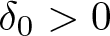 $\delta_{0} \gt 0$, we extend
 $f$ in
 $t$ by reflection:
 \begin{align*} &f(x,2T-t)=f(x,t) \quad {\rm if}\,\,\, (x,t)\in \mathbb{R}^{3}\times[T-\delta_{0},T],\quad f(x,-t)=f(x,t) \\
&{\rm if}\,\,\, (x,t)\in \mathbb{R}^{3}\times[0,\delta_{0}].\end{align*}
So, the Bosev norm in (1.13) is well defined over  $Q=\mathbb{R}^{3}\times (0,T)$, and the mollification of
 $f$ makes sense
 \begin{eqnarray*}\begin{aligned} \overline{f}:=\overline{f}_{\delta}(x,t)
=
\int_{Q}\eta_{\delta}(x-y,t-s)f(y,s){\rm d}y{\rm d}s,\quad \forall\,\,\,(x,t)\in Q,\end{aligned}
\end{eqnarray*}
where  $\eta_{\delta}$ is the Friedrichs mollifier of width
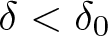 $\delta \lt \delta_{0}$.
We collect some basic properties that will be frequently used in the proof.
• Assume that
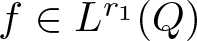
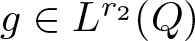
$f\in L^{r_{1}}(Q)$ and
$g\in L^{r_{2}}(Q)$. The following commutator estimate holds true (cf. [Reference Constantin and Titi15])
(3.1)\begin{equation} \|\overline{(f\otimes g)}-\overline{f} \otimes \overline{g}\|_{L^{r}(Q)}\le \left\|\overline{f}-f \right\|_{L^{r_{1}}(Q)} \|\overline{g}-g\|_{L^{r_{2}}(Q)},\end{equation}where the exponents
$1\le r,\,r_{1},\,r_{2} \lt \infty$ satisfy
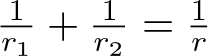
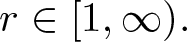
$ \frac{1}{r_{1}}+\frac{1}{r_{2}}=\frac{1}{r}$.• Assume that
$f\in B_{r}^{\sigma,\infty}(Q)$ with
$\sigma \gt 0$ and
$r\in [1,\infty).$ There holds (cf. [Reference Chen, Liang, Wang and Xu9])
(3.2)\begin{equation}\begin{aligned} \|\overline{f} -f\|_{L^{r}(Q)}
\le C \delta^{\sigma}\|f\|_{B_{r}^{\sigma,\infty}(Q)}.\end{aligned}
\end{equation}Moreover, for
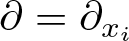
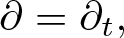
$\partial=\partial_{x_{i}}$ or
$\partial=\partial_{t},$
(3.3)\begin{equation} \|\partial \overline{f}\|_{L^{r}(Q)} \le \delta^{\sigma-1}\|f\|_{B_{r}^{\sigma,\infty}(Q)}.\end{equation}






3.2. Representation of the momentum equations
Mollify the momentum equation (1.2)2 and multiply the resulting expression by  $\overline{\textbf{u}^{\epsilon}}$, to find
 \begin{equation} \begin{aligned}
&\int_{0}^{T}\psi \int_{\mathbb{R}^{3}} \overline{\textbf{u}^{\epsilon}}\left( \partial_{t}\overline{(\rho^{\epsilon}\textbf{u}^{\epsilon})} + {\rm div} \overline{( \rho^{\epsilon}\textbf{u}^{\epsilon} \otimes \textbf{u}^{\epsilon})} + \nabla \overline{(\rho^{\epsilon})^{\gamma}}\right)\\ &=\epsilon\int_{0}^{T}\psi\int_{\mathbb{R}^{3}}\overline{\textbf{u}^{\epsilon}} \overline{\mathcal{L}[\textbf{u}^{\epsilon}]}\\
&=-\epsilon\int_{0}^{T}\psi \int_{\mathbb{R}^{3}}\left(\mu_{1}|\nabla \overline{\textbf{u}^{\epsilon}}|^{2}+(\mu_{1}+\mu_{2})( {\rm div} \overline{\textbf{u}^{\epsilon}})^{2}\right),\end{aligned}
\end{equation}
where  $\psi\in \mathcal{D}(0,T)$, and in what follows, we omit the integral variables for simplicity.
Let us compute the left integrals in (3.4). On one hand,
 \begin{equation}\begin{aligned} & \int_{0}^{T}\psi \int_{\mathbb{R}^{3}} \overline{\textbf{u}^{\epsilon}} \partial_{t}\overline{(\rho^{\epsilon}\textbf{u}^{\epsilon})}\\
&= \int_{0}^{T}\psi\int_{\mathbb{R}^{3}} \overline{\textbf{u}^{\epsilon}}\partial_{t}(\overline{\rho^{\epsilon}}\,\, \overline{\textbf{u}^{\epsilon}})
+\int_{0}^{T}\psi\int_{\mathbb{R}^{3}} \overline{\textbf{u}^{\epsilon}} \partial_{t}\left( \overline{\rho^{\epsilon}\textbf{u}^{\epsilon}} -\overline{\rho^{\epsilon}}\,\,\overline{\textbf{u}^{\epsilon}}\right)\\
&=\int_{0}^{T}\psi\int_{\mathbb{R}^{3}}\left[\partial_{t}\left(\frac{1}{2}\overline{\rho^{\epsilon}} |\overline{\textbf{u}^{\epsilon}}|^{2}\right) +\frac{1}{2}\partial_{t}\overline{\rho^{\epsilon}} |\overline{\textbf{u}^{\epsilon}}|^{2}\right]+\int_{0}^{T}\psi\int_{\mathbb{R}^{3}} \overline{\textbf{u}^{\epsilon}} \partial_{t}\left( \overline{\rho^{\epsilon}\textbf{u}^{\epsilon}} -\overline{\rho^{\epsilon}}\,\,\overline{\textbf{u}^{\epsilon}}\right).\end{aligned}
\end{equation}
On the other hand,
 \begin{equation}\begin{aligned} &\int_{0}^{T}\psi\int_{\mathbb{R}^{3}} \overline{\textbf{u}^{\epsilon}} {\rm div} \overline{( \rho^{\epsilon}\textbf{u}^{\epsilon} \otimes \textbf{u}^{\epsilon})} \\
&=\int_{0}^{T}\psi\int_{\mathbb{R}^{3}} \overline{\textbf{u}^{\epsilon}} {\rm div} \left(\overline{\rho^{\epsilon}\textbf{u}^{\epsilon}}\otimes\overline{\textbf{u}^{\epsilon}}\right)
+\int_{0}^{T}\psi \int_{\mathbb{R}^{3}} \textbf{u}^{\epsilon} {\rm div}\left(\overline{\rho^{\epsilon}\textbf{u}^{\epsilon} \otimes \textbf{u}^{\epsilon}}
-\overline{\rho^{\epsilon}\textbf{u}^{\epsilon} }\otimes\overline{\textbf{u}^{\epsilon}}\right)\\
&=\int_{0}^{T}\psi \int_{\mathbb{R}^{3}} \left[ {\rm div}\left(\frac{1}{2}\overline{\rho^{\epsilon}\textbf{u}^{\epsilon}} \,\, |\overline{\textbf{u}^{\epsilon}}|^{2}\right) +\frac{1}{2} {\rm div} (\overline{\rho^{\epsilon}\textbf{u}^{\epsilon}}) |\overline{\textbf{u}^{\epsilon}}|^{2}\right]\\ &\quad
+\int_{0}^{T}\psi\int_{\mathbb{R}^{3}} \textbf{u}^{\epsilon} {\rm div}\left(\overline{\rho^{\epsilon}\textbf{u}^{\epsilon} \otimes \textbf{u}^{\epsilon}}
-\overline{\rho^{\epsilon}\textbf{u}^{\epsilon} }\otimes\overline{\textbf{u}^{\epsilon}}\right). \end{aligned}
\end{equation}
Making use of (3.5), (3.6), and the simple fact
 \begin{eqnarray*}\begin{aligned} 0 =\partial_{t}\overline{\rho^{\epsilon}} + {\rm div}\overline{(\rho^{\epsilon}\textbf{u}^{\epsilon})},\end{aligned}
\end{eqnarray*}
we have
 \begin{equation}\begin{aligned} &\int_{0}^{T}\psi \int_{\mathbb{R}^{3}} \overline{\textbf{u}^{\epsilon}} \partial_{t}\overline{(\rho^{\epsilon}\textbf{u}^{\epsilon})}+\int_{0}^{T}\psi \int_{\mathbb{R}^{3}} \overline{\textbf{u}^{\epsilon}} {\rm div} \overline{( \rho^{\epsilon}\textbf{u}^{\epsilon} \otimes \textbf{u}^{\epsilon})}\\
&= \int_{0}^{T}\psi \int_{\mathbb{R}^{3}} \left[ \partial_{t}\left(\overline{\rho^{\epsilon}}\frac{|\overline{\textbf{u}^{\epsilon}}|^{2}}{2}\right) + {\rm div}\left(\overline{\rho^{\epsilon}\textbf{u}^{\epsilon}}\frac{|\overline{\textbf{u}^{\epsilon}}|^{2}}{2}\right) \right]\\
&\quad +\int_{0}^{T}\psi \int_{\mathbb{R}^{3}} \overline{\textbf{u}^{\epsilon}} \partial_{t}\left( \overline{\rho^{\epsilon}\textbf{u}^{\epsilon}} -\overline{\rho^{\epsilon}}\,\,\overline{\textbf{u}^{\epsilon}}\right)+\int_{0}^{T}\psi \int_{\mathbb{R}^{3}} \textbf{u}^{\epsilon} {\rm div}\left(\overline{\rho^{\epsilon}\textbf{u}^{\epsilon} \otimes \textbf{u}^{\epsilon}}
-\overline{\rho^{\epsilon}\textbf{u}^{\epsilon} }\otimes\overline{\textbf{u}^{\epsilon}}\right)\\
&=-\int_{0}^{T}\psi' \int_{\mathbb{R}^{3}} \overline{\rho^{\epsilon}}\frac{|\overline{\textbf{u}^{\epsilon}}|^{2}}{2}\\
&\quad +\int_{0}^{T}\psi \int_{\mathbb{R}^{3}} \overline{\textbf{u}^{\epsilon}} \partial_{t}\left( \overline{\rho^{\epsilon}\textbf{u}^{\epsilon}} -\overline{\rho^{\epsilon}}\,\,\overline{\textbf{u}^{\epsilon}}\right)+\int_{0}^{T}\psi \int_{\mathbb{R}^{3}} \textbf{u}^{\epsilon} {\rm div}\left(\overline{\rho^{\epsilon}\textbf{u}^{\epsilon} \otimes \textbf{u}^{\epsilon}}
-\overline{\rho^{\epsilon}\textbf{u}^{\epsilon} }\otimes\overline{\textbf{u}^{\epsilon}}\right)\\
&=-\int_{0}^{T}\psi' \int_{\mathbb{R}^{3}} \overline{\rho^{\epsilon}}\frac{|\overline{\textbf{u}^{\epsilon}}|^{2}}{2} +I_{1}+I_{2}.\end{aligned}
\end{equation}
Observe that
 \begin{eqnarray*}\begin{aligned} &\quad-\frac{\left(\left(\overline{\rho^{\epsilon}}\right)^{\gamma}-1\right)}{\overline{\rho^{\epsilon}}}\overline{\rho^{\epsilon}} {\rm div} \overline{\textbf{u}^{\epsilon}}\\
&=\frac{\left(\left(\overline{\rho^{\epsilon}}\right)^{\gamma}-1\right)}{\overline{\rho^{\epsilon}}}
\partial_{t}\overline{\rho^{\epsilon}}+\frac{\left(\left(\overline{\rho^{\epsilon}}\right)^{\gamma}-1\right)}
{\overline{\rho^{\epsilon}}} {\rm div}\left( \overline{\textbf{u}^{\epsilon}\rho^{\epsilon}}-\overline{\textbf{u}^{\epsilon}} \,\, \overline{\rho^{\epsilon}}\right)+\frac{\left(\left(\overline{\rho^{\epsilon}}\right)^{\gamma}-1\right)}{\overline{\rho^{\epsilon}}}
\overline{\textbf{u}^{\epsilon}}\cdot \nabla \overline{\rho^{\epsilon}} \\
&\quad+\partial_{t}\overline{\rho^{\epsilon}}\int_{1}^{\overline{\rho^{\epsilon}}}\frac{s^{\gamma}-1}{s^{2}}+ {\rm div}\left( \overline{\textbf{u}^{\epsilon}\rho^{\epsilon}}\right)\int_{1}^{\overline{\rho^{\epsilon}}}\frac{s^{\gamma}-1}{s^{2}}\\
&=\partial_{t}G(\overline{\rho^{\epsilon}}) +\frac{\left(\left(\overline{\rho^{\epsilon}}\right)^{\gamma}-1\right)}
{\overline{\rho^{\epsilon}}} {\rm div}\left( \overline{\textbf{u}^{\epsilon}\rho^{\epsilon}}-\overline{\textbf{u}^{\epsilon}} \,\, \overline{\rho^{\epsilon}}\right)+\frac{\left(\left(\overline{\rho^{\epsilon}}\right)^{\gamma}-1\right)}{\overline{\rho^{\epsilon}}}
\overline{\textbf{u}^{\epsilon}}\cdot \nabla \overline{\rho^{\epsilon}} \\
&\quad + {\rm div}\left( \overline{\textbf{u}^{\epsilon}\rho^{\epsilon}}\right)\int_{1}^{\overline{\rho^{\epsilon}}}\frac{s^{\gamma}-1}{s^{2}}, \end{aligned}
\end{eqnarray*}
and whence,
 \begin{eqnarray*}\begin{aligned} \overline{\textbf{u}^{\epsilon}}\cdot \nabla \overline{\left(\rho^{\epsilon}\right)^{\gamma}}
&= {\rm div} \left(\overline{\textbf{u}^{\epsilon}} \left(\overline{\left(\rho^{\epsilon}\right)^{\gamma}}-1\right)\right) -\left(\overline{\left(\rho^{\epsilon}\right)^{\gamma}}-\left(\overline{\rho^{\epsilon}}\right)^{\gamma}\right) {\rm div}\overline{\textbf{u}^{\epsilon}}-\frac{\left(\left(\overline{\rho^{\epsilon}}\right)^{\gamma}-1\right)}{\overline{\rho^{\epsilon}}}\overline{\rho^{\epsilon}} {\rm div} \overline{\textbf{u}^{\epsilon}}\\
&=\partial_{t}G(\overline{\rho^{\epsilon}}) -\left(\overline{\left(\rho^{\epsilon}\right)^{\gamma}}-\left(\overline{\rho^{\epsilon}}\right)^{\gamma}\right) {\rm div}\overline{\textbf{u}^{\epsilon}}\\
&\quad+\left[\frac{\left(\left(\overline{\rho^{\epsilon}}\right)^{\gamma}-1\right)}
{\overline{\rho^{\epsilon}}}+\int_{1}^{\overline{\rho^{\epsilon}}}\frac{s^{\gamma}-1}{s^{2}} \right] {\rm div}\left( \overline{\textbf{u}^{\epsilon}\rho^{\epsilon}}-\overline{\textbf{u}^{\epsilon}}\,\overline{\rho^{\epsilon}}\right) \\
&\quad + {\rm div} \left[\overline{\textbf{u}^{\epsilon}} \left(\overline{\left(\rho^{\epsilon}\right)^{\gamma}}-1\right)+\overline{\textbf{u}^{\epsilon}}\,\,\overline{\rho^{\epsilon}} \int_{1}^{\overline{\rho^{\epsilon}}}\frac{s^{\gamma}-1}{s^{2}}\right].
\end{aligned}
\end{eqnarray*}
By this, we compute
 \begin{equation}\begin{aligned}
\int_{0}^{T}\psi\int_{\mathbb{R}^{3}} \overline{\textbf{u}^{\epsilon}} \cdot\nabla \overline{(\rho^{\epsilon})^{\gamma}}
&= -\int_{0}^{T}\psi' \int_{\mathbb{R}^{3}} G(\overline{\rho^{\epsilon}}) -\int_{0}^{T}\psi\int_{\mathbb{R}^{3}}\left(\overline{\left(\rho^{\epsilon}\right)^{\gamma}}-\left(\overline{\rho^{\epsilon}}\right)^{\gamma}\right) {\rm div}\overline{\textbf{u}^{\epsilon}} \\
&\quad + \int_{0}^{T}\psi\int_{\mathbb{R}^{3}}\left[\frac{\left(\left(\overline{\rho^{\epsilon}}\right)^{\gamma}-1\right)}
{\overline{\rho^{\epsilon}}}+\int_{1}^{\overline{\rho^{\epsilon}}}\frac{s^{\gamma}-1}{s^{2}} \right] {\rm div}\left( \overline{\textbf{u}^{\epsilon}\rho^{\epsilon}}-\overline{\textbf{u}^{\epsilon}}\,\overline{\rho^{\epsilon}}\right) \\
&= -\int_{0}^{T}\psi' \int_{\mathbb{R}^{3}} G(\overline{\rho^{\epsilon}}) +I_{3}+I_{4}.\end{aligned}
\end{equation}
Substituting (3.7) and (3.8) into (3.4) yields
 \begin{equation}\begin{aligned} 0&= -\int_{0}^{T}\psi'\int_{\mathbb{R}^{3}} \left(\overline{\rho^{\epsilon}}\frac{|\overline{\textbf{u}^{\epsilon}}|^{2}}{2}+G(\overline{\rho^{\epsilon}})\right)\\
&\quad+ \epsilon\int_{0}^{T}\psi\int_{\mathbb{R}^{3}}\left(\mu_{1}\left|\overline{\nabla \textbf{u}^{\epsilon}}\right|^{2}+(\mu_{1}+\mu_{2})\left(\overline{{\rm div}\textbf{u}^{\epsilon}}\right)^{2}\right) +\sum_{i=1}^{4}I_{i}.\end{aligned}
\end{equation}
On the other hand, if we multiply (1.8) by  $\psi$, we find
 \begin{equation}\begin{aligned} &\epsilon\int_{0}^{T}\psi \int_{\mathbb{R}^{3}}\left(\mu_{1}|\nabla \textbf{u}^{\epsilon}|^{2}+(\mu_{1}+\mu_{2})( {\rm div} \textbf{u}^{\epsilon})^{2}\right)\le \int_{0}^{T}\psi' \int_{\mathbb{R}^{3}} \left(\rho^{\epsilon}\frac{|\textbf{u}^{\epsilon}|^{2}}{2}+G( \rho^{\epsilon})\right).\end{aligned}
\end{equation}
Thus, the combination of (3.9) with (3.10) yields
 \begin{equation}\begin{aligned} & \epsilon\int_{0}^{T}\psi\int_{\mathbb{R}^{3}}\left(\mu_{1}|\nabla \textbf{u}^{\epsilon}|^{2}+(\mu_{1}+\mu_{2})( {\rm div} \textbf{u}^{\epsilon})^{2}\right)\\
&\le - \int_{0}^{T}\psi' \int_{\mathbb{R}^{3}} \left[\left(\overline{\rho^{\epsilon}}\frac{|\overline{\textbf{u}^{\epsilon}}|^{2}}{2}-\rho^{\epsilon}\frac{|\textbf{u}^{\epsilon}|^{2}}{2}\right)+ \left(G(\overline{\rho^{\epsilon}})-G(\rho^{\epsilon})\right)\right]\\
&\quad+ \epsilon\int_{0}^{T}\psi\int_{\mathbb{R}^{3}}\left(\mu_{1}\left|\overline{\nabla \textbf{u}^{\epsilon}}\right|^{2}+(\mu_{1}+\mu_{2})\left(\overline{{\rm div}\textbf{u}^{\epsilon}}\right)^{2}\right) +\sum_{i=1}^{4}I_{i}.\end{aligned}
\end{equation}
3.3. Error estimates
Using (3.2), (3.3), and assumption conditions (1.11), we deduce that, for 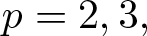 $p=2,3,$
 \begin{equation}\begin{aligned} \left\|\overline{\textbf{u}^{\epsilon}}-\textbf{u}^{\epsilon} \right\|_{L^{p}(Q)}\le C \delta^{\sigma}\|\textbf{u}^{\epsilon}\|_{B_{p}^{\sigma,\infty}(Q)}\le C\delta^{\sigma},\end{aligned}
\end{equation}
 \begin{equation}\begin{aligned} \left\|\overline{\rho^{\epsilon}}-\rho^{\epsilon} \right\|_{L^{p}(Q)}
&\le C\left\|\overline{\rho^{\epsilon}-1}-(\rho^{\epsilon} -1)\right\|_{L^{p}(Q)}\\
&\le C \delta^{\sigma}\|\rho^{\epsilon}-1\|_{B_{p}^{\sigma,\infty}(Q)}\\
&\le C\delta^{\sigma},\end{aligned}
\end{equation}
 \begin{equation}\begin{aligned}
& \left\| \nabla \overline{\rho^{\epsilon}} \right\|_{L^{p}(Q)}+\left\| \partial_{t}\overline{\textbf{u}^{\epsilon}} \right\|_{L^{p}(Q)}+\left\| \nabla \overline{\textbf{u}^{\epsilon}} \right\|_{L^{3}(Q)}\\
&\le C \delta^{(\sigma-1)}\left(\|\rho^{\epsilon}\|_{B_{p}^{\sigma,\infty}(Q)}+\|\textbf{u}^{\epsilon}\|_{B_{p}^{\sigma,\infty}(Q)}\right)\\
&\le C \delta^{(\sigma-1)}.\end{aligned}
\end{equation}
Furthermore, it follows from (3.12), (3.13), and (3.1) that
 \begin{equation}\begin{aligned} \left\| \overline{\rho^{\epsilon}\textbf{u}^{\epsilon}}
-\overline{\rho^{\epsilon}}\,\,
\overline{\textbf{u}^{\epsilon}}\right\|_{L^{\frac{3}{2}}(Q)} & \le C\left\| \overline{\rho^{\epsilon}}
-\rho^{\epsilon}\right\|_{L^{3}(Q)}\left\| \overline{\textbf{u}^{\epsilon}}
-\textbf{u}^{\epsilon}\right\|_{L^{3}(Q)}\le C \delta^{2\sigma}. \end{aligned}
\end{equation}
We estimate  $I_{i}$ in (3.11) as follows.
In terms of (3.14) and (3.15), one deduces
 \begin{equation}\begin{aligned} |I_{1}|&=\left|\int_{0}^{T}\psi\int_{\mathbb{R}^{3}} \overline{\textbf{u}^{\epsilon}} \partial_{t}\left( \overline{\rho^{\epsilon}\textbf{u}^{\epsilon}} -\overline{\rho^{\epsilon}}\,\,\overline{\textbf{u}^{\epsilon}}\right) \right|\\
&\le C\int_{0}^{T}\int_{\mathbb{R}^{3}}\left| \partial_{t}\overline{\textbf{u}^{\epsilon}}\left( \overline{\rho^{\epsilon}\textbf{u}^{\epsilon}} -\overline{\rho^{\epsilon}}\,\,\overline{\textbf{u}^{\epsilon}}\right) \right| +\int_{0}^{T} \int_{\mathbb{R}^{3}}\left| \psi'\,\, \overline{\textbf{u}^{\epsilon}}\left( \overline{\rho^{\epsilon}\textbf{u}^{\epsilon}} -\overline{\rho^{\epsilon}}\,\,\overline{\textbf{u}^{\epsilon}}\right)\right| \\
&\le C \left\| \partial_{t}\overline{\textbf{u}^{\epsilon}} \right\|_{L^{3}(Q)}\left\| \overline{\rho^{\epsilon}\textbf{u}^{\epsilon}}
-\overline{\rho^{\epsilon}}\,\,
\overline{\textbf{u}^{\epsilon}}\right\|_{L^{\frac{3}{2}} (Q)}+\int_{0}^{T} \int_{\mathbb{R}^{3}}\left| \psi'\,\, \overline{\textbf{u}^{\epsilon}}\left( \overline{\rho^{\epsilon}\textbf{u}^{\epsilon}} -\overline{\rho^{\epsilon}}\,\,\overline{\textbf{u}^{\epsilon}}\right)\right| \\
&\le C \delta^{3\sigma-1}+\int_{0}^{T} \int_{\mathbb{R}^{3}}\left| \psi'\,\, \overline{\textbf{u}^{\epsilon}}\left( \overline{\rho^{\epsilon}\textbf{u}^{\epsilon}} -\overline{\rho^{\epsilon}}\,\,\overline{\textbf{u}^{\epsilon}}\right)\right|\end{aligned}
\end{equation}
and
 \begin{equation}\begin{aligned} |I_{2}| &=\left|\int_{0}^{T}\psi\int_{\mathbb{R}^{3}} \textbf{u}^{\epsilon} {\rm div}\left(\overline{\rho^{\epsilon}\textbf{u}^{\epsilon} \otimes \textbf{u}^{\epsilon}}
-\overline{\rho^{\epsilon}\textbf{u}^{\epsilon} }\otimes\overline{\textbf{u}^{\epsilon}}\right)\right|\\
&\le C\int_{0}^{T}\int_{\mathbb{R}^{3}} \left|\nabla \textbf{u}^{\epsilon} \,\left(\overline{\rho^{\epsilon}\textbf{u}^{\epsilon} \otimes \textbf{u}^{\epsilon}}
-\overline{\rho^{\epsilon}\textbf{u}^{\epsilon} }\otimes\overline{\textbf{u}^{\epsilon}}\right)\right|\\
&\le C \left\|\nabla \overline{\textbf{u}^{\epsilon}}\right\|_{L^{3}(Q) } \left\|\left( \overline{\rho^{\epsilon}\textbf{u}^{\epsilon}\otimes \textbf{u}^{\epsilon}}
-\overline{(\rho^{\epsilon}\textbf{u}^{\epsilon})}\otimes\overline{\textbf{u}^{\epsilon}}\right)\right\|_{L^{\frac{3}{2}}(Q) }\\
& \le C \delta^{3\sigma-1},\end{aligned}
\end{equation}
where, for the last inequality in (3.17), we used
 \begin{eqnarray*}\begin{aligned}& \left\|\left( \overline{\rho^{\epsilon}\textbf{u}^{\epsilon}\otimes \textbf{u}^{\epsilon}}
-\overline{(\rho^{\epsilon}\textbf{u}^{\epsilon})}\otimes\overline{\textbf{u}^{\epsilon}}\right)\right\|_{L^{\frac{3}{2}}(Q) } \\
& \le \left\| \overline{\rho^{\epsilon}\textbf{u}^{\epsilon}}
-\rho\textbf{u}\right\|_{L^{3}}\left\| \overline{\textbf{u}^{\epsilon}}-\textbf{u}^{\epsilon}\right\|_{L^{3} (Q)} \\
&\le C\delta^{2\sigma }\|\rho^{\epsilon}\textbf{u}^{\epsilon}\|_{B_{3}^{\sigma,\infty}(Q)}\|\textbf{u}^{\epsilon}\|_{B_{3}^{\sigma,\infty}(Q)}\\
&\le C \delta^{2\sigma},\end{aligned}
\end{eqnarray*}
which comes from the commuter estimate (3.1) because of  $\rho^{\epsilon}\textbf{u}^{\epsilon}\in B_{3}^{\sigma,\infty}(Q)$.
Next, notice that (1.11) implies  $\rho^{\epsilon}$ is positively bounded, we utilize (3.14) and (3.15) and compute
 \begin{equation}\begin{aligned} |I_{4}|
&=\left| \int_{0}^{T}\psi\int_{\mathbb{R}^{3}} \left( \overline{\textbf{u}^{\epsilon}\rho^{\epsilon}}-\overline{\textbf{u}^{\epsilon}} \,\,\overline{\rho^{\epsilon}}\right)\cdot \nabla \left[\frac{(\left(\overline{\rho^{\epsilon}}\right)^{\gamma}-1)}
{\overline{\rho^{\epsilon}}}+ \int_{1}^{\overline{\rho^{\epsilon}}}\frac{s^{\gamma}-1}{s^{2}} \right]\right|\\
&\le C\left\| \nabla \overline{\rho^{\epsilon}} \right\|_{L^{3}(Q)}\left\| \overline{\textbf{u}^{\epsilon}\rho^{\epsilon}}-\overline{\textbf{u}^{\epsilon}} \,\, \overline{\rho^{\epsilon}} \right\|_{L^{\frac{3}{2}}(Q)}\\
&\le C \delta^{3\sigma-1}. \end{aligned}
\end{equation}
In order to estimate  $I_{3}$, we have the following
Theorem 3.1.
Under the assumptions in Theorem 1.2, there holds
 \begin{equation} \left\|(\overline{\rho^{\epsilon}})^{\gamma}-\overline{(\rho^{\epsilon})^{\gamma}}\right\|_{L^{\frac{3}{2}}(Q)} \le C \delta^{2\sigma}\|\rho\|_{B_{3}^{\sigma,\infty}(Q)}^{2}.\end{equation}
Proof. The proof of Claim 3.1 is available in Appendix.
Let us continue the proof. By (3.19) and (3.14), one deduces
 \begin{equation}\begin{aligned} |I_{3}|&=\left|-\int_{0}^{T}\psi\int_{\mathbb{R}^{3}}\left(\overline{\left(\rho^{\epsilon}\right)^{\gamma}}-\left(\overline{\rho^{\epsilon}}\right)^{\gamma}\right) {\rm div}\overline{\textbf{u}^{\epsilon}}\right|\\
&\le \left\| \nabla \overline{\textbf{u}^{\epsilon}} \right\|_{L^{3}(Q)}\left\| \overline{\left(\rho^{\epsilon}\right)^{\gamma}}-\left(\overline{\rho^{\epsilon}}\right)^{\gamma}\right\|_{L^{\frac{3}{2}} (Q)} \\
&\le C \delta^{3\sigma-1}.\end{aligned}
\end{equation}
As to the diffusion term in (3.11), one has
 \begin{equation}\begin{aligned} &\left|\epsilon\int_{0}^{T}\psi\int_{\mathbb{R}^{3}}\left(\mu_{1}\left|\overline{\nabla \textbf{u}^{\epsilon}}\right|^{2}+(\mu_{1}+\mu_{2})\left(\overline{{\rm div}\textbf{u}^{\epsilon}}\right)^{2}\right)\right|\\
&\le C\epsilon \left\| \nabla \overline{\textbf{u}^{\epsilon}} \right\|_{L^{2}Q)}^{2}\\
&\le C\epsilon \delta^{2(\sigma-1)}\|\textbf{u}^{\epsilon}\|_{B_{2}^{\sigma,\infty} (Q)} \\
&\le C\epsilon \delta^{2(\sigma-1)}.\end{aligned}
\end{equation}
In conclusion, taking inequalities (3.16)–(3.18) and (3.20)–(3.21) into account, we find
 \begin{eqnarray*}\begin{aligned} & \left|\sum_{i=1}^{4}I_{i}+\epsilon\int_{0}^{T}\psi\int_{\mathbb{R}^{3}}\left(\mu_{1}\left|\overline{\nabla \textbf{u}^{\epsilon}}\right|^{2}+(\mu_{1}+\mu_{2})\left(\overline{{\rm div}\textbf{u}^{\epsilon}}\right)^{2}\right)\right| \\
& \le C\left(\delta^{3\sigma-1}+ \epsilon \delta^{2(\sigma-1)}\right)+ \int_{0}^{T} \int_{\mathbb{R}^{3}}\left| \psi'\,\, \overline{\textbf{u}^{\epsilon}}\left( \overline{(\rho^{\epsilon}\textbf{u}^{\epsilon})} -\overline{\rho^{\epsilon}}\,\,\overline{\textbf{u}^{\epsilon}}\right)\right| .
\end{aligned}
\end{eqnarray*}
Substitute it back into (3.11), to discover
 \begin{equation}\begin{aligned} & \epsilon\int_{0}^{T}\psi\int_{\mathbb{R}^{3}}\left(\mu_{1}|\nabla \textbf{u}^{\epsilon}|^{2}+(\mu_{1}+\mu_{2})( {\rm div} \textbf{u}^{\epsilon})^{2}\right)\\
&\le C\left(\delta^{3\sigma-1}+ \epsilon \delta^{2(\sigma-1)}\right)+ \int_{0}^{T} \int_{\mathbb{R}^{3}}\left| \psi'\,\, \overline{\textbf{u}^{\epsilon}}\left( \overline{(\rho^{\epsilon}\textbf{u}^{\epsilon})} -\overline{\rho^{\epsilon}}\,\,\overline{\textbf{u}^{\epsilon}}\right)\right|\\
&\quad - \int_{0}^{T}\psi' \int_{\mathbb{R}^{3}} \left[\left(\overline{\rho^{\epsilon}}\frac{|\overline{\textbf{u}^{\epsilon}}|^{2}}{2}-\rho^{\epsilon}\frac{|\textbf{u}^{\epsilon}|^{2}}{2}\right)+ \left(G(\overline{\rho^{\epsilon}})-G(\rho^{\epsilon})\right)\right].\end{aligned}
\end{equation}
It remains to deal with the last two integrals in (3.22). For this, we define
 \begin{eqnarray*} \psi:=\psi_{\tau}(s)=\left\{\begin{aligned}&0,&s\le t_{1};\\
&\tau^{-1}(s-t_{1}),&t_{1}\le s\le t_{1}+\tau;\\
&1,&t_{1}+\tau \le s\le t_{2};\\
&\tau^{-1}(t_{2}+\tau-s),&t_{2}\le s\le t_{2}+\tau;\\
&0,&t_{2}+\tau\le s,
\end{aligned}
\right. \end{eqnarray*}
where  $0\le t_{1} \lt t_{1}+\tau \lt t_{2} \lt t_{2}+\tau\le T$.
Choosing in (3.22) the function  $\psi_{\tau}(s)$ and sending
 $\tau \rightarrow 0+$, we obtain that, for Lebesgue points
 $t_{1}$ and
 $ t_{2},$
 \begin{equation}\begin{aligned} & \epsilon\int_{t_{1}}^{t_{2}} \int_{\mathbb{R}^{3}}\left(\mu_{1}|\nabla \textbf{u}^{\epsilon}|^{2}+(\mu_{1}+\mu_{2})( {\rm div} \textbf{u}^{\epsilon})^{2}\right)\\
&\le C\left(\delta^{3\sigma-1}+ \epsilon \delta^{2(\sigma-1)}\right)\\
&\quad+\sum_{j=1}^{2} \int_{\mathbb{R}^{3}} \left|\left(\overline{\rho^{\epsilon}}\frac{|\overline{\textbf{u}^{\epsilon}}|^{2}}{2}-\rho^{\epsilon}\frac{|\textbf{u}^{\epsilon}|^{2}}{2}\right) \left(G(\overline{\rho^{\epsilon}})-G(\rho^{\epsilon})\right)\right|(\cdot,t_{j})\\
&\quad +\sum_{j=1}^{2} \int_{\mathbb{R}^{3}}\left| \overline{\textbf{u}^{\epsilon}}\left( \overline{\rho^{\epsilon}\textbf{u}^{\epsilon}} -\overline{\rho^{\epsilon}}\,\,\overline{\textbf{u}^{\epsilon}}\right)\right|(\cdot,t_{j}).\end{aligned}
\end{equation}
Remember from (3.14) and (3.15) that, for a.e., 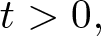 $t \gt 0,$
 \begin{equation}\begin{aligned} \left| \nabla {\textbf{u}^{\epsilon}} (\cdot,t)\right\|_{L^{3}(\mathbb{R}^{3})} \le C \delta^{\sigma-1},\quad \left\| \left(\overline{\rho^{\epsilon}\textbf{u}^{\epsilon}}
-\overline{\rho}\,\,
\overline{\textbf{u}^{\epsilon}}\right)(\cdot,t)\right\|_{L^{\frac{3}{2}}(\mathbb{R}^{3})} \le C \delta^{2\sigma},\end{aligned}
\end{equation}
we have
 \begin{equation}\begin{aligned} & \int_{\mathbb{R}^{3}}\left| \overline{\textbf{u}^{\epsilon}}\left( \overline{(\rho^{\epsilon}\textbf{u}^{\epsilon})} -\overline{\rho^{\epsilon}}\,\,\overline{\textbf{u}^{\epsilon}}\right)\right|(\cdot,t_{j})\\
&\le C\left| \nabla {\textbf{u}^{\epsilon}} (\cdot,t_{j})\right\|_{L^{3}(\mathbb{R}^{3})} \left\| \left(\overline{\rho^{\epsilon}\textbf{u}^{\epsilon}}
-\overline{\rho}\,\,
\overline{\textbf{u}^{\epsilon}}\right)(\cdot,t_{j})\right\|_{L^{\frac{3}{2}}(\mathbb{R}^{3})} \\
&\le C\delta^{3\sigma-1}.\end{aligned}
\end{equation}
Thanks to (1.11), we compute
 \begin{eqnarray*}\begin{aligned} G(\overline{\rho^{\epsilon}})-G(\rho^{\epsilon})
&=\overline{\rho^{\epsilon}}\int_{\rho^{\epsilon}}^{\overline{\rho^{\epsilon}}}\frac{s^{\gamma}-1}{s^{2}}+\left(\overline{\rho^{\epsilon}}-\rho^{\epsilon}\right)\int_{1}^{\rho^{\epsilon}}\frac{s^{\gamma}-1}{s^{2}}\\
&\le C\left(\overline{\rho^{\epsilon}}-\rho^{\epsilon}\right)^{2}+C\left|\overline{\rho^{\epsilon}}-\rho^{\epsilon}\right|\cdot\left|1-\rho^{\epsilon}\right|^{2}\\
&\le C\left(\overline{\rho^{\epsilon}}-\rho^{\epsilon}\right)^{2}+C\left|\overline{\rho^{\epsilon}}-\rho^{\epsilon}\right|\cdot\left|1-\rho^{\epsilon}\right|,\end{aligned}
\end{eqnarray*}
which along with (3.13) imply
 \begin{eqnarray*}\begin{aligned} &\int_{\mathbb{R}^{3}}\left(G(\overline{\rho^{\epsilon}})-G(\rho^{\epsilon})
\right)(t)\\
&\le C \left| \left(\overline{\rho^{\epsilon}}-\rho^{\epsilon}\right) (\cdot,t)\right\|_{L^{2}(\mathbb{R}^{3})}\left( \left| \left(\overline{\rho^{\epsilon}}-\rho^{\epsilon}\right) (\cdot,t)\right\|_{L^{2}(\mathbb{R}^{3})}+ \left| \left(1-\rho^{\epsilon}\right) (\cdot,t)\right\|_{L^{2}(\mathbb{R}^{3})}\right)\\
&\le C \delta^{\sigma}\left| \left(\overline{\rho^{\epsilon}}-\rho^{\epsilon}\right) (\cdot,t)\right\|_{L^{2}(\mathbb{R}^{3})}\\
&\le C\delta^{2\sigma}\end{aligned}
\end{eqnarray*}
and
 \begin{eqnarray*}\begin{aligned} & \int_{\mathbb{R}^{3}} \left|\left(\overline{\rho^{\epsilon}}\frac{|\overline{\textbf{u}^{\epsilon}}|^{2}}{2}-\rho^{\epsilon}\frac{|\textbf{u}^{\epsilon}|^{2}}{2}\right)\right| (\cdot,t)\\
&\le C \left| \left(\overline{\rho^{\epsilon}}-\rho^{\epsilon}\right) (\cdot,t)\right\|_{L^{3}(\mathbb{R}^{3})} \left| \textbf{u}^{\epsilon} (\cdot,t)\right\|_{L^{3}(\mathbb{R}^{3})}^{2}\\
&\quad+C \left| \rho^{\epsilon} (\cdot,t)\right\|_{L^{3}(\mathbb{R}^{3})} \left| \textbf{u}^{\epsilon} (\cdot,t)\right\|_{L^{3}(\mathbb{R}^{3})}\left| \left(\overline{\textbf{u}^{\epsilon}}-\textbf{u}^{\epsilon}\right) (\cdot,t)\right\|_{L^{3}(\mathbb{R}^{3})}\\
&\le C\delta^{\sigma}.\end{aligned}
\end{eqnarray*}
The last two inequalities provide us
 \begin{equation} \int_{\mathbb{R}^{3}} \left|\left(\overline{\rho^{\epsilon}}\frac{|\overline{\textbf{u}^{\epsilon}}|^{2}}{2}-\rho^{\epsilon}\frac{|\textbf{u}^{\epsilon}|^{2}}{2}\right)+ \left(G(\overline{\rho^{\epsilon}})-G(\rho^{\epsilon})\right)\right|(\cdot,t_{j})\le C\delta^{\sigma}.\end{equation}
Substituting (3.25) and (3.26) into (3.23), we conclude
 \begin{equation}\begin{aligned} & \epsilon\int_{t_{1}}^{t_{2}} \int_{\mathbb{R}^{3}}\left(\mu_{1}|\nabla \textbf{u}^{\epsilon}|^{2}+(\mu_{1}+\mu_{2})( {\rm div} \textbf{u}^{\epsilon})^{2}\right)\le C\left(\delta^{3\sigma-1}+ \epsilon \delta^{2(\sigma-1)}+\delta^{\sigma}\right).\end{aligned}
\end{equation}
3.4. Proof of inequality (1.12)
Notice that  $\delta \gt 0$ is arbitrary; we specify a relation between
 $\delta$ and
 $\epsilon$ to balance the optimal decay in (3.27). In particular, we choose
 \begin{eqnarray*} \delta=\epsilon^{\frac{1}{\sigma+1}}\,\,\,\,{\rm if}\,\,\,\sigma\le \frac{1}{2},\quad {\rm and}\quad \delta=\epsilon^{\frac{1}{\sigma+1}}\,\,\,\,{\rm if}\,\,\,\ \sigma\in \left(\frac{1}{2},\,1\right),\end{eqnarray*}
then from (3.27), we infer
 \begin{eqnarray*}\begin{aligned} &\epsilon\int_{t_{1}}^{t_{2}} \int_{\mathbb{R}^{3}}\left(\mu_{1}|\nabla \textbf{u}^{\epsilon}|^{2}+(\mu_{1}+\mu_{2})( {\rm div} \textbf{u}^{\epsilon})^{2}\right)\\
& \le C\left(\delta^{3\sigma-1}+\delta^{\sigma}+\epsilon \delta^{2(\sigma-1)}\right)\\
&\le C\epsilon^{\alpha}, \end{aligned}
\end{eqnarray*}
where 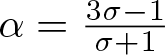 $\alpha=\frac{3\sigma-1}{\sigma+1}$ if
 $\sigma\in \left(\frac{1}{3},\,\frac{1}{2}\right],$ and
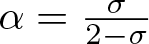 $\alpha=\frac{\sigma}{2-\sigma}$ if
 $\sigma\in \left[\frac{1}{2}\,\,1\right). $
The proof of Theorem 1.2 is thus completed.
Corollary 3.1. If the condition (1.11) is replaced by
 \begin{equation} \begin{aligned} & 0 \lt a\le \rho^{\epsilon}(x,t)\le A \lt \infty\quad \,\,\,a.\,e.\,\,\,{\rm in}\,\,\,\,Q,\\
&\rho^{\epsilon}-1\,\, \underline{{\rm is\,\, uniformly\,\, in} \,\,\epsilon\,\, }{\rm bounded\,\, in}\,\, B_{2}^{\sigma,\infty}\left(Q\right)\cap B_{\frac{4}{\sigma}}^{\sigma,\infty}\left(Q\right),\\
&\textbf{u}^{\epsilon}\,\, \underline{{\rm is\,\, uniformly\,\, in} \,\,\epsilon\,\, }{\rm bounded\,\, in}\,\, B_{2}^{\sigma,\infty}\left(Q\right)\cap B_{3}^{\sigma,\infty}\left(Q\right). \end{aligned}
\end{equation}
Then, the dissipation rate (1.12) is still valid.
Proof of Corollary 3.1. It suffices to re-estimate  $I_{2}$ in (3.17). By the embedding inequalities (cf. [Reference Muramatu35, Theorem 1,2]), we see that
 \begin{eqnarray*} B_{3}^{\sigma,\infty}(Q)\hookrightarrow W^{\frac{1}{3},\frac{12}{5-4\sigma}}(Q)\hookrightarrow L^{\frac{12}{4-3\sigma}}(Q).\end{eqnarray*}
This, together with (3.28), (3.13), and the bound of  $\rho^{\epsilon}$, implies
 \begin{eqnarray*} \begin{aligned} &\left\| \overline{\rho^{\epsilon}\textbf{u}^{\epsilon}}
-\rho\textbf{u}\right\|_{L^{3}(Q)}\\
&\le \left\| \overline{\rho^{\epsilon}\textbf{u}^{\epsilon}}
-\overline{\rho^{\epsilon}}\,\,\overline{\textbf{u}^{\epsilon}}\right\|_{L^{3}(Q)}+ \left\| (\overline{\rho^{\epsilon}}-\rho^{\epsilon})\overline{\textbf{u}^{\epsilon}}\right\|_{L^{3}(Q)}+ \left\| \rho^{\epsilon}(\overline{\textbf{u}^{\epsilon}}
-\textbf{u}^{\epsilon})\right\|_{L^{3}(Q)}\\
&\le C\left\| \overline{\rho^{\epsilon}}
-\rho^{\epsilon}\right\|_{L^{\frac{4}{\sigma}}(Q)}\left\| \textbf{u}^{\epsilon}\right\|_{L^{\frac{12}{4-3\sigma}}(Q)}+C\left\| \overline{\textbf{u}^{\epsilon}}
-\textbf{u}^{\epsilon}\right\|_{L^{3}(Q)}\\
&\le C\|\rho^{\epsilon}-1\|_{B_{\frac{4}{\sigma}}^{\sigma,\infty}(Q)}+C\|\textbf{u}^{\epsilon}\|_{B_{3}^{\sigma,\infty}(Q)}\\
&\le C\delta^{\sigma}.\end{aligned}
\end{eqnarray*}
Thus,
 \begin{eqnarray*}\begin{aligned} \left\|\left( \overline{\rho^{\epsilon}\textbf{u}^{\epsilon}\otimes \textbf{u}^{\epsilon}}
-\overline{(\rho^{\epsilon}\textbf{u}^{\epsilon})}\otimes\overline{\textbf{u}^{\epsilon}}\right)\right\|_{L^{\frac{3}{2}}(Q) } &\le C \left\| \overline{\rho^{\epsilon}\textbf{u}^{\epsilon}}
-\rho\textbf{u}\right\|_{L^{3}}\left\| \overline{\textbf{u}^{\epsilon}}-\textbf{u}^{\epsilon}\right\|_{L^{3} (Q)} \le C \delta^{2\sigma}.\end{aligned}
\end{eqnarray*}
By this and (3.14), we compute
 \begin{eqnarray*}\begin{aligned} |I_{2}| &=\left|\int_{0}^{T}\psi\int_{\mathbb{R}^{3}} \textbf{u}^{\epsilon} {\rm div}\left(\overline{\rho^{\epsilon}\textbf{u}^{\epsilon} \otimes \textbf{u}^{\epsilon}}
-\overline{\rho^{\epsilon}\textbf{u}^{\epsilon} }\otimes\overline{\textbf{u}^{\epsilon}}\right)\right|\\
&\le C\int_{Q} \left|\nabla \textbf{u}^{\epsilon} \,\left(\overline{\rho^{\epsilon}\textbf{u}^{\epsilon} \otimes \textbf{u}^{\epsilon}}
-\overline{\rho^{\epsilon}\textbf{u}^{\epsilon} }\otimes\overline{\textbf{u}^{\epsilon}}\right)\right|\\
&\le C \left\|\nabla \overline{\textbf{u}^{\epsilon}}\right\|_{L^{3}(Q) } \left\|\left( \overline{\rho^{\epsilon}\textbf{u}^{\epsilon}\otimes \textbf{u}^{\epsilon}}
-\overline{(\rho^{\epsilon}\textbf{u}^{\epsilon})}\otimes\overline{\textbf{u}^{\epsilon}}\right)\right\|_{L^{\frac{3}{2}}(Q) }\\
& \le C \delta^{3\sigma-1}.\end{aligned}
\end{eqnarray*}
The proof of Corollary 3.1 is thus completed.
Funding statement
The research was partially supported by the National Natural Science Foundation of China grant 12531010 and the Sichuan Science and Technology Program grant 2025ZYD0157.
Competing interests
The authors declare that there is no financial conflict of interest.
Data availability statement
The research does not have any associated data.
Appendix A
Proof of Claim 3.1. We follow the ideas in [Reference Feireisl, Gwiazda, Świerczewska-Gwiazda and Wiedemann20] and present the skeleton of the proof.
Fix a point  $(x,t)\in Q,$ the Taylor expansion formula shows
 \begin{equation} \begin{aligned} &\left|(\overline{\rho^{\epsilon}})^{\gamma}-(\rho^{\epsilon})^{\gamma}-\gamma(\rho^{\epsilon})^{\gamma-1}
(\overline{\rho^{\epsilon}}-\rho)\right|(x,t) \\
&\le \gamma(\gamma-1)(\rho^{\epsilon})^{\gamma-2}\left(\overline{\rho^{\epsilon}}-\rho^{\epsilon}\right)^{2}(x,t)\\
&\le C(\overline{\rho^{\epsilon}}-\rho^{\epsilon})^{2}(x,t), \end{aligned}
\end{equation}
where the last inequality sign is valid because  $\rho^{\epsilon}$ is positively bounded, due to (1.11). Similarly,
 \begin{equation} \begin{aligned} \left|(\rho^{\epsilon})^{\gamma}(y,t)-(\rho^{\epsilon})^{\gamma}(x,t)-\gamma(\rho^{\epsilon})^{\gamma-1}
(x,t)(\rho^{\epsilon}(y,t)-\rho^{\epsilon}(x,t))\right|\le C|\rho^{\epsilon}(y,t)-\rho^{\epsilon}(x,t)|^{2}.\end{aligned}
\end{equation}
Since 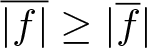 $\overline{|f|}\ge |\overline{f}|$, we multiply (A.2) by
 $\eta_{\delta}(x-y,t-s)$ and integrate it, to discover
 \begin{eqnarray*} \begin{aligned} &\left|\overline{(\rho^{\epsilon})^{\gamma}}-(\rho^{\epsilon})^{\gamma}-\gamma(\rho^{\epsilon})^{\gamma-1}
\left(\overline{\rho^{\epsilon} }- \rho^{\epsilon} \right)\right| \le C \overline{|\rho^{\epsilon}-\rho^{\epsilon}|^{2}},\end{aligned}
\end{eqnarray*}
which together with (A.1) guarantee that
 \begin{eqnarray*}\begin{aligned} &\left| \left(\overline{\rho^{\epsilon}}\right) ^{\gamma}-\overline{(\rho^{\epsilon})^{\gamma} }\right|(x,t)\\
&\le \left|(\overline{\rho^{\epsilon}})^{\gamma}-(\rho^{\epsilon})^{\gamma}-\gamma(\rho^{\epsilon})^{\gamma-1}
(\overline{\rho^{\epsilon}}-\rho)\right| +\left|\overline{(\rho^{\epsilon})^{\gamma}}-(\rho^{\epsilon})^{\gamma}-\gamma(\rho^{\epsilon})^{\gamma-1}
\left(\overline{\rho^{\epsilon} }- \rho^{\epsilon} \right)\right|\\
& \le C(\overline{\rho^{\epsilon}}-\rho^{\epsilon})^{2} + C \overline{|\rho^{\epsilon}-\rho^{\epsilon}|^{2}}.\end{aligned}
\end{eqnarray*}
By (3.2) and the properties of mollification, one deduces
 \begin{align*} &\left\| \left(\overline{(\rho^{\epsilon})}\right) ^{\gamma}-\overline{(\rho^{\epsilon})^{\gamma} }\right\|_{L^{\frac{3}{2}}(Q)}
&\le C\left\| (\overline{\rho^{\epsilon}}-\rho^{\epsilon})^{2} + \overline{|\rho^{\epsilon}-\rho^{\epsilon}|^{2}}\right\|_{L^{\frac{3}{2}}(Q)}\\
&\le C \delta^{2\sigma}\|\rho^{\epsilon}-1\|_{B_{3}^{\sigma,\infty}(Q)}^{2} .
\end{align*}
This is the required (3.19).



