Lodewijk de Bils, inventor of anatomical preparation
Such apply themselves very usefully to the business of anatomy, as are employ'd in preserving the better and more rare preparations therein, that upon any occasion, may be show'd and view'd: And for the purpose almost all has his own peculiar liquor, and which he generally keeps secret.
C. J. Trew, ‘An observation on the method of preserving anatomical preparations in liquors’, Acta Germanica, or, the Literary Memoirs of Germany (1742), 446–8, 446.The anatomical markets of the early modern Netherlands were considerably transformed in the 1650s. Lodewijk de Bils, a minor nobleman from Flanders, discovered and widely advertised a novel method of preserving the internal anatomy of human bodies. This novel method was radically different from embalming, which had been a common and much-discussed practice since the Egyptian pharaohs and involved the removal and destruction of the viscera.Footnote 1 De Bils's discovery promised a more enduring and non-destructive method of preservation. He injected the vessels of the human body with a wax-like material that visualized the circulatory system. The cadaver was then laid in a special bath that protected the organs from decay. De Bils believed that bodies produced in this way would offer a novel look at human anatomy. Preservation would also ensure that the same object could be used in research and teaching repeatedly for decades.Footnote 2
The medical world learnt of de Bils's discovery from a short pamphlet, the Kopye van zekere ampele acte van Jr. Louijs de Bils, which circulated widely.Footnote 3 In this publication de Bils announced that he would establish a museum of prepared cadavers in Rotterdam that would lay the beginnings for a reformed anatomy. The purpose of the pamphlet was to advertise and seek investors for this new project. De Bils intended to finance the preparation of cadavers by public subscription and expected to raise twenty thousand pounds.
The Kopye was originally published in Dutch and Latin. It was soon translated into English under the auspices of Robert Boyle. Although the preparations had not yet been made, the pamphlet could already offer a detailed description of the future museum. First, it catalogued de Bils's extant preparations at the anatomical theatre in Leiden as material proof of the feasibility of the project. Leiden exhibits included
dried human skin with hair, beard and eyes on the head, three human skeletons, the skeletons of an ox, a horse, a donkey, a hound, a pig, a ram, a monkey and a young child, as well as an aborted embryo, the head of a seahorse, a lion, a wolf, and the skull of a man.Footnote 4
The planned museum would be even more impressive. Cadavers would be shown with ‘all the Veins, Arteries, Sinew and Fibres severed from one another, but remaining fast, both where they first arise, and where they end’.Footnote 5 The ‘Liver, Lungs, and Entrals, Eyes and Brains’ would be shown separately to facilitate research. Other exhibits would visualize Harvey's system of blood circulation, the particular half-moon shape of the valves of the veins and other scientific discoveries.
De Bils's pamphlet offered a virtual tour of parts of his future museum. Given its brevity, however, de Bils could not comment on all the exhibits sufficiently to emphasize their scientific importance. In the case of the veins' valves, he therefore referred readers to his The true use of the Gall-bladder, etc., which offered an extensive illustrated account.Footnote 6 De Bils's pamphlet immediately transformed a scientific publication on the gall bladder into a catalogue entry for the museum. The true use of the Gall-bladder no longer simply described parts of the human body. It also offered a virtual and less accurate representation of the future three-dimensional specimens in Rotterdam. If the Kopye and The true use of the Gall-bladder did not convince potential investors to contribute, they were also invited to visit de Bils's house in Rotterdam, where they could behold four prepared cadavers for the entrance fee of two and a half guilders.
There was one important detail that de Bils decided not to discuss in either of his writings. Not a word was uttered as to how the newly invented and much-touted method of preparation would work. De Bils promised to reveal his secret only to those who underwrote his project. Investors who contributed more than twenty-five guilders were to be offered a written description of the method of preparation and could also be trained in person. The divulgence of the secret was tightly connected to the overall success of the project. If he failed to collect twenty thousand pounds in total, de Bils would keep his method secret and return the investors' money.
The project piqued the interest of some natural philosophers, including Samuel Hartlib and Robert Boyle in England.Footnote 7 Nonetheless, the planned museum was never realized. De Bils still managed eventually to achieve considerable financial success. In 1663 the University of Louvain offered him twenty-two thousand guilders and a permanent position, with the annual salary of two thousand guilders in exchange for five prepared cadavers and the secret.Footnote 8 De Bils gladly accepted, but soon fled Louvain because of religious disagreements. A few years later, he was offered a sinecure in 's-Hertogenbosch. He became canon of Broekhoven and St Oedenrode. The local illustrious school named him honorary professor of anatomy.Footnote 9 His first public anatomy was to be held in July 1669, as an advertisement reported in the Haarlemsche Courant, a newspaper published a good hundred kilometres away from the city. Unfortunately, de Bils died between the appearance of the advertisement and the public anatomy.
De Bils's overall success is somewhat astonishing, given the rather dubious academic foundations of his work. His knowledge of Latin was minimal. Leiden professors openly criticized de Bils because he used a muddled medical vocabulary incomprehensible even to specialists. Yet the promised visual transparency of de Bils's cadavers trumped the obscurity of his words. The secret of preparation, the quality of the preparations and a strategy of advertising allowed de Bils to relocate, first to Louvain then to 's-Hertogenbosch, when he could no longer find supporters and investors in Leiden.
Despite de Bils's untimely death, anatomical preparations quickly became a vogue in Dutch scientific and gentlemanly circles. A generation of Leiden graduates, including Jan Swammerdam and Reinier de Graaf, perfected the wax injection method of preparation without having access to de Bils's secret. By the end of the seventeenth century almost all medical doctors of quality, such as the professors Anton Nuck and Govard Bidloo, were acquainted with one form or another of anatomical injection technique. Among the curious public, anatomical preparations were also quite fashionable and commerce flourished. In the Groningen anatomy theatre in 1710 the English traveller John Farrington saw a fifteen-day-old foetus that was worth one hundred rixdollars, as well as other anatomical preparations.Footnote 10 When the German traveller Uffenbach visited the cabinet of the anatomist Johannes Rau, he immediately assumed that Rau was attempting to sell his preparations to him.Footnote 11 Yet Rau, Nuck and all other anatomists paled in comparison with Frederik Ruysch. Ruysch's injection techniques were far superior to those of any of his contemporaries because of another secret invention that he was unwilling to divulge. His commercial enterprises and advertising techniques were also better developed than those of his fellow anatomists.
The commercialization of science in the Netherlands of the seventeenth century
This article investigates how Dutch medical professionals used scientific publications to seek customers for their anatomical curiosities and investors for their capital-intense projects of preparation. As we have seen, de Bils relied on the Kopye and, to a lesser extent, on The true use of the Gall-bladder to provide investors with information on his future museum. He hoped the use of print would allow him to reach a long-distance market of potential sponsors beyond local contacts. The rhetoric of the texts was shaped in accordance with his commercial intentions. The Kopye offered a virtual version of the future museum but did not explain how the secret invention would provide the desired results. The history of anatomical preparations provides further examples with which to analyse how commercial concerns shaped printed works. In the following, I analyse in detail how Frederik Ruysch used a variety of genres to advertise anatomical preparations and related technologies through his long career. In order to place Ruysch's and de Bils's activities in context, however, it is necessary first to detail how advertising was an integral part of the emerging Dutch scientific and medical markets.
Entrepreneurs like de Bils and Ruysch operated in the well-developed markets of curiosities and medical and scientific instruments of the Netherlands. In this emerging capitalist country, techno-scientific activities were often supported by their commercial exploitation and, to a lesser extent, through patronage. The socio-economic structure of the Netherlands differed from countries in which patronage had been traditionally strong such as Italy or France. Late seventeenth- and eighteenth-century Britain was much more similar. British scientific practitioners, artisans and artists often focused on commercial venues to capitalize on their scientific products. With the possible exception of the members of the Orange family, the Dutch Republic did not engage in large-scale operations of patronage.Footnote 12 As Klaas van Berkel has suggested, the wealthy bourgeois of Dutch cities preferred to be seen as a mercator sapiens, not as a courtly patron who would accept a scientific publication tailored to fit their personal, self-fashioned persona.Footnote 13Mercatores sapientes supported commercially exploitable inventions and Dutch cities provided various incentives to lure foreign artisans to the Netherlands.Footnote 14 Yet once the artisans arrived, their production was tailored towards a flourishing market economy and not for the requirements of a court. The importance of commerce for Dutch science has already been explored in recent works on cabinets of curiosities and natural history.Footnote 15 The ships of the Dutch East India Company carried not only spices, grains and silk, but also seashells, parrots and other animals. Trade with Japan also acquainted Western medicine with acupuncture.Footnote 16 A part of Dutch science worked and produced results on a global level. Inventors, artisans and medical entrepreneurs increasingly faced the problem of establishing a market presence at a distance.Footnote 17
Like other scientific practitioners, many anatomists also actively participated in the domestic and long-distance medical markets of seventeenth-century Europe. In the Netherlands, anatomists could pursue various careers. Many held several positions at the same time. Social stratification affected their rank, but commercialization affected all. Among the highest ranks were professors of medicine at the universities of Leiden, Utrecht, Harderwijk or Franeker. Even such notables were, on occasion, ready to engage with instrument-makers to exploit some of their inventions commercially. Most anatomists were employed as town physicians and played a major role in urban medical markets. The Delft town doctor Reinier de Graaf, for instance, was the inventor of an injection syringe that was marketed by the instrument-maker Musschenbroek.Footnote 18 Many physicians could also double as pharmacists and came into close contact with the mercantile colonial trade in drugs. A few anatomists such as Lodewijk de Bils had no university education and few connections to guild-regulated urban medical markets. Nonetheless, some of them could gain a respectable status during their career: de Bils was invited to teach at illustrious schools and universities.
Publications in service of commerce: the rhetorics of advertising
If therefore there is any one Duke, Marquis, Earl, Viscount, or Baron, in these his Majesty's dominions, who stands in need of a tight, genteel dedication, and whome the above will suit … – it is much at his service for fifty guineas; – which I am positive is twenty guineas less than it ought to be afforded for, by any man of genius.
Laurence Sterne, The Life and Opinions of Tristram Shandy, Harmondsworth, 1967, 45.For market-oriented medical and scientific entrepreneurs, advertising in its various guises provided a much-needed means to reach potential customers at home and at a distance.Footnote 19 These advertisements often functioned like the publications that aimed to secure patronage for their author. Yet in publications for patronage, the text and the author's identity were usually shaped according to the exigencies of one particular reader, the patron.Footnote 20 In a system of advertising, the intended reader was anyone with sufficient financial means to purchase the products on offer. Even when the final customer was a highly ranked aristocrat, the product on offer was not customized for that particular person. For example, the flower painter Rachel Ruysch, daughter of the anatomist, agreed to send a painting to Duke Johann Wilhelm of Palts annually, but requested exemption from her Residenzpflicht, the requirement to stay at the ducal court.Footnote 21 Jan Swammerdam, Ruysch's fellow student in Leiden, similarly rejected Cosimo III de' Medici's offer of twelve thousand guilders for his collection. Cosimo stipulated that Swammerdam move to the Florentine court and convert to Catholicism; the Dutch naturalist refused. Swammerdam finally decided to sell his collection in 1676. He wrote up a catalogue and sent it to his Parisian friend Melchisédec Thévenot with instructions to find any potential buyer. At the same time, he also contacted the Royal Society about the upcoming sale.Footnote 22 Although their customers were of high rank, Rachel Ruysch and Swammerdam refused to adapt their work and identity to the desires of a particular patron. Instead, they attempted to sell their products to any interested customer in Europe. Advertising offered the means to reach this potential clientele.
Scientific advertising could exist in various forms. It could rely on the widespread advertising business of early modern Dutch and European culture, but could on occasion also modify the meaning and form of traditional commercial advertisements. Just like other early modern newspapers, the Dutch journal Amsterdamsche Courant regularly published advertisements on sales of paintings, curiosities and, occasionally, pickled prepared animals.Footnote 23 These adverts were at most a few lines long. They were printed at the edges of the news-sheet, usually in smaller font than the main stories of the paper. The Ruysch family itself was involved with such advertisements. Frederik Ruysch Pool, grandson of the anatomist, had an advertisement published in the Amsterdamsche Courant. Sales of Rachel Ruysch's paintings were marketed in a similar way.Footnote 24 The dissections of Ruysch were advertised in the Courant, alerting readers that Ruysch dissected prepared cadavers that still looked fresh though prepared two years before.Footnote 25 After Ruysch's death the Amsterdamsche Courant also printed an advert on the sale of his collection.Footnote 26
Some Dutch scientific and medical practitioners, artisans and especially instrument-makers also used other venues to gain potential customers. Trade catalogues, such as those published by the Musschenbroek workshop in Leiden, could acquaint customers with the stock of their scientific instruments.Footnote 27 Unlike the case of newspapers, advertisement was the sole content of trade catalogues. They reached a larger audience than local newspapers such as the Amsterdamsche Courant. Musschenbroek's catalogues initiated contact and facilitated further discussions with customers in Marburg or St Petersburg, though personal contacts and meetings were occasionally still crucial at later stages of the transaction. Catalogues acquainted customers with what was on offer; such customers could later check the quality of the products during a personal visit.Footnote 28
Advertising was not limited to newspaper postings and trade catalogues. Fully fledged books could be published with the intent to publicize and market the usefulness of certain scientific products and inventions. Scientific ‘content’ and ‘advertisement’ combined and the whole work could be interpreted both as a scientific report and as a marketing device. The Amsterdam doctor Stephanus Blankaart, for instance, gained international fame for his Anatomia reformata, a standard textbook for university students. While this work significantly contributed to the wider circulation of anatomical knowledge, Blankaart also used it to advertise his own commercial enterprises. At the end of the Anatomia reformata he informed readers that scientific instruments for anatomical investigations were sold at the shop of the instrument-maker Johann Musschenbroek.Footnote 29 On the same page, Blankaart also mentioned that he would be available to give further lessons in anatomy, should anyone be interested. In his treatise on podagra, he also claimed that, despite his many publications, he was still in possession of countless secrets that he would divulge through instruction only against payment.Footnote 30 Blankaart bore the persona of a natural philosopher in search of academic rewards but also of a secretive medical entrepreneur in search of financial profit. His publications revealed and disseminated some of his own knowledge, but much still remained private.
The Van der Heyden family's A Description of Fire Engines with Water Hoses and the Method of Fighting Fires now used in Amsterdam well illustrates the rhetoric of ‘advertising’ practised in such works. The Dutch painter and inventor Jan van der Heyden and his family started an enterprise in the 1670s and obtained a monopoly on their newly invented fire-extinguishing machines.Footnote 31 The Van der Heydens first secured local support without the help of publications. They received a patent for twenty-five years in 1677 and soon became the fire-masters general of Amsterdam. Their entry into the world of publishing started at the same time when they started to sell their fire engines internationally. A Description of Fire Engines first appeared in 1690, two years before their local patent was to expire. In this work, the Van der Heydens described in graphic detail the numerous fires that Amsterdam had experienced in the previous fifty years. Imitating and rivalling the details of the experimental reports of Robert Boyle, they gave a minute-by-minute analysis of how each fire broke out, spread over many houses and was extinguished. The publication emphasized that whereas before the introduction of the Van der Heyden engine fires tended to be devastating, they were easily contained once the new invention was put to use. The reports were accompanied by a large number of illustrations that detailed the destructive power of fires and how the Van der Heyden fire engines could extinguish them (Figure 1). After dozens of pages of narrative, the book ended with a one-page notice that the promised Chapter 4 on the fire engines' internal mechanism would not appear in the book. The authors feared that the publication of this information would lead to the reproduction of the engines by amateurs. The replicas of the Van der Heyden engines would never equal the quality of the original machines and would lead to terrible disasters, which could only be prevented by withholding the secret of the engine.
Jan van der Heyden, The Old and the New Fire Engines, 1690. Copyright: the Trustees of the British Museum.

In shaping the rhetoric of the volume, Van der Heyden adopted and modified one of the publication strategies of early modern science that sought to eliminate the effects of distance. The function of virtual witnessing was to allow observers at a distance to participate in and vouchsafe the credibility of an experiment.Footnote 32 Similarly, the role of advertising was to conquer distance and allow customers virtually to visit the shop. Despite a common aim to overcome remoteness, the rhetorical structures of virtual witnessing and of long-distance advertising were subtly different. Virtual witnessing aimed to create the illusion of a transparent observation of the experiment and the experimental apparatus. The inclusion of minute details served to assure readers that they could replicate the experiment and therefore assign credit to the authors. The rhetoric of advertisements, in contrast, aimed to create a virtual spectacle in which readers watched with wonder the magnificent workings of an engine, an instrument or an anatomical preparation, then desired to purchase the product from the showman. Wonder could only be replicated when the reader bought the product, because the advertisements did not explain how such instruments or machines could be built. The Van der Heydens wrote detailed histories of Amsterdam fires but did not describe the workings of their engine. Just as early modern shops started using shop windows to showcase their products, the Van der Heydens allowed readers to participate in ‘virtual window-shopping’ but excluded them from the private chambers of the workshop where engines were fabricated.Footnote 33
The long-distance advertising effect of the rhetoric of A Description of Fire Engines was not negligible. In 1690 an English MP from Staffordshire bought a Van der Heyden engine and King William III also made use of the Van der Heydens' services. In 1697 Peter the Great visited the Van der Heyden factory, had the book translated into Russian and ordered a number of fire engines for Russia.Footnote 34 The strategy of advertisement through publications ensured commissions throughout Europe but did not breach the family's monopoly over the market of fire engines. The trade secret of the machine remained unaffected. It was probably this secretive feature of the rhetoric of advertising that made it popular with the entrepreneurial anatomists Lodewijk de Bils and Frederik Ruysch.
The commerce and functions of wax preparations: Frederik Ruysch
The rhetorics of de Bils resembled the Van der Heydens' style. In the Kopye he offered an elaborate catalogue of objects in his future museum of anatomy in Rotterdam. He also enlisted the help of The true use of the Gall-bladder to provide further detail. Readers could see the future fruits of their investment in advance. They were kept in the dark, however, about the technical details of de Bils's method of preparing cadavers. Fellow anatomist Frederik Ruysch adopted even more intricate marketing strategies during his long career as a medical entrepreneur. An analysis of his publications shows how the rhetoric of advertising could bring significant financial gains to an enterprising, if secretive, anatomist.Footnote 35
Ruysch was born in 1638 into a family of civil servants in The Hague, where he originally worked as an apothecary. In 1664 he graduated in medicine from Leiden University and soon moved to Amsterdam as praelector of the surgeons' guild. He taught anatomy to apprentice surgeons and held public anatomies annually. In the next decades Ruysch occupied an impressive range of posts in Amsterdam. He worked as a city obstetrician and was later appointed professor of botany. He died aged 92 in 1731. From the 1700s he was considered the foremost anatomist in Europe. His discovery of valves in the lymphatic vessels and of the structure of the bronchial artery, his description of the cortex's circulatory system and his work on the role of the placenta in childbirth contributed significantly to his fame in the republic of letters. He became a member of the Leopoldine Imperial Academy in 1705, became a Fellow of the Royal Society in 1720 and was elected associé étranger to the Académie des sciences in the place of Isaac Newton in 1727.Footnote 36 Despite his discoveries and his fame throughout Europe, Ruysch never became a university professor in his home country. His decision to base his career on a secret method of preparation may be related to this fact. While membership in foreign academies was strictly honorific, an academic position at a university would have offered him a stable stream of revenue. In the absence of such rewards, it was probably even more important for Ruysch to employ secretive marketing strategies to maximize his financial income from the production of anatomical preparations and from associated activities.
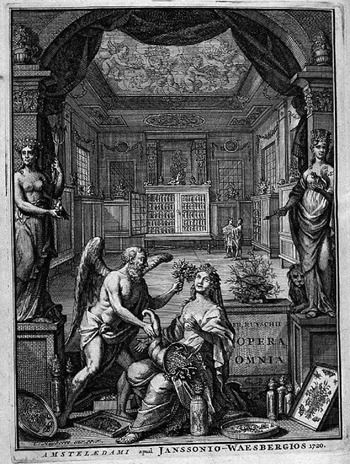
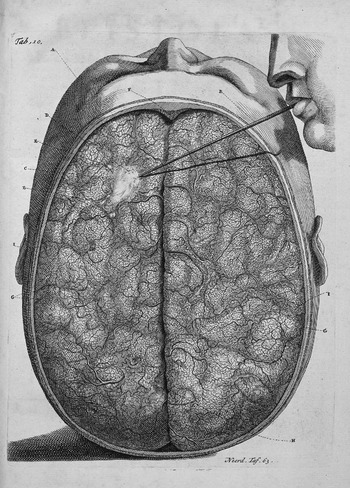
The production of anatomical preparations was a financially lucrative enterprise for Ruysch. He opened a museum in his own house in 1671. Swammerdam promptly reported to his Paris correspondent that ‘Ruysch has founded an anatomy room and shows it for money’.Footnote 37 It was this museum that brought Ruysch most of the attention he received throughout Europe (Figure 2).Footnote 38 From the outset, it was both a scientific showcase of Ruysch's anatomical preparations and discoveries and a commercial institution. In this museum he exhibited human and animal cadavers preserved by the injection of a secret, wax-like material into the circulatory system. Ruysch claimed that through this method, his bodies would appear ‘very beautiful, well-shaped, and full of lively colour’ and would not decay for decades or even centuries (Figure 3).Footnote 39 By the 1710s the museum contained thousands of specimens and visitors flocked to see it.Footnote 40 Ruysch claimed that the museum was not simply a tourist attraction, but a locus where the human body became transparent. Simply by seeing the preparations visitors would learn more about anatomy than through reading books or attending public dissections. The epistemological primacy of the museum was best expressed in Ruysch's motto that he repeated in his publications over and over again: venite et videte – ‘come and see’.
The Ruyschian Museum. Frederik Ruysch, Opera omnia anatomico-medico chirurgica, Amsterdam, 1737, frontispiece. Copyright: the Wellcome Trust.

Wax injection of the blood vessels. Frederik Ruysch, Epistola anatomica, problematica nona, Amsterdam, 1744, Plate X. Copyright: the Wellcome Trust.

The advertising function of Ruysch's publications
As part of his work as an anatomist, Ruysch published extensively. These works always emphasized the epistemological primacy of anatomical preparations over textual descriptions and served as an advertisement for the museum. His first work, the Dilucidatio valvularum, appeared in the 1660s: he eloquently recounted how he had refuted de Bils's claim that the lymphatic vessels had no valves. After the publication of the Dilucidatio Ruysch did not author a work until the 1690s, when his Observationum anatomico-chirurgiarum centuria appeared with a catalogue of his museum.Footnote 41 The Observationum centuria contained a hundred particular observations of curious illnesses, such as the case of a merchant whose heart valves became completely ossified and led to the patient's death. Many of these case studies were connected to actual objects in Ruysch's museum, such as the merchant's preserved heart, transparent proofs of Ruysch's experimental researches. Pathological deformities were not only described in the publication, they could also be seen on a visit. The dissemination of knowledge about his museum soon became an obsession for Ruysch. He started publishing a series of thesauri in the early 1700s, each of which described the contents of a particular cabinet. He printed his correspondence on case studies that featured specimens in the museum. For the last three decades of his life Ruysch kept on publishing newer and newer thesauri, epistles and case studies on the exhibits.
Ruysch's scientific publications should be considered as forming a complex set of interconnected references between his secrets of injection, the exhibited cadavers, the activities he organized around the museum and the exhibition catalogues. His published books are, figuratively speaking, paratexts to a particular preserved object or an actual visual anatomical demonstration that many witnessed in person.Footnote 42 Ruysch repeatedly mentioned that the truth claims of printed anatomical texts and illustrations could only be taken seriously if backed up by the actual visual presentation of supporting material objects. Otherwise engravings were just ‘fictitious figures’. In order to avoid the charge that his ‘published illustrations were not well-done and not after the objects themselves’, Ruysch decided to preserve and exhibit cadavers and he ‘put together many rooms full of objects with much cost and difficulty’.Footnote 43 His publications did not count as proper scientific proofs but rather as advertisements for his museum where material evidence would be provided. Importantly, Ruysch did not advertise simply his cadavers, but also the usefulness of visits to his museum, the educational value of his private anatomical courses and other related technologies.Footnote 44
The success of these publications is also evidenced by the fact that Ruysch's exhibition catalogue was partly reprinted in Johann Valentini's Musaeum musaeorum, an early modern travel guide for the scientifically inclined and wealthy tourist that even contained practical information on museum opening hours.Footnote 45 The traveller Baron von Uffenbach consulted the Musaeum musaeorum several times during his travels in the Netherlands and England, and one can well imagine that his reason for visiting Ruysch's museum was because he learnt about it from Valentini. Apart from providing publicity for his museum, Ruysch's thesauri also served as an advertisement for the collection on sale. Thesaurus X was subtitled Thesaurus magnus et regius, hinting that this cabinet would be appropriate for a princely purchase. The advertisement probably worked, as the Russian tsar Peter the Great made moves to purchase this cabinet for the sum of two thousand guilders, only to later extend his offer to Ruysch's whole collection.Footnote 46 The last thesauri also served as a basis for the catalogues printed after the anatomist's death for the post-mortem auction of the museum.
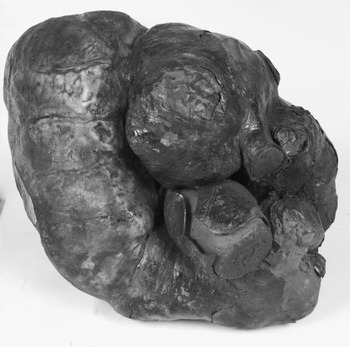
Ruysch's publications also promoted his various commercial activities. One of the exhibition catalogues, Thesaurus IV, contained an ingenious idea about turning the method of preservation into a lucrative business. In a discussion over hearts embalmed according to his method, which ensured that they ‘could be preserved for hundreds of years, with lively colours and a very pleasant odour, without any corruption’, Ruysch recalled that Englishmen often preserved a lock of hair of their deceased lovers in a ring.Footnote 47 He suggested that as a similar act of memory, the heart of a dead lover could also be embalmed and kept in a silver or golden box to ensure the eternal memory of the beloved and ‘the flourishing of our art’.Footnote 48 While I am not aware of any lover's heart thus preserved, it is strongly to be suspected that the heart of Nicolas Bourgeois, giant to the Russian tsar Peter the Great, was embalmed upon the tsar's order according to Ruysch's method (Figure 4).Footnote 49 Ruysch also preserved whole bodies upon request, and received high honours from the Dutch government when he successfully embalmed the body of the English admiral William Berkeley.Footnote 50
The heart of Nicolas Bourgeois. From the collection of the Peter the Great Museum of Anthropology and Ethnography (Kunstkamera), Russian Academy of Sciences, MAE N 4905-3. Copyright: MAE.

The thesauri also advertised Ruysch's more regular sources of income. Ruysch banked on students in medicine who wanted to learn anatomy. Thesaurus VI announced a daily course of lectures in 1705. Lectures were held every day at noon and lasted for an hour or an hour and a half. It took four or five weeks to treat the human body. The rest of the course was devoted to the analysis of fish, shells, birds and many other rarities.Footnote 51 During these lectures Ruysch offered a short discourse on each specimen and ensured that his teachings became deeply imprinted onto the minds of the students. These courses were an important source of income. In 1715 an eight-week course cost three ducatons per person and eight students were enrolled, mostly English. Johannes Rau, Ruysch's competitor and opponent, asked for five hundred guilders for a lecture series of two months.Footnote 52
Importantly, Ruysch's publications employed the rhetoric of virtual window-shopping. For some, the thesauri might have offered the chance of revisiting the collection after a visit. For others, it might have served as preparatory reading for an upcoming tour, and for others again it would have been a means of armchair tourism. Priced between four and five guilders, each thesaurus described and depicted one cabinet in Ruysch's museum in painstaking detail. The different objects within the cabinet were enumerated in the strict order in which they were found on the different shelves. Scientific information was provided in the same manner as that in which a conscientious visitor would have jotted down the remarks of a tour guide. With a clear nota bene sign, Ruysch ensured that readers realized the scientific importance of a particular object. Once a reader had read all the thesauri he had also performed a virtual tour of the whole museum, although female readers had to cut short their visit at certain moments. The Dutch text contained only asterisks where the Latin revealed how the male reproductive organs worked.Footnote 53
Ruysch's other publications also contained a plethora of information on the aesthetic and epistemic importance of exhibits in the museum. He gave detailed descriptions as to how his cadavers looked, often included exquisite engravings of the most interesting parts and even praised their fresh scent. In a letter to fellow anatomist Johannes Gaubius, Ruysch gave nine criteria according to which one could decide whether a cadaver was well prepared. These criteria also helped readers imagine how Ruysch's preparations must have looked. For instance, the preparations had to retain their lifelike colour and shape, no artificial wrinkles could appear on the skin and the lymphatic vessels had to be clearly visible. Evidently, only Ruysch's bodies fulfilled these requirements.Footnote 54
Throughout these publications, Ruysch never discussed how his well-prepared cadavers were to be produced. While many natural philosophers of the period preferred to present their experimental reports in the form of virtual witnessing, Ruysch only offered decorated aesthetic images of the end products on show in his museum. In the early 1700s Gaubius sent another letter to Ruysch, asking how he prepared the scrotum so that its inner structure could be seen perfectly. Ruysch responded that he would not discuss this secret. He feared that others might claim to have invented the same secret once it became known. He offered in exchange to send ‘an accurate illustration of the arteries in the frontal part of the scrotum’.Footnote 55 Instead of parting with the method of production, Ruysch disseminated images of the prepared specimens.
The success of advertisements and commerce: Ruysch's financial gains
Ruysch's publications thus constantly emphasized the epistemological primacy of anatomical preparations and signalled the availability of such specimens in the author's museum. As part of the rhetoric of advertisement, they provided virtual tours of the museum for readers who were then expected to visit the museum, take courses of anatomy and buy anatomical preparations.
One can get a rough estimate of Ruysch's cumulative income from his preparation-related activities. It is not known how much he charged for entrance to his museum nor if his idea of embalming the hearts of deceased lovers was ever successful. Yet we have some estimates of his income from private courses in anatomy. As Uffenbach reported, Ruysch made roughly between 120 and 125 guilders in total from an eight-week course for eight students. At an annual level, this amount in itself was comparable to the official salary of a young university professor, although somewhat less than Ruysch's own professorial salary in Amsterdam. If more students subscribed on average, Ruysch could have earnt the equivalent of star university professors simply from his regular, private courses in anatomy. Even more importantly, the preparations themselves could also be sold.
In the early 1700s Ruysch would have sold his collection to Emperor Leopold for twenty thousand guilders, had it not been for the emperor's untimely death. In the mid-1710s, however, he came across another interested customer, Tsar Peter the Great. Thanks to the research of Jozien Driessen-van het Reve, we now know much more about the transactions between Ruysch and Peter.Footnote 56 By then, Peter the Great had long been interested in Dutch science and also established strong financial contacts with the Dutch entrepreneurs. He first visited Holland in 1697. During his visit, the tsar tried not to behave as a patron but as a commercial customer with impressive financial resources. The tsar despised courtly mannerisms and almost fainted when he had to go through the elaborate ceremonies that the States of Holland organized for him in The Hague.Footnote 57 In Amsterdam he visited Ruysch's museum and called Ruysch his own teacher. Peter also called on the Dutch regent Jacob de Wilde, the owner of an impressive numismatic collection. A contemporary engraving by de Wilde's wife commemorated this event. The tsar and Jacob de Wilde were depicted seated while discussing science. Instead of highlighting the social hierarchies of patronage, the engraver decided to maintain the illusion of equality between collector and visitor. Importantly, the tsar approved of the image and thanked de Wilde's wife for it.Footnote 58 In 1716 Peter again visited the Netherlands and this time also engaged in a large-scale purchase of cabinets of curiosities. He was assisted in this activity by the German-Dutch apothecary and natural historian Albertus Seba. By the time of Peter's second visit, Seba had been supplying the Russian court with pharmaceuticals for years.Footnote 59 In 1715 Seba also offered his own collection of natural-historical curiosities to the Russian court. After protracted discussions, he sold 345 specimens for thirteen thousand guilders.Footnote 60
The next year Seba sent news to St Petersburg that Ruysch himself was also ready to sell part of his collections. Originally Ruysch wanted to sell only around two hundred preparations for roughly 3,150 guilders. Seba bought a few items from Ruysch and sent them to Russia so that the court could get a good view of them.Footnote 61 Later that year, the tsar came to Amsterdam and saw Ruysch's museum again. A short time later the Russian court decided to buy the whole collection for thirty thousand guilders. During the discussions over the price of the cabinet, Ruysch wrote several letters to St Petersburg. Although he played on the importance of the personal relationship that he had developed with Peter during his visit to Amsterdam, Ruysch used this only to show his own importance to Peter's agent, not to tailor his offer to the desires of the tsar.Footnote 62 Ruysch specified that whereas his collection cost the tsar only thirty thousand guilders (a very cheap deal), he would not part with his secret of preparation, which ‘only he knew’, for less than five thousand guilders.Footnote 63 If the tsar found the price too high, he could ask someone else for an alternative, cheaper and probably useless secret. The price was determined by Ruysch, and he did not have to travel to St Petersburg or cater to any special requests from the tsar.Footnote 64 Peter's agents agreed and Ruysch received the extra five thousand guilders. The secret was to remain a monopoly and Ruysch was forbidden to discuss it with anybody else. Although he was no longer the only owner of his own secret, the contract ensured that very few people had access to it.Footnote 65
The sale of the collection was a major commercial success for Ruysch. The amount Peter paid for the collection more than adequately reflected appreciation of the scientific and aesthetic value of the preparations, and far exceeded production costs. Ruysch could get relatively easy access to human bodies and organs through his many medical positions in Amsterdam. Although wax and the alcohol-based liquid of preparation might have been more costly, a comparative price analysis of preparations in the Netherlands in the early eighteenth century suggests Ruysch's specimens were more expensive than any of his competitors'. On average, a lot in Ruysch's catalogue sold for around fifteen guilders, whereas other anatomists' preparations usually cost less than five guilders. For instance, the Amsterdam physician Abraham van Limburg advertised his collection that ‘emulated the preparations of Ruysch’. Nonetheless, these specimens were worth only 2.8 guilders on average.Footnote 66 The added value of Ruysch's work and invention thus multiplied the price as compared to the cost of materials. In addition, the tsar's newly acquired collection and the limited sharing of the secret could scarcely provide real competition to Ruysch's own business in Amsterdam. The preparations were buried in remote Russia, a safe distance from Ruysch's own business in Amsterdam, the capital of the Dutch Republic and the centre of the republic of letters. The secret was leaked to the learned world only in 1735, three years after Ruysch's death. Characteristically, the published document did not ensure the replication of Ruysch's experiment. The quality of the resulting preparations was not even close to that of the originals.
Ruysch did not retire after the sale of his cabinet. He was soon busy assembling a new collection and published other thesauri to advertise them around the world. By the early 1730s this second museum had already exceeded the first one in size. Ruysch was ready to sell this cabinet as well. During the preparations for the sale, Ruysch again emphasized that his collection was available to all wealthy customers. When he authorized his son-in-law to act as his agent, Ruysch declared that they could be sold to ‘whoever it be at the court of His Majesty of Great Britain, at the Royal Society of London, or any other individuals who had desires for it’.Footnote 67 The only condition was that the collection could not be sold for less than twenty-two thousand guilders plus transport costs. Importantly, two printed catalogues (probably Thesaurus XI and Thesaurus XII) were to provide information about the products on offer, together with an extra manuscript catalogue. Unfortunately, Ruysch died before a sale of the second collection was perfected. Soon after his death, however, an auction was organized and advertised with the help of printed sales catalogues.
In sum, Ruysch managed to acquire a considerable fortune through the sale of his collections and through the private lessons in his museum. The advertising rhetoric of Ruysch's publications probably played an important role in the process. These publications drew visitors to Ruysch's museum from countries across Europe and encouraged foreigners to take Ruysch's anatomical courses. Although Peter the Great was a personal acquaintance of Ruysch, the publication of the Thesaurus magnus et regius and the other exhibition catalogues probably facilitated the first stages of arranging a sale with the Russian court.
Conclusion: prints and openness
This essay has analysed the shaping by late seventeenth-century Dutch anatomists of their scientific publications so as to market their anatomical preparations, museums and associated instructional technologies to an international clientele. The paper has investigated the concerns that influenced the rhetoric of these printed works.Footnote 68 Throughout their careers, Ruysch and, to a lesser extent, de Bils published a significant number of pamphlets, collection catalogues, scientific articles and books. These works praised the preparations' scientific importance and value. They also offered detailed information on the anatomy of the human body based on discoveries made with the help of the preparations. At the same time, Ruysch and de Bils explicitly refused to disclose the production method. Other anatomists could not replicate their discoveries or make similar anatomical preparations on their own. While the dissemination of their discoveries could help establish the scientific credit of these anatomists, the non-disclosure of their working methods also allowed them to monopolize the scientific and curiosity markets of early modern anatomy. Printed texts alerted customers that the preparations and corresponding technologies were available for sale from the author.
Ruysch and de Bils operated in a period in which, it can be argued, the public sphere emerged.Footnote 69 For historians of science, the development of the public sphere refers not only to disinterested political discussion among male bourgeois citizens, but also to free conversation and increasingly open flows of knowledge between natural philosophers across Europe, manifest in the burgeoning of scientific journals, societies and academies. The institutions and communication networks of seventeenth- and eighteenth-century science appear to have favoured the free disclosure of scientific facts and experimentation techniques.Footnote 70 At least since the work of Robert K. Merton, many alternative explanations have been offered as to why early modern natural philosophers became willing to share their discoveries and results.Footnote 71 Recent historical work has provided an elaborate analysis of the republic of letters. This analysis has emphasized that, despite its rhetorical flourishes, it was a reward-oriented, hierarchical socio-commercial system that offered tangible material benefits and social credit to its members.Footnote 72 Some have gone as far as to call this system an open market for academic knowledge, with a clear emphasis on the exchange of private information for public rewards.Footnote 73 Another major system of reward was the courtly system of patronage, which also pressed scientific practitioners towards openness and publications.Footnote 74 The dedication of a scientific text resulted in financial remuneration and possible appointment at the patron's court.
From the analyses of the republic of letters to recent work on patronage, historiography sometimes presumes a simplified correlation between publication and openness. The model of exchange of social and material rewards for publications works properly only if publications are the source of open, useful knowledge for the scholarly community. In the framework of this exchange system, the invention of printing, the growing number of journals and the increase of scientific books might be too easily identified as vehicles for the transmission of knowledge. In some cases, insufficient attention may be paid to claims that early modern printing was in fact quite unstable and did not result in fixed, easily accessible knowledge, or that at least some sorts of scientific knowledge are inherently connected to bodily practices and can be transmitted through print only to a limited extent.Footnote 75 In this article, a third alternative explanation has been proposed as to why publications might not always be considered as vehicles for knowledge exchange. Advertising is a genre where much ink is spilt to create public awareness of certain products or activities without the dissemination of the scientific and technological know-how involved in the production process. If, in a metaphorical sense, ‘advertising’ was one of the functions of Ruysch's and de Bils's scientific publications, then these publications were not exclusively or necessarily intended openly to disseminate knowledge. The anatomical discoveries described in these works served only to underline the usefulness and scientific promise of anatomical preparations. These discoveries provided at best limited openness and were counterbalanced by the lack of information on the anatomists' working methods. While even such limited openness resulted in significant social recognition in the republic of letters, these publications were not simply part of an exchange system of rewards for public knowledge. In a sense, Ruysch and de Bils aimed to turn public science into ‘publicity science’. Ruysch's and de Bils's publications alerted the public that significant but private knowledge exchanges could be expected if readers visited their museums.
In 1717, when Ruysch sold his collection to Peter the Great, Albertus Seba and the Russian physician Laurentius Blumentrost were responsible for examining, packing and transporting the anatomical preparations to St Petersburg. On several occasions Seba and Blumentrost went to Ruysch's house with their helpers but found no one at home. The building was closed and they could not inspect the anatomy preparations. In an official letter of complaint they requested that Ruysch hand over the keys and allow them at last to see the objects bought by the tsar. A notary's deed persuaded Ruysch to cooperate and finally open his doors.Footnote 76 But even today it remains unclear whether Seba managed to pack up all the preparations or whether some stayed in Ruysch's possession. Seba and Blumentrost's infuriated predicament in front of the locked door to Ruysch's house well represents the principal arguments of this essay. Scientific practitioners in the Netherlands, and probably elsewhere as well, operated at the borders of public and private science. They were gatekeepers who opened their doors only in exchange for a fee. The doors of science opened when it served the interests of scientific practitioners, but only to a select number of customers. For the general reading public of the early modern republic of letters, the secrets of science remained firmly under lock and key. The publications of Ruysch and de Bils served the purpose of advertising; they allowed readers and customers to do their shopping from a distance, but did not allow them to enter the laboratory spaces themselves.