

Introduction
Plastic bags and their harmful effects on the environment are no longer a tolerated nuisance; rather, policymakers are determined to achieve massive reductions or elimination altogether. Many governments have imposed a ban on the use of single-use plastic bags, thereby enforcing the use of paper, cotton or polypropylene bags. However, the environmental impact of any type of carrier bag is dominated by the resource use and production stages. For example, a paper bag, bag for life (low-density polyethylene) and cotton bag should be reused at least 3, 4 and 131 times, respectively, to have lower global warming potential than conventional single-use plastic bags (Environmental Agency UK, 2011). Therefore, it is not sufficient to ban plastic bags if that only leads to the single use of other types of bags. Ideally, policies should be aimed at fostering the reuse of the bags, and nudgingFootnote 1 is one method that shows strong potential to achieve this.
This study was designed in the light of the introduction of a charge for plastic carrier bags in England. Starting 5 October 2015, all large retailers were directed to charge 5 pence per single-use plastic carrier bag.Footnote 2 The use of single-use carrier bags has declined by over 80% since the introduction of the scheme (DEFRA, 2017). However, there are several unintended consequences associated with the fee, such as an increase in the purchase of plastic bin liners (WRAP, 2013), a reduction in the sense of guilt associated with plastic consumption (Le Grand et al., Reference Le Grand, Atkinson, Disney and Oliver2011) and a potential rebound in consumption after a few years, necessitating an increase in the amount of the charge (BHI, 2012). Furthermore, the charge is regressive as the absolute amount of the charge is fixed, even if it is as little as 5 pence. Thus, I undertook this study to design an intervention that can reduce single-use plastic consumption and encourage the reuse of bags without the negative consequences that are associated with the bag charge. A non-monetary intervention is preferred to a bag charge as it will not act as a regressive tax. It would also be the preferred choice if it can be shown not to crowd out guilt, as a bag charge is likely to. In this study, I show that, compared to the non-monetary intervention, the bag charge is associated with lower levels of guilt for using plastic bags. Testing for a rebound in consumption or an increase in the purchase of plastic bin liners was beyond the scope of this study.
Literature review
Crowding out
In the words of Frey and Oberholzer-Gee (Reference Oberholzer-Gee1997), “the use of price incentives needs to be reconsidered in all areas where intrinsic motivation can empirically be shown to be important.” It can be argued that paying money for plastic carrier bags is likely to be perceived as a market exchange, potentially leading to the erosion of individuals’ intrinsic motivation to act in environmentally friendly ways. The debate regarding the erosion of moral values in the marketplace is not a new one. An experimental study by Falk and Szech (Reference Falk and Szech2013) throws light on the tendency of individuals to ignore the negative consequences or externalities of the decisions they make in market interactions. Similarly, it is argued that charging a fee for plastic bags could crowd out the sense of guilt that consumers experience associated with the environmentally harmful act. Le Grand et al. (Reference Le Grand, Atkinson, Disney and Oliver2011) found that participants in their experiment were 53.7% less likely to feel guilty for taking a bag after the introduction of the 5 pence charge in the shop Marks & Spencer.
Limited effect and rebound in consumption
Existing literature on the bag charge shows that there are some limitations to its effectiveness. One such example is the case of Toronto's plastic bag levy. A study by Rivers et al. (Reference Rivers, Shentone-Harris and Young2016) found that the levy was highly effective in encouraging people who already used reusable bags to use them more frequently; however, it had no effect on infrequent users. They also found that the effects were limited to households with high socio-economic status. Furthermore, evidence shows that the bag charge is subject to a ‘rebound effect’, in which bag consumption drops initially upon the introduction of the charge, but soon afterwards it springs back up as the initial shock of the charge wears off (BHI, 2012). Convery et al. (Reference Convery2007) noted this effect in countries such as Italy, Ireland and South Africa, where the governments were compelled to raise the tax after a couple of years in order to maintain low levels of plastic bag consumption. There is no empirical evidence that would explain why this rebound in consumption occurs; however, one plausible explanation might be that customers get accustomed to the fee over time. While they may have been outraged at having to pay for plastic carrier bags at first, the convenience of paying a small amount for the bags might outweigh the cognitive costs of remembering to bring a bag and reverse the initial effects of the charge in the long term.
Yes/no response format
The non-monetary intervention tested in this study targets the framing of the question regarding plastic carrier bags that individuals encounter right before making the payment for their shopping. Currently, at most grocery stores in England, the question about carrier bags is framed as: “How many plastic bags do you need?” Framing the question in this manner could imply that taking plastic bags is the norm. This reinforces the very behaviour that the government aims to discourage with the policy of charging 5 pence per bag. I advocate framing the question using a binary yes/no response option, in which the yes response corresponds with the desirable behaviour. Contrary to the original question, the new framing is likely to convey that bringing one's own carrier bag is expected of individuals. Support for the yes/no framing format is found in marketing and psychology literature (Nicolaas, Reference Nicolaas2015; Putnam-Farr & Riis, Reference Putnam-Farr and Riis2016). Putnam-Farr and Riis (Reference Putnam-Farr and Riis2016) empirically tested the effectiveness of the yes/no response format and found that it increased enrolment in forced-choice contexts (e.g., retirement plans, flu shots and prescription refills). They argue that this could be due to the tendency of individuals to select ‘yes’ more often than ‘no’ and so adopt the yes behaviour, or regret aversion – the fact that people want to avoid missing out on a benefit. Furthermore, the specific language might also lead to an increased likelihood of participants visualizing themselves doing the activity under consideration (Rennie et al., Reference Rennie, Uskul, Adams and Appleton2014), thus resulting in an increase in the intention to bring their own bag.
Research design and methodology
Drawing from the disciplines of behavioural economics, psychology and marketing, I designed a non-monetary interventionFootnote 3 to change the default framing of the question regarding plastic carrier bags that individuals encounter at the checkout till in stores. Across different supermarkets in London, the question is widely framed as “How many plastic bags do you need?” As argued above, this conveys the underlying assumption that taking plastic bags is the norm. Thus, the intervention was to change the framing of the question to:
-
Will you be bringing your own bag to the store to carry your shopping?
(a) Yes, I will bring my own bag to the store.
(b) No, I will need plastic bags from the store.
It is key to note that the ‘yes’ response option in this question corresponds to the desirable behaviour. This is empirically shown to be important later in the experiment.
Experiment design and data collection
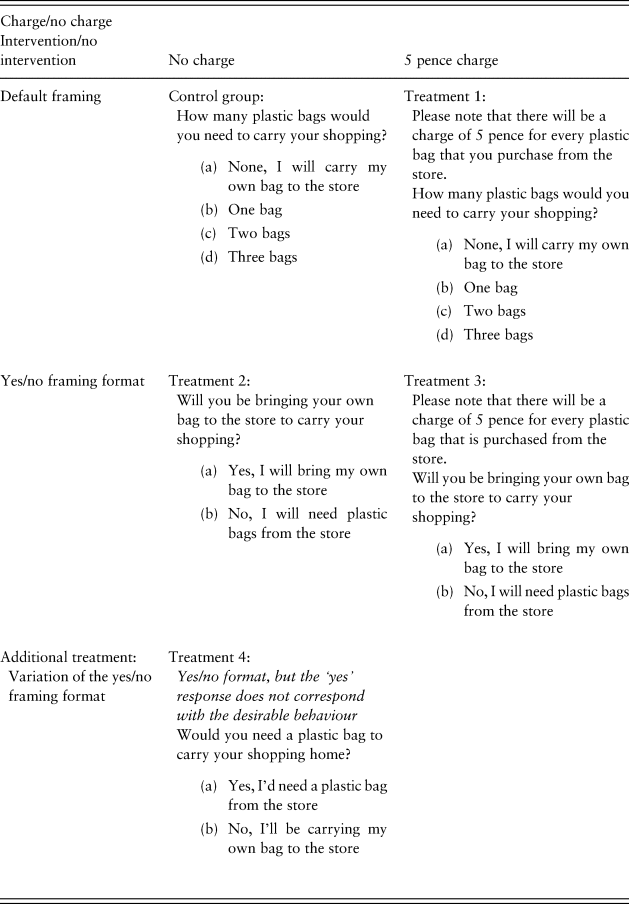
A combination of controlled lab experiments and online experiments were conducted to contrast the effects of the default framing with the yes/no framing format and to show that the desired results can be achieved in the absence of a monetary charge as well. A total of 189 participants were randomly assigned to any one of four treatment arms or the control group. The treatments are explained in Table 1. While three treatments were tested in the lab, two had to be tested online due to limited availability of the lab during the timeline of the study. The treatments conducted in the lab were Treatment 1, Treatment 3 and Treatment 4, while the treatments conducted online were the control and Treatment 2 (yes/no framing without a monetary charge). This difference should not have a great impact on the effects observed in this study, as the experiment involved tasks that were to be completed on a computer screen. However, some limitations of this design are discussed later in the paper.
Descriptions of the experimental treatment arms.
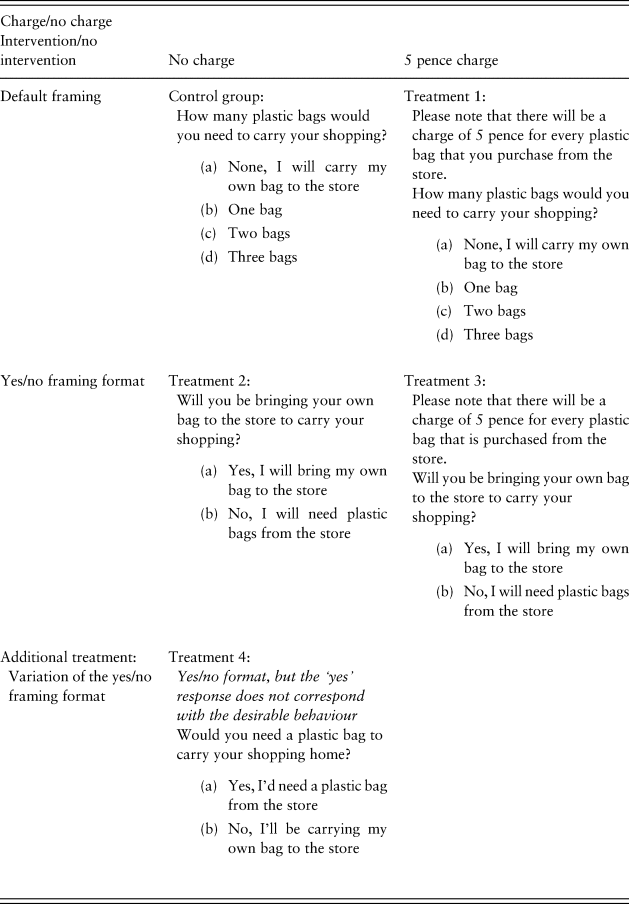
Research participants were presented with a grocery shopping task on their computer screens and asked to choose from a list of products belonging to different categories, representing items that amounted to £20.Footnote 4 The goal was to ensure that their online basket was big enough to generate a need for bags to carry their shopping home. Participants were also informed that, at the end of the week, five winners would be randomly selected from the participant pool to collect their selected grocery items from a store near the lab, free of cost. After adding items to their basket, the participants were presented with the choice between bringing their own carrier bag to the store or taking/purchasing a plastic bag.
Participants in the control group did not face a charge for the plastic carrier bags and were exposed to the default framing of the question. This arm of the experiment can be taken as a proxy for the decision-making environment before the policy to charge for bags was introduced in England. Treatment 1 had the default framing as well, but also with a charge of 5 pence per bag. Treatment 2 had the yes/no framing format and no charge for the bag, while Treatment 3 had a combination of the yes/no format and the 5 pence charge per bag. Lastly, Treatment 4 tested whether interchanging the behaviours corresponding to ‘yes’ and ‘no’ response options affects the outcome.
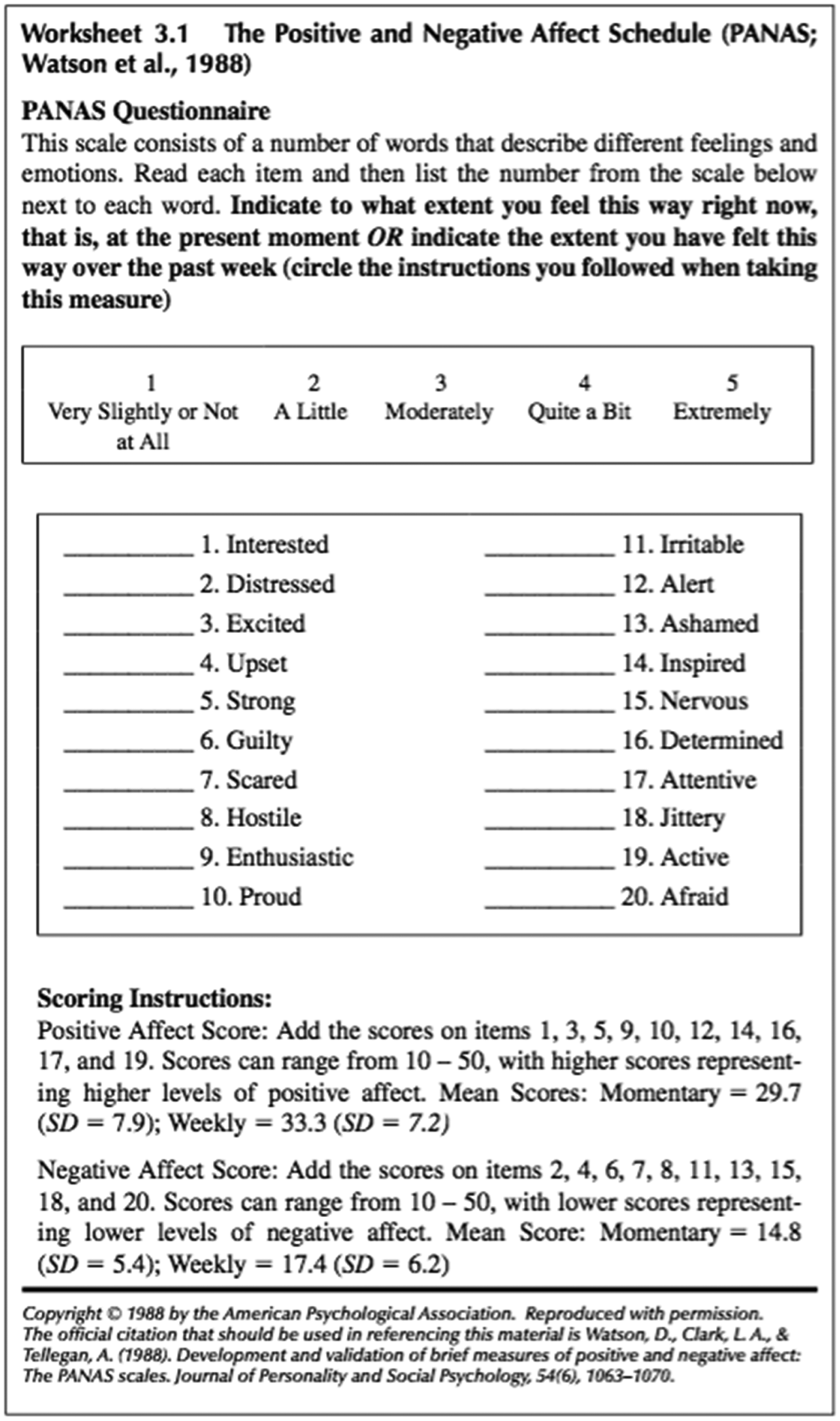
After completing the shopping task, participants were asked to report the degree to which they experienced different emotions using the Positive and Negative Affect Schedule (PANAS) (Watson et al., 1988), which lists 20 emotions (10 positive and 10 negative) and a five-point scale for reporting the degree to which participants felt that particular emotion. In this study, I aimed to focus on four self-conscious emotions: guilt, pride, shame and embarrassment. Since the emotion of embarrassment is not included in the PANAS questionnaire, it was added to the list for the purpose of this study, making it 21 emotions in total that the participants were asked to report on.
Composition of the sample
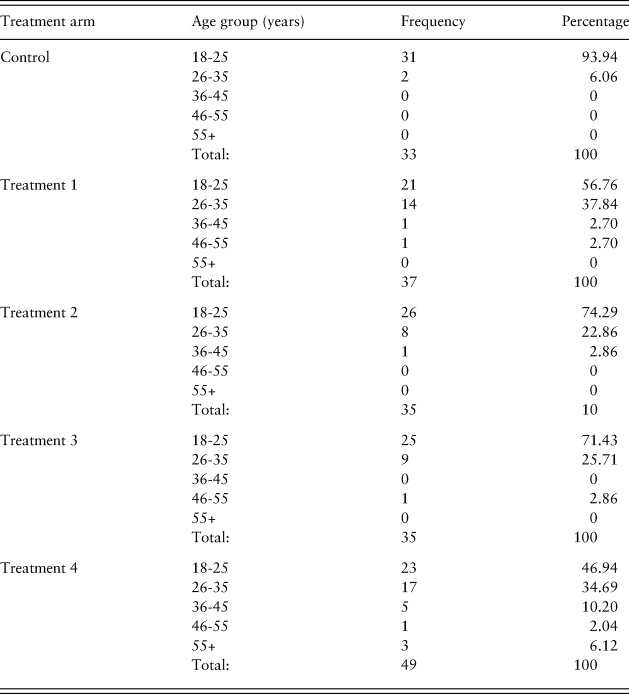
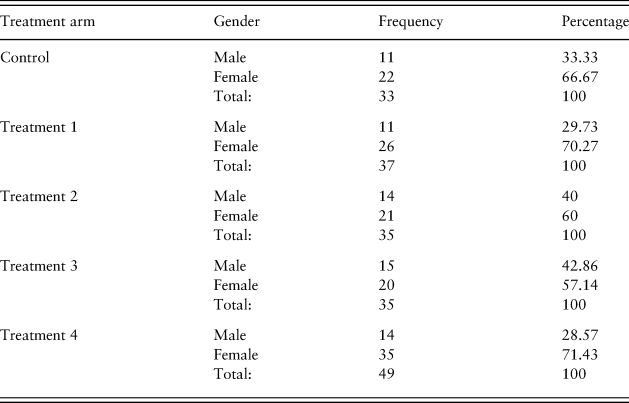
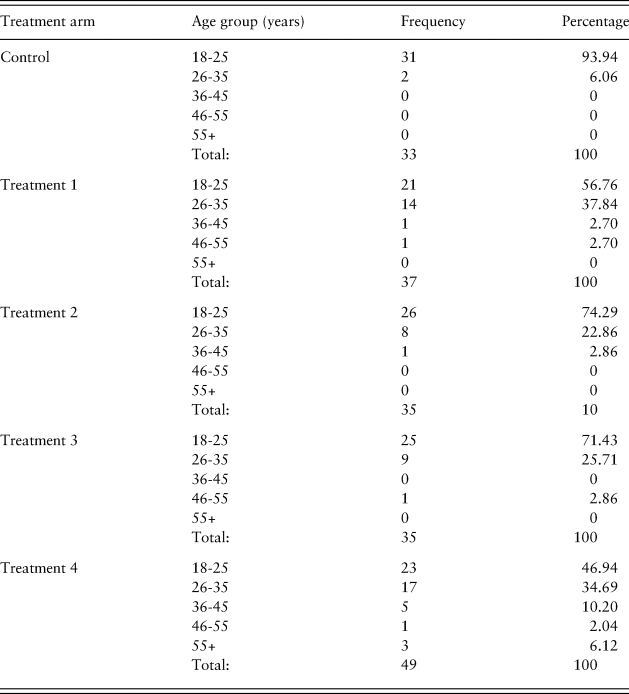
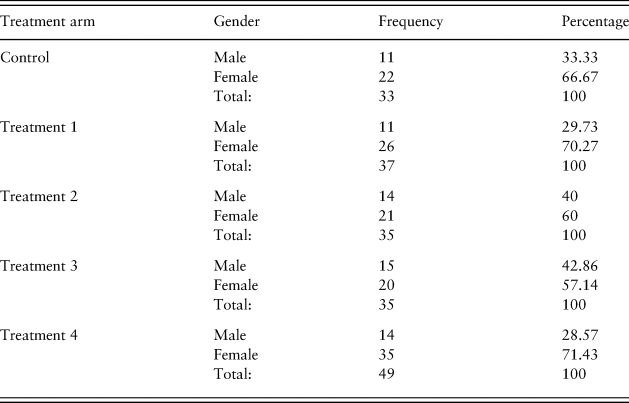
The sample self-selected into the study by registering with the Behavioural Research Lab at the London School of Economics (LSE) and expressing willingness to participate in this experiment. The total number of participants in the study was 189, two-thirds (66.67%) in the age group of 18–25 years and a little over a quarter (26.46%) in the age group of 26–35 years. Roughly two-thirds (65.61%) of the sample are women. Given the predominant age group, it is likely that the majority of the sample were students. The breakdown of age and gender by treatment group is given in Tables 2 and 3.
Age distribution of the sample by treatment arm.
Gender distribution of the sample by treatment arm.
Analysis and discussion
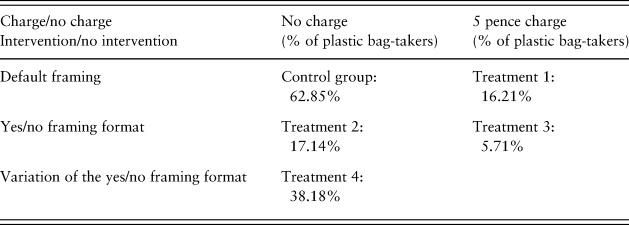
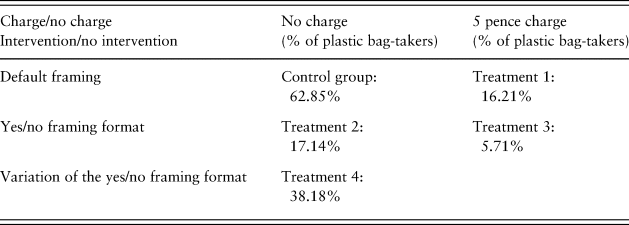
First, in order to examine the effects of the 5 pence charge, we look at the control group and Treatment 1 group. Roughly 63% of the participants in the control group opted for taking a plastic bag from the store relative to only 16% in Treatment 1. This is in line with the observed effects of the 5 pence charge per bag policy by the English government (DEFRA, 2018). Next, we examine the effect of the default framing relative to the yes/no framing format in Treatment 2. In both of the groups, plastic bags were offered free of charge. Similar to the results from Treatment 1, only 17% of the participants exposed to the yes/no framing format in Treatment 2 opted for taking a plastic bag from the store. This result is central to our study, as it showed a 46 percentage points drop in bag-takers relative to the control group, even though there was no charge for the bags. It is unsurprising that a combination of the 5 pence charge and the yes/no framing format in Treatment 3 pushed the percentage of bag-takers further down to roughly 6%. Lastly, we test whether interchanging the behaviours corresponding to the ‘yes’ and ‘no’ options in the question affects the participants’ choices, and we find that, indeed, greater than 38% of participants in Treatment 5 opt for taking plastic bags relative to only 17% in Treatment 2. These results are summarized in Table 4.
Share of respondents opting for plastic bags in each treatment arm.
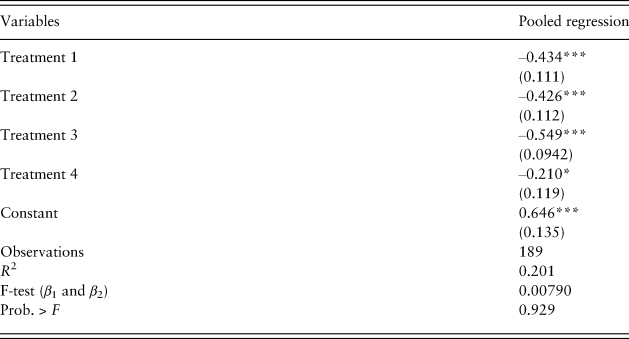
The analysis proceeds through utilizing Equation (1):
 $$Bag_i = \alpha + \sum\nolimits_{\,j = 1}^4 {} {\rm \;}treat_{ij}\beta _j + X_i{\rm \delta } + \varepsilon _{ij}$$
where Bagi is the outcome variable and measures the use of plastic bags for the individual i. It was estimated using a linear probability model in which Bagi takes on a value of 1 if the respondent opts for taking a single-use plastic bag and 0 if they choose to bring their own bag. The control group is the omitted variable and Treatij stands for four different dummy variables, one for each treatment arm. Xi is a vector of observable control variables of individual i (age and gender). Since there were age differences between the treatments, age was added as a control variable in the regression. The parameters α and βj are estimated from the data and εij is the error term. The estimated coefficients and standard errors for the treatments are presented in Table 5. The same regression was also run without the control variables of age and gender and only negligible differences were found in the coefficients.
Regression results.
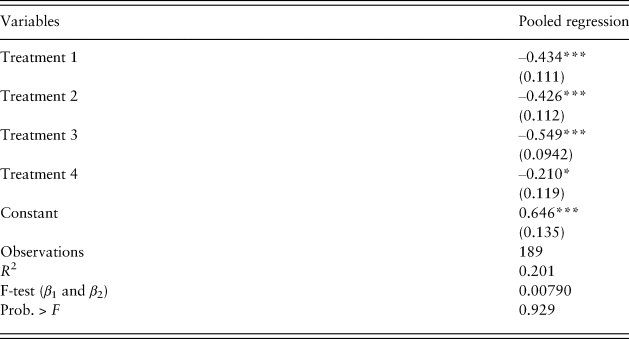
Robust standard errors in parentheses.
*p < 0.1, **p < 0.05, ***p < 0.01,
The regression includes demographic controls such as age and gender, as specified in Equation (1).
I also noted that amongst those who opted for single-use plastic bags, participants who paid 5 pence reported lower levels of guilt on average (mean score of 1.0) than the participants who did not face a charge (mean score of 1.3). I compared the means using a t-test, and the p-value was found to be significant at the 5% level. This result, while insightful, should be interpreted carefully given that only 8 participants opted to pay 5 pence for a plastic carrier bag, while 45 participants opted for a plastic carry bag when it was free of charge. No significant differences were found between the means of the reported scores for the other three emotions. Nevertheless, this result is consistent with the theory that monetary interventions can have a crowding effect on certain emotions, specifically that of guilt.
Conclusion, limitations and policy implications
This study shows that a simple change in the framing of the question can nudge individuals to bring their own carrier bags to stores, thereby reducing the consumption of single-use plastic bags. In the randomized controlled experiment, the non-monetary intervention of framing the question in a yes/no response format, where the ‘yes’ option corresponds to the desirable behaviour, was found to have as strong an effect on discouraging individuals from taking plastic bags as a charge of 5 pence per bag.
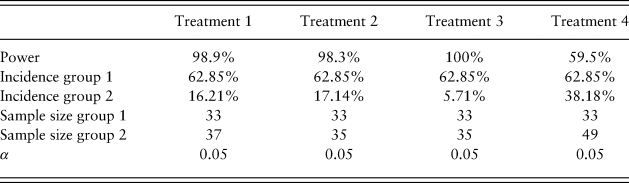
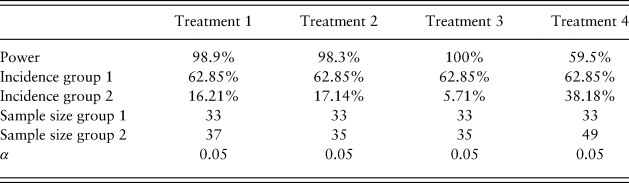
Although together there were 189 participants in the study, the sample size per treatment arm – roughly 35–37 – can be perceived as being small. Thus, a post-hoc power test was conducted, and it was found that the study design is in fact adequately powered (see Table 6). Furthermore, it is important to note that while three arms of the experiment were tested in a controlled lab setting, the control and one of the treatments were conducted online due to limited availability of the lab during the timeline of the study. While this does not have severe implications for the study, as the task in the experiment was online shopping on a computer screen, lab experiments have the added advantage of allowing estimation of the precise effects of the treatments by isolating variables more effectively than would be possible with an online study method. It was found that there were significant age differences between the sample recruited online and the sample recruited in the lab, and this drives part of the large effect size observed between Treatment 2 and Treatment 4. However, no significant gender differences were found between the online and lab samples. It is also worth noting that this study tests the planned or intended behaviour of individuals, and shoppers often forget to bring their bags to stores, despite their intent. Thus, in essence, the non-monetary intervention proposed in this paper is fostering commitment to bringing a bag to stores, which can be very effective in the long run.
Power calculations.
Policymakers can use this evidence in designing or modifying existing policies for discouraging the single use of plastic bags. Using price disincentives such as a tax or a charge for the plastic bags can crowd out ‘knightly’ motivations (Le Grand, Reference Le Grand2006) through reducing the level of guilt associated with environmentally harmful behaviour. This could reduce the intrinsic motivation in individuals to act in an environmentally conscious way. The use of non-price or non-monetary behavioural interventions such as simple framing of the question can be useful in motivating individuals to commit to bringing bags to stores for planned purchases, and perhaps for purchases made in the future. Overall, this study provides the first experimental evidence on the efficacy of the yes/no response format, with the ‘yes’ behaviour representing the desirable behaviour, in fostering commitment to bringing one's own bags to stores for carrying one's shopping. This approach has also been shown to be as effective as a charge of 5 pence per bag, demonstrating that there are alternatives to a regressive tax for discouraging the consumption of single-use plastic bags. As a next step, it would be useful to apply the intervention proposed in this study to a real-world setting and to observe its sustained effects over a period of time.
Acknowledgements
This study was conducted as part of my Masters’ dissertation. I am very grateful to my dissertation supervisor, Professor Amitav Chakravarti, for his guidance and unending support. I am also thankful to Professor Sir Julian Le Grand, Dr Jonathan Roberts and Miguel Fajardo Steinhäuser for reviewing previous drafts and offering many helping suggestions.
Appendix: design and script of the experiment
Image: instructions for the activity.

Image: grocery shopping activity.
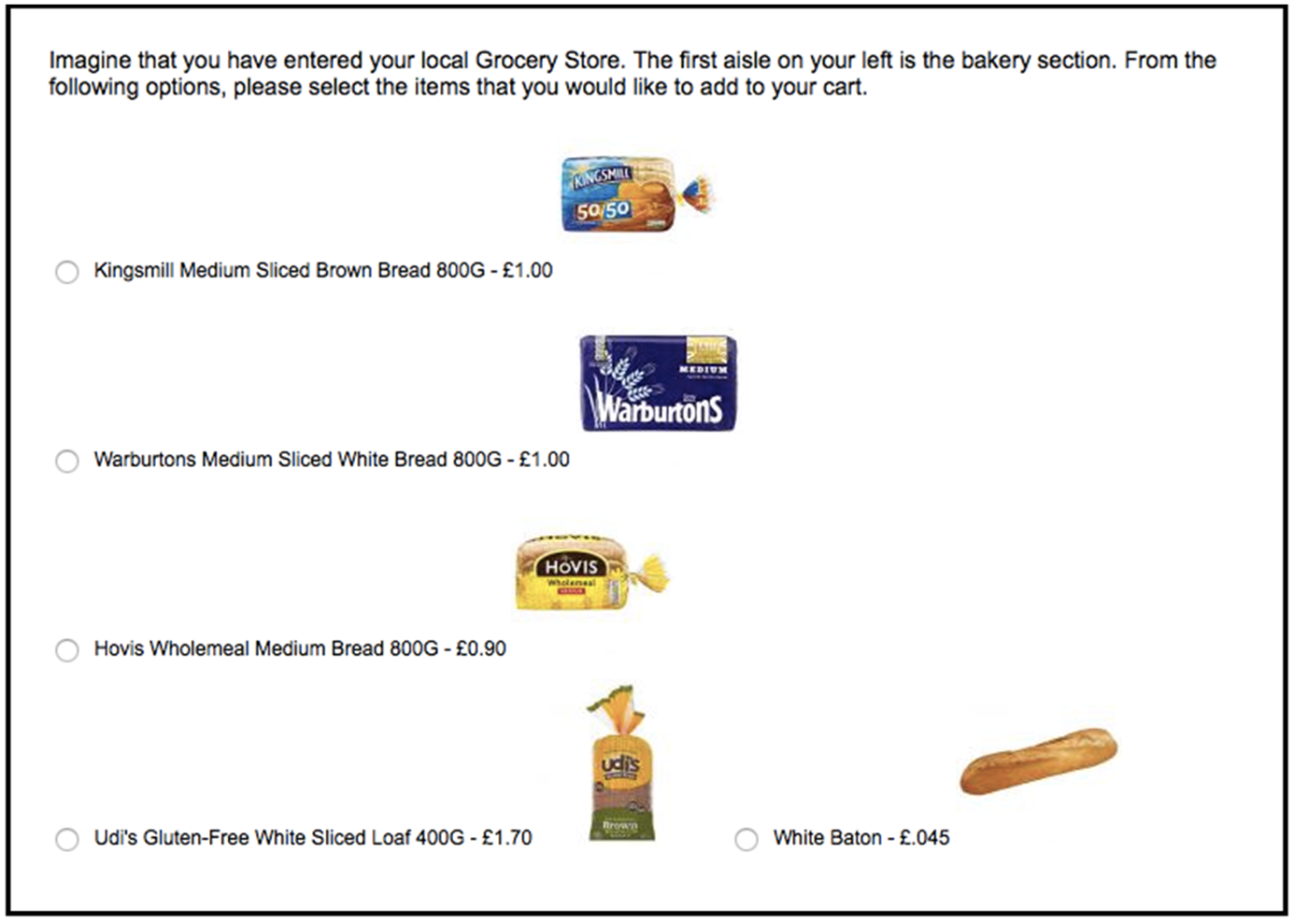
Image: the Positive and Negative Affect Schedule (PANAS).