Introduction
Echinococcus multilocularis is an important parasite of free-living and domestic animals and humans and is widely distributed in the northern hemisphere. Endemic regions have been identified in Central Europe, northern and central Eurasia and in parts of North America (Eckert & Deplazes, Reference Eckert and Deplazes2004). The parasite is predominantly perpetuated in a wildlife cycle, with carnivores (foxes, raccoon dogs, jackals, wolves) as definitive hosts and small mammals as intermediate hosts (Romig et al., Reference Romig, Deplazes, Jenkins, Giraudoux, Massolo, Craig, Wassermann, Takahashi and de La Rue2017). While adult cestodes are regarded as apathogenic in definitive hosts, the metacestode is highly pathogenic for intermediate hosts. In definitive hosts, the adult worms attach to the intestinal tract and release their last proglottids containing hundreds of embryonated eggs into the intestinal lumen. Subsequently, eggs excreted in the host faeces contaminate the environment and are then ingested by rodents as competent intermediate hosts, or by humans as dead-end hosts. Human alveolar echinococcosis (AE) is a severe disease, fatal in 90–100% of cases within 10–15 years after diagnosis, if left untreated (Kern et al., Reference Kern, Menezes da Siva, Akhan, Müllhaupt, Vizcaychipi, Budke and Vuitton2017). The genetic differences found in E. multilocularis are not as clear-cut as in the closely related Echinococcus granulosus sensu lato; however, fine-scale genetic differences may have relevance for variation in the levels of infectivity for humans (Nakao et al., Reference Nakao, Xiao, Okamoto, Yanagida, Sako and Ito2009).
In Slovakia, E. multilocularis was detected for the first time in 1999 in red foxes (Dubinský et al., Reference Dubinský, Svobodová, Turčeková, Literák, Martínek, Reiterová, Kolářová, Klimeš and Mrlík1999). Since then, several studies have been carried out to clarify the epidemiological situation in the country. An extensive survey conducted on over 4700 red foxes between 2000 and 2010 revealed the average parasite prevalence to be 30.3% and the existence of highly endemic localities, with the prevalence reaching 50–60% in the northern areas of central and eastern Slovakia (Miterpáková & Dubinský, Reference Miterpáková and Dubinský2011).
Nevertheless, little is known about the prevalence and genetic diversity of E. multilocularis in other carnivores that may also constitute a source of infection, and about the risk areas and other potential sources of infection in the environment of the country. In addition, phylogenetic studies to characterize local populations of E. multilocularis may contribute to better recognition of the epidemiological parameters in various endemic areas. Therefore, the aim of the present study was to obtain updated and extended information about the occurrence, transmission and genetic polymorphism of E. multilocularis in wolves and dogs from Slovakia.
Materials and methods
Sample collection; post-mortem and coprological examination
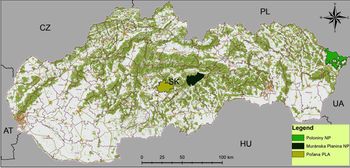
In total, 112 faecal samples from grey wolves (Canis lupus) were collected from the Poloniny National Park (Poloniny NP; n = 43), the Poľana Protected Landscape Area (Poľana PLA; n = 64) and Muránska planina National Park (Muránska planina NP; n = 5) during the period 2014–2017. Poloniny NP, the easternmost national park in Slovakia, is located in the Prešov Region in the area bordering Ukraine to the east and Poland to the north, and covers a territory of 298.05 km2. It contains the original extensive beech and fir-beech forest as well as primeval forests. For the Poľana PLA, situated in the central Slovakia over a territory of 203.6 km2, dense forests and alpine meadows are characteristic. Muránska planina NP, with its mountain karstic landscape and a minimum of human interventions, is located between central and eastern Slovakia, in the Banská Bystrica Region, and covers a territory of 213.2 km2 (fig. 1).
Localities of collection of wolf faecal samples. Abbreviations: Poloniny NP, Poloniny National Park; Muránska planina NP, Muránska planina National Park; Poľana PLA, Poľana Protected Landscape Area.

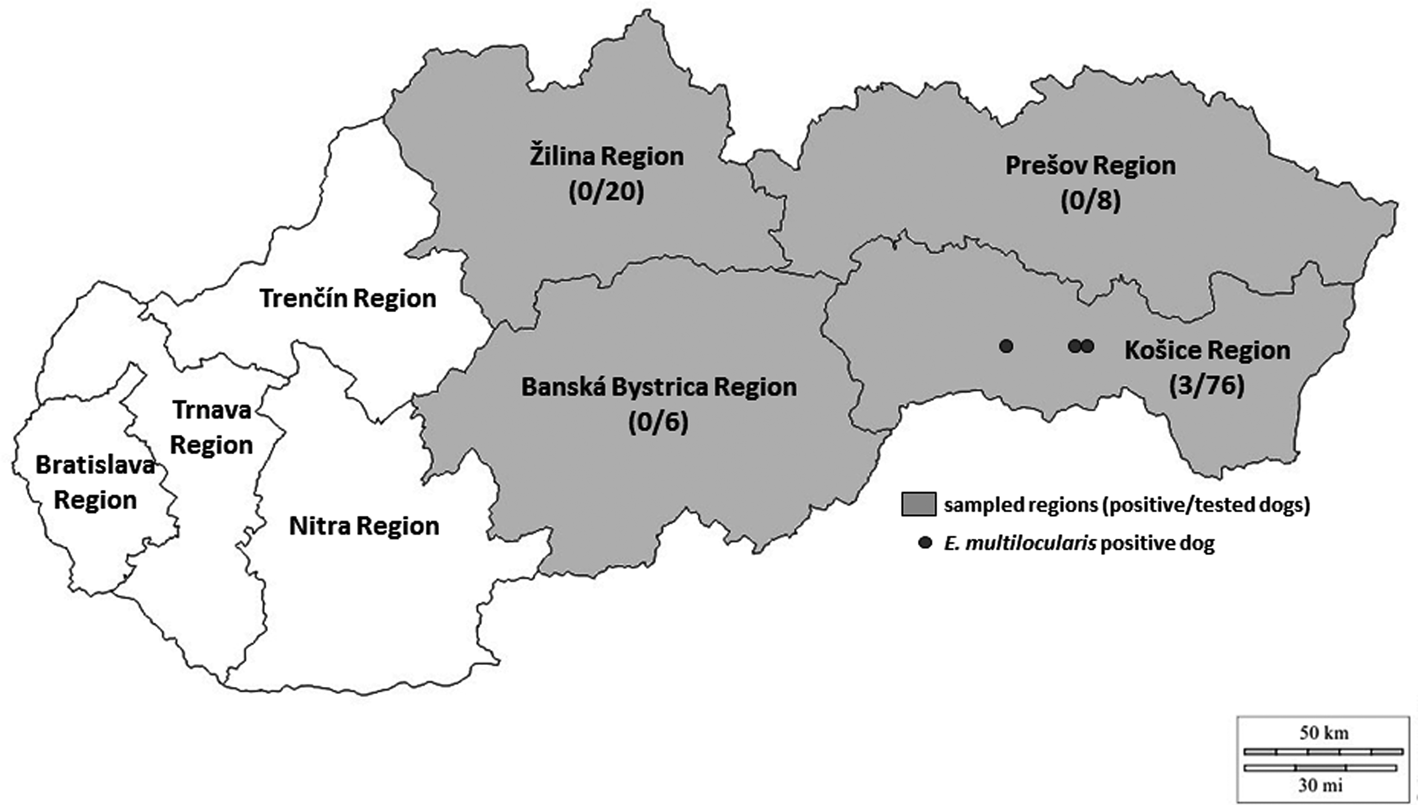
Faecal samples from 110 dogs (Canis lupus familiaris) were collected from the Košice Region (n = 76), Prešov Region (n = 8), Žilina Region (n = 20) and Banská Bystrica Region (n = 6) (fig. 2). The samples were obtained from shelter animals (n = 35), pet animals (n = 42) and animals from segregated Roma settlements (n = 33) between 2016 and 2019. The category ‘shelter dogs’ encompassed stray animals that had been caught and put into shelters. Faecal samples were collected before the deworming and veterinary treatment of the dogs. Owned animals kept under the supervision of the owner, with restricted and controlled movement in the countryside, were characterized as ‘pet dogs’. These dogs were not dewormed at least three months before sampling. Dogs assigned to ‘segregated Roma settlements’ were animals living within marginalized Roma communities, usually roaming freely all over the settlements and their surroundings. These dogs are usually kept under poor hygienic conditions without any deworming and veterinary control. They are often starving, and thereby the catching of rodents presents a supplementary source of their diet.
Localities (regions) of collection of dog faecal samples.

To minimize the risk of sample duplicity, faeces from wolves and the dogs from segregated Roma settlements were collected from distinct sites. However, given that there was no guarantee that some faecal samples were derived from the same host individual, the approach of not using the term prevalence was adopted for measuring the local environmental contamination in the screened hosts, following Miller et al. (Reference Miller, Olsson, Sollenberg, Skarin, Wahlström and Höglund2016), and the index of positivity rate (= positivity) was used in the study instead.
For safety reasons, faecal samples were frozen at −80°C for ten days before examination.
Faecal samples from dogs were examined for the presence of taeniid eggs using a modified Faust's flotation method. For further analyses, taeniid eggs detected during microscopic examination were placed into 1.5 ml microcentrifuge tubes and washed with distilled water to remove any residual flotation solution and inhibitors. Due to the small amount of faecal material, wolf samples were examined only by molecular methods and coprological analyses were not performed. Positivity values are provided with a 95% confidence interval.
Molecular analyses
All faecal samples from wolves and faecal samples from dogs positive for taeniid eggs were analysed using polymerase chain reaction (PCR)-derived methods. After a disruption step performed in a Qiagen TissueLyser 85210 (Retsch, Haan, Germany) using 5 mm stainless steel beads for 6 min (30 Hz), genomic DNA was isolated by QIAamp DNA Stool Mini Kit (Qiagen, Hilden, Germany) according to the manufacturer's instructions.
PCR reactions were carried out using 5× FIREPol® Master Mix Ready to Load (SOLIS Biodyne, Tartu, Estonia). Specific primers were used to amplify a 149 bp region (excluding primer sequences) of the 12S ribosomal RNA (12S rRNA) and a 195 bp region (excluding primer sequences) of NADH dehydrogenase subunit 1 (nad1). For amplification of the partial 12S rRNA gene, a nested PCR reaction was used. The first step was performed using the primers P60-for and P375-rev, designed by Dinkel et al. (Reference Dinkel, von Nickisch-Rosenegk, Bilger, Merli, Lucius and Romig1998), and the second step using the primers Em-nest-for and Em-nest-rev, designed by Dyachenko et al. (Reference Dyachenko, Beck, Pantchev and Bauer2008). The nad1 gene portion was amplified using the primers EM29 F and EM281R, described by Schneider et al. (Reference Schneider, Gollackner, Edel, Schmid, Wrba, Tucek, Walochnik and Auer2008).
Phylogenetic analyses
The obtained sequences were manually checked and edited; sequence similarity searches comparing to the GenBank reference sequences were carried out using the BLAST algorithm (https://blast.ncbi.nlm.nih.gov). Nucleotide sequences were aligned by the Clustal Omega multiple sequence alignment program (Sievers et al., Reference Sievers, Wilm and Dineen2011) for 12S rRNA and nad1 partial genes. The phylograms were constructed by the MEGA7 software (Kumar et al., Reference Kumar, Stecher and Tamura2016) using the neighbour-joining (NJ) method with 1000 bootstrap pseudo-replicates. A TN93 substitution model with gamma-distributed rate heterogeneity was selected based on the Maximum Likelihood evaluation of possible substitution models using MEGA (Tamura, Reference Tamura1992). Statistical parsimony networks using TCS implemented in the PopART software (Clement et al., Reference Clement, Snell, Walker, Posada and Crandall2002) were carried out to analyse the haplotype genealogy in the 12S and nad1 datasets. The network was constructed with a 95% probability limit.
Gene sequences obtained in the present study were deposited in GenBank® under accession numbers MN796073, MN796075, MN796077, MN809175-MN809180 for the 12S rRNA target, and MN813494-MN813498, MH507069, MH744552, MH744553 for the nad1 target.
Results
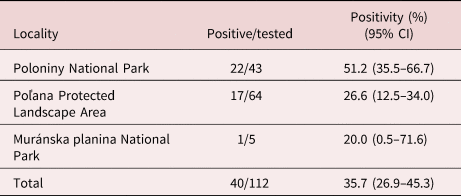
Out of 112 analysed wolf faecal samples, 40 (35.7%) had a positive PCR signal for E. multilocularis. The highest positivity rate, 51.2% (22/43), was found in Poloniny NP situated in north-eastern Slovakia. In the Poľana PLA and in Muránska planina NP (both in central Slovakia), the positivity was lower, reaching values of 25.4% (17/67) and 20.0% (1/5), respectively (table 1). Ten wolf isolates (from Poľana PLA and Poloniny NP) were further subjected to the DNA sequencing.
Occurrence of Echinococcus multilocularis in wolf faecal samples between 2014 and 2017.

CI, confidence interval.
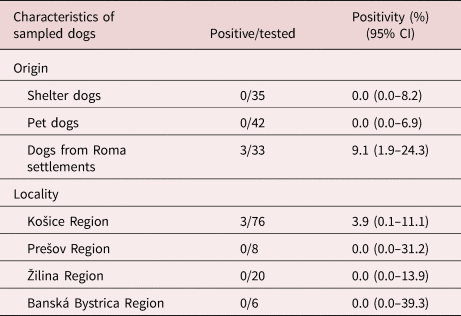
Taeniid eggs were detected in seven of the 110 dog faecal samples. Genetic characterization confirmed the presence of E. multilocularis in three dogs (2.7% positivity rate). All positive individuals came from segregated Roma settlements in eastern Slovakia; one dog was from the city of Košice and two dogs from a segregated settlement in Vyšný Medzev (Košice Region, situated 35 km from Košice) (table 2 and fig. 2). These isolates were also further genetically analysed.
Occurrence of Echinococcus multilocularis in dog faecal samples based on their origin.

CI, confidence interval.
Molecular analyses
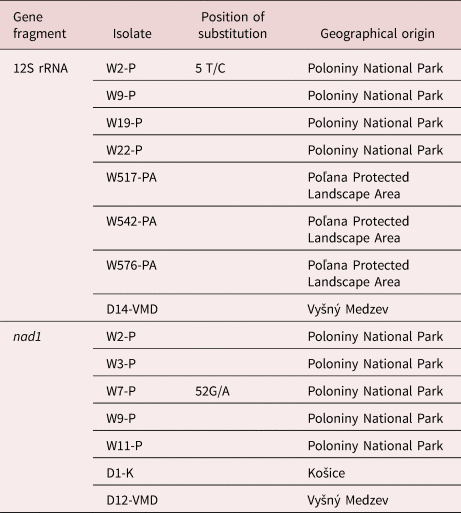
Thirteen isolates from wolves and dogs that originated from the four sampling sites were successfully typed as E. multilocularis using DNA sequencing of the 12S rRNA and nad1 regions. In the two wolf isolates from Poloniny NP (W2-P, W9-P), genetic profiles were detected for both screened genes, whereas in the remaining 11 isolates profiles were resolved in one of the gene targets (the list of molecularly tested samples is presented in table 3).
Echinococcus multilocularis isolates investigated in this study and sites of nucleotide substitutions.

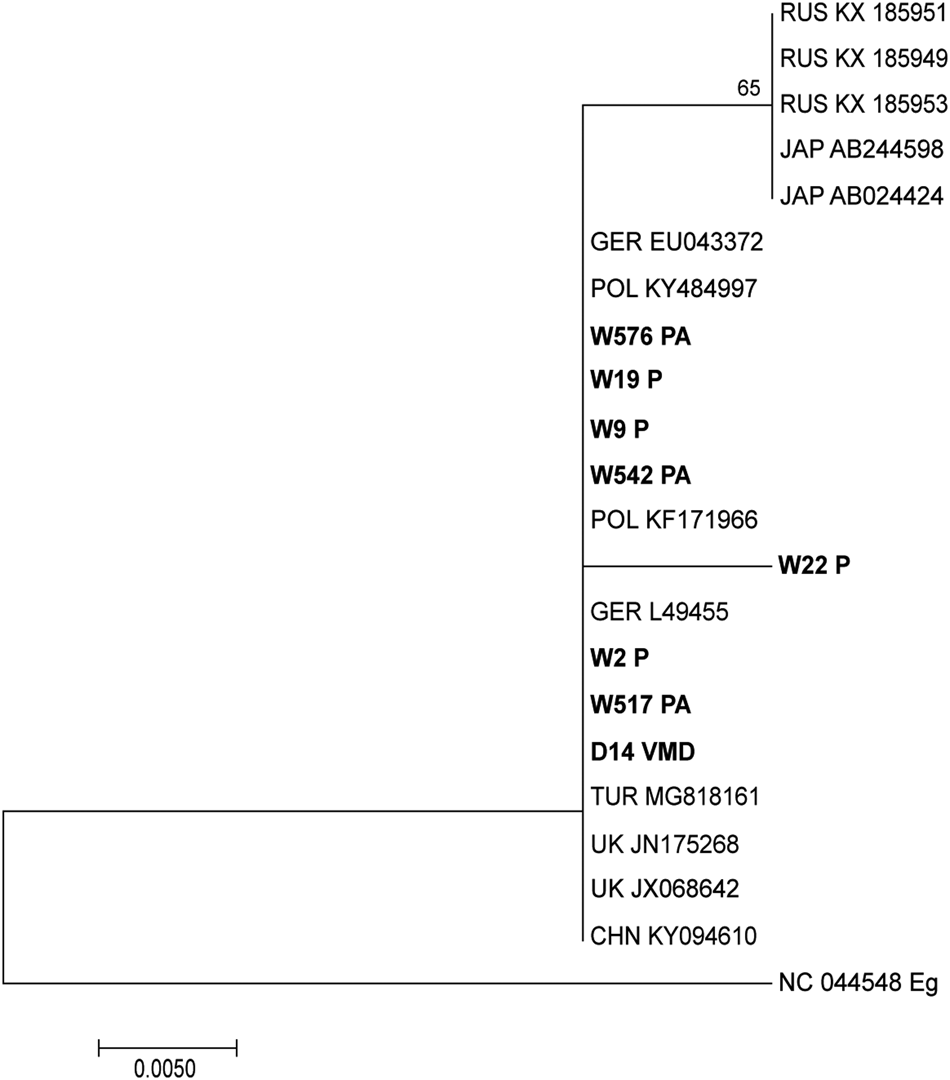
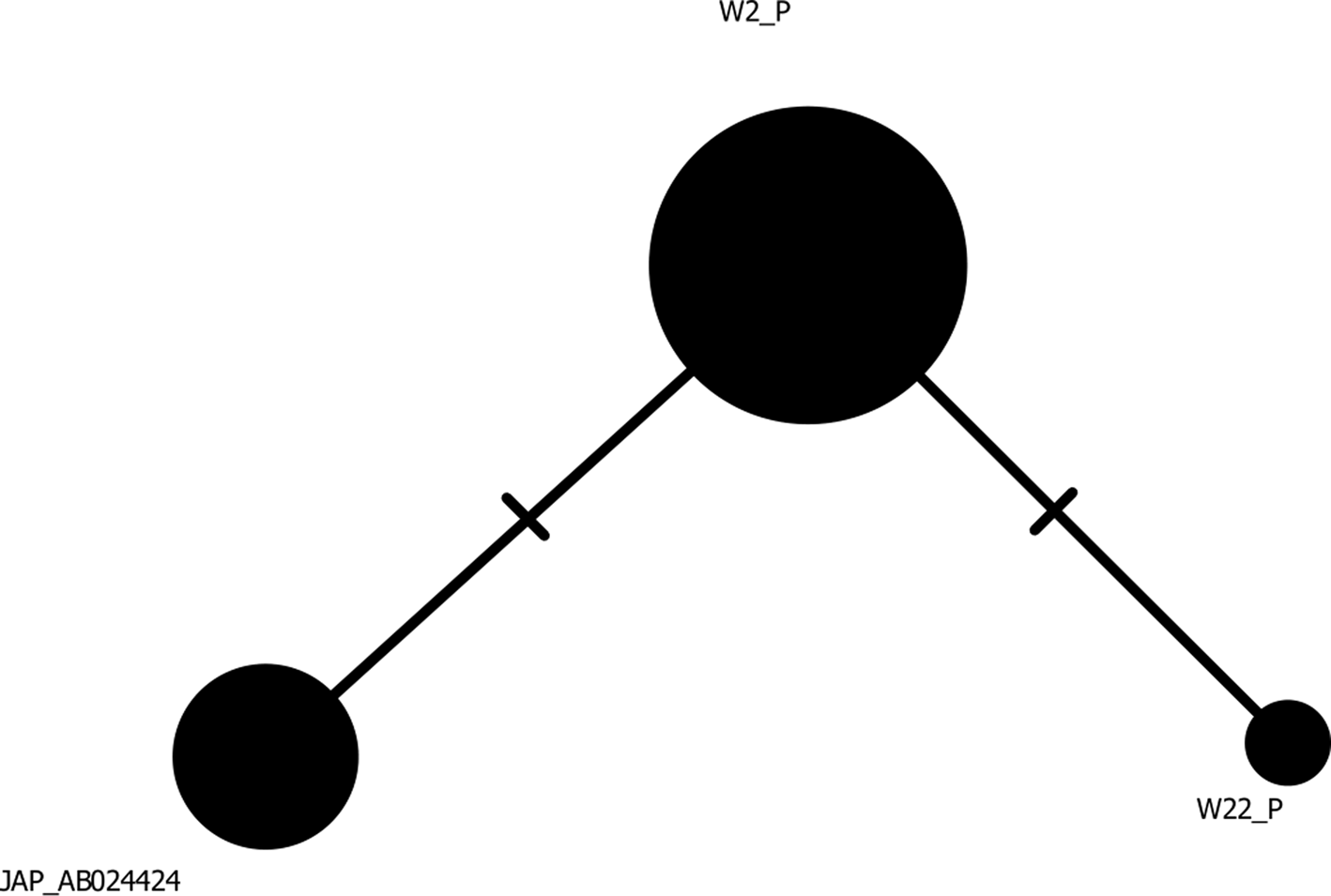
Through analysis of the partial 12S rRNA gene (149 bp), isolates originating from seven wolf faecal samples (four isolates from Poloniny NP and three from Poľana PLA), and one dog from Vyšný Medzev (Košice Region) were identified as E. multilocularis. Although not supported by a high bootstrap value (65%) due to a slight variation represented by 1–2 nucleotide polymorphisms, the E. multilocularis samples were subdivided into two clusters (the NJ phylogram is presented in fig. 3). The Slovak samples were divergent from the cluster composed of Asian samples (originating from Japan and Russia, south-western Siberia) and were located in the group predominantly formed by European isolates (Poland, Germany, UK) and also containing isolates from Turkey and China. Only the wolf isolate W22-P (Poloniny NP) showed an additional 5 T/C nucleotide exchange in the Slovak assemblage. At this position, a double peak of similar sharpness was detected with both primers, exhibiting a signal for a T-base reaching approximately 80% of the height of C-signal. Given that the examined faecal samples contained pooled eggs, the most plausible explanation for this pattern is that mixed profiles were generated by two DNA types, and the majority of eggs had nucleotide C at site 30, which was considered for phylogenetic evaluation. Hence, owing to this variation, W22-P was the most distinct isolate within the haplotype network primarily illustrating relationships between the European and Asian samples (fig. 4).
Neighbour-joining phylogram generated from the sequences of the 12S rRNA (149 bp) partial gene showing the relationships among the examined Slovak isolates and GenBank-retrieved homologous sequences of Echinococcus multilocularis. Echinococcus granulosus sensu stricto (G1 genotype) was used as the outgroup. The scale bar refers to a phylogenetic distance of 0.0050 nucleotide substitutions per site. Numbers next to the branches indicate the bootstrap value calculated from 1000 replicates. Only bootstrap values >50% are shown at the branching points. Codes of the examined samples are written in bold letters. Abbreviations for sampling sites: P, Poloniny National Park (north-eastern Slovakia); PA, Poľana Protected Landscape Area (central Slovakia); VMD, Vyšný Medzev (Košice Region, eastern Slovakia). Host abbreviations: W, wolf; D, dog. Geographical origins of the referenced isolates: POL, Poland; GER, Germany; UK, United Kingdom; TUR, Turkey; RUS, Russia; CHN, China; JAP, Japan.

Parsimony haplotype network generated from 12S rRNA sequences, illustrating genealogical relationships between the examined Slovak isolates of Echinococcus multilocularis (represented by the samples W2-P, W22-P) and Asian haplotypes (represented by the sample JAP-AB024424). Labelled circles represent distinct haplotypes; transversal bars at branches represent point mutations; the size of the circles correlates with haplotype frequency.

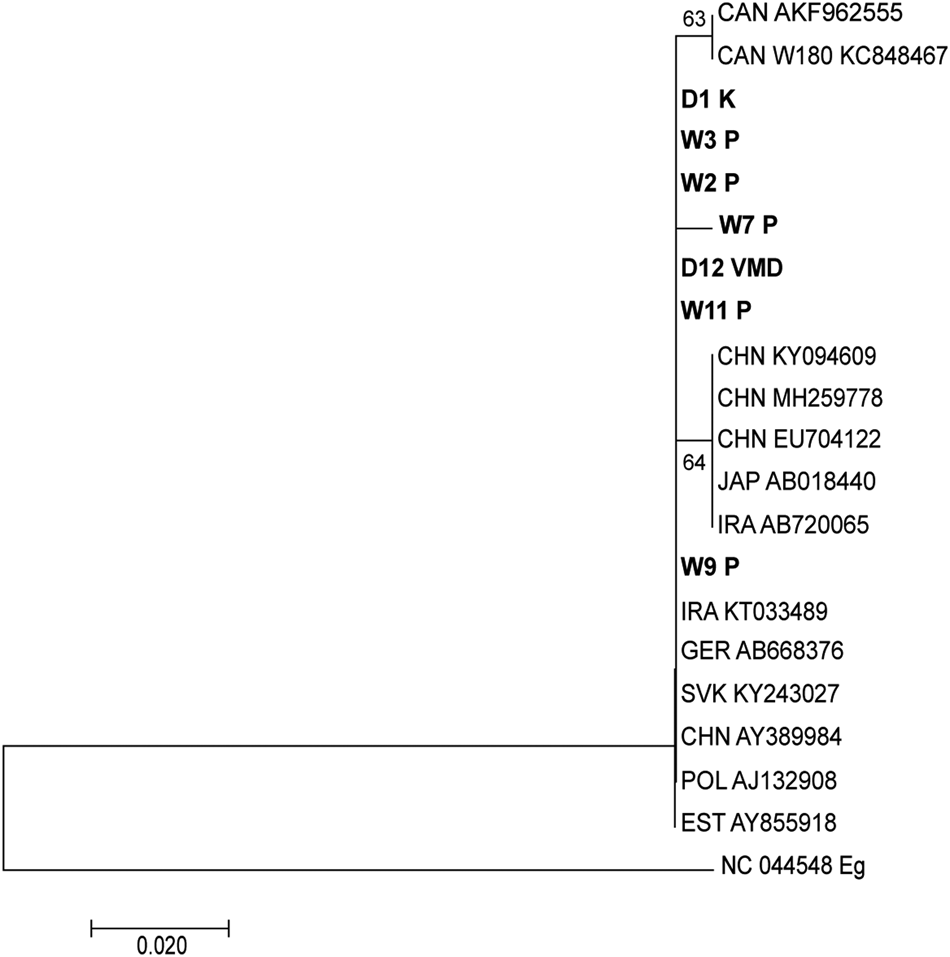
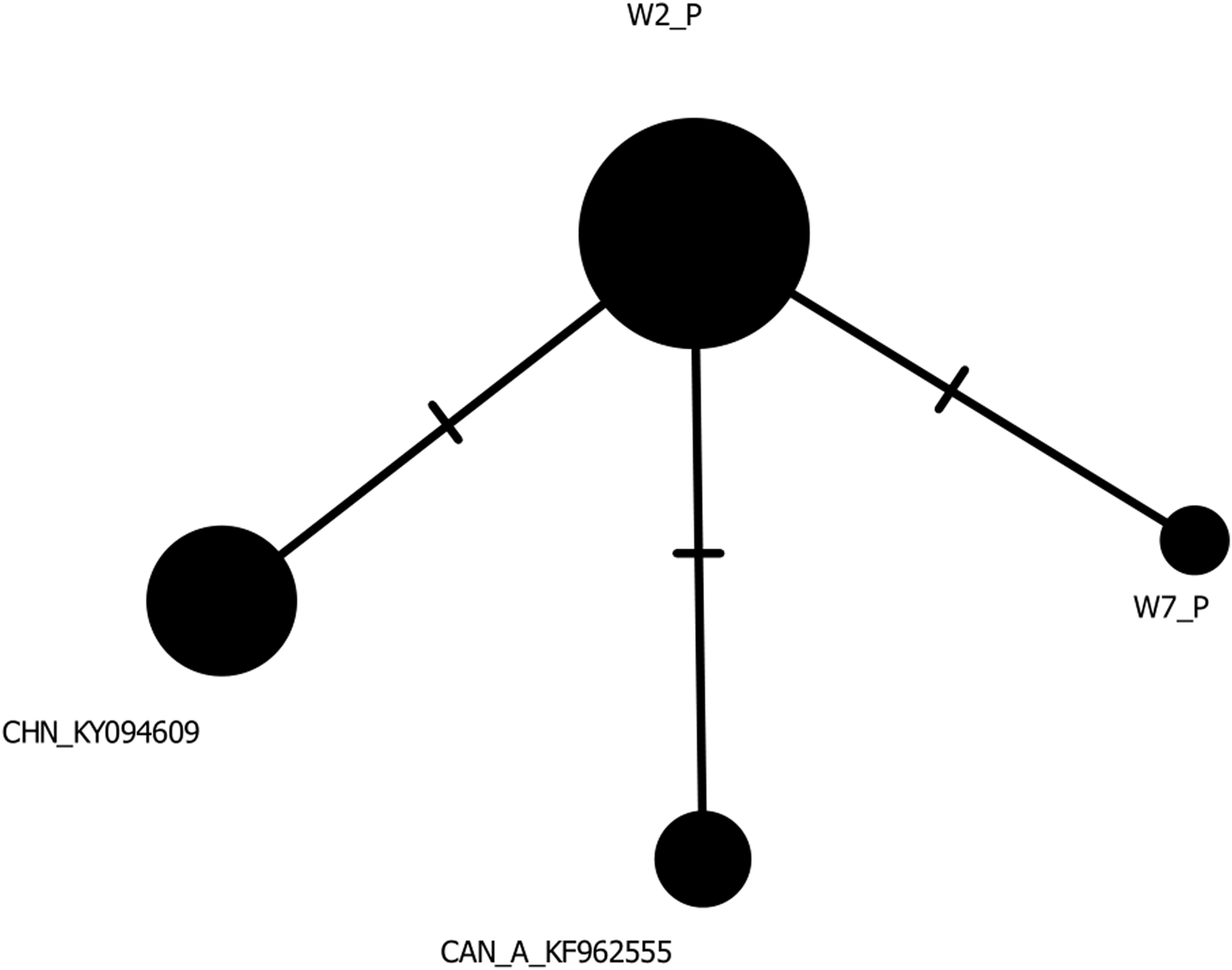
Sequences of the partial nad1 gene (195 bp) were obtained for five wolves (all from Poloniny NP) and two dogs (from Vyšný Medzev and the city of Košice, both located in the Košice Region) (table 3). In all the samples screened in nad1, patterns characteristic for E. multilocularis were detected. The Slovak samples formed one clade, which was almost exclusively established by isolates from Europe (Poland, Germany, Estonia, Slovakia), along with two representatives from Iran and China (phylogram is presented in fig. 5). The sequences of the European clade exactly matched, except for one nucleotide substitution G/A (at position 52) determined in the W7-P wolf isolate from Poloniny NP. The remaining two clades (bootstrap values of 64% and 63%) were confined to the Asian cluster containing samples from China, Japan and Iran, and the North American cluster formed by two representatives of Canadian samples. Again, bootstrap values were not high due to small sequence differences (1–2 nucleotides), but a clear subdivision into three continental groups (European, Asian, North American) was also apparent from the statistical parsimony network evaluating the relationships among the different haplotypes (fig. 6).
Neighbour-joining phylogram generated from the sequences of the nad1 (195 bp) partial gene showing the relationships among the examined Slovak isolates and GenBank-retrieved homologous sequences of Echinococcus multilocularis. Echinococcus granulosus sensu stricto (G1 genotype) was used as the outgroup. The scale bar refers to a phylogenetic distance of 0.020 nucleotide substitutions per site. Numbers next to the branches indicate the bootstrap value calculated from 1000 replicates. Only bootstrap values >50% are shown at the branching points. Codes of the examined samples are written in bold letters. Abbreviations for sampling sites: P, Poloniny National Park (central Slovakia); VMD, Vyšný Medzev (Košice Region, eastern Slovakia); K, Košice (Košice Region, eastern Slovakia). Host abbreviations: W, wolf; D, dog. Geographical origins of the referenced isolates: POL, Poland; GER, Germany; EST, Estonia; SVK, Slovakia; IRA, Iran; CHN, China; JAP, Japan; CAN, Canada.

Parsimony haplotype network generated from nad1 sequences, illustrating genealogical relationships among the examined Slovak isolates of Echinococcus multilocularis (represented by the samples W2-P, W7-P), Asian haplotypes (represented by the sample CHN-KY094609) and North American haplotypes (represented by the sample CAN A-KF962555).

Discussion
In epidemiological and transmission ecology studies of E. multilocularis, the greatest attention is being paid to foxes, the principal reservoir host of the parasite, in which the cestode primarily occurs in European settings. Among other potential definitive hosts of E. multilocularis, three wildlife species and two domestic species (raccoon dog, golden jackal, wolf, dogs and cats) were identified in a recent meta-analysis on the geographic distribution of the parasite in the European Union and adjacent countries (Oksanen et al., Reference Oksanen, Siles-Lucas and Karamon2016). In European countries classified as having medium and low prevalence groups (pooled prevalence in foxes ≤10%), wolves, dogs and cats seem to play no role in sustaining the life cycle of E. multilocularis. In contrast, in areas with a high fox prevalence, the raccoon dog, wolf and golden jackal (if present) emerged as potentially important definitive hosts.
The Carpathian population of grey wolves extends over a large area that includes six countries of Central-Eastern Europe (Romania, Slovakia, Poland, Ukraine, the Czech Republic and Hungary) and consists of ~3000 wolves, with estimates for Slovakia in a range of 340–450 animals (Hindrikson et al., Reference Hindrikson, Remm and Pilot2017; Finďo & Skuban, Reference Finďo and Skuban2019). In Slovakia, the wolf occurs in approximately 39% of the country (18,900 km), being widespread in upland areas of northern, central and eastern Slovakia (Finďo & Skuban, Reference Finďo and Skuban2011). The three localities from which we collected faecal samples cover a substantial range of wolf dispersal in Slovakia and overlap with areas previously identified as localities with endemic occurrence of E. multilocularis in red foxes ((Miterpáková & Dubinský, Reference Miterpáková and Dubinský2011). Poloniny NP represents the easternmost tip of this territory, where the wolf population is continually linked to the Carpathian population from western Ukraine, whereas the Poľana PLA and Muránska planina NP cover areas close to the southernmost distribution of the carnivore in Slovakia, being situated west of Poloniny NP by ~270 and 210 km, respectively. A high proportion of faecal samples (112) relative to the entire wolf population presently occurring in Slovakia (~400) were screened in the study, although the possibility that some samples were derived from the same animal during sampling cannot be avoided. Notably, we recorded high E. multilocularis occurrences in samples from all the surveyed localities, specifically in Poloniny NP with a 51.2% (22/43) positivity rate, in the Poľana PLA at 25.4% (17/67) and in Muránska planina NP with 20% (1/5). Hence, the overall positivity rate established in wolves (35.7%) was comparable to the mean prevalence (30.3%) documented in red foxes in Slovakia in 2000–2010 (Miterpáková & Dubinský, Reference Miterpáková and Dubinský2011), and with the pooled prevalence of 27.3% between 2000 and 2013 based on 17 studies summarized by Oksanen et al. (Reference Oksanen, Siles-Lucas and Karamon2016).
Compared to the fox population, the wolf population is substantially smaller in the country (the estimated number of foxes in 2018 was 32,900; NFCSR, 2019) and, thus, does not contribute significantly to the maintenance of the parasite life cycle and zoonotic transmission. Nevertheless, due to the spatial behaviour with generally large home-range sizes and long-distance dispersal distances of subadults (typically 140–200 km2 in Slovakia, as documented by Voskár (Reference Voskár1993) and Finďo & Chovancová (Reference Finďo and Chovancová2004)), wolves may play a significant role in the dispersal and spread of the parasite (Davidson et al., Reference Davidson, Lavikainen, Konyaev, Schurer, Miller, Oksanen, Skírnisson and Jenkins2016). The fact that these large canids can markedly influence the distribution and abundance of smaller canid species, which may substantially affect the transmission dynamics of E. multilocularis, must also be taken into account (Hegglin et al., Reference Hegglin, Bontadina and Deplazes2015). The primary diet of wolves consists predominantly of large ungulates, but it can be supplemented by a variety of large rodents (muskrats, beaver, nutria) from which they can contract the infection (Finďo, Reference Finďo2002; Romig et al., Reference Romig, Deplazes, Jenkins, Giraudoux, Massolo, Craig, Wassermann, Takahashi and de La Rue2017).
In a previous study on wolves in Slovakia conducted in 1998–1999, a 9.7% (3/31) prevalence of E. multilocularis was found in Muránska planina NP and the Bukovské vrchy Mountains (eastern Slovakia) (Martínek et al., Reference Martínek, Kolárová, Hapl, Literák and Uhrin2001). The markedly greater occurrence rates in wolves recorded herein thus corroborate the substantial increase of E. multilocularis environmental contamination since its first finding in Slovakia in 1999.
In the European context, a 1.4% pooled prevalence in wolves was estimated based on eight studies conducted in six European countries (Latvia, Slovakia, Ukraine, Sweden, Denmark, Finland; data compiled by Oksanen et al., Reference Oksanen, Siles-Lucas and Karamon2016) during 1998–2013. In Latvia, a 5.9% prevalence of E. multilocularis was recorded in 34 screened wolves between 2003 and 2008 (Bagrade et al., Reference Bagrade, Kirjušina, Vismanis and Ozoliņš2009). In the south-western Italian Alps in north-western Italy, Massolo et al. (Reference Massolo, Valli and Wasermann2018) found E. multilocularis eggs in five out of 120 wolf samples (5.2%).
In this study, we also surveyed the occurrence of the parasite in the most common domestic animal – dogs. Although the infection is not generally common in the dog population, catching rodents was confirmed to be the most important risk factor for acquiring E. multilocularis infection, and, therefore, hunting dogs, stray dogs or dogs that live outside may face a higher risk of being infected (Antolová et al., Reference Antolová, Reiterová, Miterpáková, Dinkel and Dubinský2008). In addition, the increase of the population density of red foxes and their subsequent urbanization have brought E. multilocularis into closer contact with dogs, which poses a risk of infecting people (Wright, Reference Wright2013). A recent meta-analysis of potential risk factors associated with AE indicated that dog ownership is, globally, the most clearly established risk factor for acquiring human AE, despite the fact that in Europe the role of dogs is not as important as in China and Central Asia (Conraths et al., Reference Conraths, Probst, Possenti, Boufana, Saulle, La Torre, Busani and Casulli2017). Even if prevalence rates are generally 10–100 times lower in dogs than in foxes in endemic areas of Central Europe, due to high biotic potential and population densities, their estimated contribution to environmental contamination with E. multilocularis eggs ranges between 4% and 19% (Hegglin & Deplazes, Reference Hegglin and Deplazes2013). Dogs are considered to be potentially important hosts also with respect to the introduction of E. multilocularis into new non-endemic areas by travelling with their owners and by illegal pet imports, as well as with respect to parasite dispersal in endemic areas due to their close link to humans (Torgerson & Craig, Reference Torgerson and Craig2009; Davidson et al., Reference Davidson, Romig, Jenkins, Tryland and Robertson2012).
In this report, a 2.7% (3/110) occurrence of the parasite was recorded in dog faecal samples from four regions of eastern and central Slovakia. All three positive animals originated from segregated Roma settlements in suburban areas of Košice and in the settlement of Vyšný Medzev (located 35 km from Košice). The 9.1% positivity rate (3/33) found in dog faeces from these settlements indicates higher contamination with E. multilocularis eggs, which poses a risk for human infection in such areas. In Roma settlements, a large number of people typically live in a small area in close contact with domestic animals, which often roam freely and are without proper veterinary control. Thus, dogs may act as carriers of E. multilocularis eggs, thus increasing the potential risk of human exposure. Further, in the vicinity of these settlements, animal excrements and human faeces are concentrated without appropriate sanitary control, which represents a significant risk for the circulation of soil-transmitted infections of animals and humans (Pipíková et al., Reference Pipíková, Papajová, Šoltys, Schusterová, Kočišová and Toháthyová2017). However, in 75 pet and shelter dogs, no parasite records were found in the present study.
Although Slovakia is a country with the endemic occurrence of E. multilocularis, only a few studies have been so far undertaken addressing the genetic polymorphism of the parasite circulating in the country (e.g. Šnábel et al., Reference Šnábel, Miterpáková, D'Amelio, Busi, Bartková, Turčeková, Maddox-Hyttel, Skuce and Dubinský2006; Knapp et al., Reference Knapp, Bart and Giraudoux2009). Sequences of the 12S rRNA and nad1 mitochondrial genes are commonly screened in phylogenetic, epidemiological and biogeographic studies of E. multilocularis tapeworms (e.g. Gesy et al., Reference Gesy, Schurer, Massolo, Liccioli, Elkin, Alisauskas and Jenkins2014; Beck et al., Reference Beck, Mihaljević, Brezak, Bosnić, Janković and Deplazes2018; Li et al., Reference Li, Li, Fan, Fu, Zhu, Yan and Jia2018; Lass et al., Reference Lass, Szostakowska, Kontogeorgos, Korzeniewski, Karamon, Sulima and Karanis2019). In Slovakia, Antolová et al. (Reference Antolová, Víchová, Jarošová, Gál and Bajužík2018) employed the nad1 partial gene to molecularly characterize an isolate from a liver lesion of a Siberian husky dog from central Slovakia (GenBank accession number KY243027 in fig. 4), and found a profile identical to the major European genotype of E. multilocularis. Further, three fox isolates were examined in the above genes (12S, nad1) bearing sequences identical to the common European genotype (Šnábel et al., Reference Šnábel, Sréter, Gottstein, Gawor, Romig, Miterpáková and Indyuhova2019). Using the different cox1 marker, Šnábel et al. (Reference Šnábel, Miterpáková, D'Amelio, Busi, Bartková, Turčeková, Maddox-Hyttel, Skuce and Dubinský2006) detected this genotype in 12 fox isolates collected from 11 districts located throughout the country.
In the current study, among 13 isolates recovered from four sampling sites of eastern and central Slovakia and screened for short fragments of 12S and nad1 (sizes of 149 and 195 bp), two haplotypes were detected for both gene regions. All the haplotypes recorded herein showed the European-type structure of E. multilocularis, thus increasing the amount of classified European genotypes to a total of 29 records in the country. In contrast, in neighbouring Poland, Karamon et al. (Reference Karamon, Stojecki, Samorek-Pierog, Bilska-Zajac, Rozycki, Chmurzynska, Sroka, Zdybel and Cencek2017) also detected, besides the European genotype, the Asian genotype in 9.5% (7/74) of fox samples. All isolates assigned to the Asian genotype originated from the north-eastern part of Poland, a territory not directly connected to the Slovak border.
The present survey documented that, in view of a longer-term trend, the prevalence of E. multilocularis is being sustained at higher rates in Slovakia, given that as much as 35.7% of wolf samples screened over the larger part of the country were recorded as positive. As measures to control wild host species are discussed as alternative intervention methods, investigations of wolves, raccoon dogs, golden jackals (spreading from south Europe) and intermediate host species should be further employed in chosen areas to better recognize local foci and transmission pathways of the parasite. These observations provide important information regarding the dispersal rates of E. multilocularis in Slovakia and may be of interest from the perspectives of public health and wildlife conservation.
Financial support
This research was supported by the Slovak Research and Development Agency under the contract number APVV-15-0114, and by the Slovak Grant Agency VEGA, project numbers 2/0107/20 and 2/0162/17.
Conflicts of interest
None.
Ethical standards
The research related to animals has been complied with all the relevant national regulations and institutional policies for the care and use of animals.