INTRODUCTION
Isañu, añu, cubio or mashua (Tropaeolum tuberosum), probably the Andean region's fourth most important root crop after potato (Solanum tuberosum), oca (Oxalis tuberosa) and ulluco (Ullucus tuberosus) (National Research Council, 1989), is related closely to the garden nasturtium (Tropaeolum majus) and is believed to have insect repellent properties. Traditionally, mashua has been a high-yielding, low-maintenance crop commonly grown in small plots for consumption by women and children. Tubers of mashua are the size of small potatoes, 4–8 cm in length, with shapes ranging from curved to conical to long-conical, and colours varying from yellow to purple to red. Mashua tubers are very nutritious, containing about 20% solids and up to 16% protein (based on dry matter), a good balance between carbohydrates and proteins, and a high content of ascorbic acid, β-carotene and minerals (King and Gershoff, Reference King and Gershoff1987; Tapia, Reference Tapia1990). Therefore, mashua tubers potentially have wide application in the food industry as dried slices, for flour and starch processing, or for baby food mixtures (Tapia, Reference Tapia1990). Due to its strong flavour, mashua is not eaten raw, but is used in stews with other Andean tubers or faba beans; it also is used in desserts with milk and sugar (National Research Council, 1989).
Mashua tubers were once common in markets during the harvest season, from the end of May until September (National Research Council, 1989). Few farmers currently cultivate mashua due to reduced tuber productivity, a long growing season, low market price and a general lack of interest (Alfredo et al., Reference Alfredo, Dueñas, Cabrera and Hermann2003; FAO, 1990; National Research Council, 1989; Tapia, Reference Tapia1990).
The reasons for yield decline in mashua are complex (National Research Council, 1989). Mashua is commonly cultivated at altitudes above 3500 m where environmental conditions are not optimal for crop development. Above 3200 m, mashua fields may be exposed to drought during the developmental cycle, extreme temperature variations on the same day, frost and poor soil fertility because fertilizer use is infrequent. Because of the difficulties in production and poor marketing opportunities, mashua is exposed to constant germplasm erosion.
Virus infection of tuber crops is known to have an effect on productivity (Walkey et al., Reference Walkey, Creed, Delaney and Whitwell1981; Wright, Reference Wright1970; Reference Wright1977). An uncharacterized, mechanically transmitted virus (Delhey and Monasterios, Reference Delhey and Monasterios1977) and potato leaf roll virus (National Research Council, 1989) have been reported to infect mashua. We have isolated and characterized a potyvirus, TropMV, which appears to be widespread in the mashua germplasm of Ecuador (Soria et al., Reference Soria, Rojas, Damsteegt, McDaniel, Kitto and Evans1998) but commonly produces a symptomless infection in mashua. The widespread distribution of TropMV throughout Ecuadorean germplasm is not surprising as T. tuberosum has been vegetatively propagated via tubers by the people of the Andean highlands since Incan times (FAO, 1990; National Research Council, 1989).
Apical dome culture is one technique that has been used to produce virus-tested germplasm in a number of crops (De Vries-Paterson et al., Reference De Vries-Paterson, Evans and Stephens1992; Zapata et al., Reference Zapata, Miller and Smith1995). Protocols for initiating and maintaining mashua in vitro have been developed (Estrada et al., Reference Estrada, Manya, Pulache, Sanchez and Yonamine1986; Perea-Dallos et al., Reference Perea-Dallos, Fandiño and Torres1986). The goal of this research was to produce virus-tested mashua plants in order to compare growth in vitro (proliferation, rooting and re-establishment) and in the field (vigour, yield) for virus-tested (VT) versus virus-infected (V) germplasm.
MATERIALS AND METHODS
Plant material
Four TropMV-infected genotypes (1093, 1115, 1141, 1147) from the mashua collection at the Ecuadorean Institute for Agricultural Investigation (INIAP), Santa Catalina Research Station, Quito, Ecuador, were selected on the basis of geographical distribution within the country and morphological characteristics such as tuber form and colour (Soria, Reference Soria1996). Tubers from the genotypes were collected, sent to the USDA quarantine greenhouse facility at Fort Detrick, MD, USA, under USDA-APHIS permit, and maintained there for testing.
Apical domes (meristem plus one or two leaf primordia), ca. 0.2 mm in height, were isolated using a razor blade sliver from virus-infected in vitro-maintained microcuttings of the mashua genotypes. Clones initiated from apical domes were designated as VT clones.
Virus indexing
Biological assays. Apical dome-derived clones from four mashua genotypes were bioassayed for the presence of virus using Nicotiana benthamiana and Chenopodium quinoa as indicator plants. Bioassays were carried out using 2–3-week-old post-subculture in vitro (N. benthamiana, systemic-infection indicator) and 2-month-old greenhouse-hardened (C. quinoa, local-lesion indicator) mashua plant material. Microcuttings generated after 2–3 subcultures from an individual apical dome-derived clone were pooled, macerated in 1 ml of buffer (0.01M sodium phosphate, pH 7.0) using a mortar and pestle, and rub-inoculated onto young leaves of N. benthamiana that had been dusted with 600 mesh silicon carbide (one N. benthamiana plant per tissue culture clone). N. benthamiana leaves produced downward curling leaves, stem distortion and systemic vein clearing within two weeks of inoculation. As a positive control, microcuttings of virus-infected parent genotypes (V clones) were assayed at the same time.
A bioassay of greenhouse-generated tissue used samples from each apical dome-derived VT clone. There were 3–8 individual apical dome-derived VT clones per genotype, e.g. genotype 1093 had eight VT clones each derived from an individual apical dome. Composite samples were collected from individual plants (four leaves for VT and two to three leaves for V clones), macerated in 10 ml of 0.01 M sodium phosphate buffer, pH 7.4, rub-inoculated onto C. quinoa that had been dusted with 600 mesh silicon carbide, and evaluated 7–19 d later (one C. quinoa plant per greenhouse plant). C. quinoa leaves produced red-rimmed local lesions with necrotic centres within 10 d after inoculation. As a positive control, microcuttings of virus-infected parent genotypes (V clones) were assayed at the same time.
In field experiment 1, two or three leaves per field-grown plant were macerated in a chilled mortar with 1 ml of 0.5-M sodium citrate buffer and rub-inoculated onto N. benthamiana as described above (one N. benthamiana plant per field-grown plant).
Serological assays. In experiment 2, leaf tissue from individual, 10-month-old plants was tested using DAS (double-antibody-sandwich)-ELISA for potyvirus (Agdia, Inc., Elkhart, IN, USA). A composite sample of young leaves was collected and triturated with coating buffer composed of 1.59 g l−1sodium carbonate (anhydrous) and 2.93 g l−1 sodium bicarbonate plus polyvinylpyrrolidone, mw 24–40 000 (CB/PVP). Polystyrene microtitre plates were coated with a mixture of 16 potyvirus antibodies. Sap extracts were diluted approximately 10-fold, incubated for 2 h at room temperature, and 100 μl were added to duplicate wells of the microtitre plates and incubated for 1 h at room temperature. Plates were washed three times with phosphate buffered saline plus Tween 20 (PBS-Tween) before 100 μl of gamma globulin (IsG) were added to each well. The plates were incubated for 2 h at room temperature or overnight at 4 °C and washed four times with PBS-Tween. Later, 100 μl per well of the IsG enzyme conjugate (alkaline phosphatase) was added, and incubated for 1 h at room temperature. Then, 100 μl of p-nitrophenol (Sigma Chemical Co., St. Louis, MO, USA) diluted in diethanolamine buffer was added to each well. The reaction was stopped after 1 h with 50 μl of 3M sodium hydroxide and OD405 readings were taken using a Bio-Tech microplate reader model EL307C (Winoosk, VT, USA). The positive/negative threshold was four times the mean of the background mean value.
Tissue culture
The basal medium contained the inorganic salts and vitamins of Murashige and Skoog (Reference Murashige and Skoog1962), supplemented with 3% sucrose and 0.64% Phytagar (Life Technologies, Inc., New York, USA). For proliferation, basal medium contained 22μM BA (6-benzyl adenine) and 4.6μM kinetin (6-furfurylaminopurine) according to Fandiño et al. (Reference Fandiño, Torres and Perea-Dallos1987). For in vitro rooting, the basal medium contained 26.8μM of NAA (naphthalene-6-acetic acid). Media pH was adjusted to 5.7–5.8 prior to autoclaving.
Apical domes were cultured in Petri plates (60 × 15 mm) containing 10 ml of proliferation medium. VT and V clones were maintained in vitro by subculturing monthly to proliferation medium.
The effect of virus infection on in vitro proliferation was tested using two genotypes, 1141 and 1093. VT clones for each genotype were selected on the basis of negative results obtained from bioassays (see virus indexing section below). Each jar (25 × 50 mm) with 25 ml of proliferation medium contained two explants: an apical shoot tip, cultured vertically, and a lateral shoot tip, cultured horizontally. Cultures were placed under a 24-h photoperiod (cool white fluorescent lamps with an intensity of 50μmol m−2 s−1 photosynthetically active radiation (PAR)) and evaluated after one month.
The effect of virus infection on rooting ability in vitro and survival during acclimation was compared for VT and V clones. Five microcuttings were cultured in jars (25 × 50 mm) containing 25 ml of rooting medium. Cultures were placed under a 16-h photoperiod (50μmol m−2 s−1) for one month before potting and placement in the Fort Detrick greenhouse. Rooted mashua plants were transplanted into 3.5-cm cell packs of 72 cells, using a pasteurized soil mixture that contained Pro-mix BX (Premier Horticulture Inc, Quakertown, PA, USA), field soil (clay loam), peat moss, vermiculite, perlite and sand (4:2:2:2:1.5:1, v:v), plus fertilizer (10:10:10, NPK). Plants were placed in a mist tent (100% relative humidity) for one week after transplanting, after which they were moved to a greenhouse bench and watered as needed. High-pressure sodium lamps (32–95μmol m−2 s−1) were used to provide a 12-h day length, at a temperature range of 18–25 °C. Survival of VT and V clones were recorded after two weeks when plants were transplanted to 10-cm pots using the same soil mixture.
Proliferation, in vitro rooting and acclimation experiments were set up in completely randomized designs, with a nested arrangement for the VT and V clones per mashua genotype. The proliferation study was repeated, and each treatment had 10 experimental units (jars) and 20 observations (two explants/jar). The following in vitro shoot growth variables were collected: proliferation, vigour (size), and fresh and dry weights. Proliferation of the explant was divided into the following categories: 1) total number of shoots, 2) shoots that measured < 1 cm, 3) shoots between 1–2 cm, and 4) shoots > 2 cm. Fresh (FW) and dry weights (DW) and ratios between water content and dry weight (FW-DW/FW) were determined.
Field experiments
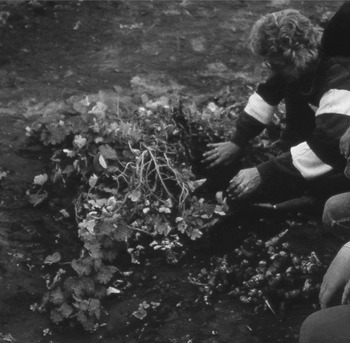
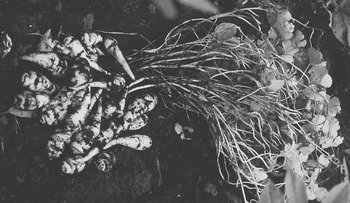
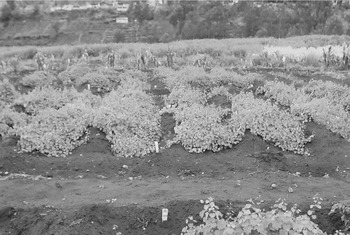
T. tuberosum has a growth habit very similar to the garden nasturtium (Figures 1, 2 and 3). Up to and after transplantation mashua plants remain erect, but when branching begins (at approximately 20–30 cm height), plants become prostrate and begin to vine. Usually after flowering and the setting of seeds, mashua plants are considered mature. INIAP harvests after 8–9 months when vines have dried out; however, if rain comes, tubers or vines can initiate new sprouts. Tubers can be kept longer in the field during the dry season. We harvested experiment 2 after 10 months due to the lower altitude and abundant foliage.
Tropaeolum tuberosum plant at the Querochaca farm of the Agricultural Engineering Faculty of the Technical University of Ambato, Ecuador, being harvested.

Tropaeolum tuberosum plant at harvest, largest tubers are ca. 10 cm in length.

Tropaeolum tuberosum field established at the Querochaca farm of the Agricultural Engineering Faculty of the Technical University of Ambato, Ecuador, just prior to harvest.

VT and V clones were rooted in vitro in Magenta GA-7 boxes (Magenta Corp., Chicago, IL, USA) containing 30 ml of rooting medium (nine microcuttings/box, 12-h photoperiod, cool white fluorescent lamps with an intensity of 50μmol m−2 s−1 PAR), transplanted into plastic boxes containing pumice, covered with a humidity dome and placed in a greenhouse for 21–25 d at AMDE Corp., Ambit, Ecuador. VT clones were kept separate from V clones to avoid cross-contamination. The humidity dome was used for a week to prevent dehydration and then removed progressively until plants were acclimated. Plants then were potted into conical, flat-bottom, plastic containers (10 cm high × 8 cm diameter top × 4 cm diameter base) using a sterile soil mixture that contained sand, composted humus and field soil (clay-loam) 3:3:4 (v:v:v) until final transplanting to the field. One day prior to transplanting, the field was tilled to create furrows and irrigated by gravity using a reservoir and a system of mini-irrigation channels (Andean irrigation system). Transplanting involved placing a plant in a pre-dug hole, mixing the container's soil mixture with the field soil and carefully tamping the soil around the plant. Thereafter, plants were furrow irrigated as needed.
Experiment 1. Field experiment 1 was set up in La Merced, southwest Tungurahua Province, Ecuador, in February 1994, using VT and V clones of 1147. The experimental site is at an altitude of 3000 m asl, with annual rainfall 509–690 mm and average temp 10.5 °C. One-month-old plants were bioassayed for the presence of virus prior to planting in the field. Plants were harvested after 7.5–8.5 months.
Survival in the field was determined 30 d after transplanting by counting the number of cuttings that remained vigorous and initiated new shoots. Time-to-flowering was determined when 50% of the plants of a genotype were flowering. Plant height in cm (from the soil surface to the most apical leaf) from two randomly selected plants was measured at 30 and 60 d after transplanting. The number and weight of tubers and the number of new shoots generated per plant were recorded at harvest.
There were eight plants per row and six plants per evaluation. Plants were spaced at 1.0 m between rows and 0.5 m between plants. The experimental design was a randomized complete block with three replications.
Experiment 2. Field experiment 2 was established at the Querochaca farm of the Agricultural Engineering Faculty of the Technical University of Ambato, Ecuador, in October 1994. The experimental site is at an altitude of 2868 m asl, with average rainfall 46 ± 31 (s.d.) mm, average temperature 13 °C ± 0.7 (s.d.), and average maximum temperature 23 °C ± 1.6 (s.d.). Both VT and V plants of 1093, 1141 and 1147 were planted, and harvested and serologically assayed for the presence of TropMV after 10 months. We waited longer to harvest, taking into consideration that the field experiment was located at a lower altitude and plants still had abundant foliage.Serological testing detected virus-tested plants that became reinfected in the field (VTR plants).
Microcuttings were rooted in Magenta GA-7 boxes, and the experiment was repeated. Due to lack of balance in the experimental design, the Satterthwaite (Reference Satterthwaite1946) procedure was applied to adjust error terms and obtain approximate distribution of estimates of variance components.
The field experimental design was completely randomized using a split plot in which the main plot was mashua genotype and the split plot was virus-infection status. The experiment had three treatments per block with three replications (plots). Plants were spaced at 1.0 m between rows and 0.75 m between plants. Tubers of purple mashua were planted around the edge of each replicate to minimize border effects. Each plot was 50 m2 (10 m long × 5 m wide) and blocks were 322 m2 (23 m long × 14 m wide). The total area of the field experiment was 1058 m2 (46 m long × 23 m wide). Sixty plants were used for each plot, 30 VT and 30 V (180 total plants). Ten plants were chosen per split plot for data collection.
Data collected were plant survival one month after transplanting, number of days from transplanting to flowering, plant vigour, yield and incidence of reinfection. Plant vigour was evaluated by measuring the length and width in centimetres of the third fully developed leaf and the tenth leaf from the apex of the main stem (main stems were at least 25 cm long). Yield was determined by measuring total yield of the mashua plants including fresh weight of foliage and tuber weight and size (big (more than 8 cm in length), medium (4–8 cm in length), small (2–4 cm in length) and microtubers (less than 2 cm in length)).
RESULTS
Tissue culture
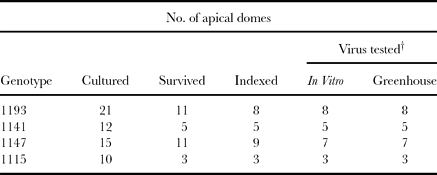
Of 58 apical domes excised, 30 survived and grew (Table 1). After two months of growth, 25 of the apical dome-derived clones (VT) were bioassayed for the presence of virus using N. benthamiana and 23 of the clones tested virus free for TropMV. The same 23 VT clones were then established for two months in a Fort Detrick greenhouse and assayed using C. quinoa, and all again tested negative for virus.
Virus elimination via culture of the apical dome of four genotypes of Tropaeolum tuberosum.
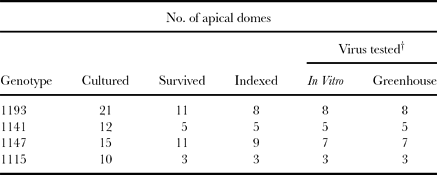
†In vitro = negative N. benthamiana bioassay results using in vitro-derived microcuttings; greenhouse = negative C. quinoa bioassay results using two-month-old greenhouse-established plants.
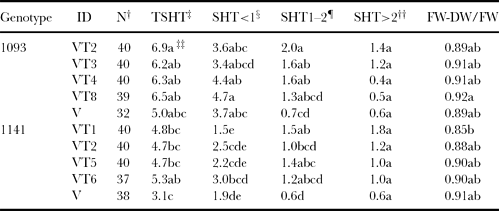
There was very little difference among the VT and V clones (Table 2); however, virus infection within a genotype appeared to have a detrimental effect on general performance in vitro (Table 2). While, for the most part, the total number of shoots was not different among the VT and V clones within a genotype, the data trend was in favour of the VT clones. This trend was most evident in the number of microshoots between 1 and 2 cm tall; however, shoots <1 cm were the greatest contributors to the proliferation trend between the VT and V clones (Table 2).
Shoot proliferation and relative water content (FW-DW/FW) of microcuttings obtained from apical dome-derived (VT) and virus-infected (V) clones of Tropaeolum tuberosum genotypes 1141 and 1093.
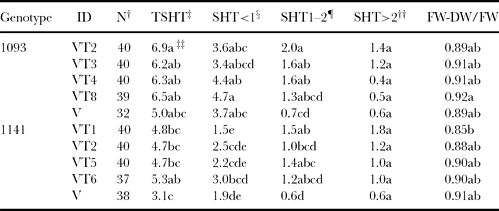
†Number of jars, two microcuttings/jar, one horizontal and one vertical, experiment repeated once (20 jars/experiment).
‡TSHT: Average total number of shoots proliferated from each microcutting.
§SHT<1: Average no. of axillary shoots less than 1 cm.
¶SHT 1–2: Average no. of axillary shoots between 1 and 2 cm.
††SHT>2: Average no. of axillary shoots greater than 2 cm.
‡‡Mean separation in columns by Duncan's multiple range test, 5% level, data with similar letters were not significant.
Genotype 1093 proliferated better than 1141 (data not shown). Genotype 1093 had more biomass than genotype 1141 for both VT (0.29–0.32 g/microcutting v. 0.13–0.18 g/microcutting, respectively) and V (0.22 g/microcutting v. 0.10 g/microcutting, respectively) clones; however, relative water content for both genotypes was similar (Table 2). Explant source × orientation was found to be correlated with biomass; lateral buds cultured horizontally had more biomass than apical buds cultured vertically (data not shown).
There were no differences in in vitro rooting ability among genotypes 1093, 1141, 1115 and 1147, or between the VT and V clones (data not shown). Plants readily became re-established in the Fort Detrick greenhouse, 99% for VT and 79% for V.
Field experiments
Once it was determined that all apical dome-derived clones were apparently virus free within a mashua genotype, VT clones within a genotype were pooled for the field plantings.
Experiment 1. Field survival after transplanting (85% VT v. 65% V), plant height at 30 (ca. 5 cm) or 60 (ca. 7–8 cm) d, number of new sprouts (6 VT v. 3 V), and number of tubers harvested per plant (65 VT v. 55 V) were not different between VT and V plants of genotype 1147; however, VT plants had greater harvested tuber weight (928 g) than V plants (235 g). VT plants flowered earlier (100 d) and were harvested earlier (220 d) than V plants (155 d and 254 d, respectively).
Plants were not reindexed for virus status at the end of the study. No weeds or aphids were observed.
Experiment 2. Plant mortality was high one month after transplanting to the field, which may be attributed to an unexpected drought shortly after planting. Genotypes 1093 (59%) and 1141 (54%) survived better than did genotype 1147 (44%); however, there were no survival rate differences between the VT (46%) and V (59%) plants.
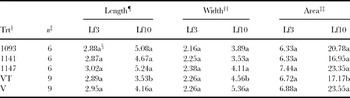
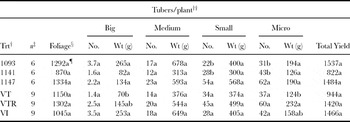
Measurements of length, width and area (length × width ratio) of the third and tenth fully developed leaves were not different among the mashua genotypes (Table 3); however, length, width and area of the tenth fully developed leaves from VT plants were reduced compared to V plants (Table 3). After 10 months of field growth, genotype 1147 yielded more small and microtubers (Table 4) than genotype 1093 or 1141. Although there were no differences in total weight of tubers produced among the V, VT and VTR plants, the big tubers of individual V plants weighed more than those of VT plants, and microtubers of individual VTR plants weighed more than those of VT plants.
Leaf size of mashua (Tropaeolum tuberosum) plants 10 months after field planting at the Querochaca farm, Ecuador.

†Treatment: VT = virus tested 1091, 1141, 1147 at the beginning and end of the field study, V = virus infected 1091, 1141, 1147 at the beginning and, while 42% of the V plants tested negative (DAS-ELISA) at the end of the field study, all V plants were considered virus infected.
‡n: number of split plots, 9–10 plants/split plot.
§Mean separation in columns by Duncan's multiple range test, 5% level, data with similar letters were not significant.
¶Length in cm of the third and tenth fully developed leaves.
††Width in cm of the third and tenth fully developed leaves.
‡‡Leaf area (length × width) expressed in cm2.
Mashua (Tropaeolum tuberosum) yields 10 months after field planting in Ecuador.

†Treatment: VT = virus tested 1091, 1141, 1147 at the beginning and end of the field study, VTR = virus tested 1091, 1141, 1147 at the beginning but virus infected at the end of the field study, V = virus infected 1091, 1141, 1147at the beginning and, while 42% of the V plants tested negative (DAS-ELISA) at the end of the field study, all V plants were considered virus infected.
‡n: number of split plots, 9–10 plants/split plot.
§Foliage: fresh weight of foliage in grams.
¶Mean separation in columns by Duncan's multiple range test, 5% level, data with similar letters were not significant.
††Big tubers: >8 cm in length; medium tubers: 4–8 cm; small tubers: 2–4 cm; microtubers <2 cm.
Total yield = tubers in grams.
Thirty-three percent of the VT plants became reinfected with TropMV and 42% of the V plants tested negative after 10 months in the field based on DAS-ELISA. A large population of aphids was present in the plots from January until the end of March.
Differences in flowering time were due mainly to genotypes and not to virus-infection status. Genotype 1147 flowered first at 145 d after field transplanting, followed by genotype 1093 at 154 d and finally by genotype 1141 at 168 d. Flowering increased for all genotypes over a period of 45 d, at which time the first flowers had already set fruit.
DISCUSSION
Tissue culture
Excision of apical domes ca. 0.2 mm in height resulted in mashua plants testing free of TropMV (genotypes 1141, 1093, 1147 and 1115) as determined through bioassays using N. benthamiana plants rub-inoculated with sap from in vitro-maintained microcuttings. To ensure there were no false negative readings, a subsequent screening, using C. quinoa as the indicator plant, confirmed the ‘virus-free’ nature of the apical dome-derived plants. There was 100% corroboration between the two bioassays. Brown et al. (Reference Brown, Kwiatkowski, Martin and Thomas1988) have also shown that in vitro-generated tissue is efficacious for the determination of ‘virus-free’ status.
Nearly 50% of the apical domes cultured did not survive (Table 1). This failure could have been due to the small size (<0.2mm) of some apical domes, or it could have been the result of using medium not developed for apical dome outgrowth.
Apparently TropMV is an easy virus to eliminate from mashua compared to other plant-virus combinations (De Vries-Paterson et al., Reference De Vries-Paterson, Evans and Stephens1992; Zapata et al., Reference Zapata, Miller and Smith1995) as 83% of the apical dome-derived plants tested free of TropMV. This may have been due to characteristics of TropMV and/or size of apical dome. It is important to understand that these were virus-tested, not necessarily ‘virus-free’ plants. Even sequential testing of an individual plant for a given virus may result in false negatives. However, sequential testing does lower the likelihood of false negatives. Although apical dome excision is labour-intensive and may result in delayed outgrowth and low survival (Matthews, Reference Matthews1992), the use of apical domes alone to eliminate virus from mashua is beneficial. This method avoids antiviral/chemotherapy chemicals that can be phytotoxic and eliminates the time and space required for thermotherapy (Zapata et al., Reference Zapata, Miller and Smith1995). The ease with which VT plants of mashua were obtained may be due in part to using tissue culture-derived shoots as the apical dome source. In some plants, it is possible to isolate smaller apical domes from tissue culture-derived shoots than from greenhouse-derived shoots (Brown et al., Reference Brown, Kwiatkowski, Martin and Thomas1988).
The development of reliable protocols for producing ‘virus-free’ mashua would be beneficial for the international movement of germplasm. Herein we describe relatively simple protocols for producing mashua plants that tested free of TropMV. While bioassays (N. benthamiana and C. quinoa) are very sensitive and DAS-ELISA is very selective, the development of diagnostic tests specific to TropMV nucleic acids would further ensure the absence of false negatives (Lakshmanan et al., Reference Lakshmanan, Geijskes, Aitken, Grof, Bonnett and Smith2005).
Tissue culture is a good system for the study of some plant-virus interactions (De Vries-Paterson et al. Reference De Vries-Paterson, Evans and Stephens1992), and in the case of mashua the influence of TropMV on the ability of explants to proliferate, root in vitro and acclimate ex vitro has been tested. Mashua genotype had a greater effect on shoot proliferation in vitro than did virus-infection status.
Microcuttings of mashua readily rooted in vitro and survived potting and greenhouse acclimation conditions; however, field site had an impact on subsequent survival. In field experiment 1, greenhouse-acclimated plants survived transplanting in the field quite well (75% overall); however, in field experiment 2, survival after transplanting in the field was lower (ca. 52% overall).
Field experiments
At the La Merced site, VT plants out-yielded V plants of genotype 1147 in tuber weight. Although not significant, the larger number of lateral shoots generated from below the soil surface and the larger number of tubers produced by VT plants than by V plants may have contributed to greater tuber weight, as found by others (National Research Council, 1989).
At the Querochaca farm, 33% of the VT mashua plants became reinfected with TropMV after 10 months in the field. Virus transmission via aphids may have been the cause, since a large population of aphids was present in the plots from January until the end of March. TropMV has been shown to be transmitted readily by the green peach aphid (Myzus persicae), a non-persistent vector, when given an acquisition access period of 30 sec to 5 min (Soria et al., Reference Soria, Rojas, Damsteegt, McDaniel, Kitto and Evans1998).
It was surprising that such a large percentage (42%) of the V plants tested negative during the final screening using DAS-ELISA; however, virus titre has been shown to vary based on season and/or explant evaluated within plants of apple (Malus pumila, Tomato ringspot virus) (Bitterlin et al., Reference Bitterlin, Gonsalves and Cummins1984), rhubarb (Rheum rhaponticum cv. Timperley Early, aphid-borne Turnip mosaic virus) (Walkey et al., Reference Walkey, Creed, Delaney and Whitwell1981), carnation (Dianthus sp., Carnation vein mottle virus) (Sánchez-Navarro et al., Reference Sánchez-Navarro, Carmen Cañizares, Cano and Pallás2007), banana (Musa spp., aphid-borne Banana bunchy top virus) (Robson et al., Reference Robson, Wright and Almeida2006) and tobacco (Nicotiana tabacum cv. Samsun, Potato-A-potyvirus) (Bartels, Reference Bartels1954).
At the Querochaca farm, VT and V plants performed similarly in the field except V plants had larger fully developed tenth leaves and produced big tubers that weighed more. Although there was no difference in foliage FW among VT, VTR and V plants in this study, plant biomass has been correlated with tuber yield in mashua (National Research Council, 1989).
It is difficult to draw broad conclusions about the effect of TropMV on yield based on these two field experiments. Guimarães and Flores (Reference Guimarães and Flores2005) have demonstrated in greenhouse studies that visual severity of TropMV infection of mashua tubers was indirectly correlated with tuber weight; however, yield (average tuber weight, number of tubers and total tuber weight) and viral symptoms varied based on genotype. While the National Research Council (1989) reported increased yields when ‘virus-free’ mashua plants are grown, field experiments with ‘virus-free’ versus virus-infected potatoes (Solanum tuberosum) have not produced consistent correlative results at all field locations with regard to increased yield and ‘virus-free’ plants (Wright Reference Wright1970, Reference Wright1977). Infection of sweet potato with individual potyviruses did not reduce yield (Clark and Hoy, Reference Clark and Hoy2006; Gutiérrez et al., Reference Gutiérrez, Fuentes and Salazar2003). In rhubarb, yield was indirectly correlated with the rate of reinfection of ‘virus-free’ field plants (Walkey et al., Reference Walkey, Creed, Delaney and Whitwell1981). After three years, ‘virus-free’ plots having 36% reinfection had lower yields compared to virus-infected stock plants. Walkey et al. (Reference Walkey, Creed, Delaney and Whitwell1981) postulated that reduction in yield associated with reinfection may be related to long-term selection of germplasm that is tolerant to the virus. Mashua, like rhubarb, is propagated vegetatively, and high-yielding, virus-tolerant clones may have been selected over the years.
The La Merced site was environmentally more similar to that recommended for growing mashua (National Research Council, 1989) while the conditions at the second site (Querochaca farm) were not optimal for growing mashua. Mashua tubers are normally harvested after 6–8 months (National Research Council, 1989) and the fact that in field experiment 2 plants were not ready to be harvested until after 10 months suggests that this was a less-than-perfect field site. An unexpected drought directly after planting no doubt affected survival after transplanting; this may have had long-term effects on general growth and vigour. Xu et al. (Reference Xu, Chen, Mannas, Feldman, Sumner and Roossinck2008) found that virus infection actually enabled a number of plant species to better tolerate droughty conditions; for example, after a drought stress, 100% of CMV-infected beet (Beta vulgaris cv. Detroit Dark Red) plants compared to 30% of mock-inoculated beet plants survived and continued to grow. Mashua prefers at least 700 mm rainfall annually and a misty, moist environment for optimal growth (National Research Council, 1989), and although the plots were furrow irrigated to compensate for the droughty soil conditions, rainfall (46 ± 31 mm) was much lower than optimal and may help account in part for the difference in performance between the VT and V plants at the two locations. Our results suggest that TropMV's impact on mashua yield may be associated with environmental conditions. To more fully understand mashua field performance with respect to TropMV, field experiments designed specifically to examine the interplay among mashua genotype, TropMV infection and the environment (e.g. rainfall, fertility) are needed.
Acknowledgements
This research has been supported by USAID PSTC grant no. 12.187, conducted in Cupertino between Plant and Soil Sciences Department of the University of Delaware and AMDE Corp., Ambato, Ecuador. We thank Dr John Pesek for statistical assistance.