Mesoamerican archaeologists, as their colleagues in the American southwest and lower Central America, generally pursue past economic activity as behavior that is embedded within social, political, and historical contexts. Some four decades ago, economic models attempting to explain aspects of the growth of social complexity benefitted from new, expanding data sources originating within the analytical sciences. Understanding how and why these data are being used requires an understanding of the historical development of these analytical approaches, their methods and techniques, resource availability, and interpretive potentials. Subsequently, an examination of the application of these data to aspects of trade and exchange needs to be undertaken to assess how well they help to interpret the complexities of social interactions.
In what follows, I concentrate on analytical approaches for monitoring the directional movement of inorganic artifacts, those that permitted the rise of trade investigations, and which are becoming less accessible for use in more recent investigations. It can be argued that decreased attention to long-distance trade and exchange as a focus of regional investigation is the result of several factors, such as the political context of scientific activity, the scarcity of appropriate analytical facilities and the heightened awareness of the interpretive complexity. As will soon become clear, there is a bias toward obsidian or ceramic-focused investigations, with the analysis of other Mesoamerican artifacts receiving more occasional study. Accordingly, it is within the context of these data that the analytical approaches are discussed.
Today, while there may be diminished attention to “big picture” economic models, increased emphasis is being placed on more localized aspects of the economy, especially as seen in studies of craft production, exchange, and consumption. Long- and short-distance trade remains a consideration to the extent that such movement can be monitored. Relying on personal experience and highly selective examples, I discuss the use of analytical approaches to generate objective data for the investigation of long- or short-distance trade. My choice of techniques, analytical findings, or accompanying references is to make a point, highlight a study, or provide a caution about the interpretive difficulties that are inherent in the data and rendered more so by use of abstract constructs, resource limitations, and insufficient awareness of the part of the archaeological consumers of the complexities involved. Comments concerning methodological weaknesses are kept mostly at a generic level without finger pointing. Alfred Kidder admonished Anna Shepard to “step” on cases of “bad” research quickly lest some reader be misled (see Bishop [1991:84] citing Kidder letter to Shepard, November 22, 1935). While this admittedly is an efficient strategy, it is not the most collegial. It is easy to critique but considerably harder to contribute.
THE BIGGER PICTURE
The Soviet Union's Sputnik spacecraft was launched in 1957, and the decades that followed bore witness to a burst of popular support for US science and a tendency to overlook its political side (Wang Reference Wang2008). Computers with vacuum tubes were replaced with those having transistors; minicomputers such as the DEC's PDP-11 became highly popular (the PDP-11/70 had 4 mb of RAM!) and replaced many large mainframes. Archaeologist Lewis Binford told his colleagues to become more scientific, and some did. The National Science Foundation increased funding for archaeological laboratory analysis and field technology (Yellen and Greene Reference Yellen and Greene1985:334–335), and a surge of publications pertaining to economic issues in archaeology, especially those dealing with trade and exchange, ensued. At the forefront of this surge was a collection of papers brought together by Timothy Earle and Jonathon Ericson. In their introduction to Exchange Systems in Prehistory (1977a), the editors recognized exchange as being “central to maintenance and change in cultural systems” and that new technology permitted its detailed quantification (1977b:3). Their book included papers on methods of analysis and how the resulting data could be modeled for archaeological interpretation; several of the papers are worth rereading today. From the late mid-1970s through the 1980s it appeared that analytical developments not only freed archaeology from diffusion-based explanations for similarities among cultural objects, but also provided a key for unraveling mysteries involving the social organization of economic activity. Site-specific and material-specific projects multiplied rapidly, and new approaches to data analysis were applied to diverse data sets.
More recently, however, a diminished emphasis on role of “big picture” economic models and the transforming impact of “long-distance” exchange has occurred. In its place attention is given more often to local aspects of the Mesoamerican economy, especially as seen in the organization of craft production, consumption, and the negotiated benefit of trade and exchange. And, along with these increasingly particularistic investigations, greater attention is directed to organizational variation. Lurking within all of these studies, big picture or small, is the need to distinguish between what is “local” within some geographic area and what is not, and if materials or objects did not originate locally, where did they come from?
The archaeological literature is swollen with reviews concerning how power (social, economic, political) is constructed, actuated, and subsequently reflected in the movement of resources and material (see, for example, Graham Reference Graham, Masson and Freidel2002; Hirth Reference Hirth and Hirth1984, Reference Hirth1996; Smith Reference Smith2004; and Wells Reference Wells2006). Important regional discussions have been offered by several authors, including those for Oaxaca (Blomster Reference Blomster2010; Blomster and Glascock Reference Blomster and Glascock2011; Blomster et al. Reference Blomster, Neff and Glascock2005; Herrera et al. Reference Herrera, Neff and Glascock1999; Joyce et al. Reference Joyce, Thieme, Winter, Elam and Workinger2006; Levine et al. Reference Levine, Joyce and Glascock2011), for central Mexico (Smith et al. Reference Smith, Burke, Hare and Glascock2007), and for the Maya area (Rice Reference Rice2009). Other authors have focused on particular aspects of the economy such as political (Schortman and Urban Reference Schortman and Urban2004), ritual (Wells Reference Wells2006; Wells and Davis-Salazar Reference Wells and Davis-Salazar2007; Wells and McAnany Reference Wells and McAnany2008), market (Feinman et al. Reference Feinman, Blanton, Kowalewski and Hirth1984; Garraty and Stark Reference Garraty and Stark2010; Hirth Reference Hirth1998), household (Hirth Reference Hirth and Hirth2009), and now, “port” economy (see Demarest 2014).
In a reductionist sense, materials are obtained; things are made; things are moved; and if we are lucky, things are found. Once items are found they are welcomed by archaeologists who then proceed to impart meaning to the discovery location and association, using an expanding array of perspectives. Socio-political-ritual-economic-technical meanings are gleaned from often limited occurrences. I am impressed continuously by the creativity of some of our practitioners who repeatedly demonstrate a tremendous ability to weave scant pieces of data into narratives that are offered with conviction and even advanced to galactic importance. If analytical techniques can contribute significantly to studies of the economy, as originally envisioned by Earle and Erickson (Reference Earle, Ericson, Earle and Ericson1977b), why do they not appear more prominently in the discussions of Mesoamerican economy or exchange networks? Data from instrumental methods of chemical analysis rose quickly to fanfare and popularity. Yet, within slightly more than two decades, they appear only sporadically incorporated in archaeological interpretation.
Walter Taylor (Reference Taylor1948) challenged archaeology to provide a comprehensive ethnography of the people who once lived at a site—a task that even he found to be impossible (see papers in Maca et al. Reference Maca, Reyman and Folan2010). Similarly, albeit with less impact, Fred Plog (Reference Plog, Earle and Ericson1977:128–129) challenged archaeologists to consider components that he considered to be essential for modeling economic exchange networks: context, magnitude, diversity, size, duration, directionality, relative centralization, and complexity. This is a daunting list, especially when one considers that much of Mesoamerican archaeology is still lacking a sufficiently detailed culture history and is straight-jacketed into long temporal divisions. We can select a material class—say, pottery—and through the use of mineralogical and chemical techniques we can accumulate data sets that allow us to infer—not determine—directionality of material movement. Meeting descriptive adequacy of Plog's other components is far more difficult. For example, given limited recovery and/or analysis of a given class of objects, how do we know that their movement from source to final context was part of an exchange network? Much of the time, data are lacking, but creativity counts, and based on appearances, the acceptance of a proposed network depends on how well the narrative is written.
AN EVALUATIVE FRAMWORK
Pool (Reference Pool, Bey and Pool1992) and Pool and Bey (Reference Pool, Bey, Pool and Bey2007) have discussed several economic issues of pottery production and distribution. In doing so, they listed criteria for an investigation of production at a general level. Several of their components are similar to the requirements set forth by Plog (Reference Plog, Earle and Ericson1977) for establishing a trading network, but others demonstrate a greater contextualization within an anthropological framework (Pool and Bey Reference Pool, Bey, Pool and Bey2007). Indeed, one can see a change in their conceptual framework, from a systems-informed, rather mechanistic view in 1992 toward concepts involving multiple dimensions of variation (Pool and Bey Reference Pool, Bey, Pool and Bey2007:4). The changed approach to archaeological occurrences in southern Veracruz caused me to consider similarities shared with other archaeologists who have carried out long-term projects in the Maya realm. Pool's and Bey's (Reference Pool, Bey, Pool and Bey2007) thinking appears to have evolved from classifying (typological concerns) to embracing sources of variation that are embedded within many different aspects of past activity. It also represents taking a step away from generalizations involving area or extra-area interactions and viewing organizational diversity at the local level (contrast Pool [Reference Pool and Pool2003] with Pool and Bey [Reference Pool, Bey, Pool and Bey2007]; see also Cordell and Plog [Reference Cordell and Plog1979] on escaping normative thought).
In 1973, David Clarke published his views on the nature of archaeology. His developmental framework is a useful one to consider in describing analytical contributions to the study of archaeological economy, for it resonates well with changes in approaches to pottery production noted by Pool (Reference Pool, Bey and Pool1992) and Pool and Bey (Reference Pool, Bey, Pool and Bey2007). Clarke (Reference Clarke1973) described three main stages or “transitions”: evolving from consciousness through self-consciousness to critical self-consciousness.Footnote 1 One can equate his first stage, consciousness, to have occurred when archaeologists began devoting extensive scholarly attention to aspects of the archaeological economy, especially production, consumption, and exchange. This phase essentially follows the formalist/substantivist rivalry of anthropology in the 1950s–1960s (see Smith Reference Smith2004; Wells Reference Wells2006; White Reference White1959). Consciousness gradually expands and sharpens toward a stage of self-consciousness when “… classes of data are treated in terms of alternative models” and researchers proceed to partition the subject matter into “specialist cells,” which Clarke (Reference Clarke1973:7) believes raises “barriers to communication between archaeologists within the expanding mass of period, regional, topic, [and] methodology.”
In the analysis of archaeological materials, the “specialist cells” noted for the level of self-consciousness became prominent as individual laboratories or research facilities began to develop prominence in a particular area, a class of material, or a period. For example, by the end of the 1970s, the investigations of trade and exchange recognized neutron activation as the preferred analytical technique for investigating long-distance exchange, especially as applied in the analysis of pottery from the western Maya lowlands, the Guatemala highlands, Teotihuacan, and the Gulf Coast. Long-term studies of Spanish and Mexican mayólica and obsidian in Mesoamerica were undertaken (Olin and Blackman Reference Olin, Blackman and Allen1989). With the expanding knowledge, the prevailing feeling was look how much we know (Clarke Reference Clarke1973:7) While this attitude was not shared by all practitioners of the magical (analytical) crafts, it unquestionably was present among some of the new sophisticates. By the mid-1980s the situation had stabilized quite a bit but with fewer archaeologists carrying out their own analyses and relying instead on predigested summary statements supplied to them by increasingly rarified analytical specialists. Some data sets that had been compiled during the past half-decade were now being used to provide background for more specific research questions. Within the specialist cells, self-referencing increased, as researchers shared certain “… preferred forms of description, interpretation and explanation, where the political and sociological characteristic of individualism and authority complement the narrow specializations ...” (Clarke Reference Clarke1973:7). Clarke's observation corresponds well with findings on the use of self-citation in archaeology and participation within “citation circles” (Hutson Reference Hutson2006a:15). It also corresponds to Binford's (Reference Binford, Binford and Binford1968:17) lament about things being accepted on the strength of authority rather than the data that are presented. According to Clarke (Reference Clarke1973:7), “[t]he politics and sociology of the disciplinary environment increasingly develop [an] ‘authoritarian’ state in which each expert has a specialist territory such that criticism of territorial observations are treated as attacks upon personalities.” Sadly, such “ruffling of feathers” appeared evident among archaeological factions in the recent exchanges regarding the production and distribution of pottery and figurines from the Gulf Olmec region (Blomster et al. Reference Blomster, Neff and Glascock2005; Flannery et al. Reference Flannery, Balkansky, Feinman, Grove, Marcus, Redmond, Reynolds, Sharer, Spencer and Yaeger2005; Neff et al. Reference Neff, Blomster, Glascock, Bishop, Blackman, Coe, Cowgill, Cyphers, Diehl, Houston, Joyce, Lipo and Winters2006a, Reference Neff, Blomster, Glascock, Bishop, Blackman, Coe, Cowgill, Diehl, Houston, Joyce, Lipo, Stark and Winter2006b; Sharer et al. Reference Sharer, Balkansky, Burton, Feinman, Flannery, Grove, Marcus, Moyle, Price, Redmond, Reynolds, Rice, Spencer, Stoltman and Yaeger2006; see also Stoltman Reference Stoltman2011). While each group mounted arguments using variably extensive data sets, the nature of the comments left no denying that strong personalities, in addition to data, were at play.
Despite rapid developments and extensive data production, the euphoria that had surrounded trade and exchange studies began to wane in the mid to late 1980s. There continues to be strong interest in determining the movement of material goods to advance understanding of interaction. Increasingly, however, statements referring to interregional trade and interaction seemed to offer little or no data to support claims for an exchange of goods. With supporting data for long-distance trade lacking, archaeologists began to place increased emphasis on aspects of “local” production, distribution, and consumption with specialized activity becoming a prominent field of investigation (Rice Reference Rice1981, Reference Rice, Bishop and Lange1991, Reference Rice1996:173; see also Clark Reference Clark, Hruby and Flad2007; Costin Reference Costin and Schiffer1991; Smith Reference Smith2004). More generally, it seems that research on trade was falling short of researchers', or readers', expectations. This disillusionment, in part, resulted from the recognition of the inherent complexity of the research problems. While attempts to understand the complexity may be part of the reason for conducting research in the first place, success may be limited by using overly simplistic concepts and/or inadequate methodological approaches (Smith Reference Smith2004:73).
But exactly what was being done and who was doing it? To answer these questions requires some discussion about different classes of archaeological materials, techniques, laboratory facilities, personalities, and national politics. From such a perspective we can better understand issues of complexity and research shortcomings that constitute the background for Clarke's third stage of disciplinary development.
THE RISE OF TECHNIQUES, MACHINES, AND CRITICAL SELF-CONSCIOUSNESS
The analytically based interest in trade and exchange relied on newly available techniques developed by members of scientific disciplines and used by a relatively small group of practitioners. Privileged participant exclusivity was promoted by an archaeometric professional organization, and I recall being told that student or archaeologist attendance at the archaeometry meeting would detract from serious discussion of future instrumental developments. In many ways, the 1970s–1980s marked the rise of the machines but with an important group of consumers, the archaeologists, relegated to, or seeking the comfort of, the periphery. For a while, technological developments and applications of the emerging technologies seemed to trump significance of any archaeological questions. Scientists developing applications and the archaeologists seeking to benefit from such developments stared across a communication chasm (DeAtley and Bishop Reference DeAtley, Bishop, Bishop and Lange1991)—a situation that was already well established in the archaeological use of petrographic examination.
Traditional Analytical Applications: The Use of Petrography
Although seldom used as a primary analytical tool for the investigation of trade (but see Stoner Reference Stoner2003), petrographic examination helps us to understand technological properties of a ceramic paste by providing information on the nature, abundance, and sorting of nonplastic inclusions. It is the next intensive step beyond carrying out a rough temper-class characterization using low-power reflected-light examination. Unfortunately there were/are few well-trained petrographers looking at Mesoamerican materials despite a relatively long history of application. One of the earliest petrographic examinations of Mesoamerican pottery was carried out on Teotihuacan Thin Orange ceramics by Gunnar Beskow at the request of Sigvald Linné (Linné Reference Linné1934). This work was followed by Anna Shepard's research, spanning almost two decades, for Kidder and the Carnegie Institution of Washington (see Kidder Reference Kidder1934:110–111). Shepard first used petrography to see if there were mineralogical components that might support stylistic divisions of Mimbres pottery, but she considered both petrography and chemistry to be important in revealing the technological features. Petrography, however, she found was a much faster analytical tool than was the tedious wet chemical analyses of the day (Bishop Reference Bishop, Bishop and Lange1991).
Shepard focused on technological features of ceramic paste but did consider the “origins” of the pottery being examined (for example, Shepard Reference Shepard1948). Unfortunately for archaeology, Robert Smith (Reference Smith, Hay, Linton, Lothrop, Shapiro and Vaillant1940:244–245) published percentages of Shepard's temper classes that she had set up for pottery from the Maya site of Uaxactun. Shepard had considered her data as “tentative” and protested strongly to Kidder about their use. Ultimately, reference to the temper materials was removed from the final Uaxactun ceramic report (Smith Reference Smith1955). Unfortunately, the die was cast and archaeologists were generally thought to lack the competence to carry out, or report on, technological studies: “… a little learning is, in ceramics, a very dangerous thing [and] archaeologists should confine themselves to observation on the surface features of pottery (Kidder and Shepard Reference Kidder and Shepard1936:xxviii–xxix). Granting that archaeologists could gain some awareness of the “requirements, possibilities, and limitations” of technological methods, Shepard strongly held that archaeologists should not attempt to interpret technological features (Rands Reference Rands, Bishop and Lange1991:157). She was so adamant that Kidder told the Carnegie archaeologists not to pay any attention to temper, as Shepard would object to whatever was said (Bishop Reference Bishop, Bishop and Lange1991; Rands Reference Rands, Bishop and Lange1991:158–159). Shepard's and Kidder's stance on the relationship of technology and archaeologists was strongly influential and, despite their pioneering efforts, likely slowed the advance of technological investigations.
Although several reviews of compositional analysis recommend the use of petrography along with chemical analysis of pottery (Bishop et al. Reference Bishop, Rands and Sabloff1982; Neff and Glowacki Reference Neff, Glowacki, Glowacki and Neff2002:1–2), relatively few combinational studies have been carried out (Angelini Reference Angelini1998; Chung Reference Chung2000; Chung et al. Reference Chung, Ramón Gonzalez, Ramierez, Schaaf and Lee2010); Sotomayor and Castillo Tejero Reference Sotomayor and Tejero1963. Iceland and Goldberg (Reference Iceland and Goldberg1999) used petrography to provide evidence for changes in ceramic technology at the end of the Late Preclassic period for two sites in northern Belize, arriving at conclusions that differed from Jones' (Reference Jones1986) broad survey of tempered pottery ceramic from Maya sites. Obando et al. (Reference Obando, Jimenez and Kussmaul2011) examined changes in tempering practices at Chinikiha, Chiapas. Sotomayor (Reference Sotomayor and Müller1966) used petrography to study Teotihuacan ceramics and Thin Orange pottery, and Stoltman et al. (Reference Stoltman, Marcus, Flannery, Burton and Moyle2005) carried out a study of nine Middle Formative vessels from southern Mexican sites as part of a less than rigorous challenge to archaeological conclusions formed from neutron activation analysis. Coarse Orange Ware from Matacapan in southern Veracruz was the subject of petrographic analysis by Stoner (Reference Stoner2003), who was looking for evidence of exchange. Finally, Sunahara (Reference Sunahara2009) addressed issues of the Late-Terminal Classic Maya economy through a detailed analysis of thin sections of pottery and raw materials obtained from several sites in the Belize River Valley.
Changes in the Analytical Environment
With Shepard's virtual domination of petrographic methods and wet chemical methods being too slow for archaeological utility, one might appreciate the enthusiasm that followed the early reports of the new technique of instrumental neutron activation analysis (INAA) being used for archaeological materials (Sayre and Dodson Reference Sayre and Dodson1957 Sayre et al. Reference Sayre, Murrrenhoff and Weick1958; Sayre and Smith Reference Sayre and Smith1961). Moreover, it could be used on obsidians as well as pottery (Asaro et al. Reference Asaro, Michel, Sidrys and Stross1978; Cobean et al. Reference Cobean, Coe, Perry, Turekian and Kharkar1971; Ericson and Kimberlin Reference Ericson and Kimberlin1977; Nelson Reference Nelson1970; Nelson et al. Reference Nelson, Sidrys, Holmes and Willey1978; Pires-Ferriera Reference Pires-Ferreira, Flannery and Marcus1973; Stross et al. Reference Stross, Hester, Heizer, Jack and Taylor1976, among others). X-ray fluorescence (XRF), which served to characterize Mesoamerican obsidian artifacts and allowed them to be linked to source, could be augmented with the additional resolving power provided by INAA (Charlton et al. Reference Charlton, Grove and Hopke1978; Cobean et al. Reference Cobean, Coe, Perry, Turekian and Kharkar1971, Reference Cobean, Voigt, Glascock and Stocker1991; Hammond Reference Hammond1972). Soon other materials were being analyzed, including turquoise by INAA (Weigand et al. Reference Weigand, Harbottle, Sayre, Earle and Ericson1977) and jade (Hammond et al. Reference Hammond, Aspinall, Feather, Hazelden, Gazard, Agrell, Earle and Ericson1977) using XRF and INAA. With ability to obtain a highly sensitive, objective measure of an artifact's composition, archaeology had a new means to model the directional movement of raw materials and finished goods as a result of social activity (Earle Reference Earle, Ericson and Earle1982; Hirth Reference Hirth and Hirth1984:1; Renfrew Reference Renfrew, Sabloff and Lamber-Karlovsky1975).
Instrumental neutron activation analysis quickly became the preferred technique, for it combined accuracy, high sensitivity, and analytical precision in addition to the ease of using a bulk sample that involves little preparation. Through the involvement of several national and university laboratories, there seemed to be few Mesoamerican materials that were not amenable to analysis by INAA. Archaeology had its tool, and archaeologists—through hands-on experience or numerous collaborations—were learning to use it. Defecation was yet to hit the rotor—and when it did, it provided a clear example “… that archaeology, as a way of constructing the past in the present, is always entwined with current political contexts” (Matthews et al. Reference Matthews, Leone and Jordan2011).
Just to assuage any doubt, nuclear reactors, the sources of the neutrons used in the majority of activation applications, were not built or maintained to support archaeology! Archaeological research in the national laboratories was undertaken as a “peaceful application” of nuclear energy, which was an outgrowth of the Atoms for Peace program (Chernus Reference Chernus2002). Tremendous resources were poured into all types of imaginable research in the 1970s. But a change was coming.
Research at the nation's national laboratories began to reflect an increasing emphasis on “applied” rather than “basic” research, which can be seen in the “adsorption” of the Atomic Energy Agency by the Energy Research and Development Administration (ERDA) in 1975 and, more importantly, by the creation of the Department of Energy (DOE) in 1977 to focus on nuclear weapons and energy projects (see Seidel Reference Seidel1993). An even more dramatic challenge to archaeologically focused and other nonenergy-related research in the national laboratories occurred in 1981 when the Reagan administration began to alter the way that science research was administered (Dickson Reference Dickson1988:1–55). Spurred on by needs in energy research, with the country still reeling from a gas shortage in 1977, the government pushed to transfer research from national laboratories to the universities. Government support would continue to be given to science—so long as it agreed with administration priorities and would benefit private corporations (Dickson Reference Dickson1988:50). Overall, it has been argued that the United States was shifting science funding from what has been called “social equality” toward “social efficiency” (Dickson Reference Dickson1988:53).
Decreasing Analytical Resources
Big new machines, such as colliding beam particle accelerators, were needed to move big science forward. In July 1983, despite some $200 million already invested in the development of ISABELLE at Brookhaven National Laboratory, this partially completed accelerator was considered obsolete and was canceled (Halpern Reference Halpern2010:139). In May of 1991 ground was broken for a new Texas super-conducting “super collider” (Desertron) that was projected to cost $4.4 billion. Money flowed into the Texas project, but amid the rising clamor of critics' voices and after more than $2 billion spent, this project, too, was terminated in 1993 (see Williard Reference Williard1994 for circumstances related to the closure of the project). For the foreseeable future, the cancellation of the Desertron marked the end of large-scale, high-energy physical science in the United States, shifting it in favor of the Central European Research Network (CERN) (Seife Reference Seife2005). This retreat is important because big science impacts the national economy, contributes to public interest in science, and allows money to flow to many small projects that use imaginative applications to further disciplinary goals. Archaeology, through the use of radiocarbon dating and instrumental materials analysis, has benefited directly. Overhead from big science provided supplies and technical support staff to carry out or assist in archaeological applications. In combination with political decisions, some of which involved the closure of nuclear reactors, archaeology began to lose access to its laboratories and scientists.
Several nuclear facilities that played a pioneering role in the characterization of Mesoamerican materials were shut down: Brookhaven National Laboratory, Lawrence Berkeley National Laboratory, and the Ford Nuclear Reactor. The few that are still active include the University of Missouri Research Reactor, which provides the National Science Foundation subsidized neutron activation services for proposal-based archaeological projects. Analyses of archaeological objects are drawn from projects worldwide, but the laboratory is particularly noteworthy for its characterization of Mesoamerican obsidian and pottery from central Mexico. The Radiation Center at Oregon State University is involved with research in central Oaxaca and Aztec central Mexico, pursuing staff interest in market exchange. A few other university-based reactor facilities can do archaeological activation analysis (for example, the University of Wisconsin and Texas A&M). Projects are considered on a case-by-case basis with costs depending on how many samples of a given type are to be analyzed and for what elements. The Smithsonian program in partnership with the National Institute of Standards and Technology (NIST) inherited the analyzed samples from Brookhaven and continues widespread research programs in the Maya area and lower Central America. Collaboration with projects outside of these areas has been drastically curtailed, however, as Smithsonian funding for the neutron activation program was all but eliminated. With project personnel covering maintenance and equipment replacement, current analyses tend to be limited to those that directly supplement the research interest of the staff. Elsewhere, the Instituto Nacional de Investigaciones Nucleares, Ocoyoacac, has excellent analytical facilities and has carried out some analyses of Mexican Colonial period pottery (Monroy-Guzman and Fournier Reference Monroy-Guzman and Fournier2003), but it has yet to emerge as a significant resource for archaeology.
Clearly, archaeological interest in having materials undergo analysis far exceeds the availability of nuclear resources. Many laboratories, especially those that deal with the analysis of geological materials, have acquired inductively coupled plasma mass spectrometry (ICP-MS) instruments for elemental analysis. Unlike the easy sample preparation for INAA, ICP-MS requires that the sample be totally dissolved prior to injection into a high-temperature plasma. The good news is that, in general, sensitivities and precisions for elemental analysis via ICP-MS can meet or surpass those achievable by INAA. Success varies and the quality of the data is influenced by sample preparation, the matching of standard materials to the matrix of the unknowns being analyzed, and the frequent need to alter the solution concentration for optimum determination; all of these factors generally require the involvement of a proficient chemist. Close collaboration between the analyst and archaeological consumer is essential, if for no other reason than to encourage that the analytical precision obtained for archaeological specimens be commensurate with that sought in rigorous geochemical analysis.
Fitted with a laser for abrading a sample, laser ablation-ICP-MS (LA-ICP-MS) presents an alternative mode of analysis without the need to put the sample into solution. Analytical precision for the ablation methods remains a concern. Few projects have attempted to carry out “sourcing” projects, but Stoner and Glascock (Reference Stoner and Glascock2012) show some positive results. Current emphasis seems to be on the analyses of paints and slips (Cecil Reference Cecil2004; Little et al. Reference Little, Kosakowsky, Glascock and Speakman2004; Neff Reference Neff2003; Peacock et al. Reference Peacock, Neff, Rafferty and Meaker2007).
Despite the tremendous developments in elemental analysis and the rather clear future for archaeology using something like inductively coupled mass spectrometry, the number of laboratories available to archaeology is declining, and the necessity for paying a per-sample charge is increasing. Under budgetary pressure, university and other research institutions eye analytical resources as a means to generate income. Unless projects meet the requirements for some level of cost subvention, it is highly unlikely that archaeologists would be able, or willing, to pay for analyses in quantities sufficient for studies of trade and exchange. And, it is likely to be only a short time before analysts in such facilities will be required to raise their own salaries (including benefits and that lovable staple: overhead). Under such conditions, what will Mesoamerican archaeology be able to afford?
SOURCES OF IDEOSYNCRACY: THE ANALYST AND THE PROBLEM
Except for facilities that are geared toward service operations or educational support, the necessary high throughput of samples required for trade investigations responds to personal agendas, a researcher's sense of sample adequacy, and gauging of when some study is ready for reasonable summarization and publication. A common situation, although not one to be proud of, is that it is easier to carry out more analyses than it is to try to understand what data has already been generated. Archaeologists tend to be extremely generous in providing samples for a project—whether or not they are aware of the specific objectives of the analytically aided research. In some cases, a researcher wanting to carry out some type of an analytical program is directed to a box, barrel, or sack of materials (ceramics, lithics) and told to help themselves (saves returning or burying them). In other cases, regional specialists will spend long hours trying to make a selection of materials in a manner that will help to address specific questions. But are the questions amenable to resolution by a chosen analytical technique applied within a given geological/geochemical regime? Ideally, a project analyst and field-knowledgeable archaeologist would work together, discussing goals and selecting samples to address specific problem areas. Schedules or benchmarks can be set up, but they are inevitably delayed or sidetracked by life and inherent unknowns encountered during the course of analysis.
Laboratory histories combined with researchers' personal objectives have tended to result in certain material or areal concentrations. In what follows, I first sketch aspects of laboratory focus and then briefly address material focus. Following this I address the third of Clarke's (Reference Clarke1973) developmental stages and provide an assessment of where trade and exchange studies find analytical support.
Obsidian
In one of the early studies, Weaver and Stross (Reference Weaver and Stross1965) used XRF for the analysis of obsidians, which included samples from El Chayal, Pachuca, and Papalhuapa sources as well as artifacts from La Venta and Copan. XRF would continue to be used, but soon new data were being obtained through neutron activation using a California industrial reactor (Stross et al. Reference Stross, Weaver, Wyld, Heizer and Graham1968). The combinational use of both techniques became standard over the next 40 years at the Berkeley campus of the University of California (Rice et al. Reference Rice, Michel, Asaro and Stross1985; Stross et al. Reference Stross, Sheets, Asaro and Michel1983, among many others). In the 1970s, protons generated by a Van de Graaf accelerator (PIXE) at Brigham Young University were used to create X-ray emissions (Nelson Reference Nelson1970; Nelson et al. Reference Nelson, Nielson, Mangelson, Hill and Matheny1977). Nelson carried out analysis of Mesoamerican obsidian objects but gave primary attention to the analyzing source materials from central and southern Mexico and Guatemala (Nelson Reference Nelson, Laporte, Arroyo, Escobedo and Mejía2004, Nelson et al. Reference Nelson, Sidrys, Holmes and Willey1978, Reference Nelson, Phillips, Rubio, Matheny, Gurr, Forsyth and Hauck1983; Nelson and Voorhies Reference Nelson and Voorhies1980).
A huge step in the assembly of a major database resource occurred when Yale graduate student Robert Cobean was encouraged by Michael Coe to seek sources of Mesoamerican obsidian. Along with Terrence Stocker, Cobean began a multiyear, geographically extensive search for obsidian quarries. In the 1970s, Cobean began collaborating with James Vogt at the Missouri Research Reactor (MURR) facilities (Cobean Reference Cobean2002:21). Working with Vogt at MURR was Michael Glascock who, following Vogt's death in 1981, continued to carry out obsidian analyses, using the combination of X-ray fluorescence and neutron activation. Glascock established a formal archaeometry program at MURR in 1988 and expanded analyses beyond obsidian to include pottery and other archaeological materials (Glascock et al. Reference Glascock, Brasswell, Cobean and Shackley1998).
Investigations involving important but infrequent characterizations of obsidian source material using neutron activation outside of the United States have been carried out at the Instituto Nacional de Nucleares in Mexico (Almazán-Torres et al. Reference Almazán Torres, Monroy-Guzmán and Castillejos2004; Cruz Jiménez et al. Reference Cruz Jiménez, Tenorio and Jiménez Reyes2002; Esparza-López Reference Esparza-López1999; Jiménez-Reyes et al. Reference Jiménez-Reyes, Tenorio, Esparza-Lopez, Cruz-Jiménez, Mandujano and Elizalde2001; Tenorio et al. Reference Tenorio, Almazán-Torres, Monroy-Guzmán, Rodríguez-García and Longoria2005). A brief perusal of Spanish language publications, however, leaves the impression that it is perhaps easier, or at least more common, to carry out the analyses using INAA or PIXE at the MURR facilities or in France (Rivero-Torres et al. Reference Rivero-Torres, Calligaro, Tenorio and Jiménez-Reyes2008) rather than in Mexico. The Smithsonian-NIST program of materials characterization also studied trade in obsidian applying INAA to materials from the Near East (Blackman Reference Blackman and Lambert1984; Blackman et al. Reference Blackman, Badalian, Kikodze, Kohl, Cauvin, Gourgaud, Gratuze, Arnaud, Poupeau, Poidevin and Chataigner1998); to date, however, only 13 obsidian objects from Mesoamerica have been analyzed at NIST.
Clearly, MURR developed into the premier facility for the analysis of Mesoamerican obsidian, assembling a large and geographically extensive database. They have optimized their procedures to include a combination of X-ray fluorescence and abbreviated INAA or long INAA analytical programs depending on the elemental suite that is sought. The relative homogeneous nature of obsidian glass and the often distinctive composition of different sources or flows permits highly precise compositional measurements, offering the potential of good intersource differentiation and reasonably accurate attribution of individual artifacts (see Cobean Reference Cobean2002; Glascock et al. Reference Glascock, Brasswell, Cobean and Shackley1998 for overviews). Frequently, changes in the pattern of source exploitation through time can be determined. Source attribution is sought through the statistical evaluation of an unknown specimen based on the Mahalanobis distance of that specimen from the reference groups that have been assembled, refined, and accepted as representing a characteristic pattern for a given source. This is a more robust approach than observing overlap of unknowns using two-dimensional elliptical enclosed fields on bivariate plots as has been done in the past (Joyce et al. Reference Joyce, Elam, Glascock, Neff and Winter1995).
Pottery
While obsidian analysis is generally dominated by a single laboratory and its large database, the analyses of Mesoamerican ceramics is more a study of diversification, reflecting the different research interests of the participating individuals. Ceramics, because of their variation in form, decoration, durability, and abundance, are given considerable attention in many archaeological investigations. The materials from which they are made reflect the technological choices made by a potter or a group of potters. Forms vary at different rates through time and provide a field upon which social preferences, themes, and even historical texts can be displayed. They are made, circulated, gifted, curated, cached, broken, ground up, and discarded. The pattern of their movement, use, and discard can reflect aspects of domestic life and of elite privilege (Costin Reference Costin, Feinman and Price2001). It is no wonder that the compositional analyses of ceramic materials have been so useful for studies of production and distribution. See, for example, Pool (Reference Pool1990), who provides extensive discussions of production. Indeed, so prominent are ceramics in models of archaeological construction that their very absence in the archaeological record can fuel speculation (Hutson Reference Hutson, Ardren and Hutson2006b:120).
Studies involving the trade and exchange of Mesoamerican pottery have been major benefactors of data obtained by chemical analysis of ceramic materials. Among the techniques applied to determine the movement of pottery is atomic absorption (Torres et al. Reference Torres, Arie, Sandoval and Lambert1984), X-ray fluorescence (Pool Reference Pool1990), and neutron activation, using both delayed and prompt gammas (see reviews by Blackman and Bishop Reference Blackman and Bishop2007; Glascock et al. Reference Glascock, Speakman and Neff2007; Harbottle and Holmes Reference Harbottle and Holmes2007). Other techniques such as scanning electron microcopy, X-ray diffraction (Domínguez et al. Reference Dominguez, Pesqueira, Rodríguez Lugo, Folan, Laporte, Escobedo and Arroyo2002; Tenorio et al. Reference Tenorio, Almazán-Torres, Monroy-Guzmán, Rodríguez-García and Longoria2005), and inductively coupled plasma mass spectrometry (Iñañez et al. Reference Iñañez, Bellucci, Rodriguez-Alegria, Ash, McDonough and Speakman2010) have provided useful information about the clays or other mineralogical components of a ceramic matrix, as well as technological data for slips, pigments, glazes, (see, for example, Backes et al. Reference Backes, Cheetham and Neff2012; Cecil Reference Cecil2001, Reference Cecil2004; Neff Reference Neff2003; Speakman et al. Reference Speakman, Neff, Glascock, Higgins, Glascock, Speakman and Popelka-Filcoff2002). A well-carried-out analytical approach combing INAA, ICP-MS, petrographic examination, and archaeological variables of style may be found in Cecil (Reference Cecil and Rosslere2007).
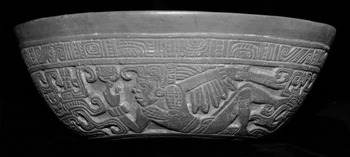
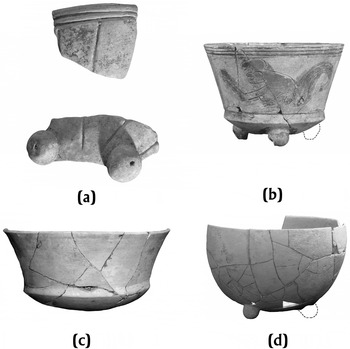
Following Shepard's technological work with Maya ceramics, the first application of neutron activation involving Mesoamerican artifacts was carried out at Brookhaven National Laboratory and focused on a particular class of pottery: Maya Fine Orange Ware (Sayre et al. Reference Sayre, Murrrenhoff and Weick1958). This distinctive ceramic appeared in the archaeological record of the Guatemalan highlands at Kixpec (Butler Reference Butler, Hay, Linton, Lothrop, Shapiro and Vaillant1940:267) and in the southern lowlands at Piedras Negras about the time of the so-called Classic Maya “collapse” (Figure 1). It was assumed to have been produced earlier in the highlands, and the initial analyses were to determine how similar the pottery was at the two sites (Bishop Reference Bishop and Zelst2003; Sabloff Reference Sabloff and Willey1982).
Pabellon Molded-carved vessel. This is an example of the first Maya ceramics analyzed by instrumental neutron activation.

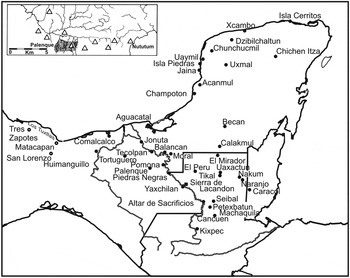
As the analyses of this fine paste ware continued during the early period of INAA's methodological and instrumental improvements, Jeremy Sabloff invited Robert Rands to contribute samples from the latter's research area along the middle Usumacinta River and the region surrounding the largest western Maya site of Palenque. In addition to the fine orange ceramics, Rands submitted other fine wares, including fine orange-brown, fine black, and fine gray. And, of course, he could not resist a few samples of nonfine wares from Palenque for comparison. The fine paste database for the western Maya lowlands expanded greatly during the 1970s and 1980s with intermittent reports prepared (Bishop and Rands Reference Bishop, Rands and Sabloff1982). Increasingly, however, emphasis was given to documenting the changing economic-political and ritual relationships between Palenque and the smaller sites in its immediate environs, as well as with sites in the plains to the north of Palenque (Figure 2). The weathered nature of the pottery in the western lowlands and long traditions of form elaboration and plastic decoration necessitated a reliance on paste and decorative modes that placed the study of Palenque pottery at odds with the surface finish classificatory type: variety-mode system used widely in Mesoamerica (Culbert and Rands Reference Culbert and Rands2007; Gifford Reference Gifford1960; Rands and Bishop Reference Rands, Bishop and Fry1980). Low-power, reflected-light microscopy for paste temper-texture characterization, petrographic examinations for mineral identification and abundance, and extensive refiring of ceramic paste provided information to assist in interpreting the region's chemical and archaeological data (Rands and Bargielski Weimer Reference Rands, Weimer and Neff1992).
Map of Maya region showing sites from which fine paste ceramics have been sampled. The immediate Palenque region showing Palenque's location relative to the small satellite site of Nututum is shown in the insert.

The long-term program of compositional research focused on Palenque is only now being readied for publication; however, several major changes in the patterns of trade and other economic activity can be inferred from the accumulated data. For example, during the Murclielagos–early Balunte period (ca. a.d. 700–800) Palenque redirected its major ceramic affiliation to the north, to the low-lying plains and savannas and further to the annually inundated flood plain of the Rio Usumacina. Imported fine black, brown, and gray service wares rose in popularity as did some of the utility ceramics, such as a small jar that featured a slightly in-turned to vertical medium neck with a small everted, often slightly bolstered, rim. Neutron activation data has linked this ceramic to manufacture in the vicinity of the small civic-ceremonial center of Nututum, which is located in the eastern plains, approximately 8 km from Palenque (insert, Figure 2). From there, this stubby Balunte period jar found its way to Palenque and, in lesser numbers, to other sites of the region. Although it is impossible to know how the jar was distributed, clearly an economic link involving a utilitarian ceramic existed between Palenque and Nututúm.
Success in monitoring the changing patterns of ceramic movement between Palenque and its satellite sites and interregional contacts led researchers to expand the use of INAA to sites in the central Maya lowlands. Trade among Maya sites was considered to be a factor in the growth of socioeconomic complexity, and the ability to draw upon objective data to infer the direction in which pottery moved and how these movement patterns changed overtime could have been a major step forward in discussions of site and regional development. But with so little known, prerequisite baseline studies to establish changes in the compositional patterns of ceramic materials were necessary.
The “compositional survey” of the Maya lowlands is an opportunistic patchwork of chemical analyses that can be mined to investigate more than just the movement of pottery. It provides a background against which the chemical profiles of thematically and epigraphically elaborate whole vessels found in museum and institutional collections can be compared. These vessels, with their diverse collection histories, generally lack provenience and thus are more often referred to as isolated exemplars of Maya art. The compositional data makes it possible to integrate the isolated “art objects” into an expanded, interpretative matrix. Many of the vessels are found to have been made from similar resources and preparation recipes, representing a subregion, site, or perhaps some unspecified social group (workshop, artisans, or others working with a particular thematic expression) (Bishop et. al. Reference Bishop, Harbottle, Reents, Sayre, Zelst, England and Zelst1986; Reents and Bishop Reference Reents-Budet, Bishop, Robertson and Fields1985, Reference Reents-Budet, Bishop and van Zelst2003).
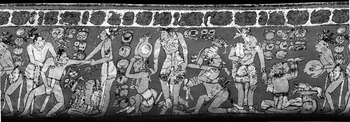
In the early 1990s Reents-Budet et al. (Reference Reents-Budet1994) noted that several vessels carried thematic scenes of dancing, eating, and drinking, frequently depicted within a palatial setting (Figure 3). This observation led her to consider the role that these vessels might have played in ritual feasting (Reents Reference Reents and Kerr2000; see also LeCount Reference LeCount2001). Scenes on the nonprovenienced, whole vessels were compared to similar fragments of excavated material, thus making it possible to link stylistic elements, themes, or texts with a particular site or subregion. Seeing how some specific imagery was distributed led Reents-Budet (Reference Reents-Budet1994:88–92; see also Price Reference Price1991:109) to consider whether or not the vessels were being used as a kind of “social currency” with which individual agents may have attained prestige and power through the circulation of pottery used in public displays.
Rollout of ceramic vessels showing feasting and associated activities. Photograph by and courtesy of Justin Kerr.

Maya feasting is an important example of a “socially charged” thematic expression observed on many of the whole polychrome vessels. Issues of age, gender, social standing, and community (Prociuk Reference Prociuk2010) are important expressions found in the feasting scenes. In ongoing research, the compositional data are being used to see how specifically they can be used to attribute certain thematic expressions, such as feasting, to particular subregions of the Maya lowlands. Thus, the expanding database of compositional data is being used for questions beyond whether or not elaborate feasting was more important in some regions than others.
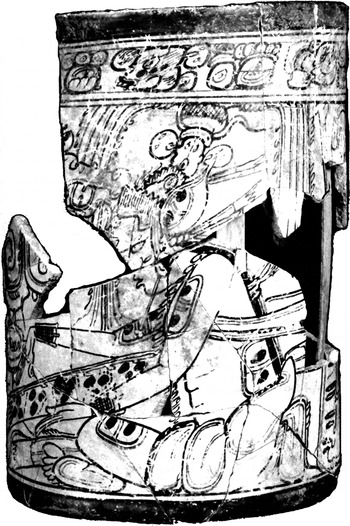
Attribution of whole vessels to sites or sub-regions of the Maya area has been successful in several studies, especially as the database of analyzed pottery from excavated or surface collected samples has grown (Reents-Budet et al. Reference Reents-Budet, Bell, Traxler, Bishop, Bell, Canuto and Sharer2004, Reference Reents-Budet, Foias, Bishop, Blackman, Guenter, Laporte, Arroyo and Mejía2007, Reference Reents-Budet, Le Landais, Carrillo, Bishop, Blackman, Arroyo, Aragón, Palma and Arroyave2011). Many of the vessels being held in national or international collections represent notable artistic accomplishment and may have been made from raw materials or manufactured in ways that do not reflect the compositions found in other pottery. For example, the analysis of a Late Classic Maya “Codex-style” cylinder, painted by a highly accomplished hand, depicts two scribes sitting cross-legged with jaguar pelt-bound codices (Figure 4). Unlike the more than 2,000 nonprovenienced whole vessels that have been analyzed, this fragmented vessel was recovered under controlled conditions in 1989 by members of the RAINPEG project, working at the site of Nakbe in northern Guatemala. Archaeologists began excavating Nakbe in 1987 and found abundant codex-style fragments littering the surface. It was apparent that extensive looting had occurred, and it seemed that Nakbe was a likely center for the manufacture of this distinctive ceramic (Hansen et al. Reference Hansen, Bishop and Fashen1991). In spite of a large number of analyzed codex ceramics, the composition of the scribe vessel failed to “match” the other analyzed ceramics (Hansen et al. Reference Hansen, Bishop and Fashen1991:Figure 12). Five additional analyses of the vessel were made (base, wall, sherds, etc.), all of which showed very good analytical reproducibility, but still with no reasonably close, comparative elemental profiles.
Codex Scribe Vessel 1 from Nakbe, Guatemala. Photograph by Ronald L. Bishop.

The analysis of codex pottery from several sites, museums, Guatemala-registered collections, and institutions (for example, the Instituto Nacional de Antropología e Historia, in Mexico, and the Instituto de Antropología e Historia, in Guatemala) has continued for more than two decades, resulting in data for 250 codex ceramics (whole vessels and sherds) and hundreds of ceramics from the Mirador Basin, including Nakbe. Several compositional and stylistic groups have been identified for this distinctive ceramic, and findings have been used to interpret relationships between Nakbe and nearby Calakmul (Reents-Budet et al. Reference Reents-Budet, Le Landais, Carrillo, Bishop, Blackman, Arroyo, Aragón, Palma and Arroyave2011). But for the moment, the Nakbe Scribe vessel represents not only an idiosyncratic expression of artistic excellence, but a unique analytical composition.
Greater success of attribution was achieved with Plumbate pottery, which in its late effigy forms is easily one of Mesoamerica's most recognizable ceramics in Mesoamerica (Shepard Reference Shepard1948; Reference Shepard1964). In the early 1980s, Hector Neff began a study that resulted in a developmental history of Plumbate ceramics (Neff Reference Neff1984, Reference Neff and Voorhies1989). Through the use of INAA the manufacturing zone for Plumbate was determined to be located on the littoral zone of southwest Guatemala (Neff and Bishop Reference Neff and Bishop1988). Neff continued to study Plumbate, turning his attention to the technologically sophisticated Plumbate slips (2003) and using LA-ICP-MS to obtain support for his identification of the highly localized manufacturing source for the ware. He concluded that at least two different groups of potters using two different specific resources within the general resource area were responsible for the production of Plumbate. The recovery of Plumbate vessels, well removed from its material source area, provides evidence for the very long-distance movement of this distinctive ceramic.
Jade
Apart from the relative simplicity with which obsidian can be characterized and attributed accurately to the source area, other naturally occurring materials, among them “jade,” have proven to be more difficult to analyze. One lesson appears clear: analyzing a bulk sample of a multicomponent, inhomogeneous material can result in a complex data set that may not be very useful for addressing archaeological questions. The study of jade provides a cautionary tale. As encountered thus far in Mesoamerica, what is considered to be jade is a heterogeneous rock that primarily, but not exclusively contains the pyroxene mineral jadeite along with variable amounts of other minerals. Jadeite typically forms in metamorphic environments and involves the chemical modification of ultramafic rock during recrystalization. (see Harlow Reference Harlow and Lange1993; Harlow et al. Reference Harlow, Sisson and Sorensen2011 for discussion of jade formation).
Only seven sources of jadeite are known worldwide, and the only known source in Mesoamerica is the along the Motagua River valley of Guatemala. Source samples were acquired from the Motagua Valley through field survey and from the stockpiles of Jades, S.A. of Antigua, Guatemala. All samples analyzed were from locations north of the Motagua fault. Artifacts for analysis were provided through the generosity of archaeologists and museum curators. Proveniences for the artifacts included the sites of Altun Ha, Cerros, Chichen Itza, Copan, Cuello, Holmul, Kaminaljuyu, Quirigua, Santa Rita, and from projects in the El Cajon region of Honduras and the Salama Valley from Guatemala. All 447 artifacts were analyzed by neutron activation of which just slightly more than 50% could be assigned to relatively homogeneous “groups” (Bishop et al. Reference Bishop, Sayre, Mishara and Lange1993). Three groups conformed to compositional patterns exhibited for the analyzed Motagua source materials, but the most distinctive group, designated “Maya Green,” did not. With almost one-half of the analyses “nongrouped,” one had to wonder whether or not the “groups” meant anything that might be archaeologically informative.
Recently Harlow et al. (Reference Harlow, Sisson and Sorensen2011) published a study of jadeites, rocks containing jadeite, which were found south of the Motagua fault. The jadeites north of the fault appear to be formed from a single geological event and share extensive albitization and a common accessory mineral assemblage, including the presence of mica and absence of quartz. In contrast, south of the fault were recently discovered subregional source areas that show three distinctive lithologies but which are similar in lacking mica but having quartz present. Thus, within a relatively small geographic subregion, more than two distinctive jadeite patterns occur. Interestingly, Costa Rican jades analyzed by Bishop et al. (Reference Bishop, Sayre, Mishara and Lange1993) were found to be chemically different from those of Maya region (artifacts and source samples) and lacking in detectable mineral accessories. A very few of the jades that had a “Costa Rican composition” were recovered from sites along coastal Belize.
Jadeites continue to be the subject of investigation, especially by mineralogists and geochemists for what they reveal about some of the most complex lithologies recognized on the face of the planet. Archaeological work also continues but without neutron activation analyses as was done by Bishop et al. (Reference Bishop, Sayre, Mishara and Lange1993). The neutron activation analyses of bulk samples did provide some “interesting” data, and researchers could see some patterns that were amenable to archaeological interpretation. Looking back, however, I can see that using other techniques would be preferable. It is best to know what specifically is being analyzed rather than trying to understand some variably weighted average for a sample's composition. The use of LA-ICP-MS as carried out by Tejeda and Neff (Reference Tejeda and Neff2004) appears to be promising. Their project generally recreated the reference groups using the samples that had been analyzed by Bishop et al. (Reference Bishop, Sayre, Mishara and Lange1993), and some of the samples, previously left as outliers, could be attributed to one of the groups (Neff et al. Reference Neff, Kovacevich, Bishop and Nadal2010).
Chert
Another Mesoamerican material that is fairly miserable to characterize is chert. Chert is a widely occurring, predominately silt-sized, sedimentary, siliceous rock derived from sediments or through diagenetic processes involving the replacement of silica with calcium carbonate formed by microscopic plankton and radiolaria (Nichols Reference Nichols2009:38). Color reflects the incorporated impurities within the structure (Luedtke Reference Luedtke1992). The mode of formation (for example, thin bedding) may be broadly spread. Attempts to define specific sources of resource procurement to monitor movement of the material in Mesoamerica have not been encouraging (Cackler et al. Reference Cackler, Glascock, Neff, Iceland, Pyburn, Hudler, Hester and Chiarulli1999; Glascock Reference Glascock and Glascock2002:2). A more optimistic view may be had for cherts found in the Caribbean (Hofman et al. Reference Hofman, Hoogland and van Gijn2008:553ff; Knippenberg and Zijlstra Reference Knippenberg, Zijlstra, Hofman, Hoogland and van Gijn2008) and for a region in western North Dakota (Huckell et al. Reference Huckell, Kilby, Boulanger and Glascock2011).
Thousands of analyses of Mesoamerican materials have been carried out to establish where raw materials were obtained or where objects were manufactured, with the greatest attention given to the results from the compositional analyses of obsidian and pottery. The specific purposes for these analyses being undertaken was not always well defined, nor was the size of the sample necessarily well thought-out prior to the actual analyses. There is a good deal of serendipity in archaeology, and this is no less the situation when using an instrumental means to seek evidence for manufacturing and distribution. At the end of a long process, the important question still remains: can the patterns found, or deviation of data from those patterns, be considered sufficient to establish or deny the operation of trade? Moreover, if patterns are found, can they be shown to have been a component in a “network?” There are several crucial areas of concern.
THE TRANSITION TO CLARKE'S THIRD LEVEL: CRITICAL SELF-CONSCIOUSNESS
The examples of compositional investigations of pottery, jade, and chert noted above call attention not only to studies that have been carried out but also to difficulties in understanding the variable strength of elemental patterning within an analytical data matrix. The frequent inadequacy of sampling, the limitations of the analytical approach, and the complexity of natural or cultural sources of variation are all expressed in some indeterminate manner in compositional investigations. Although some of the inherent complexities were known to be present from the “developmental period” of INAA applications in archaeology (Bishop Reference Bishop1975, Reference Bishop and Fry1980; Rice Reference Rice1976), their impact on interpretation has become clearer. And, thus, we have transitioned to the third level of David Clarke's “disciplinary” development: critical self-consciousness. Clarke characterizes critical self-consciousness as the stage at which we cease to ask “what do we know” and instead ask, given the “limitations of data, concepts and methods, how do we know what we appear to know reliably?” (Clarke Reference Clarke1973:7, emphasis mine). The keyword, of course, is, “reliably.” This is an obvious stage of evaluation, and I will attempt to move transcendentally between the role of data producer and that of the archaeological consumer, questioning what is missing or what could be improved in analytically based studies of trade and exchange and what—ultimately—it might mean for investigations of early economies.
Sample Selection: The Case of Pottery
A researcher usually seeks analytical support for a project involving some relatively restricted class of pottery in terms of period (Formative, Classic, or Postclassic, for example), ware (Fine Orange, Fine Gray, Coarse orange, etc.), form (tecomates, figurines, censers, etc.), decoration (molded-carved, incised, monochrome, polychrome), and so on. In Mesoamerica, ceramics are selected most frequently according the Type-Variety-Mode classificatory system elaborated by Gifford (Reference Gifford1976). Working from consideration of ceramic attributes, Gifford envisioned a hierarchy of classification involving varying levels of abstraction beginning with the “type” and “variety” (see Forsyth Reference Forsyth1983). Despite occasional complaints, the Type-Variety system has gained widespread use in Mesoamerica. Nevertheless, it needs to be remembered that the “type” is a polythetic category—a heuristic entity created or applied to allow pottery to be sorted in a manner that will facilitate communication of shared aspects of similarity of decoration and chronological equivalence. It is, as noted by Gifford, an abstraction—a simplified inexact model of some complex reality. There have been useful examinations of the strengths and weakness of the system in the past (Ball Reference Ball and Gifford1977, Culbert and Rands Reference Culbert and Rands2007; Neff Reference Neff1993; Smith Reference Smith1979); there have also been comments about the system that contributed far less (Adams Reference Adams2008).
Mexican scholars, however, perhaps clinging to a more paste-oriented view derived in no small part from the collaboration of Jorge Acosta and Anna Shepard (Shepard Reference Shepard, Caso, Bernal and Acosta1967), seem to be willing to view paste as an important component in ceramic investigations (Domínguez Carrasco et al. Reference Domínguez Carrasco, Pesqueira, Rodríguez Lugo, Anaya, Chung, Folan, Gunn, Laporte, Suasnávar and Arroyo2001; Obando et al. Reference Obando, Jimenez and Kussmaul2011; Sotomayor Reference Sotomayor and Müller1966; Sotomayor et al. Reference Sotomayor and Tejero1963). Consideration of paste, subsumed within a “ware” category, is virtually absent from Type-Variety analyses, despite Gifford noting its importance (Gifford Reference Gifford1976:18–20). Rice (Reference Rice1976) focused attention on the problem and called for “paste wares” to be given an independence from surface decorative features within the hierarchical structure; few, apparently, paid much attention (but see Goralski Reference Goralski2008). When it comes to selecting pottery for compositional analysis, however, the inclusion of paste characteristics cannot be over emphasized (Rice Reference Rice and Wetherington1978). Consider, for example, paying for the chemical analysis of Formative ceramics and waiting for several months only to find that the results group according to the categories of carbonate, sand, or volcanic ash temper—this happens! While the derived “groups” (see below) might separate beautifully on some bivariate plot—with or without confidence ellipses—it is reasonable to expect that the same divisions would be observable using a low-power, reflected-light microscope to examine the paste. With a little practice and some initial guidance from a geologist, low-power microscopy can enable an investigator to process between 400 and 500 sherds per day into major temper categories. And, if the pastes look different with a clean break at 40-times magnification, their chemical profiles will also be different. How different, of course, is another question.
Search for a Meaningful Group
Compositional analysis involves assembling a data matrix consisting of n-samples by p-quantified constituents that must search for patterns that are amenable to archaeological interpretation. Data points representing areas of density in the multivariate space may be selected as trial groups that are subsequently “refined,” frequently by calculating a sample's p-value based on distance from the group's multivariate centroid (see Baxter Reference Baxter2006a, Reference Baxter2006b; Bishop and Neff Reference Bishop, Neff and Allen1989; Neff Reference Neff, Glowacki and Neff2002, among others). Membership acceptance or rejection of group membership is based typically on some selected confidence interval that is chosen and calculated assuming adherence to restrictive parametric assumptions (normal distribution, adequate sample size, and so on), which are seldom met. Alternatively, with or without statistical guidance, samples might be removed from a group if doing so would improve covariation with noncompositional data (see use of PCRUs in Bishop and Rands Reference Bishop, Rands and Sabloff1982).
Complicating the situation, natural materials are interconnected subsystems displaying component nonlinear and nonrandom effects that have been characterized by Demicco (Reference Demicco, Sinčák, Vaščák and Hirota2004:236) as organized complexity. Nature is seldom well categorized or grouped because of uncertainties resulting from such human factors as vagueness and impression. The effort to create ceramic compositional groups generally involves the modeling of variation found in nature and the variation that is introduced by social practices, such as technological choices, archaeological sampling strategies, modes of analysis, etc., into discrete, crisply bounded units from which interpretive narratives arise. There are many ways to form a group, and the very act of using a group-forming technique imposes a particular structure upon the data rather than simply revealing “true” or “natural” clusters that are exhaustive of the dataset (Bishop and Neff Reference Bishop, Neff and Allen1989; Blackman and Bishop Reference Blackman and Bishop2007). Regardless of the approach to data analysis, it is hardly surprising that “outliers”—perhaps many outliers—will be present.
Outliers are samples that deviate in some suspicious manner from others in the data set. They may represent samples “just outside” of the confidence interval of a group. They may, however, represent compositions that are sufficiently underrepresented in the dataset so that they are not perceived as constituting a potential group. Outliers can also arise from analytical errors, including errors in identification during petrographic examination, sampling errors, or simply the idiosyncratic expressions of the person creating the object being analyzed. Boundaries are imposed on groups according to research purpose, predisposition, experience, and techniques of the investigator. Thus, statistical analysis of compositional data informs us about tendencies in the dataset, but there is no requirement that we blindly commit ourselves to the outcome of a statistical analysis. Rather than just relying on the compositional data alone, the accuracy of a group's attribution to a source location may be enhanced by seeking a “best-fit” solution among multiple, multistate variables, including the manner in which they coassociate with traditional archaeological data (Rands and Bargielski Weimer Reference Rands, Weimer and Neff1992; Rands and Bishop Reference Bishop and Zelst2003).
Reporting of Groups
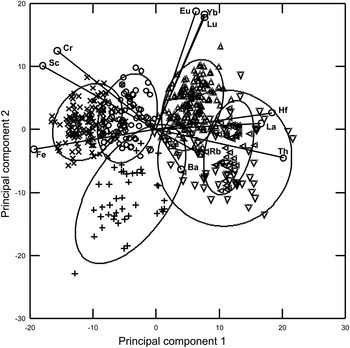
The representation of group existence is commonly given in some form of bi- or tri-variate graphs, such as elemental plots, principal component plots, bi-plots, discriminate analysis graphs, and the like. Ellipses used to indicate a particular level of confidence in membership may enclose the group when the latter are sufficiently populated and characterized. If the groups can be shown to be separate in any single dimension, they retain separation in a higher dimensional data space. Biplots (Baxter Reference Baxter, Lock and Moffett1992; Gabriel Reference Gabriel1971; Neff Reference Neff1994) have been used extensively (Figure 5). Scaling in the bi-plot permits the relationships among samples and the relationships among variables to be graphically presented in a two-dimensional plot of the first two principal components. Vectors drawn for the variables indicate direction and scale according to their contribution. This is similar to the information obtained from a plot of the first two principal components of a data matrix and a table of component loadings.
Example of a biplot graphical representation. Sample and variable relationships are shown relative to the first two principal components.

Both principal components and bi-plot presentations confront the question of how many “non-trivial” components or axes should be retained for interpretation. The data have been treated in a manner that permits the largest amount of the variation in the data matrix to be contained in the first axis with decreasing variation represented in successive axes. And, while 50–60% or more of the variation may be accounted for in the first two axes, how much archaeological meaningful variation is contained in axes 3 and 4? The majority of data presentations refer to the first two axes only. Who is going to mine the remaining variation for correspondence to archaeological variables of time and space? Relevant information—information that might be useful to a collaborating archaeologist—may be overlooked (Peres-Neto et al. Reference Peres-Neto, Jackson and Somers2004).
It is difficult to judge from many summary publications how “good” the “groups” are that are being used. Are they reasonable units for archaeological interpretation? The answer to this question obviously is quite subjective. It may be that several smaller, more homogeneous groups have been recognized but merged into a single, larger group in order to represent a site, drainage, subregion, etc. Merged in that manner, they can be used to show collectively that there is a difference between it/them and some comparative group. If there is, then merging is fine for that purpose. But the reader has no idea about the characteristics of the groups. For a group populated with a reasonable number of samples, basic descriptive statistics for variables such as standard deviation or the coefficient of variation indicate relative compactness. These, however, are univariate measures that do not serve as well if the data being used contain significant proportional relationships. There are no hard and fast guidelines as to how much variation should be tolerated in a group, but researchers performing compositional data analysis in a region gain a fair appreciation of the reasonable variation for particular elements within a “well” characterized group. If “too much variation” is present, it may have negative repercussions. This could be particularly egregious when the “group” is used for some purpose other than drawing attention to differences when, for example, one is evaluating a comparative sample's likelihood that it could be a member of the target group.
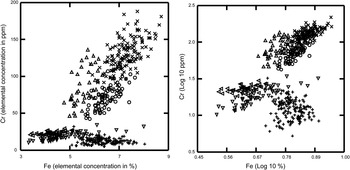
The descriptive statistics are also important when groups or scatters of data points are shown relative to elemental concentration expressed as log value. The transformation to logs permits groups that differ greatly to be shown on a plot that is compressed to the printed page. However, it compresses the visual space in a manner that gives a condensed impression of the elemental spread for groups; a good-looking plot may be suppressing better communication of the data dispersion. Since few readers will be willing to convert logs to concentration data and if clarity is the objective, then it can be argued that the raw elemental plots are preferable for interpreting grouped data distributions (compare Figure 6a and 6b).
Bivariate plots. Illustration data distributions relative to raw elemental concentrations (left) and the same data following a log-base 10 transformation (right).

Scale
The use of analytical techniques in trade/exchange studies is necessarily spatial and often temporal. Where was something extracted or made, and where was it recovered? Is it similar to other objects distributed in some manner across geographic space at the level of intraregional (Charlton et al. Reference Charlton, Charlton, Nichols, Neff, Pool and Bey2007; Minc Reference Minc2009) or interregional (Blomster et al. Reference Blomster, Neff and Glascock2005), or perhaps over even longer distances? Examples of the latter are the case of Pachuca obsidian (Levine et al. Reference Levine, Joyce and Glascock2011); Thin Orange pottery (Bove and Medrano Busto Reference Bove, Busto and Braswell2003; Reents-Budet et al. Reference Reents-Budet, Bell, Traxler, Bishop, Bell, Canuto and Sharer2004), Majolica (Fournier et al. Reference Fournier, Blackman and Bishop2009), and jade (Bishop et al. Reference Bishop, Sayre, Mishara and Lange1993; Bishop and Lange Reference Bishop, Lange and Lange1993; Neff et al. Reference Neff, Kovacevich, Bishop and Nadal2010). Several projects carried out during the past two decades involved sampling strategies that were well planned out. Others, more frequently, appear to have evolved as opportunities arose.
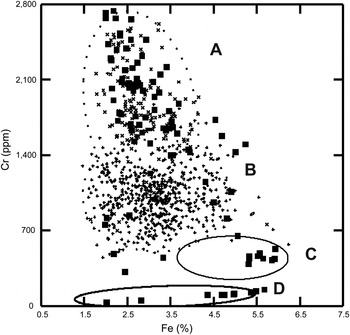
For example, Fine Gray Ware from the western Maya lowlands received first attention in the initial application of neutron activation analysis in the 1950s. Analysis was expanded to Palenque in late 1960s and expanded further in the early 1970s to Altar de Sacrificios and Ceibal in Guatemala. In the 1990s Fine Gray was recovered from the Petexbatun region and found to be chemically similar to that analyzed from Palenque. The excavations at Cancuen, commencing in 1999 recovered significantly large quantities of plastic decorated Fine Gray (Chicxulub Incised and Telchac Composite) with high chromium values (approximately greater than 700 ppm) that were found to be similar to that analyzed from the Petexbatun region and Palenque (Figure 7). In 2002 a large book-box of Fine Gray was pulled from storage that contained Fine Gray pottery from the site of Moral-Reforma on the Río San Pedro Mártir in Mexico. Sampling was then extended to sites up the river including La Joyanca and El Peru-Waka. Only recently has analytical effort been extended to sites in southern Veracruz. This expansion was important for the interpretation of pottery recovered from excavations of the Los Patos Aguada (A39-37-8) and the northern group (A54-9) several meters away at Cancuen (see Forné et al. Reference Forné, Bishop, Demarest, Blackman, Sears, Arroyo, Aragón, Palma and Arroyave2010, Reference Forné, Andrieu, Demarest, Torres, Quintanilla, Bishop, Jaime-Riverón, Arnauld and Breton2013). We were now able to recognize a fine gray (and fine orange) paste composition at Cancuen that matches ceramics from southern Veracruz, thus opening new avenues of interpretation (Figure 8).
Palenque region and southern Veracruz Fine Gray and Fine Orange pottery: (a) Chablekal Fine Gray, Chicxulub Incised ceramic type, Grooved-incised variety from Palenque; (b) Chablekal Fine Gray, Telchac Composite ceramic type, Zoned-black variety from Palenque; (c) Chablekal Fine Gray from Cancuen, attributed to resources in southern Veracruz; (d) Fine Orange vessel, Campamento Fine Orange, from Cancuen, attributed to resources in southern Veracruz.

Simplified graph of relationships among groups and distributions of Fine Orange and Fine Gray pottery in the western Maya lowlands. Sectors A and B show the spread of the “high” and “higher” chromium ceramics, largely made up of members of the decorated Chablekal ceramic type. Ellipses added at the 90% confidence level as attention-calling devices only. Sector C is a statistically refined compositional group (95% confidence ellipse) for Maya Fine Orange and Fine Gray ceramics manufactured along the middle Usumacinta River (n = 1,596). Sector D represents a statistically refined group 95% with sample membership from Southern Veracruz. Fine squares represent analyzed samples from Cancuen. Note the skewing of distribution to Sectors A and B with some in sector C. Similarity of some of the Cancuen samples to Veracruz ceramics is illustrated in Sector D.

Timeliness
Turn-around time is also critical; the archaeological community seeks to be timely in producing excavation reports or analytical investigations. The latter clearly has applicability for trade/exchange projects. Only service programs, such as that in place at MURR, have a responsibility to meet specific, agreed-upon schedules. Research facilities that take on student projects usually yield data—and offer interpretation—in time for completion of theses or dissertations. Collaborative investigations proceed, more or less, at some mutually agreed pace. But investigations can take on a life of their own, with only intermittent publication while researchers await the results from additional samples or a clearer understanding to be sought among the data at hand. The long-term, open-ended nature of such investigations can be frustrating to colleagues who have assembled the samples and who would like to know, in a reasonable time, how “their” material fit within someone else's investigation.
The reduction in the number of long-distance trade studies noted by Smith (Reference Smith2004) may be due, in part, to a lack of sufficiently speedy analysis and reporting. It is no small wonder that many archaeologists have embraced the availability of the portable X-ray fluorescence spectrometer (pXRF). It is a sensational example of instrumental miniaturization. It allows archaeologists to assume control over its use in their own time frame—and it even produces numbers! But since pXRF is a surface–analyzing technique, it is subject to variation in surface cleaning, texture, geometry, etc. Precision of measurement will vary depending on the material under study and the manner in which the instrument is used. Understandably, there is a “rush” to apply new technology to actual archaeological situations, and the use of the handheld pXRF is no exception. The evaluation of the strengths and limitations of the technique should first be carried out on “standard” materials, systematically varying and controlling the conditions during measurements (positioning, textures, firing, and so on). Such testing might result in a diminished zeal, but at least the expectations would be more realistic. A Starfleet tricorder may not yet be available, but such future instrumentation is not far away (Kaku Reference Kaku2012:69).
SUMMARY APPRAISAL
My assessment of the immediate future for analytical studies in archaeology, particularly those involving trade and exchange, is only tepidly optimistic. This stems less from becoming a curmudgeon as might be inferred from some of my comments (see discussion in Rice Reference Rice1996:168–172) and more toward seeing where the financial markets are headed. I believe that in the short run, analytical resources available for seeking patterns involving intraregional or interregional trade, let alone documenting a widespread trade network, will diminish. University-based resources will be redirected, subject to internal politics, because of tightening budgets leading to little to no imagination for “thinking outside of the box” by university or other institutional administrators. Few universities can afford to provide needed support services to narrow specializations. In truth, attempting to become a specialist in the analysis of archaeological materials is probably not a good career choice, as it will require extraordinary drive in the face of decisions by colleges and universities to select candidates who can offer more generalized qualifications.
Successful access to analytical resources might be gained by forming intrauniversity collaborations, especially with the geosciences or environmental departments. One useful model might be the Institute for Integrated Research Materials, Environments and Society (IIRMES) at the University of California, Long Beach. The IIRMES laboratory has been used to support student projects, faculty research, and has provided collaborative support to researchers outside of the university. To date, the technical help necessary for the majority of the archaeological work has been in addressing specific reasons for the observed compositional variation in ceramic materials or paints, slips and glazes. Thus far, IIRMES has not yet become a major producer of ceramic data for studies of trade. The dissolution chemistry required ICP-MS analysis for silicate rock (pottery) remains an impediment for large throughput of samples. The facilities, quality control, and apparent administrative support, though, seem likely to continue—for now.
The analytical facilities of Oregon State University are growing with a Mesoamerican focus on early Oaxacan and Aztecan state development and market systems. Similar to the situation at MURR, the analytical resources are spread out over a variety of projects covering areas other than Mesoamerica. In contrast, the future of archaeological research carried out by the Smithsonian-NIST program is expected to decrease dramatically. This will most noticeably impact existing or potential collaborative programs in the Maya region and studies of historical Mexican ceramics from the Colonial and Republic periods.
Within this changing mosaic of resource availability, well-designed and contextualized analytically based investigations of trade in Mesoamerica still need to be encouraged. Among successes, one can mention the attribution specificity achieved for Plumbate (Neff Reference Neff1984, Reference Neff and Voorhies1989) or Maya Fine Orange (Bishop et al. Reference Bishop, Sears, Blackman and Cobos2012) or the aid to interpretation found in Reents-Budet et al. (Reference Reents-Budet, Bell, Traxler, Bishop, Bell, Canuto and Sharer2004) for determining the sources of Copan tomb pottery. And one has only to review the many contributions to archaeology coming from the MURR analyses of pottery from the northern Valley of Mexico to see why production and trade programs should be supported. With a long-term interest in this particular region and through the support of the MURR administration and NSF, a large data set has been assembled and used by many scholars (Alex et al. Reference Alex, Nichols and Glascock2012; Crider et al. Reference Crider, Nichols, Neff and Glascock2007; see also Charlton et al. Reference Charlton, Charlton, Nichols, Neff, Pool and Bey2007; Hodge et al. Reference Hodge, Neff, Blackman, Minc and Neff1992, Reference Hirth1993; Minc Reference Minc2009; Nichols et al. Reference Nichols, Brumfiel, Neff, Hodge, Charlton and Glascock2002, among others). The assembled data from the pottery of the northern basin—from the Epiclassic through Late Postclassic periods—have been critical for the evaluation of several models involving political and economic changes in market activity involving inward and outward patterns of ceramic circulation. These studies and current expansion of databases, with strong matrices of collaborators, continue to result in a broad range of analytically supported investigations of Mesoamerican economy.
RESUMEN
Hace más de cuatro décadas, avances en las técnicas instrumentales como la activación neutrónica y la fluorescencia de rayos X, empezaron a generar una cantidad relativamente considerable de objetivos para el estudio de materiales arqueológicos. Dichos datos fueron la base de múltiples modelos acerca del comercio a larga distancia como un medio para explicar el desarrollo de la complejidad cultural. En este ensayo, realizamos una revisión de diversos aspectos de la historia de esas pesquisas y cómo el uso de datos composicionales se dirige en la actualidad sobre todo a investigaciones específicas referentes a actividades económicas. Incluso con este redireccionamiento de los intereses de investigación, todo parece indicar que cada vez hay menos estudios que impliquen la caracterización de materiales. Recurrimos a la utilización de la forma tradicional de citar, a experiencias personales y a ejemplos sumamente selectos para examinar el uso de técnicas analíticas para estudios del intercambio a larga distancia, según se desarrollaron y que ahora se enfrentan a dificultades interpretativas inherentes a los datos, lo cual se agudiza por el uso de construcciones abstractas y limitaciones en los recursos.
ACKNOWLEDGMENTS
Edward V. Sayre, Garman Harbottle, Lambertus van Zelst, and Pieter Meyers provided my introduction to neutron activation four decades ago; their patience has always been appreciated. The Department of Chemistry at Brookhaven and the Geology Department of Southern Illinois University provided an analytical environment where an anthropologist could think and experiment outside of their discipline—and maybe even learn. Long discussions with John C. Griffiths at Penn State, Robert R. Sokal of the State University of New York at Stony Brook, and Frank G. Ethridge, then at Southern Illinois, introduced me to numerical analysis and especially geostatistics. The Center for Neutron Research at NIST in Gaithersburg, Maryland, has provided outstanding assistance in the generation of thousands of analyses of Mesoamerican ceramics. This paper has benefited from comments by readers and reviewers, and I thank particularly Veletta Canouts, Michael D. Glascock, Hector Neff, and Erin. L. Sears for their time and consideration. Statements of enthusiasm, despair, or cynicism, however, are my own, all having been nurtured by four decades of collaborations on many projects.