Introduction
Balance in the human body is achieved by the vestibular, visual and proprioceptive systems working in harmony. The vestibular system is a complex sensory system that includes peripheral and central vestibular structures. Information from the vestibular system is combined with information from the visual and proprioceptive systems to provide postural control. As a result of any condition affecting any of these systems, balance disorders occur.Reference Dickman1
Addiction is defined as an irresistible desire and craving for an object or person. Substance addiction is the desire to take a substance that gives pleasure to create the desired effect and to continue to use it despite the psychological, social and physiological damage, and to use the substance permanently to escape from the disorders that occur in case of withdrawal.Reference Gökler and Koçak2 The American Psychiatric Association publishes the Diagnostic and Statistical Manual of Mental Disorders, which defines a set of diagnostic criteria. With these diagnostic criteria, the diagnosis of substance addiction has become universal.3
After substance use, a person may experience distraction, impaired perception, anxiety, depression, impaired motor co-ordination, drowsiness, blurred vision and dizziness. These symptoms vary from person to person and are affected by variables such as the type of substance used and the amount and duration of exposure. In the literature, it has been reported that central structures regulating the oculomotor and balance system, including the vestibular nuclei and cerebellum, are affected.Reference Rottach, Wohlgemuth, Dzaja, Eggert and Straube4, Reference Ramaioli, Colagiorgio, Saglam, Heuser, Schneider and Ramat5 However, there is no study evaluating peripheral and central vestibular structures, and vestibuloocular, vestibulospinal and vestibulocolic reflexes via both objective and subjective methods. In our study, the effect of the substance on the vestibular system was examined by evaluating the peripheral and central vestibular system holistically in substance addicts.
Materials and methods
Participants
The case group of the study included substance addicts aged 18–40 years, with a normal physical examination and no hearing loss, vestibular system disease, chronic disease, head trauma, neck and eye problems, and cognitive problems, who presented to the Department of Psychiatry of İnönü University Faculty of Medicine for treatment for substance addiction. The control group included healthy volunteers. Individuals with a history of substance use of 3 years or less and those who had taken a substance within 48 hours were excluded from the study.
According to the calculation made using the G*power 3.1 program, the sample size was determined as a total of 68, 34 for each group, with an effect size of 0.80, a margin of error of 0.05, a confidence level of 0.95 and a population representativeness of 0.90. The study was completed with a total of 68 individuals, 34 substance addicts and 34 healthy individuals, who met the inclusion criteria and agreed to participate in the study.
The İnönü University Institute of Health Sciences Non-Invasive Clinical Research Ethics Committee approved the study (Decision number: 2020/1079). Informed consent was obtained from all patients who participated in this study.
Data collection
A demographic data form, the Addiction Profile Index Screening – Short Form, the Dizziness Handicap Inventory, the Video Head Impulse Test, the videonystagmography test, the cervical vestibular evoked myogenic potential test, and the ocular vestibular evoked myogenic potential test were administered in all participants.
Demographic data form
This was a four-item form that recorded the demographic characteristics of the individual.
Addiction Profile Index Screening – Short Form
This is a 22-item scale developed by abbreviating the Addiction Profile Index Screening (APIS), which separately evaluates the frequency of substance use, diagnosis, effects on life, severe cravings and motivation for treatment. The higher the score, the higher the level of involvement.Reference Ögel, Güneş, Koç, Görücü and Başabak6
Dizziness Handicap Inventory
The Dizziness Handicap Inventory is a 25-item scale consisting of 3 subgroups (physical, emotional and functional) used to define the inadequacies recognised by people experiencing dizziness. The higher the score, the higher the level of impairment.Reference Canbal, Cebeci, Çamur Duyan, Kurtaran and İ7
Videonystagmography test
Videonystagmography is the ‘gold standard’ test used in the clinical evaluation of patients with vestibular symptoms that enables simultaneous monitoring, recording and analysis of eye movements using goggles with infrared camera technology. In the videonystagmography test battery, the gaze test, oculomotor tests including saccade, pursuit and optokinetic, the spontaneous nystagmus test, the head shake test and positional tests were performed.
Video Head Impulse Test
This is a test designed to evaluate the vestibuloocular reflex. The patient is asked to look fixedly at a target 1 m away while sitting upright and wearing glasses. While the patient is looking fixedly at the target, the patient’s head is moved in the direction of the semicircular canals with small amplitude and high speed. While eye movements are recorded with the camera on the goggles, the gain value is determined by calculating the head speed with the help of a sensor.
At the end of the test, vestibulo-ocular reflex gain, the presence of a corrective saccade and the percentage of asymmetry between the vestibulo-ocular reflex gains of the symmetrical semicircular canals are evaluated. In the study, the test was performed with a Micromedical Technologies EyeSeeCam model Video Head Impulse Test device Middelfart, Denmark.
Vestibular evoked myogenic potential test
The vestibular evoked myogenic potential test is an electrophysiological test method that measures the responses of muscles as a result of stimulation of otolith organs with high-intensity sound. Cervical and ocular vestibular evoked myogenic potential tests are used according to the anatomical region where the response is obtained. In the study, the vestibular evoked myogenic potential test was performed with a Neurosoft brand Neuro-Audio model device Ivanovo, Russia.
Statistical analysis
The analysis of the data included in the study was performed with the SPSS 26 program New York, USA. The Kolmogorov–Smirnov test was used to check whether the data fit the normal distribution. The significance level (p) was taken as 0.05 for comparison tests. Because the data were normally distributed, the significance test of the difference between two means in paired groups (t-test) was used. In the analysis of categorical data, cross-tabulations were created and the chi-square test (ꭓ 2) was performed. Correlation coefficients are measures that provide information about the degree and direction of the relationship between variables. Correlation coefficients vary between −1 and +1, where the signs indicate the direction of the relationship. The strength of the relationship increases as it approaches −1 and +1, while it decreases as it approaches 0. Values frequently used in the evaluation of the findings are interpreted as follows: 0.00–0.19, no relationship (insignificantly low relationship); 0.20–0.39, weak relationship; 0.40–0.69, moderate relationship; 0.70–0.89, strong relationship; and 0.90–1.00, very strong relationship.Reference Alpar8 The Pearson correlation coefficient was used because the variables included in the study showed normal distribution.
Results and analysis
In the study, the participants were divided into two main groups: a case group of substance addicts (n = 34) and a control group of healthy individuals (n = 34).
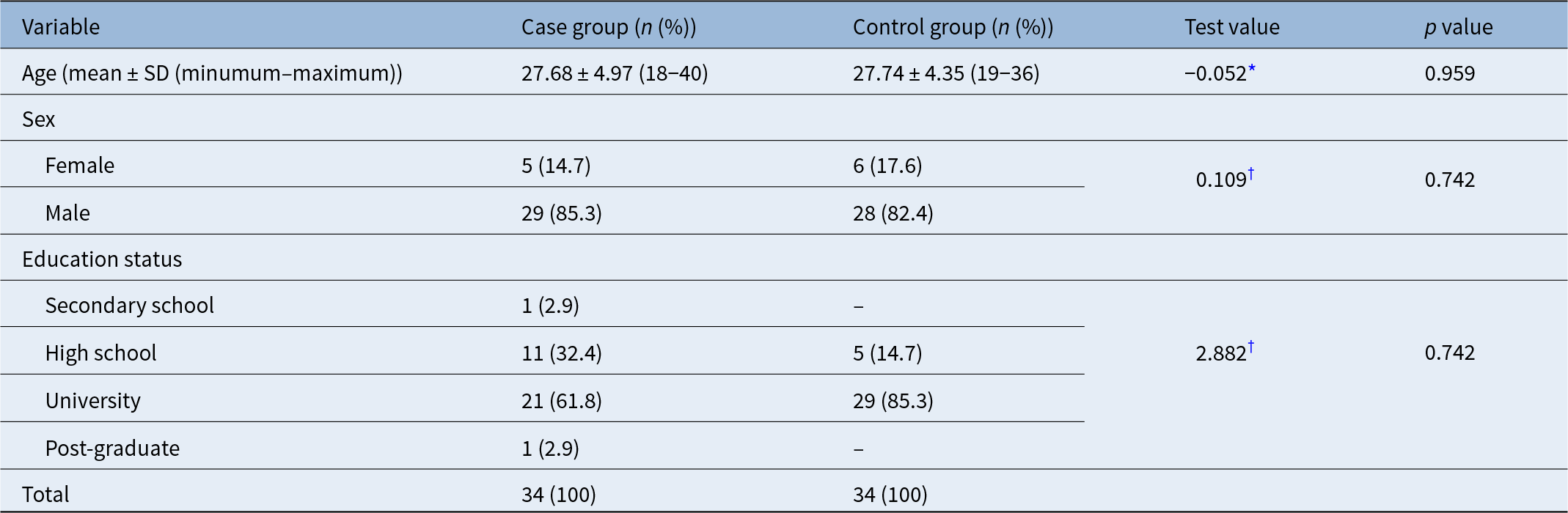
The mean age of the case group was 27.68 ± 4.97 years and the mean age of the control group was 27.74 ± 4.35 years. Five (14.7 per cent) of the individuals in the case group were female and 29 (85.3 per cent) were male, while 6 (17.6 per cent) of the individuals in the control group were female and 28 (82.4 per cent) were male. When evaluated according to the educational status variable, there was no significant difference between the groups (p = 0.742), although there were more individuals with higher education than without in both groups. The participants showed homogeneous distribution between the case group and the control group according to gender, educational status and age variables (Table 1).
Distribution of demographic variables of the case group and the control group

* Test value: significance test (t-test) value of the difference between two means; p value: statistical significance.
† Test value: chi-square test value (ꭓ 2). SD = standard deviation
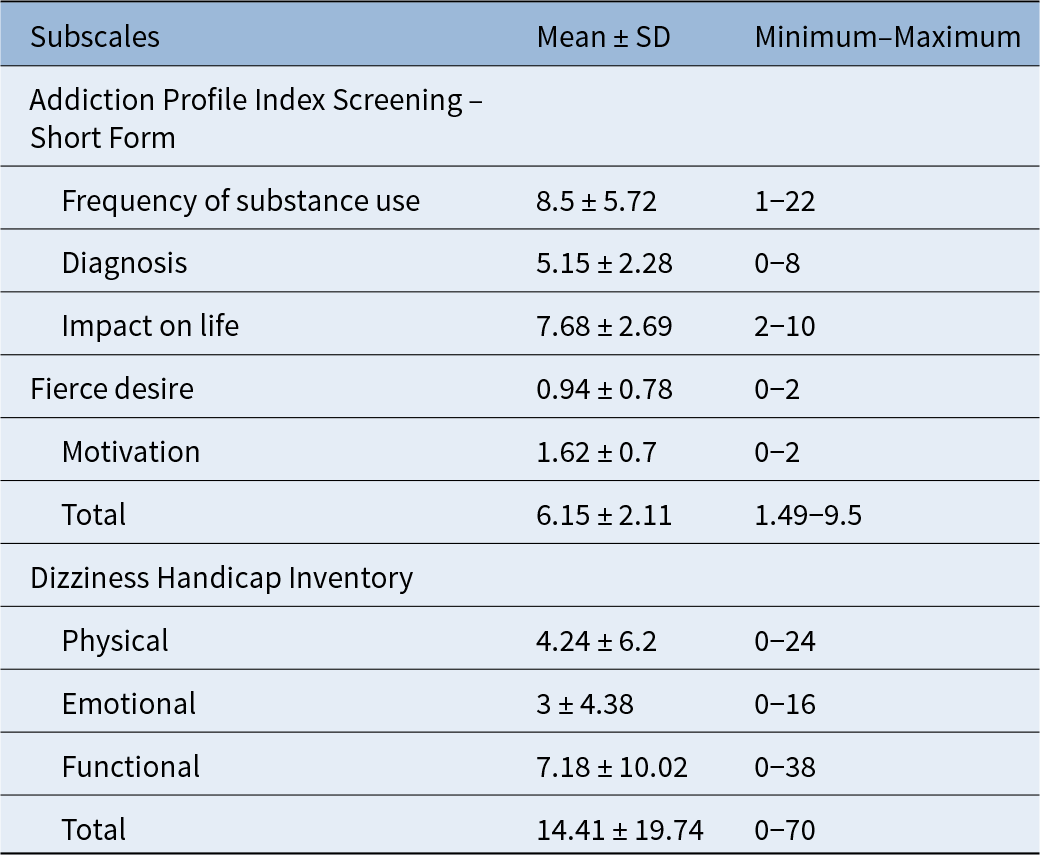
Regarding the Addiction Profile Index Screening – Short Form of the case group, the frequency of substance use score was 8.5 ± 5.72, the diagnosis score was 5.15 ± 2.28, the impact on life score was 7.68 ± 2.69, the craving score was 0.94 ± 0.78, the motivation score was 1.62 ± 0.7 and the total score was 6.15 ± 2.11. In the Dizziness Handicap Inventory scale of the case group, the physical score was 4.24 ± 6.2, the emotional score was 3 ± 4.38, the functional score was 7.18 ± 10.02 and the total score was 14.41 ± 19.74 (Table 2).
Descriptive data for the Addiction Profile Index Screening – Short Form and total and subscales of the Dizziness Handicap Inventory in the case group

SD = standard deviation
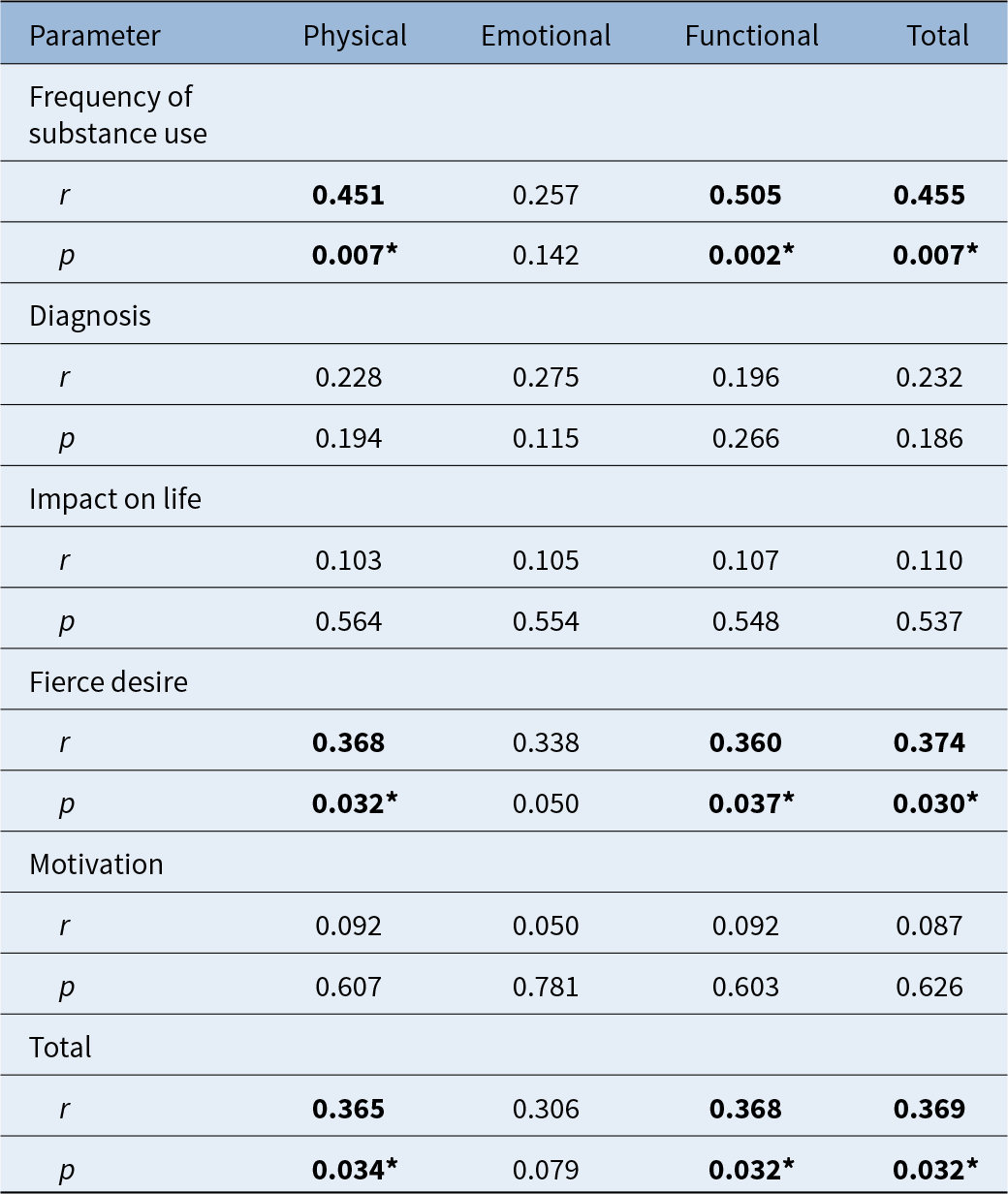
A statistically significant positive relationship was found between the frequency of substance use score on the Addiction Profile Index Screening – Short Form and the physical, functional and total scores on the Dizziness Handicap Inventory; between the severe craving score and the physical, functional and total scores; and between the Addiction Profile Index Screening-Short Form total score and the physical, functional and total scores (p < 0.05). No statistically significant relationship was found between the other scores (p > 0.05) (Table 3).
The relationship between the Addiction Profile Index Screening – Short Form and the Dizziness Handicap Inventory in the case group

r = Pearson correlation coefficient; p = statistical significance. *p < 0.05 indicates there is a statistically significant relationship between the scores
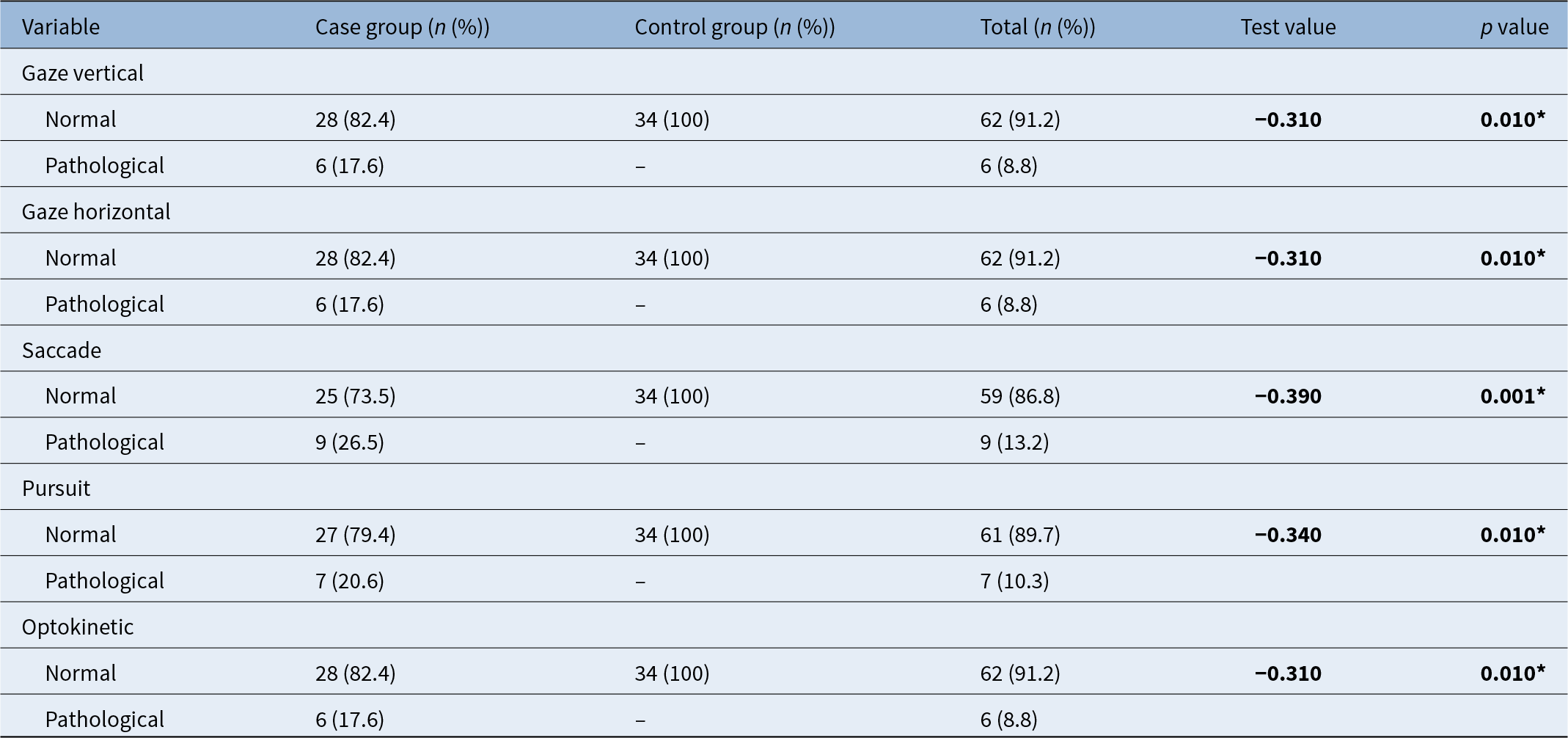
A statistically significant difference was found between the case group and the control group in gaze vertical, gaze horizontal and saccade, pursuit and optokinetic test results (p < 0.05) (Table 4). Spontaneous nystagmus, head shake, Dix-Hallpike and head roll test results were observed as normal in both groups. Statistical test values could not be calculated because there was no change between the groups.
Videonystagmography test results in the case group and the control group

Test value: chi-square test value (ꭓ 2); p = statistical significance. *p < 0.05 indicates there is a statistically significant difference between the groups
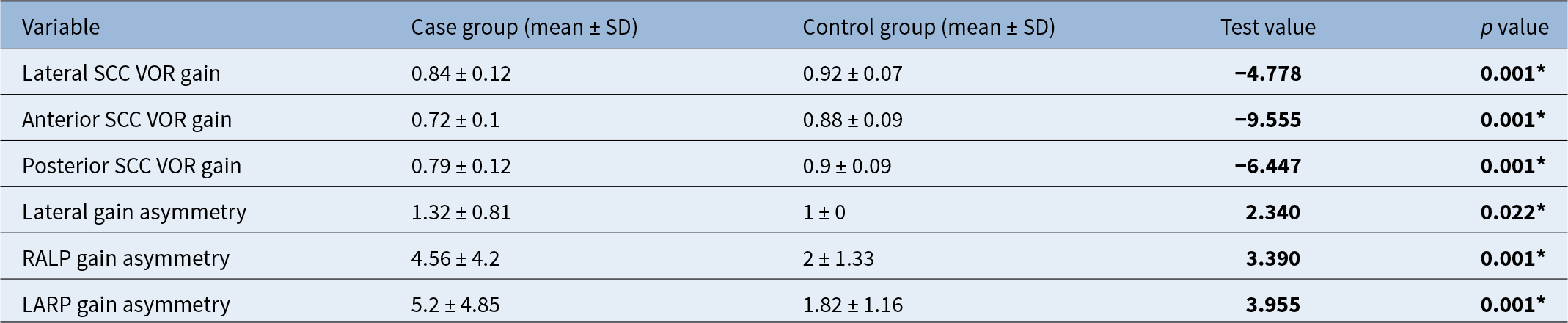
Gain values were evaluated over the number of ears (n = 68) and asymmetry values were evaluated over the number of people (n = 34). A statistically significant difference (p < 0.05) was found between the case group and the control group according to the gain values of lateral squamous cell carcinoma (SCC), anterior SCC, posterior SCC and the asymmetry values of lateral, Right Anterior Left Posterior (RALP), Left Anterior Right Posterior (LARP) (Table 5).
Results of the Video Head Impulse Test in the case group and the control group

Test value: significance test (t-test) value of the difference between two means, p value: statistical significance. SD = standard deviation; SCC = squamous cell carcinoma; VOR = vestibulo-ocular reflex; RALP =; LARP = . *p < 0.05 indicates there is a statistically significant difference between the groups
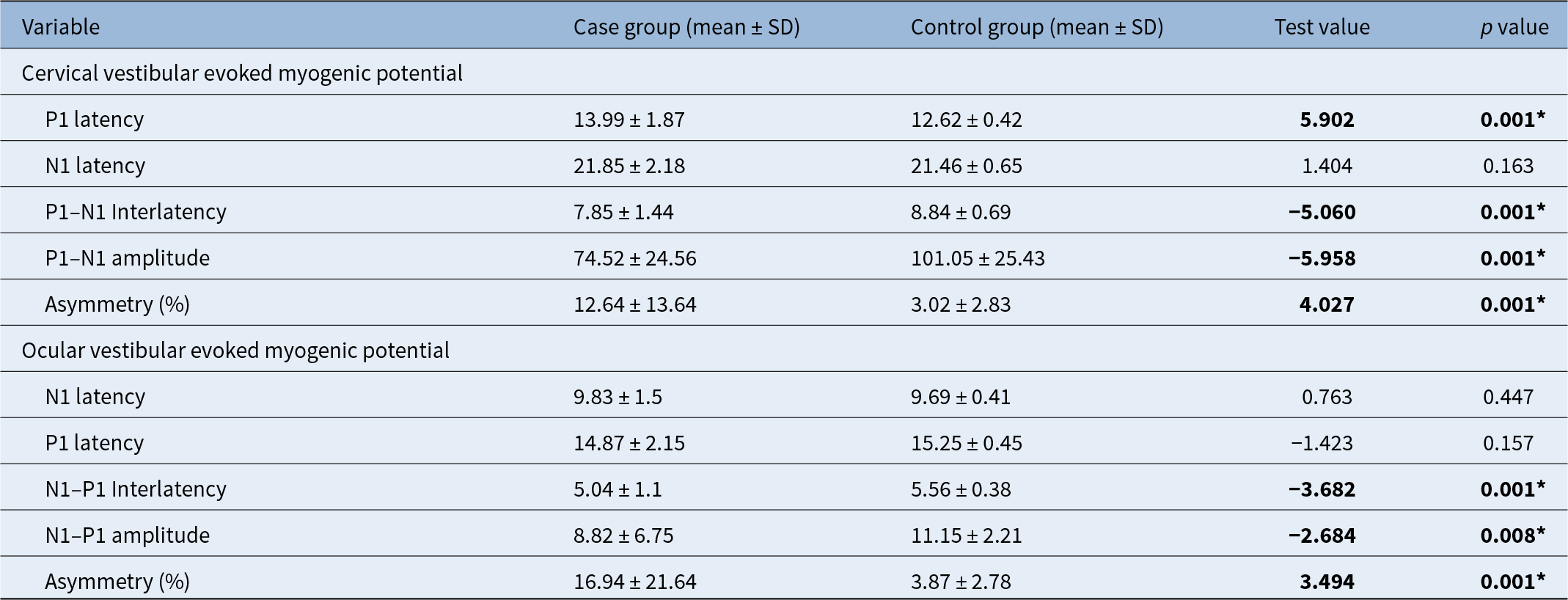
Vestibular evoked myogenic potential test values were evaluated according to the number of ears (n = 68). Statistically significant differences were found between the case group and the control group in P1 latency, P1–N1 interlatency, P1–N1 amplitude and asymmetry values in the cervical vestibular evoked myogenic potential test and N1–P1 interlatency, N1–P1 amplitude and asymmetry values in the ocular vestibular evoked myogenic potential test (p < 0.05). There was no statistically significant difference between the case group and the control group according to N1 latency values in the cervical vestibular evoked myogenic potential test and N1 latency and P1 latency values in the ocular vestibular evoked myogenic potential test (p > 0.05) (Table 6).
Cervical vestibular evoked myogenic potential and ocular vestibular evoked myogenic potential test Results in the case group and the control group

Test value: significance test (t-test), value of the difference between two means. SD = standard deviation; p = statistical significance. *p < 0.05 indicates there is a statistically significant difference between the groups
Discussion
Drugs and stimulants have many physiological, psychological and cognitive effects on the body because they affect the central nervous system after use.Reference Volkow, Michaelides and Baler9, Reference Müller, Fontana, Bertoncello, Franscescon, Mezzomo and Canzian10 Dizziness and imbalance may also occur as a result of the involvement of the central vestibular system in addition to effects such as hyperactivity, anxiety disorder, loss of reality, attention deficit, insomnia, loss of appetite or increase in appetite, depression and co-ordination disorder.Reference Ramaioli, Colagiorgio, Saglam, Heuser, Schneider and Ramat5, Reference Ishiyama, Ishiyama, Baloh and Evans11, Reference Rubin and Winston12
The Addiction Profile Index is a scale created for multidimensional assessment in people who use alcohol and substances. In the study conducted by Baykara and Alban in 50 heroin addicts, the Addiction Profile Index Screening – Short Form was used and the total score was found to be 6.13 ± 2.11.Reference Baykara and Alban13 The total score in our study (6.15 ± 2.11) is similar to that found in the Baykara and Alban study. The reason for the average value of the severe desire score (0.94 ± 0.78) and the high motivation score (1.62 ± 0.7) may be the fact that the population of the study consisted of individuals presented to the out-patient clinic for substance abuse treatment.
Patients emphasised that the dizziness and imbalance they experienced occurred during substance use.Reference Ramaioli, Colagiorgio, Saglam, Heuser, Schneider and Ramat5, Reference Lehnen, Heuser, Saglam, Schulz, Wagner and Taki14 However, in our study, we evaluated the general effect of the substance rather than its immediate effect. The low physical (4.24 ± 6.2), emotional (3 ± 4.38), functional (7.18 ± 10.02) and total (14.41 ± 19.74) scores in the Dizziness Handicap Inventory completed by the patients in our study support that the complaints of dizziness and imbalance experienced by the patients occurred during the use of the substance and did not affect the patient’s quality of life much in the following process. At the same time, the patients included in our study were those who applied to the out-patient clinic to quit substance addiction, therefore we think that they had not used substances just before our tests.
In the literature, there exists no study evaluating substance dependence subjectively using a scale, but it is observed that the vestibular system is more affected during exposure compared with after exposure to the substance, as seen in studies making objective evaluations with a device during and after exposure to the substance.Reference Ramaioli, Colagiorgio, Saglam, Heuser, Schneider and Ramat5, Reference Lehnen, Heuser, Saglam, Schulz, Wagner and Taki14
In a study conducted in subjects given remifentanil, an opioid derivative, downward shooting nystagmus, pathological pursuit test and gaze-evoked nystagmus were observed during remifentanil administration. This is thought to be due to the involvement of opioid receptors in the cerebellum.Reference Lehnen, Heuser, Saglam, Schulz, Wagner and Taki14 In a study by Kurnatowski and Garganisz, spontaneous nystagmus was observed in 14, pathological findings in saccadic test in 21, gaze nystagmus in 34, pathological findings in optokinetic test in 12, pathological findings in pursuit test in 16, positional nystagmus in 14 and unilateral channel weakness in caloric test in 10 of 62 opioid addicted individuals evaluated with electronystagmography.Reference Kurnatowski and Garganisz15
In our study, similar to the literature, pathological findings were observed in the gaze vertical test (17.6 per cent), the gaze horizontal test (17.6 per cent), the saccade test (26.5 per cent), the pursuit test (20.6 per cent) and the optokinetic test (17.6 per cent). Contrary to most studies in the literature, there is also a study in which spontaneous nystagmus, head shaking nystagmus, and positional nystagmus were not observed in substance abusersl.Reference da Silva Schmidt, Giordani, Rossi and Cóser16 In our study, the observation of normal results in all subjects in spontaneous nystagmus, head shaking, Dix-Hall pique, and head rolling tests supports this study. In Kurnatowski and Garganisz’s study, 12 of 62 opioid addicts had lesions in the vestibular organ and 43 had lesions in central oculomotor functions. As a result of this finding, Kurnatowski and Garganisz reported that the abused substance agent mostly affected the central part of the vestibular system.Reference Kurnatowski and Garganisz15 In our study, the fact that all of our subjects showed central pathology in the videonystagmography evaluation supports this finding.
There are many studies examining the effect of substance of abuse on vestibulo-ocular reflex. It has been reported that alcohol intake decreases vestibulo-ocular reflex gain during head movement.Reference Barnes17, Reference Feyissa, Masel and Busby18 Lehnen et al. administered remifentanil, an opioid derivative, to all subjects participating in their study and evaluated the opioid’s effect with the Video Head Impulse Test. A decrease in vestibulo-ocular reflex gain values obtained after substance use was observed.Reference Lehnen, Heuser, Saglam, Schulz, Wagner and Taki14 This change in vestibulo-ocular reflex gain is thought to be due to the involvement of opioid receptor cells in the neuronal arc of the vestibulo-ocular reflexReference Carpenter and Hori19, Reference Popper, Cristobal and Wackym20 and in the cerebellum.Reference Platzer, Winkler, Schadrack, Dworzak, Tölle and Zieglgansberger21
In addition, in an animal study, it was reported that vestibulo-ocular pathways were affected after toluene exposure.Reference Odkvist, Larsby, Tham and Aschan22 Long-term toluene exposure has been shown to cause a possible permanent lesion in the vestibulocerebellum.Reference Nylen, Larsby, Johnson, Eriksson, Höglund and Tham23 In our study, the lateral SCC gain value (0.84 ± 0.12), anterior SCC gain value (0.72 ± 0.1) and posterior SCC gain value (0.79 ± 0.12) in the Video Head Impulse Test applied to substance addicts were within normal limits, which is similar to the results of Lehnen et al.Reference Lehnen, Heuser, Saglam, Schulz, Wagner and Taki14 The lower gain value compared with the control group in our study suggests that this is a result of long-term exposure to the substance.
There are not many studies evaluating substance addicts with the vestibular evoked myogenic potential test in the literature. Rosengren et al. evaluated 14 healthy individuals with this test after alcohol abuse and reported that there was no significant change in wave amplitude and latency in the cervical vestibular evoked myogenic potential test, while there was a significant decrease (27 per cent) in wave amplitudes in the ocular vestibular evoked myogenic potential test, but no change in wave latencies.Reference Rosengren, Weber, Hegemann and Roth24 According to this result, Rosengren et al. suggested that alcohol had no effect on cervical vestibular evoked myogenic potential but had a selective effect on ocular vestibular evoked myogenic potential.Reference Spector25
Chiang and Young reported that P13 (P1) latency was prolonged in the cervical vestibular evoked myogenic potential test in a study evaluating 20 healthy individuals with the vestibular evoked myogenic potential test after alcohol use.Reference Chiang and Young26 In our study, the fact that the P1 latency in the cervical vestibular evoked myogenic potential test was more prolonged in the case group compared with the control group supports the study of Chiang and Young, and the fact that the amplitudes in the ocular vestibular evoked myogenic potential test were lower in the case group compared with the control group supports the study of Rosengren et al.
The ocular vestibular evoked myogenic potential test is associated with the vestibulo-ocular reflex. A pathological result of this test in alcoholics indicated a dysfunction in any part of the vestibulo-ocular reflex pathway. It has also been reported that alcohol inhibits voltage-gated calcium channels, thus affecting synaptic connections and slowing down the conduction velocity. This explains the latency prolongation in the vestibular evoked myogenic potential response.Reference Treistman27
In this study, the effects of substance abuse on the peripheral and central vestibular system and vestibular reflexes were evaluated with objective and subjective tests. The central part of the vestibular system was found to be particularly affected. In addition, it is thought that type I hair cells are more affected because the high-frequency part of the vestibuloocular reflex is affected. In addition, we found that the physical and functional effects of dizziness increased as the desire and frequency of substance use increased.
To the best of our knowledge, this is the first study to examine the relationship between substance abuse and the vestibular system in detail using multiple objective and subjective methods. ENT examination and audiological examinations are necessary for the follow up of vestibular involvement in substance abuse. In addition to substance abuse treatment, vestibular rehabilitation may also be recommended for individuals with identified vestibular pathology to improve quality of life.
The limitation of our study is that we did not group participants according to the type of substance used, average daily substance use and duration of substance exposure. Another limitation is that the low-frequency components of the vestibulo-ocular reflex were not evaluated, and the rotational chair test and the sensory organisation test were not used because they were not available in our clinic. It is recommended that in future studies, these factors should be taken into consideration and a larger sample grouping should be conducted.
• In individuals who use substances, the effect of dizziness increases as the frequency of substance use, level of desire and level of addiction increase
• The substance abused has been shown to specifically affect the central portion of the vestibular system
• It has been observed that the high-frequency components of the vestibulo-ocular reflex are affected, therefore it is thought that type I hair cells are affected
Acknowledgements
We would like to thank our patients who participated in our study for their contribution to the studies.
Competing interests
None declared