Significant outcomes
-
Most prevalent blood types of post-COVID-19 subjects were A+ and O+.
-
Post-COVID-19 subjects presented psychomotor, neurofunctional, and memory impairments, observed in the tests: Fine motor development, balance, episodic memory after distractors, verbal fluency, and clock including in subjects that did not report pre-existing disease neither require hospitalisation.
-
Post-COVID-19 subjects also presented marked increase of synkinesis.
Limitations
-
A challenge of this research was to adapt the tests established for years from the face-to-face format to the virtual environment, due to the restrictions imposed by the pandemic. The connection difficulties and the mismatch between image and sound were important issues. Thus, when the standardisation for the virtual environment was performed, some important tests had to be excluded, such as the Tonicity and Attention and Concentration Tests (M. Stambak), which would help in the correlations on the influence of the tonic state on attention and concentration. For psychometricians, tonic dialogue with the evaluated subject is essential to strengthen the relationship, creating bonds of trust and acceptance of difficulties. Therefore, making such a subtle connection in the virtual environment was one of the limitations of this study, in which it was necessary to have more time for informal conversations to the anxieties related to isolation and fear regarding the disease.
-
To obtain morphological exams of the brain to compare and explain psychomotor outcomes.
Introduction
The severe acute respiratory syndrome coronavirus 2 (SARS-CoV-2) has been described as causing the coronavirus disease 2019 (COVID-19) and was first diagnosed in December 2019 in Wuhan, China (Yu et al., Reference Yu, Chai, Ge and Fan2020). In March 2020, the World Health Organization (WHO) classified a pandemic due to the widespread of cases of COVID-19. Two years later, there are more than 646 million infected and 6.6 million deaths worldwide (December/2022), and cases continue to rise (JHU, 2022).
COVID-19 is considered a highly transmissible disease, with a high chance of serious consequences (CDC, 2020). In China, at the beginning of the pandemic, the case fatality rate was described at around 4% (WHO, 2020). Approximately 15% of confirmed cases steps forward to the severe phase (Shi et al., Reference Shi, Wang, Shao, Huang, Gan, Huang, Bucci, Piacentini, Ippolito and Melino2020). Even in health professionals, with knowledge about microbiology and the use of personal protective equipment, transmissibility was high (Guan et al., Reference Guan, Ni, Hu, Liang, Ou, He, Liu, Shan, Lei, Hui, Du, Li, Zeng, Yuen, Chen, Tang, Wang, Chen, Xiang, Li, Wang, Liang, Peng, Wei, Liu, Hu, Peng, Wang, Liu, Chen, Li, Zheng, Qiu, Luo, Ye, Zhu and Zhong2020).
It is surprising that a virus that classically affects the airways can trigger neurological manifestations. For example, in Wuhan (China), it was observed that 36.4% of patients with COVID-19 had neurological symptoms. This number was higher (45.5%) in severe cases (Li et al., Reference Li, Bai and Hashikawa2020). The most common neurological symptoms reported were dizziness, headache, altered consciousness, seizures, ataxia, and acute cerebrovascular events. There are also reports of viral encephalitis, meningitis, acute haemorrhagic necrotising encephalopathy, and Miller Fisher syndrome (Brito and Silva, Reference Brito and Silva2020). Therefore, COVID-19 affects the central nervous system and induces neurological disorders (Li et al., Reference Li, Bai and Hashikawa2020). However, the neurobiological mechanism is not yet fully elucidated. There is evidence of direct and indirect action of the virus on the central nervous system. More details are available in the scientific literature, with constant updates (Brito and Silva, Reference Brito and Silva2020; Kumar et al., Reference Kumar, Pareek, Prasoon, Faiq, Kumar, Kumari and Narayan2020; Wu et al., Reference Wu, Xu, Chen, Duan, Hashimoto, Yang, Liu and Yang2020; Takahashi et al., Reference Takahashi, Ota, Numata, Kitabatake, Nemoto, Tamura, Ide, Matsuzaki, Kaneda and Arai2022).
Speaking of that, it is known that SARS-CoV, which has high similarity to SARS-CoV-2 and has been studied for a longer time, results in a high degree of brain stem infection (Li et al., Reference Li, Bai and Hashikawa2020; Wu et al., Reference Wu, Xu, Chen, Duan, Hashimoto, Yang, Liu and Yang2020). By establishing a parallel between these neurological findings with psychomotricity, the psychomotor areas of the first neurofunctional unit of Luria (Luria, Reference Luria1984) could be the most affected. Brain stem, together with the reticular system, is responsible for the regulation of tonic-postural activity (tonicity and balance), controlling two aspects: motor persistence (ability to remain for a certain time in a certain action) and the inhibitory brake (ability to keep still) (Fonseca, Reference Fonseca2022). In this unit, there are also structures linked to survival functions (e.g. cardiorespiratory control, hunger, and thirst). Because it is involved in filtering and basic sociotonic integration, this neuroblock prevents the brain from being unnecessarily flooded with irrelevant sensory information, which can interfere with the higher cognitive process, thus having a fundamental role in the focus and fixation of attention, concentration, and experimental and emotional integration (Fonseca, Reference Fonseca2022). Therefore, COVID-19 has the potential to induce attention deficits, memory, cognitive, and static and dynamic balance difficulties.
It is urgent to understand the post-COVID-19 psychomotor and neurofunctional aspects to improve patient treatment and rehabilitation protocols. The objective of this study was to develop and apply specific questionnaires for post-COVID-19 patients to assess psychomotor impacts and profile any neurofunctional sequelae. Epidemiological and psychomotor aspects and the degree of impairment of cognitive, memory, attention, and concentration skills were assessed. The findings were compared with control subjects. Epidemiological data were correlated with neurofunctional findings to evaluate the relevance of aspects such as the influence of blood type, the severity of clinical status, and age groups.
Material and methods
Ethical standards
The authors assert that all procedures contributing to this work comply with the ethical standards of the relevant national and institutional committees on human experimentation and with the Helsinki Declaration of 1975, as revised in 2008. This project was approved by the Research Ethics Committee of the Paulista University (CEP-UNIP no. 34780720.4.0000.5512). All the participants of this research participated voluntarily and always after the acknowledgement of the free and clarified term (Chiminazzo, Reference Chiminazzo2022).
Elaboration of the experimental protocols
For the elaboration of the evaluation protocols, first the published protocols and tests were prospected, especially the standard protocols for the Brazilian population. In addition, because all the stages of elaboration and execution of this study were performed under the term of social distancing recommendations due to COVID-19 pandemic, it was necessary to consider protocols that were possible to be applied in the virtual environment. It prioritised online protocols that did not exceed 1 h of duration, to avoid loss of participants. Moreover, the protocols should be easily framed on smartphones and computer screens, for a satisfactory understanding of the guidelines and execution of the tests, preventing the assistance of another person during the evaluations. Therefore, eight tests were selected from the Battery of Rossel (Rossel, Reference Rossel1975) and Guilmain (Guilmain and Guilmain, Reference Guilmain and Guilmain1986), which were standardised for the Brazilian population (Brêtas, Reference Brêtas1991). To evaluate memory, the Mini-Mental State Examination was used, which was also standardised for the Brazilian population (Nitrini et al., Reference Nitrini, Helena Lefèvre, Mathias, Caramelli, Carrilho, Sauaia, Massad, Takiguti, Da Silva, Porto, Magila and Scaff1994).
Second, psychomotor professionals were invited for advice in standardisation and organisation of the adapted protocols for the virtual environment. Third, face-to-face and online trials were carried out on five volunteers of different age groups who did not have psychomotor and/or memory complaints. These trials procedure sought to compare the results of assessments in the face-to-face and virtual environments, to verify if there would be any loss in the virtual adaptation. Finally, after the adaptations and trials, the tonicity tests were discarded, as they required face-to-face measurements. The Stambak Rhythm, attention, and concentration tests could not be adapted either, due to sync differences between audio and image on the videoconferencing platforms.
As it was not possible to perform the tonicity tests, the relationship between tonicity and balance (immobility test, static balance test on one foot, feet in line test and persistence) was used as a basis for the praxic development. All tests applied in this research are described in detail in the next item. Thus, the protocols used in the research were adapted, standardised, tested, and validated for the experimental protocol and the COVID-19 pandemic.
Research subjects, protocols, and experimental design
A sample of 184 post-COVID-19 subjects and 30 healthy volunteers (control group) were the subjects of the research (total of 214 subjects, men and women, assigned randomly). All subjects were born and raised in Brazil; demographics information is described in the inclusion and exclusion criteria. To join in the control group, the subject should have had no history of flu-like symptoms in the past 3 months. Social media was used for recruiting subjects.
Initially, all subjects were submitted to a remote digital questionnaire via Google Forms, called here as Phase 1 (Chiminazzo, Reference Chiminazzo2022). In this questionnaire, epidemiological data and information such as gender, age, period of COVID-19 diagnosis, type of COVID-19 testing, clinical symptoms, pre-existing diseases, medical care, and blood type were evaluated.
From Phase 1, individuals were selected for Phase 2, considering the exclusion criteria: (a) age, (b) COVID-19 testing, (c) specific period from diagnosis, and (d) symptoms of interest:
(a) Age (under 18 and over 64 years old). Although individuals under the age of 18 and over 64 years old are known to be affected by COVID-19, this study excluded these age groups. Individuals under the age of 18 are legally minors in Brazil, a limiting ethical and legal issue (Brasil, 1990). Patients older than 64 years were not included in the study due to senility-related impairments that could interfere with psychomotor variables. The age cut-off of 64 years was established because the variable dementia has a very low manifestation in people younger than 64 years (Aprahamian et al., Reference Aprahamian, Martinelli and Yassuda2009, Burla et al., Reference Burla, Camarano, Kanso, Fernandes and Nunes2013).
(b) COVID-19 testing. Patients in the post-COVID-19 group needed to present a positive test for COVID-19 to be included in Phase 2. The type of diagnosis (test) performed is described in the results section.
(c) Specific period from diagnosis. To be evaluated in Phase 2, patients had to wait at least 15 days after positive diagnosis for COVID-19 and could not have any flu-like symptoms in the day of the evaluation. In addition, the patients were evaluated within a maximum period of 7 months after the date of the positive diagnosis.
(d) Symptoms of interest. Patients should have presented a least three of these symptoms to be qualified for Phase 2: loss/alteration of smell and/or taste; dizziness; nausea and/or vomiting; ataxia; headaches; difficulty breathing; chest pain/pressure; and speech impairment (Brito and Silva, Reference Brito and Silva2020).
In Phase 2, control and post-COVID-19 subjects underwent a virtual interview (Zoom Video Communications, San Jose, USA) for the evaluation of psychomotor development, including possible developmental delays, academic difficulties, and professional assistance (such as psychiatric, psychological, neurological, and speech therapy). Moreover, eight different tests were adapted for the virtual environment and performed for the psychomotor assessment as well as three tests for the Mini-Mental State Examination (Chiminazzo, Reference Chiminazzo2022):
(a) Fine Motor Development Test – Diadochokinesia (Rossel, Reference Rossel1975). It evaluates the ability to make simultaneous, successive, and dissociated movements with both hands and with one and the other hand (alternating). The inability to perform this movement is associated with neurological disturbances. It provides indications about manual functional preference and tonicity. (b) Fine Motor Development Test – Puppets (Rossel, Reference Rossel1975). It evaluates the ability to make simultaneous, successive, and dissociated movements with both hands and with one and the other hand (alternating) and the ability of digital-manual motor individualisation without the collaboration of the other fingers. It provides diagnoses of presence of synkinesis (parasitic movements) and information on manual functional preference and tonicity. (c) Fine Motor Development Test – Fan (Rossel, Reference Rossel1975). It assesses the ability to make simultaneous, successive, and dissociated movements with both hands and with one and the other hand (alternating) and the ability to manual motor individualisation without collaboration and/or hand tension at rest. It provides diagnoses of presence of synkinesis (parasitic movements) and information on manual functional preference and tonicity. (d) Fine Motor Development Test – Paper (Rossel, Reference Rossel1975). It evaluates the speed of movement, simultaneity, and which hand performs better (dominance) and provides information on tonicity. (e) Balance Test – Immobility Test (Guilmain and Guilmain, Reference Guilmain and Guilmain1986). It evaluates static balance, tonic persistence, and inhibitory brake, serving as a screening for neurological injuries. (f) Balance Test – Test of Static Balance on One Foot (Guilmain and Guilmain, Reference Guilmain and Guilmain1986). It evaluates static balance, tonic persistence, and inhibitory brake, serving as a screening for neurological injuries. (g) Balance Test – Feet in Line Test (Guilmain and Guilmain, Reference Guilmain and Guilmain1986). It evaluates dynamic balance, tonic persistence, and simultaneity during the movement of the upper and lower limbs. (h) Balance Test – Persistence (Guilmain and Guilmain, Reference Guilmain and Guilmain1986). It evaluates the ability to persist in a continuous movement, without a visual reference. It provides inferences about tonicity. (i) Verbal Fluency Test (Nitrini et al., Reference Nitrini, Helena Lefèvre, Mathias, Caramelli, Carrilho, Sauaia, Massad, Takiguti, Da Silva, Porto, Magila and Scaff1994). It assesses the ability to evoke words from a single theme at a given time and the cognitive comparison function. (j) Clock Test (Nitrini et al., Reference Nitrini, Helena Lefèvre, Mathias, Caramelli, Carrilho, Sauaia, Massad, Takiguti, Da Silva, Porto, Magila and Scaff1994). It evaluates the spatial organisation and adequacy to the graphic space of the subject, as well as the organisation of graphic thinking (i.e. the graphical structure of a clock with accurate time set) and perception of part and whole. (k) Episodic Memory Test after distractors (Nitrini et al., Reference Nitrini, Helena Lefèvre, Mathias, Caramelli, Carrilho, Sauaia, Massad, Takiguti, Da Silva, Porto, Magila and Scaff1994). It evaluates the ability to retention of previously presented information (figures and distracters, Verbal Fluency Test and Clock Test), after a time interval (5 min) and information change. Data from control and post-COVID-19 subjects were compared between the same age groups (18–30, 31–45, and 46–64 years old).
It is important to point out that after each interview, each subject was assisted and oriented as to the presence or absence of sequelae. When necessary, the subject was referred to other specialists (such as neurologists, physiotherapists, and psychomotorists) according to each case. Therefore, the general state of health of the subjects was constantly monitored and they were supported by health professionals if needed.
Statistical analysis
Homogeneity was verified using the Levene’s test. Normality was verified using Q-Q Plots and the Shapiro-Wilk, and the d’Agostino-Pearson tests. Student’s t-test was used to compare the parametric data of two groups. Mann-Whitney U test was used to compare the nonparametric data of two groups. One-way ANOVA followed by Tukey’s test was used to compare the parametric data of independent variables (COVID-19 and age group). Chi-square test was used to test hypotheses involving categorical variables and to assess the frequency of a certain aspect in each group. The effect, effect size, and power of the test were always evaluated. The results are expressed as absolute values, percentage (%), mean, median, minimum, and maximum values. In all cases, the results were considered significant at p < 0.05.
Results
Gender and age
Forty-one subjects evaluated in the Phase 1 were men and 143 were women (78%), demonstrating a high prevalence of female participants. Three subjects (2%) were younger than 18 years old, 30 subjects (16%) were 18–30 years old, 72 subjects (39%) were 31–45 years old, 68 subjects (37%) were 46–64 years old, and 11 subjects (6%) were older than 64 years old. Subjects under 18 and over 64 years old were not eligible for Phase 2 studies.
Exclusion criteria
Considering all exclusion criteria from Phase 1 to Phase 2 (age, COVID-19 testing, specific period from diagnosis, and symptoms of interest), 90 subjects of the 184 post-COVID-19 subjects (49%) were eligible to participate in Phase 2. Sixty subjects (33%) explicitly refused to participate in Phase 2 or do not return the contacts/requests. According to the initial experimental design and for statistical reasons, for Phase 2, 30 subjects were randomly selected for the post-COVID-19 group and 30 subjects for the control group. Subjects in the control group followed the same age group, reporting no flu-like symptoms recently and/or presented a negative COVID-19 test. For both the control and the post-COVID-19 groups, there were six subjects of 18–30 years old (20%), 13 subjects of 31–45 years old (43%), and 11 subjects of 46–64 years old (37%). Therefore, 60 subjects were evaluated in Phase 2.
Period of COVID-19 diagnosis
Supplementary Figure 1 shows the month/year that post-COVID-19 subjects were diagnosed with COVID-19. A first wave of incidence in diagnoses was observed between April and July 2020, and a second wave was observed from November 2020 to March 2021, when cases/diagnoses have been progressively decreased. Considering only the subjects of the Phase 2 and separating the results by age groups, it was observed a homogeneous distribution among the three age groups studied over the months (Supplementary Table 1). Therefore, it was demonstrated that the bias of a more virulent strain dispersed at a specific time during the pandemic, which could influence the results was potentially excluded.
Clinical symptoms
Supplementary Table 2 shows the symptoms reported by subjects affected by COVID-19. Loss of smell and/or taste was the symptom most reported (68%). Headache was the second most reported (67%). Fatigue, body pain, fever, and cough were also broadly reported. The symptoms were also used as exclusion criteria for Phase 2. Considering only the subjects of the Phase 2 (Supplementary Table 3), the symptom most reported was headache (13%) and loss of smell and/or taste (12%). Moreover, the distribution of the symptoms in the different age groups was homogeneous.
Pre-existing diseases
Supplementary Table 4 shows the occurrence of pre-existing diseases reported by subjects affected by COVID-19. Most subjects with COVID-19 (63%) did not report having any pre-existing disease. The pre-existing disease most reported was high pressure, presented only in 14% of the subjects. Considering only the subjects of the Phase 2 (Supplementary Table 5), again, most subjects did not report any pre-existing disease. Specifically, 67% of the post-COVID-19 group and 80% of the control group reported that they had no pre-existing diseases. The distribution by age group maintained the distribution trend. Therefore, pre-existing diseases did not seem to be an issue for the subjects with COVID-19 in the present research.
Medical care
Talking about the medical care adopted for the subjects affected by COVID-19, three of the subjects (2%) did not know they had COVID-19 and did not change their routine; 93 of the subjects (50%) adopted only home isolation and home care; 64 of the subjects (35%) were treated in hospital emergency care without mechanical ventilation neither hospital admission; eight of the subjects (4%) needed hospital admission without mechanical ventilation; five of the subjects (3%) needed hospital admission and mechanical ventilation; eight of the subjects (4%) were admitted in a intensive care unit (ICU) without mechanical ventilation and intubation; and three of the subjects (2%) were admitted in ICU requiring mechanical ventilation and/or intubation. Therefore, most of the subjects (52%) remained in home isolation without any medical care. Considering the subjects without hospital admission (i.e. no change in their routine, home isolation, and hospital emergency care), the great majority (87%) did not present expressive medical complications.
Considering only the subjects of the Phase 2 (Supplementary Table 6), the results were quite like those revealed in Phase 1 for medical care adopted during COVID-19. The great majority (97%) of the subjects who were affected by COVID-19 did not require hospital admission and experienced few impacts during acute phase of the disease. Only one subjects (3%) of the age group 46–64 required ICU care, without the need of intubation. The distribution was homogeneous by age group. Therefore, considering results from Phases 1 and 2, subjects with COVID-19 were little affected by the acute phase of the disease.
Health and routine
When post-COVID-19 subjects were asked about their health and routine after COVID-19, 86 subjects (47%) reported their health as excellent, without symptoms and nothing that affected their routine; 79 subjects (43%) considered their health to be good, but still reported some minor symptom; 17 subjects (9%) considered their health not good, still needing some care, so that their routines before the illness were only partially returned; and two subjects (1%) considered their health to be bad, requiring considerable care from others and help with their daily routine. Therefore, 53% of the post-COVID-19 subjects reported sequel after COVID-19.
Type of COVID-19 testing
All subjects from the post-COVID-19 group needed to present a positive COVID-19 test to be eligible for Phase 2. Fifteen subjects (8%) were diagnosed with COVID-19 through clinical medical diagnosis without additional laboratory tests and 16 subjects (9%) were diagnosed with COVID-19 through clinical diagnosis and imaging tests; these subjects were considered not eligible for the Phase 2. One hundred two subjects (83%) were diagnosed with COVID-19 through PCR and/or serology tests.
Blood type
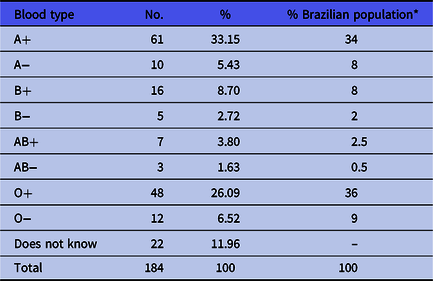
Table 1 shows the blood type of post-COVID-19 subjects and the comparative occurrence in the Brazilian population (Hemocentro, 2018). The most prevalent blood types were A+ (33.15%) and O+ (26.09%). Considering only the subjects of the Phase 2 (Supplementary Figure 2), the results were quite like those revealed in Phase 1: blood types A+ and O+ were the most prevalent. Specifically, 33% of the control group, 33% of the post-COVID-19 group, and 34% of the Brazilian population had blood type A+; 37% of the control group, 30% of the post-COVID-19 group, and 36% of the Brazilian population (Hemocentro, 2018) had blood type O+. When the blood type of the subjects evaluated in Phase 2 was analysed considering different age groups, the distribution pattern was the same, including the prevalence of types A+ and O+ for both the control group and the post-COVID-19 group.
Blood type in Phase 1. Blood type of post-COVID-19 subjects evaluated in Phase 1 and values of the Brazilian population (number, No. and percentage, %, n = 184)

* Data from Hemocentro (2018).
Analyses of Rh factor revealed that the values were similar between the groups: control group had 76% Rh+/9% Rh−, post-COVID-19 group had 73% Rh+/13% Rh−, and Brazilian population has 80.5% Rh+/19.5% Rh− (Hemocentro, 2018). Therefore, the Rh factor does not seem to have influenced COVID-19.
Psychomotor assessment
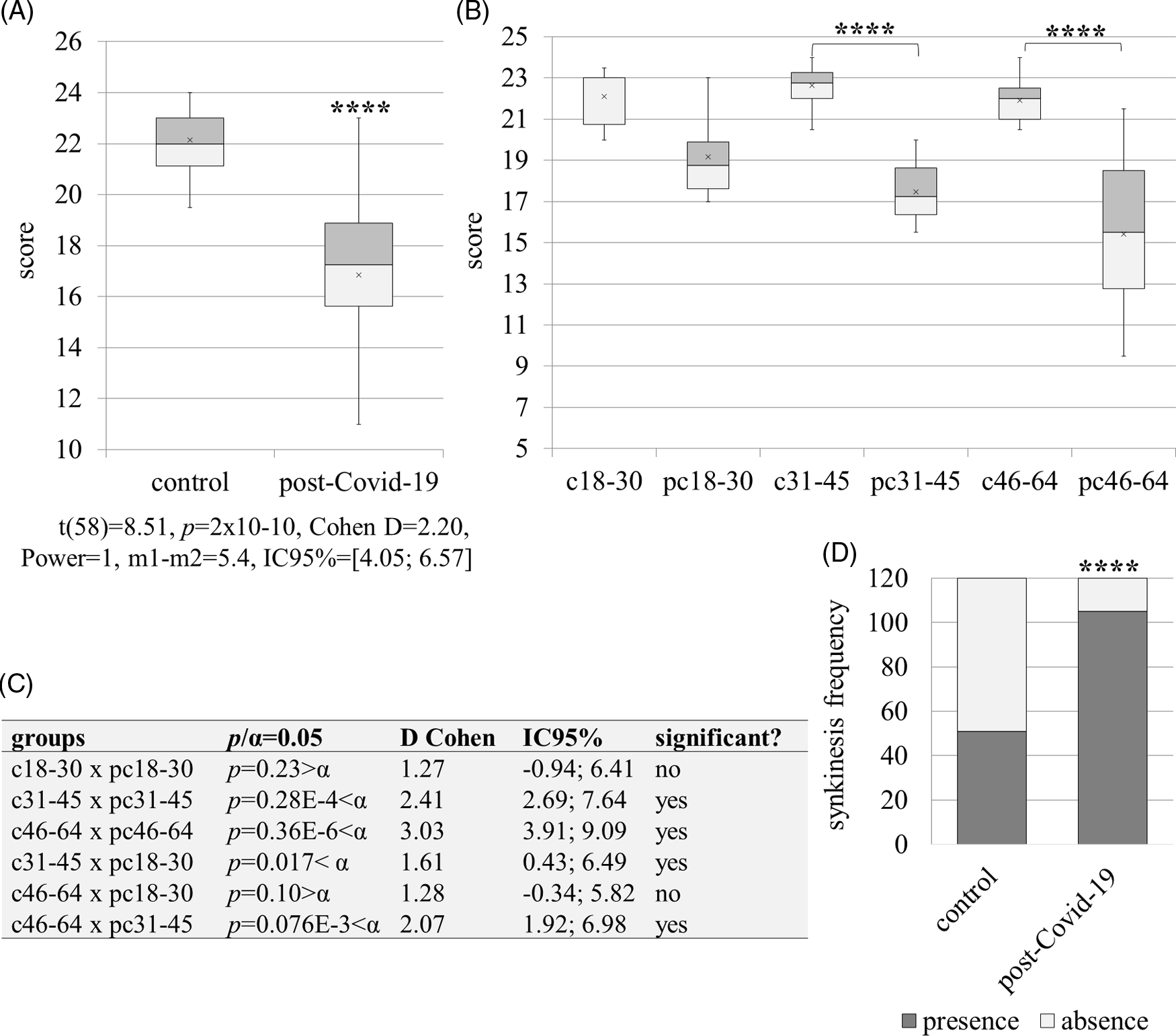
Figure 1A shows the performance of the control and the post-COVID-19 groups in the fine motor development tests (diadochokinesis, puppetry, fan, and paper). Fine motor development performance was significantly impaired in the post-COVID-19 subjects, compared to the data of the control group. Analyses of the performance in the fine motor development tests considering different age groups without distinguishing the control and the post-COVID-19 revealed a significantly higher performance in the subjects of 18–30 years old group (mean = 20.53; 31–45 years old mean = 20.04 and 46–64 years old mean = 18.66, p = 0.012). Therefore, as the subjects get older, fine motor development performance worsens, a process called retrogenesis in psychomotricity. Analysing the interaction effect (age groups versus control and post-COVID-19 group) in the fine motor development tests, it was revealed a significant difference (p = 4.03E-13, Fig. 1B). Post hoc test (Fig. 1C) revealed that the age groups factor was relevant only for 18–30 years old group, in which the means were similar comparing the control and the post-COVID-19 subjects. In the other age groups, the means were significantly different, demonstrating that COVID-19 impaired fine motor development performance in the two oldest age groups. This effect also appeared when comparing control groups with older ages vs. younger post-COVID-19 subjects (e.g. 31–45 years old controls versus 18–30 years old post-COVID-19 and 46–64 years old controls versus 31–45 years old post-COVID-19). Therefore, the impairments found in the fine motor development tests were higher in post-COVID-19 subjects than expected by the retrogenesis and senescence processes (Fig. 1B and C).
Fine Motor Development and synkinesis. Performance of post-COVID-19 and control subjects in the fine motor development test and incidence of synkinesis (Phase 2, n = 30/group). (A) Comparison of fine motor development between control and post-COVID-19 groups; (B) Comparison of fine motor development between different age groups of control (c) and post-COVID-19 (pc) groups (two-way ANOVA); (C) Analysis of fine motor development performed by the Tukey’s test; (D) Incidence of synkinesis in the fine motor development test (chi-square test). ****p < 0.0001. Data are expressed as the mean, medians, and minimum and maximum values.

Figure 1D shows the frequency of synkinesis in the control and the post-COVID-19 groups evaluated in the fine motor development tests. The incidence of synkinesis was robustly higher in the post-COVID-19 subjects, compared to the data of the control group (p = 2.71E-13).
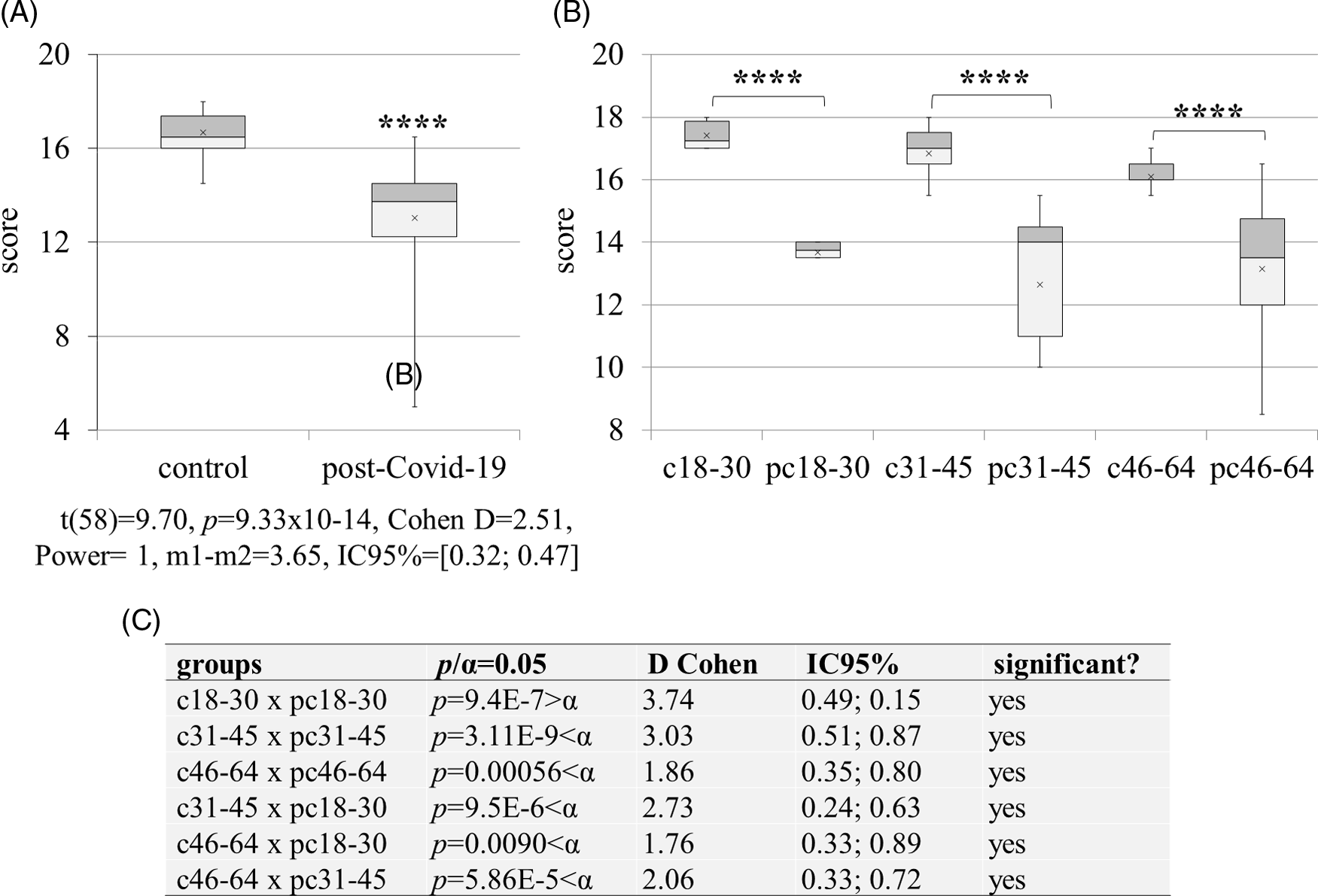
Figure 2A shows the performance of the control and the post-COVID-19 groups evaluated in the balance tests (immobility, static balance, feet in line, and persistence). Balance test performance was significantly impaired in the post-COVID-19 subjects, compared to the data of the control subjects. Analyses of the performance in the balance tests considering different age groups without distinguishing the control and the post-COVID-19 revealed a significantly higher performance in the subjects of 18–30 years old group (mean = 15.55; 31–45 years old mean = 14.75 and 46–64 years old mean = 14.62, p = 0.0017). Thus, balance was impairing when subjects were getting older. Analysing the interaction effect (age groups versus control and post-COVID-19 group) in the balance tests, it was revealed a significant difference (p = 5.5E-10, Fig. 2B). Post hoc test (Fig. 2C) revealed interactions between all age groups, that is, subjects of the post-COVID-19 group from the three age groups presented lower scores when compared to their respective ages in the control group and when compared to older age groups. For example, 31–45 years old controls versus 18–30 years old post-COVID-19. Moreover, 46–64 years old controls presented higher performance when compared to both 31–45 and 18–30 years old post-COVID-19. In other words, even the older subjects of the control group performed better than the younger subjects of the post-COVID-19 group.
Balance test. Performance of post-COVID-19 and control subjects in the balance test (Phase 2, n = 30/group). (A) Comparison between control and post-COVID-19 groups; (B) Comparison between different age groups of control (c) and post-COVID-19 (pc) groups (two-way ANOVA); (C) Analysis performed by the Tukey’s test. ****p < 0.0001. Data are expressed as the mean, medians, and minimum and maximum values.

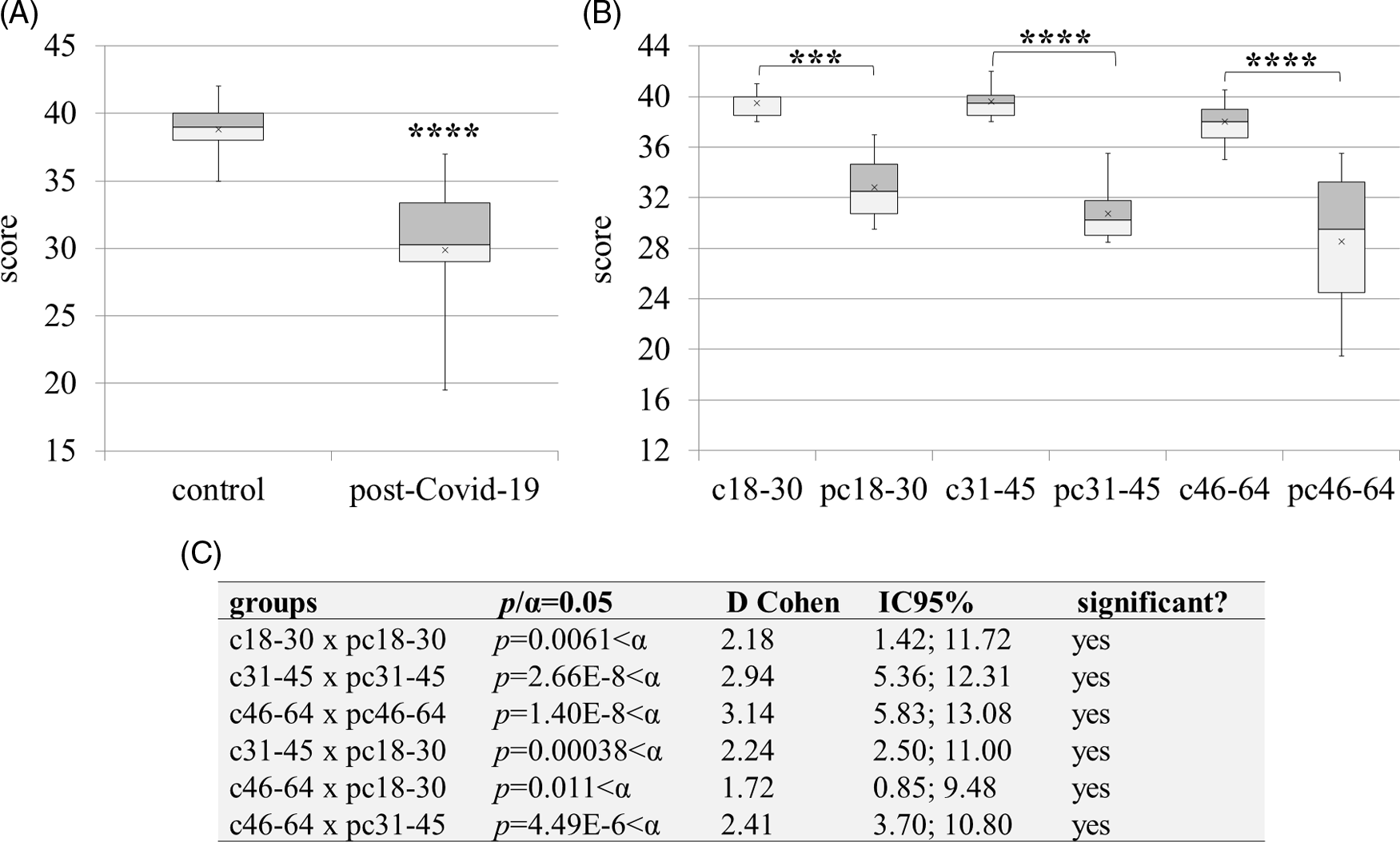
To analyse the total performance in the psychomotor tests, the values of the fine motor development and balance tests were summed (Fig. 3A). The overall performance on psychomotor tests was significantly impaired in the post-COVID-19 subjects, compared to the data of the control subjects. Analyses of the overall performance in the psychomotor tests considering different age groups without distinguishing the control and the post-COVID-19 revealed significant differences between the three age groups (18–30 years old mean = 36.12, 31–45 years old mean = 35.17, and 46–64 years old mean = 18.66, p = 0.0054). Analysing the interaction effect (age groups versus control and post-COVID-19 group) of the overall performance in the psychomotor tests, it was revealed a significant difference (p = 1.23E-12, Fig. 3B). Post hoc test (Fig. 3C) revealed interactions between all age groups, that is, subjects of the post-COVID-19 group from the three age groups presented lower scores when compared to their respective ages in the control group. Indeed, 18–30 years old age subjects of the post-COVID-19 group presented lower scores than the older subjects (46–64 years old) of the control group.
Overall performance in the psychomotor tests. Overall performance of post-COVID-19 and control subjects in both psychomotor tests: Fine Motor Development and Balance (Phase 2, n = 30/group). (A) Comparison between control and post-COVID-19 groups; (B) Comparison between different age groups of control (c) and post-COVID-19 (pc) groups (two-way ANOVA); (C) Analysis performed by the Tukey’s test. ***p < 0.001 and ****p < 0.0001. Data are expressed as the mean, medians, and minimum and maximum values.

Mini-Mental State Examination
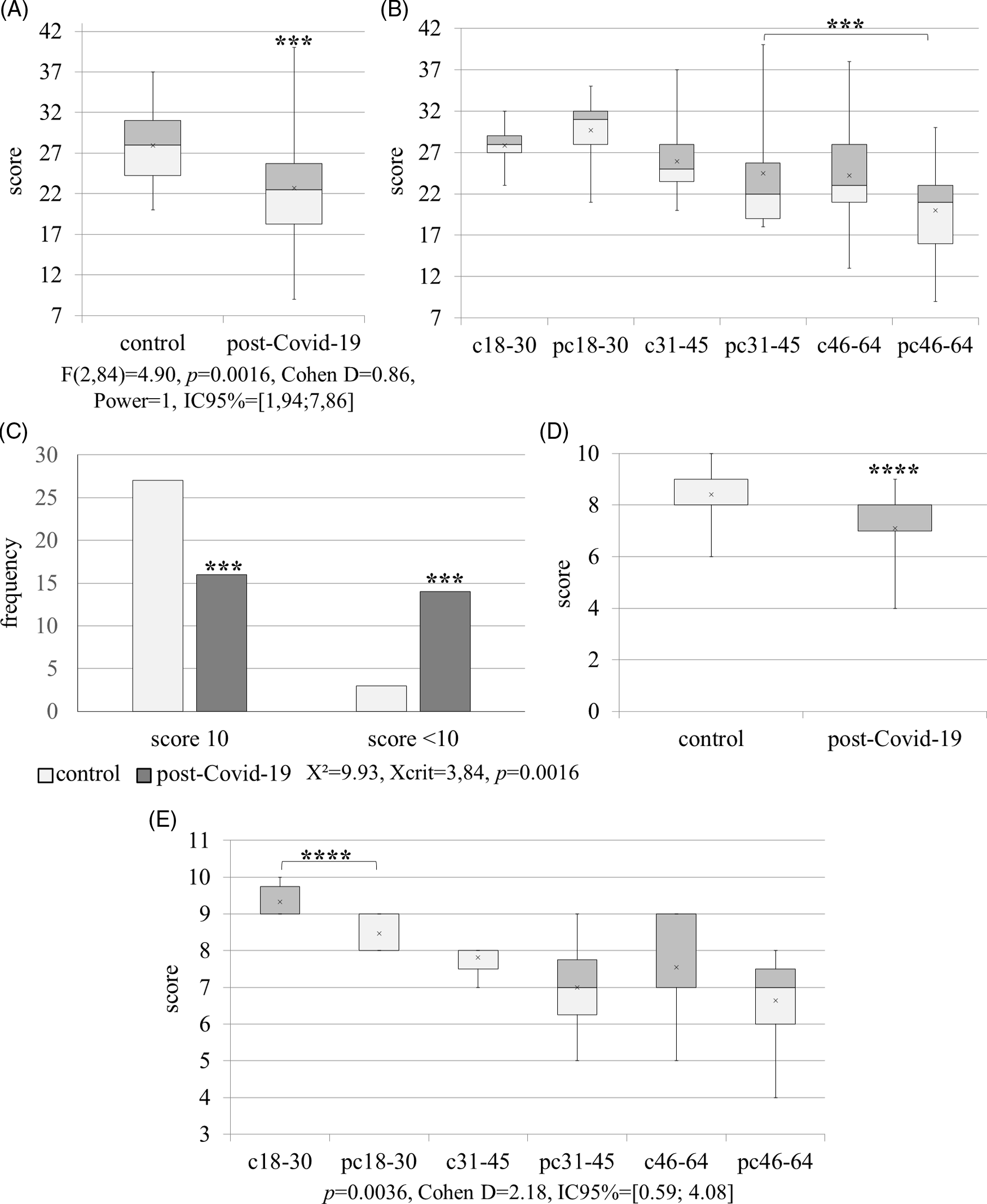
Figure 4A shows the performance of the control and the post-COVID-19 groups evaluated in the verbal fluency test. Verbal fluency test performance was significantly impaired in the post-COVID-19 subjects, compared to the data of the control group. Post hoc test (Fig. 4B) revealed that the interrelational differences were not significant; that is, comparing different age groups of the control and the post-COVID-19 groups, there was no difference biologically relevant. Differences were found only comparing 31–45 years old post-COVID-19 versus 46–64 years old post-COVID-19. Therefore, there was no specific age group in which verbal fluency was more impaired; there was a similar and proportional impairment among all age groups in the post-COVID-19 subjects, compared to data of the control groups.
Mini-Mental State Examination. Performance of post-COVID-19 and control subjects in the three tests of the Mini-Mental State Examination: Verbal fluency, Clock, and Episodic Memory after distractors tests (Phase 2, n = 30/group). (A) Comparison of verbal fluency between control and post-COVID-19 groups; (B) Comparison of Verbal fluency between different age groups of control (c) and post-COVID-19 (pc) groups (two-way ANOVA and Tukey’s test); (C) Comparison of clock test between control and post-COVID-19 groups; (D) Comparison of episodic memory test after distractors between control and post-COVID-19 groups; (E) Comparison of Episodic Memory test after distractors between different age groups of control (c) and post-COVID-19 (pc) groups (two-way ANOVA and Tukey’s test). ***p < 0.001 and ****p < 0.0001. Data are expressed as the mean, medians, minimum and maximum values, and frequencies of scores.

Figure 4C shows the performance of the control and the post-COVID-19 groups evaluated in the clock test. The clock test revealed that the control group presented more score 10 (most control subjects answered correctly all or most of the questions). On the other hand, the post-COVID-19 subjects presented lower scores, that is, showed an impaired performance.
Figure 4D shows the performance of the control and the post-COVID-19 groups evaluated in the episodic memory test after distractors. Episodic memory test after distractors performance was significantly impaired in the post-COVID-19 subjects, compared to the data of the control subjects (p = 2.15E-9). Analyses of the performance in the episodic memory test after distractors considering different age groups without distinguishing the control and the post-COVID-19 revealed significant differences in the three age groups (18–30 years old mean = 8.17, 31–45 years old mean = 8.0, and 46–64 years old mean = 7.80, p = 0.013). This result was expected because it is known that memory is impacted over the years, being one of the most frequent complaints of ageing.
Analysing the interaction effect (age groups versus control and post-COVID-19 group) in the balance tests, it was revealed a significant difference (p = 1.09E-7). Post hoc test (Fig. 4E) revealed that the age groups factor was relevant only for 18–30 years old group. Therefore, by analysing data from the verbal fluency, clock tests, and episodic memory, there were impairments in the three aspects evaluated in the Mini-Mental State Examination in the post-COVID-19 subjects.
Discussion
During Phase 1 of this research, 184 subjects post-COVID-19 completed the epidemiological questionnaire and 78% were women, demonstrating a high prevalence of female participants. It could be seen that women are more affected by COVID-19. However, interestingly, a meta-analysis based on information from 46 countries and 44 USA states concluded that the risk of developing COVID-19 is 39% higher among men (Peckham et al., Reference Peckham, De Gruijter, Raine, Radziszewska, Ciurtin, Wedderburn, Rosser, Webb and Deakin2020). Therefore, the higher prevalence of female subjects was probably result of a greater predisposition to women’s participation in research.
The age group of 31–45 years old was the most prevalent (39%) in Phase 1. Incidentally, the cases of COVID-19 in the 30–49 age group were those that showed the most increase in the number of cases (increasing by more than 1200% between January and March 2021) (Corrêa, Reference Corrêa2021). Thus, the age group that had the most participants in this research coincides with the population that has been most affected by COVID-19.
Another epidemiological data showed a first peak of COVID-19 between April and June 2020, a second peak in November 2020, and a third peak in January 2021. Indeed, the months with the highest average incidence of new cases in Brazil were: June, July, August, November, and December 2020 and January and March 2021 (JHU, 2022). The similarity between the data found in the present study and in the literature pointed to a good sample reliability.
Most subjects (63%) with COVID-19 in Phase 1 did not report having any pre-existing disease. For Phase 2, the proportion was maintained, including comparisons with data from the control group. Very similar data were reported by the CDC (CDC, 2020). In a study of 7162 USA COVID-19 cases that reported data on underlying health conditions and other known risk factors, only 37.6% of these patients had one or more underlying health conditions or risk factors, and 62.4% had none of these reported conditions (Team, Reference Team2020). The very similar data between the present study and by CDC revealed a pattern of pre-existing diseases in COVID-19 and the quality and representativeness of the sample currently collected.
Blood types A+ and O+ were the most prevalent in post-COVID-19 subjects both in Phase 1 (33% and 26%, respectively) and in Phase 2 (33% and 30%, respectively). However, this was not a result of COVID-19, because both control group and Brazilian population have blood types A+ and O+ as the most prevalent (Hemocentro, 2018). The studies about COVID-19 and blood types are somehow contradictory. There is evidence that there may be greater complications in some blood types (Zhao et al., Reference Zhao, Yang, Huang, Li, Gu, Lu, Zhang, Liu, Liu, Liu, He, Sun, Wei, Yang, Wang, Zhang, Zhou, Xing and Wang2021), some studies point to an issue only related to the Rh factor (Greco et al., Reference Greco, Fabbri, Bella, Bonsi, Violi, Fortunato, Govoni, Graldi and Passaro2021), and some experts argue that there is no relationship. The present data on blood types of subjects affected by COVID-19 apparently only reflected the distribution of blood types in the Brazilian population, with no relationship with contamination and severity of symptoms. To answer whether the Rh factor would be decisive, as mentioned by Greco and colleagues (Greco et al., Reference Greco, Fabbri, Bella, Bonsi, Violi, Fortunato, Govoni, Graldi and Passaro2021), results were analysed, but, again, there was no evidence of a greater prevalence in one of the Rh factors.
Although 87% of COVID-19 subjects in Phase 1 and 97% in Phase 2 did not result in medical complications and hospital admission (i.e. no change their routine, home isolation, and/or hospital emergency care), 53% of the post-COVID-19 subjects reported sequel after COVID-19. Therefore, an important objective of the present study was to understand the neurofunctional sequelae after COVID-19 even in subjects little or not affected by the acute phase of the disease.
Talking about the psychomotor and neurofunctional impairments induced by COVID-19, it was first revealed an impairment in the fine motor development. Fine motor development tests comprise manual skill and micromotricity, that is, fine motor skills that are especially important in activities that involve handling small objects with control and precision (Van de moortele and Deseint, Reference Van De Moortele and Deseint1999). Thus, the tonic support of manual motor coordination was impaired after COVID-19. Non-individualised movements (difficulty in performing simultaneous tasks for the left and right hands and the ability to use them alternately) and the presence of synkinesis (parasitic movements) were observed.
Synkinesis can be classified as kinetic (involuntary movements of the opposing limb), passive (replicating the inducing movement), or tonic (involuntary stiffening of the passive limb to action) (Ajuriaguerra, Reference Ajuriaguerra1974). Synkinesis is common in children under 7 years old, when applying the fine motor development test, as this age constitutes a transitory phase of manual coordination behaviour, necessary for automation. However, synkinesis in adulthood may be a result of irreversible organic-based disorders (Costallat, Reference Costallat1985). Synkinesis may persist without being pathological but is a result of tonic alteration of psycho-emotional reaction, triggered by processes such as anxiety (Ajuriaguerra, Reference Ajuriaguerra1974). Therefore, the result of marked synkinesis after COVID-19 potentially revealed an important psychomotor impairment.
The balance tests evaluate a basic condition of psychomotor organisation, which involve a multiplicity of postural adjustments that support motor responses. It brings together a set of static and dynamic skills, covering postural control and the development of locomotion acquisitions, in addition to reflecting on a vigilant and integrated motor response (Fonseca, Reference Fonseca2022). Balance and tonicity are didactically dissociated, but in the analysis of global and fine movements performed, it is impossible to establish a boundary between the two areas.
The results of lower scores of the post-COVID-19 group than that of the control group in the balance tests revealed the impairment in static and dynamic balance, as well as in the body harmony and motor coordination. The perception of balance is an integral part of the knowledge of our body and is the basis for the development of any movement (Van de moortele and Deseint, Reference Van De Moortele and Deseint1999). Once the balance is altered, all body harmony is impaired, resulting in unadjusted and heavy movements, with residual tension and without simultaneity (determinants for the loss of test scores).
When analysing the results of balance tests separated by age groups, they were all similarly impaired in the post-COVID-19 group. Results of the overall performance on psychomotor tests (fine motor development and balance tests) also revealed the impairment in all age groups. Therefore, the psychomotor and neurofunctional impairments induced by COVID-19 were not restricted to a specific age group.
Incidentally, the results of the overall performance on psychomotor tests showed impairments in tonicity, particularly in the tonic persistence and inhibitory brake, which consist in the activation of striated muscle motoneurons, and, simultaneously, in the inhibition of antagonist muscles (Fonseca, Reference Fonseca2022).
Another important aspect is the direct relationship between tonicity and balance with attentional processes. Attention and concentration are indispensable for problem-solving strategies, being the basis for all other higher cortical functions (Cuesta, Reference Cuesta2005). Thus, difficulty in concentrating, distractibility, and hyperkinesia may cause consequences for all other psychomotor areas. Recent research has shown that attention control is strongly related to better scores on memory tests (Unsworth et al., Reference Unsworth, Fukuda, Awh and Vogel2014). The differences in the results obtained through the Mini-Mental State Examination between the two groups apparently is an indirect reflection of attentional impairment resulting from changes in tonicity and balance.
Most subjects of the post-COVID-19 group who did not have disabling sequelae did not return to the health service for a consultation after being cured of COVID-19, or even sought other medical follow-up. The importance of the present study is also to alert to the need to carry out the assessment of cognitive functions after COVID-19.
The present findings were not the first to reveal neuropsychiatric sequelae after COVID-19. For example, a recent study evaluated a large number of post-COVID-19 patients and found neurological and psychiatric impairments such as transient anxiety disorders, cognitive impairment, and persistent dementia (Taquet et al., Reference Taquet, Sillett, Zhu, Mendel, Camplisson, Dercon and Harrison2022). However, there are substantial differences in the way the research cited and the current research were conducted. First, Taquet et al. (Reference Taquet, Sillett, Zhu, Mendel, Camplisson, Dercon and Harrison2022) performed a retrospective study carried out through electronic medical records, without contact with patients. It was not possible to mediate the results by the severity of the disease. In fact, previous studies by the same group (Taquet et al., Reference Taquet, Luciano, Geddes and Harrison2021) showed that the severity of the disease can explain part, but not all, of the association between COVID-19 and neurological and psychiatric outcomes. On the other hand, the present findings were obtained from direct contact with post-COVID-19 patients. A research with direct contact with the experimental subjects is better and more accurate than a retrospective research with non-standard forms.
Speaking of that, the study by Taquet et al. (Reference Taquet, Sillett, Zhu, Mendel, Camplisson, Dercon and Harrison2022) is an international research and encompassed electronic medical records from different countries. Electronic medical records with variations in their assessments are known to result in different findings. Furthermore, it is an issue that mental and psychiatric illnesses are neglected in some countries and the diagnostic criteria are completely clinical, not supported by laboratory and imaging tests. Diagnostic variation from country to country is important to consider. In this study, there are countries from Europe, North America, Oceania, and Asia. According to the Bulletin of The WHO (2000), the estimated prevalence of mental disorders varies widely: from approximately 40% in the Netherlands and the USA to 12% in Turkey. The fact that the present research used a control group and was restricted to one country population, with direct contact with the post-COVID-19 patients, diminished variability and standardised the diagnosis, because all were submitted to the same tests and clinical criteria and not from different doctors.
The current findings also did not include subjects severely affected by COVID-19. In fact, the majority never returned to the health service after COVID-19; that is, they did not have a disabling disease. Nevertheless, these individuals reported cognitive and psycho-affective impairments that disrupted their routine. These sequelae suggested neurofunctional gaps that were not necessarily diagnosed and classified as disorders, but were dysfunctional for social, work, and family life. Therefore, a great difference between the present study and data from Taquet et al. (Reference Taquet, Sillett, Zhu, Mendel, Camplisson, Dercon and Harrison2022) is the perception and magnitude of sequelae. Severe sequelae such as stroke, seizures, and dementia are disabling and end up being perceived more quickly, thus leading to medical and drug intervention. The main issue of our study is the negligence of not having screening protocols for patients who do not have a more severe or disabling diagnosis, but who have neurofunctional sequelae that disrupt their routine.
Another study reported interesting findings of mental disorders after COVID-19 (Xie et al., Reference Xie, Xu and Al-Aly2022). However, this study is specific to data from medical records at the US Veteran Hospital. It is known that this population is more likely to have mental illness due to issues related to posttraumatic stress.
The growing number of studies about the interface between COVID-19 and psychiatric/neurological sequelae denotes the need for more studies on the subject, especially with comparative groups of the same population, so that public policies can be created to track individuals at risk and facilitate diagnostic and therapeutic support.
Talking about the risks of this research, no interventions or experimental procedures that could cause stress or pain to the subjects were performed. Only interviews and questionnaires were applied to the subjects. This research presented minimal risk, as there was no direct contact between the evaluator and the subjects. All interviews and assessments were carried out virtually, to minimise exposure on both sides. The risks were only related to frustrations, in the sense that the expectations regarding the recovery or verification of transient or permanent sequelae.
The benefits of this research include the possible scientific advances, regarding the results achieved from drawing a neurofunctional profile of the sequelae resulting from COVID-19. These findings correlated, in an unprecedented way, the impacts of COVID-19 with specific psychomotor aspects. With this study, it may be possible to create rehabilitation protocols for those affected by COVID-19. The individual benefits of this research include knowing the sequelae of each subject, generating the necessary guidelines and referrals, so that the impairments may be minimised, favouring the quality of life of each of the subject evaluated.
In conclusion, the present study evaluated psychomotor and neurofunctional aspects after COVID-19. It was shown marked impairments in the tests: Fine motor development, balance, episodic memory after distractors, verbal fluency, and clock, compared to the control group data. There was also marked increase of synkinesis. Therefore, COVID-19 induced impairments in psychomotor assessments and in the different cognitive aspects of the Mini-Mental State Examination. These results are more surprising considering that most participants did not report pre-existing disease and did not require hospitalisation. In other words, COVID-19 induced psychomotor, neurofunctional, and memory impairments, including in young and healthy subjects. The present study revealed neurological impairments that are still unnoticed, which should be considered in the development of rehabilitation protocols for patients affected by COVID-19.
Supplementary material
To view supplementary material for this article, please visit https://doi.org/10.1017/neu.2023.2
Acknowledgements
This work is part of the master thesis of Lara L. W. Chiminazzo (UNIP). The authors are grateful to Prof. Dr. Giovani Bravin Peres for statistical advice as well as to Beatriz Loureiro, Claudia Galvani, Elaine Girão, and Rafael Guerra for psychomotricity advice. Special thanks to the volunteers who participated as experimental subjects in this research.
Author contributions
Conceptualisation: LLWC TBK; Methodology: LLWC TBK; Validation: LLWC; Formal analysis: LLWC TBK; Investigation: LLWC; Resources: LLWC TBK; Data curation: LLWC TBK; Writing (original draft preparation): TBK; Writing (review and editing): LLWC TBK; Visualisation: LLWC TBK; Supervision: TBK; Project administration: LLWC TBK; Funding acquisition: LLWC TBK.
Financial support
This research was supported by the Coordenação de Aperfeiçoamento de Pessoal de Nível Superior – Brasil (CAPES/PROSUP, no. 88887.507785/2020-00, finance code 001). The funders had no role in study design, data collection and analysis, decision to publish, or preparation of the manuscript.
Conflict of interest
None.