INTRODUCTION
Religiosity
Religion is central to the lives of many people. A recent poll of 36,000 Americans revealed that 92% of individuals believed in God or a universal spirit (Pew Research Forum, 2008). Seven in 10 Americans were absolutely certain in their belief in a higher power. Almost 60% of people pray at least once a day and consider their religion very important to their life. Despite the importance of religion in the lives of millions of people, it has only recently become the focus of cognitive neuroscientific study (Colzato, van den Wildenberg, & Hommel, Reference Colzato, van den Wildenberg and Hommel2008; d’Aquili & Newberg, Reference d’Aquila and Newberg1999; Han, Mao, Gu, Zhu, Ge, & Ma, Reference Han, Mao, Gu, Zhu, Ge and Ma2008; Inzlicht, McGregor, Hirsh, & Nash, Reference Inzlicht, McGregor, Hirsh and Nash2009; Kapogiannis, Barbey, Su, Zamboni, Krueger, & Grafman, Reference Kapogiannis, Barbey, Su, Zamboni, Krueger and Grafman2009; McNamara, Reference McNamara and Andresen2001; McNamara, Andresen, & Gellard, Reference McNamara, Andresen and Gellard2003, Ramachandran, Hirstein, Armel, Tecoma, Iragui, Reference Ramachandran, Hirstein, Armel, Tecoma and Iragui1997; Schjødt, Stødkilde-Jørgensen, Geertz, & Roepstorff, Reference Schjødt, Stødkilde-Jørgensen, Geertz and Roepstorff2008). Studies of changes in religiosity in patients with selective brain lesions have pointed to right temporal and prefrontal sites as key nodes in widely distributed neural networks that support religiosity and various religious practices (Devinsky & Lai, Reference Devinsky and Lai2008; Geschwind, Reference Geschwind1983; McNamara, Reference McNamara2009; Saver & Rabin, Reference Saver and Rabin1997). Neuroimaging studies of religious practices such as prayer and meditation have highlighted the importance of selected brain regions such as the basal ganglia and the prefrontal lobes as well as the neostriatal and mesocortical dopaminergic systems in supporting these religious practices (Azari et al., Reference Azari, Nickel, Wunderlich, Niedeggen, Hefter and Tellmann2001; Beauregard & Paquette, 2008; Kapogiannis et al., Reference Kapogiannis, Barbey, Su, Zamboni, Krueger and Grafman2009; Newberg, Pourdehnad, Alavi, & d’Aquili, Reference Newberg, Pourdehnad, Alavi and d’Aquili2003).
Given the importance of dopaminergic systems to motivation and goal-oriented behavior, one would expect dysfunctions of these networks to impact religiosity to some degree. Parkinson’s disease (PD) is a progressive neurodegenerative disorder that disrupts proper functioning of mesocortical dopaminergic networks. Interestingly, PD patients self-report lower interest in religion and score lower in measures of religiosity (McNamara, Durso, & Brown, Reference McNamara, Durso and Brown2006). In a neuropsychological assessment of 22 mid-stage PD patients, McNamara et al. (Reference McNamara, Durso and Brown2006) reported that, relative to other major life goals, parkinsonian patients were significantly more likely to report that their “religion or life philosophy” was less important compared with age-matched controls. After administering a battery of neuropsychological function, only measures of prefrontal function correlated with religiosity scores.
PD is characterized by tremor, gait disturbance, rigidity, and slowed movement. The primary neuropathology results from selective degradation of the dopamine cells in the midbrain leading to severe dopamine depletion in the striatum (Dauer & Przedborski, Reference Dauer and Przedborski2003). Neurodegeneration extends beyond dopaminergic neuron loss. Lewy body formation and neurodegeneration can occur in noradrenergic (locus coeruleus), serotonergic (dorsal raphe nucleus), and cholinergic (nucleus basalis of Meynert) neurotransmitter systems (Francis & Perry, Reference Francis and Perry2007; Hornykiewicz & Kish, Reference Hornykiewicz, Kish, Yahr and Bergmann1987). Apart from the motor symptoms of PD, the disease affects mood, social cognition, and executive function (Williams-Gray, Foltynie, Brayne, Robbins,& Barker, Reference Williams-Gray, Foltynie, Brayne, Robbins and Barker2007). The motor features of PD are associated with abnormal metabolic patterns in the basal ganglia and cortical motor regions (Asanuma et al., Reference Asanuma, Tang, Ma, Dhawan, Mattis and Edwards2006). Abnormalities in cognition result from dysfunctional metabolic patterns in the prefrontal and parietal cortices (Huang et al., Reference Huang, Matevossian, Whittle, Kim, Schumacher and Baker2007). Because religiosity is a complex and highly social phenomenon, executive function and social cognition have been postulated to be central to religious expression (Hall, Meador, & Koenig, Reference Hall, Meador and Koenig2008; Koenig, McCullough, & Larson, Reference Koenig, McCullough and Larson2001; McNamara, Reference McNamara2009).
Kapogiannis et al. (Reference Kapogiannis, Barbey, Su, Zamboni, Krueger and Grafman2009) suggest a social cognitive framework to address several core features of religious belief. Using a factor analytic study and multidimensional scaling, Kapogiannis et al. suggest three dimensions critical to structuring religiosity: (1) one’s perceived level of God’s involvement in the world, (2) one’s perceived emotions of God’s attitude toward humankind (e.g., love, anger, forgiveness), and (3) one’s religious knowledge sources. Religious knowledge is derived from many potential sources, such as formal doctrine in the form of propositional statements obtained from codified doctrine, personal revelation, or sacred texts (e.g., Pentateuch: Thou shall not covet thy neighbor’s wife.) Religious knowledge can range from highly abstract concepts to practical content. All knowledge, regardless of the degree of religiosity, is encoded in semantic memory networks in the brain. In the present study, it was our intention to study the dynamic properties of semantic networks of religious concepts in patients with PD and in adult controls.
Semantic memory is comprised of various networks composed of interlinking nodes (Arbib, Reference Arbib and Arbib2002; Neely, Reference Neely, Besner and Humphreys1991), which store knowledge about a given domain of competence. Consider the following function to describe the spreading of activation, y, from one node or concept to another within a given semantic network (modified from Milberg, McGlinchey-Berroth, Duncan, & Higgin, Reference Milberg, McGlinchey-Berroth, Duncan and Higgin1999; Rall & Agmon-Snir, Reference Rall, Agmon-Snir, Koch and Segev1998): y = A (t/τg2) e (−t/τd)−θ. With this model, three variables affect the shape of the activation wave function, A, τg, and τd. The variable, A, denotes the “strength of association” dependent on the semantic relatedness among concepts. One would expect the A value to be higher between citizen and vote compared with citizen and pineapple. In addition to obvious conceptual relationships between ideas, phonemic similarities, word ambiguity, and other lexical variables likely affect comparative A-strengths. The variable, τ, refers to the time constant controlling the rates of gain (τg) and decay (τd) of activation. Gain indicates the degree that a given semantic node is activated and available for interaction with selection mechanisms. Semantic decay refers to the loss of activation and availability of a given node to selection. Ratios of signal gain versus decay in semantic memory stores reflect the probability of activation for a semantic node. Expressing gain and decay intensities as a function of time generate the quantities for the rates of gain (τg) and decay (τd) of activation. While both the rates of increase and decrease could theoretically be identical, the underlying mechanisms controlling activation gain and decay are likely distinct. In general the time constants are dependent on the resistance and impedance between nodes during spreading activation and signal decay. Within the context of brain function during semantic memory tasks, increased gain/decay ratios correspond to greater levels of activation between concept nodes. This leads to faster spreading among concept nodes and faster reaction times to related semantic stimuli. This could be a function of any number of cognitive or neurophysiological mechanisms. The measure of threshold is represented by the constant, θ, which represents the necessary quantity of activation to be overcome before the asymptotic rate of increase (τg) ensues in the network. The level of activation, y, can be calculated for any given time, t, given the strength of association (A), and time constants of gain and decay (τg and τd). Values for A rise and fall depending on the level of association between concept nodes with higher values corresponding with stronger relatedness among nodes, as one would intuitively expect. Contrastingly, time constant values (τ) increase with delayed or slowed activation peaks. Figure 1 demonstrates the effect of changing A and τ values on activation patterns.
Sample spreading activation curves with changes in A and τ.

PD has been associated with deficits in activation of selected conceptual domains, but the dynamics of the processing difficulties are not well defined (Angwin et al., Reference Angwin, Chenery, Copland, Arnott, Grattan and Murdoch2006; Arnott, Chenery, Murdoch, & Silburn, Reference Arnott, Chenery, Murdoch and Silburn2001; Boulenger, Mechtouff, Thobois, Broussolle, Jeannerod, & Nazir, Reference Boulenger, Mechtouff, Thobois, Broussolle, Jeannerod and Nazir2008). Arnott et al. (Reference Arnott, Chenery, Murdoch and Silburn2001) studied PD response times to related prime-target word pairs at varying stimulus onset asynchrony (SOA) times. At short SOAs less than 500 milliseconds (ms), PD subjects exhibited delays in semantic activation compared with controls regardless of semantic relatedness of prime-target pairs. Copland, McMahon, Silburn, and de Zubicaray (Reference Copland, McMahon, Silburn and de Zubicaray2009) demonstrated that L-dopa enhances frequency-based semantic focus by means of prefrontal and temporal modulation of automatic semantic priming and through engagement of anterior cingulate mechanisms supporting attentional/controlled priming. In particular, the earliest brain processes of semantic context integration occur at approximately 100 ms after the onset of word stimuli in the left inferior frontal and superior temporal cortex. This fact is based on a model of left-hemisphere language dominance, which is true for over 95% of the population (Toga & Thompson, Reference Toga and Thompson2003). Dopamine accelerates semantic activation at short SOA times of approximately 150–500 ms in addition to delaying direct and indirect priming effects at longer SOAs greater than 1000 ms. This is consistent with the role of dopamine in both the gain and decay processes of semantic activation (Copland et al., Reference Copland, McMahon, Silburn and de Zubicaray2009).
The present study aimed to explore the dynamic properties of semantic activation of religious versus nonreligious concepts in PD patients and controls. If dopamine is (1) an important modulator for the automatic spreading of activation in semantic knowledge networks, (2) important for religious cognition, (3) deficient in PD patients, and (4) PD participants report lower levels of interest in religion, then we hypothesize that PD subjects will display relative deficits in the automatic activation of religious concepts that are distinct from the expected delay in activation already reported in the semantic priming and PD literature. Mathematical modeling of PD network activation patterns should allow us to identify whether strength of association between concepts or rates of gain and decay are impaired during religious cognition.
METHODS
Participants
Twenty-five PD patients (6 females) were recruited from the outpatient Movement Disorders Clinic at the VA Boston Healthcare System, Boston, MA. Patients were individually diagnosed by Dr. Raymon Durso, an expert neurologist in PD, and completely fulfilled the UK PDS Brain Bank diagnostic criteria for idiopathic PD. All PD patients were mid-stage according to the Hoehn-Yahr Parkinson’s Rating Scale with a mean score of 2.64 (SD = 0.64). None of the patients were demented according to DSM-IV criteria, clinical judgment, and mean Mini-Mental State Examination (MMSE) scores (>24). All were on some type of dopaminergic medication and tested while on normal dosing schedules (mean Levodopa Dose Equivalents of 570.9 mg/day, SD = 360.2). All patients were tested in the morning hours 1 hour after taking medication. The Unified Parkinson’s Disease Rating Scale (UPDRS) was used to assess severity of PD motor symptoms. Side of initial onset (right or left) of PD symptoms was noted for each patient (n = 11, right onset; n = 14, left onset). Right versus left onset PD patients did not differ significantly in age [t(24) = 0.84; p = .41], years of education [t(24) = 0.28; p = .78], MMSE scores [t(24) = 0.46; p = .65], daily L-dopa dose equivalents [t(24) = 0.63; p = .54], UPDRS scores [t(24) = 0.42; p = .68], and handedness [2/14 vs. 1/11 left handers in left vs. right onset, respectively]. In addition to L-dopa medications, 14 patients were taking a dopamine agonist (e.g., pramipexole, ropinirole), 3 were taking MAO-B inhibitors (e.g., selegiline, rasagiline), 7 on COMT-inhibitors (e.g., entacapone), 3 on an anti-muscarinic drug (e.g., trihexylphenidyl), 5 on amantadine, and 3 on quetiapine.
Twenty-five adult control participants (9 females), all with some form of chronic disease (low back pain, adult-onset diabetes, etc.) were recruited from the community. Exclusion criteria included history of substance abuse, neurological disorders, major psychiatric diagnoses, or history of brain trauma.
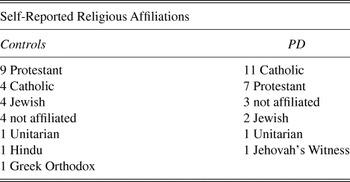
The two groups did not differ by years of education (PD mean = 15.0; SD = 2.2; control mean = 16.1; SD = 3.1; p = .21) or scores on the MMSE assessing basic cognitive function (PD mean = 27.8, SD = 1.3; control mean = 28.2, SD = 1.6; p = .41). The two groups did differ in age (PD mean = 66.7, Inter-quartile Range 58–74; control mean = 55.5, Inter-quartile Range 49–60; p = .001). Analysis of results included age as a covariant factor. Both patients and controls reported a wide range of religious preferences. The self-reported religious affiliations are listed in Table 1. Total scores on the Depression, Anxiety, and Stress Scale (DASS; 21-item measure; Lovibond & Lovibond, Reference Lovibond and Lovibond1995) were not statistically different (p = .224).
Religious Demographic Data for PD and Control Groups

Priming Task
Participants performed an evaluative priming task modeled after Wenger (Reference Wenger2004). The priming task was completed on a PC laptop with color monitor, and responses were collected from a USB connected serial response box (Psychology Software Tools, Inc.). The experiment was programmed and tested using the E-Prime Software system version 1.1 (PST, Inc).
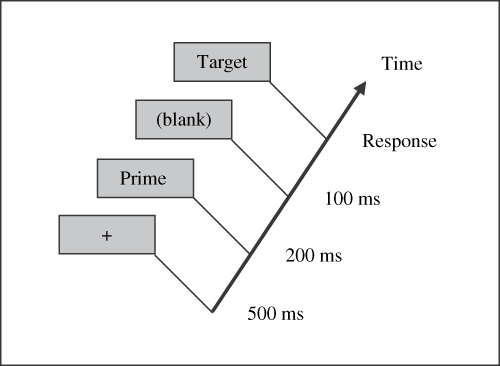
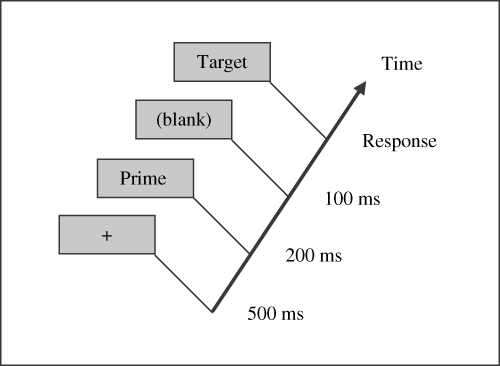
The experiment consisted of four consecutive sessions of 24 trials, resulting in 96 total trials. Each trial consisted of a random presentation of a prime, then target phrase, and subsequent response from the participant. Participants viewed one of three possible primes in each trial: citizen (civic prime), sacred (religious prime), or housetop (neutral prime). Target phrases were matched to each prime. Four phrases matched with typical activities performed by citizens (e.g., cast vote, read news). The citizen phrases served as control concepts for the religious phrases and were judged by seven raters, who were blind to the purposes of the research, to be equal in complexity to the religious phrases. According to the MRC Psycholinguistic Database (Coltheart, Reference Coltheart1981), civic and religious target phrase words did not differ in familiarity ratings (t = 0.95; p = .37). Four phrases were matched with typical activities associated with religiosity or spirituality (e.g., sense spirit, become holy). Eight phrases were nonsensical (e.g., paint wind, throw ocean). Upon viewing a target phrase, the subjects were instructed to decide as quickly and accurately as possible whether the phrase indicated a possible activity to be performed. Yes or no responses and response times (RTs) were registered by button presses on two labeled buttons on a serial response box. Prime and target phrases were controlled for length and frequency of use. Usage of right or left hand for responding was randomized across subjects. Figure 2 displays a schematic of the priming procedure. The SOA was 300 ms. Participants were tested individually, seated comfortably at a desk with a computer connected to the serial response box centered in front of the subject. Subjects were first given 24 practice trials with different primes and target phrases than those from the real experiment.
Outline of the priming procedure with a stimulus onset asynchrony (SOA) of 300 ms.
Gain/Decay Modeling
Model curves reflecting the spread of activation in semantic memory were generated by clustering all responses times to a given prime/target pair in groups of 50 ms and graphed as a function of percentage of total response for each category. We assumed that patterns of spreading activation in semantic memory would be reflected in this gradation of response intensity over time. Raw data was transformed by highly correlated (r2 > 0.90) polynomial equations and subsequently into curve-matched semantic activation equations in the form listed previously: y = A (t/τg2) e (−t/τd)−θ.
Consistent with Milberg’s modeling of activation patterns in patients with mild Alzheimer’s disease, the constant value for θ was set to 4 across all conditions to establish relative changes in variable quantities in PDs versus controls. This constant value facilitated the use of convenient numerical instances (e.g., 1–50) after the mathematical transformations.
PD, Religiosity, and Executive Function Measures
Participants also completed a 14-item, age-universal instrument to assess levels of intrinsic and extrinsic involvement in religion. An intrinsic religious orientation has to do with the internalization of beliefs and attempt to live according to those beliefs. An extrinsic orientation suggests the participation in religion for external reasons, such as social status or personal comfort. This measure was adopted from Gorsuch and McPherson (Reference Gorsuch and McPherson1989). The Unified Parkinson’s Disease Rating Scale (UPDRS) was used to assess severity of PD motor symptoms, such as gait, rigidity, and tremor. The Stroop Color-Word Interference Task was used to assess executive function.
All data included in the study were obtained from human subjects in accordance with local Institutional Review Board ethical regulations from both the Boston University School of Medicine and the Department of Veterans Affairs in Boston, Massachusetts, USA.
RESULTS
A one-way analysis of variance with prime and target categories as the between-subjects factors and RTs as the dependent variable revealed a main effect of the prime for PDs [F(2,96) = 2.97; p = .05], but not controls [F(2,96) = 0.15; p = .86]. The main effect of the target phrase was significant for both PDs [F(2,96) = 6.70; p = .01] and controls [(F(2,96) = 7.86; p = .0001). In controls, Bonferroni post hoc pairwise comparisons demonstrated that response times to civic and religious actions were not significantly different (p = .97), whereas RTs to religious target phrases were reliably slower than civic actions in PD subjects (p < .017). In controls, RTs to religious and civic action were consistently faster than nonsense targets (p < .003 and p < .005, respectively), while PD RTs to religious action targets did not differ reliably from nonsense action (p = .97). Following religious primes, PDs responded slower than with civic primes (approaching significance at p < .088).
At a descriptive level, the control response times reflected increased activation patterns when primed by a sematically related term. When primed by a civic term RTs to civic action targets was 803.0 ms (±48.2, 95% CI), which differed from civic prime RTs to religious targets (859.2 ms ± 48.6; t = 1.63; p = .10) or nonsense targets (887.2 ± 34.2; t = 2.80; p = .005). RTs to religious action targets were quicker when given a religious prime (814.2 ms ± 50.4) compared with civic (847.1 ± 47.9; t = 0.87; p = .38) and neutral (907.1 ± 34.6; t = 3.01; p = .003) primes. Figure 3 demonstrates the noticeable effect of prime category on mean control RTs.
Control mean response times (RTs) from civic and religious prime-target pairs.

In PD patients RTs were significantly faster for civic prime and target pairs but not for religious prime and target pairs (Figure 4). Mean RTs were fastest for civic prime and civic targets (1080.9 ms ± 83.4) compared with civic primes with nonsense action (1209.4 ms ± 58.3; t = 2.71; p = .007) or religious action targets (1181.7 ms ± 82.5; t = 2.06; p = .04). Of all possible prime/target pairs, religious prime/target coupling yielded the slowest RTs at 1283.9 ms (±83.1), which differed from RTs to religious action targets with the civic prime (1162.5 ms ± 81.2; t = 1.99; p = .05) or nonsense targets (1238.9 ms ± 59.3; t = 0.94; p = .35).
Parkinson’s disease (PD) mean response times (RTs) from civic and religious prime-target pairs.

When assessing differences in PD RTs to any given target, the impact of the religious prime was to consistently delay activation as demonstrated in Figure 5.
Delay in spreading activation in Parkinson’s disease (PD) patients presented by prime type.

When assessing the impact of side of onset of PD, we found that patients with right onset (suggesting greater left hemisphere pathology) responded slower to prime/target pairs compared with left onset (suggesting greater right hemispheric pathology) patients with RTs of 1337.5 ms and 1084.2 ms, respectively (p < .001). However, the relative impact of religious prime/target pairs differed by side of onset. By using RTs to nonactions from each group (right and left onset) to determine a relative baseline, left onset PD patients demonstrated stronger deficits than right onset patients in religious prime/target activation (p < .001). Figure 6 demonstrates the relative difference in RTs with left onset depicting the greatest relative slowing in response time to religious prime/target pairs. When comparing response times from civic prime/target to religious prime/target pairs, left onset PD patients were delayed by 223.2 ms on average and right onset patients were delayed by 127.9 ms (p < .01).
The impact of laterality of Parkinson’s disease (PD) side of onset on activation of religious concepts.

Because PD subjects were older than the adult control group, and because motor slowness due to Parkinson’s disease was a potential confounding factor, we did a focused analysis on the impact of age and UPDRS scores on relative deficits in RTs to religious versus civic prime-target pairs. A repeated-measure analysis of covariance with RTs to civic and religious prime-target pairs served as a two-level dependent variable with age and UPDRS scores serving as covariates. The main effect of prime-target pair type was significant, F(1,22) = 7.503; p = .012. The effect of age and UPDRS scores was not significant [F(1,22) = 0.68; p = .796; and F(1,22) = 0.051; p = .824, respectively]. However, lower Stroop color-word interference t-scores in PD subjects correlated with delays in RTs to civic versus religious prime-target pairs [F(1,23) = 9.129; p = .006]. Age and Stroop scores in PD subjects did not correlate (r = 0.0799; p = .704). PD and controls did not differ in their response accuracy (~97% correct, p = .85).
Student t tests comparing self-report measures of religiosity between controls (29.0 ± 2.4) and PDs (24.5 ± 2.5) revealed significantly lower levels of intrinsic religiosity in PD patients (p = .02). PD (16.2 ± 1.6) and control (16.4 ± 1.6) self-reported levels of extrinsic religiosity did not differ (p = .86).
Semantic activation patterns in PD versus controls in the neutral prime and non-action targets showed a flattened spreading activation with a marked increase in the time constant of decay (Figure 7).
Empirical model of the spreading of activation curves for Parkinson’s disease (PD) versus control responses.

Control activation curve was defined by: y = 11.6 (t/0.302) e (−t/0.30)− 4.
PD activation curve was defined by: y = 7.0 (t/0.302) e (−t/0.38)− 4.
Semantic activation patterns in PD versus controls in the civic prime and action targets showed a minimally flattened spreading activation pattern with delays in both the gain and decay time constants (Figure 7).
Control activation curve was defined by: y = 10.3 (t/0.252) e (−t/0.25)− 4.
PD activation curve was defined by: y = 9.0 (t/0.302) e (−t/0.35)− 4.
Semantic activation patterns in PD versus controls in the religious prime and action targets showed a significant right-shifted activation pattern with a compensatory increase in strength of association (A) due to notably delayed time constants of gain and decay (Figure 7).
Control activation curve was defined by: y = 10.0 (t/0.252) e (−t/0.25)−4.
PD activation curve was defined by: y = 12.0 (t/0.402) e (−t/0.45)−4.
DISCUSSION
As expected, prime words facilitated response times to semantically related targets in healthy adult controls. In general, RTs were faster for target actions versus non-actions, and quickest for action targets coupled with semantically related primes. Regardless of any given participant’s level of religiosity religious actions were reliably identified as hypothetically possible. The religious prime sacred was effective at activating religious concepts in semantic memory for all control individuals.
As predicted, PD patients demonstrated deficits in the automatic activation of religious concepts. The delay in response times to religious concepts cannot be attributable to a general motor slowness due to PD motor symptoms. Using PD response times as a baseline for comparison, response times were most delayed for the religious prime/target pairs. Fastest response times resulted from civic prime/action couplets, so the delay in religious concept activation was not a product of a general loss of spreading activation in all semantic networks. Given that PD RTs were slower overall compared with controls, semantic relatedness still facilitated spreading activation in PD patients, except for the religious concepts. PD patients demonstrated a selective loss in the ability to activate religious knowledge. The question arises, why would there be selective dysfunction of religious semantic networks in PD?
The data demonstrate a moderate to strong correlation between dysexecutive function and delayed response times to religious concepts in PD participants. While correlation does not necessarily suggest causation, these results in conjunction with the available research on religion and the brain reinforce the importance of frontal lobe mediated executive function for sustained religiosity. Relative delay in the activation of religious prime-target pairs compared with civic prime-target pairs was not explainable by age or motor severity (UPDRS scores). Slowness in response to civic versus religious action correlated strongly with executive function as measured by the Stroop color-word interference task.
The data on laterality of PD symptoms implicated the right frontal lobes as more important mediators for spreading activation of religious concepts. While in general response times were slower for right onset (left brain) compared left onset (right brain), the relative deficits in religious concept activation were more severe for left onset subjects. With language being primarily a left frontal-temporal hemispheric function, it is not surprising that response times were slower overall for right onset patients. If right frontal lobe function is important to mediate religiosity, then one would expect to find greater deficits in the automatic activation of religious concepts in left onset patients, which is exactly what the data from this study demonstrate.
Theory-of-mind (ToM) ability might be one potential contributing factor to explain the relationship between frontal lobe dysexecutive function and delayed activation of religious concepts in PD subjects. ToM refers to the capacity to attribute mental states to oneself and others (Premack & Woodruff, Reference Premack and Woodruff1978). Several independent lines of research demonstrate impairments in ToM in PD patients (Mengelberg & Siegert, Reference Mengelberg and Siegert2003; Saltzman, Strauss, Hunter, & Archibald, Reference Saltzman, Strauss, Hunter and Archibald2000). Evidence from damaged right-hemisphere patients show selective dysfunction in ToM abilities (Winner, Brownell, Happé, Blum, & Pincus, Reference Winner, Brownell, Happé, Blum and Pincus1998). Of interest, the left onset (right brain) PD patients exhibited greater delays in religious cognition. If ToM ability is important to religious cognition, then perhaps a relationship between PD side of onset would bear influence in the present study. Incidentally, RTs to religious action phrases were slowest for the “sense spirit” phrase (mean RT = 1372.7, SD = 636.7; p < .05). The other three phrases (pray quietly, worship God, become Holy) did not differ in RT from one another, albeit RTs were significantly slower than RTs for all civic action phrases. Of the religious phrases, “sense spirit” would intuitively seem to require the most ToM abilities to conceptualize in semantic memory. This finding supports a relationship between ToM right frontal lobe function and religiosity.
It could be argued that PD medications influenced the findings resulting in the alleged deficit in the automatic activation of religious concepts. While this confounding factor cannot be ruled out, PD subjects displayed a striking delay in religious versus civic action RTs regardless of medication regimen. That is, many patients were strictly on Sinemet (L-dopa/D-Dopa), while other patients’ regimens included DA agonists, COMT or MAOB inhibitors, anti-muscarinics, etc. Despite these variations in PD medications between subjects, the relative delay in RT to religious concepts persisted. Because PD influences multiple neurotransmitter systems, the present findings may be explicable in terms of dopaminergic dysregulation in conjunction with other chemical imbalances, such as noradrenergic, serotonergic, and cholinergic. Given the known role of dopamine as a modulator of semantic activation patterns, loss of tonic and phasic dopamine levels in PD patients seems the most likely explanation for the impairments in spreading of activation.
It might also be suggested that the results are explicable in terms of response hand used by PD patients. The random assignment of hand use, right or left, resulted in 15 patients using the hand opposite the most impacted, and 10 subjects using the hand most influenced by PD motor symptoms. While overall response times were 100–200 ms slower on average in the subjects using the more impacted hand compared with the less impacted one, the results were not changed in theoretically meaningful ways. That is, when comparing relative delays in RTs with civic prime-target pairs to religious prime-target pairs, both groups exhibited similar deficits. In other words, whether the PD subjects responded with the more severely affected hand or not, both groups were delayed in religious versus civic prime-target pair RTs. RTs to religious versus civic prime-target pairs were 115.0% greater in PD subjects using the more impacted hand, and 117.8% greater in PD subjects using the less impacted hand. The decision to randomize side of hand use did not alter the important finding that PD subjects exhibited relative deficits in the semantic activation of religious versus civic prime-target pairs.
In addition to the deficits in unconscious and automatic activation of religious concepts, PD patients consciously reported lower levels of intrinsic religiosity. Of interest, there was a select group of controls scoring high in measures of intrinsic religiosity (n = 11) that responded quickest to the religious prime/target pair (682.2 ms ± 39.3) compared with the civic prime/target pairs (744.4 ms ± 36.5). This confirmed Wenger’s findings (2004) that self-reported intrinsic religiosity is correlated with faster RTs to religious prime/targets compared with non-religious prime/targets that are semantically related. Wenger’s participant pool was entirely self-reported to be Christian, and the prime and target phrases were specific to typical American practices of Christianity. Our present work extends Wenger’s research by expanding the religious language to be inclusive of other faith traditions beside Christianity while retaining the capacity to activate religious concepts without religion-specific language.
From a theoretical perspective, the results can be thought of in terms of the previously mentioned gain/decay equation. This model predicts that changes in the strength of association (A) or time constants of gain or decay (τg and τd) can impact spreading activation waves. As previously cited research suggests, dopamine facilitates gain at short SOAs and attenuates decay at long SOAs. We tested controls and PDs with a short SOA paradigm. One would predict that selective loss of dopaminergic function would yield longer time constants of gain at short SOAs. Indeed, PD patients evinced this theoretical claim. Strength of association and time constants of gain and decay were affected in all conditions. Time constants were lengthened most for religious prime/target pairs. The results lend credence to the claim that different mechanisms affect the time constant of gain and decay. In all cases, the time constant of decay was delayed more than the time constant of gain in PDs. This suggests a role for dopaminergic function in the mechanisms of semantic decay at short SOAs. Also, the delayed gain time constant suggests that dopaminergic dysfunction delayed spreading activation in PD patients as expected.
The resultant dopaminergic dysfunction in frontal-striatal circuits in PD subjects may explain all or part of the results of this study. At a neurobiological level, dystrophic dendritic spines connected with PD pathology could dysregulate synaptic transmission in semantic networks. The question still remains as to why religious semantic networks would be selectively affected. It might be that dopaminergic function is more important for religious knowledge than other types of semantic knowledge. Biochemical explanations aside, religious knowledge might require the coordination of more association networks than non-religious knowledge. If the speed of spreading activation is compromised, then perhaps the knowledge stores that must traverse the greatest neuronal distances would be selectively affected first due to increased resistance and impedance. The impact of coordinating multiple association areas structurally remote, but functionally close in brain space, may be negligible with proper neural transmission. With delayed time constants of gain due to semantic network dysfunction, then previously negligible differences in resistance due to distances traversed by neural signals become magnified and target for selected delay.
CONCLUSION
Religiosity is a complex entity representing a wide array of human thoughts, beliefs, and behaviors. Several core concepts recur across culture, namely that most posit a belief in a god-concept and this agent is active in the world to varying degrees. Accessing the semantic networks that mediate religious knowledge is dependent on brain function. This study demonstrated that PD patients displayed a notable delay in ability to automatically activate religious semantic stores. These deficits were relatable to consciously reflected self-reports of disinterest in private religiosity. PD subjects were less intrinsically religious compared with controls as gauged by several measurement tools, both conscious and unconscious. This finding underlines the importance of right prefrontal dopaminergic networks for sustained religiosity.
ACKNOWLEDGMENTS
The authors report no conflicts of interest. This is based on work supported by the Office of Research Development, Medical Research Service, Department of Veterans Affairs and the National Institute of Deafness and other Communication Disorders (NIDCD) Grant No. 5RO1DC007956-03.