Shoulder complaints (SC) are serious musculoskeletal problems because of their occurrence, course, and persistence (12). Patients with shoulder complaints suffer from pain and limitations in the performance of daily activities (18). In addition to personal suffering, chronic shoulder complaints entail a huge social and economic burden due to patients' inability to carry out household tasks, loss of productivity, sick leave, and/or utilization of health care services. Musculoskeletal disorders, of which SC constitute the second largest group after low-back disorders, account for the second largest share in health care costs in the Netherlands (13). In Sweden, 18 percent of disability payments made for musculoskeletal disorders relate to shoulder complaints (15).
In the past decade, increasing attention has been focused on economic evaluations regarding patients with musculoskeletal disorders, alongside clinical-effectiveness studies. Remarkably, costs for low-back pain patients are not normally distributed: most expenses (more than 80 percent) are incurred for a minority of patients (less than 25 percent) in whom low-back pain develops into a chronic disorder (8;20). Hence, preventing chronic musculoskeletal disorders and improving abilities and healthy behaviors in pain patients at an earlier stage should be able to reduce costs to health care and society. Behavioral treatments have proved to be effective in the treatment of chronic pain patients in multidisciplinary secondary and tertiary settings (10;14;19).
We have developed a behavioral graded exercise therapy (GET) program to improve the performance of daily activities, irrespective of pain experiences in patients with chronic shoulder complaints in primary-care settings. The clinical effectiveness of this program was proven in an earlier study (6). We assumed that improved abilities and behavioral changes would also contribute to a reduction in costs of health care services and in costs due to loss of productivity or sick leave. This study was done for three reasons: first, to evaluate the clinical effectiveness of the GET program compared with usual care; second, to evaluate the costs (intervention costs, direct health care costs, direct non–health-related costs, and indirect costs) for both treatment groups; third, to evaluate the cost-effectiveness from a societal perspective for both treatment groups. To our knowledge, this is the first study on the cost-effectiveness of behavioral treatment in patients with chronic shoulder complaints in primary care.
METHODS
Study Population
Patients with chronic SC living in the Province of Limburg (the Netherlands) were invited to participate in the study either during consultation with their general practitioner (GP) for chronic shoulder complaints or by advertisement in a local newspaper between January 2002 and July 2003. Patients were included if they were at least 18 years old and had been suffering from SC for at least 3 months. Patients suffering from systemic diseases, referred pain, or severe biomedical or psychiatric disorders were excluded. The study design was approved by the Medical Research Ethics Committee of the iRv/SRL.
Interventions
Eligible patients were assigned randomly either to GET or to usual care (UC). GET is a behavioral treatment program characterized by graded activity and time-contingency and operant conditioning, which was administered by twenty physiotherapists (PTs). The program consists of a maximum of eighteen group sessions of approximately 60 minutes over a period of 12 weeks. The content of the GET program has been described in detail elsewhere (5). Usual care was standardized according to the 1999 version of the guidelines for SC issued by the Dutch College of General Practitioners (DCGP) (21). UC consists of information, recommendations, and pain-contingent medical or pharmaceutical therapy. UC was administered by thirty-two GPs. In UC, it was the GPs who decided on the specific treatment.
Clinical Outcome Measures
Primary outcome measures to assess the performance of daily activities were the main complaints instrument and the Shoulder Disability Questionnaire (SDQ) (2;11). In the main complaints instrument, patients selected, at baseline, the three most important daily activities that were affected by their SC. They rated their ability to perform these activities during the past week on an ordinal (eleven-point) scale at baseline and during follow-up. The SDQ is a functional status measure consisting of sixteen statements regarding pain and limitations to daily activities during the past 24 hours. Generic health-related quality of life was assessed and rated on the EuroQol-5D (EQ-5D) (3). The EQ-5D consists of a descriptive system for health status, related to five dimensions of health (mobility, self-care, usual activities, pain/discomfort, and anxiety/depression) and a visual analogue scale. Measurements took place at baseline, directly after the 12-week treatment period, and after 52 weeks of follow-up.
Costs
Intervention costs, direct health care costs, direct non– health-related costs, and indirect costs were assessed during the 12-week treatment period and the 52-week follow-up period. The intervention costs of the GET program included the costs of visits to physiotherapists for group treatment during the 12-week treatment period. The intervention costs for UC included the costs of visits to general practitioners, to physiotherapists for usual care, or to manual therapists or Cesar/Mensendieck exercise therapists during the 12-week intervention period. Other direct health-related costs for both treatment groups during the 12-week treatment period included the costs of prescribed medication, of hospitalization, and of visits to physicians or alternative therapists. Direct health-related costs after the treatment period included the costs of visits to general practitioners, physiotherapists, manual therapists, Cesar/Mensendieck exercise therapists, physicians, and/or alternative therapists; and costs of hospitalization and of prescribed medication during the 52-week follow-up period. Direct non–health-related costs included costs of professional home care, of paid housekeeping, of unpaid help from relatives or friends, of health-related activities (e.g., fitness training), and other out-of-pocket expenses (e.g., non-prescribed medication). Indirect costs included the costs of production losses due to sick leave from paid or unpaid work.
Physiotherapists documented the number of visits by patients allocated to GET on a registration form (7). Cost diaries filled in by the patients were used to assess direct health care costs, direct non–health-related costs, and indirect costs (9). The cost diaries were sent to the patients by post. Two strategies were used to collect the cost data. Patients were allocated at random to a group recording their weekly expenses continuously in ten diary booklets covering the 52-week period or to a group recording them intermittently in seven diary booklets, covering 2 weeks out of each 8-week period (14 weeks in total during the 52-week follow-up period). We chose this strategy to answer an addition methodological question, that is, whether keeping a diary for an intermittent period would yield different results than keeping one for the total follow-up period of 1 year. We found no significant difference between the two assessment strategies (p=.890), which means that both could be used to calculate the final cost data. Patients returned the diaries immediately after each booklet had been completed.
Prices of visits to health care providers, hospitalization, professional home care, and paid housekeeping were obtained from the guidelines for economic evaluation in health care by the Dutch Health Care Insurance Counsel (17). Prices of visits to alternative therapists were obtained from professional organizations or from the cost diary. Prices of prescribed or non-prescribed medication were obtained from the Royal Dutch Society for Pharmacy or from the cost diaries. Prices of unpaid help from family/friends and sick leave from unpaid work were based on shadow prices for unpaid work (17). The Human Capital Approach was used to calculate the costs of sick leave from paid work (17).
Statistical Analysis
Analyses were performed according to the intention-to-treat principle, using SPSS statistical software (12.0.1 version). A p value of <.05 was considered to be statistically significant (two-tailed) for all comparisons.
Change scores on clinical outcome measures were calculated (follow-up scores minus baseline scores), as well as mean differences between treatment groups and 95 percent confidence intervals. Paired-sample Student's t-tests were used to test for significant differences between groups on continuous scales having a Gaussian distribution. If data were missing, unconditional imputation of the overall mean was applied.
Differences between groups in utilization of health-care services were calculated for both intervention groups. Mean costs per treatment group and mean differences between groups were analyzed. As cost data are usually highly skewed, non-parametric Mann–Whitney tests for non-Gaussian distributions were used to test for significant differences between groups. If data were missing, individual mean imputation was applied. If no cost data were available, we used unconditional imputation of the group mean.
Incremental cost-effectiveness ratios (the ratio between the difference in costs and the difference in clinical effects) were calculated by bias-corrected bootstrapping (using 1,000 replications) (4;16). Cost-effectiveness ratios for both of the primary outcome measures (main complaints and SDQ) and for health-related quality of life (EQ-5D) were plotted on a cost-effectiveness plane. Alternative cost analyses were performed to evaluate the influence of outliers for the utilization of health care services on outcomes.
RESULTS
Study Population
A total of 176 patients were randomly assigned to either GET (n=87) or UC (n=89). Eighteen patients (10 percent) withdrew from the study during the treatment period, whereas 11 (6 percent) withdrawals were registered during the 52-week follow-up period. Eighty-nine patients (GET=41; UC=48) filled in the diaries continuously, whereas 87 patients (GET=46; UC=41) filled in the diaries intermittently. One hundred two patients (58 percent) completed and returned all cost diaries. No cost data were available for the 15 withdrawals (9 percent). Overall, 1,213 of a total of 1,499 (81 percent) cost diaries were returned during the 52-week follow-up period.
Baseline
Treatment groups were comparable at baseline in terms of patient characteristics and clinical outcome measures (Table 1). The numbers of patients who reported having paid work were similar for both treatment groups (GET, 57 percent; UC, 59 percent). Sick leave from paid work at baseline (if applicable) extending a 1-week period during the past 8 weeks was reported by 4 percent of the patients allocated to GET and by 12 percent of the patients allocated to UC. Furthermore, patients eligible for analysis and patients who withdrew from the study or had missing data during the treatment or follow-up periods were comparable on all outcome measures at baseline.

Clinical Effectiveness
Table 1 shows that GET patients had improved more than UC patients on both primary outcome measures (main complaint and SDQ) immediately after the 12-week treatment and after 52 weeks of follow-up, although the differences were only statistically significant for the main complaint. No statistically significant differences between groups were found with regard to improvement in quality of life (EQ-5D). Imputation did not alter these results (Table 1)
Health Care Utilization and Sick Leave
Table 2 shows the mean volumes of health care utilization per patient during the 1-year follow-up period (excluding GET and UC). The overall utilization of all direct health-care services and relevant non–health care services during the follow-up period was lower for patients allocated to GET than for those allocated to UC (except for unpaid help from family/friends), and the difference reached statistical significance (except for paid housekeeping and expenses for health activities). There was also a statistically significant difference in sick leave from unpaid work during follow-up in favor of GET. No statistically significant differences between the treatment groups were found in sick leave from paid work. (Table 2).

Costs
The mean costs per treatment group are presented in Table 3. The intervention costs for the GET program were based on an average of 17.2 sessions per patient. The intervention costs for GET (€261) were significantly higher than those for UC (€61). Patients allocated to GET had significantly higher total costs during the 12-week treatment period and significantly lower costs during the follow-up period (weeks 12–52) than patients allocated to UC. Total mean costs over the entire 52-week period of treatment plus follow-up were €153 higher for patients allocated to GET (Table 3).

Cost-Effectiveness Analysis
The incremental cost-effectiveness ratios (ICER) for the severity of the main complaints (0–100), SDQ (0–100), and EQ-5D (−1.00–1.00) after 52 weeks indicate that the incremental costs for GET per unit improvement on these outcome measures were €17 (CI, −4–129), €74 (CI, −2–101), and €5,278 (CI, −11.808–51.407), respectively.
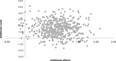
The cost-effectiveness plane for the main complaints instrument after 52 weeks of follow-up is shown in Figure 1. This plane shows that most cost-effect pairs (91 percent) are in the upper-right quadrant, indicating positive effects at higher costs. Cost-effectiveness planes for the SDQ and EQ-5D showed similar patterns, although more cost-effect pairs were located near the vertical axis, indicating smaller clinical effects at higher costs (no data presented) (Figure 1).

Cost-effectiveness plane for the main complaints after 52 weeks.
Sensitivity Analysis
Alternative analyses were performed after imputation of the group mean for one patient who reported extremely high utilization of unpaid help from relatives/friends. After adjustment for this outlier, utilization of all direct non–health care services was lower for patients allocated to GET than for those allocated to UC (Table 2). Adjusted total mean costs were €79 higher for patients allocated to GET (Table 3). The adjusted incremental cost-effectiveness ratios for the severity of the main complaints and SDQ and EQ-5D after 52 weeks were €9 (CI, 6–16), €40 (CI, −4–57), and € 2846 (CI, −2.765–3.763), respectively.
DISCUSSION
GET patients showed statistically significantly greater improvement than UC patients on the main complaint instrument directly after the 12-week treatment, and these improvements lasted for at least 52 weeks. Improvements on the SDQ were greater with GET than with UC, but the differences between the groups never reached statistical significance. No statistically significant differences were found on the EQ-5D. Patients allocated to GET showed statistically significantly lower direct health care costs and direct non– health care costs during the follow-up period (week 12–52) compared with patients allocated to UC. Nevertheless, because the costs of the GET program were higher than those of UC, total costs for GET patients were significantly higher than for UC patients.
As expected, GET significantly improved the performance of daily activities as assessed by the main complaints measure. This finding means that patients' ability to perform the three most important daily activities improved significantly, both in the short-term and after 1-year of follow-up. However, the SDQ, which measures pain and functional limitations in daily activities, did not show a significant difference between the GET and UC groups. Because the aim of GET is to improve the performance of daily activities irrespective of pain experiences, changes measured on the SDQ might be expected to be relatively small. No statistically significant differences were found on the five dimensions of the EQ-5D measured at a three-point level. It is very likely that improvements in individual daily activities due to GET were too specific to be detected by this generic health-related quality of life measure.
Patients were taught self-management of their complaints and how to deal with a new episode of shoulder complaints. We hypothesized that behavioral changes during the treatment period, relating to improvement of self-management due to GET, would reduce the utilization of health care services during the follow-up period and reduce sick leave in patients allocated to GET. The results show that the utilization of health care services during the follow-up period was indeed significantly lower in patients allocated to GET. However, there was no statistically significant difference between groups regarding sick leave from paid work. The first reason for this finding was the low number of patients that reported sick leave from paid work in both groups (11 in GET versus 15 in UC), so these results need to be interpreted with considerable caution. A related explanation could be that return to work was not an explicit aim in this study. Patients were asked to identify daily activities that interrupted their daily lives and the ones they preferred to improve. These goals were not predominantly related to work and patients were only stimulated to apply to their work settings what they had learned from the therapy.
As expected, the intervention costs of the GET program (€268) were significantly higher than those of UC (€61). This difference is mainly accounted for by the number of visits to physiotherapists for group treatment (on average 17.2 visits) compared with the number of visits to other health-care providers (general practitioners, physiotherapists, manual therapists, and Cesar/Mensendieck exercise therapists), mainly accounts for these differences. The ICER of the main complaints instrument, for GET compared with UC, shows that it costs €17 to increase performance of daily activities with 1 percent. Recently, the ICER of the main complaints instrument, for manipulative therapy as add-on to UC compared with UC alone was calculated at €22 for a 1 percent increase in the performance of daily activities in patients with shoulder complaints and concomitant neck problems (1). This finding indicates that cost-effectiveness ratios for GET in patients with chronic shoulder complaints and for manipulative therapy as an add-on to UC in patients with shoulder complaints and concomitant neck problems are comparable. The costs per patient to improve the performance of daily activities by 25 percent, which was the aim of this trial, were calculated to be €425. When adjusted for one outlier, these costs were €225.
We conclude that GET is more cost-effective than UC for patients with chronic shoulder complaints in primary care. GET is clinically more effective than UC in restoring daily activities in these patients after the 12-week treatment period, and these effects last for at least 52 weeks. GET significantly reduces direct health care costs and direct non–health care costs in patients with chronic shoulder complaints. However, total costs during the one-year follow-up period were significantly higher due to the higher costs of the intervention itself.
Policy Implications
It is recommended to use GET to restore daily activities in patients with chronic shoulder complaints in primary care. GET is effective in restoring daily activities in patients with chronic shoulder complaints in long-term in a primary-care setting and might as such prevent more intensive and more expensive multidisciplinary treatment of these patients in secondary- or tertiary-care settings. We recommend that the program should focus more on work-related goals and work-related activities in patients having paid work, which might improve the social benefits of GET.
CONTACT INFORMATION
Jacques J. X. R. Geraets, MSc, PT (Jacques.geraets@planet.nl), PhD Student, Department of General Practice Care and Public Health Research Institute, Maastricht University, P.O. Box 616, 6200 MD Maastricht, The Netherlands; Research Associate, Department of Chronic Pain, Institute for Rehabilitation Research, P.O. Box 192, 6430 AD Hoensbroek, The Netherlands
Mariëlle E. J. B. Goossens, PhD (m.goosens@dep.unimaas.nl), Associate Professor, Department of Medical, Clinical and Experimental Psychology, Maastricht University, P.O. Box 616, 6200 MD Maastricht, The Netherland; Project Leader, Institute for Rehabilitation Research, P.O. Box 192, 6432 AD Hoensbroek, The Netherlands
Camiel P. C. de Bruijn, MSc (camieldebruijn@hetnet.nl), PhD Student, Department of General Practice Care and Public Health Research Institute, Maastricht University, P.O. Box 616, 6200 MD Maastricht, The Netherland; Research Associate, Department of Chronic Pain, Institute for Rehabilitation Research, Zandbergsweg 111, 6432 CC Hoensbroek, The Netherlands
Imelda J. M. de Groot, MD, PhD (imjgroot@reval.umcn.nl), Department of Rehabilitation, University Medical Centre de Radboud, 6500 HE Nijmegen, The Netherlands; Project Leader, Department of Chronic Pain, Institute for Rehabilitation Research, P.O. Box 192, 6430 AD Hoensbroek, The Netherlands
Albère J. S. Köke, MSc, PT (a.koke@srl.nl), Pain Research and Management Centre, Maastricht University Hospital, P.O. Box 5800, 6202 AZ Maastricht, The Netherlands; Research Associate, Center for Clinical Rehabilitation, P.O. Box 88, 6430 HB Hoensbroek, The Netherlands
Rob A. G. B. Pelt, PT (r.pelt@srl.nl), Department of Rehabilitation, Center for Clinical Rehabilitation, P.O. Box 88, 6430 HB Hoensbroek, The Netherlands
Geert van der Heijden, PhD (g.vanderheijden@umcutrecht.nl), Associate Professor, Department of Clinical Epidemiology, Utrecht University; Julius Center, University Medical Center Utrecht, P.O. Box 85500, 3508 GA Utrecht, The Netherlands
Geert-Jan Dinant, MD, PhD (geertjan.dinant@hag.unimaas.nl), Professor, Departments of General Practice and the Care and Public Health Research Institute, Maastricht University, P.O. Box 616, 6200 MD Maastricht, The Netherlands
Wim J. A. van den Heuvel, PhD (w.vandenheuvel@irv.nl), Scientific Director, Care and Public Health Research Institute, Maastricht University, P. Debyeplein d1, 6229 HA Maastricht, the Netherlands; General Director, Institute for Rehabilitation Research, Zandbergsweg 111, 6432 CC Hoensbroek, The Netherlands
This study is being funded by the Netherlands Organization for Scientific Research (NWO-MW, grant 904-65-901) and by the “De Drie Lichten” Foundation, Hilversum, the Netherlands.