Implications
Our experiments investigated peptide transporter 1 (SLC15A1), excitatory amino acid transporter 3 (SLC1A1) and cationic amino acid transporter 1 (SLC7A1) gene expression patterns across the digestive tract at different stages of development and in response to dietary protein levels. The results show that rabbit SLC15A1, SLC7A1 and SLC1A1 mRNA occurs in a tissue-specific and time-associated manner. Effect dietary protein levels have on SLC15A1, SLC7A1 and SLC1A1 gene expression is also tissue specific and affected by protein level. The results are useful to better understand the process of digestion and absorption of dietary protein in rabbit intestine, and provide a reference of reasonable protein ratio in diet for the ration of rabbits and nutrition regulation on the production of rabbits.
Introduction
Dietary proteins could be digested or broken down by proteases to oligopeptides and free amino acids in gastrointestinal tract (Van Beers et al., Reference Van Beers, Büller, Grand, Einerhand and Dekker1995). These products of digestion are assimilated by membrane-associated transporters into enterocytes either. Amino acid transporters (e.g. excitatory amino acid transporter 3 (SLC1A1, EAAT3) and cationic amino acid transporter 1 (SLC7A1, CAT1)) are responsible for the movement of amino acids in and out of cells (Hyde et al., Reference Hyde, Taylor and Hundal2003). The peptide transporter (SLC15A1, PepT1) is thought to be the major facilitator of peptide transport in the enterocyte (Rubio-Aliaga and Daniel, Reference Rubio-Aliaga and Daniel2008). To date, the majority of studies on nutrient transporters have focussed on chickens, pigs and rats (Speier et al., Reference Speier, Yadgary, Uni and Wong2012; Zhang et al., Reference Zhang, Qiao, Ren, Zeng, Ma, Wu, Thacker and Wu2013). The identification of rabbit SLC15A1, SLC7A1 and SLC1A1 and their functions in physiological processes remain to be elucidated.
The intestinal structure of the rabbit is very different compared with other mammals. The cecum is the most important digestive organ for the rabbit. Symbiotic micro-organisms in rabbit cecum produce fibrolytic enzymes to break down plant cell walls (Feng et al., Reference Feng, Duan, Pang, Mo, Wu, Yu, Hu, Wei, Tang and Feng2007). Rabbits produce hard and soft faeces in a circadian rhythm, improving the nutrient absorption via intaking soft faeces (Carabaño et al., Reference Carabaño, Fraga, Santoma and de Blas1988). The sacculus rotundus in rabbits is a special and unique intestinal mucosal immune organ and plays an important role in anti-infection immunity (Abdou and Richter, Reference Abdou and Richter1970). Bowel disease often occurs because of the thin intestinal wall and weak intestinal immune system in rabbits. We hypothesized that rabbit SLC15A1, SLC7A1 and SLC1A1 gene expression patterns in the gastrointestinal tract may be different than other animals because of these unusual structures and physiological properties. In this study, we determined whether and where SLC15A1, SLC7A1 and SLC1A1 genes are expressed in rabbits and the expression patterns of these genes in various site of digestion at different developmental stages and in response to dietary protein level.
Material and methods
Animals
Hyla rabbits were individually housed in self-made cages (60×40×40 cm). Temperature and lighting were maintained according to commercial conditions. Diets were pelleted using pressure, and the diameter of the pellets was 4 mm. All of the rabbits had free access to water during the rearing period. The rabbits in experiment 1 received a normal diet, and the rabbits in experiment 2 received a normal diet, low protein diet (LPD) or high protein diet (HPD). Rabbits were fed once daily.
Experimental protocol and sample collection
Two experiments were conducted. In experiment 1, eight rabbits with similar weight were electrically stunned and slaughtered at each time point. These were at 15 (lactation), 30 (lactation+feeding, weaning), 60 (growing) and 90 (finishing) days of age. Various rabbit tissues (stomach, duodenum, jejunum, ileum, cecum and colon) were collected. After being snap-frozen in liquid nitrogen, and stored in a RNA later solution at −80°C until total RNA extraction.
In experiment 2, 60 rabbits (30 days old) of similar body weight were randomly divided across three groups (20 rabbits per group). These consisted of a HPD (18.13%), a normal protein level diet (control, 15.32%) and a LPD (12.41%). The ingredients and composition of diet are listed in Supplementary Table S1. Rabbits were fed in precise feeding patterns for 30 days, with 80 g on the 1st day and then increased by 1 g/day. At the end of experiment, eight rabbits with similar weight were electrically stunned and slaughtered by exsanguination (Gregory and Wotton, Reference Gregory and Wotton1984). The duodenum, jejunum and ileum samples were collected within 4 min after slaughtered.
RNA isolation and analysis
Expression of genes in tissues was quantified using quantitative real-time (qRT) PCR with SYBR Green I labelling. Total RNA extraction and qRT-PCR were performed as described previously (Liu et al., Reference Liu, Song, Jiao and Lin2014; Wang et al., Reference Wang, Xu, Liu, Song, Jiao and Lin2017). Total RNA was isolated by the guanidinium isothiocyanate method with Trizol Reagent (Invitrogen, San Diego, CA, USA). The quality of RNA after DNase treatment was tested by electrophoresis on an agarose gel and the quantity of RNA was determined using a biophotometer (Eppendorf, Hamburg, Germany). Reverse transcription (RT) reactions (10 μl) consisted of 500 ng total RNA, 5 mmol/l MgCl2, 1 μl RT buffer, 1 mmol/l dNTP, 2.5 U avian myeloblastosis virus, 0.7 nmol/l oligo d(T) and 10 U Ribonuclease inhibitor (TaKaRa Biotechnology, Co., Ltd, Dalian, P. R. China). Real-time PCR analysis was conducted using the Applied Biosystems 7500 Real-time PCR System (Applied Biosystems, Foster, CA, USA). Each RT-reaction served as a template in a 20 μl PCR reaction containing 0.2 μmol/l of each primer and SYBR green master mix (TaKaRa Biotechnology). Primer-set sequences are described in Supplementary Table S2. Real-time PCR reactions were performed at 95°C for 10 s, followed by 40 cycles at 95°C for 5 s and 60°C for 40 s. SYBR green fluorescence was detected at the end of each cycle to monitor the amount of PCR product. A standard curve was plotted to calculate the efficiency of the real-time PCR primers. The PCR data were analyzed with the
 $$2^{{{\minus}\Delta \Delta C_{T} }} $$
method (Livak and Schmittgen, Reference Livak and Schmittgen2001). The mRNA levels of target genes were normalized to glyceraldehydes-3-phosphate dehydrogenase (GAPDH) (ΔC
T
). On the basis of the C
T
values, GAPDH mRNA expression was stable across the treatments in this study (P>0.1). The ΔC
T
was calibrated against an average of the control rabbits. The linear amount of target molecules relative to the calibrator was calculated by
 $$2^{{{\minus}\Delta \Delta C_{T} }} $$
. Therefore, all gene transcription results are reported as the n-fold difference relative to the calibrator. Specificity of the amplification product was verified.
Statistical analysis
The data are presented as the means±SEM. Homogeneity of variances among the treatments was confirmed using Bartlett’s test. All data were subjected to one-way ANOVA to test the main effect of the treatment. When the main effect of the treatment was significant, the differences between the means were assessed by Duncan’s multiple range analysis. P<0.05 was considered statistically significant.
Results
Experiment 1
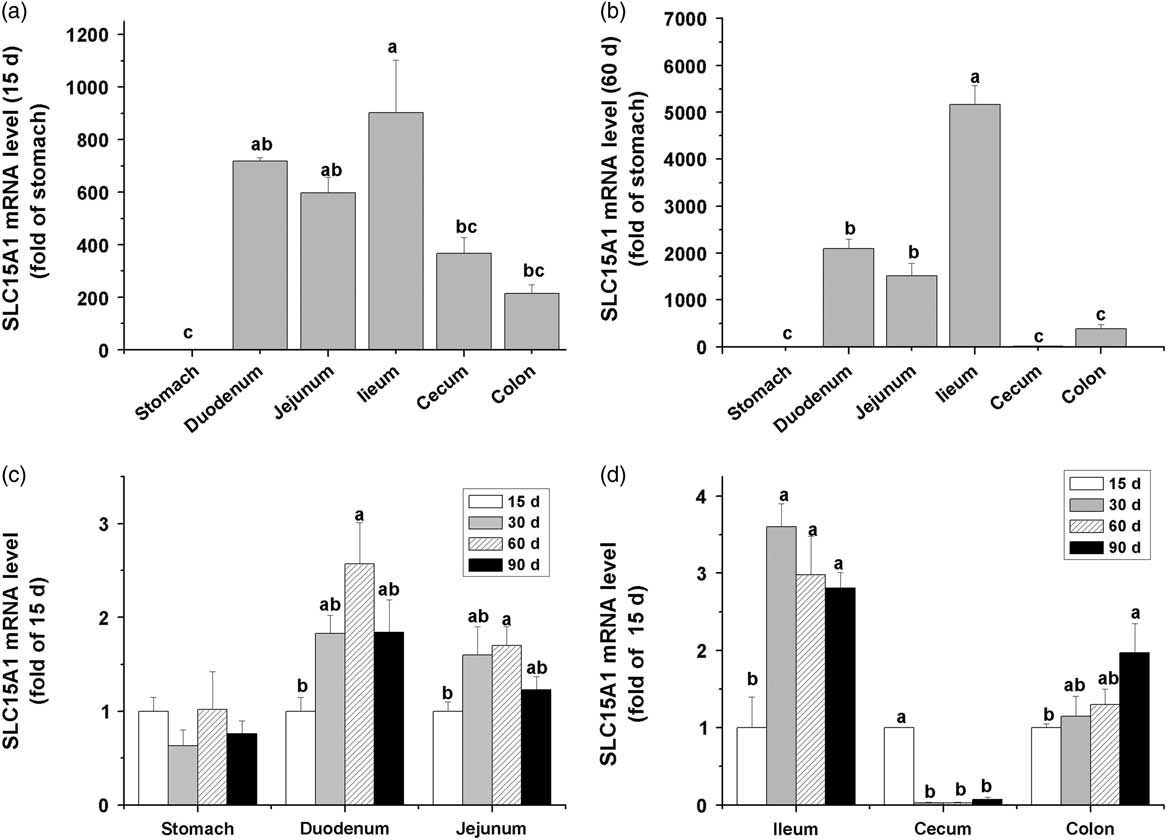
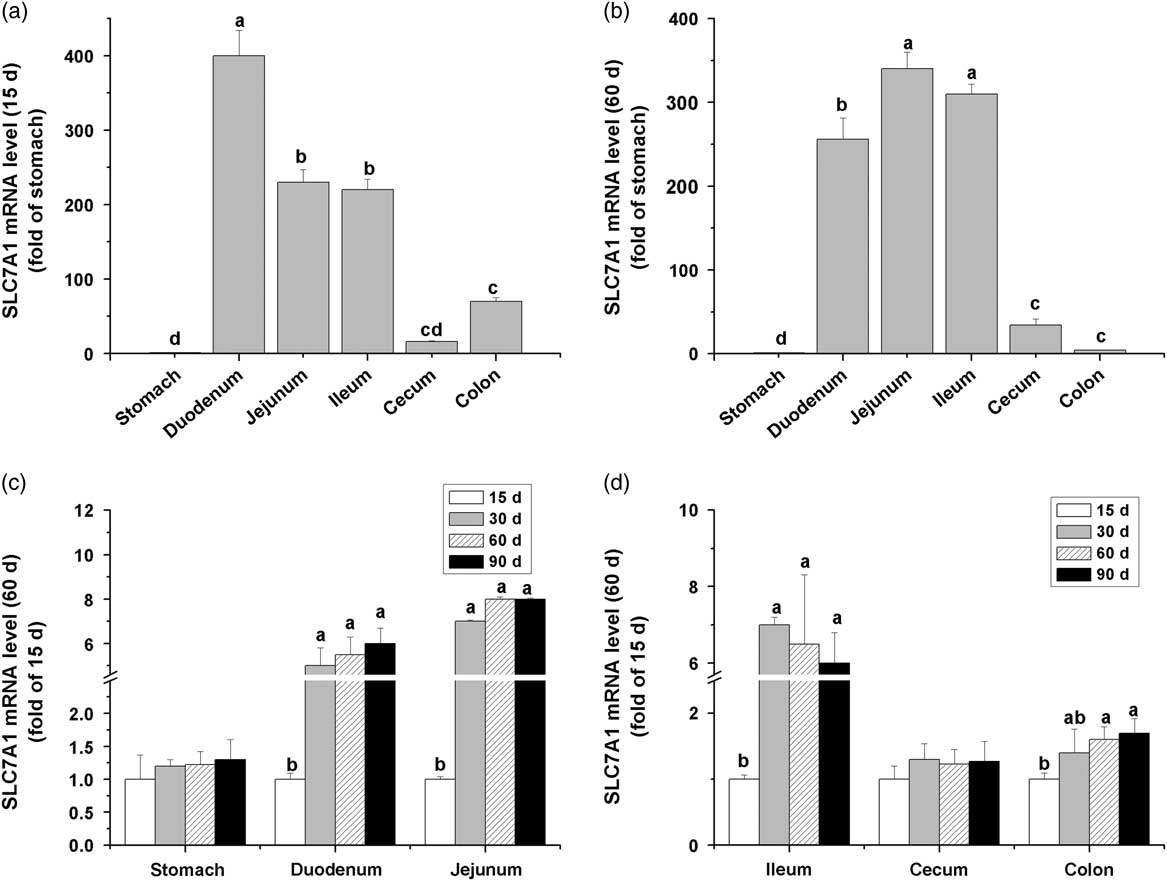
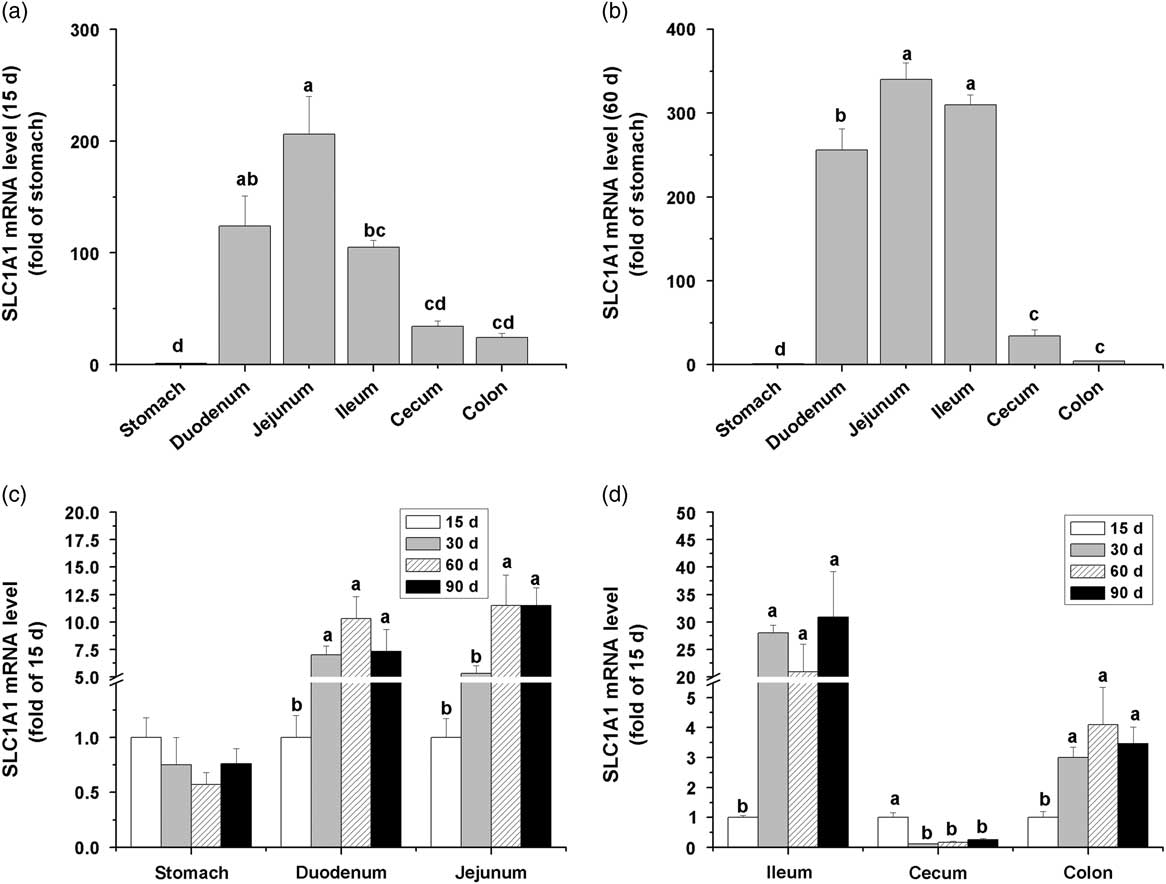
In order to show the major expression segments, we analyzed the SLC15A1, SLC7A1 and SLC1A1 mRNA levels of the different intestinal segments before (15 day) and after (60 day) weaning. The RT-PCR analysis indicated that SLC15A1, SLC7A1 and SLC1A1 mRNA were expressed in all developmental stages in all of the tested tissues, including the stomach, duodenum, jejunum, ileum, cecum and colon. SLC15A1 was most highly expressed in the small intestine (Figure 1a and b). The ileum had the highest SLC15A1 mRNA level, and the stomach had the lowest SLC15A1 mRNA level (Figure 1a and b). The expression levels of the SLC15A1 gene in the small intestine increased significantly after weaning (Figure 1c and d, P<0.05). The gene expression of SLC15A1 in the stomach did not alter significantly at different developmental stages (Figure 1c, P>0.05). Although the expression levels of SLC15A1 were downregulated in the cecum after weaning, they were up regulated in the colon (Figure 1b, P<0.05). Duodenum, jejunum and ileum had the highest mRNA level of SLC7A1 in lactation and growing period (Figure 2a and b, P<0.05). The SLC7A1 mRNA levels in the duodenum, jejunum and ileum were higher after weaning than before (Figure 2c and d, P<0.05). In the colon, SLC7A1 mRNA levels increased with age (Figure 2d, P<0.05). The gene expression of SLC7A1 in the stomach did not alter significantly at different developmental stages (Figure 2c, P>0.05). SLC1A1 was most highly expressed in the small intestine during the entire period, especially in the jejunum (Figure 3a and b). The stomach had a very low level of SLC1A1 during the entire period (Figure 3a and b). Moreover, SLC1A1 mRNA levels in the small intestine significantly increased with development (Figure 3c and d, P<0.05). The gene expression of SLC1A1 in the stomach was not altered significantly at different developmental stages (Figure 3c, P>0.05). The expression levels of SLC1A1 in the cecum were downregulated after weaning, but upregulated in the colon (Figure 3d, P<0.05).
Distribution ((a) in lactation, (b) in the growing period) and growth characteristics (c and d) of peptide transporter 1 (SLC15A1) in the gastrointestinal tract of rabbits (experiment 1). The values are expressed as mean±SEM (n=8). a,b,cThe means differ significantly (P<0.05).

Distribution ((a) in lactation, (b) in the growing period) and growth characteristics (c and d) of cationic amino acid transporter 1 (SLC7A1) in the gastrointestinal tract of rabbits (experiment 1). The values are expressed as mean±SEM (n=8). a,b,c,dThe means differ significantly (P<0.05).

Distribution ((a) in lactation, (b) in the growing period) and growth characteristics (c and d) of excitatory amino acid transporter 3 (SLC1A1) in the gastrointestinal tract of rabbits (experiment 1). The values are expressed as mean±SEM (n=8). a,b,c,dThe means differ significantly (P<0.05).

Experiment 2
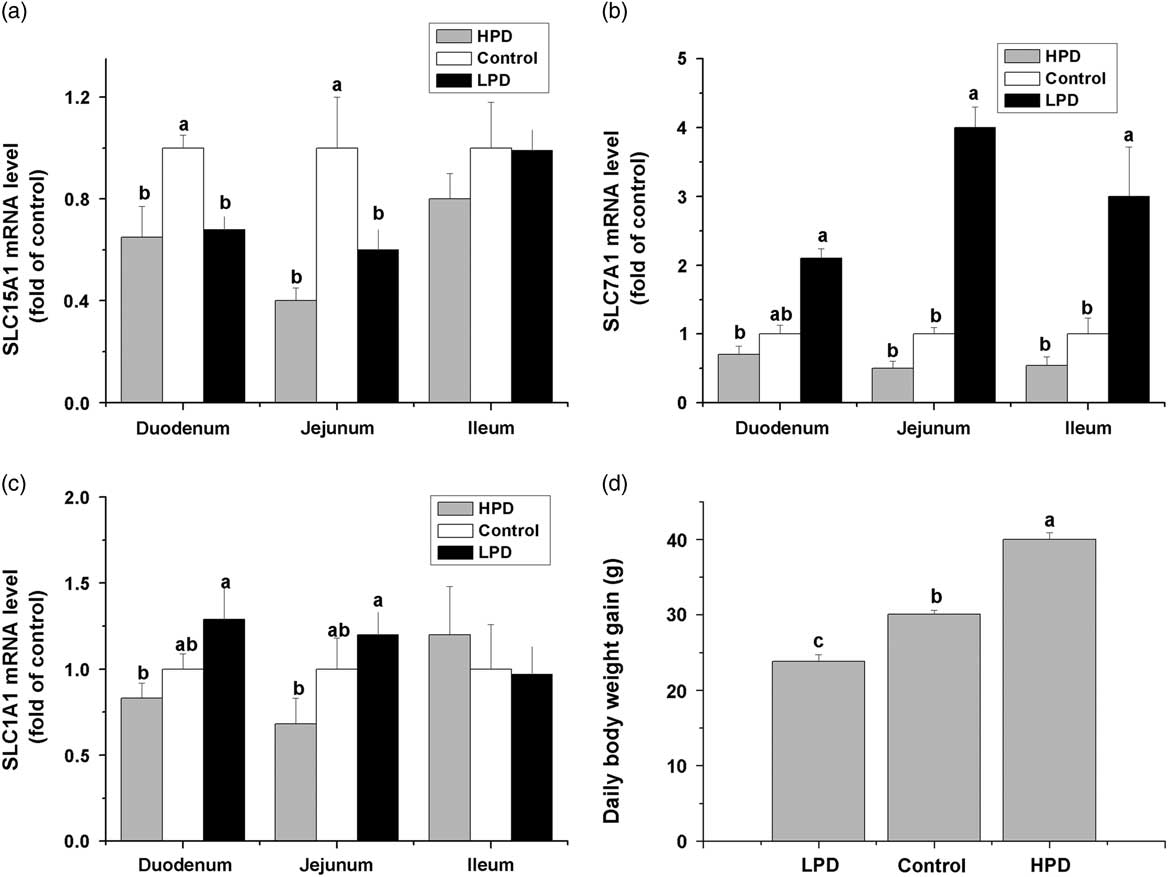
Daily weight gain of rabbits increased significantly with increased dietary protein (P<0.05, Figure 4d). SLC15A1 mRNA levels in the duodenum and jejunum were higher in the control than HPD- or LPD-fed rabbits (P<0.05, Figure 4a), but was unaffected by dietary protein in the ileum (P>0.05, Figure 4a). The gene expression levels of SLC7A1 in all site assessed were upregulated with decreased dietary protein (P<0.05, Figure 4b). The gene expression levels of SLC1A1 were also upregulated in response to reduced dietary protein in the duodenum and jejunum (P<0.05, Figure 4c) but not in the ileum (P>0.05).
Effect of dietary protein (high protein diet (HPD); control, normal protein level diet; low protein diet (LPD)) on peptide transporter 1 (SLC15A1), cationic amino acid transporter 1 (SLC7A1), excitatory amino acid transporter 3 (SLC1A1) genes in the gastrointestinal tract and production performance of rabbits (experiment 2). The values are expressed as mean±SEM (n=8). a,b,cThe means differ significantly (P<0.05).

Discussion
SLC15A1, SLC7A1 and SLC1A1 were identified as genes responsible for the transport of small peptides and amino acids. Subsequent studies identified SLC15A1, SLC7A1 and SLC1A1 in various tissues in several species (e.g. chickens, pigs and rats) (Speier et al., Reference Speier, Yadgary, Uni and Wong2012; Zhang et al., Reference Zhang, Qiao, Ren, Zeng, Ma, Wu, Thacker and Wu2013). Our study focussed on the tissue expression pattern of rabbit (SLC15A1, SLC7A1 and SLC1A1) across the digestive tract.
Rabbit SLC15A1 gene expression pattern
SLC15A1 is the major intestinal oligopeptide transporter, which accounts for the absorption of 70% of the total nitrogen supplied to the body (Rubio-Aliaga and Daniel, Reference Rubio-Aliaga and Daniel2008). SLC15A1 in intestine of different species was inconsistent, and the expression level of SLC15A1 mRNA in duodenum and jejunum in monogastric animals such as pigs (Zhou et al., Reference Zhou, Feng, Huang, Zuo, Zhi, Dong, Zhang and Ye2009), chicken (Zhang, Reference Zhang2014) and mice (Wu, Reference Wu2016) is higher, while the expression of the intestine in the ruminant was centered on jejunum and ileum (Xu, Reference Xu2015; Sun et al., Reference Sun, Ni, Chen, Zhang and Wang2017). The expression pattern and developmental expression of the rabbit SLC15A1 gene along the gastrointestinal tract has not been previously studied. The RT-PCR results showed that the level of SLC15A1 mRNA was detected at highest levels in the duodenum, jejunum and ileum and lower levels in the caecum and colon. A very low, but significant, amount of SLC15A1 mRNA was also detected in the stomach. Our findings are in line with those reported in sheep and dairy cows (Chen et al., Reference Chen, Wong and Webb1999). All results suggest that the small intestine is the major site of oligopeptide absorption during the whole period, especially the ileum, which had the highest mRNA levels of SLC15A1. In line with previous studies (Shen et al., Reference Shen, Smith and Brosius2001), SLC15A1 appears to be regulated developmentally and may be induced by uptake of peptide substrates when food intake begins. The present study also shows that the SLC15A1 mRNA level in the caecum decreased rapidly after weaning, which may be related to the fermentation of cecum. During the lactation period in rabbits, the caecal microbiota of pups does not develop significantly until the food source of the young rabbit shifts from milk to dry feed, around 3 weeks of age (Padilha et al., Reference Padilha, Licois, Gidenne, Carré and Fonty1995). The function of the cecum alters from peptide absorption to fermentation (Bellier et al., Reference Bellier, Gidenne, Vernay and Colin1995). At 90 days of age, the caecal microflora of rabbits seems stable (Nicodemus et al., Reference Nicodemus, Mateos, de Blas and Carabaño1999). The higher level of SLC15A1 mRNA of colon is useful to transport of oligopeptides of soft faeces from cecum (Nicodemus et al., Reference Nicodemus, Mateos, de Blas and Carabaño1999).
The expression of SLC15A1 varies in response to changes in diet and developmental age. Selective peptides (Shiraga et al., Reference Shiraga, Miyamoto, Tanaka, Yamamoto, Taketani, Morita, Tamai, Tsuji and Takeda1999), growth factors (Nielsen et al., Reference Nielsen, Amstrup, Steffansen, Frokjaer and Brodin2001) and disease states (Daniel and Kottra, Reference Daniel and Kottra2004) can alter SLC15A1 gene expression. Gilbert et al. (Reference Gilbert, Li, Emmerson, Webb and Wong2008) reported SLC151A gene expression was increased in chicks fed a diet containing soyabean meal compared with those fed a diet containing corn gluten meal. In rabbit, we found SLC15A1 mRNA was unaffected by dietary protein in the ileum but was higher in duodenum and jejunum for rabbits fed the standard or 16% CP diet than for those fed the lower or higher protein diets. This may imply that rabbits fed the 16% may have had a higher transport efficiency for peptides through the mechanism and practical implications remain to be established. The result is inconsistent with studies in pigs and rats reported by Zhang et al. (Reference Zhang, Qiao, Ren, Zeng, Ma, Wu, Thacker and Wu2013) and Erickson et al. (Reference Erickson, Gum, Lindstrom, McKean and Kim1995). They found that feeding a LPD had no effect on the SLC15A1 mRNA levels in the jejunum and that feeding a HPD increased the expression and transport rate of SLC15A1 in rat intestines. This may be associated with differences in protein content or amino acid levels between experiments or reflect species differences in regulation of the gene. Moreover, the studies suggest dietary regulation has a profound effect on SLC15A1 expression in the intestine.
Rabbit SLC7A1 gene expression pattern
A previous study indicated the importance of SLC7A1 in the small intestine, specifically in maintaining the homeostasis of basic amino acids and overall protein nutrition in the body (Broer et al., Reference Broer, Wagner, Lang and Broer2000). SLC7A1 is mainly responsible for the transport of three types of amino acids: l-lysine, arginine and ornithine (Apps, Reference Apps1991). Therefore, understanding the expression of SLC7A1 is essential. We found that the major site of rabbit SLC7A1 gene expression was in the duodenum, jejunum and ileum over the whole growing period. Moreover, SLC7A1 mRNA level in duodenum, jejunum and ileum increased rapidly after weaning, which may be related to the bigger change of the amount of protein in the digestive system of the rabbit. Rabbit milk is the high protein rich diet that a rabbit will have. Increasing SLC7A1 mRNA after weaning suggests the efficiency of amino acid absorption may be enhanced. The upregulated SLC7A1 mRNA in the colon with increasing age probably reflected the production of soft faeces, which appeared when the animal began eating dry feed. The marked increase in gene expression in rabbits fed the low protein diet is in line with the results of Hatzoglou et al. (Reference Hatzoglou, Fernandez, Yaman and Closs2004) in rats. They reported amino acid starvation increased the transcription, mRNA stability and translation of SLC7A1 mRNA, but this did not overcome protein deficiency. Because rabbits fed with LPD had the lowest BW gain. The protein diet response of SLC7A1 gene in the small intestine was consistent with weaning leading to increased expression.
Rabbit SLC1A1 gene expression pattern
Glutamate has many important functions in nutrition, metabolism and signalling as a non-essential amino acid (Brosnan and Brosnan, Reference Brosnan and Brosnan2013). Almost all dietary glutamate is extensively metabolized in the first-pass by the intestine to maintain intestinal health (Lin et al., Reference Lin, Zhang, Yu, Li, Zhang, Sun, Gao and Zhou2014). Studies in pigs, rats and mice demonstrate that SLC1A1 is the predominant anionic amino acid transporter in the intestine (Fan et al., Reference Fan, Matthews, Etienne, Barbara, Dale and Burrin2004). The present study showed the highest rabbit SLC1A1 gene expression is in the small intestine during the entire period, which suggests that the small intestine was the major site of glutamate transport in rabbits, especially the jejunum. Our results are consistent with the previous studies in chickens (Gilbert et al., Reference Gilbert, Li, Emmerson, Webb and Wong2007) and sheep (Sun et al., Reference Sun, Ni, Chen, Zhang and Wang2017). Because SLC1A1 activity is essential for glutamate transport, upregulation of SLC1A1 gene expression in the small intestine after weaning may be caused by feeding diet, containing lower level protein compared with rabbit milk, which is also consistent with SLC7A1 change after weaning in small intestine. The SLC1A1 response to weaning may help ensure that glutamate from the diet is made available. Moreover, the effects of growth on SLC1A1 gene expression in the cecum and colon are similar to SLC15A1, which is also related to the fermentation in the cecum.
The SLC1A1 is known for its specificity towards the absorption of acidic amino acids. Because the reduction in dietary protein was accomplished primarily at the expense of a non-essential amino acid, this meant a reduction in the dietary concentrations of these acidic amino acids (Corzo et al., Reference Corzo, Loar, Kidd and Burgess2011). The previous study showed that the abundance of SLC1A1 mRNA was greater in chicks that consumed soybean meal (higher quality protein) compared with chicks consuming corn gluten meal (low quality protein) (Gilbert et al., Reference Gilbert, Li, Emmerson, Webb and Wong2008). There was a significant upregulation of the SLC1A1 gene expression in the duodenum and jejunum in the LPD group compared with the HPD-fed group. This might indicate a physiological adaptation in an attempt to compensate for the reduction in acidic amino acids substrates with highly expressed SLC1A1. The result is in accordance with a study in chicken and rat intestines (Moundras et al., Reference Moundras, Remesy and Demigne1993; Corzo et al., Reference Corzo, Loar, Kidd and Burgess2011). These authors reported that the activities of gut enzymes and transport systems increase markedly in response to nutritional deficiency, thereby increasing the capacity for amino acid absorption. We also found that the alteration of dietary protein levels did not change SLC1A1 gene expression in the ileum, which implies that the effect dietary protein level has on SLC1A1 gene expression is site specific. Besides, the lack of any effect of dietary protein in the ileum might also be due to SLC1A1 activity being higher than or as high as the highest levels the ileum.
Conclusion
Our results showed the SLC15A1, SLC7A1 and SLC1A1 genes were expressed in all rabbit digestive sites investigated (stomach, duodenum, jejunum, ileum, colon and cecum). Gene mRNA differed across sites and with development suggesting time and sites related differences in peptide and amino acid absorption in rabbits. The effect of dietary protein levels on SLC15A1, SLC7A1 and SLC1A1 gene expression also differed across sites.
Supplementary material
To view supplementary material for this article, please visit https://doi.org/10.1017/S1751731118001404
Acknowledgements
This work was supported by the Natural Science Foundation of Shandong Province (ZR2018QC004, ZR2018MC025), Modern Agro-industry Technology Research system (CARS-43-B-1), Funds of Shandong ‘Double Tops’ Program and Youth Science and Technology Innovation Fund of Shandong Agricultural University (2015-2016).
Declaration of interest
The authors declare that there are no conflicts of interest.
Ethics statement
All study procedures were approved by the ethics committee at Shandong Agricultural University Animal (SDAUA-2014-131) and were in accordance with the Guidelines for Experimental Animals established by the Ministry of Science and Technology (Beijing, China).
Software and data repository resources
No data or models are deposited in an official repository.