




No CrossRef data available.
Crossing borders: Recognition of Spanish words by English-speaking children with and without language impairment
Published online by Cambridge University Press: 01 October 2004
Abstract
We introduce an objective method for classifying phonological overlap between Spanish and English translation equivalents. This method then is exploited to examine spoken word recognition using stimuli with graded levels of phonological overlap. Performance by typical English-only speaking (EO) children and English-only children with primary language impairment (LI) is compared to a control group of bilingual Spanish–English peers (BI). Response time and accuracy separated groups, with the BI group outperforming the EO group, who in turn outperformed the LI group. Children with more severe LI are slower than those with mild LI, and LI severity is significantly correlated with speed. The two groups of monolingual children and the LI subgroups respond in a qualitatively similar way to decreasing phonological overlap.
Information
- Type
- Articles
- Information
- Copyright
- © 2004 Cambridge University Press
Spoken word recognition is “the process by which a listener uses the acoustic–phonetic information available in the speech form, in conjunction with a variety of other forms of information that may be available, to access an entry in his or her lexicon” (Dollaghan, 1998, p. 19). Accurate and efficient spoken word recognition is a fundamental aspect of language comprehension, an aspect that, in a variety of different experimental paradigms, school-age children with primary or specific language impairment (LI) show deficits relative to their typical chronological-age peers (Dollaghan, 1998; Edwards & Lahey, 1996; Ellis Weismer & Hesketh, 1996, 1998; Montgomery, 2002; Montgomery & Leonard, 1998; Windsor & Hwang, 1999). Using a novel experimental paradigm, this study addresses the question of how phonology interfaces with lexical information in word recognition for children with LI.
SPOKEN WORD RECOGNITION IN LI
A deficit in phonological/phonetic skill, whether conceived as a representational, encoding, perceptual, and/or metalinguistic deficit, appears to be central to explanations of LI spoken word recognition. For example, Edwards and Lahey (1996) examined the performance of 4- to 9-year-olds with and without LI in an auditory lexical decision task. Although response time in the task was not associated with children's comprehension level, children with mixed (expressive and receptive) LI were slower to recognize real words than their typical age peers. Children with LI also were slower than age peers in a nonlinguistic task (responding vocally to a tone), although the difference in nonlinguistic performance was statistically insufficient to explain the group difference on the lexical decision task. Edwards and Lahey (1996) hypothesized that their findings could be best explained in terms of children with LI having more limited processing resources and/or less detailed phonological representations than age peers. Using a gating paradigm, Dollaghan (1998) found that 6- to 10-year-old children with LI needed to hear a greater number of gated intervals of unfamiliar (nonsense) words than typical age peers to accurately name the words. In addition, children with LI needed to hear more of the speech signal than peers to name the initial consonants of both familiar and unfamiliar words. Dollaghan interpreted these results as indicating that a deficit in phonological representation, compounded by a difficulty in speech perception, underlies the poorer lexical access of children with LI.
Using a word monitoring task, Montgomery and Leonard (1998) showed that 6- to 10-year-olds with LI were less sensitive than age- and language-matched peers to low-phonetic substance morphemes (i.e., morphemes of relatively brief duration and low amplitude), such as the regular past tense marker -ed. However, the children with LI approximated the performance of age peers for high-phonetic substance morphemes (the present progressive -ing). Using two auditory lexical decision tasks, Windsor and Hwang (1999) found that 10- to 12-year-old children with LI (and concomitant reading disabilities) were slower and less accurate than age- and language-matched peers to recognize unfamiliar phonologically opaque derivatives, that is, derivatives that included stress and/or vowel changes relative to the phonology of the base (e.g., acidity, applicant). However, children with LI showed equivalent speed and accuracy to their age peers in identifying unfamiliar phonologically transparent derivatives (e.g., breakable, childless), presumably because the familiar base words (e.g., break, child) were more readily identifiable in the transparent than opaque derivatives.
Like Edwards and Lahey (1996), Montgomery and Leonard (1998) and Windsor and Hwang (1999) suggested their findings could be interpreted as children with LI evidencing real-time performance deficits due to a more limited processing capacity than age peers. Regardless of the specific theoretical interpretation, these study results implicating a LI deficit in spoken word recognition for unfamiliar or phonologically less detailed or salient forms are well in line with other findings. In particular, the results are in line with research indicating that children with LI (or learning disabilities) also perform more poorly than typical peers on a wide range of metalinguistic tasks that emphasize phonological awareness (Carlisle, 1987, 1988; Shankweiler et al., 1995; Windsor, 2000; see Bishop, 1997, and Leonard, 1998, for reviews).
It is not always the case, however, that some kind of degradation of phonological or phonetic information results in disproportionately poorer spoken word recognition performance by children with LI relative to typical peers. Using a novel word learning task, Ellis Weismer and Hesketh (1998) found no difference between the ability of 6- to 9-year-olds with and without LI to recognize novel labels, where the labels had varying extents of phonetic similarity to a target. Montgomery (2002) used a sentence monitoring task with 6- to 10-year-old children with and without LI. He found no differential task performance across groups in the task, in which sentences varied in the proportion of stop consonants they contained. Finally, Windsor and Kohnert (in press) found no difference between 8- to 13-year-old children with and without LI in speed or accuracy in recognizing real words in an auditory lexical decision task. Both groups showed lower accuracy with unfamiliar versus familiar words. However, in line with the familiarity effect found by Dollaghan (1998), the children with LI showed lower accuracy than their age peers in correctly rejecting nonsense words.
There are at least two task-dependent reasons for the range of results. It may be the case that the different experimental paradigms tap processes that are differentially vulnerable in LI. For instance, as suggested by Edwards and Lahey (1996), an auditory lexical decision task may place greater demands on phonological processing in lexical access than does a picture identification task, in which other conceptual or semantic information is available. It also is possible that manipulating phonological change as a binary rather than continuous phenomenon (e.g., highly familiar vs. nonsense words, highly phonologically transparent vs. opaque words) is an insufficient test of potential group differences in response to phonological variance.
It also may be that potential differences among task participants explain the discrepant findings to some extent. As one example, Edwards and Lahey (1996) found that children with expressive-only LI did not show word recognition deficits to the same extent as children with mixed LI. Although it is possible that quantitative and/or qualitative group differences in spoken word recognition may emerge only for children with more severe LI, we know relatively little about the impact of LI severity on word recognition or other language skills.
One direct examination of the association between LI severity and lexical task performance was carried out, with response time (RT) as the dependent variable. Lahey, Edwards, and Munson (2001) investigated the relationship between standardized language test scores and RT data collected from 4- to 9-year-old children with LI on seven lexical measures (from picture naming, rapid automatic naming, nonword repetition, and auditory lexical decision tasks) as well as one nonlinguistic measure (auditory/visual detection). Forty correlations between each of five language test scores and the eight RT measures were performed, with the finding of no statistically significant association in any comparison. The authors interpreted this result as suggesting that underlying processing speed in LI may relate to aspects of language not measured by standardized tests, and/or that the high RT variability among children with LI indicates that RT is not a good index of processing speed for this population.
There are, however, other possible interpretations of this finding. First, lexical tasks of the type examined by Lahey et al. (2001) are presumed to include a knowledge/experience component as well as a speed component that motivates rapid completion of tasks (Salthouse, 1993). Because of this experience-dependent component, the RT on these tasks may indeed not be directly related to LI severity. Second, Lahey et al. (2001) used unstandardized residual values to represent RT in order to normalize for the broad chronological age range of their participants. The use of residuals may have statistically modified the nature of any RT–LI severity association.1
To determine if there was a relation between LI severity and RT, Lahey et al. (2001) used unstandardized residual values to represent RT in order to normalize the values for the broad chronological age range of participants. Residuals represented all variance in RT that was unexplained by chronological age. That is, the residuals would have included not only variance that would be due to any influence of LI severity, but would also contain variance that could be explained systematically by other variables as well as error variance (which would be random and unlikely to be correlated with the standard test scores). Lahey et al. do not report the amount of variance in RT attributable to chronological age. However, if this was a substantial proportion (as suggested by researchers such as Cerella & Hale, 1994, and Kail, 1991), then the procedure of normalizing RT for age potentially could have strongly influenced the finding of no relation between LI severity and processing speed.
The overall purpose of the current study was to help clarify the nature of information processing at the phonology–lexical interface in spoken word recognition, and to do so in a way that systematically considered both task and learner variation (cf. Ellis Weismer & Evans, 2002; Windsor & Kohnert, in press). The specific aims of the study were twofold. The first objective was to develop a novel experimental task and objective scale to examine the influence of graded levels of phonological information on spoken word recognition. The second objective was to use the task to examine the performance of monolingual English-speaking children with mild and more severe LI in relation to their typical peers.
METHOD I: DEVELOPMENT OF AN EXPERIMENTAL PARADIGM
Crosslinguistic cognates
Our first goal was to develop an experimental task that would be sensitive to persistent differences in spoken word recognition between school-age children with and without LI. The task was designed to selectively emphasize demands on the phonological processing system, while simultaneously minimizing demands on the lexical–semantic system. The task, which is described in detail in a later section of the paper, relies on monolingual English-speaking children using their knowledge of the English sound system to extract meaning from words spoken in an unfamiliar language, Spanish. The choice of lexical stimuli used in the task hinges on a concept borrowed from the bilingual processing literature: crosslinguistic cognates. Crosslinguistic cognates are word pairs in two different languages that share both meaning (translation equivalents) and form (phonologic or orthographic similarity; e.g., Costa, Caramazza, & Sebastian–Galles, 2000; de Groot, Borgwaldt, Bos, & van den Eijinden, 2002; de Groot & Nas, 1991; Dijkstra, Grainger, & Van Heuven, 1999; Friel & Kennison, 2001; Sanchez–Casas, Davis, & Garcia–Albea, 1992; Tokowicz, Kroll, de Groot, & van Hell, 2002). There are an estimated 3,000 English–Spanish cognates, such as teléfono/telephone or flauta/flute (Lobo, 1966, as cited in Meara, 1993).
In the current context, we consider crosslinguistic cognate status along a naturally occurring phonological continuum, with some Spanish–English translations being very similar in sound (elephant/elefante) relative to other pairs that have minimal phonological overlap (crib/cuna). This perspective of graded levels of formal overlap between two languages, as opposed to discrete, binary categories (e.g., cognate or noncognate) is in line with classification systems used in recent studies to investigate lexical processing in adult bilinguals (de Groot et al., 2002; Tokowicz et al., 2002). By conceptualizing graded dimensions of crosslinguistic overlap as opposed to discrete categories, we also are able to investigate children's responses to increased processing demands at the sound–word interface by systematically varying the degree of phonological overlap between the Spanish stimulus item and its English translation.
For example, in a forced choice receptive task, monolingual English-speaking children should be able to recognize Spanish stimulus words such as teléfono and bebe (baby) with high speed and accuracy. In contrast, English-only speaking (EO) children would be expected to be slower and less accurate in recognizing words such as cuna (crib) and lago (lake), given that the Spanish–English overlap is restricted to the initial phoneme in each case. If performance by typical EO children declines on a forced choice recognition task as the phonological relationship between Spanish words and their English translations becomes less clear, these response decrements can be attributed to the increased demands placed on the phonological processing system. To accomplish this, an objective method for determining the extent of phonological overlap between translation equivalents is needed. An objective scale was devised, the Crosslinguistic Overlap Scale for Phonology (COSP), which is described below.
Development of the COSP
A list of 132 Spanish–English word pairs was created by bilingual researchers in our laboratory. All word pairs were translation equivalents, where the pairs had some degree of crosslinguistic overlap at the phonological level. Translation equivalents with zero phonological overlap (e.g., hombre–man, taza–chair) were not included as word pairs. We developed a 10-point scale to quantify the overlap for each of the translated word pairs. As shown in Table 1, the COSP indexed the degree of phonological overlap between Spanish–English word pairs with respect to four different features: initial sound, number of syllables, percentage of overlapping consonants, and percentage of overlapping vowels. For example, the word pair león–lion in Table 1 would receive the highest score of 9 (3 points for sharing the same initial consonant, 2 points for sharing the same number of syllables, 3 points for high consonant overlap, and 1 point for vowel overlap). A crosslinguistic comparison of word stress was not considered as a separate variable in COSP scoring. Although crosslinguistic overlap also may be reflected in orthography, orthographic overlap was not considered in the classification system as our focus was on spoken word recognition.

Scale validation
From the original set of 132 word pairs, 80 pairs were selected based on high word frequency in English and overall imageability. The 80 pairs represented the range of scores on the COSP, and could be grouped into four different conditions, each with 20 pairs. The word pairs with the highest COSP scores (scores of 9, indicating the greatest degree of Spanish–English overlap) were in Condition 1. Condition 2 pairs had COSP scores of 8; Condition 3 pairs had scores of 6–7. Condition 4 included word pairs with the lowest scores (scores of 3–5, reflecting the least amount of overlap between pairs). Even in Condition 4, however, there was identifiable phonological overlap, with most word pairs sharing the same initial consonant (e.g., nido–nest) and/or similar consonantal structure (e.g., estufa–stove). A lexical generation task was used to empirically validate these four conditions. A lexical generation task was chosen because of its relative difficulty (e.g., as compared to a forced-choice task) and potential for avoiding ceiling effects that might obscure true differences among conditions.
Twenty-six native English-speaking adults with little or no knowledge of Spanish acted as subjects. The adults listened to a sound field presentation of the recorded words in Spanish and were asked to guess the corresponding English word for each of the 80 items. The adults responded in writing, with the variable of interest being the percentage of adults correctly providing the English equivalent of the Spanish word. There was a systematic relation between COSP condition and performance on the word generation task. Despite the considerable difficulty of the task, 54% of the English adults guessed target words correctly in Condition 1 (most phonological overlap). The percentage of accurate guesses dropped across conditions to 40% in Condition 2, 32% in Condition 3, and 15% in Condition 4 (least phonological overlap). There was a broad consensus in accuracy of guesses across items. About 50% of the 20 target words in Condition 1 were accurately identified by at least two-thirds of the adults. Twenty-five percent of Condition 2 words, 15% of Condition 3 words, and 0% of Condition 4 words were accurately identified by two-thirds of the adults. There was, however, some variability in accuracy of target word guesses among selected words in each condition. For example, sweter (sweater) in Condition 1 was identified accurately by only 8 of the 26 adults. On the other hand, teatro (theater) in Condition 4 was identified accurately by 7 adults. While this variability limits the validation process for some specific items, the overall results were considered adequate to support using the COSP system to determine graded levels of phonological overlap in the experimental Picture–Word Identification task.
METHOD II: SPANISH PICTURE–WORD IDENTIFICATION TASK
Participants
A total of 103 children, ranging in age from 8 to 13 years, participated in the Spanish Picture–Word Identification task. This task was part of a larger experimental protocol in which all children took part. Children's performance on other lexical and nonlinguistic tasks has been reported elsewhere (Kohnert & Windsor, in press; Windsor & Kohnert, in press). Seventy-six children were monolingual speakers of English, as determined by parent and child report. No English-speaking children reported any exposure to Spanish in their homes and no significant or systematic exposure to Spanish in their schools. Of these English-only children, 48 children (20 boys, 28 girls) had typical language skills (EO) and 28 children (16 boys, 12 girls) had a primary language impairment (LI). The other 27 children (15 boys, 12 girls) were typically developing Spanish–English bilinguals (BI) who served as a control group in this particular task. Key group characteristics are given in Table 2. All children passed hearing, vision, and oral–motor screening and had no history of neurological or socioemotional concerns. Children in all three groups also had normal nonverbal IQ scores, as measured by a standard score of at least 85 on the Test of Nonverbal Intelligence—3 (TONI; Brown, Sherbenou, & Johnsen, 1997). However, the LI group tended to have a lower mean TONI score than the other two groups (p=.010). This result is in line with findings that children with LI tend to have lower nonverbal IQ scores than their typical peers (Swisher, Plante, & Lowell, 1994).

Children in the LI group had Listening and/or Speaking standard scores on the Clinical Evaluation of Language Fundamentals—3 (CELF; Semel, Wiig, & Secord, 1995) that were greater than 1 SD below the mean. Both children with expressive-only LI and children with both expressive and receptive deficits were included. A substantial proportion of the children (16 of 28) also had reading skills below age expectations. The group had a mean standard Word Identification score on the Woodcock Reading Mastery Tests (WRMT; Woodcock, 1987) of 85 (SD=16). The mean Passage Comprehension score was 82 (SD=12). All but two of the children with LI had a history of receiving special education services for spoken language and/or reading. All 48 children in the EO group had total CELF scores that were no more than 1 SD below the mean. Children in this group also had WRMT scores that met this criterion.
As shown in Table 2, children in the LI group were divided into either a “mild” subgroup (LI-M) or more “severe” subgroup (LI-S) based on the median total CELF score, with 14 participants in each group. Children in the LI-M subgroup were an average of about 8 months younger than children in the LI-S subgroup and had a significantly higher mean total CELF standard score (t=6.721, p<.05) than children in the LI-S subgroup. Eight of the 14 children in the LI-M subgroup had expressive-only impairments (with standard CELF Listening scores above 85), whereas only one child in the LI-S subgroup had an expressive-only impairment. Conversely, 10 children in the LI-S subgroup and only 3 children in the LI-M subgroup had both expressive and receptive impairments. Three children with receptive-only impairments (with standard CELF Speaking scores above 85) were in each group. The LI-M subgroup had a mean Speaking score of 80 and a mean Listening score of 88. The LI-S subgroup had lower expressive and receptive scores, with a mean Speaking score of 70 and a mean Listening score of 76. Consistent with Evans (1996), our participants with expressive and receptive LI tended to have poorer expressive skills (mean Speaking score=75) than the participants with expressive-only LI (mean Speaking score=81). The LI-M and LI-S subgroups also differed significantly in nonverbal IQ (t=2.343, p<.05); the LI-M subgroup had a mean TONI score 10 points higher than the LI-S subgroup.
In order to ensure that the relative degree of phonological overlap was the factor that determined task performance, a group of bilingual Spanish–English speaking children was included as a control group. The 27 children in this BI control group each learned Spanish as a first or primary language in the home and learned English as a second language. Each child was proficient in both languages. The BI children had 4–8 years of English experience and attended English educational programs in the United States. Each of the BI children demonstrated age-appropriate skills in Spanish or English, using the conservative measure of a total CELF standard score of 85 or above on either the English or Spanish (Semel, Wiig, & Secord, 1997) versions of the test. Twenty-two of the 27 BI children had standard scores of 85 or above on both the English and Spanish CELF versions. BI children were not administered the WRMT. Previous studies have shown that the Spanish stimulus words included in the experimental task are familiar to bilingual school-age children with this level of language experience (Kohnert & Bates, 2002; Kohnert, Bates, & Hernandez, 1999).
All children took part in two tasks, with the order of task administration counterbalanced across children. The primary task of interest was the experimental Picture–Word Identification task. Picture–word identification tasks have long been used with children as ways to investigate the recognition of spoken words, as well as breadth of vocabulary knowledge (Rice, 1996). In order to correctly match the spoken word with its pictured referent, children must recognize and access the lexical–semantic referent to the spoken word.
Because subtle perceptual–motor deficits have been documented in LI (Kohnert & Windsor, in press; Miller, Kail, Leonard, & Tomblin, 2001; Windsor, Milbrath, Carney, & Rakowski, 2001), performance on a second task also was measured. The second task was a choice visual detection task used to measure the independent contribution of children's perceptual–motor speed to RT performance in the experimental task. Even though Edwards and Lahey (1996) found that the anticipated faster perceptual–motor speed for EO children appears to be insufficient to account in full for their faster word recognition, our aim was to investigate potential group differences beyond those that could be attributed to any differences in perceptual–motor speed.
Experimental task: Picture–word identification
Word and picture stimuli
The Picture–Word Identification task was a spoken, two-choice word recognition task in which children heard a Spanish word and chose the picture the word labeled from a target and foil picture. The task used the Spanish translations of the 80 COSP word pairs previously identified in the word generation task. The same four conditions, representing graded levels of phonological overlap or transparency, were used. The COSP and word generation scores for each condition are summarized in Table 3. On the 10-point COSP scale, word pairs received scores ranging from a low of 3 (minimal, but still discernible, phonological overlap, e.g., cuna/crib) to a high of 9 (substantial overlap, e.g., león/lion). Given known effects of frequency on word recognition, it was possible that difference in English word frequency among the four conditions might influence results from the Picture–Word Identification task. English (as opposed to Spanish) word frequency based on child corpora data was of interest because our primary study question concerned the ability of children speaking English only to use phonological information to bootstrap into their lexical–semantic system.

As shown in Table 3, however, mean word frequency (based on Carroll, Davies, & Richman, 1971) for the English translation of Spanish words was generally equivalent across the four conditions. Differences in mean word frequency were not significantly different among Conditions 2, 3, and 4. Although words in all conditions were high-frequency words, the English translations of words in Condition 1 were significantly less frequent than words in the other conditions (p<.05). Given that Condition 1 words had the highest phonological overlap, the difference in frequency represented a potential bias against the facilitative effect of overlap, and thus was a more conservative test of our central study hypothesis. It was also important to ensure that English word frequency was equivalent across the target and foil pictures within each condition, so that children would not choose a response based on frequency. Each target word was matched for English word frequency (Carroll et al., 1971), but not phonological similarity, with another imageable foil word. Multiple exemplars of the 80 Spanish target words were produced by a native Spanish-speaking adult woman. The most intelligible and natural-sounding exemplar of each word was digitized for use in the experimental task.
Pictures that corresponded to each of the 80 target–foil pairs were selected. Most of the 160 pictures were obtained from the computer software Picture This (Pro-Ed, 1999). These pictures were supplemented with pictures from Mason and Garcia (1990), from Kohnert, Scarry–Larkin, and Price (2000), and from original photographs taken in our laboratory. Pictures were either scanned or imported from CD-ROM files into an Adobe Photoshop (version 5.5) computer program. All pictures were in color, placed on a white background, and standardized in size to 800×600 pixels.
Procedure
Each child was tested individually in a quiet room by a trained research assistant. Presentation of the spoken words and pictures was accomplished using E-Prime software (Psychology Software Tools Inc., 2000). Children wore headphones and sat facing a computer screen. In each trial, children first heard a target word in Spanish (e.g., elefante) at a comfortable listening level. At the offset of the spoken word, the target and foil pictures appeared simultaneously on the computer screen (e.g., elephant and balloon), one on the left side of the screen and the other on the right. Trials were presented in a random order, and the screen position of the target picture was counterbalanced across trials. Eight of the 80 experimental trials (2 from each condition) were repeated for the purpose of checking response reliability, for a total of 88 trials. Children indicated if the spoken word best fit the picture on the left or right by pressing one of two buttons on the E-Prime response box as quickly as possible, using the index finger of the preferred hand. Hand preference was determined using the Edinburgh Handedness Inventory (Oldfield, 1971) as part of the study protocol.
To ensure that children understood the task and could use the response buttons, they participated in training and practice trials before the experimental trials. Children heard eight training words and were given feedback about response accuracy and appropriate finger placement on the response buttons. Children heard eight different practice words, with no feedback about response accuracy. Children were required to achieve at least six of eight correct responses during practice before proceeding to the experimental trials. Seven children (four LI, three EO) initially did not meet this criterion and repeated the training and practice trials. No training or practice words or pictures were used in the experimental trials.
Nonlinguistic task: Choice visual detection
As part of the larger study protocol, the same children who participated in the Picture–Word Identification task took part in a perceptual–motor task, Choice Visual Detection. This task required participants to press a given response button to choose between two visual stimuli, and as such imposed comparable perceptual–motor demands to the Picture–Word Identification task. The task performance of 100 of the 103 children in this study is described in detail by Kohnert and Windsor (in press). In summary, children indicated the presence of a blue or red circle presented on a computer screen. RT was measured from stimulus onset. Children responded in four blocked conditions, each with 25 trials. There were four response conditions (pressing a response button with the preferred and nonpreferred hand, pressing a foot pedal with the preferred and nonpreferred foot). To parallel the response format of the Picture–Word Identification task, only the condition in which children pressed response buttons marked with red and blue dots with the index finger of the preferred hand was of interest here. Of note, Kohnert and Windsor (in press) found that the LI group was significantly slower to perform this Choice Visual Detection task than both the BI and EO groups.
Analyses
Mean accuracy and RT measures for the Picture–Word Identification task were obtained for each child. As is conventional, RT measures were of interest only for accurate responses. Outliers (defined as ±2 SD from the mean task RT for an individual child) were excluded. This procedure resulted in eliminating about 4% of the RT data from each group prior to analysis. The children's ages spanned 5 years, and a regression analysis showed that age in months accounted for 15% of the total variance (p<.01) in children's mean RT. Thus, an analysis of covariance (ANCOVA, with age as the covariate) was used to analyze differences among groups and task conditions. In addition, each child's mean RT in each condition of Picture–Word Identification was adjusted for perceptual–motor speed by subtracting the child's mean RT in Choice Visual Detection. The RT analyses were completed using both the unadjusted and the adjusted RT. However, there were no differences in main or interaction effects in an ANCOVA between the adjusted and unadjusted RT. Consequently, we report only the more conservative analysis using RT adjusted for perceptual–motor speed.
Separate analyses for accuracy and RT in the Picture–Word Identification task used language status (EO, LI, BI) as the between-group factor and the four levels of condition difficulty (based on phonological overlap) as the within-group factor. Significant main and interaction effects were investigated with pairwise comparisons. Another ANCOVA was conducted to compare the performance of the mild and severe LI subgroups to determine the role of severity of language impairment on accuracy and RT. This subgroup analysis was followed by a correlational analysis of the relation between severity of LI (as measured by CELF Total standard score) and mean RT in the Picture–Word Identification task. Effect sizes for significant ANCOVA main effects were calculated following Cohen (1988).
RESULTS
Reliability
Response reliability was calculated by determining the number of agreements as a percentage of the number of agreements plus disagreements. Given the nature of the task, reliability was predictably very high for the BI group (M=98% across children). Although reliability was lower for the EO group (M=91%) and the LI group (M=85%), these figures represented an average of at least seven of eight agreements and were considered acceptable.
Picture–word identification accuracy
Figure 1 shows the mean group accuracy for each response condition for the EO and BI groups and the two LI subgroups. Accuracy was above chance for all groups, in all four conditions, indicating that monolingual EO children as well as the BI children were successful in completing the task. A 3 (Group)×4 (Condition) ANCOVA was used to examine differences among the EO, BI, and LI groups (i.e., collapsing the two LI subgroups). This analysis revealed large main effects of group, F (2, 99)=74.12, p<.01, f=.9, and condition, F (3, 297)=11.21, p<.01, f=.8. Pairwise comparisons revealed significant differences among groups, such that mean accuracy for the EO group (M=89.5%) was significantly greater than for the LI group (M=82.5%). The BI group (M=98%) significantly outperformed both monolingual groups. The condition effect reflected the greater overall accuracy in Conditions 1–3 (with most phonological overlap) relative to the condition with the least phonological overlap, Condition 4 (p<.05). However, these main effects were qualified by a large Group×Condition interaction, F (6, 297)=15.90, p<.01. This interaction reflected the near ceiling performance across the four conditions for the BI group (ranging from a high of 99% to a low of 96%) relative to the sharper declines for the EO group (93 to 80%) and LI group (91 to 69%). A separate 2 (Subgroup) ×4 (Condition) ANCOVA was used to analyze differences within the LI group. The analysis showed no significant main or interaction effects. Although the LI-M subgroup tended to be more accurate than the LI-S group in Conditions 2 and 4 (see Figure 1), there was substantial overlap between the two subgroups.

The mean accuracy (adjusted for age) for the EO group, BI group, and LI-M and LI-S subgroups across conditions in Spanish Picture–Word Identification. The bars indicate 1 SE. BI sample size=27, EO sample size=48, LI-M sample size=14, and LI-S sample size=14.
Picture–word identification response time
Group results
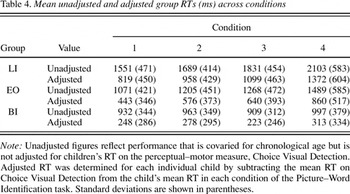
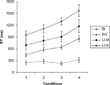
Accuracy was considered sufficiently high in all conditions to support robust RT analyses. One convention (Swearer & Kane, 1996) is for any experimental condition in which group mean accuracy is lower than 67% to be excluded from RT analyses. In our data set, the lowest accuracy level (unadjusted for chronological age) was 71% for the LI group in Condition 4, and no data were excluded. Table 4 shows mean RT for the EO, LI, and BI groups in each of the four task conditions. Two RT values are given, one set of values that are covaried only for chronological age (called unadjusted) and one set of values that are also adjusted for children's perceptual–motor performance on Choice Visual Detection (called adjusted). The adjusted RT values are graphed in Figure 2, with the LI group represented by the LI-M and LI-S subgroups in this figure. For RT (adjusted), an ANCOVA revealed large main effects of group, F (2, 99)=37.69, p<.01, f=.8, and a medium effect of condition, F (3, 297)=3.13, p=.026, f=.4. Pairwise comparisons revealed significant differences among groups, such that the BI group was faster than the EO group, and the EO group was faster than the LI group (p<.05). The condition effect reflected the gradual slowing of responses across conditions. However, there was a critical Group×Condition interaction, F (6, 297)=12.84, p<.01. The source of this interaction was again in the response of the BI group, relative to the two monolingual groups. As shown in Figure 2, both the EO and LI groups demonstrated a parallel steady slowing of responses across conditions, such that RT was significantly slower in each consecutive condition (p<.05 for each pairwise comparison). In contrast, as would be expected, BI RTs remained relatively stable across the four conditions. Specifically, the difference between the fastest and slowest conditions for the BI group was 88 ms, compared to 418 and 552 ms for the EO and LI groups, respectively. The striking qualitative similarity between the monolingual groups' responses to condition difficulty held for the LI-M and LI-S subgroups. A separate ANCOVA indicated a large main effect of subgroup, F (1, 25)=7.72, p=.01, d=.7, reflecting slower responses for the more severe LI-S group. Neither the condition main effect nor the Subgroup×Condition interaction effect was significant. As shown in Figure 2, unlike the EO group, the variability in RT for the two LI subgroups is relatively large in each of the four conditions. One reason for the lack of a condition effect in this analysis appears to be that this variability reduced the likelihood of a statistically significant effect. That is, not all individual children with LI may have showed a pronounced effect of decreased phonological overlap. Nonetheless, the average trend of increasing RT with decreasing phonological overlap is clear.


The mean RT (adjusted for age and perceptual–motor speed) for the EO group, BIgroup, and LI-M and LI-S subgroups across conditions in Spanish Picture–Word Identification. The bars indicate 1 SE. BI sample size=27, EO sample size=48, LI-M sample size=14, and LI-S sample size=14.
Correlation analysis
The mean RT values (adjusted for perceptual–motor speed) of the 28 children with LI were correlated with the children's CELF Total standard scores. The Pearson r of −.52 (p=.014) that was obtained indicated a moderately high negative correlation between severity of LI and RT in the experimental task. That is, children with milder LI tended to have a faster RT. Because the LI-S subgroup had a lower mean TONI standard score than the LI-M subgroup, the effect of nonverbal IQ on the LI-RT correlation also was examined. Although LI children's TONI scores tended to be associated with RT in the experimental task, the correlation was not significant (r=.398, p=.11).
Summary
In this study the BI group acted as a control group to measure the performance of the two monolingual groups. The BI group outperformed both the EO and LI groups in word recognition accuracy and RT, and the performance of this group was unaffected by changes in phonology. There were significant quantitative differences in RT and accuracy between the LI and EO groups, favoring the EO group on both dependent measures. There were also significant increases in errors and response latencies for both English-only groups as a function of decreasing phonological overlap. However, both groups were affected similarly by this increase in task difficulty. Children with more severe LI were slower in their responses than children with mild LI, although again response speed of the two subgroups was not differentially affected by decreasing phonological overlap.
DISCUSSION
In the current study we developed an experimental task that enabled us to systematically vary processing demands at the sound–word border for EO children. Our approach was to borrow a concept from the bilingual literature, cross-linguistic cognates, and overlay it onto research needs in LI. The first study objective was to validate the experimental task by looking at performance of typically developing Spanish–English speaking children, as compared to typical English-only peers. Our second goal was to use this methodology to investigate potential differences in performance between monolingual children with LI, relative to typically developing peers, and within the LI group to investigate the role of LI severity on task performance. Results and implications related to each of these study objectives are discussed in the following sections.
Validating the experimental paradigm: BI and EO comparison
As expected, bilingual children were much faster and more accurate in identifying the picture that best matched the Spanish stimulus word in the Picture–Word Identification task. For present purposes, what is important is the differential impact of decreased phonological overlap for the two groups of typical language learners. Specifically, as phonological overlap between the Spanish stimuli and English name for the pictured object decreased across the four task conditions, errors and response latencies increased for the typical monolingual children. The stimulus words in the task varied only in extent of phonological overlap, and the monolingual children's systematically lower accuracy and increased RT across the four conditions supports the claim that their task performance was influenced critically by their ability to deal with the phonological similarity to a known referent.
In contrast, the bilingual children did not need to rely on phonological information but could rely on their lexical knowledge to achieve high levels of performance. All stimuli were high frequency and well within the lexicon of these Spanish-speaking children (cf. Kohnert et al., 1999). The finding of stable performance across conditions for the bilingual children also indicates that the monolingual response decrements across word recognition conditions can only be explained by the graded levels of phonological information available to the children. Thus, the qualitatively different pattern of response between the two groups shows the value of this experimental task to isolate phonological processing within the context of spoken word recognition for monolingual English-speaking children. This empirical validation also extends to the method that was used in selecting the stimuli for the Picture–Word Identification task, the COSP. This finding has implications for the bilingual literature in addition to the literature on LI in a monolingual population. Although independent measures have been introduced to determine the degree of orthographic overlap between two languages (e.g., Dijkstra et al., 1999, examined Dutch–English overlap), to our knowledge no previous studies have published a graded method for objectively classifying crosslinguistic overlap at the phonological level. Objective measures for identifying the degree of phonological overlap are important for studies that attempt to disentangle the contributions of graphemes relative to phonemes in typical bilingual language processing. Such measures also may be useful for developing assessment and intervention materials for bilingual children and adults with language impairments (cf. Kohnert, in press; Kohnert & Derr, 2004; Lalor & Kirsner, 2001; Roberts & Deslauriers, 1999).
Monolingual group separation: EO and LI comparison
An essential finding was that both accuracy and RT performance on this task were sensitive to language impairment, clearly separating English-speaking children with LI from their age peers with intact processing systems. Between-group differences in response latencies were beyond those that could be attributed to group differences in perceptual–motor processing skills. As such, findings from this experimental task replicate previous results about LI word recognition deficits (e.g., Dollaghan, 1998; Edwards & Lahey, 1996). However, the finding of a group difference on the Picture–Word Identification task is particularly noteworthy given that performance on a more conventional auditory lexical decision task with these same children did not reliably separate children with and without LI (Windsor & Kohnert, in press). Overall, task constraints may well play a large role in whether school-age children with LI show word recognition deficits relative to age peers.
The robustness of the current crosslinguistic cognate task for separating English-speaking children with LI from peers with typical language development indicates that this task may be a viable screening tool for children at risk for LI. This task may be particularly attractive as a clinical screening tool because it is a relatively quick receptive measure that specifically addresses phonological analysis as it relates to the lexical–semantic system. The need to reduce the role of knowledge needed to perform well on tasks of language processing is an important concept in developing non-biased clinical assessment measures for culturally diverse children (Campbell, Dollaghan, Needleham, & Janosky, 1997; Stockman, 2000; see also Laing & Kamhi, 2003, for an overview).
Given the current between-group findings, it is also reasonable to speculate that if we reversed the languages and populations, using English words that overlapped to varying degrees with their Spanish translation equivalents and tested primarily Spanish-speaking children, we would obtain similar results. That is, it is possible that the English words corresponding to the Spanish stimuli used here could be a sensitive measure of LI in primarily Spanish-speaking children. Although the task is unlikely to isolate phonological processing in bilingual Spanish–English speakers; the concept of crosslinguistic cognates to assess phonological processing can be extended across a variety of languages and speakers. At the very least, the relatively low performance by children with LI on this task warrants further investigation into the specificity as well as sensitivity of this measure for clinical purposes.
Despite the significant quantitative differences between children with and without LI, the groups of EO children responded in a remarkably similar way, especially in RT, to the decreasing phonological overlap (Figure 2). In each condition of phonological overlap, the LI group showed slower performance than the EO group, but performance appeared to be slowed by a relatively constant factor across conditions. This finding is at odds with limited capacity accounts of LI that predict a disproportionate breakdown for children with LI as task difficulty increases beyond their available processing resources (e.g., Windsor & Hwang, 1999). Within this type of model, the decline in accuracy for the LI group across conditions suggests that processing resources were stressed in the Picture–Word Identification task. However, there was no disproportionate increase in LI RT. Instead, graded declines in performance that were proportional to those of the typical EO children were evident. It may be that word recognition tasks that adopt only two conditions of difficulty (very easy vs. very hard) obscure decreases in word recognition performance that are fundamentally parallel to EO performance.
Severity of LI: LI-M and LI-S comparison
When the LI group was subdivided into the LI-M and LI-S subgroups (indexed here by standardized CELF Speaking and Listening scores), these subgroups were reflected in the children's word recognition performance. Although there was no significant difference in accuracy between the two subgroups, there was a reliable difference in RT between the two groups. However, there was still no evidence of disproportionate failure by children with relatively less or more severe LI. Rather, graded declines in performance, similar to those of the typical EO children, again were evident for both groups (although the effect of increasing RT with decreasing phonological overlap was not statistically significant in the LI subgroup analysis). There was evidence of a speed–accuracy trade-off for children in the more severe LI-S subgroup. That is, this subgroup was substantially slower than the LI-M subgroup, but equivalently accurate in identifying pictures that corresponded with the Spanish words. The qualitatively similar performance of children with and without LI as well as that of children with different degrees of LI are consistent with the notion that children with LI represent the lower end of normal variation in language processing rather than a discrete disorder (Leonard, 1987). The speed–accuracy trade-off evident in the more severe LI-S subgroup also suggests that the notion of processing efficiency may be a valuable heuristic to examine that normal variation.
Despite the relatively coarse grouping strategy used, the slower word recognition performance of the LI-S subgroup compared to the LI-M subgroup points to an association between LI severity and lexical processing speed. This was confirmed by the significant correlation between the children's RT in the Picture–Word Identification task and their CELF Total standard scores. A substantial proportion of the total variance in LI RT, about 27%, could be attributed to the variance in CELF scores. The relation between RT and LI severity found here stands in contrast to Lahey et al. (2001), who found no correspondence between LI severity and RT on lexical measures. One reason for this discrepancy may be that the Picture–Word Identification task deemphasizes aspects of lexical access that are heavily knowledge dependent and instead emphasizes the underlying speed with which children can decode known phonological information. (See Salthouse, 1993, and Birren and Fisher, 1995, for a discussion of processing speed in fluid and crystallized skills.) The key point here is that RT on this task did indeed separate children with different levels of severity. These results reinforce the usefulness of RT as a dependent variable to examine differences within the LI population.
In summary, there were four key findings from the current study. First, we validated an objective method for classifying the degree of phonological overlap between English and Spanish translation equivalents, which could then be manipulated to isolate phonological processing during spoken word recognition in monolingual children. Second, performance on this task clearly separated children with LI from typical peers, indicating its potential as a clinical screening task for LI. Third, there were qualitatively similar patterns of performance by intact and impaired monolingual children. Fourth, LI severity was linearly related to task performance. Both of the latter findings suggest that processing efficiency is a fundamental concept in LI.
ACKNOWLEDGMENTS
Ruth Miller currently is associated with the US Department of Defense in Daegu, South Korea. Portions of this research were completed by the third author to fulfill the requirements of an MA degree, under the direction of the first author. Funding for the research was provided by two grants from the National Institute of Deafness and Other Communication Disorders awarded to Jennifer Windsor (R01 DC04437) and Kathryn Kohnert (R03 DC05542). Additional funding was provided to K. Kohnert by the University of Minnesota through the McKnight Land-Grant Professorship and to J. Windsor and K. Kohnert through the Interdisciplinary Research, Scholarly and Creative Activities Program. Portions of this study were presented at the 2002 Joint Conference of the Symposium for Research in Child Language Disorders and the International Association for the Study of Child Language in Madison, WI. We are grateful to the following research assistants for help with stimulus development, data collection, and data scoring: Meredith Bailey–Orr, Krista Bowe, Tara Cassidy, Kerry Danahy, Jocelyn Kalanek, and Dongsun Yim. We thank Edward Carney for technical assistance.
References
Birren J. &
Fisher L.
1995.
Aging and speed of behavior: Possible consequences for psychological functioning.
Annual Review of Psychology,
46,
329–
353.Google Scholar
Bishop D.
1997.
Uncommon understanding: Development and disorders of language comprehension in children.
East Sussex, UK:
Psychology Press.
Brown L.,
Sherbenou R. &
Johnsen S.
1997.
Test of Nonverbal Intelligence—3
(3rd ed.).
Austin, TX:
Pro-Ed.
Campbell T.,
Dollaghan C.,
Needleham H. &
Janosky J.
1997.
Reducing bias in language assessment: Processing-dependent measures.
Journal of Speech, Language, and Hearing Research,
40,
519–
525.Google Scholar
Carlisle J.
1987.
The use of morphological knowledge in spelling derived forms by learning-disabled and normal students.
Annals of Dyslexia,
37,
90–
108.Google Scholar
Carlisle J.
1988.
Knowledge of derivational morphology and spelling ability in fourth, sixth, and eighth graders.
Applied Psycholinguistics,
9,
247–
266.Google Scholar
Carroll J.,
Davies P. &
Richman B.
1971.
The American Heritage word frequency book.
Boston:
Houghton Mifflin.
Cerella J. &
Hale S.
1994.
The rise and fall in information-processing rates over the life span.
Acta Psychologica,
86,
109–
197.Google Scholar
Cohen J.
1988.
Statistical power analysis for the behavioral sciences
(2nd ed.).
Hillsdale, NJ:
Erlbaum.
Costa A.,
Caramazza A. &
Sebastian–Galles N.
2000.
The cognate facilitation effect: Implications for models of lexical access.
Journal of Experimental Psychology: Learning, Memory, and Cognition,
26,
1283–
1296.Google Scholar
de Groot A.,
Borgwaldt S.,
Bos M. &
van den Eijinden E.
2002.
Lexical decision and word naming in bilinguals: Language effects and task effects.
Journal of Memory and Language,
47,
91–
124.Google Scholar
de Groot A. &
Nas G.
1991.
Lexical representation of cognates and noncognates in compound bilinguals.
Journal of Memory and Language,
30,
90–
123.Google Scholar
Dijkstra T.,
Grainger J. &
van Heuven W.
1999.
Recognition of cognates and interlingual homographs: The neglected role of phonology.
Journal of Memory and Language,
41,
496–
518.Google Scholar
Dollaghan C.
1998.
Spoken word recognition in children with and without specific language impairment.
Applied Psycholinguistics,
19,
193–
207.Google Scholar
Edwards J. &
Lahey M.
1996.
Auditory lexical decisions of children with specific language impairment.
Journal of Speech and Hearing Research,
39,
1263–
1273.Google Scholar
Ellis Weismer S. &
Evans J.
2002.
The role of processing limitations in early identification of specific language impairment.
Topics in Language Disorders,
22,
15–
29.Google Scholar
Ellis Weismer S. &
Hesketh L.
1996.
Lexical learning by children with specific language impairment: Effects of linguistic input presented at varying speaking rates.
Journal of Speech and Hearing Research,
39,
177–
190.Google Scholar
Ellis Weismer S. &
Hesketh L.
1998.
The impact of emphatic stress on novel word learning by children with specific language impairment.
Journal of Speech, Language, and Hearing Research,
41,
1444–
1458.Google Scholar
Evans J.
1996.
SLI subgroups: Interaction between discourse constraints and morphosyntactic deficits.
Journal of Speech and Hearing Research,
39,
655–
660.Google Scholar
Friel B. M., &
Kennison S. M.
2001.
Identifying German–English cognates, false cognates, and non-cognates: Methodological issues and descriptive norms.
Bilingualism: Language and Cognition,
4,
249–
274.Google Scholar
Kail R.
1991.
Developmental change in speed of processing during childhood and adolescence.
Psychological Bulletin,
109,
490–
501.Google Scholar
Kohnert K. (in press).
Cognitive and cognate treatments for bilingual aphasia: A case study.
Brain and Language.
Kohnert K. &
Bates E.
2002.
Balancing bilinguals II: Lexical comprehension and cognitive processing in children learning Spanish and English.
Journal of Speech, Language, and Hearing Research,
45,
347–
359.Google Scholar
Kohnert K.,
Bates E. &
Hernandez A. E.
1999.
Balancing bilinguals: Lexical–semantic production and cognitive processing in children learning Spanish and English.
Journal of Speech, Language, and Hearing Research,
42,
1400–
1413.Google Scholar
Kohnert K. &
Derr A.
2004.
Language intervention with bilingual children.
In B. Goldstein (Ed.),
Bilingual language development and disorders in Spanish–English speakers.
Baltimore, MD:
Brookes.
Kohnert K.,
Scarry–Larkin M. &
Price E.
2000.
Spanish phonology: Intervention.
San Luis Obispo, CA:
LocuTour Multimedia.
Kohnert K. &
Windsor J. (in press).
The search for common ground—Part II: Nonlinguistic performance by linguistically diverse learners.
Journal of Speech, Language, and Hearing Research.
Lahey M.,
Edwards J. &
Munson B.
2001.
Is processing speed related to severity of language impairment?
Journal of Speech, Language, and Hearing Research,
44,
1354–
1361.Google Scholar
Laing S. &
Kamhi A.
2003.
Alternative assessment of language and literacy in culturally and linguistically diverse populations.
Language, Speech, and Hearing Services in Schools,
34,
44–
55.Google Scholar
Lalor E. &
Kirsner K.
2001.
The role of cognates in bilingual aphasia: Implications for assessment and treatment.
Aphasiology,
15,
1047–
1056.Google Scholar
Leonard L.
1987.
Is specific language impairment a useful construct?
In S. Rosenberg (Ed.),
Advances in applied psycholinguistics: Vol. 1. Disorders of first-language development
(pp. 1–
39).
New York:
Cambridge University Press.
Leonard L.
1998.
Children with specific language impairment.
Cambridge, MA:
MIT Press.
Lobo F.
1966.
A 10,000 word Spanish vocabulary expanded from 3,000 English cognates.
Unpublished doctoral dissertation,
Georgetown University.
Mason P. &
Garcia L. (Eds.).
1990.
The Renyi Spanish picture dictionary.
Toronto:
Editions Renyi Inc.
Meara P.
1993.
The bilingual lexicon and the teaching of vocabulary.
In R. Schreuder &
B. Weltens (Eds.),
The bilingual lexicon
(pp. 279–
297).
Philadelphia, PA:
John Benjamins.
Miller C.,
Kail R.,
Leonard L. &
Tomblin J. B.
2001.
Speed of processing in children with specific language impairment.
Journal of Speech, Language, and Hearing Research,
44,
416–
433.Google Scholar
Miller C.,
Tomblin J. B.,
Zhang X.,
Kail R. &
Leonard L. B.
2001.
Speed of processing as a predictor of language performance.
Poster presented at the Annual Convention of the American Speech–Language–Hearing Association, New Orleans.
Montgomery J.
2002.
Examining the nature of lexical processing in children with specific language impairment: Temporal processing or processing capacity deficit?
Applied Psycholinguistics,
23,
447–
470.Google Scholar
Montgomery J. &
Leonard L.
1998.
Real-time inflectional processing by children with specific language impairment: Effects of phonetic substance.
Journal of Speech, Language, and Hearing Research,
41,
1432–
1443.Google Scholar
Oldfield R.
1971.
The assessment and analysis of handedness: The Edinburgh inventory.
Neuropsychologia,
9,
360–
386.Google Scholar
Pro-Ed.
1999.
Picture This
[Computer software].
Austin, TX:
Author.
Psychology Software Tools, Inc.
2000.
E-Prime.
Pittsburgh, PA:
Author.
Rice M.
1996.
“Show me X”: New views of an old assessment technique.
In K. Cole,
P. Dale, &
D. Thal (Eds.),
Assessment of communication and language
(pp. 183–
206).
Baltimore, MD:
Brookes.
Roberts P. &
Deslauriers L.
1999.
Picture naming of cognate and non-cognate nouns in bilingual aphasia.
Journal of Communication Disorders,
32,
1–
23.Google Scholar
Salthouse T. A.
1993.
Speed and knowledge as determinants of adult age differences in verbal tasks.
Journal of Gerontology: Psychological Sciences,
48,
P29–
36.Google Scholar
Sanchez–Casas R. M.,
Davis C. W., &
Garcia–Albea J. E.
1992.
Bilingual lexical processing: Exploring the cognate/non-cognate distinction.
European Journal of Cognitive Psychology,
4,
293–
310.Google Scholar
Semel E.,
Wiig E. &
Secord W.
1995.
Clinical Evaluation of Language Fundamentals
(3rd ed.).
San Antonio, TX:
Psychological Corporation.
Semel E.,
Wiig E. &
Secord W.
1997.
Clinical Evaluation of Language Fundamentals. Spanish
(3rd ed).
San Antonio, TX:
Psychological Corporation.
Shankweiler D.,
Crain S.,
Katz L.,
Fowler A.,
Liberman A.,
Brady S.,
Thornton R.,
Lundquist E.,
Dreyer L.,
Fletcher J.,
Steubing K.,
Shaywitz E. &
Shaywitz B.
1995.
Cognitive profiles of reading-disabled children: Comparison of language skills in phonology, morphology, and syntax.
Psychological Science,
6,
149–
156.Google Scholar
Stockman I.
2000.
The new Peabody Picture Vocabulary Test—III: An illusion of unbiased assessment?
Language, Speech, and Hearing Services in Schools,
31,
340–
353.CrossRefGoogle Scholar
Swearer J. &
Kane K.
1996.
Behavioral slowing with age: Boundary conditions on the generalized slowing model.
Journal of Gerontology: Psychological Sciences,
51B,
P189–
P200.Google Scholar
Swisher L.,
Plante E. &
Lowell S.
1994.
Nonlinguistic deficits of children with language disorders complicate the interpretation of their nonverbal IQ scores.
Language, Speech, and Hearing Services in the Schools,
25,
235–
240.Google Scholar
Tokowicz N.,
Kroll J.,
de Groot A. &
van Hell J.
2002.
Number-of-translation norms for Dutch–English translation pairs: A new tool for examining language production.
Behavior Research Methods, Instruments, & Computers,
34,
435–
451.Google Scholar
Windsor J.
2000.
The role of phonological opacity in reading achievement.
Journal of Speech, Language, and Hearing Research,
43,
50–
61.Google Scholar
Windsor J. &
Hwang M.
1999.
Children's auditory lexical decisions: A limited processing capacity account of language impairment.
Journal of Speech, Language, and Hearing Research,
42,
990–
1002.Google Scholar
Windsor J. &
Kohnert K. (in press).
The search for common ground—Part I: Lexical performance by linguistically diverse learners.
Journal of Speech, Language, and Hearing Research.
Windsor J.,
Milbrath R.,
Carney E. &
Rakowski S.
2001.
General slowing in language impairment: Methodological considerations in testing the hypothesis.
Journal of Speech, Language, and Hearing Research,
44,
446–
461.Google Scholar
Woodcock R.
1987.
Woodcock Reading Mastery Tests—Revised.
Circle Pines, MN:
American Guidance Service.
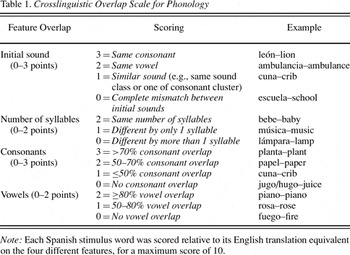
Crosslinguistic Overlap Scale for Phonology
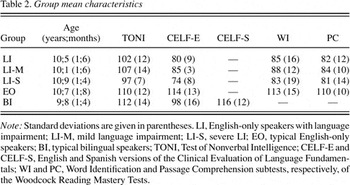
Group mean characteristics
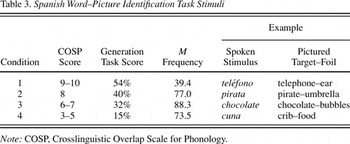
Spanish Word–Picture Identification Task Stimuli
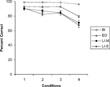
The mean accuracy (adjusted for age) for the EO group, BI group, and LI-M and LI-S subgroups across conditions in Spanish Picture–Word Identification. The bars indicate 1 SE. BI sample size=27, EO sample size=48, LI-M sample size=14, and LI-S sample size=14.
Mean unadjusted and adjusted group RTs (ms) across conditions
The mean RT (adjusted for age and perceptual–motor speed) for the EO group, BIgroup, and LI-M and LI-S subgroups across conditions in Spanish Picture–Word Identification. The bars indicate 1 SE. BI sample size=27, EO sample size=48, LI-M sample size=14, and LI-S sample size=14.
 You have
Access
- 53
- Cited by