The coronavirus disease (COVID-19) pandemic resulted in a critical health care collapse worldwide, which detrimentally affected the global economy. 1 In 2020, in the absence of treatment against this virus approved by the United States Food and Drug Administration (FDA) or any other international institution, health professionals adopted supportive therapies. 2 To limit the spread of the disease, the World Health Organization (WHO) has recommended rigorous and frequent handwashing with soap and water, the use of hand sanitizers containing alcohol, social distancing, and wearing masks in public. Governments across the world have imposed lockdowns. 3 Despite all these measures, the number of cases kept increasing. The sole hope of the scientists and medical communities remained to repurpose existing drugs as potential therapies and develop vaccines. Accordingly, the efforts exerted succeeded in the discovery of several vaccines. An ideal vaccine should generate a long-lasting immune response to severe acute respiratory syndrome coronavirus 2 (SARS-CoV-2) by prompting reactions to the antigen-presenting cells that lead to T-helper cell activation and B-lymphocytes producing antibodies. Besides, the vaccine should cause limited or no severe side effects. It should be easy to administer, manufactured at a scale-up, and stored easily. Reference Funk, Laferrière and Ardakani4
Several vaccines were granted FDA approval. In December 2020, the FDA granted its first emergency use utilization to Pfizer-BioNTech vaccine for the prevention of COVID-19 in individuals age 16 years and above and gave the final approval in August 2021. 5 The vaccine also received conditional marketing authorization from the European Commission and an emergency utilization among children in 2021 from the FDA. 5 This lipid nanoparticle-formulated, nucleoside-modified RNA vaccine encodes a prefusion-stabilized, membrane-anchored SARS-CoV-2 full-length spike (S) protein. Reference Thomas, Moreira and Kitchin6 On December 18, 2020, the FDA certified the use of the Moderna COVID-19 vaccine in the United States among people ages 18 and above. This vaccine is a nucleoside modified messenger RNA encoding the pre-fusion stabilized (S) glycoprotein of SARS-CoV-2, with a demonstrated efficacy of 94.1% (95% CI: 89.3% to 96.8%). Reference Baden, El Sahly and Essink7 The Russian Sputnik-V vaccine, which uses the heterologous recombinant adenovirus approach for protection, was approved in around 26 countries in people age 18 years and above. In this vaccine, adenovirus-26 and adenovirus-5 serve as vectors for the expression of the SARS-CoV-2 (S) protein, and the 2 varying serotypes are given 21 days apart. Based on the number of confirmed COVID-19 cases from 21 days after the first dose of vaccine, vaccine efficacy was reported to be 91.6% (95% CI: 85.6–95.2). Reference Logunov, Dolzhikova and Shcheblyakov8 CoronaVac, the COVID-19 vaccine produced by Sinovac Biotech, China, is an inactivated vaccine. Its effectiveness ranged from 50.65 to 91.25%. Reference Zhang, Zeng and Pan9
Although all approved vaccines have shown a good safety profile, concerns about future side effects have posed a significant barrier for vaccination in several countries, including the United Kingdom, where a negative attitude toward vaccines has been detected. Reference Lazarus, Ratzan and Palayew10,Reference Paul, Steptoe and Fancourt11 In 2020, the acceptance of COVID-19 vaccination ranged from 43.6% in Egypt to 92.9 in Tonga. Reference Mannan and Farhana12 In 2021, in Kuwait, 53.1% of the participants were willing to take the vaccine. Reference Alqudeimat, Alenezi and AlHajri13 In 2022, COVID-19 vaccine hesitancy remained a concern. Among 23 countries, hesitancy ranged from 52.1% in South Africa to 1.7% in India. Moreover, hesitancy to take the booster doses accounted to 12.1%. Reference Lazarus, Wyka and White14 Not only vaccine unacceptability varied across countries, but also trust in authorities varied which influenced the responses. Reference Lazarus, Ratzan and Palayew10,Reference Lindholt, Jørgensen, Bor and Petersen15 The availability of several COVID-19 vaccines has additionally perplexed people. Reference Marzo, Ahmad and Abid16 Moreover, misinformation received and the fear of the vaccine side effects accounted for the most common cause of hesitancy. Reference Lazarus, Wyka and White14 According to the differences in acceptability and reasons behind willingness to take COVID-19 vaccine worldwide, the current study was designed to assess the acceptability of COVID-19 vaccination and its predictors in a sample of the Lebanese population.
Methods
Study Design
An anonymous community-based cross-sectional survey was conducted in February 2021, targeting Lebanese adults over 18 years old from the 5 main Lebanese governates (Beirut, Mount Lebanon, North, South, and Beqaa). The questionnaire was developed using Google Forms and distributed through WhatsApp to minimize the risk of infection during the COVID-19 pandemic. The dissemination of the questionnaire was done by convenience from 1 person to another.
Questionnaire Development
The survey questionnaire was designed in English, after a thorough literature review and translated into Arabic, the native language in Lebanon. The translated Arabic version was translated back into English by a second person to check the adequacy of the translation. The questionnaire’s validity was assessed by 4 experts who reflected on the study’s purpose and examined its readability and comprehension. Then, a pilot study was conducted on 20 participants who are representative of the population studied. This pilot study served to check for clarity and comprehension of the questionnaire, and the collected data were not included in the main study. According to the feedback retrieved, the questionnaire was minorly modified.
The questionnaire was divided into 6 parts. The first section included demographic data that may impact the results, the second section comprised participant experience with COVID-19, and the third section assessed the effect of the COVID-19 pandemic on the daily life of participants. The fourth section consisted of the COVID-19 anxiety syndrome scale, which included 9 questions rated from 0 to 4. A higher score indicates a higher level of COVID-19 anxiety. Reference Nikčević and Spada17 Questions in the fifth part were about participant acceptance to get vaccinated which is considered the major variable of interest or dependent variable, and response options were “yes,” “no,” “undecided.” The preferred vaccine was also recorded in this section. The last part gathered information about participant attitudes toward the COVID-19 vaccine. Responses were gathered as a 5-point Likert-type scale to indicate their level of agreement (“strongly agree,” “agree,” “neutral,” “disagree,” or “strongly disagree”). For statistical purposes, the collected answers were reclassified in 2 groups reflecting the agreement or disagreement on the attitude statements, by which neutral responses were allocated as “disagree.” Independent variables were all gathered variables such as attitude and the COVID-19 anxiety syndrome scale that impacted the willingness to get vaccinated.
Sample Size Calculation
The sample size was calculated using the Raosoft® online calculator. Estimating that the entire Lebanese population accounts for approximately 6.83 million inhabitants, a number above 385 was considered representative with a confidence interval of 95%. The final sample consisted of 811 Lebanese adults.
Data Analysis
Data were analyzed using Statistical Package for the Social Science (SPSS®) software, version 23 (IBM, New York, USA), after being coded and cleaned. Categorical data were expressed as frequencies (percentages) and continuous data as means ± standard deviation (SD). Multiple logistic regression was used to assess the factors behind the acceptance or refusal to be vaccinated after ensuring the significance of the chi-square test and the omnibus test. The model was also accepted after confirming its adequacy by the Hosmer–Lemeshow testing. Analysis of variance (ANOVA) followed by a post hoc Tukey test was done to compare COVID-19 anxiety syndrome mean scores among the willingness groups after ensuring normality and variance homogeneity of the data in question. All results were considered “statistically significant” when the P value was < 0.05 with a CI of 95%.
Ethical Consideration
This study was observational and respected the confidentiality and autonomy of the participants. Accordingly, the Beirut Arab University Institutional Review Board exempted the study. Participants had the choice to decline to participate after reading the aim of the study. All participants provided e-consent if they agreed to participate. A consent was taken from Professor Marcantonio Spada to use the COVID-19 Anxiety Syndrome Scale.
Results
COVID-19 Vaccination Acceptability
Of 811 participants in the study, 45.4% (95% CI: 41.9-49.9) accepted to be vaccinated, 21.0% (95% CI: 18.2-23.9) refused, and 33.7% (95% CI: 30.4-37.0) were undecided. Among participants who have children between ages 3 and 14 years, 125 (44.48%) agreed to allow their children to be vaccinated, whereas 145 (55.52%) refused. Pfizer was the most preferred vaccine, followed by Sputnik-V, Sinopharm, AstraZeneca, and Moderna, with percentages of 39.50%, 30.90%, 21.80%, 6.00%, and 4.10%, respectively.
Reasons for Vaccine Hesitancy
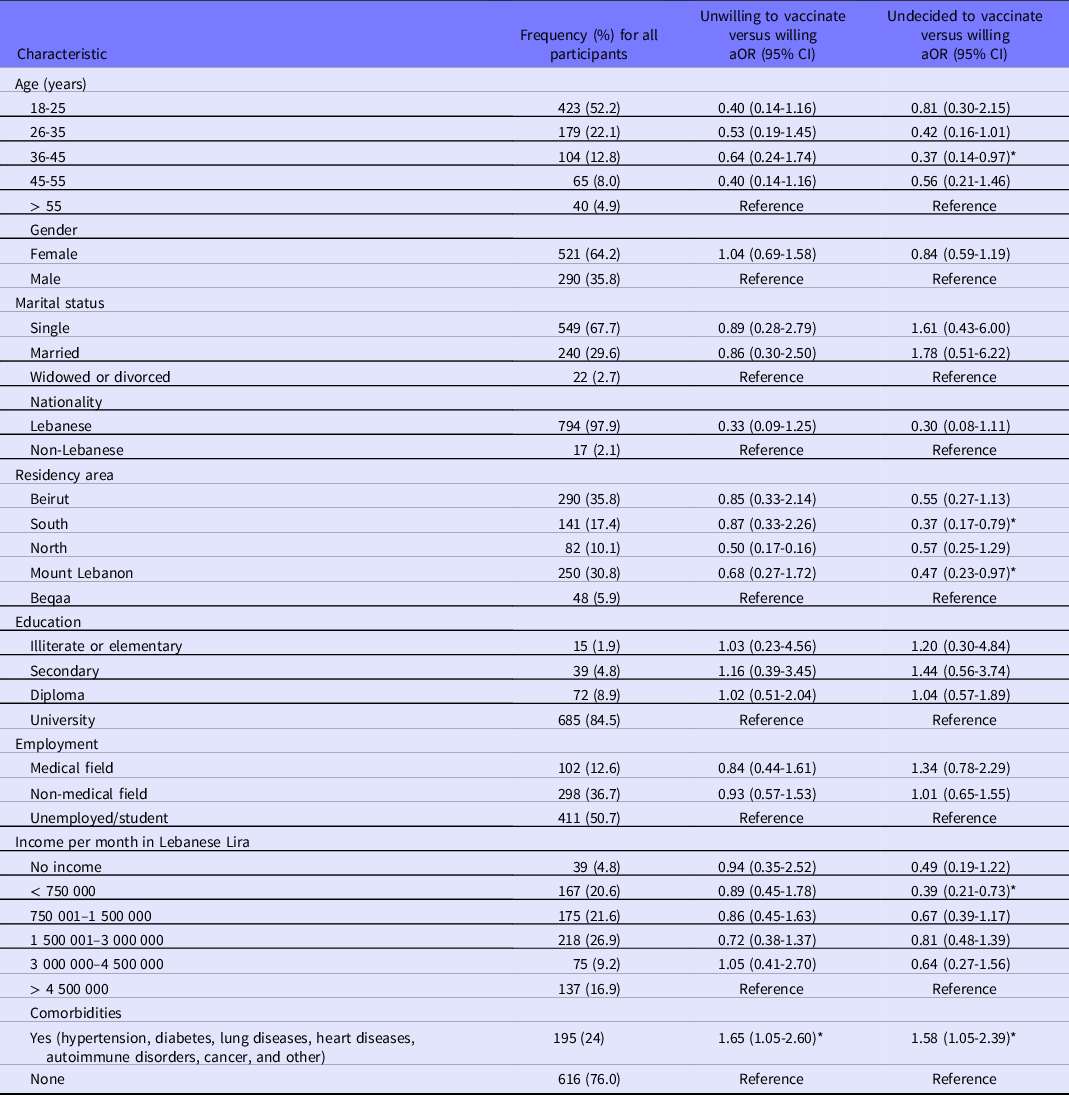
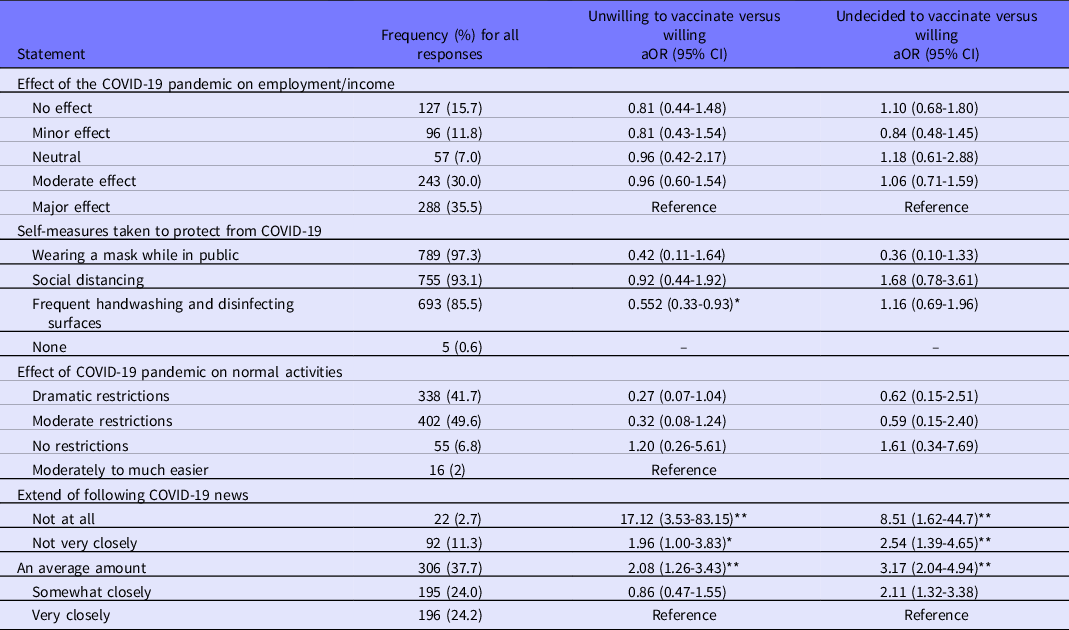
There was no significant association between demographic data and participant willingness to be vaccinated except for comorbidities. Participants with hypertension, diabetes, lung diseases, heart diseases, autoimmune disorders, cancer, or others were 1.65 times more unwilling to get vaccinated than healthy participants (CI: 1.05-2.60; P < 0.05) (Table 1). The effect of the COVID-19 pandemic on employment, income, or regular activities did not influence the choice of participants to be vaccinated. On the other hand, self-protective measures, that is, frequent handwashing and disinfecting surfaces, in addition to following COVID-19 news, positively influenced the willingness to be vaccinated (P < 0.05 and P < 0.01, respectively) (Table 2).
Demographic characteristics of the studied sample versus the acceptability of the vaccine

*P < 0.05.
Effect of COVID-19 pandemic on participant life

*P < 0.05; **P < 0.01.
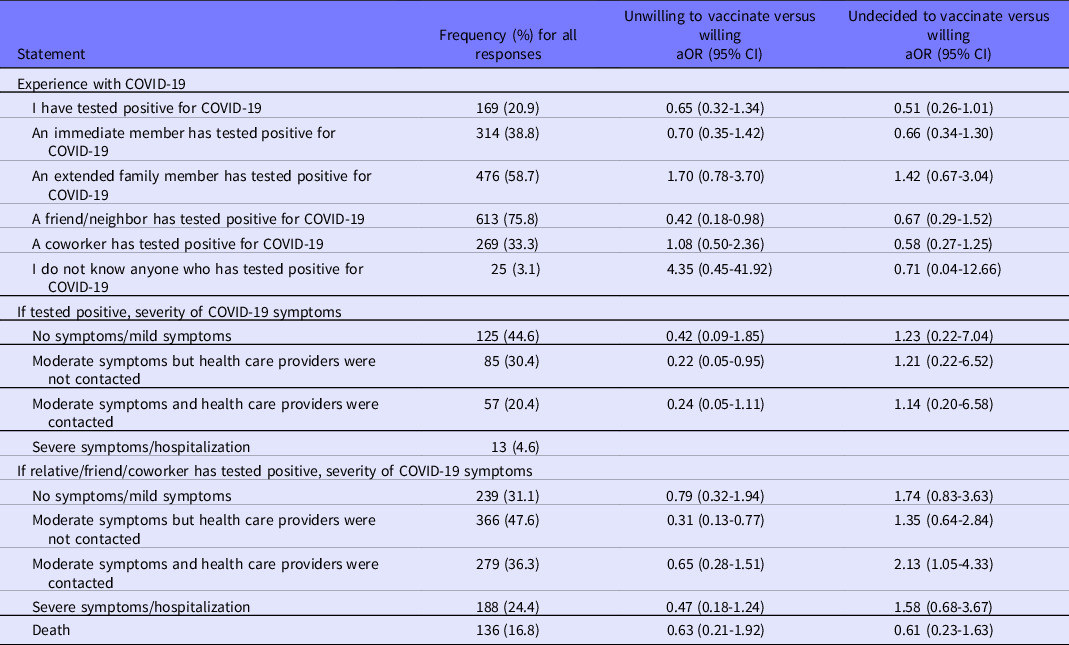
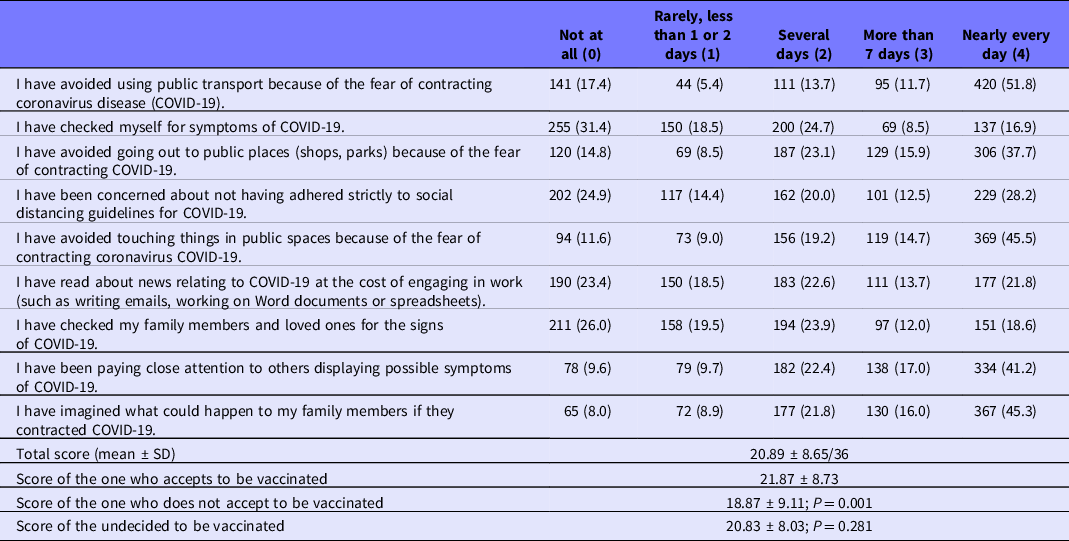
Self or friend or relative experience with COVID-19 did not affect the willingness of participants to receive the vaccine (Table 3) while the COVID-19 anxiety syndrome score revealed a positive link. The more the participants were anxious about COVID-19, the more they were willing to get the vaccine (score of the ones who accepted to be vaccinated: 21.87 ± 8.73 versus the score of the ones who did not accept to be vaccinated: 18.87 ± 9.11; P < 0.01) (Table 4).
Participants’ experience with COVID-19

Note: The reference value is no.
COVID-19 anxiety syndrome scale

Note: ANOVA followed by a post hoc Tukey test was done.
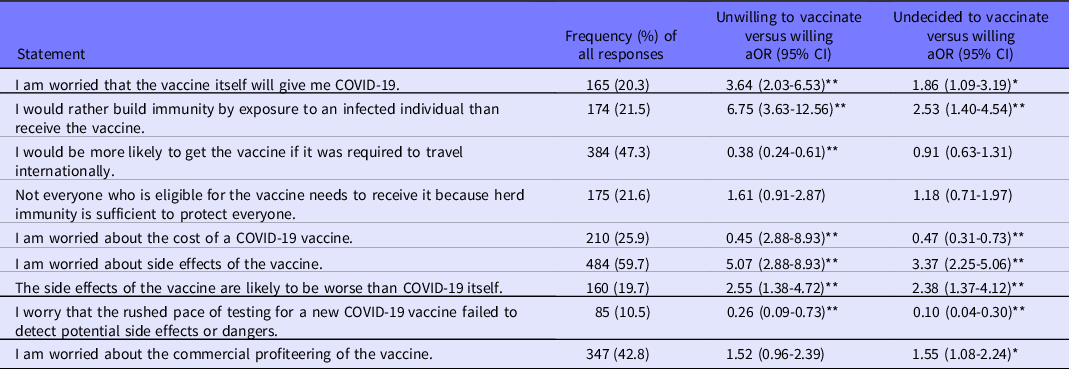
Taking the flu vaccine yearly also positively affected respondents’ willingness to receive COVID-19 vaccines (P < 0.01). Although some participants acknowledged the importance of vaccines, in general, in preventing severe diseases and agreed that the side effects of any vaccine outweigh the benefit of vaccination, they refused to receive the COVID-19 vaccine (aOR: 10.31; CI: 5.96-17.85; P < 0.01 and aOR: 2.43; CI:1.60-3.70; P < 0.01, respectively). The main reason may be attributed to the worries about the side effects of the newly emerged COVID-19 vaccines, which influenced unwillingness to get vaccinated (aOR: 5.07; CI: 2.88-8.93; P < 0.01). Participants who believed that building immunity by exposure to an infected patient is better than getting vaccinated refused to receive the vaccine (aOR: 6.75; CI: 3.63-12.56; P < 0.01). Nonetheless, if the vaccine were a travel requirement, a significantly higher percentage of participants might have accepted to get vaccinated (Table 5).
Attitude of the participants regarding the COVID-19 vaccine

Note: The reference is “disagreed”; **P < 0.01; *P < 0.05.
COVID-19 Acquired Knowledge Source
Participants acquired COVID-19 knowledge from different sources. The principal source of information about COVID-19 and vaccines was the Internet (CDC, WHO, and the ministry of health), followed by local news, health care providers, and friends or social media with percentages of 37%, 28%, 20%, and 13%, respectively.
Discussion
The COVID-19 pandemic is a global health crisis that has severely affected humanity and posed a considerable challenge to the public health system. Reference Funk, Laferrière and Ardakani4 In Lebanon, by the end of January 2021, an average of 3679 cases was registered per day. Moreover, till January 27, 2021, COVID-19 deaths accounted for 2477. At the level of hospital care, both private and governmental hospitals have been facing challenges in treating infected persons. Consequently, the availability of a safe and effective vaccine has become a top priority in Lebanon and globally to prevent the spread of the disease and end the pandemic. Reference Funk, Laferrière and Ardakani4 Although vaccines have been a successful prophylactic measure against illnesses for decades, hesitancy and refusal remain significant concerns. Reference Geoghegan, O’Callaghan and Offit18 Among the Lebanese population studied, 21% refused to get vaccinated and 33.7% were hesitant, whereas in Jordan, the percentages were 36.8% and 26.4%, respectively. Reference Al-Qerem and Jarab19 In the United States, 68% of the participants accepted to be vaccinated; however, side effects and efficacy remained a concern. Reference Pogue, Jensen and Stancil20 Higher acceptability rates were reported in the United Kingdom, where only 14% of 32 361 participants were unwilling to receive COVID-19 vaccine, and 23% were hesitant. Reference Paul, Steptoe and Fancourt11 In the current study, 55.52% of the participants were also hesitant to allow their children ages between 3 and 14 years to be vaccinated. This hesitancy did not differ globally. In 2022, as reported by Lazarus et al., Reference Lazarus, Wyka and White14 hesitancy to vaccinate children under 18 years old ranged from 0.1% in China to 71.1% in Russia with a global average of 30.5%.
The reasons behind the unwillingness to be vaccinated were diverse. Participants with comorbidities were 1.65 times more unwilling to be vaccinated and 1.58 times more hesitant than healthy individuals (P < 0.01). A possible interpretation could be the fear of participants that the vaccine would detrimentally affect their health. Indeed, those who considered that vaccine side effects, in general, outweigh their benefits were 2.43 times more unwilling to be vaccinated. More precisely, they were worried that the COVID-19 vaccine would trigger the disease (aOR: 3.64; CI: 2.03-6.53; P < 0.01), and they would rather build immunity by exposure to an infected individual than receive the vaccine (aOR: 6.75; CI: 3.63-12.56; P < 0.01). They also considered that vaccine side effects are worse than COVID-19 itself (aOR: 2.55; CI: 1.38-4.72; P < 0.01). These results are also reflected by other studies. In the United Kingdom, it was found that intermediate to high levels of mistrust of vaccine benefit and concerns about future unforeseen side effects were the most important determinants of both uncertainty and unwillingness to vaccinate against COVID-19. Reference Paul, Steptoe and Fancourt11 Similarly, in Sudan the main reason for hesitancy against the COVID-19 vaccination is concern about its safety and effectiveness. Reference Raja, Osman and Musa21
Although previous experience with the disease did not affect the vaccination choice, our study reflected that anxious people are more willing to be vaccinated. Those who followed very closely the news on COVID-19 were more eager to receive the vaccine than those who did not (P < 0.01). The COVID-19 anxiety scale showed significantly higher scores in the group of participants who accepted getting vaccinated in comparison with those who did not (P < 0.01). These results were in accordance with findings from the United Kingdom. The relative risk reduction was 1.05 (0.85-1.30) for those who have had COVID-19 and were reluctant to take the vaccine and 1.35 (1.07-1.71) for those who did not have anxiety symptoms and were unwilling to be vaccinated as compared to the very likely to be vaccinated. Reference Paul, Steptoe and Fancourt11
Parallel, in the current study, participants were more willing to be vaccinated if the vaccine were a requirement for traveling (P < 0.01). Thus, the announcement about the COVID-19 vaccination as an obligation made participants more willing to be vaccinated. Participants sought information mainly from the Internet and local news, which reflected their choice of vaccine brand. The preferred vaccine was Pfizer, followed by Sputnik-V and Sinopharm. Pfizer was the first vaccine introduced in Lebanon, whereas the 2 others were discussed intensively on the news. 22 In fact, misinformation received accounted partially to the COVID-19 hesitancy as reported by Lazarus et al. Reference Lazarus, Wyka and White14 Thus, local news should be controlled to disseminate proper information about the vaccine, its benefits, side effects, and contraindications.
Although the current study covered a large number of participants, the online recruitment of the sample through WhatsApp constitutes the main limitation. The team was eager to disseminate the survey to all socioeconomic classes; nonetheless, illiterate persons or those who did not have mobile phones might have been unrepresented. Moreover, being a cross-sectional study limited the causality results. Nevertheless, the results of the current study might be useful to take proper actions to achieve herd immunity in Lebanon and other countries with similar rates of acceptability.
Conclusion
Since 54.7% of the studied Lebanese adults were either unwilling or undecided to get the vaccine and COVID-19 news was retrieved mainly from the Ministry of Public Health online site and the local news, the existing targeted campaign should be enforced toward encouraging vaccination to reach herd immunity against COVID-19, especially that up till April 2022, only 53.6% of the Lebanese population received the second COVID-19 vaccine shot whereas other countries have started to offer their residents the fourth booster. These campaigns should focus on disseminating proper information about the vaccine benefits, side effects, and contraindications through local news, ministry of public health website, as well as TV and radio programs.
Data availability statement
Data will be made available upon request.
Author contribution
All authors contributed to the concept and design of the study. The questionnaire was translated to Arabic by Fadi Hodeib and revised by all authors. Data collection was done by all authors, and the data analysis was done by Souraya Domiati. The first draft of the manuscript was done by Souraya Domiati, and all authors reviewed and approved the final manuscript.
Funding statement
No fund or grant was received to accomplish the study.
Competing interests
The authors declare that they have no conflicts of interest.
Ethical standard
The study was an observational one, respecting the confidentiality of the participants. Consequently, ethical approval was waived.