Introduction
“One may count on the smuggler’s rationality more than the state’s rationality. If you ask me why, I would say it’s because the smuggler’s arbitrariness is negotiable but the state’s is not.”
—JihanFootnote 1
Comparing official rules with the rules of smugglers, as Jihan does in this statement, is a common practice among Iranian refugees living along the Turkish-Iranian border. In their view, the role of state actors and smugglers are neatly defined: state actors limit mobility and circulation, and thus represent obstacles and barriers, while smugglers enable cross-border movement, bribing border guards and/or showing alternative routes without checkpoints. RefugeesFootnote 2 see state actors as acting more inconsistently, arbitrarily, and irrationally than smugglers. They are also less predictable than smugglers. On the Turkish-Iranian border, similar to other border territories, smuggling is an everyday phenomenon.Footnote 3 It is not a secret activity: it is public and considered to be part of the daily routine of life, with its effects on local life being tangible and visible. Smugglers have different areas of expertise depending on what they smuggle, ranging from drugs, alcohol, food, various goods, and electronics to animals and humans. Some smugglers spend all year going back and forth across the border, while others undertake crossings only occasionally. Whenever they stop over in the city to take a break or wait for the next operation, they meet in the same café, which local people call “kaçakçıların kahvesi” (the smugglers’ café).
This article explores the different stages of the human smuggling process in the border city of Van in eastern Turkey.Footnote 4 It focuses on the multilayered relationships between smuggled migrants and smugglers through analysis of the wider network of different agents involving the political and social networks of migrants. Undocumented border crossing compels migrants to engage with these actors, and it is the complicated relationships between these actors that structure the nature of the movements and smuggling practices. These relationships limit individual practices while also creating spaces within which people can negotiate their subject positions and resist both institutional and informal power. In describing these relationships, this article argues that human smuggling is structured through clandestine networks of which state agencies form a largely integral part. Both state agencies and smugglers share an interest in keeping their relationships free of conflict, since they operate within the same field. They interact through cooperation and contestation, and yet in the presence of smuggled migrants they avoid revealing the internal dynamics of their relationship. For their part, the smuggled migrants have the implicit knowledge needed to deal with state agents and smugglers. They know that their ability to cross the border depends on recognizing these actors’ authority adapting the intelligent strategy of deciding when to confirm these agents’ rules and when to resist them.
Building on this argument, the article engages with recent perspectives in migration and border studies that acknowledge the interdependent relationship between state officials and smugglers and point out the need to analyze human smuggling not simply as the economic component of the so-called “refugee crisis” or the political failure of states lacking the infrastructure of high-security border surveillance systems, but rather as a process that influences the individual experience of refugeehood and, more broadly, transforms both the migrants themselves and society’s dispositions to different forms of mobility on a global scale.Footnote 5 In doing this, the article attempts to further our understanding of how people mobilize their agency so as to manipulate and challenge the system, as well as of how the smuggling process transforms migrants’ capacity to simultaneously recognize and unsettle state bordering practices. The article is based on ethnographic fieldwork conducted in Van between 2008 and 2009, along with follow-up interviews conducted in 2010.Footnote 6 It draws predominantly on the research material relating to the border crossing experience of Iranian refugees of different political and ethnic backgrounds, such as Bahais, Persians, and Kurds. I conducted the interviews in the interim between the period of waiting to receive refugee status and the period of leaving for resettlement.Footnote 7 I was especially concerned with understanding the forms of the relationships between smugglers and smuggled migrants. The main questions were as follows: Who are the actors involved in the smuggling process? What are the different forms of interdependencies and entanglements between smugglers and migrants? How do smuggled migrants use their social skills and networks to deal with smugglers’ arbitrary power? Due to experiences of family members and friends who had escaped to Turkey in the aftermath of the Iranian revolution of 1979, Iranian refugees have long been familiar with the culture of “refugeeness.”Footnote 8 Many informants express their experience through words to the effect of, “We grew up with refugee stories, so when it’s our turn, we experience ours.” Their individual experiences are marked by the life stories of others, which in turn have a significant effect on the process of deciding to leave the home country. They do not, however, leave Iran until they personally witness and/or experience state repression. When they do decide to leave, they so so with knowledge of what awaits: they are knowledgeable about the entire process of undocumented border crossing, with all the social and economic relationships that this entails. They know that they have to engage with smugglers, and they are aware of the social and economic costs and implications of these interactions. They do not consider themselves victims exposed to the exploitation of smuggling sectors; rather, they codify smugglers as the agents of yet another structure of power whose reasoning one must figure out even as they (the migrants) are subjected to smugglers’ norms, values, and rules—which in some circumstances are applied even more systematically than the rules of any institution. They consider the undocumented journey to be an inevitable part of the asylum seeking process, and they manage their mobility strategies with the strong desire to enter into this process. In other words, the experience of crossing the border with the smuggler, while an arduous trek through mountains, is nevertheless a trek with a well-defined goal: to pass from illegality to legality.
This article is composed of four parts. In the first two parts, I provide a brief theoretical context and describe how the geopolitical and socioeconomic landscape of the Turkish-Iranian border shapes smuggling practices in the region. In the third part, I examine the ways in which people mobilize their social, economic, and human capital in order to cross the border. Finally, I describe the survival strategies and coping mechanisms that people develop on the way by demonstrating how these strategies come to be revised and modified en route, while dealing in the course of the undocumented journey with different actors’ arbitrary power.
Human smuggling from the migrant’s perspective
The process of human smuggling continues to be conceived of as a menace to the state rather than as a response to legal and political structures established by the public and by state officials.Footnote 9 Smuggling has often been discussed from criminal and economic perspectives, utilizing such concepts as “crime,” “markets,” “business,” and “profit,” with the emphasis placed on the unauthorized movement of persons rather than on the administrative and material barriers that people encounter while crossing borders.Footnote 10 Viewing human smuggling as a profit-making enterprise, such studies consider it to be the “hidden” side of migration. Other studies have demonstrated that smuggling activities are not always undertaken covertly,Footnote 11 but are instead considered permissible in the eyes of participants, including not only migrants and smugglers, but also state officials.Footnote 12
Another body of literature emerges as a critique of the state-centered approach,Footnote 13 which explicitly analyzes smuggling through its disempowering effects on nation-states. Instead, this body of literature highlights how smuggling is neither an effect nor a cause of the weakness of the state,Footnote 14 and suggests taking analysis beyond the official categories of the “criminal,” “illegal,” and “clandestine.”Footnote 15 In this view, what needs to be examined is the entangled relationship between the business of smuggling and state enforcement. In his work on the United States-Mexico border experience, Peter Andreas addresses the symbiotic quality of relationships between state officials as law enforcers and migrant smugglers as law evaders. In this case, as the enhancing and expanding of border enforcement pushes smugglers to bribe or buy documents from state officials, “the business of smuggling and the business of policing smuggling continue to produce and provoke each other.”Footnote 16 In a similar vein, Yuji Tamura examines the effect of state enforcement on the relationship between smugglers and smuggled migrants in such a way as to reveal how these complicated engagements change the rules and prices in the market.Footnote 17 State enforcement increases not only the risk but also the economic cost of human smuggling, which has a direct impact on the negotiation process between smugglers and smuggled migrants.Footnote 18 Here, what is crucial to understand is the role of state actors, mechanisms, and regulations in constituting the social and economic networks that make human smuggling possible.
Recently, comparative studies on undocumented journeys have placed more emphasis on the analysis of migrant agency, tackling the question of how migrants manage to travel through multiple geographies under current border regimes.Footnote 19 Cetta Mainwaring and Noelle Brigden argue that migrant practices emerge “despite state bordering practices and because of state bordering practices” and are “constitutive of the geopolitics of migration.”Footnote 20 They are especially concerned with revealing the form of agency produced between submission to the repressive rules of border regimes and emancipation, as well as with the subversion of the very same regulations. In this article, I agree with their stance, following up on their suggestion to think of the undocumented journey as the embodiment of all the contradictions underlying state bordering practices, migrant agency, and the geopolitics of migration. My specific concern here is to merge the critique of the state-centered approach with analysis of migrant agency in order to examine the dynamics of the human smuggling process in eastern Turkey.
Although the border cities of eastern Turkey are acute zones of undocumented mobility, there has only been limited analysis of human smuggling practices in the region. Among the few studies on the Turkish-Iranian border, Anna Triandafyllidou and Thanos Maroukis have analyzed human smuggling networks and practices in terms of the complicated relationship between the smugglers and state officials.Footnote 21 Esra Kaytaz examined Afghan migrants’ experience of border crossing from Iran to Turkey, examining in particular the temporal, economic, and political dimension of the undocumented journey and its transformative effects on the smuggled migrants as regards their opportunities to regain and/or demonstrate skills.Footnote 22 Both studies examine the ways in which subjection to the mutual and complicit relationship between smugglers and state agents affects the migrant’s experience of the undocumented journey.
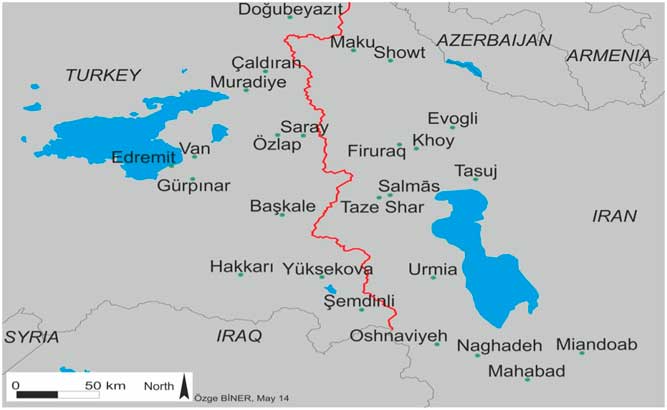
I concur with some of the findings of these two studies. In this article, though, I also engage with the human smuggling industry that operates via clandestine structures with state reinforcement. In a similar vein, I focus on the migrant’s agency and illustrate the interdependent relationship between smugglers and state actors, as well as this relationship’s effects on the vulnerability and resilience of migrants in terms of negotiating their positions and resisting the state’s illegible and legible power. However, I depart from the analysis seen in the aforementioned studies in several ways. My analysis is not confined to the interactions between the smuggler and state agents, but instead magnifies the triangular interaction between smugglers, state agents, and migrants at the very point of crossing the border. It reveals the discourses and strategies that underline the negotiation between the smugglers and the migrants. Within this configuration, the migrant does not emerge as an individual subjected to the power of other actors, but rather as an agent who shapes the rules of negotiation within a complicated series of interactions. Focusing on the crucial moments of border crossing, I argue that the knowledge and the skills migrants adopt and adapt en route allows them not only to complete the journey, but also, and more significantly, to develop an intense and instant engagement with the space of legality and illegality that provides them with the crucial knowledge of how to deal with the host state’s visible and invisible operations during the period of applying for asylum and maneuvering through the local and international bureaucracy in order to gain refugee status and await resettlement in a third country. (Figure 1)
Turkish-Iranian border area, drawn by the author

Mapping the Turkish-Iranian border
The border crossing experience has considerable diversity in relation each border’s social, political, and geographical landscape. In order to make sense of the ways and tools used by an undocumented migrant to cross a given border, one has to be able to imagine that border’s geographical, socioeconomic, and political landscape. The Turkish-Iranian border has two main characteristics that are crucial for understanding the mutual and formative relationship between the space and the movement of (irregular) migration: on the one hand, its mountainous landscape, which erases the sense of tangibility, accessibility, and visibility; and on the other hand its history of conflict, which has resulted in the heavy presence of security forces and various surveillance mechanisms.
Covered by hills and inaccessibly barren mountains, the Turkish-Iranian border is an intricate no-man’s land of nearly imperceptible surveillance mechanisms. At first glance, the landscape gives the impression of being unlimited, unconfined, and unrestricted. However, this image can be broken by the sudden appearance of a military jeep from behind a hill, interrogating the passerby about his presence at this particular point and time. In this sense, the frontier zone consists of spontaneous, uncertain movement characterized by the sudden appearance of different actors—security forces as well as smugglers and undocumented migrants. These local characteristics of spontaneity and uncertainty can quickly turn into permanent suspicion and fear directed at each and every person living on the border in the area. Once experienced, the meaning of being on the borderline is a well-known but unspoken subject in the region, and despite not being spoken of, it nevertheless shapes the ways in which people come to be labelled. Moreover, and reciprocally, how the border itself is perceived changes according to how people are labelled. For example, the border connotes a “nightmare” for undocumented people, whereas for locals it evokes “trading activities.” For the former group, the border means control and fear, but for the latter income and employment.
Another important aspect of this border area is related to its sociopolitical situation. Comprising many small villages, the area can be described as marginalized space because of the effects of political violence and military conflict between Turkish security forces and the Kurdistan Workers’ Party (Partiya Karkerên Kurdistanê, PKK) over the last three decades. In 1987, government security forces were granted exceptional powers under a state of emergency declared in 14 provinces, leading to a heavy military presence, the imposition of martial law, and severe restrictions on civil and political rights. The military conflict involved the evacuation of villages, displacements, disappearances, and thousands of casualties within the zone of conflict. Between 1987 and 2003, the region was governed under a state of emergency that transformed the region’s spatial, political, and economic structures.Footnote 23 As a result, the region faced high levels of unemployment, increased poverty, and serious economic and political polarization between different groups from various ethnic and class backgrounds. Cross-border activities form an important sector of the local informal economy. However, the question of whether such activities are permitted or not—and if so, to what extent—varies according to each village’s relationship with the state and its agencies.
Some villages have a reputation for being more engaged in cross-border activities, which include the smuggling of goods, such as drugs and oil, as well as humans. In these villages, the circulation of capital is linked to the informal border trade. The political position of individual villages with reference to the Kurdish cause is also an important factor determining those villages’ relationship with the state and its agencies, and consequently with the border itself. In this sense, territorial borders in this area both shape and are shaped by what they contain and what crosses or is prevented from crossing them.Footnote 24 The political and economic structure of villages, the positions of permanent and temporary residents in these villages, and the attitude of formal and informal actors in the area all play a crucial role in the smuggling process across the Turkish-Iranian border.
The preparation process: Finding reliable smugglers
Khalid Koser notes that “the receipt and evaluation of information play a significant role in the refugees’ decisions about the prospective destination.”Footnote 25 As he expresses it, the various aspects of information—such as its availability, quality, and content—affect the decisions. Certainly, due to their long history of seeking asylum in Turkey,Footnote 26 Iranian refugees have a certain level of prior knowledge about the tools and means that can be used to cross the border. Most of them enter Turkey in an illegal fashion; that is, with the aid of smugglers. Information concerning smugglers and the means and methods of border crossing is obtained via multiple sources, both formal and informal. Indeed, the quality and content of information regarding smuggler networks is regularly updated through political connections. Information concerning routes, means, methods, and smugglers is available not only from family members and friends, but also from informal sources and contacts, including members of political parties or organizations. During the preparation process, all contacts—both formal and informal—are mobilized and used to gather specific and extensive information about how to find a reliable smuggler.
In fact, there is a division of labor in terms of the provision of assistance. As regards logistical assistance, for example, people largely prefer to get this from political friends or connections rather than from family members. This is related to their unwillingness to entangle family in details of their journey’s organization or trajectory.Footnote 27 For financial assistance, however, they approach family members, thereby establishing the family’s engagement in the process. It is important to note that decisions are made with an eye not only to resolving present hardships, but also to minimizing the number of people involved. This is because people’s involvement in the process is identified with costs and debts that must be paid back in time.
But as for smugglers, what criteria determine whether one is reliable or not? In the case of Iranian refugees, a “reliable” smuggler is someone who has extensive knowledge, networks, and contacts in the border area, with both formal and informal actors thus becoming able to facilitate the journey. Another criterion is that the smuggler has certain ethical principles, acting not merely out of financial concern but also with ideological and humanitarian motives in mind. It is extremely important for the potential migrant to know that money is not the smuggler’s sole concern, and that there is thus room to negotiate the price or payment conditions in line with one’s individual financial resources. Professionalism is another factor determining a smuggler’s reliability. This is identified in the smuggler’s approach to the cross-border process as well as in the way he works, especially the methods and means he uses to provide shelter, to network, and to gain information. For instance, some smugglers promise to reimburse the migrant or their family in the event of a failed journey; maintaining such a guarantee improves their reputation. For most smuggled migrants, the main issue is the extent to which the smuggler considers the “clandestine trajectory” to be a project that must be undertaken carefully and successfully. Consistency in practices, the transparency and legibility of the associated rules, and flexibility in payment conditions are all viewed as crucial indications of a smuggler’s reliability.
Before crossing the border
Once they have decided on a smuggler, migrants act in accordance with their trust in the smuggler’s ability to perform the job. Being aware that this part of the journey requires physical fitness, mental fortitude, and patience, at this stage migrants prefer to avoid any dispute with the smuggler and so comply more easily with his instructions. At the earlier stages of the process, people feel more comfortable and safe with the smuggler: until they cross the border, they feel as if they have an unspoken and unwritten contract that makes them feel more secure about their initiative and their control over the conditions en route. At this stage, the smuggler is seen as the sole authority on how to maintain control over the body and mind during the journey. As such, the migrants readily agree to follow the smuggler’s instructions, such as not carrying material possessions, changing one’s physical appearance, and acting naturally. At this stage, a certain degree of conformity and submission are basic characteristics of the relationship that migrants construct with the smuggler. The exact degree of conformity and submission is also affected by migrants’ familiarity with the geographical landscape and their ability to convert the smugglers’ behavioral codes into ordinary language. Rebaz illustrates this situation as follows:
The smuggler was someone we knew before. I was relying on him. Maybe because of that I was relatively more relaxed until we left Iranian territory. When we were about to enter Turkey, he gave me a Turkish ID card and asked me to memorize each detail. I did it as quickly as I could. It was more than two years ago and I still remember each detail—imagine that. It was a man born August 12, 1967 named Cemal. Everything was all right except the photo on the ID card. Cemal was too fair-haired for someone like me, who is very dark-skinned; I couldn’t figure out how I would pass with his ID. When I expressed my concern, the smuggler told me: “Don’t worry”—it wouldn’t be a problem at all. He was overconfident. When we arrived at the first checkpoint on the border I gave the ID to the officer. You can’t imagine how cool-headed I was. He didn’t ask any questions and we just passed as if we were residents of the village.
The border crossing experience requires one to adapt one’s body, mind, and narrative to the stereotype imposed by the border state agencies. One has to transform one’s self-presentation regularly by changing clothes, attitudes, identities, narratives, and even languages. In that sense, the process requires individuals to perform as social chameleons by changing their identities and disciplining both body and mind. In this process, “smugglers networks and practices create an extra-state order, sort of a ‘phantom state’ which is the inverse of the known, explicit, and official state.”Footnote 28 Under normal conditions, it is only states that are entitled to produce documents allowing for the international movement of people. However, as Rebaz’s case demonstrates, smugglers take the initiative in issuing identifying documents. They thus perform quasi-governmental tasks, which they do through personal networks composed mostly of state agencies. In fact, there is mutual recognition between smugglers and border state agencies, and the smuggled migrants witness this mutual recognition at the very moment of crossing the border. They then submit themselves to the rule of the smuggler. At this stage, the biggest fear is to be abandoned by the smuggler en route; this fear discourages migrants from questioning or resisting smugglers’ instructions. Indeed, the migrant-smuggler relationship is characterized by the migrant’s nearly total reliance on the smuggler. Birwa explains this as follows:
I was waiting in a village near Salmas, in Iran. One day the smuggler appeared and told me to get ready for the journey. Five minutes later someone came with mules. I said: “Go ahead, I’ll follow you and if something unexpected happens, I’ll return to the village.” We forged ahead. When we arrived on the top of a hill, he made a series of phone calls. Then we started waiting. It was very cold. I don’t remember how long we waited. At some point, I decided to get down [off the mule] and walk. The smuggler looked at me and said: “Don’t move. We are at the point of entering Turkey. The gendarmerie is close and surveillance is everywhere.” I saw the fire in his eyes. I shut up and did whatever he told me to do. After a while we started moving again. There was frost everywhere and just as we were about to enter Turkish territory the mule fell into an ice hole. I knew the gendarmerie was very close to us. I tried to be silent but I couldn’t make the mule stand up. The smuggler was quite far ahead. But within two minutes he reappeared and kicked the mule. I couldn’t believe how he did it but he made the mule move from the hole. A short while later, we crossed the border and entered Turkey.
The nature of this border crossing briefly reduces the power inequality between smuggler and migrant. Both are subject to the same physical conditions—darkness, cold, silence, fear—as well as to the risk of detection by border guards. However, the smuggler still retains power over the migrants inasmuch as they rely on him in order to continue to make safe passage. This is felt keenly in moments of danger, such as the one described above by Birwa. A smuggler’s actions in such dangerous moments not only have significant consequences for the migrants making the journey, but are also a key factor in a smuggler’s reputation. Among migrants, there is a common understanding that, although a journey may well fail even despite a smuggler’s best efforts, the choice to abandon someone in danger is a more serious matter that greatly undermines a smuggler’s reliability. Therefore, the matter of how the very moment of crossing the border is experienced by migrants constitutes a key reference point for smugglers’ potential clients.
After crossing the border
The smuggling operation is better organized prior to the crossing into Turkey. Up until the moment of crossing, migrants interact with only a very limited number of the actors involved in the smuggling domain. This situation suddenly changes once they reach the border and are handed from the smuggler to the local provider or providers. As a result, the crossing does not result in the feeling that one has reached safety, as the journey continues until the migrants are taken to the city of Van, where they apply to official authorities for asylum. Many informants reported that the most difficult moments of the migration process are experienced after having crossed over into Turkey. Accordingly, at that point, the level of uncertainty, mistrust, and fear significantly increases, and the risk and danger encountered en route become difficult to manage.
In Turkey, many actors are involved with performing various roles in the smuggling process. However, despite this high number of actors, the structure of smuggling networks remains quite unorganized. The actors operating in the smuggling process within Turkey can be divided into three categories: mediators, service providers, and drivers. Mediators are the only agents affiliated with the smugglers both in Iran and Turkey. Assuming the task of establishing contacts between migrants and service providers, the mediator decides on all the transit points where migrants will be kept, including which village they will be taken to for the period of time between their crossing and their arrival in Van. This requires an extended network in the border region as well as extensive knowledge of the social, political, and economic structure of the border villages.
Service providers are mostly border villagers who are paid by mediators to offer migrants specific services, like food and accommodation. They are also expected to make technical and logistical arrangements, such as finding vehicles and drivers to facilitate the migrants’ onward journey to Van. Finally, drivers are responsible for carrying out the logistical part of the last step of the journey. Being employed by service providers, they are also mostly from border villages.
In most cases, the smuggler delivers the migrants into a mediator’s hands and returns to Iran. Next, the mediator takes the migrants to a service provider’s house and then leaves. The migrant remains in the service provider’s house until such time as vehicles and drivers can be found to facilitate the next leg of the journey. Once the service provider has arranged these logistical details, the migrant is taken to Van. It is important to note that, except for the mediator, none of these actors are actually affiliated with the institutionalized smuggling networks. Neither their roles nor their status are fixed. They operate at the individual level. Service providers, for example, may offer accommodation and food to anyone who pays them. In some cases, this results in their receiving a large number of smuggled migrants all at one time. For instance, Ziryan explains his first encounter with a service provider:
After the crossing, we stopped in one of the border villages (in Turkey). It was located near Salmas. The smuggler made some phone calls and a few hours later someone came to pick me up. The smuggler didn’t come with us. The new one took me to someone else’s house and then disappeared. I never saw him again. The house where I stayed was a family house. They were also Kurds like me, so there was no language problem. But just a short while afterwards I realized that they were not at all experienced in this domain. There was a guy, the head of the house. He didn’t know what to do with me and looked terrified. I didn’t feel safe at all. So I decided to take initiative and act. Through my attitude, I made him understand that finding someone to take me Van would be easier than getting rid of me. Every day I pushed them to organize the rest of the journey. Thanks to my personal skills, I succeeded in getting out of this village.
In fact, smuggled migrants are not always welcomed in provider’s homes. In response to this situation, among the coping mechanisms that migrants develop at this stage are to keep a low profile and accept the living conditions imposed by the provider. The encounters migrants have with other smuggled individuals or groups also play an important role in shaping their position in relation to the service providers. The “transit” houses have small areas separated off for the smuggled groups, with the provider and their family members living in the other rooms. When a provider receives a large number of smuggled migrants at one time, various migrants from different ethnic, religious, and political backgrounds find themselves all in the same room. Even though all of these people are subject to the same structure of power—that of the provider—and at the same time, nonetheless they are not positioned in the same manner. Country of origin, for example, is one important criterion defining the place one occupies within the social hierarchy of the room. Iranians and Iraqis occupy the top of the social pyramid, while Afghanis and Pakistanis are at the bottom.Footnote 29 Keenly aware of this, Iranians are careful to differentiate themselves from the other smuggled migrants: they prefer not to interact with those situated below them in the social pyramid. During their stay in the provider’s house, they reduce their level of engagement with their surroundings, and in order not to upset the local provider, they continue to keep a low profile. In this kind of situation of inequality, discretion emerges as a spontaneous form of resistance. As Bahoz explains:
In the house where I was taken, there were many Pakistanis. I was the only Iranian. Their ignorance was shocking. They were continuously asking where Istanbul was, and the villagers were so ruthless. They were saying to the Pakistanis: “Istanbul is just behind that mountain; if you pay me more, I’ll take you there.” The first thing that came to my mind was to make them understand that I couldn’t be put in the same box. I distinguished myself through my silent but strong stance. I demonstrated that I was not one of these Pakistanis that they could treat however they wanted. I didn’t show this by creating unnecessary tension or conflict, but with a few critical strategic movements [and] words. I’m wise enough to know that if you’re in the lion’s den, you shouldn’t twist its tail.
Gadi Benezer and Roger Zetter have argued that “journeys that include crossing of cultural or linguistic zones dissimilar to that of the wayfarer may have a different impact on the individual and group than journeys that occur within the same cultural or linguistic environment.”Footnote 30 Obviously, Iranian migrants’ knowledge of the geographical landscape and smuggling networks in the Turkish-Iranian border region play an important role in determining their survival strategies during their undocumented journey. The fact that they are very well informed concerning both the routes of entry and the methods of crossing the border put them in a less fragile position as compared to other migrant groups. Before they even begin their journey, they have sense of what to expect from smugglers. During the journey, they witness different forms of interaction between smugglers, state border agencies, and local providers, which in turn provides them with the local knowledge, new skills, and networks that are crucial for coping with the variety of unpredictable situations that may arise.
For instance, the migrants develop different strategies for dealing with the arbitrary power of local service providers. One widespread practice is to change one’s position through the use of personal and communication skills. At this stage, situational adaptation and creativity are crucial for gaining the cooperation of locals and ensuring onward mobility. In some cases, this requires the migrants to avoid direct confrontation with service providers and to instead find the tools needed to resolve the problem. They even arrange certain parts of the journey themselves, especially during the last stages of the journey to Van, when the levels of uncertainty, risk, and stress increase. This leads to decisive defensive action rather than sheer panic.
One might argue that the relationship between smugglers and migrants is not fixed in either time or space. There is a fluid reciprocity and interdependency, with the balance between dependent and provider shifting over the course of the journey. Sometimes migrants may even break the unspoken social contract, particularly in times of extreme danger and stress. As Erdelan explains:
Once we [Erdelan and the smuggler] had a very strange conversation. He said: “If you are caught on the way [in Turkey], don’t say anything to anybody. Don’t even open your mouth. I know the [station] where you’ll be detained, so I’ll come there to pick you up.” Of course I didn’t accept. I told him if I was caught, he would also be in trouble. I said: “I know a lot about you; if I get arrested, the first thing I would do is describe your profile to the police.” He replied: “Don’t be silly. You don’t know what kind of relations I have. I work with some of the officials; not all of them but some of them know me and cooperate with me. So to act in this way would complicate things, especially for you.”
Migrants make strategic decisions about whether to negotiate with and/or resist both state agencies and smugglers. What decisions they make depend on their own personal feelings of safety or the lack thereof. When they feel the need to build trust, they do as the smuggler orders; when they feel threatened, they resist his rules so as to decrease the effect of tension. In any context where the tension is very high, the act of negotiation may be read as an act of resistance. For migrants, the most efficient way to protect themselves against potential abuse by a smuggler is to reveal his identity. As a result, out of fear of the repercussions, smugglers conceal their personal narratives and identities from migrants. Yet having evidence regarding a smuggler’s identity and knowledge concerning his network are typical forms of both resistance and self-defense on the part of migrants. The effectiveness of such migrant strategies increases when migrants mobilize their own social networks, using their social capital against the smuggler. Nebez, a 29-year-old Iranian man, explains how he experienced the final stage of his journey:
The smuggler knew that I had a friend waiting in Van. The deal was to deliver me to him. When we were waiting at the village house, I gave them his mobile number to decide on the meeting point. I learned later that, while we were waiting, the smuggler called my friend to ask for money—1,000 dollars. Yet we had agreed on the price at the beginning and paid all at once, and my friend knew that. So my friend didn’t even negotiate with him. He just threatened to identify him by using his network. The smuggler didn’t insist anymore and took us to Van. When we arrived at the meeting point, I couldn’t believe my eyes. My friend had came to get me together with a group of refugees. One of them was holding a video camera and filming our arrival. The smuggler was shocked to face so many people, and especially a camera. He was shaking in his boots. He just ran away without looking back. But I know that if my friend hadn’t stood up when the smuggler called him the first time, we wouldn’t have been successful.
This sketch illustrates quite well that, even in the most difficult circumstances, migrants’ capacity to subvert their own vulnerability should not be underestimated. In fact, during the later stages of the journey, the question of who holds the cards determines both the migrant’s and smuggler’s choice of strategy. In this process, being held hostage proves to be a common occurrence. In such a situation, the migrant’s own social network emerges as a form of agency that can challenge the smuggler’s power. However, it remains unclear exactly who is clandestine and who is not, who is visible and who is invisible. Regardless of their own complicity with state agencies along the border, the smugglers can also be subjected to the threatening power of the state. In this context of uncertainty, they move between legal and illegal space. The migrants, learning the nature of these relationships, make use of the smugglers’ potentially fragile status by developing skills to manage their feelings of ineptitude and panic.
Conclusion
In this article, with reference to recent approaches in migration and border studies, I have illustrated the entangled relationships that pertain between border officers, smugglers, and smuggled migrants. I have contributed to the prevalent discussion in the field that reveals both migrant agency and state practices in the constitution of the social and economic networks that facilitate human smuggling. Here, I have analyzed human smuggling not only as an economic transaction between actors, but also as a political process that emphasizes the construction of boundaries between legality and illegality. The ethnographic narratives that I have drawn upon show that undocumented border crossing accommodates myriad forms of contradictory relationships. In order to be able to navigate the journey, migrants need to learn to act as social chameleons and present themselves as legal beings. They have to deal with numerous different power structures, among them state agencies, smugglers, local providers, and migrants’ own social networks. The intersection of all these structures limits individual practices and simultaneously leads to other spaces wherein people prove able to negotiate their position with smugglers. The relationships between the involved actors are not fixed in time and space. Instead, there is a fluid yet unequal reciprocity and interdependency among them. Through the transaction of cash, goods, and information, smugglers are able to integrate state agencies into their own “clandestine” networks. This does not, however, always guarantee the right of passage. State agencies, for example, might simply refuse bribery and impede the migrant’s journey. Within this context, the smuggled migrants adopt a variety of strategies. They gauge the logic underlying each structure of power to which they are subjected, and in doing so, they not only shape and transform the unwritten rules of the smuggling process, but also blur the line between legal and illegal. The process in itself has simultaneous elements of contestation, collaboration, and negotiation. In other words, while the material and political barriers erected by the state produce the human smuggling sector, the conditions of human smuggling reproduce new relations and mechanisms through which a given migrant’s passage from illegality to legality becomes possible.
Acknowledgements
An earlier version of this article was presented in 2014 at the workshop of “Clandestine Migration Journey” at the Brown University. I would like to thank the organizers of the workshop Noelle Brigden and Cetta Mainwaring for their excellent insights and feedback. I also would like to thank the anonymous reviewers of this article for their helpful suggestions.