





Impact statement
Freshwater systems in the tropics are increasingly threatened by interacting environmental and socio-economic pressures that weaken ecosystem resilience, water security and rural livelihoods. Using insights from Malawi’s Bua River Basin, this study demonstrates how water quality degradation in the broader Zambezi Basin is shaped by biophysical changes, and interconnected socio-ecological drivers including agricultural expansion, riparian degradation, climate variability and governance limitations. By employing an integrated socio-ecological systems (SES) and DPSIR framework, supported by statistical and field-based evidence, the study shows how short-term livelihood benefits may generate long-term ecological trade-offs that progressively erode freshwater resilience. The findings demonstrate that adaptive governance, riparian restoration and community stewardship can create synergistic pathways that strengthen both ecosystem sustainability and local livelihood resilience. By linking quantitative environmental variability with broader socio-ecological dynamics, the study provides a transferable framework for understanding resilience erosion and governance challenges in similar tropical river basins facing multiple stressors. The research contributes to broader discussions on integrated catchment management, climate-resilient freshwater governance and ecosystem restoration in developing regions. Its findings are relevant to policymakers, researchers and practitioners working towards sustainable and resilience-oriented freshwater management across the Sub-Saharan Africa (SSA) and comparable SES globally.
Introduction
Freshwater degradation and socio-ecological vulnerability in Sub-Saharan Africa (SSA)
Globally, freshwater ecosystems have been recognised to be among the most vulnerable ecological systems due to interacting pressures associated with climatic variability, land-use transformation, biodiversity decline and growing anthropogenic disturbance (Dudgeon et al., Reference Dudgeon, Arthington, Gessner, Kawabata, Knowler, Lévêque, Naiman, Prieur-Richard, Soto, Stiassny and Sullivan2006; Vörösmarty et al., Reference Vörösmarty, McIntyre, Gessner, Dudgeon, Prusevich, Green, Glidden, Bunn, Sullivan, Liermann and Davies2010; Reid et al., Reference Reid, Carlson, Creed, Eliason, Gell, Johnson, Kidd, MacCormack, Olden, Ormerod, Smol, Taylor, Tockner, Vermaire, Dudgeon and Cooke2019). Tropical river systems in developing regions are particularly susceptible because ecological degradation frequently coincides with high livelihood dependency, limited governance capacity and increasing socio-economic vulnerability. These interacting pressures often generate cumulative socio-ecological feedbacks capable of progressively weakening freshwater-system resilience and long-term ecosystem sustainability. Across the SSA, both lotic and lentic water bodies are undergoing rapid ecological transformation due to commonly intensifying anthropogenic activities, climatic variability and increasing pressure from river-dependent livelihoods such as fishing, river-sand mining and sewing products from riparian vegetation.
Malawi’s river systems are also not spared from experiencing multiple interacting stressors including agricultural intensification, deforestation, urbanisation, sedimentation, nutrient enrichment and hydrological instability, all of which threaten ecosystem functioning and water security (Vörösmarty et al., Reference Vörösmarty, McIntyre, Gessner, Dudgeon, Prusevich, Green, Glidden, Bunn, Sullivan, Liermann and Davies2010). These pressures are expected to be severe if not addressed, given that the increasing population, institutional limitations, poverty and high natural-resource dependence constrain adaptive capacity and long-term environmental management, which are all recipes for degradation of nature’s ecosystem services provision (Biggs et al., Reference Biggs, Schlüter, Biggs, Bohensky, BurnSilver, Cundill, Dakos, Daw, Evans, Kotschy, Leitch, Meek, Quinlan, Raudsepp-Hearne, Robards, Schoon, Schultz and West2012; Reference Biggs, Schlüter and Schoon2015). Freshwater degradation can be recognised as a socio-ecological challenge rather than solely a biophysical problem because ecological changes directly influence social wellbeing, livelihood sustainability and governance systems (Folke, Reference Folke2006). River-dependent communities often rely simultaneously on freshwater systems for agriculture, fisheries, domestic consumption and local economic activities, creating tightly coupled relationships between human wellbeing and ecosystem stability. Consequently, ecological degradation may trigger cascading impacts across food systems, public health, economic security and social resilience.
Resilience thinking and the socio-ecological systems perspective
The SES framework has become increasingly important for understanding interactions between ecological processes and human systems within complex environmental contexts. The SES theory conceptualises ecosystems and human societies as interconnected adaptive systems characterised by feedbacks, thresholds, nonlinearity and dynamic change (Ostrom, Reference Ostrom2009). Within freshwater environments, resilience refers to the capacity of ecological and social systems to absorb disturbances while maintaining essential structure, function and adaptive potential (Walker et al., Reference Walker, Holling, Carpenter and and Kinzig2004). In river basins experiencing multiple stressors, resilience dynamics are often shaped by trade-offs and synergies among ecological, social and economic objectives. For example, agricultural expansion may improve short-term household income and food production while simultaneously increasing erosion, nutrient loading and aquatic habitat degradation. Such causative trade-offs generate reinforcing pressures that gradually reduce ecological resilience and adaptive capacity.
Conversely, synergistic interactions may emerge where ecosystem conservation practices support both livelihood sustainability and ecological recovery through improved riparian stability, enhanced water quality and reduced sediment transport. Understanding these interactions is essential because river degradation frequently results from cumulative and interconnected pressures rather than isolated environmental disturbances. Systems-oriented approaches therefore provide greater explanatory power for diagnosing resilience decline and identifying adaptive governance opportunities within vulnerable freshwater landscapes. Resilience thinking for freshwater SES extends beyond ecological resistance alone and includes the capacity of coupled human–environment systems to absorb disturbance, reorganise and maintain essential ecosystem functions under changing environmental conditions (Holling, Reference Holling1973; Carpenter et al., Reference Carpenter, Walker, Anderies and Abel2001). Recent resilience scholarly work further emphasises the importance of adaptive governance, institutional flexibility and participatory management in sustaining freshwater ecosystem services under increasing climatic and anthropogenic stress (Folke et al., Reference Folke, Hahn, Olsson and Norberg2005; Biggs et al., Reference Biggs, Schlüter, Biggs, Bohensky, BurnSilver, Cundill, Dakos, Daw, Evans, Kotschy, Leitch, Meek, Quinlan, Raudsepp-Hearne, Robards, Schoon, Schultz and West2012; Hein et al., Reference Hein, Hauer, Schmid, Stöglehner, Stumpp, Ertl, Graf, Habersack, Haidvogl, Hood-Novotny, Laaha, Langergraber, Muhar, Schmid, Schmidt-Kloiber, Schmutz, Schulz, Weigelhofer, Winiwarter and Wang2021).
DPSIR framework and integrated environmental assessment
The Drivers–Pressures–State–Impact–Response (DPSIR) framework provides a structured mechanism for analysing causal relationships between human activities and environmental change. Originally developed for integrated environmental assessment, the DPSIR has been widely applied in freshwater management to evaluate how socio-economic drivers generate environmental pressures that alter ecosystem states and produce ecological or societal impacts requiring policy or management responses (Svarstad et al., Reference Svarstad, Petersen, Rothman, Siepel and Watzold2008; Elliott et al., Reference Elliott, Burdon, Atkins, Borja, Cormier, De Jonge and Turner2017; Rouillard et al., Reference Rouillard, Lago, Abhold, Roeschel, Kafyeke, Klimmek and Mattheis2018). Within river systems, drivers such as population growth, agricultural intensification and livelihood dependency generate pressures including land degradation and pollution discharge. These pressures alter the ecological state of aquatic systems through declining water quality, habitat deterioration and reduced ecological integrity. The resulting impacts may include biodiversity decline, reduced fisheries productivity, increased public-health risks and weakened livelihood resilience. Responses may then emerge through governance interventions, community adaptation strategies or conservation initiatives.
Here, we advance environmental assessment methodology in the Zambezi’s Bua Basin by merging the DPSIR with socio-ecological resilience thinking. While standalone DPSIR models or the Water-Energy-Food (WEF) nexus have been relatively utilised in regions like the Bua Basin, their coupled application with another framework to tropical river systems represents a novel academic approach. Combining the DPSIR with SES perspectives provides opportunities to better understand how ecological degradation interacts with governance structures, community vulnerability and adaptive responses under conditions of environmental uncertainty.
The Bua River’s SES under stress in the Zambezi Basin
Freshwater degradation associated with land-use change, sediment mobilisation and catchment disturbance has increasingly been reported across several African river systems, including catchments within Malawi (Pullanikkatil et al., Reference Pullanikkatil, Palamuleni and Ruhiiga2015). The Bua River is among Malawi’s important river systems supporting fisheries, agriculture, domestic water use and rural livelihoods across multiple communities. However, increasing anthropogenic pressure within the catchment has intensified concerns regarding declining water quality, habitat disturbance and ecosystem degradation. Agricultural cultivation along riverbanks, vegetation clearing, sediment mobilisation and expanding human activities have increasingly altered the ecological condition of the river system. Expanding agricultural pressure, charcoal production and vegetation clearing continue to alter ecological stability within many rural freshwater systems where riverine environments support highly vulnerable livelihoods (Zulu, Reference Zulu2010; Zulu and Richardson, Reference Zulu and Richardson2013). These interacting pressures highlight the importance of integrated socio-ecological approaches capable of examining environmental degradation alongside livelihood dependency and governance vulnerability.
Previous assessments of the Bua River have only focused on physicochemical water quality characteristics downstream (Balaka and Chagoma, Reference Balaka and Chagoma2022) and hydrological monitoring approaches (Kelly et al., Reference Kelly, Kalin, Bertram, Kanjaye, Nkhata and Sibande2019) and partially on fish diversity such as of the Mpasa, Opsaridium microlepis (Matsimbe et al., Reference Matsimbe, Kaunda, Kassam, Msukwa, Maguza-Tembo, Chatsika, Weyl, Tweddle, Tusiime, Majaliwa, Nampala and Adipala2012; Khumbanyiwa et al., Reference Khumbanyiwa, Kaunda, Singini, Jere and Limuwa2024). However, limited attention has been directed towards understanding how ecological degradation interacts with socio-economic pressures, governance limitations and community adaptive responses within a broader socio-ecological context. Furthermore, few studies have explicitly examined the causal trade-offs and synergistic feedbacks shaping resilience outcomes in tropical African river systems while in the Bua, there have been standalone studies on the WEF-Nexus (Nkhoswe et al., Reference Nkhoswe, Mtethiwa, Fousseni, Tembo, Mulumpwa, Oje, Mupango and Shaba2026). This study therefore applies an integrated SES–DPSIR framework to investigate how environmental degradation, livelihood dependency and governance dynamics interact within the Bua River system. Unlike the quantitative assessment studies, which primarily emphasise spatial and temporal physicochemical variability, the present study focuses on resilience dynamics, socio-ecological interactions, causal feedback mechanisms and systems-oriented interpretation of environmental change.
The study addressed the research question of whether coupled SES and DPSIR approaches can improve understanding of freshwater vulnerability and adaptive governance pathways within tropical river systems. The convergence between quantitative statistical environmental evidence and qualitative socio-ecological observations strengthens interpretation of freshwater degradation as a coupled socio-ecological process shaped by interacting climatic, hydrological and anthropogenic stressors within the Bua River system. Specifically, the study sought to:
-
(i) Evaluate the major socio-ecological drivers and environmental pressures contributing to water-quality degradation in the Bua River Basin,
-
(ii) Qualitatively analyse the causal trade-offs and synergistic interactions influencing ecosystem resilience and community vulnerability, and
-
(iii) Assess adaptive responses and governance implications through the combined application of SES and DPSIR perspectives.
Methods
Study area
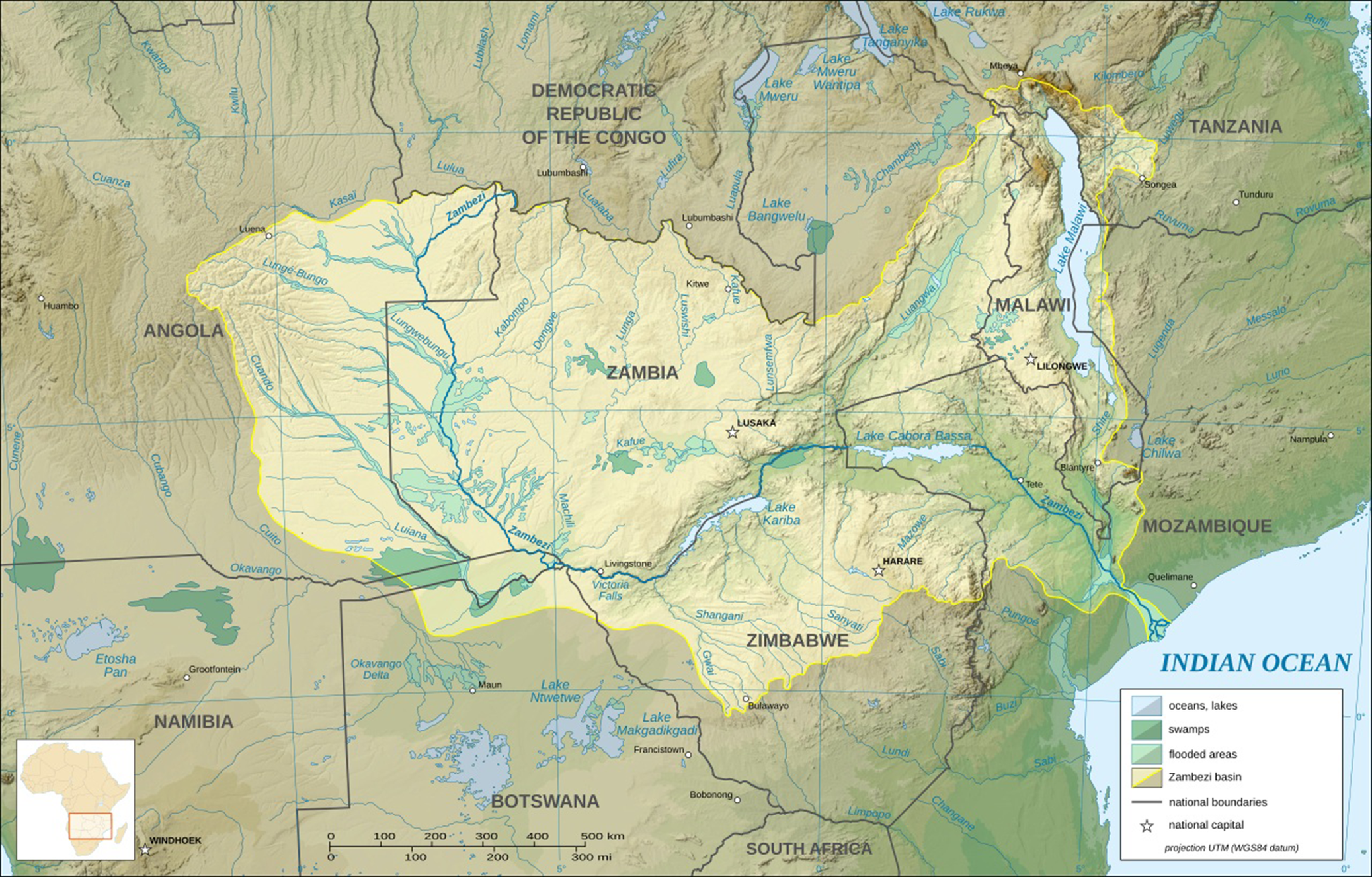
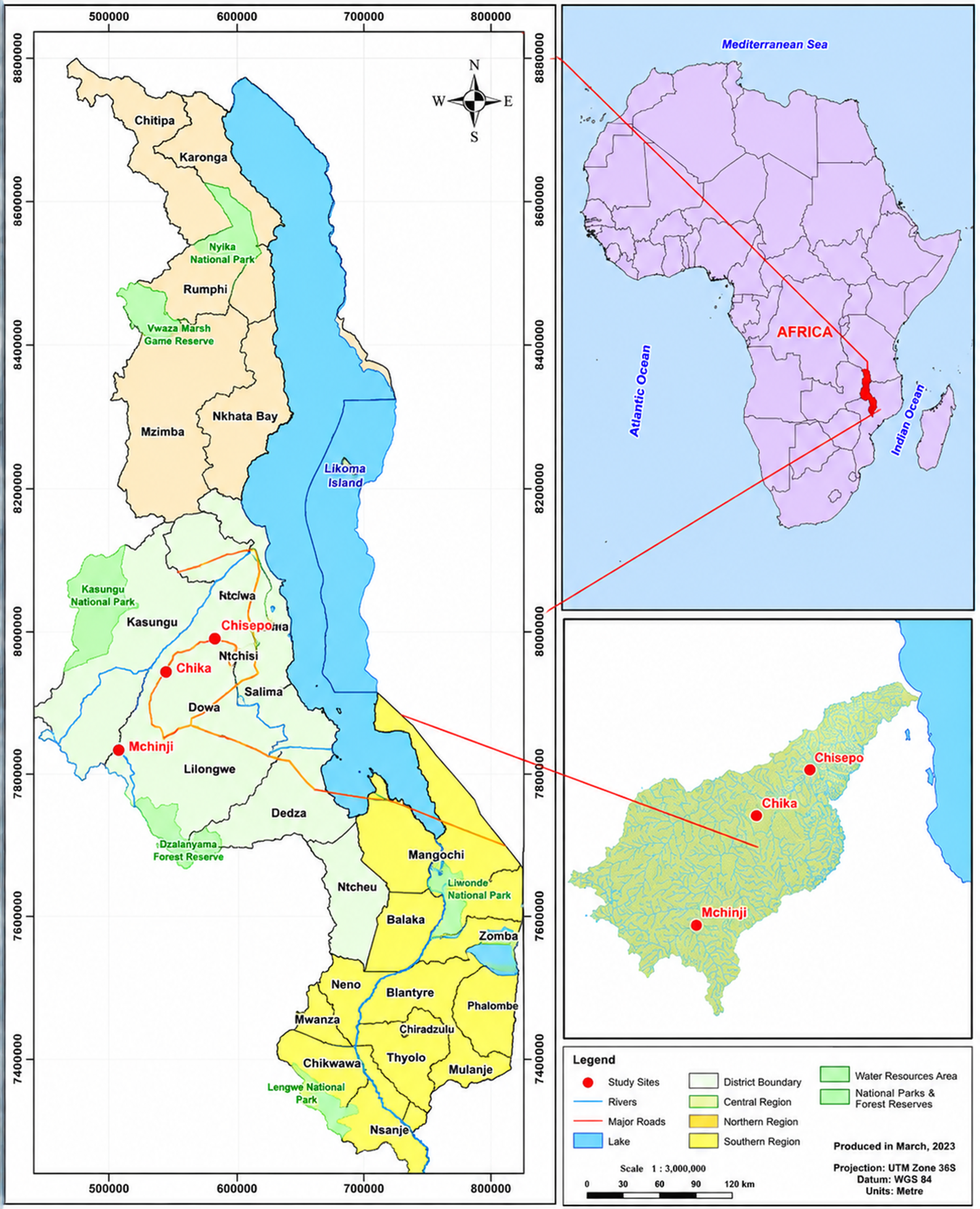
The study was conducted along selected sections of the Bua River in central and northern Malawi, which is in the Zambezi River Basin (see Figure 1). The Bua River constitutes an important freshwater system supporting domestic water use, fisheries, small-scale agriculture, livestock activities and riparian livelihoods across surrounding rural communities. The Bua River catchment (see Figure 2) experiences strong seasonal hydrological variability characterised by wet and dry climatic periods that influence river discharge, sediment transport and water quality dynamics.
Geographical map showing the Zambezi River hydrographic basin, Africa. (Adopted from Eric Gaba’s creations, Reference Gaba2015).

Figure 1. Long description
The map illustrates the Zambezi River hydrographic basin within southern Africa. It identifies the spatial extent of the basin across multiple countries and provides the regional geographical context for the location of the Bua River Basin, one of its tributary systems in Malawi. The figure is adapted from Eric Gaba (2017).
Geographical map showing the location of the Bua River Basin within Malawi and the spatial distribution of sampling sites across upstream, midstream and downstream sections of the catchment. The figure illustrates the regional position of the basin within Africa, and the sampled study locations used for assessing spatial and seasonal socio-ecological variability.

Figure 2. Long description
The map shows the location of the Bua River Basin within Malawi and its position within the African continent. Sampling sites are distributed across upstream (Mchinji), midstream (Dowa) and downstream (Ntchisi) sections of the river. The figure illustrates the spatial design adopted for assessing seasonal and longitudinal socio-ecological variability and physicochemical water quality throughout the catchment.
Land-use activities within the Bua Catchment include subsistence farming, riverbank cultivation, livestock grazing, vegetation clearing and settlement expansion, all of which exert varying degrees of ecological pressure on the river system. Increasing dependence on riverine resources has intensified concerns regarding habitat disturbance, declining water quality and reduced ecological resilience within several sections of the river corridor. For our present study, sampling stations were strategically selected to capture upstream, midstream and downstream environmental gradients as well as varying levels of anthropogenic influence. Site selection considered accessibility, dominant surrounding land uses, hydrological variability and observed human activity intensity. The broader ecological and socio-economic characteristics of the catchment allowed the river system to be examined as an interconnected socio-ecological landscape rather than solely a hydrological unit.
Research design and conceptual framework
This study adopted an integrated SES and DPSIR analytical framework to evaluate causal relationships between environmental degradation, human activities and adaptive responses within the Bua River system. The framework enabled the interpretation of water quality degradation as a multidimensional process shaped by ecological, institutional and livelihood interactions rather than isolated physicochemical changes. The SES perspective was used to examine feedback relationships between ecological conditions, resource dependency and adaptive community responses, while the DPSIR framework provided a structured mechanism for identifying causal pathways linking anthropogenic drivers to environmental impacts on freshwater and governance responses (Dudgeon et al., Reference Dudgeon, Arthington, Gessner, Kawabata, Knowler, Lévêque, Naiman, Prieur-Richard, Soto, Stiassny and Sullivan2006; Svarstad et al., 2008; Ostrom, Reference Ostrom2009).
Emphasis was placed on identifying causative trade-offs and synergistic interactions influencing ecosystem resilience. Trade-offs were conceptualised as processes where short-term livelihood or economic benefits generated negative ecological consequences, whereas synergies referred to interactions where adaptive or conservation-oriented practices simultaneously improved ecological stability and social wellbeing. The analytical structure therefore allowed interpretation of reinforcing and balancing feedback mechanisms within the riverine socio-ecological system. The combined application of SES and DPSIR frameworks aligns with growing interdisciplinary freshwater-governance approaches emphasising systems-oriented understanding of environmental change and resilience dynamics (Pahl-Wostl, Reference Pahl-Wostl2015). DPSIR was particularly valuable for structuring causal relationships among environmental drivers, ecological pressures and adaptive governance responses, while SES analysis supported interpretation of coupled human–environment feedback mechanisms shaping freshwater vulnerability and resilience.
Physicochemical water quality assessment
Physicochemical water-quality measurements were collected in triplicate from three sampling sites (upstream, midstream and downstream) during both the wet and dry seasons to assess spatial and seasonal environmental variability within the Bua River system, following standard freshwater assessment procedures outlined by APHA (2017). Measured parameters included temperature, pH, dissolved oxygen (DO), electrical conductivity (EC), turbidity and total dissolved solids (TDS), which are widely used indicators of freshwater ecological condition and anthropogenic disturbance. Field sampling was conducted systematically across all sites and seasons to ensure consistency and comparability of measurements. Water-quality measurements were obtained using calibrated portable instruments and interpreted within the broader socio-ecological context of land-use practices, hydrological variability and community dependence on freshwater resources.
Socio-ecological observations and qualitative assessments
Qualitative field observations were conducted to complement physicochemical measurements and support interpretation of socio-ecological processes influencing freshwater degradation within the Bua River Basin. Observational assessments focused on riparian vegetation condition, erosion intensity and visible anthropogenic activities including agricultural cultivation, livestock access, vegetation clearing, waste disposal and riverbank disturbance. Additional contextual information was obtained through informal interactions with local residents and direct observations of livelihood activities occurring along the river corridor. Focus group discussions also formed a basis for information synthesis. These observations were used as supporting evidence for identifying ecological pressures, resource-use patterns, adaptive practices and visible environmental responses within the catchment. Observed environmental conditions and human activities were subsequently interpreted within the DPSIR framework to support systems-oriented analysis of freshwater vulnerability. For example, agricultural expansion and increasing resource dependence were interpreted as socio-economic drivers, while riparian degradation, sediment mobilisation and hydrological disturbance represented environmental pressures contributing to ecological-state changes within the river system.
DPSIR and resilience analysis in the Bua River Basin
The DPSIR framework was applied to organise and interpret interactions among socio-economic drivers, environmental pressures, ecological state changes, resulting impacts and adaptive responses observed within the Bua River system. Drivers included livelihood dependence, population-related pressure and agricultural intensification, while identified pressures included riverbank cultivation, erosion, sedimentation and riparian vegetation loss. Ecological state changes were interpreted through observed variability in water quality parameters and physical habitat conditions. Impacts were evaluated in relation to ecosystem degradation, declining water quality, vulnerability of river-dependent livelihoods and potential long-term reductions in ecological resilience. Community adaptation measures, conservation awareness and local environmental management efforts were interpreted as response mechanisms within the socio-ecological system.
Descriptive data analysis
Descriptive statistical approaches were used to evaluate spatial and seasonal variability in physicochemical water quality parameters across sampling locations. Comparative interpretation focused on identifying patterns associated with differing anthropogenic pressures and environmental conditions within the catchment. Qualitative observations and field notes were synthesised thematically within the SES–DPSIR framework to identify recurring ecological pressures, vulnerability pathways, adaptive responses and resilience dynamics. Conceptual integration of quantitative and qualitative evidence was subsequently used to develop systems-oriented interpretations of causative trade-offs, synergistic interactions and socio-ecological feedback mechanisms operating within the Bua River system. The integrated analytical approach allowed environmental degradation patterns to be interpreted within broader livelihood and governance contexts, thereby supporting a more holistic understanding of resilience dynamics in tropical river systems experiencing several interacting stressors.
Statistical analysis
Quantitative water-quality data were analysed using a factorial three-way analysis of variance (ANOVA) to evaluate the effects of sampling site, season and measured physicochemical water-quality parameters, together with their interactions, on observed water-quality conditions within the Bua River system. The analysis examined differences among upstream, midstream and downstream river sections while simultaneously assessing temporal variability associated with seasonal hydrological conditions. The statistical approach was selected because it allowed simultaneous evaluation of interacting environmental gradients influencing freshwater conditions within the socio-ecological system.
Specifically, the factorial ANOVA simultaneously evaluated the main effects of sampling site (location), season and water-quality parameter, together with the two-way interaction effects (site × season, site × parameter and season × parameter). This analytical framework enabled assessment of how environmental conditions varied across spatial and seasonal gradients while accounting for differences among the measured physicochemical indicators.
Prior to analysis, assumptions of normality and homogeneity of variance were assessed to ensure suitability of parametric statistical procedures. Where necessary, variance homogenisation procedures were applied before final model implementation. Statistical significance was evaluated at α = 0.05.
The factorial ANOVA model applied in the study was expressed as:

Where:
-
• $ {Y}_{ijkl} $
 = the observed measurement of an individual physicochemical water-quality variable (e.g., temperature, pH, dissolved oxygen, electrical conductivity, turbidity or total dissolved solids) recorded for each sampling observation;
-
• $ \mu $
= overall mean; -
• $ {\alpha}_i $
= effect of sampling site (location); -
• $ {\beta}_j $
= effect of season; -
• $ {\gamma}_k $
= effect associated with the measured physicochemical water-quality parameter; -
• $ {\left(\alpha \beta \right)}_{ij} $
= site × season interaction; -
• $ {\left(\alpha \gamma \right)}_{ik} $
= site × parameter interaction; -
• $ {\left(\beta \gamma \right)}_{jk} $
= season × parameter interaction; and -
• $ {\varepsilon}_{ijkl} $
= random error term.


Since the objective was to compare variation among the measured physicochemical indicators while simultaneously evaluating spatial and seasonal influences, each water-quality parameter was analysed using its original measured values. No standardisation or normalisation of the response variables was performed prior to analysis. Instead, the suitability of the data for parametric analysis was confirmed through assessment of normality and homogeneity of variance before fitting the factorial ANOVA model.
The null hypothesis (H0) assumed no significant differences in mean water-quality conditions among sampling locations and seasons, whereas the alternative hypothesis (H1) proposed that at least one environmental condition differed significantly across the river system. Where significant differences were detected, Tukey–Kramer post hoc comparisons were performed to identify specific differences among spatial and seasonal group means (Tukey, Reference Tukey1949). The post hoc procedure enabled more detailed interpretation of environmental variability and hydrological disturbance patterns across the catchment. Importantly, the statistical analysis was not used solely to identify physicochemical variability, but also to support interpretation of socio-ecological instability and resilience dynamics within the Bua River system.
Significant spatial and seasonal interactions were interpreted as quantitative indicators of ecological sensitivity to interacting anthropogenic and hydrological pressures operating across the catchment. To complement quantitative analyses, qualitative field observations and stakeholder-derived environmental narratives were analysed thematically using content-analysis approaches. Thematic categories focused on agricultural expansion, riparian degradation, sediment mobilisation, livelihood dependency, governance limitations and adaptive environmental responses.
The factorial analytical approach additionally enabled interpretation of interacting environmental gradients and resilience-related ecological variability within the river system. Such approaches are increasingly recognised as important for understanding complex freshwater-system responses to several interacting stressors operating across spatial and temporal scales (Beevers et al., Reference Beevers, Bedinger, McClymont and Visser-Quinn2021). The integration of statistical and qualitative evidence enabled operational application of the SES and DPSIR frameworks by linking measurable ecological variability with observed socio-environmental pressures and resilience-related system responses.
Results and discussion
Spatial and seasonal variability in physicochemical water quality
Physicochemical parameters measured across the Bua River revealed substantial spatial and seasonal variability associated with differences in hydrological conditions, surrounding land use and intensity of anthropogenic activities. Turbidity levels were generally elevated during the wet season, particularly at sampling locations characterised by active riverbank cultivation, exposed soils and reduced riparian vegetation cover. Increased surface runoff during rainfall events likely intensified sediment mobilisation into the river system, contributing to declining water clarity and elevated suspended particulate loads. Similar relationships between catchment disturbance and turbidity dynamics have been reported in tropical freshwater systems experiencing agricultural pressure (Allan, Reference Allan2004).
Electrical conductivity (EC) and total dissolved solids (TDS) also exhibited spatial variability across the study sites, suggesting localised influences of human activities and catchment-level disturbances. Downstream sections exposed to intensified human utilisation and settlement activities generally showed relatively higher conductivity values compared to upstream locations with comparatively lower visible disturbance. Such patterns may reflect cumulative nutrient inputs, dissolved materials and altered runoff pathways associated with expanding land-use activities within the catchment.
Dissolved oxygen concentrations varied seasonally and spatially, with lower values frequently observed in slower-flowing sections and areas characterised by increased organic disturbance or elevated turbidity. Reduced dissolved oxygen conditions may indicate declining habitat quality for aquatic organisms and reduced ecological resilience under intensified environmental stress. Variability in pH and temperature remained within ranges generally typical for tropical freshwater systems but nevertheless reflected changing hydrological and environmental conditions across sampling periods. The observed physicochemical variability (see Supplementary Figure S1) shows that water quality degradation within the Bua River is spatially heterogeneous and strongly influenced by interacting environmental and anthropogenic processes rather than a single isolated pressure source.
Statistical evidence of spatial and seasonal socio-ecological variability
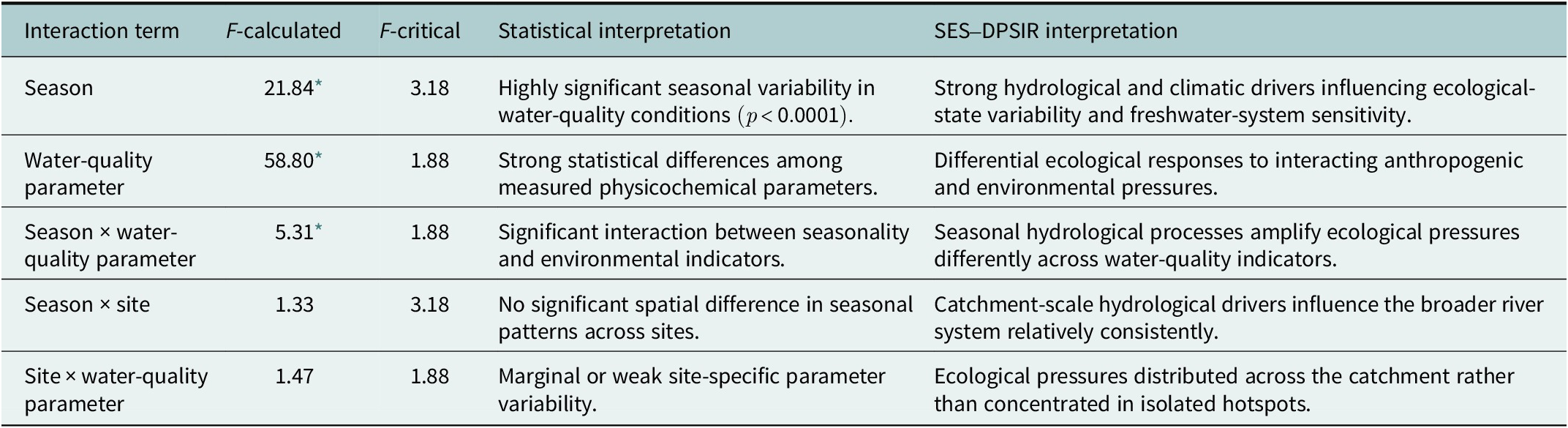
Factorial ANOVA revealed statistically significant spatial and seasonal variability in physicochemical water-quality conditions across the Bua River system, indicating that ecological conditions within the catchment are strongly influenced by interacting hydrological and anthropogenic pressures (Table 1).
Integrated Factorial ANOVA summary showing effects of season, site and parameter interactions on Bua River water-quality dynamics and socio-ecological variability

Table 1. Long description
The table summarises factorial ANOVA results for physicochemical water-quality variables. Statistical outputs include the effects of season, sampling site and interaction terms on water-quality variability, together with significance levels and interpretation of environmental variability across the Bua River Basin.
Note: DPSIR, Drivers–Pressures–State–Impact–Response; SES, social–ecological systems.
* Significant at (p < 0.05).
Factorial ANOVA demonstrated that seasonal hydrological variability and interacting environmental pressures significantly influenced ecological-state conditions within the Bua River socio-ecological system. Highly significant seasonal effects (F 2,52 = 21.84, p < 0.0001) provided quantitative evidence that climatic and hydrological fluctuations strongly shape freshwater-system dynamics across the catchment.
Increased turbidity, sediment mobilisation and dissolved oxygen variability observed during wetter periods suggest that seasonal runoff processes intensify the transport of sediments and environmentally disruptive materials into the river network. Within the integrated SES–DPSIR framework, these seasonal effects represent major hydrological drivers contributing to ecological-state transitions and freshwater-system sensitivity.
Significant differences among measured physicochemical parameters
$ \left(F=58.80,p<0.0001\right) $
 further indicated that environmental pressures affect freshwater-quality indicators unevenly across the catchment. Parameters associated with sediment transport and hydrological disturbance exhibited stronger variability than relatively stable indicators, reflecting differential ecological sensitivity to climatic and anthropogenic stressors.
The significant interaction between season and water-quality parameters
$ \left(F=5.31,p<0.05\right) $
 additionally demonstrated that seasonal hydrological processes amplify ecological pressures differently depending on environmental conditions and disturbance intensity. These findings support broader evidence that hydrological variability and land-use pressures interact strongly to influence freshwater-system stability within vulnerable catchments (McCartney et al., Reference McCartney, Forkuor, Sood, Amisigo, Hattermann and Muthuwatta2012).
Although the season × site interaction was not statistically significant
$ \left(F=1.33\right) $
 , seasonal environmental patterns remained broadly consistent across upstream, midstream and downstream sections of the river, suggesting that hydrological drivers influence the catchment at system scale rather than within isolated localised areas alone.
Similarly, the limited significance of the site × parameter interaction
$ \left(F=1.47\right) $
 suggests that ecological disturbance patterns remained relatively coherent across measured indicators despite some spatial variability. This may reflect the cumulative influence of widespread socio-ecological pressures operating throughout the basin rather than isolated pollution hotspots.
Socio-ecological drivers and environmental pressures
Agricultural expansion and riverbank disturbance
Field observations identified agricultural expansion along riparian zones as a major socio-ecological pressure contributing to environmental degradation within the Bua River system. Cultivation activities extending close to riverbanks reduced vegetation stability and increased soil exposure to erosive runoff processes during seasonal rainfall events, contributing to elevated sediment transport, turbidity and ecological disturbance in affected sections of the river. At the same time, rain-fed agriculture remains an important livelihood and food-security strategy for surrounding communities, illustrating a socio-ecological trade-off between short-term subsistence benefits and long-term freshwater ecosystem sustainability.
Within the SES–DPSIR framework, agricultural expansion therefore functions simultaneously as a livelihood-supporting socio-economic driver and an environmental pressure contributing to riparian degradation and declining freshwater resilience within the catchment. Similar interactions between rain-fed agricultural intensification and freshwater ecosystem decline have been documented across multiple developing tropical catchments (Foley et al., Reference Foley, DeFries, Asner, Barford, Bonan, Carpenter, Chapin, Coe, Daily, Gibbs, Helkowski, Holloway, Howard, Kucharik, Monfreda, Patz, Prentice, Ramankutty and Snyder2005).
Livelihood dependency and resource-use pressure
The Bua River supports multiple livelihood functions including domestic water access, fishing, irrigation-related activities and livestock utilisation. Observed dependence on riverine resources reflects the central role of freshwater systems within rural socio-economic structures in Malawi. However, increasing resource dependency may simultaneously intensify ecological pressure where governance capacity and alternative livelihood opportunities remain limited. In several locations, direct livestock access to riverbanks contributed to trampling, bank destabilisation and localised sediment disturbance.
Informal domestic utilisation and waste-related activities further illustrated how cumulative small-scale pressures may collectively influence ecological conditions within freshwater systems. These findings support broader socio-ecological theory suggesting that environmental degradation often emerges from cumulative interactions among livelihood vulnerability, institutional limitations and ecological dependence rather than isolated unsustainable behaviours alone (Folke, Reference Folke2006).
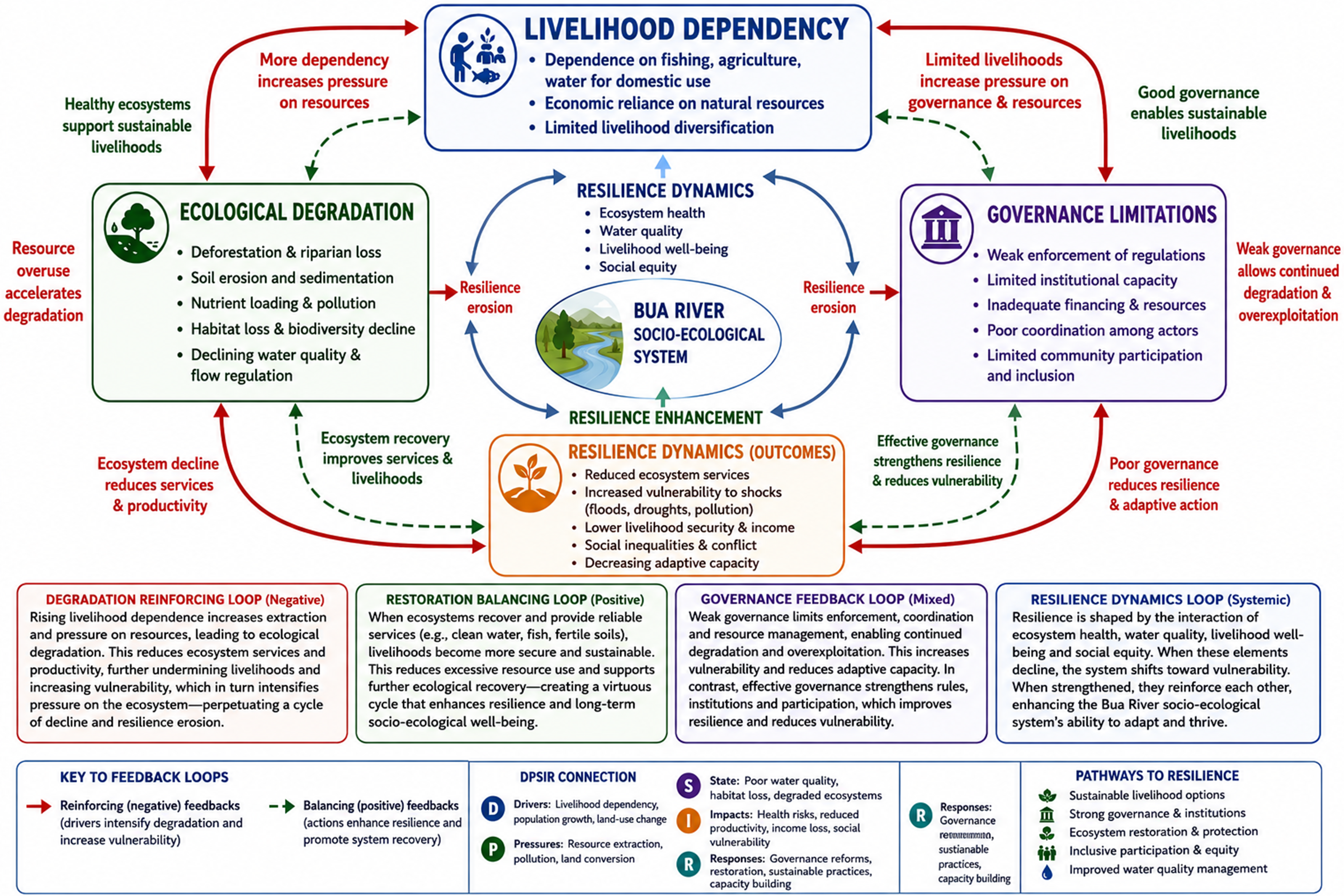
The devised Figure 3 illustrates four major interacting socio-ecological feedback loops that collectively explain how livelihood dependency, ecological degradation, governance limitations and resilience dynamics influence freshwater-system stability within the Bua River Basin. These loops demonstrate the reinforcing and balancing mechanisms through which environmental pressures, human activities and adaptive responses interact within the broader socio-ecological system, which include:
-
• Degradation reinforcing loop (negative feedback): The degradation reinforcing loop illustrates how increasing livelihood dependency on freshwater resources may intensify ecological pressure within the Bua River system. As communities rely more heavily on riverine resources for agriculture, livestock access, fishing and domestic activities, ecological disturbance including riparian degradation, sediment mobilisation and declining water quality may progressively increase. These environmental changes can reduce ecosystem services and livelihood productivity, thereby increasing socio-economic vulnerability and further dependence on remaining natural resources. The interaction creates a self-reinforcing cycle in which ecological degradation and livelihood insecurity intensify one another over time, contributing to resilience erosion within the socio-ecological system.
-
• Restoration balancing loop (positive feedback): The restoration balancing loop represents adaptive processes capable of strengthening freshwater resilience and improving socio-ecological stability. Ecological restoration measures such as riparian vegetation recovery, reduced riverbank disturbance and improved environmental stewardship may enhance ecosystem services including water regulation, habitat protection and sediment control. Improved ecosystem condition may subsequently support more secure livelihoods, reduce excessive resource pressure and strengthen local adaptive capacity. Unlike reinforcing degradation pathways, balancing feedbacks help stabilise the socio-ecological system by promoting recovery, resilience enhancement and long-term sustainability.
-
• Governance feedback loop (mixed feedback): The governance feedback loop demonstrates how institutional effectiveness strongly influences environmental outcomes within the Bua River Basin. Weak governance capacity, limited enforcement and poor institutional coordination may allow continued unsustainable resource use, ecological degradation and reduced adaptive response capacity. Under such conditions, vulnerability may progressively increase across both ecological and livelihood systems.
Conversely, improved governance, stronger community participation and integrated environmental management may support more effective regulation, restoration activities and adaptive freshwater governance. The loop therefore illustrates how governance systems may either reinforce vulnerability or strengthen resilience depending on institutional effectiveness and adaptive capacity.
-
• Resilience dynamics loop (systemic feedback): The resilience dynamics loop summarises the broader interactions linking ecosystem health, water quality, livelihood well-being and social stability within the Bua River socio-ecological system.
Overall, declining ecological conditions may reduce adaptive capacity and increase vulnerability to climatic and environmental disturbances including floods, droughts and pollution-related stress. However, where ecosystem integrity, governance effectiveness and livelihood sustainability are strengthened simultaneously, the socio-ecological system may develop greater resilience and recovery potential. The loops therefore highlight resilience as a dynamic systems property emerging from continuous interactions among ecological, institutional and socio-economic processes in the Bua Basin rather than from isolated environmental conditions alone.
Illustrative feedback relationships among livelihood dependency, ecological degradation, governance limitations and resilience dynamics within the Bua River socio-ecological system.

Figure 3. Long description
The conceptual diagram illustrates reinforcing and balancing feedback loops within the Bua River socio-ecological system. It links livelihood dependency, natural-resource use, ecological degradation, governance limitations and adaptive resilience. Arrows indicate causal relationships among environmental degradation, institutional responses, ecosystem recovery and long-term sustainability.
Riparian vegetation loss and habitat destabilisation
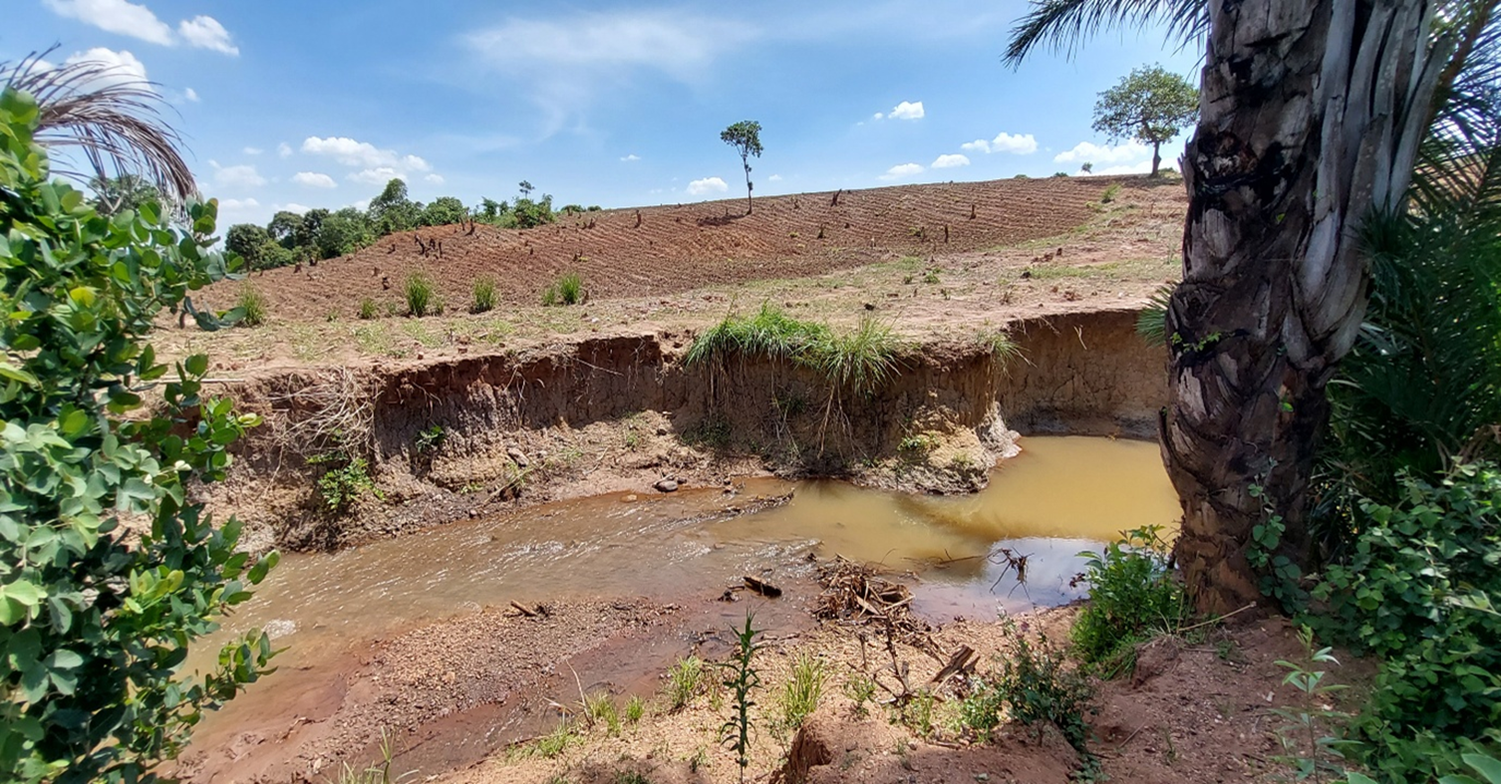
Loss of riparian vegetation was widely observed across several sampling locations and appeared closely associated with cultivation activities, vegetation clearing and settlement expansion. Riparian zones play essential ecological roles in stabilising riverbanks, regulating runoff, filtering sediments and maintaining habitat integrity within freshwater systems (Naiman and Décamps, Reference Naiman and Décamps1997; Trimmel et al., Reference Trimmel, Weihs, Leidinger, Formayer, Kalny and Melcher2018; Timm et al., Reference Timm, Ouellet and Daniels2021; Miralha et al., Reference Miralha, Segura and Bladon2024; Stackhouse et al., Reference Stackhouse, Coops, Kuiper, Hinch, White, Tompalski, Nonis and Gergel2024). Areas characterised by reduced vegetation cover frequently exhibited visible erosion features, unstable banks and increased sediment deposition within adjacent river sections. The degraded Bua River’s riparian buffers (see Figure 4) thus function both as a direct ecological pressure and as a mechanism accelerating additional environmental deterioration. The weakening of riparian ecosystem functions also reduced the natural buffering capacity of the river system against climatic and hydrological variability, thereby increasing vulnerability of both ecological processes and dependent human communities.
Observed riparian degradation, exposed riverbanks and ecological buffering loss associated with human pressure and land-use disturbance within sections of the Bua River.

Figure 4. Long description
The photographs illustrate degraded riparian habitats observed during field surveys. Visible features include exposed riverbanks, vegetation removal, bank erosion, sediment deposition and reduced ecological buffering caused by agricultural encroachment and other human activities. The images provide visual evidence of anthropogenic pressures affecting river condition.
DPSIR interpretation of socio-ecological degradation pathways
Application of the DPSIR framework enabled structured interpretation of causal relationships shaping environmental degradation within the Bua River system. Agricultural intensification, population-related resource demand and livelihood dependency functioned as primary socio-economic drivers generating pressures including sediment mobilisation, riparian degradation and nutrient-related disturbances. These pressures altered ecological state conditions through declining water quality, elevated turbidity, reduced habitat stability and increased ecosystem vulnerability. Resulting impacts included risks to aquatic ecosystem functioning, reduced freshwater sustainability and increased vulnerability of river-dependent livelihoods. See Supplementary Figure S2 for the integrated DPSIR framework showing causal pathways linking socio-economic drivers, environmental pressures, ecological state changes, impacts and adaptive responses within the Bua River Basin.
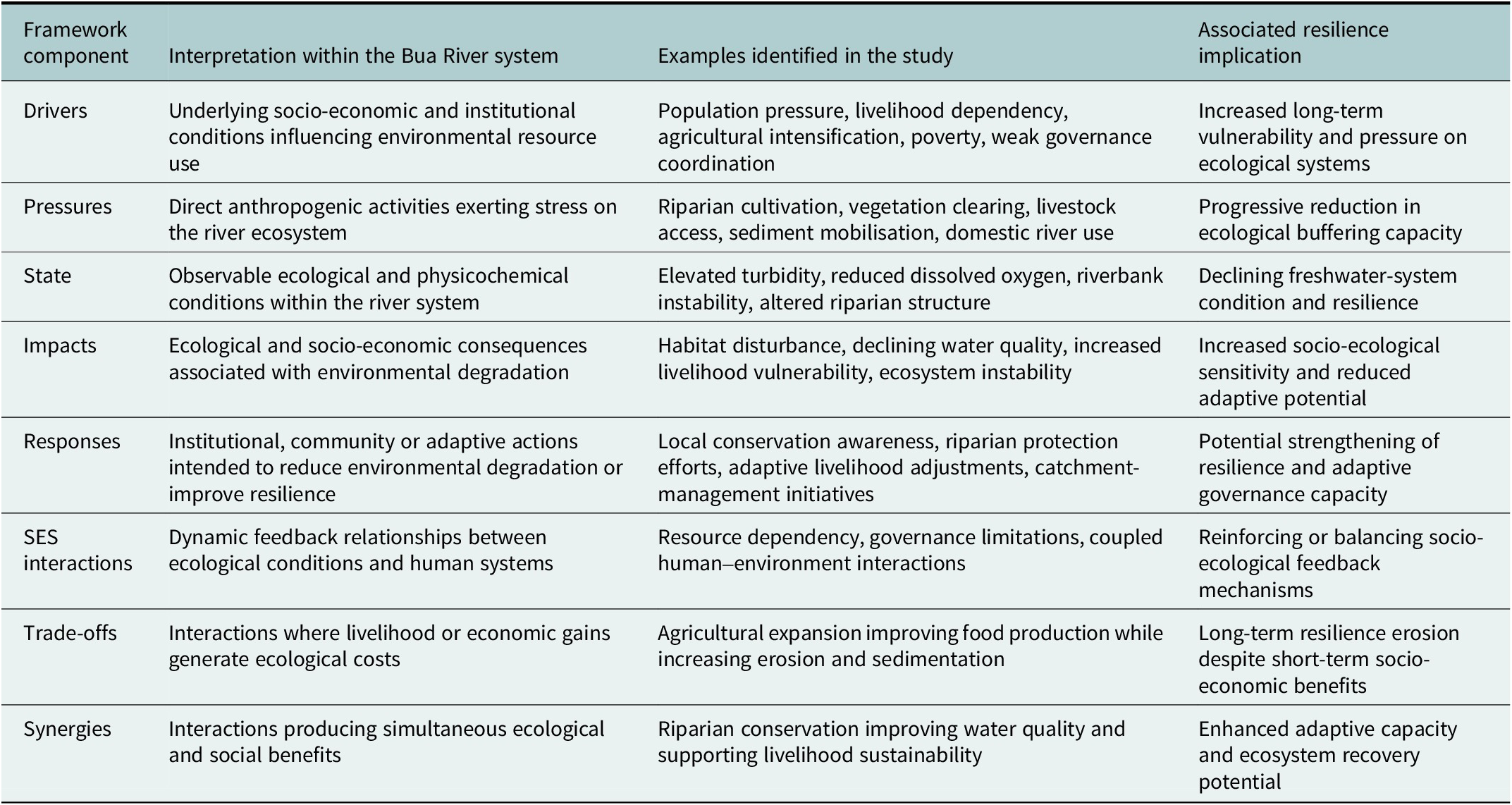
Observed and potential responses included localised conservation awareness, adaptive livelihood adjustments and the need for integrated catchment-level governance interventions capable of addressing interacting environmental pressures. Table 2 shows a summarised operational interpretation and integrated classification of SES and DPSIR components, including socio-ecological drivers, environmental pressures, ecological-state conditions, impacts and adaptive governance responses identified within the Bua River Basin.
Summarised operational interpretation and integrated classification of SES and DPSIR components identified within the Bua River Basin

Table 2. Long description
The table presents an integrated classification of Social–Ecological Systems (SES) and Drivers–Pressures–State–Impact–Response (DPSIR) components identified within the Bua River Basin. It summarises socio-economic drivers, environmental pressures, ecological states, impacts and governance responses supporting interpretation of freshwater-system dynamics.
Note: DPSIR, Drivers–Pressures–State–Impact–Response; SES, social–ecological systems.
The framework was used to support systems-oriented interpretation of environmental degradation pathways and resilience dynamics within the Bua River Basin. For a further explanation, see Supplementary Table S1 showing an expanded disentanglement of each component of the DPSIR and the causative feedbacks in the DPSIR model being operationalised in the Bua Basin. The integration of SES and DPSIR approaches therefore provided a more comprehensive understanding of resilience dynamics by linking measurable environmental changes to broader governance, livelihood and adaptive system interactions.
Causative trade-offs and synergistic resilience dynamics
Synergistic interactions supporting adaptive capacity
Despite evidence of ecological degradation, several observations also indicated the presence of adaptive and potentially synergistic socio-ecological interactions capable of supporting resilience within the river system. In certain locations, partial riparian protection, local conservation awareness and reduced direct disturbance appeared associated with relatively improved environmental conditions and reduced visible erosion intensity. These interactions suggest that community-based adaptive practices may contribute simultaneously to ecological stabilisation and livelihood sustainability where appropriate environmental management strategies are supported. Synergistic resilience pathways therefore emerge where ecosystem protection enhances freshwater quality, reduces environmental vulnerability and sustains resource availability for dependent communities.
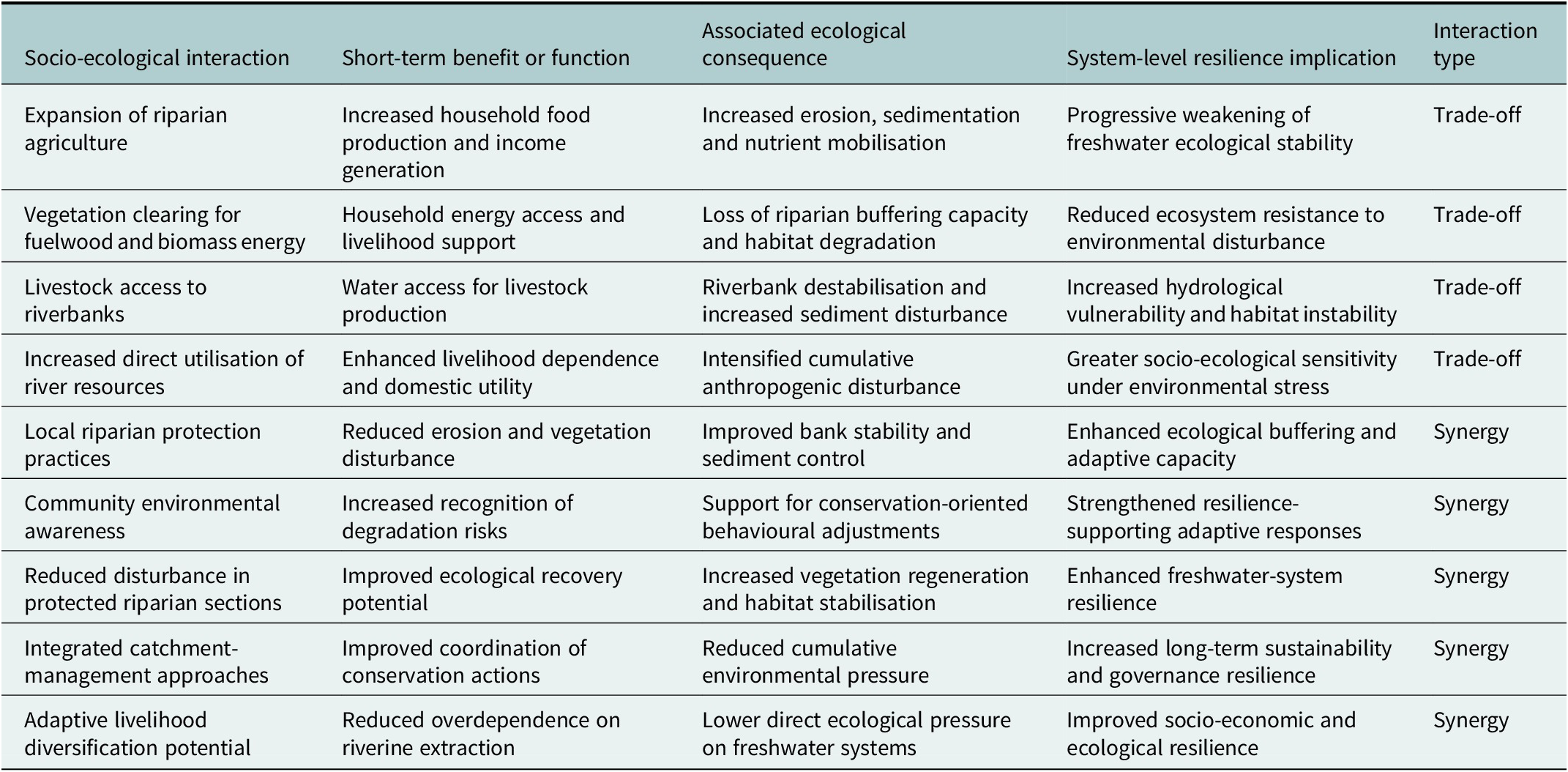
The findings highlight the importance of strengthening locally grounded adaptive governance approaches capable of balancing livelihood needs with ecological sustainability objectives. Rather than viewing conservation and development as mutually exclusive processes, integrated socio-ecological management may create opportunities for mutually reinforcing environmental and social benefits, as shown in Table 3.
Examples of causative trade-offs and synergistic interactions influencing ecosystem resilience and livelihood sustainability within the Bua River socio-ecological system

Table 3. Long description
The table summarises examples of reinforcing trade-offs and synergistic interactions identified within the Bua River socio-ecological system. Examples include relationships among agricultural expansion, riparian degradation, ecosystem services, livelihood dependence and adaptive governance responses affecting long-term resilience.
Note: Trade-offs represent interactions where socio-economic or livelihood gains generate ecological costs that weaken resilience, whereas synergies represent interactions where ecological sustainability and social wellbeing are simultaneously strengthened. The analysis was developed using integrated SES–DPSIR interpretation of field observations, environmental conditions and socio-ecological interactions within the Bua River Basin.
Reinforcing trade-offs driving ecosystem degradation
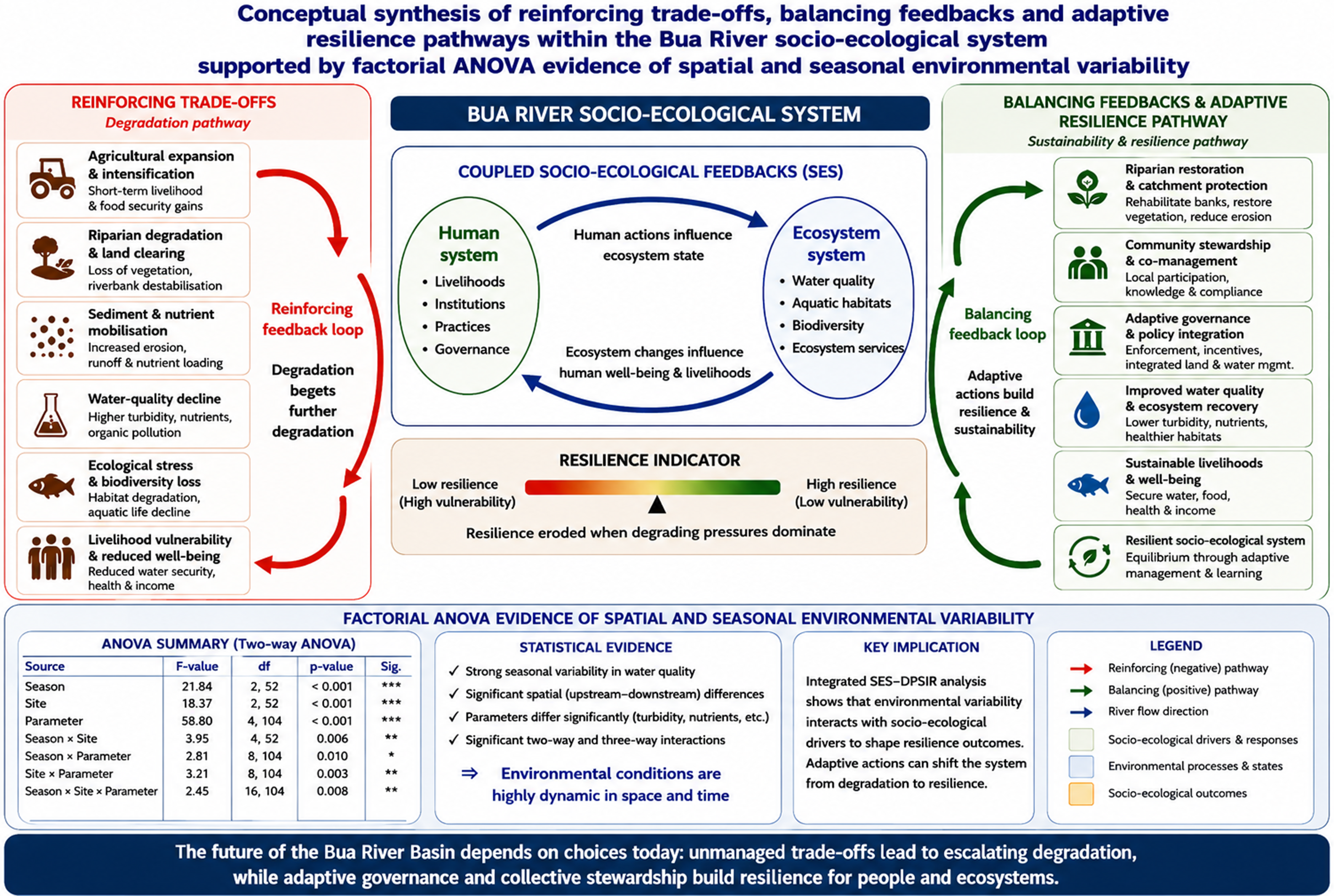
One of the central findings of this study was the presence of reinforcing socio-ecological trade-offs linking livelihood activities to declining freshwater resilience. Agricultural expansion, vegetation clearing and intensified river utilisation generated immediate socio-economic benefits for local communities while simultaneously increasing ecological degradation risks through erosion, sedimentation and habitat disturbance. These interactions created reinforcing feedback loops (see Figure 5) in which declining ecological conditions potentially reduced long-term livelihood security, thereby increasing dependence on further resource exploitation. For instance, reduced agricultural productivity in degraded environmental conditions may encourage expansion into additional riparian areas, which accelerates ecological deterioration.
Conceptual synthesis of reinforcing trade-offs, balancing feedbacks and adaptive resilience pathways within the Bua River socio-ecological system supported by factorial ANOVA evidence of spatial and seasonal environmental variability.

Figure 5. Long description
The figure integrates reinforcing trade-offs, balancing feedbacks and adaptive resilience pathways within the Bua River socio-ecological system. It combines socio-ecological interactions, governance responses and factorial statistical evidence to illustrate how environmental variability, ecosystem degradation and management interventions influence freshwater resilience and sustainability.
The observed dynamics reflect a resilience erosion process whereby environmental pressures gradually weaken the capacity of the river system to absorb disturbance while maintaining ecological functionality. Such reinforcing trade-offs are characteristic of vulnerable SES experiencing increasing pressure under limited governance and economic alternatives (Walker et al., Reference Walker, Holling, Carpenter and and Kinzig2004).
Socio-ecological trade-offs and reinforcing degradation pathways
The findings demonstrate that freshwater degradation within the Bua River Basin is shaped by interconnected socio-ecological trade-offs operating across hydrological, ecological and livelihood systems. Activities supporting immediate household survival simultaneously contribute to the gradual erosion of freshwater resilience and ecological stability. Agricultural expansion along riparian zones represents one of the clearest examples of these trade-offs. Although riverbank cultivation supports short-term food security and livelihoods, associated vegetation removal and soil disturbance intensify erosion, sediment mobilisation and ecological instability within adjacent freshwater environments. Significant seasonal variability further suggests that these pressures become amplified during wetter hydrological periods through runoff-driven sediment transport.
Similarly, biomass-resource extraction and riparian vegetation clearing weaken natural ecological buffering mechanisms that regulate riverbank stability and hydrological variability. Reduced riparian integrity may therefore increase ecological sensitivity to climatic disturbance while reducing the capacity of the river system to sustain long-term ecosystem services. These interacting pressures collectively contribute to compound ecological stress within the catchment, consistent with broader freshwater resilience literature showing that cumulative stressors often generate greater impacts than isolated disturbances (Biggs et al., Reference Biggs, Schlüter, Biggs, Bohensky, BurnSilver, Cundill, Dakos, Daw, Evans, Kotschy, Leitch, Meek, Quinlan, Raudsepp-Hearne, Robards, Schoon, Schultz and West2012; Reid et al., Reference Reid, Carlson, Creed, Eliason, Gell, Johnson, Kidd, MacCormack, Olden, Ormerod, Smol, Taylor, Tockner, Vermaire, Dudgeon and Cooke2019).
Importantly, the observed degradation pathways are closely linked to broader socio-economic vulnerability rather than simple environmental mismanagement. Communities highly dependent on freshwater resources often operate under limited livelihood alternatives, increasing reliance on environmentally intensive activities for household survival. Under such conditions, environmental degradation and livelihood vulnerability become mutually reinforcing processes that progressively weaken socio-ecological resilience. See Supplementary Table S2 for the integrated interpretation of reinforcing and balancing socio-ecological feedback mechanisms affecting freshwater resilience within the Bua River system.
Resilience erosion, thresholds and adaptive freshwater governance
The combined quantitative and qualitative findings suggest that the Bua River system is experiencing progressive resilience erosion driven by interacting hydrological, ecological and socio-economic pressures. Elevated turbidity, riparian destabilisation, vegetation loss and significant seasonal physicochemical variability indicated increasing ecological vulnerability within the catchment. Reduced riparian vegetation was closely associated with intensified erosion and sediment mobilisation during seasonal runoff periods, reflecting weakening ecological buffering capacity and increasing sensitivity of the freshwater system to climatic and anthropogenic disturbances. Although ecological thresholds were not directly quantified, the combined statistical evidence and field observations indicate growing pressure on freshwater-system stability within the basin.
The observed resilience dynamics extended beyond ecological degradation alone. High livelihood dependency on riverine resources contributed to environmentally intensive land-use practices that unintentionally reinforced degradation pathways despite increasing awareness of environmental decline. The findings therefore highlight freshwater resilience as a coupled socio-ecological process shaped by interactions among ecological conditions, livelihood structures, institutional capacity and adaptive governance processes. The study further suggests that conventional water-quality management approaches focused primarily on physicochemical monitoring may inadequately address the broader socio-ecological mechanisms driving environmental degradation.
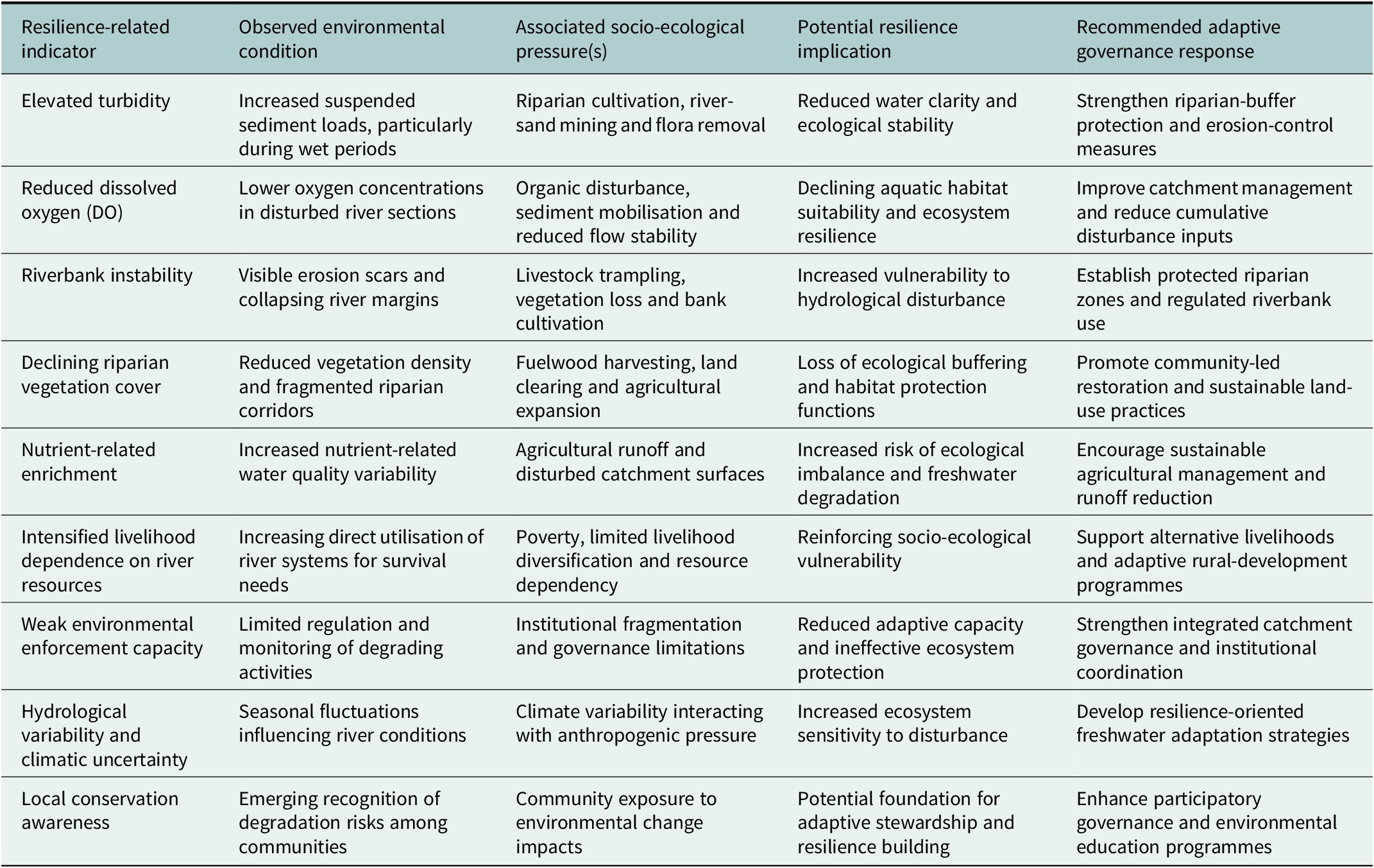
Adaptive freshwater governance within the Bua River Basin may therefore require integrated interventions including riparian restoration, sustainable land-use management, community-based stewardship, livelihood diversification and improved institutional coordination. Conservation-oriented practices such as vegetation protection and reduced riverbank disturbance demonstrated potential resilience-supporting synergies capable of improving freshwater quality, reducing erosion intensity and strengthening long-term ecosystem-service sustainability. See Table 4 for a summary of resilience indicators, SES pressures and adaptive governance responses.
Summary of resilience-related environmental indicators, associated socio-ecological pressures and potential adaptive governance responses identified within the Bua River Basin

Table 4. Long description
The table summarises resilience-related environmental indicators together with associated socio-ecological pressures and proposed adaptive governance responses. Indicators include erosion intensity, turbidity, riparian degradation, ecosystem vulnerability and corresponding management interventions aimed at improving long-term freshwater resilience.
Note: DO, dissolved oxygen. Resilience indicators were interpreted using integrated SES and DPSIR analysis to evaluate vulnerability pathways and adaptive governance opportunities within the Bua River Basin.
Integrated SES and DPSIR interpretation of vulnerability and resilience dynamics
The integration of quantitative water-quality measurements with qualitative field observations revealed strong linkages between ecological variability, livelihood dependency and anthropogenic disturbance within the Bua River Basin. Elevated turbidity, sediment-related variability and seasonal physicochemical fluctuations corresponded closely with observations of riparian cultivation, exposed riverbanks, river-sand mining, vegetation removal and active erosion zones across several sections of the catchment. These findings suggest that agricultural expansion and land-surface disturbance contribute substantially to hydrological instability and ecological degradation within the river system.
Livelihood dependency emerged as a major socio-economic driver shaping environmental pressure within the catchment. Communities relied extensively on riverine ecosystems for farming, domestic water access, livestock activities and other livelihood-support functions. However, these activities simultaneously intensified ecological vulnerability through cumulative disturbance of riparian environments and increased pressure on freshwater resources. The findings therefore illustrate important socio-ecological trade-offs in which short-term livelihood and food-security benefits may contribute to long-term reductions in ecosystem stability and freshwater resilience.
Field observations additionally suggested that riparian degradation functions not only as a direct environmental pressure but also as a reinforcing mechanism accelerating broader ecological deterioration. Reduced vegetation cover and increased riverbank exposure were associated with intensified runoff activity, sediment mobilisation and declining ecological buffering capacity during wetter periods. Such interactions indicate that environmental degradation within the Bua River Basin emerges through interconnected socio-ecological processes rather than isolated environmental disturbances alone.
At the same time, some areas exhibiting partial riparian protection and reduced direct disturbance demonstrated relatively improved environmental conditions and lower visible erosion intensity. These observations suggest the presence of adaptive and potentially synergistic resilience pathways where ecological protection and livelihood sustainability are jointly prioritised. Reduced ecological disturbance, improved environmental stewardship and local conservation awareness may therefore contribute to balancing degradation feedbacks while strengthening freshwater-system resilience.
The combined analytical approach enabled the SES and DPSIR frameworks to be operationalised directly through empirical observations and statistical evidence. Within the DPSIR framework, livelihood dependency, agricultural intensification and increasing resource demand functioned as socio-economic drivers generating multiple environmental pressures including riparian cultivation, vegetation clearing and sediment mobilisation. These pressures contributed to ecological-state changes represented by elevated turbidity, altered physicochemical conditions, unstable riverbanks and declining riparian integrity. The observed and potential impacts included increasing ecosystem vulnerability, habitat destabilisation and growing risks to river-dependent livelihoods.
The SES framework further strengthened interpretation of the dynamic feedback relationships linking ecological degradation, governance limitations and human adaptation processes. Declining environmental conditions may increase livelihood vulnerability, thereby intensifying dependence on freshwater-resource utilisation and reinforcing degradation pathways within the catchment. Conversely, adaptive governance, improved institutional coordination and conservation-oriented management practices may support resilience-building pathways capable of balancing ecological sustainability with socio-economic realities.
Hydrological variability, ecological instability and resilience thresholds
The strong seasonal effects identified through factorial ANOVA suggest that periods of intensified rainfall and runoff substantially increase ecological disturbance within already pressured sections of the river system. Elevated sediment mobilisation, turbidity variability and riverbank destabilisation observed during wetter periods indicate that hydrological processes amplify existing environmental pressures associated with land-use disturbance and riparian degradation. Such interactions are consistent with broader freshwater-system studies demonstrating that climatic variability frequently intensifies the ecological consequences of anthropogenic landscape modification (McCartney et al., Reference McCartney, Forkuor, Sood, Amisigo, Hattermann and Muthuwatta2012).
Importantly, the observed ecological variability may also indicate gradual movement towards reduced resilience conditions within portions of the catchment. Resilience theory suggests that ecosystems exposed to repeated disturbance may progressively lose buffering capacity, eventually becoming more vulnerable to abrupt ecological transitions or functional degradation (Carpenter et al., Reference Carpenter, Walker, Anderies and Abel2001; Folke, Reference Folke2006). Although the present study did not directly quantify ecological tipping points, the convergence of hydrological instability, riparian degradation and statistically significant environmental variability suggests increasing stress on ecological regulatory mechanisms within the freshwater system.
The findings additionally suggest that ecological instability within the river basin may intensify under future climatic uncertainty. Projected increases in rainfall variability, extreme hydrological events and land-use pressure across many tropical African regions may further weaken freshwater resilience where catchment degradation and socio-economic vulnerability are already present (Steffen et al., Reference Steffen, Richardson, Rockström, Cornell, Fetzer, Bennett, Biggs, Carpenter, de Vries, de Wit, Folke, Gerten, Heinke, Mace, Persson, Ramanathan, Reyers and Sörlin2015). Under such conditions, river systems characterised by reduced riparian integrity and declining ecological buffering capacity may become increasingly sensitive to both climatic and anthropogenic disturbances.
However, resilience erosion should not necessarily be interpreted as irreversible ecological collapse. Resilience-oriented freshwater management approaches emphasise that adaptive interventions implemented before critical ecological thresholds are exceeded may still support recovery, reorganisation and long-term system stability (Walker et al., Reference Walker, Holling, Carpenter and and Kinzig2004). The present findings therefore reinforce the importance of early integrated management interventions capable of reducing cumulative ecological stress while strengthening adaptive socio-ecological capacity across the catchment.
Adaptive governance and integrated freshwater-management implications
The findings demonstrate that freshwater degradation within the Bua River Basin cannot be addressed effectively through isolated environmental interventions alone. Instead, the observed socio-ecological dynamics highlight the need for adaptive governance approaches capable of simultaneously addressing hydrological variability, livelihood dependency, land-use pressure and institutional coordination within an integrated catchment-management framework. The integrated application of SES and DPSIR frameworks showed that environmental degradation within the basin is closely linked to interacting ecological, socio-economic and governance processes. Agricultural expansion, riparian disturbance and increasing dependence on freshwater resources contributed to ecological instability, while limited institutional capacity and livelihood alternatives reinforced environmental vulnerability. These findings suggest that conventional management approaches focused primarily on physicochemical monitoring and regulatory enforcement may inadequately address the broader drivers of freshwater degradation. The study therefore highlights the importance of resilience-oriented governance approaches that balance ecological sustainability with socio-economic realities within vulnerable river-dependent communities.
Potential adaptive interventions identified include riparian restoration, sustainable land-use management, community-based environmental stewardship, livelihood diversification and improved institutional coordination across catchment-management structures. Importantly, such measures should function as integrated socio-ecological responses rather than isolated technical interventions. The findings further contribute to broader freshwater-governance discussions in SSA by demonstrating the value of combining statistical environmental analysis with systems-oriented socio-ecological interpretation in understanding freshwater vulnerability and adaptive management challenges under increasing climatic and anthropogenic pressure.
Strengths, limitations and future research directions
A major strength of this study lies in its integrated analytical approach combining quantitative water-quality assessment, factorial ANOVA and socio-ecological interpretation within the SES and DPSIR frameworks. The integration of statistical environmental evidence with field-based qualitative observations strengthened interpretation of interacting hydrological, ecological and livelihood-related pressures influencing freshwater resilience within the Bua River Basin. However, several limitations should be acknowledged. The study focused primarily on physicochemical indicators and visible socio-ecological pressures, while other important dimensions such as aquatic biodiversity, habitat connectivity and long-term ecosystem-function responses were not directly assessed.
In addition, although the study identified evidence of resilience erosion and increasing ecological vulnerability, specific ecological thresholds and tipping points were not explicitly quantified. Governance dynamics and livelihood adaptation processes may also require longer-term investigation beyond the temporal scope of the present study. Even though the study focused specifically on the Bua River Basin, the broader resilience dynamics identified may hold relevance for other tropical freshwater systems experiencing interacting pressures associated with climatic variability, land-use change and increasing socio-economic dependence on riverine ecosystems. However, broader transferability should be interpreted cautiously and within comparable socio-environmental contexts.
Future research should therefore prioritise long-term socio-ecological monitoring, integrated hydrological–ecological modelling, resilience-threshold assessment and participatory governance evaluation within tropical freshwater systems experiencing multiple interacting stressors. Despite these limitations, the study demonstrates the value of combining statistical environmental analysis with systems-oriented socio-ecological frameworks for understanding freshwater vulnerability, resilience dynamics and adaptive governance challenges under accelerating environmental change. The study additionally contributes to emerging interdisciplinary freshwater scholarly work highlighting the importance of systems-based governance and resilience-oriented environmental assessment approaches under accelerating climatic and anthropogenic change (Steffen et al., Reference Steffen, Richardson, Rockström, Cornell, Fetzer, Bennett, Biggs, Carpenter, de Vries, de Wit, Folke, Gerten, Heinke, Mace, Persson, Ramanathan, Reyers and Sörlin2015; Sinha et al., Reference Sinha, Glynn, Gardoni, Tang, Sebens, Dyckman, Helgeson, Berk, Thompson, Williams, Graf, Vallabhaneni, Malkawi, Baumann, Dermody, Wiersema, Sinclair, Hyer, Johnson and Eggers2025). By integrating quantitative ecological variability with socio-ecological interpretation and adaptive governance analysis, the study provides a stronger foundation for understanding coupled human–environment dynamics within vulnerable tropical freshwater systems.
Conclusions
This study demonstrates that freshwater degradation within the Bua River Basin is shaped by interacting hydrological, ecological and socio-economic pressures operating within a coupled socio-ecological system. By integrating factorial water-quality analysis with SES and DPSIR frameworks, the study showed that seasonal hydrological variability, agricultural expansion, riparian degradation and livelihood dependency collectively influence freshwater vulnerability and resilience dynamics within the Zamebzi’s Bua River catchment in Malawi.
The statistically significant seasonal variability identified through factorial ANOVA confirmed that climatic and hydrological processes strongly affect ecological-state conditions across the river system. The convergence between statistical environmental evidence and qualitative socio-ecological observations further revealed important causal trade-offs in which livelihood-support activities simultaneously contributed to ecological degradation and increasing freshwater vulnerability. At the same time, observations of reduced disturbance and partial riparian protection suggested the presence of adaptive and potentially synergistic pathways capable of supporting both ecosystem stability and livelihood sustainability.
Our findings additionally emphasise that freshwater-management approaches focusing solely on physicochemical monitoring may inadequately address the broader socio-ecological mechanisms driving environmental decline. Adaptive freshwater governance within vulnerable tropical catchments will therefore require integrated approaches capable of balancing ecological sustainability, livelihood resilience and institutional coordination. Overall, the study highlights the value of combining statistical environmental analysis with SES and DPSIR perspectives for improving understanding of freshwater vulnerability, resilience dynamics and adaptive governance pathways under increasing climatic and anthropogenic pressures in Malawi’s Bua River Basin.
Open peer review
To view the open peer review materials for this article, please visit http://doi.org/10.1017/wat.2026.10027.
Supplementary material
The supplementary material for this article can be found at http://doi.org/10.1017/wat.2026.10027.
Data availability statement
The data supporting the findings of this study are available from the corresponding author upon reasonable request. Supporting environmental observations, field records and analytical summaries associated with the study may be made available for academic and research purposes in accordance with ethical considerations and institutional research-data management practices.
Acknowledgements
The authors sincerely acknowledge the technical and logistical support provided during field investigations and laboratory-related activities associated with this study. The authors thank the Department of Aquaculture and Fisheries Science, Lilongwe University of Agriculture and Natural Resources (LUANAR), Bunda Campus, Malawi, for the postgraduate programme that made it possible for the research activities associated with this study to be achieved.
Special appreciation is extended to Joseph Chombo, Victor Nantunga and Lidia Sandifolo for their assistance during field sampling, environmental observations and portions of the laboratory analyses. The authors are also grateful to Taonga Msowoya for facilitating local coordination and community engagement activities in Mchinji District during parts of the fieldwork process.
The study further benefited from the cooperation of local communities and river-dependent stakeholders within the Bua River Basin who provided important contextual insights regarding environmental change and freshwater-resource pressures. Their support and willingness to engage during field assessments are greatly appreciated.
Author contribution
Conceptualisation, methodology, field investigation, data curation, formal analysis, visualisation, interpretation, writing – original draft preparation, review and redrafting: J.N.; Conceptualisation, supervision, critical review and editing, funding acquisition: A.M.; Field coordination, environmental interpretation: M.M. Data curation, review and editing: T.T.; Analytical interpretation, critical review and editing: A.F.; Review and editing: E.N. All authors revised, edited and approved the final manuscript.
Funding statement
This research received financial and logistical support from the National Commission for Science and Technology (NCST), Malawi, through research-support initiatives associated with freshwater and environmental sustainability investigations. Additional support was provided through field and academic research assistance linked to the Lilongwe University of Agriculture and Natural Resources (LUANAR), Bunda Campus. The broader doctoral and environmental research activities connected to this work also benefited from external academic and research-support contributions, including DAAD-related academic support and Idea Wild environmental field-support assistance.
Competing interest
The authors declare no conflict of interest.
Ethics statement
Ethical considerations were observed throughout the study. Participation in interviews and focus group discussions was voluntary, and informed verbal consent was obtained from all participants prior to data collection. Participants were informed of the purpose of the study and assured that information provided would be used strictly for academic and research purposes. No personally identifying information was disclosed in the manuscript.
AI statement
Portions of language refinement, structural organisation and editorial assistance during manuscript preparation benefited from the use of artificial intelligence-assisted language tools. All scientific interpretation, conceptual development, data synthesis and final content verification were conducted and critically reviewed by the authors.


 Open access



Comments
Dear Editor,
Title: Beyond Water Quality Assessment: An Integrated Approach for Mapping Socio Ecological Pressures in the Bua River Catchment, Malawi
I am pleased to submit the above-titled manuscript for consideration. This study presents a comprehensive, catchment-wide assessment of the Bua River in Malawi, going beyond by integrating physicochemical water quality data with socio-ecological insights to illuminate the complex pressures shaping freshwater ecosystems in sub-Saharan Africa.
Using a mixed methods approach, we combined in-situ and laboratory measurements with qualitative data from transect walks, structured observations, key informant interviews, and focus group discussions. These findings were synthesized into a Social–Ecological Systems (SES) model and interpreted through the WEF Nexus and DPSIR frameworks. The result is a multidimensional analysis that links ecological conditions with livelihood practices and governance narratives.
This manuscript advances previous research by moving beyond isolated assessments to offer an integrated baseline for catchment management. It identifies leverage points for strengthening resilience through improved regulation, livelihood diversification, and adaptive governance.
The manuscript is original, has not been published elsewhere, and is not under consideration by any other publication. All authors have reviewed and approved the submission.
Thank you for your consideration.
Sincerely,
James Nkhoswe
Lilongwe University of Agriculture and Natural Resources (LUANAR),
Department of Aquaculture and Fisheries Sciences
Bunda College, Lilongwe, Malawi
ORCID: https://orcid.org/0000-0002-9044-5913