




No CrossRef data available.
Article contents
Microphallids in Gammarus insensibilis Stock, 1966 from a Black Sea lagoon: manipulation hypothesis going East?
Published online by Cambridge University Press: 21 April 2005
Abstract
Patterns of parasite site selection, variation in infection parameters and interspecific associations are examined in the light of new field data on larval microphallids in Gammarus insensibilis from a Black Sea lagoon. These patterns are discussed in relation to the predictions for the manipulative effect of Microphallus papillorobustus and its relationships with the other microphallid species based on studies on the French Mediterranean coast. Four species were recovered: Maritrema subdolum, Microphallus hoffmanni, M. papillorobustus and Levinseniella propinqua. The latter two were located in both corporal and cephalic segments, but the selection of brain appeared stronger for L. propinqua. M. subdolum was the first colonizer of amphipod population recruits, and unequivocally the dominant species in the lagoon. There was a significant positive relationship between the parasite load of all 4 species. Concurrent infections were exceedingly frequent, and no departures from random association were detected. We found no evidence that the cerebral metacercariae of M. papillorobustus consistently predict the parasite load of any of the other species in the system and identify sources for heterogeneity that may account for the differences between the Black Sea and the Mediterranean system: habitat heterogeneity, bird diversity and host-parasite systems used to infer relationships between microphallids.
Keywords
Information
- Type
- Research Article
- Information
- Copyright
- © 2005 Cambridge University Press
INTRODUCTION
The intermediate host-manipulation hypothesis predicts a significant alteration of the host phenotype caused by the parasite which enhances its transmission to the final host via predation. Whether adaptive or not (Poulin, 2002) this feature has the potential to affect the transmission of parasites co-occurring with the manipulator in multispecies communities in intermediate hosts. Changes in behaviour of 2 species of amphipods, Gammarus insensibilis and G. aequicauda, caused by the metacercariae of the microphallid, Microphallus papillorobustus (Rankin, 1940), and its relationships with 3 other microphallid species utilizing its transmission route to the final hosts is a frequently cited digenean example for manipulation of intermediate hosts. It is based on field data from 3 brackish lagoons along the Mediterranean in Southern France and a laboratory infection and predation experiment (Helluy, 1983, 1984, see Combes, 2001, for a better presentation of these data). The effect of the manipulator species on the demographic structure and reproduction of 2 intermediate gammarid hosts, G. insensibilis and G. aequicauda, and its relationships with the co-occurring microphallid species were further examined by Thomas and co-authors in Thau Lagoon, France (e.g. Thomas et al. 1995b,c; 1996c; Thomas, Renaud and Cézilly, 1996b; Thomas et al. 1997; Thomas, Poulin and Renaud, 1998a, Thomas et al. 1998b, see also reference list).
The hypothesis of the manipulative effect of M. papillorobustus and its relationships with the other 3 microphallid species was developed on the basis of 3 main findings. (i) Cercariae of M. papillorobustus systematically migrate to the brain of G. insensibilis, encyst in the cerebroid ganglia and alter host behaviour by inducing a positive phototactism, a negative geotactism and aberrant ‘suicidal’ evasive behaviour (Helluy, 1983). (ii) Infected gammarids are more vulnerable to predation and, therefore, parasite transmission to aquatic birds is favoured (Helluy, 1984). As a result, field samples of G. insensibilis show decreasing mean parasite abundance and dispersion (measured by variance-to-mean ratio) in older individuals (Thomas et al. 1995b), providing a good example of prevalence-dependent mortality (Rousset et al. 1996). (iii) Cercariae of 3 other sympatric microphallid species, M. hoffmanni Rebecq, 1964, Maritrema subdolum Jägerskiöld, 1909 and Levinseniella brachysoma (Creplin, 1837) (syn. L. tridigitata Deblock et al. 1958), do not migrate to the brain, always encyst in the amphipod abdomen, never alter host behaviour and have no significant effect on its survival (Thomas et al. 1995a; Thomas, De Meeûs and Renaud, 1996a; Thomas et al. 1997, 1998a,b,c). However, M. subdolum enhances its transmission to the final host by parasitizing amphipods previously infected with M. papillorobustus, utilising the so-called ‘hitch-hiking’ strategy (Thomas et al. 1997, 1998b) whereas the other 2 species infect hosts at random (and are ‘lucky passengers’ according to the terminology in host-as-vehicle analogy, see Lafferty, 1999) (Thomas et al. 1998a).
However, spatial variation in both the behaviour of uninfected hosts and host-parasite interactions apparently exists (e.g. Mouritsen, 1997; Mouritsen and Poulin, 2002; Latham and Poulin, 2002), thus raising the question as to whether patterns and processes coming from studies in one ecosystem (e.g. Thomas and Renaud, 2001) are readily extendible to others. It is possible that a higher diversity of patterns will be revealed as data accumulate on a larger geographical scale. Unfortunately, very little can be extracted from published data on marine amphipod-microphallid systems in other geographical localities (e.g. Belopol'skaya, 1957; Mordvinova, 1978, 1985, Zander et al. 2002) that can be used in testing this prediction, since they provide only summed data across individual hosts.
Our study aims partially to fill the gap in knowledge of larval microphallid communities in amphipods by providing quantitative field data on 4 species parasitizing Gammarus insensibilis in a Black Sea lagoon. Here we examine a large ‘Spring’ sample of gammarids, collected in the course of a wider sampling programme, in an attempt to reduce at least the seasonal bias while testing the generality of predictions of Thomas and co-authors inferred from studies on Gammarus spp., originating from both a geographically distant and an ecologically distinct environment. We provide novel data on an amphipod-microphallid system that is characterized by a substantially higher transmission rate than previously observed, focusing on (i) parasite site selection, (ii) variation in infection parameters with size, and (iii) interspecific associations.
MATERIALS AND METHODS
Study site
Pomorie lagoon is a small (850 ha), shallow (mean depth 1 m; max. depth 1·6 m) lagoon (range of salinity 26–44 vs 17–18‰ of the Black Sea surface waters, Vasilev and Mitrofanova, 1998), located on the Bulgarian Black Sea Coast (42 °35′N, 27 °38′E). The lagoon is an attractive resting place for a wide variety of aquatic birds, especially important during their spring and autumn migrations along the East European migration route (Via Pontica), as well as an overwintering area. It was designated as an Important Bird Areas Program site in 1997, protected site in 2001, and a new Ramsar site in 2002 (Michev and Profirov, 2003).
Data from regular bird counts carried out at the lagoon (Michev and Profirov, 2003) were used as an approximation for the diversity and abundance of birds, temporarily utilizing the lagoon.
Parasite samples
A large sample of G. insensibilis (n=427) was collected with a fine mesh net along a transect on the southern shore of the Pomorie Lagoon on 26 May 2000. Amphipods were fixed in 4% borax-buffered formaldehyde in sea water. In the laboratory the amphipods were sexed, measured (length from rostrum to telson) and dissected under a stereoscopic microscope. The sample was stratified by size into 8 size classes with a step of 1 mm. Due to the high abundance of the metacercariae it was difficult to correctly assign their location by segments (especially in the thorax); therefore a distinction was only made between metacercariae located in the head, thorax and abdomen; present analyses are based on summed data for the latter sites. All microphallid metacercariae were identified and counted. A small separate sample of amphipods brought alive in the laboratory served as the source of metacercariae (ca 100) for initial species identification. The morphology of the metacercariae was studied in both live specimens and in Canada balsam whole-mounts after staining with iron-acetocarmine (Georgiev, Biserkov and Genov, 1986) and was compared with the descriptions of Kostadinova and Gibson (1994).
Statistical analyses
Ecological terms are used according to Bush et al. (1997). Spearman rank correlation (rs), and standard parametric tests (ANOVA, multiple regression) were applied for statistical comparisons. Using a Bonferroni correction in post hoc tests, following main analysis, more conservative values (data in text) were taken to indicate significance of pairwise comparisons. Where parametric tests were used, the data were ln(x+1) transformed (Sokal and Rohlf, 1981). Prevalences and frequencies were compared with Fisher's exact test.
The degree of association between the 4 parasite species was assessed by a 2-fold approach. First, we tested for departures from random association by comparing the observed and expected frequencies of double infections. Expected number of double infections was calculated by multiplying the number of hosts and the prevalence of the species forming the pair (Kuris, 1990; the so-called host-centred measure of association of Outreman et al. 2002). Secondly, in order to control for the effect of amphipod size on interspecific association (size-abundance relationship was highly significant for all four species; rs range: 0·162–0·533, n=427, P<0·001), the residuals of the regressions of parasite abundance of each species vs host size were used as measures of parasite load independent of size (e.g. see Poulin, Steeper and Miller, 2000). Association between species was then inferred from Spearman's rank correlation coefficients between these variables.
Multiple regression was run attempting (i) to test the predictive value of the presence and abundance of cerebral metacercariae of M. papillorobustus for the abundance of the other microphallid species and (ii) to assess the functional relationship among the abundance of the 4 species in the studied system. Partial regression coefficients resulting from 3 independent regression bouts were used to infer relationships between species based on abundance independent of size. All analyses were carried out using SPSS ®11.0 (SPSS Inc., Norušis, 2002) and the programme Quantitative Parasitology (QP1.0, Rózsa, Reiczigel and Majoros, 2000).
RESULTS
Microphallid community
A total of 4 microphallid species, Microphallus papillorobustus, M. hoffmanni, Maritrema subdolum and Levinseniella propinqua Jägerskiöld, 1907, was recovered. Overall prevalence of microphallids in G. insensibilis at Pomorie lagoon was 99·3% with 91·1% of the hosts harbouring 3 and 4 species. Overall, 16 846 metacercariae were recovered. The number of microphallid metacercariae per infected individual ranged from 1 to 209, with equal mean and median abundance and intensity (Table 1). Microphallus spp. and M. subdolum occurred at very high prevalence among the gammarids sampled whereas L. propinqua exhibited moderate frequency of occurrence. Infection parameters differed highly significantly (P<0·001) among the 4 species (Fisher's test and bootstrap test for mean intensity, pairwise P<0·0002; ANOVA, F(3, 1704)=744·52, P<0·0001) with the exception of the prevalence and intensity of the 2 Microphallus species which were close. M. subdolum and L. propinqua had the highest and the lowest prevalence, abundance and intensity, respectively, while Microphallus spp. occupied an intermediate position (Table 1).

Location of metacercariae in gammarids
All metacercariae of M. subdolum and M. hoffmanni were located in the thoracic and abdominal segments (including gnathopods and pereopods, respectively, in some cases). In addition to thorax and abdomen, the 2 other species were also frequently located in the head of hosts. M. papillorobustus was recovered in the head with a higher prevalence (54·1 vs 31·6%, P<0·0001) and mean intensity (1·57 vs 1·13, t=8·063, P<0·0001) than L. propinqua. However, the overall prevalence of cephalic infection with M. papillorobustus was substantially lower than corporal (54·1 vs 87·8%, P<0·0001) while differences were not significant in the case of L. propinqua (31·6 vs 26·7%, P=0·14). Finally, the metacercariae were present solely in the head in 2·3% and 43·8% of the hosts infected with M. papillorobustus and L. propinqua, respectively.
A total of 363 metacercariae (11·8%) of M. papillorobustus and 152 (43·8%) of L. propinqua were found in the head. The first size class showed the highest proportion of cephalic metacercariae of both species; the values for M. papillorobustus generally decreased with size, reaching a minimum in size class 8, whilst those for L. propinqua did not follow a specific pattern. The abundance distributions of the 2 species in the head did not show a significant correlation (rs=0·0441, P>0·05).
Size-dependent variations in parasite populations
The infection parameters of the 4 microphallid species in the 8 size classes of G. insensibilis are given in Table 2. Mean amphipod length was significantly correlated with both prevalence and mean abundance of the metacercariae (range of rs=0·755–0·976, P<0·05) across the size-class range, except for the prevalence of M. subdolum (rs=0·655, P>0·05). As in the overall sample, the 4 species showed differing patterns of variation of infection parameters in the samples stratified by size. L. propinqua exhibited comparatively moderate prevalence; no significant differences were detected in its abundance among the 8 size groups (F(7, 419)=1·667, P=0·115). The 3 remaining species exhibited a trend of increase in infection with size (see Table 2) with highly significant differences in the distributions of worms among the 8 size classes (F(7, 419)=27·71, P<0·001; F(7, 419)=15·84, P<0·001; and F(7, 419)=22·69, P<0·001, for M. subdolum, M. papillorobustus and M. hoffmanni, respectively). These were generally due to the substantially higher levels of infection in the largest size classes (7 and 8) and the lowest levels recorded in size class 1. Significant differences (pairwise P<0·002) in prevalence were only detected between size class 1 and 5–8 for M. papillorobustus and between class 1 and 2–8 for M. hoffmanni. Although some decrease in both prevalence and abundance of M. papillorobustus in size class 4 was noted (see Table 2), no significant differences were detected between this and the adjacent size-groups for all 3 species.

We examined the size-related variations in the parameters of infection with cephalic and corporal metacercariae of M. papillorobustus separately in order to test for departures from the overall pattern described above. The prevalence of cephalic versus corporal infections was similar in the first size class only (P>0·05), the remaining size groups generally showed substantially higher prevalence of corporal metacercariae (size classes 2–7, P<0·001; size class 8, P=0·029). Both prevalence and abundance of the 2 types of metacercariae of M. papillorobustus showed a linked pattern of variation with host size (Fig. 1). Infection with both types of metacercariae generally increased reaching maximum levels in the largest size classes (mean abundance 10·87 and 13·95 vs 1·24 and 1·39 for larvae in the body and head in size classes 7 and 8, respectively; prevalence 100% vs 68·9–78·9%, respectively).

Fig. 1. Variation with host size in prevalence (A) and abundance of the cerebral (B) and corporal (C) type of metacercariae of Microphallus papillorobustus.
The partitioned picture of the prevalence and mean abundance of M. papillorobustus presented in Fig. 1 shows that the slight decrease of infection in size class 4, as depicted in Table 2, concerned both cerebral and corporal metacercariae. However, the prevalence of both types of metacercariae was not significantly different from that of the adjacent size groups (size class 3, 5 and 6; setwise P>0·05, pairwise P>0·002). Similarly, differences in abundance distributions of both types were not significant among the host groups of intermediate length, with the exception of the slightly higher mean abundance of the corporal metacercariae in size class 6 vs 4 (P<0·05).
Interspecific associations
Overall, there was a significant positive relationship (range of rs=0·180–0·571, P<0·002) between the parasite load corrected for amphipod size of all 4 species with the highest levels of association between M. subdolum and Microphallus spp. (Table 3). However, double infections were exceedingly frequent among all 4 microphallid species in G. insensibilis and no departures from random association were detected by comparing the expected with the observed frequency of co-occurrence (see Table 3).

The abundance of the corporal metacercariae of M. papillorobustus exhibited a significant positive correlation with both, the cerebral metacercariae of this species (rs=0·465, pairwise P<0·0002 and M. subdolum (rs=0·504, pairwise P<0·0002) when the residual parasite numbers of the 2 types of metacercariae (cerebral and corporal) were examined separately. Residuals of both cerebral and corporal numbers of metacercariae of M. papillorobustus had the same sign in 286 amphipods, a substantially higher frequency than expected by chance (χ2=49·24, D.F.=1, P<0·001).
A multiple stepwise regression was run in order to test the predictive value of the presence/absence and/or parasite load of M. papillorobustus (corporal and cerebral metacercariae considered separately) for the variations in parasite load (corrected for amphipod size) of the other species in our system. The results shown in Table 4 revealed that (i) both the presence and the number of cerebral metacercariae of M. papillorobustus do not predict the variations in abundance of M. subdolum; (ii) a strong positive association exists between M. subdolum and M. hoffmanni; (iii) M. papillorobustus (both corporal and cerebral metacercariae) explain ca 4·6% of the variation of M. hoffmanni in addition to ca 35% explained by M. subdolum; (iv) the variation in abundance of L. propinqua is poorly explained and is related solely to that of M. subdolum.
Table 4. Summary of the results of the regression analyses (The variable presence/absence of cephalic Microphallus papillorobustus was not included in either model.)

DISCUSSION
Summed data on microphallid infracommunities in G. insensibilis indicate that Pomorie lagoon is an important site of infection for Charadriiformes during their spring migration. The overall prevalence (ca 100%) is substantially higher than the data of Mordvinova (1978, 1985) who reported 51 and 44%, respectively, as an overall maximum prevalence of the microphallid metacercariae in G. insensibilis sampled during summer in the bays of Sevastopol. The overall prevalence of M. papillorobustus at Pomorie lagoon is similar to the maximum values (87·0%) recorded by Naidenova and Mordvinova (1985) in Gammarus subtypicus and G. aequicauda along the Ukrainian Black Sea coast, whereas those of M. subdolum, M. hoffmanni and L. propinqua (as compared to L. bucephalae) are substantially higher than the maxima observed by these authors in the Ukraine (99·3 vs 50–71%, 94·6 vs 57%, and 47·1 vs 6%, respectively). Although a comparison with samples from Thau lagoon (France) is not straightforward, the overall infection parameters of the 4 species in our sample suggest that parasite transmission rates in Pomorie lagoon are higher than previously observed in gammarid-microphallid systems.
Overall, our results show a picture largely departing from the observations of Thomas and colleagues carried out in a Mediterranean lagoon. Although not unexpected, the novel data on the site selection of L. propinqua are intriguing in that they show that selective encystment in the amphipod's brain is not a prerogative of a single microphallid species but has also evolved in other taxonomically distant lineages. Although not detected in our sample, M. subdolum may also opt for the amphipod's head (Ginetsinskaya, 1988).
Surprisingly, it appears that the selection of the brain as a location for encystment is stronger in L. propinqua, in spite of the higher prevalence and mean intensity of the cephalic metacercariae of M. papillorobustus, which evidently reflect the overall differences in the transmission rates of the 2 species in the lagoon. The size-related patterns of the 2 species also differ, exhibiting a single common feature, namely the highest proportion of cephalic metacercariae in the smallest individuals. Evidence from an experimental infection of G. aequicauda with M. papillorobustus (Helluy, 1983) indicates that at the initial stages of infection most of the metacercariae (84·2%, data from Combes, 2001) localize in the brain whereas 3 months after continuous exposure to infected snails, metacercariae found in the brain represent only 25·4% of the total (see p. 256, Combes, 2001). Although it is very difficult to infer the exact timing of infection in the field, our data tend to support the hypothesis of preferential brain location by the first colonizers of both species.
The gradual increase in infection parameters with size, reaching substantially higher values in the largest individuals, indicates accumulation with age of the metacercariae of M. subdolum and Microphallus spp. M. subdolum appears unequivocally a dominant species in the lagoon and most likely, judging from the prevalence/abundance data of the smallest size classes, the first colonizer of the amphipod population recruits. The 2 types of metacercariae of M. papillorobustus (i.e. cerebral and corporal) exhibited concerted variation with host size reaching maximum values in the largest size class that suggests linked accumulation with age.
We observed positive interspecific associations based on parasite load corrected for size which could be interpreted as strong evidence for hitch-hiking (e.g. Poulin et al. 2000 and references therein). However, our data show that double infections result from independent random co-occurrence of any of the microphallid species pair. Furthermore, in contrast to our expectations based on the hypothesis of the manipulative effect of M. papillorobustus, we found no evidence that the cerebral metacercariae of the latter predict consistently the parasite load of any of the species in the system when all species were entered in a multiple regression. On the other hand, the abundance of M. subdolum was associated with that of the other microphallid metacercariae, including corporal metacercariae of M. papillorobustus. Our results, therefore, tend to suggest that the 4 species utilize host resources in a concerted manner and the interspecific associations observed reflect their high transmission rates in the Pomorie lagoon.
The only species showing significant association with the cerebral metacercariae of M. papillorobustus in the studies of Thomas and colleagues was M. subdolum. Helluy (1983) was the first to note the presence of M. subdolum in some of her field samples and concluded that both G. aequicauda and G. insensibilis showing modified behaviour contain more metacercariae of this species than ‘normal’ hosts. Thomas et al. (1997) also found a close association (based on a presence-absence index) between M. papillorobustus and M. subdolum in a sample of G. insensibilis from Thau lagoon. These authors observed the behaviour of the cercariae of the 2 species and suggested that M. subdolum were swimming high in the water column where they were more likely to encounter amphipods already infected and manipulated by M. papillorobustus, thus increasing their probability of transmission by hitch-hiking. However, the prevailing proportion of the cercariae of both species (74% and 86% for M. subdolum and M. papillorobustus, respectively) were found ‘crawling’ in the bottom (0–1 cm) fraction in this experiment (see Thomas et al. 1997).
Mouritsen (2001) using a more sophisticated experimental design provided evidence for the opposite, i.e. that the cercariae of M. subdolum have a high affinity for the sediment-water interface, possibly due to positive geotactism, and are therefore well-adapted to reach bottom-dwelling intermediate hosts. Based on previous data recording negative photo- and positive geotactism in M. subdolum (Ginetsinskaya, 1988) and his own results, Mouritsen's conclusion is more convincing. It is also possible, that Thomas et al. (1997) misidentified another microphallid cercaria as M. subdolum (see Mouritsen, 2001; Hust et al. 2004). Thus, the hypothesis of Thomas et al. (1997, 1998a) of the hitch-hiking transmission strategy of this particular species may be based on an incorrect premise. The generally low prevalence situation in Thau lagoon might have also contributed to the confusion.
One important point that should be considered in studies on parasite associations is an evaluation of the kinds of species entering a possible interspecific interaction. The wealth of data on M. subdolum, a cosmopolitan species with a very wide range of final hosts, may therefore, help clarify the situation. Although rather old, the notion of Ginetsinskaya (1988) that M. subdolum is the only microphallid (out of the 26 species with a second intermediate hosts in the life-cycle whose life-histories were known by the time of the original publication) which does not show a narrow specificity to the second intermediate host (5 host species, data from Deblock, Capron and Rosé, 1961), appears to be valid, since recent studies have added to this list 10 species (see Mordvinova, 1985; Meissner and Bick, 1997, Mouritsen and Jensen, 1997; Zander et al. 2002). Curiously, a recent record shows that in the brackish environments of Schlei Fjord, cercariae of M. subdolum encyst within the first intermediate host (Kesting, Gollasch and Zander, 1996).
Gammarids do not seem preferred hosts of M. subdolum, in fact its main hosts are probably Idothea spp. Thus Mordvinova (1985) recorded a prevalence of 100% in Idothea baltica (vs 50–70% in Gammarus spp.) in the Ukrainian Black Sea coast. Recently Zander et al. (2002) suggested that the Orther Bight (Baltic Sea) is an epizootiotope for M. subdolum, estimating the density of this parasite in summer as 17681/m2 (based on data on Idothea chelipes only) and concluded that even if many isopods were preyed on by fish, ‘a very rich source of infectious metacercariae was still presented to its final hosts, birds’. M. subdolum is also a strong mortality agent of corophiid amphipods (Mouritsen and Jensen, 1997; Meissner and Bick, 1997; 1999), and therefore, poorly adapted for hitch-hiking (see Mouritsen, 2001). All the above considerations suggest that M. subdolum is ‘flooding’ the marine coastal habitats of birds, utilising an extreme-opportunist transmission strategy, and this offers the most parsimonous explanation of any association with this species.
Geographical variations in host-parasite interactions may appear more frequent than previously believed, as indicated by our observations on virtually the same microphallid community which largely depart from the patterns of infection and association observed in the same gammarid species in Thau lagoon. Three main factors may account for the differences of microphallid infection between the two studies: habitats, birds and host-parasite systems used to infer relationships between microphallids. Spatial heterogeneity can affect transmission and thus abundance of trematodes (see Bartoli and Holmes, 1997 for a marine example). The small and shallow Pomorie Lagoon is characterized by both horizontal and vertical structural homogeneity (Vasilev and Mitrofanova, 1998) whereas Thau Lagoon offers a number of sources for such heterogeneity. With its surface of 7000 ha, mean depth of 3·8–4·5 m (maximum 10 m), Thau is one of the largest Mediterranean lagoons and a leading site of shellfish aquaculture. The presence of large amounts of shellfish induces significant changes in the lagoonal cycle and has caused disastrous episodic events killing benthic populations (Deslous-Paoli et al. 1998). Further, activities associated with shellfish farming may also induce a periodic disturbance (in addition to any effects of bivalve aquaculture on the ecosystem) and this may influence the use of habitats by water birds. Undoubtedly, the high infection rates at Pomorie lagoon reflect the spatial homogeneity of the habitat ensuring close proximity of the intermediate hosts and therefore, homogeneity of exposure of the gammarid population to microphallid cercariae.
Bird diversity and abundance are very important in determining infection levels in microphallid intermediate hosts. We found no published data on the bird community at Thau but a long-term bird monitoring programme in the Camargue (www.tourduvalat.org) indicates that gulls, L. cachinnans in particular, are dominating in coastal lagoons of southern France. On the other hand, data from bird counts carried out in the course of our study at Pomorie lagoon revealed a substantial diversity and abundance of both anatid and charadriiform final hosts for microphallids, to which the input of gulls was rather small. Eight and 16 bird species (out of 22 and 24 possible host species registered during Winter and Spring preceding our sampling, bird counts 7469 and 11092, respectively) have been reported as final hosts of the microphallid species recovered in the present study. Although the main input of microphallid infections occurs during the two migration waves, we have detected seasonal variations in both the prevalence and abundance of the 4 species, suggesting that they may have differential effect on the gammarid population in the lagoon (Kostadinova and Mavrodieva, unpublished observations).
It appears that G. insensibilis from Thau Lagoon was infected with M. papillorobustus and M. subdolum only. Thus, whereas the hypothesis of host mortality induced by M. papillorobustus (Thomas et al. 1995b, reiterated by Rousset et al. 1996) and its association with M. subdolum (Thomas et al. 1997, 1998b) was derived from a study of population samples of G. insensibilis, the hypotheses for the associations between M. papillorobustus and the other two digeneans (but not M. subdolum possibly absent in this sample, see Thomas et al. 1998a) and the differential host immune response (Thomas, Guldner and Renaud, 2000), were inferred from the G. aequicauda – microphallid system. However, although Thomas et al. (1998a) stated that “manipulated individuals were probably more likely to be collected” the choice of G. aequicauda was rather inappropriate for inferring associations of the microphallid species with the cerebral M. papillorobustus, since the metacercariae of the latter “were mainly found in the body” in this sample of G. aequicauda (see Thomas et al. 1995b). In addition to identity, the size of hosts sampled (3–13 mm) could also provide an explanation for the low levels of interspecific association observed by these authors.
Amalgamation of patterns inferred from different host-parasite systems adds an artificial extra-level of variation and this may have also contributed to the dissimilarity between our observations and those of Thomas and co-workers. A comparative study on the biology and distribution of G. insensibilis and G. aequicauda in a nearby lagoonal system (Bages-Sigean, ca 50 km south to Thau) has revealed differences in their distribution and abundance in relation to depth, temperature salinity and substrate preferences. Thus, G. insensibilis was most frequent in the upper (0–1 dm, 25·1%) and lower levels of the water column (below 11 dm, 42·1%), whereas G. aequicauda was predominantly found at intermediate depths (2–11 dm, 72·9%) (Janssen et al. 1979). It is possible that the differences in habitat utilization of the 2 sympatric amphipod species reflect in their differential role in microphallid transmission. Therefore, combining the patterns observed in the 2 host-parasite systems under the reference ‘same intermediate hosts’ (e.g. Lafferty, Thomas and Poulin, 2000) appears somewhat preliminary.
All the above considerations, although approximate, seem to provide a plausible explanation for the sources of variation resulting in observed differences between patterns of infection of G. insensibilis in the 2 lagoons. With regard to the manipulative parasite, M. papillorobustus, we found little evidence to support the hypothesis of its preferential location in the host's brain which may cause prevalence-dependent mortality thus affecting interspecific interactions in the microphallid community. Evidently, integration of further comparative data from natural populations of both intermediate (mollusc and crustacean) hosts would help the development of ideas on interspecific interactions and assembly rules in microphallid communities.
This work was partially supported by grant HPMD-CT-2000-00037 (20001958 to A.K.). We are grateful to Professor Robert Poulin (University of Otago, Dunedin, NZ) for his comments on an earlier version of the manuscript. We are indebted to Dr Frederic Thomas (CEPM/UMR, Montpellier, France), Professor John Barrett (University of Aberystwyth, UK), Dr David Gibson (The Natural History Museum, London, UK) and Professor Robert Poulin for help with the literature.
References
REFERENCES
Bartoli, P. and
Holmes, J. C. (
1997).
A transmission study of two sympatric digeneans: spatial constraints and solutions.
Journal of the Helminthological Society of Washington
64,
169–175.Google Scholar
Belopol'skaya, M. M. (
1957).
[Larval trematode fauna of Gammarus locusta L. from the Baltic Sea.]
Trudy Leningradskogo Obshchestva Estestvoispytateley
73,
164–170. (In Russian.)Google Scholar
Bush, A. O.,
Lafferty, K. D.,
Lotz, J. M. and
Shostack, A. W. (
1997).
Parasitology meets ecology on its own terms: Margolis et al. revisited.
Journal of Parasitology
83,
575–583.CrossRefGoogle Scholar
Combes, C. (
2001).
Parasitism. The Ecology and Evolution of Intimate Interactions.
The University of Chicago Press,
Chicago-London.
Deblock, S.,
Capron, A. and
Rosé, F. (
1961).
Contribution à la connaissance des Microphallidae Travassos, 1920 (Trematoda). V. Le genre Maritrema Nicoll, 1907; cycle évolutif de M. subdolum Jägerskiöld, 1909.
Parasitologia
3,
105–119.Google Scholar
Deslous-Paoli, J-M.,
Souchu, P.,
Mazouni, N.,
Juge, K. and
Dagault, F. (
1998).
Relationship between environment and resources: impact of shellfish farming on a Mediterranean lagoon (Thau, France).
Oceanologica Acta
21,
831–843.CrossRefGoogle Scholar
Georgiev, B. B.,
Biserkov, V. Y. and
Genov, T. (
1986).
In toto staining method for cestodes in iron acetocarmine.
Helminthologia
23,
279–281.Google Scholar
Ginetsinskaya, T. A. (
1988).
Trematodes, their Life-Cycles, Biology and Evolution.
Amerind Publishing Co.
New Delhi.
Helluy, S. (
1983).
Relations hôtes-parasite du trématode Microphallus papillorobustus (Rankin, 1940). II-Modifications du comportement des Gammarus hôtes intermédiaires et localisation des métacercaires.
Annales de Parasitologie Humaine et Comparée
58,
1–17.CrossRefGoogle Scholar
Helluy, S. (
1984).
Relations hôtes-parasites du trématode Microphallus papillorobustus (Rankin, 1940). III-Facteurs impliqués dans les modifications du comportement des Gammarus hôtes intermédiaires et tests de prédation.
Annales de Parasitologie Humaine et Comparée
59,
41–56.CrossRefGoogle Scholar
Hust, J.,
Frydenberg, J.,
Sauriau, P.-G.,
Le Gall, P.,
Mouritsen, K. N. and
Thomas Jensen, K. (
2004).
Use of ITS rDNA for discriminating of larval stages of two microphallid (Digenea) species using Hydrobia ulvae (Pennant, 1777) and Corophium volutator (Pallas, 1766) as intermediate hosts.
Parasitology Research
93,
304–310.CrossRefGoogle Scholar
Janssen, H.,
Scheepmaker, M.,
van Couwelaar, M. and
Pinkster, S. (
1979).
Biology and distribution of Gammarus aequicauda and G. insensibilis (Crustacea, Amphipoda) in the lagoon system of Bages-Sigean (France).
Bijdragen tot de Dierkunde
48,
42–70.Google Scholar
Kesting, V.,
Gollasch, S. and
Zander, C. D. (
1996).
Parasite communities of the Schlei Fjord (Baltic coast of northern Germany).
Helgoländer Meeresuntersuchungen
50,
477–496.CrossRefGoogle Scholar
Kostadinova, A. and
Gibson, D. I. (
1994).
Microphallid trematodes in the amphipod Gammarus subtypicus Stock, 1966 from a Black Sea lagoon.
Journal of Natural History
28,
37–45.CrossRefGoogle Scholar
Kuris, A. (
1990).
Guild structure of larval trematodes in molluscan hosts: prevalence, dominance and significance of competition. In
Parasite communities: Patterns and Processes
(ed. Esch, G. W., Bush, A. O. & Aho, J. M.).
Chapman and Hall,
London-New York.
Lafferty, K. D. (
1999).
The evolution of trophic transmission.
Parasitology Today
15,
111–115.CrossRefGoogle Scholar
Lafferty, K. D.,
Thomas, F. and
Poulin, R. (
2000).
Evolution of host phenotype manipulation by parasites and its consequences. In
Evolutionary Biology of Host–Parasite Relationships: Theory Meets Reality
(ed. Poulin, R., Morand, S. & Scorping, A.).
Elsevier Science,
Amsterdam.
Latham, A. D. M. and
Poulin, R. (
2002).
Field evidence of the impact of two acanthocephalan parasites on the mortality of three species of New Zealand shore crabs (Brachyura).
Marine Biology
141,
1131–1139.Google Scholar
Meissner, K. and
Bick, A. (
1997).
Population dynamics and ecoparasitological surveys of Corophium volutator in coastal waters in the Bay of Mecklenburg (southern Baltic Sea).
Diseases of Aquatic Organisms
29,
169–179.CrossRefGoogle Scholar
Meissner, K. and
Bick, A. (
1999).
Mortality of Corophium volutator (Amphipoda) caused by infestation with Maritrema subdolum (Digenea, Microphallidae) – laboratory studies.
Diseases of Aquatic Organisms
35,
47–52.CrossRefGoogle Scholar
Michev, T. and
Profirov, L. (
2003).
Mid-winter numbers of waterbirds in Bulgaria (1977–2001). Pensoft. Sofia-Moscow.Google Scholar
Mordvinova, T. N. (
1978).
[Microphallid metacercariae parasitising Black Sea crustaceans.]
Biologiya Morya
45,
34–40. (In Russian.)Google Scholar
Mordvinova, T. N. (
1985).
[Helminth fauna of some crustaceans from the Black Sea.]
Ekologiya Morya
20,
50–57. (In Russian.)Google Scholar
Mouritsen, K. N. (
1997).
Crawling behaviour in the bivalve Macoma balthica: the parasite-manipulation hypothesis revisited.
Oikos
79,
513–520.CrossRefGoogle Scholar
Mouritsen, K. N. (
2001).
Hitch-hiking parasite: a dark horse may be the real rider.
International Journal for Parasitology
31,
1417–1420.CrossRefGoogle Scholar
Mouritsen, K. N. and
Jensen, K. T. (
1997).
Parasite transmission between soft-bottom invertebrates: temperature mediated infection rates and mortality in Corophium volutator.
Marine Ecology Progress Series
151,
123–134.CrossRefGoogle Scholar
Mouritsen, K. N. and
Poulin, R. (
2002).
Parasitism, community structure and biodiversity in intertidal ecosystems.
Parasitology
124,
S101–S117.CrossRefGoogle Scholar
Naidenova, N. N. and
Mordvinova, T. N. (
1985).
The helminths and comensals of crustaceans of the Black Sea. In
Parasitology and Pathology of Marine Organisms of the World Ocean
(ed. Hargis, W. J., Jr).
NOAA Technical Reports. NMFS, 25, pp.
123–127.
Norušis, M. J. (
2002).
SPSS® 11.0 Guide to Data Analysis.
Prentice Hall Inc.,
New Jersey.
Outreman, Y.,
Bollache, L.,
Plaistow, S. and
Cézilly, F. (
2002).
Patterns of intermediate host use and levels of association between two conflicting manipulative parasites.
International Journal for Parasitology
32,
15–20.CrossRefGoogle Scholar
Poulin, R. (
2002).
Parasite manipulation of host behaviour. In
The Behavioural Ecology of Parasites
(ed. Lewis, E. E., Campbell, J. F. & Sukhdeo, M. V. K.).
CAB International,
Wallingford.CrossRef
Poulin, R.,
Steeper, M. J. and
Miller, A. A. (
2000).
Non-random patterns of host use by the different parasite species exploiting a cockle population.
Parasitology
121,
289–295.CrossRefGoogle Scholar
Rousset, F.,
Thomas, F.,
De Meeûs, T. and
Renaud, F. (
1996).
Inference of parasite-induced host mortality from distributions of parasite load.
Ecology
77,
2203–2211.CrossRefGoogle Scholar
Rózsa, L.,
Reiczigel, J. and
Majoros, G. (
2000).
Quantifying parasites in samples of hosts.
Journal of Parasitology
86,
226–232.Google Scholar
Sokal, R. R. and
Rohlf, F. J. (
1981).
Biometry. 2nd Edn.
Freeman, NY.
Thomas, F.,
De Meeûs, T. and
Renaud, F. (
1996 a).
Pattern of infection of Gammarus aequicauda (Amphipoda) with metacercariae of Levinseniella tridigitata (Trematoda: Microphallidae).
Journal of the Helminthological Society of Washington
63,
8–11.Google Scholar
Thomas, F.,
Guldner, E. and
Renaud, F. (
2000).
Differential parasite (Trematoda) encapsulation in Gammarus aequicauda (Amphipoda).
Journal of Parasitology
86,
650–654.CrossRefGoogle Scholar
Thomas, F.,
Lambert, A.,
De Meeûs, T.,
Cézilly, F. and
Renaud, F. (
1995 a).
Influence of Microphallus hoffmanni (Trematoda, Microphallidae) on the survival, sexual selection, and fecundity of Gammarus aequicauda (Amphipoda).
Canadian Journal of Zoology
73,
1634–1639.Google Scholar
Thomas, F.,
Meté, K.,
Helluy, S.,
Santalla, F.,
Verneau, O.,
De Meeûs, T.,
Cézilly, F. and
Renaud, F. (
1997).
Hitch-hiker parasites or how to benefit from the strategy of another parasite.
Evolution
51,
1316–1318.CrossRefGoogle Scholar
Thomas, F.,
Poulin, R. and
Renaud, F. (
1998 a).
Nonmanipulative parasites in manipulated hosts: ‘Hitch-hikers’ or simply ‘lucky passengers’?
Journal of Parasitology
84,
1059–1061.Google Scholar
Thomas, F. and
Renaud, F. (
2001).
Microphallus papillorobustus (Trematoda): a review of its effects in lagoon ecosystems.
Revue Écologie (Terre Vie)
56,
147–156.Google Scholar
Thomas, F.,
Renaud, F. and
Cézilly, F. (
1996 b).
Assortative pairing by parasitic prevalence in Gammarus insensibilis (Amphipoda): patterns and processes.
Animal Behaviour
52,
683–690.Google Scholar
Thomas, F.,
Renaud, F.,
Derothe, J. M.,
Lambert, A.,
De Meeûs, T. and
Cézilly, F. (
1995 c).
Assortative pairing in Gammarus insensibilis (Amphipoda) infected by a trematode parasite.
Oecologia
104,
259–264.Google Scholar
Thomas, F.,
Renaud, F.,
Rousset, F.,
Cézilly, F. and
De Meeûs, T. (
1995 b).
Differential mortality of two closely related species induced by one parasite.
Proceedings of the Royal Society, B
260,
349–352.Google Scholar
Thomas, F.,
Verneau, O.,
Santalla, F.,
Cézilly, F. and
Renaud, F. (
1996 c).
The influence of intensity of infection by a trematode parasite on the reproductive biology of Gammarus insensibilis (Amphipoda).
International Journal for Parasitology
26,
1205–1209.Google Scholar
Thomas, F.,
Villa, M.,
Montoliu, I.,
Santalla, F.,
Cézilly, F. and
Renaud, F. (
1998 b).
Analyses of a debilitating parasite (Microphallus papilorobustus, Trematoda) and its “hitch-hiker” parasite (Maritrema subdolum, Trematoda) on survival of their intermediate host (Gammarus insensibilis, Amphipoda).
Journal of the Helminthological Society of Washington
65,
1–5.Google Scholar
Vasilev, V. P. and
Mitrofanova, G. P. (
1998).
[Hydrology and hydrochemistry of the Pomorie lake.]
Trudove na Instituta po Okeanologiya
2,
186–194. [In Bulgarian.]Google Scholar
Zander, C. D.,
Koçoglu, Ö.,
Skroblies, M. and
Strohbach, U. (
2002).
Parasite populations and communities from the shallow littoral of the Orther Bight (Fehmarn, SW Baltic Sea).
Parasitology Research
88,
734–744.CrossRefGoogle Scholar

Table 1. Summarized infection parameters of the 4 microphallid species recovered in the spring sample of Gammarus insensibilis from Pomorie lagoon
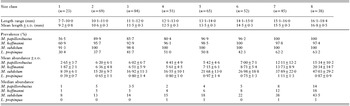
Table 2. Prevalence and abundance of the 4 microphallid species in the sample of Gammarus insensibilis stratified by size

Fig. 1. Variation with host size in prevalence (A) and abundance of the cerebral (B) and corporal (C) type of metacercariae of Microphallus papillorobustus.
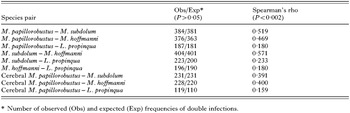
Table 3. Double test for associations among the microphallid species parasitizing Gammarus insensibilis from Pomorie lagoon
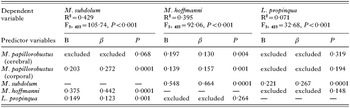
Table 4. Summary of the results of the regression analyses
 You have
Access
- 3
- Cited by