



1 Introduction
Hénon maps are among the most studied dynamical systems. They were introduced by Michel Hénon in the real setting as a simplified model of the Poincaré section for the Lorenz model, see, e.g., [Reference Benedicks and Carleson6, Reference Hénon30]. They are also actively studied in the complex setting, where complex analysis offers additional powerful tools, see the fundamental work of Bedford-Lyubich-Smille and Fornaess-Sibony [Reference Bedford, Lyubich and Smillie2, Reference Bedford, Lyubich and Smillie3, Reference Bedford and Smillie4, Reference Bedford and Smillie5, Reference Fornaess and Sibony29, Reference Sibony34]. As an example, a unique measure of maximal entropy
 $\mu $
was introduced by Sibony, as the intersection
 $\mu = T^+\wedge T^-$
of two positive closed currents with Hölder continuous potentials. These currents can be seen as the accumulation of the iterates of manifolds under backward and forward iteration, respectively [Reference Bedford and Smillie4]. The regularity of their potentials plays an important role in the quantification of the speed of such convergences [Reference Dinh16, Reference Dinh and Sibony23]. These two currents are also laminar, namely they can be nicely approximated by the integration on (pieces) of complex curves which do not intersect and the measure
 $\mu $
has a local product structure [Reference Bedford, Lyubich and Smillie2, Reference Dujardin27]. Such a measure enjoys remarkable statistical properties, see for instance [Reference Bedford, Lyubich and Smillie2, Reference Bedford, Lyubich and Smillie3, Reference Bianchi and Dinh8, Reference Dinh16, Reference Luo and Zhou32, Reference Vergamini and Wu37, Reference Wu42].
A natural generalization of Hénon maps in any dimension is given by the so-called Hénon-Sibony maps. These are polynomial automorphisms f of
 $\mathbb C^k$
such that the indeterminacy sets of the extensions to
 $\mathbb P^k$
of f and
 $f^{-1}$
are non-empty and disjoint [Reference Sibony34]. Although their study is much more technical, due to the need to work with cycles and currents of intermediate dimensions, the main properties of Hénon maps mentioned above have been successfully generalized to this setting. In particular, the unique measure of maximal entropy can still be obtained as the intersection of two Green currents
 $T^+$
and
 $T^-$
of complementary bidegree. These currents have Hölder continuous super-potentials [Reference Dinh and Sibony22, Reference Sibony34]. Roughly speaking, they can be seen as Hölder continuous maps on a suitable space of forms of complementary degree. Moreover, these currents are woven [Reference Dinh17, Reference Dinh and Sibony24]. This is a slightly weaker notion than the laminarity, where the approximating analytic sets can a priori intersect, see [Reference Dinh17] and Definition 5.1. These properties of the Green currents were also investigated in the setting of automorphisms of Kähler manifolds [Reference Bianchi and Dinh7, Reference Cantat10, Reference De Thélin and Dinh13, Reference Dinh and Sibony20, Reference Vergamini and Wu38, Reference Wu41] and for generic birational self-maps of
 $\mathbb P^k$
[Reference Bedford and Diller1, Reference De Thélin and Vigny14, 15, Reference Dujardin28, Reference Vigny39].
It is natural to ask how much of the above stays true when leaving the algebraic setting (for instance, when considering small perturbations of Hénon-Sibony maps, which destroy the algebraic structure, but keep the global geometric properties). This question was first addressed by Dujardin [Reference Dujardin27], who systematically studied the class of so-called Hénon-like maps in two dimensions, introduced by Hubbard and Oberste-Vorth in [Reference Hubbard and Oberste-Vorth31]. He proved that such maps still enjoy many of the properties of Hénon maps, starting from a unique measure of maximal entropy with a local product structure.
The goal of this work is to close this circle by proving that, under a natural and necessary assumption on the dynamical degrees of the map (which is automatically satisfied in the above algebraic setting and in dimension 2), every Hénon-like map in any dimension has the same strong regularity and laminarity properties of their algebraic counterparts.
Let us now be more precise and state our main result. Given integers
 $1\leq p \le k-1$
and open bounded convex domains
 $M\Subset \mathbb C^p$
and
 $N\Subset \mathbb C^{k-p}$
, a Hénon-like map is an invertible proper holomorphic map from a vertical subset to a horizontal subset of
 $M\times N$
which geometrically (but non-uniformly) expands in p directions and contracts in
 $k-p$
directions, see [Reference Dinh, Nguyen and Sibony19, Reference Dinh and Sibony21] and Definition 2.1 below for the precise definition. They should be thought of as the building blocks of more complicated systems. They form an infinitely dimensional family, which contains maps which are not conjugated to Hénon-Sibony maps. These systems admit a measure of maximal entropy
 $\mu $
, which is the intersection
 ${\mu = T^+\wedge T^-}$
of a vertical Green current
 $T^+$
and of a horizontal Green current
 $T^-$
, of bidimension
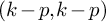 $(k-p,k-p)$
and
 $(p,p)$
, respectively.
A natural assumption when studying higher dimensional dynamical systems is that there exists an integer q such that the dynamical degree of order q (describing the rate of growth of the volume of manifolds – or more generally of the mass of positive closed currents – of dimension q by iteration) strictly dominates all the other dynamical degrees. In our setting, precise definitions are given in [Reference Bianchi, Dinh and Rakhimov9, Reference Dinh, Nguyen and Sibony19] and Definition 2.2. Because of the geometric properties of Hénon-like maps, our main dynamical degree is that of order p, and can be seen as the rate of growth of the volume for the forward iteration of horizontal p-dimensional manifolds, or equivalently for the backward iteration of vertical
 $(k-p)$
-dimensional manifolds. We denote by
 $d\, (=d^+_p=d_{k-p}^-)$
this degree. We then denote, for
 $0\leq s\leq p-1$
, by
 $d^{+}_{s}$
the rate of growth of the volume for the forward iteration of horizontal s-dimensional manifolds and by
 $d^{-}_{s}$
, for
 $0\leq s \leq k-p-1$
, the rate of growth of the volume of the backward iteration of vertical s-dimensional manifolds. We proved in [Reference Bianchi, Dinh and Rakhimov9] that the sequences
 $\{d^+_{s}\}_{0\leq s \leq p}$
and
 $\{d^-_{s}\}_{0\leq s \leq k-p}$
are monotone. In particular, as soon as we have
 $d> \max (d_{p-1}^+, d_{k-p-1}^-)$
, the main degree d strictly dominates all dynamical degrees. The main result of this paper can be stated as follows.
Theorem 1.1. Let f be a Hénon-like map in any dimension as above and assume that the main dynamical degree
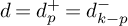 $d=d_p^+= d_{k-p}^-$
satisfies
 $d> \max (d_{p-1}^+, d_{k-p-1}^-)$
. Then
-
(i) the Green currents
 $T^\pm $
have Hölder continuous super-potentials;
-
(ii) the Green currents
$T^\pm $
are woven; -
(iii)
$\mu =T^+\wedge T^-$
is a Monge-Ampère measure with Hölder continuous potential and it has a positive Hausdorff dimension.



If, furthermore, we have
 $p=k-1$
(resp.
 $p=1$
), then
 $T^-$
(resp.
 $T^+$
) is laminar.
It was proved in [Reference Dinh, Nguyen and Sibony19] that, under the same assumptions of Theorem 1.1, the Green currents have continuous super-potentials. The first assertion of Theorem 1.1 is an improvement of that result. The proof is based on quantitative estimates for the action of
 $f_*$
and
 $f^*$
with respect to suitable norms, involving a precise control for the solution of the
 $dd^c$
equation for horizontal and vertical currents in D. The third assertion is a consequence of the first and of a more general criterion to ensure that property, see Proposition 3.10. After some preliminary material presented in Section 3, these two assertions are proved in Section 4.
The most difficult part of Theorem 1.1 consists in the laminarity statements for the Green currents. A natural way to prove laminarity properties for
 $T^+$
is to exploit the convergence
 $d^{-n}[{f}^{-n} \Sigma ]\to T^+$
, where
 $\Sigma $
is a vertical analytic set of dimension
 $k-p$
. By a result of de Thélin [Reference De Thélin12], in order to show that
 $T^+$
is woven, one can verify that
 $$ \begin{align} \mathrm{volume} (\hat \Sigma_n)= O(\mathrm{volume} (\Sigma_n)) \quad \text{ as } n\to \infty, \end{align} $$
where
 $\Sigma _n :=[{f}^{-n} \Sigma ]$
,
 $\hat \Sigma _n$
is a natural lift of
 $\Sigma _n$
to the space
 $\mathbb D\times {\mathbb {G}}$
, and
 ${\mathbb {G}}$
is a suitable Grassmannian. In the algebraic settings above, this is achieved by means of cohomology arguments. On the other hand, estimating directly the volume of
 $\hat \Sigma _n$
by means of the volume of
 $\Sigma _n$
is not possible in our non-algebraic and local setting, because of the lack of a meaningful Hodge theory. In order to overcome this issue, we introduce the notion of shadow for a non-necessarily closed current on
 $D\times {\mathbb {G}}$
, corresponding to a geometrically “correct dimensional” projection on D, taking into account the possible defect of dimension (which cannot be detected by cohomology), see Section 5.2. We then show that, if (1.1) does not hold for some
 $\Sigma $
as above, the extra volume of
 $\hat \Sigma _n$
must come from some part of
 $\hat \Sigma _n$
whose shadow is of smaller dimension (since the part whose shadow has full dimension is controlled by the dynamical degree d). Using this, we can construct a sequence
 $S_n$
of horizontal positive closed currents on D (related to the shadows of
 $\hat \Sigma _n$
) of dimension
 $l<p$
and satisfying
 $\|f^n_* (S_n)\|\gtrsim d^n\|S_n\|$
. This leads to a contradiction with the assumption
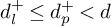 $d_l^+ \leq d_p^+ < d$
and completes the proof.
2 Horizontal-like maps and dynamical degrees
In this section, we recall the definition of a Hénon-like map and its dynamical degrees, as well as the main properties of these maps that we will need in the sequel.
Let p and k be integers with
 $1\le p\le k-1$
. Let
 $M\Subset \mathbb {C}^p$
and
 $ N\Subset \mathbb {C}^{k-p}$
be open bounded convex sets. Denote by
 $\pi _M$
and
 $\pi _N$
the natural projections of
 $D:=M\times N$
to M and N, respectively. A subset
 $E\subset D$
is horizontal (resp. vertical) if
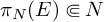 $\pi _{N}(E)\Subset N$
(resp.
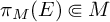 $\pi _{M}(E)\Subset M$
). The horizontal (resp. vertical) boundary of D is the set
 $\partial _h D:= \overline {M}\times \partial N$
(resp.
 $\partial _v D:=\partial M\times \overline {N}$
). We also denote by
 $\pi _1$
and
 $\pi _2$
the natural projections of
 $D\times D$
to its first and second factors, respectively. In all this paper, the symbols
 $\lesssim $
and
 $\gtrsim $
denote inequalities that hold up to an implicit multiplicative constant (often depending on the domains under consideration).
Definition 2.1. A horizontal-like map f of D is a holomorphic map whose graph
 ${\Gamma \subset D\times D}$
is a (not necessarily connected) submanifold of
 $D\times D$
with pure dimension k and such that
-
(i)
$\pi _1|_\Gamma $
is injective and
$\pi _2|_\Gamma $
has finite fibers; and -
(ii)
$\overline \Gamma $
does not intersect
${\partial _v D} \times \overline D$
and
$\overline D \times {\partial _h D}$
.


We say that f is an invertible horizontal-like map, or a Hénon-like map, if
 $\pi _2|_\Gamma $
is also injective.
Observe that f is not defined on the whole D, but only on the vertical open subset
 $\pi _1 (\Gamma )$
of D. Similarly, the image of f is the horizontal subset
 $\pi _2 (\Gamma )$
of D. We will write
 $D_{v,1}:= \pi _1 (\Gamma )$
and
 $D_{h,1}:= \pi _2 (\Gamma )$
in the following. More generally, for all
 $n\geq 1$
we consider the iterate
 $f^n = f\circ \dots \circ f$
(n times), which is also a horizontal-like map. We denote by
 $D_{v,n}$
and
 $D_{h,n}$
the domain and the image of
 $f^n$
, respectively. Observe that the sequences
 $(D_{v,n})_{n\geq 1}$
and
 $(D_{h,n})_{n\geq 1}$
are decreasing.
We fix in what follows a horizontal-like map f of
 $D=M\times N$
. We also fix two convex open subsets
 $M'\Subset M$
and
 $N'\Subset N$
. For simplicity, we will always assume that
 $M'$
and
 $N'$
are sufficiently close to M and N, respectively, to always satisfy
 $$ \begin{align} f^{-1}(D) \subset M' \times N \quad \text{ and } \quad f(D) \subset M \times N'. \end{align} $$
A horizontal (resp. vertical) current S on
 $M'\times N'$
is a current with horizontal (resp. vertical) support in
 $M'\times N'$
.
Definition 2.2. For every
 $0\leq l\leq p$
, the dynamical degree
 $d_l^+$
is defined by
 $$ \begin{align*}d_l^+:=\limsup_{n\to\infty} \left(d^+_{l,n}\right)^{1/n}, \quad \text{ where } \quad d^+_{l,n} :=\sup_{S} \|(f^n)_*(S)\|_{M'\times N}\end{align*} $$
and S runs over the set of all horizontal positive closed currents of bidimension
 $(l,l)$
of mass 1 on
 $M'\times N'$
.
Similarly, for every
 $ 0\leq l\leq k-p$
, the dynamical degree
 $d_l^-$
is defined by
 $$ \begin{align*}d_l^-:=\limsup_{n\to\infty} \left(d^-_{l,n}\right)^{1/n}, \quad \text{ where } \quad d^-_{l,n} :=\sup_{R} \|(f^n)^*(R)\|_{M\times N'}\end{align*} $$
and R runs over the set of all vertical positive closed currents of bidimension
 $(l,l)$
of mass 1 on
 $M'\times N'$
.
The dynamical degrees
 $d^+_l$
and
 $d^-_l$
are independent of the choice of
 $M'$
and
 $N'$
[Reference Dinh, Nguyen and Sibony19]. By [Reference Dinh and Sibony21, Proposition 4.2], both
 $d^+_p$
and
 $d^-_{k-p}$
are integers and we have
 $d^+_p=d^-_{k-p}=:d$
. The integer d is called the main dynamical degree of f. Moreover, we have
 $$ \begin{align} d^n \lesssim d^+_{p,n} \lesssim d^n \quad \text{ and } \quad d^n \lesssim d^{-}_{{ k-p},n} \lesssim d^n \quad \text{ as }n\to\infty. \end{align} $$
When f is invertible, we have
 $d^+_l (f) = d^-_l (f^{-1})$
for all
 $0 \leq l \leq p$
and
 $d^-_l (f) = d^+_l (f^{-1})$
for all
 $0 \leq l \leq k - p$
, where the degrees of
 $f^{-1}$
can be defined reversing the role of
 $f_*$
and
 $f^*$
and using the fact that
 $f^{-1}$
is a vertical-like map with
 $k - p$
expanding directions, see also [Reference Dinh, Nguyen and Sibony19, Section 3].
Every Hénon-like map admits a canonical horizontal current
 $T^-$
, of bidimension
 $(p,p)$
, and a canonical vertical current
 $T^+$
, of bidimension
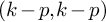 $(k-p,k-p)$
. These currents are given and characterized by the following result. Recall that, by [Reference Dinh and Sibony21, Theorem 2.1] (see also [Reference Dujardin27, Proposition 2.7]), for any horizontal current S of bidimension
 $(p,p)$
on D, the slice measure
 $\langle S,\pi _{M'}, z\rangle $
is well-defined for any
 $z\in M'$
and its mass, denoted by
 $\|S\|_h$
, is independent of z and is equal to
 $\langle S, \pi _{M}^* (\Omega _M)\rangle $
for every smooth probability measure
 $\Omega _M$
with compact support in
 $M'$
. Similarly, for every vertical current R of bidimension
 $(k-p,k-p)$
on D, the slice measure
 $\langle R,\pi _{N'}, w\rangle $
is well-defined for any
 $w\in N'$
and its mass, denoted by
 $\|R\|_v$
is independent of w and equal to
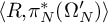 $\langle R, \pi _N^*(\Omega ^{\prime }_N)\rangle $
for every smooth probability measure
 $\Omega ^{\prime }_N$
with compact support in
 $N'$
.
Theorem 2.3 [Reference Dinh and Sibony21].
Let f be a Hénon-like map on D. Let
 $\Omega $
(resp.
 $\Theta $
) be a closed vertical current of bidimension
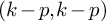 $(k-p,k-p)$
(resp. horizontal current of bidimension
 $(p,p)$
) of slice mass
 $1$
in D. Then
 $$\begin{align*}d^{-n}(f^n)^*\Omega\to T^+ \quad \text { and } \quad d^{-n}(f^n)_*\Theta\to T^- \quad \text{ as } n\to \infty, \end{align*}$$
where
 $T^+$
(resp.
 $T^-$
) is a positive closed vertical current of bidimension
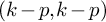 $(k-p,k-p)$
(resp. horizontal current of bidimension
 $(p,p)$
) of slice mass
 $1$
.
The currents
 $T^+$
and
 $T^-$
are independent of
 $\Omega $
and
 $\Theta $
. Moreover, we have
 $$\begin{align*}d^{-2n}(f^n)^*\Omega\wedge(f^n)_*\Theta\to \mu:=T^+\wedge T^-.\end{align*}$$
We call
 $T^+$
,
 $T^-$
and
 $\mu $
the Green current of f, the Green current of
 $f^{-1}$
and the Green measure of f, respectively.
3 Horizontal and vertical currents with Hölder continuous super-potentials
We fix in this section two integers p and k with
 $1\leq p \leq k-1$
and bounded open convex domains
 $M"\Subset M'\Subset M\Subset \mathbb C^p$
and
 $N"\Subset N'\Subset N \Subset \mathbb C^{k-p}$
.
3.1 Super-potentials of positive closed vertical currents
For any
 $0<l< \infty $
, we denote by
 $\|\cdot \|_{\mathcal C^l}$
the standard
 $\mathcal C^l$
norm on the space of differential forms of a given degree. For every
 $0\leq j\leq k$
, we define a semi-norm
 $\mathcal C^{-l}$
and a semi-distance
 $\operatorname {\mathrm {dist}}_{-l}$
on the space of horizontal (resp. vertical)
 $(j,j)$
-currents on
 $M'\times N'$
by
 $$\begin{align*}\|\Phi\|_{-l}:=\sup|\langle \Phi,\Omega\rangle| \quad \text{ and } \quad \operatorname{\mathrm{dist}}_{-l} (\Phi_1, \Phi_2):= \|\Phi_1 - \Phi_2\|_{-l}, \end{align*}$$
where the supremum is taken over all
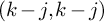 $(k-j,k-j)$
-forms
 $\Omega $
with vertical support in
 $M"\times N$
(resp. horizontal support in
 $M\times N"$
) and such that
 $\|\Omega \|_{\mathcal C^l}\leq 1$
. Observe that the semi-norm
 $\|\cdot \|_{-l}$
, and as a consequence the semi-distance
 $\operatorname {\mathrm {dist}}_{-l}$
, is well-defined for currents of order up to l. Moreover, by definition, we have
 $\|\Phi \|_{-l}\leq \|\Phi \|_{-l'}$
for every
 $\Phi $
as above and
 $0<l'<l<\infty $
.
Let now
 $\operatorname {\mathrm {PSH}}_h(M'\times N')$
be the set of horizontal currents
 $\Phi $
on
 $M'\times N'$
of bidimension
 $(p,p)$
such that
 ${dd^c} \Phi \geq 0$
. We denote by
 $\operatorname {\mathrm {DSH}}_h(M'\times N')$
the real space spanned by
 $\operatorname {\mathrm {PSH}}_h(M'\times N')$
, i.e., the set
 $$\begin{align*}\operatorname{\mathrm{DSH}}_h(M'\times N') := \{\Phi_1-\Phi_2 \colon \Phi_1, \Phi_2 \in \operatorname{\mathrm{PSH}}_h(M'\times N')\}. \end{align*}$$
For every
 $\Phi \in \operatorname {\mathrm {DSH}}_h(M'\times N')$
we also set
 $$\begin{align*}\|\Phi\|_* := \inf \{\|dd^c \Phi_1\| + \|dd^c \Phi_2\| \colon \Phi_1, \Phi_2 \in \operatorname{\mathrm{PSH}}_h(M'\times N') \text{ such that } \Phi=\Phi_1-\Phi_2\}\end{align*}$$
and
 $$\begin{align*}\|\Phi\|_\bullet := \|\Phi\| + \|\Phi\|_*. \end{align*}$$
Observe that
 $\|\cdot \|_*$
is a semi-norm and
 $\|\cdot \|_\bullet $
is a norm. Here we denote by
 $\|\cdot \|$
the dual semi-norm to
 $\|\cdot \|_{\mathcal C^0}$
.
Remark 3.1. In a similar way, we can also consider the set
 $\operatorname {\mathrm {PSH}}_v(M'\times N')$
of vertical currents
 $\Phi $
on
 $M'\times N'$
of bidimension
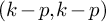 $(k-p,k-p)$
such that
 ${dd^c} \Phi \geq 0$
, and the real space
 $\operatorname {\mathrm {DSH}}_v(M'\times N')$
spanned by
 $\operatorname {\mathrm {PSH}}_v(M'\times N')$
. As the statements are completely analogous, we just consider
 $\operatorname {\mathrm {PSH}}_h (M'\times N')$
and
 $\operatorname {\mathrm {DSH}}_h (M'\times N')$
in the rest of this section.
Lemma 3.2. The following assertions hold for every
 $\Phi \in \operatorname {\mathrm {PSH}}_h (M'\times N')$
and every
 $0<l<\infty $
.
-
(i) There exists a positive constant C independent of
$\Phi $
and l such that
$\|{dd^c}\Phi \|_{-l-2}\leq C \|\Phi \|_{-l}$
. -
(ii) For every compact subset
$K\Subset M"\times N$
there exists a positive constant
$C_{K,l}$
independent of
$\Phi $
such that
$\|{dd^c} \Phi \|_K\leq C_{K,l} \|\Phi \|_{-l}$
.




Observe that the mass
 $\|dd^c \Phi \|_K$
in the second item is well-defined since
 $dd^c \Phi $
is positive.
Proof. (i) For every
 $\Phi \in \operatorname {\mathrm {PSH}}_h(M'\times N')$
and every
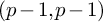 $(p-1,p-1)$
-form
 $\Omega $
with vertical support in
 $M"\times N$
we have
 $$\begin{align*}|\langle{dd^c}\Phi,\Omega\rangle|=|\langle\Phi,{dd^c}\Omega\rangle|\le \|{dd^c}\Omega\|_{\mathcal C^l} \|\Phi\|_{-l} \lesssim \|\Omega\|_{\mathcal C^{l+2}} \|\Phi\|_{-l}, \end{align*}$$
where the implicit constant in the last inequality is independent of
 $\Omega $
,
 $\Phi $
, and l. The first inequality above follows by observing that the support of
 $dd^c \Omega $
is contained in the support of
 $\Omega $
, and hence in particular in
 $M"\times N$
.
(ii) For every compact subset K of
 $M"\times N$
, there exists a smooth function
 $\chi $
with vertical support in
 $M"\times N$
and such that
 $\mathbb 1_{K}\leq \chi \leq 1$
, where
 $\mathbb 1_K$
is the characteristic function of K. Since
 ${dd^c} \Phi \geq 0$
, we have
 $$\begin{align*}\|{dd^c} \Phi\|_{K} = \int_K {dd^c} \Phi \wedge \omega^{p-1} \leq \langle {dd^c} \Phi, \chi \omega^{p-1} \rangle \leq \|{dd^c} \Phi\|_{-l-2} \|\chi \omega^{p-1}\|_{\mathcal C^{l+2}} \lesssim \|\Phi\|_{-l} \|\chi \omega^{ p-1}\|_{\mathcal C^{l+2}}, \end{align*}$$
where
 $\omega $
is the standard Kähler form of
 $\mathbb {C}^k$
and, by (i), the implicit constant in the last inequality is independent of l and
 $\Phi $
. As
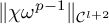 $\|\chi \omega ^{p-1}\|_{\mathcal C^{l+2}}$
can be bounded by a constant depending only on K and l, the assertion follows.
Definition 3.3. Given a constant
 $0<\alpha \leq 1$
, a positive closed
 $(p,p)$
-current T with vertical support in
 $M"\times N$
is said to have
 $(l,\alpha )$
-Hölder continuous super-potentials if T, seen as a linear function on smooth test
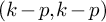 $(k-p,k-p)$
-forms with horizontal support in
 $M'\times N'$
, extends to a function on
 $\operatorname {\mathrm {PSH}}_h(M'\times N')$
such that, for every subset
 $\mathcal {F} \subset \operatorname {\mathrm {PSH}}_h(M'\times N')$
which is bounded with respect to
 $\|\cdot \|_\bullet $
, there exists a constant
 $C_{\mathcal {F}}$
such that
 $$\begin{align*}|\langle T,\Phi_1-\Phi_2 \rangle|\le C_{\mathcal{F}}\operatorname{\mathrm{dist}}_{-l}( \Phi_1,\Phi_2)^\alpha \quad \text{for any} \quad \Phi_1,\Phi_2\in\mathcal{F}.\end{align*}$$
Note that the function on
 $\mathcal F$
defined by T is seen as a super-potential of T in our point of view.
Lemma 3.4. Every smooth positive closed
 $(p,p)$
-form T with vertical support in
 $M"\times N$
has
 $(l,1)$
-Hölder continuous super-potentials for every
 $0<l<\infty $
.
Proof. We can assume that
 $\|T\|_{\mathcal C^{l}}\leq 1$
. Since T is vertical in
 $M"\times N$
, it follows that, for every
 $\Phi _1, \Phi _2\in \operatorname {\mathrm {PSH}}_h (M'\times N')$
, we have
 $$\begin{align*}|\langle T,\Phi_1-\Phi_2\rangle| \leq \|\Phi_1-\Phi_2\|_{- {l}} = \operatorname{\mathrm{dist}}_{- {l}} (\Phi_1,\Phi_2).\end{align*}$$
The assertion follows.
Remark 3.5. By interpolation techniques [Reference Triebel36], one can see that if T has
 $(l,\alpha )$
-Hölder continuous super-potentials for some
 $0<l<\infty $
and
 $0<\alpha <1$
, then, up to slightly modifying
 $M'$
and
 $N'$
, it has
 $(l',\alpha ')$
-Hölder continuous super-potentials for every
 $0<l'<\infty $
and some
 $0<\alpha '<1$
depending on
 $l,l',\alpha $
but independent of T. In the dynamical setting in which we will be interested, because of the geometric behaviour of our maps, such modification of the domains is not necessary, see Lemma 4.2. Note that when
 $l=1$
, the spaces of
 $C^1$
and Lipschitz functions share the same norm. Since the first space is dense in the second one for the uniform topology, the estimates we have do not change if we interchange these two spaces.
We conclude this section with the following result, giving the regularity of the solutions of the
 $dd^c$
operator with respect to the norms introduced above.
Theorem 3.6. Let
 $\Omega $
be a horizontal positive closed current of bidimension
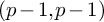 $(p-1,p-1)$
on
 $M\times N"$
and l a positive number. There exist a horizontal negative
 $L^1$
form
 $\Psi $
of bidimension
 $(p,p)$
on
 $M'\times N'$
, and a positive constant c independent of
 $\Omega $
such that
 $dd^c\Psi =\Omega $
on
 $M'\times N'$
and we have
 $$ \begin{align} \|\Psi\|_{M'\times N'}\le c\|\Omega\|_{M\times N"} \quad \text{ and } \quad \|\Psi\|_{-l}\le c\|\Omega\|_{-l-1}. \end{align} $$
Observe that the masses in the first inequality are well-defined since
 $\Psi $
and
 $\Omega $
are negative and positive, respectively.
Proof. Fix a convex open set
 $M^\star $
with
 $M'\Subset M^\star \Subset M$
. The existence of a horizontal negative
 $L^1$
form
 $\Psi $
on
 $M^\star \times N$
satisfying
 ${dd^c} \Psi =\Omega $
and
 $ \|\Psi \|_{M^\star \times N'}\lesssim \|\Omega \|_{M\times N"}$
follows from [Reference Dinh, Nguyen and Sibony19, Theorem 2.7]. As
 $\Psi $
is defined by means of explicit kernels, and
 $M"\Subset M'\Subset M^\star $
, this also gives the second estimate in (3.1).
3.2 Currents with Hölder continuous super-potentials and their intersections
We denote in this section by
 $\operatorname {\mathrm {Psh}}_1 (D)$
the set of plurisubharmonic (psh) functions u on D with
 $\|u\|_{L^1}\leq 1$
. Observe that this norm defines a distance on
 $\operatorname {\mathrm {Psh}}_1 (D)$
.
We consider in the following positive closed vertical
 $(p,p)$
-currents on
 $M"\times N$
, but it is clear that the definitions and statements apply also for horizontal
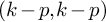 $(k-p,k-p)$
-currents on
 $M\times N"$
.
Definition 3.7. Let T be a vertical
 $(p,p)$
-current on
 $M"\times N$
. We say that T is moderate if, for any compact set
 $K\subset M'\times N'$
, there exist two constants
 $c>0$
and
 $\beta>0$
such that for any psh function
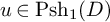 $u\in \operatorname {\mathrm {Psh}}_1 (D)$
we have
 $$ \begin{align*}\langle T_{|K}\wedge \omega^{k-p}, e^{\beta|u|}\rangle \leq c.\end{align*} $$
Lemma 3.8. Let T be a positive closed vertical
 $(p,p)$
-current on
 $M"\times N$
with
 $(l,\alpha )$
-Hölder continuous super-potentials, for some
 $0<l<\infty $
and
 $0<\alpha <1$
. Then T is moderate.
Proof. Fix a psh function u on D. By reducing D slightly and subtracting from u a constant, we can assume that
 $u\leq 0$
. For every
 $m\in \mathbb N$
, define
 $u_m:=\max (u,-m)$
. Observe that
 $u-u_m$
is negative, supported on
 $\{u\leq -m\}$
and equal to
 $u+m$
on this set. It follows that
 $$ \begin{align} |\langle \omega^k, u-u_m\rangle| =\int_{\{u\leq -m\}} |u-u_m| \lesssim e^{-\alpha_1 m} \int e^{\alpha_1 { |u|}} \lesssim e^{-\alpha_1 m}.\end{align} $$
for some positive constant
 $\alpha _1$
, where the integrals are taken with respect to the Lebesgue measure and last inequality follows from Skoda’s estimates [Reference Skoda35].
Fix a smooth positive closed horizontal form
 $\Omega _K$
on
 $M'\times N'$
such that
 $\Omega _K\geq \omega ^{k-p}$
on K, see for instance [Reference Bianchi, Dinh and Rakhimov9, Lemma 2.3]. Observe that we also have
 $\Omega _K \lesssim \omega ^{k-p}$
on
 $M"\times N'$
. Since u and
 $u_m$
are psh and
 $\Omega _K$
is closed, both
 $u\Omega _K$
and
 $u_m \Omega _{K}$
belong to
 $\operatorname {\mathrm {PSH}}_h (M'\times N')$
. Fix a
 $(p,p)$
-form
 $\Omega $
with vertical support in
 $M"\times N$
and such that
 $\|\Omega \|_{\mathcal C^l}\leq 1$
. As
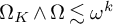 $\Omega _K \wedge \Omega \lesssim \omega ^k$
, it follows from (3.2) that
 $|\langle \Omega _K\wedge \Omega , u-u_m\rangle | \lesssim e^{-\alpha _1 m}$
, which implies that
 $$ \begin{align*}\operatorname{\mathrm{dist}}_{-l} (u\Omega_K, u_m\Omega_K) \lesssim e^{-\alpha_1 m}.\end{align*} $$
The assumption on the super-potentials of T, together with the fact that T and
 $u_m-u$
are positive, implies that
 $$ \begin{align*}0\leq \langle T\wedge \Omega_K, u_m- u \rangle =\langle T, u_m\Omega_K \rangle - \langle T, u\Omega_K\rangle \lesssim e^{-\alpha_2 m}\end{align*} $$
for some positive constant
 $\alpha _2$
. Hence, since
 $\Omega _K {\geq } \omega ^{k-p}$
, we have
 $$ \begin{align*}0\leq \langle T_{|K}\wedge \omega^{k-p}, u_m-u\rangle \lesssim e^{-\alpha_2 m} \quad \text{ for every } m\in \mathbb N.\end{align*} $$
The assertion follows by choosing any
 $\beta <\alpha _2$
in Definition 3.7. Indeed, with this choice of
 $\beta $
and recalling that u is negative, we have
 $$\begin{align*}\langle T_{|K}\wedge \omega^{k-p}, e^{\beta |u|}\rangle = \sum_{m\in \mathbb N} \int_{-m\leq u -\leq -m+1} e^{\beta |u|} T_{|K}\wedge \omega^{k-p} \lesssim \sum_{m\in \mathbb N} e^{\beta m } e^{-\alpha_2 m} \lesssim 1. \end{align*}$$
This completes the proof.
Lemma 3.9. Let T be a positive closed vertical
 $(p,p)$
-current on
 $M"\times N$
with
 $(l,\alpha )$
-Hölder continuous super-potentials, for some
 $0<l<\infty $
and
 $0<\alpha <1$
. Then we have
 $$ \begin{align*}\operatorname{\mathrm{dist}}_{-l} (u_1T,u_2T) \leq c \|u_1-u_2\|^\gamma_{L^1} \quad \text{ for all } u_1, u_2, \in \operatorname{\mathrm{Psh}}_1 (D),\end{align*} $$
for some positive constants c and
 $\gamma $
depending on l and
 $\alpha $
but independent of
 $u_1$
and
 $u_2$
.
Observe that, as T is vertical in
 $M"\times N$
, it is also vertical in
 $M'\times N'$
. Hence the distance in the statement is well-defined, see Remark 3.1.
Proof. Let
 $\rho $
be a smooth positive radial function compactly supported on the unit ball of
 $\mathbb C^k$
and such that
 $\int \rho \omega ^k =1$
. For every
 $\epsilon>0$
, set
 $\rho _\epsilon (\cdot ) := \epsilon ^{-2k} \rho (\epsilon ^{-1} \cdot )$
. For every
 $u\in \operatorname {\mathrm {Psh}}_1 (D)$
and every
 $\epsilon $
sufficiently small, the convolution
 $u_{\epsilon } := u * \rho _\epsilon $
is well-defined on
 $M'\times N'$
. One can check that we have
 $$\begin{align*}u \leq u_{\epsilon} \quad \text{ and } \quad \|u_{\epsilon}-u\|_{L^1 { (M'\times N')} }\lesssim \epsilon |\log \epsilon|.\end{align*}$$
Since the
 $u_{\epsilon }$
’s and u are psh, it follows that for every fixed positive closed smooth form
 $\Psi $
of bidimension
 $(p,p)$
and horizontal in
 $M'\times N'$
, all the products
 $u_{\epsilon }\Psi $
and
 $u \Psi $
belong to
 $\operatorname {\mathrm {PSH}}_h (M'\times N')$
. They also form a bounded family with respect to
 $\|\cdot \|_\bullet $
. Moreover, for every vertical
 $(p,p)$
-form
 $\Omega $
on
 $M"\times N$
, we have
 $$\begin{align*}|\langle \Omega, (u_{\epsilon}-u)\Psi\rangle| = |\langle \Omega \wedge \Psi, (u_{\epsilon}-u)\rangle| \lesssim { \int_{M'\times N'} (u_{\epsilon}-u) \omega^k =} \|u_{\epsilon}-u\|_{L^1 { (M'\times N')} }, \end{align*}$$
which implies that
 $\operatorname {\mathrm {dist}}_{-l}(u_{\epsilon }\Psi , u\Psi )\lesssim \epsilon |\log \epsilon |$
. Since T has
 $(l,\alpha )$
-Hölder continuous super-potentials, we deduce that
 $$ \begin{align*}\langle T,(u_{\epsilon}-u)\Psi\rangle \lesssim \|u_\epsilon-u\|_{L^1 { (M'\times N')}}^{\alpha}\lesssim ( \epsilon |\log \epsilon|)^{\alpha}\leq \epsilon^{\alpha'}\end{align*} $$
for every
 $\alpha '<\alpha $
. This and the inequality
 $u_{\epsilon }\geq u$
imply that
 $$ \begin{align} \operatorname{\mathrm{dist}}_{-l}(u_{\epsilon} T, u T) \lesssim \epsilon^{\alpha'}.\end{align} $$
Let now consider
 $u_1$
and
 $u_2$
as in the statement. Denote by
 $u_{1,\epsilon }=u_1 * \rho _\epsilon $
and
 $u_{2,\epsilon }= u_2 * \rho _\epsilon $
the regularizations by convolution of
 $u_1$
and
 $u_2$
respectively. It follows from the above and (3.3) that there exists
 $\alpha '>0$
such that
 $$ \begin{align} \operatorname{\mathrm{dist}}_{-l}(u_{1,\epsilon} T, u_1 T) \lesssim \epsilon^{\alpha'} \quad \text{ and } \quad \operatorname{\mathrm{dist}}_{-l}(u_{2,\epsilon} T, u_2 T) \lesssim \epsilon^{\alpha'}. \end{align} $$
We now get a similar estimate for
 $\operatorname {\mathrm {dist}}_{-l}(u_{1,\epsilon } T, u_{2,\epsilon }T)$
. By the definition of
 $u_{1,\epsilon }$
and
 $u_{2,\epsilon }$
, we have
 $$ \begin{align*}\|u_{1,\epsilon} -u_{2,\epsilon}\|_{\mathcal C^l} = \| (u_1-u_2) * \rho_\epsilon \|_{\mathcal C^l} \lesssim \epsilon^{-2k-l} \|u_1-u_2\|_{L^1}.\end{align*} $$
Again by the fact that T has
 $(l,\alpha )$
-Hölder continuous super-potentials, we deduce that
 $$ \begin{align} \operatorname{\mathrm{dist}}_{-l}(u_{1,\epsilon} T, u_{2,\epsilon}T) \lesssim [\epsilon^{-2k-l} \|u_1-u_2\|_{L^1}]^{\alpha}.\end{align} $$
Together with (3.4), this gives
 $$\begin{align*}\operatorname{\mathrm{dist}}_{-l}(u_{1} T, u_{2}T) \lesssim \epsilon^{\alpha'} + [\epsilon^{-2k-l} \|u_1-u_2\|_{L^1}]^{\alpha} \quad \text{ for every } \alpha'<\alpha.\end{align*}$$
Choosing
 $\epsilon := { c_0} \|u_1-u_2\|_{L^1}^{1/(1+2k+l)}$
for some sufficiently small constant
 $c_0$
, we see that
 $$\begin{align*}\operatorname{\mathrm{dist}}_{-l}(u_{1} T, u_{2}T) \lesssim \|u_1-u_2\|_{L^1}^{\alpha\prime/(1+2k+l)}. \end{align*}$$
The assertion follows.
Proposition 3.10. Let
 $T_v$
be a positive closed vertical
 $(p,p)$
-current in
 $M" \times N$
and
 $T_h$
a positive closed horizontal
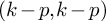 $(k-p,k-p)$
-current in
 $M\times N"$
. Assume that both
 $T_v$
and
 $T_h$
have
 $(l, \alpha )$
-Hölder continuous super-potentials. Then the measure
 $T_v \wedge T_h$
is well-defined and is the Monge-Ampère of a Hölder continuous psh function. In particular, it has positive Hausdorff dimension.
Proof. It follows from Definition 3.3 that the intersection
 $T_v \wedge T_h$
is well-defined. It is a positive measure since both
 $T_v$
and
 $T_h$
are positive. By [Reference Dinh and Nguyen18], in order to show that this measure is a Monge-Ampère as in the statement, it is enough to show that
 $u\mapsto \langle T_v\wedge T_h, u\rangle $
is Hölder continuous on
 $\operatorname {\mathrm {Psh}}_1 (D)$
with respect to the distance induced by the norm
 $L^1$
. By Lemma 3.9 and Definition 3.3, for every
 $u_1, u_2\in \operatorname {\mathrm {Psh}}_1 (D)$
we have
 $$\begin{align*}|\langle T_v\wedge T_h, u_1 - u_2 \rangle| =|\langle T_h, u_1 T_v - u_2 T_v\rangle| \lesssim \|u_1 T_v - u_2 T_v\|_{-l}^{\alpha} \lesssim \|u_1-u_2\|^{\alpha \gamma}, \end{align*}$$
for some positive constant
 $\gamma $
as in Lemma 3.9. The first assertion follows. The last property is true for the Monge-Ampère measure associated with any Hölder continuous psh function, see for instance [Reference Sibony34, Théorème 1.7.3].
4 Hölder regularity of the Green currents
In this section, we prove the following theorem. It gives the first assertion and, by Proposition 3.10, the third assertion of Theorem 1.1. We fix an integer
 $1\le p\le k-1$
and convex open bounded subsets
 $ M\Subset \mathbb C^p$
and
 $ N \Subset \mathbb C^{k-p}$
and set
 $D:= M\times N$
. We also fix a Hénon-like map f from a vertical open subset of D to a horizontal open subset of D and convex open subsets
 $M^{\prime \prime } \Subset M^{\prime } \Subset M$
and
 $N^{\prime \prime } \Subset N^{\prime } \Subset N $
satisfying
 $$ \begin{align} f^{-1}(D) \subset M^{\prime\prime} \times N \quad \text{ and } \quad f(D) \subset M \times N^{\prime\prime}. \end{align} $$
Theorem 4.1. Let f be a Hénon-like map as above. If
 $d_{p-1}^+<d$
, then
 $T^+$
has
 $(l,\alpha )$
-Hölder continuous super-potentials for every
 $0<l<\infty $
and some
 $0<\alpha <1$
depending on l.
The following lemma is the precise version of what was announced in Remark 3.5.
Lemma 4.2. Let f be a Hénon-like map as above. If
 $T^+$
has
 $(l,\alpha )$
-Hölder continuous super-potentials for some
 $0<l<\infty $
and
 $0<\alpha <1$
, then it has
 $(l^{\prime },\alpha ^{\prime })$
-Hölder continuous super-potentials for every
 $0<l^{\prime }<\infty $
and some
 $0<\alpha ^{\prime }<1$
depending on
 $l,l^{\prime },\alpha $
.
Proof. By (4.1) and the fact that
 $f^* (T^+)=T^+$
, we are allowed to make small modifications to the sets
 $M'$
and
 $M"$
in Definition 3.3, and the fact that
 $T^+$
has Hölder continuous super-potentials (for some l and
 $\alpha $
) does not depend on the choice of
 $M'$
and
 $M"$
satisfying (4.1). For simplicity, we then allow ourselves to slightly modify these domains in all the inequalities below. For example, the norm in the third term of (4.2) below needs to be taken with a choice of
 $M"$
which is slightly larger than that in the other two terms.
By interpolation [Reference Triebel36], for every
 $0<l<l'<\infty $
and every bounded set
 $\mathcal F\subset \operatorname {\mathrm {PSH}}_h (M'\times N')$
for
 $\|\cdot \|_{*}$
we have
 $$ \begin{align} \|\Phi\|_{-l'} \leq \|\Phi\|_{-l} \leq c_{l,l',\mathcal F} \|\Phi\|_{-l'}^{l/l'} \quad \text{ for every } \Phi \in \mathcal F, \end{align} $$
where the constant
 $0<c_{l,l',\mathcal F}<\infty $
depends only on l,
 $l'$
, and
 $\mathcal F$
. In particular,
 $\mathcal F$
is bounded for
 $\|\cdot \|_{-l}$
if and only if it is bounded for
 $\|\cdot \|_{-l'}$
. Moreover, we have
 $$\begin{align*}\operatorname{\mathrm{dist}}_{-l'} (\Phi_1, \Phi_2) \leq \operatorname{\mathrm{dist}}_{-l} (\Phi_1, \Phi_2) \leq c_{l,l',\mathcal F^\star} \operatorname{\mathrm{dist}}_{-l'} (\Phi_1, \Phi_2)^{l/l'} \quad \text{ for every } \Phi_1, \Phi_2 \in \mathcal F. \end{align*}$$
The assertion follows.
Because of Lemma 4.2, it is enough to prove that
 $T^+$
has
 $(2,\alpha )$
-Hölder continuous super-potentials, for some
 $0<\alpha <1$
. Moreover, we can just say that
 $T^+$
has Hölder continuous super-potentials, with no reference to the specific l and
 $\alpha $
. This justifies the phrasing of Theorems 4.1 and 1.1.
We fix in the following a constant
 $1< \delta < d/ d^{+}_{p-1}$
. Consider
 $\Phi _1, \Phi _2\in \operatorname {\mathrm {PSH}}_h(M'\times N')$
with
 $\|\Phi _1 - \Phi _2\|_{\bullet }\leq 1$
and
 $\|\Phi _1 - \Phi _2\|_{-2}\leq 1$
. Observe that the currents
 ${dd^c}\Phi _i$
are positive and their masses are locally bounded, see Lemma 3.2 (ii). Setting
 $\lambda := \|\Phi _1-\Phi _2\|_{-2}$
, we need to show that
 $$ \begin{align} |\langle T^+, \Phi_1-\Phi_2\rangle| \lesssim \lambda^\alpha,\end{align} $$
for some
 $\alpha>0$
and some implicit constant both independent of
 $\Phi _1$
and
 $\Phi _2$
.
We can assume
 $\lambda \ll 1$
. By a similar argument as in Lemma 3.2 (i), we have
 $$ \begin{align} \|{dd^c}\Phi_1-{dd^c}\Phi_2\|_{-4} \lesssim \lambda, \end{align} $$
where the implicit constant is independent of
 $\Phi _1, \Phi _2$
.
For every
 $n\in \mathbb N$
and
 $i \in \{1,2\}$
, define
 $\Xi _{i,n}:=d^{-n} (f^n)_*({dd^c}\Phi _i)$
. These currents are well-defined and horizontal on
 $M\times N"$
. Since
 $d^+_{p-1}<d$
, by the definition of
 $d^{+}_{p-1}$
and the choice of
 $\delta $
we have
 $$ \begin{align} \|\Xi_{i,n}\|_{M\times N"}\lesssim \delta^{-n}. \end{align} $$
Observe that the quantity in the left-hand side of the above expression is well-defined since
 $\Xi _{i,n}\geq 0$
.
Lemma 4.3. There exist two constants
 $A>1$
and
 $C>0$
independent of
 $\Phi _1$
and
 $\Phi _2$
such that
 $$\begin{align*}\|\Xi_{1,n} - \Xi_{2,n}\|_{-4} \leq C A^{n}\lambda \quad \text{ for every } n\in \mathbb N\end{align*}$$
Observe that, as
 $\Xi _{i,n}$
is horizontal on
 $M\times N"$
, it is also horizontal on
 $M'\times N'$
. Hence the quantity in the statement is well-defined.
Proof. For every
 $n\in \mathbb N$
and every smooth
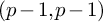 $(p-1,p-1)$
-form
 $\Omega $
with vertical support in
 $M'\times N$
, using (4.4) we have
 $$ \begin{align*} |\langle\Xi_{1,n} -\Xi_{2,n}, \Omega\rangle| & = |\langle d^{-n} (f^n)_*({dd^c}\Phi_1)-d^{-n} (f^n)_*({dd^c}\Phi_2),\Omega\rangle|\\ &= d^{-n}|\langle {dd^c}\Phi_1-{dd^c}\Phi_2, (f^n)^*(\Omega)\rangle| \\ &\leq \|{dd^c}\Phi_1-{dd^c}\Phi_2\|_{-4} \cdot \|(f^n)^*(\Omega)\|_{\mathcal C^{4} }\\ &\lesssim \|(f^n)^*(\Omega)\|_{\mathcal C^{4} } \, \lambda, \end{align*} $$
where the implicit constant in the last inequality is independent of
 $n,\Phi _1, \Phi _2$
, and
 $\Omega $
. Since we have
 $$ \begin{align} \|(f^n)^*(\Omega)\|_{\mathcal C^{4}}\leq A^n \|\Omega\|_{\mathcal C^{4}}\end{align} $$
for some positive constant A independent of n and
 $\Omega $
, the assertion follows.
For
 $i\in \{1,2\}$
, let
 $\Phi _{i,n}$
be the negative solution of
 ${dd^c} \Phi _{i,n}=\Xi _{i,n}$
given by Theorem 3.6. These currents are well-defined and horizontal on
 $M'\times N'$
. Define
 $$ \begin{align*}\Phi^\star:=\Phi_1-\Phi_2 \quad \text{and} \quad \Phi_n^\star:=\Phi_{1,n}-\Phi_{2,n}\end{align*} $$
and observe that
 $\Phi ^\star \in \operatorname {\mathrm {DSH}}_h (M'\times N')$
and
 $\Phi ^\star _n\in \operatorname {\mathrm {DSH}}_h (M'\times N')$
for all
 $n\in \mathbb N$
.
Lemma 4.4. For every
 $i\in \{1,2\}$
and
 $n\in \mathbb N$
, we have
 $$\begin{align*}\|\Phi_n^\star\|_{-3} =\| \Phi_{1,n}-\Phi_{2,n}\|_{-3} \lesssim A^n\lambda \quad \text{ and } \quad \|\Phi_{i,n}\|_{M'\times N'}\lesssim \delta^{-n}, \end{align*}$$
where
 $A>1$
is as in Lemma 4.3 and the implicit constants are independent of
 $\Phi _1$
,
 $\Phi _2$
, and n.
Proof. The first inequality follows from Theorem 3.6 and Lemma 4.3. The second inequality follows from Theorem 3.6 and (4.5).
Define also
 $$ \begin{align*}\Psi_0:=\Phi^\star-\Phi_0^\star \quad \text{and} \quad \Psi_n:=d^{-1}f_*(\Phi_{n-1}^\star)-\Phi_n^\star.\end{align*} $$
Observe that
 ${dd^c}\Psi _n=0$
for every
 $n\in \mathbb N$
and that, by the first inequality in Lemma 4.4, we have
 $$ \begin{align} \|\Psi_n\|_{-3}\lesssim A^n\lambda. \end{align} $$
Observe also that both
 $\Phi ^\star _n$
and
 $\Psi _n$
are differences of positive currents, whose mass is bounded by (a constant times)
 $\delta ^{-n}$
by the second inequality in Lemma 4.4.
Lemma 4.5. For every
 $n\in \mathbb N$
, we have
 $$ \begin{align} d^{-n} (f^n)_* (\Phi^\star) = \sum_{m=0}^n d^{-n+m} (f^{n-m})_* (\Psi_m) + \Phi^\star_n. \end{align} $$
Proof. By the definition of
 $\Psi _m$
, for every
 $n\in \mathbb N$
the right hand side of (4.8) is equal to
 $$\begin{align*}\begin{aligned} & d^{-n} (f^n)_* (\Phi^\star - \Phi^\star_0) +\sum_{m=1}^n d^{-n+m} (f^{n-m})_* \big(d^{-1} f_* (\Phi^\star_{m-1}) - \Phi^\star_m \big) + \Phi^\star_n\\ & = d^{-n} (f^n)_* (\Phi^\star -\Phi^\star_0) + \sum_{m=1}^n d^{-n+m { -} 1} (f^{n-m { +} 1})_* (\Phi^\star_{m-1}) - \sum_{m=1}^n d^{-n+m} (f^{n-m})_* (\Phi^\star_{m}) + \Phi^\star_n\\ & = d^{-n} (f^n)_* (\Phi^\star) - d^{-n} (f^n)_* (\Phi^\star_0) + d^{-n} (f^n)_* (\Phi^\star_0) - \Phi^\star_n + \Phi^\star_n \\ & = d^{-n} (f^n)_* (\Phi^\star). \end{aligned}\end{align*}$$
The assertion follows.
Choose a smooth positive
 $(p,p)$
-form
 $\Theta $
with vertical support in
 $M"\times N$
and of slice mass
 $\|\Theta \|_v=1$
. We have that
 $d^{-n} (f^n)^*(\Theta )$
converges to
 $T^+$
. Equivalently, we have
 $$ \begin{align*}T^+=\Theta+\sum_{n\geq 0} d^{-n} (f^n)^* (\Theta'), \quad \text{where} \quad \Theta':=d^{-1} f^*(\Theta)-\Theta.\end{align*} $$
Hence,
 $$ \begin{align*}\langle T^+,\Phi^\star\rangle = \langle \Theta,\Phi^\star\rangle + \sum_{n\geq 0} \langle d^{-n} (f^n)^* (\Theta'),\Phi^\star\rangle.\end{align*} $$
By Lemma 4.5, for every
 $n\in \mathbb N$
we have
 $$ \begin{align*}\langle d^{-n} (f^n)^* (\Theta'),\Phi^\star\rangle = \sum_{m=0}^{n} \langle d^{-n+m} (f^{n-m})^*(\Theta'),\Psi_m\rangle + \langle \Theta', \Phi_n^\star\rangle.\end{align*} $$
It follows that
 $$ \begin{align} \begin{aligned} \langle T^+,\Phi^\star\rangle & = \langle \Theta,\Phi^\star\rangle + \sum_{n\geq 0} \langle \Theta', \Phi_n^\star\rangle + \sum_{m\geq 0} \sum_{n\geq m} \langle d^{-n+m} (f^{n-m})^*(\Theta'), \Psi_m\rangle \\ & = \langle \Theta,\Phi^\star\rangle + \sum_{n\geq 0} \langle \Theta', \Phi_n^\star\rangle + \sum_{m\geq 0} \langle T^+-\Theta, \Psi_m\rangle. \end{aligned}\end{align} $$
Theorem 4.1 will follow from the next two lemmas, which also guarantee that the above series converge absolutely.
Lemma 4.6. There exists a positive constant
 $C_1$
such that for every
 $n\in \mathbb N$
we have
 $$\begin{align*}|\langle\Theta', \Phi_n^\star\rangle| \leq C_1 \min (A^n\lambda, \delta^{-n}). \end{align*}$$
Proof. Recall that
 $\Theta '=d^{-1}f^* (\Theta )-\Theta $
, where both
 $\Theta $
and
 $d^{-1}f^* (\Theta )$
are positive, vertical, and of slice mass
 $1$
. Recall also that, for every
 $n\in \mathbb N$
,
 $\Phi ^\star _n$
is the difference of two positive currents whose mass is less than or equal to a constant times
 $\delta ^{-n}$
. This shows the inequality
 $|\langle \Theta ', \Phi _n^\star \rangle | \leq C_1 \delta ^{-n}$
for some positive constant
 $C_1$
independent of n.
On the other hand, since
 $\Theta $
is smooth, the same is true for
 $\Theta '$
and we have
 $\|\Theta '\|_{ 3}\lesssim 1$
. By Lemma 4.4, we deduce that
 $$\begin{align*}|\langle\Theta',\Phi^\star_n\rangle|\leq \|\Phi^\star_n\|_{ -3} \cdot \|\Theta'\|_{ 3}\lesssim A^n \lambda.\end{align*}$$
The assertion follows by possibly increasing
 $C_1$
.
Lemma 4.7. There exists a positive constant
 $C_2$
such that for every
 $m\in \mathbb N$
we have
 $$\begin{align*}|\langle T^+ - \Theta, \Psi_m\rangle| \leq C_2 \min (A^m\lambda, \delta^{-m}). \end{align*}$$
Proof. Recall that
 $dd^c \Psi _m=0$
for all
 $m\in \mathbb N$
, and that
 $\Psi _m$
is the difference of two positive currents whose mass is smaller than a constant times
 $\delta ^{-m}$
. By (4.7), we also have
 $\|\Psi _m\|_{ -3}\lesssim A^m \lambda $
. As a consequence, both the sequences
 $\{\delta ^{m} \Psi _m\}_{m\in \mathbb N}$
and
 $\{A^{-m}\lambda ^{-1} \Psi _m\}_{m\in \mathbb N}$
belong to a compact subset of the space of
 $dd^c$
-closed horizontal currents of bidimension
 $(p,p)$
. As the current
 $T^+ - \Theta $
is independent of m and
 $T^+$
has continuous super-potentials [Reference Dinh, Nguyen and Sibony19], the assertion follows.
End of the proof of Theorem 4.1.
We continue to use the notations introduced above. Recall that, by Lemma 4.2, we only need to show that
 $T^+$
has
 $(2,\alpha )$
-Hölder continuous super-potentials, i.e., we need to prove (4.3).
It follows from (4.9) and Lemmas 4.6 and 4.7 that, for any
 $N\in \mathbb N$
, we have
 $$ \begin{align*} |\langle T^+,\Phi^{\star}\rangle| &\leq |\langle \Theta,\Phi^{\star}\rangle| + \sum_{n\leq N} |\langle \Theta', \Phi_n^\star\rangle| + \sum_{n>N} |\langle \Theta', \Phi_n^\star\rangle| + \\ &\quad +\sum_{m\leq N} |\langle T^+-\Theta, \Psi_m\rangle|+ \sum_{m>N} |\langle T^+-\Theta, \Psi_m\rangle| \\ &\lesssim \lambda + \sum_{n\leq N} A^n\lambda + \sum_{n>N} \delta^{-n} + \sum_{n\leq N} A^n\lambda + \sum_{n>N} \delta^{-n}\\ & \lesssim A^N\lambda +\delta^{-N}, \end{align*} $$
where the implicit constants are independent of N. Choosing
 $$\begin{align*}N:= \left \lfloor \frac{ |\log \lambda|}{\log (A\delta)} \right\rfloor,\end{align*}$$
we obtain
 $$ \begin{align*}|\langle T^+,{\Phi^{\star}}\rangle| \lesssim e^{\log A \cdot |\log \lambda| / \log (A\delta)} \lambda = \lambda^{\log \delta / \log (A\delta)}.\end{align*} $$
Recalling that
 $\delta>1$
is any constant smaller than
 $d/d^+_{p-1}>1$
, this shows that
 $$\begin{align*}|\langle T^+,{\Phi^{\star}}\rangle| \lesssim \lambda^{\alpha} \quad \text{ for every } \quad \alpha<\frac{\log d - \log d^+_{p-1}}{\log d - \log d^+_{p-1} + \log A} .\end{align*}$$
The assertion follows.
5 Laminarity of the Green currents
In this section we complete the proof of Theorem 1.1. We first present some preliminary results on woven currents and shadows of currents in Sections 5.1 and 5.2, respectively. These first two sections do not have dynamical content. We then complete the proof of Theorem 1.1 in Sections 5.3 and 5.4.
5.1 Woven currents
Let
 $D\subset \mathbb {C}^k$
be a bounded convex open set and
 $\omega $
be the standard Kähler form of
 $\mathbb {C}^k$
. For every integer
 $1\le {q}\le k-1$
, we denote by
 $\mathcal {B}_{q}$
the set of pure
 ${q}$
-dimensional, not necessarily connected nor closed, complex manifolds
 $Z\subset D$
such that for any compact subset
 $K\subset D$
we have
 $$ \begin{align*}\int_Z \omega^{q}|_K<\infty.\end{align*} $$
Thanks to Wirtinger’s theorem, the last condition means that the
 $2{q}$
-dimensional volume of Z (counted with multiplicity) is locally finite. Hence, the current of integration
 $[Z]$
is a well-defined current of bidimension
 $({q},{q})$
on D, and in particular we have
 $$\begin{align*}\langle[Z],\omega^{q}|_K\rangle =\int_Z \omega^{q}|_K <\infty \end{align*}$$
for every compact subset
 $K\subset D$
. We say that a measure
 $\nu $
on
 $\mathcal {B}_{q}$
is
 $\mathcal {B}_{q}$
-finite if
 $$ \begin{align*}\int_{Z\in\mathcal{B}_{q}}\langle[Z],\omega^{q}|_K\rangle d\nu(Z)<\infty\end{align*} $$
for any compact subset
 $K\subset D$
.
Definition 5.1 [Reference Bedford, Lyubich and Smillie2, Reference Dinh17].
Let S be a positive closed current of bidimension
 $({q},{q})$
on D. We say that S is woven if there exists a
 $\mathcal {B}_{q}$
-finite measure
 $\nu $
on
 $\mathcal {B}_{q}$
such that
 $$ \begin{align} S=\int_{Z\in\mathcal{B}_{q}}[Z]d\nu(Z). \end{align} $$
We say that S is laminar if, in addition to (5.1), for
 $(\nu \otimes \nu )$
-almost all
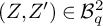 $(Z,Z') \in \mathcal {B}_{q}^2$
the set
 $Z\cap Z'$
is open (possibly empty) in Z and
 $Z'$
.
In order to show that the Green currents are woven, we will use a criterion due to de Thélin [Reference De Thélin11] (see also [Reference Dinh17, Reference Dujardin26] for a global version), that we now recall. Let
 ${\mathbb {G}}({q},k)$
be the Grassmannian parametrizing the linear subspaces of dimension q of
 $\mathbb C^k$
. Recall that
 ${\mathbb {G}} ({q},k)$
is a projective variety, of dimension
 $q(k-q)$
, and that it can naturally be seen as a submanifold of the projective space
 $\mathbb P (\bigwedge ^q \mathbb C^k) \sim \mathbb P^{L({q},k)}$
for some integer
 $L(q,k)$
, where the tangent space at each point of
 $\mathbb C^k$
is identified to
 $\mathbb C^k$
. We will denote by
 $\omega _{{\mathbb {G}}}$
the Kähler form on
 ${\mathbb {G}} ({q},k)$
induced by the natural Fubini-Study form on
 ${\mathbb P}^{L({q},k)}$
. We will let
 $\pi _D$
and
 $\pi _{{\mathbb {G}}}$
(resp.
 $\pi _D$
and
 $\pi _{\mathbb P^{L}}$
) be the natural projections of
 $D\times {\mathbb {G}}({q},k)$
(resp.
 $D\times \mathbb {P}^{L({q},k)}$
) to its first and the second factors, respectively. From now on, to emphasize the factor D, we will use the notation
 $\omega _D$
instead of
 $\omega $
to denote the standard Kähler form on
 $D\subset \mathbb {C}^k$
. Observe that
 $(\pi _{{\mathbb {G}}})^*\omega _{{\mathbb {G}}}+ (\pi _D)^*\omega _D$
is a Kähler form on
 $D\times {\mathbb {G}}({q},k)$
. Volumes in
 $D\times {\mathbb {G}} ({q},k)$
will be computed with respect to this Kähler form.
For any smooth complex
 ${q}$
-dimensional submanifold
 $\Sigma \subset D$
, we define a
 ${q}$
-dimensional submanifold
 $\hat \Sigma $
of
 $D\times {\mathbb {G}}({q},k)$
as
 $$ \begin{align} \hat{\Sigma} := \{(z,H)\in D\times {\mathbb{G}}({q},k): z\in \Sigma; H \text{ is parallel to } T_z \Sigma\}, \end{align} $$
where
 $T_z\Sigma $
is the tangent space of
 $\Sigma $
at z. We can extend the above definition to the case of
 $\Sigma $
not smooth by defining
 $\hat \Sigma $
as the closure of
 $\hat \Sigma _r$
, where
 $\Sigma _r$
is the regular part of
 $\Sigma $
. We will call
 $\hat \Sigma $
the lift of
 $\Sigma $
to
 $D\times {\mathbb {G}}({q},k)$
. The role of
 $\hat \Sigma $
in the theory was observed in [Reference Dinh17].
Theorem 5.2 (de Thélin [Reference De Thélin12]).
Let
 $\Sigma _n\subset D$
be a sequence of submanifolds of pure dimension
 $1\leq {q}\leq k-1$
and
 $ \hat {\Sigma }_n$
be the lift of
 $\Sigma _n$
to
 $D\times {\mathbb {G}}({q},k)$
. Let
 $v_n$
and
 $\hat {v}_n$
be the volumes of
 $\Sigma _n$
and
 $\hat {\Sigma }_n$
, respectively. Assume that all
 $v_n$
and
 $\hat {v}_n$
are finite and that the sequence
 $v_n^{-1}[\Sigma _n]$
converge to a current T on D. If
 $\hat {v}_n=O(v_n)$
as
 $n\to \infty $
, then the current T is woven.
The following criterion, see for instance [Reference De Thélin and Dinh13], will imply the laminarity of the Green current
 $T^-$
when
 $p=k-1$
in Theorem 1.1.
Proposition 5.3. Let T be a woven positive closed
 $(1,1)$
-current on D. Assume the local potentials of T are integrable with respect to T. If
 $T\wedge T=0$
, then T is laminar.
Observe that the integrability of the local potentials of T with respect to T guarantees that the intersection
 $T\wedge T$
is well-defined.
5.2 Shadows of currents on
$D\times {\mathbb {G}}({q},k)$

In this section, we consider again a bounded convex open subset
 $D\subset \mathbb C^k$
and, for a given fixed integer
 $1\leq {q}\leq k-1$
, the Grassmannian
 ${\mathbb {G}} ({q},k)$
as in the previous section. We will consider currents on
 $D\times {\mathbb {G}} ({q},k)$
and define a suitable projection of these currents on D, that we will call their shadows. This notion is related to the h-dimension as in [Reference Dinh and Sibony25] (see also [Reference Nguyen33, Reference Vu40]) and allows one to detect the excess of dimension in the vertical directions. For simplicity, we will only consider the product space
 $D\times {\mathbb {G}} ({q},k)$
that we will need later, but most of this section generalizes to arbitrary product spaces, see also Remark 5.8 below. In particular, the construction could be carried out on
 $D\times \mathbb P^{L({q},k)}$
.
Definition 5.4. Let
 $S\neq 0$
be a (non necessarily closed) positive current of bidimension
 $({q},{q})$
on
 $D\times {\mathbb {G}}({q},k)$
. Let
 $l_0$
be such that
-
(i)
$S\wedge (\pi _D)^*({\omega _D^{l_0}})\neq 0$
; -
(ii)
$S\wedge (\pi _D)^*\omega _D^{l_0+1}=0$
.


We call
 $l_0$
the D-dimension of S.
Observe that
 $l_0$
as in the above definition always exists and satisfies
 $l_0\leq q\leq k$
.
Lemma 5.5. Let S and
 $l_0$
be as in Definition 5.4. We have
 $S \wedge (\pi _D)^* \alpha =0$
for every smooth
 $(2l_0+1)$
-form
 $\alpha $
on D.
Proof. We can assume that
 $l_0< q$
(as otherwise the statement is clear) and it is enough to consider the case where
 $\alpha $
is of the form
 $\alpha = \beta \wedge \Omega $
for some positive
 $(\ell ,\ell )$
-form
 $\beta $
with
 $\ell \le l_0$
and
 $(2l_0-2\ell +1,0)$
-form
 $\Omega $
, and show that
 $\langle S \wedge (\pi _D)^* \alpha , \Phi \rangle =0$
for every compactly supported smooth
 $(q+\ell -2l_0-1, q-\ell )$
-form
 $\Phi $
of the form
 $\Phi = \gamma \wedge \Theta $
, for some positive
 $(q+\ell -2l_0-1,q+\ell -2l_0-1)$
-form
 $\gamma $
and
 $(0,2l_0-2\ell +1)$
-form
 $\Theta $
.
Applying Cauchy-Schwarz inequality, we have
 $$\begin{align*}\begin{aligned} |\langle S\wedge (\pi_D)^* \alpha, \Phi\rangle|^2 & = |\langle S \wedge (\pi_D)^* \beta \wedge \gamma, (\pi_D)^* \Omega \wedge \Theta\rangle|^2\\ & \leq |\langle S \wedge (\pi_D)^* \beta \wedge \gamma, (\pi_D)^* (\Omega \wedge \overline \Omega)\rangle| \cdot |\langle S \wedge (\pi_D)^* \beta \wedge \gamma, \Theta\wedge \overline \Theta\rangle|=0. \end{aligned}\end{align*}$$
Since
 $(\pi _D)^*(\beta \wedge \Omega \wedge \overline \Omega )$
is a smooth
 $(2l_0-\ell +1,2l_0-\ell +1)$
-form and
 $\ell \le l_0$
, the first factor in the last term vanishes by the assumption (ii) in Definition 5.4.
Definition 5.6. Let S be a (non necessarily closed) positive current of bidimension
 $({q},{q})$
on
 $D\times {\mathbb {G}}({q},k)$
and
 $l_0$
the D-dimension of S as in Definition 5.4. The shadow of S on D is the
 $(l_0,l_0)$
-bidimensional current
 $ \underline {S}$
on D given by
 $$\begin{align*}\underline S := (\pi_D)_* (S\wedge (\pi_{{\mathbb{G}}})^*\omega_{{\mathbb{G}}}^{{q}-l_0} ). \end{align*}$$
Observe that
 $\underline S$
satisfies
 $$ \begin{align} \langle\underline{S},\theta\rangle =\langle {S},(\pi_{{\mathbb{G}}})^*\omega_{{\mathbb{G}}}^{{q}-l_0}\wedge (\pi_D)^*\theta\rangle=\int_{D\times {\mathbb{G}}({q},k)} S\wedge(\pi_{{\mathbb{G}}})^*\omega_{{\mathbb{G}}}^{{q}-l_0}\wedge(\pi_D)^*\theta, \end{align} $$
for every compactly supported smooth
 $(l_0,l_0)$
-form
 $\theta $
on D. In particular, the shadow
 $\underline {S}$
of S is well-defined since
 $(\pi _{{\mathbb {G}}})^*\omega _{{\mathbb {G}}}^{{q}-l_0}\wedge (\pi _D)^*\theta $
is a compactly supported smooth
 $({q},{q})$
-form on
 $D\times {\mathbb {G}}({q},k)$
.
The following proposition collects some properties of the shadows that we will need in the sequel and justifies the terminology in Definitions 5.4 and 5.6.
Proposition 5.7. Let S be a positive current of bidimension
 $({q},{q})$
on
 $D\times {\mathbb {G}}({q},k)$
and
 $l_0$
be its D-dimension. Then the shadow
 $\underline {S}$
of S is a non zero positive current of bidimension
 $(l_0,l_0)$
on D, satisfying
 $$ \begin{align} \|\underline{S}\|_{{\tilde{D}}}= \|S \wedge (\pi_D)^*({\omega_D^{l_0}})\|_{{\tilde{D}}\times{\mathbb{G}}({q},k)} \end{align} $$
on any open subset
 ${\tilde {D}} \Subset D$
. Moreover, if S is closed on
 $U\times {\mathbb {G}}({q},k)$
for some open subset
 $U\subset D$
, then
 $\underline S$
is closed on U.
Proof. Since S is a positive current on
 $D\times {\mathbb {G}}({q},k)$
, by (5.3)
 $\underline {S}$
is a positive current of bidimension
 $(l_0,l_0)$
on D. Since
 $S\wedge (\pi _D)^*({\omega _D^{l_0+1}})=0$
we have
 $$ \begin{align*} \|\underline{S}\|_{{\tilde{D}}}=\int_{{\tilde{D}}} \underline{S}\wedge \omega_D^{l_0} &=\int_{{\tilde{D}}\times {\mathbb{G}}({q},k)} S\wedge (\pi_{{\mathbb{G}}})^*\omega_{{\mathbb{G}}}^{{q}-l_0}\wedge (\pi_D)^*\omega_D^{l_0}\\ &=\int_{{\tilde{D}}\times {\mathbb{G}}({q},k)} S\wedge (\pi_D)^*\omega_D^{l_0}\wedge \left((\pi_{{\mathbb{G}}})^*\omega_{{\mathbb{G}}}+ (\pi_D)^*\omega_D\right)^{{q}-l_0} \\ &=\|S\wedge (\pi_D)^*\omega_D^{l_0}\|_{{\tilde{D}}\times {\mathbb{G}}({q},k)}. \end{align*} $$
Hence, (5.4) holds.
Let us now prove the last assertion. Since the problem is local, we can assume that U is a small ball compactly supported in D. Assume first that we have
 $l_0=0$
. In this case, since
 $\underline {S}$
is a measure on D, it is clear that
 $\underline {S}$
is closed. Assume now that we have
 $l_0>0$
and let
 $\theta $
be a smooth
 $(2l_0-1)$
-form compactly supported on U. By using Stokes’ formula twice and the fact that S is a closed current of bidimension
 $({q},{q})$
on
 $U\times {\mathbb {G}}({q},k)$
, we have
 $$ \begin{align*} \langle d\underline{S},\theta\rangle&=\langle \underline{S},d\theta\rangle =\langle {S},(\pi_{{\mathbb{G}}})^*\omega_{{\mathbb{G}}}^{{q}-l_0}\wedge\pi_D^*(d\theta)\rangle\\ &=\langle {S}\wedge (\pi_{{\mathbb{G}}})^*\omega_{{\mathbb{G}}}^{{q}-l_0},d(\pi_D^*(\theta))\rangle=\langle d{(S\wedge (\pi_{{\mathbb{G}}})^*\omega_{{\mathbb{G}}}^{{q}-l_0})},\pi_D^*(\theta)\rangle\\ &=\langle dS\wedge (\pi_{{\mathbb{G}}})^*\omega_{{\mathbb{G}}}^{{q}-l_0},\pi_D^*(\theta)\rangle =0. \end{align*} $$
Hence,
 $\underline {S}$
is closed on U and the proof is complete.
Remark 5.8. The definitions and results of this section are valid more generally if
 $(X, \omega _X)$
is a Kähler manifold, S a positive
 $(q,q)$
-current on X, and
 $\pi \colon X\to D$
a submersion which is proper on the support of S. In this case, we can still define the D-dimension
 $l_0$
of S as in Definition 5.4 and its shadow
 $\underline S$
as
 $$\begin{align*}\underline{S} := (\pi_D)_* (S\wedge \omega_X^{q-l_0}). \end{align*}$$
It is not difficult to see that this definition coincides with that in Definition 5.6 when
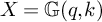 $X={\mathbb {G}} (q,k)$
and
 $\omega _X = \omega _{{\mathbb {G}}} + \omega _D$
. Moreover, the definition does not change if
 $\omega _X$
is replaced by another Kähler form
 $\omega ^{\prime }_X = \omega _X + \partial \gamma + \bar \partial \gamma '$
for some
 $(0,1)$
-form
 $\gamma $
and
 $(1,0)$
-form
 $\gamma '$
on X.
5.3 End of the proof of Theorem 1.1
We use the notations as at the beginning of Section 4. We also set
 $D' := M' \times N'$
. The following theorem completes the proof of Theorem 1.1.
Theorem 5.9. Let f be a Hénon-like map on D as above. If
 $d_{p-1}^+<d$
, then
 $T^{-}$
is woven. If, furthermore, we have
 $p=k-1$
, then
 $T^-$
is laminar.
Let
 $\Sigma $
be a horizontal p-dimensional plane of
 $M\times N'$
. By Theorem 2.3 we have
 $d^{-n}(f^n)_*[\Sigma ]\to T^-$
. Let
 $\hat {\Sigma }$
be the submanifold of
 $D\times {\mathbb {G}}(p,k)$
defined by means of (5.2) and set
 $R:=[\Sigma ]$
and
 $\hat {R}:=[\hat {\Sigma }]$
. As above, we denote by
 $\omega _{\mathbb {G}}$
the Kähler form of
 ${{\mathbb {G}}}(p,k)$
induced by the Fubini-Study form on
 ${\mathbb P}^{L(p,k)}$
. Again, to emphasize D, we use the notation
 $\omega _D$
instead of
 $\omega $
to denote the standard Kähler form of
 $\mathbb {C}^k$
. Recall that
 $\pi _D$
and
 $\pi _{{\mathbb {G}}}$
are the natural projections of
 $D\times {\mathbb {G}}(p,k)$
to its first and the second factors, respectively, and that we use
 $(\pi _{{\mathbb {G}}})^*\omega _{{\mathbb {G}}}+ (\pi _D)^*\omega _D$
as a Kähler form on
 $D\times {\mathbb {G}}(p,k)$
.
Consider the map
 $$\begin{align*}F: D_{v,1} \times {\mathbb{G}}(p, k) \to D_{h,1} \times {\mathbb{G}}(p, k) \quad \text{ defined as } \quad F = (f, Df).\end{align*}$$
Recall that we denote by
 $D_{v,1}$
the domain of definition of f and by
 $D_{h,1}=f(D_{v,1})$
its image. Hence, for
 $(z, H_{P}) \in D \times {\mathbb {G}}(p, k)$
, we have
 $F(z,H_P) =(f(z), H_{f(P)})$
, where P is a p-dimensional submanifold of D passing through z, and
 $H_P$
and
 $H_{f(P)}$
are the elements in
 ${\mathbb {G}}(p, k)$
representing parallel planes to
 $T_zP$
and
 $T_{f(z)}f(P)$
, respectively. Observe that if Q and
 $Q'$
are p-dimensional submanifolds of D passing through z, with
 $T_z Q=T_z Q'$
, we have
 $H_Q=H_{Q'}$
. For any
 $z_0 \in D_{v,1}$
, we can identify
 $F(z_0, \cdot )$
to an automorphism
 $\gamma _{z_0}$
on
 ${\mathbb {G}}(p,k)$
. It is then clear that F is invertible from its domain
 $D_{v,1}\times {\mathbb {G}}(p, k)$
to its image
 $D_{h,1}\times {\mathbb {G}}(p, k)$
. The map F can also be seen as a map from
 $D_{v,1} \times \mathbb {P}^{L(p, k)}$
to
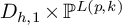 $D_{h,1} \times \mathbb {P}^{L(p, k)}$
. In particular, every
 $F(z_0, \cdot )$
can also be seen as an automorphism of
 $\mathbb {P}^{L(p, k)}$
.
The following is the key step towards Theorem 5.9.
Proposition 5.10. Let
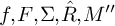 $f,F,\Sigma ,\hat {R}, M"$
, and N be as above. Then
 $$\begin{align*}\|(F^n)_*\hat{R}\|_{M"\times N\times{\mathbb{G}}(p,k)}=O(d^{n}) \quad \text{ as } n\to\infty.\end{align*}$$
The proof of Proposition 5.10 is given in the next section. We now conclude the proof of Theorem 5.9 assuming Proposition 5.10.
Proof of Theorem 5.9.
Let
 $\Sigma $
be a horizontal submanifold of
 $M\times N'$
of pure dimension p and such that
 $d^{-n}(f^n)_*[\Sigma ]$
converge to
 $T^-$
. Let
 $v_n$
and
 $\hat {v}_n$
be the volume of
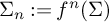 $\Sigma _n:=f^{n}(\Sigma )$
on
 $M"\times N$
and of
 $\hat {\Sigma }_n$
on
 $M"\times N \times {\mathbb {G}}(p,k)$
, respectively, where
 $\hat {\Sigma }_n$
is the submanifold of
 $D\times {\mathbb {G}}(p,k)$
defined by means of (5.2). Note that, since
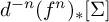 $d^{-n}(f^n)_*[\Sigma ]$
converge to
 $T^-$
we have
 $$ \begin{align} d^n\lesssim v_n\lesssim d^n. \end{align} $$
By definition of
 $\hat {\Sigma }_n$
and F we can see that
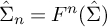 $\hat {\Sigma }_n=F^n(\hat {\Sigma })$
. Hence, we have
 $$\begin{align*}\hat v_n=\|(F^n)_*[\hat{\Sigma}]\|_{M"\times N\times{\mathbb{G}}(p,k)}.\end{align*}$$
We deduce from Proposition 5.10 that
 $\hat {v}_n=O(d^n)$
as
 $n\to \infty $
. It follows from (5.5) that we have
 $\hat {v}_n=O(d^n)=O(v_n)$
. Hence, thanks to Theorem 5.2, we conclude that
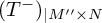 $(T^-)_{|M"\times N}$
is woven on D (or, equivalently, that
 $T^-$
is woven as a current on
 $M"\times N$
). In order to conclude the proof of the first assertion, we need to deduce that
 $T^-$
is woven on all of D.
Recall that
 $\mathcal {B}_p$
denotes the set of p-dimensional connected complex (not necessarily closed) submanifolds of D with locally finite
 $2p$
-dimensional volume. Denote similarly by
 $\mathcal {B}^{\prime \prime }_p$
the set of p-dimensional connected complex submanifolds of
 $M"\times N$
with locally finite
 $2p$
-dimensional volume. As
 $(T^-)_{|M"\times N}$
is woven, we can write it as
 $$ \begin{align} (T^-)_{|M"\times N}=\int_{Z\in\mathcal{B}^{\prime\prime}_p }[Z]d\nu(Z), \end{align} $$
where
 $\nu $
is a
 $\mathcal {B}^{\prime \prime }_p$
-finite measure on
 $\mathcal {B}^{\prime \prime }_p$
. Define a map
 $$\begin{align*}\mathcal{F}:\mathcal{B}^{\prime\prime}_p \to \mathcal{B}_p \quad \text{ as }\quad Z\mapsto f(Z\cap D_{v,1}).\end{align*}$$
The map
 $\mathcal F$
is well-defined by (4.1). Let us also define a measure
 $\tilde {\nu }$
on
 $\mathcal {B}_p$
as
 $$\begin{align*}\tilde \nu := d^{-1} \mathcal F_* \nu. \end{align*}$$
Since
 $\nu $
is
 $\mathcal {B}^{\prime \prime }_p$
-finite on
 $\mathcal {B}^{\prime \prime }_p$
,
 $\tilde {\nu }$
is
 $\mathcal {B}_p$
-finite on
 $\mathcal {B}_p$
. Indeed, let K be any compact subset of D. Thanks to (4.1) there exists a convex open set
 $M^\star \Subset M"$
such that
 $f^{-1}(K)\subset M^\star \times N$
. Then, we have
 $$ \begin{align*} \int_{Z\in\mathcal{B}_{p}}\langle[Z],\omega^{p}|_K\rangle d\tilde{\nu}(Z) &= d^{-1}\int_{Z\in{\mathcal{B}_{p}"}}\langle[f(Z)],\omega^{p}|_K\rangle d{\nu}(Z)\\ &=d^{-1}\int_{Z\in{\mathcal{B}_{ p}"}}\langle[Z], f^*(\omega^{p}|_K)\rangle d{\nu}(Z) \\ &\lesssim \int_{Z\in{\mathcal{B}_p"}}\langle[Z],\omega^{p}|_{M^\star\times N'}\rangle d{\nu}(Z), \end{align*} $$
where in the last inequality we used [Reference Bianchi, Dinh and Rakhimov9, Lemma 3.3] and the fact that we have
 $Z\subset M"\times N'$
for
 $\nu $
-almost every Z. Since
 $\nu $
is
 $\mathcal {B}^{\prime \prime }_p$
-finite, we deduce from the last inequality that
 $\tilde {\nu }$
is
 $\mathcal {B}_p$
-finite on
 $\mathcal {B}_p$
.
Again by (4.1), we also have
 $d\cdot T^-=f_*\left ((T^-)_{|M"\times N}\right )$
on D. Hence, by (5.6), we have
 $$\begin{align*}T^- =d^{-1}f_*\left((T^-)_{|M"\times N}\right) =d^{-1}\int_{Z\in\mathcal{B}^{\prime\prime}_p}f_*[Z]d\nu(Z) =\int_{Z\in \mathcal{B}_p}[Z]d\tilde{\nu}(Z) \end{align*}$$
on D. Hence,
 $T^-$
is woven on D.
In order to conclude the proof of Theorem 5.9, we need to show that
 $T^-$
is laminar assuming that
 $p=k-1$
(observe that this implies
 $d^{-}_{k-p-1}=d^-_0=1<d$
). Recall that the condition
 $p=k-1$
implies that
 $T^-$
is of bidegree
 $(1,1)$
. By Theorem 4.1,
 $T^-$
has Hölder continuous local potentials. So
 $T^-\wedge T^-$
is a well-defined horizontal positive closed
 $(2,2)$
-currentFootnote
1
. By Proposition 5.3, it is enough to show that
 $T^-\wedge T^-=0$
.
Assume by contradiction that
 $T^-\wedge T^-\ne 0$
. By the f-invariance of
 $T^-$
and the fact that f is invertible, we have
 $f_* (T^-\wedge T^-)=d^2(T^-\wedge T^-)$
. By Definition 2.2, this implies that
 $d^2\le d^+_{k-2}$
. Since by assumption we have
 $d^+_{k-2}<d=d^+_{k-1}$
, this gives
 $d^2<d$
, which implies that
 $d<1$
. Since we always have
 $d\geq 1$
, this gives the desired contradiction and shows that
 $T^-\wedge T^-=0$
. The proof is complete.
We conclude this section with the following technical lemma, that we will need in the proof of Proposition 5.10.
Lemma 5.11. For every
 $0\le \tilde l\le p$
let
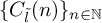 $\{C_{\tilde l}(n)\}_{n\in \mathbb N}$
be a sequence of positive numbers such that
 $\{C_{p}(n)\}_{n\in \mathbb N}$
is bounded and
 $$ \begin{align*}\limsup_{n\to\infty}\max_{0\le \tilde l\le p-1} C_{\tilde l}(n)=\infty.\end{align*} $$
Then there exists a positive constant
 $\beta $
, an index
 $0\leq l<p$
, and a sequence
 $\{n_j\}_{j\in \mathbb N}$
such that
-
(i)
$C_{\tilde {l}}(n)\leq \beta C_l(n_j)$
for all
$n\le n_j$
and all
$0\le \tilde {l}\le p$
; -
(ii) we have
$$\begin{align*}\lim\limits_{j\to\infty} \frac{ C_{l'}(n_j-s)}{C_l(n_j)}=0 \quad \text{ for all } l<l'\le p \text{ and all } s\in \mathbb N.\end{align*}$$



Proof. Set
 $$ \begin{align*}L:=\{\tilde l:\limsup_{n\to \infty} C_{\tilde l}(n)=\infty\}=:\{l^{\prime}_1,l^{\prime}_2,...,l^{\prime}_{m'}\},\end{align*} $$
where
 $1\le m'\le p$
and
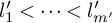 $l^{\prime }_1< \dots <l^{\prime }_{m'}$
. By assumption, we have
 $p\notin L$
and so
 $l^{\prime }_{m'}<p$
. Moreover, by the definition of L it follows that if
 $\tilde l\notin L$
then
 $\{C_{\tilde l}(n)\}_{n\in \mathbb N}$
is bounded. Set
 $$ \begin{align*}a_n:=\max\{C_{\tilde l}(n): {\tilde l}\in L\}.\end{align*} $$
Since by assumption we have
 $\limsup _{n\to \infty } a_n=\infty $
, there exists a subsequence
 $a_{\tilde n_j}$
such that
 $a_n< a_{\tilde n_j}$
for every j and
 $n< {\tilde n_j}$
. We will only use this sequence
 $\{\tilde n_j\}$
or a subsequence of it. For every j, define
 $$ \begin{align*}L_j:=\{\tilde l\in L: C_{\tilde l}({\tilde n_j})=a_{{ \tilde n_j}}\}\end{align*} $$
As L is finite, up to replacing the sequence
 $\{{ \tilde n_j}\}$
by a subsequence, we can assume that
 $L_j$
does not depend on j, i.e., that we can write
 $$\begin{align*}\mathcal L := L_j =: \{l_1, \dots, l_m\} \quad \text{ for every } j. \end{align*}$$
It is clear that the pair
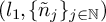 $(l_1,\{{\tilde n_j}\}_{j\in \mathbb N})$
satisfies (i) for
 $\beta =1$
. We now describe a procedure that, by possibly modifying the pair and
 $\beta $
, will also lead to (ii).
We will play the following simple game between
 $l_1$
and the other indexes
 $l_r$
, for
 $1<r\leq m$
. If there exists
 $s\in \mathbb N$
such that
 $$ \begin{align} \limsup\limits_{j\to \infty} \frac{C_{{l}_r}( \tilde n_j-s)}{C_{{l_1}}( \tilde n_j)}>0 \end{align} $$
then
 $l_r$
is the winner. Otherwise,
 $l_1$
is the winner.
We start playing the game above between
 $l_1$
and
 $l_m$
. If the winner is
 $l_m$
, we stop playing. Otherwise, we play the game between
 $l_1$
and
 $l_{m-1}$
. Again, if the winner is
 $l_{m-1}$
we stop playing, otherwise we continue the game between
 $l_1$
and
 $l_{m-2}$
. After repeating the procedure at most
 $m-1$
times, we have the final winner. If the final winner is
 $l_1$
then it is clear that the pair
 $(l_1,\{{\tilde n_j}\}_{j=1}^\infty )$
satisfies both (i) and (ii). In this case, the proof is complete. We can then assume that the final winner is
 $l_{r_0}$
for some
 $1<r_0\le m$
. Observe that this means that
 $l_{r_0}$
was the winner between
 $l_1$
and
 $l_{r_0}$
(i.e., (5.7) holds with
 $r_0$
instead of r, for some given choice
 $s_0$
of s), but also that
 $l_1$
was the winner against all
 $l_{r'}$
, for all
 $r'> r_0$
.
After again choosing a subsequence, if necessary, we can assume that the limsup in (5.7) (with
 $r=r_0$
and
 $s=s_0$
) is actually a limit, i.e., that we have
 $$ \begin{align} \lim \limits_{j\to \infty} \frac{C_{{l}_{r_0}}({\tilde n_j}-s_0)}{C_{{l_1}}({\tilde n_j})} =: A>0. \end{align} $$
We can also assume that
 $\tilde {n}_1>s_0$
. Take
 $(l, \{n_j\}_{j\in \mathbb N})$
as a new pair, where
 ${n}_j:={\tilde n_j}-s_0$
and
 $l:=l_{r_0}$
. We now show that this pair satisfies both the requests (i) and (ii).
By (5.8), we have
 $C_{l_1}({\tilde n_j})\le \beta \cdot C_{l}(n_j)$
for every j, for some positive constant
 $\beta $
independent of j. By construction, for any
 $n\le {\tilde n_j}$
and
 $0\le \tilde {l}\le p$
, we also have
 $C_{\tilde {l}}(n)\le C_{l_1}({\tilde n_j})$
. As a consequence, we have
 $$ \begin{align*}C_{\tilde{l}}(n) \le C_{l_1}({\tilde n_j}) \le {\beta}\cdot C_{l}({{n}_j}) \quad \text{ for all } n\le n_j \text{ and }0\le {\tilde{l}}\le p.\end{align*} $$
So,
 $(l,\{{n}_j\}_{j\in \mathbb N})$
satisfies (i). For the sake of contradiction, assume that
 $(l,{n}_j)$
does not satisfy (ii). In this case, there must exist
 $l_{r_1}$
with
 $r_0<r_1\le m$
and
 $s_1$
such that
 $$ \begin{align} \limsup\limits_{j\to \infty} \frac{C_{{l}_{r_1}}({n}_j-s_1)}{C_{l}({n}_j)}>0. \end{align} $$
Again, after choosing a subsequence if necessary, we can assume that the above
 $\limsup $
is a limit. Since
 $l_1$
was the winner when playing the game between
 $l_1$
and
 $l_{r_1}$
, we have
 $$ \begin{align*}0=\lim\limits_{j\to \infty} \frac{C_{{l}_{r_1}}({\tilde{n}_j}-s_0-s_1)}{C_{{l_1}}({\tilde n_j})} = \lim\limits_{j\to \infty}\frac{C_{l}({\tilde n_j}-s_0)}{C_{{l_1}}({\tilde n_j})}\cdot \frac{C_{{l}_{r_1}}({n_j}-s_1)}{C_{{l}}({n_j})}>0.\end{align*} $$
The last inequality follows from (5.8) and (5.9) and the assumption that the
 $\limsup $
in (5.9) is actually a limit. This gives a contradiction. Hence, the pair
 $(l,\{{n}_j\}_{j\in \mathbb N})$
satisfies (ii) and the proof is complete.
5.4 Proof of Proposition 5.10
Take a smooth vertical cut-off function
 $0\le \chi \le 1 $
on D, equal to
 $1$
in a neighbourhood of
 $\overline {M}"\times N$
and supported on
 $M'\times {N}$
. For every
 $0\leq l\leq p$
define
 $$ \begin{align*}I_l(n):=\int_{D\times{\mathbb{G}}(p,k)} (\pi_D)^*(\chi) \cdot (F^n)_*(\hat{R})\wedge (\pi_D)^*\omega_D^l\wedge (\pi_{{\mathbb{G}}})^*(\omega_{{\mathbb{G}}})^{p-l}\end{align*} $$
and set
 $$ \begin{align*}I(n):=\int_{D\times{\mathbb{G}}(p,k)} (\pi_D)^*(\chi) \cdot (F^n)_*(\hat{R})\wedge ((\pi_D)^*(\omega_D)+(\pi_{{\mathbb{G}}})^*\omega_{\mathbb{G}})^p=\sum_{l=0}^p {p \choose l} I_l(n).\end{align*} $$
Observe that
 $\|(F^n)_*(\hat {R})\|_{M"\times N\times {\mathbb {G}}(p,k)}\le I(n) $
. So it is enough to show that
 $I(n)=O(d^n)$
.
Lemma 5.12. We have
 $$ \begin{align} d^n\lesssim I_p(n)\lesssim d^{n}. \end{align} $$
Proof. By the definitions of
 $\hat R$
and F, we have
 $$ \begin{align} (\pi_D)_*( (F^n)_*(\hat{R}))= (f^n)_*(R). \end{align} $$
Indeed, if
 $\theta $
is a smooth
 $(p,p)$
-form compactly supported on D, we have
 $$ \begin{align*} \langle (\pi_D)_*( (F^n)_*(\hat{R})), \theta \rangle_D&=\langle (F^n)_*(\hat{R}), (\pi_D)^*(\theta) \rangle_{D \times {\mathbb{G}}(p, k)}\\ &=\int_{F^n(\hat \Sigma)}(\pi_D)^*(\theta)=\int_{f^n( \Sigma)}\theta=\langle (f^n)_*({R})), \theta \rangle_D, \end{align*} $$
which proves (5.11). By using this identity, we have
 $$ \begin{align*} I_p(n) & =\int_{D\times{\mathbb{G}}(p,k)} (\pi_D)^*(\chi) \cdot (F^n)_*(\hat{R})\wedge (\pi_D)^*\omega_D^p\\ & =\int_D (\pi_D)_*\left((\pi_D)^*\chi \cdot (F^n)_*(\hat{R})\wedge (\pi_D)^*\omega_D^p\right)\\ & =\int_D \chi \cdot (f^n)_*(R)\wedge \omega_D^p\le \int_{M'\times N} (f^n)_*(R)\wedge \omega_D^p\lesssim d^n. \end{align*} $$
The last equality is due to (2.2). Similarly, since the dynamical degrees do not depend on the choice of
 $M'$
and
 $N'$
, by using (2.2) again, we also have
 $$ \begin{align*} I_p(n) & =\int_D \chi \cdot (f^n)_*(R)\wedge \omega_D^p\ge \int_{M"\times N} (f^n)_*(R)\wedge \omega_D^p\gtrsim d^n. \end{align*} $$
This completes the proof.
Recall that, in order to prove Proposition 5.10, it is enough to show that
 $I(n)=O(d^n)$
. Assume, for the sake of contradiction, that this is false. For
 $0\le \tilde l\le p$
, denote
 $$ \begin{align} C_{\tilde l}(n):= \frac{I_{\tilde l}(n)}{d^{n}}. \end{align} $$
Thanks to Lemma 5.12 and the contradiction assumption, we can see that the sequences
 $C_{\tilde l}(n)$
satisfy the conditions of Lemma 5.11. Let l and
 $\{n_j\}_{j\in \mathbb N}$
be as given by Lemma 5.11 applied to these sequences.
For all integers s and j such
 $n_j> s$
, set
 $$ \begin{align*}S_{j}^{(s)} :=\frac{(\pi_D)^*\chi \cdot (F^{n_j-s})_*(\hat{R})}{C_l(n_j)d^{n_j-s}}.\end{align*} $$
Each
 $S_j^{(s)}$
is a current on
 $D\times {\mathbb {G}}(p,k)$
. Since f is a horizontal-like map, we have
 $(f^s)_* (\chi )\ge \chi $
on
 $D_{h,s}$
. Since
 $D_{h,n_j}\subset D_{h,s}$
and
 $(F^s)_*S_{j}^{(s)}$
is supported in
 $D_{h,n_j}\times {\mathbb {G}}(p,k)$
, we have
 $$ \begin{align} (F^s)_*S_{j}^{(s)}=\frac{(\pi_D)^*((f^s)_*\chi)\cdot (F^{n_j})_*(\hat{R})}{C_l(n_j)d^{n_j-s}}\ge\frac{(\pi_D)^*\chi\cdot (F^{n_j})_*(\hat{R})}{C_l(n_j)d^{n_j-s}}= d^s S_j^{(0)}. \end{align} $$
Lemma 5.13. For every s and j such that
 $n_j>s$
we have
 $$ \begin{align*} \|S_j^{(s)}\wedge (\pi_D)^*\omega_D^{h}\|_{D\times {\mathbb{G}}(p,k)}=\sum_{m=0}^{p-h}{p-h \choose m}\frac{C_{m+h}(n_j-s)}{C_l(n_j)} \quad \text{ for all } \quad 0\le h\le p. \end{align*} $$
Proof. By a direct computation, for all h as in the statement we have
 $$ \begin{align*} \|S_j^{(s)}\wedge (\pi_D)^*\omega_D^{h}\|_{D\times {\mathbb{G}}(p,k)}= &\int_{D\times {\mathbb{G}}(p,k)} S_j^{(s)} \wedge (\pi_D)^*\omega_D^{h}\wedge ((\pi_D)^*(\omega_D)+(\pi_{{\mathbb{G}}})^*\omega_{\mathbb{G}})^{p-h}\\ =&\sum_{m=0}^{p-h}{p-h \choose m}\int_{D\times {\mathbb{G}}(p,k)} {S_j^{(s)}\wedge (\pi_D)^*(\omega_D^{m+h})\wedge(\pi_{\mathbb{G}})^*(\omega_{\mathbb{G}}^{p-h-m}) }\\ =& \sum_{m=0}^{p-h}{p-h \choose m}\frac{I_{m+h}(n_j-s)}{C_l(n_j)d^{n_j-s}}=\sum_{m=0}^{p-h}{p-h \choose m}\frac{C_{m+h}(n_j-s)}{C_l(n_j)}, \end{align*} $$
where in the last step we used (5.12). The assertion follows.
By the choice of l and
 $\{n_j\}_{j\in \mathbb N}$
and Lemma 5.11, for all
 $0\le m\le p$
we have
 $C_m(n_j-s)\lesssim C_l(n_j)$
. It follows from the choice of
 $\{n_j\}_{j\in \mathbb N}$
and Lemma 5.13 that there exists a constant
 $c>1$
independent of s and j such that
 $$ \begin{align*} 1\le \|S_j^{(0)}\|_{D\times {\mathbb{G}}(p,k)} \quad \text{ and }\quad\|S_j^{(s)}\|_{D\times {\mathbb{G}}(p,k)}\le c \quad \text{ for all } s \geq 0. \end{align*} $$
In particular, for every
 $s\geq 0$
, the sequence
 $\{\|S_j^{(s)}\|\}_{j\in \mathbb N}$
is uniformly bounded from above by a constant independent of s. We can then fix in what follows a current
 $S^{(0)}_\infty $
, which is a limit value of the sequence
 $\{S_{j}^{(0)}\}_{j\in \mathbb N}$
along a given subsequence
 $\{j_i\}_{i\in \mathbb N}$
, and a current
 $S^{(s)}_\infty $
, which is a limit value of the sequence
 $\{S_{j}^{(s)}\}_{j\in \mathbb N}$
along a further subsequence of the sequence
 $\{j_i\}_{i\in \mathbb N}$
. By construction, we have
 $$ \begin{align*} 1\le \|S_\infty^{(0)}\|_{D\times {\mathbb{G}}(p,k)} \quad \text{ and }\quad\|S_\infty^{(s)}\|_{D\times {\mathbb{G}}(p,k)}\le c \quad \text{ for all } s\geq 0, \end{align*} $$
for a constant c as above.
Lemma 5.14. The following properties hold for every
 $s\geq 0$
:
-
(i)
$d^s S_\infty ^{(0)}\le (F^s)_*(S^{(s)}_\infty )$
; -
(ii)
$S_\infty ^{(s)}$
is compactly supported in
${D'}\times {\mathbb {G}}(p,k)$
and is closed on
$M"\times N\times {\mathbb {G}}(p,k)$
, where
$D':=M'\times N'$
; -
(iii)
$S_\infty ^{(s)}\wedge (\pi _D)^*\theta =0$
for any smooth
$(l+1,l+1)$
-form
$\theta $
on D; -
(iv)
$\|S_\infty ^{(0)}\wedge (\pi _D)^*(\omega _{D}^l)\|_{D'\times {\mathbb {G}}(p,k)}=1$
and there exists a constant
$c>0$
independent of s such that
$0< \|S_\infty ^{(s)}\wedge (\pi _D)^* (\omega _{D}^l)\|_{D'\times {\mathbb {G}}(p,k)}\le c$
.


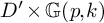








Proof. It is immediate to see that (i) follows from (5.13). Since f is horizontal-like, R has horizontal support in
 $M\times N'$
, and
 $\chi $
has vertical support in
 $M'\times N$
it follows that
 $S_j^{(s)}$
is supported on
 $D'\times {\mathbb {G}}(p,k)$
for every
 $s\in \mathbb N$
. Moreover, since by (4.1) the current
 $f_* (R)$
is supported on
 $M\times N"$
, for every
 $j\geq 1$
the current
 $S_j^{(s)}$
is supported on
 $\left (\mathrm {supp}(\chi )\cap (M\times N" ) \right )\times {\mathbb {G}} (p,k) \Subset {D'}\times {\mathbb {G}}(p,k) $
. Hence,
 $S^{(s)}_\infty $
has compact support in
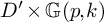 $D'\times {\mathbb {G}}(p,k)$
. Since by definition
 $S_j^{(s)}$
is closed in a neighbourhood of
 $\overline {M"}\times N\times {\mathbb {G}}(p,k)$
(as
 $\chi $
is constantly equal to 1 on an open neighbourhood of such set), the currents
 $S_\infty ^{(s)}$
are closed in
 $M"\times N\times {\mathbb {G}}(p,k)$
. So, (ii) follows.
In order to prove (iii), as
 $S_\infty ^{(s)}$
is positive, it is enough to show that
 $$ \begin{align} S_\infty^{(s)}\wedge (\pi_D)^*\omega_D^{l+1}=0. \end{align} $$
Since
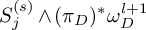 $S_j^{(s)}\wedge (\pi _D)^*\omega _D^{l+1}$
is positive, it suffices to show that its mass tends to zero as
 $j\to \infty $
. By taking
 $h=l+1$
in Lemma 5.13 (recall that
 $l\leq p-1$
) and the fact that l was given by Lemma 5.11 (and in particular the quantities
 $C_{\tilde l}$
as in (5.12) satisfy Lemma 5.11 (ii)) we have
 $$ \begin{align*} \lim_{j\to \infty}\|S_j^{(s)}\wedge (\pi_D)^*\omega_D^{l+1}\|& = \lim_{j\to \infty} \sum_{m=0}^{p-l-1} {p-l-1 \choose m}\frac{C_{l+1+m}(n_j-s)}{C_l(n_j)} =0. \end{align*} $$
This gives (5.14). The assertion (iii) follows.
By taking
 $h=l$
in Lemma 5.13 and using Lemma 5.11 (ii) again we have
 $$ \begin{align*} \lim_{j\to \infty}\|S_j^{(0)}\wedge (\pi_D)^*\omega_D^{l}\|& = 1+ \lim_{j\to \infty} \sum_{m=1}^{p-l} {p-l \choose m}\frac{C_{l+m}(n_j)}{C_l(n_j)} =1. \end{align*} $$
By taking
 $h=l$
in Lemma 5.13 and using Lemma 5.11 (i) we have
 $$ \begin{align*} \|S_j^{(s)}\wedge (\pi_D)^*\omega_D^{l}\|& =\frac{C_{l}(n_j-s)}{C_l(n_j)} + \sum_{m=1}^{p-l} {p-l \choose h}\frac{C_{l+m}(n_j-s)}{C_l(n_j)} \le c \end{align*} $$
for some constant c independent of s and j. On the other hand, since
 $(\pi _D)^*((f^s)_*{\omega _D^{l}})$
is strictly positive on the support of
 $S^{(0)}_\infty $
we have
 $$ \begin{align*} 0 < \|S^{(0)}_\infty\wedge (\pi_D)^*((f^s)_*{\omega_D^{l}})\| &= \|S^{(0)}_\infty\wedge (F^s)_*(\pi_D)^*({\omega_D^{l}})\| \\& \le \|(F^s)_*(S^{(s)}_\infty)\wedge (F^s)_*(\pi_D)^*({\omega_D^{l}})\| = \|(F^s)_*(S^{(s)}_\infty\wedge (\pi_D)^*({\omega_D^{l}}))\|. \end{align*} $$
This gives (iv) and completes the proof.
By Lemma 5.14, both
 $S^{(s)}_\infty $
and
 $S^{(0)}_\infty $
satisfy the conditions in Definition 5.4, with
 $l_0=l$
.
Lemma 5.15. Let
 $\theta $
be a smooth
 $(l,l)$
-form compactly supported in D. Then we have
 $$ \begin{align*}\partial \left( (F^s)_*(S_\infty^{(s)}) \wedge (\pi_D)^*\theta\right)=0 \quad \text{ for every } s\geq 0.\end{align*} $$
Proof. Let us first show that the equality
 $$ \begin{align} (\pi_D)^*{\chi} {\partial} S_\infty^{(s)}=(\pi_D)^*({ \partial}\chi)\wedge S_\infty^{(s)} \end{align} $$
holds for every
 $s\geq 0$
. By the definition of
 $S_j^{(s)}$
and the fact that
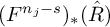 $ (F^{n_j-s})_*(\hat {R})$
is closed we have
 $$ \begin{align*}{ \partial} S_{j}^{(s)} =\frac{(\pi_D)^*( {\partial} \chi){\wedge} (F^{n_j-s})_*(\hat{R})}{C_l(n_j)d^{n_j-s}}\end{align*} $$
for every
 $s\geq 0$
and every j such that
 $n_j>s$
. Multiplying
 $(\pi _D)^*\chi $
to both sides we obtain
 $$ \begin{align*}(\pi_D)^*(\chi) { \partial} S_{j}^{(s)} =(\pi_D)^*( { \partial} \chi)\wedge \frac{ (\pi_D)^*\chi\cdot (F^{n_j-s})_*(\hat{R})}{C_l(n_j)d^{n_j-s}}=(\pi_D)^*( { \partial} \chi)\wedge S_{j}^{(s)},\end{align*} $$
where we used the fact that the support of
 $ \partial \chi $
is contained in the support of
 $\chi $
. (5.15) follows taking
 $j\to \infty $
.
It follows from (5.15) that, for any
 $\theta $
as in the statement and every
 $s\geq 0$
, we have
 $$ \begin{align} (\pi_D)^*{\chi} {\partial}\left( S_\infty^{(s)} \wedge (\pi_D)^*((f^s)^*\theta)\right) =S_\infty^{(s)}\wedge (\pi_D)^*(\Theta), \end{align} $$
where
 $$\begin{align*}\Theta := { \partial} \chi \wedge(f^s)^*\theta + \chi\cdot (f^s)^*( { \partial} \theta) \end{align*}$$
is a smooth vertical
 $(l+1,{l})$
-form in D. Since the D-dimension of
 $S_\infty ^{(s)}$
is equal to l, by Lemma 5.5 the right hand side of (5.16) is equal to
 $0$
. As
 $\mathrm {Supp} \,S_\infty ^{(s)}\subseteq \mathrm {Supp} \left ((\pi _D)^*\chi \right )$
, this implies
 ${ \partial } \left ( S_\infty ^{(s)} \wedge (\pi _D)^*((f^s)^*\theta )\right )=0$
. So, we have
 $$ \begin{align*}{ \partial} \left( (F^s)_*(S_\infty^{(s)}) \wedge (\pi_D)^*\theta\right)=(F^s)_* { \partial}\left( S_\infty^{(s)} \wedge (\pi_D)^*((f^s)^*\theta)\right)=0.\end{align*} $$
The proof is complete.
Let now
 $\underline {S}^{(s)}_\infty $
and
 $\underline {S}_\infty ^{(0)}$
be the shadows of
 ${S}^{(s)}_\infty $
and
 ${S}_\infty ^{(0)}$
, respectively. By Proposition 5.7, these are positive currents of bidimension
 $(l,l)$
on D.
Lemma 5.16. The following properties hold for every
 $s\geq 0$
:
-
(i) we have
$\|\underline {S}^{(0)}_\infty \|_{D'}=1$
; furthermore, there exists a constant
$c>0$
independent of s such that
$\|\underline {S}^{(s)}_\infty \|_{D'}\le c$
; -
(ii)
$\underline {S}^{(s)}_\infty $
is horizontal on
$M\times N'$
and closed on
$M"\times N$
; -
(iii)
$d^s \underline {S}^{(0)}_\infty \le (f^s)_*(\underline {S}^{(s)}_\infty )$
.



Proof. Assertion (i) follows from Proposition 5.7 (applied with
 $D'$
instead of
 $\tilde D$
) and Lemma 5.14 (iv). Assertion (ii) follows from Lemma 5.14 (ii). Hence, we only have to prove the assertion (iii). Fix
 $s\geq 0$
and let
 $\theta $
be a positive
 $(l,l)$
-form compactly supported in D. We are going to show that
 $$ \begin{align} \langle \underline{S}^{(0)}_\infty,\theta \rangle \leq \langle (f^s)_*(\underline{S}_\infty^{(s)}),\theta \rangle. \end{align} $$
Recall that F can also be seen as a map from
 $D_{v,1} \times \mathbb {P}^{L(p, k)}$
to
 $D_{h,1} \times \mathbb {P}^{L(p, k)}$
, and that
 $\omega _{{\mathbb {G}}}$
is the form induced on
 ${\mathbb {G}}(p,k)$
by the Fubini-Study form on
 $\mathbb P^L= \mathbb P^{L(p,k)}$
. For every
 $z_0\in D_{v,1}$
we can identify the second coordinate of
 $F^s(z_0,\cdot )$
as an automorphism of
 ${\mathbb P}^{L}$
. By the invariance of the class of
 $\omega _{{\mathbb P}^{L}}$
under the actions of such automorphisms, we have
 $$\begin{align*}(F^s)_*( (\pi_{{\mathbb P}^L})^* { \omega_{{\mathbb P}^L}})=(\pi_{{\mathbb P}^L})^*{\omega_{{\mathbb P}^L}} + dd^c {u_s}+ v_s,\end{align*}$$
for some smooth
 $2$
-form
 $v_s$
which vanishes on the fibres of
 $\pi _{D}$
and smooth function
 $u_s$
, on the common domain of definition of
 $(F^s)_*( (\pi _{{\mathbb P}^L})^*\omega _{{\mathbb P}^L})$
and
 $(\pi _{{\mathbb P}^L})^*\omega _{{\mathbb P}^L}$
. It follows that, on the same set, we have
 $$ \begin{align} (F^s)_*( (\pi_{{\mathbb P}^L})^* \omega_{{\mathbb P}^L}^{p-l})=(\pi_{{\mathbb P}^L})^* \omega_{{\mathbb P}^L}^{p-l} + dd^c U_s + V_s, \end{align} $$
for some form
 $U_s$
and a form
 $V_s$
which vanishes on the fibres of
 $\pi _{D}$
. Hence,
 $V_s$
can be written as a linear combination of forms of the form
 $(\pi _{D})^*\alpha \wedge V^{\prime }_s$
, where
 $\alpha $
is a
 $1$
-form on D.
By using (5.3), Lemma 5.14 (i), and (5.18), we have
 $$ \begin{align*} \langle \underline{S}^{(0)}_\infty,\theta \rangle & =\int\limits_{D\times{\mathbb{G}}(p,k)}S_\infty^{(0)}\wedge (\pi_{{\mathbb{G}}})^*\omega_{{\mathbb{G}}}^{p-l}\wedge (\pi_D)^*\theta \\ & \le d^{-s}\int\limits_{D\times{\mathbb P}^L} (F^s)_*(S_\infty^{(s)}) \wedge (\pi_{\mathbb{P}^L})^*\omega_{{\mathbb P}^L}^{p-l}\wedge (\pi_D)^*\theta\\ & = d^{-s}\int\limits_{D\times{\mathbb P}^L} (F^s)_*(S_\infty^{(s)}) \wedge (F^s)_* ((\pi_{\mathbb{P}^L})^*\omega_{{\mathbb P}^L}^{p-l}) \wedge (\pi_D)^*\theta \\ & \quad - d^{-s}\int\limits_{D\times{\mathbb P}^L} (F^s)_*(S_\infty^{(s)}) \wedge dd^c U_s \wedge (\pi_D)^*\theta\\ & \quad - d^{-s}\int\limits_{D\times{\mathbb P}^L} (F^s)_*(S_\infty^{(s)}) \wedge {V_s} \wedge (\pi_D)^*\theta. \end{align*} $$
The second integral in the last term vanishes by Stokes’ formula and Lemma 5.15. We claim that the third integral also vanishes. Indeed, by the above description of
 $V_s$
, it is enough to show this claim for
 $V_s$
of the form
 $(\pi _D)^*\alpha \wedge V^{\prime }_s$
, where
 $\alpha $
is a
 $1$
-form on D. This implies that
 $(\pi _{D})^*(\alpha \wedge \theta )$
is
 $(2l+1)$
-form and thus Lemma 5.5 implies that
 $$ \begin{align*}(F^s)_*(S_\infty^{(s)}) \wedge (\pi_{D})^*(\alpha\wedge\theta)=(F^s)_*(S_\infty^{(s)} \wedge (\pi_{D})^*((f^s)^*(\alpha\wedge\theta)))=0.\end{align*} $$
As
 $F^s$
is invertible, this implies
 $$ \begin{align*} \langle \underline{S}^{(0)}_\infty,\theta \rangle & \leq d^{-s}\int\limits_{D\times{\mathbb P}^L} (F^s)_*\left(S_\infty^{(s)}\wedge (\pi_{\mathbb{P}^L})^*\omega_{{\mathbb P}^L}^{p-l}\right)\wedge (\pi_D)^*\theta \\ &=d^{-s}\int\limits_{D\times{\mathbb{G}}(p,k)} S_\infty^{(s)}\wedge (\pi_{{\mathbb{G}}})^*\omega_{{\mathbb{G}}}^{p-l}\wedge (F^s)^*( (\pi_D)^*\theta) \\ &=d^{-s} \langle \underline{S}_\infty^{(s)},(f^s)^*(\theta) \rangle=d^{-s} \langle (f^s)_*(\underline{S}_\infty^{(s)}),\theta \rangle. \end{align*} $$
This shows (5.17) and completes the proof.
We can now complete the proof of Proposition 5.10.
End of the proof of Proposition 5.10.
We continue to use the notations introduced above. By Lemma 5.16 (i) and (ii), we have
 $\|\underline {S}^{(0)}_\infty \|_{M'\times N}=1$
. By Lemma 5.16 (iii), this gives
 $$ \begin{align*}d^s=d^s\|\underline{S}_\infty^{(0)}\|_{M'\times N}\le\|(f^s)_*(\underline{S}^{(s)}_\infty\|_{M'\times N}\end{align*} $$
for every
 $s\geq 0$
. Since
 $\underline {S}^{(s)}_\infty $
is a closed horizontal current on
 $M"\times N$
, by (4.1) we see that
 ${f_*(\underline {S}^{(s)}_\infty )}$
is a closed horizontal current on
 $M'\times N$
. Moreover, since the mass of
 ${\underline {S}^{(s)}_\infty }$
is uniformly bounded from above by a constant independent of s, the mass of
 ${f_*(\underline {S}^{(s)}_\infty })$
is also bounded by a constant independent of s. By using the Definition 2.2 of the dynamical degrees, it follows that
 $$ \begin{align*}d\le \limsup_{s\to \infty}\|(f^{s})_*(f_*(\underline{S}^{(s+1)}_\infty))\|_{M'\times N}^{1/s}\le d^+_l.\end{align*} $$
On the other hand, since
 $l<p$
, by [Reference Bianchi, Dinh and Rakhimov9, Theorem 1.1] and the assumption
 $d^+_{p-1}< d$
we have
 $d_l^+\le d^+_{p-1}< d$
. This gives the desired contradiction. So, we have
 $I(n)=O(d^n)$
and the proof is complete.
Acknowledgements
The authors would like to thank the National University of Singapore, the University of Lille and the University of Pisa for the warm welcome and the excellent work conditions.
This project has received funding from the Programme Investissement d’Avenir (LabEx CEMPI /ANR-11-LABX- 0007-01, ANR QuaSiDy /ANR-21-CE40-0016, ANR PADAWAN /ANR-21-CE40-0012-01), from the NUS and MOE through the grants MOE-T2EP20120-0010 and A-8002488-00-00, from the MIUR Excellence Department Project awarded to the Department of Mathematics, University of Pisa, CUP I57G22000700001, from the PHC Galileo project G24-123, and from the PRIN 2022 project MUR 2022AP8HZ9_001. The first author is affiliated to the GNSAGA group of INdAM.
Competing interests
The author declares none.
Data availability statement
No datasets were generated or analyzed during the current study.



