Introduction
As archaeologists continue to grapple with the widespread ‘curation crisis’ (Advisory Committee on Curation 2003), increased attention is given to the problem of ‘orphaned’ archaeological collections that have either lost curatorial support or were never curated in the first place, and to collections that were never fully analysed or reported. The common rationale for curating orphaned and unreported collections is to restore the collections’ research potential. Yet there has been little discussion of how such collections are actually being used in new archaeological research. On the contrary, current innovations in archaeological theory and methodology have focused on ‘interpretation at the trowel's edge’ (Hodder Reference Hodder2003, 58), where ‘the excavation process is most often treated as the main source of archaeological knowledge and we ourselves tend to reinforce this methodological simplification’ (Nilsson Reference Nilsson2011). The research potential of orphaned and unreported collections is often perceived as compromised by the passage of time since the original moment of excavation, and by the all too common separation of artefacts from field records and other documents that might provide contextual information. The lack of theoretical attention to curation procedures – accessioning, inventory, cataloguing, rehousing and conservation – exacerbates this problem. Most archaeologists commonly view curation procedures as routine activities that manage, rather than investigate, archaeological collections.
The Market Street Chinatown Archaeology Project offers an alternative perspective on the research potential of orphaned, unanalysed, and unreported collections. We have found that curation procedures such as accessioning, cataloging, rehousing, contextualizing and conserving archaeological collections are not simply precursors to research; rather, they are generative research processes in and of themselves. For example, cataloguers’ encounters with materials in the collection have inspired creative and innovative artefact-focused projects. Archival research to reconstruct historic and archaeological context has drawn critical attention to waste disposal as a social practice. Preliminary inventories of archaeological features led to a reassessment of initial ethnic attributions of archaeological deposits. Finally, despite a lack of conventional archaeological context, some artefacts have high interpretive value because of their association with important historical events, such as the 1887 fire that destroyed the Market Street Chinatown. These examples show that a collection that was once thought to have been stripped of most of its research value can indeed be the source of new archaeological inquiries. Moreover, because archaeological research on the Market Street Chinatown collection cannot proceed in a conventional way, the research generated through the curation process departs from the conventions of historical archaeology to bring new perspectives on the social history of the 19th-century Overseas Chinese diaspora.
The curation crisis: logistical versus conceptual challenges in research on orphaned and underreported collections
The curation crisis can be understood as a gross imbalance between the continued generation of archaeological collections through excavation, and a corresponding lack of resources and facilities devoted to accessioning, analysing, reporting, curating and otherwise caring for these collections. Perhaps for as long as the profession has existed, archaeologists have, as a group, prized excavation, which is sometimes seen as synonymous with our discipline (Holtorf Reference Holtorf2007; Derks and Tarlow Reference Derks and Tarlow2011). It has never been uncommon for researchers to prioritize excavation while deferring the question of how and where to store the things we excavate.
The curation crisis and cultural-resource law
The increasing discussion of the excavation–curation imbalance as a ‘crisis’ can be attributed, in great part, to the widespread passage of heritage and cultural-resource protection laws throughout the world during the last half-century. While intended to promote preservation of historical resources, many such laws also allow the destruction of archaeological sites to be mitigated through excavation prior to or during the action causing the destruction. This has led to a massive influx of government and private-sector funding for excavation programmes, exponentially increasing the pace and volume of archaeological excavations and the related production of archaeological collections.
Most cultural-resource protection laws initially failed to address the post-excavation, collections-management side of the equation. For example, in the United States, the National Historic Preservation Act, which authorizes excavation to retrieve artefacts and data from significant sites impacted by development, was passed in 1966. But it was not until 1979 that the Archaeological Resources Protection Act stated that curation was an essential aspect of planning and implementing archaeological projects. Additional regulations outlining requirements for the curation of collections owned by the federal government or generated through permits issued by federal agencies were passed in 1990 (36 CFR 79) (National Park Service 2009). However, even now, profound curation problems persist. Most regions of the United States lack adequate curatorial facilities to accommodate the growing quantity of archaeological collections generated by regulation-driven excavations. Additionally, even with the best of intentions, funding for compliance-driven excavations is often inadequate to cover the full costs of post-excavation analysis, reporting and perpetual curation.
The problem of underanalysed and underreported collections, long recognized as ‘archaeology's dirty secret’ (Fagan Reference Fagan1995), looms increasingly large. Most recently, the issue of our responsibility for the care and analysis of prior collections featured prominently in the published papers from a 2010 round table, ‘Why excavate?’, held at the Annual Meeting of the European Association of Archaeologists (Derks and Tarlow Reference Derks and Tarlow2011). As John Cherry (Reference Cherry2011, 10), one of the participants in the round table, intoned, ‘The impulse to keep excavating, set against widespread failures to publish in a timely manner, has created a crisis of confidence for archaeology’.
Within the curation crisis, orphaned collections – most of which are also unanalysed and unreported – pose a particular problem. Broadly defined as ‘a collection that has lost curatorial support or whose owner has abandoned it’ (Cato, Golden and McLaren Reference Cato, Golden and McLaren2003, 255), an orphaned collection is one generated by museum closure or cutbacks; by the retirement of faculty, agency staff or independent researchers; by abandonment by private collectors; and, increasingly, through salvage and compliance-oriented excavations with inadequate curation provisions (West Reference West1988; Land Reference Land2001; Advisory Committee on Curation 2003; Barker Reference Barker, Zimmerman, Vitelli and Hollowell-Zimmer2003; Sullivan and Childs Reference Sullivan and Childs2003; Marino Reference Marino and Childs2004). At the 2005 Annual Meeting of the Society for American Archaeology (SAA), the SAA Advisory Committee on Curation and the SAA Ethics Committee sponsored a special session to address the issue of orphaned collections generated through salvage and compliance-oriented excavations: ‘How do we save the orphans: working with abandoned (or homeless) collections’. Papers presented in the session focused on the ethical, logistical and financial challenges in accessioning, stabilizing, cataloguing and curating orphaned collections. Similar challenges have also been reported in Europe (Demoule Reference Demoule2011; Nilsson Reference Nilsson2011), Australia (Schacht Reference Schacht2008), and Africa (Ndlovu Reference Ndlovu2011).
One common reaction to the magnitude of the curation crisis is to suggest that excavation be halted altogether, or reduced to a minimum, until existing collections are adequately accessioned, analysed and reported: ‘for some periods and regions (though not for all) we now possess a vast archive of primary data, much of which has only been minimally analyzed and interpreted, if at all. Can we continue to defend the costly excavation of archaeological sites, and the accrual of even more data? . . . How can we go on excavating new sites when we cannot deal with those excavations we have already done?’ (Derks and Tarlow Reference Derks and Tarlow2011, 1). Other approaches include ‘catch-and-release’ archaeology (Gonzalez et al. Reference Gonzalez, Modzelewski, Panich and Schneider2006, 407) and stringent pre-accession discard policies (Praetzellis and Costello Reference Praetzellis and Costello2002). But while these controversial measures might stem the tide of new collections, the question of what to do with the enormous quantity of existing orphaned and unreported collections is still unresolved. Many of these cannot even be accessioned (let alone stabilized and curated) without substantial inventory and background research. While there is general agreement that the curation crisis exists and must be addressed, there seems to be little optimism that the crisis can be resolved.
Restoring research potential: logistical versus conceptual approaches to the curation crisis
The primary rationale given for acquisition and curation of orphaned and other underanalysed and underreported collections is to ‘restore research potential to collections’ (Marino Reference Marino and Childs2004, 43). Barker (Reference Barker, Zimmerman, Vitelli and Hollowell-Zimmer2003, 71) notes that research on existing collections even has an ethical component, for while in situ ‘materials from the past are a fragile and shrinking resource . . . Curated collections, by contrast, represent a growing resource whose long-term integrity and utility is enhanced rather than diminished by responsible use’.
Yet this ideal of untapped research potential, waiting to be unleashed, quickly fades against the reality of conducting research on existing collections. The time lapse between field recovery and analysis, and frequently the loss of field records and other contextual documentation, pose monumental challenges in archaeological interpretation (Clevenger Reference Clevenger2004, 11; Ndlovu Reference Ndlovu2011, 42). As Demoule (Reference Demoule2011, 8) argues, ‘a considerable amount of unexploited or unpublished data exists. Yet it can be considered that an unpublished excavation is a lost excavation. Moreover, the analysis of excavation documentation by someone other than the one who has actually excavated is very often a difficult endeavor’. Even Barker (Reference Barker, Zimmerman, Vitelli and Hollowell-Zimmer2003, 71), shortly after his enjoinment to study existing collections, concedes that curated materials are ‘a poor substitute for the extant, in situ record’.
So archaeologists are faced with a paradox. We have inadequate resources, yet an ethical obligation, to curate and study existing collections to harness the research potential generated by earlier excavations. Yet the research potential of such collections is understood to be irrevocably compromised, and research on existing collections, even under the best of circumstances, is viewed as a poor substitute for excavation itself.
The source of this paradox lies in an epistemological rift in archaeological theories and methodologies. Excavation continues to be prized as the ‘core method, the essential principles and rationales of which form our approach to all the others’ (Edgeworth Reference Edgeworth2011, 44). Yet the research value of excavated collections that are not analysed, reported and curated is thought to have been lost – so, clearly, knowledge about the past arises not only through excavation itself, but also in conjunction with the suite of post-excavation activities involved in archaeological research. In contrast, curation processes – accessioning, inventory, cataloguing, conservation, etc. – are most often perceived by archaeologists as routine tasks that enable research, rather than as research activities in and of themselves. As a result, discussions of the curation crisis similarly focus on the logistical challenges – funding, facilities, storage materials, staffing, regulatory enforcement – which reinforces the perception that curation is a rote process that simply requires sufficient resources to be made efficient and effective.
My own sense is that any solution to the curation crisis must be led by a conceptual reordering of archaeological epistemologies in which curation processes are recognized as a source of knowledge about the past in their own right. For example, consider the following passage from Zubrow's recent essay ‘Why excavate? Triaging the excavation of archaeological sites’:
Excavation affords an encounter with material remains that is qualitatively different from the encounter that occurs, for example, between historians and documents, geologists and rock strata, or geographers and land-/cityscapes. The excavation site is where archaeologists come into direct physical contact with unfolding material evidence that has the capacity to ‘kick back’ against applied ideas, models and theories. As any digger can testify, what is unearthed in the course of that engagement can often confound or surprise, forcing modification of schemes of interpretation. This is where theories can be tested against a touchstone of reality, and remoulded in a collaborative and creative act of interpretation that takes into account the resistance of emerging evidence (Zubrow Reference Zubrow2011, 46).
With apologies to Zubrow for taking an editorial liberty, I suggest that the process of curation can evoke similar sentiments:
Curation affords an encounter with material remains that is qualitatively different than what occurs, for example, on the excavation site itself. The laboratory and curation facility is where archaeologists can come into direct physical contact with material evidence, not temporally constrained by the fleeting encounter of excavation but in a sustained and systematic manner that has the capacity to ‘kick back’ against applied ideas, models and theories. As any curator can testify, what develops in the course of that engagement can often confound or surprise, forcing modification of schemes of interpretation. This is where theories can be tested against a touchstone of reality, and remoulded in a collaborative and creative act of interpretation that takes into account the resistance of emerging evidence.
As long as the activities involved in curating orphaned, underanalysed and underreported collections are seen as mere precursors to actual research, rather than as research activities in and of themselves, then curation of existing collections will always be viewed as a poor alternative to direct excavation. As my reworking of Zubrow's thoughtful analysis suggests, excavation and curation are qualitatively different encounters between researchers and the material remains of the past. The case study presented here, focusing on the Market Street Chinatown Archaeology Project, provides examples of these encounters and of the emerging reconceptualization of curation processes as research endeavours.
The Market Street Chinatown Archaeology Project: biography of an orphaned collection
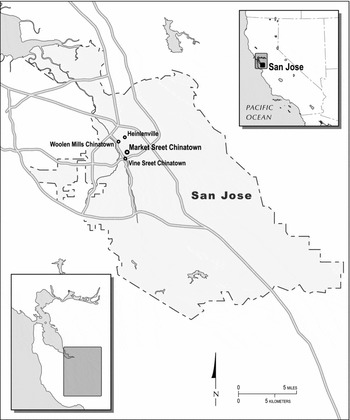
San Jose, California was one of three core population centres for Chinese immigration to the United States from the 1860s onward (the other two being San Francisco and Los Angeles). The Market Street Chinatown was established in 1866 in downtown San Jose on ‘Block 1’, an area delimited by San Fernando, San Antonio, Market and South First Streets (figures 1 and 2). Prior to Chinese residency, Block 1 had been part of the Spanish colonial/Mexican Pueblo de San José (1777–1848) and the site of several non-Chinese businesses and residences in the 1850s and early 1860s. Block 1 became known as the Market Street Chinatown as Chinese businessmen leased parcels of land for the construction of tenements and stores and other businesses.
Locations of historic Chinatowns in San Jose, California. Developed from Yu (Reference Yu2001, p. xii). Cartography by 360Geographics.

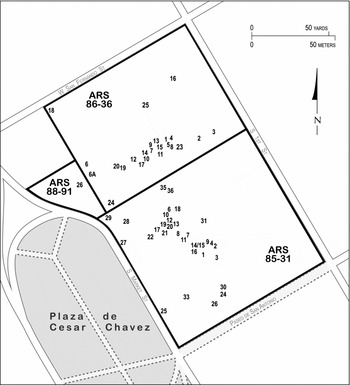
Market Street Chinatown archaeological projects and archaeological features, Block 1, San Jose, California. Adapted from maps A.9 and A.10 in Kane (Reference Kane2011). Cartography by 360Geographics.

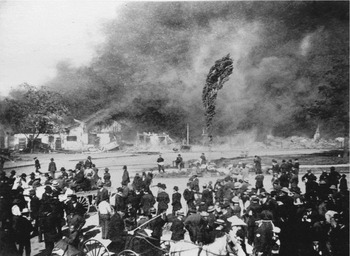
At its peak, the Market Street Chinatown housed more than a thousand Chinese, predominantly adult male labourers alongside a smaller number of merchant and professional families. It was also the cultural and economic headquarters for more than two thousand additional Chinese, also predominantly adult men, who worked in agriculture, industry, mining and domestic service in the surrounding area. The community was a thriving centre of Chinese American culture and a fragile refuge from anti-Chinese racism and violence. In February 1886, an Anti-Chinese Convention was held in San Jose. The next year, in March 1887, the mayor and city council issued an order declaring that the Chinatown was a public nuisance. On 4 May 1887, during a period of heightened hostility against San Jose's Chinese residents, a fire that was very likely arson destroyed the Market Street Chinatown (figure 3).
Fire destroys the Market Street Chinatown on 4 May 1887. Courtesy History San José.

Despite open pressure to leave the region, the former residents of the Market Street Chinatown established two new communities in San Jose: the Heinlenville Chinatown and the Woolen Mills Chinatown (Yu Reference Yu2001). The burned-out areas of Block 1 were levelled and cleared to make way for new construction. From the late 19th century to the mid-20th, Block 1 was the site of a variety of small businesses. In 1968, the remaining buildings on Block 1 were razed and converted into a parking lot (Laffey Reference Laffey1994).
Redevelopment, community protest, and archaeological excavation
The archaeological site of the Market Street Chinatown began to be investigated in the early 1980s as part of environmental studies conducted in preparation for a vast redevelopment of downtown San Jose. The Redevelopment Agency of San Jose contracted with Theodoratus Cultural Research, Inc., to conduct two phases of archaeological testing on Block 1 in 1981, focused on the Spanish colonial/Mexican Pueblo occupation (Theodoratus et al. Reference Theodoratus, Johnson, Trimbur, Paul-Dawson and Hersted1981). As of this writing in fall 2011, we have been unable to relocate the collection generated by the 1981 excavations, except for a small box of ceramic sherds that had been stored in a subcontractor's garage.
No further archaeological studies were conducted until redevelopment construction was well under way in 1985. Local Chinese Americans, including descendants of residents of the Market Street Chinatown, were alarmed at the destruction of the archaeological site, and contacted city officials and local archaeologists to insist that the site be studied prior to its destruction (Lum Reference Lum2007). Eventually, the Redevelopment Agency contracted with a private-sector CRM firm, Archaeological Resource Services (ARS), to conduct salvage excavations. Archaeological excavations in the south half of Block 1 began on 22 July 1985, and concluded on 22 November 1985 (ARS Project 85-31). Excavations resumed on the north half of Block 1 on 11 December 1986, and continued to 1 April 1987 (ARS Project 86-36). Between 31 August and 12 September 1988, ARS excavated a single feature discovered during outdoor lighting installation (ARS Project 88-91).
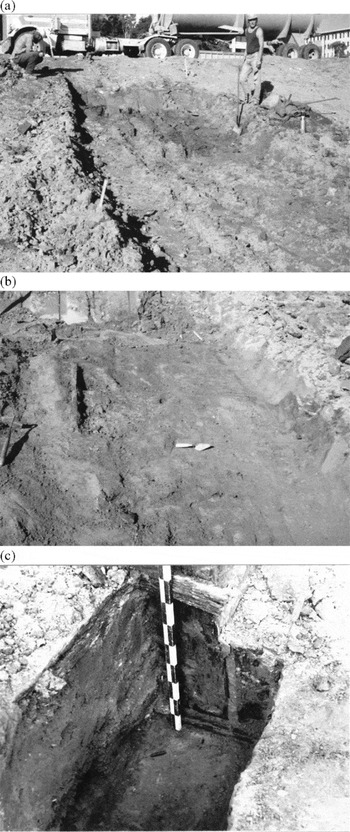
The 1985–88 ARS excavations were typical of ‘salvage archaeology’ projects in that archaeological excavation occurred during construction activity. As the construction company excavated for the foundations and pilings of the buildings, archaeologists from ARS monitored the soil exposed by heavy equipment (figure 4). When construction equipment uncovered cultural material, the archaeologists flagged the location and designated a feature number. According to ARS, archaeological excavation occurred primarily in the late afternoons after construction activity ceased. Typically, the entire feature – soil and artefacts together – was excavated, bagged and removed to ARS's lab for screening and analysis. ARS describes this procedure as the ‘rapid recovery method’ (Roop and Flynn Reference Roop and Flynn1993).
ARS archaeologists assessing discovery of a feature during construction at the Market Street Chinatown site, Block 1, San Jose, California. A: darker soil near shovel indicates the presence of a pit feature. B: the pit feature boundaries are identified by scraping loose dirt from the feature's upper surface. C: the pit feature after its contents have been removed through hand-shovelling. Project Archive, Market Street Chinatown Archaeology Project.

Some post-excavation processing of the Market Street Chinatown collection occurred in 1987–89 at ARS's headquarters. The initial processing included wet screening, artefact sorting and preparation of an inventory. ARS catalogued most ceramic, glass and metal artefacts, while most animal bone, shell, botanicals, soil samples and constituent samples were bagged and boxed without cataloguing. ARS also performed specific analyses on some ceramics, coins and glass. In 1991, ARS petitioned the City of San Jose for funding to continue the analyses, but funding was denied. During 1991–92, most of the collection was removed to a former industrial warehouse in San Jose under the direction of the Redevelopment Agency. In the early 1990s, two cultural-resource management firms – Archaeological Resource Management and Basin Research Associates – were hired by the City of San Jose to inventory the archaeological collections generated by the downtown redevelopment. These projects were important in maintaining rough inventory of the collection, but they were not sufficiently detailed to support curation.
The Market Street Chinatown collection's history is emblematic of the current curation crisis. Like many other orphaned collections, it was generated through hastily planned compliance-based excavations lacking a formal research design. The initial contract between the permitting agency and the private-sector archaeology firm grossly underestimated the costs of analysis and reporting. Because there were no plans for curation, the collection was placed in indefinite storage in a facility lacking even rudimentary environmental controls or security.
Rediscovery of the Market Street Chinatown collection
Two events led to the rediscovery of the Market Street Chinatown collection. First, in 1998, a local community non-profit, the San Jose Historical Association, was reorganized into a professional independent museum, History San José. That same year, in an agreement with the City of San Jose, History San José assumed responsibility for daily management of the city's archaeological collections, including those generated through the downtown redevelopment projects. Second, in 1999, the California Department of Transportation (CalTrans) contracted with Past Forward, Inc., to conduct research and excavation of a related Overseas Chinese site, the Woolen Mills Chinatown, as part of environmental mitigation for a freeway expansion project. CalTrans archaeologist Mark Hylkema and Past Forward principal investigator Rebecca Allen began to discuss the Market Street Chinatown collection as a potential source of comparative data for analysis of the Woolen Mills Chinatown site. In 2001, Allen and Alida Bray, director of collections and exhibitions (now president and CEO) of History San José, located the Market Street Chinatown materials at the warehouse.
In 2002, Allen and Bray approached me to ask if Stanford University would consider ‘adopting’ the collection for use in teaching and research. After several meetings and discussions with the educational non-profit Chinese Historical and Cultural Project, we formed the Market Street Chinatown Archaeology Project, a community-based research and education collaboration among Stanford University, Past Forward, Inc., History San José, and the Chinese Historical and Cultural Project (Voss Reference Voss2004).
Initially, Allen and I assumed that the collection had lost much of its archaeological association and would primarily be useful for teaching and for developing a ‘type collection’ of Overseas Chinese artefacts for educational and display purposes. Our perspective quickly changed as we met representatives from the Chinese Historical and Cultural Project, who suggested a range of research topics and educational projects that departed from conventional archaeological inquiries (Voss Reference Voss2005, 434–35). As we started to inventory the collection with these topics in mind, we began to explore these new approaches. Cataloging the Market Street Collection is an adventure: the tightly packed boxes are full of assorted artefacts, samples, residues and notes, all in a wide range of conditions. In the midst of the chaos, however, we found that most catalogued artefacts had been marked directly with the project number and the feature number. Some uncatalogued materials were also marked with the project number and feature number. With these markings, artefacts could be regrouped according to their original feature. In all, 63 original features were identified.
We also began to assemble as much documentation on the collection as we could find. Archaeological Resource Services allowed us to copy any files that remained in their offices. More sources were discovered in the municipal records held by History San José, and some archaeologists who had participated in the excavation and laboratory work in the 1980s and 1990s shared other materials from their personal files. In the end, approximately nine linear feet of project documents were assembled, a set of materials now collectively referred to as the Project Archive.
In the second year of the project, student researchers began to retrieve, index and organize documents associated with the collection and began the process of reconnecting specific features with their historical context (Michaels Reference Michaels and Voss2003; Camp et al. Reference Camp, Clevenger, Voss and Williams2004). Clevenger (Reference Clevenger2004) undertook the first substantive attempt to reconstruct the archaeological context of the collection. She focused on Feature 85-31/20, a wood-lined pit measuring 2.6 by 1.8 metres with historic cultural deposits extending about 0.9 metre below the modern asphalt and gravel parking lot surface. To evaluate the impact of rapid recovery excavation and ‘orphaning’ on the collection, Clevenger compared the Feature 85-31/20 assemblage with three archaeological collections generated through controlled excavation of Overseas Chinese communities: Woolen Mills (Allen et al. Reference Allen, Baxter, Medin, Costello, Yu and Cleland2002), Los Angeles (Greenwood Reference Greenwood1996) and Riverside (Great Basin Foundation for Anthropological Research 1987). Clevenger found that the Feature 85-31/20 assemblage
demonstrates patterns of material culture and other archaeological remains that are very similar to other Chinese sites . . . Although this seems like a relatively unexciting conclusion, it allows us to make some important inferences about the impact of the excavation and earlier processing on artefact recovery: namely that recovery practices, despite the problems that plagued excavation and processing, did not greatly alter or skew the general profile of the assemblage (Clevenger Reference Clevenger2004, 72–75).
Additionally, through analysis of documents in the Project Archive, Clevenger was able to reconstruct a basic stratigraphic sequence for the feature that allowed contextual analysis of most associated artefacts (Clevenger Reference Clevenger2004, 78).
Building on Clevenger's approach, in 2010–11 we undertook a concentrated research initiative to reconstruct the historical and archaeological context of the Market Street Chinatown collection. Stanford research assistant Megan Kane spearheaded this phase of research. As a first step, we scanned and indexed the documentation associated with the collection into seven categories: field records, laboratory records, project reports, project records, maps and images, historic references and Stanford project records. Next, Kane gathered data from these documents to produce a ‘feature summary’ for each of the 63 archaeological features represented in the collection. Each feature summary lists the physical attributes of the feature, the dates and sequence of its excavation, and its possible relation to historic occupations in Block 1. The methods used for this reconstruction, and the findings, are presented in a technical report (Kane Reference Kane2011) and article (Voss and Kane, in press). Kane's contextual research allows us to begin systematically evaluating the archaeological integrity of the collection as well as the potential historic and interpretive significance of particular artefacts.
The contextual research conducted by Clevenger, Kane and other project members has measurably improved the research potential of the Market Street Chinatown archaeological collection, but it has also revealed frustrating limitations. For example, while most of the archive analysis was straightforward, the photographic images associated with the collection pose greater difficulty: very few images are captioned or numbered in a manner that would indicate what archaeological feature they represent. The inability to match photos to features, and by extension to artefacts, is frustrating on both empirical and ontological levels. Such images might reveal contextual information not recorded in written field notes or sketches, and the inability to ‘see’ the original depositional conditions of an artefact is a constant and irritating reminder of the loss of information caused by the rupture between excavation and curation for this collection. Perhaps more seriously, the contextual research has revealed more serious biases introduced by field procedures. While subsurface features were readily detected and recovered during construction activity, surface scatters, yard debris, sheet middens and architectural remnants were not. Additionally, construction activity destroyed the uppermost extent of all deposits prior to detection and excavation. While in some cases only a few centimetres were lost, for other features more than half was destroyed by heavy construction equipment before detection. In addition to the direct loss of feature contents, this pattern means that the stratigraphic relationships between features were destroyed before discovery and excavation. Consequently, the temporal relationship between features can only be approximated through comparative analysis of chronologically sensitive artefacts.
In addition to the frustrations related to the lack of proper curatorial care of the collection following its excavation, a second set of frustrations circulates around the lack of institutional support for curation and research on orphaned collections. Most grant programmes for archaeological research explicitly exclude the costs of cataloguing and collections management for existing collections. As a result, most of the collections management activity on the Market Street Chinatown Archaeology Project has been conducted by students as part of coursework activities, internships or volunteer roles. Internal university funding has provided basic supplies and, at times, stipends for more advanced student cataloguers. Despite this internal support and student enthusiasm, the pace of progress is at times painfully slow: as of this writing, almost ten years into the project, only 27 per cent, by volume, of the collection has been cataloged.
Curation processes as research activities
Paradoxically, it is precisely this slow, iterative and collaborative process of contextual study, collections inventory and cataloguing that has given rise to some of the most interesting research on the collection to date. Rather than viewing the laborious process of curating orphaned collections as precursors to research, our experience in the Market Street Chinatown Archaeology Project suggests that it be understood as research activity in and of itself. Nearly all research on the collection to date has been initiated either in response to curation needs or through interests that arose during the process of curation. As a group, these research projects have been dominated by inductive and hermeneutic methodologies. Cataloguers’ fascination with and curiosity about the artefacts and documents they encounter has been incredibly productive, and suggests that the sensual experience of handling and caring for artefacts and archival materials may be an entry point for self-reflexive curation methodologies (cf. Weismantel Reference Weismantel, Voss and Casella2011). This research can be generally categorized into four groups: artefact-inspired, context-inspired, catalogue-inspired and event-inspired research.
Artefact-inspired research: fascination with the objects of everyday life
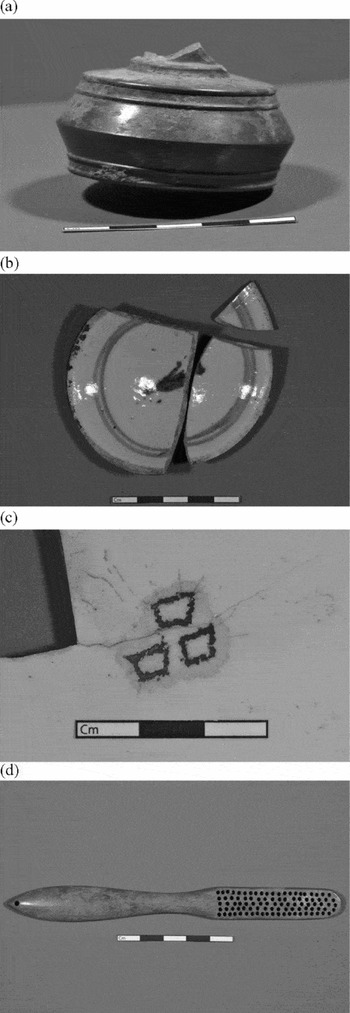
As noted above, cataloguing orphaned and unreported collections is usually laborious, underfunded and slow; the Market Street Chinatown collection has been no exception. On the positive side, the process of cataloguing itself has generated a suite of artefact-specific research studies, most of them initiated by student cataloguers. Often students became fascinated with a particular artefact or set of artefacts that they encountered during the cataloguing process: porcelain tableware, medicine bottles, opium pipe tops, gaming tokens, drinking cups, stoneware storage vessels, toothbrushes, hair tonic bottles, ceramic dolls and candlesticks (figure 5). Although there is considerable variation in the approaches used by each student, as a group these research projects can largely be categorized as methodologically inductive (e.g. Salmon Reference Salmon1976) or hermeneutic (e.g. Shanks Reference Shanks1993). From the starting point of their curiosity about a given object or object type, student researchers then conducted background research, mined the Project Archive for contextual data, and developed intra- and inter-site comparative studies that have built increasingly rich interpretations of the artefacts.
Examples of artefacts from students’ research projects. A: opium pipe bowl fragment. B: oil lamp basin. C: whiteware plate with peck-mark. D: toothbrush handle. Project Archive, Market Street Chinatown Archaeology Project.

For example, Williams (Reference Williams2004) studied the distribution of ceramic opium pipe tops within the Market Street Chinatown collection. His research showed that discarded opium paraphernalia was not concentrated in any one feature, but rather was distributed throughout the site, and that opium pipe tops were recovered primarily in contexts dominated by domestic refuse. Williams interpreted this spatial pattern as evidence that opium consumption in the Market Street Chinatown was a routine activity integrated into domestic life; his findings refute contemporary newspaper accounts of seedy ‘opium dens’ that were centres of vice and corruption.
Similarly, Kane (Reference Kane2007) embarked on an investigation of fire rituals in the Market Street Chinatown. Fire rituals, in which incense, paper and offerings were burned to provide for the needs of gods, ghosts and ancestors, are central to the practice of Chinese folk religion. Kane identified a standard assemblage of artefacts associated with fire rituals – incense burners, incense burner stands, dish-style oil lamps and lamp stands. Through spatial analysis, she found that the artefacts related to fire rituals were found in features throughout the site, usually in association with domestic refuse, rather than being concentrated in features near the community temple. She concluded that these artefacts represent small-scale religious rituals being conducted in tenements and businesses. Both Williams's and Kane's research projects dispel stereotypes and expand future researchers’ capabilities for understanding the everyday within an Overseas Chinese community.
Michaels's (Reference Michaels2005) research on 15 peck-marked ceramic vessels examined the transformation of Chinese traditions through their practice in San Jose. Peck-marks are Chinese characters chipped by hand onto mass-produced vessels. In many regions of China today, it is a common practice to peck-mark plates and bowls with symbols of good luck. In contrast, Michaels found that of the 12 Market Street Chinatown peck-marks that could be translated, only five are wishes or blessings. These were recovered from features associated with commercial areas. Seven peck-marks represent individual names, family names or nicknames, a practice that Michaels's sources indicate was not common in China itself. These name-marked vessels were primarily recovered from features associated with tenements and were absent from the features associated with stores. Michaels interprets this modification of traditional peck-marking as a ‘hybridized art form’ related to the stresses of daily life in the crowded living quarters in tenement houses (Michaels Reference Michaels2005).
Other artefact-inspired research focuses on the relationship between Chinese and non-Chinese residents of San Jose. Noting that racist rhetoric of the time often characterized Chinese immigrants as unhygienic, Douglas (Reference Douglas2007) was puzzled by the more than 80 toothbrushes in the Market Street Chinatown collection. Through historical research, she found that dental historians attribute the emergence of modern oral health care to Chinese health practitioners, who created the first toothbrush in 1498. Preventative dental care was widespread in China and among Overseas Chinese populations throughout the 19th century, long before such practices were widely adopted by Euro-Americans in the 1930s and 1940s. Through morphological analysis, Douglas identified three distinct toothbrush types. Spatial analysis revealed clustering of toothbrushes in features associated with commercial activity, suggesting that toothbrushing may have been more heavily practised among merchants than among workers living in tenement housing. Douglas's research unexpectedly suggests that both race and class shaped the politics of dental hygiene in 19th-century San Jose.
All of these projects, and others like them, have contributed to developing our understanding of the rich texture of social life at the Market Street Chinatown. Notably, these artefact-inspired studies are quite different to many of the large-scale quantitative analyses of Overseas Chinese assemblages, which have tended to focus on statistical analyses of artefact ratios as proxies of economic status and acculturation (Voss Reference Voss2005). Additionally, the spatial analysis afforded by the collection has generated interesting findings. Opium smoking and religious observances, stereotypically associated in contemporary literature with centralized ‘dens’ and temples, are shown to be practised in both public and personal spaces throughout the historic community. Yet analyses of oral hygiene and peck-marked vessels reveal unexpected social differentiation, particularly indicating differences in bodily practices between merchants and tenement residents. The hermeneutic and inductive methodologies used by student cataloguers foster an emphasis on the social context of artefact use. Consequently, these and other artefact-inspired studies focused on the challenges that Chinese immigrants faced in navigating crowded living conditions, separation from home, racial stereotypes and intra-ethnic class hierarchies.
Context-inspired research: waste disposal as social practice
My own initial research on the Market Street Chinatown collection focused on developing models for interpreting patterns of artefact disposal in the historic settlement. It was apparent from the beginning of our work on the collection that the distribution and contents of features were not typical of other late 19th-century sites in the region (Voss Reference Voss2008). Kane's (Reference Kane2011) recent analysis of materials in the Project Archive provides the data necessary to complete this analysis of the structure of archaeological deposits on Block 1. It is now clear that the Market Street Chinatown site exhibited unusual characteristics on three levels: site-wide feature clustering, regularity in feature attributes and uneven distribution of material types.
Each of these characteristics points toward the importance of waste disposal as a social practice for the historic residents of the Market Street Chinatown. Archaeologists have long differentiated between artefacts that were recovered from where they were dropped or abandoned during use (primary context) and those that were intentionally disposed of in another location (secondary context) (Schiffer Reference Schiffer1972). The vast majority of artefacts in the Market Street Chinatown collection were recovered from secondary contexts, primarily pits and dump sites where trash was systematically disposed of.
Trash deposits excavated by ARS in 1985–88 are spatially grouped into two distinct clusters, both located in the interior of Block 1 (figure 2). One cluster in the south-central area of Block 1 consists of 26 features placed in and around a zone of tightly packed businesses. The second cluster, containing 16 features, is located in the north-central area of Block 1, in a somewhat open area surrounded by the Chinese theatre, a temple, several stores and tenements and an outdoor meat-roasting oven. In most other areas of Block 1, there are few or no features recorded. Initially, we assumed that this clustering was an effect of the conditions of the 1985–88 excavations. With archaeologists frantically monitoring construction activities, and most earthmoving being done by heavy construction equipment, it seemed likely that some features would be missed altogether and that archaeologists would concentrate their efforts on those areas of Block 1 that were more accessible and less disrupted by construction. This may have been the case in 1985, when the area containing the south-central cluster of features was excavated. But our review of records in the Project Archive shows that by 1986 archaeological monitoring was conducted more systematically. At least the north-central concentration (and likely the south-central one as well) accurately reflects the distribution of waste disposal features across the site.
This is quite different from the typical pattern of residential and commercial waste disposal in California's towns and cities in the mid- and late 19th century. Usually, residences and businesses would dispose of refuse in the rear of the lot, either in formally excavated trash pits and privy pits or in casual dumping areas. This pattern was clearly not followed at the Market Street Chinatown. Clusters of trash disposal pits were placed in high-traffic areas in the centre of Block 1, near public and commercial buildings, and residents and business owners brought their trash to these centrally located pits for disposal.
The attributes of the archaeological features also indicate a systematic, and perhaps centralized, approach to waste management within Market Street Chinatown. The majority (52 of 63) of the features are formal rectangular pits. Typically, the short axis of the pit measures one to three metres in length, with the long axis measuring 1.25–1.5 times the length of the short axis (Kane Reference Kane2011, C-2–C-4). Nineteen of the trash pits, mostly the larger ones, are lined with wood planks. Wood may have been added to the pits to increase their stability; perhaps the wood lining facilitated periodic removal of the pits’ contents to allow continued use of the pit. This, combined with the concentrated placement of trash pits in two interior areas of the block, may point toward centralized coordination of refuse disposal within the Market Street Chinatown, long before sanitary trash removal was organized for the rest of San Jose. Although we have not found any historic documentation to support this theory, there is corroborating archaeological evidence from excavation of the Woolen Mills Chinatown (Allen et al. Reference Allen, Baxter, Medin, Costello, Yu and Cleland2002), one of the settlements founded in San Jose by Market Street residents after their community was burned in 1887. At Woolen Mills, very little refuse was found in and around residences and businesses. Instead, trash was removed to a central dumpsite, where archaeological evidence showed that odours and vermin were managed by covering deposited refuse with clean soil. Evidence from both sites suggests that while late 19th-century Euro-American residents and businesses in San Jose were disposing of trash individually in the rear of house and business lots, Chinatown residents were systematically collecting refuse in centralized locations.
Preliminary cataloguing data also suggest that residents of the Market Street Chinatown were sorting their refuse before disposal. The contents of the trash pits vary considerably. In the southern half of the Market Street Chinatown site (ARS Project 85-31), only five features (out of 37) account for over 70 per cent, by weight, of the glass assemblage (Pezzarossi Reference Pezzarossi and Voss2011). Feature 85-31/3 alone, an unlined trash pit, produced 31.52 per cent, by weight, of the glass. This feature, located on the edge of the southern cluster of trash pit features, was likely associated with pre-1875 activity on Block 1, since its location was covered after that date by a livery stable. The remaining four features with relatively high glass frequencies were three wood-lined trash pits (85-31/2, 85-31/18 and 85-31/24) and a drainage ditch (85-31/27).
Faunal bone is also unevenly distributed across the features. Again, only five features – Feature 85-31/3, the unlined trash pit discussed above, and four wood-lined trash pits (85-31/13, 85-31/18, 85-31/24 and 86-36/5) – account for the majority of the faunal bone assemblage by weight (Myers Reference Myers and Voss2011). With the exception of Feature 86-36/5, which was sited next to an outdoor roasting oven, there is little indication of why these particular features should have such high frequencies of faunal bone while similar nearby trash pits contained very little bone.
Since Mary Douglas's (Reference Douglas1966) ethnographic observation that dirt is ‘matter out of place’, ethnoarchaeologists have shown that waste disposal practices are closely linked to cultural values and beliefs (Moore Reference Moore1986; Hodder Reference Hodder and Kent1987; Staski and Sutro Reference Staski and Sutro1991). These preliminary data suggest that waste disposal in the Market Street Chinatown was highly structured and perhaps centrally coordinated. For reasons presently unknown, it also appears that refuse was segregated by material type prior to disposition. These initial observations about refuse disposal practices indicate fruitful directions for further research into the practical and symbolic lives of the residents of the Market Street Chinatown.
Catalogue-inspired research: the archaeology of ethnicity
The original excavators of the Market Street Chinatown assigned an ethnic affiliation to most archaeological features (Roop Reference Roop1988; Roop and Flynn Reference Roop and Flynn1993).They designated 31 of the 65 features as ‘Chinese’, 11 as ‘American’ or ‘Euro-American’ and three as ‘Spanish’, a designation that likely refers to the Spanish colonial/Mexican period, but could also refer to post-1848 Hispanic residences or businesses. It appears that these ethnic designations were assigned on the basis of artefacts observed during excavation, and were carried through later post-field processing.
The ethnic affiliations ascribed to individual features have raised important issues during our research on the Market Street Chinatown collection. At first glance, the designation of non-Chinese features in the collection drew our attention to both diachronic and synchronic diversity within Block 1. As noted earlier, Block 1 was occupied continuously from the founding of the Spanish colonial Pueblo de San José in 1777 until the block was cleared for a parking lot in 1968. Although Block 1 came to be known as the Market Street Chinatown during the 1860s–1880s, the block also included Euro-American and Latino hotels, tenements, stores and a livery stable, most located on the west side of the block fronting First Street. ARS's designation of ‘Euro-American’ features in the collection hinted at the possibility that the Market Street Chinatown collection contained archaeological materials from both Chinese and non-Chinese occupants of Block 1.
The cataloguing process has raised questions about the validity of ARS's ethnic designations. Seven of the 11 ‘Euro-American’ or ‘American’ features, and all three of the ‘Spanish’ features, contain significant quantities of Asian-manufactured artefacts. It was common practice for non-Chinese residents of California during this time to purchase and use porcelain dishes and other Asian products. However, many of the artefacts found in these ‘Euro-American’ and ‘Spanish’ features are objects that are generally thought to have been used almost exclusively by Chinese immigrants: opium pipe tops and lamps, glass vials associated with traditional Chinese medicine, incense burners and other altar furnishings used in Chinese folk religion, gaming pieces and stoneware storage vessels for preserved foods such as pickled ginger and soy sauce. We have also found that most of the features designated by ARS as ‘Chinese’ contain significant quantities of European and American manufactured goods: glass bottles originally containing a variety of beverages and medicines, glass tableware vessels, whiteware dishes, eyeglasses, porcelain dolls and ceramic marbles.
Based on current catalog data and visual inspection of uncatalogued material, it appears that most features from the Market Street Chinatown contain a rich mixture of materials produced in China, the United States and Europe, with considerable variation in the relative proportions from feature to feature. This raises pressing questions about how archaeologists interpret the connection between material culture and ethnicity. The Market Street Chinatown collection provides an opportunity to interrogate this methodological issue.
A variety of hypothetical scenarios, some more plausible than others, could explain the composition of the Market Street Chinatown features. For example, it is possible that some or many Chinese occupants used primarily Asian materials in their daily lives, and non-Chinese used primarily European- and American-produced goods, but that members of all ethnic groups disposed of their refuse in shared trash pits, generating ‘mixed’ features. Alternatively, it may be that Chinese residents used substantial quantities of European- and American-produced goods alongside goods acquired from Asia. There is some evidence for this scenario in Michaels's (Reference Michaels2005) analysis of peck-marked vessels, described above, which identified several British whiteware plates with Chinese peck-marks (figure 5). It may also be that several of the features do actually represent non-Chinese occupants of Block 1, and that non-Chinese households and businesses used or collected traditional Chinese material culture.
None of these hypotheses are mutually exclusive, nor are they exhaustive of the possible explanations for the patterns that are beginning to be revealed through cataloguing and contextual research. What is clear is that the excavators’ recorded observations do not match the artefact catalogue being developed today. Most importantly, this finding challenges the facile assumption that the origin or style of an artefact implies the ethnicity of the persons who once used it. Instead, Block 1 emerges as a place in which people, objects, animals, plants and substances interacted in complex and unpredictable patterns.
Event-inspired research: the archaeology of interethnic violence
The catastrophic fire on 4 May 1887 transformed the community of the Market Street Chinatown into an archaeological site (Figure 3). The fire was widely acknowledged as arson in local newspapers (Yu Reference Yu2001). All of the Chinese-occupied structures on Block 1 except the opera theatre were destroyed, but the fire department saved most non-Chinese businesses and residences (Laffey Reference Laffey1994).
The racial disparities in the fire's impact occurred in the context of years of harassment of Chinese immigrants by some members of the surrounding community and the City Council of San Jose. Among many ordinances passed between 1870 and 1887 targeting the residents of the Market Street Chinatown, Chinese structures on Block 1 were excluded from the San Jose fire district, meaning that the municipal fire department was not responsible for fire suppression in the Chinese neighbourhood. Chinese residents organized their own fire brigade for self-protection; however, on the night of the 4 May 1887 fire, the water tank located in the centre of the Market Street Chinatown was inexplicably almost empty. This may have been bad luck, or it may be that the water tank had been surreptitiously drained to prevent the Chinese fire company from suppressing the blaze (Yu Reference Yu2001, 29).
The next day, the local newspaper, the San Jose Herald, crowed, ‘Chinatown is dead. It is dead forever’ (Yu Reference Yu2001, 30). After the fire, Chinese residents were blocked from reconstructing their homes and businesses, although Euro-American businesses were allowed to rebuild (Laffey Reference Laffey1994). It may never be possible to determine conclusively the origins of the fire, or the cause of the near-empty water tank. But the forced displacement of Block 1's Chinese residents was clearly a racially motivated act that was part of a regional wave of anti-Chinese violence and displacement that swept through the US West in the 1880s (Phaelzer Reference Phaelzer2007).
The archaeological record of the Market Street Chinatown reflects the total demolition of Chinese residences and businesses after the 1887 fire. All but seven of the 63 features discovered during the 1985–88 excavations are trash pits, cisterns, cellars and ditches (Kane Reference Kane2011, B-2–B-4). These subterranean deposits were nearly all that remained after the burned structures and belongings of Chinese residents and business owners were cleared away.
Contextual research in the Project Archive has revealed that some of these subterranean features show possible evidence of the 1887 fire. Feature 86-36/2 is a large (15 m × 15 m) pit containing ‘bottle fragments mixed with brick and wood in a clay loam matrix. The feature appears to be a demolition backfill with artifacts scattered throughout the surface area’ (Roop Reference Roop1988, 18). ARS excavators recorded ‘burn layers’ or other indications of fire debris in the upper extent of 12 other trash pit features. These burn layers appear to have typically included burned soil and fragments of burned wood and bricks intermixed with ash, and heat-affected ceramics, glass and animal bone. It is possible that some burned materials might have been deposited as refuse from cooking or heating stoves, or as the result of smaller non-catastrophic fires that occurred at the Market Street Chinatown before 1887. Chronologically diagnostic artefacts, if present, might be helpful in evaluating the association of these burn layers with the 1887 fire. But the widespread presence of burned debris and heat-affected soil in features throughout Block 1 is consistent with the magnitude of the 1887 fire. Materials from Feature 85-31/3 and the burn layers found throughout the site have strong interpretive value as tangible, physical reminders of the violence of the anti-Chinese movement.
Conclusion
Because research on the Market Street Chinatown collection cannot proceed in a conventional manner, the studies conducted to date have taken a different path from most other research on Overseas Chinese settlements, or, for that matter, other mid- and late 19th-century historical sites. Research on the collection is marked by a prominence of inductive and hermeneutic methodologies. Undoubtedly, as more of the collection is catalogued, deductive research methodologies and larger-scale quantitative analyses will be more feasible. For example, from the beginning of the Market Street Chinatown Archaeology Project, cataloguing data has been collected in a manner that will facilitate direct comparison with data from the Woolen Mills Chinatown site and other Overseas Chinese sites. Still, the research that has arisen through cataloguers’ fascination with and curiosity about the artefacts they encounter has been incredibly productive, and suggests that the sensual experience of handling and caring for artefacts may be an entry point for self-reflexive curation methodologies.
Additionally, the process of re-establishing archaeological context has led to heightened attention to site-formation processes, which in turn has led to new insights on the centralized coordination and symbolic aspects of refuse disposal at the Market Street Chinatown. Similarly, comparison of current catalogue data with the excavators’ original interpretations of archaeological features has given rise to methodological questions about the relationship between artefacts and ethnic attribution. Finally, buried in the excavators’ field notes we have found indications of material traces of the 1887 fire that enabled the eviction of Chinese residents from Block 1. Artefacts from demolition pits and burn layers may provide forensic clues about the 1887 fire, but, perhaps most importantly, they provide a tangible touchstone for the commemoration of the history of anti-Chinese violence in the 19th-century American West.
These examples of current research on the Market Street Chinatown collection demonstrate that an orphaned collection once thought to have lost its research value can indeed be a source of new archaeological investigations. The collaborative organization of the Market Street Chinatown Archaeology Project, which fosters interaction among academic researchers, private-sector archaeologists, museum professionals and community-heritage practitioners, has created a dialogue that challenges disciplinary assumptions. We have all come to see that the process of caring for the Market Street Chinatown collection is as valuable as the outcome of that process.
I began this article by arguing that the curation crisis in archaeology will not be resolved until curation processes are given the same methodological and theoretical attention as excavation. Our research on the Market Street Chinatown presents several entry points into the opportunities that the curation process affords for new research perspectives on the material record of the past. Similar observations about the encounters between archaeological researchers and archaeological objects are emerging in relation to other issues, such as the historical and colonialist history of collecting practices (Byrne et al. Reference Byrne, Clarke, Harrison and Torrence2011) and the archaeological epistemology of the non-visual senses (Weismantel Reference Weismantel, Voss and Casella2011).
Rather than being seen as costly and time-consuming logistical problems, curation processes can be reconceptualized as research endeavours in and of themselves. This is not to suggest that curation in and of itself is not a valuable endeavour: on the contrary, I feel quite strongly that the problem is that curation is underfunded and that the intellectual projects that curation involves are underrecognized. Instead, it seems incumbent upon archaeologists working in both academia and cultural-resource management to re-examine the structural relations that have traditionally partitioned ‘research’ from ‘curation’ and prioritized funding for excavation rather than for care of existing collections. As with Hodder's (Reference Hodder2003) re-examination of archaeological interpretation at the trowel's edge, attention to the process of curation highlights the materiality of archaeology – the physical and sensory encounters between people and objects – as a shared foundation of both excavation- and collections-based research in archaeology.
Acknowledgements
Research presented in this article was conducted as part of the Market Street Chinatown Archaeology Project (http://marketstreet.stanford.edu), a collaboration among researchers and educators at Stanford University, History San José, the Chinese Historical and Cultural Project, and Past Forward, Inc. Funds for the Market Street Chinatown Archaeology Project have been generously provided by Stanford University, History San José and the San Jose Redevelopment Agency in cooperation with the Chinese Historical and Cultural Project. I am grateful to the members of these partner organizations and to the many archaeologists and historians who have shared their expertise throughout the project. Rebecca Allen, Alida Bray, Megan Kane and Suzanne Fox deserve special thanks for reviewing earlier manuscript drafts; Ian Straughn, the Archaeological dialogues editorial board and two anonymous reviewers provided insightful comments that greatly strengthened this article. The opinions expressed in this article and any errors of fact or reasoning are wholly mine and do not reflect the policy or practice of any of the project organizations or project funders.