Introduction
The Penang Swimming Club has rescinded the exclusion rule, and thus decided to re-admit Germans—a sensible decision which it is hoped other clubs will copy. It is not the British way to bear grudge indefinitely, or to visit on individual petty punishment, additional to that—usually severe enough—inflicted on nations who happen to have been defeated in war. Surely small British communities in a country like this do not arrogate to themselves the right to take up an attitude different from that of the Imperial Government.Footnote 1
Long after the World War I, the Germans faced an extremely hostile environment in colonial Malaya.Footnote 2 The Anglo–German rivalry did not dissipate with the defeat of the Germans in this war, which had included conflicts in the Asia–Pacific.Footnote 3 Indeed, the Germans had to relinquish their territories and colonies in East Africa and Papua New Guinea (as it is now known) to the British. They also lost much of their economic and industrial potency under the austere terms of the Versailles Treaty. However, despite suffering from the harsh consequences of the war, German business interests remained intact. The reversal of proprietorship and compensation for the losses of overseas businesses also mitigated the severity of the situation. Nonetheless, the conditions under which German businesses had to operate in British-dominated areas were permanently transformed. Additionally, despite the longevity of their presence in Malaya, German businesses continued to suffer a loss of prestige because of the chronic and deep-seated suspicions of British colonial administrators.
German merchant firms had prospered in Singapore (commonly known as the St. Thomas of East India) since 1841.Footnote 4 These merchant firms actively participated in the import–export business between Asia and Europe.Footnote 5 German products became popular in Malay; consequently, in 1887, many such products were being labeled “Made in Germany.” By the late 1890s, German businesses represented a formidable form of competition to the British. Like their British counterparts, German merchant firms began to expand into shipping and insurance. In 1890, the year of Behn Meyer’s jubilee celebration, numerous “competing Englishmen” in Singapore and Britain complained about the rapid growth of trade between Singapore and Hamburg.Footnote 6 However, a sense of rivalry among merchants was familiar, and these complaints were dismissed because of Singapore’s “fair trade” practices.Footnote 7 London also rejected calls for trade protection, choosing instead to preserve Singapore’s status as a free port.Footnote 8 By 1909 German firms had outmaneuvered the British firm.Footnote 9 “If English manufacturers have been beaten in some classes of goods it is either because in these matters Germany had natural advantages (such as cheap labor and inherited aptitude) or else because English manufacturers were for the time being slack themselves in adjusting to the needs of our trade.”Footnote 10
World War I obliterated Germany’s position in Malaya. The Alien Enemies (Winding Up) Ordinance of 1914 officially terminated all German businesses in the country. Initially, this ordinance was loosely applied, as the trade restrictions would also have adversely affected the British economy. Thus, excepting German-based companies, business initially continued “as usual.”Footnote 11 However, the rule against “trading with the enemy” became stricter as the war progressed. Notable measures included requirements for certificates of origin, statutory blacklists, and a ban on trade with neutral countries. It was not long before all German and German-linked businesses were expropriated and subsequently eliminated from competition.Footnote 12
After World War II, German firms experienced similar political and economic repercussions. The returning British government imposed a ten-year ban on German businesses. However, somewhat intriguingly, amid all the political upheaval, Behn Meyer, a German family merchant firm, founded in Singapore in 1840, managed to survive and build a strong economic presence in colonial Malaya and postcolonial Malaysia. Of the German firms in Singapore, it was Behn Meyer that successfully capitalized on its intra-Asian and Asian–European connections. Unlike other German trading firms (e.g., Katz Brothers Ltd.; Huttenbach Brothers; Schiffmann, Heer, & Co.; and Schmidt, Kustermann, & Co.) that disappeared from the markets post-WWII for various reasons, Behn Meyer and a few other German trading houses (e.g., Jebsen & Jessen) survived and succeeded.Footnote 13
This article sheds light on the interactions between European companies and overseas territories. Specifically, it shows how such companies successfully managed political risks, uncertainty, and change. This article also explores contemporary literature on knowledge management (KM) and political risks. As early entrepreneurs in British, French, Dutch, and American colonies in Southeast Asia, the German merchants displayed ingenuity and commercial shrewdness, and consequently, benefited from the opportunities present in those areas. Their business acumen, trading diligence, and regional knowledge helped them to make valuable ties with indigenous traders and their German principals (i.e., manufacturers), which in turn enabled them to expand their businesses.Footnote 14
German firms, such as Behn Meyer, were robust in their staffing policies. This approach ultimately gave them a key competitive advantage. Their inclusive staffing policies took advantage of the local diverse groups in Malaya. For example, they were able to gain access to the knowledge of the local staff members, who were aware of the business and cultural practices in the area. Such knowledge made it easy for the German firms to accommodate these practices, and enabled them to gradually supersede the control the British had over shipping and insurance businesses. During this period, the higher management positions in the business hierarchy were primarily held by Germans, Swiss, or Austrians. This practice was also typical among British firms; however, German businesses were more open to indigenous business cultures than the British businesses in the region. German firms hired locals to serve as trading agents, customs agents, billing agents, and clerks.Footnote 15 Unlike British salesmen, who were socially separated from the locals with their “sit-and-wait attitude” in elegant showrooms and offices, German salesmen worked closely with local staff and traders while working in the field, or servicing the market and maintaining customer relations. Consequently, German businesses became much more popular among the natives. German business adopted a similar approach throughout the Far East, including in China. The high performance of German manufacturers (as compared with British) in China may be attributed to their having a “practical knowledge of the market” that was “indispensable to success.”Footnote 16 German firms also made inroads in Far East trade. By 1875 they had sixty-five firms operating in various sectors.Footnote 17
German–British relations in the Malayan colony fluctuated significantly in this period. Despite the British colonial government’s policy reversals (i.e., from free trade to discriminatory war policies) and the ten-year ban after WWII, Behn Meyer continued its presence in the region. This article argues that two main factors enabled Behn Meyer to successfully manage the political risks and ensure its longevity in the region. First, Behn Meyer had tacit knowledge of the areas in which it operated in both Southeast Asia and Europe. Second, its existing architecture of internal and external relationships was robust, which contributed to its knowledge portfolio.
This article begins by exploring the dynamics of KM as a tool for risk mitigation and recent theories of political risks. It then briefly narrates the early years of the establishment of Behn Meyer, leading up to the onset of WWI, and considers the various challenges the firm faced and its response to these hurdles, most notably in relation to the Alien Enemies (Winding Up) Act of 1914. It also considers the activities and barriers faced by the firm during WWI, the interwar years, and the period from 1941 to 1959. Following this, it analyzes the business strategy Behn Meyer adopted to manage the political risks during the two world wars, its efforts at “reconstruction,” and the roles of the firm’s leading players. Finally, this article draws on central theoretical propositions related to the management of knowledge and political risks, and the effects that such propositions had on the firm.
Knowledge Management as a Tool for Risk Alleviation
KM refers to any set of practices used by an organization to identify, manage, disseminate, and share the knowledge, information, resources, relationships, and networks embodied in individuals or within the organization’s processes.Footnote 18 KM is central to organizational performance,Footnote 19 and to a company’s prosperity and survival over the long term.Footnote 20 Knowledge is not only a valuable asset but also is a source of competitive advantage to organizations.Footnote 21 Knowledge may be explicit or tacit. Tacit knowledge includes knowledge that is not easily transferable, such as intuitions, impressions, and emotional and cultural knowledge.Footnote 22 This research adopted a holistic concept of KM and did not limit it to information or data management. Casson, who views the economy “as an information system,” contends “better information leads to better decisions” and a “better use of resources.”Footnote 23 KM also involves an ability to create and use knowledge effectively. Thus, effective KM requires the systematic transformation of tacit knowledge into organizational knowledge.
Effective KM allows firms to exploit their competitive advantages, which then may generate sustainable and creative innovations that are crucial to longevity. Business theorists and management scholars strongly support strategic KM, arguing that it leads to sustainable competitive advantages, increases profits and efficiency, and reduces costs.Footnote 24 An organizational capability to integrate knowledge, including “understanding[s] of politics, knowledge management and strategy,” by continuously assessing the internal structure and location of decision making can provide firms’ foreign operations with important competitive advantages.Footnote 25 Continuity in the decision-making processes of firms is very important, particularly during times of crisis. Employing a diverse, stable, and loyal staff also lessens potential knowledge losses and sustains business continuity. This management process, known today as “business continuity management,” includes the early detection of potential threats and the implementation of policies to mitigate these threats, allows firms to continue to operate under adverse conditions, and “safeguar[d] the interests of [their] key stakeholders, reputation[s], brand[s] and value-creating activities.”Footnote 26
According to Jones, the specialized knowledge of markets, products, and relationships represented a source of ownership advantage for British merchant firms.Footnote 27 Historical changes in trading firms have been associated with a capability to improve the coordination and flow of information.Footnote 28 Thus, managing knowledge within a solid organizational structure is vital if firms are to sustain their performance. KM was particularly important to trading firms, such as Behn Meyer, which had to respond to state expropriation during the two world wars.
In strategic management studies, traditional theories of political risk—bargaining power approach and the governmental institutions approach—have been criticized for their lack of suitability in understanding “complex and interconnected” sectors, including the trading sector. Both these approaches fail to highlight the importance of cultural and intellectual factors in sustaining firms’ activities in their home and host countries.Footnote 29 Conversely, while the legitimacy-based view (LBV) of political risk argues that firms must build legitimacy to reduce and overcome political risks, it fails to take into account the hostile perceptions of governments toward individuals and enemy firms during wartime. In applying the LBV of political risks to the Hong Kong and Shanghai Banking Corporation (HSBC) experience during World War I, Smith acknowledged the limitations of the LBV.Footnote 30 Further, Stevens and colleagues noted that the LBV failed to consider the effects of cultural dynamism, particularly during wartimes.Footnote 31 Other scholars have noted that the importance of a firm’s national identity may increase significantly during times of war, but may not represent a significant issue during peacetime.Footnote 32
Extensive research has been conducted on how firms counter and mitigate political risk,Footnote 33 and business historians have discussed the various strategies adopted by firms—ranging from building strong managerial structures, to creating local identities, and to support a political coup in a bid to topple “hostile” foreign governments.Footnote 34 Businesses are often wary about abrupt or punctuated changes that are the result of adverse business climates.Footnote 35 Different actors in firms may be fundamental in defining the approaches adopted by firms to cope with political risks.
As the above discussion shows, the existing body of knowledge on risk management has rarely examined the relationship between political risks and KM. This article attempts to show how Behn Meyer survived in a politically hostile environment in colonial Malaya and postcolonial Malaysia by leveraging its sophisticated KM system.
Behn Meyer: The Early Years
Behn Meyer’s beginnings date back to the childhood of the founders, Theodor August Behn Jr. and Valentin Lorenz-Meyer. The pair met at a private boarding school and became lifelong friends. Behn’s apprenticeship at a commercial agency house allowed him to access its German and English correspondence.Footnote 36 Behn selected Singapore—the first free trade port in Southeast Asia and the Far East—because of its strategic location and liberal trade policies.Footnote 37 Lorenz-Meyer soon joined Behn in Singapore, and Behn Meyer was officially inaugurated in 1840. Arnold Otto Meyer, Lorenz-Meyer’s younger brother, joined the firm in 1848. He went on to establish Arnold Otto Meyer Co. (AOM) in Hamburg in 1857, and shortly thereafter opened a branch in England that served as a British agent for Behn Meyer. This new set-up reinforced Behn Meyer’s import–export business, as it granted the company better access to credit and English goods.Footnote 38
Behn Meyer initially traded Asian products (e.g., coconut oil, copra, pepper, as well as camphor, rattan, and rice, and later tin) in the lucrative European market.Footnote 39 However, over time, as demand for European-manufactured goods grew, Behn Meyer began to supply the colonial markets. Unlike those at British firms, the senior members of Behn Meyer were heavily involved in the commercial and public life of Singapore. Behn was a committee member of the Singapore Chamber of Commerce in 1848, 1850, and 1851, and served as municipal commissioner in 1851.Footnote 40 Arnold Meyer founded the Teutonia Club, a German club in Singapore in 1856,41 and his son, Eduard Lorenz-Meyer, was one of the founding members of German Asia-Pacific Business Association (OAV), established in 1900.Footnote 42 Hans Becker, another popular figure, was appointed as a member of the Tanjong Pagar Docks Board and the Singapore Chamber of Commerce. Becker also served as the chairman of Singapore Oil Mills, as well as the German Teutonia Club, and was a member of the British Singapore Club.Footnote 43 The Germans were also quick to embrace and participate in British cultural institutions upon arriving in Singapore. Notably, Schramm commented that a sense of shared heritage made it easier for Germans to socialize with the English than other Europeans, most notably the French. The Meyers were Hamburg Anglophiles.Footnote 44
Behn Meyer’s knowledge of the region’s strategic position in the global trading routes enabled the firm to weather the worldwide recession of 1857–1858. Arnold Meyer, with his determination and entrepreneurial spirit, also played a key role in battling the global crisis, realigning the firm’s business arrangements with banks and trading firms, and using both his and Behn Meyer’s trade networks in Europe and Asia, particularly in Southeast Asia. Arnold Meyer also became partners with Johannes Mooyer, to whom he provided a nineteen-page document with specific “instructions” on conducting business when Mooyer set sail for Singapore. These instructions outlined the business activities of the Behn Meyer and AOM and detailed their vast networks of buyers and suppliers.Footnote 45 In a short period, Behn Meyer leveraged its ownership and locational advantages to become one of the largest import–export firms trading between Europe and the Far East. The firm expanded its businesses in the East to Surabaya, Bangkok, Saigon, Manila, Canton, Shanghai, and Hong Kong; it also expanded in Europe.
The early years saw frequent changes in partnerships; however, Lorenz-Meyer remained the primary stakeholder in Behn Meyer. The Lorenz-Meyer family served as the primary contributor of the firm’s knowledge capital, not only during the initial stage but also during the later phases of development. Despite the dissolution of the nine-year-old original partnership in December 1849, the Behn Meyer firm survived by forging new alliances. By 1851 a new partnership was formed by Friedrich Albert Schreiber (who had joined the firm as a clerk in 1841), Arnold Meyer, and August Behn. Behn returned to Hamburg in 1852.Footnote 46
A few key figures were responsible for the significant progress of Behn Meyer during the initial phase. Arnold Meyer steered the firm through several early crises, while Adolf Lapse and Franz Heinrich Witthoefft (who joined the firm in 1893 and 1896, respectively) directed its expansion.Footnote 47 In addition to laying a strong foundation of knowledge capital in the firm, these key leaders empowered a new generation of employees by implementing an apprenticeship system. For example, in 1890, when Behn Meyer acquired Friedrich & Co., a German tin-smelting firm, they hired Eugen Engler, a Swiss national who had worked for Behn Meyer in Singapore since 1883, to manage the Penang office. Hermann Jessen, another Hamburg-trained staff member, joined the Penang branch in 1901 and became an export manager in 1905.Footnote 48 Such practices were common to the German business culture of the time, which was characterized by the hiring of young, commercially trained staff members who were willing to travel to the East and serve in the firm’s subsidiaries. Staff members served their apprenticeships at the headquarters and would later move around the firm’s subsidiaries in Southeast Asia.Footnote 49 The rigorous apprenticeship system and the practice of rotational appointments, which involved significant travel between Hamburg and Asia and within Asia itself, led Behn Meyer to hire predominantly male staff. This paternalistic institutional arrangement was typical of German businesses, and likely benefited the firm.Footnote 50 The internalization of expert knowledge allowed employees to make informed decisions and efficiently exploit the opportunities with which they were presented.
By 1899 Behn Meyer had secured the agencies of several renowned shipping lines, including two of the principal shipping companies operating in Germany—Norddeutshcher Lloyd (NDL) and Hamburg-Amerika—and the German Australian Steamship Company.Footnote 51 From Malaya, the firm quickly expanded into the Philippines, opening a branch in Manila in 1900 and a branch in Sandakan, North Borneo, in 1901.Footnote 52
In December 1905 Behn Meyer was incorporated under the laws of the Straits Settlements, where its registered office was located and domiciled.Footnote 53 Like other foreign-owned firms registered in the Straits Settlements, Behn Meyer was “legally British.” In 1906 AOM became the principal shareholder of the Behn Meyer group of companies in Southeast Asia when the control of the firm shifted from Singapore to Hamburg. That same year, a limited company headquartered in Singapore was formed as a subsidiary of AOM Hamburg.Footnote 54
In 1907 Behn Meyer successfully opened a branch in Bangkok. Two years later, Katz and Bros. (Katz) opened a business in Bangkok.Footnote 55 The two “British” companies, domiciled in Singapore, sought similar advantages in Bangkok. However, the British legation in Bangkok refused to grant “the privileges enjoyed by British nationals in Bangkok to the Germans,” because unlike Singapore, Siam was an extraterritorial country.Footnote 56 Over time, the shipping lines allowed Behn Meyer to build reliable networks in the region so that it could successfully serve the Asian, Southeast Asian, and European markets.Footnote 57
In 1871 Behn Meyer, which had blazed a trail for German companies seeking trading opportunities overseas, hosted a consulate of the North German Federation and later a consulate of the Second Reich under Bismarck, the “Iron Chancellor.” It was normal for European companies to act as consular representatives in Southeast Asia and Asia.Footnote 58 The governments in the Southeast Asian region appointed well-connected and knowledgeable Germans to act as consuls. For example, Alfred De Windt Neubronner was the consul general of Siam in Penang from 1844 until 1915. He was mainly appointed because of his “authority on subjects connected with the Kingdom of White Elephant,” as well as his ability to speak Siamese.Footnote 59 The appointment was indicative of the German tradition of immersion into local communities. It also provided advantages in business knowledge, important contacts, and, in this case, allowed the trade of tin between Penang and southern Siam.Footnote 60 Behn Meyer was particularly valued for its knowledge portfolio of the local region, as this also served the interests of the German Empire. Over time, its owners became consuls; for example, Behn served as a consul in Singapore for the Hanseatic cities of Hamburg, Bremen, and Luebeck from 1844 to 1851;61 and Kellinghusen (from another founding family of the firm) was appointed as the first consul of Hamburg at the Federation of Malaya in 1959. Behn Meyer’s “dual” role of serving the German Empire and expanding its commercial activities enabled it to maintain its business conglomerate in the East.
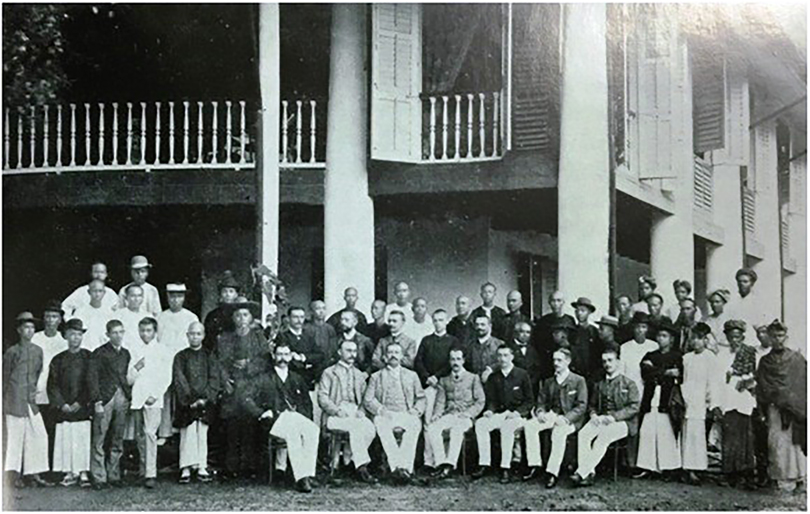
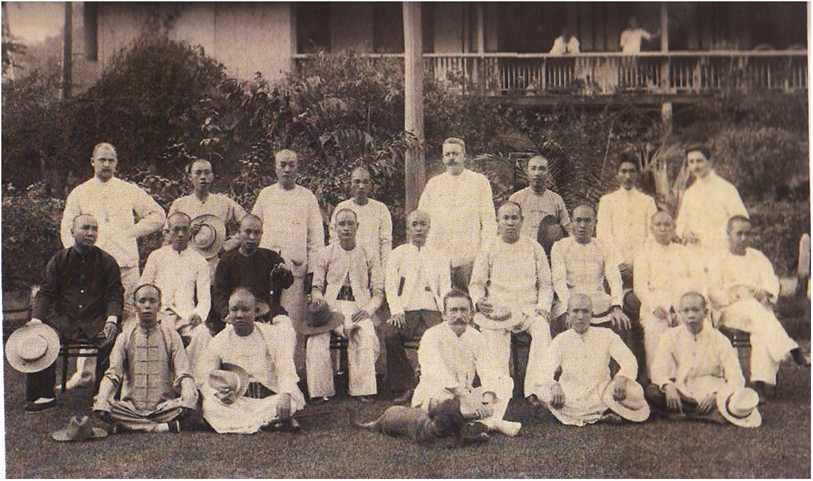
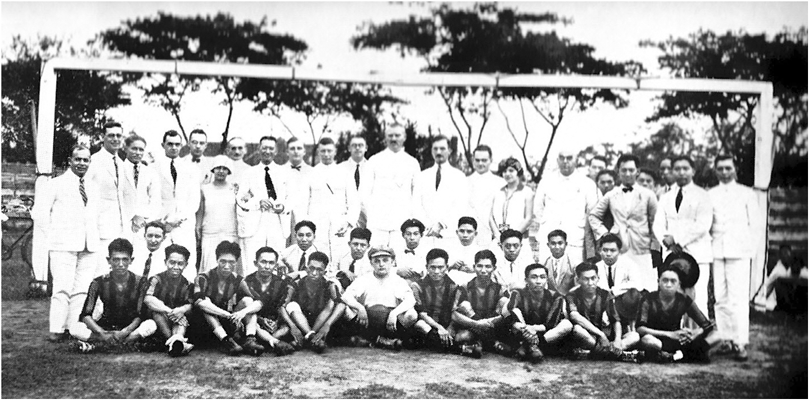
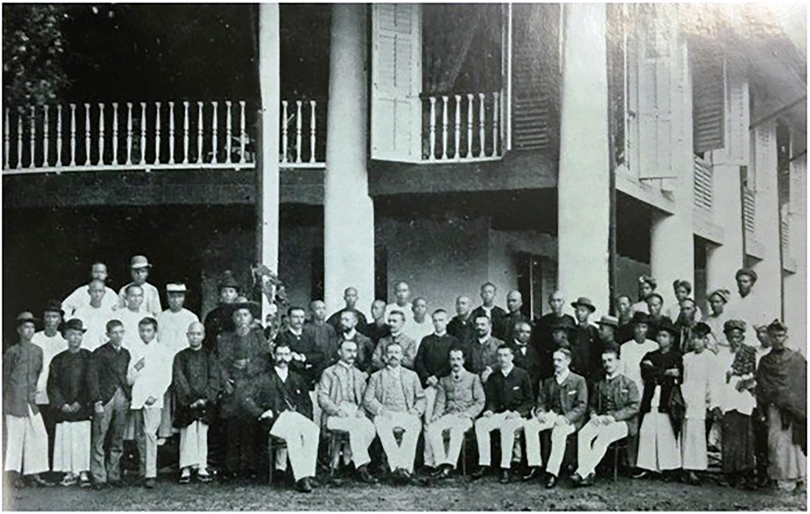
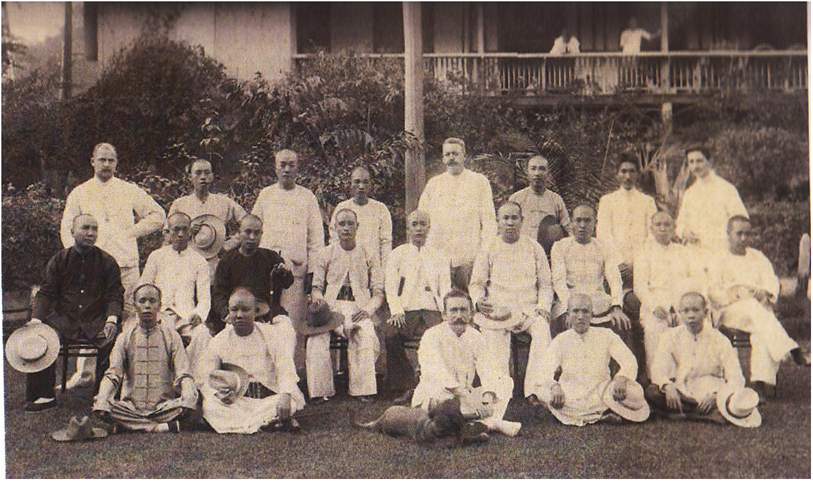
Similar to the practice of some British firms, the tradition of engaging with the locals was seen in German and Swiss–German businesses. As noted above, Behn Meyer hired local (that is, Chinese) clerks and cashiers shortly after its founding. Some of these Chinese staff also served as compradors (or middlemen), providing much-needed information on the ground.Footnote 62 Indeed, Behn Meyer went a step further from even German firms by hiring Muslim clerks as early as 1904.Footnote 63 In his memoir, Adolf Schoenberg, who had joined Behn Meyer in Singapore in 1902, described the robust multicultural environment of Behn Meyer. He noted that the firm employed “Europeans and Asians of all races, languages and customs,” and described a “medley of Asians: Chinese, Klings, Malays, Chetties” mingling at the Straits office. He also compared the Singapore office to the “quiet offices at home,” and noted how “young Germans, right from the beginning, ha[d] to look after a number of Chinese clerks.”Footnote 64 Company photographs of Behn Meyer in Singapore, Penang, and its various subsidiaries in Java, and Bangkok depicted seated German bosses mixed in freely with local staff in a less racially or hierarchically stratified manner (see Figures 1 and 2). The German clubs were also opened to the locals; for instance, a 1929 photo of the Behn Meyer Sports Club in Surabaya, Java, show an interesting mix of German and local club members (see Figure 3).Footnote 65
Staff of Behn, Meyer & Co., Singapore, 1895.
Source: Courtesy of Behn Meyer Group.
Staff of Behn, Meyer & Co., Representative Office, Siam, 1907.
Source: Courtesy of Behn Meyer Group.
Behn, Meyer & Co., Sports Club, Surabaya, Java, 1929.
Source: Courtesy of Behn Meyer Group.

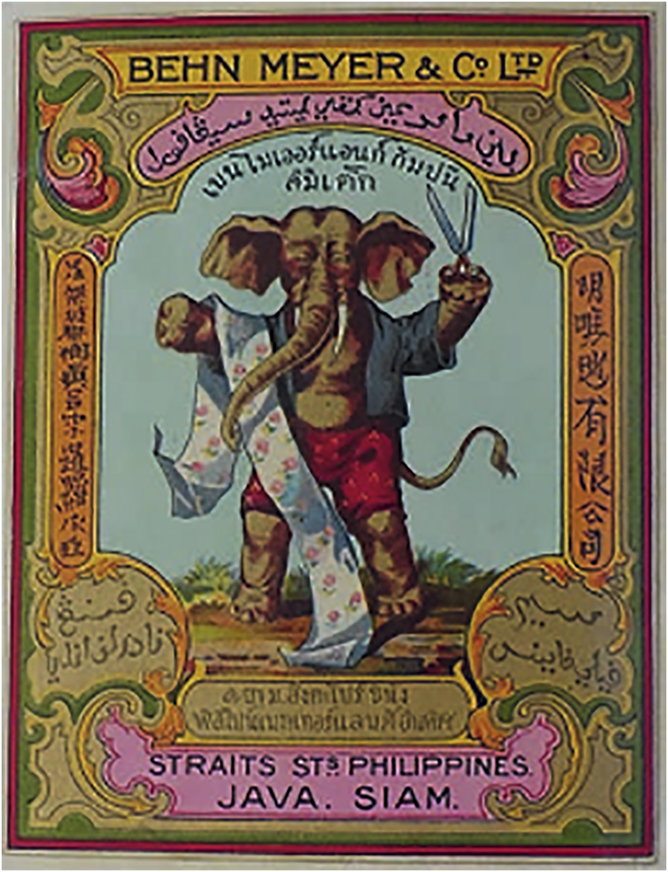
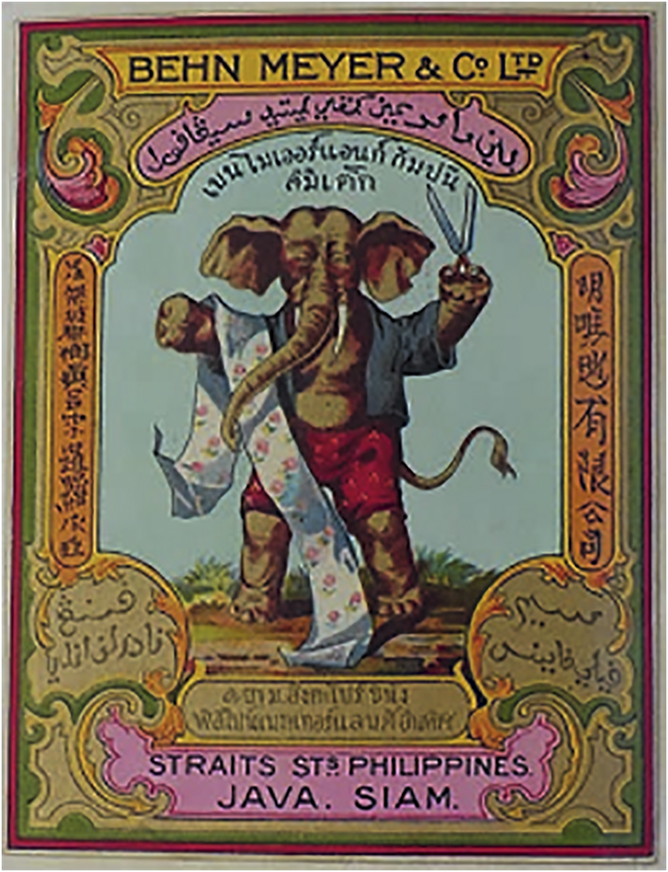
The German merchants also enjoyed close relationships with local traders, mainly Chinese traders, who played a prominent role in Malayan trade. As local and Western scholars alike have argued, the German merchants received the support of Chinese intermediaries and the Indian Chettiars (i.e., moneylenders) because of their readiness to provide a system of long-term credit, which the British merchant firms were forced to adopt to remain competitive.Footnote 66 The Chinese also preferred German to English vessels, as the German masters were more accommodating.Footnote 67 In 1894 Behn Meyer introduced its elephant trademark in five different languages to reach out to the different ethnic groups of traders in the Southeast Asian region (see Figure 4). In the region, a number of European firms, including British, had similar trademarks.Footnote 68
Behn Meyer’s elephant trademark, introduced in 1894 in five different local languages: English, Jawi (Malay), Chinese, Tamil, and Siamese. The elephant, a common local sight in Malaya and Siam, symbolizes longevity, persistence, and steadiness.
Source: Courtesy of Behn Meyer Group.
Trade rivalries did exist between the German and British business communities; however, Behn Meyer was highly regarded by some of its British trading counterparts due to its longevity and reputation. Along with Boustead, Adamson Gilfillan, Patersons Simons, and the Borneo Co., Behn Meyer was one of the five merchant houses to benefit from the secret rebate provided by the Singapore shipping conference established in 1905.Footnote 69 These merchant houses managed to secure a significant share of Singapore export trade, and would later capture the Siamese, Burmese, and Dutch East Indies markets. A public outcry led to the abolition of the shipping conference in 1911. However, by then the shipping conference had successfully secured its prominent position in Singapore’s export trade.Footnote 70 By 1914 Behn Meyer had eleven branches in Asia and Southeast Asia.Footnote 71
Thus, in the early years, Behn Meyer laid the foundations for a resilient organizational culture based on investment in strong leadership. It implemented an efficient apprenticeship system to overcome a lack of local organizational and technological capabilities, built stable franchises, and diversified into several areas of business typified by other trading companies, mainly British, operating in the region in the late nineteenth and early twentieth centuries.
World War I and the Interwar Years: A Story of Disguise
By the time World War I broke out, Behn Meyer was one of the most prominent firms in the region, with extensive interests in shipping, insurance, plantations, and tin. In the initial phase of the war, British authorities did not attempt to curtail the firm’s business activities. Indeed, the British community was respectful of the Germans, many of whom had joined British clubs. In his memoir, Adolf Schoenberg expressed his surprise when British members “completely unknown to [him], had voted” for him to become a member of the Singapore Club on the “exact day war was declared on France and Russia.”Footnote 72
However, in October 1914 the British government and the community’s view of the firm as a legitimate entity changed when a German ship escaped following an attack on a Russian ship at Penang Harbor.Footnote 73 August Diehn, the manager of Behn Meyer, was suspected of guiding the German ship and was later arrested.Footnote 74 Subsequently, Behn Meyer was branded “not only … a German trading concern but … a German political agency.”Footnote 75 As German patriotism and nationalism rose in response to World War I, the Germans, including the Hamburgers, turned Anglophobic in relation to their political and economic relations.Footnote 76 Germans firms began to Tarnung—cloak or camouflage—their businesses to minimize risks.Footnote 77 They used “independent or neutral entities,” including Dutch, American, and Swedish entities, to offset political restrictions and sustain their businesses. Some even renamed their companies.Footnote 78 Many acts of cloaking were undertaken without government assistance.Footnote 79 Behn Meyer adopted similar strategies to reduce their political risks. The court found against Stonebridge Manufacturing Co. of Colne and Manchester for “trading with the enemy.”Footnote 80 Stonebridge used AOM’s agents in Amsterdam and a Chinese dealer to ship goods to the Java agency of Behn Meyer. In court, it was contended that the letters between the two firms were evidence of friendly relations and represented a renewal ties following the end of the war.Footnote 81 Cloaking required a strong bond between collaborators and an understanding of the dynamics of the region in which the firms were operating. The elements of “familiarity and trust” were vital in sustaining these relationships, and Behn Meyer was able to exploit its competitive advantages.
Following the enactment of the Alien Enemies (Winding Act) Ordinance of 1914, all German and German-related businesses were closed, and the British auctioned off confiscated assets. German trade in the Straits Settlements suffered drastically because of these restrictions and embargoes. By 1915 the Singapore Chamber of Commerce had expelled all members from German firms, including Behn Meyer, along with Deutsche Asiatic Bank; R. Forweg, Franzen, & Co.; Kumpers & Co.; Rautenberg, Schmidt, & Co.; Siemens Bros.; and Dynamo Works Ltd.Footnote 82
The political climate became more hostile for Behn Meyer when, on the advice and consent of the Legislative Assembly, the governor of the Straits Settlements amended the Alien Enemies Ordinance. Under the ordinance, “alien enemy” referred to any entity whose country of origin was at war with Britain, and trade was defined to encompass every type of business, occupation, and work. An “enemy firm” was defined as one in which one-third or more of the issued share capital or of the directorate was held by an individual, by proxy, or by the subject of or resident of a country at war with Britain, irrespective of whether the firm was British registered.Footnote 83
In January 1915 a liquidator was appointed to Behn Meyer under the Alien Enemies Ordinance. Footnote 84 Local newspapers, such as The Straits Times and The Singapore Free Press, advertised the sale of land and houses, as well as the auctions of other real estate.Footnote 85 The British ban on trading with Germany also affected German operations in Siam and China, and German branches in Bangkok experienced similar difficulties. As the situation worsened, Behn Meyer in Hamburg decided to sell its shares and transfer its assets to its former employees of Swiss origins: Engler and Menzi. This strategy used Swiss directors as shareholders; however, it also “landed [Behn Meyer] on the [British] blacklist” for firms.Footnote 86
In 1915 Behn Meyer was expelled from the Penang Chamber of Commerce, and its Singapore manager, Adolf Schonberg, was accused of aiding and abetting the German war effort. As a company that had been incorporated into the crown colonies of the Straits Settlements, and in which German nationals held and controlled the majority of the share capital, Behn Meyer was considered to hold only nominal British nationality. In relation to the British-held or cobelligerent territories, Behn Meyer suffered a loss of approximately 12 million gold marks (the German currency at the time).Footnote 87
World War I abruptly ended the era of “economic cosmopolitanism,” and national affiliation became a point of contention for German firms.Footnote 88 Jones contends that before 1914, governments were not concerned with the nationality of firms. He further argues that some companies might have several nationalities depending on the different interpretations of the host government in relation to the nationality of the founders or shareholders, the location of the headquarters, and a firm’s area of operation.Footnote 89 In this instance, German firms operating in the United States were targeted. American courts also considered the issue of corporate nationality, but their rulings differed from those of the House of Lords in Britain. The U.S. Supreme Court ruled that the “the status of a corporation is not fixed by the stockholders’ nationality and since the plaintiff was an American corporation, the seizure of its property was unlawful. The prescribed plan was to seize the shares of stock when enemy owned rather than to take over the corporate property.”Footnote 90
In accordance with this decision, in 1925 the U.S. Supreme Court set judicial precedent when it ruled that Behn Meyer’s assets (held by its branch in the Philippines) should be returned to their rightful owner(s). The Court noted that while the majority of its shareholders were Germans, the firm was located in the Straits Settlements, a British colony.Footnote 91 However, despite the U.S. ruling, the British confiscated and eliminated German businesses in Malaya and Singapore. Additionally, many loyal naturalized Germans were branded as “Germanophiles” and accused of trading with the enemy without any evidence.Footnote 92
Like other German firms in the Straits Settlements, Behn Meyer was blocked from operating in the region. However, the firm managed to circumvent the political and legal obstacles, and overcame its financial difficulties by forging new partnerships and consolidating its position in the neighboring, but neutral, Dutch East Indies. Due to its long presence in the region, Behn Meyer was able to set up a new company—Behn, Meyer, & Co. Handels Maatschappij—under Dutch East Indies law to avoid expropriation. Registered in Batavia, the company appointed a Dutch director. However, this clever “cloaking” strategy did not deter the British colonial administration from attempting to restrict Behn Meyer’s activities in Dutch-controlled Batavia (Jakarta).Footnote 93 For example, despite registering itself as a different company under Dutch laws, Bantam (Java) Rubber Estates Ltd. (an agency under Behn Meyer) was prevented from selling rubber to Germany and Austria.Footnote 94
Another controversial episode began when the firm was accused of provoking the Singapore Mutiny in February 1915,Footnote 95 during which some prisoners, including Behn Meyer staff, managed to flee to Sumatra.Footnote 96 According to the London and China Express, a private investigation in Singapore showed that the mutiny, involving the Fifth Light Infantry (composed of Indian Muslims), was a conspiracy hatched by the Germans.Footnote 97
Behn Meyer was accused of exploiting harmonious relations to incite the mutiny.Footnote 98 To further complicate matters, some German detainees escaped from the Tanglin Prison in the aftermath of the mutiny. The crewmembers of the SMS Emden were among the first detainees to be let out by the mutineers.Footnote 99 Not all of the German detainees at Tanglin Prison escaped, and many eventually surrendered; however, three escapees—August Diehn, Adolf Schoenberg, and O. Elmenhorst (who was rearrested in Singapore)—were Behn Meyer employees. Diehn and Schoenberg fled to Sumatra and continued Behn Meyer’s business operations in the Dutch East Indies.Footnote 100 Diehn, the chief of Behn Meyer and the consul to Surabaya, and an employee named Merker were all listed by the British as active conspirators.Footnote 101
In The Lights of Singapore, Roland Braddell rebutted the accusation that Behn Meyer was involved in the mutiny. Braddell, who was also party to the court proceedings in the aftermath of the incident and privy to confidential information about the revolt, stated unequivocally that any rumors about the German connection were baseless and unsubstantiated.Footnote 102 According to Braddell, British India was the center of the rebellion.Footnote 103 However, the issue continued to be debated in prominent newspapers in Singapore until 1935. Due to the extensive media trials, many were convinced of a German connection to the mutiny.Footnote 104 These accusations were somewhat allayed when Hermann Jenssen wrote his account of the escape from Tanglin Prison, which was printed in a Malayan newspaper.Footnote 105
In 1919 AOM opened an office in Amsterdam to capitalize on Dutch neutrality. By 1922 the two branches, one each in Singapore and Penang, were managed by J. Rijk, a senior clerk at Behn Meyer’s subsidiary in Surabaya. Heinz Witthoeff (the son of Franz Heinrich Witthoeff, mentioned earlier) joined him when the constraints imposed on Germans were lifted.Footnote 106 The tacit knowledge of these employees played a determining role in ensuring the firm’s survival and continuity. They returned to Southeast Asia after being interned, imprisoned, and expelled. Their years of service, willingness to begin again in Southeast Asia, and in-depth knowledge of the region allowed them to assess the business situation and make strategic decisions for Behn Meyer.
World War I compelled Behn Meyer to readapt its business activities and patterns. Before 1914 exports from Malaya and Singapore included commodity products and tin, and imports largely included finished goods. As the war continued, small industries grew in response to demand for raw materials. Seeing a business opportunity, Behn Meyer adjusted to the market conditions by using its knowledge of the local economy.
Behn Meyer also leveraged its business networks with its German principals. They took over franchises for chemical materials, dyes, and fertilizers from I. G. Farben. Behn Meyer also had several agency agreements (e.g., with Humboldt-Deutz Motoren A. G., Demag A. G., Beiersdorf Ltd., and I. G. Farben) to provide the necessary reconstruction materials, and it had other agencies manufacture Agfa photographic materials, perfume, and Bayer pharmaceutical products.Footnote 107
Germans were subsequently permitted to return to Malaya because of improved relations between Britain and Germany. During the postwar years, the firm acted to secure new supply sources. Consequently, a “Japanese division” was established. Behn Meyer resumed trading from its Singapore and Penang offices, as well as in China.Footnote 108 The firm, however, had to reduce its shipping and insurance activities. Except for its shipping assets, it failed to secure any of its confiscated assets; yet, despite losing almost all its shipping agencies, the Straits Java Trading Co., in Penang, acquired shipping agencies for the Hamburg-Amerika Line and German-Australia Line. Huff noted that it was implausible that German shipping interests would be rehabilitated, as many companies’ assets had been auctioned off as “enemy property,”Footnote 109 and there were lengthy debates on how to dispose of German assets.Footnote 110 The termination of German competition, and the agreements between the two leading British and Dutch shipping companies enabled the British to establish a monopoly over shipping activities in Malaya. Britain maintained its share in the global shipping industry throughout the two world wars,Footnote 111 a goal shared by the British Board of Trade and some British business communities.Footnote 112
In 1936 the directors of Behn Meyer applied to the colonial administration in Singapore to change the name of Straits Java Trading Co. to its original name in the Straits Settlements Registrar of Companies. The firm hoped to use its original name to commemorate the centenary of its 1840 founding.Footnote 113 It also sought to increase its visibility by organizing marketing exhibitions in Singapore. Aware of the importance of forging ties with Chinese businesses, the Straits Java Trading Co. organized a marketing exhibition and invited both the Singapore Chamber of Commerce and the Chinese Chamber of Commerce.Footnote 114 By 1938 both the Singaporean and Penang branches had impressive agencies listed under various categories of its import, technical, pharmaceutical/chemical, shipping, and insurance departments in the Singapore and Malayan Directory.Footnote 115
The political risks of the war did not significantly disrupt Behn Meyer’s prospects in the region, and following the war the firm endeavored to regain its original position and reestablish its presence. Behn Meyer’s resilient organizational culture enabled it to be innovative in how it faced adversity. It quickly leveraged its business linkages to create new entities and diversified into new markets by establishing new franchises.
Political Risks in the Pre- and Post-World War II Periods
In the years before World War II, Behn Meyer reestablished its operations in Malaya, Singapore, the Dutch East Indies, the Philippines, and China. The Dutch were not a neutral party in the war but a cobelligerent of the British and an ally against the Germans. The Third Reich invaded the Netherlands, as it was perceived as a buffer country for France, Germany’s archrival and nemesis in Europe. Once again, Behn Meyer lost all of its assets and business possessions in Malaya and Singapore. Only its parent company in Hamburg remained intact throughout the war.
To provide British businesses with a head start in Malaya, the British imposed a ten-year restriction on German companies that prevented them from immediately resuming business in Malaya and Singapore at the end of the World War I. The onset of the Cold War in 1949 did not change the British colonial government’s treatment of German firms. However, Behn Meyer’s foresight, visionary focus, and intuitive understanding of politics enabled it to negotiate a “gentleman’s agreement” in Hamburg with its “old” European partner, the British trading house Paterson, Simons, & Co., a company that had also been a member of the shipping conference in Singapore in the late 1890s. By 1948 Paterson, Simons, & Co. began to administer Behn Meyer and the Straits Java Trading Co. Most prewar German principals of manufactured goods agreed to be represented by Paterson, Simons, & Co. The AOM paid them a hefty commission annually for twice the number of years it held prewar agencies.Footnote 116 This created a mutually beneficial situation for the two companies: Behn Meyer was able to maintain its business and agencies, and Paterson, Simons, & Co. received a commission that exceeded its expectations.
In 1955 German companies were once again allowed to operate in Malaya and Singapore. Behn Meyer was relentless in its resolve to reinstate its prewar organizational structures, including its original name. In May 1955, Georg von Daggenhausen, who had been assigned to the office of Paterson, Simons, & Co. in Singapore in 1949, became Behn Meyer’s managing director. Behn Meyer opened branches in Penang and Kuala Lumpur. By 1958 it had successfully regained its status as a renowned trading firm in the region. Experienced personnel were posted from Hamburg to reestablish the firm in Singapore and Malaysia. Among them were numerous loyal veteran employees, including Manfred G. Schwencke, Heinz H. Waetcke, Alfred Peter Otto Thomas, and Juergen Herbert Friele.Footnote 117 These four individuals were instrumental in building the firm’s capabilities and resources. The firm adeptly responded to the situation in postcolonial Malaysia by diversifying its activities to include fertilizer distribution, and the manufacture of agrochemicals, polymers, industrial chemical products, paper, and machinery. In December 1959, Behn, Meyer, & Co. Ltd. was reconstituted as Behn, Meyer, & Co. (Malaysia) Sdn. Bhd. (private limited), and Malaysia became the headquarters of Behn Meyer in the Southeast Asian region.
Knowledge Management and Organizational Survival: The Behn Meyer Case
This article has shown the significance of KM in building the organizational resilience firms require if they are to survive in highly political risk environments. As discussed earlier, a number of scholars and recent research have suggested that firms must be knowledge-driven to gain a competitive advantage. Thus, the importance of Behn Meyer’s knowledge workers in keeping the firm afloat should not be discounted. Most of its core workers, such as partners, directors, and shareholders based in Malaya and Hamburg, had been associated with the firm for more than three decades. These workers displayed remarkable loyalty to the firm and perpetuated a strong culture of knowledge sharing and KM, which are two salient features that have been continuously emphasized in the firm’s brochures over the years.
Further, as Grant asserts, the role of hierarchy and the location of decision making are two critical factors in integrating knowledge. These have been linked to the organizational structures of this family firm, and were based on a unique system in which partners actively served in managerial positions and as members of the board of directors, eventually becoming the “knowledge reservoirs” that ensured the resilience, continuity, and longevity of the firm.Footnote 118 This system of checks and balances involved core families over four generations—the Lorenz-Meyer (founding) family, and the Schoenberg, Kellinghusen, and Witthoeff families. Other business partners came from outside these families. Over the years, numerous family members held the positions of partners, shareholders, directors, and chairpersons.Footnote 119
As required under German law, the firm also had a supervisory advisory board that comprised chairpersons, retired bankers, and auditors, each of whom were elected as members of the board by the shareholders.Footnote 120 The advisory board and the board of directors oversaw the decisions of the parent company and its affiliates in Southeast Asia. The process for appointing a partner was rigorous, and the advisory board appointed only the most qualified candidates, regardless of their family background. The accumulation and consolidation of business knowledge within these families primarily occurred because of the invaluable apprenticeship system adopted by the German merchant community at the time.Footnote 121
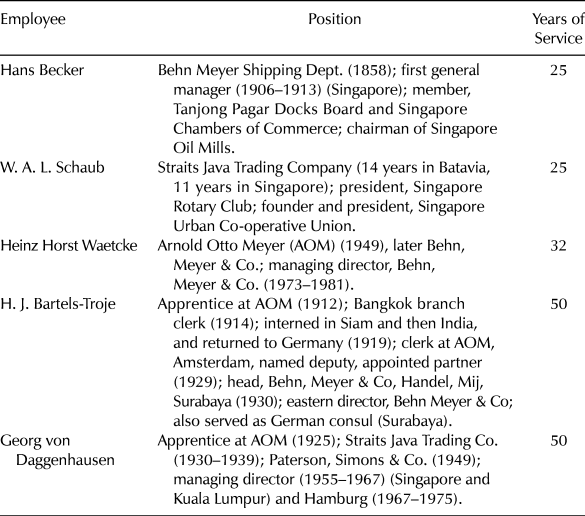
Behn Meyer also developed special written and unwritten institutional arrangements and practices (e.g., training and rotating employees between the headquarters in Hamburg and the subsidiaries in Southeast Asia) that enabled them to navigate hostile environments. The partners also frequently traveled from Hamburg to attend board meetings at different branches and to ensure the smooth flow of information between the parent company and its affiliates.Footnote 122 The “on-the-ground” training, loyalty, and resilience of the firm’s knowledge workers enabled them to ingeniously circumvent various restrictions. This traditional German dual system of theory and practical work, known as Lehrlingsausbildung (apprenticeship training), included an entire system.Footnote 123 Apprentices who had been trained in commercial aspects of the job in Hamburg were sent to Southeast Asia as managers, where they disseminated the company culture and the German way of doing business to local employees.Footnote 124 This approach differed from that of some British trading and plantation firms, which, according to Jones and White, were reluctant to provide management opportunities because of their “innate conservatism” and a “short sighted degree of prejudice.”Footnote 125 As early as 1952, AOM emphasized the importance of training local staff for future trade and investment opportunities, stating: “One should not overlook the fact that such an organization must provide training and career development opportunities to local staff members, partly to ensure the nationalist tendencies of young overseas countries to impose limits and sanctions against ‘foreign’ trade.”Footnote 126 Job rotations in the parent company and its affiliates were used to reduce staff turnover and ensure loyalty. It also ensured that the knowledge held by individuals would be shared and integrated among employees at various levels. These practices acknowledged the importance of trust and competence within the firm, and created a “common culture” that was underpinned by “high trust.” According to Casson, this also improved the “clarity of communication,” reduced information costs, and made it easier for the firm “to coordinate its innovations.”Footnote 127 Long-term staff members were also presented with opportunities to serve Singaporean society by engaging with different civic and economic organizations (see Table 1).
Staff loyalty and job rotation

Sources: Kleinsteuber, Merchants Beyond the Seas; Helfferich, Behn, Meyer & Co., Vol. II, 126, 147; Morning Tribune, Straits Times Weekly, Straits Times, Singapore; Warta bm News, January–March 1985 and April–June 1985, Malaysia.
Before World War I, the British government viewed Behn Meyer as legitimate, largely due to the Meyer’s commitment to public life and active participation in his civic duties. As a respected, legitimate, Straits-born “British” firm, Behn Meyer enjoyed enduring relations with its British merchant counterparts. However, with Germany on the wrong side of both world wars, the firm quickly lost its legitimacy with the British government. The British government was quick to link founder nationalities with their firms, and viewed the Germans as barbaric Huns.Footnote 128 Nevertheless, British firms often continued to trade with enemy firms, irrespective of their nationalities.Footnote 129 This is unsurprising, as during war, national sentiments often fluctuate and different parties (e.g., governments, other stakeholders) often hold fluid perceptions about nationalism and corporate legitimacy.
For German merchant firms, however, such as Behn Meyer, caught in two world wars and labeled as enemy firms, legitimacy did not provide consolation or lead to positive treatment from the British government. Indeed, the home government’s blanket ruling—the Alien Enemies (Winding Up) Ordinance of 1914—adversely affected German firms’ intra-Asian and intercontinental maritime trade networks. However, Behn Meyer managed to sustain its trading activities, which can be attributed to its creative and innovative business strategies, and its willingness to transfer, share, and integrate its expert knowledge of the region.
Concluding Remarks
Behn Meyer’s entrepreneurs successfully built the firm’s organizational capabilities to generate and integrate the knowledge required to understand the dynamics of the local environment of the Southeast Asian region. The firm’s present management shares the vision and outlook of its predecessors and the founders, and it uses its entrepreneurial capabilities to ensure continuity in knowledge accumulation. Familiarity with, and knowledge of the region, the market, the German manufacturers, and the geography ensured the continuous generation of new knowledge and the continued success in managing in the region and markets.
In retrospect, a combination of factors differentiated Behn Meyer from other firms that disappeared from the region. One such factor was Behn Meyer’s greater understanding for the indigenous cultures of the region, which created new opportunities for the company in a hostile political climate. An understanding of knowledge sharing in different cultural settings within the multiple geographies of Asia and Europe allowed Behn Meyer to outshine its British competitors, which eventually withdrew from the region.
Although Behn Meyer had taken a gradualist approach to localization of management in the 1980s, moving forward the firm has vigorously capitalized on the potential of diversity. This article has shown how multicultural firms like Behn Meyer outperformed ethnocentric companies, which aptly describes the British companies during the colonial period. Undoubtedly, the key factors that allowed this German firm to survive multiple setbacks were its skill, ability, and knowledge in managing sets of diverse parties, including the British government, British merchant firms, and, in particular, indigenous communities.
Current management research points to the importance of inclusivity and “identity diversity” of gender and race in managing successful firms. This “diversity bonus” led to an increase in performance of the firm as problem solving and innovation efforts improved.Footnote 130 Today, Behn Meyer’s current board of directors comprises seven board members with a dominant Asian share: four Asians and three Germans. This includes two female members (29 percent), a local Malaysian member, and a member of the Kellinghusen family. In addition to board diversity, there is now 100 percent local management, including female directors who manage their own organizations throughout Southeast Asia. Once a traditionally paternalistic German trading house, Behn Meyer used KM to transform itself into a modern corporation that today has solid Asian roots, growing gender parity in management, and a bright future.
This article laid the foundation to show how a company succeeded in an unfamiliar environment through cultural adaptation, which is often overlooked as a major contributing factor in organizational performance. Behn Meyer’s multicultural approach warrants future research into how other international firms have succeeded in adopting and adapting to the cultural diversity in Malaysia and elsewhere. It would also be valuable for future researchers to develop practical managerial approaches to intercultural management by developing case studies from practitioners’ perspectives to illustrate how to best manage diversity on a broad scale among varying contexts.