

Introduction
Maintaining local sheep breeds is a complex problem. It integrates economic, social, environmental and technical aspects, and involves many different actors. These actors are the direct users, such as farmers and consumers and other indirect users to benefit, such as tourism industry, extension services, etc. Domestic animals make a major contribution to human requirements for food in the form of meat, milk, milk products, eggs, fibre and fertilizer for crops as well as draught power. Approximately 4 500 breeds drawn from 40 or more animal species are listed in this context (FAO, 2007). Nowadays, it is well known (Dillon et al., Reference Dillon, Buckley, O'Connor, Hegarty and Rath2003; Hayes et al., Reference Hayes, Carrick, Bowman and Goddard2003; Bytyqi et al., Reference Bytyqi, Klemetsdal, Ødega rd, Mehmeti and Vegara2005) that animals best adapted to their environment, show the best overall trait performance (i.e. survival, production, reproduction, etc.). However, even though Kosovo is a rather small area, most breeds of sheep that originated in the different regions perform very differently and have gone through diverse selection focuses. Breed characterization, including selection and breed performance reactions to environment should thus be a part of all management and breeding decisions in sheep production enterprises.
Kosovo has a long tradition in sheep farming, but like other sectors of Kosovo economy it has experienced a period of decline. Sheep production reached a peak during the beginning of the 1960s (644 000 sheep). A dramatic decrease started after 1996 and accelerated during the war declining to a minimum of less than 90.000 head, in the year 1999. Currently, the number of sheep has started to grow again and it is estimated to be of about 127 000 animals (Ministry of Agriculture Forestry and Rural Development-MAFRD, 2012).
Normally, the sheep are kept in the barn from the end of November until the end of March (winter period) independent of breed.
The grazing period for sheep normally starts in April, close to farms. Mountain grazing time takes place from end of May until September, where sheep production is solely dependent on grass feed (summer period). After that, sheep graze on low land close to the barns again. Concentrated feed is given to the lactating sheep only during the winter period at the amount of 0.20–0.50 kg per ewe. Small diversity of feed sources, poorly constructed barns, and low level of hygiene make intensive sheep production difficult. Owing to small size of land owned by the sheep farmers, about 1.5 ha land per farm (MAFRD, 2012), cultivation of such feedstuffs is often fragmented in 6–10 plots and located at large walking distances from the house. Following their normal seasonal state of lambing, sheep in Kosovo are seasonally bred (summer) and offspring are born at the time of December and January, mostly. So far, limited attempts were made to change this breeding practice in Kosovo.
There is an obvious lack of education and awareness concerning sheep breeding and proper management despite the efforts made by local authorities and some of donor organizations in this regard. Farmers need to be trained to be familiar with breeding schemes specific to sheep farms in Kosovo in order to be qualified to manage their flocks and, in particular, to distinguish productive from non-productive animals.
There are not yet, proper breeding and selection schemes that will assist farmers in increasing the feeding efficiency, reproduction and productive traits. Thus, their breeding strategy was focused clearly to the “methodical selection” criteria. All sheep breeds in Kosovo are classified in the long tail group and share triple purpose breed characteristics, milk–meat–wool (Bytyqi and Mehmeti, Reference Bytyqi and Mehmeti2006).
Milk production is in the focus of all sheep breeds in Kosovo but performance testing does not exist yet. Thus, a survey including detailed milk performance testing was carried out in eight sheep farms to describe the production level of ewes. Additionally, to receive a first insight into growth and non-production traits, 20 sheep farms (including the eight farms with milk recording) were integrated in an investigation regarding various other traits in sheep flocks. Hence, the overall objective of this study was to provide the necessary information regarding characterization of autochthonous of sheep breeds and sheep production systems in Kosovo.
Material and methods
Sheep production and management characteristics in Kosovo
After cattle, the sheep production is the most important segment of the economy in rural households in Kosovo. The sheep production includes various breeds and categories of sheep. To date, sheep production in Kosovo can be clearly defined as an industry consisting of small and large farms ranging from 40 to 1 000 ewes producing for home consumption and the market. The sheep production of Kosovo has many characteristics typical for sheep production in developing countries, as it depends almost exclusively on the resources locally available on the farm.
Production characteristics
Most of the quantity of sheep's milk produced in the Kosovo is turned into cheese, and is rarely consumed as fresh milk. Therefore, the quality of the sheep milk should refer to its ability to be transformed into milk products. Milk is frequently being processed following the traditional way of milking ewes only after the weaning period, which occurs about 90 days after lambing. Very little investments were made in regard to milking and processing infrastructure. Lambs and culling ewes are usually sold as a live animals and no specific commodity has so far been developed to increase added value of sheep meat. There is almost no farm that has any connection to milk or/and processing unit or market chain. The milk is being processed at farm gate and sold locally (green market), just a small proportion of farmers sell their products to retailer shops or gross shop houses. The usual price for cheese ranges from 5 to 6 €/kg. Almost, there is no sheep meat process habit among farmers in Kosovo. Mostly, lambs (a part of those kept for breeding) are sold at an age of about 150 days, at spring time before the mountain-grazing period. The price ranges from 3 to 4 €/kg live weight. Mature animals are being sold at no specific period at lower prices about 2.5 €/kg live weight. Minimum attempts were made to promote sheep products as a tool to increase profitability and production.
History of breeds of sheep in Kosovo
The sheep population in Kosovo mainly consists of triple-purpose breeds of widely different body sizes and production capacities, i.e. Bardhoka (BAR), Balusha (BAL), Sharri (SHA) and Kosva (KOS).
BAR sheep
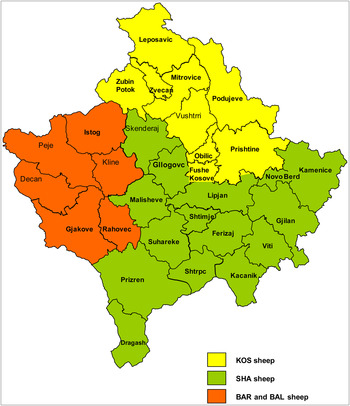
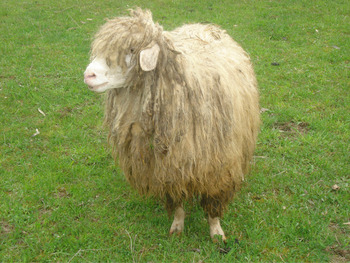
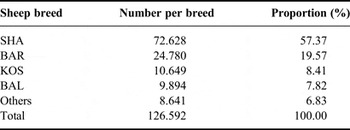
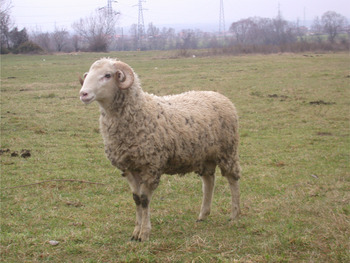
For centuries this sheep breed has been bred in the Southwest of Kosovo, mostly (Figures 1 and 2). The name originates from the word (Albanian language) “Bardhe-White”, as the fleece colour of this sheep is completely white. These sheep have a share of 19.6 percent of the total number of sheep bred in Kosovo (Table 1). The BAR sheep are kept for triple purpose, milk–meat–wool. However, through natural and selective breeding this sheep breed became one of the most yielding sheep for milk among the long tails sheep in the Balkan Peninsula (Cinkulov et al., Reference Cinkulov, Popovski, Porcu, Tanaskovska, Hodžić, Bytyqi, Mehmeti, Margeta, Djedović, Hoda, Trailović, Brka, Marković, Važić, Vegara, Olsaker and Kantanen2008; Bytyqi, Reference Bytyqi2009). On average, the height at withers for mature animals is 64 cm. Although the grease fleece weight ranges between 2.5and 3.5 kg, it is of very poor quality with an average fibre diameter of 42.5 µm (Mehmeti et al., Reference Mehmeti, Hysen, Skender and Imeri2007). The males are horned and the females are polled, usually. This strain is well suited to a grazing production system, calm, easily milked and easy to work with.
Living area for different sheep breeds in Kosovo.

Bradhoka sheep breed.

Breed structure, number of sheep per breed and breed proportion.

Source of data: Identification and registration unit of Kosovo 2011.
BAL sheep
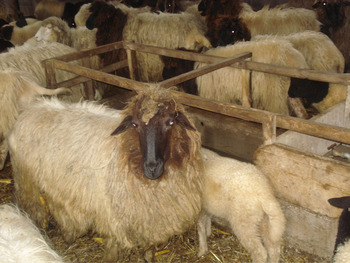
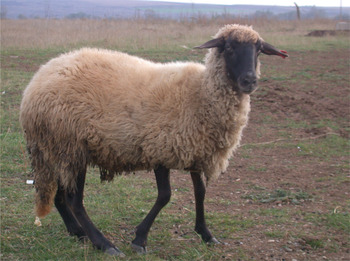
The area in which these sheep are kept and bred is also in the southwestern part of Kosovo sharing the same region with BAR breed, named Dukagjini plane (Figure 1). The name originates from the word (Albanian language) “Bale-Spot”. The total number of this breed is about 9 900 animals bred in Kosovo, and covers about 7.8 percent of the total sheep population (Table 1). As in the case of BAR breed, BAL sheep have also been going through breeding selection with special focus on milk production. This strain is well adapted to natural grazing abilities and easy milking. BAL is bred as triple purpose sheep (milk–meat–wool) of the medium size. The height at whithers for mature animals is on average about 65 cm. BAL sheep have a black head (Figure 3), whereas the colour of the fleece and the legs are white. The grease fleece weight for females and males averages 2–2.5 and 3–3.5 kg, respectively. The quality of the fibre is coarse with an average fibre diameter of 43 µm. Usually, the males are horned and the females are polled (Bytyqi, Reference Bytyqi2009).
BAL sheep breed.

SHA sheep
This strain is well adapted to natural hardiness, grazing abilities, and is well adapted to the cold mountain climates. The breeding region for these sheep is mainly in the Sharri Mountain, in the western part of Kosovo, from where the name originates (Figure 1). This breed represents approximately 53.4 percent of the total sheep population (Table 1).
SHA sheep are primarily kept for milk production, although quality of carcass and wool gives this strain a triple purpose status. Regarding body size, SHA is one of the smallest breeds in Kosovo. The mean height at withers for mature animals is about 62 cm. SHA sheep have a white colour of the fleece, the face and the legs (Figure 4). The grease fleece weight for females and males averages 1.5–2 and 2.5–3 kg, respectively. The mean fibre diameter is 37 µm (Bytyqi and Mehmeti, Reference Bytyqi and Mehmeti2006). The males are horned and the females are polled, usually.
SHA sheep breed.

KOS sheep
The name of this breed comes from the Kosovo plane, where it has its area of distribution (Figure 1). From the total population of sheep this breed represents about 8.4 percent (Table 1). This strain has advantages of natural hardiness and grazing abilities. The Kosovo sheep is characterized with its triple milk–meat–wool, purpose. The tail is long; the colour of the head and the legs is black, while the fleece is of white colour (Figure 5). Some individuals can also be found having black or grey spotted faces. The grease fleece weight for males and females averages 1.5–2.5 and 2.5–3.5 kg, respectively. The mean fibre diameter is 37 µm (Bytyqi and Mehmeti, Reference Bytyqi and Mehmeti2006). In accordance to the other sheep breeds of Kosovo males are normally horned while females are polled. The mean height at withers for mature animals is about 62 cm.
Kosova sheep breed.

Other sheep represent about 6.8 percent of the total population, mainly composed by unknown crosses.
Data recording in selected herds
For a period of 1 year (September 2009–August 2010), eight sheep farms in different regions of Kosovo were included in a study regarding dairy performance. Each sheep breed (SHA, KOS, BAR and BAL), was represented by two farms, respectively. The average herd size was 114, 94, 92 and 143 animals for SHA, KOS, BAR and BAL breeds, respectively. The milking sheep in the flock were selected randomly, resulting in 1 010 milk test day yield (TDY) samples, which were taken during evening and morning milking. An amount of 40–50 ml milk was put in sterile preserved bottles (Azidol), stored in mobile coolers at a temperature of 4 °C and transferred to the laboratory for analyses of milk contents. Recording cards containing information (i.e. animal ID, lambing date, lamb weight at different stages, test day milk yield, stillbirth, lambing characteristics, etc.) were developed and distributed in order to enable farmers to record further traits. Two types of scales (from 1 to 30 kg and 30 to 100 kg) were used to record lamb live weight at different stages (birth, 3, 6 and 12 months of age). The milk yield was measured individually by manual milking. For accurate performance recording, farmers were trained and monitored monthly.
In order to receive more information for relevant traits (e.g. milk production, lamb growth rate, lambing characteristics, fertility traits, survival rate, mating type, feeding, price, costs, culling characteristics, etc.), farmers of 20 sheep farms (including the eight previously mentioned farms) were interviewed. Results were processed and stored electronically.
Statistical data analysis
All results referring to daily milk yield and component traits refer to actually recorded milk samples at the eight farms. All other averages and proportions represent results of interviews made in all 20 farms.
For milk and milk composition the JMP-starter business unit program of SAS, (Institute SAS Inc. Sall, Lehman and Creighton, Reference Sall, Lehman and Creighton2004) was used to analyse the data for the least-squares means and significant variances. Variations between different variables were tested using the Duncan test (Steel and Torrie, Reference Steel and Torrie1980). The same ewes were sampled for milk production during the whole year. Owing to small number of farms included, the only breed and lactation effects were included in the milk model.
Results
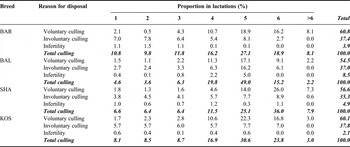
In Table 2, the results of the descriptive analysis for the four Kosovar sheep breeds in 20 different farms and different disposal reasons are shown. The proportion of ewes in different lactations depended on the percentage of culling for infertility, for involuntary or voluntary reasons. With small variations among different breeds, the ewes' voluntary culling mainly occurred at 4th, 5th and 6th lactation, ranging from 4.6 to 26.0 percent. Culling for involuntary reasons occurred in 1st, 2nd and 3rd lactation, respectively and ranged from 2.4 to 7.8 percent. Culling for infertility tends to be constant across all lactations, ranging from 0.1 to 2.0 percent. Most of ewes in lactation >6 were disposed for voluntary reasons.
Proportions for different disposal reasons in the four sheep breeds of Kosovo according to interviews in 20 Kosovar farms.

Arithmetic means for milk yield and their standard deviations for lactations are listed in Table 3. The highest yield in the first lactation was recorded for BAR, followed by BAL, SHA and KOS breeds, yielding 0.62, 0.54, 0.42 and 0.41 kg/day milk. For all sheep breeds, highest milk yields were registered for the 3rd lactation with 0.72, 0.65, 0.51 and 0.49 kg/day for BAR, BAL, SHA and KOS sheep, respectively. Comparing milk yield between ewes in the 3rd and those in the 5th lactation, a decrease of about 22.9, 33.8, 33.3 and 20.6 percent for BAR, BAL, SHA and KOS breed becomes obvious. The least-squares means results (not shown) for lactation number differences, were significant (P = 0.0103)
The average daily milk yield and its standard deviation (SD; in brackets) per lactation in the breeds.

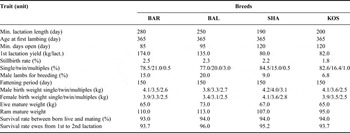
Based on milk yield results in eight farms and the interviews in 20 sheep farms, results of a descriptive analysis are stated in Table 4. Lactation production length ranged from 190 to 280 for different breeds. Owing to longer production, BAR and BAL ewes produce more milk in their 1st lactation (174.0 and 135.0 kg) compared with KOS and SHA (82 and 80 kg, respectively). The age at first lambing and minimum days open were about the same in all breeds.
Descriptive statistics per trait in the breeds based on interviews in 20 Kosovar farms.

Depending on breed, stillbirth rate was reported to range between 1.8 and 2.5 percent, whereas survival rate between born live and mating for breeding lambs was about 94 percent.
The proportion of male lambs kept for breeding for different breeds ranged between 6.8 and 20.0 percent. Proportion of single/twin/multiples born was for BAR (78.5/21.0/0.5 percent), BAL (77.0/20.0/3.0 percent), SHA (84.5/15.0/0.5 percent) and KOS (82.6/16.4/1.0 percent). Survival rate of ewes from the 1st to 2nd lactation was higher than 93.7 percent. Birth weight of lambs varies depending on breeds, type of lambing (single/tweens/triple) and gender, and ranges from 2.5 to 4.2 kg. For all breeds, the body weight is considered to be medium. The mature female individual on average weighs 65, 73, 67 and 65 kg for BAR, BAL, SHA and KOS, respectively. The ram mature live weights are 110.0, 113.0, 107.0 and 95.0 kg.
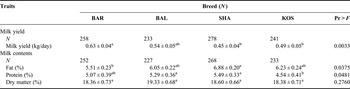
In Table 5, the least-squares means with corresponding standard errors and level of significance on test-day milk yield records are given. For milk production, breed differences were significant (P = 0.0033; Table 5). The highest average daily milk for BAR, exceeded the milk yield of BAL, KOS and SHA with 0.09, 0.14 and 0.18 kg milk per day, respectively (Table 5).
Number of observations and least-squares means ± SD for breeds and the traits daily milk yield, as well as fat, protein and dry matter percentage (within a line different letters indicate significant differences, P < 0.05).

Breed showed a significant effect on butterfat content in milk (P < 0.05; Table 5), with the highest percentage obtained by SHA ewes (6.68 percent), followed by KOS, BAL and BAR with 6.23, 6.05 and 5.51 percent, respectively.
The SHA sheep also had significantly higher protein content in milk compared with other three breeds (P < 0.05; Table 5). SHA ewes had the highest protein rate on milk (5.49 percent), followed by BAL (5.29 percent), BAR (5.07) and KOS sheep (4.54 percent).
For milk dry matter content breed differences were not significant (Table 5). However, BAL sheep produced slightly more (5.02, 4.92 and 3.88 percent) dry matter milk content compared with the other three breeds.
Discussion
Even though there have been some movements in improving overall management in recent years, sheep farms are managed mostly traditionally and new technologies take place at very minimum in the sheep industry in Kosovo. It should be pointed out that among all four breeds, definition of clear breeding objectives will be a need for the near future.
Ewes can survive in the flock till the seventh lactation at maximum. This is a rather empiric selection method, which might be associated with a decrease in milk production and incapability of sheep to graze well (long walking distance) in their later lactations. Therefore, due to tradition, sheep farmers in Kosovo prefer to cull their sheep voluntarily rather at higher ages than in other, more intensively kept sheep populations (e.g. Fuerst-Waltl and Baumung, Reference Fuerst-Waltl and Baumung2009).
At present, no artificial insemination is used in Kosovo sheep breeding. As a consequence, the breeding ram is supposed to breed about 28 ewes per breeding period. However, due to small populations per breed and narrow breeding replacement stock cycle (exchange of rams between small number of flocks usually grazing together for many years), inbreeding could be one area of concern.
Compared with the milk yield at the 1st lactation, the highest production is assumed to be reached at the 3rd lactation.
Ewes of BAR, BAL, SHA and KOS breed tend to produce more milk in the 3rd lactation compared with the 1st for about 16, 20, 21 and 5 percent, respectively. The decrease in average daily milk yield from the 3rd to 4th lactation ranged from 7.9 percent for SHA to 20.0 percent for BAL sheep. Consistently, for all breeds lactation further milk yield decreases occur after the 4th lactation. In some dairy breeds, an increase of lactation yields was reported until the 4th or 5th lactation (e.g. Ploumi, Belibasaki and Triantaphyllidis, Reference Ploumi, Belibasaki and Triantaphyllidis1998; Ploumi and Emmanouilidis, Reference Ploumi and Emmanouilidis1999; Fuerst-Waltl und Baumung, Reference Fuerst-Waltl and Baumung2009).
No information was available on individuals regarding the milk samples, therefore was not able to include the permanent environmental effect or a stage of lactation effect for daily milk yield.
The milk production data show that BAR and SHA ewes produce more persistently all over the lactations compared with other two breeds (BAL and KOS sheep). Therefore, breeding programme of selecting individuals for a better persistent milk production in sheep could be one alternative of increasing profit of farmers of the latter breeds. Besides, milk content traits are important under Kosovar conditions as hardly any sheep milk but mainly cheese is consumed. The BAR breed was observed to produce the highest milk and SHA breed for protein and fat content. However, it is still below other breeds in the Balkan region. For Dalmatian Pramenka, fat and protein contents of higher than 7 and 6 percent were reported (e.g. Matutinovic et al., Reference Matutinovic, Kalit, Salajpal and Vrdoljak2011). As Morand-Fehr et al. (Reference Morand-Fehr, Fedele, Decandia and Le Frileux2007) pointed out, sheep production systems based on grazing strongly affect milk composition and thus in turn the cheese produced. While an increased milk yield may be achievable by intensive farming, the “typical” cheese product may not be producible. Hence, farmers should aim at sufficient milk yield while also including milk content traits in their breeding goals. Apart from the genetics, management measures should be taken in order to guarantee certain standards.
For some traits, i.e. lactation length, yield per lactation, there were huge variations between breeds living in Dukagjini valley (BAR and BAL) compared with SHA and KOS breeds managed under other regions in Kosovo. Although not far living distance from one region to another for all four breeds, according to Figure 1, it seems that a better environmental conditions (more fertile soil, irrigation of land) in Dukagjini valley has led BAR and BAL breeds to gradual milk yield improvement, for centuries.
Apart from dairy production traits, farmers were also questioned with regard to functional traits in their herds. In generally, stillbirth rate was reported to be low having a positive economic impact on sheep farms in Kosovo. As to other breeds of Pramenka (long tail) sheep in Balkan Peninsula (Porcu et al., Reference Porcu, Dzabirski, Popovski, Andonov and Tanaskovska2006), the twinning rate tends to be very low for all Kosovo breeds as well, therefore breeding improvements might take place in this trait, considering in details factors that affect this trait (inbreeding, feeding, etc.).
Some other traits (i.e. days open, seasonal lambing, lamb-fattening period, proportion of male lambs sold for breeding, etc.) are set mainly due to sheep traditional management characteristics in Kosovo. The lambs for meat consumption are sold mostly as live animals and except a few visual indications and observations, no meat grading rate is taking place in Kosovo.
Conclusions
This is first approach used to get a first insight into the actual breed characterization and management situation of sheep farms in Kosovo. Sheep production in Kosovo seems to be characterized by being predominately semi-extensive. In this environment, focus in breed selection should not only be only on increased production, but also on how well the breeds are fitting to the local environment. The establishment of clear breeding objectives and a recording system to enable breed characterization has been a challenge for all sheep breeders in Kosovo. The present study has considered describing a sheep-breeding system that meets the current farmer demand and is a great contribution for development of the sheep sector and rural economy as a whole. A further research for each trait is required in order to get a maximum profit from different sheep breeds and breeding systems in Kosovo.
The sheep farmers showed detailed knowledge of the actual situation, therefore the prerequisites for collecting reliable data are considered to be very good.
Acknowledgements
The authors acknowledge the support of Austrian Development Agency (ADA and Kosovo Austrian Institutional Partnership (KAIP) project for fanatical support. Special thanks to farmers, KVFA laboratory staff and others who contributed to this research.