Introduction
Nutrition for women during adolescence, pregnancy and during the first 2 years of their child’s life is of utmost importance for the survival, health and development of mothers and their children, and the dietary requirements of women peak during these three critical periods in their life cycle (National Institute of Nutrition, 2011). An imbalanced diet before and during pregnancy and during lactation can affect both women and their offspring and precipitate the intergenerational transmission of malnutrition. Additionally, adequate nutrition is vital during adolescence, as 50% of women’s adult weight, 20% of their height and 50% of their skeletal mass is built during this stage (WHO, 2006). However, in India, 45–60% of adolescent girls have a sub-optimal dietary intake, which leads to micronutrient deficiencies (Deaton & Dreze, Reference Deaton and Dreze2009; Shashikantha et al., Reference Shashikantha, Sheethal and Vishma2016).
Systematic reviews of the dietary intake of pregnant women based on 62 studies and of adolescent girls based on 227 studies in low- and middle-income countries indicate a predominantly cereal-based diet with a daily consumption of milk or milk products at less than 20% and that of fruit and vegetables in the range of 30% to 50% (Lee et al., Reference Lee, Talegawkar, Merialdi and Caulfield2012; Keats et al., Reference Keats, Rappaport, Shah, Oh and Jain2018). Among all nutrients, the intake of iron and folate was most commonly found to be below average requirements. Based on a national nutrition survey conducted in rural India in 2012, the diets of 71% of pregnant women were deficient in protein, while 90% were deficient in iron (IIPS, 2016). Diet inadequacy remains one of the immediate causes of the high burden of malnutrition among women of reproductive age (15–49 years) in India, with 175 million women being anaemic (51.4%), 72 million thin (23%), an almost equal number being overweight or obese and nearly 40 million short (National Nutrition Monitoring Bureau, 2012).
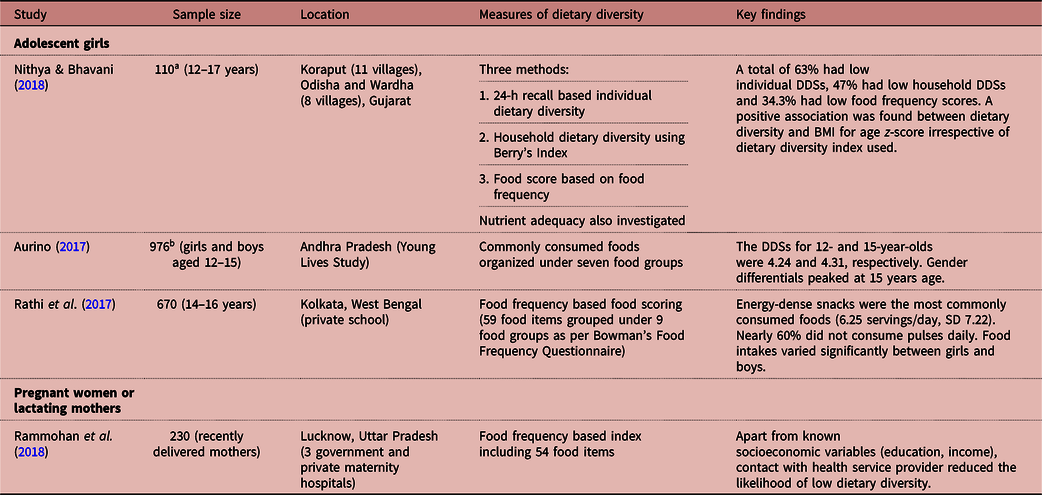
In India, socioeconomic factors, namely, education and income, are known to influence dietary diversity among women, including those who are pregnant (Nithya & Bhavani, Reference Nithya and Bhavani2018; Rammohan et al., Reference Rammohan, Goli, Singh, Ganguly and Singh2018). Among adolescents, gender differentials in dietary diversity are notable, with boys eating more diverse diets than girls (Aurino, Reference Aurino2017; Rathi et al., Reference Rathi, Riddell and Worsley2017). Concomitantly, the positive effects of higher dietary diversity, measured as a lower risk of low-birth-weight babies for pregnant women and an improvement in BMI-for-age z-scores and height-for-age z-scores for adolescent girls, have been reported in India (Nithya & Bhavani, Reference Nithya and Bhavani2018; Rammohan et al., Reference Rammohan, Goli, Singh, Ganguly and Singh2018) (Table 1).
Summary of previous research on dietary diversity among adolescent girls, pregnant women and lactating mothers in India, 2014 to 2019

a Adolescent boys and adults were other target groups.
b Younger cohort (5–8 years) also included in this study.
Methods
Study setting and survey data source
Data were from the baseline survey of the Swabhimaan programme – a prospective, non-randomized controlled evaluation conducted in 2016 in three Indian states with low development indices (Bihar, Chhattisgarh and Odisha). Swabhimaan is a multi-sector intervention programme aimed at improving the nutrition of adolescent girls and women in the study area. It offers essential nutrition interventions targeted at adolescent girls and women through the National Rural Livelihoods Mission (NRLM) (Chattopadhyay et al., Reference Chattopadhyay, Sethi, Nagargoje, Saraswat and Surani2019; Reshmi et al., Reference Reshmi, Dinachandra, Bhanot, Unisa and Menon2019). The survey collected data from adolescent girls, pregnant women and mothers of children under 2 years of age. It was used for the present study because, unlike other large-scale demographic surveys in India (NFHS and District Level Household and Facility Survey), it provides data for young adolescent girls aged 10–14 years and incorporates detailed information on the food consumption and dietary diversity of women in the study area.
Study respondent sample selection
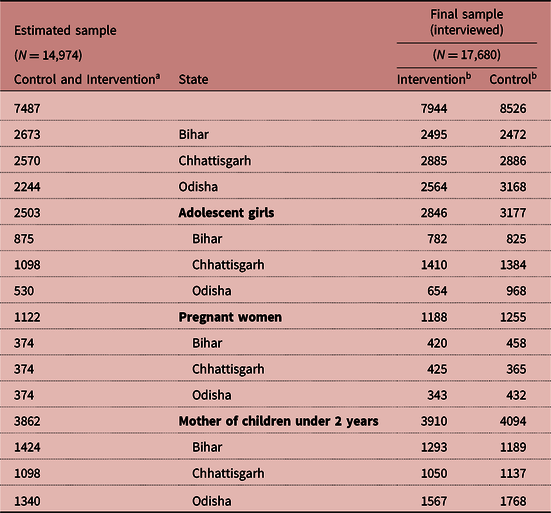
The survey household sample was selected through a two-stage sampling design. In the first stage, villages were used as primary sampling units (PSUs). In the second stage, complete mapping was conducted to list the households in the selected PSUs, and households were then selected through random sampling. The estimated required sample size, based on the size needed to produce reliable indicator estimates at the block level and district level, was 14,974 women. However, to adjust for the non-response rate, this was inflated to 17,680.
In Bihar, Kasba and Jalalgarh (blocks in the Purnea district) were divided into three clusters of 27, 41 and 36 villages. Cluster 2 served as the intervention area and Cluster 3 served as the control area. In Chhattisgarh, 40 villages each were selected from the Bastar and Bakawand blocks of Bastar district; the former served as the intervention area and the latter as the control area. In Odisha, the Koraput and Pallahara districts were chosen for the study. Six intensive and seven non-intensive village panchayats from each district were selected to serve as intervention and control areas, respectively. Based on the outcome indicators, a representative sample of 5252 respondents from Bihar, 6283 from Chhattisgarh and 6145 from Odisha were selected from the surveyed households giving a total sample of 17,680 adolescent girls and women (Table 2). However, the present study excluded 1210 cases to account for unusual diet pattern due to fasting or feasting and respondents who did not eat at all on the reference day. Therefore, the analytical sample for the present study was 16,470 respondents.
Baseline sample of the Swabhimaan survey collected using simple random sampling in five blocks

a Estimated sample from control and intervention areas.
b Final interviewed sample from intervention and control areas.
Study instruments and tools
A pre-tested and bilingual (in English and the state-specific local language) questionnaire was developed to gather information on the socioeconomic and demographic characteristics of the sample women and their household characteristics. Questions on dietary diversity; food security; access to health and nutrition services, such as Integrated Child Development Services (ICDS) and State Rural Livelihood Mission (called JEEViKA in Bihar, Bihan in Chhattisgarh and Odisha Livelihood Mission in Odisha); and social and economic empowerment support services, such as public distribution systems (PDSs) and self-help groups (SHGs), were also included. Additionally, data were collected for ANC service utilization, knowledge of family planning and the decision-making power of respondents.
The Food and Agriculture Organization (FAO) guidelines on Minimum Dietary Diversity (MDD) for women were used to assess the dietary intake of the sample women. This suggests the use of ten food groups to assess the dietary adequacy of women (FAO & FHI 360, 2016). The ten food groups used in the study are listed in Table 4. Data on the intake of various food groups during the day prior to the survey were recorded using 24-hour recall methodology (FAO, 2018) by trained investigators. All data collection teams were overseen by supervisors. The questionnaires were administered to adolescent girls, pregnant women and mothers of children under 2 years of age through face-to-face computer-assisted personal interviewing by the investigators. Quality control checks were performed for 10% of the sampled women to maintain the quality of the data.
Outcome variable
The outcome variable was the food diversity of respondents, assessed with the FAO measure described above. A Food Group Score (FGS) was computed from the reported intake of the ten food groups listed in Table 4. The intake of each food group was recorded dichotomously, where 0 denoted ‘no’ and 1 denoted ‘yes.’ The 10-point FGS rated the dietary intake from 0 to 10. The FGS was then used to create a Dietary Diversity Score (DDS) of the respondents. The DDS was divided into three categories: 1–3 (low diversity), 4–6 (medium diversity) and >6 (high diversity).
Independent variables
The independent variables included in the study were state (Bihar/Odisha/Chhattisgarh), age group, education (never attended school/1–5 years/6–8 years/>8 years), religion (Hindu/Muslim/other), ethnicity (Scheduled Caste/Scheduled Tribe/Other Backward Class/General), household wealth quintile (poorest/poor/middle/rich/richest) and household food security status (food secure/mildly food insecure/moderately food insecure/severely food insecure). The employment status variable was based on whether the respondent had worked in the last 12 months. Other covariates were the consumption of food from the homestead kitchen garden in the past 7 days prior to the survey and ration cardholder status (with no ration card/any ration card/have BPL or Antyodaya card). Other variables included the parity of women (1/2/3/≥4), trimester of pregnancy (first/second/third), use of iron–folic acid (IFA) tablets, consumption of deworming tablets in the last 6 months and access to Adolescent Health Day or Village Health and Nutrition Day in the last 6 months (attended Kishori (adolescent) meeting/Poshan Sakhi (women’s) meeting).
Analysis
First, the descriptive statistics of the study sample by socioeconomic and demographic characteristic were described. Then, for each target group of respondents (adolescents, pregnant women and mothers of children under 2), mean DDSs and differences in mean DDSs were calculated by socioeconomic characteristics and state of residence. Finally, the associations between mean DDSs and socioeconomic characteristics for each target group were assessed using sequential multiple regression analysis (95% CI) using Stata Version 14.
Results
Sample profile
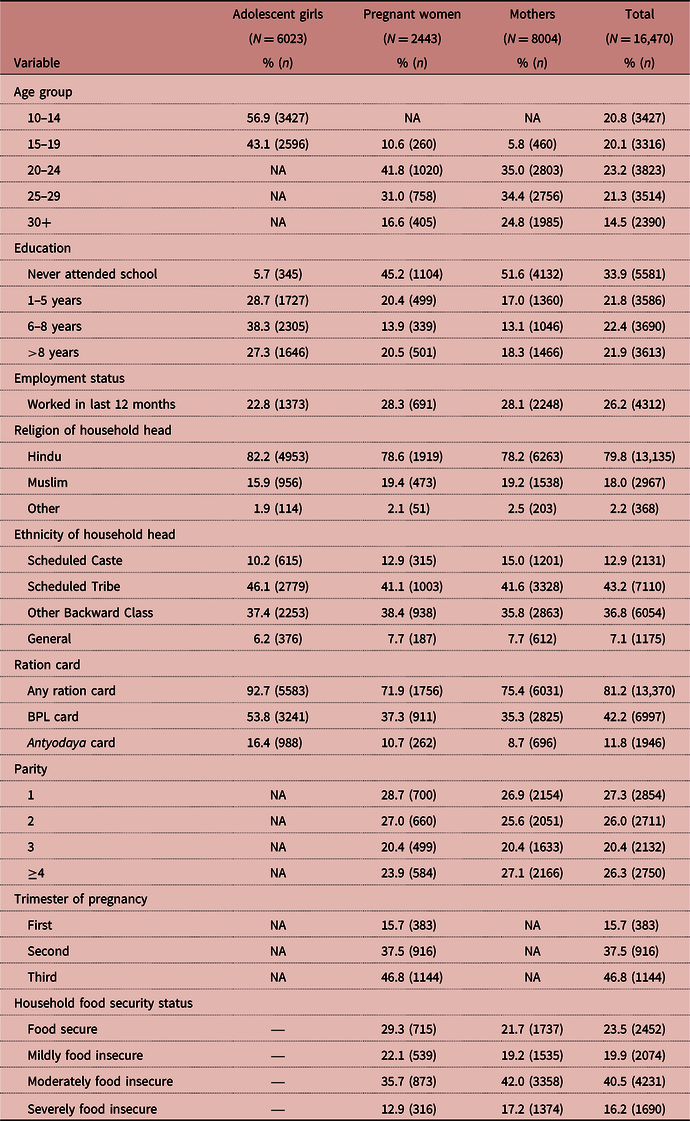
Table 3 presents the descriptive statistics of the respondents. The highest proportions of pregnant women and mothers of children under the age of 2 were in the 20–24 year age group (41.8% and 35%, respectively). Over 90% in each target group belonged to a socially disadvantaged group, with over 40% from Scheduled Tribes. Overall, 80% of the households received some food subsidy as ration cardholders. Slightly more than 20% of the households were food secure. Approximately 12% of the sampled population belonged severely poor households, as measured by their entitlement to the Antyodaya card, and the highest proportion was among adolescent girls (16.4%). Over half of the mothers, 45% of the pregnant women and 6% of the adolescent girls never attended school. Over 20% of participants in each target group were engaged in economically gainful activity in the year preceding the survey. Among both pregnant women and mothers, over 40% had a parity of three or more (Table 3).
Distribution of adolescent girls, pregnant women and mothers of children under 2 by individual and household characteristics

NA: not applicable/available.
Dietary diversity amongst adolescent girls, pregnant women and mothers of children under 2 years of age

Dietary diversity and variation in DDS by life stage
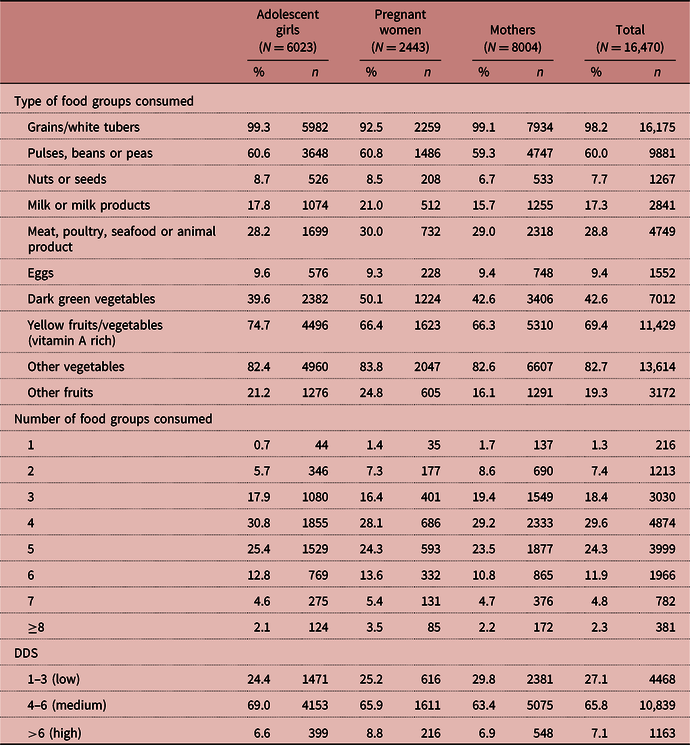
Grains and tubers were consumed daily by almost all respondents, followed by other vegetables (82.7%), yellow fruits/vegetables (69.4%) and pulses and beans (60%) (Table 4). Nuts and seeds were consumed the least (7.7%), followed by eggs (9.4%). Daily milk or milk product consumption was also low, at an average of 17%. Approximately 60% of the total sample consumed fewer than five food groups daily, with 9% consuming one or two food groups only. The majority of the sample had medium DDSs (65.8%) and low DDSs (27%). These patterns were consistent across the three life stages.
Dietary Diversity Scores of adolescent girls across states
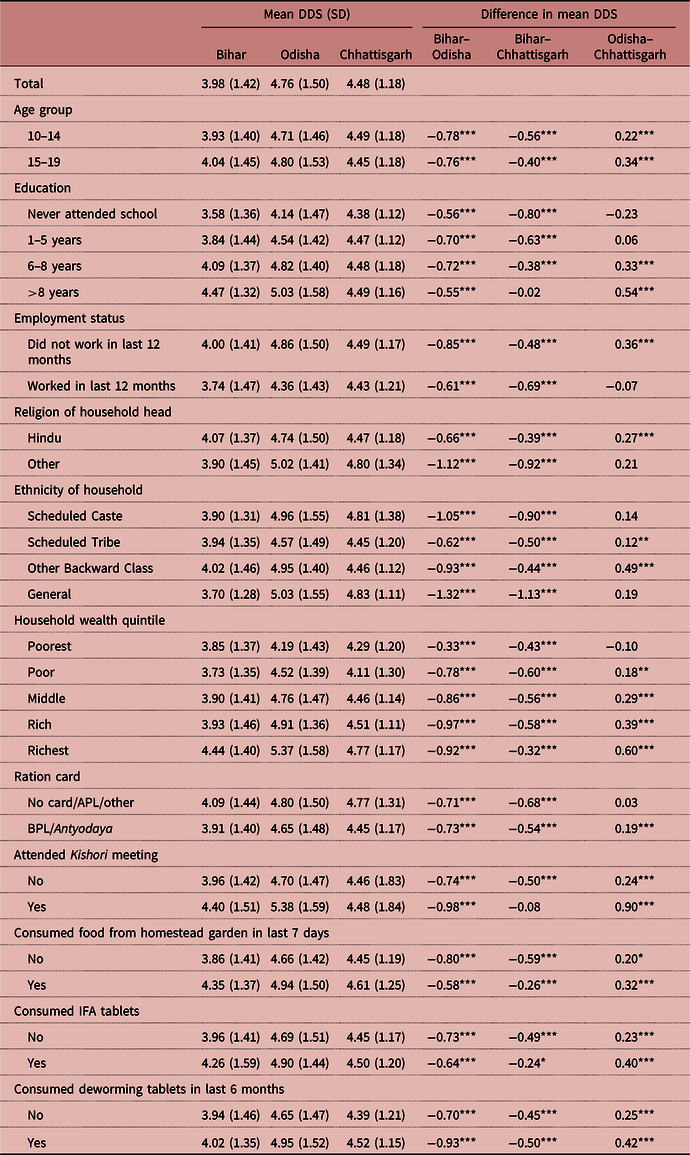
The mean DDSs of adolescent girls ranged from 3.98 (in Bihar) to 4.76 (in Odisha) (Table 5). In Bihar and Odisha, the mean DDSs of adolescent girls aged 15–19 years were better (4.04 and 4.80, respectively) than those aged 10–14 years (3.93 and 4.71, respectively), unlike Chhattisgarh (4.45 and 4.49, respectively). Irrespective of age, adolescent girls in Bihar had significantly lower mean DDSs than those from the other two states (p < 0.001). The mean DDSs of adolescent girls increased as the level of education progressed from no schooling to over 8 years of schooling in Bihar (3.58 to 4.47), Odisha (4.14 to 5.03) and Chhattisgarh (4.38 to 4.49). Adolescent girls who worked in the last 12 months had lower mean DDSs than those who did not work (Bihar 3.74 vs 4.00, Odisha 4.36 vs 4.86 and Chhattisgarh 4.43 vs 4.49). Hindu adolescent girls had lower mean DDSs than those practising other religions in Odisha (4.74 vs 5.02) and Chhattisgarh (4.47 vs 4.80), but not Bihar (4.00 vs 3.74). In Bihar, adolescents from the general ethnic group had lower mean DDSs than those from other ethnic backgrounds (3.70 vs 3.90–4.02), unlike Odisha (5.03 vs 4.57–4.96) and Chhattisgarh (4.83 vs 4.45–4.81), where Scheduled Tribe adolescent girls had the lowest mean DDS. Adolescent girls from poorest and poor wealth quintiles had the lowest mean DDSs in all the states (Bihar ≤3.86, Odisha ≤4.96 and Chhattisgarh ≤4.29). Adolescent girls having a BPL/Antyodaya ration card had lower a mean DDS than girls who did not have a ration card or had an APL/other card (Bihar 3.91 vs 4.40, Odisha 4.65 vs 4.80 and Chhattisgarh 4.45 vs 4.77). Irrespective of state, the mean DDS was better for adolescent girls who attended Kishori meetings (4.40–5.38 vs 3.96–4.70) and who consumed food from homestead gardens (4.35–4.94 vs 3.86–4.66) than girls who did not. Similarly, in all the states, compared with adolescent girls who consumed IFA and deworming tablets, those who did not consume IFA (4.26–4.90 vs 3.96–4.69) and deworming tablets (4.02–4.95 vs 3.94–4.65) had poor mean DDSs. Regardless of background characteristic, adolescent girls in Bihar had significantly lower mean DDSs compared with Odisha and Chhattisgarh (p < 0.001).
Mean DDS and differences in mean DDS of adolescent girls by background characteristics in Bihar, Odisha and Chhattisgarh

***p < 0.001; **p < 0.05; *p < 0.10.
Dietary Diversity Scores of pregnant women across states
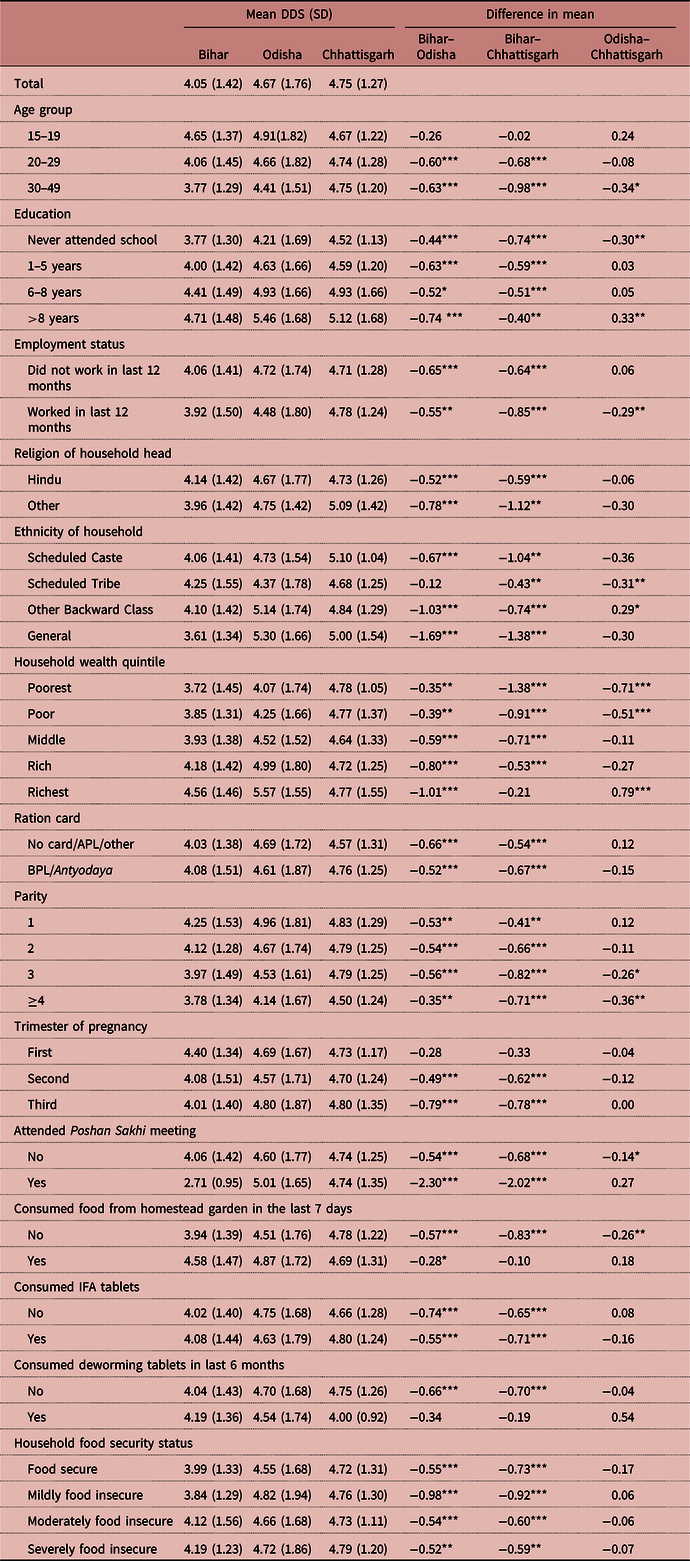
The mean DDSs of pregnant women were 4.05 in Bihar, 4.67 in Odisha and 4.75 in Chhattisgarh (Table 6). In Bihar and Odisha, pregnant women aged 15–19 years had higher mean DDSs (4.65 and 4.91 respectively) than those aged 20–29 (4.06 and 4.66, respectively) and 30–49 years (3.77 and 4.41). On the other hand, pregnant women aged 15–19 years in Chhattisgarh had a lower mean DDS (4.67) than those aged 20 years and older (~4.74). As the level of education increased the mean DDS of pregnant women also increased – from 3.77 for no schooling to 4.71 for >8 years of schooling in Bihar, from 4.21 to 5.46 in Odisha and from 4.52 to 5.12 in Chhattisgarh. In Bihar and Odisha, pregnant women who worked in the last 12 months had a lower mean DDS than those who did not work (3.92 vs 4.06 and 4.48 vs 4.72, respectively), unlike Chhattisgarh (4.78 vs 4.71). Hindu pregnant women in Bihar had a higher mean DDS than others (4.14 vs 3.96), as opposed to Odisha (4.67 vs 4.75) and Chhattisgarh (4.73 vs 5.09). As opposed to Bihar, where pregnant Scheduled Tribe women had the highest mean DDS (4.25) than other ethnic groups (3.61–4.10), pregnant Scheduled Tribe women in Odisha and Chhattisgarh had lower mean DDSs (4.37 and 4.68, respectively) than other ethnic groups (4.73–5.30 and 4.84–5.10, respectively). Irrespective of the possession or type of ration card, pregnant women in Bihar had a lower mean DDS (~4.00) than Odisha (>4.60) or Chhattisgarh (>4.50) (p < 0.001). As the parity of pregnant women increased from 1 to 4 or more their mean DDS decreased in Odisha (from 4.96 to 4.14), Chhattisgarh (from 4.83 to 4.50) and Bihar (from 4.40 to 4.01). In Bihar, pregnant women in the first trimester had a higher mean DDS than their counterparts in the second and third trimesters (4.40 vs ~4.00), unlike Odisha and Chhattisgarh where pregnant women in the third trimester had the highest mean DDS (4.80 each). Pregnant women who consumed food from homestead gardens had a higher mean DDS than those who did not (Bihar 4.58 vs 3.94 and Odisha 4.87 vs 4.51), except Chhattisgarh (4.69 vs 4.78). Unlike Bihar, in Odisha and Chhattisgarh, pregnant women who did not consume IFA or deworming tablets had better mean DDSs. Surprisingly, in all three states, mean DDS was lowest among pregnant women from food-secure households. For almost all the indicators, pregnant women in Bihar had significantly lower mean DDSs than those from Odisha and Chhattisgarh (Table 6).
Mean DDS and differences in mean DDS of pregnant women by background characteristics in Bihar, Odisha and Chhattisgarh

***p < 0.001; **p < 0.05; *p < 0.10.
Dietary Diversity Scores of mothers of children under age 2 years across states
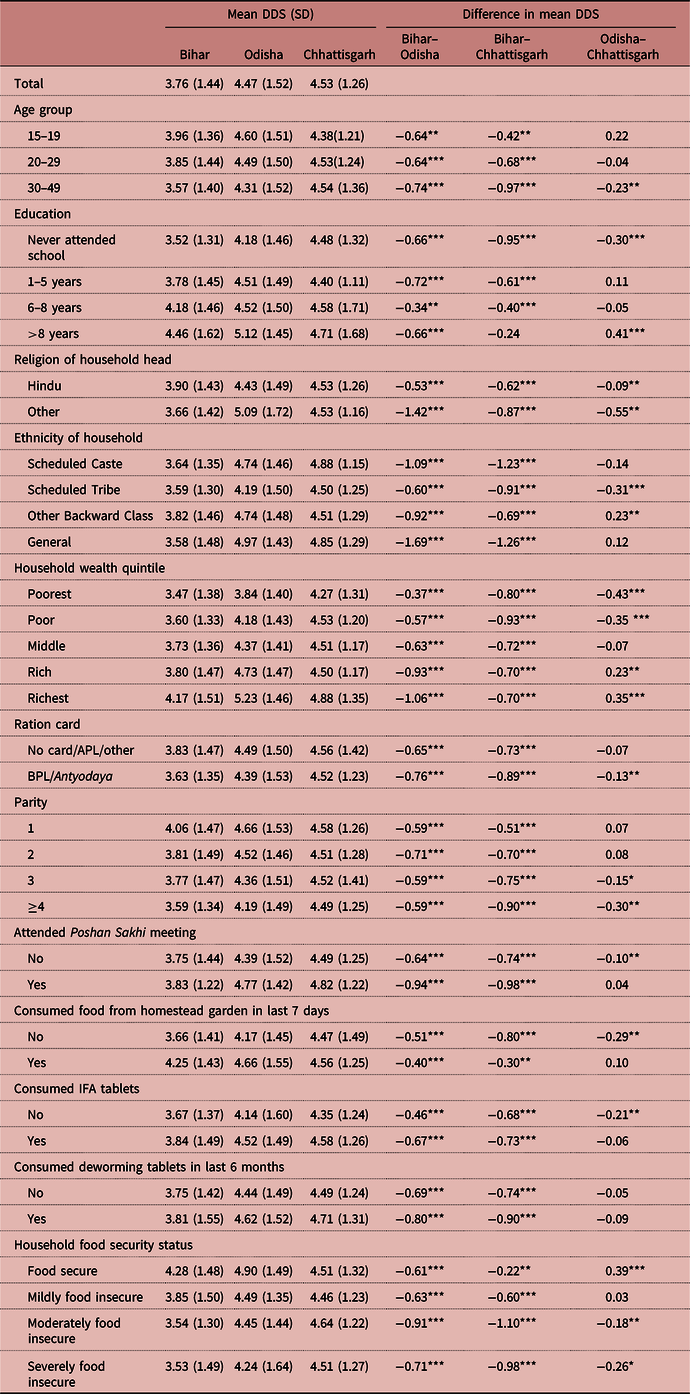
The mean DDSs of mothers of children under age 2 years in Bihar, Odisha and Chhattisgarh were 3.76, 4.47 and 4.53, respectively (Table 7). Unlike Chhattisgarh (4.38 vs ~4.53), adolescent mothers aged 15–19 in Bihar (3.96 vs 3.57–3.85) and Odisha (4.60 vs 4.31–4.49) had higher mean DDSs than those aged between 20 and 49 years. Mothers who never attended school had a poorer mean DDS than those who had more than 8 years of schooling in Bihar (3.52 vs 4.46), Odisha (4.18 vs 5.12) and Chhattisgarh (4.48 s 4.71). Unlike in Bihar (3.90 vs 3.66), Hindu mothers in Odisha (4.49 vs 5.09) had lower mean DDSs than those of other religions, while in Chhattisgarh there was no difference in the mean DDSs of mothers based on religion. Scheduled Tribe mothers in Odisha had a lower mean DDS than other ethnic groups (4.19 vs >4.74); in Chhattisgarh, mothers from Scheduled Tribes and Other Backward Classes had lower mean DDSs compared with others (~4.50 vs >4.84); in Bihar, mothers from Scheduled Tribes and General groups had lower mean DDSs than those from other ethnic groups (~3.58 vs >3.63). Mothers from the poorest wealth quintile had lower mean DDSs than those from the richest wealth quintiles (Bihar 3.47 vs 4.17, Odisha 3.84 vs 5.23 and Chhattisgarh 4.27 vs 4.88). In all three states, mothers who possessed BPL ration cards had lower mean DDSs than those who had an APL card or no ration card (3.63–4.52 vs 3.83–4.56). Irrespective of state, mothers of parity 1 had better mean DDSs than those of parity 4 or more (Bihar 4.06 vs 3.59, Odisha 4.66 vs 4.19 and Chhattisgarh 4.58 vs 4.49). In all the states, mothers who attended Poshan Sakhi meetings and consumed food from homestead gardens had better mean DDSs than those who did not (3.83–4.82 vs 3.75–4.49 and 4.25–4.56 vs 3.66–4.47, respectively). Regardless of state, women who consumed IFA and deworming tablets had higher mean DDSs than those who did not (3.84–4.58 vs 3.67–4.35 and 3.81–4.71 vs 3.75–4.49, respectively). In Bihar and Odisha, mothers from food-secure households had higher mean DDSs than those from food-insecure households (4.28 vs < 3.86 and 4.90 vs < 4.50), unlike Chhattisgarh where mothers from food-secure and severely food-insecure households had similar mean DDSs (~4.50). In comparison to Odisha and Chhattisgarh, mothers in Bihar had significantly lower mean DDSs, irrespective of background characteristics (p < 0.001) (Table 7).
Mean DDS and differences in mean DDS of mothers of children under age 2 years by background characteristics in Bihar, Odisha and Chhattisgarh

***p < 0.001; **p < 0.05; *p < 0.10.
Predictors of Dietary Diversity Scores by life stage
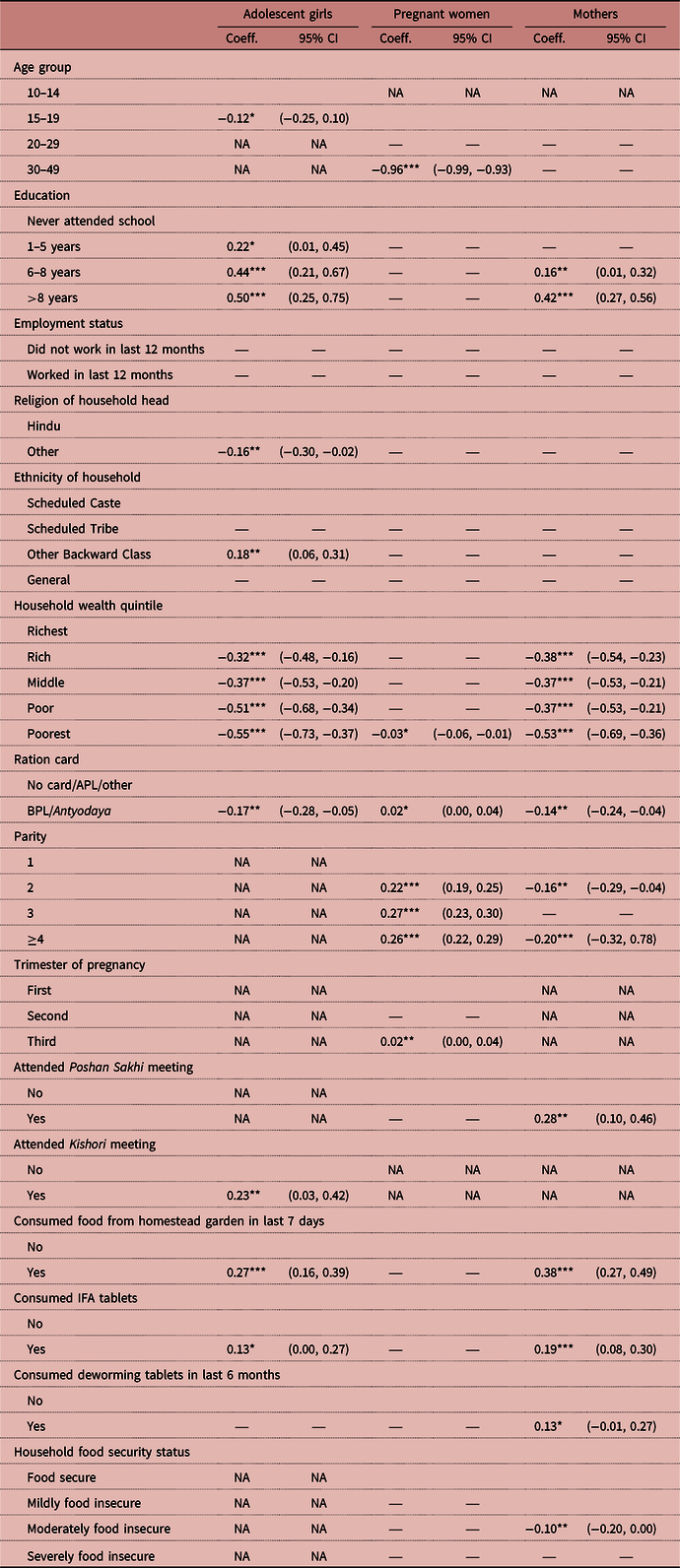
Table 8 shows that older adolescent girls (15–19 years) were likely to have lower mean DDSs than girls aged 10–14 years (−0.12; CI −0.25, 0.10, p < 0.10); pregnant women aged 30–49 years were likely to have a lower mean DDS than those aged 15–19 years (−0.96; CI −0.99, −0.93, p < 0.001). However, age did not influence the mean DDS of the mothers. Compared with no schooling, progressively increasing level of schooling improved the mean DDS of adolescent girls (0.22–0.50; CI 0.01, 0.75, p < 0.001). Gains in mother’s mean DDS were noted with at least 6 years of education (0.16–0.42; CI 0.01, 0.56, p < 0.05). Employment status did not influence the mean DDS in any of the target groups. Adolescent girls from ‘other’ religions were more likely to have a poor mean DDS than Hindu adolescent girls (−0.16; CI −0.30 to −0.02, p < 0.05). Compared with Scheduled Caste, adolescent girls belonging to Other Backward Classes were likely to have better mean DDSs (0.18; CI 0.06, 0.31, p < 0.05). Caste and religion did not influence the mean DDSs of pregnant women and mothers. In comparison to the richest wealth quintile, adolescent girls (−0.55 to −0.32; CI −0.73, −0.16, p < 0.001) and mothers (−0.53 to −0.37; CI −0.69, −0.21, p < 0.001) from all lower wealth quintiles and pregnant women (−0.03; CI −0.06 to −0.01, p < 0.10) from the poorest wealth quintile were likely to have poorer mean DDSs. Increasing parity positively influenced the mean DDSs of pregnant women (0.22–0.27; CI 0.19–0.30, p < 0.001). However, mothers of parity 2 (−0.16; CI −0.29, −0.04, p < 0.05) and 4 or higher (−0.20; CI −0.32, 0.78, p < 0.001) were likely to have lower mean DDSs than mothers of parity 1. Pregnant women in the third trimester were likely to have better mean DDSs than women in the first trimester (0.02; CI 0.00, 0.04, p < 0.05). Adolescent girls (0.23; CI 0.03, 0.42, p < 0.05) and mothers (0.28; CI 0.10, 0.46, p < 0.05) who attended Kishori Sakhi and Poshan Sakhi meetings, respectively, were likely to have higher mean DDSs than those who did not attend. Adolescent girls who consumed food from homestead gardens (0.27; CI 0.16, 0.39, p < 0.001) and consumed IFA tablets (0.13; CI 0.00, 0.27, p < 0.10) were likely to have better mean DDSs than those who did not. Similarly, consuming food from homestead gardens (0.38; CI 0.27, 0.49, p < 0.001), IFA tablets (0.19; CI 0.08, 0.30, p < 0.001) and deworming tablets (0.13; CI −0.01, 0.27, p < 0.10) positively influenced the mean DDS of mothers. Compared with food-secure households, mothers living in moderately food-insecure households were likely to have lower mean DDSs (−0.10; CI −0.20, 0.00, p < 0.05) (Table 8).
Association of mean DDS of adolescent girls, pregnant women and mothers of children under 2 years with selected socio-demographic characteristics and services

***p < 0.001; **p < 0.05; *p < 0.10.
Discussion
Methodological variations in ascertaining dietary diversity across studies make comparisons across regions and over time challenging. The Indian Council of Medical Research recommends the categorization of foods into thirteen food groups to measure dietary diversity (National Institute of Nutrition, 2011). Other global categorizations are also available, including seven food groups (Swindale & Bilinsky, Reference Swindale and Bilinsky2006). Most recently, the FAO recommended a listing of ten food groups, with a daily consumption of foods from at least five of these as a measure of Minimum Dietary Diversity (MDD) or micronutrient adequacy among women (FAO & FHI 360, 2016). A study from Bangladesh, which used dietary diversity scores derived by this method, revealed comparable scores between pregnant adolescents and pregnant women (Nguyen et al., Reference Nguyen, Huybregts, Sanghvi, Tran and Frongillo2018). Studies comparing dietary diversity across different life stages of women are not available in India. Using the method recommended by FAO, the present study revealed a consistent pattern in the types of foods consumed daily by adolescent girls, pregnant women and mothers of children under 2 years of age in Bihar, Chhattisgarh and Odisha.
As noted in earlier research, cereals were found to be the most commonly consumed food group (Lee et al., Reference Lee, Talegawkar, Merialdi and Caulfield2012; Aurino, Reference Aurino2017; Rathi et al., Reference Rathi, Riddell and Worsley2017; Keats et al., Reference Keats, Rappaport, Shah, Oh and Jain2018; Nithya & Bhavani, Reference Nithya and Bhavani2018; Rammohan et al., Reference Rammohan, Goli, Singh, Ganguly and Singh2018). The daily diet of the respondents was predominantly based on a cereal–vegetable mix, as pulses were the fourth most commonly consumed food group, following cereals, other vegetables and yellow fruits/vegetables. Interestingly, while nearly 30% of the sampled population consumed meat/poultry/animal products daily, eggs accounted for less than 10% of overall consumption for all three target groups. Milk consumption was also low at 15% to 20%, which also matched findings from systematic reviews (Lee et al., Reference Lee, Talegawkar, Merialdi and Caulfield2012; Keats et al., Reference Keats, Rappaport, Shah, Oh and Jain2018).
This study noted that daily consumption peaked at four food groups for adolescent girls, pregnant women and mothers of children under 2 years of age, and that over half the sampled population was unable to meet the FAO Mean Dietary Diversity cut-off of at least five food groups daily. This finding implies that over 50% of adolescent girls, pregnant women and mothers were unable to meet their micronutrient requirements with their daily diet. Compared with a quarter of adolescent girls and pregnant women, a higher proportion of the mothers (~30%) had a low DDS that ranged from 1 to 3. In all three study states (Bihar, Chhattisgarh and Odisha), the mothers had a lower mean DDS than pregnant women. The present study documented that irrespective of their background characteristics, the dietary diversity of all target groups in Bihar was considerably poorer than those in Odisha and Chhattisgarh.
The findings identified two factors that influenced Mean Dietary Diversity for all three stages of the women’s life cycle (adolescence, pregnancy and lactation): level of poverty and possession of a ration card. Education predicted the dietary diversity of the adolescent girls and mothers. Higher parity was found to be related to the dietary diversity of pregnant women and mothers, showing positive and negative association, respectively. Other predictors selectively influenced dietary diversity. Religion and ethnicity only influenced the dietary diversity of adolescent girls; no connection was established among pregnant women and mothers. Food insecurity predicted mean dietary diversity among mothers but not among pregnant women. Attending women’s group meetings (Poshan Sakhi meetings) and adolescent girl meetings (Kishori Sakhi meetings) improved the dietary diversity of mothers and adolescent girls, respectively. Similarly, consuming food from homestead gardens and IFA tablets positively predicted the dietary diversity of adolescent girls and mothers; however, no relation was established among pregnant women. Deworming tablets were related to better dietary diversity in mothers. The study identified the maximum number of predictors for adolescent girls (9 of 11 variables investigated), followed by 10 of 13 for mothers and 5 of 14 for pregnant women.
The findings contribute to a discussion of strategies that could improve dietary diversity for adolescent girls, pregnant women and mothers in these eastern Indian states. First, every rural household with access to even a small landholding should be encouraged to create a kitchen garden. A study in the rural southern region of India concluded that access to better diets that could be sustained through crop and income diversification, the ownership of cows and buffaloes and market access to sell crops improved dietary diversity (Nithya & Bhavani, Reference Nithya and Bhavani2018). Second, while participating in monthly women’s group meetings positively influenced dietary diversity for mothers only, these results were from a very short period of the intervention (supporting information in Table 1). When the baseline data were collected, the project interventions were not fully launched. Under Swabhimaan, these meetings are designed to involve the participation of women, identifying and prioritizing their health and nutrition challenges and arriving at plans to address these challenges with financial support through self-help group platforms under NRLM. Financial support through these thrift–credit platforms is used to develop nutrition-focused livelihood (nutri-livelihood) activities, including poultry, fishery and integrated land–water farming systems, to name a few. In Nepal, participatory learning and action with women’s groups, along with either cash transfers or food transfers, have been found to improve maternal diets with cash transfers, thus improving the dietary diversity of pregnant women (Harris-Fry et al., Reference Harris-Fry, Paudel, Harrisson, Shrestha and Jha2018). Additionally, most lifestyle patterns, including dietary habits, are established in the teenage years and have cumulative effects on health in adulthood, as well as intergenerational effects (Stephenson et al., Reference Stephenson, Heslehurst, Hall, Schoenaker and Hutchinson2018). Thus, participatory meetings with adolescent girls focusing on dietary habits in addition to other themes, as is being undertaken in Swabhimaan, need to be institutionalized. The Rashtriya Kishore Swasthya Karyakram (RKSK), or national adolescent health programme, is designed to promote peer learning, but its implementation is inadequate (Desai, Reference Desai2017)
The target groups’ compliance with IFA consumption showed a higher mean DDS. It may be inferred that these women were aware of the benefits of IFA due to having more contacts with health service providers or information providers/counsellors, who also discussed the need for an appropriate diet and antenatal care. The World Health Organization (WHO) has recommended eight antenatal contacts, which is being considered in India (WHO, 2016). Finally, considering that the sampled population came from socioeconomically vulnerable regions (as measured by over 80% households having ration cards and 93% belonging to Scheduled Caste, Scheduled Tribe or Other Backward Caste households), improving the linkage of all three target groups to available food subsidies and supplementary nutrition schemes is needed. Through the Integrated Child Development Service (ICDS) scheme, the Government of India provides 600 calories and 18–20 g protein from micronutrient-fortified foods or energy-dense take-home rations to pregnant women and lactating mothers (Ministry of Woman and Child Development, 2009). Ideally, this supplementary food adds much-needed pulses to women’s diets. The country’s National Human Rights Commission has further recommended the addition of eggs and milk to the ICDS menu, which is being implemented in selected districts of the states of Bihar and Odisha (Indian Express, 2017). It was noted that women’s diets decreased in diversity after pregnancy – a period when they need to breastfeed and build stores for the next pregnancy. Furthermore, the mean DDS decreased with parity, and ICDS remains one of the key platforms to reach this target group, in addition to pregnant women. However, like RKSK, this scheme faces many systemic challenges (NITI Aayog, Government of India, 2015).
The study has its strengths and limitations. In the sampled population, a much higher proportion than the national average belonged to socially vulnerable and poor households, which limited the generalizability of the results. Daily and seasonal variations in food intake were not estimated, as 24-hour recall method was used. Multiple 24-hour recall periods on non-consecutive days increase the quality control and reliability of results (Baranowski, Reference Baranowski and Willett2012). Nonetheless, care was taken to perform the 24-hour recall on a typical day not associated with any changes in dietary patterns such as fasting or feasting.
In conclusion, more than half of the sampled adolescent girls, pregnant women and mothers of children under 2 years of age did not meet the MDD standard, under which at least five of ten food groups are consumed daily. A predominantly cereal- and vegetable-based diet was consumed consistently across the target groups. Household food insecurity was shown to affect mothers’ diets, who had lower DDSs than pregnant women in all three states and adolescent girls in Bihar and Odisha. Compared with other two states, Bihar needs special attention in terms of nutrition and related services given the very poor dietary diversity across all target groups. Strategies to promote kitchen gardens; contact with health service providers/counsellors; collective action on nutrition through women’s groups; fortnightly or monthly meetings among adolescent girls on diet, nutrition and other relevant themes; and poverty alleviation through nutri-livelihood activities may improve dietary diversity for all target groups. More research is needed on the effectiveness of expanding the ICDS menu on the dietary diversity of pregnant women and mothers of children under 2 years of age in low-resource settings.
Author Contributions
SU: conceptualization, data curation, formal analysis and methodology. VS and AJ: conceptualization, supervision, validation of study, and writing, reviewing and editing of original draft of paper. RP and SB: conceptualization, investigation, project administration and supervision. SS, AP, BM, SR, AL and NK: acquisition, investigation and administration of study. NA, VB and MR: conceptualization, investigation and supervision of study. AB and AS: formal analysis, writing, reviewing and editing of paper. All authors read and approved the submitted version.
Funding
This research received grants from UNICEF, India.
Conflicts of Interest
The authors have no conflicts of interest to declare.
Ethical Approval
Ethical approval was obtained from the Institutional Ethics Committee of the All India Institute of Medical Sciences of each of the three states (Bihar, Chhattisgarh and Odisha). The impact evaluation was registered with the Registry for International Development Impact Evaluations (RIDIE-STUDY-ID-58261b2f46876) and the national clinical trials registry (trial number CTRI/2016/11/007482). Verbal consent was obtained from all interviewed women. In the case of adolescent respondents, verbal consent was also obtained from their parents/guardians. The All India Institute of Medical Sciences in Bihar, Chhattisgarh and Odisha played a key role in data collection, data compilation, the hiring of field investigators and the provision of their intensive training, with technical support from the International Institute for Population Sciences and UNICEF.