Background
The prevailing standard of care and first line of treatment in the mental health field for people with psychosis, regardless of diagnosis, is treatment with antipsychotic medications (Glick, Davis, Zamora, Ballon, & Nuthi, Reference Glick, Davis, Zamora, Ballon and Nuthi2017; Glick, Zamora, Kamis, & Davis, Reference Glick, Zamora, Kamis and Davis2019; Keck et al., Reference Keck, Perlis, Otto, Carpenter, Ross and Docherty2004; Leff & Wing, Reference Leff and Wing1971). Antipsychotic medications have proven relatively successful in randomized controlled trials up to a reach of 2 years in duration, but that success does not hold up beyond that time period as shown in a large series of prospective and retrospective naturalistic studies. The effectiveness of continuous antipsychotic medication treatment after the first 2 years of antipsychotic medications in persons with schizophrenia is strongly in question. It has been estimated that approximately 33% of persons prescribed antipsychotics do not respond to this treatment modality and that up to 74% discontinue their antipsychotic mediations at some point in the course (Lieberman et al., Reference Lieberman, Stroup, McEvoy, Swartz, Rosenheck, Perkins and Lebowitz2005; Lindenmayer, Reference Lindenmayer2000). Recent studies in the field by our group, the Chicago Follow-up study that consisted of a sample of 139 participants with present state psychosis and four to six follow-ups over 20 years, and other investigators have begun to find negative evidence on this thesis after the first 2 years of illness, and to find it consistently. The origin of the assumptions about the long-term efficacy of antipsychotic medications in schizophrenia derives from findings from prospective, randomized controlled trials of 6 weeks, 6 months,18 months, and a few studies of 2 years duration (Leucht et al., Reference Leucht, Tardy, Komossa, Heres, Kissling and Davis2012a, Reference Leucht, Tardy, Komossa, Heres, Kissling, Salanti and Davisb; Leucht et al., Reference Leucht, Cipriani, Spineli, Mavridis, Örey, Richter and Geddes2013). In studies conducted examining participants with schizophrenia after the first 2 years that involved the comparison of medication-free participants to those prescribed antipsychotic medications showed varying degrees of efficacy in symptom abatement and prevention in relapse (Harrow, Jobe, & Faull, Reference Harrow, Jobe and Faull2012; Wunderink, Nieboer, Wiersma, Sytema, & Nienhuis, Reference Wunderink, Nieboer, Wiersma, Sytema and Nienhuis2013). Many of these studies have also examined the long-term effect of antipsychotic treatment in affective psychosis and report similar outcomes. Studies examining polytherapy (i.e. antipsychotic medication in combination with other antipsychotic medications) in psychosis did not show an association with positive outcomes (Centorrino et al., Reference Centorrino, Cincotta, Talamo, Fogarty, Guzzetta, Saadeh and Baldessarini2008). The effectiveness of continuous antipsychotic medication treatment after the first 2 years of antipsychotic medications in persons with schizophrenia is strongly in question. Whitaker, in an important series of comments, has questioned this assumption. His comments have helped open up the field to a new outlook (Whitaker, Reference Whitaker2002, Reference Whitaker2010).
Multiple studies indicate that after 2/3-years of antipsychotic treatment, persons with schizophrenia and affective psychosis not prescribed anti-psychotic medication start performing better than patients with those prescribed antipsychotic medications. Critique of these studies is that they are uncontrolled naturalistic studies that are confounded by indication in that more severe patients are selectively put on medications because it is clinically indicated for their treatment. However, to control for confound by indication, we measured prognostic indicators at the index hospitalization. This brings to question if patients not prescribed continuous antipsychotics have better prognostic potential, or more likely to have a favorable outcome than patients prescribed antipsychotics. It becomes important when comparing patients with schizophrenia and affective psychosis not prescribed antipsychotic medication to patients prescribed antipsychotics to equate these two groups on the prognostic potential to verify whether this prognostic potential is an influence on outcome. The Chicago follow-up study was designed to include a prognostic variable that could be used to determine which participants with schizophrenia and affective psychosis have less favorable outcomes and which participants were more likely to have favorable outcomes. This current research compares participants with schizophrenia and affective psychosis prescribed antipsychotics for a prolonged period to participants not prescribed antipsychotics while controlling for prognostic potentials.
There are few long-term studies that extend beyond the first 5 years of onset that examine the clinical and outcome trajectory of schizophrenia and affective psychosis (Hegelstad et al., Reference Hegelstad, Larsen, Auestad, Evensen, Haahr, Joa and Opjordsmoen2012; Morgan et al., Reference Morgan, Lappin, Heslin, Donoghue, Lomas, Reininghaus and Murray2014). The studies that have been conducted on the longitudinal course and outcome in psychosis have reported considerable heterogeneity in terms of recovery, remission, employment status, variation in positive and negative symptom presentation, relationship status, overall social outcomes, service utilization, and prescription of antipsychotic medications (Harrison et al., Reference Harrison, Hopper, Craig, Laska, Siegel, Wanderling and Der Heiden2001; Hegelstad et al., Reference Hegelstad, Larsen, Auestad, Evensen, Haahr, Joa and Opjordsmoen2012; Kirkbride et al., Reference Kirkbride, Fearon, Morgan, Dazzan, Morgan, Tarrant and Leff2006; Morgan et al., Reference Morgan, Lappin, Heslin, Donoghue, Lomas, Reininghaus and Murray2014). However, even with demonstrated heterogeneity in the longitudinal course and outcome in psychosis, prophylactic antipsychotic maintenance therapy remains the prominent practice pattern particularly in persons diagnosed with schizophrenia. Additionally, with the lack of efficacy reported in maintenance antipsychotic treatment overtime and concerns over side-effects and serious health detriments with prolonged antipsychotic exposure, the field of psychiatry has reason to pause and re-examine the first-line of treatment guideline regarding prescribed maintenance or continuous antipsychotic medication (Harrow & Jobe, Reference Harrow and Jobe2018; Murray et al., Reference Murray, Quattrone, Natesan, van Os, Nordentoft, Howes and Taylor2016).
Thus, this paper sought to address the following questions: First, what is the clinical trajectory of participants with schizophrenia as compared to participants with affective psychosis over 20 years? Second, does antipsychotic use differ in participants with schizophrenia compared to participants with affective psychosis throughout the treatment trajectory of 20 years following the initial hospitalization. Third, do prognostic factors, premorbid adjustment, potential confounds such as education, drug use, rehospitalization or medication status predict prolonged periods of recovery after the 2-year period regardless of diagnosis? Our 20-year longitudinal Chicago Multi-Follow-up research studied these questions.
Methods
Study design
The current research was conducted as part of the Chicago Follow-up study which was designed as a naturalistic prospective longitudinal, multifollow-up research study to investigate the course, outcome, symptomatology, effects of medication, and recovery in participants with serious mental illness disorders (Harrow et al., Reference Harrow, Jobe and Faull2012; Harrow & Jobe, Reference Harrow and Jobe2007; Harrow & Jobe, Reference Harrow and Jobe2013; Harrow, Goldberg, Grossman, & Meltzer, Reference Harrow, Goldberg, Grossman and Meltzer1990; Harrow, Grossman, Jobe, & Herbener, Reference Harrow, Grossman, Jobe and Herbener2005; Harrow, Jobe, & Faull, Reference Harrow, Jobe and Faull2014; Harrow, Jobe, Faull, & Yang, Reference Harrow, Jobe, Faull and Yang2017). Our contact with the majority of sample that consisted of participants with schizophrenia and affective psychosis was for 20 years after the initial contact at hospital admission. The first follow-up was 2 years post-hospital discharge. Subsequent follow-ups were conducted at 4.5, 7.5, 10, 15, and 20 years post-hospital discharge.
At index hospitalization, two major indices examining the prognostic potential of participants were examined using the Valliant (Vaillant, Reference Vaillant1962, Reference Vaillant1978) and Stephen's symptomatic Prognostic Index (Stephens, Richard, & McHugh, Reference Stephens, Richard and McHugh1997; Westermeyer & Harrow, Reference Westermeyer and Harrow1984) to predict the effects poor prognostic potential v. moderate prognostic potential. We also administered Zigler's Prognostic Index (Zigler & Glick, Reference Zigler and Glick2001) based on developmental characteristics (e.g. graduated from high school). These symptomatic and developmental indices allowed an estimation of the participant's theoretical prognosis in that both prognostic schemes were collected at initial hospitalization and applied as prognostic variables to study later outcome results. In addition to the diagnostic indicator for schizophrenia or affective psychosis, the Valliant and Stephen's symptomatic Prognostic Index and Zigler's Prognostic Index, potential confounding factors such as sex, race, and number of prior hospitalizations at index hospitalization were also considered in this study. The effect of antipsychotic medication on recovery and other outcome variables is of major interest. To further reduce the effect of confounding, variables such as marijuana, alcohol, marital status, years of education, and age at follow-up were also adjusted for in the analysis.
The primary measure used to evaluate clinical symptoms status (i.e. potential delusions and hallucinations) were obtained utilizing the SADS (Schedule for Affective Disorders and Schizophrenia) (Endicott & Spitzer, Reference Endicott and Spitzer1978) and the Schizophrenia State Inventory (Grinker, Roy Richard, & Harrow, Reference Grinker, Roy Richard and Harrow1987) that was administered at each follow-up. We also utilized the Global Assessment Functioning Scale (GAF) at index hospitalization and at each subsequent follow-up to evaluate the overall functioning of a participant for one year prior to follow-up. The GAF score was rated on a continuum from 0 (‘needs constant supervision to prevent hurting self or others or makes no attempt to maintain personal hygiene’) to 100 (‘no symptoms, superior functioning in a wide range of activities, lives problems never seem to get out of hand and is sought out by others because of his warmth and integrity’) (Endicott, Spitzer, Fleiss, & Cohen, Reference Endicott, Spitzer, Fleiss and Cohen1976; Moos, McCoy, & Moos, Reference Moos, McCoy and Moos2000).
The primary measure selected to evaluate the recovery outcome was based on the Levenstein-Klein-Pollack (LKP) scale (Carone, Harrow, & Westermeyer, Reference Carone, Harrow and Westermeyer1991; Levenstein, Klein, & Pollack, Reference Levenstein, Klein and Pollack1966). The LKP has been used successfully by our research team and others as a measure of recovery (Carone et al., Reference Carone, Harrow and Westermeyer1991; Grinker et al., Reference Grinker, Roy Richard and Harrow1987; Harrow, Grossman, Herbener, & Davies, Reference Harrow, Grossman, Herbener and Davies2000). The LKP is an eight-point scale that measures work and social functioning, life adjustment, level of self-support, major symptoms, relapses, and rehospitalization. Ratings for global assessment in the year before follow-up on the eight-point LKP scale range from ‘1’ (adequate functioning and recovery during the follow-up year) to ‘8’ (very poor psychosocial functioning, considerable symptoms, and lengthy rehospitalization). As reported in Harrow et al. (Reference Harrow, Grossman, Jobe and Herbener2005) ‘recovery’ was defined by outcome status during the follow-up year. Meeting the operational criteria for recovery requires, first, the absence of major symptoms throughout the follow-up year (absence of psychotic activity and absence of negative symptoms). It also requires, second, adequate psychosocial functioning, including instrumental (or paid) work half-time or more during the follow-up year [a score of ‘2’ or greater on the five-point (0–4) S-C, S for work adjustment], and the absence of a very poor social activity level (a score of ‘2’ or greater on the five-point S-C Social Activity Scale); and third, no psychiatric rehospitalizations during the follow-up year. The criteria are met by a score of ‘1’ or ‘2’ on the modified eight-point LKP scale. That is, recovery was a binary variable with 1 indicating recovered and 2 being not recovered. We also examined rehospitalization variable independently in the past year: 0 = none and 1 = at least one rehospitalization as the secondary measure of outcome variable.
The data presented here include participants with four or more of the six follow-up evaluations with 91% of the participants studied at five or six follow-ups. There was no significant difference in the number of follow-up evaluations [t(137) = 1.2, p = 0.232] between the schizophrenia (M = 5.2 ± 1.026, n = 70) and affective psychosis (M = 5.4 ± 0.842, n = 69) groups. The majority of the follow-ups involved in-person interviews lasting 3–4 h consisting of an evaluation of medication status, a variety of symptoms and other outcome. However, approximately 25% of the interviews (people who moved out of state) were conducted by phone. The study sample consisted of a total of 139 participants with present state psychosis with four or more follow-ups of which 70 participants met DSM-III diagnostic criteria for schizophrenia and 69 participants met criteria for affective psychosis (34 bipolar manic; 35 psychotic depression). Participants were assessed at index hospitalization and subsequently studied four to six times over the next 15–20 years to determine the course and outcome. There was no significant difference between diagnostic groups in age at index hospitalization (mean age = 23 years), age at first episode of psychosis, number of hospitalizations, race, and socioeconomic status. However, there was a significant difference between groups in sex showing a larger percentage of male participants with schizophrenia and a significant difference in years of educations showing a higher level of education in the affective psychosis group (see online Supplementary Table S1).
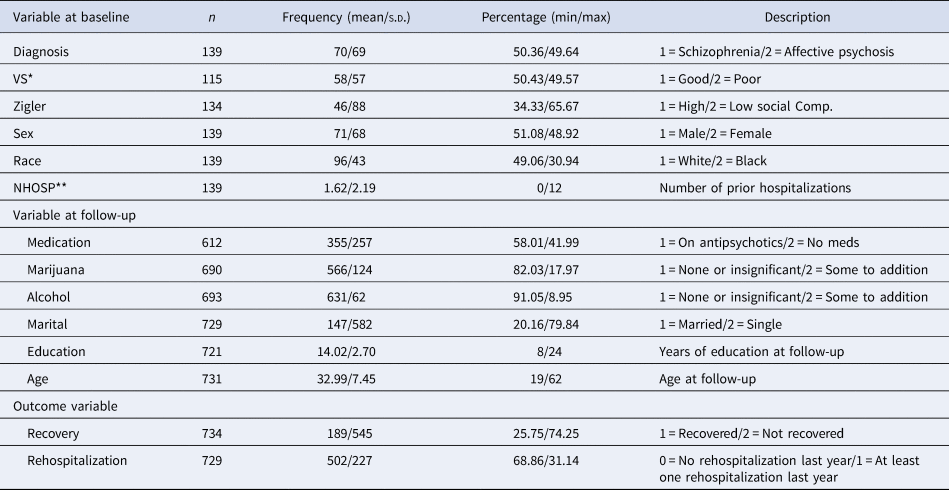
All variables, including explanatory and outcome, at index hospitalization and at follow-up visits, were summarized in Table 1. Pairwise correlations between explanatory variables were checked. The correlation between Zigler's Prognostic Index and Education was −0.45, which was not a surprise due to the definition of Zigler's Prognostic Index. The absolute values of all the other correlation coefficients were <0.35, which indicated that co-linearity was not a concern in this analysis.
Summary statistics for variables at baseline and subsequent follow-ups

*VS, Valliant and Stephen Prognostic Index;**NHOSP, number of previous hospitalizations
In this paper, we first explored the diagnostic comparison of the longitudinal trajectory of psychotic episodes and comparison of prescribed antipsychotic medications. Then, by fitting logistic regressions with a generalized estimating equation (GEE), we explored the effect of antipsychotic medication to recovery and rehospitalization, respectively, after adjusting for potential confounders at both index and follow-up visits. Backward variable selection strategy with a significance level of 0.1 was applied to include only significant variables in the model. We used the area under the receiver operating characteristic (ROC) curve, denoted by AUC, to measure the discrimination of the fitted model.
Results
Diagnostic comparison of the longitudinal trajectory of psychotic episodes
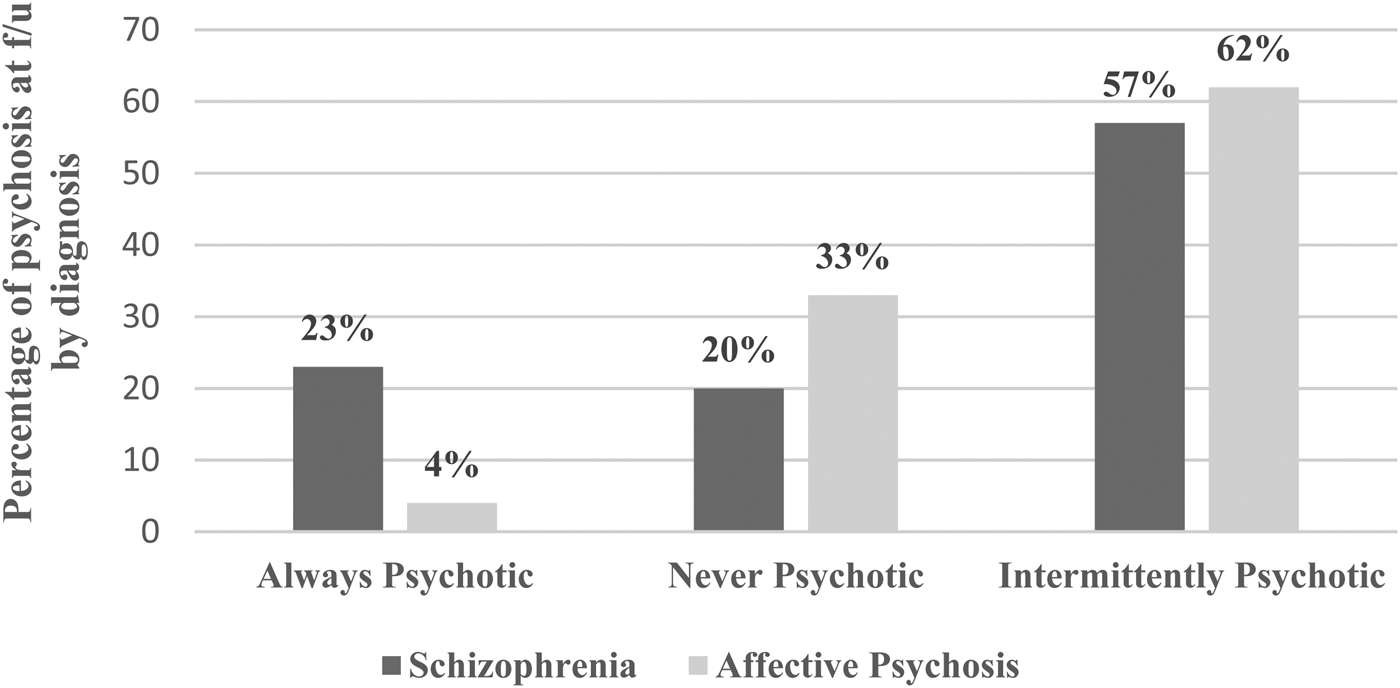
We first examined diagnostic differences between schizophrenia and affective psychosis of the longitudinal trajectory of psychotic episodes. Our data showed a significant group difference in the overall percentage of present state psychosis and future episodes by comparing chronic and persistent psychosis, absence of subsequent episodes of psychosis, and intermittent episodes of psychosis during the 20-year follow-up period (χ2 = 11.19, 2 df, p ⩽ 0.004; Fig. 1). Participants with schizophrenia were significantly more likely to experience a persistent and chronic longitudinal trajectory of psychotic symptoms compared to participants with affective psychosis. A higher percentage of participants with schizophrenia experienced additional psychotic episodes following the index hospitalization when compared to participants with affective psychosis. Within the affective psychosis sample, there was no significant difference in subsequent episodes of psychosis between participants with bipolar psychosis compared to participants with unipolar depressed psychosis (χ2 = 0.78, 2 df, p = 0.68). However, the presence of index psychosis does contribute to increased vulnerability of future episodes of psychosis regardless of diagnosis. Our data show that the majority of participants with schizophrenia or affective psychosis did experience future episodes of psychosis at some point in the 20-year follow-up. There was also a significant diagnostic difference in the mean number of future episodes of psychosis [t(137) = 3.81, p < 0.001] showing an increase in the number of future episodes of psychosis in participants with schizophrenia (M = 2.7 ± 2.09, n = 70) compared to participants with affective psychosis (M = 1.5 ± 1.50, n = 69).
Overall percentage of psychosis at subsequent follow-up by diagnosis.

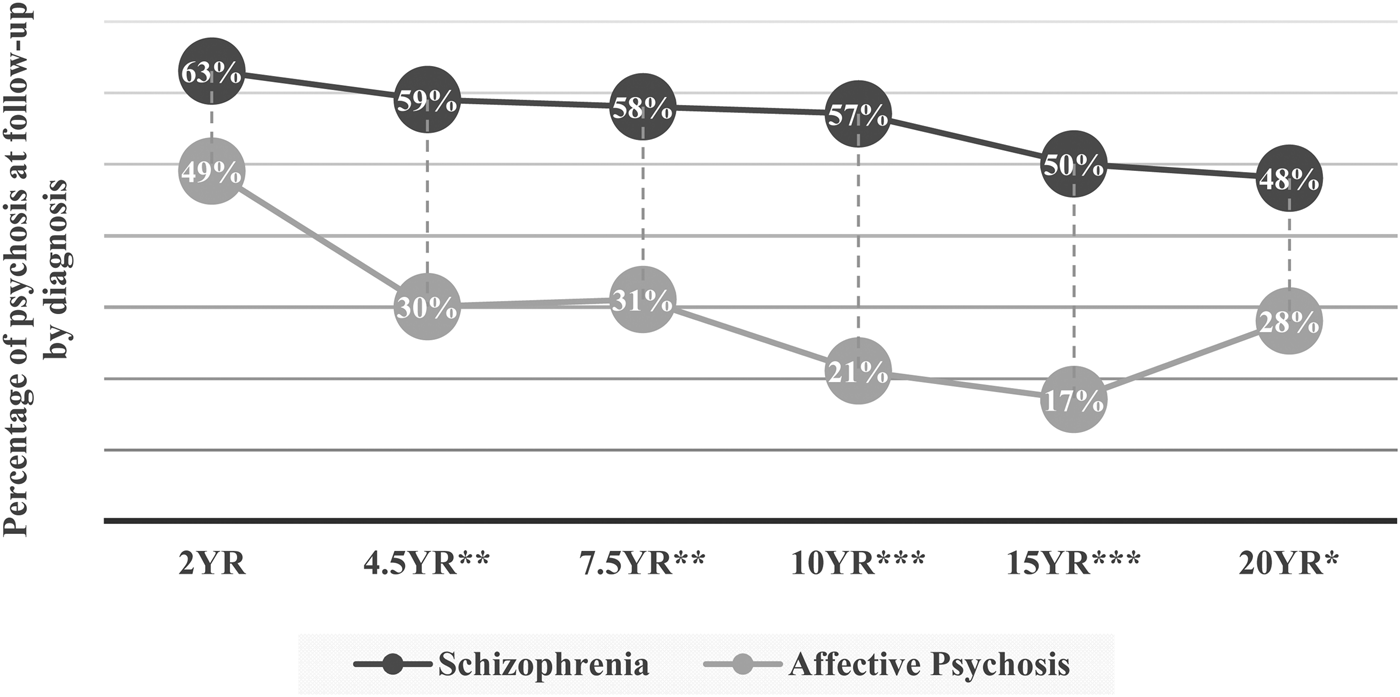
We next examined the presence of psychosis at each follow-up; our data show that the schizophrenia and affective psychosis groups initially demonstrated a similar symptom profile; however, at the 4.5-year follow-up the presentation and course differentiate by diagnostic group. As shown in Fig. 2, there was no diagnostic difference in the presence of psychosis at the 2-year follow-up (χ2 = 2.1, 1 df, p = 0.15); however, there was a significant diagnostic difference between groups, at the 4.5-year (χ2 = 9.94, 1 df, p = 0.002), 7.5-year (χ2 = 8.85, 1 df, p = 0.003), 10-year (χ2 = 15.00, 1 df, p ⩽ 0.001), 15-year (χ2 = 13.99, 1 df, p ⩽ 0.001), and 20-year (χ2 = 4.97, 1 df, p < 0.02) follow-up, showing that the number of participants with schizophrenia were significantly more psychotic at multiple follow-ups. Additionally, regardless of diagnostic group, the percentage of participants with psychotic symptoms decreased over time in the overall sample over the 20-year trajectory when compared to index hospitalization.
Diagnostic comparison of psychosis at six follow-ups over 20 years. Significance = *≤ 0.05, **≤ 0.01, ***≤ 0.001

Diagnostic comparison of prescribed antipsychotic medications
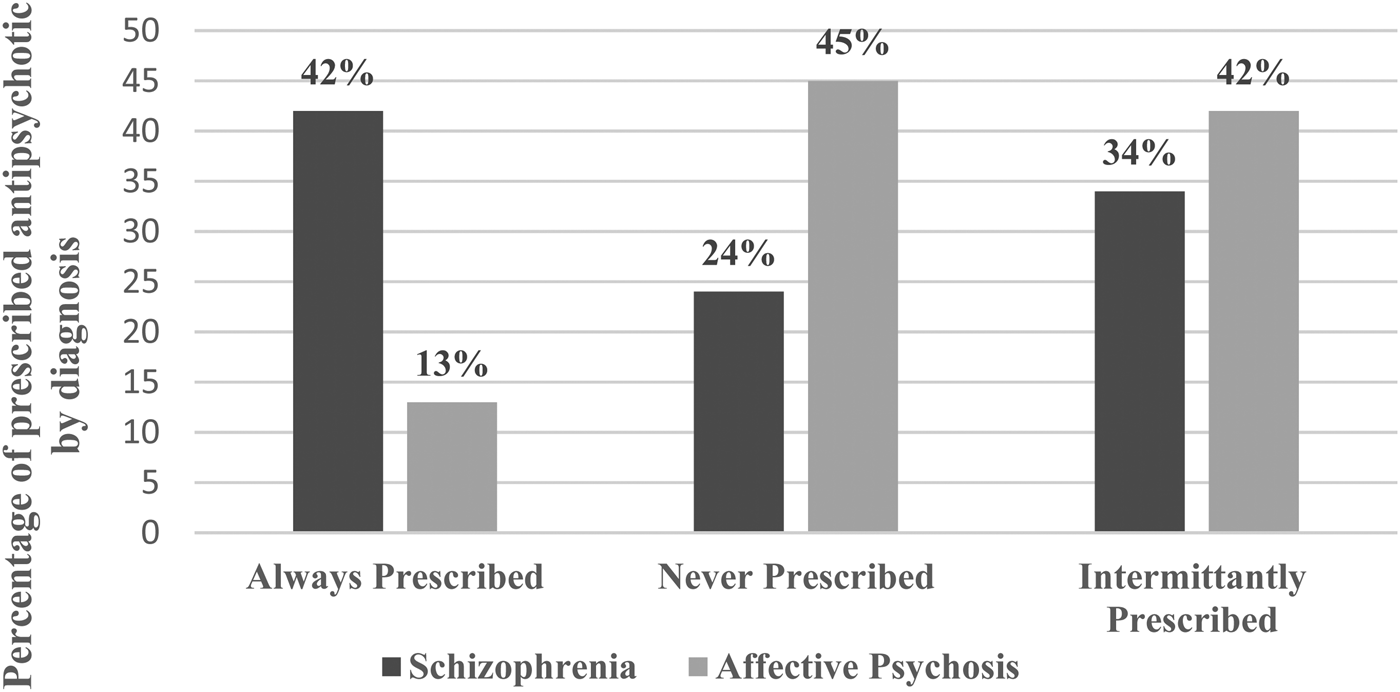
There was a significant difference between diagnostic groups in the percentage of follow-ups comparing continuous, intermittent, and no prescribed antipsychotic medications after index hospitalization (χ2 = 15.07, 2 df, p = 0.0005; Fig. 3). Forty-one percent (n = 29) of the participants with schizophrenia were continuously prescribed antipsychotic medications compared to 13% (n = 9) of participants with affective psychosis. Whereas, 24% (n = 17) of the participants with schizophrenia were never prescribed antipsychotic medications after index hospitalization compared to 45% (n = 31) of participants with affective psychosis. The percentage of participants with intermittent antipsychotic medications over the 20-year follow-up period were relatively similar between groups, showing that 34% (n = 24) of the participants with schizophrenia were intermittently prescribed antipsychotic medications compared to 42% (n = 29) of participants with affective psychosis.
Overall percentage of prescribed antipsychotic medication by diagnosis.

Antipsychotic medication status to the recovery and rehospitalization outcomes
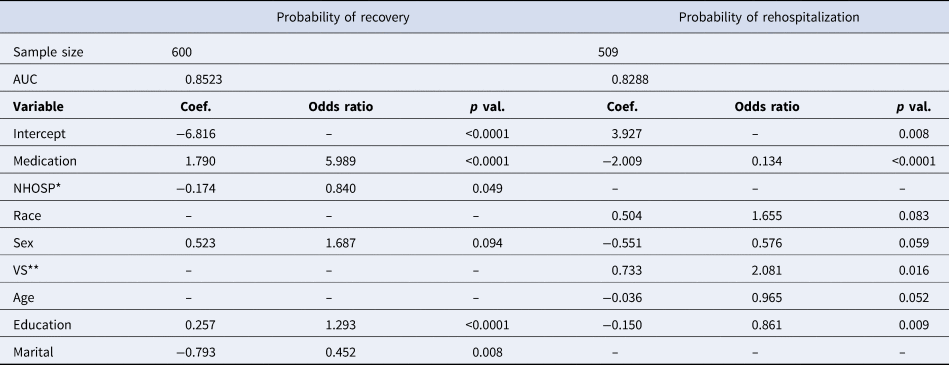
The fitted GEE logistic models for recovery and rehospitalization were listed in Table 2. We were not able to use all the 734 observations due to missing values. But the sample sizes for both models were reasonably large for reliable inferences. In fact, the AUC for modeling recovery was 0.8523 and for modeling rehospitalization was 0.8288, which provided strong evidence for good fits on non-rare events.
Fitted GEE logistic models for recovery and rehospitalization

*NHOSP, number of previous hospitalizations; **VS, Valliant and Stephen Prognostic Index.
Variables not listed in Table 2 were diagnosis, Zigler's Prognostic Index, marijuana, and alcohol, which were not significant enough to be included in the final model. The p values for medication were <0.0001 in both models, which showed a very strong effect of antipsychotic medication to both recovery and rehospitalization. For recovery, the coefficient of medication was 1.79 (OR 5.989, 95% CI 3.588–9.993), which indicated that participants not on antipsychotic medication were about six times more likely to recover than participants on medication, regardless of diagnosis status, prognostic index, race, sex, age, education, and other factors. Likewise, for rehospitalization, the coefficient of medication was −2.009 (OR 0.134, 95% CI 0.070–0.259), which indicated that the probability of rehospitalization for participants not on antipsychotic medication was about 13.4% of such a probability for those on medication, regardless of diagnosis status and all the other factors listed in Table 1.
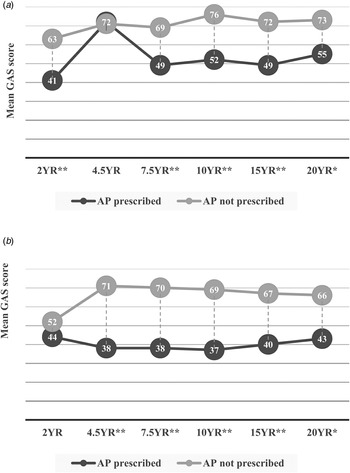
Lastly, we also independently examined the Global Assessment Functioning Scale (GAF) and medication status at each follow-up in participants with schizophrenia (Fig. 4a) and found that there was no significant difference in medication status at the 2-year and follow-up [t(34) = −1.05, p = 0.30]. However, there was a significant difference at the 4.5-year [t(48) = −5.84, p < 0.001], 7.5-year [t(50) = −6.06, p < 0.001], 10-year [t(44) = −5.54, p < 0.001], 15-year [t(43) = −4.49, p < 0.001], and 20-year [t(51) = −4.06, p < 0.001] follow-up evaluations showing that participants not prescribed antipsychotic medications scored significantly higher in GAF scores indicating better overall global outcome. Likewise, when we examined GAF scores and medication status at each follow-up evaluation in participants with affective psychosis (Fig. 4b), we found a significant difference at the 2-year [t(26) = −3.64, p < 0.001], 7.5-year [t(43) = −3.82, p < 0.001], 10-year [t(41) = −4.39, p < 0.001], 15-year [t(41) = −4.13, p < 0.001], and 20-year [t(33) = −3.42, p = 0.002] follow-up but not the 4.5-year follow-up [t(46) = 0.31, p = 0.98].
(a) Mean Global Assessment Functioning Score (GAF) and medication status in schizophrenia. (b) Mean Global Assessment Functioning Score (GAF) and medication status in affective psychosis. AP, antipsychotic medication; *⩽0.01; **⩽0.001.

Discussion
In this novel study, we examined the longitudinal trajectory of psychotic episodes in a sample that consisted of participants with schizophrenia compared to participants with affective psychosis over a 20-year follow-up period. Additionally, we examined prognostic factors, premorbid adjustment, potential confounds such as education, drug use, rehospitalization, etc., or medication status predict prolonged periods of recovery after the 2-year period regardless of diagnosis.
Diagnostic comparison of the longitudinal trajectory of psychotic episodes
Our data are consistent with other studies that have reported that symptom presentation was not significantly different between diagnostic groups at the initial presentation and relatively early in the course. However, the course diagnostically differentiates starting at the 4.5-year follow-up, showing that participants with schizophrenia were significantly more likely to experience a persistent and chronic longitudinal trajectory compared to participants with affective psychosis, to our knowledge, this longitudinal comparison has not been a previously reported study extending to 20 years following the initial evaluation. In terms of medication prescribing patterns, participants with schizophrenia were more likely to be continuously prescribed antipsychotic compared to affective psychosis.
Diagnostic comparison of prescribed antipsychotic medications
Harrow in a consistent series of publications (Harrow et al., Reference Harrow, Jobe and Faull2012; Harrow et al., Reference Harrow, Jobe and Faull2014; Harrow & Jobe, Reference Harrow and Jobe2007; Harrow & Jobe, Reference Harrow and Jobe2013; Harrow & Jobe, Reference Harrow and Jobe2018) has shown that evidence for antipsychotic medication used on a long-term basis leads to poorer outcome. This includes decrements in multiple areas including work function, symptoms of psychosis, less remissions, and periods of recovery. Initially, these findings were surprising, but the consistency of these findings showed poorer outcomes for participants with schizophrenia treated with antipsychotic medications at each follow-up after the 2-year assessment in multiple areas. These findings have been replicated in multiple areas by an ever-increasing number of other investigators showing similar poor outcomes in participants in schizophrenia prescribed antipsychotic medications in a variety of outcome domains. Our previous research also reported that participants with bipolar psychosis not taking antipsychotics were more likely to have a positive outcome (Goldberg & Harrow, Reference Goldberg and Harrow2011). Building on this previous research, our current study reported here shows that regardless on diagnosis (schizophrenia and affective psychosis), participants not prescribed antipsychotic medication are more likely to experience more episodes of recovery, increased GAF scores, and are less likely to be rehospitalized. Further, participants not on antipsychotic medication were approximately six times more likely to recover than participants on medication, regardless of diagnosis status, prognostic index, race, sex, age, education, and other factors.
Similarly to our findings reported above, other studies have shown that at the 7-year follow-up, participants with psychosis in the dose reduction/discontinuation group were significantly better compared to participants in maintained treatment in terms of social functioning, vocational functioning, self-care, relationships with others, and over all community integration domains (Wunderink et al., Reference Wunderink, Nieboer, Wiersma, Sytema and Nienhuis2013). Additionally, there was not a significant difference between the dose reduction/discontinuation group and maintenance therapy group in term of symptom exacerbation. Thus, although the antipsychotic medication was reduced or discontinued, the symptom profile or pattern was not different from participants who were maintained on antipsychotics. This finding does not support the hypothesis that long-term continuous antipsychotic medications lead to a positive outcome. Additionally, long-term antipsychotics medications for psychosis are not predictive of positive outcomes and that additional research is needed that focus on risk/benefit and personal preference on this potential benefit (Wunderink, Reference Wunderink2019). Likewise, in a recent randomized control study examining gradual antipsychotic dose reduction compared to maintenance treatment showed that approximately 40% of the participants with a schizophrenia spectrum disorder tolerated a dose reduction without an increased rate of relapse between the groups (Huhn et al., Reference Huhn, Leucht, Rothe, Dold, Heres, Bornschein and Leucht2020).
A recent publication by Bergström et al., (Reference Bergström, Taskila, Alakare, Köngäs-Saviaro, Miettunen and Seikkula2020) reported that increased cumulative exposure to antipsychotics during the first 5 years following onset were more likely to be continuously prescribed antipsychotic medication and to be receiving ongoing psychiatric treatment and disability reimbursements. Alarmingly, the study also reports a significant association between higher cumulative exposure with higher mortality.
The Danish OPUS Trial found that many participants on antipsychotic medications were doing poorly (Wils et al., Reference Wils, Gotfredsen, Hjorthøj, Austin, Albert, Secher and Nordentoft2017). A larger percentage of participants on antipsychotic medications were doing poorly compared to participants not on antipsychotics. Approximately 3/4 of the 120 participants off meds at the 10-year follow-up were doing well and were defined to be in remission.
Diagnostic comparison of the recovery outcomes and antipsychotic medication status
Studies examining early recovery and employment outcome suggest that FEP participants may benefit from a cautious use of antipsychotic medication in an early phase, when needed to treat symptoms, and that many may terminate treatment early after full symptomatic remission without a high risk for a deteriorating course of a psychotic disorder (Strålin, Skott, & Cullberg, Reference Strålin, Skott and Cullberg2019). In a large, well-documented longitudinal study conducted by Kotov et al. (Reference Kotov, Fochtmann, Li, Tanenberg-Karant, Constantino, Rubinstein and Carlson2017) showed that antipsychotic use was associated with lower overall functioning as measured by a decrease in GAF scores, inexpressivity ratings, and apathy-asociality ratings overall (Kotov et al., Reference Kotov, Fochtmann, Li, Tanenberg-Karant, Constantino, Rubinstein and Carlson2017; Velthorst et al., Reference Velthorst, Fett, Reichenberg, Perlman, van Os, Bromet and Kotov2017).
The AESOP-10 study conducted in the UK reported that 71% (n = 44) who were not prescribed antipsychotic medications were in recovery compared to 34% (n = 57) who were prescribed antipsychotic medications who were in recovery at 2 years prior to follow-up (Morgan et al., Reference Morgan, Lappin, Heslin, Donoghue, Lomas, Reininghaus and Murray2014).
Whereas the 10-year follow-up of the Northern Finland 1966 Birth Cohort showed that 63% (n = 15) of those who were not prescribed antipsychotic medication were in remission compared to 20% (n = 9) who were prescribed antipsychotic medications and in remission (Moilanen et al., Reference Moilanen, Haapea, Miettunen, Jääskeläinen, Veijola, Isohanni and Koponen2013). The NYC longitudinal study found fewer psychotropic medications and fewer psychiatric services to be predictive of better outcome although the differences were not statistically significant (Cohen & Iqbal, Reference Cohen and Iqbal2014).
Predictive factors contributing to recovery
Bland and Parker (Reference Bland and Parker1978) showed that patients who received extensive services during the follow-up period had poorer outcomes (Bland & Parker, Reference Bland and Parker1978). Outcome was better than in most earlier studies of schizophrenia, but similar to other recent studies of first admission patients; also, the use of phenothiazines, short-term hospitalization, and community services may play a part. The failure of prognostic indicators to predict more than about 25% of the outcome variance for this group of ‘poor prognosis’ patients supports the viewpoint that ‘good’ and ‘poor’ prognosis in schizophrenia are two different entities.
Our previous research has shown that when prognostic indices are introduced as a control for outcome status, it can distinguish between good v. poor outcome. At the time of the initial hospitalization, participants with a poor prognostic potential on several indices started to show poorer outcomes regardless of diagnosis. Thus, verifying the accuracy of the prognostic measures in predicting long-term outcome. Additionally, after the first 2–3 years, the participants with schizophrenia and affective psychosis who were prescribed antipsychotic medications continued to show poorer outcomes than the participants who were not prescribed antipsychotic medications. It occurred after we controlled for initial prognosis by comparing the participants with schizophrenia and affective psychosis who had initially poor prognosis and were prescribed antipsychotics with the participants with poor prognosis who were not prescribed antipsychotics. We also compared the participants with schizophrenia and affective psychosis who had initial moderate prognosis and were prescribed antipsychotics with the participants who had initial moderate prognosis and were not prescribed antipsychotics.
There are currently multiple studies that examine the long-term outcomes of participants prescribed antipsychotic medications. In most instances, after controlling for initial prognosis, the participants who were prescribed antipsychotics showed poorer outcomes than the participants who were not prescribed antipsychotics. Some of these comparisons were statistically significant and other comparisons were not significant, but most were in the same directions of poorer outcome after the first 2–3 years for participants prescribed antipsychotics (Harrow & Jobe, Reference Harrow and Jobe2018).
Summary hypothesis
Despite skepticism in the field (Catts & O'Toole, Reference Catts and O'Toole2017; Correll, Rubio, & Kane, Reference Correll, Rubio and Kane2018; Goff et al., Reference Goff, Falkai, Fleischhacker, Girgis, Kahn, Uchida and Lieberman2017; Leucht & Davis, Reference Leucht and Davis2017), a major factor, among multiple other possible factors, that may be contributing to the negative outcomes in patients experiencing long-term antipsychotic treatment is antipsychotic-induced dopamine super-sensitivity psychosis (aiDSP) (Chouinard et al., Reference Chouinard, Samaha, Chouinard, Peretti, Kanahara, Takase and Iyo2017; Fallon, Dursun, & Deakin, Reference Fallon, Dursun and Deakin2012; Murray & Di Forti, Reference Murray and Di Forti2018; Nakata, Kanahara, & Iyo, Reference Nakata, Kanahara and Iyo2017; Yin, Barr, Ramos-Miguel, & Procyshyn, Reference Yin, Barr, Ramos-Miguel and Procyshyn2017). The Chicago Follow-up Study was completed before clinical scales for assessing aiDSP had been fully developed (Demjaha, Murray, McGuire, Kapur, & Howes, Reference Demjaha, Murray, McGuire, Kapur and Howes2012; Oda, Kanahara, & Iyo, Reference Oda, Kanahara and Iyo2015; Suzuki et al., Reference Suzuki, Kanahara, Yamanaka, Takase, Kimura, Watanabe and Iyo2015; Vita et al., Reference Vita, Minelli, Barlati, Deste, Giacopuzzi, Valsecchi and Gennarelli2019), and then used in large scale follow-up studies of continuous antipsychotic treatment showing that 30% of patients with schizophrenia and 70% of patients with treatment-resistant schizophrenia developed aiDSP (Chouinard & Chouinard, Reference Chouinard and Chouinard2008; Takase et al., Reference Takase, Kanahara, Oda, Kimura, Watanabe and Iyo2015). Nevertheless, our results are consistent with these more recent studies on the clinical development of aiDSP over the long term. Also, our findings that participants with schizophrenia had a worse trajectory than participants with psychotic affective disorder would be consistent with the fact that our participants with schizophrenia were more likely to have been continuously medicated than our participants with psychotic affective disorders and therefore more likely to have developed aiDSP. If aiDSP is indeed the driving force behind the negative results of long-term continuous use of antipsychotics, and because antipsychotics also suppress the symptoms of aiDSP as they develop, we would expect a direct linear relationship between the length of usage of antipsychotics and the severity of rebound of psychotic symptoms after discontinuing antipsychotic treatment. This is exactly what was found by Tiihonen, Tanskanen, and Taipale (Reference Tiihonen, Tanskanen and Taipale2018) in a large long-term 20-year study (Tiihonen et al. Reference Tiihonen, Tanskanen and Taipale2018). However, they limited their study by relying solely on rehospitalization and mortality to define relapse, thus confounding by health risk, and failing to include measures of severity of psychosis, such as GAF scores, within weeks of discontinuation, which would have better documented the time course of rebound characteristic of aiDSP (Tiihonen et al., Reference Tiihonen, Tanskanen and Taipale2018). Substantial translational research is already underway to assess the role of aiDSP in the loss of antipsychotic drug efficacy and the breakthrough of persistent novel psychotic symptoms (De Lafuente & Romo, Reference De Lafuente and Romo2011; Fallon & Dursun, Reference Fallon and Dursun2011; Kesby, Eyles, McGrath, & Scott, Reference Kesby, Eyles, McGrath and Scott2018). These include studies of the similarities and differences in the pathophysiology of different psychotic disorders and their role in the development of aiDSP and treatment resistance (Amato, Kruyer, Samaha, & Heinz, Reference Amato, Kruyer, Samaha and Heinz2019; Ashok et al., Reference Ashok, Marques, Jauhar, Nour, Goodwin, Young and Howes2017; Jauhar et al., Reference Jauhar, Nour, Veronese, Rogdaki, Bonoldi, Azis and Howes2017; Jauhar et al., Reference Jauhar, Veronese, Nour, Rogdaki, Hathway, Natesan and Kapur2019), the genetic markers that indicate level of susceptibility for developing aiDSP (Agnati, Guidolin, Cervetto, Borroto-Escuela, & Fuxe, Reference Agnati, Guidolin, Cervetto, Borroto-Escuela and Fuxe2016; Charron, El Hage, Servonnet, & Samaha, Reference Charron, El Hage, Servonnet and Samaha2015; Escamilla et al., Reference Escamilla, Camarena, Saracco-Alvarez, Fresán, Hernández and Aguilar-García2018; Oda et al., Reference Oda, Kanahara, Kimura, Watanabe, Hashimoto and Iyo2015; Oishi et al., Reference Oishi, Kanahara, Takase, Oda, Nakata, Niitsu and Iyo2018), optimal receptor binding to mitigate aiDSP (Iyo et al., Reference Iyo, Tadokoro, Kanahara, Hashimoto, Niitsu, Watanabe and Hashimoto2013; Samaha, Seeman, Stewart, Rajabi, & Kapur, Reference Samaha, Seeman, Stewart, Rajabi and Kapur2007; Seeman, Reference Seeman2011; Tadokoro et al., Reference Tadokoro, Okamura, Sekine, Kanahara, Hashimoto and Iyo2012), low dose and intermittent dosage regimes over the long term to avoid the onset of aiDSP (Bowtell et al., Reference Bowtell, Eaton, Thien, Bardell-Williams, Downey, Ratheesh and O'Donoghue2018; Huhn et al., Reference Huhn, Leucht, Rothe, Dold, Heres, Bornschein and Leucht2020; Moncrieff, Reference Moncrieff2006; Moncrieff, Crellin, Long, Cooper, & Stockmann, Reference Moncrieff, Crellin, Long, Cooper and Stockmann2019; Tiihonen et al., Reference Tiihonen, Mittendorfer-Rutz, Majak, Mehtälä, Hoti, Jedenius and Taipale2017) research into the etiology of the cognitive disturbances characteristic of aiDSP psychosis and how to mitigate them (Nakahara, Reference Nakahara2014; Turkheimer et al., Reference Turkheimer, Selvaggi, Mehta, Veronese, Zelaya, Dazzan and Vernon2020), and, finally, the study of new drugs as a prophylaxis against the development of aiDSP or that are effective in treating aiDSP (Citrome, Reference Citrome2013; Lally & MacCabe, Reference Lally and MacCabe2015; Rajkumar, Reference Rajkumar2014).
Conclusion
This study reports multiple findings that bring into question the use of continuous antipsychotic medications, regardless of diagnosis in examining the clinical trajectory and outcomes in participants diagnosed with schizophrenia compared to participants diagnosed with affective psychosis. The data indicates that participants with schizophrenia are more likely to experience psychosis than participants with affective psychosis at all six follow-ups over 20 years and that only 50–70% of participants with affective psychosis have subsequent psychosis at some point over the 20 years. We also show that almost all participants with schizophrenia prescribed antipsychotic medications have one or more subsequent psychotic episodes over 20 years. Additionally, participants with schizophrenia not on antipsychotics after the first 2 years have better outcomes than participants with schizophrenia on antipsychotics. In terms of recovery, we demonstrate that after the second year, regardless of diagnosis, the absence of antipsychotic medication predicted recovery at each subsequent follow-up. These and previous data indicate that after 2 years, antipsychotics no longer reduce psychotic symptoms and participants not on antipsychotic perform better.
Even when the confound by indication for prescribing antipsychotic medication is controlled for, participants with schizophrenia not on medication do better than their medicated cohorts over the long term, strongly confirming the importance of the recent wave of research exposing the extensive role of aiDSP and the role of antipsychotic drug resistance generally (Fernandes et al., Reference Fernandes, Williams, Steiner, Leboyer, Carvalho and Berk2017). However, with the recent wave of translational research, aiming at the ultimate goal of precision medicine in psychopharmacology, there will be a strong stimulus to the pharmaceutical industry to develop safer more etiologically specific medications for psychosis in the near future, which along with more strongly targeted psychosocial interventions, will offer patients substantial treatment benefits (Shin, Han, Pae, & Patkar, Reference Shin, Han, Pae and Patkar2016). The findings presented here and in previous studies by us and others highlight the importance of prescribers to individually work together in partnership with service users to continuously and consistently evaluate the need for antipsychotic medication.
Supplementary material
The supplementary material for this article can be found at https://doi.org/10.1017/S0033291720004778.
Acknowledgements
The authors would like to thank all the individuals who participated in this study as their contribution made this research possible.
Financial support
Supported, in part, by USPHS Grants MH-26341 and MH-068688 from the National Institute of Mental Health, USA (Dr Harrow) and a Grant from the Foundation for Excellence in Mental Health Care (Dr Harrow). The funding bodies had no other contribution to any part of the article.