Introduction
The O’Neill Report predicts that deaths from antimicrobial-resistant bacteria may exceed 10 million globally by 2050.Reference O’Neill1 The World Health Organization considers antimicrobial resistance one of the most significant public health threats, necessitating both national and global action.2,3 Many regions have accordingly implemented epidemiological surveys, antimicrobial stewardship programs, and guidelines promoting appropriate antimicrobial useReference Barlam, Cosgrove and Abbo4–Reference Yoon, Kwon and Jeong10 that have reduced inappropriate use and improved survival.Reference Wu, Chen and Lee11–Reference Barros, Monroy, Bergo, Beck, David and Rigatto20 In Japan, antimicrobial stewardship teams (ASTs), typically led by physicians and pharmacists, have intensified activities to optimize antimicrobial therapy.
Antimicrobial stewardship is a coordinated, multidisciplinary approach that optimizes antibiotic selection, dosing, route, and duration to improve outcomes and reduce adverse events.Reference Barlam, Cosgrove and Abbo4 Early appropriate antimicrobial therapy initiation significantly reduced overall mortality.Reference Paul, Shani, Muchtar, Kariv, Robenshtok and Leibovici21 Nonetheless, bloodstream infections remain associated with high mortality.Reference Fleischmann, Scherag and Adhikari22–Reference Rudd, Johnson and Agesa24 Appropriate antimicrobial use is essential; however, bacteremia warrants additional diagnostic and therapeutic measures, including laboratory testing and drainage.Reference Niederman, Baron and Bouadma23,Reference Baddour, Wilson and Bayer25–Reference Bouza and Burillo27 Stewardship should extend beyond drug selection to diagnostic and therapeutic support, aligned with WHO diagnostic stewardship.28 Few studies have compared outcomes between interventions limited to antimicrobial selection and those incorporating broader diagnostic and therapeutic management.
Until fiscal year 2021 (FY2021), an AST involved pharmacists performing day-to-day reviews and dosing checks, with escalation to ID physicians as needed. In FY2022, we introduced an interdisciplinary infectious disease support team (IDST), comprising physicians and nurses who supplement antimicrobial stewardship by addressing diagnosis, treatment duration, and source control. IDST established a system to co-manage patients with their primary physician until their infectious disease treatment completion or stabilization. IDST activities require no additional funding and minimize workload for physicians (daily management of inpatients and outpatients in one’s own department) and nurses (implement daily measures to prevent and contain infections within the hospital), indicating feasibility in resource-limited settings. This transition is rationalized as “bacteremia is a severe infectious disease, and antimicrobial therapy alone is often insufficient to improve patients’ quality of life and reduce mortality.” In this study, we determined whether an interdisciplinary IDST could improve outcomes compared with ASTs alone, across diverse staffing contexts, to evaluate the impact of “intervention with only appropriate antimicrobial use” versus “intervention with IDST” on patient outcomes.
Methods
Study design and setting
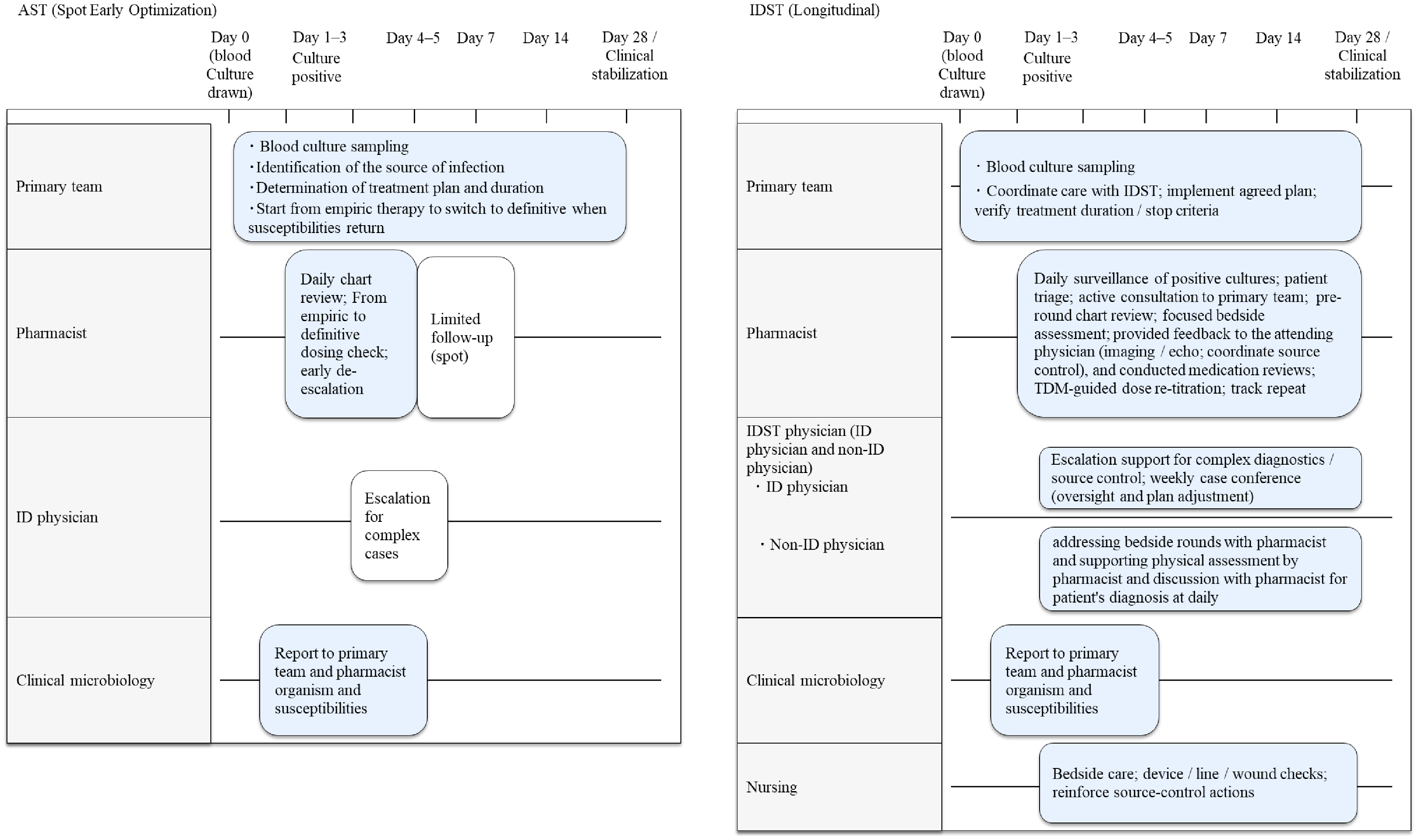
This retrospective cohort study, conducted at Yamanashi Prefectural Central Hospital, a tertiary-care hospital in Japan, involved a chart review of patients with positive blood cultures who required inpatient antimicrobial treatment between April 2021 and March 2023. We included all consecutive eligible bacteremia cases during both periods, without performing any a priori sample size calculation. The exclusion criteria were outpatient status, unknown 28-day survival, and contaminated positive blood culture. Patients were categorized into two periods based on the antimicrobial stewardship model: 1. AST (April 2021–March 2022): scope (spot, early phase). Daily from empiric to definitive antimicrobial review, dosing checks, bug–drug matching, early de-escalation opportunities, TDM-guided dosing and re-titration, and recommendations documented to the primary team. Pharmacists conducted the primary activities, with the ID physician providing consultation when necessary. 2. IDST (April 2022–March 2023): scope (longitudinal). All AST activities plus: specimen collection for pathogen detection (e.g., urinalysis and antigen testing), diagnostic stewardship (repeat blood cultures, targeted imaging [e.g., contrast CT and ultrasound] /echo when indicated) to identify infected sites, source-control facilitation (device removal/drainage coordination), guidance on the treatment duration, and treatment stop criteria verification through clinical stabilization (Figure 1). Pharmacists triaged patients with positive blood cultures, obtained permission to intervene from primary treating team, conducted pre-round chart reviews and presentations in IDST, performed physical assessments, participated in discussions regarding infectious disease diagnoses, provided feedback to the attending physician, and conducted medication reviews (Supplementary Table 1). The attending physician diagnosed the infection; the IDST provided support to ensure an accurate and appropriate diagnosis. IDST physicians (ID physicians or non-ID physicians assigned to the Infectious Diseases Department) handle outpatient and inpatient care daily, leaving limited time to adequately manage the hospital’s infectious disease response. Among them, ID physicians undertake total management at weekly conference, whereas non-ID physicians perform daily bedside rounds with pharmacists, validate pharmacist-derived physical assessments, and discuss diagnoses with them. Per institutional protocol, clinical pharmacists handled delegated, day-to-day tasks, including surveillance of new positive blood cultures, triage, pre-round chart review, focused bedside assessment, active consultation with the primary team, and Electronic Health Record documentation, with predefined escalation thresholds to ID specialists. Non-ID physicians participated in daily bedside rounds and implemented the agreed-upon plan; final clinical responsibility rested with the attending/ID specialist.
Differences between the AST and IDST intervention structures.
Note: AP, attending physician; AST, antimicrobial stewardship team; BCICPS, board-certified infection control pharmacy specialist; CICN, certified nurse in infection control; CM, clinical microbiologist; IDP, infectious disease physician; IDST, infectious disease support team.

Cases without pharmacist involvement comprised the non-intervention group. Cases where no intervention was performed were defined as those in which permission for intervention was not obtained from the primary physician or where appropriate source control had been implemented (or was planned) and appropriate antimicrobial was selected at the time of positive blood culture. Contamination was determined by the attending physician in consultation with an ID specialist based on the number of positive blood cultures, the patient’s background, and condition. Appropriate antimicrobial selection was defined as “at least one antimicrobial agent administered against pathogens isolated from the most recent blood culture, and for which a definitive antimicrobial agent is selected.” This included selecting the correct dosage and route of administration based on the patient’s physical size and clearance. The timing of the decision on definitive therapy was based on the confirmation of the pathogen and its susceptibility in the most recent blood culture. Stabilization of treatment was defined as occurring “when the duration of antimicrobial therapy is on track, and the patient’s clinical symptoms (afebrile and hemodynamically stable for at least 48 hours) have improved.”
Data extraction and examination methods
The following data were extracted from electronic medical records: age, sex, 7-day, 14-day, and 28-day mortality from the date of positive blood culture, causative organism of bacteremia, comorbidities, vital signs at the time of blood culture sampling, antimicrobial use, carbapenem use during empirical therapy, and intervention with ASTs. To stratify bacteremia severity, the Charlson Comorbidity Index (CCI), Pitt Bacteremia score (PBS), and quick Sequential Organ Failure Assessment (qSOFA) scores were calculated.Reference Charlson, Pompei, Ales and MacKenzie29–Reference Singer, Deutschman and Seymour32 qSOFA scores were calculated only when all three components were documented; they were not assessed in patients evaluated with SOFA (considered not applicable).
Blood cultures were performed using the BACT/ALERT Virtuo system (bioMérieux Japan Ltd., Tokyo, Japan). Upon positivity, bacteria were subsequently identified using one of the following methods: MALDI Biotyper (Bruker Japan K.K., Yokohama, Japan), FilmArray Torch (bioMérieux Japan Ltd., Tokyo, Japan), or GeneXpert (Beckman Coulter K.K., Tokyo, Japan). Antimicrobial susceptibility testing was performed using the VITEK 2 system (blue card) (bioMérieux Japan Ltd., Tokyo, Japan).
Bacteremia cases in FY2021 were classified into two groups: those receiving AST intervention (AST) and those not receiving AST (n-AST). In FY2022, cases were categorized as receiving (IDST) or not receiving (n-IDST) IDST intervention.
Outcomes
The primary outcome was the 28-day mortality in the AST and IDST groups. The secondary outcomes included the impact of IDST or AST on antimicrobial appropriateness and mortality.
Statistical analysis
Statistical analyses were performed using the IBM SPSS Statistics 26 (IBM Japan, Ltd., Tokyo, Japan). Missing data were minimal; cases with missing key variables for the multivariable model were excluded from that analysis. In the univariate analysis, the chi-square or Fisher’s exact test was used for categorical variables, and the Mann–Whitney U test for continuous variables. Kaplan–Meier survival curves were used to compare 7-day, 14-day, and 28-day mortality rates for each intervention, and the log-rank test was performed. Cox regression analysis was used for multivariate analysis. The dependent variable was 28-day mortality; covariates with P < .1 in the univariate analysis, plus prespecified clinical factors (intervention and specified variables), were included in the multivariable model. P < .05 was considered statistically significant. All tests were two-sided, and 95% confidence intervals (CIs) were calculated. No a priori sample-size calculation was performed. The outcome frequency determined statistical information for time-to-event analyses; we prespecified that precision would be conveyed through event counts and 95% CIs, rather than post-hoc power estimates.
Ethical considerations
The Institutional Clinical and Genome Research Ethics Review Committee (No. 2023-70) approved the study and waived the requirement for written informed consent, as per institutional and national guidelines. Tacit consent was obtained via an opt-out website notification. The study adhered to the Declaration of Helsinki and relevant national regulations, and it also followed the STROBE guidelines for cohort studies (completed checklist is included in the Supplementary material).
Results
Cases and characteristics
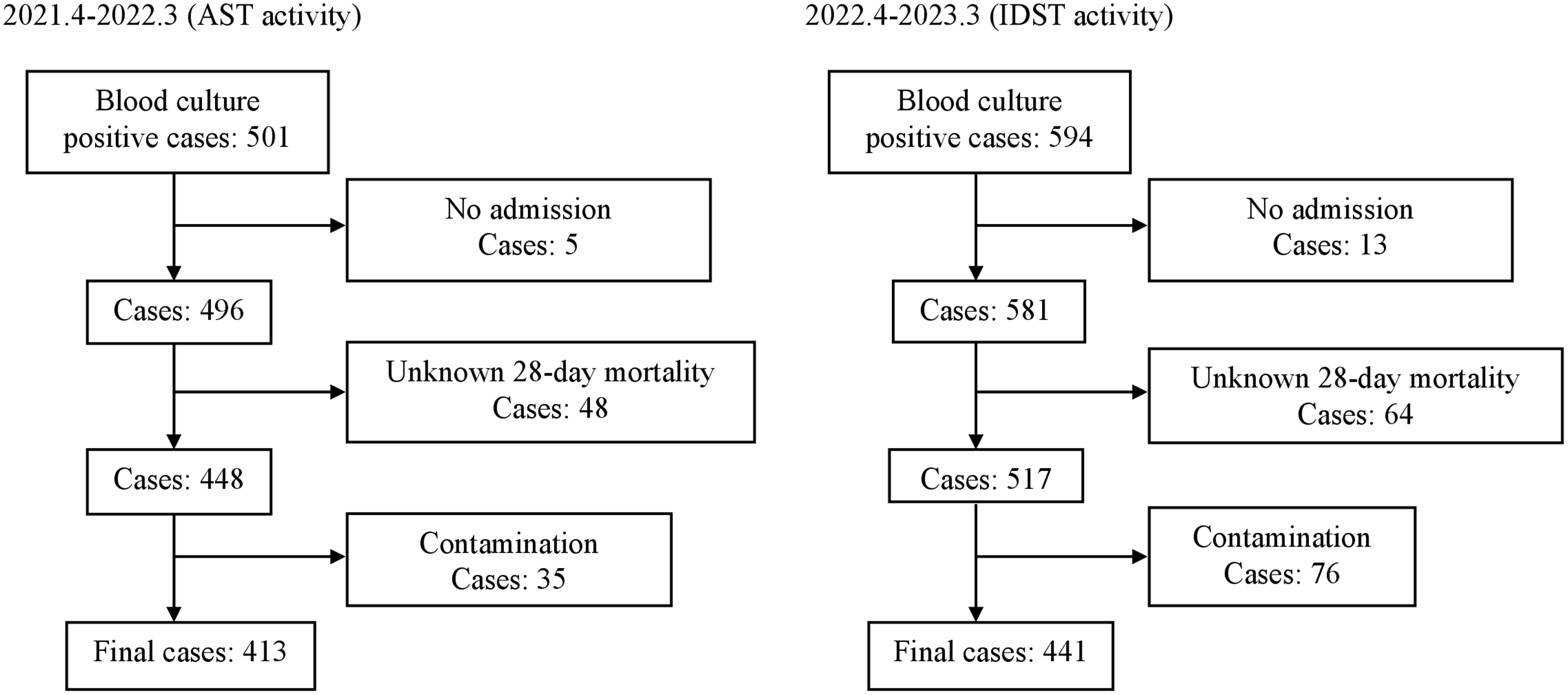
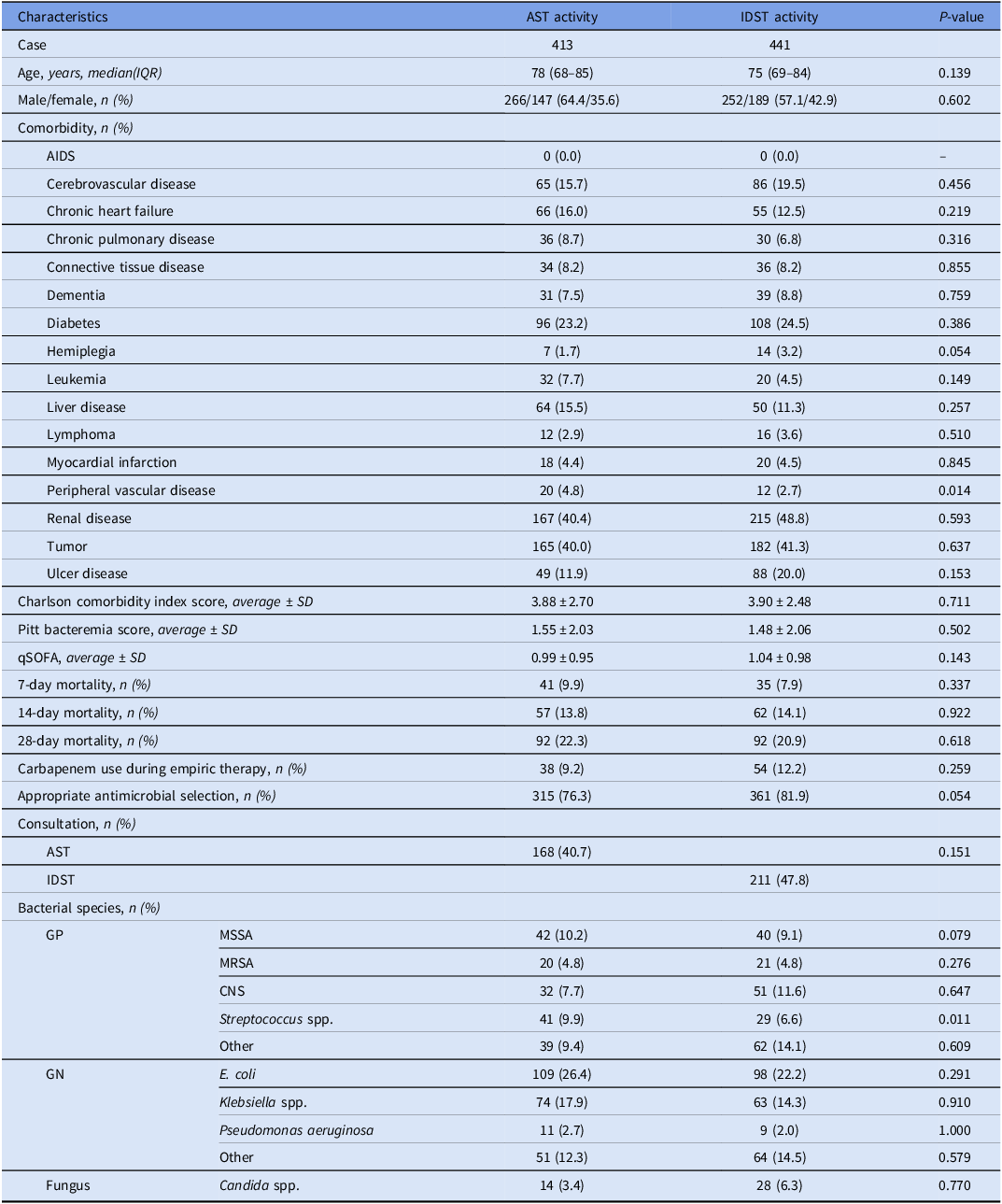
We included 854 patients with bacteremia: 413 during AST and 441 during IDST, respectively (Figure 2). A direct comparison of the characteristics between AST- and IDST-active periods revealed no significant differences in baseline demographics or severity scores (age, sex, CCI, PBS, number of 7-day, 14-day, and 28-day mortality cases, empirical initial carbapenem treatment, appropriate antimicrobial selection, and intervention services; Table 1).
Patient inclusion and exclusion flow for the AST and IDST periods.
Note: AST, antimicrobial stewardship team; IDST, infectious disease support team.

Patient characteristics during the AST and IDST activity periods

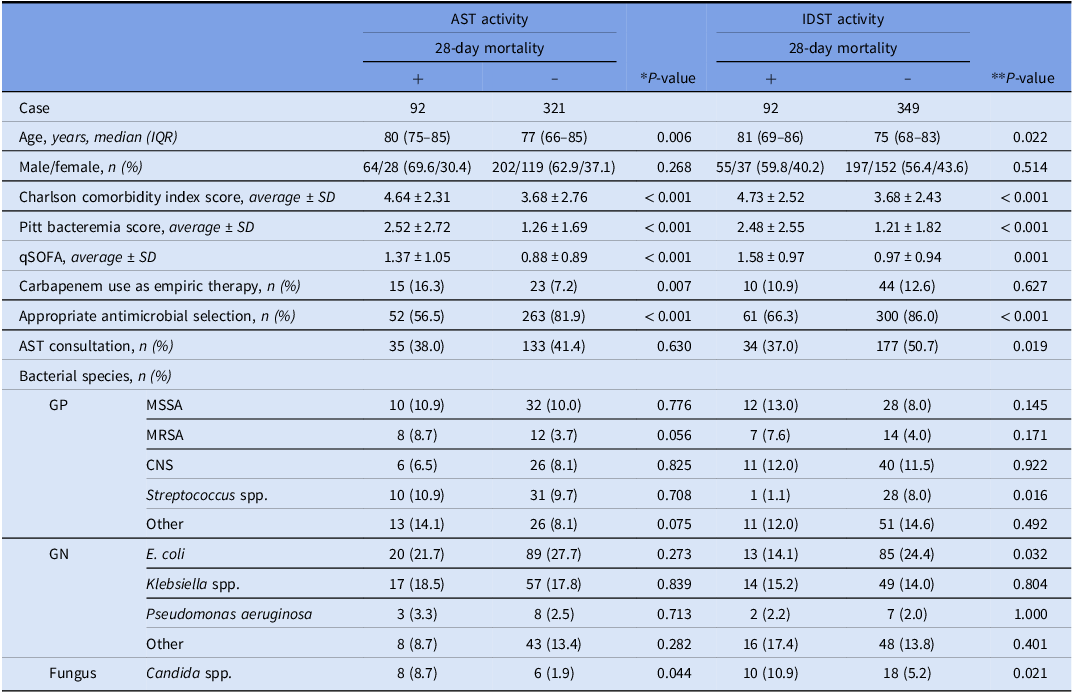
AST, antimicrobial stewardship team; CNS, coagulase-negative staphylococci; GN, gram-negative; GP, gram-positive; IDST, infectious disease support team; MSSA, methicillin-susceptible Staphylococcus aureus; MRSA, methicillin-resistant Staphylococcus aureus.
Each characteristic is presented as case numbers (%) and median or mean values. AST interventions were conducted in fiscal year 2021, and IDST interventions were conducted in fiscal year 2022—missing values: AST period qSOFA (n = 76), IDST period qSOFA (n = 93). Analysis is performed using either the chi-square or Fisher’s exact test for categorical variables or the Mann–Whitney U test for continuous variables. Statistical significance is defined as P < .05.
Comparison of intervention services in each activity period
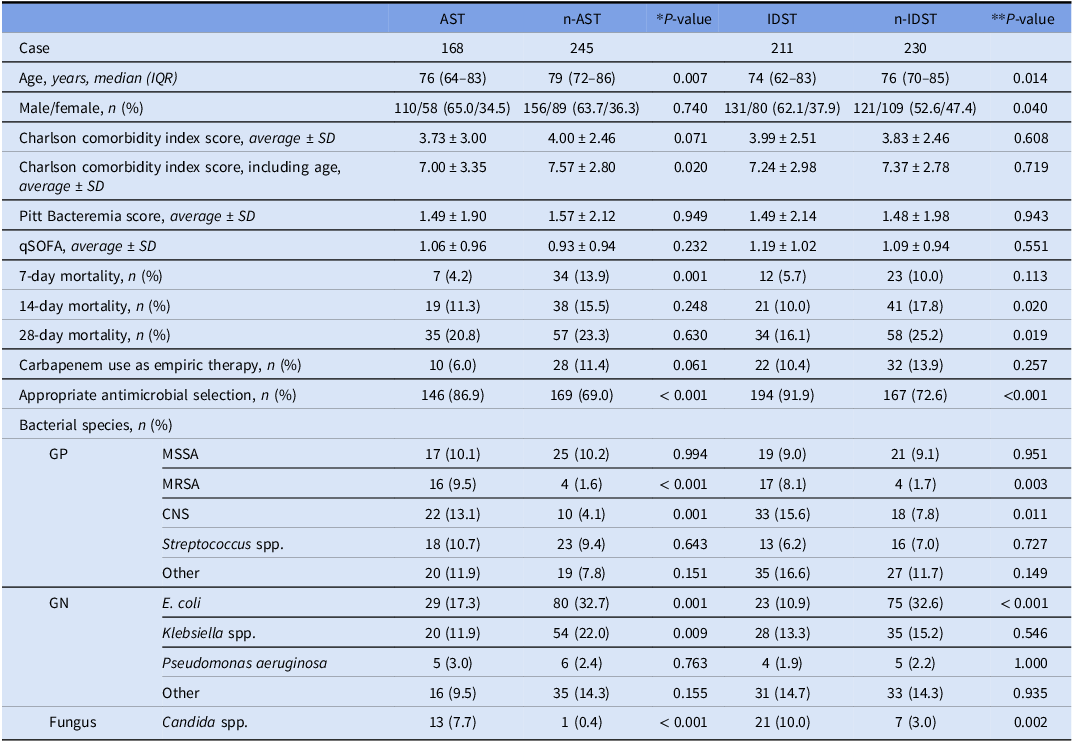
Table 2 compares intervention and non-intervention for each activity period. Each characteristic was compared between AST (n = 168) and n-AST (n = 245) groups and between IDST (n = 211) and n-IDST (n = 230) groups concerning the number of intervention services provided each year. Although patients in AST/IDST group were younger than those in n-AST/n-IDST group, no significant differences were observed in CCI, PBS, qSOFA, or empirical initial carbapenem treatment. Appropriate antimicrobial selection was more frequent in the intervention groups (AST, 86.9% vs 69.0%, P < .001; IDST, 91.9% vs 72.6%, P < .001). During AST period, 7-day mortality was significantly lower in AST group, with no differences in 14-day mortality. During IDST period, there was no difference in 7-day mortality; however, 14-day mortality was significantly lower in IDST group. During AST, the intervention was associated with a non-significant reduction in 28-day mortality (20.8% vs. 23.3%, P = .630); however, intervention during IDST significantly reduced 28-day mortality (16.1% vs 25.2%, P = .019). There was considerably more involvement of methicillin-resistant Staphylococcus aureus (MRSA), coagulase-negative staphylococci, and Candida spp. in AST/IDST than in n-AST/n-IDST.
Comparison of the intervention (AST and IDST) and non-intervention (n-AST and n-IDST) groups during the respective activity periods

*AST vs. n-AST.
**IDST vs. n-IDST.
AST, antimicrobial stewardship team; CNS, coagulase-negative staphylococci; GN, gram-negative; GP, gram-positive; IDST, infectious disease support team; MSSA, methicillin-susceptible Staphylococcus aureus; MRSA, methicillin-resistant Staphylococcus aureus; qSOFA, quick Sequential Organ Failure Assessment.
Data for each characteristic are presented as frequency (proportion) and either the median or mean value. Categorical variables were analyzed using the chi-square test or Fisher’s exact test, and continuous variables using the Mann–Whitney U test. Statistical significance was defined as P < .05.
Comparison of characteristics of 28-day mortality in each activity period
Age, CCI, PBS, and qSOFA were significantly higher, whereas the rate of appropriate antimicrobial selection was considerably lower in the deceased group (Table 3). IDST resulted in significantly fewer 28-day mortalities compared to n-IDST. However, empirical initial carbapenem treatment did not affect mortality during IDST but increased mortality considerably during AST. Concerning bacterial species, Candida spp. had a significantly higher mortality rate during each activity: 57.1% and 35.7% during AST and IDST, respectively.
Comparison of 28-day mortality between the intervention (AST and IDST) and non-intervention (n-AST and n-IDST) groups during the respective activity periods

*With or without 28-day mortality in the AST activity period.
**With or without 28-day mortality in the IDST activity period.
AST, antimicrobial stewardship team; CNS, coagulase-negative staphylococci; GN, gram-negative; GP, gram-positive; IDST, infectious disease support team; MSSA, methicillin-susceptible Staphylococcus aureus; MRSA, methicillin-resistant Staphylococcus aureus; qSOFA, quick Sequential Organ Failure Assessment.
Data for each characteristic are presented as frequency (proportion) and either the median or mean value. Categorical variables were analyzed using the chi-square test or Fisher’s exact test, and continuous variables using the Mann–Whitney U test. Statistical significance was defined as P < .05.
Kaplan–Meier survival curve and multivariate Cox analysis of 28-day mortality during each activity period
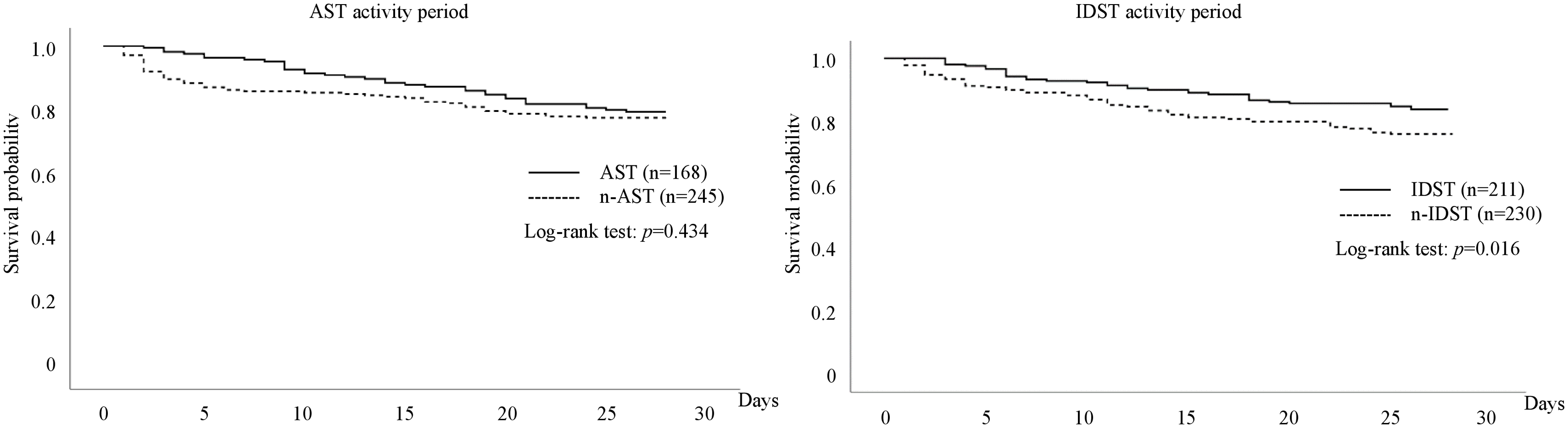
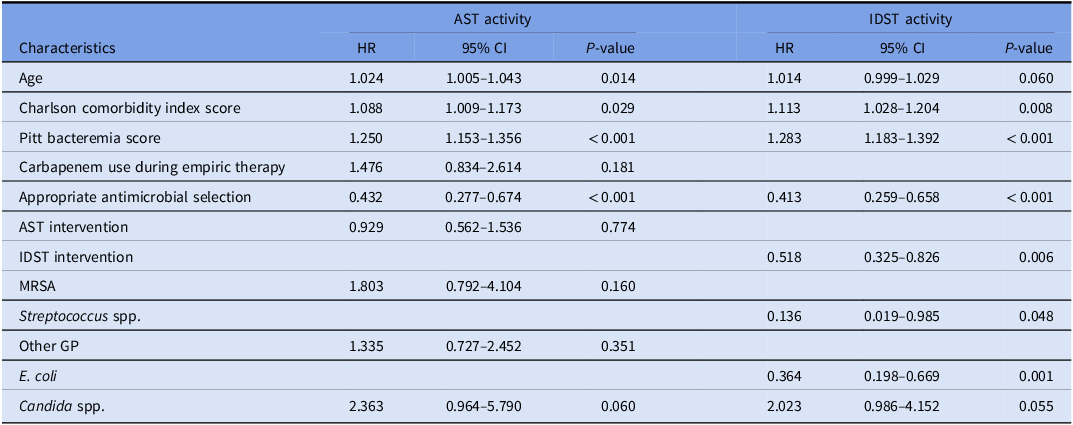
AST did not show any significant improvement in 28-day mortality compared with n-AST (log-rank test, P = .434; Figure 3). IDST was associated with lower 28-day mortality compared with n-IDST (log-rank test, P = .016). In multivariate Cox regression analysis (Table 4), factors that significantly influenced 28-day mortality during AST included high CCI and high PBS (hazard ratio [HR]: 1.024, 95% CI: 1.005–1.043, P = .014; HR: 1.088, 95% CI: 1.009–1.173, P = .029; HR: 1.250, 95% CI: 1.153–1.356, P < .001, respectively); appropriate antimicrobial selection was significantly associated with decreased mortality (HR: 0.432, 95% CI: 0.277–0.674, P < .001). During IDST, high CCI and high PBS were significantly associated with mortality (HR: 1.113, 95% CI: 1.028–1.204, p = 0.008; HR: 1.283, 95% CI: 1.183–1.392, P < .001, respectively), and appropriate antimicrobial selection with decreased mortality (HR: 0.413, 95% CI: 0.259–0.658, P < .001). AST intervention was not significantly associated with mortality; however, IDST intervention showed a significant association (HR: 0.518, 95% CI: 0.325–0.826, P = .006). In a prespecified sensitivity analysis using multivariable logistic regression for 28-day mortality, the association remained directionally consistent (AST intervention; odds ratio [OR]: 1.070, 95% CI: 0.590–1.950, P = .814 vs. IDST intervention; OR: 0.500, 95% CI: 0.280–0.870, P = .015; Supplementary Table 2).
Kaplan–Meier survival analysis of 28-day mortality during each activity period. Left panel: the AST period. Right panel: the IDST period. AST, antimicrobial stewardship team; IDST, infectious disease support team. Kaplan–Meier estimates of 28-day mortality; two-sided log-rank test with P < 0.05 considered significant.

Cox hazard model analysis of 28-day mortality in each activity

AST, antimicrobial stewardship team; CI, confidence interval; GP, gram-positive; HR, hazard ratio; IDST, infectious disease support team; MRSA, methicillin-resistant Staphylococcus aureus.
Variables with P < .05 were considered statistically significant. All tests were two-sided, and 95% confidence intervals were calculated.
Discussion
Transitioning from an antimicrobial-focused AST to an interdisciplinary IDST was associated with lower 28-day mortality in bacteremia. Unlike studies focused solely on formal ID consultation or stewardship programs, our IDST model added daily bedside rounds and pharmacist/IDST-physician decision support, enabling continuous care. The IDST model facilitated the selection of appropriate antimicrobials and actively contributed to diagnostic evaluation, source control, and clinical stabilization, thereby addressing the limitations of the conventional AST approach.
Baseline imbalances were limited and did not account for the effect (Tables 1 and 2). During IDST, severity indices (CCI, excluding age, PBS, and qSOFA) were similar in the intervention and non-intervention groups, whereas analogous patterns were observed during AST. We attributed the lower 28-day mortality with IDST to continuous, comprehensive interventions rather than case-mix differences.
The multivariable Cox model further supported a survival benefit of IDST, showing a reduction in 28-day mortality after adjusting for age, severity, and Candida bloodstream infection. The reduction was most evident among patients with higher PBS, suggesting benefit in critically ill populations. Figure 3 shows that early mortality differed between AST and n-AST, but early survival separation persisted through Day 28 in IDST. This study revealed a nearly 20% increase in the selection of appropriate antimicrobials in the intervention group compared to the no-intervention group. Appropriate antimicrobial selection was associated with lower 7-day mortality in both periods. However, initial antimicrobial choice or diagnostic timing alone is unlikely to explain the IDST advantage. The key distinction is that IDST maintained interventions across the treatment course—repeat blood cultures and indicated imaging/echo, TDM-guided re-titration, source-control facilitation (device removal/drainage), and verification of duration/stop criteria—which plausibly sustained the survival benefit. Mortality reduced by approximately 9.1% in IDST versus n-IDST group, whereas it decreased by only 2.4% in AST vs. n-AST group. These results align with studies by Goto and Lahey, showing improved outcomes with early, structured ID involvement.Reference Goto, Jones and Schweizer33, Reference Lahey, Shah, Gittzus, Schwartzman and Kirkland34 Although we did not directly measure process outcomes, this underscores the clinical importance of comprehensive infectious disease management, particularly in bloodstream infections, where time-sensitive decisions regarding diagnostics and procedures can directly impact patient outcomes. Operationally, protocolized task-sharing reduced the routine liaison and documentation burden on IDST physicians (particularly non-ID physicians), thereby improving their focus on diagnostic synthesis, complex decision-making, and oversight. This approach likely shortened coordination delays without transferring professional responsibility.
Subgroup analysis showed the most significant impact in MRSA and Candida spp. bacteremia, both associated with high mortality and relapse.Reference Cosgrove, Sakoulas, Perencevich, Schwaber, Karchmer and Carmeli35–Reference Cornely, Cornely and Salmanton-García39 MRSA bacteremia significantly increased mortality during AST but not IDST, when mortality tended to decrease (40.0% vs 33.3%). Although AST intervention during the earlier period did not significantly reduce mortality in these subgroups, IDST activities, which were potentially aligned with established care bundles (e.g., IDSA MRSA bacteremia guidelines), may have enhanced outcomes through targeted source control, follow-up blood cultures, and antimicrobial stewardship; moreover, Candida spp. Bacteremia was an independent factor for higher mortality, although mortality tended to decrease with IDST intervention (Candida spp. mortality during AST period vs. IDST period: 57.1% vs 35.7%). Thus, AST interventions improved early mortality rates, but this effect disappeared after 2 weeks. In contrast, under IDST, survival benefits persisted through day 28, indicating a sustained effect (Table 2, Supplementary Figure 1). However, Streptococcus spp. and E. coli infections were associated with lower 28-day mortality during IDST intervention, as indicated by the low mortality rates (3.4% and 13.3%, respectively; Table 3). Our hospital has been implementing MALDI-TOF since 2020, and it has been established that early identification of bacterial strains allows the initiation of appropriate early treatment. Therefore, the mortality rate associated with E. coli bacteremia is presumed to be low. The CCI, PBS, or qSOFA did not differ between ASTs and IDSTs for E. coli bacteremia; therefore, no bias existed (Supplementary Table 3). In contrast, Streptococcus spp. significantly reduced mortality during IDST activities, compared with AST activities (24.3% vs 3.4%). During IDST activities, even no-intervention cases were followed up with a medical record review, and intervention was performed when necessary. This factor may have further reduced the mortality rate. However, further studies are needed to confirm this finding because of the small number of cases.
The observed increase in appropriate antimicrobial use even among non-intervention cases during the IDST period suggests a spillover or “habituation” effect. The presence of a multidisciplinary team, regular ward rounds, and increased communication with the primary team are likely to enhance awareness and encourage appropriate practice even in the absence of direct consultation. The rate of proper antimicrobial selection was higher in IDST group compared to AST group throughout the hospital (76.3% vs. 81.9%). Pharmacists play a significant role in AST services at many facilities in Japan. As pharmacists gained knowledge and experience in both antimicrobial selection and infectious disease treatment, backed by accumulated successful treatment cases, the primary physicians’ trust in AST and IDST increased, which led to more passive consultations. Compared to AST, the number of cases referred by the primary department to the IDST significantly increased, with 14 cases during AST intervention and 51 cases during IDST intervention (Supplementary Table 4). We hypothesized that this case-by-case accumulation contributed to the overall improvement in mortality during IDST activities.
Limitations
The single-center retrospective design limits generalizability. We did not prespecify a sample size; post-hoc power adds little beyond the observed precision, and we report event counts and 95% CIs as primary indicators. Residual confounding may remain despite adjustment for comorbidities and severity. Some patients requiring SOFA lacked qSOFA and were therefore excluded from multivariable models; PBS was used as an alternative severity measure and showed a similar trend. Residual selection bias cannot be entirely ruled out; however, within-period balances and adjusted Cox models help mitigate this concern. We could not distinguish infection-related from non-infection-related deaths, which may dilute the apparent impact of IDST; multicenter prospective studies are warranted to confirm these findings and refine team-based bacteremia care. We did not directly measure workflow efficiency (e.g., time to documentation/implementation); thus, the effect of task-sharing on clinician workload and coordination delays should be interpreted as operational inferences.
Conclusion
Transitioning from an AST to an interdisciplinary IDST model was associated with lower 28-day mortality in bacteremia cases, possibly due to sustained diagnostic and therapeutic interventions. Our findings support stewardship as a team-based process. The AST-to-IDST transition reflects activity expansion and longitudinal continuity—diagnostics, dosing re-titration, source control, and endpoint verification—without transferring responsibility. Pharmacists supporting physicians in ID care demonstrate the potential for protocolized task-sharing to reduce routine liaison and documentation burden without transferring professional responsibility. This activity-focused model can be adapted to local staffing needs.
Supplementary material
The supplementary material for this article can be found at https://doi.org/10.1017/ice.2025.10380.
Data availability statement
The datasets used and/or analyzed in the current study are not publicly available due to ethical and institutional restrictions regarding patient confidentiality. However, they may be made available by the corresponding author upon reasonable request and with approval from the institutional ethics committee.
Acknowledgments
We thank the staff and medical doctors at the Department of Pharmacy of Yamanashi Prefectural Central Hospital for assisting with this study. This research did not receive any funding from public, private, or not-for-profit entities.
Author contribution
Conceptualization and methodology: AE, TM, and TH. Data curation: AE, DA, Yu Nakane, TI, SK, KF, MT, and Yasuyuki Natsume. Formal analysis: AE, DA, Yu Nakane, and TI. Writing of the original draft: AE, TM, and TH. Writing, review, and editing: AE, TM, DA, Yu Nakane, TI, SK, KF, MT, Yasuyuki Natsume, KM, and TH. Supervision: TM and TH.
Competing interests
All authors report no conflicts of interest relevant to this article.
AI writing assistance statement
Some sections of this manuscript, including language refinement and figure description (alt text), were assisted by ChatGPT (OpenAI). The authors reviewed and verified all AI-assisted content for accuracy and take full responsibility for the final manuscript.