This article is about the movement of plant foods into and around the Lake Titicaca Basin. Questions about networks, circulation, and trade are central to Altiplano archaeology as scholars have studied the movement of goods to understand political power, as well as the circulation of people and knowledge between communities. In this article, we present data from our recent microbotanical study that identified both highland and lowland foods in Late Formative and Middle Horizon Altiplano contexts. We use this data to contribute to understandings of connectivity at this time, synthesizing the literature and considering how studies of plant foods can complicate and advance understandings of ancient networks of exchange.
Archaeologists working in the Titicaca Basin have long studied issues of mobility. Browman (Reference Browman and Browman1978, Reference Browman1981), for instance, argues that llama caravans permitted the exploitation of lowland resources, integrated the high Bolivian plains (or Altiplano), and ultimately contributed to the emergence of the urban center of Tiwanaku (AD 600–1100). He suggests that specific settlements became hubs for trading because of their position within caravan circuits. Scholars have begun to identify such communities for the Formative period (Levine et al. Reference Levine, Stanish, Ryan Williams, Chávez and Golitko2013; Smith and Janusek Reference Smith and Janusek2014; Stanish et al. Reference Stanish, De la Vega, Moseley, Williams, Chávez, Vining and LaFavre2010) and are tracing their relationships with other caravan “nodes” in the southern Altiplano and Atacama Desert (Berenguer Reference Berenguer Rodríguez2004; Capriles Reference Capriles2011; Nielsen Reference Nielsen2006; Plourde Reference Plourde2006; Stanish Reference Stanish2003).
We focus on two such nodes here. Chiripa, on the Taraco Peninsula, was an important settlement by the ninth century BC. Although it is best known as a Formative center, lowland goods continued to move through Chiripa in the Middle Horizon period (AD 600–1100). The less well-known Late Formative (300 BC–AD 500) site of Challapata is located in the eastern Lake Titicaca Basin. Recent work recovered nonlocal goods and an associated road infrastructure, suggesting connections with the lowlands. Both sites show characteristics of “transit communities,” a concept that foregrounds the relationship between social power and the acquisition of precious foreign objects (Bandy Reference Bandy2005a; Helms Reference Helms1988, Reference Helms1993). Yet scholars have also argued that mundane things were equally embedded in a range of social and political interactions and were perhaps more important than luxury goods to ancient Andean economies (Roddick Reference Roddick, Joyce and Gillespie2015; Sillar Reference Sillar and Hodos2016; Tripcevich Reference Tripcevich, Dillian and White2009). Researchers of both perspectives pay insufficient attention to the movement of plant goods. Although few would question that plants were moving across the Altiplano up and down the Andean slopes, sampling protocols and taphonomic issues often limit in-depth studies of the issue.
We discuss current evidence for both native highland crops, such as tubers and quinoa, and the tropical introduced plant of maize. Although such a local/nonlocal binary would seem to support a mundane/luxury distinction, we argue that plants complicate such easy categorization. Our analysis of starch grains and phytoliths recovered from Chiripa and Challapata ceramics demonstrate such complexities (Reilly Reference Reilly2017). In her samples, Reilly identified not only maize but also lowland plant starches never before reported for the Titicaca Basin, including arrowroot, sweet potato, and yuca. These findings from a study of just a few vessels reveal the critical importance of microbotanical analyses in furthering our understanding of regional connections and foodways in emergent Middle Horizon worlds.
Titicaca Basin Exchange Networks and Transit Communities
Scholars believe that llama caravans played a key role in the early circulation of both goods and ideas throughout the Andes (Browman Reference Browman1981; Nielsen Reference Nielsen2006, Reference Nielsen, Hirth and Pillsbury2013; Núñez Atencio and Dillehay Reference Núñez Atencio and Dillehay1978). The recovery of foreign goods, often in small quantities, suggests that complex household and community networks defined many Andean regions for generations. Ethnohistoric (Murra Reference Murra1968) and ethnographic (Nielsen Reference Nielsen and Kuznar2001; Tripcevich Reference Tripcevich, Tripcevich and Capriles2016) research into camelid caravans shows the array of social and economic processes underlying such movements. The circulation of goods played a particularly important role in the development of Middle Horizon polities, where a flourishing of interregional connections contributed to new social, political, and economic arrangements (Browman Reference Browman1980, Reference Browman1981; Roddick Reference Roddick, Joyce and Gillespie2015; Sharratt et al. Reference Sharratt, Golitko and Ryan Williams2015; Smith Reference Smith2016; Smith and Janusek Reference Smith and Janusek2014). Although scholars continue to debate what kind of economic systems structured exchange in the Titicaca region and in the Andes as a whole (Stanish and Coben Reference Stanish, Coben, Hirth and Pillsbury2013), it is clear that, as Tiwanaku emerged, certain portable goods were essential in new regimes of value. As the Middle Horizon world developed, similar tastes emerged over a larger area, ultimately constituting a larger “imagined community” (Lau Reference Lau and Hodos2016:205).
Archaeologists have studied the movement of “high-status” goods in the Late Formative (200 BC–AD 400) and Middle Horizon (AD 400–1000) Lake Titicaca Basin. Although some suggest that certain communities controlled the circulation of prestige goods as early as the Formative period (Bandy Reference Bandy2005a; Burger et al. Reference Burger, Mohr Chávez and Chávez2000; Levine et al. Reference Levine, Stanish, Ryan Williams, Chávez and Golitko2013; Plourde Reference Plourde2006; Stanish Reference Stanish2003:162–163), we are still not sure how these goods moved or whether and how individuals or communities controlled these networks. In the Tiwanaku “heartland,” for example, Stanish and colleagues (Reference Stanish, De la Vega, Moseley, Williams, Chávez, Vining and LaFavre2010) demonstrate that although Tiwanaku benefited from long-distance relationships by the fifth century, urban elites certainly did not control broad economic landscapes. Even though elites may have briefly connected parts of the social landscape, these networks likely had much longer histories reaching back into the Formative period and do not appear to have been substantially disrupted in the Middle Horizon (Smith and Janusek Reference Smith and Janusek2014).
There is also the question of how “prestige” goods connected communities, particularly in comparison to other kinds of circulating goods such as agricultural tools (Bandy Reference Bandy2005a:95–97) and raw materials for craft production and architecture (Janusek et al. Reference Janusek, Williams, Golitko, Aguirre, Tripcevich and Vaughn2013; Roddick Reference Roddick, Joyce and Gillespie2015). The movement of special items may have been important for certain kinds of social power, whereas “mundane” things may have moved in more embedded ways (Nielsen Reference Nielsen, Hirth and Pillsbury2013:391–392). Emphasis on the long-distance exchange of limited prestige goods underrepresents the interaction and connectivity of many periods (Sillar Reference Sillar and Hodos2016). It also erases the fact that the meanings and values of goods can change. For example, obsidian may have shifted in meaning over time, and efforts to characterize it as elite or ordinary may be “overly influencing our interpretations of regional circulation” (Tripcevich Reference Tripcevich, Dillian and White2009:70).
Titicaca scholars generally agree that some communities benefited from the movement of goods through their settlements and became nodes in wider landscapes of movement (sensu Ur Reference Ur, Snead, Erickson and Andrew Darling2009). During the Formative period, sites such as Taraco and Pukara in the northern Titicaca Basin (Burger et al. Reference Burger, Mohr Chávez and Chávez2000; Klarich Reference Klarich2005; Levine et al. Reference Levine, Stanish, Ryan Williams, Chávez and Golitko2013) and settlements on the Taraco Peninsula and in the Desaguadero Valley in the south (Bandy and Hastorf Reference Bandy and Hastorf2007; Janusek Reference Janusek and Yoffee2015; Roddick et al. Reference Roddick, Bruno and Hastorf2014) were key places in complex regional networks. “Axis settlements” (Dillehay and Núñez Atencio Reference Dillehay, Atencio, Saunders and Montmollin1988; Núñez Atencio and Dillehay Reference Núñez Atencio and Dillehay1978) along the Desaguadero River, such as Khonkho Wankane, Iruhito, and Cerro Chicha, anchored complex llama caravan circuits (Smith Reference Smith2016; Smith and Janusek Reference Smith and Janusek2014). Bandy calls such strategic trading settlements “transit communities” in which certain individuals enhanced their symbolic capital by extracting tolls from passing traders. This ongoing process produced a “growth spiral”: as more trading partners were drawn in, more tolls were collected, and more symbolic capital was produced (Bandy Reference Bandy2005a:97).
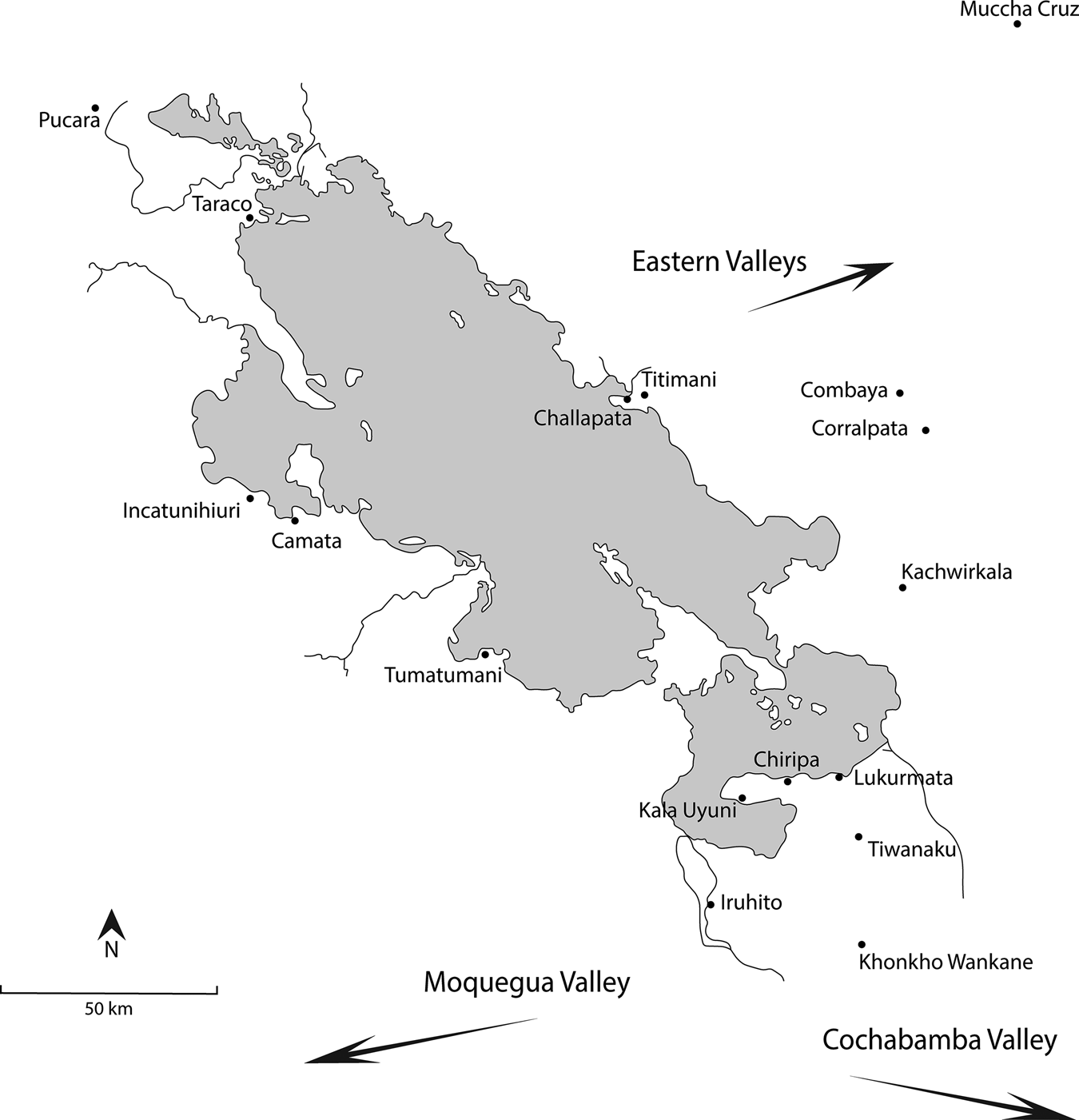
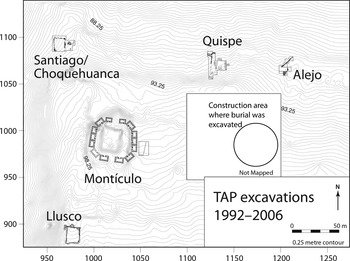
Several transit communities have been identified on the Taraco Peninsula (Figure 1). Places like Chiripa were particularly well positioned because trade routes would have passed around either the northern or southern edge of the lake (Figure 2; Bandy Reference Bandy2005a:97). As early as the Early Formative period, small quantities of sodalite beads (likely from Cerro Sapo, near Cochabamba); obsidian (as finished bifaces from the Chivay sources, 350 km away); Pacific coast seashells (including Spondylus from southern Ecuador); and gold, copper, and silver were all moving through Chiripa. These networks were maintained through the Middle Formative when finished agricultural tools made of nonlocal olivine basalt begin to appear from both local and nonlocal sources (Bandy Reference Bandy2005a:95–97; Penfil and Williams Reference Penfil and Ryan Williams2018).
Map of the Lake Titicaca Basin with location of sites mentioned in text (adapted by Reilly from Roddick Reference Roddick2009).

Map of Chiripa (drawn by William Whitehead, adapted from Roddick and Hastorf Reference Roddick and Hastorf2010), with location of the construction project where the burial was uncovered.

Though Chiripa's importance as a ritual center and transit community waned around AD 300 when nearby Kala Uyuni became the regional “political center” (Bandy Reference Bandy2005a:106; Roddick et al. Reference Roddick, Bruno and Hastorf2014) and in the Middle Horizon when inhabitants were drawn to Tiwanaku, the site remained inhabited and continued to grow (Bandy Reference Bandy and Hastorf1999, Reference Bandy2001, Reference Bandy2005a:107). The main mound and surrounding area were converted into a Tiwanaku cemetery; Tiwanaku phase burials have been uncovered in the Santiago sector of Chiripa. Grave construction styles are maintained through the Late Formative–Middle Horizon transition, but new kinds of grave goods appear. Whereas nonlocal sodalite and turquoise beads were common offerings in the Formative period, Tiwanaku phase graves include plainware ceramic vessels (ollas, keros, and tazones; Blom and Bandy Reference Blom, Bandy and Hastorf1999). As we discuss later, ceramic styles and associated botanical materials suggest that network relations with lowland regions were maintained from earlier periods.
The channels into the eastern and western valleys were not limited to the Taraco Peninsula and Tiwanaku but also included eastern Titicaca Basin settlements, which had strong connections to eastern valley sites like Muccha Cruz, Combaya, and Corralpata (Figure 1). These eastern valleys (Larecaja y Muñecas) and the Yungas of La Paz played an extremely important trade role in the Formative and Tiwanaku periods (Browman Reference Browman1981; Capriles and Flores Reference Capriles Flores and Bedregal2000; Faldín Reference Faldín1995; Lémuz and Aranda Reference Lémuz and Aranda2008; Paz Reference Paz Soria2000). Challapata lay on the edge of a vibrant corridor of movement and trade that linked the Altiplano to warmer, lower valleys on the east side of the Eastern Cordillera. Chiripa-style ceramics have been recovered at the neighboring Titimani, a large Formative period residential and ceremonial site, suggesting connections between the eastern and southern Titicaca Basin (Janusek Reference Janusek2004:134; Portugal Ortiz Reference Portugal Ortiz1984, Reference Portugal Ortiz1988; Portugal Ortiz et al. Reference Portugal Ortiz, Huber Catacora, Albaro Murrillo, Rodrigo Guierrez, Willma Winkler and Portugal1993; Stanish Reference Stanish2003). Until quite recently, our knowledge about Challapata was restricted to brief reconnaissance and minor unpublished excavations (Arce Reference Arce2002; Chávez and Chávez Reference Chávez and Chávez1995; Fernández Reference Fernández2006; García Reference García Doria Medina2006; Portugal Ortiz Reference Portugal Ortiz1998; Portugal Zamora Reference Portugal Zamora1961).
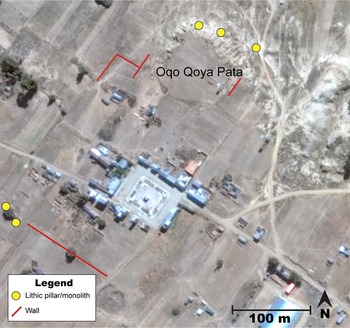
In 2013, the Proyecto Arqueológico de Redes de Interacción Altiplano y Valles Interandinos (PARIAVI) conducted an extensive survey on the Challapata Peninsula, along the Suches River and areas to the northeast of Escoma toward the mesothermal valleys of Italaque and Moco Moco. The project identified an ancient road that connected the lowland valleys to Challapata and Titimani. Our work suggests that Challapata was an extensive 12 ha Formative center with a massive 150 × 100 m earthen platform known today as Oqo Qoya Pata (Figure 3; Janusek et al. Reference Janusek, Lémuz, Plaza and Mencias2014). The mound is surrounded by walled terraces, occupational middens with high densities of Middle and Late Formative fiber-tempered ceramics, and a densely packed area of smaller mounds and some elaborately carved stones (Roddick and Janusek Reference Roddick, Janusek, Jennings and Swenson2018:309–310). In 2014 and 2016 the PARIAVI team conducted small-scale and strategic excavations to delineate the construction sequence of this mound and to trace quotidian and ritual practices (Janusek et al. Reference Janusek, Lémuz, Plaza and Mencias2014, Reference Janusek, Roddick, Aguirre and Plaza M.2017). This work is helping refine chronologies of the region while tracing the movement of a range of goods through this “transit community.” The strategic position of Challapata, like that of Chiripa, makes it an ideal place to consider the movement of goods, including plants, in the ancient Lake Titicaca Basin.
Map of Challapata, with location of excavation units (reproduced from Janusek et al. Reference Janusek, Lémuz, Plaza and Mencias2014).

Tracing Prestigious Plants and Everyday Ingredients
Archaeologists are increasingly tracing the movement of plants, especially those that grow in limited environmental zones, to examine connectivity and how people used nonlocal goods. Perry and colleagues (Reference Perry, Sandweiss, Piperno, Rademaker, Malpass, Umire and de la Vera2006), for example, recovered arrowroot (a lowland plant) at highland sites in Arequipa, Peru, which is evidence for highland–lowland connectivity during the Middle Horizon. Miller and colleagues (Reference Miller, Albarracin-Jordan, Moore and Capriles2019) report on a well-preserved ritual bundle containing psychoactive drugs on a trade route to Tiwanaku, which suggests broader movements of medicinal/ritual taxa and their associated itinerant experts. Similarly, lowland plant goods, such as coca, cotton, chili peppers, and tropical hardwoods, may have been moving through Formative period sites (Bandy Reference Bandy2005a). Yet Titicaca Basin archaeologists often focus on maize when they consider “plants-in-motion” because of its ubiquity, its visibility through a variety of analytical means (Berryman Reference Berryman2010; Bruno Reference Bruno2008; Logan Reference Logan2006; Wright et al. Reference Wright, Hastorf, Lennstrom and Kolata2003), and its framing as a “luxury food” (Goldstein Reference Goldstein and Bray2003; Hastorf Reference Hastorf2003a, Reference Hastorf2003b, Reference Hastorf2012; Logan et al. Reference Logan, Hastorf and Pearsall2012; Roddick and Hastorf Reference Roddick and Hastorf2010).
Titicaca Basin communities began acquiring maize at least as early as the Middle Formative (Logan et al. Reference Logan, Hastorf and Pearsall2012). Stable isotope analysis suggests that in the Late Formative, maize consumption was higher at sites with public ceremonial architecture, including transit communities like Tiwanaku, Chiripa, and Khonkho Wankane (Berryman Reference Berryman2010; Miller Reference Miller2005). Hastorf and colleagues’ (Reference Hastorf, Whitehead, Bruno, Wright, Staller, Tykot and Benz2006) morphological study of maize kernels and cupules suggests that Tiwanaku inhabitants obtained their maize from several regions, including the Moquegua Valley, the Cochabamba Valley, and at least one more unidentified source. Certainly, transit communities in the Desaguadero region that connected the Titicaca Basin with the Cochabamba Valley saw an increase in maize use during the Middle Horizon (Smith and Janusek Reference Smith and Janusek2014).
It seems unlikely that llama caravans moved heavy staple foods, particularly with the diversity of locally available wild and domesticated taxa. Quinoa is native to the Titicaca Basin and is commonly recovered in Formative and Middle Horizon sites (Bruno Reference Bruno2014; Whitehead Reference Whitehead2007), with Chenopodium remains being the “most common by far” at Middle Horizon Tiwanaku (Wright et al. Reference Wright, Hastorf, Lennstrom and Kolata2003:391). A wide variety of tuber species grow in the basin, including potatoes (Solanum tuberosum), oca (Oxalis tuberosa), ulluco (Ullucus tuberosus), and isañu mashua (Tropaoleum tuberosum; Hastorf Reference Hastorf2012; Logan Reference Logan2006; Rumold and Aldenderfer Reference Rumold and Aldenderfer2016). Charred storage tissue (parenchyma) and damaged starch grains of nonidentifiable tubers have been recovered at several sites on the Taraco Peninsula, along with Solanum sp. and Oxalis sp. seeds (potatoes and oca; Bruno Reference Bruno2008; Logan Reference Logan2006). These remains increase in the Late Formative, suggesting an increased reliance on tubers (Bruno Reference Bruno2014). In the Tiwanaku Valley, parenchyma (the only means through which tubers were tracked) increased from the Late Formative to the Tiwanaku period (Wright et al. Reference Wright, Hastorf, Lennstrom and Kolata2003). The advent of raised fields at this time could indicate agricultural intensification or a new strategy to stagger agriculture production to balance subsistence with the state demand for tubers (Bandy Reference Bandy2005b; Kolata Reference Kolata1991).
It is tempting to assume a simple dichotomy in plants in the Titicaca Basin. Were local, ubiquitous, highland crops (like tubers and quinoa) associated with day-to-day life and nonlocal plants (like maize) with feasts and luxury? Plant goods can certainly be prestige items (Hastorf Reference Hastorf2003a), and their sensory effects may also have played an important role in Middle Horizon “worlding” (Lau Reference Lau and Hodos2016). As a nonlocal plant that people consumed at feasts, maize could be considered a luxury. In fact, Titicaca Basin archaeologists have labeled it a “political plant” (Hastorf et al. Reference Hastorf, Whitehead, Bruno, Wright, Staller, Tykot and Benz2006:429) and argued that it “achieved a social prominence (as evidenced by its use in ritual contexts) before it became a useful grain” (Chávez and Thompson Reference Chávez, Thompson, Staller, Tykot and Benz2006:426).
Yet the contexts of recovery of both maize and highland plant remains complicate luxury/everyday binaries. For example, Middle Formative Chiripa feasting vessels contained not only maize but also potato and Chenopodium remains, and Late Formative feasting vessels produced signals for C3 plants, such as tubers, quinoa, or legumes (Miller Reference Miller2005). At Tiwanaku, tubers were “regularly distributed” in ritual contexts, including in an offering on the summit of the Akapana (Wright et al. Reference Wright, Hastorf, Lennstrom and Kolata2003:392). Maize remains, in contrast, were more common in households and least common in ceremonial settings (Wright et al. Reference Wright, Hastorf, Lennstrom and Kolata2003:397–399). Similarly, ceramic assemblages associated with chicha and feasts were most common in Tiwanaku households (Goldstein Reference Goldstein and Bray2003:165). Quinoa was common at Tiwanaku in both household and public spaces.
Although spaces were not simply divided into “private households” and “public ceremonial,” the presence of local and nonlocal plants across a variety of contexts shows that there was not a simple link between nonlocal and luxury. Just as a regular pot might become a ritually appropriate vessel when “framed” in a particular way (Miller Reference Miller1985; Roddick Reference Roddick2009:91–93), it was not just a plant's type that determined its status but also its context, how people prepared or consumed it, and who may have been permitted to share in the act of consumption.
There are also methodological and taphonomic challenges to consider when comparing the presence of certain plants in transit communities. Maize is highly visible in the archaeological record and can be identified through the analysis of charred remains (including cobs and kernels), phytoliths, starch grains, and stable isotopes (Berryman Reference Berryman2010; Chávez and Thompson Reference Chávez, Thompson, Staller, Tykot and Benz2006; Hastorf et al. Reference Hastorf, Whitehead, Bruno, Wright, Staller, Tykot and Benz2006; Logan et al. Reference Logan, Hastorf and Pearsall2012; Wright et al. Reference Wright, Hastorf, Lennstrom and Kolata2003). Quinoa seeds are ubiquitous in macrobotanical samples in the region and are easy to track. Tuber macroremains, however, do not preserve as well because they are high in water, which makes them particularly vulnerable to degradation; in addition, people often eat tubers in their entirety (Duke et al. Reference Duke, Vásquez-Sanchez and Rosales-Tham2018:74). It is also difficult to identify the genus or species of parenchyma, whereas seeds of species such as Solanum sp. and Oxalis sp. could be from either wild or domesticated plants (Bruno Reference Bruno2008:334, 337). However, many tubers do produce diagnostic starch grains and thus are visible through microbotanical analyses (Rumold and Aldenderfer Reference Rumold and Aldenderfer2016).
Starch analysis is perhaps the best means of tracing tubers, though these methods do have limitations. Starch grains are easily damaged during cooking and are particularly vulnerable to postdeposition degradation (Babot Reference Babot, Hart and Wallis2003; Barton and Matthews Reference Barton and Matthews2006:85; Henry et al. Reference Henry, Hudson and Piperno2009). Sampling from artifacts can mitigate this challenge because artifacts help protect starches from degradation in soils (Williamson Reference Williamson, Torrence and Barton2006). This strategy is particularly important for large starch grains (like those produced in highland tubers) because they are more susceptible to degradation. Phytoliths, in contrast, are less susceptible to damage from food processing and postdeposition degradation (Piperno Reference Piperno2006a:106). This means that plants that preserve best as starches may be underrepresented, and those that produce high counts of phytoliths (like grass family plants including maize) may be overrepresented (Piperno Reference Piperno2006a:104).
Despite these limitations, microbotanical techniques allow us to trace plants like tubers that were essential to ancient Titicaca Basin inhabitants. Although macrobotanical analyses are relatively common in the Titicaca Basin (Bruno Reference Bruno2008; Bruno and Whitehead Reference Bruno and Whitehead2003; Whitehead Reference Whitehead and Hastorf1999, Reference Whitehead2007; Wright et al. Reference Wright, Hastorf, Lennstrom and Kolata2003), few have used microbotanical techniques (but see Chávez and Thompson Reference Chávez, Thompson, Staller, Tykot and Benz2006; Logan Reference Logan2006; Logan et al. Reference Logan, Hastorf and Pearsall2012; Rumold and Aldenderfer Reference Rumold and Aldenderfer2016). This study is a step toward addressing that gap.
Sampling and Methods
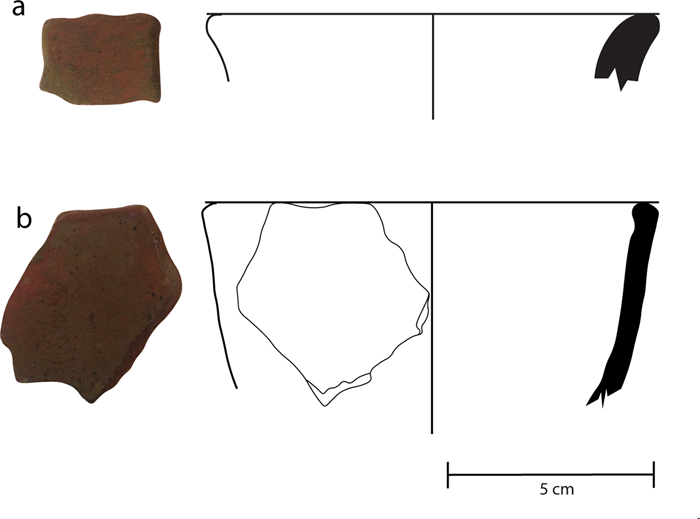
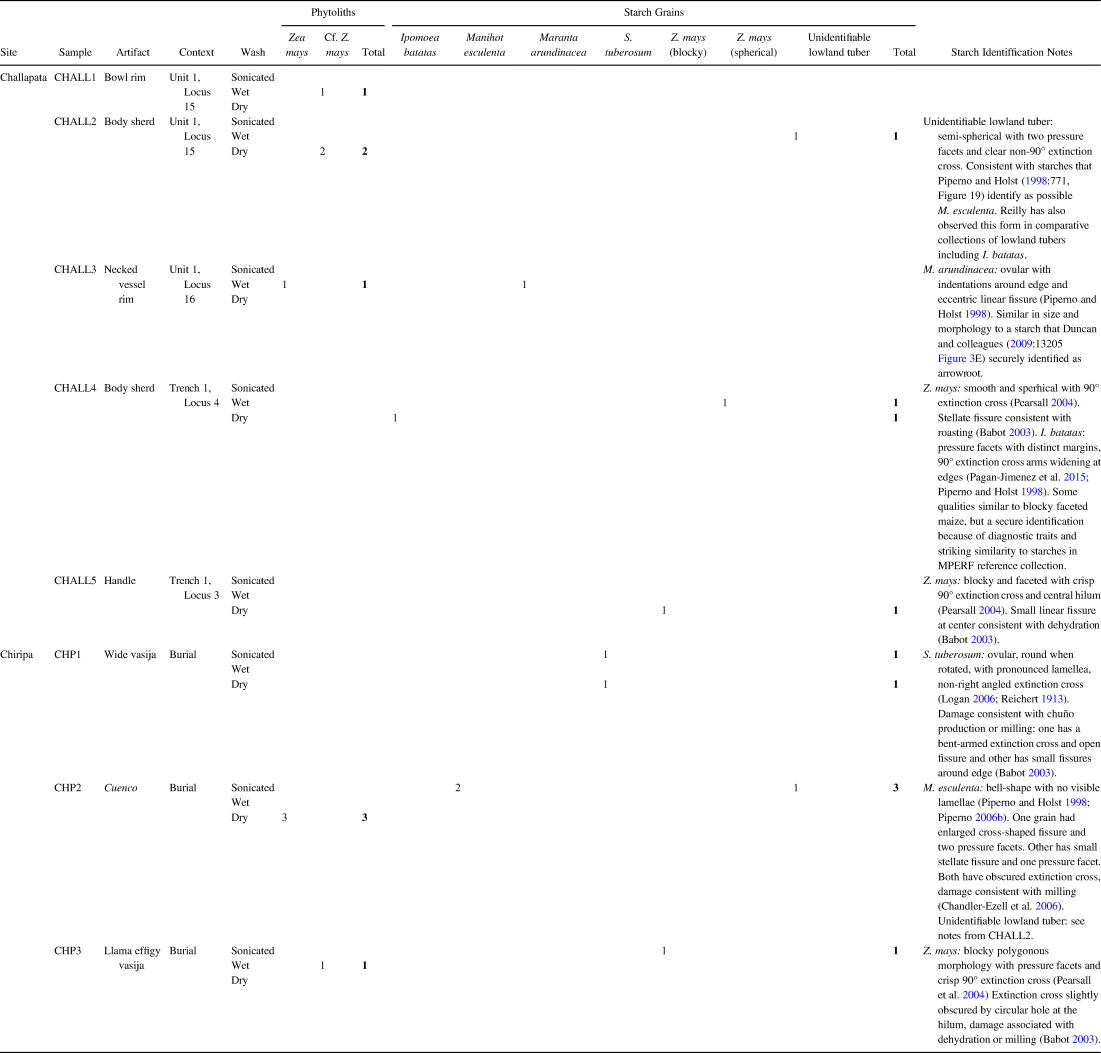
We extracted microbotanical samples directly from ceramics. Samples from Challapata were procured early in the 2016 excavation season and thus are relatively random samples (n = 6) from taphonomically secure units surrounding Oqo Qoya Pata (Table 1; Figure 4). Four ceramics are from Unit 1, an area east of the mound characterized by deposits rich in construction fill and Formative period materials (loci 15–17), with the earliest (locus 17) likely characterizing Middle–Late Formative transitions. Two ceramics were analyzed from Trench 1, a 1 × 6 m unit excavated in the center of the mound. Although we do not yet have radiocarbon dates, ceramic analysis phased materials to the Late Formative.
Challapata artifacts: (a) Bowl rim (CHALL1): (b) necked vessel rim (CHALL3) (photos and illustrations by Sophie Reilly).

Microbotanical Food Remains Identified in Studied Ceramic Vessels.

Note: All maize phytoliths are narrow elongate rondels as described by Logan (Reference Logan2006).
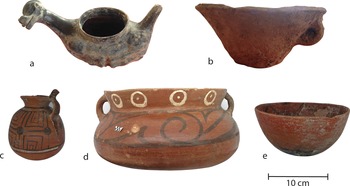
Those sampled from Chiripa (n = 5) did not come from archaeological excavations but rather from a 2015 community construction project east of the Monticulo (Table 1; Figure 5; Reilly Reference Reilly2017:27). Although this limits their contextual information, the vessels were clearly produced during the Middle Horizon. Because they were not excavated as part of an archaeological project, they remained unwashed in the community museum until Reilly completed microbotanical extractions in 2016. Reilly (Reference Reilly2017) also completed ceramic attribute analysis in laboratory settings in Bolivia after finishing the washes. This helped contextualize botanical results and linked them to larger discussions of ceramic production and use in the Lake Titicaca region.
Chiripa artifacts: (a) Llama effigy vasija (CHP3); (b) bowl; (c) effigy handled vasija; (d) wide vasija (CHP1); (e) Cuenco (CHP2) (photos by Sophie Reilly). (Color online)

To obtain microbotanical samples, Reilly performed three washes, using clean petri dishes, as well as new gloves and pipettes, for each wash to mitigate the risk of contamination.
(1) The dry wash reveals plants deposited in the same area as the artifact or at a site but not those directly associated with the analyzed vessels. Adhering sediments are brushed off the inner surface of each ceramic sherd with gloved fingers. This sediment is then transferred to a centrifuge tube.
(2) The wet wash informs us of vessel use or the surrounding soil, corroborating findings from the final sonicated wash. Distilled water is pipetted onto the artifact. The sediment is removed using gloved fingers and then pipetted into a labeled centrifuge tube.
(3) The sonicated wash provides information on vessel use. Distilled water is pipetted onto the artifact. A handheld sonicator targets specific areas of the sherd to extract sediments from artifact pores. This aqueous sample is transferred to a labeled centrifuge tube.
All centrifuge tubes were exported to Canada for microbotanical analysis at the McMaster Paleoethnobotany Research Facility (MPERF). Initial work on Challapata samples did not yield high counts of phytoliths or starch grains, and Reilly therefore applied heavy liquid flotation to isolate phytoliths and starch grains and facilitate their identification (Morell-Hart Reference Morell-Hart2011:287–288). A heavy liquid solution (2.3g/mL) of water and sodium polytungstate was added to samples with volumes higher than 2 mL to float and isolate microbotanicals. The concentrate from each sample was then rinsed using a series of washes in distilled water to remove traces of the sodium polytungstate. This step increased the number of identifiable microbotanical remains.
Each sample was mounted on an individual slide and scanned using a high-powered transmitted light Zeiss microscope. Photos were taken of any diagnostic or potentially diagnostic specimens. Phytoliths and starch grains were identified with the help of the MPERF reference collection, previously published works, and in consultation with Shanti Morell-Hart (McMaster University) and Amanda Logan (Northwestern University). Unknown specimens were photographed and recorded using standards laid out in the International Code for Phytolith Nomenclature (ICPN; Madella et al. Reference Madella, Alexandre and Ball2005).
Results
Phytoliths and starch grains were recovered from samples at both Challapata and Chiripa. Erring on the side of caution, we only linked plants to vessel use when they were recovered in the sonicated washes, though we recognize that plant remains from wet wash samples could be linked to use. In this section and in Table 1, we describe the diagnostic morphological features of each phytolith and starch grain identified as food. We also briefly describe damage to starch grains and our associated inferences about how these ingredients were cooked. For a more in-depth discussion of starch damage, including detailed descriptions, see Babot (Reference Babot, Hart and Wallis2003) and Henry and colleagues (Reference Henry, Hudson and Piperno2009).
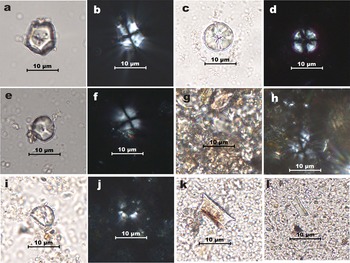
Our analysis at Challapata yielded food remains only after heavy liquid flotation (Figure 6); none were recovered from sonicated washes and therefore could not be securely linked with vessel use. We found maize in all Challapata samples, though some identifications are tentative. In one case (CHALL5; Figure 6a and 6b), a linear fissure on a maize starch grain suggested possible dehydration. Another starch grain (CHALL4; Figure 6c and 6d) had a star-shaped fissure, damage that is consistent with roasting.
Starch grains and phytoliths from Challapata samples. (a–b) Z. mays starch from CHALL5; (b–c) Z. mays starch from CHALL4; (d–e) I. batatas starch from CHALL4; (g–h) M. arundinacea starch from CHALL3; (i–j) unidentifiable lowland tuber from CHALL2; (k–l) cf. Z. mays narrow elongated rondels from CHALL2. (Color online)

Challapata samples also revealed the presence of other nonlocal plants. The wet wash sample of CHALL2 included a starch grain of an unidentifiable lowland tuber (Figure 6i and 6j), similar in form to yuca (M. esculenta) or perhaps sweet potatoes (I. batatas). This grain has damage consistent with milling. The wet wash of CHALL3 resulted in the identification of arrowroot (M. arundinacea; Figure 6g and 6h). The dry wash of CHALL4 contained a sweet potato (I. batatas) starch grain (Figure 6e and 6f).
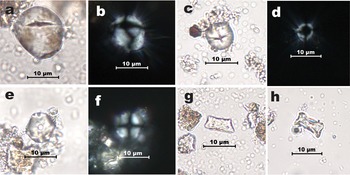
Of the five artifacts in the analyzed Chiripa burial, three contained likely food remains (Figure 7): the wide vasija, the cuenco, and the llama effigy vasija. With the exception of maize phytoliths, all food remains were starch grains. Most were identified in sonicated wash samples, meaning that they can be securely linked to vessel use. The presence of securely and tentatively identified maize phytoliths in wet wash and dry wash samples from multiple artifacts indicates that maize was likely present in the soil matrix of the burial, which could mean that maize cobs were included as offerings as well. Three maize phytoliths (Figure 7k and 7l) were recovered in the dry wash of CHP2 (cuenco). The wet wash in CHP3 (llama vasija) had a maize phytolith, and the sonicated wash had a maize starch grain (Figure 7e and 7f) with damage associated with dehydration or milling (Babot Reference Babot, Hart and Wallis2003:76–78).
Starch grains and phytoliths from Chiripa samples: (a–b) S. tuberosum starch CHP1; (c–d) M. esculenta starch CHP2; (e–f) Z. mays starch CHP3; (g–h) cf. Z. mays phytoliths CHP2. (Color online)

Reilly also identified potato (S. tuberosum) starch grains in both the sonicated wash and the dry wash CHP1 (wide vasija; Figure 7a and 7b). Both showed damage associated with chuño (freeze-dried potatoes) production (Babot Reference Babot, Hart and Wallis2003; Rumold and Aldenderfer Reference Rumold and Aldenderfer2016). Two yuca (M. esculenta) starch grains were securely identified in the sonicated wash sample of CHP2 (cuenco; Figure 7c and 7d), one with enlarged fissures and both with obscured extinction crosses. These forms of damage are linked with milling (Chandler-Ezell et al. Reference Chandler-Ezell, Pearsall and Zeidler2006). The sonicated wash of this same sherd revealed an unidentifiable lowland tuber starch grain similar to the one described from CHALL2.
Discussion
Our data show that microbotanical analyses provide a more complete view of foodways and exchange. These techniques reveal taxa, such as tubers, that are very vulnerable to degradation, are often consumed in their entirety, and do not leave behind byproducts like seeds that can be traced macrobotanically. Even with a small sample size, microbotanical analysis provides a window into an otherwise unknown world of plants, some of which may have been quite common. Starch grain analysis is particularly well suited to studies in the Titicaca Basin. Although a high number of phytoliths were present in all studied samples, most were grass (Poaceae) and cannot be securely identified as food (Reilly Reference Reilly2017:135–137). Tentative subfamily identification of the grass phytoliths suggests that most are in the festucoid subfamily of highland grasses, whereas maize is in the panicoid subfamily of lowland tropical grasses. This is significant because phytoliths are much more durable than starch grains yet may not be best suited to tracing food in this region. The paucity of starch analysis in the Titicaca Basin (but see Logan Reference Logan2006; Rumold and Aldenderfer Reference Rumold and Aldenderfer2016) is likely partially responsible for the overrepresentation of maize and quinoa and the underrepresentation of tubers. Like elsewhere in the Andes, we must go beyond macrobotanicals by sampling for starch grains on artifacts where they are better protected from decomposition (Duke et al. Reference Duke, Vásquez-Sanchez and Rosales-Tham2018; Duncan et al. Reference Duncan, Pearsall, Benfer and Moseley2009; Rumold and Aldenderfer Reference Rumold and Aldenderfer2016; Williamson Reference Williamson, Torrence and Barton2006).
Our study recovered a variety of species of lowland crops at Late Formative Challapata, including arrowroot, maize, sweet potato, and unidentifiable lowland tuber. Particularly significant here is the identification of lowland tuber species, the first to be recorded in the Titicaca Basin; their presence is a sign of possible connections with Amazonian valleys. Ongoing ceramic analysis at Challapata is identifying foreign pastes with a firing profile similar to those seen in the eastern Andean valleys. The presence of maize at Challapata complements Hastorf and colleagues’ (Reference Hastorf, Whitehead, Bruno, Wright, Staller, Tykot and Benz2006) study by suggesting that the eastern Amazonian valleys may have been an additional source of Tiwanaku maize. A next step would be to sample modern maize from the eastern region to compare with the archaeological maize recovered in macrobotanical work, which would help determine how common this type of maize was in the Titicaca Basin.
The Middle Horizon Chiripa burial hints at the movement of nonlocal things and knowledge into the Titicaca Basin, where people seem to have integrated them into local practices. The burial contains an effigy handled vasija (Figure 5c) with a serpent motif similar to ceramics recovered in the Cochabamba Valley (Janusek Reference Janusek and Kolata2003:75), as well as an effigy vasija depicting a llama (Figure 5a), an animal strongly linked to local Altiplano practices and identity (Vallières Reference Vallières2012). The microbotanicals recovered in these vessels—which may be the remains of plants included in the burial as food offerings—further support such local–nonlocal connections. The burial includes potato, likely grown locally in the Titicaca Basin; yuca, which may have been acquired from eastern Amazonian valleys; and maize.
Other than maize, all foods identified in this study—potato, arrowroot, sweet potato, and yuca—are tubers. The presence of lowland tubers in these contexts suggests we may want to revisit previously identified macrobotanical tuber remains. Most archaeological evidence for tuber consumption in the southern Titicaca Basin is in the form of preserved parenchyma that cannot be identified to the genus or species level. Given the high number of tuber species domesticated and available in the Titicaca Basin, there has been an implicit assumption in much of the region's archaeobotanical research that parenchyma remains are those of local species (Bruno Reference Bruno2008; Hastorf Reference Hastorf2012). However, given our findings that Titicaca Basin communities consumed lowland tubers as well, such assumptions should now be questioned. To develop a better understanding of highland versus lowland tuber use, future projects should integrate microbotanical analysis to complement macrobotanical results.
Our findings also suggest the need for further work into Late Formative–Middle Horizon foodways dynamics, specifically to consider the movement of starches (Boivin et al. Reference Boivin, Fuller and Crowther2012). Considerations of tubers in the Andes often come with certain assumptions. For instance, according to Duke and colleagues (Reference Duke, Vásquez-Sanchez and Rosales-Tham2018:78), Moche archaeologists working on the Peruvian north coast long assumed that potatoes were a “novelty food” reserved for high-status people; this assumption was largely based on the lack of archaeological evidence for potato consumption across Moche sites (though Ugent and colleagues [Reference Ugent, Pozorski and Pozorski1982] recovered potatoes from much earlier contexts [2000–1200 BC] in the Casma Valley). Duke and colleagues’ (Reference Duke, Vásquez-Sanchez and Rosales-Tham2018) recent starch grain analysis, however, suggests that potatoes were regularly consumed in quotidian contexts. Our findings of potato alongside maize and yuca in an offering context further support the argument that potatoes were consumed not only in quotidian contexts but also were ceremonially potent in the Titicaca Basin.
As we suggest earlier, food consumption often defies simple domestic–ceremonial binaries. For instance, in her study of camelid consumption in the Mollo Kontu neighborhood at Tiwanaku, Vallières (Reference Vallières2012) demonstrates that camelid meat, a local ingredient, was consumed on a day-to-day basis. She argues that this daily consumption did not render camelid meat trivial; rather, the ingredient's importance in people's everyday lives made it socially valued (Vallières Reference Vallières2012:335–336). The same might be said for potatoes and other varieties of highland tubers. Their availability to Titicaca Basin communities through local agricultural practices made them both local staples and socially valued ingredients. The choice to acquire nonlocal tubers is yet another indication of the value of these ingredients.
In fact, the familiarity of highland tubers may have made lowland varieties easier to incorporate into Titicaca Basin culinary practice because new species of tubers could have easily been blended with or hidden in highland meals (Wilk Reference Wilk2006). These tubers may also have been used as substitutes; for instance, thrown into a stew to replace familiar ingredients like potatoes. New foods act as agents of change, yet they can be indigenized through their incorporation into preexisting practices (Lau Reference Lau and Hodos2016). It is also possible that the acquisition of lowland tubers was another strategy to stagger food production throughout the year. In a potentially similar strategy to Bandy's (Reference Bandy2005b) proposed use of raised fields, Titicaca Basin communities may have acquired lowland crops in periods of the year when the cultivation of highland crops was not as fruitful.
This issue of “acquisition” returns us to discussions around transit communities and the movement of goods. Inhabitants in communities like Late Formative Challapata may have gained access to plants from eastern Amazonian Valleys. Although Chiripa's importance as a transit community likely faded by the Middle Horizon, the community continued to have access to nonlocal goods. The lowland crops at Challapata—arrowroot, sweet potato, and maize—likely moved up the road that we recently identified as connecting eastern basin sites with the eastern valleys. Ceramic analysis has previously demonstrated that pots circulated between sites in the eastern and southern Titicaca Basin (Janusek Reference Janusek2004; Stanish Reference Stanish2003:154); it is therefore possible that plant goods did as well, perhaps even in pots, as we see in the ethnographic and ethnohistoric record. Like other prestige goods, these plants may have arrived at sites where elites extracted tolls, feeding an ongoing “growth cycle” as per Bandy's hypothesis.
But our work also suggests the need for more complex approaches to diverse things and plants in such places and to think beyond classifications of prestigious or the everyday. The burial at Chiripa is a microcosm of Titicaca Basin circulation, demonstrating that goods from different sources come together in Altiplano practices and alluding to the complexity of things and foods in motion. Although there has been a tendency to look for single kinds of trade networks in the Titicaca Basin, with attention focused on prestige goods, our current data suggest that during the Late Formative and likely into Tiwanaku phases, there were a diversity of mechanisms behind the movement of goods (Lazzari et al. Reference Lazzari, Domingorena, Stoner, Scattolin, Korstanje and Glascock2017). This decentralized model might have involved separate networks for the movement of different kinds of artifacts and plants.
Nielsen (Reference Nielsen, Hirth and Pillsbury2013) has suggested that the exchange of objects in the southern Altiplano likely took place in domestic settings or at caravan camps at the edge of settlements. He also claims that many objects moved across the landscape not only by the “specialized traffic” of llama caravans but also in an embedded capacity, within a particular verticality scheduled around hunting and gathering (Nielsen Reference Nielsen, Hirth and Pillsbury2013:412). Those of us working in the Titicaca Basin must also begin to think of trade not as a single (and controlled) route but instead as “the result of multiple heterogeneous and redundant practices” (Nielsen Reference Nielsen, Hirth and Pillsbury2013:413). Certainly, the movement of goods such as tubers suggests the need to complicate our thinking not just of transit communities but also of all communities consuming nonlocal goods and to consider the diverse possibilities of both horizontal and vertical economies through our long archaeological sequence.
Conclusion
Studies of foodways provide us with a distinct way for thinking about the circulation of ancient things, particularly because ingredients cannot be easily boxed into categories of “luxury” and “mundane.” Microbotanical analyses ensure that archaeologists capture a more complete picture of plants that were both locally available and entering the Titicaca Basin from surrounding lowland communities. In the cases of Challapata and Chiripa, microbotanical analysis reveals that these two transit communities had access to a wide range of lowland plants—not only maize but also arrowroot, sweet potato, and yuca. Our analysis at Chiripa shows that people continued to consume highland tubers (potato) even while they had access to lowland species. Continued investigations of foodways at transit communities in the Titicaca Basin, as well as the lowland communities outside the region, will contribute to a more complete understanding of connectivity between these communities in the Formative period and Middle Horizon.
Acknowledgments
We thank the communities of Chiripa and Challapata, as well as the Unidad de Arqueología y Museos (La Paz). This project was conducted with the support of the Taraco Archaeological Project (directed by Christine Hastorf and Maria Bruno), and the PARIAVI Project (directed by John Janusek, Andrew Roddick, Carlos Lemuz, and Victor Plaza). Analysis took place at McMaster's Laboratory for Interdisciplinary Research of Archaeological Ceramics (LIRAC) and McMaster Paleoethnobotanical Research Facility (MPERF) both in Hamilton, Canada. We are grateful to Amanda Logan and Shanti Morell-Hart for overseeing paleoethnobotanical work, to Maria Bruno for providing critical feedback on this manuscript, and to anonymous reviewers for thoughtful and helpful comments (but any mistakes herein are the sole fault of the authors!). This research was funded in part by Social Sciences and Humanities Research Council and McMaster's Arts Research Board. Reilly's travel was supported by the Schmid Family Travel Fund and the GSA Travel Assistance Award at McMaster University.
Data Availability Statement
Primary data discussed in this article were generated by the authors, and all other data are available in the referenced literature. Relevant botanical data are outlined in this article, but interested parties can find the full botanical dataset generated by this research in Reilly's (Reference Reilly2017) master's thesis, cited here and available through McMaster University's institutional repository MacSphere. Botanical residues were analyzed at the McMaster Paleoethnobotany Research Facility (MPERF), and samples continue to be housed there. Ceramic artifacts discussed are currently housed in government and community repositories in Bolivia.
Competing Interests
The authors declare none.