



LEARNING OBJECTIVES
After reading this article you will be able to:
-
describe major types of synthetic opioid, their characteristics and key risk factors associated with their use
-
critically discuss assessment and management challenges
-
demonstrate knowledge of prevention, assessment and management approaches.
The harm associated with synthetic opioids is one of the most pressing public health crises of our time. These substances, including fentanyl and its analogues, are highly potent and have contributed to a dramatic increase in overdose deaths worldwide. Although drug-related deaths and the association with synthetic opioid use is not as pronounced in England as it is in Scotland, Northern Ireland and the USA (van Amsterdam Reference van Amsterdam, van den Brink and Pierce2021), nevertheless, from their analysis of opioid use and related harm in Europe, Pierce et al (Reference Pierce, van Amsterdam and Kalkman2021) conclude that action is needed to stop an emerging crisis in the UK. Their conclusion was shared by Jon Shorrock, programme manager at the Office for Health Improvement and Disparities (OHID), speaking at a conference in April 2024: ‘Drug poisoning and drug misuse deaths are at record highs in England having almost doubled since 2012. These deaths predominantly involve opioids and now increasingly synthetic opioids’ (Shorrock Reference Shorrock2024). Concern about increasing integration of synthetic opioids into European drug markets is voiced in the European Drug Report 2025 (EUDA 2025).
The extent to which synthetic opioids contribute to drug-related deaths in England is not entirely clear, and delays in testing and recording systems mean that the impact of synthetic opioids is probably undercounted (Office for Health Improvement and Disparities (OHID) 2024a). However, the risks posed by synthetic opioids extend beyond overdose, having an impact on communities, healthcare systems and law enforcement. Understanding the scope of the harm they cause is essential for crafting effective policy, prevention and treatment solutions to mitigate their effects on individuals and on society as a whole. Recognition, assessment and management of synthetic opioids is a key challenge for clinicians, who also have an important role in developing and implementing effective interventions.
This article details the types and characteristics of synthetic opioids, the modes of use, their effects, prevalence and the role they play in drug-related deaths. It then considers the challenges and barriers to assessment and to delivering an effective policy and practice response.
Synthetic opioids and their characteristics
There are four main types of synthetic opioid: nitazenes, fentanyl analogues, U-type compounds (‘utopioids’) and brorphine-like opioids. Fentanyls can be divided into two categories: pharmaceutical fentanyls (such as fentanyl, sufentanil, remifentanil and alfentanil) and non-pharmaceutical fentanyls, which are fentanyl analogues or designer fentanyls (such as ocfentanil, butyrfentanyl).
Fentanyl analogues
Synthetic opioids are used legally in medical care. The fentanyl analogues currently licensed as medicines for human use in the UK are fentanyl, alfentanil, remifentanil and sufentanil. These are used to relieve pain but also have euphorigenic effects and have the potential for misuse. Pharmaceutical fentanyls are used in hospital practice, especially in intensive care units and operating theatres, for anaesthesia and post-operative pain management. In terms of therapeutic potency compared with morphine, fentanyl is 50–100 times more potent, alfentanil 30 times and sufentanil 500 times more potent (Advisory Council on the Misuse of Drugs 2020).
These prescribed substances can be diverted to street use and synthetic opioids are also synthesised in illegal laboratories. Synthetic opioids act on the same targets in the brain as natural opioids such as morphine. Illicit fentanyl analogues such as carfentanil are 10 000 times more potent than morphine in analgesic properties. Because these substances are cheap to produce and are extremely potent, illicit suppliers find it lucrative to replace or supplement opiates such as heroin with these. They are also easy to transport in small quantities, which can then be distributed locally, for instance in prisons, or internationally. Substantial profits can be made by local distributors, who may dilute the substances further using unknown materials (Advisory Council on the Misuse of Drugs 2020; Shafi Reference Shafi, Berry and Sumnall2022).
Nitazenes, utopioids and brorphine-like opioids
As noted by Karila et al (Reference Karila, Marillier and Chaumette2019), since 2010, new synthetic opioids, structurally different from fentanyl, have emerged on the market. Among them are AH-7921 (benzamide analogue), MT-45 (piperazine analogue) and U-47700 (an isomer of AH-7921 and 7.5 times more potent than morphine).
The most common group of nitazenes in the UK are the 2-benzyl benzimidazole opioids, originally developed in the 1950s as analgesics, but not approved as human or veterinary medicines because they were found to be so potent. Brorphine-like opioids are less common in this country than some of the other opioids, but still of possible concern (Advisory Council on the Misuse of Drugs 2022). Nitazenes and brorphine-like opioids are of particular interest because they pose significant risks of overdose and because there is limited understanding of their pharmacological effects. Although nitazenes and brorphine-like compounds are structurally distinct from traditional opioids, they interact with the same opioid receptors in the brain, leading to effects that can be far stronger than morphine or fentanyl (Advisory Council on the Misuse of Drugs 2022). In this group, the strength of protonitazene is 1.07–1.29 times greater than fentanyl and 130 times greater than morphine, and isotonitazene roughly equal in strength to fentanyl and 2.5 times greater strength than morphine (Edinoff Reference Edinoff, Martinez Garza and Vining2023).
The increasing presence of synthetic opioids in the illicit drug market has raised concerns, as users may be unaware of a drug’s strength and its ability to cause respiratory depression at even low doses. Furthermore, the clandestine production of these substances makes it challenging for regulatory bodies and healthcare providers to monitor their distribution and mitigate public health risks effectively. Synthetic opioids, particularly nitazenes, some of which are 500 times stronger than morphine, have been detected in at least 20 postcodes in the UK since September 2023 (OHID 2024a).
Mode of use
Synthetic opioids are produced in several forms, including powders, tablets (such as standard pills or lozenges), skin patches (transdermal patches) and liquids. They are also sold as benzodiazepines or pain relief medication in blister packs or boxes that look like legitimate pharmaceutical products (European Union Drugs Agency 2024a). They can be taken into the body in many ways: by swallowing, snorting through the nose, smoking, vaping, injecting, applying to the skin, or placing under the tongue, in the vagina or in the rectum. Although not intended for oral ingestion, when a transdermal patch is chewed before being swallowed, the body may absorb more of the drug than it would from swallowing alone. Even after a patch has been worn for treatment, it often still contains a significant amount of the drug. Because of this, people may try to extract the remaining drug from used patches to take it in other ways, such as by injection or snorting.
Traces of clandestinely produced synthetic opioids have been identified on bottle caps and spoons, which demonstrates their misuse as replacements for heroin or other opioids (European Union Drugs Agency 2024a).
Drug effects
Synthetic opioids affect individuals differently depending on the person’s size, body weight and general health. Other factors include the drug’s amount, strength and administration route, and the individual’s degree of tolerance and whether other psychoactive drugs have been taken at the same time. These factors all result in different duration of onset of symptoms and effects. Short-term effects include euphoria, relaxation, pain relief, nausea, vomiting, fever, sweating, hypotension, and slow breathing and heart rate.
As reviewed by Shafi et al (Reference Shafi, Berry and Sumnall2022) and Salle et al (Reference Salle, Bodeau and Dhersin2019), synthetic opioids affect all the major body systems (Box 1). Other effects have also been reported by Kotlińska-Lemieszek (Reference Kotlińska-Lemieszek and Żylicz2022):
-
long-term use affects the endocrine system by inhibiting the hypothalamic–pituitary–gonadal axis, resulting in a decrease in testosterone and oestradiol release; this can manifest clinically as loss of libido and impotence in males, amenorrhoea and infertility in females; these symptoms may also lead to reduced energy levels and depression;
-
opioids can also inhibit the hypothalamic–pituitary–adrenal axis, which can sometimes present clinically as an adrenal crisis;
-
the androgen deficiency promotes osteoporosis, and in chronic use, insulin resistance can appear;
-
opioid use can lead to immunosuppression, increasing risk of infections and stimulating gastrointestinal and pulmonary cancer;
-
decreased bone density (osteopenia) and increased risk of fractures are well recognised in long-term opioid use;
-
opioid use can impair sleep quality and patterns, leading to daytime sleepiness and fatigue;
-
opioids can trigger or exacerbate sleep apnoea in predisposed individuals.
Some effects of synthetic opioids on body systems
Neurological effects:
-
most common: reduced consciousness (drowsiness, disorientation, lethargy, coma resulting in death)
-
miosis (small, pinpoint pupils)
-
hyperalgesia (increased pain), anaesthesia (loss of sensation)
-
dizziness, depression, dissociation, memory loss
-
poor psychomotor skills, sleep disturbance
-
in fentanyl overdose: body stiffening, seizures, delayed brain damage
-
cerebral haemorrhage (after acetylfentanyl intoxication)
-
with MT-45 (a piperazine analogue): tingling, weak hands, balance problems, ototoxicity
-
with U-49900 (a benzamide analogue): loss of taste, smell, touch
Respiratory effects:
-
most dangerous: respiratory depression (slowed/blocked breathing)
-
cough suppression
-
hypoxia (low oxygen)
-
cyanosis (blue skin)
-
pulmonary oedema (fluid in lungs), pulmonary congestion
-
with fentanyl and its analogues: chest wall rigidity, apnoea (stopped breathing), even at low doses
Cardiovascular effects:
-
acute cardiac effects: hypotension, bradycardia, cardiac shock/chest pain
-
with acetyl fentanyl and 4-methoxybutyrfentanyl: increased heart rate
-
chronic use: enlarged heart, fibrosis (scarring), arteriosclerosis (hardened arteries)
Gastrointestinal and urinary effects:
-
constipation, bowel dysfunction
-
reduced digestive secretions, reduced absorption
-
oesophageal dysmotility, gastric hypomobility (slow stomach movement), paralytic ileus
-
cramping, nausea, vomiting, anorexia, weight loss
-
urinary urgency or retention
-
with MT-45: increased liver enzymes
-
hepato-pancreatic: biliary colic, epigastric pain
(Salle Reference Salle, Bodeau and Dhersin2019; Shafi Reference Shafi, Berry and Sumnall2022)
Key risk factors for synthetic opioid-related deaths
Reviews and studies have identified a number of risk factors and risk contexts associated with the use of synthetic opioids and the involvement of these drugs in deaths. For example, data from the USA and Europe show that males, compared with females, tend to have higher drug overdose mortality (Butelman Reference Butelman, Huang and Epstein2023; European Union Drugs Agency 2024a, b). In the UK in 2023, there were 127.6 drug-poisoning deaths registered per million population (3645 deaths) among males, compared with 59.8 deaths per million among females (1803 deaths) (OHID 2024a). Although late adolescence and young adulthood are periods of increased risk, the rise of adults aged 55 and older seeking first-time treatment (European Union Drugs Agency 2024a) may indicate an increased risk of death occurring. Low socioeconomic status and marginalisation of some population groups, such as homeless people, have been identified as particular risk factors (Devany Reference Devany2019; Scheibein Reference Scheibein, Wells and Henriques2020); contexts such as prisons are noted as ‘risk environments’ in terms of deaths from synthetic opioid use (Duke Reference Duke, Gleeson and MacGregor2023). People who have a history of problematic drug use and polydrug use are also at greater risk of drug-related mortality (Armoon Reference Armoon, Mohammad and Moghaddam2023).
Prevalence of synthetic opioid-related deaths
The European Union Drugs Agency estimated that there were around 6400 drug-induced deaths in the EU in 2022, with considerable variation between countries (European Union Drugs Agency 2024a): this represents a mortality rate of 22.5 deaths per million population aged 15 to 64. The report noted the growing concern over deaths linked to synthetic opioids but, with a few exceptions, these drugs are not routinely monitored or reported at EU level. It is likely, therefore, that deaths linked to synthetic opioids are under-reported.
The UK has one of the highest rates of drug-related deaths among European countries. Global markets are rapidly evolving, reflecting growing alarm that the UK may potentially face a similar ‘opioid epidemic’ as in the USA. Data published by the Office for National Statistics reveal that there were 5448 drug-related deaths in England and Wales in 2023 (Office for National Statistics 2024).
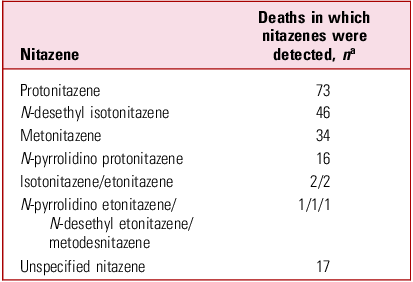
The UK’s first nitazene death was recorded in 2019 and a big influx in the summer of 2024 has seen nitazenes detected all over the country. The OHID and the National Crime Agency confirmed that there were 179 deaths involving one or more nitazenes between 1 June 2023 and 31 May 2024 in England (OHID 2024a). Over this period, nitazenes were present in all deaths involving illicit fentanyl or analogues of fentanyl. However, from available information, it is not always possible to determine whether fentanyl involved in a death was illicit or pharmaceutical. Table 1 shows the number of these deaths associated with different nitazene compounds identified by laboratory tests. In 17 out of the total 179 deaths, there was no confirmation of the specific compounds involved.
Deaths (n = 179) associated with nitazene use in England, 1 June 2023 to 31 May 2024

a. More than one nitazene was detected in some deaths, so the sum of detections is greater than the total nitazene deaths.
Source: Office for Health Improvement and Disparities (2024a).
Deaths involving nitazenes have been recorded in every region of England, with notable differences across the regions. For example, of the 179 deaths between June 2023 and May 2024, the region with the highest rate was the East of England, with 33 deaths, followed by the East Midlands with 29 deaths. Only 3 deaths were recorded in the North East, with a range of 12 to 25 deaths occurring in the remaining six regions (OHID 2024a). We found no research examining the reasons for these regional differences in England. However, analyses of differences in drug-related deaths between England and Scotland, and between Europe, the USA and the UK, suggest that a complex range of factors is at play, including drug availability, an ageing cohort, the number of people not in drug treatment and the nature of available treatment services in an area (Pierce Reference Pierce, van Amsterdam and Kalkman2021; van Amsterdam Reference van Amsterdam, van den Brink and Pierce2021).
Synthetic opioids: a looming crisis?
The rise of synthetic opioids in Europe, particularly those linked to fatal overdoses and acute poisonings, has alarmed health services and law enforcement agencies.
Some potential reasons why synthetic opioid use has become so pervasive have been postulated to include lower production costs, stronger or longer-lasting highs and increasingly efficient synthesis by manufacturers (Ciccarone Reference Ciccarone2021; Kline Reference Kline, Mattern and Cooperman2021).
These substances are easily transported and hidden, and they can be produced in small quantities to yield large numbers of street-level doses. Although Europe’s opioid crisis is not as severe as the US fentanyl crisis, it is still a significant public health concern (European Union Drugs Agency 2024b).
The European Union Agency for Law Enforcement Cooperation (Europol) has identified 49 synthetic opioids in the European drug market since 2009, with 34 being fentanyl derivatives. In 2018 alone, six new opioid derivatives emerged. Synthetic opioids are now the fourth most commonly monitored substance group in Europe, following synthetic cannabinoids, cathinones and phenethylamines. Fentanyl derivatives accounted for over 70% of synthetic opioid seizures in Europe in 2017 (European Union Drugs Agency 2024b).
The harms associated with opioid use and the importance of addressing unmet needs in opiate dependence to avoid overdose have been well documented in the literature (Herlinger Reference Herlinger and Lingford-Hughes2021).
Synthetic opioid exposure has been demonstrated to confer nearly twice the risk of fatal overdose relative to prescription opioids or heroin (Florence Reference Florence, Luo and Rice2021; Manchikanti Reference Manchikanti, Singh and Staats2022). The combination of minimal production costs and extraordinary potency renders fentanyl particularly suitable for admixture with heroin and other illicit substances (Volkow Reference Volkow and Blanco2021). In addition, fentanyl and related analogues are frequently encountered in counterfeit formulations designed to mimic the appearance of widely prescribed opioids and benzodiazepines, colloquially termed ‘pressed pills’ (Armenian Reference Armenian, Vo and Barr-Walker2018).
According to the US Drug Enforcement Administration (2021), synthetic opioid-related deaths are frequently attributable to their use as low-cost adulterants, although intentional consumption also occurs. The inadvertent exposure of users to fentanyl and its analogues, now routinely detected in cocaine, methamphetamine, heroin and falsified pharmaceuticals, is regarded as a principal driver of drug-related overdose deaths (Han Reference Han, Yan and Zheng2019).
The heightened overdose risk associated with synthetic opioids compared with heroin stems from their far greater potency and availability within the drug supply (Skolnick Reference Skolnick2022). A dose that might be ‘normal’ for heroin can be fatal without immediate medical intervention if replaced with fentanyl or carfentanil. In addition, while a heroin overdose may take 20–30 min to become deadly, fentanyl can cause severe, life-threatening respiratory arrest within just 2–5 min (Skolnick Reference Skolnick2022).
In addition, fentanyl derivatives have significant risk of addiction and can have adverse effects on health and social problems commonly associated with opioid use. Fentanyl analogues are a major cause of poisonings, fatal or not, in the USA and in Northern Europe. In other countries, their presence is less visible.
Addressing the harms of opioid misuse
In the following sections, we consider prevention approaches that address the wider public health aspects of the use of opioids and synthetic opioids, before discussing what can be done in treatment settings to identify, assess and manage synthetic opioid use and related harms.
Prevention
Prevention is a key aspect of managing the problems of mortality, morbidity and social sequelae of opioid and synthetic opioid use. The importance of prevention and early intervention has been stressed in research and policy documents (e.g. Volkow Reference Volkow, Jones and Einstein2019; Black Reference Black2021). For this purpose, universal and targeted prevention strategies are crucial to curb prescription opioid misuse and synthetic opioid threats. Main prevention approaches are summarised in Box 2.
Addressing mortality, morbidity and social sequelae of opioid misuse: key approaches
-
Education and training of healthcare professionals (especially psychiatrists working in community settings, emergency departments, prisons and primary care) on identification of those at high risk, harm reduction, principles of opioid substitute prescribing and safer pain management practices is essential.
-
Monitoring opioid prescription data in primary and secondary care helps identify potential misuse and inform interventions.
-
Naloxone should be readily available for overdose reversal in all relevant settings, e.g. targeting those who are homeless, recently released from prison.
-
Community-based interventions can prevent substance use disorders in at-risk individuals by focusing on hard-to-reach populations, developing integrated care with third-sector agencies, and planning for more rapid interventions, including opioid substitution treatment (OST). It is important to bear in mind that in addition to OST, simultaneous delivery of psychosocial interventions is recommended to improve outcomes.
A broad community-based intervention strategy at national and local level should consist of implementing evidence-based programmes in schools, families and communities to prevent substance use disorders. Raising public awareness about the dangers of prescription drug and synthetic opioid misuse is also essential.
Most of the synthetic opioid-related deaths recorded in England between June 2023 and May 2024 were reported to the National Crime Agency or the OHID through local networks. Work is ongoing to reduce the health risks linked to rising use of these and other drugs. As part of this effort, the OHID is working with other government groups, including the Synthetic Opioids Taskforce, to improve drug monitoring and create an early warning system. Since April 2024, laboratories have been sharing toxicology results from fatal overdose cases when coroners allow the data to be used. This information is added to the joint National Crime Agency and OHID log of tracked cases (OHID 2024a).
The role of opioid substitution treatment (OST) in the management of heroin dependence is well recognised, as are its benefits. In the UK recently, the following three main changes resulted in the publication of updated national guidance (UK Government 2023; Department of Health & Social Care 2024a):
-
our knowledge base (research evidence, data and clinical experience) has grown, as has the availability of different buprenorphine formulations;
-
we have more evidence that engagement with OST is associated with reduced mortality across a range of conditions;
-
the arrival of potent illicit synthetic opioids in the UK has reinforced the importance of engaging and retaining greater numbers of opioid-dependent people in treatment.
Recent data indicate that 70% of patients in the UK receiving OST are prescribed methadone and 30% buprenorphine. However, the Office for National Statistics reported that in 2023, a total of 709 drug-related deaths were associated with methadone and 46 with buprenorphine (Department of Health & Social Care 2024b). Over the past decade, methadone has been associated with ten times more deaths each year compared with buprenorphine. The new guidance recommends increased use of buprenorphine owing to its lower risk of respiratory depression, the shorter time required to achieve optimal dose and the lower risk of diversion to the illicit marketplace. Buprenorphine is more suitable for rapid prescribing, including on the first day of attendance, and for the prescribing of take-away doses much earlier in treatment and for a shorter duration of time. Current treatment protocols must be changed to implement these recommendations and widen the net in provision of OST to underserved populations such as the homeless and those engaging poorly with services. The use of long-acting depot injections of buprenorphine adds another tool to the clinician’s armamentarium (Department of Health & Social Care 2024a).
Identification/assessment
In specialised addiction services, nitazene test strips are available for individuals who use opioids and are at high risk. The strips are a rapid visual immunoassay for the detection of adulterants in substances before they are used. They are not a urine drug screening test. The strips are given to service users, who are taught how to test their personal illicit drug supply for the presence of nitazenes and are required to inform staff of test results. If positive, the advice should be given to immediately discard the drugs and not use any of the batch. Harm reduction advice should be given at the point of issuing the test strips (Box 3).
Key messages to patients using nitazene test strips and deemed at high risk
-
Mixing different drugs is more likely to cause an overdose, especially concurrently using benzodiazepines or drinking alcohol. Try to use one at a time. If you are going to mix drugs, use less of each.
-
Try not to use drugs alone, and prevent your friends from using alone. Be alert to signs of overdose in your friends. The signs include difficulty breathing, blue colouring to the lips or fingertips, unresponsiveness and limp limbs.
-
When using with friends, use at intervals of at least a few hours. Wait for the peak effects to pass before the next person uses.
-
Always carry naloxone. It’s available from all treatment providers. If someone overdoses, give them naloxone and call an ambulance immediately.
-
Naloxone only works on opioids. If you suspect someone has overdosed give them naloxone even if you’re not sure they have taken an opioid. It will not harm them.
-
If you use opioids every day, your local drug treatment service can support you and prescribe alternatives such as methadone and buprenorphine. Even if abstinence isn’t your goal these alternatives can help keep you safe. You will know what you are taking and your risk of overdose may be reduced.
-
If you are already in treatment for opioid dependence and you don’t want to use on top, speak to your worker and make sure you’re getting the right dose of methadone or buprenorphine.
-
Use a sample testing service (such as WEDINOS in the UK) to test your drugs if you can spare a bit; but it takes time to get the results back so go easy in the meantime.
(Findlay Reference Findlay, Hussey and Furlong2025; and multiple other sources)
The test takes no longer than 5 min, including preparation. A positive result can be interpreted typically by 60 s. It is recommended not to read results after 10 min. A positive result indicates only the presence of nitazene, not the quantity. A negative result does not rule out nitazene, as it may be present below the minimum detection level of the kit. It is also possible that technical or procedural errors cause false results. Some manufacturers and suppliers are transparent about such limitations of test strips, for example that the strips:
-
will not detect drug concentrations below specified limits or may fail to detect a drug that is present (sometimes called a false negative)
-
may not detect all variations of a drug type
-
may not be used correctly
-
may fail because the drug does not dissolve properly, or other substances interfere with the test
-
do not indicate the presence of potentially harmful drugs other than those being tested for
-
do not indicate the quantity of a detected drug.
A further problem is that their results can be difficult to read, especially in low light.
Test strips therefore cannot indicate whether the sample tested would or would not cause harm or possible overdose (OHID 2024b). However, regardless of their limitations, at present there is no other way to identify the presence of nitazenes in drugs.
Management of an overdose
Risk factors for opioid overdose are listed in Box 4. Many of these generally apply to synthetic opioid overdose as well. However, some factors may be more pronounced with synthetic opioids, owing to their potency and unpredictable nature (Box 5).
Risk factors for opioid overdose
Risks are higher if the individual:
-
has an opioid use disorder
-
injects opioids
-
starts using opioids again after a break (e.g. after detoxification, being in prison or stopping treatment)
-
uses prescription opioids without medical input
-
takes a high daily dose of opioids (more than the equivalent of 100 mg of morphine)
-
mixes opioids with alcohol or other drugs that slow down breathing, such as sleeping pills, anxiety medications (e.g. benzodiazepines), barbiturates, some anaesthetics and certain painkillers
-
has other health problems, such as HIV, liver or lung disease, or mental health problems
-
is male, older or in a low socioeconomic group – these groups are more likely to overdose compared with women, younger people and those with higher socioeconomic status.
(World Health Organization, 2023)
Risk factors specific to synthetic opioids
-
Unpredictable potency: synthetic opioids like fentanyl and its analogues can vary significantly in potency, making it difficult for users to accurately judge their dosage. This unpredictable nature increases the risk of accidental overdose.
-
Adulteration: synthetic opioids are often illicitly manufactured and may be mixed with other substances, including other drugs, fillers and cutting agents, further increasing the risk of unpredictable and potentially fatal reactions.
-
Lack of awareness: many users may be unaware that their drug supply contains synthetic opioids, making it difficult to take appropriate precautions (Edinoff Reference Edinoff, Martinez Garza and Vining2023).
-
Owing to varying potencies, half-lives and uncertain amounts of synthetic opioids in the illegal drug, the onset of overdose can be very sudden.
Management of opioid overdose
-
Opioid overdose affects the brainstem and cortical centres regulating breathing, and can lead to respiratory depression and death.
-
Initial management should prioritise protecting the airway, maintaining breathing and circulation.
-
Naloxone is a competitive mu-opioid receptor antagonist that rapidly reverses opioid effects.
-
Naloxone administration routes include intravenous (IV), intramuscular (IM), intranasal, intraosseous, subcutaneous, endotracheal, inhalational and sublingual.
-
Intravenous administration of naloxone is preferred as it allows dose titration to the desired effect while minimising acute withdrawal risks.
-
In community settings or where IV access is not possible, IM injection is a good alternative, although it carries a higher risk of unpredictable absorption of the naloxone and acute withdrawal.
-
Intranasal naloxone is gaining popularity in communities to avoid needle-stick injuries.
-
Synthetic opioids (which are highly potent, fast acting and long lasting) make reversal more difficult.
-
Management of synthetic opioid overdose often requires larger or more frequent naloxone doses than typically recommended and longer periods of observation.
(Adapted from Salle Reference Salle, Bodeau and Dhersin2019)
The administration of naloxone is key in the management of opioid and synthetic opioid overdose, and Box 6 provides information and advice its use.
Key implications
-
Synthetic opioids and their analogues pose a significant and evolving threat to public health. Their high potency and unpredictable nature increase the risk of overdose and death.
-
Users are often unaware of the presence of these potent substances in their drugs. This highlights the need for increased harm reduction strategies and public health messaging.
-
Higher doses of naloxone may be required to reverse overdoses involving synthetic opioids.
-
A focus on prevention is crucial. Waiting for overdoses to occur and relying solely on naloxone is insufficient.
Challenges and barriers
Synthetic opioids, like other novel psychoactive substance groups, constantly evolve. Therefore, surveillance and monitoring programmes are essential to keep up with the associated public health challenges. As mentioned above, the OHID (part of the Department of Health and Social Care) has been working with the National Crime Agency to monitor deaths associated with illicit use of potent synthetic opioids in the UK (OHID 2024a).
The information they provide is necessary to prioritise synthetic opioids for international review and eventual scheduling and regulation. It is imperative to implement regional testing of drug samples and establish forensic services where they do not exist. In addition, laboratories must modify their current methods or develop new forensic and toxicological analytical methods to detect emerging drugs. This can be challenging as data on the emergence of synthetic opioids differ between regions and become rapidly outdated (OHID 2024a).
Testing of drug samples should be more regularly carried out in primary and secondary care settings as well as in the criminal justice system.
The global spread of synthetic opioids is a serious issue that requires coordinated international responses. These substances are widely accessible on the dark web, easy to hide and can be delivered through standard or express mail services. Clinicians should be aware that commonly used detection/analysis kits may not identify fentanyl analogues or newer synthetic opioids, and they must remain vigilant for signs of opioid use, such as slow or shallow breathing, bluish skin (cyanosis) and pinpoint pupils (miosis). In such cases, naloxone remains the first-line treatment for opioid intoxication. Naloxone is widely recognised as an effective intervention for reversing opioid-induced respiratory depression and has saved countless lives (Albores-García Reference Albores-García and Cruz2023).
Because fentanyl and other synthetic opioids are extremely potent, multiple doses of naloxone – or repeated administrations of the nasal spray where available – may be required, along with an extended monitoring period. Naloxone works by binding to opioid receptors without activating them, thereby displacing opioid drugs and reversing the life-threatening respiratory depression caused by heroin, fentanyl and other synthetic opioids (Albores-García Reference Albores-García and Cruz2023).
Another challenge within specialist addiction treatment services is to adopt proactive outreach approaches targeting high-risk populations and thus expand the cohort receiving OST. Current local clinical guidance on prescribing of OST needs to be updated, given the increased use of buprenorphine and associated practices mentioned earlier.
In both primary and secondary care, clinicians need to be aware of the risks of iatrogenic addiction to opioids prescribed for pain management, especially chronic pain, and training and education should address this.
Several of the above challenges might be overcome by the integration of ongoing research and evidence-based treatment into protocols for managing synthetic opioid misuse, and by collaboration between addiction specialists, colleagues in other specialties and general practitioners (Morris Reference Morris2021).
What do we need to do?
Although it is not within the scope of this article, more attention needs to be given to pain management and opioid use disorder (OUD). Understanding pain is important to further understand the neurobiology of OUD and to help develop more effective prevention and treatment.
In the meantime, five areas are central to reversing the opioid crisis: (a) improving treatments for chronic pain and improving opioid prescription practices; (b) expanding access to medications for OUD; (c) expanding the availability of naloxone and developing models to link patients who experience overdose to OUD treatment; (d) improving prevention by focusing on the risk factors for opioid misuse and OUD; and (e) raising awareness among healthcare providers, patients and the general public about the dangers of synthetic opioids, including their potency, addictive nature and potential for overdose.
Achieving these goals requires reversing the stigma attached to medications for OUD, removing infrastructural barriers to their adoption, and expanding the engagement of healthcare professionals, including psychiatrists and those in criminal justice settings, in OUD treatment. Against this background, strategies to address the psychosocial factors that lead people to use opioids and other drugs are necessary.
Overdose prevention centres where people can use their own drugs in a monitored and safe space with professionals on hand to intervene in the event of an overdose need to be set up throughout the UK. These were first established in Switzerland more than 20 years ago and if they are resourced properly the evidence base for them is substantial. They also provide an invaluable opportunity to give additional support to the most marginalised people, who can be offered referrals to relevant social, health and drug treatment services. The Faculty of Public Health (a membership organisation for public health professionals) has led calls from more than 100 public health, medical, academic, drug treatment and advocacy organisations calling for overdose prevention centres in the UK. The first such centre opened in Glasgow on 13 January 2025, with support from the Scottish Government.
Drug checking services, where the public can submit substances for testing to find out what is in them, give healthcare professionals and drug workers an opportunity to offer advice and referrals to other support if needed. If people have access to these services, they can check whether their substances contain nitazenes or other dangerous drugs and avoid inadvertently consuming them.
The stigma faced by people who use drugs is a key barrier stopping them from engaging with services that would otherwise help them keep themselves safe, and it must be challenged. People with the most harmful patterns of drug use often experience other problems, such as socioeconomic deprivation, homelessness and trauma, which have led to or exacerbated harmful relationships with drugs. Stigma only makes their lives harder and may aggravate the factors that led them to develop problems with drugs in the first place (Volkow Reference Volkow, Jones and Einstein2019).
Key implications and recommendations for practising psychiatrists
Key implications of this overview are listed in Box 7. The increasing challenges posed by the rise in the availability and use of synthetic opioids indicate the following recommendations for psychiatrists.
-
Educate patients: discuss the risks associated with illicit drug use, including the potential presence of fentanyl and other synthetic opioids.
-
Assess for risk: screen patients for OUD and assess their risk of overdose.
-
Adopt harm reduction strategies:
-
(i) discuss safer use practices, such as avoiding mixing opioids with other substances and not using alone;
-
(ii) provide information on naloxone and encourage patients to carry it;
-
(iii) connect patients with harm reduction services, such as needle exchange programmes and overdose prevention training;
-
(iv) offer support for substance use treatment, including OST, and encourage wider use of buprenorphine with rapid prescribing practices.
-
-
Advocate for policy changes: support policies that address the opioid crisis, such as increased access to treatment, harm reduction programmes and overdose prevention initiatives (Lovrecic Reference Lovrecic, Lovrecic and Gabrovec2019).
MCQs
Select the single best option for each question stem
-
1 Synthetic opioids:
-
a are significantly more potent than morphine
-
b are a major cause of drug-related deaths
-
c may be sold in blister packs similar to legitimate medication
-
d depress the respiratory system
-
e all of the above.
-
-
2 Nitazenes in synthetic drugs can be detected in routine clinical practice by:
-
a urine drug screening
-
b oral saliva testing
-
c hair sample testing
-
d strip tests on a sample of the patient’s drugs
-
e blood tests.
-
-
3 The key factor in recognition of synthetic opioid use is:
-
a awareness among healthcare professionals and education of patients
-
b history of respiratory disease
-
c history of alcohol dependence
-
d history of seizures
-
e history of hypertension.
-
-
4 Key interventions to prevent synthetic opioid-related overdoses and deaths include:
-
a raising awareness in high-risk populations
-
b provision of naloxone to high-risk patients in higher doses
-
c harm reduction advice to patients, especially not to use drugs when alone
-
d therapeutic dosages of methadone or buprenorphine in opioid substitution treatment
-
e all of the above.
-
-
5 The key challenge to improving provision of care for this patient group is:
-
a stigma associated with drug use
-
b poor motivation among patients
-
c lack of resources
-
d a focus on harm reduction measures
-
e ineffectiveness of opioid substitution treatment.
-
MCQ answers
-
1 e
-
2 d
-
3 a
-
4 e
-
5 a
Data availability
Data availability is not applicable to this article as no new data were created or analysed in this study.
Author contributions
K.D. originally conceptualised the article, undertook literature searches and led on the writing of the article (review, editing and supervision). N.A. undertook literature searches and contributed to writing of the article under supervision. B.T. contributed to the writing (review and editing) of the article.
Funding
This work received no specific grant from any funding agency, commercial or not-for-profit sectors.
Declaration of interest
None.



eLetters
No eLetters have been published for this article.